Section I. Introduction
With his titanic steam ploughs and other marvellous appliances for subduing and transforming the stony waste and wilderness, the duke conquers the stubborn soil of the North as triumphantly as the first great Iron Duke conquered the armies of France.Footnote 1
The nineteenth century saw an explosion in creativity and innovation, often applied to, and motivated by, an urge to improve, refine and make more efficient industrial and agricultural processes.Footnote 2 Numerous and detailed studies abound of the most famous and influential of these innovations, such as the Spinning Jenny or the steam printing press.Footnote 3 There were also many innovations in the field of agriculture, supported by the sponsorship of societies and associations and in the 1850s and 1860s by strong investment under High Farming. This article examines one of these innovations, the steam plough, with reference to its application in the Scottish Highlands in the 1870s and 1880s.Footnote 4 In particular, it illuminates the social networks which lay behind the development and utilisation of the steam plough in the rural Highland context, delineating how aristocratic, religious and local networks combined to have a major impact on rural society in Sutherland and beyond.Footnote 5 Indeed, in the case of the steam plough, its most successful applications in the long term were in Germany, Australia and South Africa, mainly due to the favourable environmental conditions found there.Footnote 6
This article takes as its period of study the 1860s to the 1880s, an age of unfettered confidence.Footnote 7 By the 1860s this confidence had been part of society even in the remote and rural fringes of the country, not least because the great landowners of England, Wales, Ireland and Scotland had long been investors in the new industrial economy and much innovation was concentrated in agricultural technologies.Footnote 8 One of the leading families in both rural and industrial British society were the Leveson-Gowers, earls and dukes of Sutherland. Of particular importance in this paper is George William Sutherland Leveson-Gower, third Duke of Sutherland (1828–1892).Footnote 9 The third Duke presided over a large but fractured and various fortune: from one million acres of relatively poor-quality land in the north of Scotland, to estates in Yorkshire, Shropshire and Staffordshire, to significant industrial and imperial investments. The third Duke was a multi-millionaire and in a position to attempt expensive experiments to improve the profitability of his land and indulge his personal passion for the latest steam technology: the steam plough.Footnote 10 The other key player in this article is John Fowler and Company, Leeds, the company which supplied the third Duke with the technology required for his land reclamation project. The third Duke's plan was to reclaim land perceived to be ‘waste’, that is, unproductive for crops or grazing, to turn it into fertile arable acres capable of growing the fodder crops necessary to provide Sutherland's great sheep flocks with food over the winter months.Footnote 11 These took place in Shinness (1869 to 1884) and Kildonan (1879 to 1885) and cost the third Duke almost £221,000, much of which went on the cost of eight Fowler's steam plough sets and wages for the hundreds of labourers required in the field, both to run the engines and work the land.Footnote 12
This article reviews the third Duke's ambitious plan for large scale land reclamation in Sutherland by delineating the relationship between the three networks that promoted and informed the project. It will examine how these networks interacted to promote the contemporary culture for agricultural and rural innovation through the development of the Fowler's steam plough. What makes this example of particular interest is the fact that agriculturally and financially, the Sutherland land reclamations were an unconditional failure.Footnote 13 The environment was too challenging for the technology and despite vast financial resources, the third Duke was, after fifteen years, finally convinced by his advisors that further efforts were futile and irresponsible. This article will interrogate why, despite its essential unfeasibility, the project was pursued, and argue that the momentum created by the dynamic between the three networks involved propelled it forward despite growing evidence of failure. This article therefore uses an inductive approach by examining a particular example of agricultural design innovation and analysing the pertinent social issues in what would have been termed by contemporaries ‘entrepreneurial spirit’.Footnote 14
Three social networks
There were three key groups of people who were involved in this process: the third Duke of Sutherland, financier of the scheme and owner of the land; Fowler and Company, steam plough manufacturers and entrepreneurs, founded and led by prominent British Quakers; and the labour force of crofters and small tenants who were employed in large numbers to labour on the site in support of the steam technology. After exploring the three key networks which made the Sutherland reclamations possible, there will be an exploration of the dynamic between them and how this contributed to the drive for innovation. The central thesis of this article is that social factors and religious ideologies were fundamental to innovation and that the social and religious networks under scrutiny here had as great an impact on rural as on urban industrial society.Footnote 15 The third Duke of Sutherland, encouraged by a booming agricultural market and prices, by examples of heavily investing landlords elsewhere, and by confidence in new technologies, brought the industrial age to Sutherland through his land reclamation and railway building schemes.Footnote 16 Although the confidence of the high Victorian age has been highlighted, this case study also reflects the anxieties that poured out of such high expectations. The drive for ‘improvement’, of the land and of people, led to anxiety, as did the increasing challenge to aristocratic rule, all of which impacted on perceptions of the Sutherland reclamations amongst wider society and the key players themselves.Footnote 17
‘Improvement’ and High Farming in the British, European and Imperial contexts
That the mid to late nineteenth century was an age of continuing innovation and mechanical ingenuity is clear from the wide range of imaginative inventions being produced and developed in this period, facilitated by business and social networks which spread across Britain, Europe and the Empire.Footnote 18 Behind much of this innovation was a continuing drive for ‘improvement’, particularly in the rural and agricultural context.Footnote 19 Improvement referred to increasingly mechanised and efficient agriculture, either in the development of crops, animal breeds or the quality of the land itself (reclamation), or a more fundamental ‘improvement’ of people living on the land, their methods and the purpose of agriculture.Footnote 20 This had been supported through the late eighteenth and into the nineteenth century by trailblazers such as Sir John Sinclair, James Caird, and by growing numbers of societies and associations such as the Highland and Agricultural Society, and the Royal Agricultural Society.Footnote 21 These bodies funded prizes for innovations and a forum for publication and discussion to disseminate new ideas and practices.Footnote 22 In the context of the Scottish highlands, the most well-known expression of this drive for ‘improvement’ came in the early to mid nineteenth century with the clearances, the most infamous of which were carried out by the grandmother of the third Duke of Sutherland, the Countess-Duchess of Sutherland, between 1809 and 1825.Footnote 23
The Sutherland ducal family had not lost its taste for improvement by the 1860s and they were spurred on by benevolent agricultural prices and markets and the boom years of the 1850s when the introduction of Free Trade, the increasing economic development in the overseas empire and significant investment in, and high yields from, agriculture created a period known as ‘High Farming’.Footnote 24 Rents, yields and acreages increased as the latest agricultural machinery was developed and utilised, principally in England, but increasingly across the whole of the British Isles and the empire, where steam powered drainage and ploughing spread with great success.Footnote 25 Indeed, it was in Egypt, on the banks of the Nile, that the third Duke of Sutherland first watched a demonstration of steam ploughing undertaken by Max Eyth, a German employee of John Fowler and Company. The third Duke was inspired to import the technology into his estates in the far north of Scotland, working closely with senior Fowler employees, including Eyth, Robert Fowler and George Greig, senior partners in the company and personal friends.Footnote 26
Map of Sutherland with location and dates of land reclamation (Contains Ordnance Survey data © Crown copyright and database right; © Paul Sammonds, used with permission; John Haslam, Wikimedia Commons, Public Domain; © Timespan, used with permission.)

Steam Ploughing
Steam power was the defining technology of the Victorian era.Footnote 27 Its development was initially motivated by the need to pump water from mines, but its transport, marine and industrial applications were critical to its development. Its use in ploughing was on the border of feasibility and was eventually superseded when the internal combustion engine emerged, although it remained in use in some places until after 1945. The development of steam ploughing is, however, an instructive example of Victorian optimism in the application of technology.Footnote 28 The technique typically consisted of two traction engines located on either side of a field, and connected with a steel cable. A ploughing implement was dragged between the engines, with each pulling in turn, the plough pivoting around a central axis to allow it to work in two directions. Rocks and stones were then removed and these were often used to help form drains, boundary dykes and roads as required. The ground would then be broken up, with lime spread prior to crops being sown.Footnote 29
Steam ploughing in Sutherland. The third Duke is seated on the plough. Source: MERL, Fowlers and Company of Leeds, TR FOW, PH2/33-42, C Series cultivating machinery.
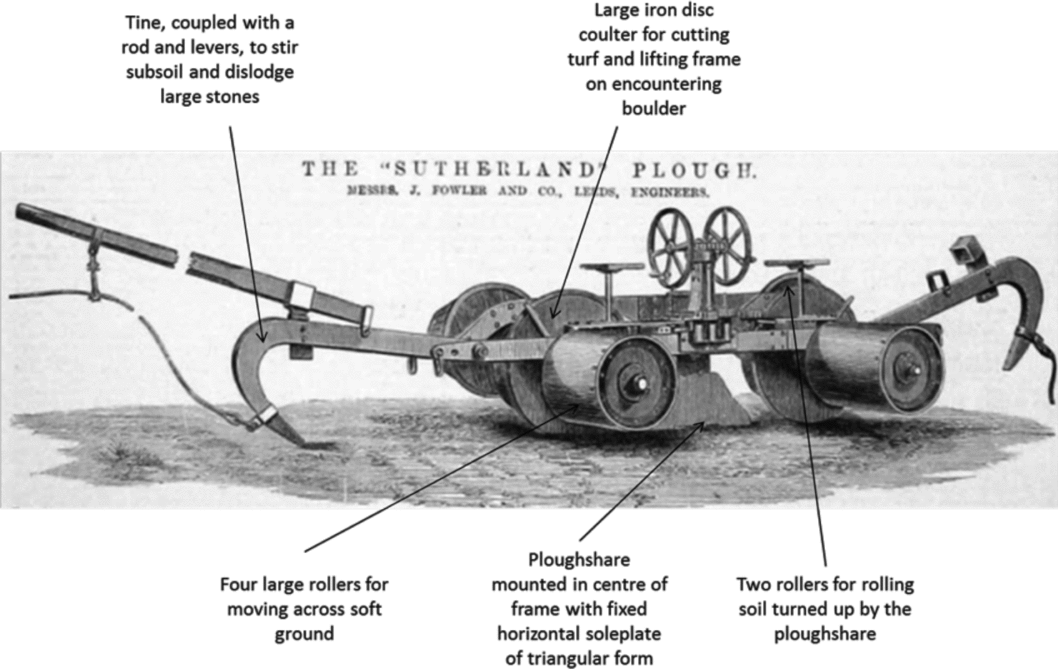
In the case of the Sutherland reclamations there were particularly significant environmental challenges: the interior of the county consisted mostly of mountains, moors and bogs. Several adaptations were made to the standard plough design to meet these challenges.Footnote 30 An extremely robust plough was required, so a single, large turn-furrow was used to cut through the soil rather than the four or five normally employed. In addition, very broad rollers were used to prevent the plough burying itself in soft ground. This configuration was found to perform well in ground where there were no obstructions, but the majority of land was riddled with rocks and boulders of varying sizes. These caused considerable damage to the share (the cutting head of the plough) on impact. To address this, a revolving coulter was developed. This was a steel disc placed in front of the share, cutting the soil to a depth of two inches below. When meeting a large stone, it would lift the plough over it. A further improvement was ‘the Duke's Toothpick’, a large iron hook that trailed behind the rear of the plough and lifted any rocks the coulter was unable to move. Extremely large boulders would cause the engine to be backed up and the Toothpick lifted over, with dynamite or manpower used for removal. The ploughs were drawn at a slow speed, with engines operating at double their nominal power to deal with these considerable challenges.Footnote 31
The Sutherland steam plough, with ‘Duke's toothpick.’ Source: MERL, TR FOW, P2/A22.
There were also a number of ancillary developments around the reclamations.Footnote 32 A sledge for stones allowed up to five tons to be drawn using the steam engines. This was designed to tip the stones out at the end of its run, and in addition to its convenience, dragging across the surface proved beneficial to the broken land, the rubbing action disintegrating it.Footnote 33 With sheep grazing on the surrounding land, it was desirable to fence each field off entirely while the ploughing was taking place. To address this, a folding fence was developed that used steel wire with adjustable stays that could be quickly assembled. To make these sufficiently robust for cattle and horses, coils of wires with ‘spikes . . . twisted at intervals into them,’ were developed, now familiar as barbed wire.Footnote 34 Finally, in order to break down the peat after ploughing, a ‘Discer’ was invented. While all previous machines tended to get choked by the fibres of peat or turf after it had been loosened, the Discer was able to disintegrate enough of the ploughed field to allow seeding without disturbing the inverted turf. It consisted of a frame with a series of discs mounted at an angle to the line of draft, cutting to a depth of two to five inches. Steam ploughing in Sutherland, then, consisted of a series of innovations, not all of which were related to the Sutherland plough itself.Footnote 35
The steam plough therefore offered practical opportunities but there were also restrictions in the Sutherland context. What this article proposes to do is to examine three social networks which lay behind the identification and utilisation of the technology by the Duke of Sutherland. These consist of the aristocratic network, the Quaker network and the crofter network. Although each network was important in different ways, it was the person of the third Duke who linked the networks together and was the key driver in this episode, a role perhaps reflecting his elevated social station.
Section II. The aristocratic network: British and imperial landowners
The Sutherland reclamations were led from the front by the third Duke of Sutherland, driven by his passion for the latest steam technologies. This enthusiasm was regarded by contemporaries as somewhat unusual, and perhaps an unwelcome and frivolous diversion from the traditional duties of the landed and titled aristocrat.Footnote 36 For the third Duke himself, and for his advisors, however, the opposite was true: land reclamation was nothing more or less than an extension of the Sutherlands’ long-standing programme of ‘improvement’ on their northern estates.Footnote 37 This section discusses the third Duke's position and ideology as a landowner and peer, his business and imperial networks as a ‘gentlemanly capitalist’ and imperialist. Lastly, it examines the shifting perceptions of the duties of landlords in this period, and how the third Duke dealt with the contradictory expectations of modern landlordism. Of interest in this particular case study is whether the third Duke matched the expectations of his aristocratic network, or broke away from them, and whether this impacted on the reclamations and the application of innovative steam power to them.
The third Duke of Sutherland was not just securely situated within his aristocratic network, he was comfortably within its upper echelons. Although only the eighth richest landowner in Britain and Ireland, he was by far the largest in terms of acreage. Indeed, the Sutherlands were the largest landowners in Western Europe at this time.Footnote 38 From this the family received £70,000 per annum from rentals, the bulk of which came from their great sheep farming tenants, the planned beneficiaries of the reclamations.Footnote 39 The family received further income from their business and industrial investments, stocks, shares and consols. When the third Duke inherited in 1861 he commanded an income of around £120,000 per annum, a vast sum, representing around £5 million in contemporary terms.Footnote 40 The Sutherlands enjoyed a high, if not always positive, profile by the 1860s, which was informed by their own and the wider public and political perception of their efforts in the ‘improvement’ of their northern estates. Although revolutionary in some senses, the programme of clearances that were the result of these philosophies were rooted in past or traditional perceptions of landowning in the Scottish Highlands and Islands, based on a paternalistic model of the duties of a ‘Clan Chief’ towards his tenantry. Despite the ravages of the post-Jacobite Highlands, when the clan system was broken down by the Hanoverian state, cultural remnants or expectations of what Highland landownership should look like and how it should behave lasted much longer, not only among Highland society in general, but among the landed classes themselves.Footnote 41
This created an interesting paradox, whereby contemporary perception, skilfully manipulated by the third Duke and his advisors, linked the traditional images of Highland landownership with radical new technologies, in turn fuelled by the third Duke's imperial business, investment and political networks. In no sense, in other words, were the Sutherland reclamations an organic Highland development: but this was exactly what he and his estate managers portrayed them as, the next step in the continuing programme of ‘improvement’ that had started with his grandmother and the Sutherland clearances.Footnote 42 This was a very different world to that of John Fowler and other entrepreneurs, who only came to personal wealth after career success rather than through immense inherited wealth and influence.Footnote 43 Landlords like the third Duke often bestrode both worlds: that of traditional, paternalistic landownership and of modern business, industry and empire.
By the 1850s and 1860s, when agricultural and land prices were at their height, shrewd British landowners invested to protect their finances, usually by diversification into non-traditional areas of operation, such as mining, shipping and imperial or overseas investments.Footnote 44 The third Duke of Sutherland was an enthusiastic proponent of this, as a glance at his investment portfolio shows. From ruby mining in Burma, to gas supplies in the United States of America, to more traditional investments such as the Staffordshire potteries or British railways, the third Duke widened his spheres of economic influence.Footnote 45 It is in the context of this investment and the ideas behind it that the Sutherland reclamations should be viewed. As already noted, the third Duke first saw the steam plough in action in Egypt, a reflection of the importance of imperial networks to explain how the steam plough got to Sutherland at all. Cain and Hopkins’ influential thesis of the ‘gentlemanly capitalist’ and his networks as key drivers of imperial investment is certainly in evidence for the third Duke. He was rich and well connected, and a keen proponent of investment and ‘improvement’ overseas.Footnote 46 Arguably, the third Duke also applied this mindset to his estate in Sutherland. He believed that it too should be invested in to promote improvement, and that the latest technology could achieve this, where previous attempts, such as the clearances, had failed.Footnote 47
Overall, the third Duke was regarded as something of an eccentric, a view bolstered by his lack of the traditional Eton-Oxbridge education, his unusual travel destinations and his love of steam technology.Footnote 48 It was perhaps this disjunction between the traditional role of the landed aristocrat and the reality of the third Duke's activities that allowed him the freedom to pursue his steam plough dreams and led to his involvement in inventor and business entrepreneur networks which featured a strong Quaker element. He did, however, have a deep passion for technology which was typical of the Victorian Era. The explosion of new machines and devices through the Industrial Revolution is startling. It is little wonder that faith in the new technological developments was so strong. When the Duke's lack of inhibition is coupled with the passion for technology characteristic of the time, it provides a strong motive force for the reclamation work, whatever its costs and associated challenges.
Section III. The Quaker network: The Society of Friends and industrial entrepreneurialism applied to the rural context
This section will delineate the second key network in the story of the Sutherland reclamations, that of a small but influential group of Quaker businessmen, inventors and entrepreneurs who provided the technology that inspired the third Duke to attempt his ambitious scheme in the north of Scotland. For Fowler, as with many Quakers, a desire for scientific and engineering prowess was matched by an equally important desire to apply that skill to effect the moral and material improvement of the less fortunate in society. John Fowler, founder of the Leeds business, came from a notable family of Norfolk Quakers, and many of his partners and colleagues in business shared his religious convictions, aligning stability and continuity of values to the entrepreneurial spirit of his company. When John Fowler died unexpectedly in 1864, his brother Robert stepped in to head the firm. He was joined and supported by David Greig, scion of another influential Quaker family, and subsequently by George Greig, David's brother.Footnote 49 Indeed it was through the Greigs that the third Duke of Sutherland tapped into this entrepreneurial Quaker network. The Duke had been a friend of David and George's father and enjoyed a close personal friendship with David.Footnote 50
The Society of Friends were a very effective religious, educational, cultural and, of course, economic network in nineteenth-century Britain.Footnote 51 As Dissenters, Quakers had long been excluded from many areas of British public life, including direct entry into schools and politics. This forced them to develop their own networks, which they did very successfully. There has also been speculation as to whether the personal integrity of Quakers, and the translation of this into their business concerns, alongside their refusal to regard business or wealth as ends in themselves, contributed to their success.Footnote 52 The Quaker emphasis on the individual, and the development of personal character with the support of the Quaker collective, was a concept that had major advantages in the mature industrial economy. The Quakers played a critical role in the development of ironworks, for instance, owning between half and three-quarters of the ironworks in operation, most of which were connected by partnerships and marriages.Footnote 53 The late 1860s were the zenith for Quaker industrialists. The companies would eventually become too large to be managed by families and through personal liabilities.Footnote 54
The challenges of steam ploughing were significant, and ‘much ingenuity and a good many fortunes were wasted’ in attempts to make it profitable.Footnote 55 For John Fowler personally, it was a battle worth fighting. In 1849, as a member of a Quaker delegation, he had visited Ireland, wracked by Famine due to the potato blight and subsequent collapse of the agrarian economy.Footnote 56 He was so affected by the sufferings he saw there that he determined to apply his skills as an inventor, designer and developer of agricultural technology as a means of cheapening the production of food. In this he was successful: in 1857, he won a prize of £200 from the Highland Society for ‘the successful trial of his steam tillage apparatus’ in Perthshire.Footnote 57 The late 1850s and early 1860s were propitious years to be developing steam cultivation technology, supported by the Egyptian cotton boom as well as a generally buoyant world agricultural market.Footnote 58 Indeed, it was initially the overseas markets that supported the evolution of the steam plough, when home sales remained disappointingly low. This was not for want of effort in publicising the benefits of the new technology, by numerous demonstrations and public lectures, and expansion and investment along Quaker banking and industrial networks.Footnote 59 In addition to these advantages, intellectual property rights in Britain were the most sophisticated in the world, and provided a significant financial incentive to those named on them. The good management of intellectual property in Britain has been identified as a key factor in its ascent during the Industrial Revolution and the steam plough is a good illustration of this.Footnote 60 Another important element was the technical emphasis of industrial education and the workshop set-up which encouraged innovation. This was exemplified by the Fowler premises in Leeds, where apprentices were trained in the skills they would need to become masters.Footnote 61
The development of the steam plough and the resolution of its associated technical challenges by people across the collective are instructive in this instance. Fowler had little hesitation in committing significant resources to the development of a new plough suitable for the demands of the Sutherland reclamations. The technical expertise of those involved in the project was a product of Britain's entrepreneurial industrial economy. Fowler was a company experienced in iterative improvement of proven technologies, and the Sutherland plough was an example of reactive designing, where changes were made as necessary based on the problems of undertaking the work. This iterative process relied on the resilience and ingenuity of Fowler and Company, as well as the Duke's continued financial support, to ensure the work continued, and was able to fulfil the ideological purpose of utilising technology to improve the position of the rural population, both materially and morally.
The third Duke of Sutherland was one of the most important customers Fowler and Company had from the late 1860s. Although the company had been successfully established, it had faced its fair share of problems, not least the sudden breakdown and death of John Fowler in 1864.Footnote 62 It was testament to the strength of the business and entrepreneurial network that had supported the genesis of the company that sudden reverses in fortune did not bring it down and it continued to thrive until after the Second World War.Footnote 63 A key part of this resilience was the financial, entrepreneurial, legal and religious support of the Quaker community in Norfolk, London and Leeds, of which John and his brother Robert Fowler, David and George Greig were all members.Footnote 64
The Quaker network surrounding Fowler and Company was not purely British; it also had an international dimension.Footnote 65 One of the key figures in the general development of Fowler and Company as a business, and the relationship and activities in Sutherland in particular, was Max Eyth, a German national and ‘humanist’ who travelled to Britain for work, attracted by the opportunities afforded by the ‘Workshop of the World’.Footnote 66 Eyth's progress from unemployed jobbing engineer to a pillar of a major British firm was a classic example of how effectively Quaker networks could operate to secure the best expertise. Max Eyth was taken on in 1861 and did much to develop the personal relationships and networks that allowed Fowler and Company to become the dominant manufacturers of steam cultivating machinery over the twenty-one years during which he was employed by them.Footnote 67 One of the most important roles Eyth carried out on behalf of the firm involved overseeing their various overseas operations. He began his career with Fowler's in Egypt, where he first met the third Duke, and made a good impression.Footnote 68 As well as working closely with the third Duke in Sutherland, this relationship garnered the firm important contracts elsewhere, based on the third Duke's recommendations. One of these was the Italian statesman Garibaldi, a personal friend of the Duke. The Duke recommended Fowler's to fulfil Garibaldi's bold visions of steam cultivation in the Po Valley, in the north of the country.Footnote 69 Eyth spent some months of 1874 there, but also travelled to France, Poland, Russia and Prussia. He was joined in this travelling by Robert Fowler and David Greig, who were involved in drumming up overseas business for the firm. These results would pay off in the early 1900s as Fowler's business boomed in Europe, Australia and South Africa.Footnote 70
As well as energetically travelling to their potential custom, the importance of personal networks and friendships remained a strong feature of the Fowler's business model, arguably informed by their Quaker ethos. The relationship between Fowler and the third Duke is one of the best examples of this: the Duke spent £50,000 in total on sixteen ploughing engines and seven traction engines, as well as on developing the ploughs to meet the specific needs of the Sutherland terrain.Footnote 71 In return, he had the committed attention of Fowler's employees: Eyth to begin with, and then George Greig who was appointed ‘reclamations commissioner’ and salaried directly by the Sutherland estate.Footnote 72
This relationship was important for the reputation of Fowler and Company and its ability to generate further business, and is confirmed in the firm's archives.Footnote 73 Indeed, publicising the work they were doing with the third Duke was a key priority for the partners in Fowler and Company, as demonstrated in the summer of 1874, when, with the third Duke, they invited some 250 leading Scottish agricultural specialists, alongside members of the Highland and Agricultural Society, to inspect the works at Shinness. A special train was laid on to take the visitors from Inverness to Loch Shin, and a luncheon was provided by the company, at which Robert Fowler and David Greig were present.Footnote 74
The importance of the network of Quaker businessmen, inventors and entrepreneurs in the field of steam power and cultivation was essential to the development and execution of the Sutherland reclamations. Indeed, the Sutherland episode, although unique in the context of the Scottish Highlands, was one of many ambitious schemes being undertaken by Fowler in Europe, the Middle East and further afield. A relatively small group of men, including the third Duke, supported the Fowler business at home and overseas, and central to this was reputation. The Fowler company, structured around its Quaker network and ethos, and with a workshop set-up designed to encourage skill and invention, developed an important reputation as a firm which was rooted in both fair play and experimental innovation.Footnote 75 Having the backing of significant figures, such as the third Duke, took the firm further, by winning it important contracts, particularly overseas. The Sutherland reclamations project was, therefore, a key episode for Fowler’s, but this project did not occur in a vacuum in the county. For decades before the 1870s, reclamation had taken place in Sutherland, carried out with the most basic technologies and back-breaking labour by the small tenants or crofters living on the estate. Their network and response to the third Duke's technological approach will be examined in the next section.
Section IV. The crofter network: clearances, land reclamation and the collective dynamic
The third Duke's reclamation project was not simply an exercise in the development of agricultural technology; or, indeed, purely to support the agricultural capability of Sutherland's sheep farmers. These were the key reasons given by the third Duke and estate management when the reclamations were in their early years, but they were only part of the motivation behind such a large, disruptive and expensive project.Footnote 76 The Sutherland reclamations were the third Duke's mechanism to demonstrate his credentials as a landowner who took his duties seriously, investing in and supporting his estates.Footnote 77 As the reclamations continued from the mid to late 1870s and into the 1880s, the Sutherland estate, like all Highland estates, was coming under increasing political pressure and outright attack, as the small tenants, or crofters, who made up the bulk of the labour force on the reclamations scheme, demanded more land, lower rents and security of tenure.Footnote 78 Not all networks surrounding the steam plough and Sutherland reclamations were conducive to its development and application.
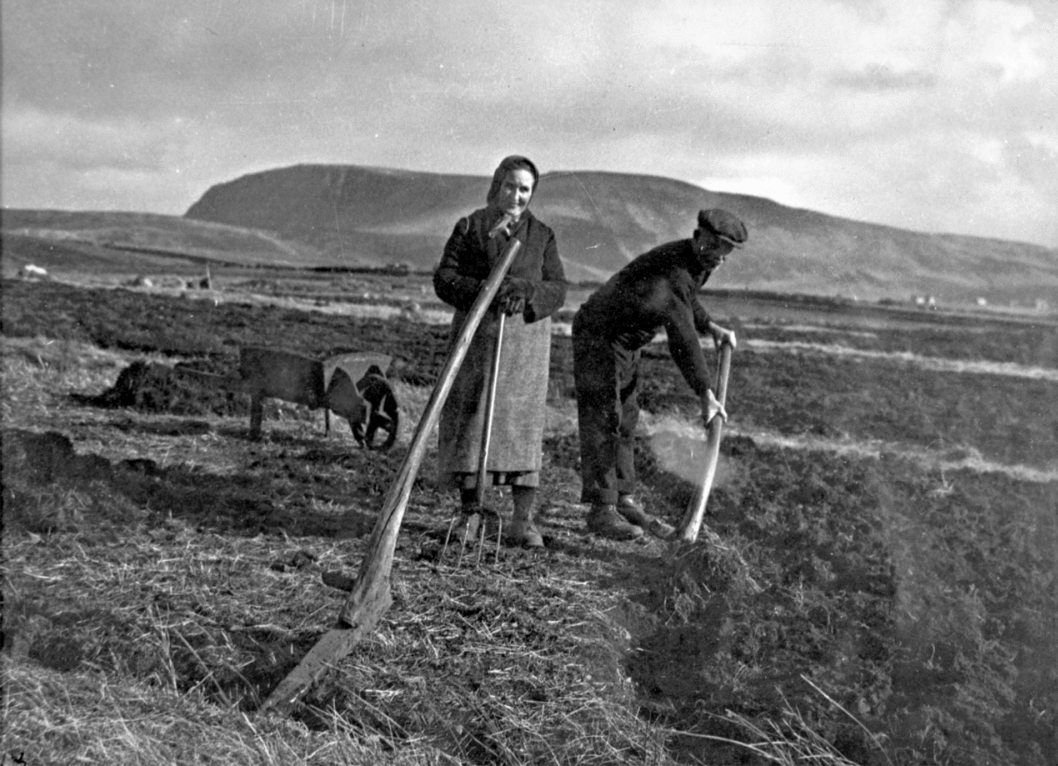
Most crofters in Sutherland, having been cleared onto uncultivated plots of land in the early nineteenth century, had become expert land reclaimers, using only the most basic tools. One of these was the cas chrom, or foot plough. Made from locally available materials, this is a good example of reactive design to the landscape and circumstances. It nevertheless took long years and backbreaking labour for the Sutherland crofters to clear their small plots of poor land and reclaim them to a level that would allow cultivation or grazing.Footnote 79 The reclamation carried out by crofters from the 1810s up to the 1880s was in stark contrast to the radical and technologically advanced plans of the third Duke. A large part of the hubris that surrounded the reclamations was the contrast between the crofter's ‘primitive’ techniques and the technologically advanced steam ploughs.Footnote 80 The third Duke saw the reclamations as an opportunity to educate the crofting and larger tenant community in the latest agricultural techniques, the wild and remote landscape of Sutherland only adding to the romance of this confident, and perhaps over confident, aim.Footnote 81 The third Duke fundamentally mistook what the Sutherland crofting community wished for by the 1870s. This was not the latest steam technology, since they could not possibly afford to pay either for the use of this technology, or for the rent of the land that had been reclaimed, which was charged at seventy-three pounds, seven shillings and sixpence per acre. What they wanted was simply more land.Footnote 82 The Sutherland population peaked at the 1861 census, and land hunger and congestion dominated the crofting agenda in these decades.Footnote 83 The reclamations did, however, provide the opportunity for wage labour, since up to one hundred men were required to support the work of one ploughing set. Preparing and clearing the fields, managing the engines, manning the ploughs and all the other associated activities of steam ploughing meant that the overall labour involved was huge, even though mechanisation was supposed to make the process more efficient.
While the crofters initially welcomed the wages offered, they were soon disenchanted with the dull nature of the work and the slow rate of progress. Through the early days of the reclamation works, contemporary newspaper reports were quick to blame a recalcitrant workforce for lack of progress, while praising the Duke for his vision.Footnote 84 As the work continued to experience difficulties, the more modest approach of the crofting community began to appear more far-sighted and sustainable and contributed to a changing public perception of the crofting community in the 1880s.Footnote 85
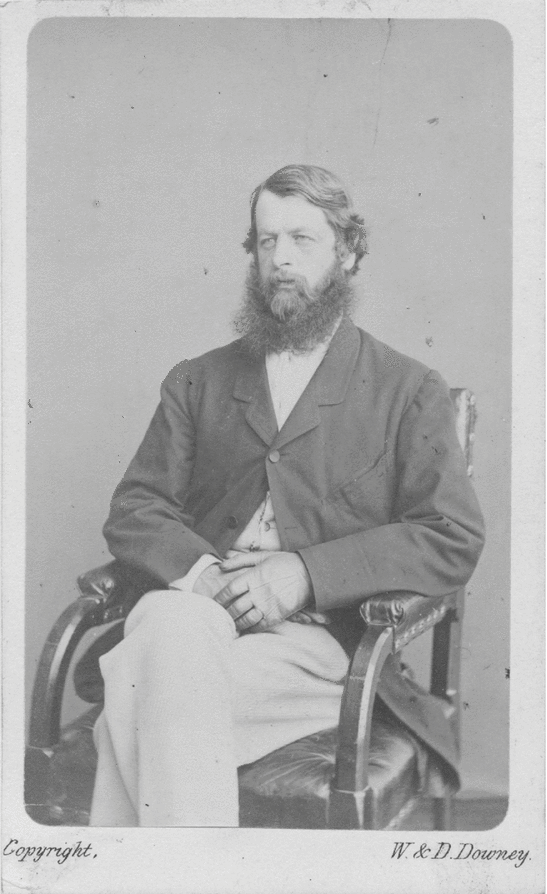
George William Sutherland Leveson-Gower, third Duke of Sutherland (1828–1892) (© National Portrait Gallery, London. With permission from the National Portrait Gallery)
Using a Cas Chrom on Skye, a simple cultivation device made by crofters and used into the twentieth century (© I. F. Grant Collection, Highland Folk Museum. With permission from the Highland Folk Museum)
The crofter network linked together thousands of people living on the Sutherland estate, all with certain common features: the Gaelic language and culture; an often bitter memory of the clearances, which subsequent generations could see from their hard-won reclaimed land; and an increasing population which added to the congestion and land hunger within crofting communities.Footnote 86 Although nowhere near as powerful as the aristocratic or Quaker networks in the 1870s, by the early 1880s the crofter network had begun to build influence and attract champions, and formed a direct challenge to the power of these networks in the Sutherland context.Footnote 87 The Sutherland reclamations played a key political role in this febrile atmosphere. The spectacle of the third Duke investing hundreds of thousands of pounds in what was increasingly revealing itself to be a white elephant, both financially and agriculturally, became a political issue by 1883.Footnote 88 Much of the cost of the reclamations went on wages for labourers and this was initially seen as a boon both by and for the crofters. But criticism soon overtook support. Although agriculturalists and politicians praised the intentions of the third Duke, most agreed that they had not been realised in the Sutherland context and their crippling expense meant that they could not be replicated elsewhere.Footnote 89 Despite the initial praise and support for the Duke's vision, general opinion gradually came to regard the work of the steam ploughs, even after various modifications, as ineffective and a waste of money.Footnote 90
The crofter network saw a radical shift in its power and influence over the years of the Sutherland reclamations. It changed from a frustrated and impoverished community, with no connections and no voice in urban politics, to an organised group with political clout, support from the highest circles and the weight of public opinion on its side. Although it provided much of the hard labour required to carry out the reclamations, the labour network was far less supportive of the endeavour than the entrepreneurial and aristocratic networks.
Section V. Conclusion
At first glance, the story of the Sutherland plough is about the third Duke and his folly; however, on closer examination more complex social factors are revealed.Footnote 91 While the third Duke was a headstrong enthusiast with significant financial resources, this article has outlined how the use of the steam plough in the reclamation works was not simply the result of one man acting alone. Instead it was one man acting as the connection between three social networks: the aristocratic network, the Quaker and industrial entrepreneurial network, and the crofter network. It is the contention of this paper that the Duke's primary role was to act as a dynamic link across the three, facilitating collaboration in the development of the Sutherland plough.
The Duke was representative of Britain's landed aristocracy, a highly active group in Britain's imperial expansion and industrialising economy, often leading from the front in terms of investment in innovation.Footnote 92 The Duke was able to tap into his connections with powerful engineering establishment figures, in the shape of the Greig brothers, to access the expertise of Fowler and Company. There was a good deal of faith in the relationship established between the Sutherland estate and Fowler’s, which was critical in sustaining the work under challenging circumstances. For their part, Fowler's showed a significant degree of tenacity in mobilising their technical and entrepreneurial skills to find the most appropriate personnel, such as Eyth, to address the problems. While this led to a series of innovations, both in the Sutherland plough itself and in the ancillary equipment and processes required in its use, there was a continuing unwillingness within the local crofting community to embrace the machinery. Their ambivalent relationship with the ducal family meant that while they were initially willing to engage with the reclamation works, they soon expressed a desire to return to their traditional, simpler cultivation techniques. While their resistance caused tension with the management at the reclamation sites and attracted the scorn of the local press, given what followed, it turned out to be prescient.
In relative terms, the crofters were the weakest social network in this case. Their concerns did not carry the same weight as the prevailing optimism and faith in the deployment of steam power displayed by the Duke and Fowler’s, and as a result, the enterprise was initially undertaken with a good deal of enthusiasm. While the Sutherland steam plough included a range of innovative design features and the reclamation process was persisted with over a number of years, it was ultimately unsuccessful. That is not to say that the Sutherland plough itself was not without merit: it was an imposing product, full of unique and highly specialised design features that make the era of steam ploughing distinctive. Even though the design improvements allowed the ploughing at times to operate impressively, the huge numbers of men and crippling ongoing investments required were unsustainable. When it became apparent that the fields which had been ploughed were only moderately fertile and in some cases rapidly returned to their natural state, the work was stopped.Footnote 93
Acknowledgements
The authors would like to thank the Carnegie Trust for the Universities of Scotland for funding this project, under their small grants scheme (2012).