Introduction
Crenidens Valenciennes in Cuvier & Valenciennes, 1830 is a small group of commercially important sparid fishes distributed in the coastal waters of the Indian Ocean (Bogorodsky et al., Reference Bogorodsky, Iwatsuki, Amir, Mal and Alpermann2017). These omnivorous fishes are characterized in having both incisor-like and molariform teeth, and they feed mostly on benthic algae and associated invertebrates with the algal turf (Iwatsuki & Maclaine, Reference Iwatsuki and Maclaine2013; Bogorodsky et al., Reference Bogorodsky, Iwatsuki, Amir, Mal and Alpermann2017). Historically, the genus was considered as monotypic with two recognized subspecies: Crenidens crenidens crenidens (Forsskål, 1775) and Crenidens crenidens indicus Day, Reference Day and Day1873 (Bauchot & Smith, Reference Bauchot, Smith, Fisher and Bianchi1984; Manilo & Bogorodsky, Reference Manilo and Bogorodsky2003; Randall, Reference Randall1995). Recently, Iwatsuki & Maclaine (Reference Iwatsuki and Maclaine2013) redescribed Crenidens macracanthus Günther, 1874 from the south-east coast of India as a valid species resurrecting it from the synonymy of C. indicus, placed by Day (Reference Day and Day1873), and raised C. crenidens and C. indicus to the species level from the subspecies level.
Despite the occurrence of commercially important Crenidens spp. in part of the Indian Ocean, only a few studies have been conducted in detail (Iwatsuki & Maclaine, Reference Iwatsuki and Maclaine2013; Bogorodsky et al., Reference Bogorodsky, Iwatsuki, Amir, Mal and Alpermann2017) and hence, the information on these species is limited but is still available from Indian waters. For a long period, it was believed that a single species: Crenidens indicus was found to occur along the Indian coast (Bauchot & Smith, Reference Bauchot, Smith, Fisher and Bianchi1984). The distribution (record) of C. indicus from Indian waters was raised to a questionable status by Iwatsuki & Maclaine (Reference Iwatsuki and Maclaine2013, p. 247) stating that the species is either not distributed along the Indian coast or is extremely rare in occurrence. Later, Bogorodsky et al. (Reference Bogorodsky, Iwatsuki, Amir, Mal and Alpermann2017) confirmed the occurrence of C. indicus from the Indian waters (west coast of India) based on morphological examination of a specimen from Mumbai (Bombay) and COI sequence analysis of one from Gujarat (sequence unpublished). However, a preserved specimen of C. indicus from Tuticorin, Tamil Nadu, was examined in the present study and can be considered as the first confirmed record of the species from the eastern Indian Ocean.
During the ichthyofaunal survey along Odisha coast (north-western part of the Bay of Bengal) in the period 2017–2019, 30 fresh specimens of C. macracanthus were collected by the first author from the Astaranga Fishing Harbour, Puri, Odisha (north-east coast of India). With this study, molecular data were generated for this species and phylogenetic analyses performed, including all the available sequences from allied C. indicus and C. crenidens to assess the interspecific relationships among the three species. Crenidens macracanthus was originally described based on the holotype only (BMNH 1868.10.27.28) and additional material collected by Francis Day (BMNH 1975.9.30.18). Hence, this study provides a redescription of C. macracanthus based on new fresh material examined and colour photographs. This study explores several morpho-meristic variations in comparison with the type specimen along with colour description in its fresh condition. An updated key to the species of Crenidens from Indian waters is provided.
Materials and methods
Thirty specimens of Crenidens macracanthus were collected between 2017–2019 from landings at Astaranga fishing harbour (19°58′27.1344″N 86°20′20.9976″E), Puri, Odisha. The fishes were caught in the shallow turbid waters of Devi river mouth (estuary) area by bottom set gill nets (mesh size: 36 mm). The freshly collected specimens were preserved in crushed ice and brought to the laboratory of Puri Field Centre of ICAR-Central Marine Fisheries Research Institute (CMFRI) for detailed taxonomic investigation. In addition, one preserved specimen (accession number GB.31.142.12.1) from the Marine Biodiversity Referral Museum of ICAR-Central Marine Fisheries Research Institute (CMFRI), Cochin, Kerala, India labelled as C. crenidens (identified here as C. indicus) was studied based on the morpho-meristic characters. The specimen was collected from Tuticorin, Tamil Nadu, India (8.79°N 78.16°E) by the staff of Tuticorin Research Centre of ICAR-CMFRI on 5 January 2005.
Morphological analysis
Meristic and morphometric measurements were recorded according to Hubbs & Lagler (Reference Hubbs and Lagler1958), Iwatsuki et al. (Reference Iwatsuki, Akazaki and Taniguchi2007), Iwatsuki & Heemstra (Reference Iwatsuki and Heemstra2010, Reference Iwatsuki and Heemstra2011) and Bogorodsky et al. (Reference Bogorodsky, Iwatsuki, Amir, Mal and Alpermann2017). The morphometric characters were measured using a digital Vernier calliper, with 0.1 mm accuracy. Standard length, second and third anal-fin spines are abbreviated as SL, 2AS and 3AS, respectively (Iwatsuki & Maclaine, Reference Iwatsuki and Maclaine2013). Morphometric data presented are given as ratio to standard length in the text and percentages of standard length in Table 1 for easier comparison with published data (Iwatsuki & Maclaine, Reference Iwatsuki and Maclaine2013; Bogorodsky et al., Reference Bogorodsky, Iwatsuki, Amir, Mal and Alpermann2017).
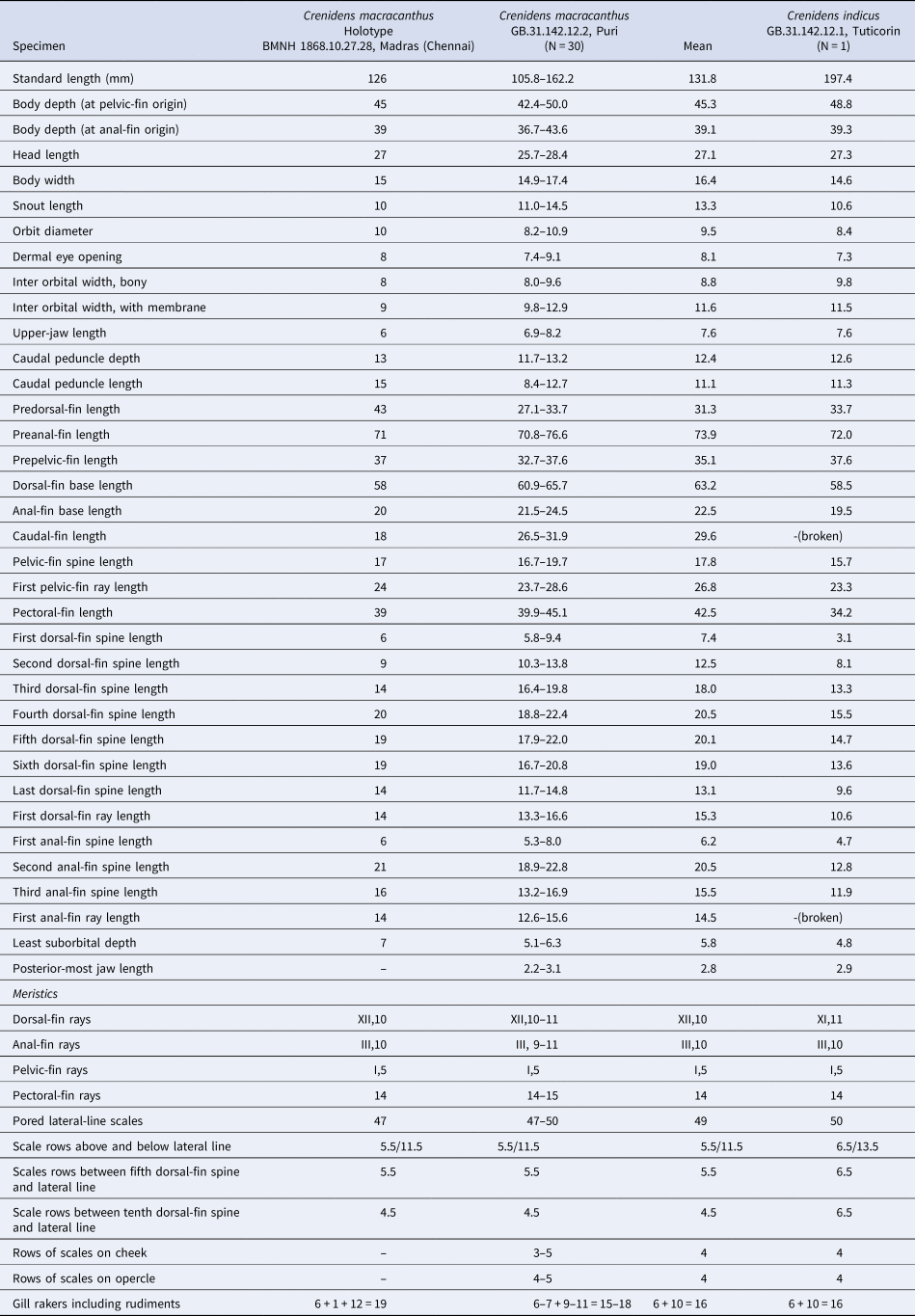
Morphometric and meristic data for Crenidens macracanthus and C. indicus

Standard length is expressed in millimetres; all other measurements are expressed as percentage of standard length.
Molecular analysis
Genomic DNA was isolated from the muscle tissue preserved in 95% ethanol using phenol/chloroform method (Sambrook & Russell, Reference Sambrook and Russell2001). Amplification of partial sequences of mitochondrial COI gene was carried out using the primer pair FishF2/FishR2 (Ward et al., Reference Ward, Zemlak, Innes, Last and Hebert2005) under optimized thermal regime. The amplicons were sequenced bi-directionally and aligned in MEGA7 (Kumar et al., Reference Kumar, Stecher and Tamura2016). Five individuals of C. macracanthus were barcoded and two representative haplotypes were deposited in NCBI GenBank (accession nos. MT179595–MT179596). The sequences were aligned with available sequences of C. crenidens and C. indicus from different geographic locations. Phylogenetic trees were inferred using Maximum likelihood method under the best fitting models excluding and including the comparatively shorter COI sequences (239 bp) of C. indicus from GenBank. The evolutionary divergence between aligned sequences (625 bp) of C. macracanthus and C. crenidens were calculated using the Kimura 2-parameter model (Kimura, Reference Kimura1980).
Results
Systematics
Order PERCIFORMES Bleeker, 1863
Family SPARIDAE Rafinesque, 1818
Genus Crenidens Valenciennes in Cuvier & Valenciennes, 1830
Crenidens macracanthus Günther, 1874
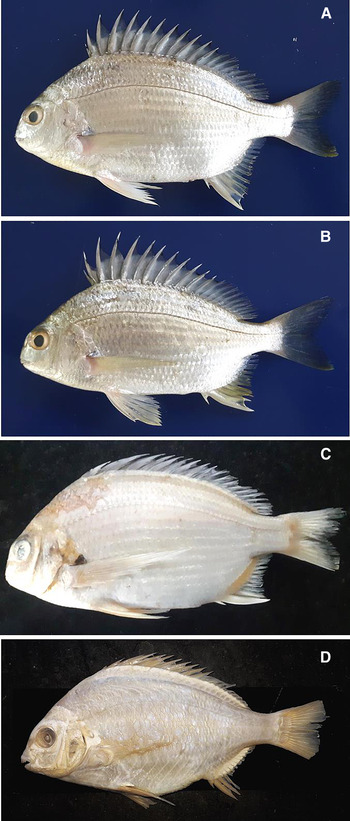
Günther's karanteen (Figure 1A–C, Figure 2, Figure 3A–C, Table 1)
Crenidens macracanthus. (a) GB.31.142.12.2, 162.2 mm SL, fresh, Puri, Odisha, India; (b) 105.8 mm SL, fresh, Puri, Odisha, India; (c) GB.31.142.12.2, 162.2 mm SL, formalin preserved, Puri, Odisha, India; C. indicus. (d) GB.31.142.12.1, 197.4 mm SL, formalin preserved, Tuticorin, Tamil Nadu, India.

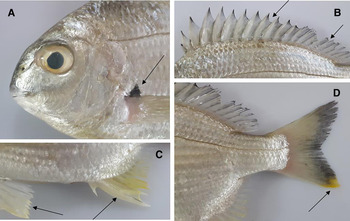
Crenidens macracanthus. (a) large blackish spot dorsally in axil of pectoral fin; (b) dorsal fin with pale grey spines and rays and grey membranes, margin of spinous portion of dorsal fin narrowly black; (c) light yellowish pelvic and anal-fins; and (d) yellowish tip of caudal fin lower lobe.

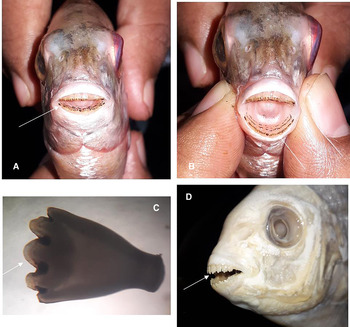
Crenidens macracanthus. (a) incisor-like teeth; (b) rows of teeth; (c) close-up of incisor-like tooth with five subequal points; C. indicus. (d) incisor-like teeth with three median points much larger than outer point on each side.

Type and Non-type material
Crenidens macracanthus Günther 1874: 368 (type locality: Madras (Chennai), India).
Holotype: BMNH 1868.10.27.28, 126 mm SL (X-ray), Chennai (as Madras originally), India, Bay of Bengal.
Non-type specimen: BMNH 1975.9.30.18, a dried right-hand side skin specimen collected by Francis Day, 150 mm SL, no locality information, but considered likely to be Chennai, India (see Iwatsuki & Maclaine, Reference Iwatsuki and Maclaine2013).
Material examined for comparison
Crenidens macracanthus (N = 30): GB.31.142.12.2, 105.8–162.2 mm SL; Astaranga fishing harbour, Puri, Odisha, India, Bay of Bengal, north-eastern Indian Ocean; 19°58′27.1344″N 86°20′20.9976″E; depth 6–12 m; collected by Subal Kumar Roul on 31 October 2019.
Crenidens indicus (N = 1): GB.31.142.12.1, 197.4 mm SL; Tuticorin (8.79°N 78.16°E), Tamil Nadu, India, Bay of Bengal, south-eastern Indian Ocean; collected by Tuticorin Research Centre Staff on 5 January 2005 (Figure 1D).
Diagnosis. A species of Crenidens with the following combination of characters: dorsal-fin rays XII, 10–11, usually XII, 10; anal-fin rays III, 9–11, usually III, 10; pectoral-fin rays 14–15, usually 14; pored lateral-line scales 47–50; scale rows above lateral line 5.5, below 11.5; scale rows between fifth dorsal-fin spine and lateral line 5.5; gill rakers 6–7 + 9–11 = 15–18; 2AS much larger than 3AS, the length of 3AS 1.3–1.5 in 2AS; scales on top of head extending to a vertical through the centre of the eye; body deep, the depth 2.0–2.4 in SL; caudal peduncle depth 7.6–8.6 in SL and 1.0–1.3 in its length; pelvic-fin length 3.5–4.2 in SL; pectoral fin with a large blackish spot dorsally in axil (see Figure 2A); caudal fin blackish distally, tip of lower lobe yellowish (see Figure 2D); lips smooth without cirri; incisor-like teeth with five points, all points sub-equal in size, forming a flat cutting edge (see Figure 3A–C).
Description. Counts and proportional measurements of Crenidens macracanthus are given in Table 1.
Body somewhat oval, compressed, and deep, the maximum depth 2.0–2.4 in SL (see Figure 1A, B); dorsal profile of the head slightly convex with a broad-based, slight convexity just in front of upper edge of eye; ventral profile nearly straight; anterior nostril small and rounded, posterior nostril larger, narrowly oval, with flap; orbit diameter sub-equal to interorbital width; mouth horizontal and moderate, maxilla not reaching to below anterior margin of eye, maxilla naked, its hind margin concealed by suborbital; lips without any tiny prickle-like cirri; jaws with three series of incisor-like teeth (third series very weak); outer series of larger incisor-like teeth, each with five points, all points sub-equal in size, forming a flat cutting edge (see Figure 3A–C); outer teeth movable; several rows of small molars inside from the incisor-like teeth in the posterior part of the jaws; hind margin of preopercle generally rounded and weakly serrated; predorsal length less than body depth, and dorsal-fin base length; caudal peduncle moderately deep, the depth 7.6–8.6 in SL and 1.0–1.3 in its length; pectoral-fin base scaly and rounded posterior, the fin tip reaching slightly beyond vertical at anus but not reaching anal-fin origin, its length greater than head length; pelvic fin longer than the longest dorsal-fin spine, fin tip not reaching anus or vertical through the tip of pectoral fin, the length 3.5–4.2 in SL; first to fourth dorsal-fin spines progressively longer, fourth dorsal-fin spine longest and much greater than snout length; anal fin origin below second dorsal-fin soft ray, 2AS and 3AS strong, 2AS much larger and longer than 3AS, the length of 3AS 1.3–1.5 in 2AS; caudal fin weakly forked, each lobe with rounded posterior margin and somewhat pointed tip; scales ctenoid, suborbital and interorbital without scales; lower cheek with 3–5 rows of scales, opercle with 4–5 rows of scales; lateral line with 47–50 pored scales, gently curved, sub-parallel to curved dorsal profile from nape to caudal peduncle; scale rows between fifth dorsal-fin spine and lateral line, and 10th dorsal-fin spine and lateral line 5.5; scales on top of head extending almost to a point vertical above the centre of the eye; no scaly sheath on spinous dorsal and anal-fin rays; soft portions of dorsal and anal fins with no scales but with weak and moderate scaly sheaths; gill rakers, including rudiments, 6–7 + 9–11 = 15–18.
Colour of fresh specimens. Body light silvery yellowish with poorly defined dusky spot in scale centre, resulting in a faint striped effect, more obvious ventrally (see Figure 1A, B); pectoral fins with a large blackish spot dorsally in axil (see Figure 2A); pelvic fins whitish, sometimes light yellowish; dorsal fin with pale grey spines and rays and grey membranes, margin of spinous portion of dorsal fin narrowly black (see Figure 2B); anal fin light yellowish, occasionally with a black pigmentation basally (see Figure 2C); caudal fin dusky basally shading to blackish distally, tip of lower lobe of caudal fin yellowish (see Figure 2D); denticulations of incisiform teeth brown (see Figure 3A, B); iris light yellow, sometimes with dark mark dorsally.
Colour of formalin preserved specimens. Head and body yellowish tan, lower part of head and abdomen whitish-yellow; all fins pale except blackish shading of distal part of caudal fin, grey spines, rays and membranes of dorsal fin, and blackish margin of spinous portion of dorsal fin; anal-fin base, caudal-fin base and area above pectoral fin light yellow; jaws with brown edges; yellow colour on tip of lower lobe on caudal fin disappeared; black spot well visible in axil of pectoral fin (see Figure 1C).
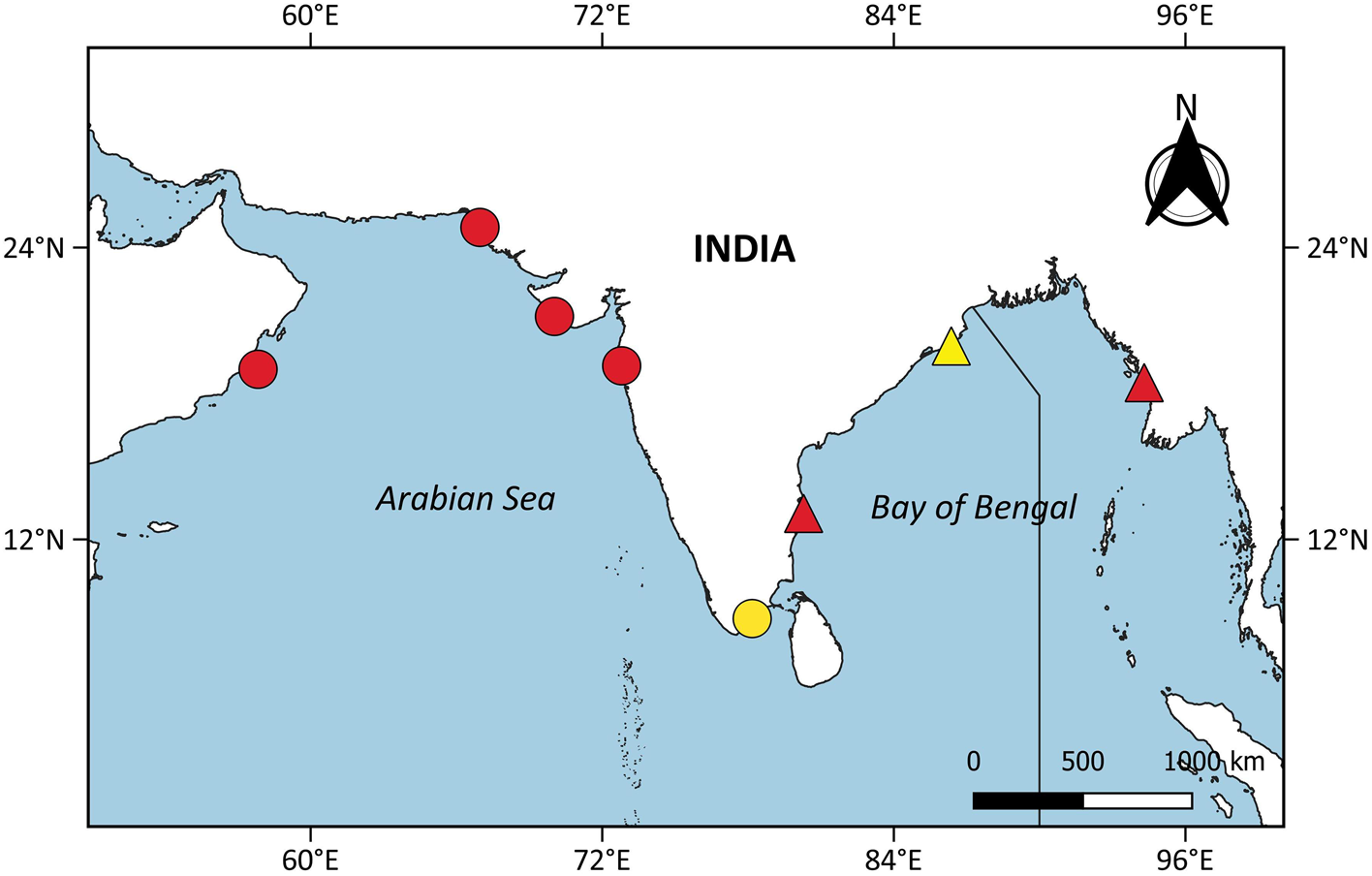
Distribution and habitat. Iwatsuki & Maclaine (Reference Iwatsuki and Maclaine2013) reported that C. macracanthus is endemic to Chennai (Madras), south-east coast of India, after extensive searching of specimens in museums and field exploration in India. Recently, Psomadakis et al. (Reference Psomadakis, Thein, Russell and Tun2020) has mentioned the occurrence of this species in the ‘Field identification guide to the living marine resources of Myanmar’ without any detailed information (the description seems to be taken from Iwatsuki & Maclaine (Reference Iwatsuki and Maclaine2013)). In the present study specimens (N = 30) from the east coast of India (Puri, Odisha) were examined and included in the phylogenetic analysis, thus confirming the occurrence of the species in broader geographic ranges in the Eastern Indian Ocean (see Figure 4). Inhabits coastal shallow and turbid estuarine area; specimens collected during the study were caught in the depth ranges from 6–12 m; usually found in small groups and caught along with Rhabdosargu sarba and Acanthopagrus berda in bottom set gillnets; gut content analysis revealed that it feeds on benthic algae and a variety of small invertebrates associated with algal turf. Crenidens macracanthus is one of the commercially important sparid fishes in its range, and marketed mostly fresh at  150–200 kg−1 along with R. sarba in local markets due to their similar appearance to consumers. However, future study is essential to have detailed information on fishery, food and feeding habits, reproductive biology and population parameters of this species.
Distribution of Crenidens macracanthus (triangle) and C. indicus (dot) from the Indian Ocean. Red symbols indicate previous record and yellow indicate present record.

Remarks. Crenidens macracanthus, a very rare species which closely resembles its congener C. indicus, so far known only from Chennai, east coast of India (Iwatsuki & Maclaine, Reference Iwatsuki and Maclaine2013) but appears to be abundant in certain locations along the Indian coast (Puri, Odisha: present study). This study highlights several new characters in addition to those described by Iwatsuki & Maclaine (Reference Iwatsuki and Maclaine2013) to be useful for identification of C. macracanthus (see Table 1, key). Based on the present study, C. macracanthus differs from C. indicus in having dorsal-fin rays XII,10–11, usually XII,10 (vs XI–XII,10–11, usually XI,11); scale rows between fifth dorsal-fin spine and lateral line 5.5 (vs 6–6.5 rows); 2AS much larger than 3AS, the length of 3AS 1.3–1.5 in 2AS (vs second anal-fin spine sub-equal to or only slightly larger than third, the length of 3AS 1.0–1.3 in 2AS); incisor-like teeth with five points, all points sub-equal in size (vs three median points much larger than outer point on each side); caudal fin blackish distally, tip of the lower lobe yellowish (vs tip of the lower caudal-fin lobe not yellowish); anal fin light yellowish (vs anal fin with grey spines, and blackish rays and membranes).
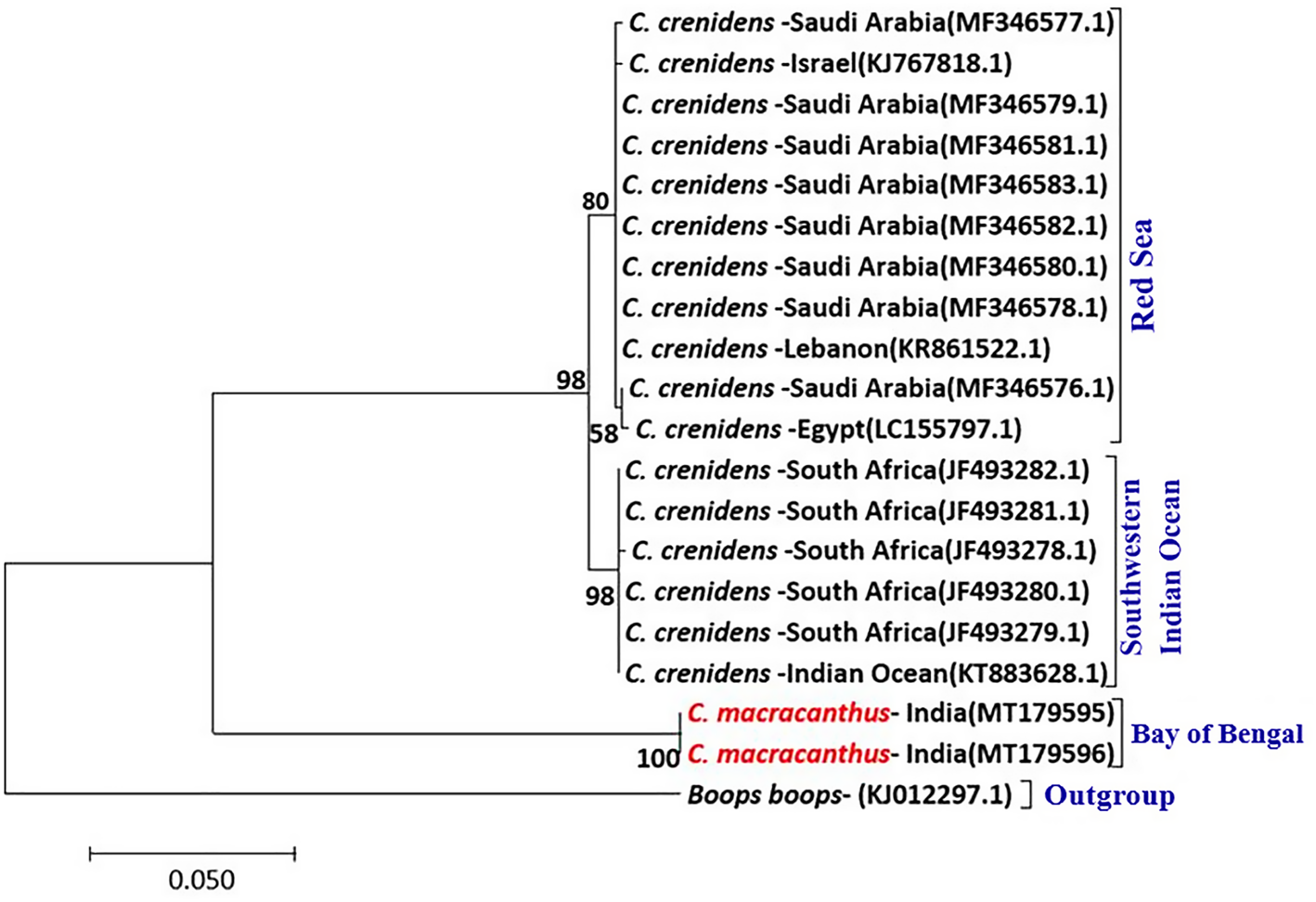
Phylogenetic analysis. The Maximum likelihood (ML) analysis of the partial sequences (625 bp) of COI gene resulted in placement of the C. macracanthus and C. crenidens in two major clades with high bootstrap support (see Figure 5). Two major lineages/sub-clades were noted in the latter species. The group-wise genetic distance between the two species was 13.5–14%. Analysis with the three extant species resulted in three distinct major clades with high bootstrap support. Crenidens crenidens and C. indicus clustered together as two sub-clades in the first major clade while C. macracanthus formed a separate clade (see Supplementary material).
Maximum likelihood analysis of COI sequences based on HKY + G model. The values at nodes indicate bootstrap support from 1000 replicates.

Discussion
Iwatsuki & Maclaine (Reference Iwatsuki and Maclaine2013) recognized Crenidens macracanthus Günther, 1874 as a third valid species in the genus Crenidens known from the south-east coast of India and raised C. crenidens and C. indicus to species level status from the subspecies level based on comparative morphology only. Bogorodsky et al. (Reference Bogorodsky, Iwatsuki, Amir, Mal and Alpermann2017) confirmed both C. crenidens and C. indicus as valid species based on both morphological and molecular data (phylogenetic analysis of the COI bar coding region). However, no molecular data from the third congener, C. macracanthus were available by previous authors to assess the interspecific phylogenetic relationships and genetic relatedness among the three species. The present study is the first integrated taxonomic report on C. macracanthus, the third congener of the genus Crenidens, including the detailed analysis of morphological characters and molecular data. The study provided several additional distinctive features including the colour pattern of fresh specimens of C. macracanthus which will be helpful for easy identification of this species (see remarks for details, key). The results provided confirmation of the species status, i.e. the same as suggested by Iwatsuki & Maclaine (Reference Iwatsuki and Maclaine2013). The phylogenetic tree (see Figure 5) in our study also supports the existence of two evolutionary units in C. crenidens (Bogorodsky et al., Reference Bogorodsky, Iwatsuki, Amir, Mal and Alpermann2017). The shorter read (239 bp) of COI gene of C. indicus limits the interpretation of genetic divergence data in the genus when the three species were aligned (see Supplementary material).
In the present study one preserved specimen (GB.31.142.12.1, 250 mm SL) from Marine Biodiversity Referral Museum of ICAR-Central Marine Fisheries Research Institute (CMFRI), Cochin, Kerala, India labelled as C. crenidens was also re-examined and identified as C. indicus based on relatively deeper body (2.1 in SL); 6.5 scale rows between dorsal fin and lateral line; incisor-like teeth with five points, three median points much larger in size than one outside point on each side; and other morpho-meristic characters (see Table 1, Figures 1D and 3D). The specimen was collected from Tuticorin, Tamil Nadu from the east coast of India, thus confirming the first record of this species in the eastern Indian Ocean. The first author, students and other staff visited Tuticorin several times during 2017–2019 but failed to notice or collect any more specimens of C. indicus which suggests the rarity of the species in that area.
Revised key to the species of Crenidens from Indian waters based on present study and Bogorodsky et al. (Reference Bogorodsky, Iwatsuki, Amir, Mal and Alpermann2017)
1a. Dorsal-fin rays XII,10–11 (usually XII,10); scale rows between fifth dorsal-fin spine and lateral line 5.5; 2AS much larger than 3AS, the length of 3AS 1.3–1.5 in 2AS; incisor-like teeth with five points, all points sub-equal in size; caudal fin blackish distally, tip of lower lobe yellowish; anal fin light yellowish………………………..….………..C. macracanthus
1b. Dorsal-fin rays XI–XII,10–11 (usually XI,11); scale rows between fifth dorsal-fin spine and lateral line 6–6.5; 2AS sub-equal to or only slightly larger than 3AS, the length of 3AS 1.0–1.3 in 2AS; incisor-like teeth with five points, three median points much larger than outer point on each side; caudal fin blackish distally, tip of lower caudal-fin lobe not yellowish; anal fin with dark grey or black spines, rays and membranes……………..………..……………C. indicus
Supplementary material
The supplementary material for this article can be found at https://doi.org/10.1017/S0025315420000880
Acknowledgements
We thank Dr A. Gopalakrishnan, Director of ICAR-CMFRI, for providing all necessary facilities and support during the study period. We thank Dr K.K. Joshi (Head Marine Biodiversity Division, ICAR-CMFRI) for permission to examine the Museum specimen. We also thank the staff of Puri Field Centre of ICAR-CMFRI for their help both in the field and laboratory.
Author contributions
Subal Kumar Roul collected and analysed morpho-meristic data and wrote the manuscript. Jeena N.S. analysed molecular data. Shubhadeep Ghosh, Prathibha Rohit and Jeena N.S. corrected and improved the language of the manuscript.
Conflict of interest
The authors declare that they have no conflict of interest.