




No CrossRef data available.
Transmission ecology of Echinococcus in wild-life in Australia and Africa
Published online by Cambridge University Press: 04 March 2004
Abstract
Following the introduction of E. granulosus into Australia with domestic animals during European settlement, the parasite quickly became established in the E. granulosus-naive native animals of the continent. The distribution of E. granulosus in wildlife in Australia is restricted by rainfall, but nevertheless the parasite is currently widespread and highly prevalent in many areas including numerous national parks and privately owned farms. The human population of Africa is rapidly increasing resulting in ever more pressure on wild-life populations and habitat. National parks, reserves and conservation areas now provide important tracts of preserved habitat for maintaining populations of wildlife that are also important in the maintenance of E. granulosus. In some parts of Africa, hydatid-infected humans provide a source of E. granulosus infection to wildlife definitive hosts. In many areas felids may also act as important definitive hosts for E. granulosus with the parasite being maintained in a prey/predator relationship between lions and a range of intermediate hosts. Populations of E. granulosus-infected wild-life both in Australia and Africa act as important reservoirs in perpetuating the transmission of E. granulosus to both domestic animals and humans. In Australia, E. granulosus-infected wild-life is infiltrating urban areas and currently represents a potentially important new public health problem.
Information
- Type
- Research Article
- Information
- Copyright
- © 2003 Cambridge University Press
INTRODUCTION
Echinococcus granulosus is found worldwide. The movement of domestic animals accompanying colonising Europeans has been largely responsible for the cosmopolitan distribution of E. granulosus. As with the other members of this genus, E. granulosus requires carnivores and non-carnivores in a prey/predator relationship to facilitate natural transmission. The parasite has the capacity to infect both wild and domestic hosts and may incorporate wild-life and domestic animals, concurrently, in its transmission pattern. Humans act as accidental intermediate hosts and all pathology resulting from infection with E. granulosus in animals and humans is associated with infection in the intermediate host. This pathology may be severe and cause the death of the intermediate host.
ECHINOCOCCUS GRANULOSUS IN WILD-LIFE IN AUSTRALIA
Echinococcus granulosus is the only species of the genus Echinococcus to have become established in Australia and New Zealand. In New Zealand and the Australian island state of Tasmania, E. granulosus was previously widespread in domestic animals and humans, but wild-life was never involved in the transmission pattern. The main reason for this was the lack of suitable wild-life definitive hosts. Following about 30 years of strict hydatid control in New Zealand and Tasmania, both are on the point of declaring themselves to be ‘provisionally hydatid-free’ (Middleton, 2002; Pharo, 2002). However, E. granulosus became established on mainland Australia and the parasite is now widespread in wild-life populations in many areas, maintaining an important reservoir for transmission to domestic animals and humans. Most recent data regarding transmission of E. granulosus in wild-life have been collected in the eastern states (Victoria, New South Wales and Queensland) together with some data from Western Australia. Although E. granulosus is present in northern Western Australia and South Australia, no data are available from these regions regarding wild-life involvement in transmission. Most recently, a study of E. granulosus in cattle and feral pigs in the Northern Territory (Small & Pinch, 2003) concludes wild-life is not involved in transmission in that region of Australia.
There has been controversy regarding the introduction of E. granulosus to mainland Australia. Thompson & Kumaratilake (1985) suggested two introductions, firstly with dingoes accompanying migrating Aboriginals about 12000 years ago when Australia was still connected to Asia but the land bridge between the mainland and Tasmania had disappeared. The second introduction was during European settlement. This double introduction of E. granulosus was thought by Thompson to have led to the establishment of separate strains of E. granulosus, one in wild-life and the other in domestic animals. However, more recent data suggest dingoes arrived on the Australian mainland, independently of indigenous Aboriginals, as recently as 4000 to 5000 years ago aboard boats of Asian seafarers (Corbett, 1995), and genetic differences between E. granulosus of human, wild-life and domestic animal origins have not been detected (Bowles, Van Knapen & McManus, 1992; Hope et al. 1992). It is now generally accepted that E. granulosus was introduced into Australia with domestic livestock and dogs in the 1800s and the early 1900s during settlement, and it is the common sheep strain that is found in wild-life and domestic animals (Thompson & McManus, 2002).
The key to the transmission success of E. granulosus in wild-life on the Australian mainland was the presence of naive populations of E. granulosus-susceptible canid predators (dingoes) and prey (macropod marsupials). The current distribution of E. granulosus on mainland Australia is largely dictated by rainfall. Optimal transmission of E. granulosus in Australia (Fig. 1) occurs in regions where temperatures mainly remain below 30 °C and there is rainfall of more than 25 mm/month for 6 months of the year (Gemmell, 1958). The regions of mainland Australia where E. granulosus occurs most commonly in wildlife is along the length of the Great Dividing Range in Victoria, New South Wales and Queensland (Banks, 1984; Jenkins & Morris, 1991; Jenkins & Craig, 1992; Reichel, Lyford & Gasser, 1994; Grainger & Jenkins, 1996; Jenkins, 2002; Jenkins & Morris, 2003) and in the hills around Perth, Western Australia (Thompson et al. 1988).

Fig. 1. Map of Australia indicating the regions where transmission of Echinoccus granulosus occurs. Black=regions where transmission occurs most commonly in wild-life; hatched=regions where E. granulosus has been reported but mostly in domestic animals; unhatched white (desert and Tasmania)=no transmission in wildlife or domestic animals.
The transmission of E. granulosus from introduced domestic animals into wild-life was occurring around the easily accessible grazing areas throughout eastern Australia during the 1800s and early 1900s, mainly as a result of dingo predation on sheep. Transmission of E. granulosus to wild-life in the more remote areas of south eastern Australia (Victoria and New South Wales) was greatly assisted by the agricultural practice of transhumant grazing. Transhumant grazing occurred widely in the alpine areas of Victoria and New South Wales during the 1800s and 1900s and persisted for almost 150 years. The practice consisted of moving large numbers of sheep (and also cattle) in late spring to remote alpine pastures where they remained for three to four months before returning to the lower altitudes in late Autumn. In the area of alpine New South Wales that now constitutes the Kosciuszko National Park, more than 200000 sheep and 17000 cattle were moved annually into the area to graze (King, 1959). The last of the leases permiting grazing of livestock in that area was revoked in 1972.
The presence of large numbers of sheep and sheep dogs in these remote alpine areas expedited the transmission of E. granulosus into dingo and macropodid populations through dingoes scavenging sheep carcasses and predating on live sheep and the macropodids ingesting eggs of E. granulosus whilst grazing. The prevalence of hydatid disease in sheep in south-eastern Australia during the 1800s is not known but between the 1920s and 1960s the prevalence ranged between 17·5% and 45·2% (Kumaratilake & Thompson, 1982). This high prevalence of hydatid infection in sheep ensured a high probability that dingoes eating sheep would be exposed to E. granulosus. In addition, faeces from the dogs of the drovers tending the sheep would have contaminated the alpine pastures with eggs of E. granulosus because the prevalence of infection in sheep-dogs in south eastern Australia between the 1920s and 1960s ranged between 16·4% and 32·2% (Kumaratilake & Thompson, 1982).
The transmission pattern for E. granulosus in wild-life in the eastern states and Western Australia is maintained mainly through a predator/prey interaction between wild dogs (dingoes, Canis lupus dingo (Corbett, 1995) and dingo/domestic dog hybrids), less importantly foxes (Vulpes vulpes) (Jenkins & Morris, 2003) and mainly macropodid marsupials (Thompson et al. 1988; Jenkins & Morris 2003), but also feral pigs (Sus scrofa) (Thompson et al. 1988; Schantz et al. 1995; Jenkins & Morris, 2003) and wombats (Vombatus ursinus) (Grainger & Jenkins, 1996). Observations in the field and data from experimental infection studies indicate that E. granulosus transmits easily between wild-life and domestic animal hosts (Schantz et al. 1995; Grainger & Jenkins, 1996; Jenkins, unpublished data) and that E. granulosus from wild-life origin is infective to humans (Thompson et al. 1987; Hope et al. 1992; Taylor, 1993).
The prevalence of E. granulosus in wild dogs in Australia is high (Schantz et al. 1995). Prevalence levels ranging between 25% and 100% have been found in Victoria and New South Wales (Reichel et al. 1994; Grainger & Jenkins, 1996; Jenkins & Morris, 2003) and between 76%–90% in northern Queensland (Durie & Riek, 1952; Banks, 1984; Baldock et al. 1985). The worm burdens of infected wild dogs are commonly in excess of 10000 worms but worm burdens greater than 50000 to 100000 worms occur regularly (Jenkins & Morris, 2003). Unusually heavy burdens, in excess of 200000 and 300000 worms have been recorded (Jenkins & Morris, 1991, 2003). Not all the worms are at the same stage of maturation ensuring a continuous release of eggs into the environment. All recent prevalence and worm burden data for wild dogs clearly indicate wild dogs represent the most important definitive host in the transmission pattern of E. granulosus in Australia today, perpetuating transmission in wild-life and providing a source of infection to domestic livestock and humans (Jenkins & Morris, 2003).
A developing situation in some urban areas in Queensland concerns wild dogs entering outer suburbs in search of food, raiding rubbish bins and killing domestic pets in suburban gardens. Much of this activity is occurring in recently established suburbs that have encroached into established wild dog territory. This phenomenon has not been reported in New South Wales. The reason for wild dogs not being seen in urban areas of New South Wales is likely to be because it is predominantly a sheep-rearing area where wild dogs have been actively suppressed from early settlement. Queensland is much less densely settled, and the livestock industry centres on cattle. The large size of cattle renders them relatively safe from wild dog attacks, compared to sheep; consequently, wild dog control has been less intense in Queensland than in New South Wales and wild dogs are more numerous over much of the state.
In a recent study of 26 wild dogs trapped in the new suburbs of Townsville, 6 were infected with E. granulosus (Copeman, personal communication). Wild dogs have been reported entering the outer suburbs of Brisbane (Sheil, personal communication) and venturing along bush corridors to within 6·5 km of the city centre (Goulet, personal communication). The E. granulosus infection status of wild dogs entering urban Brisbane is unknown; however, it is likely that some are infected with E. granulosus. The continued encroachment of urban development into bushland occupied by wild dogs around many Queensland towns presents potentially important new public health issues for local health authorities in these areas.
The tendency for wild dogs to live in a defined home range, either individually or as a pack, and for displaced individuals to travel long distances in search of new uncontested territory, have important implications for the dispersal of E. granulosus eggs in the bush and some urban areas. The home ranges of wild dogs vary according to availability of prey and the sex of the animal. They may be as small as 2 km2 but in eastern Australia their average size ranges between 19 km2 for females and 24 km2 for males (Corbett, 1995). When displaced from their home range, wild dogs may travel long distances to find new uncontested territory. Recent studies in south-eastern New South Wales have shown wild dogs commonly moving distances of 20–40 km with a few individuals travelling between 60–80 km (Jenkins, unpublished data). Echinococcus granulosus-infected individuals, particularly those with heavy infections will quickly contaminate their home range with parasite eggs. In optimal conditions (cool, shaded, damp areas), some eggs will remain viable in the environment for about a year withstanding freezing temperatures in winter (Sweatman & Williams, 1963). Infected wild dogs moving long distances may carry E. granulosus eggs into areas hitherto uncontaminated.
The most widespread wild-life intermediate hosts for E. granulosus in eastern Australia include three species of macropodid marsupial, eastern grey kangaroos (Macropus giganteus), red-necked wallabies (Macropus rufogriseus) and swamp wallabies (Wallabia bicolor), wombats (Vombatus ursinus) and feral pigs (Sus scrofa). Of all intermediate host species examined in eastern Australia, the highest prevalence of infection (up to 65·5%) and the highest cyst fertility has been found in swamp wallabies (Durie & Riek, 1952; Jenkins & Morris, 2003). Swamp wallabies are a favoured food item of wild dogs (Coman, 1972; Newsome et al. 1983; Robertshaw & Harden, 1985, 1986). The site of predilection of the metacestodes of E. granulosus in wallabies, kangaroos and wombats is the lungs, which may render infected hosts more susceptible to predation through compromised lung function (Thompson et al. 1988; Jenkins & Morris, 1991). Durie and Riek (1952) reported catching a sick red-necked wallaby by hand; this wallaby was later found infected with a large lung cyst that the authors believed to be the cause of the incapacity of this animal. Johnson, Spear & Beveridge (1998) reported deaths of Queensland rock wallabies and nailtail wallabies due to pulmonary hydatidosis. In Canada, wolves catch a disproportionately large number of moose infected with pulmonary hydatidosis (Mech, 1966).
Swamp wallabies occur commonly throughout the area of eastern Australia associated with the Dividing Range (Strahan, 1998). They are a favoured dietary item of wild dogs, they are highly susceptible to hydatidosis and hydatid-infected individuals are more susceptible to predation by wild dogs. For these reasons, swamp wallabies are pivotal in the successful transmission of E. granulosus in wild-life in much of eastern Australia. However, their importance as an intermediate host for E. granulosus may vary in some local areas. South of Charters Towers, North Queensland, where swamp wallabies were rare, Banks (1984) found a high prevalence of hydatid infection (22%) in black-striped wallabies (Macropus dorsalis) and remains of black-striped wallabies were seen commonly in stomach contents from dingoes trapped in the same area. In south east Queensland, Durie & Riek (1952) reported a prevalence of 25% infection in swamp wallabies. Other species of macropodid marsupial also involved in the transmission of E. granulosus in Queensland include the bridled nailtail wallaby (Onychogalea fraenata) (Johnson et al. 1998; Turn & Smales, 2001), rock wallabies (Petrogale persephone, P. mareeba) (Johnson et al. 1998), red-necked wallaby (Macropus rufogriseus), whiptail wallaby (M. parryi) (Durie & Riek, 1952) and pademelons (Thylogale stigmatica) (Griffith et al. 2000).
A novel transmission pattern has been reported for E. granulosus in Western Australia. In water catchment and forestry areas outside Perth, E. granulosus has recently established in the wild-life (Thompson et al. 1988). The intermediate hosts are feral pigs and western grey kangaroos (Macropus fuliginosus). This focus of transmission is of interest because it may have been initiated through E. granulosus-infected domestic pig hunting dogs from the eastern states. Since there are only small numbers of dingoes in the area, it is likely E. granulosus transmission is being perpetuated by dogs of local pig hunters infected through being fed the offal of locally shot kangaroos (Thompson et al. 1988). Prevalence rates of hydatidosis in the kangaroos and feral pigs were reported as 29% and 46%, respectively, with fertile cysts containing living protoscoleces occurring in all infected kangaroos but in almost none of the feral pigs examined. A single fertile cyst with living protoscoleces was removed from one pig.
Hydatidosis has only been reported in wombats in Victoria (Grainger & Jenkins, 1996) despite many wombats having been examined in New South Wales from areas where E. granulosus is prevalent in the wild dog population (Spratt, personal communication). Wombats should be considered as an intermediate host but only of minor importance.
The introduction of rabbits (Oryctolagus cunniculus) and foxes (Vulpes vulpes) into Australia for recreational hunting and the establishment of feral pig (Sus scrofa) and feral cat (Felis domesticus) populations in the bush added a range of potential new hosts into the wild-life transmission pattern.
Lagomorphs have rarely been reported as naturally infected intermediate hosts for E. granulosus. In Argentina, European hares (Lepus europeus) act as the intermediate host for E. granulosus occurring in the South American red fox (Dusicyon culpaeus) (Schantz, Lord & De Zalveleta, 1972). Rabbits occur in large numbers throughout much of Australia and are important prey items for foxes and wild dogs. Occasional reports of hydatid infection in wild Australian rabbits have appeared in the literature (Johnson, 1909; Sweet, 1909), but these reports could have been descriptions of metacestodes of Taenia serialis (Ross, 1926; Gemmell, 1959; Kumaratilake & Thompson, 1982). A single study (Jenkins & Thompson, 1995) demonstrated wild-caught Australian rabbits are susceptible to infection with E. granulosus. Despite the lack of confirmed reports of hydatid-infected wild rabbits the topic of rabbits as intermediate hosts for E. granulosus in Australia remains unresolved.
Feral horses (Equus caballus) and feral goats (Capra hircus) occur in many parts of Australia but there have been no reports of horses or goats naturally infected with hydatid cysts, except for a report of infection in two feral goats in Western Australia (Thompson, personal communication). Experimental infections of feral goats and domestic angora goats with eggs, obtained from an E. granulosus-infected dingo, failed to produce infection in the feral goats but all angora goats were heavily infected (Jenkins, unpublished data). These few data suggest feral goats to be of minor importance in the transmission of E. granulosus in Australia and horses to be of no importance at all.
Feral pigs are numerous in much of Australia but are absent in the arid areas of central Australia. Hydatid infection in feral pigs is common, ranging between 9% and 49% in New South Wales (Jenkins & Morris, 2003), 46% in Western Australia (Thompson et al. 1988) and 31% to 40% in Queensland. Cyst fertility was 15% to 22% in the New South Wales study but ranged between 9·4% and 70·1% in northern Queensland (Banks, 1984; Lidetu, 1992).
Wild dogs prey on pigs (Newsome et al. 1983) but mainly pigs less than one year old because the older pigs are usually too big and strong for the wild dogs to subdue. However, wild dogs will scavenge carcasses or remains of larger pigs left in the bush by hunters. The preference of wild dogs for young pigs and the small number of adult pigs with viable protoscoleces in fertile cysts indicates that the contribution of feral pigs to the transmission of E. granulosus in much of Australia is minimal but in some areas of tropical Queensland where the cyst fertility is high (70·1%) pigs may have a more important role in transmission than is currently realised (Lidetu, 1992).
Foxes occur in all parts of Australia except the tropical north. Foxes infected with E. granulosus have been found in widely separated populations in south eastern Australia (Obendorf, Matheson & Thompson, 1989; Jenkins & Craig, 1992; Grainger & Jenkins, 1996; Jenkins & Morris, 2003). However, usually only a few individuals in each population are infected but there are some areas of south-eastern Australia where the prevalence may be as high as 46% (Jenkins & Morris, 2003). The worm burdens in infected foxes are usually less than 50 worms so that the contribution of foxes to the contamination of the bush with eggs of E. granulosus, compared with wild dogs, is minimal. However, a single report by Reichel et al. (1994) described worm burdens of several thousand worms in each of two foxes from Victoria. Should these unusual results be seen in foxes from other areas, it may be necessary to reconsider the importance of foxes in the transmission of E. granulosus in the bush.
Under certain circumstances the few eggs distributed by E. granulosus-infected foxes may of more importance than is currently realised. In urban situations, particularly in the vicinity of popular barbecue and picnic sites (places infected foxes may visit to scavenge food scraps), the area can become heavily contaminated with fox faeces constituting a potential public health threat (Jenkins & Craig, 1992).
Feral cats occur commonly in the bush of Australia but none has been found naturally infected with E. granulosus and attempts to infect cats experimentally with protoscoleces of sheep or macropod origin have been unsuccessful (Jenkins, unpublished data). Therefore, cats should not be considered as an additional wild-life definitive host for E. granulosus in Australia.
Wild dogs are important in the transmission of E. granulosus to domestic livestock. Locations in south eastern Australia of particular importance for the transmission of E. granulosus from wild dogs to sheep occur along the interface of Crown Land (national parks and state forests) and grazing land (Grainger & Jenkins, 1996). Wild dogs are attracted to these areas to predate on sheep and at the same time they contaminate the pastures with eggs of E. granulosus. Echinococcus granulosus is also transmitted to cattle from wild dogs. Cattle are commonly grazed in rougher pasture and scrub, unsuitable for grazing sheep. Cattle may also be grazed in these areas in preference to sheep because of the high numbers of wild dogs resident in the area. Hydatid infection in cattle has been reported from all states in Australia and it is thought that cattle are mainly infected from hydatid-infected wild dogs. Cattle have a minor role in the transmission of E. granulosus in Australia as adult cattle are too big to be predated on by wild dogs and cyst fertility in cattle is commonly less than 1% (Kumaratilake & Thompson, 1982; Banks, 1984).
The role of flies in the transmission of eggs of E. granulosus from wild dog or fox faeces to potential wildlife and domestic animal intermediate hosts and humans has yet to be fully assessed. Coprophagus flies occur in large numbers in the bush in Australia and in New Zealand they have been shown capable of ingesting eggs of taeniid cestodes and these eggs retained their infectivity during passage through the flies (Lawson & Gemmell, 1983).
Human hydatid disease still occurs regularly in Australia but under-reporting is a major problem leading to official figures under representing the true situation (Jenkins & Power, 1996). Data collected by the National Hospital Morbidity Database, Australian Institute of Health and Welfare (AIHW) recorded 89, 84, 85 new cases of human hydatidosis, nationally, in 1996–7, 1997–8 and 1998–9, respectively (AIHW, unpublished data). In view of the amount of infection found in wild-life it is not unreasonable to speculate that a proportion of human cases occurring in Australia are derived from wild dogs. Directly linking cases of human hydatidosis to contact with wild-life is difficult. There is a long latent period from the time of infection to the time of diagnosis and human cyst material is genetically indistinguishable from E. granulosus cyst and adult worm tissue from wild-life (Hope et al. 1992). In two cases of human hydatidosis investigated in Queensland (Hope et al. 1992) one person had had contact for 9 years with domestic dogs fed offal from macropodids, whereas the other had had contact with a wild-caught dingo pup five years previously. Reports of human hydatidosis associated with wild-life in Australia are rare. They include a case thought to have occurred via domestic dogs fed offal of kangaroos (Thompson et al. 1987), a dingo trapper who was thought to have become infected through handling the carcasses of dingoes infected with E. granulosus (Taylor, 1993), there are anecdotal reports of hydatid infection in dingo trappers from eastern Victoria (Coman, 1972) and a ranger of the New South Wales National Parks and Wildlife Service became infected following several years of collecting dingo scats for diet analysis (Jenkins, unpublished data).
Echinococcus granulosus is a parasite of potential major public health importance that is widespread and largely ignored in Australia. Australian wild-life acts as an important reservoir for the parasite, providing a constant potential source of infection for humans and domestic animals. Direct physical contact between wild dogs and foxes and humans is rare, but contact with faeces of wild dogs and foxes (containing the infective eggs of E. granulosus) is much more likely, since wild dogs and foxes frequently defecate on bush tracks and around picnic and camping sites. The increasing numbers of Australians and overseas visitors to Australian national parks, frequented by wild dogs and foxes, and the encroachment of urban development into established wild dog home ranges is exposing more and more people to the risk of infection with E. granulosus. This situation should be of concern to Australian health authorities.
ECHINOCOCCUS SPP. IN WILD-LIFE IN AFRICA
Before the introduction of livestock to Africa, some 10000 years ago, wild-life cycles of E. granulosus are likely to have been maintained through predator–prey transmission cycles involving the major wild carnivore species and numerous species of wild herbivores. Until fifty years ago such cycles may have occurred throughout much of the over 10 million sq. km. of sub-Saharan Africa. However, with the rapidly increasing human population, which has encroached inexorably into wild-life habitats, the areas inhabited by wild-life in Africa are shrinking and becoming isolated islands comprising protected game conservation areas, game reserves and National Parks. Concurrent with habitat loss is the decreasing numbers of wild animals, particularly carnivores, in many countries. Despite these changes, Africa still contains the greatest variety and abundance of wild-life on Earth and many of the conserved areas are large, facilitating predator–prey cycles of Echinococcus spp. to persist. The evidence that such cycles exist in many sub-Saharan countries is compelling and detailed below.
The first wild intermediate hosts were reported in Africa in 1962 (Verster, 1962) who recorded hydatid cysts in the Cape molerat (Georynchus capensis), warthog (Phacochoerus aethiopicus) and wildebeest (Connochaetes taurinus). Since then, 19 species of wild herbivores culled in and around National Parks and game conservation areas have been identified post mortem to be infected with hydatid cysts (Macpherson & Wachira, 1997). The most commonly reported wild intermediate host species are also the usual prey of lions and include warthog, wildebeest, zebra (Equus burchelli), buffalo (Syncerus caffer), impala (Aepyceros melampus), hippopotamus (Hippopotamus amphibious) and giraffe (Giraffa spp.) (Macpherson & Wachira, 1997). Cysts are generally fertile in the wild intermediate host species.
A number of wild carnivore genera including, canidae, felidae and hyenidae have been found to have adult Echinococcus spp. worms (Macpherson, 1986; Macpherson & Wachira, 1997). Golden (Canis adustus) (Macpherson & Karstad, 1981) and silver-backed jackals (Canis mesomelas) (Nelson & Rausch, 1963; Verster & Collins, 1966; Troncy & Graber, 1969; Eugster, 1978; Macpherson et al. 1983) have been found infected in sub-Saharan Africa. Silver-backed jackals have also been successfully experimentally infected with protoscoleces taken from cysts removed from human patients (Macpherson et al. 1983). As scavengers they have opportunities of becoming infected from kills made by larger carnivores. Cape hunting dogs (Lycaon pictus) are now endangered throughout most of their range but historically have been found infected in South Africa (Ortlepp, 1937; Verster & Collins, 1966) and Kenya (Nelson & Rausch, 1963). Their limited distribution today means they will play a very minor role, if any, in the transmission of E. granulosus. The Cape silver fox (Vulpes chama) (Verster & Collins, 1966) has been found to be naturally infected with Echinococcus spp. but is difficult to infect experimentally (Verster, 1965). As their natural diet comprises insects and small mammals and their geographical range is very small, it is unlikely they have any importance as a definitive host for E. granulosus.
A relatively large number of spotted (Crocutae crocutae), striped (Hyaena hyaena) and brown (H. brunnea) hyenas have been examined (Macpherson et al. 1983). But only a few lightly infected individuals have been found infected with E. granulosus. These were reported in Kenya (Nelson & Rausch, 1963; Schwabe, 1969) and South Africa (Young, 1975). Spotted hyena were not susceptible to experimental infection, whereas larval material from the same source was highly infective to dogs and silver backed jackals (Macpherson et al. 1983). Hyenas probably only play a minor role in the transmission of the parasite and further studies on the species of parasite found in hyenas need to be carried out.
Lions (Panthera leo) have been found to be infected with Echinococcus spp. in a number of sub-Saharan countries including South Africa (Ortlepp 1937; Verster & Collins, 1966; Young, 1975), the Central African Republic (Graber & Thal, 1980) in East Africa (Dinnik & Sachs, 1972) including Tanzania (Rodgers, 1974) and Kenya (Eugster, 1978; Muchemi, 1982). The first record of wild carnivores as definitive hosts of E. granulosus infections in Africa was made by Ortlepp (1937). The discovery of Echinococcus adults in a lion prompted Ortlepp (1937) to describe a new species for this host, E. felidis. Ortlepp justified the designation of a new species for the parasite in this host based on morphological differences of the strobilar stage between E. felidis and E. granulosus and the fact that this cestode does not normally infect felidae (Thompson, 1979). The new species was invalidated by Rausch & Nelson (1963), but later redesignated as the subspecies E. granulosus felidis by Verster (1965). This subspecies was again dismissed by Rausch (1967) as no wild intermediate hosts and thus no ecological separation could be identified for it. However, since the late 1960s evidence has been accumulating that demonstrates that wild-life cycles of Echinococcus do exist between lions and their prey species in certain areas, such as National Parks, where dogs and domestic livestock are excluded. The invalidation of E. g. felidis by Rausch (1967) on the basis that no wild intermediate hosts had been reported no longer applies and it has been suggested (Macpherson, 1986) that the form of E. granulosus in the lion and its prey species be regarded as a distinct strain in which the lion is the definitive host and zebra, wildebeest, warthog, buffalo, hippopotamus and occasionally other antelope act as intermediate hosts. It is known that experimental infection of lions with material from zebra has resulted in successful infections (Young, 1975) but further studies are required on the molecular biology, epidemiology, host specificity, biochemical and physiological nature of the parasite in the lion.
The introduction of commercial game ranching, mainly in Zimbabwe, South Africa, Botswana and to a lesser extent Kenya, whereby wild herbivores are ranched provide opportunities for dogs, which are found around the abattoirs, to be exposed to hydatid cysts from wild intermediate hosts. It is uncertain whether wild-life Echinococcus spp. protoscoleces are infective to dogs. Graber & Thal (1980) were unable to infect beagles with protoscoleces of warthog and bush-pig origin. On the other hand dogs infected with domestic strains of E. granulosus may also contaminate the grasslands and rangelands that livestock and wild-life share, particularly in East Africa. In this region the extensive animal husbandry practices of the transhumant and nomadic pastoralists result in domestic and wild animals sharing the same habitat, facilitating the transmission of a large number of parasitic infections including E. granulosus (Macpherson, 1994). Non-human primates (baboons, Papio cynocephalus) have been successfully experimentally infected with E. granulosus eggs from dogs infected with protoscoleces from domestic intermediate host species (Macpherson, Else & Suleman, 1986).
The zoonotic potential of the wild-life strain is limited due to the few opportunities for transmission of the parasite from wild carnivores to people. The nomadic Turkana people of north-west Kenya occasionally eat wild carnivores, such as jackals and hyenas, and the handling of these animals coupled to poor hygiene, along with the high E. granulosus infection rates in jackals and lack of knowledge about the disease, may expose the Turkana to infection from wild carnivores (Macpherson et al. 1983). Many nomadic peoples do not bury their dead and human cadavers may provide a source of infection for scavenging wild carnivores (Macpherson, 1983). Certainly protoscoleces from cysts removed from Turkana patients have been found to be infective to silver-backed jackals (Macpherson et al. 1983). A rather unique active role in the life cycle of Echinococcus spp. may occur in the Turkana, particularly since they have very fertile hydatid cysts, have a high incidence of the disease and cysts would be available on occasion to wild and domestic definitive hosts (Macpherson, 1983).
The existence of wild definitive and intermediate hosts living largely with no contact with domestic hosts in a number of National Parks in Central, East and southern Africa suggests that wild-life cycles of Echinococcus spp. exist in such areas. Data suggest that wild-life cycles occur in the Queen Elizabeth National Park in Uganda (Woodford & Sachs, 1973), the Maasai Mara Game Reserve and surrounding rangelands in Kenya (Eugster, 1978; Macpherson et al. 1983), the Serengeti National Park and the Selous Game Reserve in Tanzania (Sachs & Sachs, 1968; Rodgers, 1974), the Central African Republic (Graber & Thal, 1980) and the Kruger National Park in South Africa (Basson et al. 1970; Young, 1975; Boomker, Anthonissen & Horek, 1989) and in the Etosha National Park in Namibia (Krecek et al. 1990). The strain or species of the parasite circulating in wild-life in Africa still requires elucidation as does its public health significance.
References
REFERENCES
BALDOCK, F. C.,
THOMPSON, R. C. A.,
KUMARATILAKE, L. M. &
SHIELD, J.
(1985).
Echinococcus granulosus in farm dogs and dingoes in south eastern Queensland.
Australian Veterinary Journal
62, 335–337.CrossRefGoogle Scholar
BANKS, D. D.
(1984).
Epidemiology of Echinococcus granulosus in Tropical Queensland. Ph.D. thesis. James Cook University of North Queensland, Townsville.
BASSON, P. A.,
McCULLY, R. M.,
KRUGER, S. P.,
VAN NIEKERK, J. W.,
YOUNG, E. &
DE VOS, V.
(1970).
Parasitic and other diseases of the African buffalo in the Kruger National Park.
Onderstepoort Journal of Veterinary Research
37, 11–28.Google Scholar
BOOMKER, J.,
ANTHONISSEN, M. &
HORAK, I. G.
(1989).
Parasites of South African wildlife. IV. Helminths of kudu, Tragelaphus strepsiceros, in the Kruger National Park.
Onderstepoort Journal of Veterinary Research
56, 111–121.Google Scholar
BOWLES, J.,
VAN KNAPEN, F. &
McMANUS, D. P.
(1992).
Genetic variants within the genus Echinococcus identified by mitochrondial DNA sequencing.
Molecular and Biochemical Parasitology
54, 165–174.CrossRefGoogle Scholar
COMAN, B. J.
(1972).
Helminth parasites of the dingo and feral dog in Victoria with some notes on the diet of the host.
Australian Veterinary Journal
48, 456–461.CrossRefGoogle Scholar
CORBETT, L.
(1995).
The Dingo in Australia and Asia, 2nd Edn. Sydney, University of New South Wales Press Ltd.
DINNIK, J. A. &
SACHS, R.
(1972).
Taeniidae of lions in East Africa. Zeitschrift fur izin und ologie.
Tropenmedizin und Parasitologie
23, 197–210.Google Scholar
DURIE, P. H. &
RIEK, R. F.
(1952).
The role of the dingo and wallaby in the infestation of cattle with hydatids (Echinococcus granulosus (Batsch, 1786) Rudolphi, 1805) in Queensland.
Australian Veterinary Journal
28, 249–254.CrossRefGoogle Scholar
EUGSTER, R. O.
(1978).
A contribution to the epidemiology of echinococcosis/hydatidosis in Kenya (East Africa) with special reference to Kajiado District. DVM thesis. University of Zurich.
GEMMELL, M. A.
(1958).
Hydatid disease in Australia III. Observations on the incidence and geographical distribution of hydatidiasis in sheep in New South Wales. Australian Veteterinary Journal 34, 269–280.CrossRefGoogle Scholar
GEMMELL, M. A.
(1959).
Hydatid disease in Australia VII. An appraisal of the present position and some problems of control.
Australian Veterinary Journal
35, 505–514.Google Scholar
GRABER, M. &
THAL, J.
(1980).
L'echinococcose des artiodactyles sauvages de la Republique Centrafricane: existence probable d'un cycle lion-phacochere.
Revue d'Elevage et de Medecine Veterinaire des Pays Tropicaux
33, 51–59.Google Scholar
GRAINGER, H. J. &
JENKINS, D. J.
(1996).
Transmission of hydatid disease to sheep from wild dogs in Victoria, Australia.
International Journal for Parasitology
26, 1263–1270.CrossRefGoogle Scholar
GRIFFITH, J. E.,
BEVERIDGE, I., CHILTON, N. B. &
JOHNSON, P. M.
(2000).
Helminth communities of pademelons, Thylogale stigmatica and T. thetis from eastern Australia and Papua New Guinea.
Journal of Helminthology
74, 307–314.Google Scholar
HOPE, M.,
BOWLES, J., PROCIV, P. &
McMANUS, D. P.
(1992).
A genetic comparison of human and wildlife isolates of Echinococcus granulosus in Queensland: public health implications.
Medical Journal of Australia
156, 27–30.Google Scholar
JENKINS, D. J.
(2002).
Echinococcus in Australia: The role of wildlife in transmission, with particular reference to south eastern Australia. In
Cestode Zoonoses: Echinococcosis and Cysticercosis
(ed. Craig,
P. &
Pawlowski, Z.), pp. 327–332. Amsterdam, NATO Science Series, IOS Press.
JENKINS, D. J. & CRAIG, N. A.
(1992).
The role of foxes (Vulpes vulpes) in the epidemiology of Echinococcus granulosus in urban environments.
Medical Journal of Australia
157, 754–756.Google Scholar
JENKINS, D. J. &
MORRIS, B.
(1991).
Unusually heavy infection of Echinococcus granulosus in wild dogs in south eastern Australia.
Australian Veterinary Journal 68, 36–37.CrossRefGoogle Scholar
JENKINS, D. J. &
MORRIS, B.
(2003).
Echinococcus granulosus in and around the Kosciuszko National Park, south-eastern Australia.
Australian Veterinary Journal
81, 59–63.CrossRefGoogle Scholar
JENKINS, D. J. &
POWER, K.
(1996).
Human hydatidosis in New South Wales and the Australian Capital Territory, 1987–1992.
Medical Journal of Australia
164, 18–21.Google Scholar
JENKINS, D. J. &
THOMPSON, R. C. A.
(1995).
Hydatid cyst development in an experimentally infected wild rabbit.
The Veterinary Record
137, 148–149.CrossRefGoogle Scholar
JOHNSON, T. H.
(1909).
Notes on some Australian parasites.
Agricultural Gazette of NSW 20, 581–584.Google Scholar
JOHNSON, P. M.,
SPEAR, R. &
BEVERIDGE, I.
(1998).
Mortality in wild and captive rock-wallabies and nailtail wallabies due to hydatid disease caused by Echinococcus granulosus.
Australian Mammalogy
20, 419–423.Google Scholar
KING, H. W. H.
(1959).
Transhumant grazing in the snow belt of New South Wales. Australian Geographer 7, 129–140.CrossRefGoogle Scholar
KRECEK, R. C.,
BOOMKER, J.,
PENZHORN, B. L. &
SCHEEPERS, L.
(1990).
Internal parasites of giraffes (Giraffa camelopardalis angolensis) from Etosha National Park.
Journal of Wildlife Diseases
26, 395–397.CrossRefGoogle Scholar
KUMARATILAKE, L. M. &
THOMPSON, R. C. A.
(1982).
Hydatidosis/echinococcosis.
Helminthological Abstracts – Series A. Animal and Human Helminthology 51, 233–252.Google Scholar
LAWSON, R. J. &
GEMMELL, M. A.
(1983).
Hydatidosis and cysticercosis: the dynamics of transmission.
Advances in Parasitology
22, 261–308.CrossRefGoogle Scholar
LIDETU, D.
(1992).
Epidemiological, serological and histopathological studies on sylvatic hydatid disease in North Queensland. MVSc thesis. James Cook University of North Queensland, Townsville.
MACPHERSON, C. N. L.
(1983).
An active intermediate host role for man in the life cycle of Echinococcus granulosus in Turkana, Kenya.
American Journal of Tropical Medicine and Hygiene
32, 397–404.CrossRefGoogle Scholar
MACPHERSON, C. N. L.
(1986).
Echinococcus infections in wild animals in Africa. In
Wildlife/livestock interfaces on rangelands (ed. Macmillan, S.), pp. 73–78. Nairobi, Inter-Africa Bureau for Animal Resources.
MACPHERSON, C. N. L.
(1994).
Epidemiology and control of parasites in nomadic situations.
Veterinary Parasitology
37, 87–102.CrossRefGoogle Scholar
MACPHERSON, C. N. L.,
ELSE, J. E. &
SULEMAN, M.
(1986).
Experimental infections of the baboon (Papio cynocephalus) with Echinococcus granulosus of camel, cattle, sheep and goat origin from Kenya.
Journal of Helminthology
60, 213–217.CrossRefGoogle Scholar
MACPHERSON, C. N. L. &
KARSTAD, L.
(1981).
The role of jackals in the transmission of Echinococcus granulosus in the Turkana District of Kenya. In
Wildlife disease research and economic development (ed. Karstad, L., Nestel, B. & Graham, M.
), pp. 53–56. Ottawa, Canada, International Development Research Centre.
MACPHERSON, C. N. L.,
KARSTAD, L.,
STEVENSON, P. &
ARUNDEL, J. H.
(1983).
Hydatid disease in the Turkana District of Kenya, III: The significance of the wild animals in the transmission of Echinococcus granulosus, with particular reference to Turkana and Maasailand in Kenya.
Annals of Tropical Medicine and Parasitology
77, 66–73.CrossRefGoogle Scholar
MACPHERSON, C. N. L. &
WACHIRA, T. W. M.
(1997).
Cystic echinococcus in Africa south of the Sahara. In Compendium on Cystic Echinococcosis in Africa and in Middle Eastern Countries with Special Reference to Morocco (ed. Andersen, F. L., Ouhelli, H. & Kachani, M.
), pp. 245–277. Provo, Utah, USA, Brighman Young University.
MECH, L. D.
(1966).
The Wolves of Isle Royale, Fauna of the National Parks of the USA.
Fauna Series 7. Washington, DC, US Government Printing Office.
MIDDLETON, M.
(2002).
Provisional eradication of hydatid disease in Tasmania – the final campaign stages. Proceedings of the Annual Scientific Meeting of the Australian Society for Parasitology, Hobart.
MUCHEMI, G. K. M.
(1982).
A Study of Muscle Cysticercosis in Wild Animals in Kenya. Master of Science thesis, University of Guelph.
NELSON, G. S. &
RAUSCH, R. L.
(1963).
Echinococcus infections in man and animals in Kenya.
Annals of Tropical Medicine and Parasitology
57, 136–149.CrossRefGoogle Scholar
NEWSOME, A. E.,
CORBETT, L. K.,
CATLING, P. C &
BURT, R. J.
(1983).
The feeding ecology of the dingo 1. Stomach contents from trapping in south-eastern Australia, and the non-target wildlife also caught in dingo traps.
Australian Wildlife Research
1, 477–486.Google Scholar
OBENDORF, D. L., MATHESON, M. J. &
THOMPSON, R. C. A.
(1989).
Echinococcus granulosus infection in foxes in south-eastern New South Wales.
Australian Veterinary Journal 66, 123.CrossRefGoogle Scholar
ORTLEPP, R. J.
(1937).
South African Helminths. Part I.
Onderstepoort Journal of Veterinary Science
9, 311–366.Google Scholar
PHARO, H. J.
(2002).
New Zealand declares provisional freedom from hydatids. Proceedings of the Annual Scientific Meeting of the Australian Society for Parasitology, Hobart.
RAUSCH, R. L.
(1967).
A consideration of infraspecific categories in the genus Echinococcus Rudolphi, 1801 (Cestoda: Taeniidae).
Journal of Parasitology
53, 484–491.CrossRefGoogle Scholar
RAUSCH, R. L. &
NELSON, G. S.
(1963).
A review of the genus Echinococcus Rudolphi, 1801.
Annals of Tropical Medicine and Parasitology
57, 127–135.CrossRefGoogle Scholar
REICHEL, M. P.,
LYFORD, R. A. &
GASSER, R. B.
(1994).
Hyperendemic focus of echinococcosis in north-eastern Victoria.
The Medical Journal of Australia
160, 499–501.Google Scholar
ROBERTSHAW, J. D. &
HARDEN, R. H.
(1985).
The ecology of the dingo in north-eastern New South Wales II. Diet.
Australian Wildlife Research
12, 39–50.CrossRefGoogle Scholar
ROBERTSHAW, J. D. &
HARDEN, R. H.
(1986).
The ecology of the dingo in north-eastern New South Wales IV. Prey selection by dingoes, and its effect on the major prey species, the swamp wallaby, Wallabia bicolour (Desmarest).
Australian Wildlife Research
13, 141–163.Google Scholar
RODGERS, W. A.
(1974).
Weights, measurements and parasitic infestation of six lions from southern Tanzania.
East African Medical Journal
12, 157–158.CrossRefGoogle Scholar
ROSS, I. C.
(1926).
A survey of the incidence of Echinococcus granulosus (Batsch) or hydatid disease in New South Wales.
Journal of the Australian Veterinary Association II, 56–57.CrossRefGoogle Scholar
SACHS, R. &
SACHS, C.
(1968).
A survey of parasitic infestation of wild herbivores in the Serengeti region in northern Tanzania and the Lake Rukwa region in southern Tanzania.
Bulletin of Epizootiology and Disease in Africa
16, 455–472.Google Scholar
SCHANTZ, P. M.,
CHAI, J.,
CRAIG, P. S.,
ECKERT, J.,
JENKINS, D. J.,
MACPHERSON, C. N. L. &
THAKUR, A.
(1995).
Epidemiology and control of hydatid disease. In Echinococcus and Hydatid Disease (
ed. Thompson, R. C. A. &
Lymbery, A. J.
), pp. 233–331. Wallingford, CAB International.
SCHANTZ, P. M.,
LORD, R. D. &
ZALVELETA, O. DE
(1972).
Echinococcus in the South American red fox (Dusicyon culpaeus) and the European hare (Lepus europeus) in the Province of Neuquen, Argentina.
Annals of Tropical Medicine and Parasitology
66, 479–485.CrossRefGoogle Scholar
SCHWABE, C. W.
(1969).
Veterinary Medicine and Human Health (2nd edition). New York, Williams and Wilkens.
SMALL, L. M. &
PINCH, D. S.
(2003).
Survey of hydatidosis in cattle bred in the northern region of the Northern Territory.
Australian Veterinary Journal
81, 355–358.CrossRefGoogle Scholar
STRAHAN, R.
(1998).
The Mammals of Australia. Revised edition, pp. 404–405. Sydney, New Holland Publishers Pty Ltd.
SWEATMAN, G. K. &
WILLIAMS, R. J.
(1963).
Survival of Echinococcus granulosus and Taenia hydatigena eggs in two extreme climatic regions of New Zealand.
Research in Veterinary Science
4, 199–216.Google Scholar
SWEET, G.
(1909).
The endoparasites of Australian stock and native fauna. Part II, New and unrecorded species.
Proceedings of the Royal Society of Victoria
12, 503–527.Google Scholar
TAYLOR, K.
(1993).
Hydatids in 1992: Public Health Lesson. Update. Department of Health and Community Services. Victoria 2, 63–64.Google Scholar
THOMPSON, R. C. A.
(1979).
Biology and speciation of Echinococcus granulosus.
Australian Veterinary Journal
55, 93–98.CrossRefGoogle Scholar
THOMPSON, R. C. A. &
KUMARATILAKE, L. M.
(1985).
Comparative development of Australian strains of Echinococcus granulosus in dingoes (Canis familiaris dingo) and domestic dogs (C. f. familiaris), with further evidence for the origin of the Australian sylvatic strain.
International Journal for Parasitology
15, 535–542.Google Scholar
THOMPSON, R. C. A.,
LYMBERY, A. J.,
HOBBS, R. P. &
ELLIOT, A. D.
(1988).
Hydatid disease in urban areas of Western Australia: and unusual cycle involving western grey kangaroos (Macropus fuliginosus), feral pigs and domestic dogs.
Australian Veterinary Journal
65, 188–90.CrossRefGoogle Scholar
THOMPSON, R. C. A. &
McMANUS, D. P.
(2002).
Towards a taxonomic revision of the genus Echinococcus.
Trends in Parasitology
18, 452–457.CrossRefGoogle Scholar
THOMPSON, R. C. A.,
NOTT, D. B.,
SQUIRE, J. &
RENNEL, D.
(1987).
Evidence that the Australian sylvatic strain of Echinococcus granulosus is infective to humans.
Australian Veterinary Journal
146, 396–397.Google Scholar
TRONCY, P. &
GRABER, M.
(1969).
L'echinococcose-hydatidose en Afrique Centrale. III. Taeniasis des carnivores a Echinococcus granulosus (Batsch, 1786–Rudolphi, 1801).
Revue d'Elevage Medecine Veterinaire Pays Tropicaux
22, 75–84.CrossRefGoogle Scholar
TURN, C. &
SMALES, L. R.
(2001).
Parasites of the bridled nailtail wallaby (Onychogalea fraenata) (Marsupialia : Macropodidae).
Wildlife Research
28, 403–411.CrossRefGoogle Scholar
VERSTER, A.
(1962).
Helminth research in South Africa V. Echinococcus in South Africa. Journal of the South African Veterinary Medical Association XXXII, 181–185.Google Scholar
VERSTER, A.
(1965).
Review of Echinococcus species in South Africa.
Onderstepoort Journal of Veterinary Research
32, 7–118.Google Scholar
VERSTER, A. &
COLLINS, M.
(1966).
The incidence of hydatidosis in the Republic of South Africa.
Onderstepoort Journal of Veterinary Research
33, 49–72.Google Scholar
WOODFORD, M. H. &
SACHS, R.
(1973).
The incidence of cysticercosis, hydatidosis and sparganosis in wild herbivores of the Queen Elizabeth National Park, Uganda.
Bulletin of Epizootiology and Disease in Africa
21, 265–271.Google Scholar
YOUNG, E.
(1975).
Echinococcosis (hydatidosis) in wild animals of the Kruger National Park.
Journal of the South African Veterinary Association
46, 285–286.Google Scholar
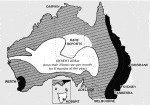
Fig. 1. Map of Australia indicating the regions where transmission of Echinoccus granulosus occurs. Black=regions where transmission occurs most commonly in wild-life; hatched=regions where E. granulosus has been reported but mostly in domestic animals; unhatched white (desert and Tasmania)=no transmission in wildlife or domestic animals.
 You have
Access
- 64
- Cited by