




No CrossRef data available.
Article contents
Epidemiology of Anguillicola crassus in the European eel (Anguilla anguilla) from two rivers in southern England
Published online by Cambridge University Press: 17 February 2005
Abstract
European eels Anguilla anguilla from the rivers Thames and Test, in the south of England, were examined between 2000 and 2003 for infection with the swim-bladder nematode Anguillicola crassus. Since its introduction to Thames eels at tidal estuarine locations circa 1987, A. crassus has become established in non-tidal freshwater stretches upriver and data from these locations are reported for the first time. The prevalence of infection at Thames estuary locations was higher during 2000–2003 than for the period 1987–1992. By 2003, similar prevalences were observed at freshwater and estuarine locations, but infection intensities were significantly higher in freshwater. Eels from the river Test appear to have been recently colonized by A. crassus (circa 2000). Parasite population establishment within these eels was uncharacteristically slow during 2000–2001, with low prevalence and intensity of infection, and few gravid females during this period. By 2003, infection levels in Test eels were similar to those in Thames eels. The expansion of the A. crassus population in Test eels has occurred in the absence of the paratenic host ruffe Gymnocephalus cernuus, and at suboptimal pH for the survival and infectivity of free-living larvae. The epidemiology of A. crassus in Test eels demonstrates that transmission of A. crassus by ruffe is not required for high prevalence and intensity of infection in eels. However, the consistently low and atypical levels of infection in Test eels during 2000 and 2001 suggests that paratenic transmission by ruffe may provide a substantial contribution to the dynamics of A. crassus in eels in the early years following introduction, by facilitating the rapid increase in prevalence and intensity of A. crassus infection that typically occurs during this time.
Keywords
Information
- Type
- Research Article
- Information
- Copyright
- © 2005 Cambridge University Press
INTRODUCTION
The nematode Anguillicola crassus originates from Asia, where it infects the Japanese eel Anguilla japonica (Kuwahara, Niimi & Itagaki, 1974). First introduced in the early 1980s, A. crassus now occurs throughout most of Europe (Kirk, 2003), including Britain since 1987 (Kennedy & Fitch, 1990), and Ireland since 1998 (Evans & Matthews, 1999). The introduction of A. crassus into uninfected eel populations is widely attributed to the European trade in live eels (Belpaire et al. 1989; Kennedy & Fitch, 1990; Moravec, 1992; Molnár, Székely & Perényi, 1994), but with parasite stages and susceptible hosts present in estuarine and marine environments (De Charleroy et al. 1989; Höglund & Thomas, 1992; Reimer et al. 1994; Kirk, Kennedy & Lewis, 2000a; Kirk, Lewis & Kennedy, 2000b; Nimeth et al. 2000), natural transmission between freshwater locations appears possible. The swift spread of A. crassus within a previously uninfected eel population may be due to a combination of host and parasite traits that include low intermediate and paratenic host specificity (Thomas & Ollevier, 1992; Moravec & Konecny, 1994; Székely, 1994; Moravec, 1996; Moravec & škoríková, 1998), susceptibility of eels regardless of size (Thomas & Ollevier, 1992; Nimeth et al. 2000), saltwater tolerance of the parasite and some of its hosts (Kennedy & Fitch, 1990; Kirk et al. 2000a,b), and the limited immunological response the parasite induces in European eels, compared with Japanese eels (Nielsen, 1999).
The life-history of A. crassus has been well described (Haenen et al. 1989; De Charleroy et al. 1990; Haenen & van Banning, 1991). Briefly, dioecious adults are located in the lumen of the eel swimbladder; eggs containing second-stage larvae pass to water via the pneumatic duct, oeosophagus and intestine. Free-living second-stage larvae are ingested by copepod and ostracod intermediate-host species, and develop within the haemacoel into third-stage larvae. Transmission to the eel definitive-host is via ingestion of intermediate hosts containing infective third-stage larvae, which then penetrate the eel alimentary tract and migrate to the outer swimbladder wall. Following metamorphosis to fourth-stage larvae within the swimbladder wall, the worms enter the lumen and mature. A considerable number of freshwater and estuarine fish species act as paratenic hosts for A. crassus (Höglund & Thomas, 1992; Moravec & Konecny, 1994), harbouring infective third-stage larvae and potentially contributing to the spread of A. crassus (Thomas & Ollevier, 1992).
The lower Thames, i.e. the tidal stretch, is believed to be a focal point of spread of A. crassus in the UK since its introduction circa 1987 (Kennedy & Fitch, 1990). The extent of infection in eels from the lower Thames has received limited attention since, and data from eels captured at upper Thames (non-tidal) locations appear to be absent entirely. This is in contrast to the temporal and spatial studies conducted elsewhere in Europe after the arrival of A. crassus (Belgium: Audenaert et al. 2003; Netherlands: Haenen, van Banning & Dekker, 1994; France: Lefebvre et al. 2002; Denmark: Nielsen, 1997; Ireland: Evans, Matthews & McClintock, 2001; Germany: Taraschewski et al. 1987; Sweden: Wickström, Clevestam & Höglund, 1998; Czech Republic: Baruš, Moravec & Proke, 1999).
The rapid dissemination of A. crassus across Europe is well documented (Kirk, 2003), and spatial and temporal studies now extend to recently infected eel populations in North America (Fries, Williams & Johnson, 1996) and North Africa (El Hilali et al. 1996). Of particular interest at the local scale has been the pattern in prevalence and mean intensity of A. crassus infection observed in the early stage following introduction, and whether and at what level these metrics subsequently stabilize. A relatively high prevalence (>50%) and mean intensity of A. crassus infection (>6 nematodes in the lumen, per infected eel) may be observed within a year of the first confirmed case locally (Kennedy & Fitch, 1990). The prevalence of infection remains high in subsequent years (>50%), but mean intensity of infection may stabilize (Ashworth, 1994; Ashworth & Blanc, 1997), perhaps as a result of density-dependent effects operating within the eel host (Ashworth & Kennedy, 1999).
The present study objectives were (1) to assess the extent of A. crassus infection in Thames eels, (2) to investigate the effect of host size, season and location, on the prevalence and intensity of infection, (3) to measure and compare, for the first time, the extent of A. crassus infection in eels from freshwater and brackish locations on the upper and lower Thames, and (4) to describe the recent colonization by A. crassus of freshwater eels from the River Test in Hampshire, a commercial eel and trout fishery.
MATERIALS AND METHODS
Freshwater eels were collected using weir traps in the river Test at Leckford, Hampshire, between October 1999 and October 2003. Fyke nets were used to collect eels from upper and lower Thames locations (Fig. 1) between June 2000 and Oct 2003. Teddington Weir marks the boundary between these Thames stretches, and the uppermost extent of tidal influence. Although tidal, the saltwater influence at London locations on the Lower Thames is low. In June 2000, the seawater content was <4% at Richmond and <10% at Greenwich, but approximately 60% at Thurrock, the most estuarine location (Environment Agency, Thames Region).

Fig. 1. South East England showing study locations. W: Windsor; TW: Teddington Weir (upper limit of tidal influence); R: Richmond; B: Barnes; TB: Tower Bridge; G: Greenwich; L: River Lea; E: Erith; T: Thurrock.
Eels were transported to aquaria at Royal Holloway, and stored in freshwater (16–18 °C) for a maximum of 4 days before being killed by benzocaine overdose, measured (total length, nearest cm), weighed (nearest gram) and the swimbladder lumen and wall examined fresh for A. crassus. Intestinal macroparasites were also collected, and this fauna is described elsewhere (Norton, Lewis & Rollinson, 2003, 2004; Norton, Rollinson & Lewis, 2004). Infection with adult A. crassus was described in eels from separate eel samples using parasite prevalence (% of hosts infected), mean parasite abundance (all eels per sample) and mean parasite intensity of infection (infected eels only) after Bush et al. (1997). Earlier findings from Thames eels, by Pilcher & Moore (1993) and Rassai (PhD thesis, 1993, Kings College, University of London, unpublished), are provided for comparison. Infection data provided by Rassai from a marine location at the furthest extent of the Thames estuary are not included as the origin of these eels is uncertain.
The likelihood of infection with A. crassus (presence or absence of the parasite) was investigated in Thames eels using logistic regression analysis of pooled data for 2000–2003. Eel weight was treated as a continuous variable. Season and location were treated as categorical factors, with season represented by 3 groups (Spring: April, May and June, Summer: July and August, Autumn: September, October and November), and location representing either upper or lower Thames. The effects of season and eel weight on the intensity of A. crassus infection were investigated using non-parametric tests on raw intensity data from infected eels only, pooled for 2000–2003, which tested for differences in median intensity of infection; separate tests were performed for upper and lower Thames eels.
Parasite dispersion indices were used as a measure of parasite establishment among eels from each location. These were computed using the QP2 program of Rósza, Reiczigel & Majoros (2000), and included the variance/mean abundance ratio, D (Poulin, 1993), and k of the negative binomial. The average variance/mean abundance ratio was also compared between freshwater and brackish regions of the river. Comprehensive data of infection with A. crassus third- and fourth-stage larvae were not available for Thames eels for all years and only pre-adult and adult A. crassus, i.e. those in the lumen of the swimbladder, were included in the Thames eel analyses. Excluding the third- and fourth-stage larvae (both resident in the wall of the swimbladder and difficult to distinguish) allows comparison with previous studies of Thames eels that present data for lumen worms only. Comprehensive data of A. crassus larvae were available for Test eels, and these are reported. Statistical analyses were computed using SPSS 12.1 and QP2 (Rósza et al. 2000).
RESULTS
The upper and lower River Thames
A total of 537 eels were captured from the Thames during 2000–2003 (249 eels from the upper Thames and 288 eels from the lower Thames). The mean weight of upper Thames eels (510 g) was significantly greater than that of lower Thames eels (301 g) (ANOVA; F=147·68, P<0·000). A single logistic regression analysis of data from all 537 Thames eels indicated that infection with A. crassus (presence or absence of the parasite) was not related to eel weight (P=0·175), upper or lower Thames origin (P=0·502), or season (P=0·879).
During 2000–2003, prevalence of infection in lower Thames eels generally exceeded values reported in previous Thames studies, and this has been most noticeable at Thurrock, on the lower Thames. No data are available on prevalence of infection in upper Thames eels prior to this study. During 2000–2003, mean prevalence in the upper Thames (52%) was similar to that in the lower Thames (48%) (Table 1). In failing to detect a significant difference in the proportion of eels infected between the upper and lower Thames, the logistic regression analysis indicated that these prevalence values do not differ significantly.
Table 1. Extent of Anguillicola crassus infection in eels from the River Thames, 1988–2003 (95% confidence limits in parentheses. *Rassai (1993) (unpublished PhD thesis). **Pilcher & Moore (1993).)

The mean intensities of infection, mean abundances and the maximum number of nematodes per infected eel, were generally higher in eels from the upper Thames (Table 1). Intensity of infection data could not be normalized, and nonparametric tests were used to investigate the individual effects of eel weight and season on the intensity of A. crassus infection. In upper Thames eels, the intensity of infection did not correlate with eel weight (Spearman's rank test; rS=0·063, P=0·476), and the median intensity of infection did not differ significantly between seasons (Kruskal-Wallis test; Chi2=3·927, P=0·140). In lower Thames eels, the intensity of infection did not correlate with eel weight (Spearman's rank test; rS=0·028, P=0·748), but the median intensity of infection showed some seasonality (Kruskal-Wallis test; Chi2=10·558, P=0·005), increasing significantly between summer and autumn (Mann-Witney test; U=536·5, P=0·003). Because of this effect of season in lower Thames eels, intensity of infection was compared between upper and lower Thames eels, per season. Median intensity of infection was significantly higher in eels from the upper Thames in all cases (Mann-Witney U tests; Spring: U=726·0, P=0·036; Summer: U=506·0, P=0·000; Autumn: U=843·5, P=0·047).
The calculated values of 3 dispersion indices showed A. crassus to be highly aggregated in eels from both the upper and lower Thames (Table 2).

The River Test
Anguillicola crassus was not observed in a sample of 50 eels captured from the River Test at Leckford during October 1999. Nor was there any evidence of larvae, gross histopathological damage to the swimbladder wall, or recent elimination of A. crassus infection i.e. fluid in the swimbladder lumen, in any of these eels. Subsequent eel samples from this location revealed A. crassus at a low prevalence during 2000 and 2001 (Table 3).
Table 3. The extent of Anguillicola crassus infection in eels from the River Test at Leckford, 1999–2000 (95% confidence limits in parentheses, for samples with sufficient data for the bootstrapping technique of Rósza et al. (2000).)

The mean abundance, mean intensity of infection, and the maximum number of A. crassus adults per eel, were consistently low in eels from Leckford during 2000 and 2001, with infections predominantly consisting of 1 or 2 parasites in the lumen (Table 3). Most of these were pre-adults, and only 3 gravid females were observed, 1 in July 2000 and 2 in August 2001. Larvae within the swimbladder wall were first observed in August 2001, with marginally increased mean abundance, mean intensity and range of A. crassus adults per eel. No data are available for 2002, but by 2003 the A. crassus population had increased considerably; prevalence of infection had risen to 57% by October, although highest mean intensity of infection was observed in July.
The variance to mean abundance ratio indicated that from July 2000 to October 2001 A. crassus was approximately randomly distributed among eels from Leckford (Table 3). By 2003, the distribution of A. crassus was aggregated in eels from Leckford. The low values of mean intensity of infection, the low numbers of adult parasites per eel, together with the non-aggregated s2/mean-abundance ratios and paucity of larvae and gravid females, strongly suggest that by the end of 2001 A. crassus was still in the early stages of colonizing this eel population.
DISCUSSION
This study found no evidence that eel weight, season or location, significantly affected the likelihood of A. crassus infection in Thames eels during 2000–2003. These negative results suggest that prevalence data collected during this period can be compared with data from earlier Thames studies (1987–1992) that did not consider host size or season, and between freshwater and brackish Thames locations (2000–2003) where the average weight of eels differs significantly.
In River Thames eels, the highest prevalence of A. crassus infection between 1987 and 1992 was observed at Tower Bridge (44 and 66%). These values were considerably higher than prevalence downriver at Thurrock, which did not exceed 12% (Rassai, 1993 unpublished thesis; Pilcher & Moore, 1993), and may have reflected a lower parasite transmission rate at higher salinities (De Charleroy et al. 1989; Kennedy & Fitch, 1990). A similar difference, in prevalence of A. crassus infection within eels from the same river, has occurred in mainland Europe, with lower prevalence recorded at brackish and marine locations (Taraschewski et al. 1987; Dekker & van Willigen, 1989; Nielsen, 1997).
However, a considerable increase in prevalence of infection has occurred in eels from Thurrock since 1991. In contrast, prevalence recorded at Tower Bridge in 1988/9 was similar to that at nearby Greenwich during 2000–2003. It seems likely that in this predominantly freshwater region of the lower Thames (Tower Bridge/Greenwich), prevalence of infection has remained relatively high. Prevalence at Thurrock, a brackish location, has increased at a slower rate and did not reach levels comparable with Tower Bridge or Greenwich until some time after 1991. By 2000–2003, prevalence was highly similar between eels from the upper and lower Thames.
Data for mean intensity of infection are not available for eels from Tower Bridge, and limited to a single record at Thurrock prior to 2000. Mean abundance at Thurrock was similar for 1987–1991 and 2000–2003, but a greater proportion of eels were infected during the later period, suggesting that mean intensity has decreased. Mean abundances between Tower Bridge (1988/9) and Greenwich (2000–2003) cannot be compared as confidently, but appear to have decreased.
During 2000–2003, the median intensity of A. crassus infection was significantly higher in the upper Thames, where eels were significantly heavier on average. Intensity of infection did not correlate with weight in these eels, or differ between Spring, Summer and Autumn. In lower Thames eels, weight did not have a significant effect on intensity of infection, but there was a significant increase in median intensity of infection between Summer and Autumn. This asymmetrical effect of season on the intensity of infection is not easily accounted for, but the higher values recorded in upper Thames eels may reflect salinity-dependent transmission success (De Charleroy et al. 1989; Kennedy & Fitch, 1990).
Overall, the epidemiology of A. crassus in the Thames, one of the first infected localities in the UK, appears to have been typical. There was a rapid increase in prevalence of infection at freshwater lower Thames locations within 2 years of the first record, which appears to have fluctuated around a high level subsequently, but occurred later at brackish locations. By 2000–2003, prevalence was similar in the upper and lower Thames, A. crassus was highly aggregated at all locations, and mean intensities appeared stable.
To our knowledge, this study presents the first record of A. crassus in eels from the River Test. The parasite was not detected in eels captured at Leckford in October 1999, but infected eels were observed at low prevalence (4%) in July 2000. During 2001, infrequent and low intensities of infection were still the norm and gravid female worms, and larvae, were rare. Prevalence reached a temporary maximum of 18% in August 2001, but had fallen to 7% by October. Parasites were randomly distributed within the eel population, and no eel harboured more than 2 nematodes in the swimbladder lumen. By 2003, A. crassus was aggregated in eels at Leckford, and prevalence and intensity of infection had increased to levels comparable with eels from the Thames.
The extent of A. crassus infection usually increases rapidly in recently colonized eel populations, and prevalence is often high when the parasite is first recorded (Kennedy & Fitch, 1990; Moravec, 1992). Infection levels in eels from Leckford (1999–2003) suggest that A. crassus is a relatively recent addition to the parasite fauna of Test eels, but the spread of A. crassus in this host population was uncharacteristically slow. The reasons for this are not clear, but certain aspects of the Test environment may have contributed. The Test is unusual in that a prominent paratenic fish-host for A. crassus, ruffe Gymnocephalus cernua, is absent (UK Biodiversity Network Database, November 2004: www.nbn.org.uk), and the pH range of this river is suboptimal for the transmission of this parasite (Kennedy & Fitch, 1990). The effect on the dynamics of A. crassus is presumed to be negative in each case, although the magnitude of each effect remains speculative at this time.
Perhaps the most relevant of these factors is the absence of ruffe from the Test. As eels grow they become increasing piscivorous (Sinha, 1969; Tesch, 1977), and acquire infective third-stage larvae from the fish component of their diet (Haenen & van Banning, 1991). Ruffe are commonly infected with A. crassus larvae, and harbour considerably higher intensities of infection, and a higher proportion of viable larvae, than other paratenic fish-hosts (Thomas & Ollevier, 1992; Székely, 1994; Pazooki & Székely, 1994; Pietrock & Meinelt, 2002; Rolbiecki, 2002). Ruffe are also common and abundant in mainland Europe (Ogle, 1998). If ruffe do contribute substantially to A. crassus dynamics in eels, the absence of this host from the Test may be relevant in explaining the slow spread of this parasite. Paratenic host species present in the Test include perch Perca fluviatilis and gudgeon Gobio gobio. The prevalence of A. crassus, and intensity of viable larvae, is considerably lower in perch when compared with ruffe (Thomas & Ollevier, 1992). The extent of A. crassus infection in gudgeon has not been intensively investigated, but is potentially higher than in perch (Thomas & Ollevier, 1992).
The second factor that may have contributed to slow the spread of A. crassus in eels from the Test is the pH range of this river. Free-living, second-stage A. crassus larvae exhibit maximum longevity in freshwater (De Charleroy et al. 1989; Kennedy & Fitch, 1990; Kirk et al. 2000a,b). But, survival and infectivity of these larvae are significantly reduced as pH increases in the range pH 4–9 (Kennedy & Fitch, 1990). The Test is a chalk-based river with a mean pH 8, ranging annually between pH 7·6 and 8·3 (Environment Agency data, courtesy of Dr Cyril Bennett). Thus, a degree of reduced longevity and infectivity of second-stage larvae seems likely in the Test.
These characteristics of the Test environment combined i.e. the absence of ruffe and suboptimal pH, may account for the low levels of A. crassus infection observed in eels from Leckford during 2000 and 2001. But, the increased prevalence and mean intensity of infection during 2003 demonstrates a high transmission potential of A. crassus, regardless. This finding suggests that the presence of ruffe and optimum pH may contribute to A. crassus population dynamics during the early stages of establishment in an eel population. The extent of this contribution is speculative, but it is possible that sympatric ruffe facilitate the rapid increase in prevalence of A. crassus infection in eels, an increase that typically occurs within a year of introduction. Ruffe have a cosmopolitan distribution, and the range of environments that this fish can tolerate and thrive in (Ogle, 1998) suggests that its arrival in the River Test may be inevitable. The unusual situation would then exist, where ruffe arrived at a location after A. crassus, providing a rare opportunity to test hypotheses of the impact and importance of this paratenic host on A. crassus infra- and component population dynamics.
Grateful thanks are due to Dr Neil Morley, Chris Williams and Andy Martin, for advice and technical assistance, and to The Leckford Estate and Eton College for providing facilities and access to eels. The project was funded by the Leverhulme Trust and The Linnean Society of London.
References
REFERENCES
ASHWORTH, S. T. (
1994).
Possible regulation in the Anguillicola crassus host–parasite system. In
Parasitic Diseases of Fish (
ed. Pike, A. W. & Lewis, J. W.), pp.
141–150.
Samara Publishing,
Tresaith, Dyfed.
ASHWORTH, S. T. &
BLANC, G. (
1997).
Anguillicola crassus, un colonisateur agressif récemment introduit dans les stocks Européens d'anguilles.
Bulletin Francais de la Pêche et de la Pisciculture
344/345,
335–342.CrossRefGoogle Scholar
ASHWORTH, S. T. &
KENNEDY, C. R. (
1999).
Density dependent effects on Anguillicola crassus (Nematoda) within its European eel definitive host.
Parasitology
118,
289–296.CrossRefGoogle Scholar
AUDENAERT, V.,
HUYSE, T.,
GOEMANS, G.,
BELPAIRE, C. &
VOLCKAERT, F. A. M. (
2003).
Spatio-temporal dynamics of the parasitic nematode Anguillicola crassus in Flanders, Belgium.
Diseases of Aquatic Organisms
55,
223–233.CrossRefGoogle Scholar
BARUš, V.,
MORAVEC, F. &
PROKEš, M. (
1999).
Anguillicolosis of the European eel (Anguilla anguilla) in the Czech Republic.
Czech Journal of Animal Science
44,
423–431.Google Scholar
BELPAIRE, C.,
DE CHARLEROY, D.,
THOMAS, K.,
VAN DAMME, P. &
OLLEVIER, F. (
1989).
Effects of restocking on the distribution of the swimbladder nematode Anguillicola crassus in Flanders, Belgium.
Journal of Applied Ichthyology
5,
151–153.CrossRefGoogle Scholar
BUSH, A. O.,
LAFFERTY, K. D.,
LOTZ, J. M. &
SHOSTAK, A. W. (
1997).
Parasitology meets ecology on its own terms: Margolis et al. revisited.
Journal of Parasitology
83,
575–583.CrossRefGoogle Scholar
DE CHARLEROY, D.,
THOMAS, K.,
BELPAIRE, C. &
OLLEVIER, F. (
1989).
The viability of the free-living larvae of Anguillicola crassus.
Journal of Applied Ichthyology
5,
154–156.CrossRefGoogle Scholar
DE CHARLEROY, D.,
GRISEZ, L.,
THOMAS, K.,
BELPAIRE, C. &
OLLEVIER, F. (
1990).
The life cycle of Anguillicola crassus.
Diseases of Aquatic Organisms
8,
77–84.CrossRefGoogle Scholar
DEKKER, W. &
VAN WILLIGEN, J. (
1989).
Short note on the distribution and abundance of Anguillicola in the Netherlands.
Journal of Applied Ichthyology
1,
46–47.CrossRefGoogle Scholar
EVANS, D. W. &
MATTHEWS, M. A. (
1999).
Anguillicola crassus (Nematoda: Dracunculoidea); first documented record of this swimbladder parasite of eels in Ireland.
Journal of Fish Biology
55,
665–668.CrossRefGoogle Scholar
EVANS, D. W.,
MATTHEWS, M. A. &
McCLINTOCK, C. A. (
2001).
The spread of the eel swimbladder nematode Anguillicola crassus through the Erne system, Ireland.
Journal of Fish Biology
59,
1416–1420.CrossRefGoogle Scholar
FRIES, L. T.,
WILLIAMS, D. J. &
JOHNSON, S. K. (
1996).
Occurrence of Anguillicola crassus, an exotic parasitic swim bladder nematode of eels, the southeastern United States.
Transactions of the American Fisheries Society
125,
794–797.2.3.CO;2>CrossRefGoogle Scholar
HAENEN, O. L. M.,
GRISEZ, L.,
DE CHARLEROY, D.,
BELPAIRE, C. &
OLLEVIER, F. (
1989).
Experimentally induced infections of European eel Anguilla anguilla with Anguillicola crassus (Nematoda, Dracunculoidea) and subsequent migration of larvae.
Diseases of Aquatic Organisms
7,
97–101.CrossRefGoogle Scholar
HAENEN, O. L. M. &
VAN BANNING, P. (
1991).
Experimental transmission of Anguillicola crassus (Nematoda, Dracunculoidea) larvae from infected prey fish to the eel Anguilla anguilla.
Aquaculture
92,
115–119.CrossRefGoogle Scholar
HAENEN, O. L. M.,
VAN BANNING, P. &
DEKKER, W. (
1994).
Infection of eel Anguilla anguilla (L.) and smelt Osmerus eperlanus (L.) with Anguillicola crassus (Nematoda, Dracunculoidea) in the Netherlands from 1986 to 1992.
Aquaculture
126,
219–229.Google Scholar
EL HILALI, M.,
YAHYAOUI, A.,
SADAK, A.,
MAACHI, M. &
TAGHY, Z. (
1996)
Premières données épidémiologies sur l'anguillicolose au Maroc.
Bulletin Francais de la Pêche et de la Pisciculture
340,
57–60.CrossRefGoogle Scholar
HÖGLUND, J. &
THOMAS, K. (
1992).
The black goby Gobius niger as a potential paratenic host for the parasitic nematode Anguillicola crassus in a thermal effluent of the Baltic.
Diseases of Aquatic Organisms
13,
175–180.CrossRefGoogle Scholar
KENNEDY, C. R. &
FITCH, D. J. (
1990).
Colonisation, larval survival and epidemiology of the nematode Anguillicola crassus, parasitic in the eel Anguilla anguilla, in Britain.
Journal of Fish Biology
36,
117–131.CrossRefGoogle Scholar
KIRK, R. S. (
2003).
The impact of Anguillicola crassus on European eels.
Fisheries Management and Ecology
10,
385–394.CrossRefGoogle Scholar
KIRK, R. S.,
KENNEDY, C. R. &
LEWIS, J. W. (
2000 a).
Effect of salinity on hatching, survival and infectivity of Anguillicola crassus (Nematoda: Dracunculoidea) larvae.
Diseases of Aquatic Organisms
40,
211–218.Google Scholar
KIRK, R. S.,
LEWIS, J. W. &
KENNEDY, C. R. (
2000 b).
Survival and transmission of Anguillicola crassus Kuwahara, Niimi & Itagaki, 1974 (Nematoda) in seawater eels.
Parasitology
120,
289–295.Google Scholar
KUWAHARA, A.,
NIIMI, A. &
ITAGAKI, H. (
1974).
Studies on a nematode parasitic in the air bladder of the eel. I. Description of Anguillicola crassa n. sp. (Philometridea, Anguillicolidae).
Japanese Journal of Parasitology
23,
275–279.Google Scholar
LEFEBVRE, F.,
CONTOURNET, P.,
PRIOUR, F.,
SOULAS, O. &
CRIVELLI, A. J. (
2002).
Spatial and temporal variation in Anguillicola crassus counts: results of a 4 year survey of eels in Mediterranean lagoons.
Diseases of Aquatic Organisms
50,
181–188.CrossRefGoogle Scholar
MOLNÁR, K.,
SZÉKELY, C. S. &
PERÉNYI, M. (
1994).
Dynamics of Anguillicola crassus (Nematoda: Dracunculoidea) infection in eels of Lake Balaton, Hungary.
Folia Parasitologica
41,
193–202.Google Scholar
MORAVEC, F. (
1992).
Spreading of the nematode Anguillicola crassus (Dracunculoidea) among eel populations in Europe.
Folia Parasitologica
39,
247–248.Google Scholar
MORAVEC, F. (
1996).
Aquatic invertebrates (snails) as new paratenic hosts of Anguillicola crassus (Nematoda: Dracunculoidea) and the role of paratenic hosts in the life cycle of this parasite.
Diseases of Aquatic Organisms
27,
237–239.CrossRefGoogle Scholar
MORAVEC, F. &
KONECNY, R. (
1994).
Some new data on the intermediate and paratenic hosts of the nematode Anguillicola crassus Kuwahara, Niimi et Itagaki, 1974 (Dracunculoidea), a swimbladder parasite of eels.
Folia Parasitologica
41,
65–70.Google Scholar
MORAVEC, F. &
šKORÍKOVÁ, B. (
1998).
Amphibians and larvae of insects as new paratenic hosts of Anguillicola crassus (Nematoda: Dracunculoidea), a swimbladder parasite of eels.
Diseases of Aquatic Organisms
34,
217–222.CrossRefGoogle Scholar
NIELSEN, M. E. (
1997).
Infection status of the swimbladder worm, Anguillicola crassus in silver stage European eel, Anguilla anguilla, from three different habitats in Danish waters.
Journal of Applied Ichthyology
13,
195–196.CrossRefGoogle Scholar
NIELSEN, M. E. (
1999).
An enhanced humoral immune response against the swimbladder nematode, Anguillicola crassus, in the Japanese eel. Anguilla japonica, compared with the European eel, A. anguilla.
Journal of Helminthology
73,
227–232.Google Scholar
NIMETH, K.,
ZWERGER, P.,
WÜRTZ, J.,
SALVERMOSER, W. &
PELSTER, B. (
2000).
Infection of the glass-eel swimbladder with the nematode Anguillicola crassus.
Parasitology
121,
75–83.CrossRefGoogle Scholar
NORTON, J.,
LEWIS, J. W. &
ROLLINSON, D. (
2003).
Parasite infracommunity diversity in eels: a reflection of local component community diversity.
Parasitology
127,
475–482.CrossRefGoogle Scholar
NORTON, J.,
LEWIS, J. W. &
ROLLINSON, D. (
2004).
Temporal and spatial patterns of nestedness in eel-macroparasite communities.
Parasitology
129,
203–211.CrossRefGoogle Scholar
NORTON, J.,
ROLLINSON, D. &
LEWIS, J. W. (
2004).
Patterns of infracommunity species richness in eels.
Journal of Helminthology
78,
141–146.CrossRefGoogle Scholar
OGLE, D. H. (
1998).
A synopsis of the biology and life history of ruffe.
Journal of Great Lakes Research
24,
170–185.CrossRefGoogle Scholar
PAZOOKI, J. &
SZÉKELY, C. (
1994).
Survey of the paratenic hosts of Anguillicola crassus in Lake Velece, Hungary.
Acta Veterinaria Hungarica
42,
87–97.Google Scholar
PIETROCK, M. &
MEINELT, T. (
2002).
Dynamics of Anguillicola crassus larval infections in a paratenic host, the ruffe (Gymnocephalus cernuus) from the Oder River on the border of Germany and Poland.
Journal of Helminthology
76,
235–240.CrossRefGoogle Scholar
PILCHER, M. W. &
MOORE, J. F. (
1993).
Distribution and prevalence of Anguillicola crassus in eels from the tidal Thames catchment.
Journal of Fish Biology
43,
339–344.CrossRefGoogle Scholar
POULIN, R. (
1993).
The disparity between observed and uniform distributions: a new look at parasite aggregation.
International Journal for Parasitology
23,
937–944.CrossRefGoogle Scholar
REIMER, L. W.,
HILDEBRAND, A.,
SCHARBERTH, D. &
WALTER, U. (
1994).
Anguillicola crassus in the Baltic Sea: field data supporting transmission in brackish waters.
Diseases of Aquatic Organisms
18,
77–79.CrossRefGoogle Scholar
ROLBIECKI, L. (
2002).
On the role of the paratenic hosts in the life cycle of the nematode Anguillicola crassus in the Vistula lagoon, Poland.
Acta Ichthyologia et Piscatoria
32,
109–116.CrossRefGoogle Scholar
RÓSZA, L.,
REICZIGEL, J. &
MAJOROS, G. (
2000).
Quantifying parasites in samples of hosts.
Journal of Parasitology
86,
228–232.Google Scholar
SINHA, V. R. P. (
1969).
A note on the feeding of larger eels Anguilla anguilla (L.).
Journal of Fish Biology
1,
279–283.CrossRefGoogle Scholar
SZÉKELY, C. (
1994).
Paratenic hosts for the parasitic nematode Anguillicola crassus in Lake Balaton, Hungary.
Diseases of Aquatic Organisms
18,
11–20.CrossRefGoogle Scholar
TARASCHEWSKI, H.,
MORAVEC, F.,
LAMAH, T. &
ANDERS, K. (
1987).
Distribution and morphology of two helminths recently introduced into European eel populations: Anguillicola crassus (Nematoda, Dracunculoidea) and Paratenuisentis ambiguus (Acanthocephala, Tenuisentidae).
Diseases of Aquatic Organisms
3,
167–176.CrossRefGoogle Scholar
THOMAS, K. &
OLLEVIER, F. (
1992).
Paratenic hosts of the swimbladder nematode Anguillicola crassus.
Diseases of Aquatic Organisms
13,
165–174.CrossRefGoogle Scholar
WICKSTRÖM, H.,
CLEVESTAM, P. &
HÖGLUND, J. (
1998).
The spreading of Anguillicola crassus in freshwater lakes in Sweden.
Bulletin Francais de la Pêche et de la Pisciculture
349,
215–221.CrossRefGoogle Scholar
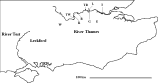
Fig. 1. South East England showing study locations. W: Windsor; TW: Teddington Weir (upper limit of tidal influence); R: Richmond; B: Barnes; TB: Tower Bridge; G: Greenwich; L: River Lea; E: Erith; T: Thurrock.
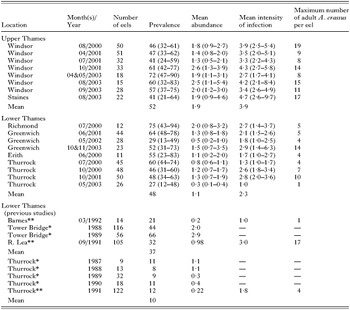
Table 1. Extent of Anguillicola crassus infection in eels from the River Thames, 1988–2003
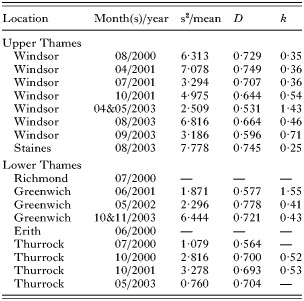
Table 2. Aggregation of Anguillicola crassus in eels from locations on the River Thames, June 2000–November 2003, for samples with sufficient data for the programme of Rósza et al. (2000)
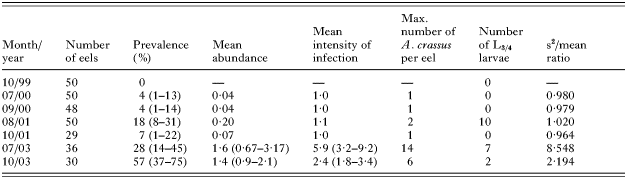
Table 3. The extent of Anguillicola crassus infection in eels from the River Test at Leckford, 1999–2000
 You have
Access
- 17
- Cited by