INTRODUCTION
One third of the cancer patients in palliative care and their caregivers may suffer from anxiety or depression (Götze et al., Reference Götze, Brähler and Gansera2014; Mitchell et al., Reference Mitchell, Chan and Bhatti2011). Psychological distress and spiritual and existential suffering can be debilitating experiences, conditions that palliative care seeks to alleviate (Boston et al, Reference Boston, Bruce and Schreiber2011; Sepulveda et al., Reference Sepulveda, Marlin and Yoshida2002). Another important aim of palliative care is to enable patients to be cared for and die where they prefer. Although patients and caregivers generally prefer care and death at home (Gomes et al., Reference Gomes, Calanzani and Curiale2013a; Higginson & Sen-Gupta, Reference Higginson and Sen-Gupta2000), most cancer patients do not die at home (Cohen et al., Reference Cohen, Houttekier and Onwuteaka-Philipsen2010). Informal caregivers can play a central role in helping patients to remain at home (Grande & Ewing, Reference Grande and Ewing2008), and patients may be hospitalized if caregivers can no longer cope with home care (Aabom et al., Reference Aabom, Obling and Rasmussen2000). Patients and their partners cope with disease in interaction with each other (Berg & Upchurch, Reference Berg and Upchurch2007) and are often emotionally interdependent (Hagedoorn et al., Reference Hagedoorn, Sanderman and Bolks2008). This suggests that the patient–caregiver dyad should be targeted as the unit of care. Addressing psychological distress in both patients and caregivers may be one way of helping patients to remain at home, by increasing the dyad's ability to cope with illness at home.
Although the psychological needs of patients and caregivers should be addressed by home-based specialized palliative care (SPC) services, few interventions with integrated systematic psychological support have been tested. In a review of studies of home-based SPC, Gomes and colleagues (Reference Gomes, Calanzani and Gysels2013b) identified only five studies of cancer patients that included a systematic psychosocial component. These studies consisted of peer support with multiprofessional teaching (Harding et al., Reference Harding, Higginson and Leam2004), psychoeducation (Bakitas et al., Reference Bakitas, Lyons and Hegel2009a; Hudson et al., Reference Hudson, Aranda and Hayman-White2005), training in coping skills (McMillan et al., Reference McMillan, Small and Weitzner2006), and “carer advisor” visits (Walsh et al., Reference Walsh, Jones and Tookman2007). Most of the studies targeted caregivers with a fixed number of contacts (three to six), while one targeted patients, following them until death (Bakitas et al., Reference Bakitas, Lyons and Hegel2009a). One study reported the effects on patients' quality of life and depressed mood (Bakitas et al., Reference Bakitas, Lyons and Hegel2009b). Most reported some, but limited, effects on caregiver outcomes. Only one study investigated the effects on place of care or death, finding no effect on hospital stay (Bakitas et al., Reference Bakitas, Lyons and Hegel2009b). These sporadic effects and the absence of interventions targeting the dyad indicate that new approaches are required to integrate palliative psychological interventions. We hypothesized that offering a needs-based psychological intervention to patient–caregiver dyads integrated into SPC, with a focus on existential concerns, would alleviate patient and caregiver psychological distress and thus better enable patients to remain at home.
We present and discuss the program of a dyadic psychological intervention and data indicating its acceptability and feasibility. The psychological intervention is one component of a larger and complex SPC intervention for patient–caregiver dyads, the Domus randomized controlled trial (RCT) (Nordly et al., Reference Nordly, Benthien and Von Der Maase2014). In the present paper, we discuss the psychological component so as to provide future programs and research with detailed descriptions of the rationale for previously tested interventions.
METHODS
Context of the Psychological Intervention
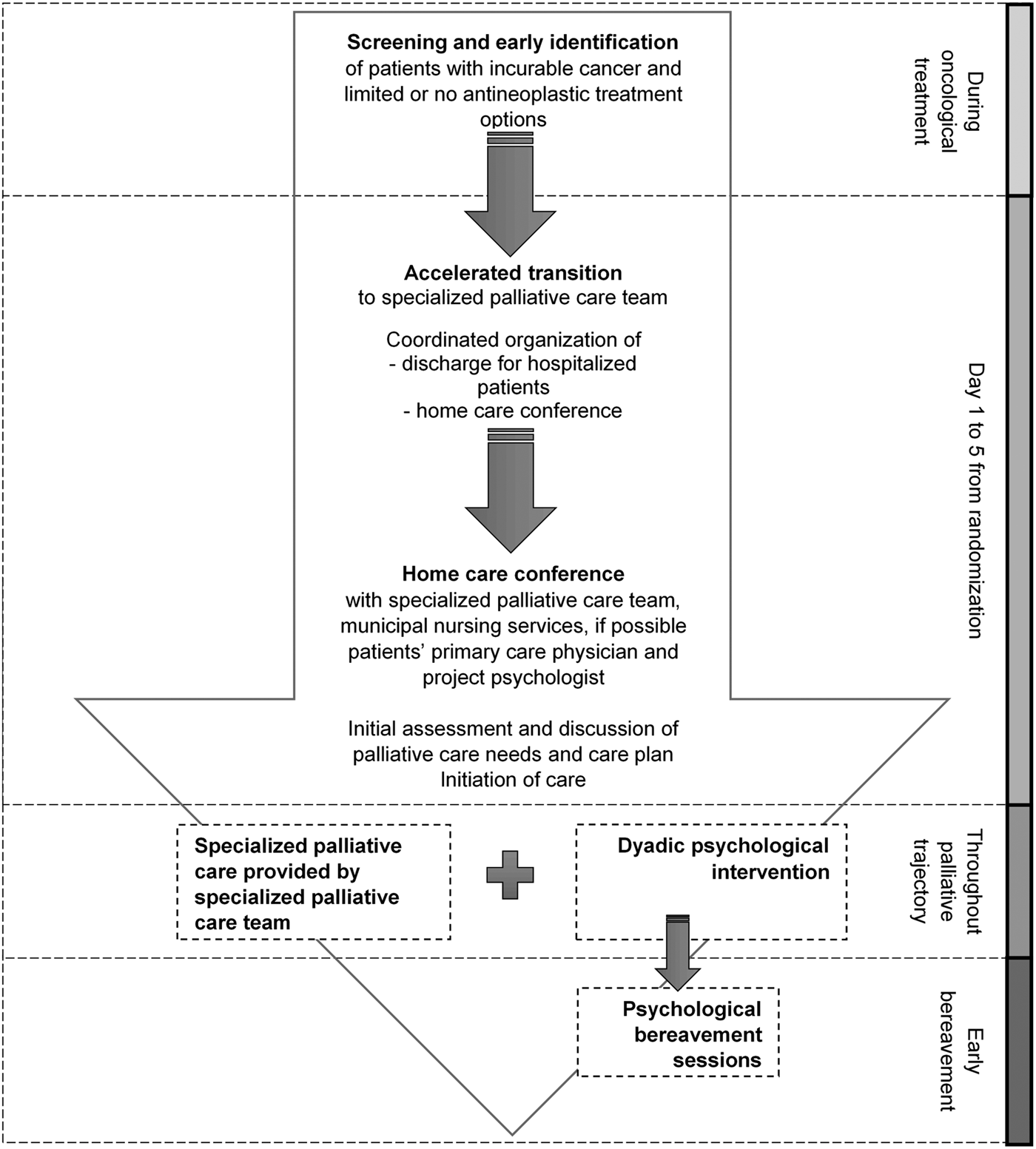
Only about one in four patients in Denmark with cancer dies at home (Jarlbæk, Reference Jarlbæk2015), and 48% of patients who die from cancer have been in contact with SPC (Hansen et al., Reference Hansen, Adsersen and Grønvold2015). The Domus model offered an accelerated transition to SPC for patients with incurable cancer who had limited antineoplastic treatment options or who chose to forego treatment, and for their caregivers (Benthien et al., Reference Benthien, Nordly and Videbæk2015; Nordly et al., Reference Nordly, Benthien and Von Der Maase2014). Each patient could appoint one informal caregiver (often a spouse or adult child) to participate, regardless of their relationship. The model (see Figure 1) included screening, early identification, accelerated referral to a specialized palliative care team (SPT), planning of an interdisciplinary home care conference to initiate care by the SPT and municipal nursing services, and a dyadic psychological intervention. The primary aim was to increase the number of days that patients spent at home and the number of home deaths. The efficacy of this complex intervention is currently being tested and compared to a care-as-usual control group. Neither SPC nor psychological intervention are offered systematically to patients and caregivers in usual care (Nordly et al., Reference Nordly, Benthien and Von Der Maase2014).
Domus specialized palliative care model.

Rationale for Integrated Dyadic Psychological Intervention
In addition to physical symptoms and medical necessities, emergency hospitalizations of cancer patients may have psychosocial causes (Hjermstad et al., Reference Hjermstad, Kolflaath and Løkken2013), including instances where caregivers are unable to cope with the care situation at home (Aabom et al., Reference Aabom, Obling and Rasmussen2000). We integrated a psychological intervention into SPC in the Domus model so as to alleviate distress during home care. We hypothesized that the psychological intervention would prevent escalation of distress to the point at which the emotional resources of caregivers or patients are depleted and home care is no longer a feasible option.
Based on findings of emotional interdependence and interactive coping (Berg & Upchurch, Reference Berg and Upchurch2007; Hagedoorn et al., Reference Hagedoorn, Sanderman and Bolks2008), the patient–caregiver dyad was chosen as the unit of care. Patients who participated without a caregiver received sessions alone. In order to identify and address emerging psychological needs, the intervention was designed to include continuous needs assessment by psychologists throughout palliative care. A flexible needs-based therapeutic framework was chosen to ensure that the intervention could address the wide range of needs that might arise. Existential-phenomenological therapy (EPT) (Spinelli, Reference Spinelli2007; van Deurzen, Reference van Deurzen2010) was selected because of the importance of both psychological and existential issues in palliative care and the premise that underlies EPT, that some life circumstances, such as suffering and death, cannot be averted but must be lived with, in the best possible way. The thematic content of sessions was not specified in advance, so every dyad (with the psychologist) could decide on the content of each session based on their specific situation and needs at any given time. Different issues would likely be important for dyads with various relationships (e.g., a patient and his/her partner, adult child, or sibling), all of which prespecified sessions might not be able to address.
In sum, the psychological intervention was hypothesized to enhance the primary outcome of the Domus RCT by (1) alleviating psychological distress, (2) supporting communication and the dyadic nature of coping with illness, (3) continuously assessing a dyad's need for psychological intervention, and (4) legitimizing psychosocial needs and help-seeking. Through these mechanisms, we hypothesized, patients and caregivers would cope with the home care situation more easily. Thus, the psychological intervention was one of the ways in which the Domus RCT aimed to help patients receive care and die at home.
Preparatory Work, Development, and Pilot-Testing
An intervention manual was prepared describing the therapeutic approach, the course of sessions, and guidelines for referral to treatment outside the RCT. The manual was pilot-tested, and the comments of experienced palliative care professionals were solicited about the initial intervention. The session course was adapted to increase its flexibility to meet emerging needs. The manual will be available from the first author upon completion of the RCT.
Intervention Procedure and Course
A psychologist followed each patient–caregiver dyad throughout the palliative care trajectory and the caregiver into early bereavement. Psychologists collaborated with nurses and physicians from the SPT by sharing information, coordinating interventions and facilitating referrals (e.g., to social workers) in accordance with the needs of the dyad.
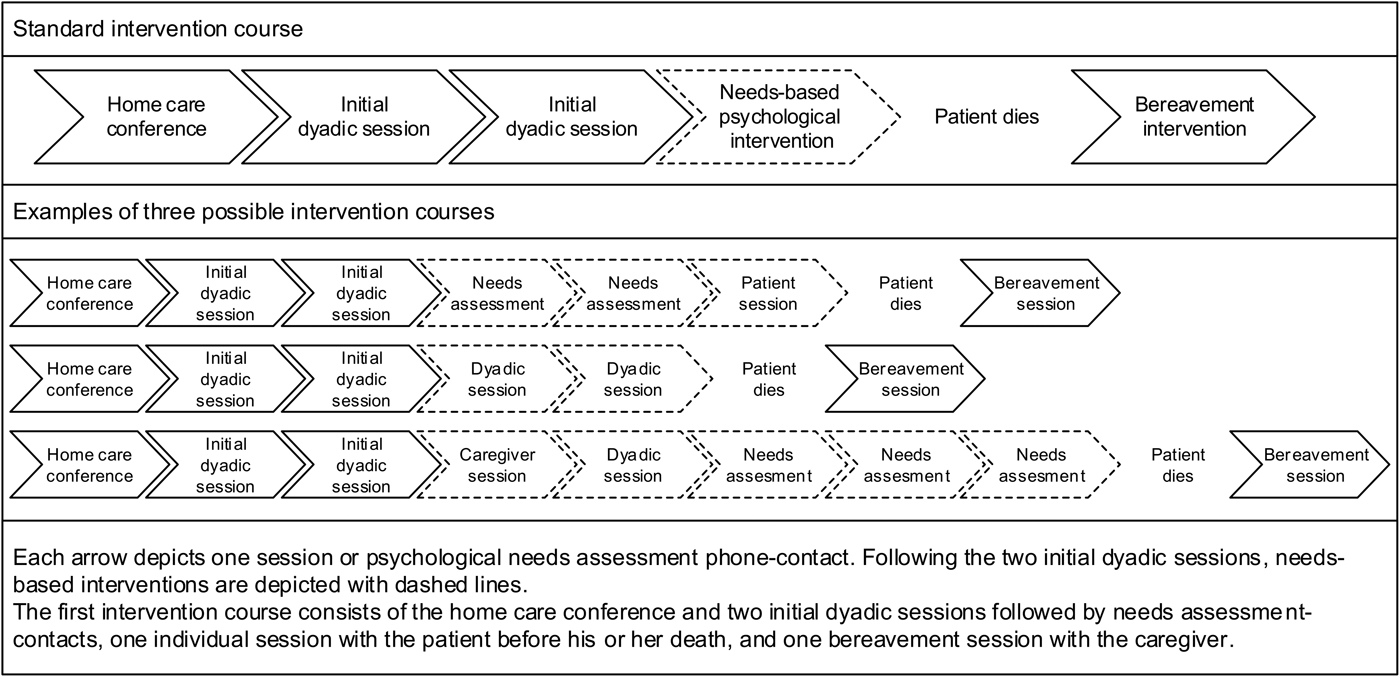
Two sessions in the first month of the intervention (Figure 2) focused primarily on initial needs assessment and establishment of a therapeutic alliance. Thereafter, sessions were scheduled flexibly, depending on dyads' needs and challenges. Like the SPT, psychologists thus used a needs-based and patient-centered approach. When no sessions were scheduled, the needs assessment was updated by monthly telephone calls. If a patient died during the study period, the bereaved caregiver was offered one or two bereavement sessions about a month after the loss. These sessions included targeted psychoeducation about grief, assessment of need for further grief intervention, and discussion of relevant services.
Domus psychological intervention course: three possible examples.

Needs Assessment
Psychologists assessed needs monthly in dialogue with the dyad, based on present needs and risk factors. Need for psychological intervention was defined by one of two criteria: (1) presence of psychiatric disorders listed in the International Classification of Diseases, Revision 10, such as depression or anxiety, or the presence of distress affecting a dyad's ability to adjust; and (2) relational or psychosocial barriers to receiving SPC at home (e.g., disagreements within the dyad, changes in family roles that challenge receipt of care or communication with healthcare professionals). The assessment also included the risk factors identified in the literature for distress in patients (National Comprehensive Cancer Network, 2014) and caregivers (Pitceathly & Maguire, Reference Pitceathly and Maguire2003) and adverse outcomes in bereaved caregivers (Aranda & Milne, Reference Aranda and Milne2000; Kissane & Zaider, Reference Kissane, Zaider and Hanks2009; Schulz et al., Reference Schulz, Boerner, Hebert and Stroebe2007), such as a history of psychiatric disorder (National Comprehensive Cancer Network, 2014) and/or high caregiver burden (Schulz et al., Reference Schulz, Boerner, Hebert and Stroebe2007).
Psychologists offered sessions if the assessment revealed a need based on these criteria or if they judged that significant risk factors were present. The psychological needs assessment thus mirrored the individualized patient-centered care that is central to the palliative care approach.
Therapeutic Approach
The aim of EPT is to help patients and caregivers explore ways of living with the challenges posed by the illness (Spinelli, Reference Spinelli2007). It proceeds from a holistic understanding of the person and her or his autonomous choice (Spinelli, Reference Spinelli2007; van Deurzen, Reference van Deurzen2010). Working phenomenologically requires that psychologists “bracket” (i.e., set aside) their own understanding and judgment about the relative importance of information from the dyad and understand the dyad from within its own worldview, in a descriptive rather than an explanatory approach (Spinelli, Reference Spinelli2007; van Deurzen & Adams, Reference van Deurzen and Adams2011).
EPT builds on an understanding that a person creates predictability in a continuously changing existence by forming a stable worldview of their constructs (views) about self, others, and the world (Spinelli, Reference Spinelli2007). Living with incurable cancer is a fundamentally unpredictable situation. Thus, the worldviews of dyads in palliative care may be particularly challenged. For instance, a patient's belief about the importance of being independent may prevent them from accepting help in order to protect their self-construct. In the Domus psychological intervention, EPT helped dyads explore such restrictions and their consequences, increasing their flexibility and ability to adapt. The psychologist acted as a catalyst for exploring new ways of relating by helping the dyad to see how their choices were motivated and that their concerns were dilemmas between possibilities and existential givens. (See the case illustration in the supplementary material.)
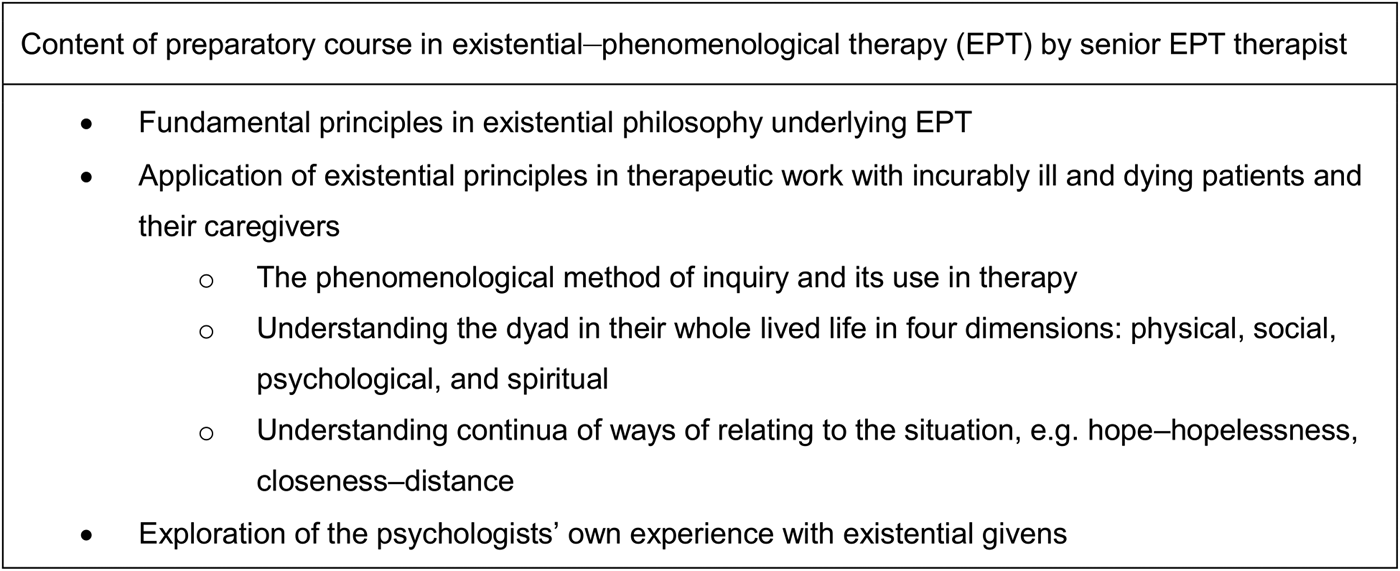
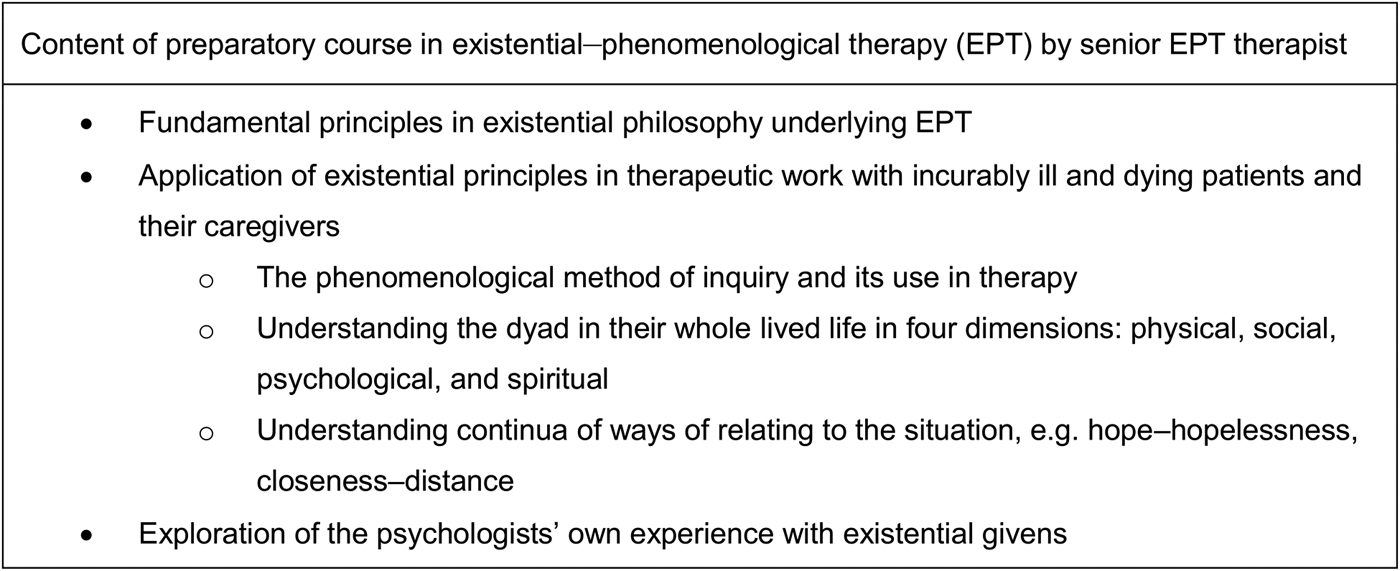
All the intervention psychologists received training in the principles of EPT in therapy with incurably ill patients and their caregivers (Figure 3). To ensure adherence to the intervention and congruent practice of all interventionists, EPT principles were reinforced by group supervision every other week by a senior EPT therapist and psychologists with extensive experience in psycho-oncology and palliative care.
Training in existential-phenomenological therapy in palliative care.
Assessment of Acceptability and Feasibility
To assess whether the psychological intervention was acceptable to patients and caregivers and that it was feasible for use in this population, we examined enrollment in the overall Domus RCT and uptake of the psychological intervention component. We used data on participation in the RCT and reasons for nonparticipation, as well as data on the number of psychological needs assessments and sessions completed in the intervention group. Further, we examined dyads who chose to withdraw from either the entire RCT or the psychological intervention alone.
RESULTS: ACCEPTABILITY AND FEASIBILITY ASSESSMENT
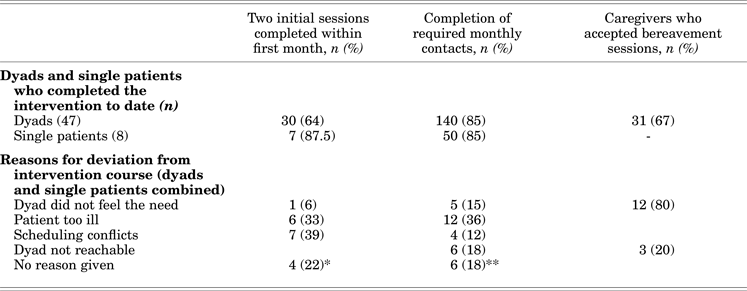
The feasibility and acceptability of the psychological intervention were assessed when more than two-thirds (n = 251) of patients had been included in the RCT. The majority (n = 190, 76%) entered the study with a caregiver: 59% with a partner, 11% with an adult child, 3% with a sibling, 1% with a friend, and 2% with another caregiver (e.g., a daughter or son-in-law). Reasons for nonparticipation in the RCT were documented for 79 of 145 patients who refused to participate; only 4 (5%) refused because they did not wish to see a psychologist. Of the 122 dyads and patients already enrolled in the intervention arm of the RCT, 5 (4%) had chosen to withdraw early from the psychological intervention, while remaining in the RCT and SPT care. Two of these felt that the sessions were unhelpful, one felt they did not need sessions, one wished to see a psychologist specifically recommended to them, and one dyad withdrew as the caregiver wished to see a psychologist outside the study who could offer long-term therapy. No patients who dropped out of the overall RCT named the psychological intervention as the cause. At the time of this assessment, 55 dyads (about a third of the planned number) had completed the psychological intervention component. These 55 dyads deviated to only a minor degree from the planned intervention course, which is remarkable considering the patients' advanced disease stage (Table 1). Thus, we concluded that the overwhelming majority of dyads in the Domus RCT found the psychological intervention component of the RCT to be acceptable and that it was feasible for use in this population.
Completion of scheduled psychological intervention by 55 dyads who received the psychological intervention component from enrollment into bereavement

* In three cases, the home care conference was delayed, delaying initiation of the psychological intervention.
**The percentages do not add up because of rounding.
DISCUSSION
Strengths
The integration of a psychological intervention allows multidisciplinary collaboration with SPT physicians and nurses through information sharing and coordination of interventions. We expect that dyads will benefit from the foci of the different professionals (See the case study in the supplementary material.) To our knowledge, only two previous SPC interventions with systematic psychosocial components included collaboration between providers of the psychosocial intervention and other SPT professionals (Bakitas et al., Reference Bakitas, Lyons and Hegel2009a; Hudson et al., Reference Hudson, Aranda and Hayman-White2005). Intervention nurses in the Hudson study helped the SPT to assess caregiver needs, create a care plan, and reinforce the role of the SPT (Hudson et al., Reference Hudson, Aranda and Hayman-White2005), while nurses in the ENABLE study contacted clinical teams to bring issues to their attention (Bakitas et al., Reference Bakitas, Lyons and Hegel2009b). The Domus psychological intervention incorporates continual assessment and collaboration to capture the dynamically changing nature of palliative care needs.
The unit of care in the Domus psychological intervention is the patient–caregiver dyad. The aim of dyadic sessions is to support communication and mutual understanding as well as dyadic coping. These sessions offer an opportunity to address the dyad's common concerns while acknowledging the individual concerns of the other. The intervention also allows for individual approaches, when the patient or caregiver has needs that require individual sessions, such as patient or caregiver depression. Four previous home-based SPC studies with integrated psychosocial components provided psychosocial support to caregivers only (Harding et al., Reference Harding, Higginson and Leam2004; Hudson et al., Reference Hudson, Aranda and Hayman-White2005; McMillan et al., Reference McMillan, Small and Weitzner2006; Walsh et al., Reference Walsh, Jones and Tookman2007). One focused on patients, while caregivers could choose to participate (Bakitas et al., Reference Bakitas, Lyons and Hegel2009a). This probably limited the opportunity to harness the emotional interaction and mutual dependence of dyads to improve palliative care outcomes.
Psychologists in the Domus model initiate contact with dyads at the outset of SPC and maintain this contact throughout the patient's life, providing intervention with flexible intensity in response to the needs of the dyad. We believe that flexibility in care planning is necessary to target each dyad's development of different needs. The timing in the majority of the psychosocial interventions in previous studies has been less targeted, and all have included predefined issues to be addressed (Harding et al., Reference Harding, Higginson and Leam2004; Hudson et al., Reference Hudson, Aranda and Hayman-White2005; McMillan et al., Reference McMillan, Small and Weitzner2006; Walsh et al., Reference Walsh, Jones and Tookman2007). This approach assumes that caregivers will benefit from interventions whenever they receive them, regardless of their present level of need, and that timing is thus of secondary importance. The Domus model targets needs as they arise, rather than attempting to address a wide range of possible issues with dyads, who may face differing challenges during their limited remaining time.
The choice of EPT as the psychotherapeutic approach was motivated by the goal of combining a flexible psychotherapeutic method to cover a broad range of needs with an existential focus. We believe that EPT is particularly well-suited for palliative care, because it works from the premise that not all suffering can be alleviated and rather focuses on helping dyads to find ways to bear their suffering. In previous studies of integrated SPC, psychosocial interventions were primarily psychoeducational in nature, focusing on teaching, skills training, and advice (Bakitas et al., Reference Bakitas, Lyons and Hegel2009a; Harding et al., Reference Harding, Higginson and Leam2004; Hudson et al., Reference Hudson, Aranda and Hayman-White2005; McMillan et al., Reference McMillan, Small and Weitzner2006; Walsh et al., Reference Walsh, Jones and Tookman2007). Psychotherapeutic approaches with existential aspects have recently been used in this population with some success—”dignity therapy” (Chochinov et al., Reference Chochinov, Kristjanson and Breitbart2011), “individual meaning-centered psychotherapy” (Breitbart et al., Reference Breitbart, Poppito and Rosenfeld2012), “meaning-centered psychotherapy for cancer caregivers” (Applebaum et al., Reference Applebaum, Kulikowski and Breitbart2015), and “managing cancer and living meaningfully” (Lo et al., Reference Lo, Hales and Jung2014) have all incorporated psychotherapeutic elements. “Dignity therapy” was experienced as helpful by patients but did not reduce distress (Chochinov et al., Reference Chochinov, Kristjanson and Breitbart2011). “Individual meaning-centered psychotherapy” has shown effects on spiritual well-being, quality of life, and symptom burden but not on anxiety or depression (Breitbart et al., Reference Breitbart, Poppito and Rosenfeld2012). “Meaning-centered psychotherapy for cancer caregivers” was based on the same principles but for caregivers, and is currently being tested (Applebaum et al., Reference Applebaum, Kulikowski and Breitbart2015). A phase II study of “managing cancer and living meaningfully” found significant but small effects on depressive symptoms, anxiety, and spiritual well-being but had a high attrition rate (Lo et al., Reference Lo, Hales and Jung2014). The Domus psychological intervention is inspired by or resembles these approaches. In contrast, it explicitly addresses the dyad as the unit of care, and EPT sessions are guided by the issues currently salient to dyads rather than focusing a priori on enhancing purpose or meaning. The Domus psychological intervention frequently addresses issues probed in, for instance, “dignity therapy,” such as concern about how patients would like to be remembered or wish their loved ones to live on without them. However, subjects are chosen along with the dyad, and the therapeutic dialogue can be specifically tailored to them. It is the intention that this specificity will contribute to alleviating distress. The assumption that alleviating distress will help patients to remain at home during palliative care will be investigated as part of the RCT.
Limitations
As the Domus psychological intervention is being investigated in an ongoing RCT, its efficacy is not yet known. It is a complex intervention, and the effect of the psychological intervention will not be separated from the overall effect; however, this is a challenge faced in most complex multidisciplinary interventions.
A potential limitation of the psychological intervention is the lack of a validated needs assessment procedure. The assessment has not been formalized in a tool or structured interview but is a clinical assessment based on the literature about risks of distress and adverse bereavement outcomes. While a clinical assessment may miss issues that could be captured in a formalized tool, it has the advantage of being responsive to the unique situation of each dyad. This reflects the inherent flexibility of the EPT approach and the patient-centered focus of palliative care. The needs assessments may be too frequent for some dyads with limited or no needs. Yet, frequent assessments in the palliative care population, where disease and caring situations may change rapidly, ensure that those needs that do develop are met as they occur.
The intervention does not address the frequent presence of additional family members, children, or several caregivers, and families with relational difficulties might benefit from a more family-oriented approach. For instance, “family-focused grief therapy,” a family-based approach for palliative care patients, has previously been shown to reduce distress and depression in the most severely distressed individuals (Kissane et al., Reference Kissane, McKenzie and Bloch2006) and to reduce prolonged grief symptoms in families with poor relational functioning (Kissane et al., Reference Kissane, Zaider and Li2016). Yet, issues regarding the family (e.g., communication with children) were still welcomed and frequently addressed in Domus sessions.
Although Domus intervention psychologists participate in group supervision in order to ensure their adherence to the intervention, fidelity is not formally assessed in the Domus RCT, as sessions are individualized. This weakens the confidence with which compliance with the method can be assumed. Still, every session is planned on the basis of a uniform manual, and the flexibility to individualize is a core strength of the psychological intervention.
Finally, the data available to assess the acceptability of the intervention were limited. Reasons for choosing not to participate in the study were not available for all nonparticipants. It is unknown whether these patients objected to the psychological intervention component, which limits the conclusions that can be drawn about the acceptability of the intervention. The psychological intervention component was, however, mentioned by only a few patients (5%) for whom a reason was documented, and we suspect that similarly few remaining nonparticipants would have objected to it.
CONCLUSIONS
The dyadic psychological intervention in the Domus model is a novel approach to integrating psychological support in SPC. It focuses on the patient–caregiver dyad, continual assessment of changing needs for psychological intervention in an existential therapeutic framework, and multidisciplinary collaboration in the SPT. As the Domus RCT is ongoing, its efficacy is not yet known; however, RCT enrollment and uptake of the psychological intervention suggest that this approach is feasible and acceptable to patients and caregivers. The Domus RCT will provide evidence for the effect of a multidisciplinary approach that integrates psychological intervention from the outset of palliative care.
DISCLOSURES
The authors hereby declare that they have no competing financial interests to disclose.
SUPPLEMENTARY MATERIALS
To view the supplementary materials for this article, please visit https://doi.org/10.1017/S1478951517000141.