In the early hours of May 28, 2013, a group of environmentalists took up residence within Istanbul’s Gezi Park, driven by a determination to safeguard the park from the imminent threat of demolition posed by an urban renewal project spearheaded by the ruling Justice and Development Party (Adalet ve Kalkinma Partisi, “AKP”).Footnote 2 The police response to this initial demonstration provoked a dramatic response, as a small-scale, local sit-in escalated into a large-scale, nationwide wave of protests. Though the protests were initially aimed only at protecting one Istanbul park, the government’s repression turned them into an anti-government uprising in response to increasing authoritarian tendencies voiced by frequent statements by the government about how people should live, concerning issues such as the number of kids families should have, abortion, and alcohol consumption. Protesters flooded to Gezi Park from all over Istanbul and the rest of the country, turning it into a living space with makeshift libraries and kitchens where seminars, concerts, and workshops were organized. Simultaneously, solidarity protests were held all around the country, with millions of people participating in almost all of Turkey’s eighty-one provinces, lasting into the early days of summer.
The protests, which are dubbed sometimes the “Turkish Spring,” “crystallized Turkey’s growing social and political polarization.”Footnote 3 The response to the protests took different forms, ranging from police intervention that left hundreds injured and several protestors and one police officer dead, to detention or arrests of protestors, excessive police presence on the streets, to vilificationFootnote 4 and mass trials, some of which are still ongoing.
These protests bore profound significance on multiple fronts. First and foremost, they constituted one of the largest waves of protest in the country’s recent memory since the tumultuous period preceding the 1980 coup, as millions of people across the country united in a powerful display of collective action. Second, the protests brought together an eclectic assortment of actors, spanning political parties (albeit with a notable lack of enthusiasm for official party involvement), nascent platforms, and individuals hailing from diverse socio-economic and political backgrounds. Anti-capitalist Muslims, right-wing and far-left political organizations, and a mosaic of other groups converged in a demonstration of solidarity. Third, the protests garnered substantial interest from the international media and civil society, and they projected a resonant message far beyond national borders. Lastly, the protests manifested in a wide variety of forms and encompassed diverse modes of expression, from traditional demonstrations and the erection of barricades, to the dissemination of poignant wall writings and theatrical performances. Sit-ins, standing-men/women protests, the pervasive use of humor, and the solidarity exhibited through human chains all contributed to the rich tapestry of forms of actions.
Yet, amid the diverse array of participants, networks, and forms of action, a prevailing emphasis on rupture and newness has often permeated scholarly discourse. This article aims first to discuss the reason behind this narrative of rupture or newness around the Gezi Park protests, seeking the answers both in theory and the political history of Turkey and, second, to historicize the protests by examining what came before them. It will be argued that understanding the historical context and dynamics of the Gezi Park protests is crucial for comprehending their origins, trajectory, and outcomes. By analyzing the Gezi Park protests as a cycle of protest and placing them within a historical framework, we can uncover the underlying factors that led to their emergence, understand the protest strategies employed by participants, and assess the long-term impacts on Turkish society and politics.
On Newness and Movement Continuity
The Gezi Park protests generated an abundance of media coverage and academic attention. For example, a quick Google Scholar search shows 1,670 titles on the Gezi Park protests between 2013–14. Given that “social movements are not routinely on the community or national calendar”Footnote 5, when a protest breaks out it might be considered “out of the blue” by the media and/or general public. Thus, with every new cycle of protest, there is a tendency for journalists, scholars, and observers to focus on novelty in the current protest, focusing more on rupture from previous protests rather than movement continuity and spontaneity. Regarding the Gezi Park protests, “the abrupt and spontaneous nature of the protests”Footnote 6 has been highlighted.Footnote 7 Indeed, in a more recent work focusing on rupture, it was argued that “Gezi should be located outside the linear time and conventional topography of Turkish politics and interpreted as a brief, powerful moment of rupture in a political system.”Footnote 8
This trend can be arguably explained by two factors: first, the dominance of the New Social Movement (NSM) theory among scholars of social movements and collective action in Turkey might have contributed to this. Arguing that “new social movements” constitute a break with the traditional collective actors – specifically the labor movement, which displays loose and decentralized organizational forms – and raise issues related to gender, sexuality, ethnicity, the environment, and peace,Footnote 9 NSM theorists focused on the “rupture” from the old movements in analyzing why social movements emerge. Thanks to the personal and scientific networks of prominent scholars, such as Nilüfer Göle, in well-networked Turkish universities, such as Bogaziçi University, NSM became one of the dominant theories in studying “new” social movements in Turkey.Footnote 10 Second, the political history of social movements in Turkey, particularly during the tumultuous 1970s, and their intricate interactions with the state and the political regime might have contributed to the growth of the “rupture” narrative. While new social movements of the 1970s are widely regarded as the precursors of today’s social movements,Footnote 11 in the case of Turkey the 1970s were characterized as a lost era due to high levels of political violence, accompanied by narratives filled with words like “chaos,” “fight,” and “anarchy.”Footnote 12 The “official narrative” also employed terms like “division,” “fractionalization,” and “conflict.”Footnote 13 Moreover, the coup itself drastically altered the nature of politics in Turkey, as it aimed to demobilize and disengage society from political affairs. The new regime altered political institutions and the constitution in order to curb rights and freedoms to organize and mobilize and transformed the political logic by introducing the Turkish-Islam synthesis as an antidote to “the threat of communism” within the Cold War environment of the time.Footnote 14 In this context, the considerable efforts by the military junta, which held power for approximately three years following the September 1980 coup, to suppress memories of the pre-coup period can be argued to have contributed to a “desertification” of the history and/or memory of social movements in Turkey.
Cycles of Protest and Movement Continuity
Despite the significance of particular protests, “mobilization rarely tends to be isolated, but rather often exists temporally aggregated on cycles of protest.”Footnote 15 In this regard, it is imperative to transcend the narrow focus on a singular protest event or cycle and to recognize the indispensability of examining the history and agency of political actors.Footnote 16 In other words, in order to understand mobilization following one episode, “looking beyond any individual protest action” is important.Footnote 17
Defined as “a phase of heightened conflict and contention across the social system,”Footnote 18 the concept of a cycle of protest is employed to analyze the evolution of movement dynamics. A cycle of protest has some features that distinguish it from other periods of mobilization. These common distinguishing features, according to Sidney Tarrow, are:
a rapid diffusion of collective action from more mobilized to less mobilized sectors; a quickened pace of innovation in the forms of contention; new or transformed collective action frames; a combination of organized and unorganized participation; and sequences of intensified interactions between challengers and authorities which can end in reform, repression and sometimes revolution.Footnote 19
Providing the opportunity to consider the role of time and space in contentious politics, the concept allows for considering contention as a multi-actor process,Footnote 20 and to move beyond solely structural factors to more dynamic ones in explaining the emergence and endurance of collective action: “Once the cycle begins, … what carries a protest cycle forward are people’s decisions to take disruptive collective action against the elites, other groups, or authorities.”Footnote 21 The concept also provides the necessary tools “for conceptualizing the interrelations among movements within the cycle.”Footnote 22 That is, new cycles can be “viewed as a resurgent challenge with roots in an earlier cycle.”Footnote 23 Some scholars of social movements have studied “how every episode of collective action takes place in a context that has been influenced by previous actions and analyzes the development of the dynamics of contention across time.”Footnote 24 Thus, neither movements nor cycles of protest emerge or occur in a vacuum. One cycle of protests’ effects include subsequent ones, “as a movement shifts into abeyance on one set of issues, its personnel and organizations may switch the grounds of the challenge to another set of issues.”Footnote 25 By reshaping the political landscape, each protest campaign in turn provides different and new opportunities for the next campaign.Footnote 26 In other words, “movements do not die, but scale down and retrench to adapt to changes in the political climate.”Footnote 27 This is especially the case when a political (or cultural) climate is hostile. Consequently, even if the movement scales down or retrenches, “pockets of movement activity may continue to exist and can serve as starting points of a new cycle of the same or a new movement at a later point in time.”Footnote 28 In addition, activists may get inspiration from others, either by observing them or gaining experience with them,Footnote 29 as “social movement activities are usually embedded in dense relational settings,”Footnote 30 and a web of multiple ties facilitates participation. Following the example of the literature identifying and analyzing continuities between local manifestations of the Global Justice Movement in Europe and more recent cycles of protest, such as the mobilizations against austerity after the 2008 global economic crisis,Footnote 31 this article will first present the Gezi Park protests as a cycle of protest and then trace continuities back to the Global Justice Movement in Turkey, focusing especially on the domestic political context, organizational aspects, and repertoires of action.
Gezi Park as a Cycle of Protest
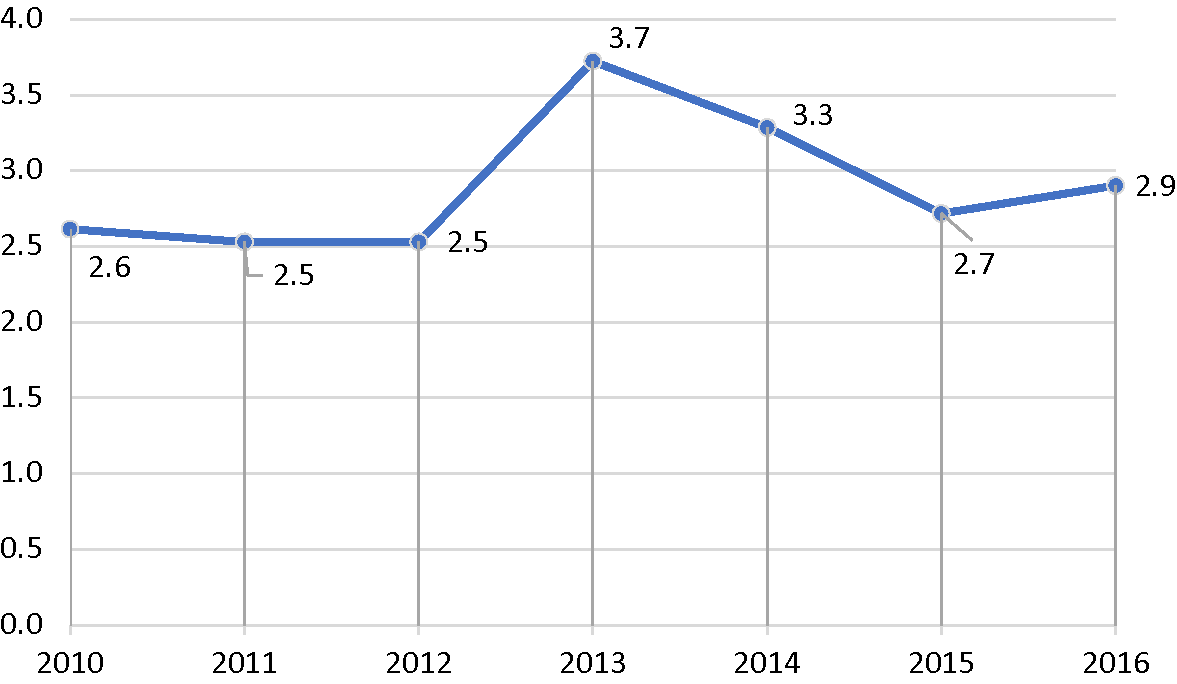
The Gezi Park protest, as mentioned above, was initially a response to the urban development project to transform Istanbul’s Taksim Square area, including Gezi Park, and build a shopping mall instead, which was approved by the AKP government in September 2011. Making use of an “important avenue for political change and economic transformation” that emerged after the 2000/2001 financial crisis,Footnote 32 AKP came to power in 2002 with a financial “allegiance to a programme approved by major international financial institutions.”Footnote 33 Turkey’s economy grew significantly during the first years of AKP governance, catalyzed particularly by the construction sector. Government procurements and tenders thus became a significant instrument of wealth distribution: “public urban land … sometimes with no market price [was] transformed into [the] property of private (privileged) individuals at symbolic prices through prearranged tenders followed by amendments of urban plans.”Footnote 34 Until the early 2010s, Turkey’s political-economic trajectory under AKP rule was commonly referred to as “a successful model of reconciling Islam, democracy and the market economy” mainly due to reforms undertaken in the framework of talks for Turkey’s accession to the European Union.Footnote 35 Since the 2007 general elections, however, concerns were growing regarding the health of Turkish democracy,Footnote 36 as the use of political violence against protesters was increased.Footnote 37 In addition, concerns about the freedom of the press were on the rise,Footnote 38 while political liberties were curtailed, especially regarding the use of Kurdish language by elected officials.Footnote 39 By 2010, the ruling AKP was able to pass amendments to the 1982 constitution and change the structure of the high judiciary as a result of a referendum. With the AKP’s election to a third term in office in 2011, the trendlines of democratic backsliding got starker. Political tensions increased throughout 2012, with police forcefully breaking up a large opposition march, banned by the governor of Ankara, on the anniversary of the founding of the republic.Footnote 40 At the beginning of 2013, Freedom House expressed concern about civil liberties in the country being at risk, citing the imprisonment of “hundreds of journalists, academics, opposition party officials, and military officers in a series of prosecutions aimed at alleged conspiracies against the state and Kurdish organizations.”Footnote 41 The AKP became increasingly aggressive in promoting its social agenda as well. In early May, for example, the government banned advertisements for alcohol and banned shops from selling alcohol between 10:00 p.m. and 6:00 a.m. Later that month, just days before the protests erupted at Gezi Park, around 100 young people gathered in Ankara for a “kissing protest” against the city’s subway officials who had warned passengers to follow moral rules after spotting a couple kissing on security cameras.Footnote 42 Although authoritarianism has been “embedded in the Turkish neoliberal experience,” it became more discretionary under the AKP rule.Footnote 43 It was under these circumstances that the Gezi Park protests, shaking the AKP’s previously “uninterrupted hegemony,”Footnote 44 emerged in late May 2013 and evolved into a mass mobilization against neoliberal authoritarianism. As mentioned above, protests were organized in almost all major cities in the country, with the participation of millions. Increased levels of mobilization compared to preceding and following periods can be an identifier for a cycle of protest. Figure 1 shows the levels of mass mobilization in Turkey between 2010 and 2016, three years before and after the Gezi Park protests.
Levels of mass mobilization in Turkey, 2010–16.
Note: The scale ranges from 0-4; 0 refers to virtually no events, 4 refers to many large- and small-scale events.
Source: VDem Project.

From the very first police intervention, many protesters were injured, including parliamentarians, as well as journalists covering the protests. According to a survey conducted in Gezi Park on June 6 and 7, nearly half of protest participants (49 percent) came to the park in reaction to this repression. Of those without political or NGO affiliations, the share of those who came after seeing the repression was significantly higher: 73 and 75 percent, respectively. The vast majority of the participants (93.6 percent) came to the park as “ordinary citizens” as opposed to representing a group or a party.Footnote 45 This would suggest a rapid diffusion of collective action from more mobilized to less mobilized sectors and that organized and unorganized actions went hand in hand, even though the latter were dominant.
Regarding the forms of contention, as stated above, cycles of protest produce innovative forms of protest, which “gives protesters a strategic advantage” since authorities are not prepared for new strategies.Footnote 46 While some of the forms of action used, both conventional and unconventional, such as marches, human chains, and “casserole protests,” were adopted from previous cycles of protests, as will be discussed below, the Gezi Park protests did include a phase of innovation in the forms of contention. One example was the “standing man.” On June 17, 2013, a dancer and performance artist named Erdem Gündüz went to Taksim Square and stood in place to demonstrate that the protests were not over.Footnote 47 Standing for eight hours, Gündüz’s performance/demonstration inspired hundreds of other protesters (and counter-protesters) within Turkey and abroad, making the “standing man” one of the distinctive symbols of the Gezi Park protests. Another example was a “new form of squatting” that targeted vacant houses in large cities in Turkey,Footnote 48 which led to the first squatted and self-managed social center in Istanbul, the Don Quixote Social Center (Don Kişot Sosyal Merkezi) by the Yeldeğirmeni Solidarity Forum.Footnote 49
Through the course of collective action, activists interpret grievances to mobilize potential allies and bystanders.Footnote 50 In doing so, it has been argued, they would use collective action frames, which are defined as “the specific metaphors, symbolic representations, and cognitive cues used to render or cast behavior and events in an evaluative mode and suggest alternative modes of actions.”Footnote 51 New or transformed collective action frames – which can take diagnostic, prognostic, and motivational formsFootnote 52 – are a feature of cycles of protest. In terms of demands, it is clear that the Gezi Park protests started as a reaction to the government’s urban development policies that adversely affected the environment. However, as a result of the increasing interactions between protesters and the state, demands diversified. At the end of the first week of the protests, a group that helped incite the protests, Taksim Solidarity (Taksim Dayanışması), held a meeting with a deputy prime minister and listed its demands as follows: cancellation of the Taksim development project that sparked the initial protest; dismissal of the governors and heads of the police departments of Istanbul, Ankara, and Hatay; release of detained protesters; and cessation of the use of tear gas by police.Footnote 53 In this regard, the group used injustice-frames in articulating its demands, highlighting the neoliberal authoritarian policies undertaken by the government and how they were impacting urban areas and lives through construction. This appealed to grievances mostly felt by educated youth and urban residents.Footnote 54 While similar injustice frames had been mobilized earlier during the Global Justice Movement,Footnote 55 the audience during that wave of mobilization was mostly actors in the global arena rather than national governments.
Finally, interactions play a crucial role as “the dynamics of protest are shaped by many actors” as social movements interact with various actors, such as other social movements, counter-movements, security forces, allies, and the government.Footnote 56 What distinguish cycles of protests are sequences of intensified interactions between challengers and authorities. During the Gezi Park protests, this interaction mainly took the form of overt repression in the form of police intervention. Once police were ordered to intervene, “hundreds, if not thousands of interactions unfolded between protesters and police throughout urban trenches” around the country.Footnote 57 The police reaction was so disproportionate it became one of the main injustices driving the Gezi protests,Footnote 58 as the police response left five people dead and more than 8,000 injured in the first three weeks of June, according to the Turkish Medical Association.Footnote 59 Data showed that 48 percent of the protests during the Gezi Park cycle included coercive or violent action by the police, compared to only 7.4 percent for other protests between 2011 and 2013.Footnote 60
It is argued that “with the progression of neo-liberal capitalism since 1980, a shared logic of social movement has emerged.”Footnote 61 This, furthermore, led to the emergence of not only the Global Justice Movement, but also the Occupy-style protests across the world as it “has been globally transmitted, translated and adapted to particular times and locations.”Footnote 62 Several works have examined the Gezi Park protests within this context of global mobilization, drawing connections between Gezi and preceding movements abroad based on their perspective, dimension, and qualities,Footnote 63 a broader criticism of the neo-liberal approach,Footnote 64 or an incorporation of gender justice claims.Footnote 65 While these efforts have attempted to place the Gezi Park protests within a broader global cycle of protest, there has been a notable lack of attention given to their relationship with preceding movements in Turkey, thus neglecting the analysis of continuity between previous protest cycles and Gezi.
Continuity from the Global Justice Movement to Gezi Park
The groups, movements, political parties, and civil society organizations that came together at the Gezi Park protests did not “emerge out of nowhere,” but were part of ongoing bottom-up mobilization efforts “that had been ongoing unnoticed for an extended period.”Footnote 66 When the web of groups is untangled, a clear line of continuity can be drawn from Gezi Park back to the Global Justice Movement.Footnote 67
The roots of the Gezi Park protests can be traced back to 2009, thereby linking them with remnants of the Global Justice Movement. The joint IMF–World Bank meeting in Istanbul in 2009 was a significant factor in the revitalization of the Global Justice Movement in Turkey. During the summit, protests were held under the banner of the Anti-IMF-World Bank Union (IMF ve DB Karşıtı Birlik, the “Union”), comprising KESK, DİSK, TMMOB, and TTB. Several left-wing organizations also participated, such as Resistanbul (Direnİstanbul Koordinasyonu), a coalition of “feminist, LGBTI, libertarian Marxists, anarchist, anti-authoritarian, ecologist” activists and groups.Footnote 68 This broad and rapid mobilization shows the importance of former movement experience and preexisting local and transnational activist networks for the revitalization of activism. While the Union organized marches in central Istanbul, Resistanbul organized a week-long “resistance festival” called Direnal to counter the Istanbul Biennial art exhibition. Direnal included protests not only against the international financial organizations but also against ecological destruction and urban transformation through gentrification, outlining the relationship between neoliberalism, global injustice, and the AKP’s urban and environmental policies.Footnote 69 While civil initiatives against urban transformation projects and gentrification, such as Resistanbul or Society’s Urbanization Movement (Toplumun Şehircilik Hareketi or İMECE),Footnote 70 became the leading opponents of the AKP-run municipality’s urban transformation policy for IstanbulFootnote 71 in the years leading up to the Gezi, the year 2010 is considered “a turning point for urban oppositional movements,” thanks to the Sixth European Social Forum in Istanbul which brought these groups together.Footnote 72 A group of 128 organizations organized the umbrella group Taksim Solidarity, bringing together associations, foundations, networks, and political parties. Some of these organizations had also been involved in the Global Justice Movement, including but not limited to DİSK and several groups within TMMOB and the Turkish Medical Association. A group of architects and neighborhood associations within Taksim Solidarity organized an initiative called Taksim Platform (Taksim Platformu), highlighting the importance of Gezi Park in their first press release on February 4, 2013. A few days later, Taksim Platform took its first action to protect the park from being demolished: several artists, urban planners, architects, and politicians “adopted” the park’s trees.Footnote 73 The following month, the group organized press releases and signed petitions calling for the redevelopment project to be halted.Footnote 74 Taksim Solidarity remained active, issuing a press release in JuneFootnote 75 and organizing a protest in October against the development project, with the participation of some members of parliament from the main opposition party, during which a human-chain was performed.Footnote 76
However, perhaps the most important protest Taksim Solidarity organized before the May 2013 Gezi Park protests was a sit-in in the Taksim Square, organized from November to December 2012. For a month, protesters took to Taksim Square every evening for about three hours.Footnote 77 Although some considered them less effective than hoped, a “small group embracing the sit-ins claimed that they wanted to continue, and thus the sit-ins continued.”Footnote 78 After December, the sit-ins went from a daily recurrence to weekly (on Saturdays) and continued into the new year.Footnote 79 Over the following months, participants of the weekly sit-ins formed connections with neighbors who had signed Taksim Platform’s petitions against the redevelopment plan and, at some point, the locals pointed the protesters’ attention to the threat against Gezi Park.Footnote 80 In April 2013, the protesters organized the First Taksim Gezi Park Festival with the support of Taksim Solidarity, other civil society organizations, and labor unions.Footnote 81 Around 40,000 people attended and the organizers “took oaths from tens of thousands of participants to stand up to the bulldozers in case they enter Gezi Park.”Footnote 82 Thus, by the end of May, when the police broke up what was remembered as the first Gezi Park protest, “hundreds of civic organizations [had] already [been] in coordination, using social media to make public calls for the space to be defended.”Footnote 83 This chronology illustrates how some of the same groups participated in both the Gezi Park and earlier protest movement and its earlier iteration. In light of such continuities, it can thus be argued that the existence of know-how and experiences from the Global Justice Movement, and its network of both formal and informal organizations, helped transform what would have been a single-issue action against a one-off urban renewal project in Gezi Park into a massive nation-wide cycle of protest.Footnote 84
The demands of the Gezi Park protesters, laid out semiofficially by Taksim Solidarity, were mostly national yet also specifically local. However, once protests spread around the country, protesters’ wider demands related to greater freedoms became more visible.Footnote 85 Given the interaction with protesters abroad and the embeddedness of Gezi Park protests in transnational networks,Footnote 86 it was not surprising to see slogans like “occupy Gezi,” “Resistanbul,” or “rebellion, revolution, freedom.” Similarly, the Gezi Park protests’ most famous and still-used slogan, “everywhere Taksim, everywhere resistance” (her yer Taksim, her yer direniş) is itself a testament to the continuities between the Global Justice Movement and the Gezi Park protests. It was adapted from a slogan first used in 2001 during a protest organized by KESK against neoliberal globalization and the summit of the Group of Eight (G8) in Genoa, Italy: “everywhere Genoa, everywhere resistance” (her yer Cenova, her yer direniş).Footnote 87
Movements “adopt tactics that are familiar from previous use, or that they have observed to be effective for others,”Footnote 88 as was also the case with the protesters in Gezi. Two phenomena that came to be most identified with the Gezi Park protests were the protests’ use of social media and humor, both of which were regarded as novel in much of the press coverage at the time and even some of the scholarship since.Footnote 89 However, both built on precedents in Turkey. For example, the Global Justice Movement was already relying on internet platforms during the early 2000s, although such networks were not nearly as far-reaching as social media sites would become in the 2010s. During this earlier wave, websites and email groups were the main tools for activists to organize, disseminate information, and discuss logistics. By the time of the Gezi Park protests, a massive global social media infrastructure could be utilized by organizers and supporters. Indeed, there were more than 8 million tweets recorded within the first five days, using protest-related hashtags like #direngezi (literally “resist Gezi”).Footnote 90 The use of humor was also an adaptation from earlier protests, building off a long tradition of Turkish political humor exemplified by satirical magazines such as Gırgır, Leman, Penguen, and Uykusuz. Footnote 91 The Gezi protests have also often been represented as the first manifestation in TurkeyFootnote 92 of “global occupations” during which protesters take control of a public space and set up a model of direct democracy through “self-management and mutual collaboration by forming a common kitchen, library, and health station.”Footnote 93 However, the Turkish labor movement had introduced such encampments on an even larger scale years before, during the TEKEL protests. A year after the state-owned tobacco and alcohol company TEKEL was sold to British American Tobacco, hundreds of its factory workers came to Ankara in December 2009 to protest their termination/reassignment to other public sectors, which jeopardized their social security status. Considered a late manifestation of the Global Justice Movement,Footnote 94 the workers staged a sit-in that turned into a tent city that evolved “in a bottom-up fashion with an expansive solidarity network emerging in due course that led to its depiction as the ‘Sakarya Commune,’”Footnote 95 named after the surrounding neighborhood. For seventy-eight days over the winter of 2009–10, protesters lived there, “cooking, sleeping and socializing with guests of solidarity in their tents of board, plastic wraps and whatever form of shelter they could obtain from the local merchants.”Footnote 96 Supported by TMMOB, the Sakarya Commune helped the labor movement to interface with the local public.Footnote 97 In addition, the same sloganeer formula popularized in the Gezi movement was originated in the TEKEL sit-in: “Everywhere TEKEL, everywhere resistance.”Footnote 98 Thus, the TEKEL resistance arguably set the stage for the Gezi Park protests by “undermining the commodity character of the public sphere” and showing that the public sphere can be reclaimed.Footnote 99
Conclusion
While the Gezi Park protests that erupted in May 2013 in Turkey have received a lot of attention from the academy, there seems to be no consensus in the literature as to how to frame them. This article has suggested that Gezi represents a cycle, carrying many of the same features as other periods of mobilization, both previous and subsequent; innovation, such as the emergence of “standing men” protests; transformative collective action frames; and intensified interactions between protesters and the state.
While the issue of framing might appear minor, the frame one uses to depict an episode of contention shapes the way it is analyzed. In suggesting that the events following the Gezi Park sit-in of May 28, 2013, represent a cycle of protest, this article has recognized that social movements and cycles of protests do not emerge in a vacuum; rather, they build on what preceded them, be it know-how, frames, organizational structures, or forms of actions. This is especially crucial for understanding the historical accumulation and culture of these movements and protest cycles as well as the history of collective action, whether in a specific context or internationally.
As pointed out in the literature, one episode of contention might shape another by impacting the political landscape,Footnote 100 by inspiring participants via observation or firsthand experience,Footnote 101 or by providing resources, especially organizational know-how. Within this framework, this article has argued that while one cannot eliminate the importance of participants’ agency, the Gezi Park protests should be read in relation to the former cycles of protests in Turkey, especially the local manifestations of the Global Justice Movement in the 1990s and 2000s, rather than as an isolated or utterly new and spontaneous event. As this article has showed, by the time the Gezi Park protests erupted in May 2013, there had already been an ongoing struggle against the urban transformation project in the area, with participation by groups and activists who had participated in earlier waves of protests.
As discussed, the Global Justice Movement in Turkey and the Gezi Park protests had many commonalities. First, they both opposed neoliberal policies implemented at the international and national level. Even though the focus of the Gezi Park protests shifted more to the impingement on freedoms and rising discretionary authoritarianism of the incumbent government once they gained nationwide attention and velocity, they began as a struggle against a prototypically neoliberal urban development plan that aimed to demolish a public space and build a high-end shopping mall in its place. Second, the two protest cycles shared an organizational base. The civil society organizations, professional associations, and labor unions that were active during the initial stages of protests trying to protect the Gezi Park had also been heavily involved in the emergence and diffusion of the Global Justice Movement to and within Turkey. Third, the two cycles’ repertoires of action were quite similar. During both, protesters employed unconventional forms of action, including but not limited to festival-like performances, demonstrations, human chains, and sit-ins while heavily relying on internet technologies to organize and disseminate their message.
It should be emphasized, however, that the involvement of veteran activists and/or organizations from previous protest cycles and the use of similar forms of actions do not mean that the Gezi Park protests were not spontaneous. As discussed, research has showed that it was the harshness of the initial reaction of the police to the small group of protesters in the park – not the sit-in itself – that drove massive crowds onto the streets. Furthermore, many of those who joined the protests, especially youth, had not been previously active in politics or political organizations. This is in line with the argument in the literature on social movements that protests are shaped by interactions between movements and other movements, allies, adversaries, and, perhaps most importantly, the state and security forces. These various networks of interaction between the Gezi Park protests and preceding movements or cycles of protests and the third parties require further research.