Introduction
During the general survey of entomopathogenic nematodes of the Meerut region, two of the most important and prevalent species, namely Hammerschmidtiella indicus Singh & Malti, Reference Singh and Malti2003 and Thelastoma icemi (Schwenck, Reference Schwenk1926) Travassos, Reference Travassos1929, were found infecting the cockroach Periplaneta americana L. Nematodes are one of the most abundant group of parasites, with over 20,000 species currently described (Anderson, Reference Anderson1984). The superfamily Thelastomatoidea is one of the two superfamilies of the order Oxyurida; these nematodes are parasitic or commensal in saprophytic terrestrial arthropods (Shah, Reference Shah2007). They live within the hindgut of the host and usually feed on the bacterial microfauna found there (Adamson, Reference Adamson1994; Jex et al., Reference Jex, Schneider, Rose and Cribb2005). Several studies have been conducted to detect nematodes harboured by P. americana L. (Rao, Reference Rao1958; Biswas & Chakravarty, Reference Biswas and Chakravarty1963; Singh & Kaur, Reference Singh and Kaur1988; Shah, Reference Shah2007); it has been found that along with the species of other genera, Hammerschmidtiella and Thelastoma are common in the hindgut of this insect (Blanco et al., Reference Blanco, Lax, Dueñas, Gardenal and Doucet2012). Adamson & Van Waerebeke (Reference Adamson and Van Waerebeke1992a, Reference Adamson and Van Waerebekeb, Reference Adamson and Van Waerebekec) divided the superfamily into five families, of which one was Thelastomatidae. Nematodes of the family Thelastomatidae Travassos, Reference Travassos1929 have been reported from a wide range of species and genera of arthropods (Diplopoda, Dioctyoptera, Orthoptera, Coleoptera, Diptera and, rarely, Lepidoptera) and have also been indicated by various checklists and monographs (Skrjabin et al., Reference Skrjabin, Shikobalova and Mozgovoj1951, Reference Skrjabin, Shikobalova, Sobolev, Paramonov and Sudarikov1954, Reference Skrjabin, Shikobalova and Lagodovskaya1966; Basir, Reference Basir1956; Leibersperger, Reference Leibersperger1960; Jarry, Reference Jarry1964; Kloss, Reference Kloss1965; Jarry & Jarry, Reference Jarry and Jarry1968; Adamson & Van Waerebeke, 1992). The family Thelastomatidae is by far the largest family in the superfamily Thelastomatoidea. In the revision of the superfamily Thelastomatoidea, Adamson & Van Waerebeke (Reference Adamson and Van Waerebeke1992a) divided the Thelastomatidae family into 28 genera. Recently, three more genera were added to this family by Jex et al. (Reference Jex, Schneider, Rose and Cribb2005) and hence it now consists of 31 genera.
Like most nematodes, thelastomatid genera encompass several species with little morphological differentiation. The taxonomy of nematodes is primarily based on morphological data; structures such as the oesophagus, and the male and female reproductive organs, have been used to discriminate them. Although morphological identification methods are necessary, molecular techniques have been implemented successfully for species validation and taxonomic purposes. Molecular identification allows an accurate diagnosis of the infecting species that would otherwise be impossible using a morphological approach (Hasegawa et al., Reference Hasegawa, Hayashida, Ikeda and Sato2009). The use of polymerase chain reaction (PCR) analysis allows the detection of parasites even when the amount of parasite DNA is minimal (Gasser, Reference Gasser, Kennedy and Harnett2001; Harris et al., Reference Harris, Maia and Perera2011; Maia et al., Reference Maia, Harris and Perera2011; Jones et al., Reference Jones, Brown, Harris, Jones, Symondson, Bruford and Cable2012; Perera et al., Reference Perera, Maia, Jorge and Harris2012). For the specific identification of members of the superfamily Thelastomatoidea, as a basis for systematic investigations, molecular tools provide the best prospect (Jex et al., Reference Jex, Hu, Rose, Schneider, Cribb and Gasser2006). The small subunit (SSU) (18S) region of ribosomal DNA (rDNA) is a particularly valuable and frequently utilized region for nematode phylogenetic analysis at the genus and species level (Fitch, Reference Fitch1997; Aleshin et al., Reference Aleshin, Milyutina, Kedrova, Vladychenskaya and Petrov1998; Floyd et al., Reference Floyd, Rogers, Lambshead and Smith2005; Bhadury & Austen, Reference Bhadury and Austen2010; Ross et al., Reference Ross, Ivanova, Spiridonov, Waeyenberge, Moens, Nicol and Wilson2010; Perera et al., Reference Perera, Maia, Jorge and Harris2012).
Recent studies have also shown that the predicted 18S rDNA secondary structure is a model with a common core in most eukaryotes, including nematodes (Schultz et al., Reference Schultz, Maisel, Gerlach, Müller and Wolf2005; Subbotin et al., Reference Subbotin, Sturhan, Vovlas, Castillo, Tambe, Moens and Baldwin2007; Ma et al., Reference Ma, Overstreeta and Subbotin2008) and knowledge of the RNA secondary structure is important in performing phylogenetic analysis. Secondary structures are important for accurate sequence alignment and phylogenetic analysis, and such models can be developed to test relationships, including those based on classical morphological studies (Subbotin et al., Reference Subbotin, Sturhan, Vovlas, Castillo, Tambe, Moens and Baldwin2007). Since it is well known that 18S rDNA is highly conserved throughout evolution, the secondary-structure elements of RNA molecules, such as helices, loops, bulges and separating single-stranded portions, can be considered phylogenetic characters (Zwieb et al., Reference Zwieb, Glotz and Brimacombe1981; Schultz et al., Reference Schultz, Maisel, Gerlach, Müller and Wolf2005). Therefore, this molecular morphometrics approach was used in the present study by using primary- and secondary-structure information. In the present study we aimed to infer molecular phylogeny using 18S rDNA sequences as well as secondary-structure and motif analyses of the two nematode species H. indicus and T. icemi commonly found in the insect P. americana in Meerut, Uttar Pradesh (UP), India.
Materials and methods
Parasite material and DNA isolation
Nematodes were collected from the alimentary tract of the host P. americana L. from Meerut (29°01'N, 77°45'E), UP, India. Collected materials were first preserved in 95% ethanol and then processed for DNA isolation. DNA was then extracted from lysed individual worms by using the DNeasy Tissue Kit (Qiagen, Hilden, Germany).
DNA amplification and sequencing
The rDNA region spanning the 18S was PCR amplified from total genomic DNA obtained from the nematodes by using specifically designed primers (forward: 5′-AAACGGCTACCACATCCAAG-3′ and reverse: 5′-CCAAGCACATGAACCAAATG-3′). For DNA sequencing, PCR products were purified using a Chromous PCR Clean up Kit (#PCR 10, Chromous Biotech, Bangalore, India) and sequenced in both directions using the above-mentioned primers on an automated sequencer using a Big Dye Terminator v.3.1 Cycle Sequencing Kit (ABI 3130 Genetic Analyzer, Applied Biosystems, Foster City, California, USA). Sequence information is available at the National Center for Biotechnology Information (NCBI) in GenBank under the accession numbers GU968647 and GU968649.
18S sequence analysis
DNA sequences were subjected to further analysis with the help of bioinformatics tools, including similarity using the Basic Local Alignment Search Tool (BLAST) and phylogenetic prediction using ClustalW (http://www.ebi.ac.uk/clustalw). We chose species according to the database's identity matches with these two nematode species (see figs 1 and 2 for their accession numbers). Phylogenetic trees were reconstructed using MEGA version 5 (Tamura et al., Reference Tamura, Peterson, Peterson, Stecher, Nei and Kumar2011). Phylogenetic analyses were performed based on the distance method, neighbour-joining (NJ) and the character state method, maximum parsimony (MP). The MP tree was obtained using the close-neighbour-interchange algorithm. The distance matrix was elaborated using the Kimura-2 parameter model (Kimura, Reference Kimura1980). Robustness of the inferred phylogeny was assessed using a bootstrap procedure with 1000 replications.
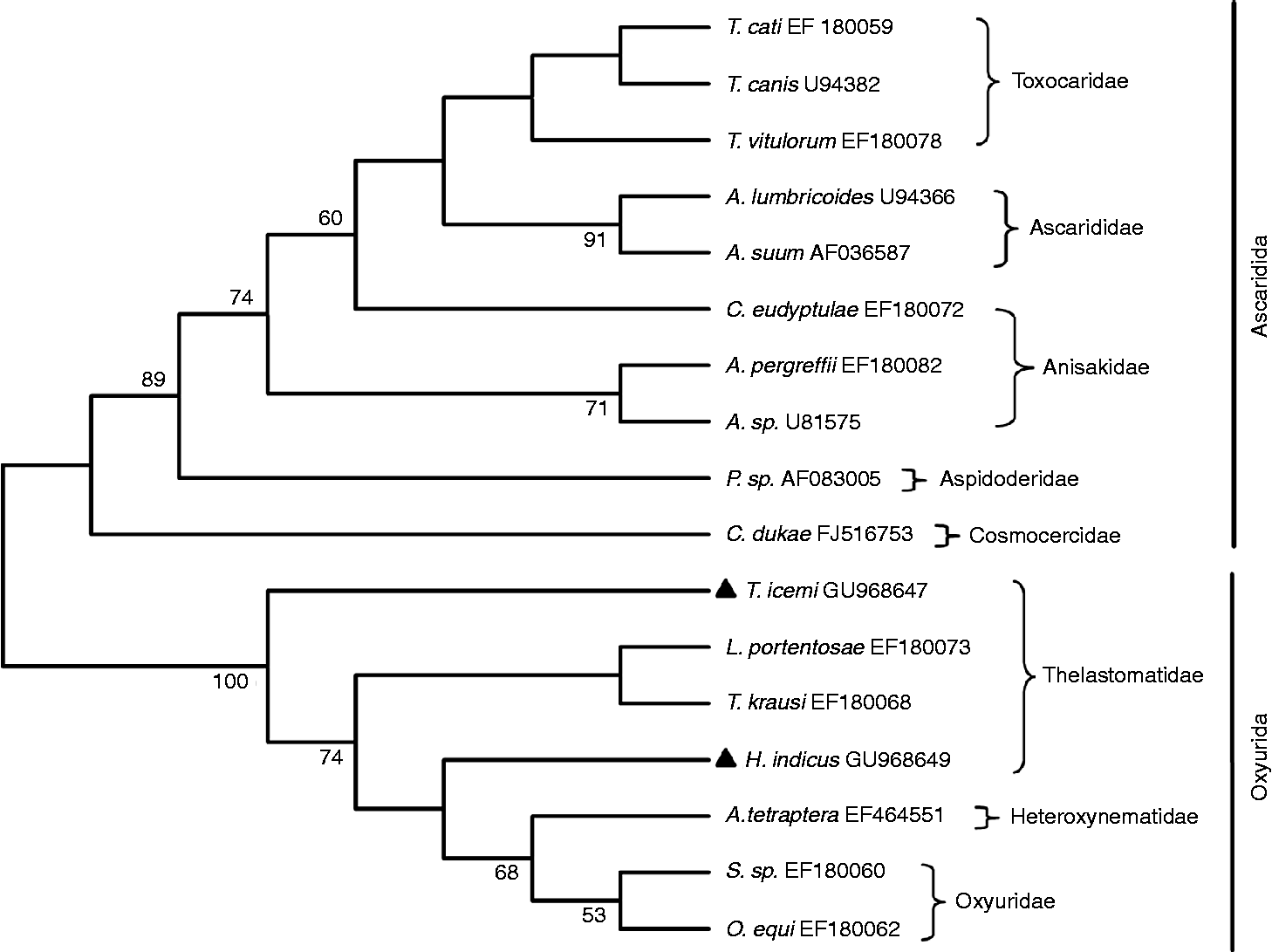
Phylogenetic positioning of Hammerschmidtiella indicus and Thelastoma icemi based on 18S sequences using the neighbour-joining (NJ) method; branches corresponding to partitions in less than 50% of bootstrap replicates are collapsed. The black triangles represent the species collected in this study.

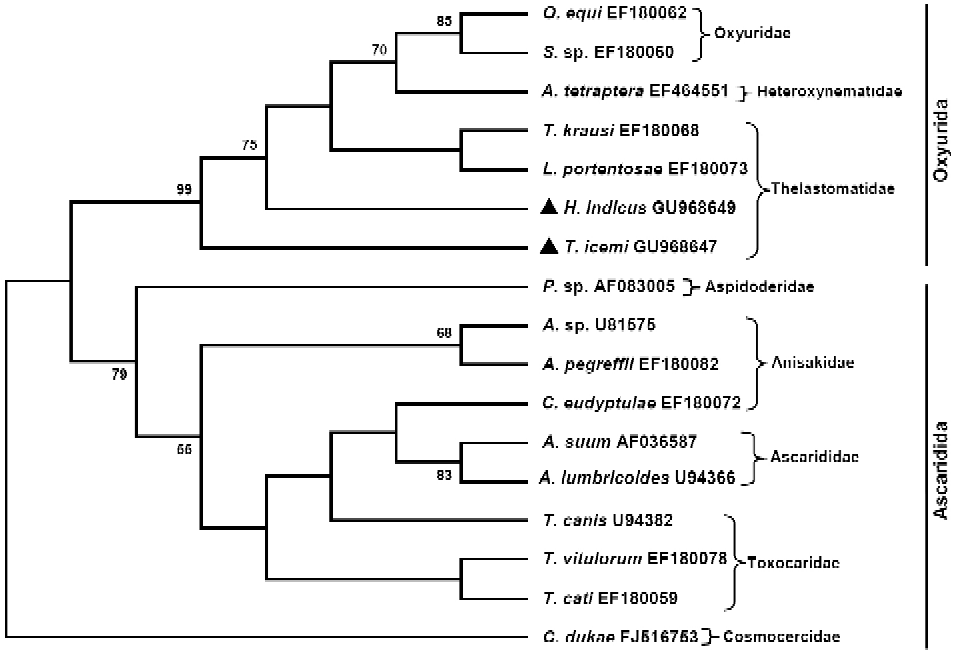
Phylogenetic positioning of Hammerschmidtiella indicus and Thelastoma icemi based on 18S sequences using maximum parsimony (MP) showed the same topology as the neighbour-joining (NJ) method; the % of replicate trees, in which associated taxa cluster in the bootstrap test, is shown next to the branches. The black triangles represent the species collected in this study.
Predicted 18S RNA secondary structures
Secondary structures of 18S sequences were reconstructed using free-energy folding algorithms with the online Mfold package (Zuker, Reference Zuker2003). The 18S sequences were folded at a fixed temperature of 37°C for analysis. The structure with the highest negative free energy was chosen from different output files. Since G+C content is known to influence structural energy, G+C percentage was therefore determined using a GC calculator (http://www.genomicsplace.com/gc_calc.html). The MARNA web server (Siebert & Backofen, Reference Siebert and Backofen2005) was used to align 18S sequences with a consensus secondary-structure format, based on both the primary and secondary structures. The default setting, base deletion, was scored 2.0, base mismatch 1.0, arc removing 1.5, arc breaking 1.75 and mismatch 2, with an ensemble of shaped structures.
Motif identification, testing and validation
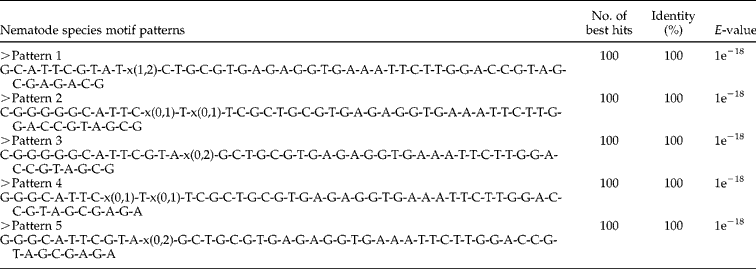
Small subunit (18S) sequence motifs were identified from aligned sequences of H. indicus and T. icemi using PRATT software (http://www.ebi.ac.uk/pratt/). The C% parameter was adjusted to report pattern matching at 100% of the sequences input. The motifs were expressed by using the DNA alphabet (A, T, C, G) in PROSITE language (Bairoch & Bucher, Reference Bairoch and Bucher1994). Validation of the motifs was performed for both nematode species using a ‘PATTERN MATCHING’ web application. To test for additional reliability, the motifs were evaluated using BLAST against the GenBank database of the NCBI. BLAST outputs were subsequently analysed to find only exact or perfect matches showing a significantly high score and low E-values for species. BLAST analysis investigated motifs that showed conserved sites obtained. A motif was considered highly specific to a nematode species if it matched most or all the 18S sequences of nematode species available on the NCBI database.
Results
Phylogenetic analysis
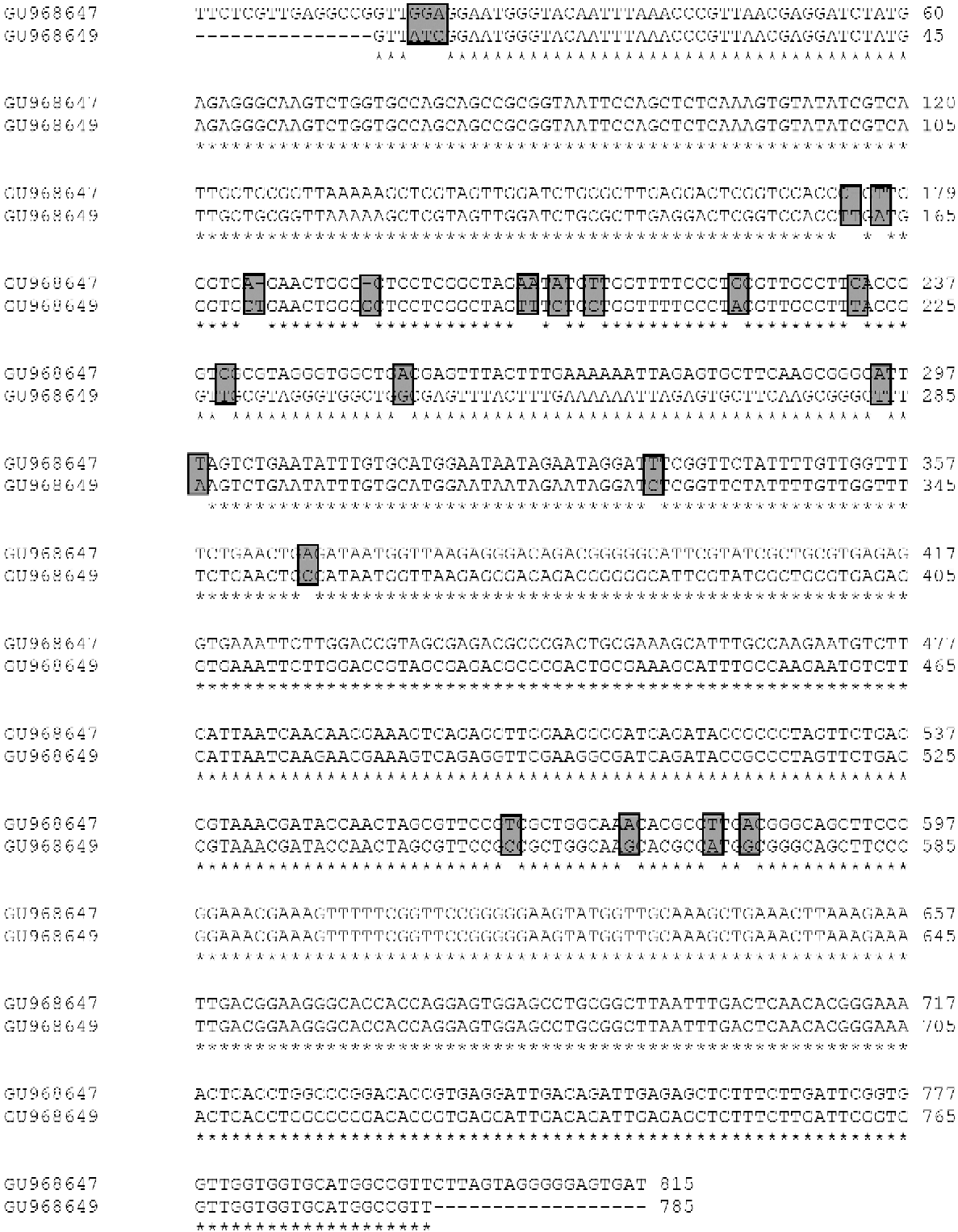
For phylogenetic analysis, 18S rDNA sequences of other nematode species already available in the GenBank database were retrieved. The nucleotide lengths of H. indicus and T. icemi examined in this study were found to be 785 and 815 base pairs, respectively. Tree topology based on the NJ method showed a distinct well-resolved clade for the species, namely H. indicus and T. icemi with other members of the nematode species belonging to the family Thelastomatidae with 100% bootstrap values (fig. 1). The NJ, bootstrap consensus tree inferred from 1000 replicates is taken to represent the evolutionary history of the taxa analysed. The percentage of replicate trees in which the associated taxa cluster together in the bootstrap test is shown next to the branches. The evolutionary distances were computed using the Kimura-2 parameter method and are in the units of the number of base substitutions per site. The phylogenetic tree obtained using the MP method also showed similar topology, retaining the same grouping with a more resolving tree for H. indicus and T. icemi with other thelastomatid species (fig. 2). Both the trees showed molecular establishment of these two nematode species under the superfamily Oxyurida, well separated from the Ascaridida and the clade for Oxyurida, well supported as exhibited by high bootstrap values, i.e. more than 70%. According to the ClustalW alignment (fig. 3) of the nucleotide sequences of the 18S rDNA of H. indicus and T. icemi, both the nematodes were 97% identical with one another. The grey boxes in the alignment show variations in the nucleotide sequences including insertions and deletions of base pairs.
Alignment of 18S ribosomal RNA (rRNA) gene sequences of Hammerschmidtiella indicus (GU968649) and Thelastoma icemi (GU968647); nucleotide differences between the sequences (shading), indel events (dashes) and consensus nucleotides (asterisks) are shown.
Predicted 18S RNA secondary structures
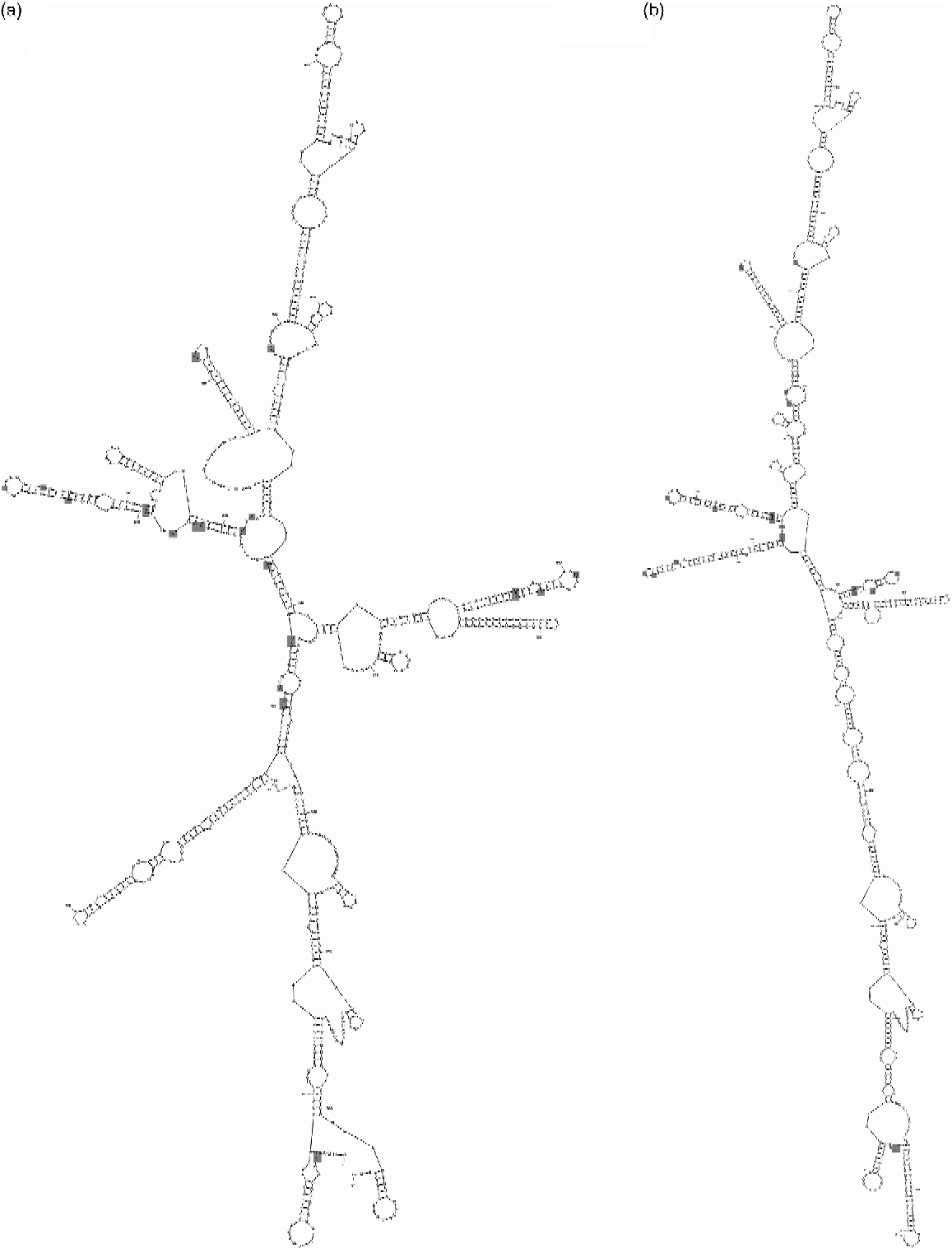
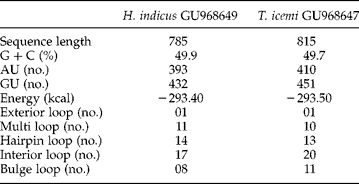
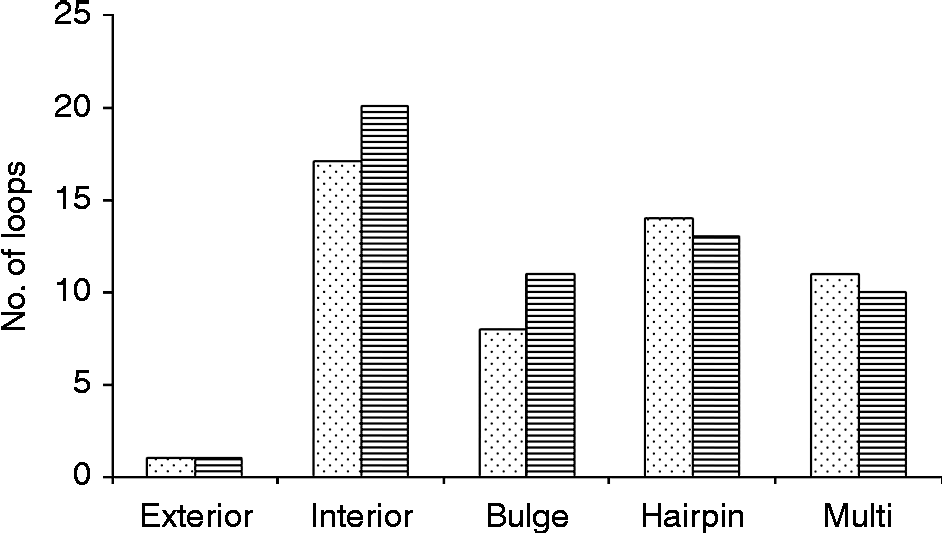
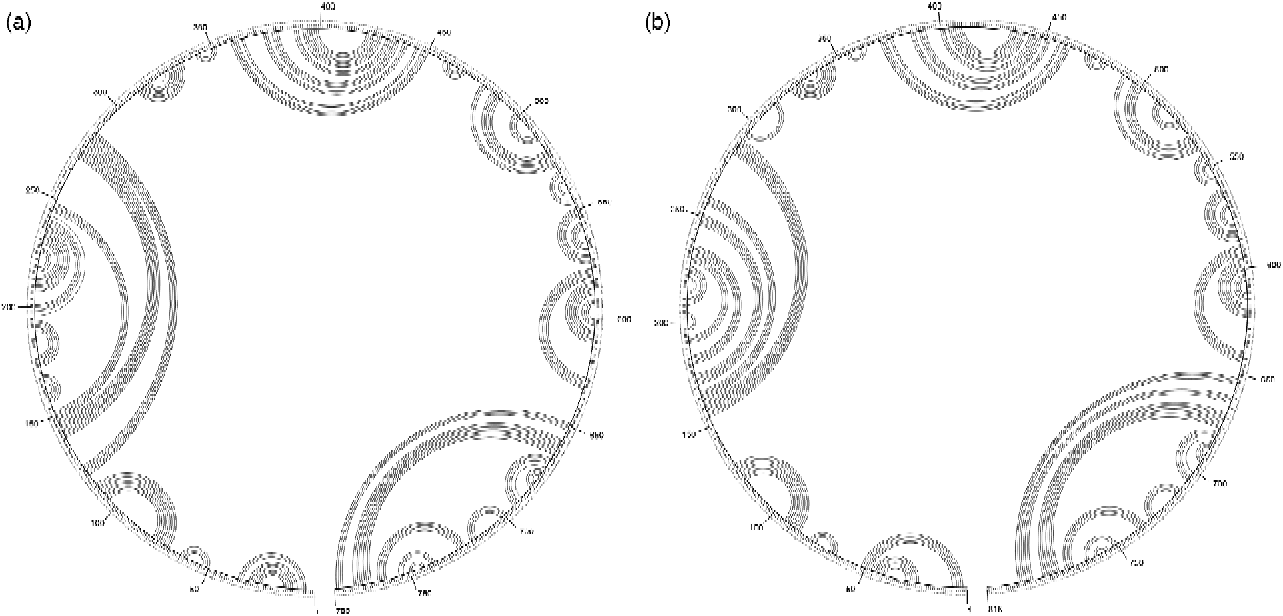
The predicted secondary structure for the 18S region of the two species in the present study, analysed using Mfold, had calculated minimum free energies of − 293.40 kcal/mol and − 293.50 kcal/mol, respectively (fig. 4a and b). The minimum free energy is estimated by summing individual energy contributions from base-pair stacking, hairpins, bulges, internal loops and multi-branch loops. The free energy values of H. indicus and T. icemi and the characteristics of sequences for the 18S rDNA region are shown in table 1. G+C content for both isolates ranged from 49.9 to 49.7%. Mainly, five types of loops are present in the RNA secondary structure, namely interior, hairpin, exterior, multi and bulge (fig. 5).
Schematic representation of 18S ribosomal RNA (rRNA)-predicted secondary structures and their structure formation enthalpies for the species Hammerschmidtiella indicus and Thelastoma icemi. Lines represent the ribose phosphate backbone and base pairs. ΔG = − 293.40 and − 293.50 are the secondary-structure formation enthalpies for both species H. indicus (a) and T. icemi (b), respectively.
Secondary structural features of 18S sequence of nematodes Hammerschmidtiella indicus and Thelastoma icemi.
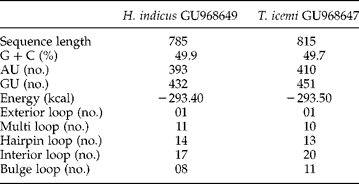
G, C, A and U represent the nitrogen bases guanine, cytosine, adenine and uracil, respectively.
The distribution of different loops in the 18S region of Hammerschmidtiella indicus (stippling) and Thelastoma icemi (horizontal lines).
The centroid for a set of structures is the structure with the minimum total base-pair distance to all structures in the set. Each residue is represented on the abscissa and semi-elliptical lines connect bases that pair with each other. In a centroid diagram, bases are positioned along a circle, in a clockwise orientation. An arc connecting two bases across the circle shows pairing between the bases. Lack of pseudoknots in the secondary structure is reflected by the absence of intersecting lines in the centroid structure of H. indicus and T. icemi, respectively (fig. 6a and b). The numbers around centroids are the numbers of base pairs, i.e. 1–785 and 1–815 of the 18S ribosomal DNA for both species.
The secondary structure is shown as a centroid, where each base is represented by a dot on the circumference of a circle of arbitrary size and the bases that pair with each other are connected by lines in (a) Hammerschmidtiella indicus and (b) Thelastoma icemi.
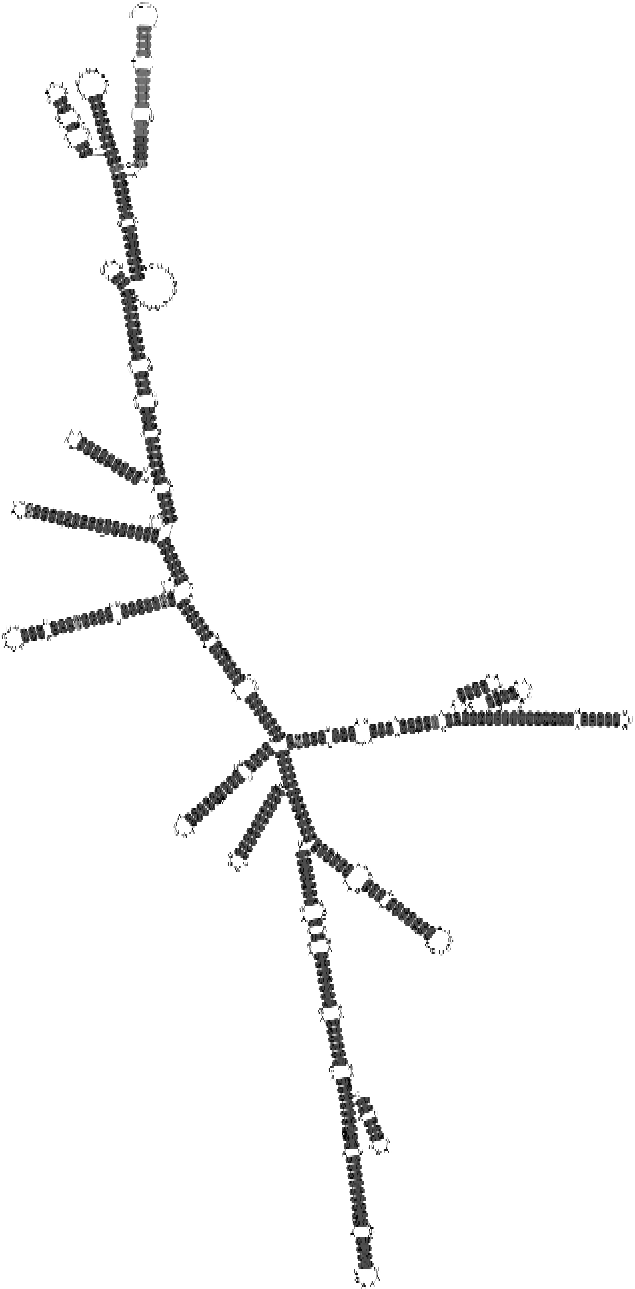
The MARNA program generates a reliable alignment and represents a powerful tool for the construction of consensus structure. As the alignment (see fig. 3) of H. indicus and T. icemi evaluates that both the sequences show structural similarity, the alignment optionally satisfies given constraints and allows unaligned fragments at the end of both sequences without penalty; the alignment is shown together as the predicted structure (fig. 7). The saturation decreases with the number of incompatible base pairs; thus, it shows the structural conservation of the base pair.
Consensus-predicted secondary structures of the species Hammerschmidtiella indicus and Thelastoma icemi from a multiple alignment of both nematode species; in fig. 4 predicted secondary structures are more evolutionary conserved than the primary sequence and a single sequence is not as accurate as the information gained from multiple sequences.
Motif identification, testing and validation analyses
Identified sequences of motifs from the 18S rDNA region of H. indicus and T. icemi were screened, validated and a final five representative short-sequence motifs of sizes less than 50 nucleotides were selected (table 2). These motifs of 18S sequences were tested by BLAST analysis against the generalized GenBank database. All the motifs show exact BLAST matches with the nematode sequences (best hits, 100; 100% of identity; E-values, 1e− 18) available on the database. All motifs did not match any distantly related non-nematode species available in the GenBank database.
Basic Local Alignment Search Tool (BLAST) search outputs for nematode 18S sequence motifs against the National Center for Biotechnology Information (NCBI) GenBank database.
Discussion
Oxyurids are inhabitants of the digestive tract of insects and some other arthropods. The Thelastomatidae are considered the most primitive family of Oxyurida. The close relationship between Hammerschmidtiella and Thelastoma with P. americana suggests that the nematodes of these genera have been spread worldwide by the dispersal of its host. The genus Hammerschmidtiella was established by Chitwood (Reference Chitwood1932) for the worms described by Hammerschmidt, (Reference Hammerschmidt1838) as Oxyuris diesingi. So far, 12 species of this genus have been described worldwide (in which five species are from cosmopolitan cockroaches, three from non-cosmopolitan cockroaches, another three from millipedes and one from wood-burrowing cockroaches). Out of these, the following described species from India are: H. diesingi (Hammerschmidt, 1838) Chitwood, Reference Chitwood1932; H. manohari (Rao, Reference Rao1958); H. aspiculus (Biswas & Chakravarty, Reference Biswas and Chakravarty1963); H. singhi (Rao & Rao, Reference Rao and Rao1965); H. poinari (Gupta & Kaur, Reference Gupta and Kaur1978); H. andersoni (Adamson & Nasher, Reference Adamson and Nasher1987); H. basiri (Singh & Kaur, Reference Singh and Kaur1988); and H. indicus (Singh & Malti, Reference Singh and Malti2003). As well as these, one species of this genus was also described as H. bareillyi by Sharma & Gupta (Reference Sharma and Gupta1983). Although later it was found that H. bareillyi and H. singhi are poorly known, the characteristics used to differentiate them from the type species are of dubious value and they may be synonyms of H. diesingi (Rao & Rao, Reference Rao and Rao1965; Sharma & Gupta, Reference Sharma and Gupta1983). Among the family Thelastomatidae, the genus Thelastoma, regarding species composition, has varied considerably over time. The genus Thelastoma was erected by Leidy (Reference Leidy1849) to accommodate T. attenuatum as its type species. Basir (Reference Basir1956) identified 47 species included in this genus. Leibersperger (Reference Leibersperger1960) believed that there were 14 species in this genus, but again Kloss (Reference Kloss1965) recognized only six species with many synonyms. Until recently, the views regarding the species composition of Thelastoma have ranged between Skrjabin et al. (Reference Skrjabin, Shikobalova and Lagodovskaya1966), who included 34 valid taxa, Jarry & Jarry (Reference Jarry and Jarry1968), who proposed that there are only three valid taxa in the genus and the others (around 19 nominal taxa) are synonyms. The species composition of the genus Thelastoma is shown by the revision of work of Adamson & Van Waerebeke (1992a). According to these authors, a total of 51 species in this genus have been recorded, 24 having been described subsequent to the publication of the monograph of Skrjabin et al. (Reference Skrjabin, Shikobalova and Lagodovskaya1966). Currently, the genus contains approximately 54 species described from all over the world, of which 19 species are reported from India alone (Shah, Reference Shah2007). The various species of this genus described from India are: T. indica Basir (Reference Basir1940); T. aligarhica Basir, Reference Basir1940; T. icemi Schwenk (Reference Schwenk1926) Travassos, Reference Travassos1929; T. ornata Singh (Reference Singh1955); T. thapari Singh & Singh, Reference Singh and Singh1955; T. spicatum (Cobb, Reference Cobb1929) Basir, Reference Basir1956; T. indica Rao (Reference Rao1958); T. macramphidum (Christie, Reference Christie1931) Basir, Reference Basir1956; T. periplaneticola Leibersperger, Reference Leibersperger1960 (Parveen & Jairajpuri, Reference Parveen and Jairajpuri1981); T. welchi (Farooqui, Reference Farooqui1968); T. aurangabadense Farooqui, Reference Farooqui1970; T. basiri Farooqui (Reference Farooqui1970); T. alii Farooqui (Reference Farooqui1970); T. rafai Parveen & Jairajpuri (Reference Parveen and Jairajpuri1980); T. atheri Parveen & Jairajpuri (1983); T. brevicaudatum Leidy, Reference Leidy1851; T. guptai Duggal & Aulakh, 1989; T. kherai Duggal & Aulakh, Reference Duggal and Aulakh1989; T. atheri (Parveen & Jairajpuri, Reference Parveen and Jairajpuri1983) Rizvi & Jairajpuri, Reference Rizvi and Jairajpuri1995. This large number of nematode studies, based only on morphological and morphometric characters found on mounted adult specimens, has led to contradictions between the identification of closely related parasite species.
DNA-based methods provide authentic identification and work as supplementary tools. The SSU and large subunit (LSU) rDNA fragments provide an attractive mix of constant sites that enable multiple alignments between homologues, and variable sites that provide phylogenetic signals (Hillis & Dixon, Reference Hillis and Dixon1991; Dixon & Hillis, Reference Dixon and Hillis1993). Ribosomal RNA (rRNA) is also the most common nucleic acid in any cell and thus was the prime target for sequencing in both eukaryotes and prokaryotes during the early history of SSU nucleotide-based molecular systematics (Olsen & Woese, Reference Olsen and Woese1993). Small subunit (18S) rDNA is highly conservative at the specific level (Honisch & Krone, Reference Honisch and Krone2008; Hasegawa et al., Reference Hasegawa, Hayashida, Ikeda and Sato2009). During the study, the tree topologies derived from the phylogenetic analysis from rDNA depicted Hammerschmidtiella, Thelastoma and Leidynema as genetically closely related genera, molecularly as well as morphologically, and also showed that they are included in the same main clade formed by the species of the family Thelastomatidae, Heteroxynematidae belonging to Oxyuridae. However, H. indicus and T. icemi appear closely related and receive high bootstrap values in both NJ and MP analyses. Accordingly, as a general rule, in phylogenetic analysis if the bootstrap value for a branch is 70% or higher, then the branch topology is considered reliable. In our results, among the trees obtained, the bootstrap value showed >70% and corroborates the correct placement of both nematode species under the Thelastomatidae family of Oxyurida. This analysis also demonstrated that differences as small as some nucleotides in the 18S sequences of H. indicus and T. icemi can also be used as effective genetic markers to distinguish between them.
In secondary-structure analysis using minimum free energy modelling, the inferred secondary structure for the two nematode species showed a structurally identical nature of the 18S region. Inclusion of secondary structures in phylogenetic reconstructions has been shown to improve the robustness and accuracy of phylogenetic trees (Keller et al., Reference Keller, Forster, Müller, Dandekar, Schultz and Wolf2010). In the present study, the phylogenetic tree obtained using both NJ and MP methods and based on sequence data alone could not resolve the constituent families within the clade. This reflects the ability of the 18S sequence to be an effective marker for discriminating species at the genus and species level and the highly conserved nature of the 18S secondary structure makes it suitable for phylogenetic analyses at higher taxonomic levels. Besides this, consensus secondary structures are helpful for alignments as a source of additional data for structural variations to perform phylogenetic analysis. For this study the circle graph was made, and it is useful for two reasons: it shows the number of base pairs and provides the angles to draw helices in proper structures in which bases do not overlap. The bases are drawn clockwise around the circle and lead to a structure in which bases are drawn clockwise around each loop. This is a common way of producing a structure; however, a counter-clockwise circle graph and resulting structure can be produced by placing the bases around the circle in a counter-clockwise fashion. Application of the secondary-structure model of rRNA to phylogenetic analyses leads to trees with less resolved relationships among clades and probably eliminates some artefactual support for misinterpreted relationships. The highly resolved topology in tree parts suggests that a deep phylogenetic signal has been retained in the 18S sequences of extant species. However, incorporating secondary-structure information allows improved estimates of phylogeny and relationships among several nematodes species. Moreover, data show that 18S motifs can be considered a promising tool for nematode species identification. Although we need more sequences to conduct comparative analysis of other species of the genera Hammerschmidtiella and Thelastoma, the GenBank database is still incomplete for many nematode species of these groups.
The present study provides the first molecular characterization of the two nematode species Hammerschmidtiella and Thelastoma from India. This study establishes that molecular markers such as the 18S rRNA gene are useful for distinguishing closely related genera, and also demonstrates the phylogenetic utility of the ribosomal 18S region for inferences at taxonomic levels, as shown by the conservation of the secondary structures and the tree reconstructed using sequence-structure data. The overall conserved nature of 18S motifs, i.e. ≤ 50 base pairs in size, can be considered a promising tool for nematode species identification. The results of this study contribute to the refinement of the taxonomy of nematode species by supporting molecular identification of these two nematode species.
Acknowledgements
We are grateful to the Head of the Department of Zoology, Chaudhary Charan Singh University, Meerut, UP, India for resources. Sincere thanks are given to the University Grants Commission, New Delhi, India, for financial support (wide project number F. no. 40–406/2011 (SR)).