

LARR continues encouraging interdisciplinary conversations on significant topics for Latin America and Latin American Studies. Volume 60 (2025) and 61 (2026) discuss themes such as Crime, Violence and Governance, Human Rights and Memory, International Migration, Indigenous and African Diaspora Studies, Art and Music, Colonial Studies and Military Cultures. Beginning in volume 61, in addition to creating conversations among independently submitted articles, LARR will resume publishing special thematic dossiers. All dossier research articles undergo the same rigorous peer review process as the rest of the journal’s articles. Issue 61-3 includes the first dossier on the “Politics of Community” guest edited by anthropologist Rudi Colloredo-Mansfeld and geographer Angus Lyall. Issue 61-4 will feature a special dossier with interdisciplinary research on Andean glaciers guest edited by Cristián Simonetti, Javiera Barandiarán and José Ragas. As geographer Mark Carey argues in the epilogue of this dossier, “Each individual essay and the full dossier advance understandings of how power, knowledge, governance, and justice intertwine around the cryosphere” (Carey forthcoming). The dossier was curated by Eric Carter, LARR’s editor for the Geography subject area, and the collection is a great way to launch the Geography discipline in LARR with a timely debate on the environmental crisis in Latin America.
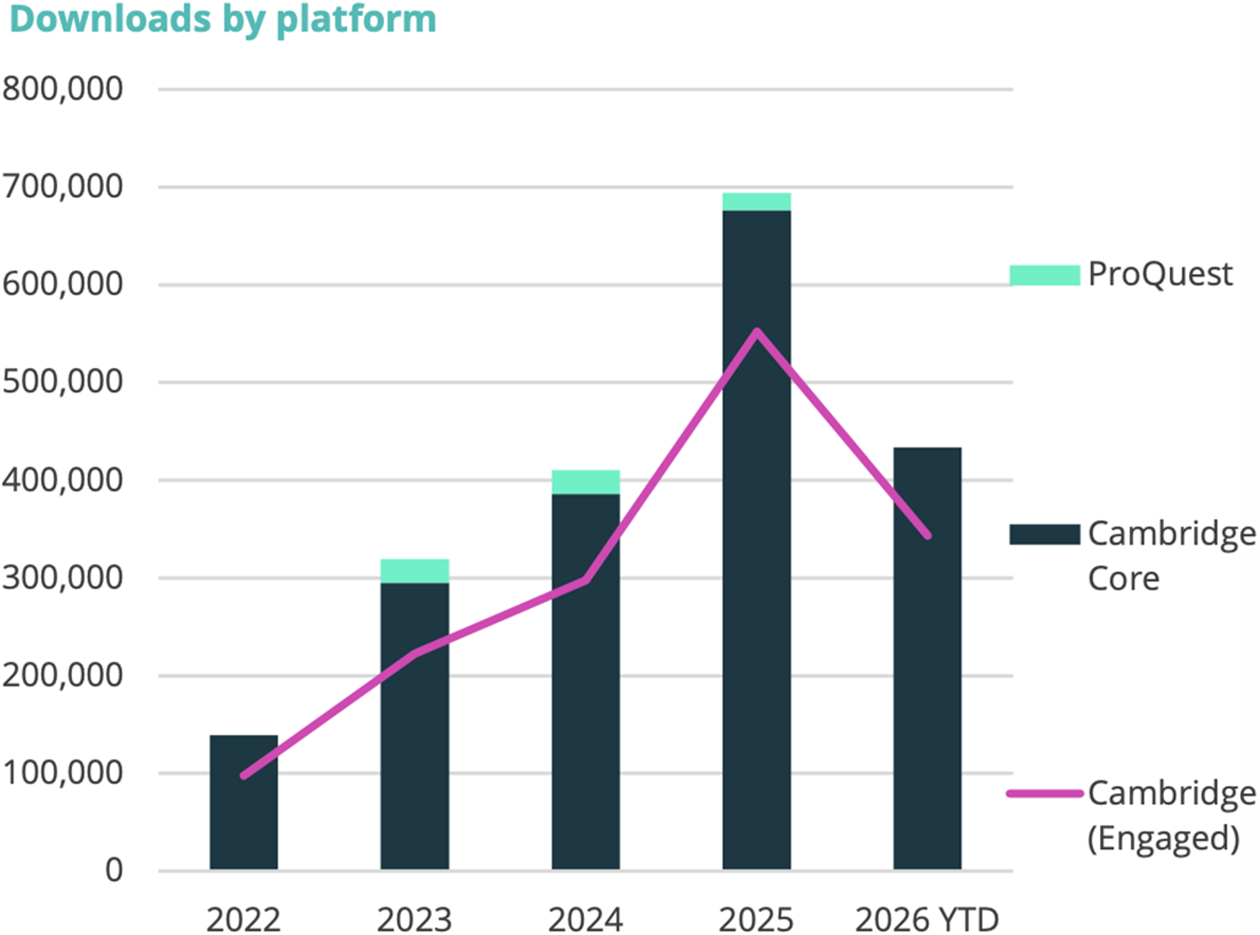
The editorial team, with the help of Vanessa Chaves, Laura Portilla and Erin Gray of the Latin American Studies Association (LASA) and University of Florida graduate students Maria Victoria Muñoz and Nephtalí Dzubin, has been working hard during the past year and a half on the promotion of the journal. We have been showcasing outstanding articles on LARR’s social media and the Cambridge University Press blog (https://multimediafluids.uam.elogim.com/core/blog/). In addition, we have communicated appropriate thematic collections to the leadership of LASA sections so that LARR can better connect with and serve LASA’s membership. At LASA 2026 in Paris, France, the editorial team facilitated a well-attended workshop on strategies for publication in LARR and other peer reviewed journals. These editorial and promotion efforts have produced a rise of “engaged” downloads of LARR’s articles and the improvement of the impact factor and CiteScore in 2025 (see Figure 1 and section on impact below).
Downloads of LARR articles in 2022–2026. Source: Chris McKeen, Publishers Report: Latin American Research Review, May 2026.

One challenge that the editorial team has confronted in the past year is the increasing use of artificial intelligence (AI) by authors and even by reviewers. The team has been discussing specific cases and general policies on the appropriate and ethical uses of AI. LARR accepts reasonable use of AI as a tool for purposes such as big data processing and help with grammar. Use of generative AI to perform literature reviews or to build scholarly arguments is strongly discouraged. We also discourage submitting articles fully translated with AI. Since we accept articles in English, Spanish and Portuguese, it is best that authors submit in the language that they feel most comfortable with, so that they can make the required edits and communicate precisely. LARR follows the guidelines of Cambridge University Press for ethical use of AI. Any use of AI must be carefully disclosed in the methods (if using it as a processing tool) or acknowledgements (if using it as a writing aid) sections of the manuscript.
Changes in the editorial team
LARR has made several changes in its editorial team in 2025–2026. The Cultural Studies subject area has been receiving an increasing number of manuscripts, a result of the editorial efforts of Pavel Shlossberg who has edited this section since 2021. However, more submissions have meant increased waiting time for authors who submit to this section. For this reason, we have added an additional new editor, Paola Uparela to the Cultural Studies subject area. Dr. Uparela is an expert on colonial Latin America, the history of science, visual cultures and gender and sexuality. Her book Invaginaciones Coloniales (Iberoamericana Editorial Vervuert, 2024) has received several awards.
Dr. Heather Vrana, who has been the editor for the History subject area since 2021, has ended their period in May of 2026. However, they continue curating the articles that were in process during their tenure. Dr. Vrana has done a superb job as Associate Editor of the History section. Before they started as an editor in 2021, some historians complained on social media that the journal did not publish enough history articles. In the last six years, we have published high-quality work in the field as evidenced by two history articles, curated by Dr. Vrana, winning the best article award for 2025 and 2026. These award-winning articles are “The Chilean Christians for Socialism Movement” by Denisa Jashari (59-4) and “Child Separation and the Stolen Generation in Brazil” by Ana Luiza Morais Soares (60-1). We are thankful to Dr. Vrana for their dedication to LARR for the past six years. Professor Claudio Barrientos of Universidad Diego Portales, Chile has stepped in as the next associate editor for the History subject area. Dr. Barrientos has a PhD from University of Wisconsin-Madison, is an expert on contemporary history and memory of indigenous Mapuche communities and is currently working on gender and LGBTQ+ histories.
Three other editors joined LARR’s team in the last two years. Diego Sánchez Ancochea, who is the Head of the Oxford School of Global and Area Studies and an expert on income inequality and social policy in Latin America, joined Rosaluz Durán in the Economics subject area. Drs Amalia Pallares and Irasema Coronado of Arizona State University now collaborate to edit the Politics and International Relations subject area. Dr. Pallares is an expert on indigenous politics and Latin American migration to the US. Dr. Coronado has done extensive research on human rights and environmental issues at the US-Mexico border.
Impact factor
LARR continues to enjoy a strong academic reputation. We are very pleased to announce that our impact factor and CiteScore have improved in the last few years:
-
• The two-year impact factor with Web of Science grew from 0.7 in 2023 to 0.8 in 2024 to 1.1 in 2025.
-
• The five-year impact factor with Web of Science grew from 1.2 in 2023–2024 to 1.3 in 2025.
-
• The Scopus CiteScore increased from 1.4 in 2023 to 1.5 in 2024 to 1.7 in 2025.
-
• LARR’s total citations increased from 1,288 in 2023 to 1,537 in 2024 to 1,707 in 2025.
Processes and turnaround times
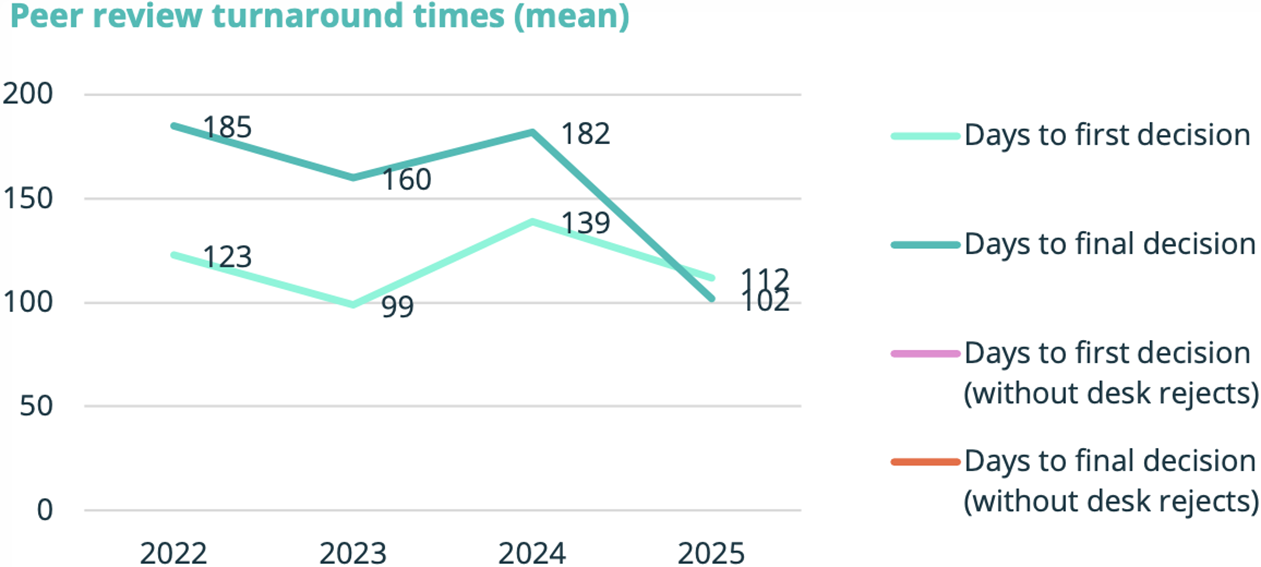
As seen in Figure 2, the days to final decision for manuscripts have decreased. The journal has reduced the time from 182 to 102 days, with a reduction of 80 days to reach a final decision on a manuscript. The days to first decision have decreased in the past year from 139 to 112. Despite these gains, this still seems too long for authors to wait. We hope that the time to reach a first decision improves with the addition of fresh and additional editors. To streamline processes and shorten review and decision times, LARR has two editors in the subject areas that receive the most submissions. Finding willing reviewers and receiving their evaluations on time is challenging; we cannot control everything about the processes, but we are doing what we can.
Turnaround times. Source: Chris McKeen, Publishers Report: Latin American Research Review, May 2026.

Submissions and acceptance rate
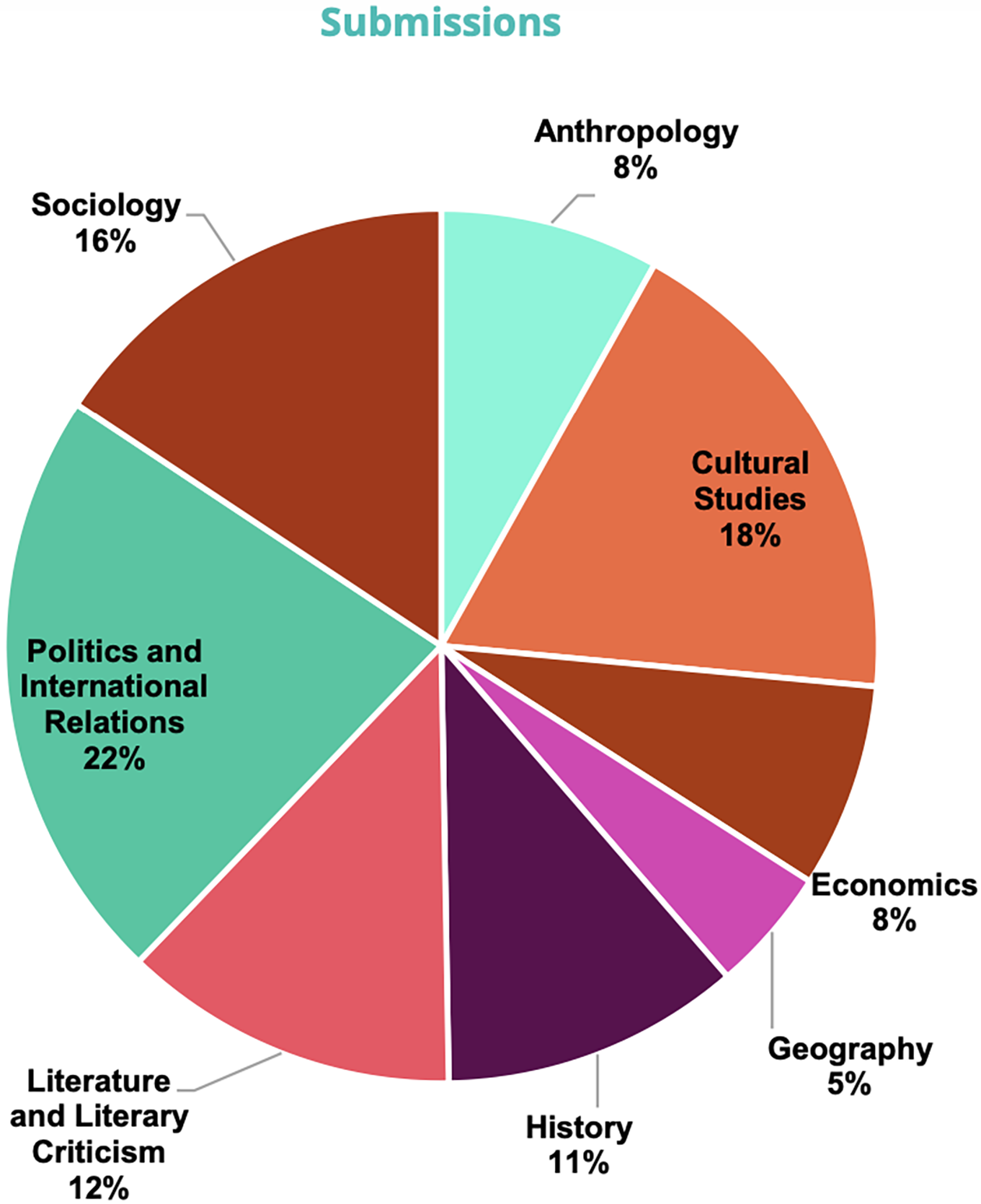
The number of submissions to LARR is growing. Submissions increased from 226 in 2024 to 266 in 2025 and even more in the first semester of 2026. The journal is also becoming more selective with the articles that it publishes. The acceptance rate has decreased from 26 percent in 2022 to 17 percent in 2025. Figure 3 shows rates of submission by discipline. Political Science and International Relations is the subject area that receives the most manuscripts, followed by Cultural Studies and Sociology.
Submissions by discipline in 2025. Source: Chris McKeen, Publishers Report: Latin American Research Review, May 2026.

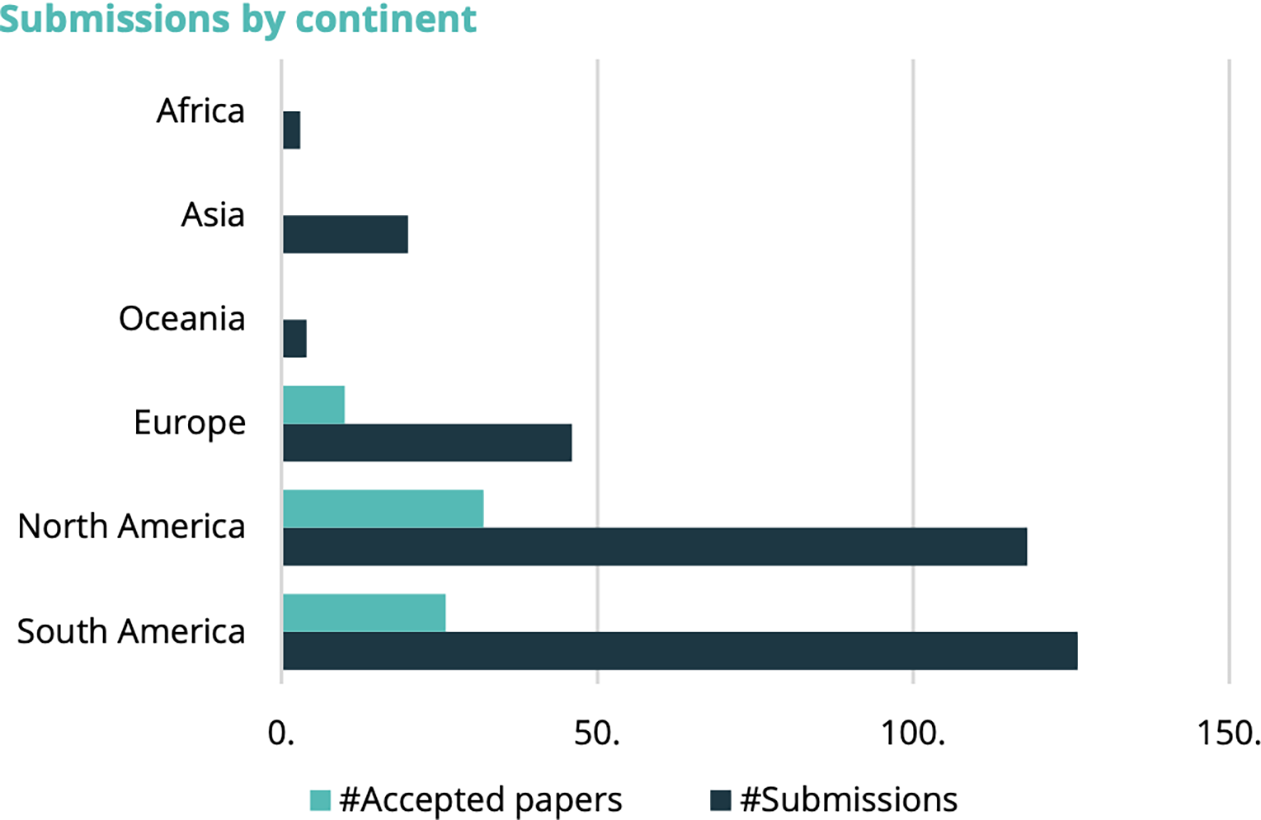
LARR attracts much international attention as seen in Figure 4. Most submissions come from South America, followed by North America and Europe. The journal receives many submissions from Asia, but few are published. We particularly welcome high-quality submissions from authors affiliated with Asian institutions as there is much interest for and engagement with Latin America in that area of the world.
Submissions by continent. Source: Chris McKeen, Publishers Report: Latin American Research Review, May 2026.

Decisions made
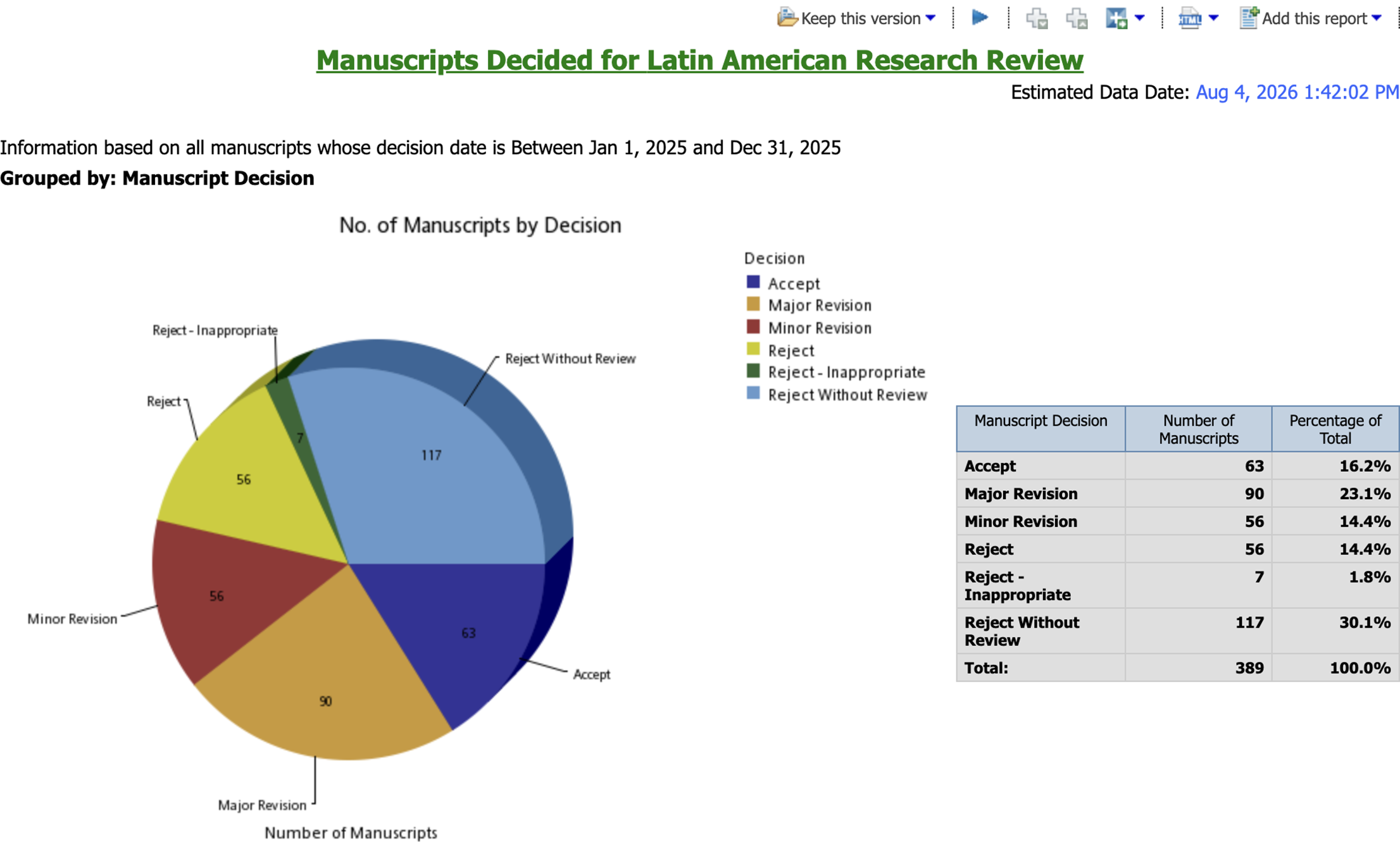
Thirty percent of the decisions made last year were “reject without review” as seen in Figure 5. This type of decision is made when editors anticipate that the manuscript as written will not pass the peer review process with positive results. Almost 2 percent of manuscripts are rejected because they are out of scope of the journal. We encourage authors to look at LARR’s webpage to make sure that their research fits within the scope of the journal. We also recommend that authors carefully prepare the first draft of their article to avoid a desk reject decision. Even when editors desk reject articles, we provide respectful and constructive feedback to help authors improve their manuscripts and submit to another outlet. Manuscripts are more likely to be sent out for review if they have a clear argument and make identifiable theoretical and empirical contributions to the field of Latin American Studies. We typically send articles that pass the first editorial review to three external reviewers. Authors are more likely to succeed in the peer review process if they receive the reviewers’ feedback as a generous gift of their time and expertise and seriously consider their suggestions.
Manuscripts decided LARR 2025. Source: Scholar One Manuscripts.

Articles published in volume 60 (2025)
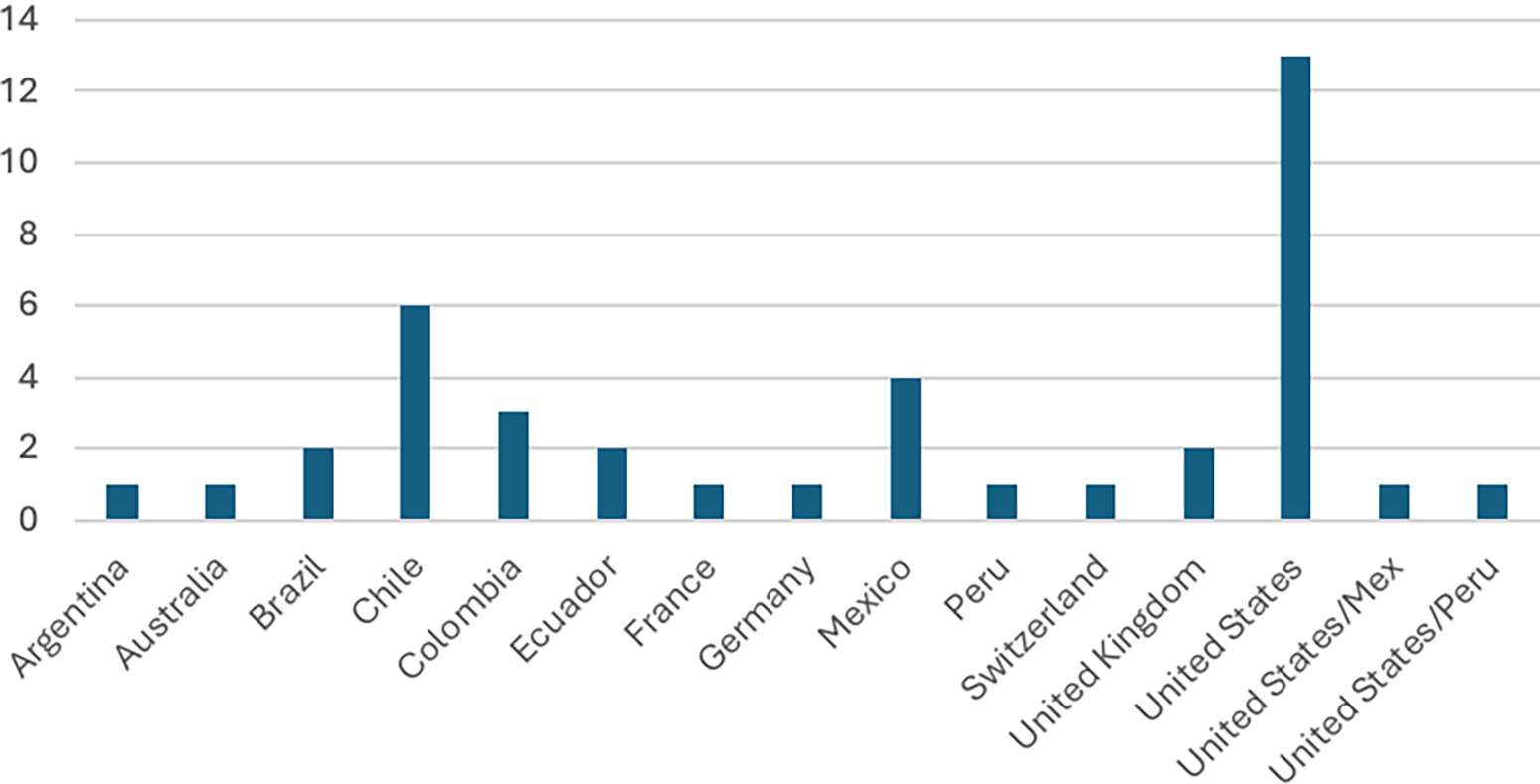
LARR published 54 manuscripts in volume 60. Of those, 40 were research articles, 2 were film reviews and 12 were book review essays. Most articles had a corresponding author affiliated with a US institution with Chile and Mexico following as the most common first authors’ countries of affiliation. The geographical affiliation of corresponding authors was quite diverse showing the international standing of LARR as seen in Figure 6.
Articles published in volume 60 (2025) by country of affiliation of corresponding author.

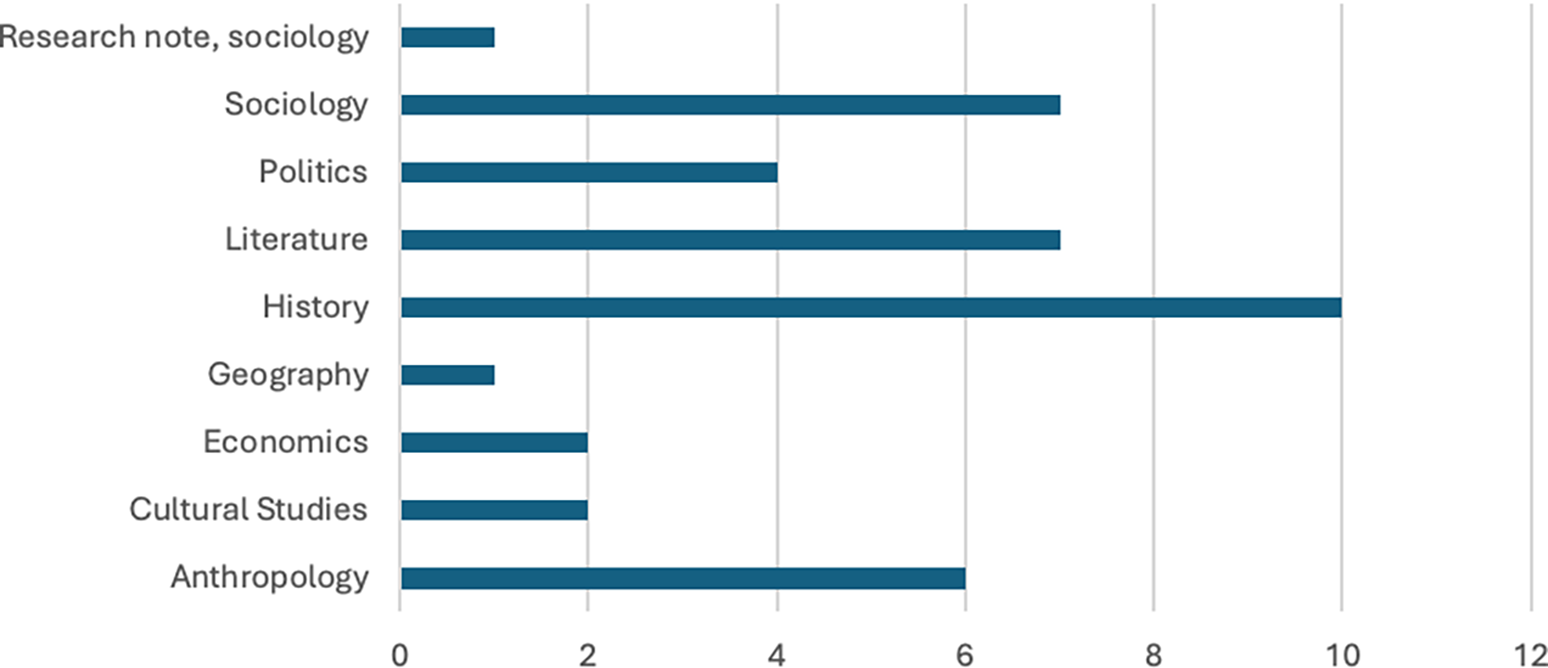
Most articles published in 2025 were registered in the ScholarOne Manuscript system under the History subject area, followed by Sociology and Literature and Literary Criticism as seen in Figure 7. The number of articles published in Anthropology grew considerably from previous volumes.
Recognition for our articles
The article entitled “Organizational Form and Fragmentation in the Lethal Outcomes of Mexico’s Vigilante Mobilizations, 2012–2015” by Dolores Trevizo (60-1) won the 2026 best article award from the Mexico Section of LASA. The 2026 University of Florida-LARR best article award went to “Child Separation and the Stolen Generation of Brazil: Indigenous Peoples Unfreedom in Amazonia,” (60-1) by Ana Luiza Morais Soares of Universidade Federal de Ouro Preto, Brazil and a postdoctoral fellow at Vanderbilt University, US (Figure 8).
LARR’s most downloaded articles last year were “Hidden in Plain Sight: The Invisibility of Human Rights in El Salvador Prisons Under the State of Exception” by Sarah Bishop and Mneesha Gellman (61-1), and “¿Cuantos son los desaparecidos y cuántas las víctimas de desaparición forzada en Argentina? Debates politico memoriales e investigación académica” by Emilio Crenzel (59-4). The journal’s most cited recent articles were “Not in the Eye of the Beholder: Racialization, Whiteness and Beauty Standards in Mexico” by Alice Krozer and Andrea Gómez (58-2) and “Disasters as Critical Junctures: State Building and Industrialization in Chile after the Chillán Earthquake of 1939” by Magdalena Gil (57-4).
Articles published in volume 60 (2025) by discipline.

Ana Luiza Morais Soares, winner of the 2026 University of Florida-LARR best article award.



 Open access

