INTRODUCTION
Coastal embayments are zones of high productivity and biodiversity which serve as spawning areas, refuges and nurseries, sustaining key populations of fish and benthic invertebrates (Valiela, Reference Valiela, Barnes and Mann1991). The hydrographic regime within coastal embayments is complex (hence, difficult to model) and may include estuarine circulation, formation of fronts and internal waves, wind and tidal mixing and vertical density gradients (Cembella et al., Reference Cembella, Ibarra, Diogene and Dahl2005). These systems receive direct and often disruptive loading of dissolved and particulate material from land, including nutrients, suspended material and dissolved organics from both natural and anthropogenic sources. The geomorphological and hydrographic constraints in combination with their high water residence time make them particularly susceptible to eutrophication phenomena and harmful algal blooms (HABs) with extensive social and financial implications (Anderson et al., Reference Anderson, Gilbert and Burkholder2002; Cembella et al., Reference Cembella, Ibarra, Diogene and Dahl2005).
Kalloni Gulf, located in Lesvos Island (NE Aegean Sea), is an excellent example of a shallow semi-enclosed embayment. It is a highly productive water body, sustaining remarkable populations of planktivorous fish and shellfish that are exported nationally and internationally (Paspatis & Maragoudaki, Reference Paspatis and Maragoudaki2005). The gulf itself and the surrounding area is considered an important habitat for biodiversity since it is largely covered by estuaries, streams, salt works, pine forests and reed beds. Consequently, Kalloni Gulf is included in the NATURA 2000 network as one of the ‘special areas for nature conservation’. The ecosystem of the gulf is particularly susceptible to climate change, since the predicted drier conditions that are expected to prevail could increase water residence time up to five times (Spyropoulou et al., Reference Spyropoulou, Spatharis, Papantoniou and Tsirtsis2012). Additionally, during the last decade the gulf has been increasingly subjected to anthropogenic pressure e.g. fisheries and agriculture. A significant decrease of biological resources including fish and bivalves has already been reported by Kefalas et al. (Reference Kefalas, Castritsi-Catharios and Miliou2003), while agricultural runoff and untreated sewage are the main sources of nitrogen input in the gulf. The bay is characterized by higher primary production compared with the Aegean Sea, with significant temporal variability, particularly when nutrient inputs occur in winter. Such heavy nutrient enrichments after rainfall events in 2005 and 2006 led to the formation of massive blooms of the potentially toxic species Pseudo-nitzschia calliantha and Alexandrium insuetum (Spatharis et al., Reference Spatharis, Danielidis and Tsirtsis2007a). These blooms were not associated with the presence of toxins but considering the enclosed morphology of Kalloni Gulf as well as the heavy nutrient loading, a risk of increasing blooms or potential HABs can be foreseen. Kalloni Gulf presents eutrophic characteristics especially at the inner part of the bay (water colouring, planktonic proliferation) and oxygen depletion during summer in deeper water (>10 m) (Panayotidis & Klaudatos, Reference Panayotidis and Klaudatos1997). Although the effect of eutrophication on the phytoplankton community is well documented (Spatharis et al., Reference Spatharis, Danielidis and Tsirtsis2007a, Reference Spatharis, Tsirtsis, Danielidis, Chi and Mouillotb; Tsirtsis et al., Reference Tsirtsis, Spatharis, Sampatakaki and Spyropoulou2008), the subsequent response of zooplankton remains unknown.
Small planktonic copepods (<1 mm) are vital components of marine pelagic food webs, especially in productive coastal regions where they often comprise 80–90% of total zooplankton abundance (Turner, Reference Turner2004; Rakhesh et al., Reference Rakhesh, Raman, Ganesh, Chandramohan and Dehairs2013). Small-sized species and copepod juvenile stages are critical intermediates between the classical and the microbial food web, constituting a major prey for small pelagic fish (Roff et al., Reference Roff, Turner, Webber and Hopcroft1995; Hopcroft et al., Reference Hopcroft, Roff and Chavez2001; Calbet & Saiz, Reference Calbet and Saiz2005). Despite their high abundance and central role in the energy transfer in coastal ecosystems there is less information on small copepods compared with their larger counterparts. Therefore it is essential to consider how small-sized copepods are affected by stressors in the coastal environment, since shifts in the planktonic copepod community structure could have major impacts on fish populations.
We describe the copepod community in the semi-enclosed Kalloni Gulf, placing the focus on the dominating yet little known smaller (<1 mm) fraction. The aim of the present study was to examine the community structure of small-sized copepods during an annual cycle, and to relate their spatial and temporal variability to the environmental fluctuations, contributing an insight into the function of shallow embayments in the Mediterranean Sea.
MATERIALS AND METHODS
Study site
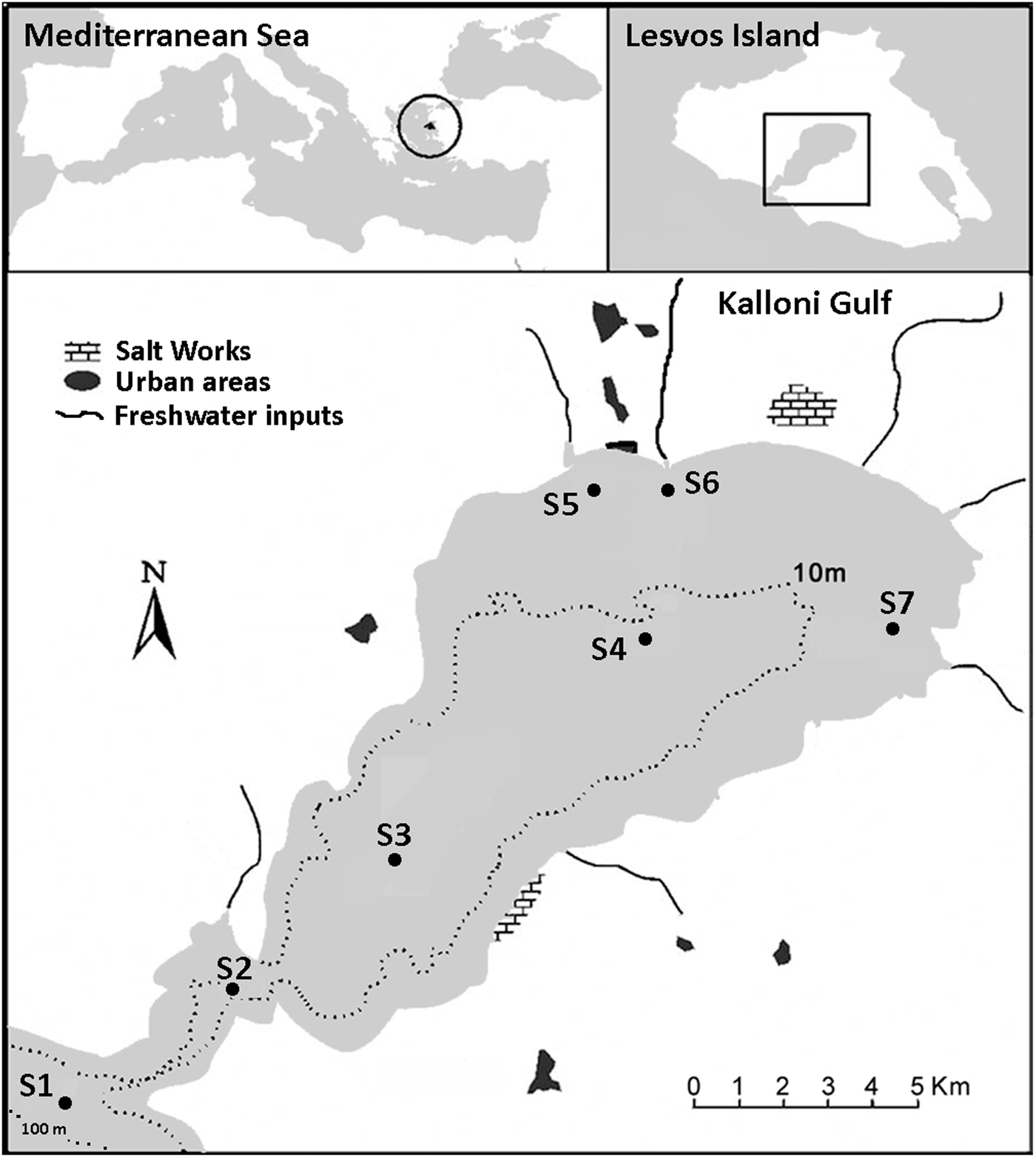
Kalloni Gulf has a prolate round shape, covering an area of approximately 110 km2 (Figure 1). The widest (10 km) and shallowest (10 m) northern part of the gulf receives considerable quantities of imported material through intermittent river runoff. The southern part is narrower (4 km) and deeper (20 m), with a more uneven bottom and is connected to the Aegean Sea through a narrow (2 km), long (4 km) and deep inlet (25 m). The low altitude of the surrounding land renders the gulf susceptible to strong winds, which in addition to the water's shallow depth results in a well-mixed system, with no thermocline formation during summer and increased water turbulence throughout the year. A low temperature and salinity surface layer is formed from freshwater inputs in winter, and lasts until early spring. Water exchange with the open sea depends on tidal movements and surface water circulation induced by wind-forced currents (Lefebvre et al., Reference Lefebvre, Guelorget, Perthuisot, Courties and Millet1997; Millet & Lamy, Reference Millet and Lamy2002). For the most part of the year the exchange of water masses is mainly limited to the deeper layer (>5 m), however, during autumn the formation of a high density front prevents this from happening in the entire water column (Panayotidis & Klaudatos, Reference Panayotidis and Klaudatos1997). The climate is characterized by a hot and dry period (May–September) with strong N–NE winds and a cold and humid period (October–April) when wind conditions are unstable. Freshwater inputs are very weak during the dry period and together with the enhanced evaporation by the strong winds lead to slightly hypersaline conditions (~ 40 psu) in the inner part of the bay. During the rainy period (November–May) the freshwater input through intermittent streams and land runoff increases, leading to significant salinity differences among seasons (minimum salinity values ~ 35 psu) (Lefebvre et al., Reference Lefebvre, Guelorget, Perthuisot, Courties and Millet1997).
Kalloni Gulf and the sampling stations' locations.

Sampling and sample analysis
Sampling was conducted monthly in Kalloni Gulf from July 2009 to July 2010 from a grid of seven stations covering the whole study area (Figure 1): the open Aegean Sea (S1), the inlet (S2), the southern part of the gulf (S3), the northern part of the gulf (S4) and the main river estuaries (S5–S7). Temperature and salinity throughout the water column were recorded using a SEABIRD SBE 9 profiler. Concurrent meteorological data were collected from the meteorological station of the Laboratory of Geography and Natural Disasters, operated by the Department of Geography, University of the Aegean.
Subsurface water samples (1 m depth) were collected using a Van Dorn sampler for the determination of total organic nitrogen (TON) and phosphorus (TOP), inorganic nutrients (TIP, NO2-N, NO3-N, NH3-N, SiO2-Si), chlorophyll α (Chl a) and heterotrophic bacteria (HB). Chl a was measured by filtering 1–2 l of seawater onto GF/C Whatman filters and further fluorometric analysis of the acetone extracts according to Parsons et al. (Reference Parsons, Malta and Lalli1984). The filtrate as well as unfiltered water was subsequently frozen at −20°C for the determination of organic and inorganic nutrients respectively (Parsons et al., Reference Parsons, Malta and Lalli1984). Samples for heterotrophic bacteria enumeration were preserved with borax-buffered formalin (final concentration 2%). Subsamples were stained with DAPI, filtered on black polycarbonate filters of porosity 0.2 µm and counted using epifluorescence microscopy (Porter & Feig, Reference Porter and Feig1980). Abundance data were converted into carbon biomass using a conversion factor of 20 fg C cell−1 (Lee & Fuhrman, Reference Lee and Fuhrman1987).
In order to adequately sample the smaller-size copepod fraction but at the same time avoid clogging due to large phytoplankton cells, quantitative zooplankton sampling was performed using a 90 µm net equipped with a flow meter. Subsurface layer (1 m) was sampled monthly by horizontal, 3-min tows at a speed of 2 knots. To avoid any bias from zooplankton vertical nycthemeral migrations, all sampling trips were conducted in the same order during daytime. Collected samples were immediately preserved in borax-buffered formaldehyde to a final concentration of 4%. In each sample at least 500 copepods were counted and identified to the lowest possible taxonomic level. All calanoid and cyclopoid copepods, the poecilostomatoid Oncaea media and the harpacticoids Euterpina acutifrons and Microsetella rosea adult and copepodite stages were identified to species level, while the rest of the poecilostomatoid copepodites were grouped together. Copepod nauplii were treated as an independent group.
Statistical analysis
The spatio-temporal patterns of all environmental parameters and copepod abundance were investigated by Kruskal–Wallis test. Diversity shifts were examined with species richness (S) and the (log2) Shannon–Wiener information index of diversity (H′) calculated on adult copepod abundance and compared with ANOVA (after normality testing). Statistically significant differences were further examined through Least Significant Differences (LSD) multiple range test. Correlations of biodiversity indices to environmental parameters were assessed with the Spearman Rank Correlation index. Preliminary analysis revealed no significant spatial differences for any of the aforementioned parameters at the inner gulf area (S3–S7) so values were averaged and treated as an independent group.
To describe the copepod community structure during the annual cycle a species by sample matrix, expressed as abundance values (individuals per m3), was analysed using both cluster analysis and non-metric multidimensional scaling ordination (NMDS) based on square root transformed data and the Bray–Curtis similarity index (Primer v. 6.12, see also Clarke & Warwick, Reference Clarke and Warwick1994). The effect of sampling time and location of stations on the copepod assemblage structure was investigated by a two-way permutational multivariate analysis of variance known as PERMANOVA (Primer v. 6.12).
Canonical correspondence analysis (CCA), a unimodal based species-response model, was applied on copepod abundance data in order to identify relevant biotic and abiotic parameters that best explain the distribution of the community. Taxa with frequency of occurrence less than 1% were arbitrarily excluded from the CCA analysis. The analysis was performed using CANOCO software package (v. 4.5). Significance of CCA axes were evaluated by a Monte-Carlo test (1999 permutations under a reduced model).
RESULTS
Environmental variability
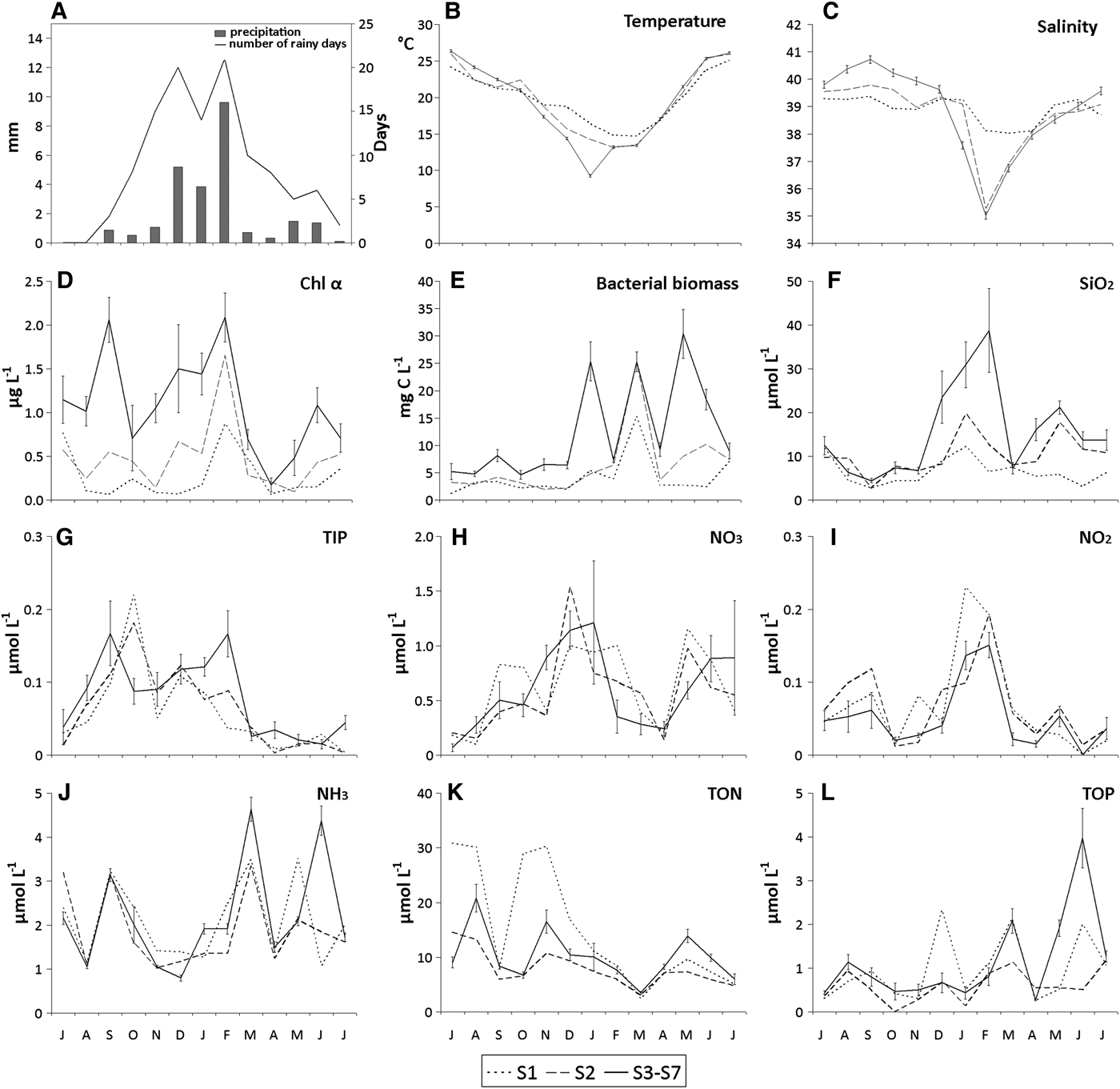
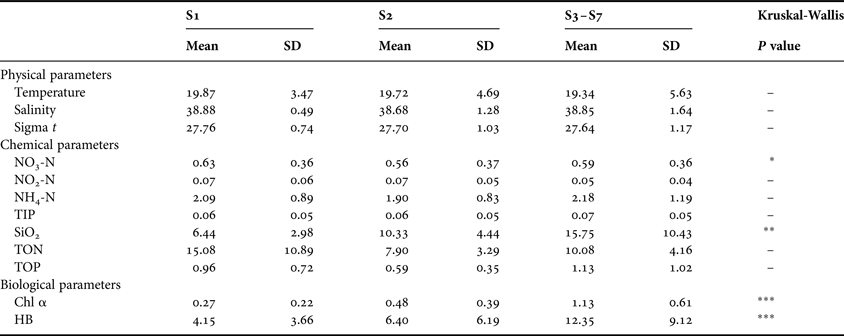
The range of all environmental variables at the inner gulf was much wider than in the open sea apart from NO2 and TON (Table 1). Surface temperature among sub-regions was similar throughout the year, except in winter when the inner part of the gulf (S3–S7) was significantly colder compared with the open sea (S1), with intermediate values observed at the inlet (S2) (Figure 2B). This difference was particularly evident at the inner gulf in January due to a cooling (drop of 5°C). Surface salinity spatial differentiation was significant on a seasonal basis; significantly higher values were recorded at the inner gulf (S3–S7) when compared with the open sea (S1) and the inlet (S2) in summer (P < 0.005) and autumn (P < 0.005) (Figure 2C). This spatial pattern was reversed during winter when significantly lower salinity values (P < 0.05) were observed at the inner part of the gulf (S3–S7) in relation to the open sea (S1) (Figure 3B), coinciding with the annual maximum precipitation events and freshwater inputs (Figure 2A).
Annual fluctuation of (A) precipitation (mm) and number of rainy days (B) temperature, (C) salinity, (D) chlorophyll α (Chl α), (Ε) heterotrophic bacterial biomass (HB), (F) silicates (SiO2), (G) total inorganic carbon (TIP), (H) nitrates (NO3), (I) nitrites (NO2), (J) ammonia (NH3), (K) total organic nitrogen (TON) and (L) total organic phosphorus (TOP) at the open sea (S1), at the inlet (S2) and at the inner area (S3–S7) of Kalloni Gulf from July 2009 to July 2010. Error bars represent individual standard errors (SE).
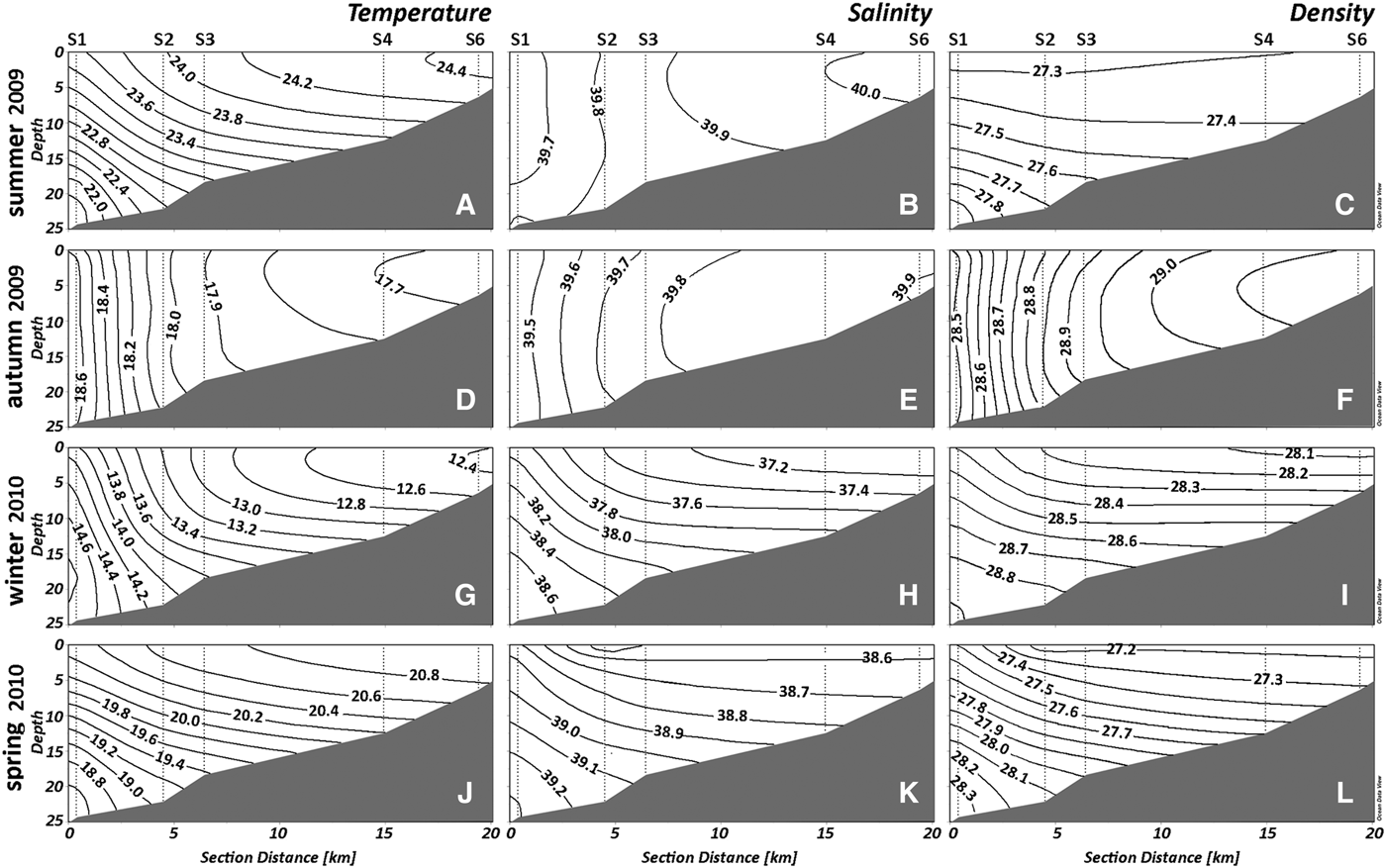
Mean water temperature (°C), salinity and density (kg m−3) in (A–C) summer, (D–F) autumn, (G–I) winter and (J–L) spring in Kalloni Gulf.
Mean annual values and standard deviation (SD) of temperature (°C), salinity, sigma t (kg m−3), inorganic and organic nutrient concentrations (μmol l−1), chlorophyll α concentration (μg l−1) and heterotrophic bacterial biomass (mg C l−1) at the open sea (S1), the inlet (S2) and the inner gulf (S3–S7). The results of a Kruskal–Wallis comparison test among the three sub-regions are included.
*Significance level = 0.05.
**Significance level = 0.005.
***Significance level = 0.0005.
In summer the formation of a rather homogeneous layer of warm, low density water in the inner shallow area seems to restrict mixing with Aegean waters, which enter the gulf at depths greater than 10 m (Figure 3). Water exchange with the open sea is limited throughout the water column in autumn when the gulf has higher water density, also observed in previous studies (Panayotidis & Klaudatos, Reference Panayotidis and Klaudatos1997; Spatharis et al., Reference Spatharis, Tsirtsis, Danielidis, Chi and Mouillot2007b) (Figure 3F). During winter the formation of a dilute, cold surface layer covering the whole area restricts an exchange of water masses between the gulf and the Aegean at greater depths (Figure 2G–I). The exchange of water masses between the gulf and the open sea is thus restricted to the deeper layer for most of the year.
No significant annual spatial differences were recorded for any organic and inorganic nutrients, apart from silicates which were significantly higher (P < 0.005) and nitrites that were significant lower (P < 0.05) in the inner gulf area at the inlet and the open sea (Table 1). In all sub-regions high concentrations of TON were observed during autumn, while TOP and NH3-N peaked in early spring and summer (Figure 2J–L). Maximum concentrations for SiO2-Si, TIP, NO2-N and NO3-N were observed in winter coinciding with maximum participation events (Figure 2F–I).
Mean annual Chl α and heterotrophic bacterial (HB) biomass were significantly higher at the inner gulf area (P < 0.0001 and P < 0.0001 respectively) than the open sea and the inlet (Table 1). At the inner gulf area, the September and February samples yielded significantly higher Chl α concentrations (2.05 and 2.08 µg l−1 respectively) (P < 0.0005) (Figure 2D). In the same sub-region HB biomass was higher (P < 0.0001) in January (25.4 µg C l−1), March (26 µg C l−1) and May (33 µg C l−1) (Figure 2E). The January and March HB biomass peaks follow phytoplankton blooms.
Copepod community structure and diversity
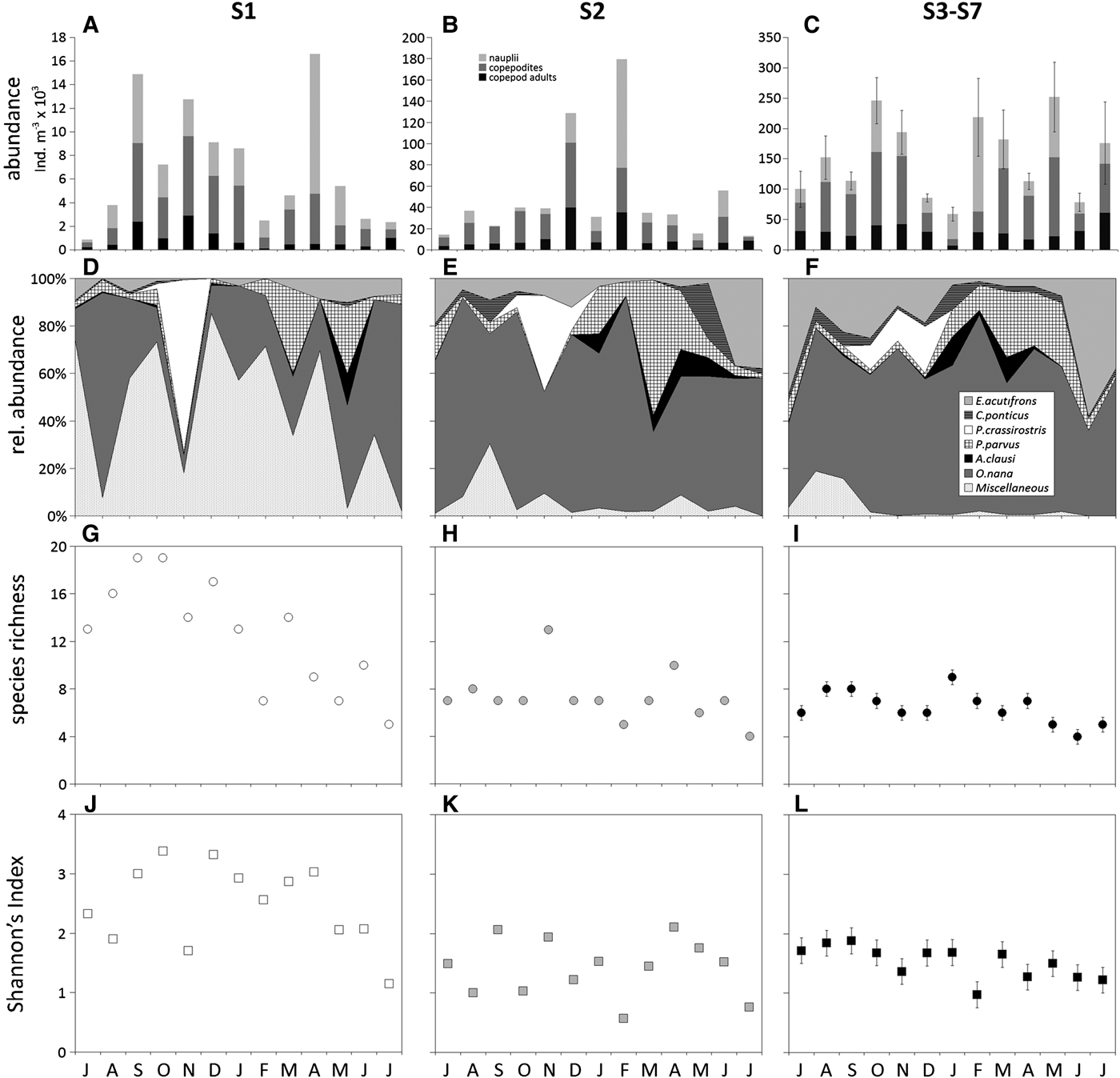
Total copepod abundance was highly variable throughout the study area and period ranging between 854 ind. m−3 in July 2009 in the open sea and 468,418 ind. m−3 in February 2010 in the inner gulf (Figure 4A–C). Copepods were statistically more abundant in the inner gulf (S3–S7) than in the open sea (S1) and the inlet (S2) (P < 0.001). Total copepod abundance peaked at S1 in September and April, at S2 in December and February, while at S3 to S7 did not present any clear seasonal pattern. A drop in copepod abundance was recorded at the inlet and inner gulf area during January (Figure 4B, C).
Annual fluctuation of (A–C) total copepod and developmental stages abundance (ind. m−3), (D–F) relative species abundance, (G–I) species richness and (J–L) Shannon's index (H′) at the open sea (S1), at the inlet (S2) and at the inner area (S3–S7) of Kalloni Gulf from July 2009 to July 2010. The error bars represent standard errors in (C) and least significant differences (LSD) intervals in (I) and (L).
Among copepod developmental stages, adults and copepodites accounted numerically for 20% (range: 3–63%) and 47% (10–74%) of the copepod community respectively, while copepod nauplii represented 33% (2–81%). In January and February the nauplii to late copepodite ratio was higher (P < 0.0001) than in other months within the gulf (Figure 4C) whereas in the open sea it peaked in April. Adult copepod abundance was positively correlated with Chl α, copepodites with HB while nauplii and nauplii to late copepodite ratio with SiO2, Chl α and HB and negatively with temperature and salinity (Table 2).
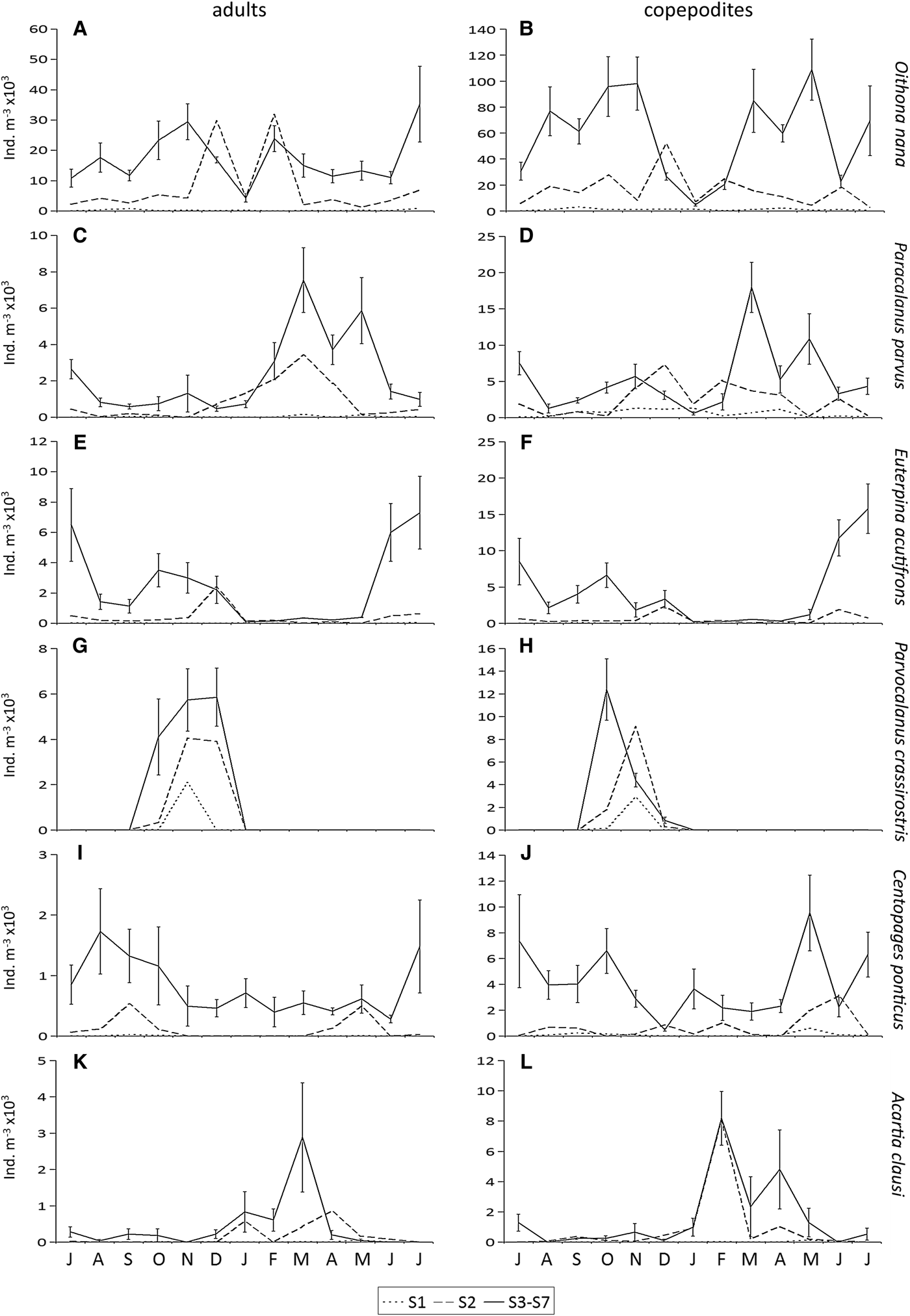
Annual fluctuation of adult and copepodite abundance (ind. m−3) of the dominant copepod species (>1%) in the open sea (S1), at the inlet (S2) and at the inner Kalloni Gulf (S3–S7) from July 2009 to July 2010. Error bars represent individual standard errors (SE).
Spearman rank correlation of copepod abundance (adults, copepodites and nauplii), species richness and diversity (Shannon's index), in relation to temperature (T), salinity (S), chlorophyll α (Chl α), heterotrophic bacterial biomass (HB), silicates (SiO2), total organic nitrogen (TON).
*Significance level = 0.05.
**Significance level = 0.005.
***Significance level = 0.0005.
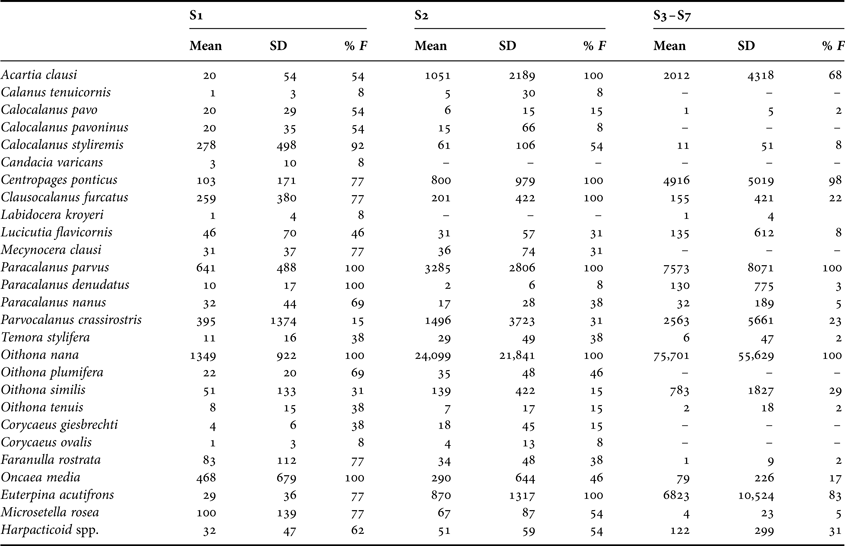
Twenty-six copepod species belonging to 15 genera were identified in 91 samples (Table 3). All species over 1% were small-sized copepods (<1 mm). Cyclopoids were represented by Oithona nana which dominated the copepod community and accounted alone for 74% of total copepodite and adult abundance. Calanoids mainly consisted of Paracalanus parvus (7.7%), Centropages ponticus (4.7%), Parvocalanus crassirostris (2.7%) and Acartia clausi (2%) and harpacticoids of Euterpina acutifrons (6.5%). All these species were abundant throughout the annual cycle apart from P. crassirostris which was present in the water column only during autumn (Figure 5).
Mean annual abundance (ind. m−3), standard deviation (SD) and frequency of occurrence (% F) of the identified copepod species in the three sub-regions (S1, S2 and S3–S7) of the Kalloni Gulf during July 2009 to July 2010.
Copepod species richness (S) and Shannon's diversity index (H′) followed an opposite spatial trend to that of abundance, with decreasing values from the open sea towards the inner part of the gulf (Figure 4G–L). The open sea copepod assemblage presented significantly higher species richness (P < 0.001) and diversity values (P < 0.001) than the other sub-regions, with species which did not colonize the inner gulf area. At the open sea the diversity indices followed a similar temporal trend to abundance. Conversely in the inner bay diversity indices fluctuated disproportionally to abundance, suggesting the dominance of only a few species. At the inlet the lowest biodiversity occurred in February, but was highest in November and April when open sea species were recorded. Species richness was negatively correlated with Chl α and HB biomass (P < 0.005 and P < 0.01) whereas Shannon's index correlated negatively only with Chl α (P < 0.05) (Table 2).
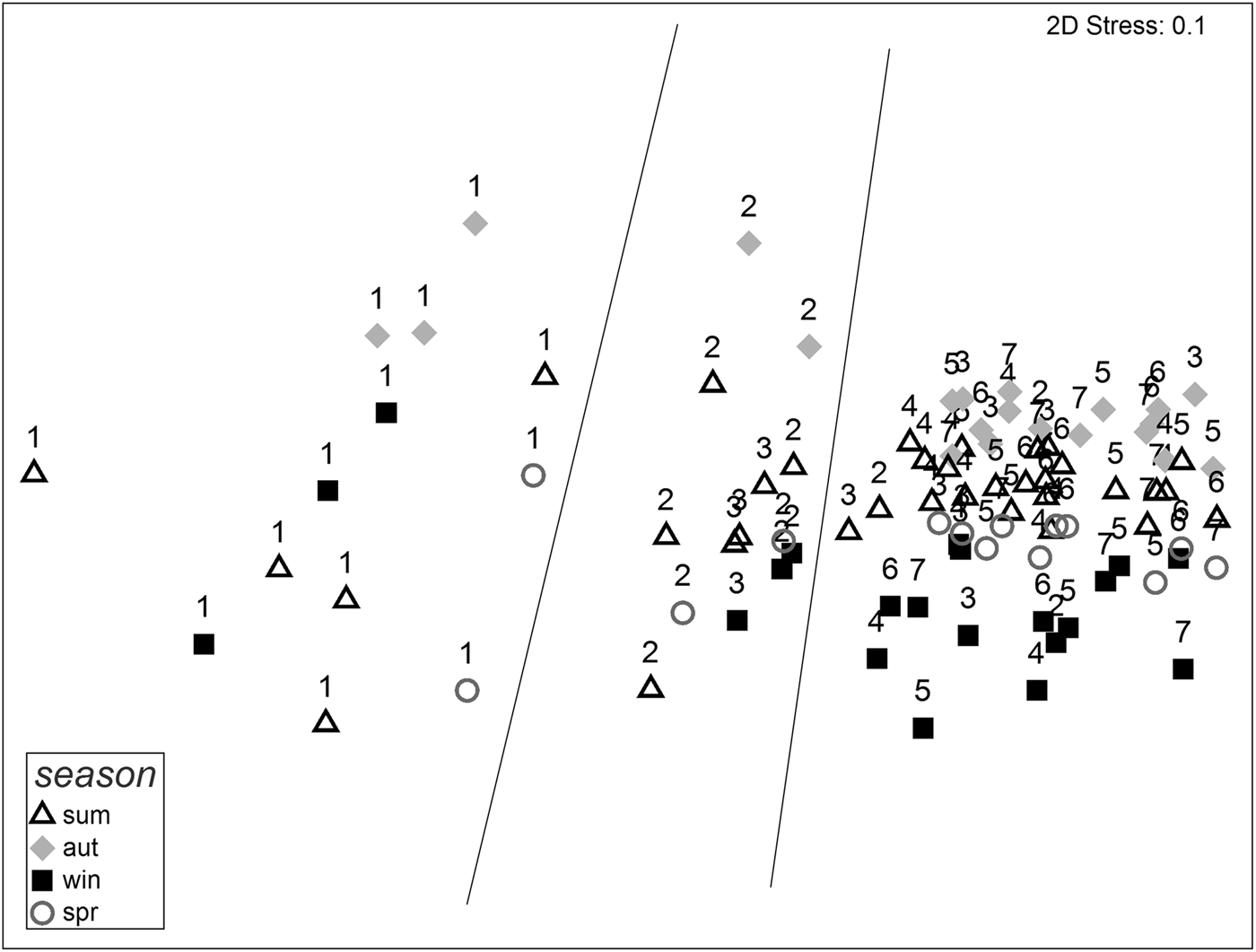
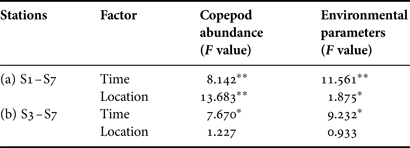
Non-metric multidimensional scaling was applied on abundance data in order to detect affinities between stations and seasons (Figure 6). Total copepod assemblage exhibited spatial heterogeneity ordered by each station's relative position in respect to their distance from the open sea. Station S1 was clearly separated from the rest of the stations, while stations S2, and S3 in July, August, January and July 2010, constituted an intermediate assembly. Finally, the copepods of the innermost stations, together with those of S2 in December, February and June formed the inner gulf assemblage. The two-way multivariate analyses of variance (PERMANOVA) applied on species abundance data revealed that the effect of sampling stations was more important in the grouping of similar samples than the effect of sampling months (Table 4). However, further pairwise comparisons revealed that in the inner gulf temporal differences were more important than spatial ones. In contrast to the physicochemical environment, copepod abundance was mostly affected by space rather than seasonality (Table 4).
Non-metric multidimensional scaling (NMDS) of species abundance data (square root transformed) collected from the network of seven stations. Numbers indicate the sampling station and shapes the season. sum, summer; aut, autumn; win, winter; spr, spring.
Results of PERMANOVA regarding the effect of time/location on copepod abundance (square root transformed), and on environmental parameters (T, S, Chl α, HB, TON, TOP, NO2, NO3, NH3, TIP, SiO2). (a) entire gulf (S1–S7), (b) inner gulf (S3–S7).
*Significance level = 0.001.
**Significance level = 0.0001.
The effect of environmental variability on assemblage composition
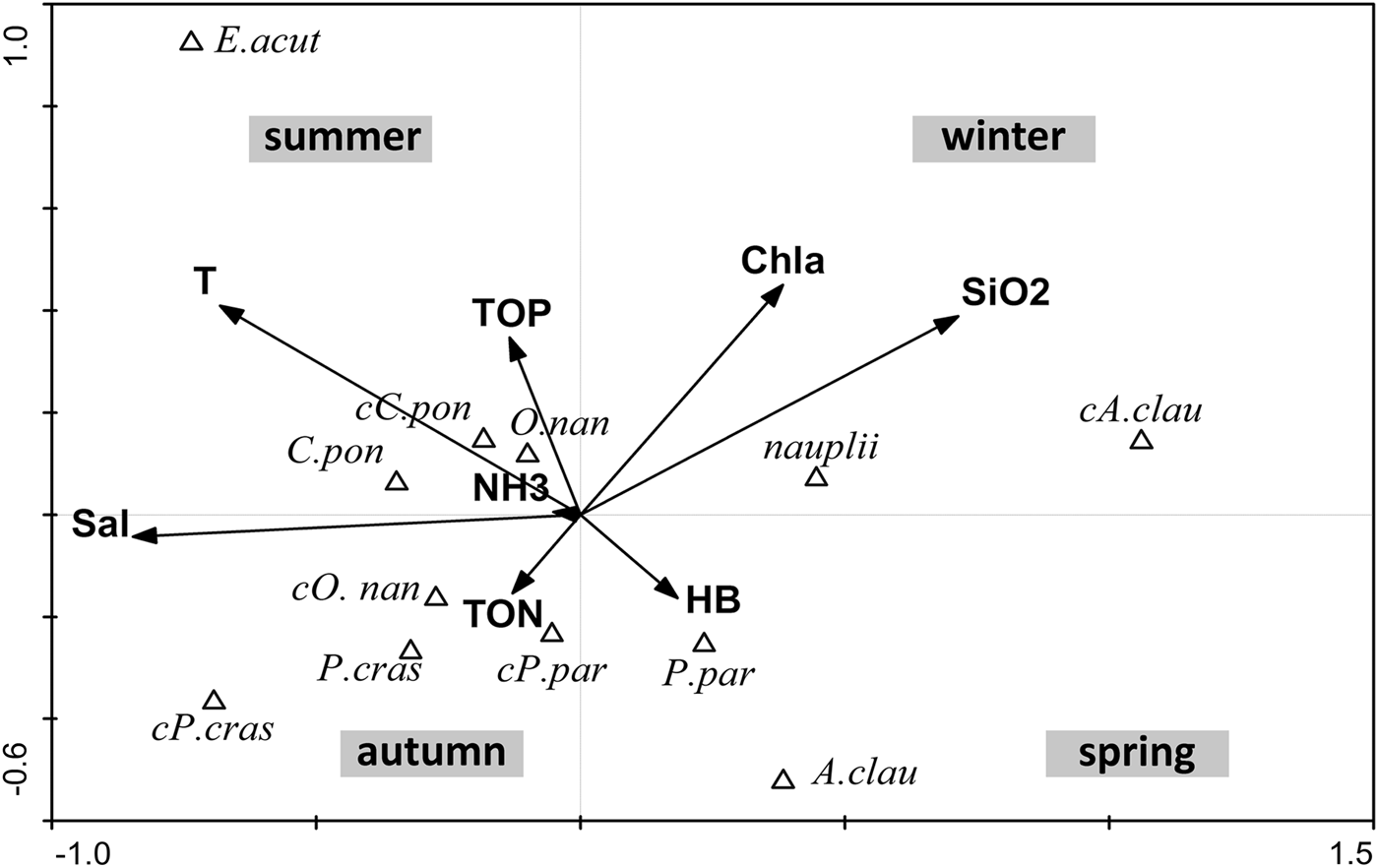
The relationship between copepod species and environmental parameters was assessed by CCA ordination (Figure 7). The first two axes explained 72.1% of the variance in the correlation of species–environmental parameters. Temperature, salinity, Chl α, SiO2, TOP, HB, TON and NH3 were the environmental variables affecting the distribution and community structure of the dominant taxa (>1%) at Kalloni Gulf. Oithona nana abundance was positively correlated with high temperature values and organic nutrients, and its copepodites with high salinity values. Nevertheless, it dominated the copepod community throughout the annual cycle (Figure 4E, F). The main contributor of the summer copepod assemblage which was correlated with high temperature, salinity and TOP values was Euterpina acutifrons, a typical coastal thermophilic species (Figure 5E, F). Paracalanus crassirostris, characteristic of the autumn copepod assembly (Figure 5G, H), was positively correlated with TON and salinity. Low temperature and salinity in combination with increased Chl α and SiO2 were the main drivers of the winter assembly which was co-dominated by nauplii and Acartia clausi copepodites. Paracalanus parvus abundance and adult A. clausi correlated with high HB biomass values which were the most important contributors in the early spring assemblage, while Centropages ponticus proliferated due to higher temperature and salinity values in late spring and summer (Figure 5I, J).
CCA ordination diagram showing the biplot of environmental parameters and zooplankton taxa (>1%) in Kalloni Gulf from July 2009 to July 2010. T, temperature; Sal, salinity; Chla, chlorophyll α; HB, heterotrophic bacterial biomass; TON, total organic nitrogen; TOP, total organic phosphorus; NH3, ammonia concentration; SiO2, silicate concentration; P.cras and cP.cras, Parvocalanus crassirostris adults and copepodites; P.par and cP.par, Paracalanus parvus adults and copepodites; C. pon, cC.pon, Centropages ponticus adults and copepodites; E.acut, Euterpina acutifrons; A.clau, cA.clau, Acartia clausi adults and copepodites; O.nan and cO.nan, Oithona nana adults and copepodites.
DISCUSSION
Kalloni Gulf presented considerable temporal and spatial variability for temperature, salinity and density during the study period. Density differences between the water masses of the gulf and the open sea directly affected the hydrodynamic regime, controlling the water exchange, which in turn has a major ecological importance. Mean total copepod abundance of the inner gulf area (S3–S7) was found to be 20 times higher than that of the open sea (S1). Water circulation constraints in coastal embayments imposed by extended water residence time, eddies and fronts, may temporally entrap and retain elevated zooplankton abundances (Laprise & Dodson, Reference Laprise and Dodson1994; Archambault et al., Reference Archambault, Roff, Bourget, Bang and Ingram1998).
A reproduction hypothesis could also be made to explain the higher copepod abundance inside than outside embayments. In Kalloni Gulf the great contribution of larval stages in the total community and their year-round presence indicates the continuous reproduction of copepods (Raymont, Reference Raymont1983) during the annual cycle. However, there is no clear evidence that the inner gulf serves as ground for copepod reproduction since no spatial differences in the nauplii to late copepodite ratio were recorded. The ratio followed primary production fluctuations both in the open sea and the inner gulf. Chen et al. (Reference Chen, Chen, Harrison and Liu2011) also reported an increase in copepod nauplii with a concurrent decrease in adult abundance when river discharge reached its peak. Steep increases in copepod nauplii when freshwater input reaches its maximum suggests that copepod production is enhanced by nutrient enrichments.
Interestingly the permanova analysis showed that in opposition to the environmental parameters, for copepod ecology the spatial structure is more important than the seasonal patterns. There was a clear separation between the open sea and the inner gulf copepod assemblage, the first consisting of estuarine and marine copepods whereas the second consisted only of estuarine species. Unlike oceanic waters, where the peaks of copepod abundance are well defined and easily recognized (Fernández de Puelles et al., Reference Fernández de Puelles, Pinot and Valencia2003), bays and other coastal areas lack any clear seasonal pattern in total copepod abundance fluctuations (Calbet et al., Reference Calbet, Garrido, Saiz, Alcaraz and Duarte2001). The interaction of seawater and river flow can mask the seasonal copepod pattern by introducing a superimposed variability. However, in the inner bay the species of the copepod assemblage displayed a clear seasonal succession.
In January a steep drop in the total copepod abundance was observed throughout the study area. This could be attributed to a combination of water column instability, low food quality and increased predation. Prior to our sampling date strong NE winds were prevailing in the area. Wind-induced physical processes in combination with increased freshwater inputs led to a major hydrographical event that increased water column instability which in turn could have contributed to the decreased copepod abundance. High Chl α and SiO2 concentrations are indicative of diatom proliferation which are the most important phytoplankton group in the area during winter (Spatharis et al., Reference Spatharis, Danielidis and Tsirtsis2007a). Copepod feeding could be negatively affected as the dominant copepod Oithona is not an active diatom grazer. On the other hand, a similar steep decrease in zooplankton abundance reported from a coastal site in the Gulf of Blanes (Calbet et al., Reference Calbet, Garrido, Saiz, Alcaraz and Duarte2001) was attributed to sardine larvae predation. Kalloni Gulf constitutes an important fishing ground for sardines (Paspatis & Maragoudaki, Reference Paspatis and Maragoudaki2005) and their larvae population peaks in Aegean coastal waters in winter (Koutrakis et al., Reference Koutrakis, Kallianiotis and Tsikliras2004). Sardine larvae are active predators of copepods (Turner, Reference Turner2004) and their role as a potential control of zooplankton abundance should not be ignored (Mowitt et al., Reference Mowitt, Houde, Hinkle and Sanford2006).
The copepod species that seemed to favour the eutrophic, dynamic and enclosed nature of Kalloni Gulf were Oithona nana, Paracalanus parvus, Euterpina acutifrons, Centropages ponticus, Parvocalanus crassirostris and Acartia clausi which formed a resident neritic copepod assemblage. These small (<1 mm) eurythermal and eurysaline copepods are commonly found in coastal waters of the Mediterranean (Ramfos et al., Reference Ramfos, Somarakis, Koutsikopoulos and Fragopoulu2005; Yilmaz & Besiktepe, Reference Yilmaz and Besiktepe2010). Copepod biodiversity was found to be low inside the embayment in comparison to its adjacent N Aegean Sea (Isari et al., Reference Isari, Somarakis, Christou and Fragopoulu2011), and its temporal variability concerned mostly the dominance of the aforementioned species rather than the presence of different sets of species. Low biodiversity and dominance of small-sized copepods in coastal ecosystems under the influence of anthropogenic activities are reported as effects of increasing eutrophication (El-Serehy et al., Reference El-Serehy, Aboul-Ezz and Samaan2001; Jamet et al., Reference Jamet, Boge, Richard, Geneys and Jamet2001; Vidjak et al., Reference Vidjak, Bojanic, Kušpilic, Marasovic, Gladan and Brautovic2006; Isinibilir et al., Reference Isinibilir, Kideys, Tarkan and Yilmaz2008). The simplified faunistic composition of small copepods observed in the most productive part of the study area (Chl α values were four times higher than the open sea) could be an effect of eutrophication but may also reflect extreme environmental fluctuation.
Oithona nana was by far the dominant species of the copepod community in Kalloni Gulf. Eutrophic environments favour the proliferation of O. nana which has been proposed as a biological indicator of increasingly human-perturbed systems (Jamet et al., Reference Jamet, Boge, Richard, Geneys and Jamet2001). This species showed a wide tolerance to the environmental variability, occurring throughout the year, in agreement with studies in marine and coastal waters around the world (Hwang et al., Reference Hwang, Souissi, Tseng, Seuront, Schmitt, Fang, Peng, Wu, Hsiao, Twan, Wei, Kumar, Fang, Chen and Wong2006; Williams & Muxagata, Reference Williams and Muxagata2006; Temperoni et al., Reference Temperoni, Vinas, Diovisalvi and Negri2011). In the present study O. nana's abundance peaks were correlated with primary production and bacterial biomass which is usually associated with a productive microbial loop, revealing its wide-ranging dietary preferences (Paffenhöfer, Reference Paffenhöfer1993). Oithona nana as a raptorial feeder, with an opportunistic diet, is able to consume particulates from detritus to phytoplankton, including earlier stages of calanoid nauplii and even copepodite stages (Lampitt & Gamble, Reference Lampitt and Gamble1982). In particular their nauplii represent an important trophic link between the classical and microbial food webs as they exert a significant control on the abundances of nanoplankton assemblages (Bottger et al., Reference Bottger, Morales and Bathmann2010). Furthermore, O. nana is a major prey for small pelagic fish including sardines (Turner, Reference Turner2004), the most important commercial fish species in the area (Paspatis & Maragoudaki, Reference Paspatis and Maragoudaki2005).
The appropriate mesh size for the adequate sampling of nauplii is 45 µm, but its use was avoided since the presence of large phytoplankton species and high levels of suspended particulate matter (SPM) in Kalloni Gulf would cause clogging of the nets. Although the use of a 90 µm net most likely has underestimated the contribution of nauplii in the total community, the numerical dominance of copepod larval stages in the community indicates the significance of the small-size fraction in Kalloni Gulf. The importance of small-sized copepods in zooplankton abundance was pointed out by Calbet et al. (Reference Calbet, Garrido, Saiz, Alcaraz and Duarte2001) in NW Mediterranean, by Zervoudaki et al. (Reference Zervoudaki, Christou, Nielsen, Siokou-Frangou, Assimakopoulou, Giannakourou, Maar, Pagou, Krasopoulou, Christaki and Moraitou-Apostolopoulou2007) in the northern Aegean Sea and by Krsinic & Grbec (Reference Krsinic and Grbec2002) in the South Adriatic. Although the zooplankton community of the northern Aegean has been intensively studied during the last decade (Isari et al., Reference Isari, Psarra, Pitta, Mara, Tomprou, Ramfos, Somarakis, Tselepides, Koutsikopoulos and Fragopoulu2007, Reference Isari, Somarakis, Christou and Fragopoulu2011; Zervoudaki et al., Reference Zervoudaki, Christou, Nielsen, Siokou-Frangou, Assimakopoulou, Giannakourou, Maar, Pagou, Krasopoulou, Christaki and Moraitou-Apostolopoulou2007, Reference Zervoudaki, Christou, Assimakopoulou, Örek, Gucu, Giannakourou, Pitta, Terbiyik, Yacel, Moutsopoulos, Pagou, Psarra, Özsoy and Papathanassiou2011; Siokou-Frangou et al., Reference Siokou-Frangou, Zervoudaki, Christou, Zervakis and Georgopoulos2009) the small calanoid Parvocalanus crassirostris was first recorded during the annual cycle presented herein (Eleftheriou et al., Reference Eleftheriou, Anagnostopoulou-Visilia, Anastasopoulou, Ates, Bachari, Cavas, Cevik, Ulhas, Cevik, Delos, Derici, Erguden, Fragopoulu, Giangrande, Goksan, Gravili, Gurlek, Hattour, Kapiris, Kouraklis, Lamouti, Prato, Papa, Papantoniou, Parlapiano, Poursanidis, Turan and Yaglioglou2011). Our findings confirm that the use of coarse nets alone is inappropriate to assess copepod communities since they inadequately describe the smaller size fraction (Gallienne & Robins, Reference Gallienne and Robins2001; Tseng et al., Reference Tseng, Dahms, Hung, Chen and Hwang2011).
In Kalloni Gulf freshwater inputs in winter, when minimum diversity values were met, were a dominant phenomenon controlling the biological processes within the planktonic food web by altering the main drivers of species succession, causing nauplii proliferation. Temperature and salinity were the main factors regulating the seasonal and spatial distribution of copepods in accordance to other coastal areas (Siokou-Frangou, Reference Siokou-Frangou1998; Badylak & Phlips, Reference Badylak and Phlips2008; Sun et al., Reference Sun, Sun, Li and Zhang2011). Changes in autotrophic biomass seem to play little role in determining the seasonal succession of copepods in Mediterranean coastal waters (Mazzochi & Ribera d'Alcala, Reference Mazzochi and Ribera d'Alcala1995; Christou, Reference Christou1998). However, in Kalloni Gulf the winter copepod peak, mainly consisting of copepod nauplii and Acartia clausi, was related to the corresponding Chl α. Additionally, the increasing bacterial biomass and organic nutrients during the dry period highlight the importance of the heterotrophic processes in structuring the copepod community. The significance of heterotrophic bacteria for the regeneration of nutrients in the water column has been revealed in several studies (Kirchman, Reference Kirchman2008; Vadstein et al., Reference Vadstein, Andersen, Reinertsen and Olsen2012). Indeed, the high levels of organic nutrients, heterotrophic bacteria and the associated microbial food web constitute an important alternative pathway in the pelagic food web, when precipitation events decrease and land-originated nutrient loads are consumed and depleted.
ACKNOWLEDGEMENTS
The authors wish to thank Associate Professor George Tsirtsis as well as all participant scientists for their support at sea. Thanks are also due to Dr Sofie Spatharis and anonymous referees for their advice and suggestions in the improvement of the manuscript.