Introduction
Maternal perinatal mental health problems are common, with previous studies suggesting that up to 18% of women self-report depression during pregnancy (up to 13% at clinically significant levels) and up to 8% of women report clinically significant levels of depression 12 months postpartum (Gavin et al., Reference Gavin, Gaynes, Lohr, Meltzer-brody, Gartlehner and Swinson2005; Josefsson, Berg, Nordin, & Sydsjö, Reference Josefsson, Berg, Nordin and Sydsjö2001; Patton et al., Reference Patton, Romaniuk, Spry, Coffey, Olsson, Doyle and Brown2015). In women, perinatal mental health problems (i.e. depression and anxiety during pregnancy and in the first year following childbirth) predict persisting mental health problems into the child-rearing years and for offspring predict a range of later childhood behavioural, emotional and cognitive problems (Kingston, Tough, & Whitfield, Reference Kingston, Tough and Whitfield2012; Murray et al., Reference Murray, Arteche, Fearon, Halligan, Goodyer and Cooper2011; Woolhouse, Gartland, Mensah, & Brown, Reference Woolhouse, Gartland, Mensah and Brown2015). Although prevention of maternal perinatal depression is now recognised as a clinical and public health policy priority area (Saxbe, Rossin-Slater, & Goldenberg, Reference Saxbe, Rossin-Slater and Goldenberg2018), interventions in the perinatal period have had limited success in shifting maternal or child outcomes (Stephenson et al., Reference Stephenson, Vogel, Hall, Hutchinson, Mann, Duncan and Colbourn2019). One reason may be that the origins of these problems begin well before pregnancy. One recent prospective study found that 85% of mothers with postpartum depression had a preconception history of mental health problems across adolescence or young adulthood (Patton et al., Reference Patton, Romaniuk, Spry, Coffey, Olsson, Doyle and Brown2015).
In men, there is growing evidence that paternal mental health poses risks to fathers and offspring, for example, through compromised father–infant bonding and stress on the mother's mental health (Glasser & Lerner-Geva, Reference Glasser and Lerner-Geva2018; Sweeney & Macbeth, Reference Sweeney and Macbeth2016). After accounting for the levels of mothers' depression, paternal depression during the antenatal period has been found to predict excessive infant crying and increased childhood physical aggression (Kvalevaag et al., Reference Kvalevaag, Ramchandani, Hove, Eberhard-Gran, Assmus, Haavik and Biringer2014; van den Berg et al., Reference van den Berg, van der Ende, Crijnen, Jaddoe, Moll, Mackenbach and Verhulst2009). It is estimated that 10–13% of fathers experience depression in the perinatal period (Cameron, Sedov, & Tomfohr-Madsen, Reference Cameron, Sedov and Tomfohr-Madsen2016; Da Costa et al., Reference Da Costa, Zelkowitz, Dasgupta, Sewitch, Lowensteyn, Cruz and Khalifé2017; Paulson & Bazemore, Reference Paulson and Bazemore2014; Spry et al., Reference Spry, Giallo, Moreno-betancur, Macdonald, Becker, Borschmann and Olsson2018). A recent Finnish study found comparable patterns of self-reported depression and anxiety symptom trajectories between mothers and fathers during the pregnancy period and noted that fathers with mental health problems may have particularly severe symptoms (Korja et al., Reference Korja, Nolvi, Kataja, Scheinin, Junttila, Lahtinen and Karlsson2018). A recent prospective study showed that men with a preconception history of depression-anxiety symptoms had more than four times the risk of reporting mental health problems in the antenatal period (Spry et al., Reference Spry, Giallo, Moreno-betancur, Macdonald, Becker, Borschmann and Olsson2018). Preconception depression (assessed retrospectively) has also been shown to be a strong predictor of postnatal depression in fathers, more than paternal age or education level (Ramchandani et al., Reference Ramchandani, Hil, Stein, Sych, Connor, Heron and Evans2008).
The purpose of this study was twofold: (1) to examine whether previous findings of a strong continuity in depressive symptoms from adolescence to motherhood at both 32 weeks pregnancy and 12 months postpartum could be replicated, and (2) to extend earlier work to examine continuity in depressive symptoms from adolescence to fatherhood at 12 months postpartum. Data were drawn from one of Australia's longest running intergenerational cohort studies that has tracked the emotional health of a cohort of over 2000 young Australians (Generation 2) and their parents (Generation 1) from 1983, and over 1000 prospectively assessed cohort offspring at 32 weeks pregnancy and 12 months (Generation 3) since 2012.
Method
Sample
The Australian Temperament Project (ATP) is an ongoing multi-generation cohort study that has followed the psychosocial development of participants from infancy to age 36 years (16 waves) (Vassallo & Sanson, Reference Vassallo and Sanson2013). The initial ATP sample of 2443 participants was recruited via parents attending maternal and child health centres in 20 urban and 47 rural local government areas within the state of Victoria in 1983, when participants were 4–8 months old. Families recruited into the initial ATP study were selected to be a representative of the population of Victoria.
Procedure
Families recruited into the ATP study in 1983 were followed-up approximately every 2 years until 2002 and every 4 years thereafter. Questionnaires were distributed via mail, with participants' parents reporting on the family's sociodemographic characteristics and their children's development at the study commencement. Participants began self-reporting their psychosocial and behavioural experiences at age 11. Between ages 29 and 35 years, participants were followed up via email and telephone to identify pregnancies. Women who reported a pregnancy, and men who reported a partner's pregnancy, were eligible to participate. Telephone and web-based surveys were administered to prospective parents at 32 weeks of pregnancy (mothers only) and 12 months postpartum (mothers and fathers). Ante- and postnatal data were collected between 2012 and 2018.
We measured preconception mental health problems from early adolescence (14 years) to young adulthood (28 years) to capture peak periods of both incidence and prevalence in anxious and depressive symptoms (Stephenson et al., Reference Stephenson, Vogel, Hall, Hutchinson, Mann, Duncan and Colbourn2019). This period was represented by three waves during adolescence (ages 13–14, 15–16 and 17–18 years) and three waves during young adulthood (ages 19–20, 23–24 and 27–28 years). Written informed consent was obtained from all participants. REDCap (Research Electronic Data Capture) secure data management software was used to support data management. Data were analysed using Stata 15 (StataCorp, 2017). Ethics approval for ante- and postnatal data collection was obtained from the Royal Children's Hospital Human Research Ethics Committee. Prior ATP waves were approved by human research ethics committees at the University of Melbourne, the Australian Institute of Family Studies and/or the Royal Children's Hospital, Melbourne.
Measures
Preconception common mental health problems
Preconception depression and anxiety symptoms were self-reported using validated age-appropriate scales in adolescence and young adulthood. Adolescent depressive symptoms were assessed using the 13-item Short Mood and Feelings Questionnaire (Angold, Costello, & Messer, Reference Angold, Costello and Messer1995; Turner, Joinson, Peters, Wiles, & Lewis, Reference Turner, Joinson, Peters, Wiles and Lewis2014). Respondents were asked to rate their symptoms (example item, ‘felt miserable or unhappy’) in the past 2 weeks on a scale from 0 ‘not true’ to 1 ‘sometimes true’ or 2 ‘true’. At each assessment, the total score was summed and dichotomised at ⩾11 to identify moderate to severe symptoms (Thapar & McGuffin, Reference Thapar and McGuffin1998). Adolescent anxiety symptoms were measured using adapted versions of the Child Behaviour Questionnaire (ages 13–14 years) (Rutter, Tizard, & Whitmore, Reference Rutter, Tizard and Whitmore1970) and Revised Children's Manifest Anxiety Scale (ages 15–18 years) (Reynolds & Richmond, Reference Reynolds and Richmond1978). These scales were adapted specifically for the ATPG3 study and have been described previously, with the age 15–16 years assessment comprising of 11 items, and the age 17–18 years assessment comprising of 14 items to improve the developmental representation of anxiety symptoms in later adolescence (Letcher, Sanson, Smart, & Toumbourou, Reference Letcher, Sanson, Smart and Toumbourou2012; Prior, Sanson, Smart, & Oberklaid, Reference Prior, Sanson, Smart and Oberklaid1999). Respondents rated how often they experienced anxious feelings (example item, ‘I worry about what is going to happen’) on a three-point scale from 0 ‘never/rarely’ to 1 ‘sometimes’ to 2 ‘often/almost always’. Mean scores were dichotomised at >1 to identify moderate to severe symptoms.
In young adulthood (ages 19–28 years), common mental health problems were rated using the short-form Depression Anxiety and Stress Scale (DASS-21) (Antony, Bieling, Enns, & Swinson, Reference Antony, Bieling, Enns and Swinson1998; Lovibond & Lovibond, Reference Lovibond and Lovibond1995). Participants rated their experience of depressive symptoms (seven items), anxiety (seven items) and stress (seven items) during the past week on a scale ranging from 0 ‘did not apply to me at all’ to 3 ‘applied to me very much or most of the time’. Example of depressive symptoms included, ‘I felt that life was meaningless’. Anxiety items included, ‘I felt scared without any good reason’. Stress items included, ‘I found it hard to wind down’. Scores were summed within each subscale. Previously used thresholds of ⩾7, ⩾6 and ⩾10 were used to identify moderate to severe symptoms of depression, anxiety and stress, respectively (Lovibond & Lovibond, Reference Lovibond and Lovibond1995).
We then created a combined preconception mental health continuity variable dichotomising the presence of any mental health symptoms at ⩾1 adolescent wave (ages 13–14, 15–16, 17–18 years), and ⩾1 young adult wave (ages 19–20, 23–24, 27–28 years). These dichotomised variables at each preconception period were grouped into four levels of mental health symptom continuity: ‘none’, ‘adolescent only’, ‘young adult only’ and ‘both adolescent and young adult’.
Perinatal parent depression outcomes
Depressive symptoms were assessed at 32 weeks pregnancy (mothers only) and at 12 months postpartum for mothers and fathers using the Edinburgh Postnatal Depression Scale (EPDS) (Cox, Holden, & Sagovsky, Reference Cox, Holden and Sagovsky1987). The EPDS is a 10-item self-report scale that asks participants to rate their frequency of depressive symptoms during the past week from 0 ‘no, not at all’ to 3 ‘yes, very often’. Example items include, ‘I have been so unhappy that I have had difficulty sleeping’. The scale has been validated for both mothers and fathers (Cox et al., Reference Cox, Holden and Sagovsky1987; Edmondson, Psychogiou, Vlachos, Netsi, & Ramchandani, Reference Edmondson, Psychogiou, Vlachos, Netsi and Ramchandani2010). Total scores were calculated for each outcome, with higher scores indicating more severe depression. Scores were then dichotomised at ⩾10 based on a clinical threshold recommended for the screening of depression, to be confirmed by subsequent clinical assessment (Cox et al., Reference Cox, Holden and Sagovsky1987; Da Costa et al., Reference Da Costa, Zelkowitz, Dasgupta, Sewitch, Lowensteyn, Cruz and Khalifé2017; Edmondson et al., Reference Edmondson, Psychogiou, Vlachos, Netsi and Ramchandani2010).
Potential confounders
We controlled for potential preconception confounders theorised to be associated with both preconception mental health problems and perinatal depression. Parental low education was defined as having a parent who had not completed secondary school education in the years from participants' infancy to age 18 years. Parental separation was defined as participants' parents being separated/divorced/widowed at any time from participants' infancy to age 18 years. Parent(s) country of birth was dichotomised as born inside or outside of Australia. Adolescent antisocial behaviours were defined as three or more problem behaviours in the past month between the ages of 13 and 18 years. Binge drinking and cannabis use were defined as weekly use in the past month from age 15 to 18 years. Cigarette smoking was defined as daily smoking from age 15 to 18 years. Post-conception, we also controlled for first pregnancy to adjust for any differences in participants' perinatal depression associated with the first parenthood experience. Perinatal assessment point, measured for mothers only, indicated whether the outcome was measured at 32 weeks pregnancy or 12 months postpartum.
Analyses
Separate analyses were performed for males and females. Generalised estimating equations were used to estimate the associations between preconception mental health problems and maternal perinatal depression (32 weeks pregnancy and 12 months postpartum), and between preconception mental health problems and paternal postnatal depression (12 months postpartum), to account for potential clustering of pregnancies in parents and for repeated outcome measures in mothers. Logistic and linear regression models were used for binary and continuous outcomes, respectively. All effects were estimated separately (i.e. unadjusted, with the outcome regressed on each covariate) and then jointly (i.e. adjusted) to control for potential confounders.
Multiple imputation was used to handle missing data. We imputed 50 complete datasets, separately for mothers and fathers, based on a multivariate normal model (Bodner, Reference Bodner2008). Binary variables were imputed as continuous variables and then back transformed with adaptive rounding following imputation. Estimates were obtained by averaging results across the 50 imputed datasets with inferences under multiple imputation obtained using Rubin's rules (Rubin, Reference Rubin2004).
Results
The initial sample recruited into the ATP study included 1171 females and 1272 males (N = 2443). Three decades later, at the start of perinatal data collection (age 29, 2012), 851 females (73%) and 850 males (67%) remained in the study. Comparisons between all participants in the initial sample and those participants screened for eligibility at age 29 identified minimal evidence of selective loss of families not born in Australia as well as loss of male participants whose mothers had lower educational attainment. During the pregnancy identification period (participant ages 29–35), 454 females (53%) and 392 males (46%) reported pregnancies and were eligible for the study. Of those eligible, 401 females (88%) and 302 males (77%) participated. No differences were identified between those who participated in the study compared to those eligible, either based on their families' country of origin (Generation 1), educational attainment (Generation 1), or participants' mental health problems in adolescence or young adulthood (Generation 2). An additional eight (2%) of mothers and 45 (15%) of fathers had not participated in at least two of three data collection periods (i.e. adolescence, young adulthood or the perinatal period) and were excluded from the current analysis. The final analytic sample included 393 mothers (686 infants) and 257 fathers (397 infants).
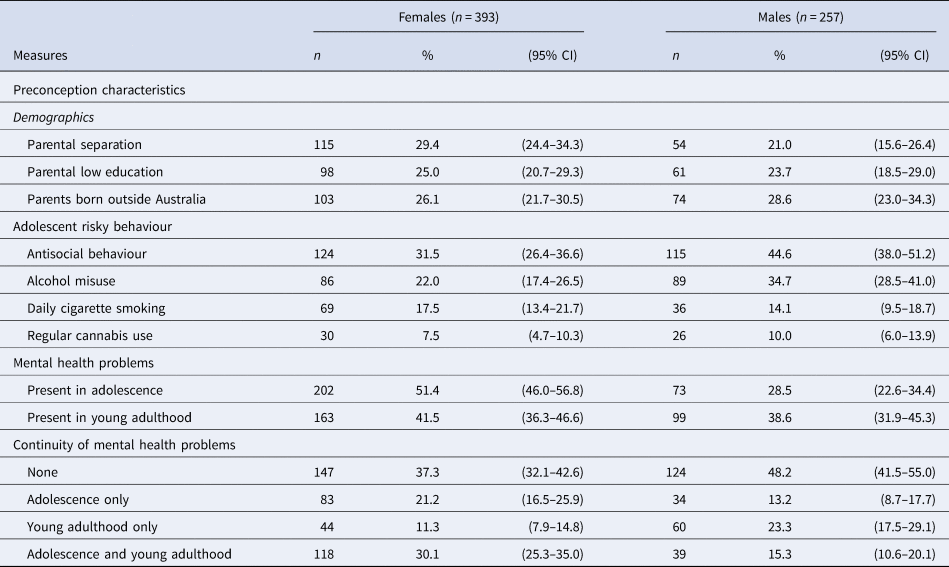
A summary of demographic and exposure variables is presented in Table 1. Sixty-four per cent of mothers (95% CI 59–70%) and 49% of fathers (95% CI 42–57%) reported a preconception history of mental health problems at one or more waves in adolescence or young adulthood.
Mental health problems and health risks in adolescence and young adulthood before conception, by sex of parent

Parent estimates were obtained from imputed data for their first child included in the Generation 3 Study.
Frequency estimates were calculated from imputed percentage estimates and a total number of participants.
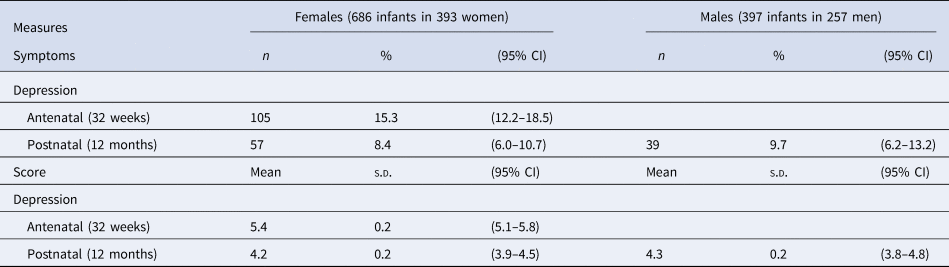
Table 2 presents the proportion of the sample reporting perinatal depression for any pregnancies during the study period. Fifteen per cent of mothers (95% CI 12–18%) reported depression at 32 weeks pregnancy. At 12 months postpartum, 8% of mothers (95% CI 6–11%) and 10% of fathers (95% CI 6–13%) reported depression. The prevalence of 12-month postnatal depression for all pregnancies did not differ significantly between men and women (OR 0.85, 95% CI 0.52–1.42). Eighty-one per cent (95% CI 73–89%) of pregnancies in which mothers reported perinatal depression at 32 weeks pregnancy or 12 months postpartum were preceded by a history of preconception mental health problems. Eighty-three per cent (95% CI 68–99%) of pregnancies in which fathers reported postnatal depression were preceded by a history of preconception mental health problems. Conversely, 56% (95% CI 51–61%) of pregnancies in which mothers did not report perinatal depression were preceded by a history of mental health problems and 46% (95% CI 40–51%) of pregnancies in which fathers did not report postnatal depression were preceded by a history of mental health problems.
Perinatal depression outcomes, by sex of parent
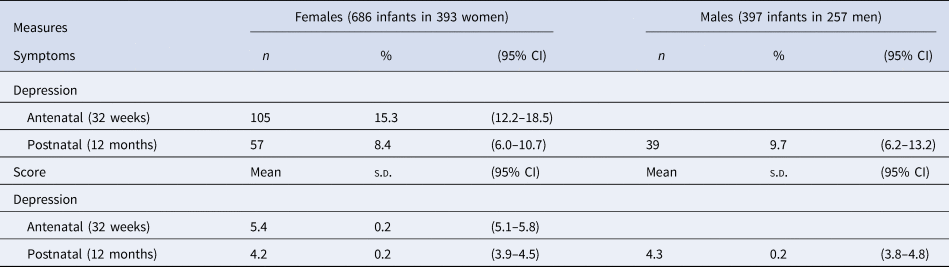
Frequency estimates were calculated from imputed percentage estimates and a total number of participants.
Mothers with preconception mental health problems went on to report perinatal depression in 26% (95% CI 21–31%) of pregnancies. Fathers who reported preconception mental health problems went on to report postnatal depression in 16% (95% CI 10–23%) of pregnancies. Conversely, mothers who reported no preconception mental health problems went on to report postnatal depression in 10% (95% CI 5–14%) of pregnancies. Fathers who reported no preconception mental health problems went on to report postnatal depression in 3% (95% CI 0–6%) of pregnancies.
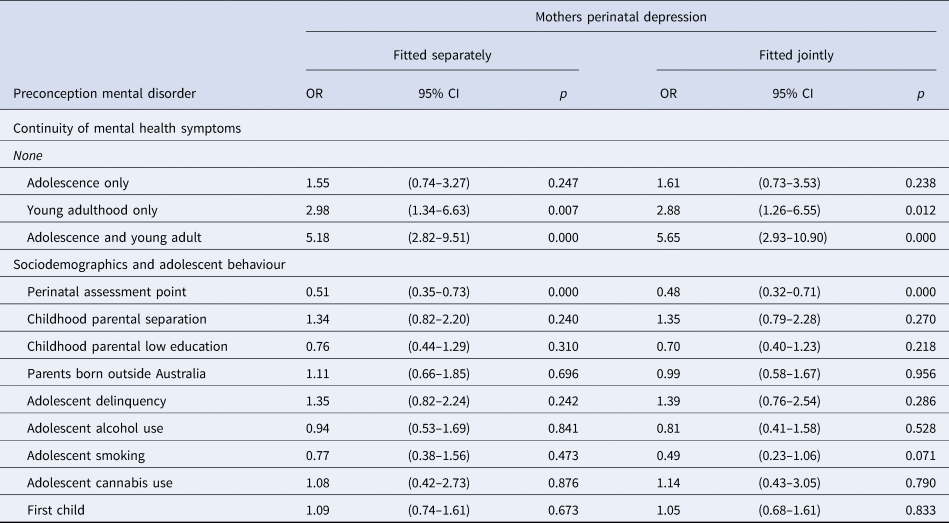
Table 3 presents the odds ratios of preconception mental health continuities and perinatal depression for maternal pregnancies, fitted separately (with the outcome regressed on each covariate) and jointly to adjust for potential confounders. After adjustment for family demographics and adolescent risk factors, the persistence of mental health problems across adolescence and young adulthood was associated with more than a fivefold increase in the odds of maternal perinatal depression compared to no preconception history of mental health problems. Mental health problems limited to young adulthood were associated with more than a twofold increase in the odds of perinatal depression. Mental health problems limited to adolescence (i.e. that did not persist throughout young adulthood) were not predictive of maternal perinatal depression. The main effect of time (perinatal assessment point) was notable, indicating that mothers had higher odds of depression at 32 weeks pregnancy compared to at 12 months postpartum. A similar pattern of results was found when perinatal depression was modelled as a continuous measure (see online Supplementary Material Table S1).
Odds ratios of mothers' preconception history of mental health problems and depression at 32 weeks pregnancy and 12 months postpartum
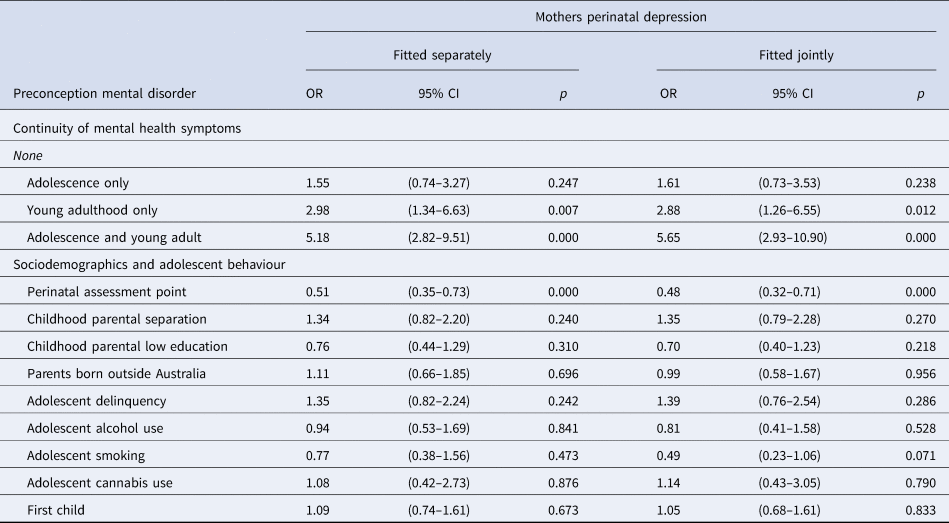
Perinatal assessment point was measured as 0 = 32 weeks pregnancy, 1 = 12 months postpartum. Levels of all other variables can be interpreted as 0 = no/not present, 1 = yes/present.
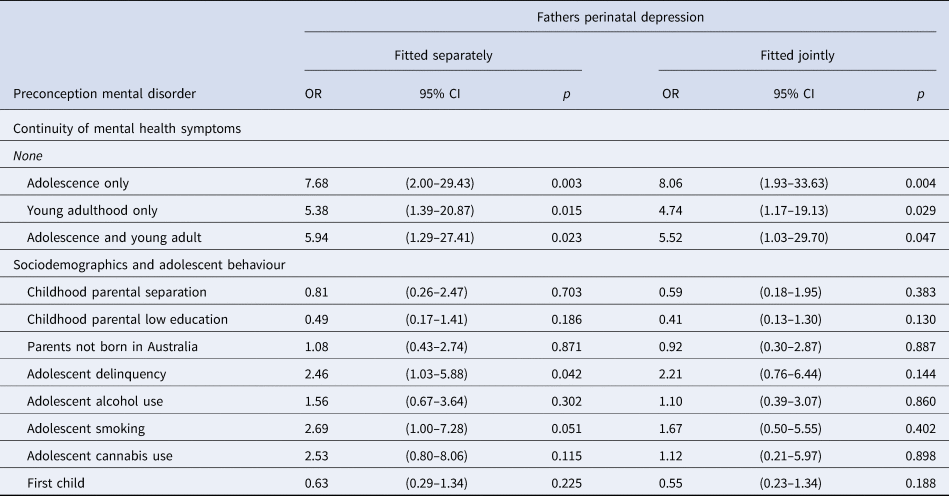
Table 4 presents odds ratios of preconception mental health continuities and fathers' postnatal depression (separately/unadjusted and jointly/adjusted). After adjustment for potential confounders, the persistence of mental health problems across adolescence and young adulthood was associated with more than a fivefold increase in the odds of paternal postnatal depression compared to no preconception history of mental health problems. Young adult-limited mental health problems were associated with more than a fourfold increase in the odds of paternal postnatal depression. Adolescent-limited mental health problems were associated with more than a sevenfold increase in the odds of fathers' depression at 12 months postpartum. Similar results were found in an adjusted continuous model (see online Supplementary Material Table S2).
Odds ratios of fathers' preconception history of mental health problems and depression at 12 months postpartum

Levels of all variables can be interpreted as 0 = no/not present, 1 = yes/present.
Discussion
Here we show that most pregnancies (81%) in which mothers reported perinatal depressive symptoms were preceded by a history of mental health problems in adolescence or young adulthood. This finding replicates that from the only other prospective intergenerational study to track continuities in mental health which found that in most cases (85%) maternal perinatal depressive symptoms were preceded by a history of mental health problems from adolescence (Patton et al., Reference Patton, Romaniuk, Spry, Coffey, Olsson, Doyle and Brown2015). We further show that most pregnancies (83%) in which fathers reported postnatal depressive symptoms (12 months) were likewise preceded by a history of mental health problems in adolescence and young adulthood. This finding extends previous prospective research showing that 68% of fathers reporting antenatal depressive symptoms (Trimester 3) also reported a history of mental health problems (Spry et al., Reference Spry, Giallo, Moreno-betancur, Macdonald, Becker, Borschmann and Olsson2018). Taken together, these findings strengthen the case for investment in high-quality preconception mental health promotion approaches designed for young people in adolescence, as they mature into adulthood, and as they transition to parenthood and to the task of raising the next generation.
The prevalence of any preconception depression or anxiety symptoms across adolescence and young adulthood was high for both mothers (64%) and fathers (49%), and was consistent with past studies using different measures (63% and 40%, respectively) (Patton et al., Reference Patton, Romaniuk, Spry, Coffey, Olsson, Doyle and Brown2015; Spry et al., Reference Spry, Giallo, Moreno-betancur, Macdonald, Becker, Borschmann and Olsson2018). The finding of higher preconception rates of mental health problems in women compared to men also accords with past research on sex differences in internalising symptoms post-puberty (Castelao & Kröner-Herwig, Reference Castelao and Kröner-Herwig2013; Sterba, Prinstein, & Cox, Reference Sterba, Prinstein and Cox2007). Sex differences in social norms and help-seeking behaviour may also result in fewer diagnoses of depression for boys and men, who then are also less likely to receive treatment (Bronte-Tinkew, Moore, Matthews, & Carrano, Reference Bronte-Tinkew, Moore, Matthews and Carrano2007; Möller-Leimkühler, Reference Möller-Leimkühler2002). Despite this, a consistent finding in both men and women is that earlier-onset mental health problems are associated with more severe and persistent symptoms over the life course (Dekker et al., Reference Dekker, Ferdinand, Lang, Van Bongers, Van Der Ende and Verhulst2007; Kessler et al., Reference Kessler, Berglund, Demler, Jin, Merikangas and Walters2005; Luby, Gaffrey, Tillman, April, & Belden, Reference Luby, Gaffrey, Tillman, April and Belden2014). In this study, we show a similar predictive pattern; specifically, that persistence of mental health problems across adolescence and young adulthood is a strong indicator of heightened perinatal depression for both mothers and fathers.
When using a clinically informed definition of postnatal depression (the level at which a health professional would be concerned) (Edmondson et al., Reference Edmondson, Psychogiou, Vlachos, Netsi and Ramchandani2010), 15% of mothers reported depression at 32 weeks pregnancy. Using the same measure at 12 months postpartum, the prevalence of depression in mothers decreased to 8%. This pattern is consistent with decreasing maternal depression observed from pregnancy (12%) to 12 months postpartum (8%) in the VIHCS study (Patton et al., Reference Patton, Romaniuk, Spry, Coffey, Olsson, Doyle and Brown2015). That said, other research has identified an increase in subsequent maternal depression from 12 months to 4 years postpartum, indicating a need to continually monitor and treat depressive symptoms throughout the perinatal and early child-rearing years (Woolhouse et al., Reference Woolhouse, Gartland, Mensah and Brown2015).
Importantly, we showed that depression at 12 months postpartum was similarly prevalent in fathers (10%) and mothers (8%). This and previous studies suggest that postnatal depression in both males and females is likely to represent a significant vulnerability that exists before the pregnancy and becomes exacerbated with the oncoming stress of parenthood (Patton et al., Reference Patton, Romaniuk, Spry, Coffey, Olsson, Doyle and Brown2015; Spry et al., Reference Spry, Giallo, Moreno-betancur, Macdonald, Becker, Borschmann and Olsson2018). On the birth of a child, both mothers and fathers face pressures of work, finances and couple/family relationships (Saxbe et al., Reference Saxbe, Rossin-Slater and Goldenberg2018). However, perinatal supports, services and policies are predominantly focused on women. This identifies a major gender gap in current systems of pre- and postnatal support, particularly at a time when fathers are taking on larger and more primary roles in raising children, without corresponding systems to prepare or support them (Darwin et al., Reference Darwin, Galdas, Hinchliff, Littlewood, McMillan, McGowan and Gilbody2017; Deave & Johnson, Reference Deave and Johnson2008). Overall, our results identify that preconception mental health problems are similarly prevalent and predictive of future perinatal depression among both mothers and fathers, and that depression at 12 months postpartum is comparatively prevalent among mothers and fathers.
Strengths and limitations
The ATP Generation 3 Study is unique in prospectively documenting social and emotional development beginning in adolescence and extending to the end of the first year of offspring life for the next generation. The comprehensiveness of the dataset allowed us to compare the prevalence of preconception mental health problems and perinatal depression in both mothers and fathers. The data also enabled us to control for several potential confounders, including sociodemographic circumstances of participants' own childhood (parents' educational attainment, country of birth and marital status) and participants' risk behaviours in adolescence (substance use, antisocial behaviours). Furthermore, the sample allowed us to derive population-based estimates that can be compared with other international cohort studies.
However, some key study limitations necessitate cautious interpretation. For example, pregnancies were identified only in mothers and fathers between the ages of 29 and 35 years, which may have introduced bias. For example, ill-timed pregnancy and pregnancy at younger ages has been associated with worse mental health outcomes for some parents which may have attenuated associations observed in this study (Gariepy, Lundsberg, Miller, Stanwood, & Yonkers, Reference Gariepy, Lundsberg, Miller, Stanwood and Yonkers2016; Rich-Edwards et al., Reference Rich-Edwards, Kleinman, Abrams, Harlow, Mclaughlin, Joffe and Gillman2006). Differential loss to follow-up may also have affected the observed prevalence of perinatal depression in this study. Previous analyses of this dataset have found minimal loss of families with lower educational attainment (in men) and families born overseas, two factors that may be associated with a higher prevalence of mental health problems (Rich-Edwards et al., Reference Rich-Edwards, Kleinman, Abrams, Harlow, Mclaughlin, Joffe and Gillman2006). Despite this, we found no evidence that participating parents differed on measured baseline characteristics from the total pool of parents identified as eligible to participate with one or more pregnancies during screening.
Furthermore, our sample of participating fathers was smaller than the sample of participating mothers and only reported on their depression at 12 months postpartum, which affected the precision of our estimates. Some research also suggests that lower diagnostic thresholds for depression can be used for men, who may not endorse as many items on self-report scales (Matthey, Barnett, Kavanagh, & Howie, Reference Matthey, Barnett, Kavanagh and Howie2001). However, for comparative purposes, we used the same EPDS threshold for women and men that has been validated in other studies (Da Costa et al., Reference Da Costa, Zelkowitz, Dasgupta, Sewitch, Lowensteyn, Cruz and Khalifé2017; Edmondson et al., Reference Edmondson, Psychogiou, Vlachos, Netsi and Ramchandani2010). It should, however, be noted that the EPDS indicates levels of depressive symptoms that warrant further assessment; it is not a clinical diagnosis (Cox et al., Reference Cox, Holden and Sagovsky1987). We also did not measure other potential comorbid mental health problems such as personality disorder or psychosis. Finally, we were unable to examine the interaction effects between mother and father dyads' mental health as we did not collect data on participants' partners' mental health. Several studies have shown a correlation between mothers' and fathers' mental health (Da Costa et al., Reference Da Costa, Zelkowitz, Dasgupta, Sewitch, Lowensteyn, Cruz and Khalifé2017; Paulson & Bazemore, Reference Paulson and Bazemore2014); notably, the stress of fathers' depression on the pregnant mother's mental health is one hypothesised mechanism for how fathers' mental health transmits through to the developing foetus (Glasser & Lerner-Geva, Reference Glasser and Lerner-Geva2018).
Conclusions
Preconception mental health problems are strong predictors of subsequent depression on becoming a parent. From this perspective, perinatal depression may be better understood as a continuity of common mental health problems beginning before parenthood, further emphasising the importance of population and clinical investments in public mental health promotion initiatives in adolescence and young adulthood. In clinical settings, our findings emphasise the importance of contextualising therapeutic responses within a broader life course perspective. The similarity in antecedents for both mothers and fathers furthermore suggests benefits in addressing the mental health of all prospective parents, for example, by taking greater effort to engage men in adolescent mental health services as well as prenatal and maternity services.
Supplementary material
The supplementary material for this article can be found at https://doi.org/10.1017/S0033291720000902.
Acknowledgements
The ATP and Generation 3 studies are located at The Royal Children's Hospital Melbourne and are a collaboration between Deakin University, The University of Melbourne, The Murdoch Children's Research Institute, The Australian Institute of Family Studies, The University of New South Wales, The University of Otago (NZ) and the Royal Children's Hospital; further information available at https://www.melbournechildrens.com/atp/. We acknowledge all collaborators who have contributed to the Australian Temperament Project, especially Professors Ann Sanson, Margot Prior, Frank Oberklaid and Dr Diana Smart. We would also like to sincerely thank the participating families for their time and invaluable contribution to the study.
Financial support
Funding for this work was supported by grants for CAO from the Australian Research Council [DP 130101459; DP160103160; DP180102447] and the National Health and Medical Research Council of Australia [APP1082406; APP1175086]. The first author was supported by funding from the Canadian Institutes of Health Research [MFE158141].
Conflict of interest
The authors have no conflicts of interest to declare.