Since the introduction of the Fontan procedure in 1971 Reference Fontan, Mounicot and Baudet1 and Norwood operation for Hypoplastic Left Heart Syndrome in 1984, Reference Norwood, Lang and Hansen2 the palliation of single ventricle CHD is common place. These techniques have undergone modification for various other forms of single ventricle lesions and yet despite the accumulation of several decades of experience including the introduction of the Hybrid procedure, Reference Gibbs, Wren and Watterson3 significant early infant morbidity remains. The period between first and second stage operations (inter-stage) is particularly high risk with mortality quoted to be as high as 20% (6–20% Reference Bove and Lloyd4–Reference Tweddell, Hoffman and Mussatto13 ). This high rate of morbidity and mortality has multifactorial causes relating to the brittle nature of the early interstage 1 & 2 physiology: the precarious behaviour of systemic to pulmonary shunts, the balancing of cardiac output from a single ventricle to both the pulmonary and systemic (including coronary) circulations, varying degrees of atrioventricular valve competency, cardiac dysfunction and an increased calorific demand aggravated by an often reduced capability to orally feed and gastrointestinal dysfunction. This has led to many centres introducing an interstage 1 and 2 programme of parental training and intense outpatient monitoring of physical parameters. Often referred to as a “home-monitoring programme”, the aim is to enable the early detection of signs of deterioration and timely intervention. These programmes are generally accepted to be of benefit in reducing risk of death with reported programme mortality in the range of 0–8.3%. Reference Castellanos, Herrington and Adler5,Reference Dobrolet, Nieves and Welch6,Reference Petit, Fraser and Mattamal10,Reference Siehr, Norris and Bushnell12,Reference Ghanayem, Hoffman and Mussatto14–Reference Rudd, Frommelt and Tweddell17
The single ventricle Norwood programme in Leeds, United Kingdom was fully established in 2016 and concurrently with introducing a home-monitoring programme. This multifaceted programme creates a support structure for the palliated single ventricle infant before leaving hospital. This involves parental training in basic life support, recognition of signs of deterioration, and when to call for help. A multidisciplinary support network is instigated around the family which integrates congenital nurse specialists, community nursing, dietetics, physiotherapy, and psychology professionals closely working with the family and flagging up concerns with the clinical team. Patients receive weekly weighing and oxygen saturation monitoring with individualised trigger criteria for care escalation. Patients not local to our centre have their local paediatric medical team alerted to arrange open access to their acute service when required. Outpatient cardiology reviews are generally 2 weekly and tailored around the stability of the patient.
Outcomes of European home-monitoring programmes and risk factors for adverse outcomes in the literature is lacking. We set out to examine the performance of our home-monitoring programme since its introduction with regards survival to stage 2 and compare its performance with other home-monitoring programmes in the literature.
Method
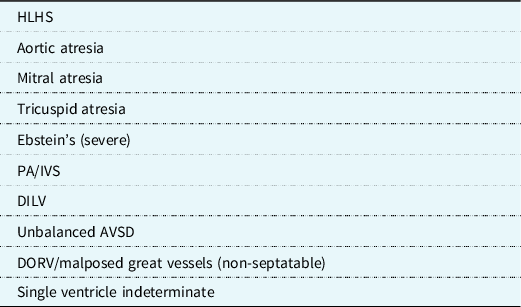
This was a retrospective review of patients graduating from our home-monitoring programme from the 1 January, 2016 to the 31December, 2020. Subjects eligible for recruitment were identified from our internal home-monitoring programme single ventricle database. Single ventricles diagnoses were defined by our group and these are listed in Table 1.
Single ventricle diagnostic definitions used for inclusion

Abbreviations: HLHS – hypoplastic left heart syndrome, PA – pulmonary atresia, IVS – intact ventricular septum, DILV – double inlet left ventricle, AVSD – atrioventricular septal defect, DORV – outlet right ventricle.
Data were extracted from internal electronic patient records, clinic letters, and paper notes. Graduation from the home-monitoring programme was defined as reaching the end points of either second stage operation (i.e. conversion to cavopulmonary shunt), biventricular repair, decision point that no further operations are possible or death in the home-monitoring programme period. Patients were excluded from the home-monitoring programme analysis if post stage 1 operation they remained in hospital until stage 2 (i.e. never entered the home-monitoring programme); died prior to discharge from hospital following stage 1 or were deemed for comfort care. In the absence of a pre-home-monitoring programme era for our institution to act as a control group, we sought to compare our home-monitoring programme performance with that quoted in the literature for other home-monitoring programmes.
Primary aims were to establish home-monitoring programme mortality prevalence. Secondary outcomes were to assess the prevalence, severity, predictors and modes of presentation of home-monitoring programme adverse events. Adverse events were defined in the following three categories: moderate (unplanned hospital admission to a medical ward), severe (unplanned PICU admission), or death. The highest level of adverse event severity was allocated for a patient episode, i.e. if initially presenting with a ward admission but required escalation to PICU or died during the same adverse-event episode, the classification would be severe or death, respectively. Variables examined during the home-monitoring programme period to see if there was an association with predicting adverse-events included: weight gain at follow up and RCPCH-WHO weight centiles 18 ; categorisation as faltering Growth using the NICE United Kingdom definition 19 (defined in Supplementary Fig S1); the need for assisted feeding with any one of nasograstric-tube/nasojejunal-tube/gastrostomy/jejunostomy; gastro-oesophageal reflux; significant atrioventricular valve regurgitation defined by the documentation of at least moderate atrioventricular valve regurgitation in the patient records; impaired cardiac function of any documented description; trends in oxygen saturation and presence of a restrictive atrial septum diagnosed antenatally for those with Hypoplastic Left Heart Syndrome. Having a single right or left ventricle, and the type of surgical palliation (systemic outflow augmentation, securing of pulmonary blood flow, hybrid procedure, pulmonary artery band, or no intervention) were also examined as risk factors for death in the home-monitoring programme.
We also took the opportunity to frame our home-monitoring programme performance in the context of the whole single ventricle journey during this period, from fetal diagnosis through to stage 2 operations. This was achieved by reviewing our fetal database of single ventricle diagnoses during the period when those in the home-monitoring programme cohort would have been a fetus themselves. The fetal denominator was therefore captured by identifying mothers coded as counselled antenatally to have any one of the diagnoses listed in Table 1, from the 9 months preceding the date of birth of the earliest born single ventricle infant home-monitoring programme graduate in 2016 to the 9 months preceding the latest born single ventricle home-monitoring programme graduate in 2020.
Statistics
Categorical variables are summarised as totals with percentages and compared using Fisher’s exact test. Continuous datasets are represented as median or mean values depending on whether normally distributed. Comparison of mean values were conducted using student’s unpaired t test. Adverse event groups were compared against the cohort not experiencing an adverse event which acted as a control. The risks of experiencing an adverse event are expressed as odds ratios. Time to events are illustrated in Kaplan–Meier plots. Missing data values were excluded from the analysis. Statistical significance was defined as a p value ≤0.05. Data were analysed using MedCalc® Statistical Software (version 19.8, Ostend, Belgium, 2021).
Results
The recruitment pathway is summarised in Figure 1 (parts 1 and 2). During the 5-year study period, there were 217 fetal diagnoses of single ventricles. Of these 108 demised in-utero (this includes 7 lost to follow-up – Supplementary Table S1). Of 109 live births, 26 were not suitable for intervention and died; three were postnatally found to have anatomy considered possible for biventricular repair of which one completed the repair and two are being considered at this time. Eleven patients with intention to treat had a postnatal diagnosis of single ventricle. Fifty percent of antenatal diagnoses progressed to live birth, 35.4% to stage 1 and 29.5% to stage 2.
Recruitment pathway from fetal diagnosis to postnatal intention to treat. Abbreviations: SV − single ventricle; HLHS − hypoplastic left heart syndrome; TOP − termination of pregnancy; IUD − intrauterine death; BiV − biventricular; DORV − double outlet right ventricle; PA − pulmonary atresia; IVS − intact ventricular septum.

Ninety-one patients were intention to treat. Seventeen were excluded from the home-monitoring programme analysis as they did not enter the home-monitoring programme for various reasons (one who died before their first procedure; eight who died in the immediate first-procedure post-operative period; one who survived their initial operation but died during non-home-monitoring programme follow-up; one postnatally diagnosed patient who during the course of postnatal evaluation was deemed unsuitable for operative palliation – this patient is still alive at 3 years of age with a pulmonary artery band and being re-evaluated for Glenn procedure; three patients who remained in hospital until their second procedure; two patients followed outside the home-monitoring programme who survived to stage 2; one patient postnatally diagnosed with double outlet right-ventricle small left heart and pulmonary stenosis and was well balanced and did not undergo a stage 1 procedure – this patient was followed outside of the home-monitoring programme until stage 2).
In total, 74 patients entered the home-monitoring programme and their analysis is summarised below.
Patient characteristics
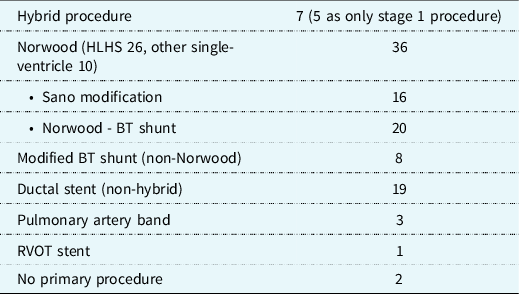
A summary of diagnoses is in Supplementary Table S2. Sixty-four (86.5%) patients were antenatally diagnosed. Mean gestation was 38.7 weeks (range 31–41 weeks), mean birth weight 3.1 kg (range 1.3–4.4 kg). Males accounted for 47 (63.5%) of the study group. Fifty-four (73.0%) were White Caucasian, 16 (21.6%) Asian, 1 (1.4%) Black, and 3 (4.1%) were undocumented ethnicity. The median age for entering the home-monitoring programme was 34 days (range 3–356 days). Median duration of home-monitoring programme follow-up to point of graduation was 147.5 days (range 16–705 days). Summary of procedures undertaken is summarised in Table 2. There were 72 primary procedures and 74 patients. Two patients did not undergo a primary procedure. One patient with double-outlet right-ventricle, pulmonary stenosis, and small left ventricle was initially planned for a ductal stent but at the time of catheter the duct had closed spontaneously; the other patient had double inlet left ventricle, pulmonary stenosis who was well balanced. They remained well and so were followed in the home-monitoring programme until stage 2. Three patients had a genetic syndrome, of which two had Trisomy 21 and one had VACTERL. All three have now completed stage 2 palliation (Glenn).
Summary of procedures undertaken

Abbreviations: HLHS – hypoplastic left heart syndrome; BT – Blalock-Taussig shunt; RVOT – right ventricular outflow tract.
Survival
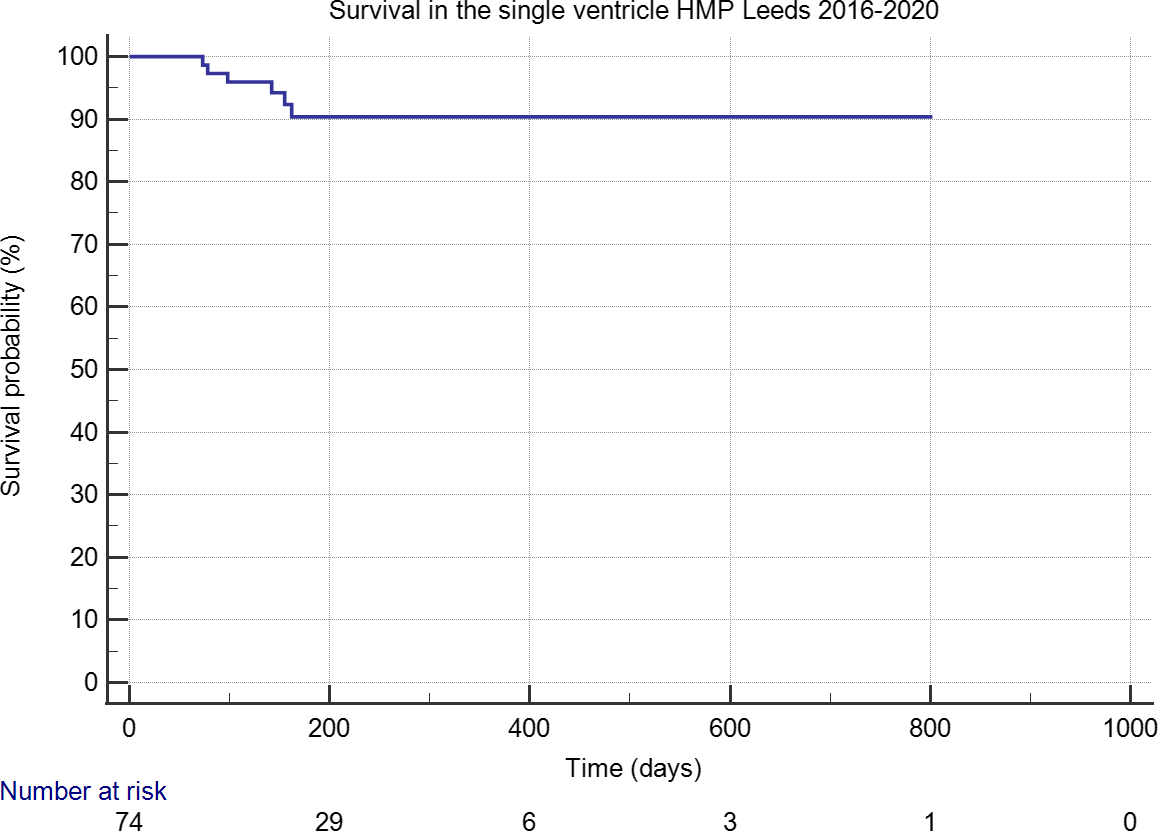
There were a total of six home-monitoring programme deaths giving a programme mortality of 8.1%. This is illustrated in Figure 2. A generalised summary of the patients that died during the home-monitoring programme period is summarised in Supplementary Table S3.
Survival curve of the home monitoring programme. Abbreviation: HMP - home monitoring programme.

With regards survival of the 30 Hypoplastic Left Heart Syndrome in the home-monitoring programme, 4 (13.3%) died and this accounted for two-thirds of the deaths (p 0.15). Those with single right ventricle (n 33, including 30 Hypoplastic Left Heart Syndrome and 3 other), single left ventricle (n 33) and unseptatable heart (n 8) had a survival of 84.9, 97.0, and 100%, respectively, and are displayed as survival curves in Supplementary Figure S2. The difference in mortalities between these groups was not significant (p 0.13).
For category of procedure, survival results are displayed in Figure 3. The odds ratio for death during home-monitoring programme follow-up was 33.0 for the hybrid procedure (n 5 with three deaths. 95% CI 3.9–277.9, p 0.0013). There were no significant differences in survival for the other procedural groups Norwood or DKS (n 36, survival 94.4%); BT-shunt, ductal stent or RVOT stent augmentation of pulmonary blood flow (n 28, survival 96.4%); pulmonary artery band (n 3, survival 100%), and no stage 1 procedure (n 2, survival 100%).
Survival curves according to type of procedure. Abbreviation: HMP - home-monitoring programme; DKS - Damus-Kaye-Stansel; BT - Blalock-Taussig; RVOT - right ventricular outflow tract.

Home-monitoring programme survival for Hypoplastic Left Heart Syndrome with either a BT shunt or Sano modification Norwood is displayed in Supplementary Figure S3. There were two deaths in this context, both with BT shunts.
Adverse events
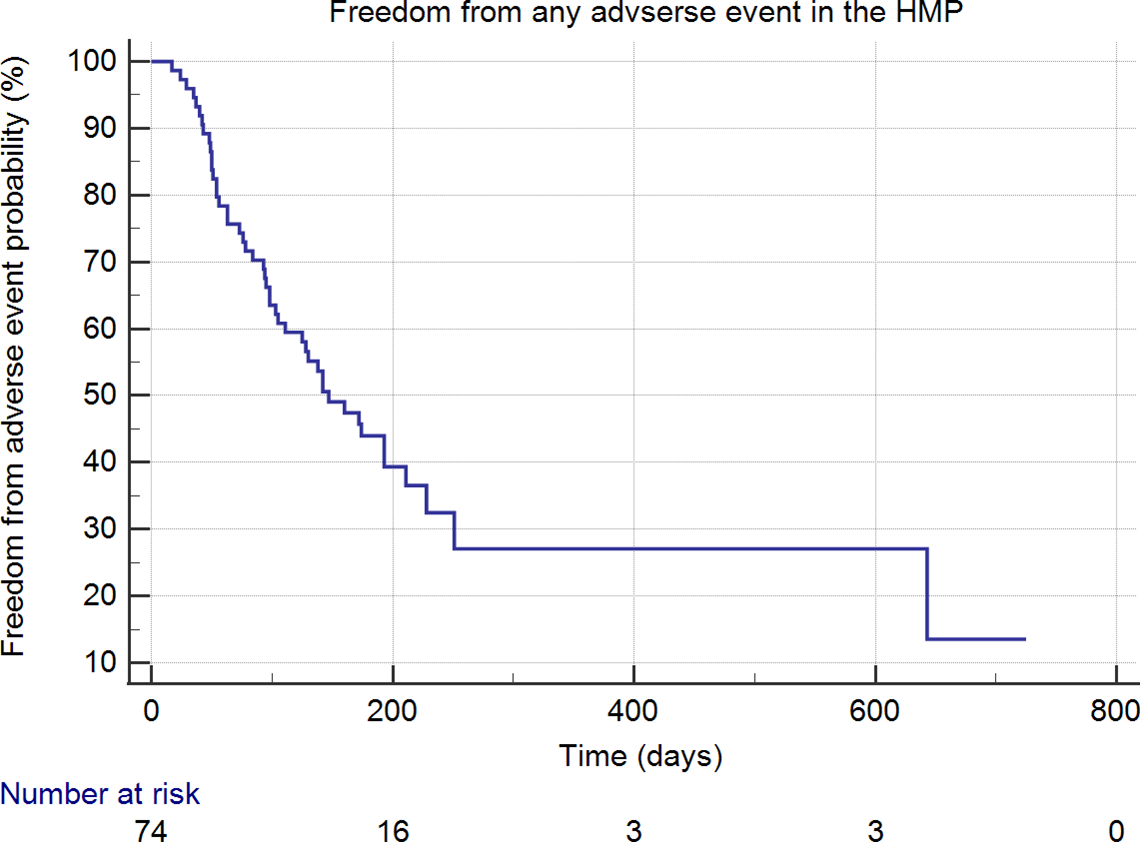
Forty-six patients (out of 74 home-monitoring programme patients) experienced adverse events with 71 events overall. Of these 56 (78.9%) were moderate, 9 (12.7%) serious, and 6 (8.5%) resulted in death. Median time to first event of any severity was 93.5 days (range 17–643). There was a linear reduction in freedom of adverse events with only 40% of patients event free at 200 days. This is represented in Figure 4. A summary of presentations is summarised in Supplementary Table S4. Fourteen (19.7%) of these admission episodes led on to an interim procedure. The mode of presentation was documented for 66 (93.0%) of the total events. Thirty-nine presentations (54.9%) were parental self-referral to their local paediatric service or Emergency Department, 24 (33.8%) were via the HMP clinic, and 3 (4.2%) were via the community or specialist cardiac nurse service. Of the six deaths, three presented via the clinic, two via parental self-referral to acute paediatric services and the other was undocumented.
Freedom from adverse event curve for those in the home-monitoring programme. Abbreviation: HMP − home-monitoring programme.

Risk factors
The median number of home-monitoring programme clinic episodes was 5, range 0 to 14. Total number of documented clinic episodes was 397 of which undocumented weights were 34 (8.6%) and undocumented oxygen saturations were 35 (8.8%).
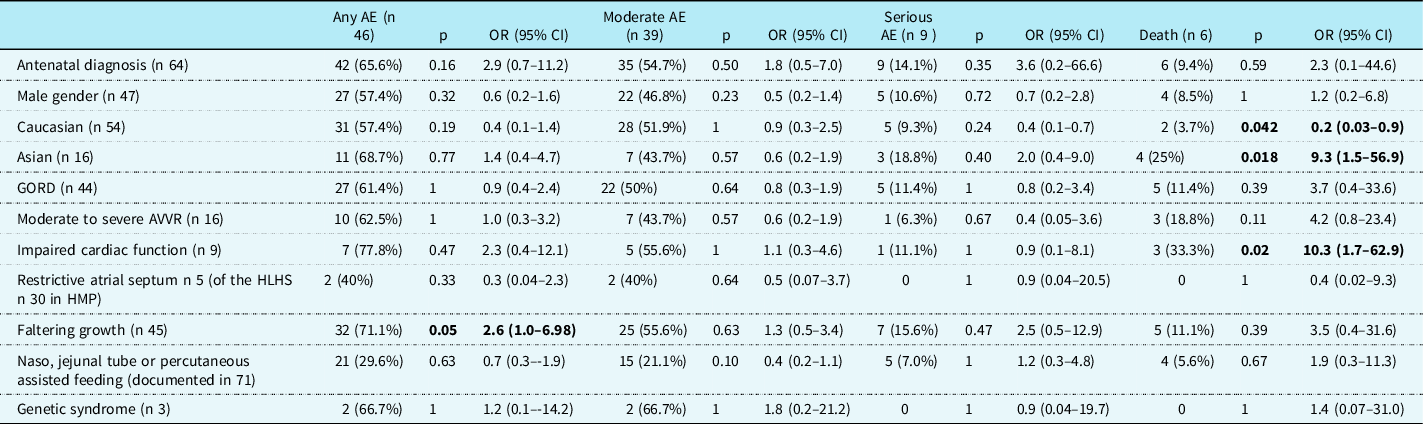
Summaries of the multivariable analysis for adverse events are displayed in the Tables 3 and 4.
Summary of categorical multivariable relationships with adverse events in the home-monitoring programme. Expressed as a proportion of the variable experiencing an adverse event

Abbreviations: HMP – home monitoring programme; AVVR – atrio-ventricular valvar regurgitation; OR – odds ratio; AE – adverse event; GORD – gastro-oesophageal reflux disease; HLHS – hypoplastic left heart syndrome.
Continuous multivariable relationships with adverse events. Data are expressed as means with 95% confidence intervals

Abbreviations: HMP – home-monitoring programme; AE – adverse events.
Faltering growth was significantly associated with having any adverse event (OR 2.6, p 0.05) but did not achieve statistical significance for the subcategories of adverse event including death. Mean birth weight was significantly lower in all categories of adverse event including death compared to those experiencing no adverse events and the mean weight centiles during follow-up were significantly lower in patients that died with a mean weight centile of 3.11 (95% CI 0.5–5.7) versus 10.76 (95% CI 8.9–12.6), p < 0.05. Three (33.3%) of the nine patients with impaired cardiac function of any severity died (OR 10.3, 95% CI 1.7–62.9, p < 0.025). Poor weight gain over time and association with death is reflected in the fall in strength of weight gain correlation with time (those that died with r = 0.54 compared to r > 0.8 for the other categories of adverse event – Supplementary Table S5). A decline in oxygen saturations over time was seen in the group that died (r = 0.52, p < 0.05).
There were no statistically significant differences in the proportions experiencing moderate or severe events between the Caucasian or Asian groups; however, Asian ethnicity was significantly associated with mortality with four deaths (OR 9.3, 95% CI 1.5–56.9, p < 0.025). Conversely being Caucasian was associated with reduced mortality (OR 0.2, 95% CI 0.03–0.9, p < 0.05). A focused subgroup comparison of characteristics between Asian and Caucasian patients found no statistical difference between them (Supplementary Table S6). Mean gestation, mean oxygen saturations during the home-monitoring programme period, gender, mode of feeding, significant atrio-ventricular valve regurgitation, gastro-oesophageal reflux, restrictive atrial septum in Hypoplastic Left Heart Syndrome, and the presence of a genetic syndrome did not appear to have a statistically significant bearing on predicting death or any other adverse event during home-monitoring programme follow-up. There were 80 documented comorbidities in the 74 home-monitoring programme cohort with a median number of 1 (range 0–3). The number of comorbidities did not appear predictive of event occurrence, with insignificant area-under-the-receiver-operating-curves (Supplementary Table S7).
Discussion
Evaluation of a single ventricle European HMP has demonstrated a comparable rate of survival (91.9%) to that quoted for similar programmes in North America. Reference Castellanos, Herrington and Adler5,Reference Dobrolet, Nieves and Welch6,Reference Petit, Fraser and Mattamal10,Reference Siehr, Norris and Bushnell12,Reference Ghanayem, Hoffman and Mussatto14,Reference Oster, Ehrlich and King15 Home-monitoring programme mortality is not the same as total interstage 1–2 mortality as some patients will not have entered the home-monitoring programme. Our total interstage mortality (from examining Fig 1) is approximately 17%. It is likely that some adverse events have been prevented by the programme enabling early recognition of deterioration and timely interventions, though this is difficult to prove. This study adds to the body evidence that home-monitoring programmes are likely beneficial in reducing interstage 1 and 2 mortality compared to a pre-home-monitoring programme era quoted as high as 20%. Reference Bove and Lloyd4-Reference Forbess, Cook and Roth7,Reference Mahle, Spray and Wernovsky9-Reference Tweddell, Hoffman and Mussatto13 The home-monitoring programme mortality was higher in the Hypoplastic Left Heart Syndrome group (13.3% compared with only 4.5% in the other single ventricle group). This rate of Hypoplastic Left Heart Syndrome survival is comparable to published United Kingdom national data of Hypoplastic Left Heart Syndrome interstage 1 and 2 mortality following first procedure of 13%. Reference Rogers, Pagel and Sullivan20 For Hypoplastic Left Heart Syndrome, the mortality was higher in those having undergone a Hybrid procedure and this likely reflects the higher fragility of those selected for Hybrid procedure having been deemed high risk for an initial Norwood. The Sano modification for the Norwood operation had 100% survival versus 82% survival for those with Blalock-Taussig shunt and was statistically significant. Though this study is low powered, our finding is in keeping with better short term post-operative survival outcomes reported with the Sano modification. Reference Ohye, Sleeper and Mahony21 Our centre is now favouring the Sano modification as the patient haemodynamics appear more stable in the early post-operative period. Generally, we prefer the Sano in the cases where the ascending aorta is very hypoplastic because the diastolic pressure is likely higher for coronary perfusion. The length of home-monitoring programme monitoring was variable depending on when the child was discharged from hospital and how they progressed clinically during home-monitoring programme follow-up. The underlying lesion and palliation will also have had bearing on follow up duration though we did not formally assess this. Therefore, one cannot be prescriptive on how long a minimum home-monitoring programme follow-up should be and follow-up duration is judged case by case.
The predictors of any adverse outcomes reaching statistical significance were lower mean birth weight and faltering growth. Specifically for death in the home-monitoring programme the main risk factors were having a hybrid procedure as the only primary procedure, impaired cardiac function, Asian ethnicity, reduced weight gain, and a decline in oxygen saturations. Death associated with the hybrid procedure is likely owing to patient selection. Impaired cardiac function is a well-established risk factor for poor outcome and in a recent study longitudinal strain deterioration is now being advocated as a sensitive predictive marker for interstage 1 and 2 death. Reference Michielon, DiSalvo and Fraisse22 Ethnicity and adverse cardiovascular outcomes in single ventricle patients have long been suspected but to demonstrate the association as persisting through follow-up is a novel result. There were no significant differences in key characteristics between the Asian and Caucasian groups. Possibilities for a difference in survival outcomes may relate to unknown differences in socio-economic factors, physiology and issues with parental language and accessing healthcare resources. Lower socio-economic status has been associated with higher mortality risk in CHD patients Reference Best, Vieira and Glinianaia23 and with respects Norwood patients, Ghanayem et al found interstage mortality higher in lower socio-demographic groups and in those with Hispanic ethnicity in a United States of America population, though the underlying reasons for this were not examined. Reference Ghanayem, Allen and Tabbutt8 We did not examine the socio-economic status of our cohort and it may be that there are socio-economic inequalities which could explain the ethnic survival difference. To gain improved understanding of this ethnic phenomenon and hence inform surveillance strategies, future work should examine ethnic and socio-economic characteristics. In the meantime, home-monitoring programmes should incorporate heightened awareness of the issue to optimise support for at-risk ethnic groups. Though faltering growth was a predictor of adverse events and death, intercurrent illness and low oxygen saturations were responsible for most clinical presentations suggesting that poor weight gain is secondary to other pathology rather than being a primary cause of worse outcome. Regardless, the recognition of faltering growth must be recognised as a surrogate marker of struggling single ventricle physiology. Most adverse event presentations were via parental self-referral to acute paediatric services which suggests the education of parents to recognise signs of deterioration was effective. This may have aborted delayed presentations and hence more severe events. In terms of deaths within the home-monitoring programme, presentation to clinic formed half of the cases. However, whether there were differences in factors relating to early recognition at home for this small group of patients compared to those who self-presented is unknown. We know that one death occurred upon induction of an anaesthetic for an MRI after being admitted from clinic for signs of increased respiratory effort. The one undocumented presentation followed by death was for a patient who, during the course of home-monitoring programme review, had their management redirected to comfort care. Therefore, for these two patients, the mode of presentation was not relevant to the mode of death. Our programme, in keeping with other programmes, involves monitoring a combination of physiological and subjective parameters of well-being triggering medical review if target thresholds are breached. There currently exists no standardised paediatric early warning score or trigger system for this group of patients. Paediatric early warning scores have been widely implemented for United Kingdom hospital inpatients Reference Roland, Oliver and Edwards24 following high profile case reviews and recommendations to reduce in-hospital mortality. Reference Pearson, Ward-Platt and Harnden25 Pre-hospital PEWS do exist but their validity in predicting severe illness or mortality is unproven. Reference Lillitos and Maconochie26 Preliminary work in CHD home monitoring has shown such an early warning system in this context is feasible Reference Gaskin, Wray and Barron27 and perhaps this may be a tool to complement single ventricle home monitoring in the future. Despite the best home monitoring of these high-risk patients, some acute events leading to death such as an aspiration, will be sudden and unexpected. It has been advocated with encouraging survival data, that those patients who are interstage 1 and 2 should remain in hospital until their second palliation procedure, where sudden severe deteriorations can be detected and hospital resuscitation initiated immediately. Reference Michielon, DiSalvo and Fraisse22 The practicality for implementing this universally however is a challenge, mainly owing to pressures on inpatient bed capacity. Therefore, careful patient evaluation for home-monitoring programme suitability and ongoing close surveillance will likely remain the practicality for many units for the foreseeable future.
It is informative for our institution’s fetal-cardiac counselling service that approximately half of single ventricle antenatal diagnoses progress to live birth, 35.4% to stage 1 and approximately 29.5% progress to stage 2. Using the fetal denominator, the numbers reaching stages 1 and 2 is low because half were lost in-utero. However, if the postnatal live births with intention to treat is used as the denominator (n 80), overall single ventricle survival to stage 2 is 80% (65.7% for Hypoplastic Left Heart Syndrome and comparable to published data for England and Wales Reference Rogers, Pagel and Sullivan20 ). Reference Fontan, Mounicot and Baudet1 With respects to Hypoplastic Left Heart Syndrome, United States of America data demonstrates lower in-utero terminations with 73% progressing to live birth and hence higher percentages reaching stages 1 and 2 (65 and 54%, respectively). Reference Liu, Zielonka and Snarr28 To create generalisable United Kingdom figures of HLHS and other single ventricle fetal outcomes, a United Kingdom multicentre study is required and is underway.
Limitations
This was a single centre audit of a newly instituted service’s performance and so the results are not necessarily generalisable. They are of interest to centres hoping to start a single ventricle program and to those planning on instituting a home-monitoring programme. The comparable outcomes of survival with other reported survival rates in the literature are reassuring. The study was retrospective and so is subject to the limitations of missing data and biases associated with retrospective study design. The adverse event rate (other than death) is limited to the event being documented in the patient records and so it is possible the adverse event rate is subject to under reporting. We tried to mitigate adverse event under reporting by screening for episodes in other patient databases including the specialist nurse documentation and clinic letters. Owing to our home-monitoring programme becoming established concurrently with our single ventricle programme we did not have a control group to compare against a pre-home-monitoring programme era. Instead, we compare our performance to that quoted in the literature and reassuringly our survival outcomes are comparable. Knowing the denominator of postnatal single ventricle cases rather than just the number with intention to treat would have been desirable; however, our database only includes cases admitted under our service and not patients who may have died before this or redirected to comfort care. A selection bias may reflect better outcome as the sickest patients more likely to have worse outcomes may have been more likely to receive comfort care.
Conclusion
Survival in this home-monitoring programme study is comparable to other home-monitoring programmes in the literature and adds to the body of evidence that mortality is likely negated compared to a pre-home-monitoring programme era. A hybrid palliation in high-risk infants, lower birth weight, reduced weight gain, impaired cardiac function, and Asian ethnicity formed the main risk factors for death during this high-risk period and programmes should pay awareness to these factors to attempt to mitigate adverse events. Future work to reliably generalise single ventricle fetus to stage 2 outcomes in the United Kingdom will require multicentre collaboration. This will better inform home-monitoring programme management and fetal single ventricle counselling.
Supplementary material
To view supplementary material for this article, please visit https://doi.org/10.1017/S1047951122001524
Acknowledgements
We would like to acknowledge our information manager Stacey Boardman with the help in data retrieval and our specialist cardiac nurses Emma Duffy, Lyndsay Bamford, and Beth Lunn who provided insight and overview of the workings of the home monitoring programme in Leeds.
Financial support
This research received no specific grant from any funding agency, commercial, or not-for-profit sectors.
Conflicts of interest
None.
Ethical standards
Local institutional ethics board consultation deemed this study a review of local service delivery. Therefore, formal ethics approval was not required.