The development of forms and functions of aggression during early childhood
Aggression is a major risk factor for psychopathology and a symptom of several disorders among children and adolescents (Eisner & Malti, Reference Eisner, Malti, Lamb and Lerner2015); however, the developmental pathways underlying this behavior are not fully understood (NICHD ECCRN, 2004; Ostrov et al., Reference Ostrov, Perry, Blakely-McClure, Malti and Rubin2018). As temperamental differences emerge early in life, temperamental characteristics may provide significant insights regarding the development of aggression and antisocial behavior early in development. Thus, the first goal of the present study was to investigate temperamental pathways to aggressive behavior during early childhood, including potential mechanisms that link early temperament with the development of aggression. In addition, given increasing attention to the heterogeneity in aggressive youth over the last decade (Ettekal & Ladd, Reference Ettekal and Ladd2017; Evans et al., Reference Evans, Diaz, Callahan, Wolock and Fite2020; Mann et al., Reference Mann, Tackett, Tucker-Drob and Harden2018), the second goal was to investigate associations between early temperamental characteristics and distinct subtypes of aggression. Finally, given theory that highlights gender differences in the manifestation of aggression (e.g., Ostrov & Godleski, Reference Ostrov and Godleski2010), we tested gender differences in these processes.
Temperament and developmental pathways to aggressive behavior
Individual differences in temperament have been hypothesized to be a particularly salient risk factor for aggression during early childhood (Lahey & Waldman, Reference Lahey, Waldman, Lahey, Moffitt and Caspi2003; Moore et al., Reference Moore, Hubbard, Bookhout, Malti and Rubin2018). Three related clusters of temperamental traits have emerged in multiple conceptualizations of temperamental risk for aggression, including the prominent models proposed by Frick and colleagues (e.g., Frick & Morris, Reference Frick and Morris2004) and Lahey and colleagues (e.g., Lahey & Waldman, Reference Lahey, Waldman, Lahey, Moffitt and Caspi2003). First, a tendency to exhibit dysregulated and negative emotional reactions is hypothesized to promote aggressive responding across both models (Frick & Morris, Reference Frick and Morris2004; Frick & Viding, Reference Frick and Viding2009; Lahey & Waldman, Reference Lahey, Waldman, Lahey, Moffitt and Caspi2003; Lahey et al., Reference Lahey, Applegate, Chronis, Jones, Williams, Loney and Waldman2008). This tendency may include high negative emotionality (e.g., the tendency to blow things out of proportion and to exhibit intense, negative reactions) and problems with regulating the display of negative emotions (Izard et al., Reference Izard, Youngstrom, Fine, Mostow, Trentacosta, Cicchetti and Cohen2006), which has been shown to predict aggressive behavior in young children (e.g., Nwadinobi & Gagne, Reference Nwadinobi and Gagne2020; Peterson et al., Reference Peterson, Dando, D’Souza, Waldie, Carr, Mohal and Morton2018). In fact, by the end of early childhood, angry reactions become less normative in common peer interactions and consistent negative emotionality coupled with impulsive tendencies may increase the risk of engaging in aggressive behavior when youth are provoked or perceive that they have been harmed by others (Izard et al., Reference Izard, Youngstrom, Fine, Mostow, Trentacosta, Cicchetti and Cohen2006).
Second, researchers have hypothesized that temperamental fearlessness and daring promote aggressive behavior (e.g., Frick & Morris, Reference Frick and Morris2004). For instance, Lahey and Waldman (Reference Lahey, Waldman, Lahey, Moffitt and Caspi2003) argue that children who are "daring," including traits such as adventurousness, sensation-seeking, and low harm-avoidance, may be particularly likely to exhibit aggression, perhaps because they are relatively unconcerned with possible negative consequences (e.g., retaliation) for their behavior and find aggressive behaviors exciting (Lahey et al., Reference Lahey, Applegate, Chronis, Jones, Williams, Loney and Waldman2008). Consistent with these suggestions, researchers have demonstrated that low levels of fear and high levels of daring predict problem behaviors including aggression (e.g., Frick et al., Reference Frick, Cornell, Barry, Bodin and Dane2003; Lahey et al., Reference Lahey, Applegate, Chronis, Jones, Williams, Loney and Waldman2008; Peterson et al., Reference Peterson, Dando, D’Souza, Waldie, Carr, Mohal and Morton2018).
Third, several models have highlighted the role of impaired conscience development (Frick & Morris, Reference Frick and Morris2004) and low prosociality, including a propensity to experience low levels of sympathy, guilt, or respect for rules (Lahey & Waldman, Reference Lahey, Waldman, Lahey, Moffitt and Caspi2003; Lahey et al., Reference Lahey, Applegate, Chronis, Jones, Williams, Loney and Waldman2008) in aggressive conduct. To this end, in their early childhood work, Kochanska and colleagues identified two major components of early conscience development, moral emotions (e.g., empathy) and internalization of parental and societal rules (e.g., Kochanska, Reference Kochanska1993), which are associated with lower levels of aggressive behavior (Kochanska et al., Reference Kochanska, Barry, Aksan and Boldt2008). Impaired conscience may be a risk factor for aggression as the typical restraints related to moral behavior, such as a commitment to parental and school-based rules and expectations and feeling bad for harming others, are absent. Temperamental models have successfully predicted trajectories of both physical and nonphysical forms of aggression in middle childhood (Aimé et al., Reference Aimé, Paquette, Déry and Verlaan2018), underscoring the importance of temperamental pathways to aggression.
Physiological indices of temperament and aggressive behavior
In addition to behavioral indicators of temperament, Frick and Morris (Reference Frick and Morris2004) suggest that patterns of physiological responding emerge early in life, are often outside of children’s voluntary control, and may serve as a foundation for trajectories towards aggressive behavior. Indeed, skin conductance (SCL, a measure of activity of the sweat glands that provides a relatively pure measure of SNS activation) may serve as a physiological indicator of fearlessness. In fact, according to fearlessness theory, underarousal of the sympathetic nervous system (SNS) serves as a risk factor for aggression because it lowers inhibitions against such conduct (Raine, Reference Raine2002). Consistent with this perspective, low resting skin conductance is related to heightened antisocial behavior and aggression (Lorber, Reference Lorber2004). Further, SCL is related specifically to aggression in young children (Posthumus et al., Reference Posthumus, Böcker, Raaijmakers, Van Engeland and Matthys2009), and low baseline SCL in infancy predicts aggressive, but not nonaggressive, antisociality at age 3 in typically developing children (Baker et al., Reference Baker, Shelton, Baibazarova, Hay, van and Stephanie2013).
In addition, parasympathetic nervous system (PNS) activity is hypothesized to serve as a physiological indicator of temperamental emotion dysregulation. PNS activation inhibits reactivity of stress systems; thus, low PNS arousal at rest is hypothesized to index poor emotion regulation (Beauchaine, Reference Beauchaine2015; Porges, Reference Porges2007). Consistent with this interpretation, several studies that have mainly focused on adolescence have found that one commonly studied measure of PNS arousal, respiratory sinus arrhythmia (RSA; a measure of the ebbing and flowing of heart rate during the respiratory cycle reflecting PNS influences on the heart), is negatively associated with aggression and externalizing problems (e.g., Beauchaine et al., Reference Beauchaine, Katkin, Strassberg and Snarr2001), and meta-analytic findings indicate that RSA is negatively associated with measures of misconduct and externalizing problems (Kibler et al., Reference Kibler, Prosser and Ma2004). Low RSA appears to serve as a risk factor for aggression in young children; in fact, in one study, children with low levels of RSA across 5–48 months exhibited heightened aggression at 48 months (Patriquin et al., Reference Patriquin, Lorenzi, Scarpa, Calkins and Bell2015). Further, in one recent study, low RSA was associated with heightened externalizing in younger, but not older, children in a sample of 7–11-year-olds (Quiñones-Camacho & Davis, Reference Quiñones-Camacho and Davis2018), suggesting that low RSA may be most strongly related to aggression in young children.
Temperament and functions of aggression
Implications of behavioral and physiological indices of temperament for the development of aggression may depend in part on the function of aggression. Proactive functions of aggression include behaviors that are displayed to serve goal-directed, purposeful, or instrumental functions, such as using aggressive behaviors to gain access to a desired resource (e.g., toys, status, or attention; Prinstein & Cillessen, Reference Prinstein and Cillessen2003). In contrast, reactive functions of aggression are displayed in response to a perceived threat and motivated by impulsivity, emotion dysregulation, hostility, or anger (Dodge & Coie, Reference Dodge and Coie1987; Vitaro et al., Reference Vitaro, Gendreau, Tremblay and Oligny1998). Proactive and reactive functions are correlated (for review see Bushman & Anderson, Reference Bushman and Anderson2001), especially among older children and in studies with single informant and non-observational methods (e.g., teacher or self-reports, see Card & Little, Reference Card and Little2006). However, past studies conducted primarily in middle childhood or adolescent samples have generally provided support for the distinction of proactive and reactive functions of aggression, including discrete factor loadings (e.g., Poulin & Boivin, Reference Poulin and Boivin2000) and discriminant validity (e.g., Carroll et al., Reference Carroll, McCarthy, Houghton, O’Connor and Zadlow2018; Fite et al., Reference Fite, Poquiz, Frazer and Reiter2017, Reference Fite, Cushing and Odell2021). There is also some evidence supporting the distinction between proactive and reactive functions of aggression in early childhood samples (e.g., Evans et al., Reference Evans, Frazer, Blossom and Fite2019).
Several studies in early and middle childhood indicate that nonverbal, physiological, and behavioral displays of anger or frustration are associated with reactive but not proactive physical aggression (e.g., Fite et al., Reference Fite, Poquiz, Cooley, Stoppelbein, Becker, Luebbe and Greening2016; Hubbard et al., Reference Hubbard, Parker, Ramsden, Flanagan, Relyea, Dearing, Smithmyer, Simons and Hyde2004; Jambon et al., Reference Jambon, Colasante, Peplak and Malti2019; Marsee & Frick, Reference Marsee and Frick2007). For instance, Xu et al., (Reference Xu, Raine, Yu and Krieg2014) reported that low RSA was correlated with heightened reactive, but not proactive, aggression both concurrently and over the course of 2 years in a sample of Chinese 2nd graders. Further, low RSA appears to increase risk for reactive aggression among adolescents that are victimized by peers (Ungvary et al., Reference Ungvary, McDonald, Gibson, Glenn and Reijntjes2018; although see Scarpa et al., Reference Scarpa, Haden and Tanaka2010). In addition, behavioral fearlessness and impaired conscience have been hypothesized to be more strongly related to proactive than to reactive aggression because youth with these traits are unconcerned about punishments or breaking rules (Frick & Morris, Reference Frick and Morris2004). Similarly, physiological indicators of fearlessness, such as low SCL, may serve as a risk factor for unemotional, proactive aggression (Scarpa et al., Reference Scarpa, Haden and Tanaka2010), although evidence for these theoretical associations has been equivocal (Armstrong et al., Reference Armstrong, Wells, Boisvert, Lewis, Cooke, Woeckener and Kavish2019; Scarpa et al., Reference Scarpa, Haden and Tanaka2010), highlighting the need for additional research.
Temperament, forms of aggression, and gender
An additional key distinction is whether aggression is physical or relational in form. Physical forms of aggression include behaviors that harm others via physical force or the threat of physical force, including hitting and kicking (Crick & Grotpeter, Reference Crick and Grotpeter1995; Eisner & Malti, Reference Eisner, Malti, Lamb and Lerner2015). Relational forms of aggression, in contrast, include behaviors that damage or threaten to damage relationships to harm others (e.g., social exclusion; Crick & Grotpeter, Reference Crick and Grotpeter1995). Although much of the extant research regarding temperamental pathways to aggression has focused on physical aggression, evidence indicates that these factors may be relevant to relational aggression as well. However, much of this work has been conducted with older samples. For instance, recent findings suggest that empathetic concern was related to reduced relational aggression in 10–14-year-olds (Batanova & Loukas, Reference Batanova and Loukas2016). Additionally, mounting research documents associations between physiological indices and relational aggression, although the majority of this research has been conducted with samples ranging from middle childhood to adulthood and has focused on physiological reactivity to stress (see Murray-Close et al., Reference Murray-Close, Breslend, Holterman, Coyne and Ostrov2018, for review). In one of the only studies to investigate associations between resting physiological arousal and both physical and relational aggression in preschoolers, Gower and Crick (Reference Gower and Crick2011) reported that low resting heart rate was associated with both physical and relational aggression among preschoolers low in effortful control. However, other researchers have documented distinct risk factors for physical and relational aggression; for instance, Sijtsema et al. (Reference Sijtsema, Shoulberg and Murray-Close2011) reported that, among child and adolescent girls attending a residential summer camp, low skin conductance reactivity was related to heightened relational aggression, whereas a combination of high skin conductance reactivity and other risk factors (e.g., peer rejection) appeared to increase risk for physical aggression. This work underscores the need for additional research investigating how behavioral and physiological indicators of temperament relate to both physical and relational forms of aggression, particularly in the understudied developmental period of early childhood.
Furthermore, the inclusion of both physical and relational forms of aggression may provide important insights regarding gender differences in temperamental pathways to aggression. In fact, Lahey and Waldman (Reference Lahey, Waldman, Lahey, Moffitt and Caspi2003) have called for testing of gender differences within their model. Potential risk factors for aggression may promote aggressive conduct in both boys and girls, but the manifestation of aggression may differ by gender, which may explain why the modal form of aggression is relational for girls and physical for boys in early (e.g., Ostrov et al., Reference Ostrov, Kamper, Godleski, Hart and Blakely-McClure2014) and middle (e.g., Putallaz et al., Reference Putallaz, Grimes, Foster, Kupersmidt, Coie and Dearing2007) childhood. This perspective is consistent with theory proposed by Ostrov and Godleski (Reference Ostrov and Godleski2010) suggesting that children’s decisions to behave aggressively are filtered through gender-linked cognitive processes. Indeed, in one study in middle childhood and early adolescence, low RSA was associated with increases in externalizing problems for boys but not girls (El-Sheikh & Hinnant, Reference El-Sheikh and Hinnant2011). Importantly, to extend this influential work, Armstrong et al., (Reference Armstrong, Wells, Boisvert, Lewis, Cooke, Woeckener and Kavish2019) suggest that research on gender differences in the physiological correlates of aggression should broaden to include relational aggression.
Mechanisms of influence
An important contribution of the temperamental approaches to aggression is that they highlight potential mechanisms linking temperamental characteristics and aggressive conduct. Frick and Morris (Reference Frick and Morris2004) suggest that temperamental fearlessness results in a failure to successfully develop an internalized conscience (Frick & Morris, Reference Frick and Morris2004). Specifically, temperamental fearlessness is thought to impair children’s internalization of parental socialization efforts against aggressive behavior (e.g., Kochanska, Reference Kochanska1993). Importantly, this indirect effect is hypothesized to most strongly predict proactive functions of aggression (Frick & Morris, Reference Frick and Morris2004). Recent evidence that affective empathy and functions of aggression are differentially related in middle childhood (Tampke et al., Reference Tampke, Fite and Cooley2020) provides some support for these predictions. There is also evidence from a sample of 5-, 7-, and 10-year-olds that sympathy and moral respect, which are conceptually related to internalization and conscience development, were uniquely related to proactive, but not reactive, aggression (Peplak & Malti, Reference Peplak and Malti2017; see also Jambon et al., Reference Jambon, Colasante, Peplak and Malti2019). Footnote 1
Current study
In the present study, we employed a two-dimensional conceptualization by crossing forms (i.e., physical and relational aggression) with functions (i.e., proactive and reactive) of aggression to yield four subtypes of aggression. Despite the aforementioned overlap in proactive and reactive as well as some evidence for moderate to high associations among physical and relational aggression (for review see, Murray-Close et al., Reference Murray-Close, Nelson, Ostrov, Casas, Crick and Cicchetti2016), these “crossed” forms and functions of aggression subtypes exhibit differential associations with various developmental and clinical outcomes (e.g., Evans et al., Reference Evans, Frazer, Blossom and Fite2019, Reference Evans, Diaz, Callahan, Wolock and Fite2020; Frey & Strong, Reference Frey and Strong2018; Fite et al., Reference Fite, Stoppelbein, Gaertner, Greening and Elledge2011, Reference Fite, Poquiz, Cooley, Stoppelbein, Becker, Luebbe and Greening2016; Matlasz et al., Reference Matlasz, Frick, Robertson, Ray, Thornton, Wall Myers, Steinberg and Cauffman2020), and are reliably detected in children as young as 3 years of age (Evans et al., Reference Evans, Frazer, Blossom and Fite2019). In keeping with the preregistered hypotheses and consistent with the emotion dysregulation pathway (Frick & Morris, Reference Frick and Morris2004; Lahey & Waldman, Reference Lahey, Waldman, Lahey, Moffitt and Caspi2003), we predicted that behavioral and physiological (RSA) emotion dysregulation would be associated with reactive physical and relational aggression. Additionally, consistent with the fearlessness pathway (Frick & Morris, Reference Frick and Morris2004; Lahey & Waldman, Reference Lahey, Waldman, Lahey, Moffitt and Caspi2003), we hypothesized that behavioral (daring/fearlessness) and physiological (SCL) fearlessness would be associated with heightened proactive physical and relational aggression. In the fearless models, we tested competing hypotheses: 1) fearlessness and impaired conscience (empathy, rule internalization) would serve as relatively unique predictors of proactive functions of physical and relational aggression, as conceptualized in the model proposed by Lahey and colleagues (Lahey & Waldman, Reference Lahey, Waldman, Lahey, Moffitt and Caspi2003; Lahey et al., Reference Lahey, Applegate, Chronis, Jones, Williams, Loney and Waldman2008); or 2) indices of impaired conscience would mediate the association between fearlessness and proactive physical and relational aggression, as proposed by Frick and colleagues (Frick & Morris, Reference Frick and Morris2004). Given these prior theoretical models as well as past research on gender differences with regard to subtypes of aggression, we predicted that the aforementioned pathways would be moderated by gender. That is, we anticipated that the temperament traits would be stronger predictors of physical aggression for boys, whereas the same traits would be stronger predictors of relational aggression for girls. These preregistered hypotheses were robustly tested in a multi-informant, multimethod short-term longitudinal study.
Method
Participants
A total of 300 children (44.0% girls; M age = 44.70 months, SD = 4.38 months) across four cohorts were recruited over a 4-year period. The age range for the sample was 3–5-years-old and all children in the preschool classrooms were eligible to participate. Based on parental occupation coded using Hollingshead’s (Reference Hollingshead1975) four-factor index, on average the sample was middle- to upper-middle class. The sample reflected the larger community where 75% of the two largest surrounding counties are non-Hispanic/Latinx White (3.0% African American/Black, 7.6% Asian/Asian American/Pacific Islander, 1.0% Hispanic/Latinx, 11.3% multi-racial, 62.1% White, and 15.0% missing/unknown). Participants were recruited from ten National Association for the Education of Young Children (NAEYC) accredited or recently accredited centers. Six of the education centers were community-based and four were university affiliated. All age-eligible children (48 months or older) were invited to the lab at T1 to complete the physiological assessment, but only a subsample of participants (N = 93) elected to complete this portion of the study. This subsample did not differ from the full sample on demographics (i.e., gender, SES, or race/ethnicity) or any predictor or outcome variables with the exception that those with physiology data had significantly lower levels of proactive physical aggression at Time 1 (T1) and were slightly older, which was expected as physiology sessions began only after participants were 48 months old (see Supplemental Materials). Head teachers completed teacher report forms. On average at T1, they had known the child for approximately 1 year (M = 12.41 months; SD = 9.43) and had been the child’s teacher for two thirds of a year (M = 8.32 months; SD = 2.89). At Time 2 (T2), when most children had a new teacher due to a change in the academic year (i.e., only 36 children had the same teacher), teachers reported knowing the child for slightly longer than 1 year (M = 14.38 months; SD = 11.03). On average teachers reported nearly a decade of teaching experience (M = 9.89 years; SD = 8.48 years). One third reported a bachelor’s degree as their highest level of education (33.3%) with many having a master’s degree (44.5%), and the remaining reported either an associate degree (3.7%), other credential (3.7%), or missing (14.8%).
Measures
Naturalistic observations of proactive and reactive physical and relational aggression (Time 1 and Time 3)
The Early Childhood Observation System (ECOS; Ostrov & Keating, Reference Ostrov and Keating2004; Crick et al., Reference Crick, Ostrov, Burr, Cullerton-Sen, Jansen-Yeh and Ralston2006) uses a focal child sampling with continuous recording approach. Trained undergraduate (n = 14 female and 1 male) or graduate/professional staff (n = 7 female) researchers from relatively diverse backgrounds (23% Black, 14% Latinx, 63% White) observed social behavior for each child in the study 8 times for 10-minute intervals during free play (totaling 80 minutes for each time point) in the classroom and on the playground. Observers were typically different at both time points and trained following standard ECOS procedures (see Crick et al., Reference Crick, Ostrov, Burr, Cullerton-Sen, Jansen-Yeh and Ralston2006). Consistent with previous findings using the ECOS (e.g., Ostrov & Keating, Reference Ostrov and Keating2004), average rates of participant reactivity across the 8 sessions per time point was low at roughly 2–3 times across the 80 minutes of observation at each of the two time points (T1: M = 2.82; T3: M = 2.75). Prior research has demonstrated favorable psychometric properties of the ECOS, including strong inter-rater reliability and evidence of validity (e.g., Ostrov & Keating, Reference Ostrov and Keating2004). Training followed prior procedures (see Crick et al., Reference Crick, Ostrov, Burr, Cullerton-Sen, Jansen-Yeh and Ralston2006) and included detailed review of the ECOS manual, readings with discussion, review of videotapes to support acquisition of codes, a vignette and matching test, a standard observational coding test using six video clips from prior studies of young children, and a practice live reliability session at the school with a trainer and discussion of any errors. Observers spent a minimum of two days within the room to reduce participant reactivity and learn the names of all children. Observers were trained to be minimally responsive and were present in the rooms for about two months at each time point. Observers stayed within earshot of the participants to hear and see the range of peer interactions included in the ECOS. Reliability sessions occurred throughout the study to avoid observer drift and retraining occurred prior to each time point.
Following prior procedures (Ostrov & Crick, Reference Ostrov and Crick2007; Ostrov et al., Reference Ostrov, Murray-Close, Godleski and Hart2013), during a secondary coding process, each observed aggressive behavior was coded as one of four mutually exclusive categories (i.e., proactive physical aggression, reactive physical aggression, proactive relational aggression, and reactive relational aggression) by trained graduate-level RAs. In the past (Ostrov & Crick, Reference Ostrov and Crick2007), Kappa coefficients (a conservative estimate of inter-rater reliability) have exceeded .63, which are acceptable (Pellegrini, Reference Pellegrini2004). In the current study, 50% of observations were coded by a second independent rater and assessed for reliability. Secondary codes of aggression functions showed acceptable reliability (Cohen’s κs = .60–.88; Pellegrini, Reference Pellegrini2004), with the exception of T1 proactive relational aggression (κ = .50), which deserves caution. However, given the stringent nature of κ (Pellegrini, Reference Pellegrini2004), that these levels are similar to those in past work using this coding method (Ostrov & Crick, Reference Ostrov and Crick2007), and that observational methods help distinguish independent effects between aggression subtypes (Card & Little, Reference Card and Little2006), these observations were retained consistent with the preregistered plan.
Observer ratings of proactive and reactive physical and relational aggression (Time 1 and Time 3)
Following the conclusion of observations at each time point, one randomly selected observer from each classroom completed the Preschool Proactive and Reactive Aggression – Observer Report (PPRA-OR; Murray-Close & Ostrov, Reference Murray-Close and Ostrov2009). This measure, adapted from a psychometrically strong teacher report measure (PPRA-TR; Ostrov & Crick, Reference Ostrov and Crick2007), includes three items assessing each subtype of aggressive behavior (e.g., Proactive physical – “This child often hits, kicks or pushes to get what they want”; Reactive relational – “When this child is upset with others, they will often ignore or stop talking to them”), rated from 1 (never or almost never true) to 5 (always or almost always true). Items were averaged within aggression subtype to create subscales. Past work has found RAs to be reliable and valid reporters of children’s behavior (Murray-Close & Ostrov, Reference Murray-Close and Ostrov2009), and the ratings were reliable (Cronbach’s αs = .80–.91) in the current study.
Emotion dysregulation (Time 1)
Several teacher-reported measures served as indicators of emotion dysregulation. First, teachers responded to seven items which measured lability/negativity (e.g., “Is easily frustrated”) from the lability/negativity subscale of the Emotion Regulation Checklist (ERC; Shields & Cicchetti, Reference Shields and Cicchetti1997). Items were rated on a 4-point scale from 1 (never) to 4 (almost always). The scale has demonstrated good psychometric properties in prior work (e.g., Graziano et al., Reference Graziano, Reavis, Keane and Calkins2007) as well as in the current study (Cronbach’s α = .82). Second, teachers provided reports of negative emotionality (8 items; e.g., “Gets upset easily”) on the Child and Adolescent Disposition Scale (CADS; Lahey et al., Reference Lahey, Applegate, Chronis, Jones, Williams, Loney and Waldman2008) rated on a 4-point scale from 1 (not at all) to 4 (very much). The subscale evidenced acceptable reliability (Cronbach’s α = .90), which aligns with past work (Lahey et al., Reference Lahey, Applegate, Chronis, Jones, Williams, Loney and Waldman2008). Teachers also rated child anger/frustration using items developed from Hubbard et al. (Reference Hubbard, Parker, Ramsden, Flanagan, Relyea, Dearing, Smithmyer, Simons and Hyde2004; four items; e.g., “Gets angry during play”) rated on a 4-point scale from 1 (never) to 4 (almost always) and using items from the Child Behavior Questionnaire – Short Form (CBQ-SF; Putnam & Rothbart, Reference Putnam and Rothbart2006; six items; e.g., “Has temper tantrums when s/he doesn’t get what s/he wants”) rated on a 7-point Likert scale from 1 (extremely untrue) to 7 (extremely true). Reliability was adequate for the anger/frustration (Cronbach’s α = .82) and CBQ-SF (Cronbach’s α = .91) scales, consistent with prior work (Ostrov et al., Reference Ostrov, Murray-Close, Godleski and Hart2013; Putnam & Rothbart, Reference Putnam and Rothbart2006).
Empathy and internalized conduct (Time 1 and Time 2)
To assess child conscience, teachers rated children’s empathy (three items; e.g., “Will try to comfort or reassure another in distress”) and rule internalization (three items; e.g., “Rarely repeats previously prohibited behavior even if an adult is not present”) on a scale from 1 (extremely untrue, not at all characteristic of the child) to 7 (extremely true, very characteristic of the child) using subscales from Hawley and Geldhof (Reference Hawley and Geldhof2012). Both subscales have demonstrated good psychometric properties in the past (Hawley & Geldhof, Reference Hawley and Geldhof2012). In the current study, teacher report on the internalization subscale was reliable at T1 (Cronbach’s α = .85). However, the empathy subscale’s internal consistency was slightly lower than convention (Cronbach’s α = .67). Consistent with the preregistered plan, and due to the centrality of this variable to study hypotheses, this subscale was retained with caution.
Fearlessness and daring (Time 1)
Fearlessness was assessed using teacher report and parent report on the CBQ-SF. Reporters rated children’s fear in response to potentially threatening situations (6 items; e.g., “Is afraid of loud noises,” “Is afraid of the dark”) on a 7-point scale from 1 (extremely untrue of your child) to 7 (extremely true of your child). Items were reverse coded such that higher scores reflected greater fearlessness. In the present study, the fearlessness subscale showed adequate to good internal consistency at Time 1 for teacher (Cronbach’s α = .77) and parent report (Cronbach’s α = .77), consistent with previous reliability estimates (Rothbart et al., Reference Rothbart, Ahadi, Hershey and Fisher2001; Putnam & Rothbart, Reference Putnam and Rothbart2006). Additionally, teacher report was significantly correlated with parent report at T1 (r = .19, p = .02). Daring at T1 was assessed using both parent and teacher ratings on the CADS. Informants rated child daring (5 items; e.g., “Likes risky and dangerous things”) on a 4-point Likert scale that ranged from 1 (not at all) to 4 (very much). Reliability was good for teacher (Cronbach’s α = .92) and parent (Cronbach’s α = .81) report, and these were moderately correlated (r = .29, p < .01).
Psychophysiological assessment
Skin conductance level (SCL) and respiratory sinus arrhythmia (RSA) were collected using the Biolog UFI 3991 (see Sijtsema et al., Reference Sijtsema, Shoulberg and Murray-Close2011). At the start of the session, the participant’s height (cm) and weight (lbs) were recorded using a mechanical scale and wall-mounted height chart. The room temperature was recorded via a wall-mounted digital thermometer. The participant was invited to color in an outline of a bear to determine their hand dominance. Next, the participant was invited to place mock electrodes onto a stuffed bear to familiarize them with the procedure. Then, the research assistants placed skin conductance and electrocardiogram (ECG) electrodes on the participant with the participant’s parent present, and simultaneously allowed the participant to place stickers representing the electrodes onto their bear coloring picture. The disposable ECG electrodes were affixed to the participant’s right and left rib in axial configuration, as well as to their sternum. Using adhesive collars held in place by Velcro straps, the SCL sensors containing a small amount (limited to 1 cm diameter circle) of electrode gel to increase conduction were attached to the distal phalanges of the first and second fingers of the child’s nondominant hand. Children were encouraged to wash and dry their hands prior to the session. Finally, a respiration belt was placed around the participant’s diaphragm in order to measure respiration as a possible covariate of RSA. A 5-minute accommodation period was given to allow the participant to adjust to the psychophysiological equipment. Next, the participant’s parent left the room to observe the session via a video surveillance monitor in an adjacent room to reduce parental interference. Participants viewed a 3-minute developmentally appropriate baseline video clip of neutral valence depicting a cartoon dog, “Spot,” interacting with friends and toys in their neighborhood to allow recording of resting autonomic arousal without the child getting bored and restless (see Calkins & Keane, Reference Calkins and Keane2004). The ECG electrodes sampled heart rate data at a rate of 1000 Hz, the finger sensors measured SCL data in microsiemens, and the respiration belt sampled respiration at a rate of 10 Hz. RSA was calculated following procedures developed by Porges (Reference Porges1985; see Supplemental Material).
Procedure
All procedures were approved by the local institutional review board (IRB). Upon approval from the schools to recruit at their schools, teachers, directors, and project staff sent consent forms home to all parents who had age-eligible children (i.e., 3–5-year-olds) in their classrooms. Parents provided written consent for their children’s participation at the start of the study and again prior to the lab session. Children provided assent for the lab session and teachers provided consent prior to report completion. Approximately 56% of eligible families consented to participate. Teachers were compensated $5–$35 per time point depending on the number of reports they completed. Parents were compensated $20-40 for the laboratory visit/parent report. Children were also given a small educational toy. Participants were assessed at three time points over a 15-month time period: Time 1 (T1) occurred in the spring of academic year 1, Time 2 (T2) occurred in the fall of academic year 2, and Time 3 (T3) occurred in the spring of year 2. T1 included school-based observations, and teacher and parent questionnaires. Psychophysiology assessments were completed in the summer just after T1. T2 included teacher reports and a school-based child interview, and T3 included school-based observations and teacher reports. As mentioned above, for most cases, different teachers completed measures between T1 and T2/T3, but a few schools used multi-age classrooms where children did not transition to a new classroom teacher across the different timepoints. All hypotheses, methods, and the data analysis plan were preregistered prior to analysis on Open Science Framework (OSF; https://osf.io/5mjsw).
Data analytic plan
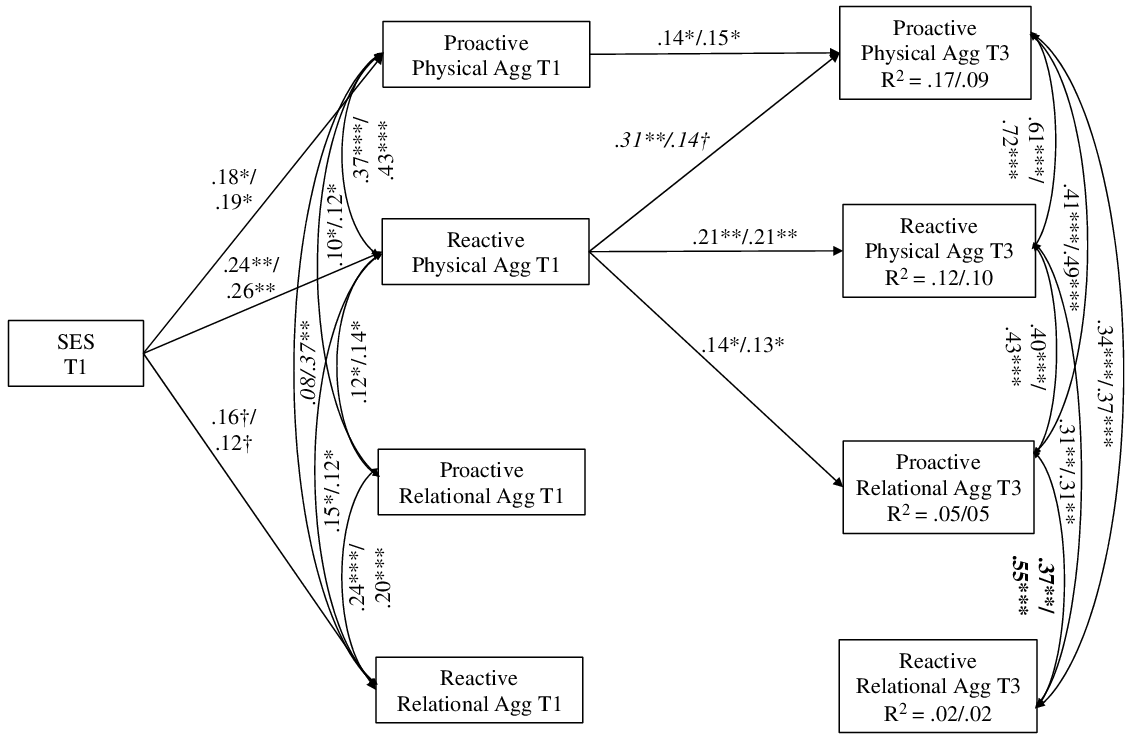
First, analyses were conducted to examine patterns of missing data and attrition. Next, we conducted preliminary descriptive statistics, including an analysis of outliers, defined as any value that is greater than 3 SD above or below the mean; outliers were winsorized to +/− 3 SD from the mean (Kline, Reference Kline2016). Confirmatory factor analyses (CFA) were used to test the potential utility of latent factors for key study constructs of emotion dysregulation, behavioral fearlessness, and conscience. In CFA and structural models/path analyses, maximum likelihood with robust standard errors (MLR) was used in Mplus version 8.6 (Muthén & Muthén, Reference Muthén and Muthén1998–2020) to accommodate data skew. The Standardized Root Mean Square Residual (SRMR), the Comparative Fit Index (CFI), and the Root Mean Squared Error of Approximation (RMSEA) were used to evaluate model fit (Hu & Bentler, Reference Hu and Bentler1999). Following design effect guidelines (Muthén, Reference Muthén1999), it was necessary to control for the effects of clustering within classroom on aggression at T1 (i.e., T1 reactive physical aggression and proactive relational aggression both had design effects greater than 2) but not at T3. Thus, classroom at T1 was included using the Cluster function in Mplus to control for nesting within classroom. We first conducted a multigroup stability path analysis with gender as the grouping variable in which T3 forms and functions of aggression were regressed onto T1 forms and functions of aggression. SES was included as a covariate (see Figure 1 ). Detailed estimates for associations of the final stability model, including gender differences, are presented in the Supplemental Materials (Table S4). To investigate key study hypotheses, we added temperament predictors of subtypes of aggression, including models of behavioral emotion dysregulation, RSA, behavioral fearlessness, and SCL, respectively, to the stability models. In these models, when Wald Chi-Square tests of gender moderation was significant or marginally significant, associations were freely estimated across groups; when associations were not moderated by gender, they were constrained across groups. In the case of significant associations between temperament and both proactive and reactive physical or relational aggression, respectively, follow-up tests were conducted to investigate whether the magnitude of effects differed by function. Finally, we tested proposed mediation pathways using the model indirect command in Mplus (Muthén & Muthén, Reference Muthén and Muthén1998-2020). In these models, we freely estimated mediation pathways across gender and tested gender moderation of mediation effects. Final mediation tests were conducted with bootstrapping with 1,000 bootstrap samples.
Stability model in the full sample. Note. †p < .10, *p < .05, **p < .01, ***p < .001. Agg = Aggression, SES = Socioeconomic status, T1 = Time 1, T3 = Time 3. Italicized effects were marginally different across boys and girls (p < .10) whereas bolded effects were significantly different across boys and girls (p < .05). All non-bolded paths were constrained to be equal across gender but estimates may differ slightly due to differences in standard errors. Only significant paths are shown but all autoregressive and covariance paths were estimated. SES was included as a covariate. CFI = 1.0, RMSEA = .00, SRMR = .07.

Results
Missing data and attrition
Data were examined for systematic missingness. Attrition was anticipated given the longitudinal design. The majority of participants were retained through all time points; attrition occurred primarily during the transition between academic years, with 29.67% (n = 89) attrition from T1 to T2 and 31.0% (n = 93) from T1 to T3; there was minimal missing data from T2 to T3 (n = 8, 1.03%). Attrition from T1 to T2 primarily reflected children transitioning to kindergarten from multi-age classrooms; in some cases, children also changed schools for free universal pre-kindergarten programs or moved from the area. Given that attrition to T3 was only slightly higher than the 30% cutoff identified in our preregistration, and the large number of total analyses, we did not re-run analyses with only participants retained to T3 in an effort to reduce the likelihood of Type 1 errors. Attrition was not associated with any demographic variables other than SES (see Supplemental Materials); SES was included as a covariate in study models and missing data was accommodated using full information maximum likelihood (FIML; Little, Reference Little2013). Details regarding missingness on individual variables is available in the Supplemental Materials; most data had minimal missing data, with the exception of parent reports, which had substantial missing data (48% missing) due to parents electing not to complete. To minimize the impact of missing parent reports, no constructs were solely measured by parent reports.
Preliminary analyses and measure selection
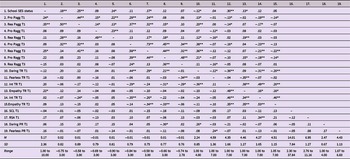
Descriptive statistics and correlations between key study variables are available in Table 1; gender differences in key study variables and correlations among composite indicators are available in Supplemental Materials (Tables S1 and S3). Potential covariates including age, race/ethnicity, study cohort, and SES were examined for associations with attrition; when correlated, these covariates were included as controls, consistent with Little’s (Reference Little2013) recommendation for using FIML to accommodate missing data. Following prior work assessing forms and functions of aggression in the current sample (Perhamus & Ostrov, Reference Perhamus and Ostrov2021) and given significant correlations between observer reports and observations at both time points (rs = .17–.32, ps < .05), composite scores of forms and functions of aggression were computed averaging z-scores of school-based behavioral observations (i.e., “naturalistic observations”) and behavioral ratings (i.e., “observer reports”). Details regarding reporter selection and indicator selection decisions for temperament factors are included in the Supplemental Materials. In the final behavioral emotional dysregulation CFA, latent emotion dysregulation was measured via teacher-reported emotional lability/negativity, anger/frustration, CBQ anger, and negative emotionality (see Table S2 for factor loadings); the two residual variances from the anger measures were allowed to correlate; model fit was excellent (CFI = 1.00, RMSEA = .00, SRMR = .003). Based on preliminary analyses, daring and fearlessness were treated as separate manifest variables, and were calculated by averaging parent and teacher reports. Rule internalization and empathy were also treated as manifest variables based on preliminary analyses (see Supplemental Materials). Figure 1 reports the stability model for the full sample (see Table S4 for all model parameter estimates) and shows that proactive and reactive physical aggression were stable across the course of the study for boys and girls. Neither proactive nor reactive relational aggression were stable over time.
Full sample and physiological subsample descriptive statistics and correlations for observed variables

Note. Correlations from the psychophysiology sample are below the diagonal and correlations from the full sample are above the diagonal. SES = Socioeconomic status, Pro = Proactive, Rea = Reactive, Ragg = Relational aggression, Pagg = Physical aggression, TR = Teacher report, SES = Socioeconomic status, Int = Internalization, SCL = Skin Conductance Level, RSA = Respiratory Sinus Arrythmia, T1 = Time 1, T2 = Time 2, T3 = Time 3, TR = Teacher report, PR = Parent report. Descriptive statistics for the observed variables reflect overall statistics in the entire sample with the exception of the physiological variables which were estimated in the physiological subsample. Descriptive statistics and correlations were examined in SPSS.
* p < .05;
** p < .01.
Behavioral emotion dysregulation
We examined associations between emotion dysregulation and aggression, including whether emotion dysregulation was more strongly associated with reactive, as compared to proactive, functions of physical and relational aggression and whether effects differed by gender. Concurrent and longitudinal associations between emotion dysregulation and forms and functions of aggression, as well as tests of gender moderation, are detailed in the supplemental materials (Table S5, Model 1). Concurrently, emotion dysregulation was correlated with proactive physical aggression and reactive physical aggression; the strength of associations did not differ by function [Wald Δχ2(1) = .45, p = .50]. Concurrently, emotion dysregulation was positively associated with reactive relational aggression and proactive relational aggression for girls only; the strength of associations did not differ by function [Wald Δχ2(1) = .31, p = .58]. Higher emotion dysregulation was also related to lower SES for girls but not boys.
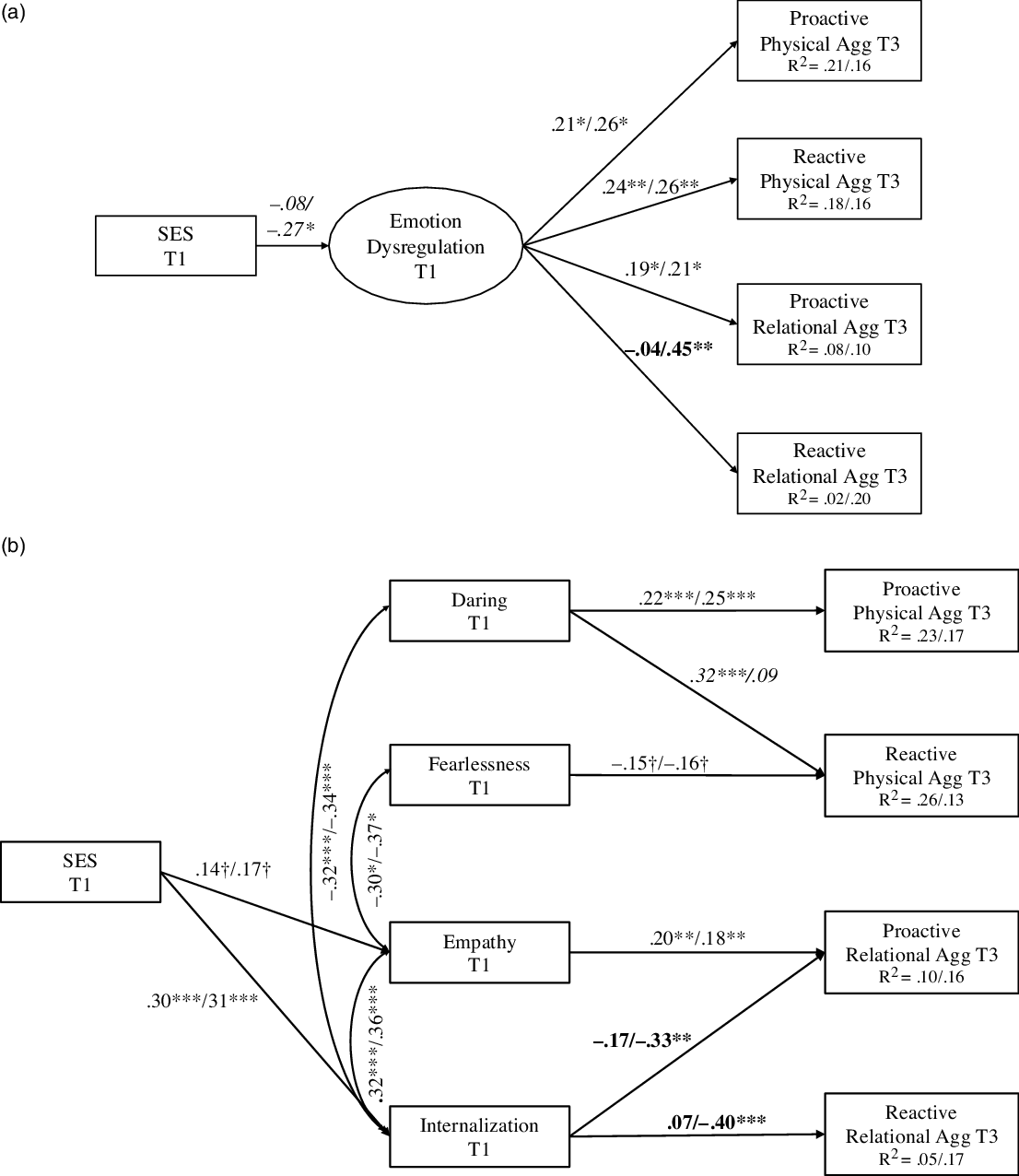
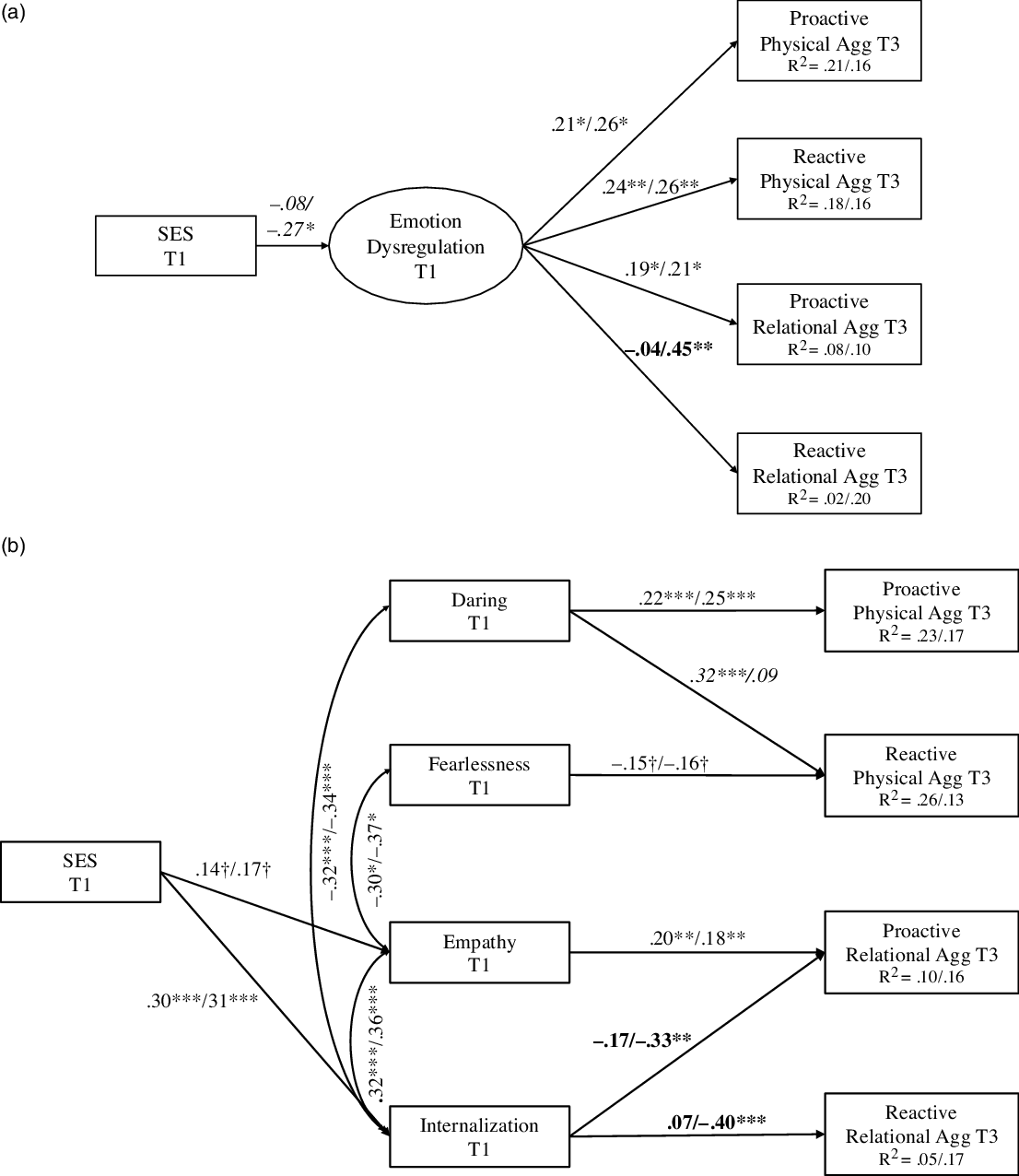
Longitudinally (see Figure 2a), emotion dysregulation at T1 was associated with increases in proactive and reactive physical aggression, as well as proactive relational aggression, for both boys and girls across the course of the study. Further, the magnitude of associations between emotion dysregulation and T3 physical aggression did not differ by function [Wald Δχ2(1) = .02, p = .89]. However, the association between emotion dysregulation and T3 reactive relational aggression was significant for girls but not boys; further, for girls, the magnitude of the association between emotion dysregulation and increases in reactive relational aggression over time was greater than the association between emotion dysregulation and increases in proactive relational aggression over time [Wald Δχ2(1) = 4.74, p = .03].
Two temperament path models predicting aggression in the full sample. Note. †p < .10, *p < .05, **p < .01, ***p < .001. Agg = Aggression, SES = Socioeconomic status, T1 = Time 1, T3 = Time 3. Path estimates show boys on left, girls on right. Italicized effects were marginally different across boys and girls (p < .10) whereas bolded effects were significantly different across boys and girls (p < .05). All non-bolded paths were constrained to be equal across gender but may differ slightly due to differences in standard errors. Estimates are standardized. T1 aggression variables were controlled and covariances between the T3 aggression variables were estimated but are not shown for ease of interpretation. Only significant paths are shown. SES was included as a covariate. Model a: CFI = .97, RMSEA = .05, SRMR = .07; Model b: CFI = 1.0, RMSEA = .00, SRMR = .07.
Behavioral fearlessness and conscience
To investigate associations between fearlessness, conscience, and aggression, including whether fearlessness was more strongly associated with proactive, as compared to reactive, functions of physical and relational aggression and whether effects differed by gender, we conducted a multigroup path analysis with gender as the grouping variable. In the first multigroup model, daring, fearlessness, rule internalization, and empathy at T1 served as simultaneous predictors of T3 forms/functions of aggression, controlling for T1 aggressive behavior. Associations between predictors and concurrent and future aggression are detailed in Supplemental Materials Table S5, Model 2. Concurrently, daring was positively associated with T1 subtypes of aggression for girls and boys, and rule internalization was associated with lower T1 proactive and reactive physical aggression for girls and boys. Concurrently, rule internalization was also related to lower T1 proactive relational aggression and marginally related to lower T1 reactive relational aggression for girls only. Concurrently, empathy predicted higher T1 reactive relational aggression, and marginally predicted T1 proactive relational aggression, for boys only.
Longitudinal findings are presented in Figure 2b. Across the course of the study, daring predicted increases in proactive physical aggression for boys and girls, and reactive physical aggression for boys only. Contrary to hypotheses, fearlessness was longitudinally related to decreases in reactive physical aggression for boys and girls at the trend level. Whereas rule internalization was longitudinally associated with decreases in proactive and reactive relational aggression for girls only, empathy was longitudinally related to increases in proactive relational aggression for boys and girls. Follow-up tests in cases where marginally significant or significant effects emerged across functions of aggression indicated that the strength of associations did not differ by function (all ps > .10).
The next set of analyses explored the hypothesis that T2 low rule internalization and empathy mediated the association between T1 fearlessness/daring and T3 forms/functions of aggression, controlling for T1 aggression, and investigated gender differences in this indirect effect. Findings (Supplemental Materials Table S8) indicated that T2 rule internalization mediated the association between T1 daring and T3 proactive relational aggression, respectively, for girls but not boys, and tests of gender moderation were significant. No other indirect effects were significant.
Respiratory sinus arrhythmia
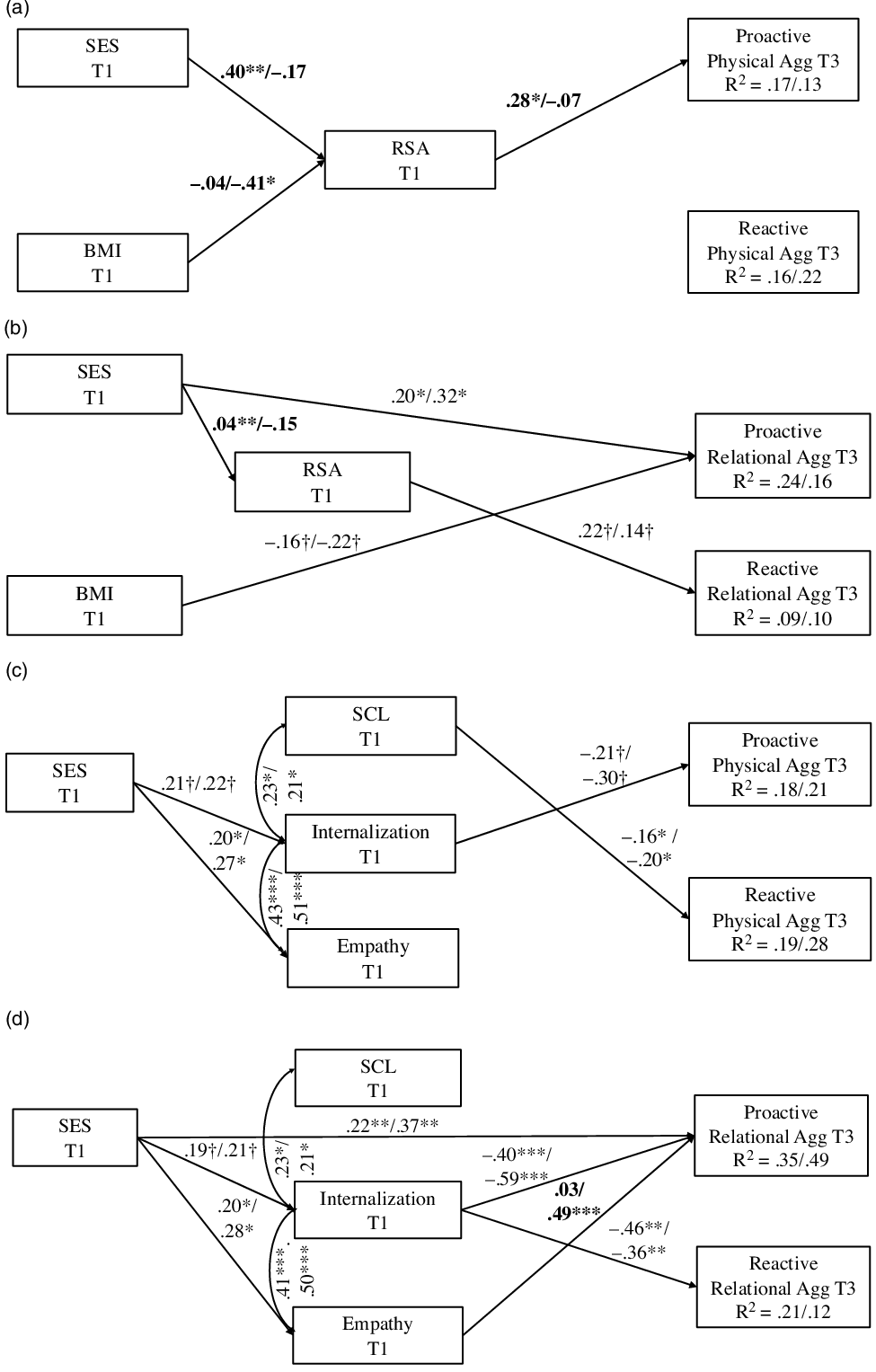
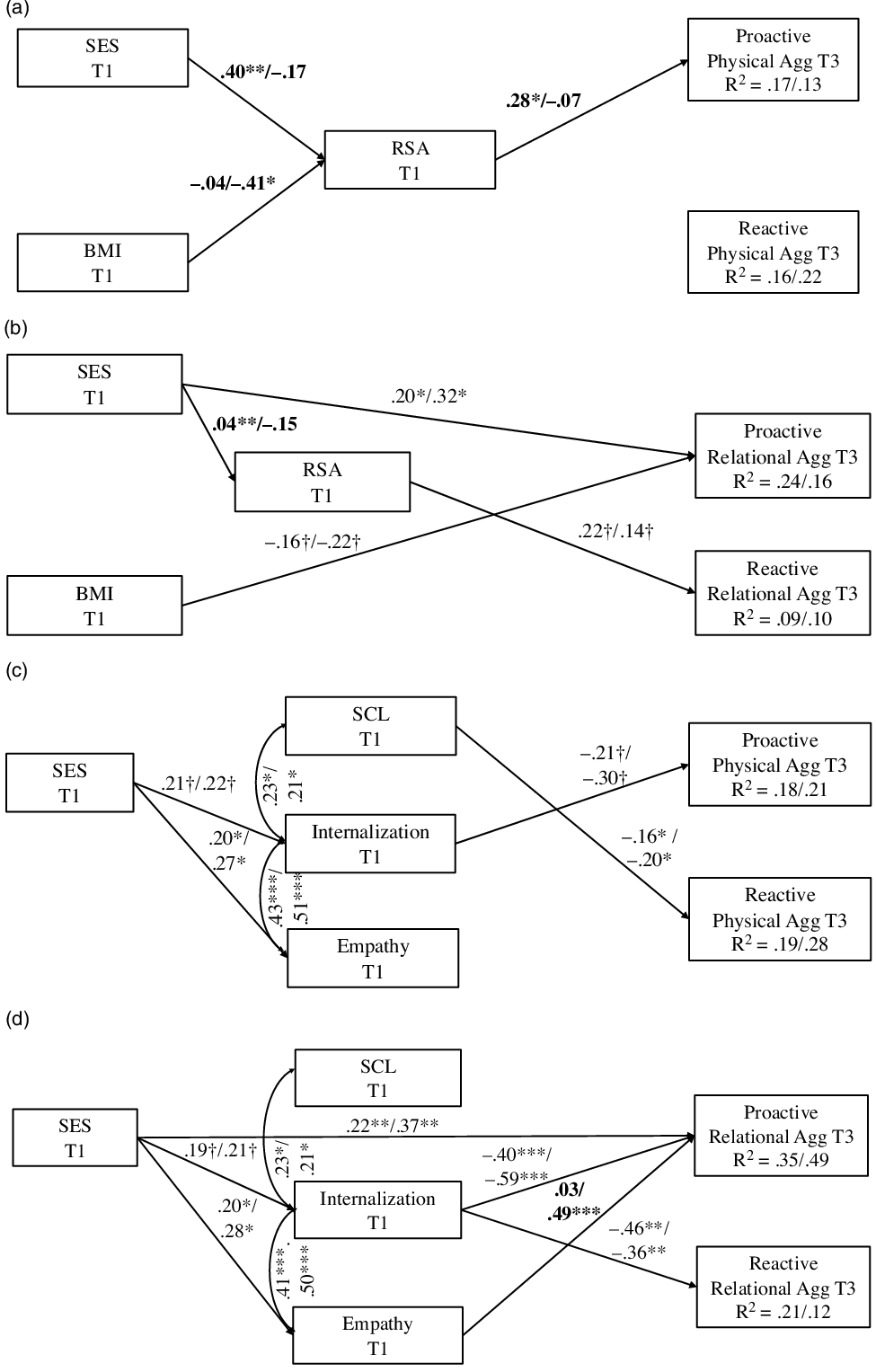
To assess whether RSA was associated with subtypes of aggression, and whether gender moderated these associations, multigroup path analyses by gender were conducted in which aggression at T3 was regressed onto forms and functions of aggression at T1, SES, and RSA using the subsample of participants that attended the in-person interview session (N = 93). As body mass index (BMI) was marginally related to lower RSA, r = -.22, p = .05, it was included as a covariate in RSA analyses. Models were built on the stability models estimated in the physiology subsample, depicted in the Supplemental Materials (Figure S1; Table S9). Based on the stability models, separate models were run for physical versus relational forms of aggression. In the first multigroup path analysis with gender as the grouping variable, T3 proactive and reactive physical aggression were regressed on RSA and proactive and reactive physical aggression at T1; SES and BMI were covariates. Details regarding associations are included in Supplemental Materials (Table S10). Concurrently, for girls only, lower RSA was marginally associated with heightened T1 proactive physical aggression, and significantly associated with T1 reactive physical aggression; the strength of the associations between low RSA and physical aggression for girls did not differ by function [Wald Δχ2(1) = .44, p = .51]. Longitudinally, higher RSA was associated with increases in proactive physical aggression at T3 for boys only (see Figure 3a). In the parallel relational aggression model, concurrently, higher RSA was associated with lower T1 proactive relational aggression; longitudinally, higher RSA was related to increases in reactive relational aggression across the course of the study at a trend level for boys and girls (see Table S10; Figure 3b).
Four path models in the physiological subsample. Note. †p < .10, *p < .05, **p < .01, ***p < .001. SCL = Skin Conductance Level, RSA = Respiratory Sinus Arrythmia, T1 = Time 1, T3 = Time 3, Agg = Aggression, SES = Socioeconomic status, BMI = Body Mass Index. Path estimates show boys on left, girls on right. Bolded effects were significantly different across boys and girls (p < .05), non-bolded paths were constrained to be equal across gender but may differ slightly due to differences in standard errors. Estimates are standardized. T1 aggression variables were controlled and covariances between the T3 aggression variables were estimated but not shown for ease of interpretation. Only significant paths are shown. SES and BMI were included as covariates. Model a: CFI = .98, RMSEA = .05, SRMR = .12; Model b: CFI = 1.0, RMSEA = .00, SRMR = .06; Model c: CFI = 1.0, RMSEA = .00, SRMR = .10; Model d: CFI = 1.0, RMSEA = .00, SRMR = .07.
Skin conductance
To assess whether SCL was associated with subtypes of aggression, as well as whether gender moderated these associations, multigroup path analyses with gender as the grouping variable were run in which aggression at T3 was regressed onto forms and functions of aggression at T1, as well as SCL and rule internalization, using the psychophysiology subsample. SES was included as a covariate. As with RSA models, separate models were run for physical versus relational forms of aggression. In the physical aggression model, concurrently, rule internalization was related to lower T1 reactive physical aggression. Longitudinally, higher rule internalization marginally predicted decreases in proactive physical aggression and higher SCL predicted decreases in reactive physical aggression over the course of the study (see Figure 3c and Table S10). Finally, rule internalization was related to higher SCL and empathy for boys and girls.
In the relational aggression model, concurrently, rule internalization was associated with lower T1 proactive relational aggression at the trend level (see Supplemental Materials Table S10). Longitudinally, rule internalization predicted decreases in proactive and reactive relational aggression across the course of the study; the longitudinal association between rule internalization and change in relational aggression did not differ by function [Wald Δχ2(1) = 2.16, p = .13]. Longitudinally, empathy predicted increases in proactive relational aggression for girls only. Skin conductance was not associated with concurrent or future proactive or reactive relational aggression for boys or girls (see Figure 3d).
Although we had proposed the alternative hypothesis that, rather than serving as unique predictors, rule internalization at T2 mediated associations between T1 skin conductance and T3 aggression, these indirect effects are not reported due to inadequate power (see Supplemental Materials).
Discussion
The purpose of the present study was to examine the associations between temperament and forms (i.e., physical and relational) and functions (i.e., proactive and reactive) of aggression across the course of 1 year in a sample of preschoolers. We included both behavioral (i.e., emotion dysregulation, fearlessness/daring) and physiological (i.e., SCL and RSA) indicators of child temperament to test theoretically derived predictions regarding how early childhood temperament relates to the development of subtypes of aggression (Frick & Morris, Reference Frick and Morris2004). Further, we investigated competing hypotheses regarding whether impaired conscience (assessed via rule internalization and empathy) served as a unique predictor versus a mediator of associations between fearlessness/daring and aggression (Frick & Morris, Reference Frick and Morris2004; Lahey & Waldman, Reference Lahey, Waldman, Lahey, Moffitt and Caspi2003). The study also aimed to highlight gender differences in these unique pathways to subtypes of aggression, an approach that has been advocated by theorists in the field (Lahey & Waldman, Reference Lahey, Waldman, Lahey, Moffitt and Caspi2003).
Overall, emotion dysregulation emerged as a key temperamental risk factor associated with increased levels of proactive and reactive physical and relational aggression both concurrently and over time. Further, although emotion dysregulation was generally related to subtypes of aggression for both boys and girls, associations between emotion dysregulation and concurrent proactive and reactive relational aggression, as well as longitudinal increases in reactive relational aggression, emerged for girls only. Further, for girls, the longitudinal path from emotion dysregulation to increases in reactive relational aggression was larger in magnitude compared to the path from emotion dysregulation to increases in proactive relational aggression. These findings provide partial support for the preregistered hypothesis that temperamental risk factors would be more strongly associated with relational aggression in girls than in boys, as well as the hypothesis that emotion dysregulation would be more strongly related to reactive as compared to proactive aggression. In the prediction of physical aggression, in contrast, emotion dysregulation appeared to function as a more generalized risk factor for both functions of physical aggression in boys and girls.
In the path analysis model with behavioral fearlessness (manifest fearlessness and daring) and conscience (manifest rule internalization and empathy), findings indicated that daring was related to heightened physical functions of aggression, especially in boys. Specifically, concurrently, daring was associated with all four subtypes of aggression; longitudinally, daring predicted increases in proactive physical aggression for boys and girls, and reactive physical aggression for boys only. These findings provide partial support for the suggestion that daring would be more strongly associated with physical forms of aggression for boys than for girls. Rather than being more strongly associated with proactive than reactive functions of aggression, longitudinal findings indicated that daring was especially linked to physical forms of aggression. It is possible that young children recognize that physical aggression may be especially likely to result in adult intervention and negative peer responses (Coplan et al., Reference Coplan, Bullock, Archbell and Bosacki2015), with daring youth more willing to engage in the behaviors despite these potential risks.
Contrary to hypotheses, fearlessness was longitudinally related to decreases in reactive physical aggression over time at the trend level. These findings suggest that high levels of fear may predispose young children to enact reactive aggression over time; it is possible, for instance, that the negative emotional reactions that precipitate aggressive responding to threat or provocation include fear as well as anger. Indeed, some prior research has demonstrated associations between reactive aggression and dysregulation in fear (Moore et al., Reference Moore, Hubbard, Bookhout, Malti and Rubin2018). The findings further suggest that daring, rather than low fear, may serve as a particularly robust risk factor for aggression.
In addition, consistent with the suggestion that fearlessness and conscience serve as unique predictors of aggression (Lahey & Waldman, Reference Lahey, Waldman, Lahey, Moffitt and Caspi2003), concurrently, rule internalization was significantly or marginally associated with lower levels of all subtypes of aggression at T1, although associations between rule internalization and T1 relational aggression emerged for girls only. Longitudinally, rule internalization predicted decreases in proactive and reactive relational aggression over time for girls only. Kochanska (Reference Kochanska1991) has argued that the ability to inhibit misbehavior is a key goal of socialization and that self-regulation is a critical component of moral development. Indeed, Kochanska et al. (Reference Kochanska, Kim and Boldt2013) found that toddlers’ willing stance toward mothers’ socialization, including self-regulated compliance with maternal prohibitions, was associated with lower levels of externalizing problems and peer aggression 10 months later. Findings from the present study are consistent with this prior work and further underscore the importance of rule internalization in the development of relationally aggressive behavior, especially among girls. Because adults are less likely to intervene in relationally, as compared to physically, aggressive episodes (Coplan et al., Reference Coplan, Bullock, Archbell and Bosacki2015; Swit et al., Reference Swit, McMaugh and Warburton2018; Werner et al., Reference Werner, Senich and Przepyszny2006), self-inhibition of relational aggression via rule internalization may be especially important. In effect, as rule internalization involves self-inhibition of transgressions, even in the absence of prohibitions by socialization agents such as parents (Kochanska et al., Reference Kochanska, Kim and Boldt2013), it may play an especially important role in the development of negative behaviors that are less regulated by adults, such as relational aggression.
Further, consistent with hypothesized gender differences, longitudinal associations between rule internalization and decreases in relational aggression over the course of the study emerged for girls but not boys. Some research with elementary school children suggests that girls are more likely than boys to believe that relational aggression is harmful (e.g., Murray-Close et al., Reference Murray-Close, Crick and Galotti2006). Further, relational aggression is the modal or most frequent form of aggression/victimization between young girls within gender segregated early childhood peer contexts, and is relevant to girls’ relational self-construals and dyadic interpersonal social goals (see Crick & Grotpeter, Reference Crick and Grotpeter1995; Crick et al., Reference Crick, Bigbee and Howes1996, Reference Crick, Ostrov, Burr, Cullerton-Sen, Jansen-Yeh and Ralston2006; Ostrov & Godleski, Reference Ostrov and Godleski2010). Thus, girls may be especially attuned to the problematic nature of relationally aggressive behavior and, for those high in rule internalization, adhere to expectations that they do not engage in these negative behaviors.
Interestingly, and contrary to hypotheses, concurrently, empathy was related to heightened relational aggression for boys, and, longitudinally, empathy predicted increases in proactive relational aggression over time for boys and girls. These findings are reminiscent of theoretical formulations suggesting that young children with high levels of social cognitive skills may at times understand how to use relational aggression effectively (see Gomez-Garibello & Talwar, Reference Gomez-Garibello and Talwar2015); this possibility is further bolstered by the finding that empathy was uniquely related to growth in proactive aggression over time, which may be more strategic than reactive aggression.
Consistent with theory suggesting that fearlessness increases risk for aggression because it interferes with conscience development (Frick & Morris, Reference Frick and Morris2004), T2 rule internalization mediated the longitudinal association between T1 daring and T3 proactive relational aggression for girls but not boys. These findings highlight impaired rule internalization specifically as a process that increases risk for aggressive behavior among daring youth (see Kochanska, Reference Kochanska1993). Interestingly, associations emerged for proactive functions of relational aggression only, suggesting that impaired rule internalization may play a significant role in daring girls’ engagement in proactive functions specifically. These findings are consistent with the hypothesis that impaired conscience would be more strongly related to proactive than to reactive aggression because youth with these traits are unconcerned about punishments or breaking rules (Frick & Morris, Reference Frick and Morris2004).
Importantly, these findings have implications for interventions with relationally aggressive girls who are high in daring. In effect, targeting and fostering rule internalization processes may be an effective way to reduce these behaviors among young children. Prior work has demonstrated that parent-child relationship quality plays a critical role in committed compliance with parental rules and prohibitions (Kochanska et al., Reference Kochanska, Forman, Aksan and Dunbar2005); further, some work has documented interactions between difficult temperament and maternal responsiveness in predicting children’s committed compliance (Kochanska & Kim, Reference Kochanska and Kim2013). These findings suggest that supporting parents in implementing practices that foster a positive parent-child relationship may play a protective role among girls that are at temperamental risk for proactive relational aggression, including those high in daring. Further, maternal socialization via effective social coaching (i.e., discussion of norm violations, maternal elaboration, and emotion references) has been shown to reduce the probability of stable high rates of relational aggression among young children (Werner et al., Reference Werner, Eaton, Lyle, Tseng and Holst2014). Thus, interventions that target parent-child quality and parenting practices that help daring children understand prohibitions against relational aggression and develop an internalized desire to comply with these prohibitions may play a critical role in reducing these negative behaviors during early childhood.
To examine hypotheses using physiological indices, path analysis models with RSA and SCL, respectively, predicting functions of physical or relational aggression were also evaluated in a subsample of participants. In RSA models, concurrently, lower RSA was associated with heightened T1 reactive physical aggression for girls. These concurrent findings support the conceptualization of low PNS arousal as an index of poor emotion regulation (Beauchaine, Reference Beauchaine2015; Porges, Reference Porges2007), and further suggest that low RSA serves as a risk factor for aggression in young children (Patriquin et al., Reference Patriquin, Lorenzi, Scarpa, Calkins and Bell2015). In addition, the findings are consistent with the behavioral models indicating that emotion dysregulation may be related to reactive functions of aggression. However, longitudinally, higher RSA was associated with increases in proactive physical aggression at T3 for boys. Although unexpected, Scarpa et al., (Reference Scarpa, Haden and Tanaka2010) found that higher heart rate variability (an index related to parasympathetic activity) was positively associated with proactive aggression in a sample of 6–13-year-old children. Boys with high emotion regulatory abilities, as reflected by high RSA, may be especially able to use proactive physical aggression strategically. In fact, in one study, Ostrov et al., (Reference Ostrov, Murray-Close, Godleski and Hart2013) found that behavioral emotion regulation skills were associated with increases in proactive physical aggression at the trend level in a sample of young children. In addition, in the present study, RSA was longitudinally associated with increases in reactive relational aggression for boys and girls at the trend level. This finding was unexpected, and because effects only approached statistical significance, results require future replication.
Finally, longitudinally, lower SCL levels were associated with increases in reactive physical aggression over time for girls and boys. These findings are consistent with the suggestion that SNS underarousal serves as a risk factor for aggression because it lowers inhibitions against such conduct (Raine, Reference Raine2002), and with prior work documenting that low resting skin conductance is related to heightened antisocial behavior and aggression (Baker et al., Reference Baker, Shelton, Baibazarova, Hay, van and Stephanie2013; Lorber, Reference Lorber2004; Posthumus et al., Reference Posthumus, Böcker, Raaijmakers, Van Engeland and Matthys2009). However, findings are not consistent with the suggestion that low SCL may serve as a risk factor for unemotional, proactive aggression (Scarpa et al., Reference Scarpa, Haden and Tanaka2010). Interestingly, Scarpa et al., (Reference Scarpa, Haden and Tanaka2010) also found that low skin conductance was related to reactive aggression. It is possible that the lower inhibitions against aggression may make children more willing to retaliate with physically aggressive behaviors when provoked, despite potential negative repercussions such as physical harm or getting into trouble.
Broadly, evidence emerged for gender differences in the associations between temperamental constructs and aggressive subtypes in several models; further, when gender differences emerged, they were largely consistent with the hypothesis temperament would be more strongly associated with physical forms of aggression for boys and relational forms of aggression for girls. These gender differences appeared especially pronounced in the longitudinal findings. For example, consistent with hypotheses, behavioral emotion dysregulation predicted increases in reactive relational aggression for girls only, and rule internalization was significantly related to decreases in both functions of relational aggression among girls only. Likewise, daring predicted increases in reactive physical aggression for boys only, and RSA predicted increases in proactive physical aggression for boys only. These findings are consistent with a gender-linked model of aggression, which suggests that temperamental factors would be stronger predictors of relational forms of aggression for girls and physical forms of aggression for boys in early childhood due to a confluence of developmental and social factors (Ostrov & Godleski, Reference Ostrov and Godleski2010). However, it is notable that in many analyses, effects emerged for both boys and girls, suggesting a number of similar processes in the development of subtypes of aggression across gender. Moreover, the absence of several predicted differences in associations does suggest the need for caution in the interpretation of these results and warrants further study. Indeed, the results underscore the importance of including relational forms of aggression and testing for gender differences in temperamental models of aggression.
Although limited, partial support emerged for our hypotheses related to the specificity of temperamental pathways to proactive and reactive functions of aggression; for instance, emotion dysregulation was more strongly associated with longitudinal increases in reactive than proactive relational aggression in girls, and rule internalization mediated longitudinal associations between daring and proactive, but not reactive, relational aggression in girls. In addition, for girls, daring was associated with longitudinal increases in proactive but not reactive functions of physical aggression. Finally, for boys and girls, empathy was related to longitudinal increases in proactive but not reactive relational aggression. However, in many analyses, temperamental factors appeared to predict both functions of aggression, and the strength of associations did not differ by function. For instance, dysregulated negative emotions were related to longitudinal increases in both proactive and reactive functions of physical aggression, and, among boys, temperamental daring was associated with longitudinal increases in proactive and reactive physical aggression. Although this lack of specificity across functions was unexpected, prior studies on the development and correlates of forms and functions of aggression in early childhood have been equivocal (e.g., Evans et al., Reference Evans, Frazer, Blossom and Fite2019; Ostrov et al., Reference Ostrov, Murray-Close, Godleski and Hart2013; Poland et al., Reference Poland, Monks and Tsermentseli2016; Song et al., Reference Song, Colasante and Malti2020). For instance, in early childhood, dysregulated anger and negative emotionality predict the development of both proactive and reactive aggression, despite being particularly associated with reactive functions theoretically and empirically at older ages (Song et al., Reference Song, Colasante and Malti2020). This has led to suggestions that, potentially due to poor planning and impulse-control abilities, differences across functions of aggression are less pronounced in early childhood, relative to later ages (Evans et al., Reference Evans, Frazer, Blossom and Fite2019; Poland et al., Reference Poland, Monks and Tsermentseli2016).
However, this should not be taken to imply that there are not meaningful differences between forms and functions of aggression and various predictors/outcomes during early childhood. In fact, prior work has shown differential associations with constructs such as functional impairment (Hart & Ostrov, Reference Hart and Ostrov2013), dysregulated anger (Jambon et al., Reference Jambon, Colasante, Peplak and Malti2019), sympathy and moral respect (Peplak & Malti, Reference Peplak and Malti2017), peer rejection, and emotion regulation skills (Ostrov et al., Reference Ostrov, Murray-Close, Godleski and Hart2013). Further, the processes linking temperamental traits and aggression may differ by function; indeed, in the present study, low rule internalization mediated the association between daring and proactive, but not reactive, relational aggression for girls. These findings raise the possibility that during early childhood, similar temperamental factors may at times increase risk for both proactive and reactive aggression, but the underlying mechanisms may differ by function of aggression; future work is needed to examine this possibility. It will also be important for future research to investigate the role of slowly developing higher order executive functioning skills that may be at play during this period of development (Evans et al., Reference Evans, Frazer, Blossom and Fite2019). In fact, when differences across function did emerge in the present study, they often occurred among girls only. As both aggressive and nonaggressive girls are less likely than boys to exhibit impairments in executive functioning skills during early childhood (Raaijmakers et al., Reference Raaijmakers, Smidts, Sergeant, Maassen, Posthumus, van Engeland and Matthys2008), poor executive functioning skills may play a role in a lack of differentiation of correlates of functions of aggression for boys. Future research is needed to investigate this possibility.
Strengths, limitations, and future directions
The present study has several notable strengths including the use of multiple methods and multiple levels of analysis with a short-term longitudinal design. In addition, the preregistration of study hypotheses is a notable strength of the study. Nevertheless, findings should be evaluated in the context of study limitations. For example, although the present study represented the larger geographic area from which it was drawn, future work is needed to replicate the findings in a more diverse sample that includes more families from lower socioeconomic backgrounds and greater racial and ethnic diversity. In addition, the use of composite variables for several key constructs rather than latent variables is an important study limitation. Composite variables were selected to simplify models because of difficulties in model estimation of structural models with latent variables. However, the use of composite variables has limitations relative to latent variables, including an inability to estimate measurement error and assess fit indices to support the latent factors. Although these limitations were partially addressed via preliminary simplified models providing support for the fit of latent constructs, future research with larger samples would benefit from using latent variables rather than composites when possible. It will also be important to include observations of temperamental factors, in addition to teacher and parent reports, in future research. Further, although best practices were followed with respect to missing data, relatively high levels of missing data in parent reports are a limitation.
Similarly, the limited findings in the physiological analyses may reflect limited power due to the small sample size resulting from relatively low participation rates in the physiological assessment; it will be important for future work to incorporate psychophysiology indicators of temperament in larger samples of young children. In fact, as preliminary analyses indicated inadequate power for testing mediation in the physiological subsample, it was not possible to test theoretically derived hypotheses related to mechanisms linking physiological functioning and subtypes of aggression. It will be important for future research with larger samples to investigate these proposed mechanisms. Further, several measures had marginal reliability (e.g., observations of proactive relational aggression, empathy); thus, caution regarding findings related to these measures should be exercised. It will also be important for future research to examine temperamental pathways to forms and functions of aggression across longer developmental periods. It is possible, for instance, that distinct associations emerge with early childhood indicators of temperament and middle childhood functions of aggression. However, it is important to consider the challenges associated with conducting in depth observational and physiological studies with large samples and over multiple years. In fact, the present study represents the largest sample to date using the ECOS. Future research that attempts to replicate and extend the current project will need to consider balancing sample size/power considerations with design and methodology constraints.
Despite these limitations, the present study has multiple implications for future theoretical and empirical work examining the development of aggressive behavior in young children. First, the findings suggest that emotion dysregulation may serve as a non-specific temperamental risk factor for the development of proactive and reactive physical aggression as well as proactive relational aggression in boys and girls. However, for girls only, emotion dysregulation appears to be especially strongly associated with reactive relational aggression. Second, findings indicated that daring, but not fearlessness, served as a risk factor for the development of physically aggressive behavior, especially in boys, and rule internalization, but not empathy, was related to reductions in relational aggression, especially in girls. Thus, findings clarify which facets of key temperamental constructs are most relevant for the development of aggression in early childhood. Indeed, contrary to expectations, fearlessness was related to decreases in reactive physical aggression over time at the trend level, and empathy was related to increases in proactive relational aggression over time. These findings highlight how related, but distinct, aspects of temperament may exhibit unique associations with subtypes of aggression. Further, in addition to serving as unique predictors of aggression, impaired rule internalization was a key mechanism linking daring with proactive relational aggression in girls. These findings provide support for theoretical formulations proposed by Frick and Morris (Reference Frick and Morris2004) as well as Lahey and Waldman (Reference Lahey, Waldman, Lahey, Moffitt and Caspi2003). In addition, although results were mixed, some evidence emerged indicating that temperamental risk factors exhibited distinct associations with functions of aggression, and were more strongly associated with the development of physical aggression in boys and relational aggression in girls, highlighting the importance of including relational aggression and testing gender differences in temperamental models of aggression. Findings also have significant clinical implications, as the results underscore early predispositions that may place boys and girls on maladaptive trajectories. Using early markers of temperament may provide early identification of those children at risk for maladaptive pathways toward heightened aggressive behavior. This work reinforces the importance of understanding the role of early precursors to aggression, which may be evident as early as 6 months of age (Hay et al., Reference Hay, Waters, Perra, Swift, Kairis, Phillips, Jones, Goodyer, Harold, Thapar and van Goozen2014). Moreover, the present findings suggest several possible mechanisms that could, when replicated, be targeted in future interventions. For example, existing interventions for subtypes of aggression focus on social cognitions (e.g., Leff et al., Reference Leff, Gullan, Paskewich, Abdul-Kabir, Jawad, Grossman, Munrol and Power2009); findings from the current study suggest that future efforts that focus on reducing emotion dysregulation and daring, as well as promoting rule internalization, may be particularly fruitful in this developmental period. Finally, the current findings illustrate the unique nature of this developmental period relative to past work with older samples, and as such we call for more clinical treatments and interventions for forms and functions of aggression that are designed specifically for this developmental period.
Supplementary material
The supplementary material for this article can be found at https://doi.org/10.1017/S0954579422000177
Acknowledgments
We acknowledge the PEERS project staff and the participating families, teachers, and school directors for their contributions and support of this project. We thank Dr. Kimberly Kamper-DeMarco, Hannah Holmund, Tatiana Matlasz, and many research assistants for data collection, coding, processing, and coordination.
Funding statement
Research reported in this publication was supported by the National Science Foundation (BCS-1450777) to the first and second authors. The content is solely the responsibility of the authors and does not represent the official views of the National Science Foundation.
Conflicts of interest
None.