Introduction
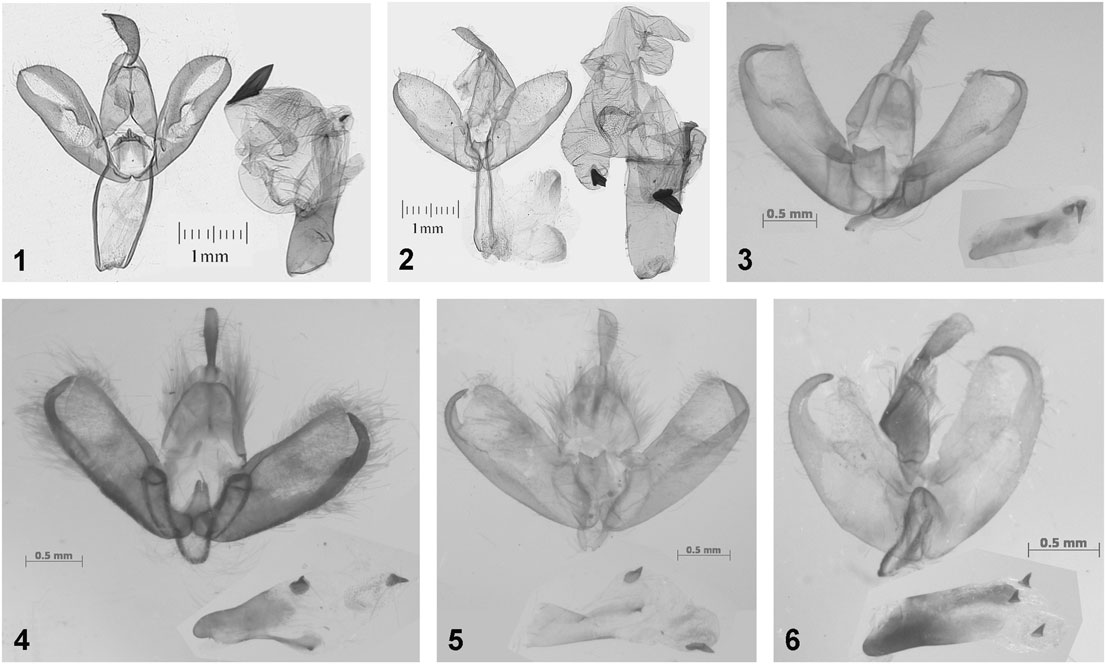
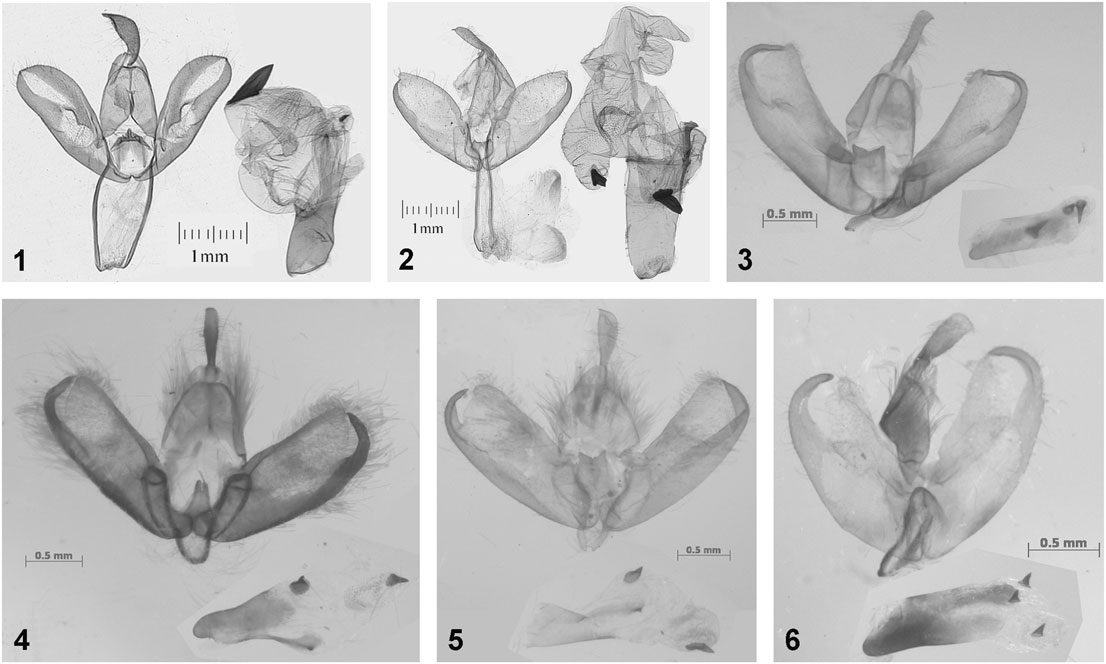
The genus Setema de Freina and Witt was established for the single species, Eilema cereola (Hübner), as a transitional genus between Eilema Hübner, sensu lato (type species Bombyx caniola Hübner) and Setina Schrank (type species Phalaena irrorella Linnaeus), based mainly on wing shape. Later, Dubatolov and Zolotuhin (Reference Dubatolov and Zolotuhin2011) showed that the male genitalia structure of Setema does not show affinities to Setina species. Based on significant differences in male genitalia structure (Figs. 1–2), Dubatolov and Zolotuhin (Reference Dubatolov and Zolotuhin2011) subdivided Eilema sensu lato into several genera, and downgraded Setema to a subgenus of Manulea Wallengren (type species Lithosia gilveola Ochsenheimer, a junior synonym of Phalaena palliatella Scopoli). The genus Manulea (feminine gender) contains the majority of the former Eilema sensu lato species grouped into several subgenera and species groups, while Eilema is a monotypic genus characterised by the absence of the saccular and costal processes and presence of a small triangular harpe (Fig. 1).
Male genitalia of: 1. Eilema caniola, Ukraine, Crimea, Simeiz; 2. Manulea palliatella (the type species of the genus), Turkey, Bitlis; 3. M. (Setema) cereola, Finland (the type species of the subgenus Setema); 4. M. (S.) debilis, Russia, Irkutsk Oblast, Khamar-Daban Mountains, Cherskogo Mountain; 5. M. (S.) atratula, Russia, Tyva Republic, Tannu-Ola Mountains; 6. M. (S.) vakulenkoi, Russia, Taimyr, Ary-Mas.
Dubatolov and Zolotuhin (Reference Dubatolov and Zolotuhin2011) and Dubatolov (Reference Dubatolov2012) included six Arcto-Boreal Palaearctic species within Setema that have no androconial scales on the saccus, the aedeagus with few medium-sized cone-like cornuti. Two species groups have been recognised within the subgenus:
M. cereola species group (Boreal species; wings in females not reduced):
Manulea (Setema) cereola (Hübner), new combination – north-western Eurasia east to the Ural Mountains
M. atratula species group (Arcto-Boreal species often with brachypterous females):
Manulea (Setema) atratula (Eversmann), new combination – north-eastern Eurasia.
Manulea (Setema) debilis (Staudinger), new combination – north-eastern Eurasia.
Manulea (Setema) hyalinofuscatum (Tshistjakov), new combination – north-eastern Eurasia (Chukotka).
Manulea (Setema) nigrocollare (Tshistjakov), new combination – north-eastern Eurasia (the Upper Kolyma basin).
Manulea (Setema) vakulenkoi (Tshistjakov), new combination – north-eastern Eurasia (Siberia).
However, they did not discuss specific characters and distribution of the cited species and did not study the single North American species of the Eilema sensu lato complex. This is the main purpose of the present article.
Materials
Specimens for this study were examined from the following collections:
ALS – Alaska Lepidoptera Survey, Fairbanks, Alaska, United States of America
ISEA – Institute of Systematics and Ecology of Animals, Novosibirsk, Russia
SIBIBR – Siberian Institute of Biological Resources, Irkutsk, Russia
WMM – Thomas Witt Museum, Munich, Germany
YIB – Institute for Biological Problems of Cryolithozone (the former Yakutsk Institute of Biology), Yakutsk, Russia
ZIN – Zoological Institute, St.-Petersburg, Russia
ZMHU – Zoological Museum, Helsinki, Finland
ZMKU – Zoological Museum of Kiev State University, Ukraine
ZMMU – Zoological Museum of Moscow State University, Russia
Setema de Freina and Witt
de Freina and Witt Reference de Freina and Witt1984: 331–332.
Type species. Bombyx cereola Hübner [1803] 1796–1805: figure 99, by original designation.
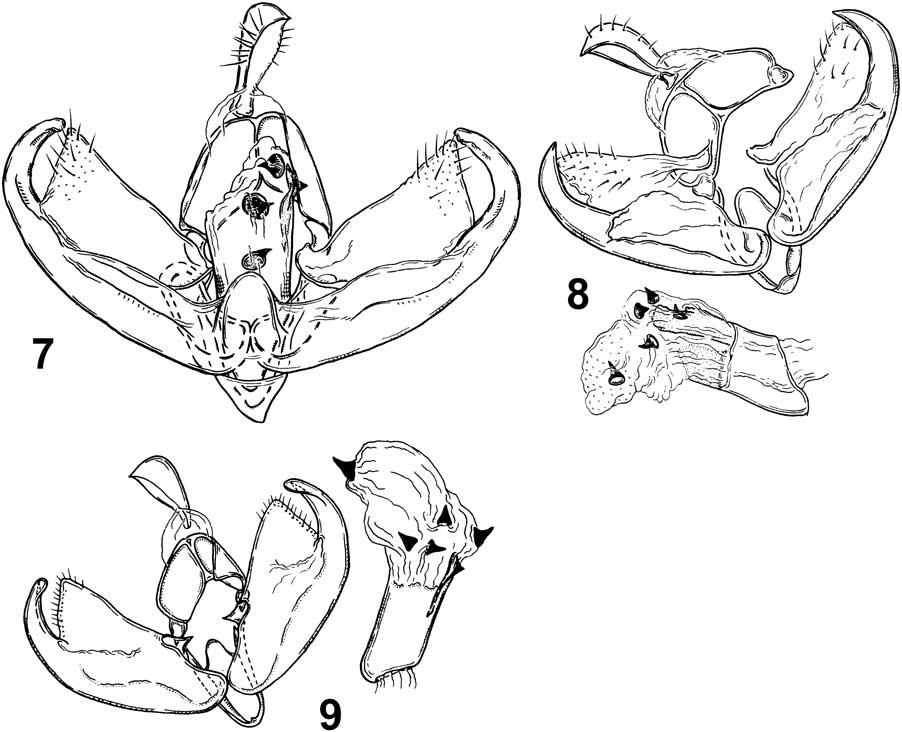
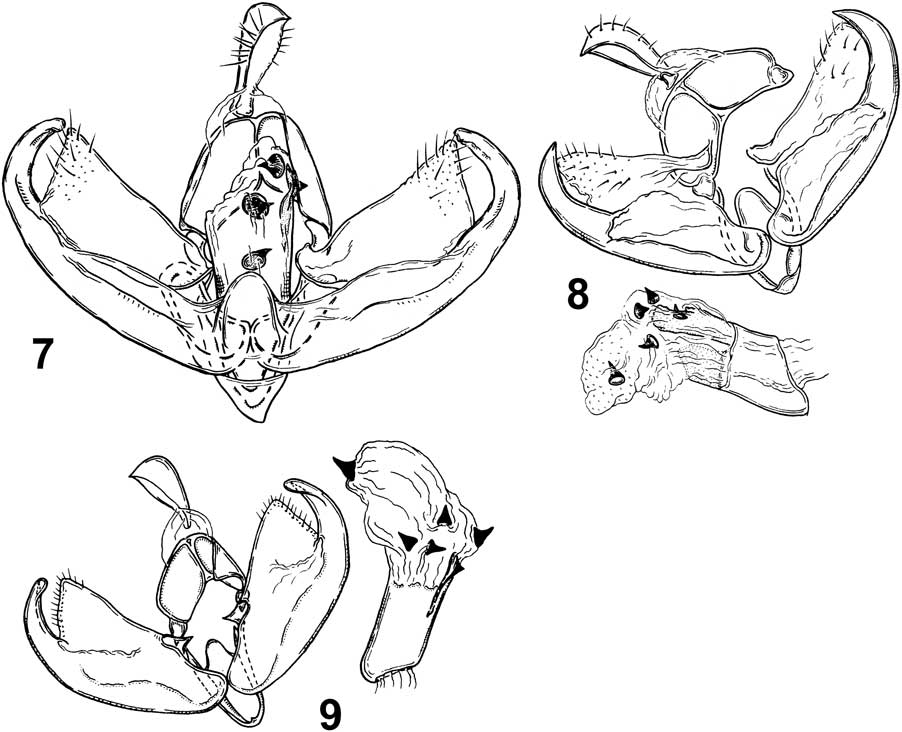
Diagnosis. Forewings broader than in other Eilema sensu lato species, with nearly straight costal margin and a pale subcostal line; scaleness often sparse making wings to look semitransparent. Females often have brachypterous wings. Male genitalia (Figs. 3–9): uncus moderate in width; valvae contracted apically, with distinct ventral process curved upwards; harpe absent; juxta without apical processes; saccus moderate; aedeagus without an apical sclerotised fascia or apical spur; cornuti spike-like, equal in size; vesica bag-shaped with several cone-like cornuti.
Male genitalia of: 7. Manulea (Setema) vakulenkoi; 8. M. (S.) hyalinofuscatum; 9. M. (S.) nigrocollare; from Tshistjakov (1990).
Manulea (Setema) cereola (Hübner)
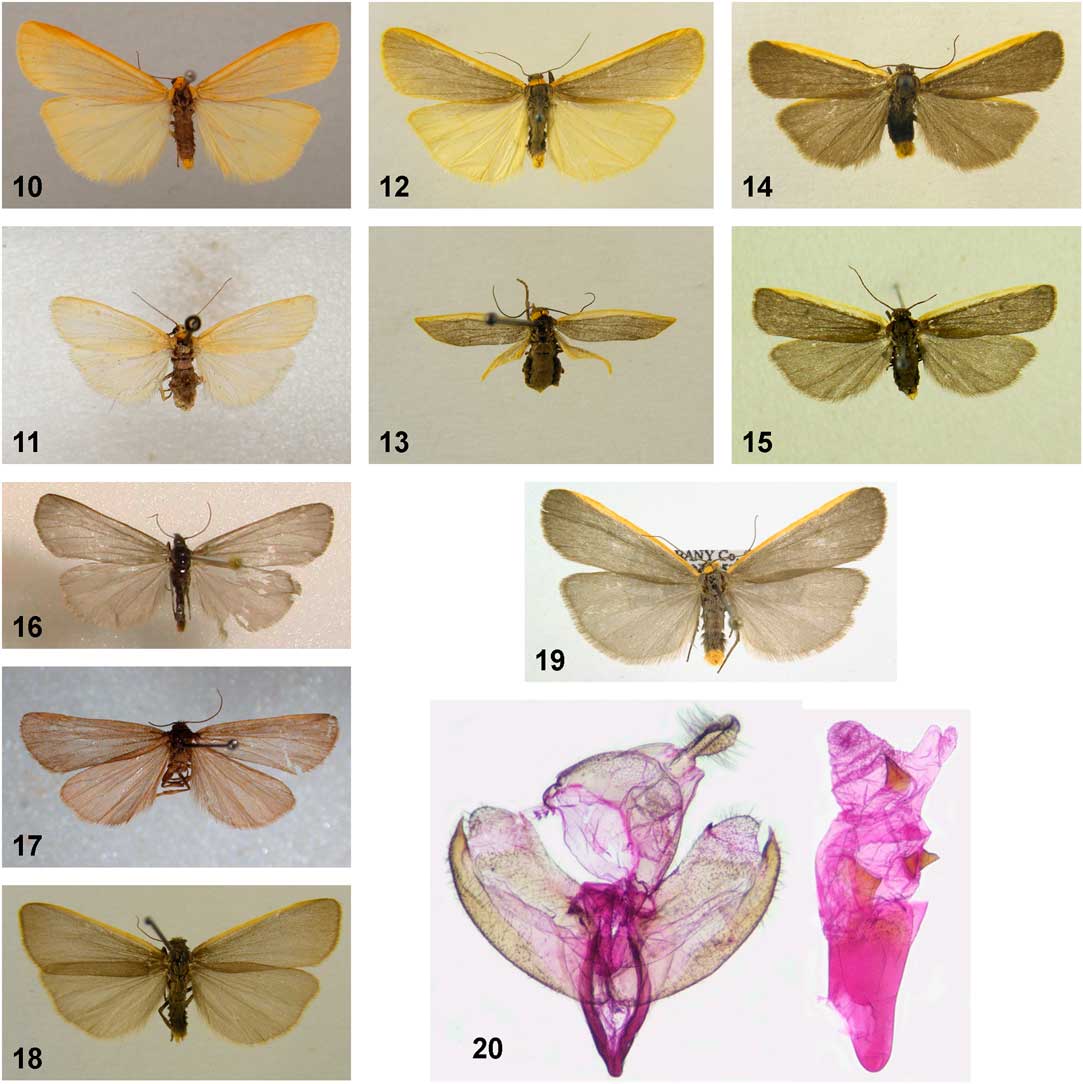
Moths (10–19) and male genitalia (20) of: 10. Manulea (Setema) cereola, male, Russia, Udmurtia Republic, Sarapul; 11. M. (S.) cereola, female; 12. M. (S.) debilis, male, Russia, Irkutsk Oblast, Khamar-Daban Mountains, Cherskogo Mountain; 13. M. (S.) debilis, female, the same locality as in male; 14. M. (S.) atratula, male, Russia, Yakutia, Suntar-Khayata Mountains, Suntar River lower flow; 15. M. (S.) atratula, female, the same locality as in male; 16. M. (S.) nigrocollare, male, Russia, Magadanskaya Oblast, Maimandzhinskii Range; 17. M. (S.) vakulenkoi, holotype, male, Russia, Yakutia, Endybalskii Zavod; 18. M. (S.) vakulenkoi, male, Russia, Transbaikalian Krai, Sokhondinskii Nature Reserve, Verkhnii Bukukun; 19–20. M. (S.) bicolor, male, United States of America, Wyoming, Albany County.

[Bombyx] cereola Hübner, [1803] 1796–1805: plate 24, figure 99. Type locality: “Deutschland” [Germany], stated by Hübner et al. (1793– Reference Hübner, Geyer and Herrich-Schäffer1841: 126).
=Lithosia cinereola Zeller, Reference Zeller1847: 339. Type locality: “Austria”.
=Lithosia caniola Eversmann, Reference Eversmann1844: 133.
Setema cereola, de Freina and Witt Reference de Freina and Witt1984: 331; Dubatolov et al. Reference Dubatolov, Tshistjakov and Viidalepp1993: 173.
Material examined. ITALY: 1 ♀, Teriol. m. (ZIN). AUSTRIA: 2 ♀♀, coll. Great Duke Nikolai Mikhailovich (ZIN); 4 ♂♂, Styria, coll. Great Duke Nikolai Mikhailovich (ZIN). POLAND: 1 ♀, Płock, 6.v.1906, Molchanov leg. (ZIN). FINLAND: 2 ♂♂, Lapponia, coll. Erschoff (ZIN); 1 ♂, Punkohalmi, E. Leudeberg, coll. Nordmann (ISEA). ESTONIA: 1 ♂, Estland (Huene coll., WMM). RUSSIA: KARELIA: Olonets Expedition, Segozero, Kalich Islands., a road in a pine forest, 5.vii.1921, A. Djakonov leg. (ZIN); TATARSTAN: 1 ♂, 1 ♀, Kas. [Kazan], 28.vi, coll. Eversmann (ZIN); KIROVSKAYA OBLAST’: 1 ♂, Malmisch [Malmyzh], 3.viii.1897, L. Krulikowski leg. (ZMKU); UDMURTIA: 1 ♂, Sarapul, 10.vi.1910, L. Krulikowski leg. (ZMKU); SVERDLOVSKAYA OBLAST’: 2 ♂♂, 1 ♀, Ural centr., Sverdlovsk [now – Ekaterinburg] circ., 24.vii.1930, 1.vii.1931, S. Tshetverikov leg. (ZIN); 1 ♂, North Ural, Denezhkin Kamen Naturschutz, 30.vii.1997, Z. Kljuchko leg. (ZIN); BASHKIRIA: 1 ♂, Ural c. mont., Ufa (WMM).
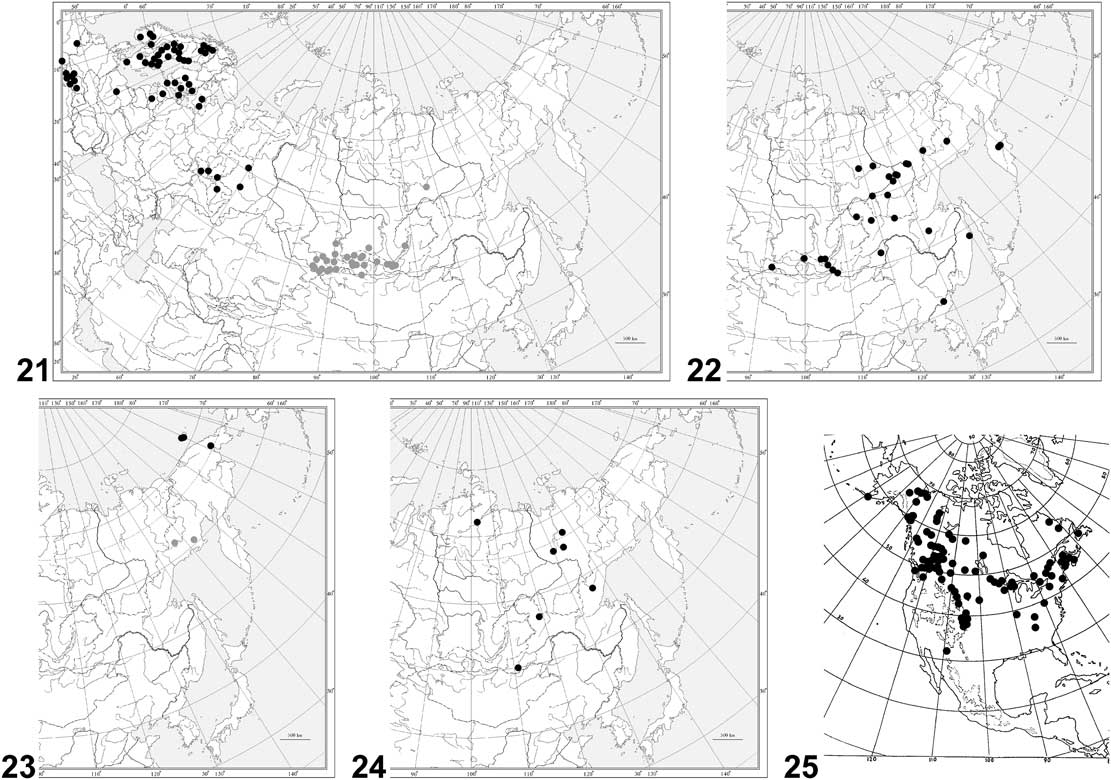
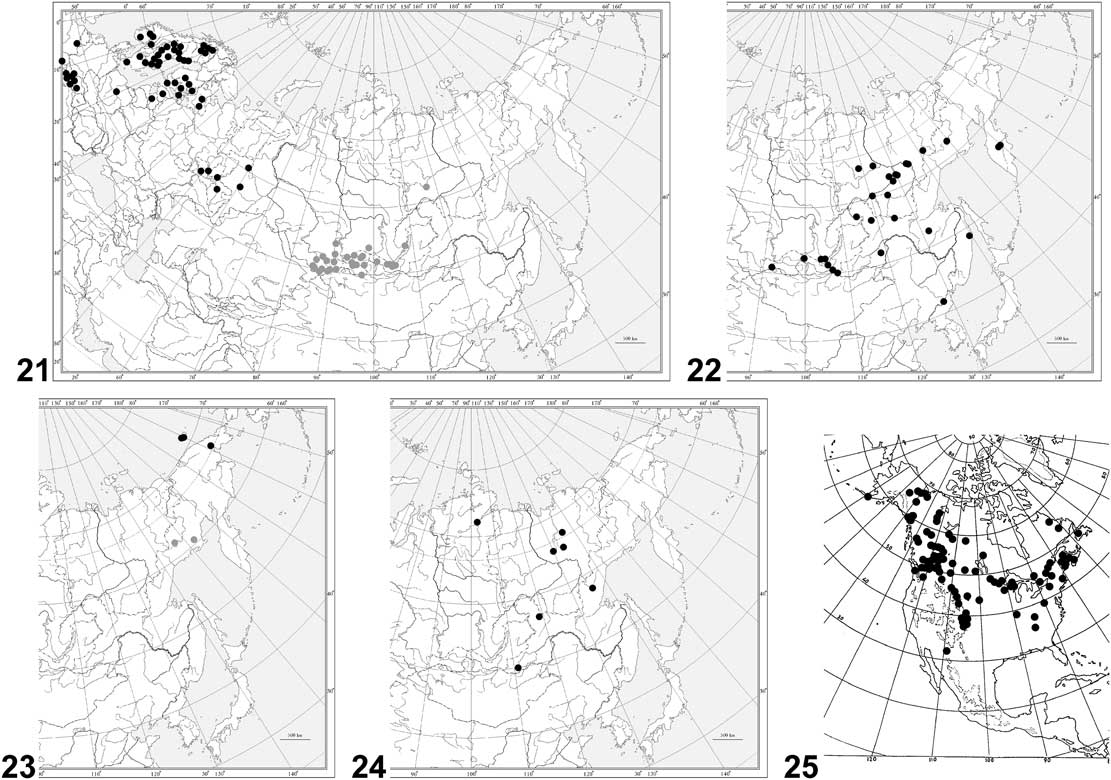
Distribution (Fig. 21). Europe (de Freina and Witt 1987; Fibiger et al. Reference Fibiger, László, Ronkay, Ronkay, Speidel and Varga2011): the Alps within eastern France, North Italy, Switzerland, Austria, Bavaria in Germany, Scandinavia: Norway (southern and eastern regions), Sweden: Skåne, Västergötland, Östergötland, Närke, Sörmland, Västmanland, Uppland, Dalarna, Gästrikland, Härjedalen, Medelpad, Jämtland, Ångermanland, Västerbotten, Lule lappmark, Torne lappmark (from the map on lepidoptera.se (Unger Reference Unger2014)) and Finland: U (Uusimaa), EK (South Karelia) (additional record by O. Sotavalta), EH (Southern Tavastia), ES (Southern Savonia), PH (Northern Tavastia), PS (Northern Savonia), PK (North Karelia) (Sotavalta Reference Sotavalta1987), Poland (new record), Latvia (Šulcs and Viidalepp Reference Šulcs and Viidalepp1967), Estonia (Šulcs and Viidalepp Reference Šulcs and Viidalepp1967), Russia: Leningradskaya oblast’: Vyborg District (South Karelia; O. Sotavalta, personal communication), Karelia (Kaisila Reference Kaisila1947), Tatarstan (Eversmann Reference Eversmann1844), Kirov (Vyatka) Province (Krulikowsky Reference Krulikovski1909; Shernin Reference Shernin1974), Udmurtia, Middle Ural: Sverdlovsk (Ekaterinburg) Province (Klyuchko and Plyushch Reference Kljuchko and Plyushch2005). Tshugunov (Reference Tshugunov1912) cited this species as Lithosia cereola from the Kuznetskii Alatau Range (now in Khakasia), Neozhidannyi Mine at the river Kainzas mouth, but these specimens are missing from his collection deposited in Omsk State Agrarian University (Omsk, Russia) at present. There is no any newly collected specimen of this species from Siberia, so there is a possibility of incorrect determination that happened in Tshugunov’s collection.
Distributional maps of: 21. Manulea (Setema) cereola (black circles) and M. (S.) debilis (grey circles); 22. M. (S.) atratula; 23. M. (S.) hyalinofuscatum (black circles) and M. (S.) nigrocollare (grey circles); 24, M. (S.) vakulenkoi; 25, M. (S.) bicolor.
Diagnosis. The only species of the subgenus with yellow forewings and hindwings. However, the forewings have light grey suffusion. Because of the yellow colouration of the forewings, the yellow costal border is obscure. Externally, the males could be mixed with unicolourous Wittia sororcula (Hufnagel), but the grey thorax contrasting with yellow patagia and tegulae and the male genitalia structure are the best distinguishing characters. The female wings are slightly reduced, similar to several Setina species.
Male genitalia (Fig. 3). Uncus long, straight, narrow tip directed downwards. Sacculus strongly curved upwards and slightly inwards, its apex nearly reach cucullus apex. Aedeagus with three strong and long cornuti.
Remarks. Eversmann (Reference Eversmann1844) cited few species of the former Lithosia or Eilema sensu lato: L. griseola (now Collita griseola (Hübner) (Dubatolov and Zolotuhin Reference Dubatolov and Zolotuhin2011)) from Kazan Province, Ural, and Orenburg Province, L. complana (now Manulea complana (Linnaeus)) from Ural, L. lurideola (now Manulea lurideola ([Zincken])) from Kazan and Orenburg Provinces, Bashkiria, and Ural, L. unita (now Manulea palliatella (Scopoli)) from Orenburg Province and Bashkiria, L. luteola (now Manulea lutarella (Linnaeus)) from Kazan and Orenburg Provinces, L. aureola (now Wittia sororcula (Hufnagel)) from Kazan Province. All these species have been found in the Zoological Institute collection and were labelled “coll. Eversmann” in Russian. However, Eversmann (Reference Eversmann1844) cited one more species, L. caniola from Kazan Province (now Tatarstan), but Eilema caniola (Hübner) does not occur in the central part of European Russia. The Eversmann collection contains one more species of this group, Manulea (Setema) cereola from Kazan, so the author mistakenly considered these moths to be Lithosia caniola sensu Eversmann (Reference Eversmann1844), Bremer (Reference Bremer1870).
Natural history. The species is restricted to the boreo-montane forest belt of Europe, “inhabiting cool and wet biotopes”, and “in the Alps it is restricted to higher altitudes, from the upper conifer belt up to the alpine region” (Fibiger et al. Reference Fibiger, László, Ronkay, Ronkay, Speidel and Varga2011).
Manulea (Setema) debilis (Staudinger)
Lithosia debilis Staudinger, Reference Staudinger1887: 190–191; plate 10, figure 12. Type locality: “Kultuk (Gouvernement Irkutsk)” [Irkutskaya Oblast, Russia].
Eilema debile, Dubatolov et al. Reference Dubatolov, Tshistjakov and Viidalepp1993: 171.
Material examined. RUSSIA: ALTAI REPUBLIC: North Altai: 2 ♂♂, Chemal, 19–22.vi.1905, Yuferov leg. (ZIN); North-East Altai: 2 ♂♂, Artybash, 4.vii.1979, 16.vii.1992, A. Barkalov and V. Dubatolov leg. (ISEA); 1 ♂, southern part of Abakanskii Range, Mt. Kabashi, 2300 m, 10.vii.1994, R. Dudko leg. (ISEA); Central Altai: 5 ♂♂, Elo, 29–30.vii.1983, V. Dubatolov leg. (ISEA); 13 ♂♂, 7 km W from Katanda, 1100 m, 28.vi-27.vii.1983, V. Dubatolov and G. Zolotarenko leg. (ISEA); 2 ♂♂, Terektinskii Range, 10 km N from Katanda, 20–21.vii.1983, V. Dubatolov (ISEA); 3 ♂♂, Katunskii Range, 15 km S from Katanda, Kuragan river valley, 24–26.vii.1983, V. Dubatolov (ISEA); eastern part of Katunskii Range, river Koksu lower flow, left bank, rivulet Argem (=Direntoi) headwaters, 20.vii.1988, O. Kosterin (ISEA); South-East Altai: 1 ♂, Kuraiskii Range, Mt. Taboshak, 16.vii.1982, Yu. Perunov leg. (ISEA); 1 ♂, Arzhan-Buguzun spring, Akair, 14.vii.1982, Yu. Perunov leg. (ISEA); 2 ♂♂, Chikhacheva Range, Lake Kindyktykul’, 2530 m, 23.vii.2001, V. Kovtunovitch leg. (ISEA); 1 ♂, Shapshalskii Range, Shapshal Pass, 50.53°N, 89.8°E, 2740–2876 m, 23–24..vii.2007, A. Barkalov leg. (ISEA); KHAKASIA: 2 ♂♂, Siberia c. mer., ost. fl. Kaspar, accr. fl. Ijus, 120 km ad oc. a Minusinsk, 14–15.vii.1909, N. Tshetverikov leg., coll. S. Tshetverikov (ZIN); 1 ♂, Siberia c. mer., fl. Ijus, alb. 130 km ad oc. a Minusinsk, 20.vii.1909, N. Tshetverikov, coll. S. Tshetverikov (ZIN); 1 ♂, Abaza, 27–28.vii.1971, N. Balatskii leg. (ISEA); KRASNOYARSKII KRAI: 2 ♂♂, Us, Sayan Mts., 22.vii.1901, Kozhantshikov leg. (ZIN); TYVA (=TUVA) REPUBLIC: 1 ♂, Todzha hollow, Lake Er-Kaa-Khol’ S bank with larch-spruce forest, 18.vii.2004, O. Kosterin leg. (ISEA); IRKUTSKAYA OBLAST’: 1 ♂, Lac. Baikal lit. m.-occ., 20.vii.1927, B. Astaurov leg., coll. Tshetverikov (ZIN); 7 ♂♂, 2 ♀♀, Khamar-Daban Range, 15 km S from Slyudyanka, at Meteostation “Khamar-Daban” and Mt. Pik Cherskogo, 1000–2000 m, 14–25.vii.1984, V. Dubatolov leg. (ISEA); BURYATIA: 1 ♂, East Sayan Range, Nukhu-Daban Pass, 3.vii.1914, S. Rodionoff leg. (ZIN); 5 ♂♂, East Sayan Range, Khara-Daban Pass, 21–23.vi.1915, S. Rodionoff leg. (ZIN); 3 ♂♂, Tunka, river Irkut, Leder leg. (ZIN); 1 ♂, Khamar-Daban Range, river Snezhnaya valley, 27.vii.1872, A. Czekanowski leg. (ZIN); 1 ♂, Khamar-Daban Range, 8–15.vii.1905, V. Dorogostaiskij leg. (ZIN); 2 ♂♂, Khamar-Daban range, Tayozhnyi, 18–19.vii.1973, Yu. Kondakov leg. (ISEA); 8 ♂♂, Small Khamar-Daban Range, river Samkhak, 21.vii.1973, N. P. Korolevskaya leg. (ISEA); YAKUTIA (SAKHA REPUBLIC): 1 ♂, river Vilui [near Suntar town], 25/19.vii.1889, O. Herz leg. (ZIN). MONGOLIA (Chovsgol aimak) – TYVA BORDER: 1 ♂, Schawyr, Tannu-Ola or., 2500 m, vi, ex coll. Staudinger and Bang-Haas (ZMKU).
Distribution (Fig. 21). Russia: mountains of South Siberia: Altai (Bidzilya et al. Reference Bidzilya, Budashkin, Klyuchko and Kostjuk2002), West Sayan, Tyva (Viidalepp Reference Viidalepp1979), East Sayan, Baikal Region (Staudinger Reference Staudinger1887), West Transbaikalia, South-Western Yakutia (Herz Reference Herz1898); Northern Mongolia (Chovsgol Aimak).
Diagnosis. Manulea (S.) debilis is the only species of the subgenus with contrasting grey forewings and yellow hindwings. Head black, patagiae bright yellow, tegulae, thorax, and most part of abdomen black, abdomen tip bright yellow. Male with wide wings, female brachypterous, with narrow forewings and lancet-shaped hindwings, both pointed at apex.
Male genitalia (Fig. 4). Uncus long, straight, narrow tip directed downwards. Sacculus strongly curved upwards, its apex nearly reach cucullus apex. Aedeagus with two spine-like cornuti and a weak apical spine.
Remarks. There are different opinions about the exact locality of the place “Schawyr”. In the beginning of the 20th century the Tuvinian-Mongolian border was not precisely defined. Those “karauls” like Schawyr, once bordered the territories inhabited by the Mongolians and Tuvinians, respectively (Potanin Reference Potanin1948). Mongolian families which nomadised nearby were assigned to such “karakuls”. Rebel (Reference Rebel1916) reported that Schawyr, where the materials of June 1914 were collected (which later passed to O. Bang-Haas), located “zwischen den Flussen Agyr und Termis”. Indeed, at the SE spur of the Sengilen Plateau in the Mongolian Chovsgol Aimak there are rivers Shavryn-Gol (the Tes-Khem River basin) and Agaryn-Gol (the Delger-Muren basin), which could be identified with Schawyr and Agyr respectively. The position of the Termis River is more uncertain. According to the opinion by Prof. S. Nikolaev (a linguist), it might be just an incorrect transliteration of the Tarys River, more correctly, Kys-Tarys (the Ich-Tairisin-Gol River basin). So, the territory assigned to Schawyr karaul most probably includes SE spurs of the Sengilen Plateau between the valleys of the Ich-Tairisin-Gol, Shavryn-Gol and Agaryn-Gol Rivers, i.e., the south-easternmost territory of the recent Tyva Republic and the SW part of Chovsgol Aimak of Mongolia.
Manulea (Setema) atratula (Eversmann)
Lithosia atratula Eversmann, Reference Eversmann1847: 76–77; plate 5, Figure 4. Type locality: “Sibiria orientali” [Irkutsk vicinity, Russia].
Lithosia atratula, Bremer Reference Bremer1870: 6.
Eilema atratula, Witt Reference Witt1980: 168–171.
Eilema atratulum, Dubatolov et al. Reference Dubatolov, Tshistjakov and Viidalepp1993: 173.
Material examined. RUSSIA: TYVA (=TUVA) REPUBLIC: 2 ♂♂, 2 ♀♀, West Tannu-Ola, [Khundurgun Pass], high mountain belt, 17.VII 1949, A. I. Tsherepanov leg. (ISEA); IRKUTSKAYA OBLAST’: 2 ♂♂ (syntypes), Irkuzk [=Irkutsk], coll. Eversmann (ZIN), 1 ♂, Baikal Lake, near Listvennichnoe, 25.vii.1912, Grodzkaya leg. (ZIN); 1 ♂, Witim [Bodaibo], 12–24.vii.1888, O. Herz leg. (ZIN); BURYATIA: 1 ♂, E. Sayan Mts., Orlik, 14.vii.1961 (SIFIBR); 1 ♀, river Temnik, Burun-Sikhokhto, 26.vii.1985, B. P. Zakharov leg. (ISEA); 1 ♂ (syntype), Kiachta [=Kyakhta], gen. praep. No 15303, coll. Eversmann (ZIN); 1 ♂, Kentei [Kudara-Somon, Malkhan Mts.], coll. Staudinger (ZIN); ZABAIKAL’SKII KRAI [CHITINSKAYA OBLAST’]: 4 ♂♂, Transbaikalia, distr. Nertshinsk ad fl. Urjumkan, 1–3.vii, 12.vii.1909, Smirnow, coll. S. Tshetverikov (ZIN); 1 ♂, Kalarskii District, near Novaya Chara, 26.vi.1991, L. V. Kuzovlyova, ex coll. P. Ustjuzhanin (ISEA); 2 ♂♂, Kalarskii District, Chara River, locality Kamennyi, N 56.7616º, E 118.1643º, 740 m, 4–5.vii.2013, Hannu Saaremaa and Jakka Tiittanen leg.; AMURSKAYA OBLAST’: 5 ♂♂, S.-W. part of Stanovoi mountain range, 121 km S from Nagornyi, 1100 m, 19–20.vii.1995, A. and R. Dudko and D. Lomakin (ISEA); 1 ♂, Selemdzhinsk, 10.vii.1976, A. Sviridov leg. (ZMMU); KHABAROVSKII KRAI: 1 ♀, Sikhote-Alin Mts., eastern slope, Nature Reserve Botchinskii, river Mul’pa headwater, 2 km W from kordon “Tyoplyi Klyuch”, open larch forest, 48°18'N, 139°33.5'E 30.vii.2014, V. Dubatolov (ISEA); YAKUTIA (SAKHA REPUBLIC): 1 ♂, Troitskoe, near Olekminsk, 11.vii.1971 (YIB); 1 ♂, Tommot vic., rivulet Ukulan, 23.viii.1971 (YIB); 1 ♂, Viluisk District, rivulet Munkharyma, a tributary of river Vilui, 13.vii.1975 (ZMMU); 1 ♂, Shelogon (Ert), 22.vi.1981 (YIB); 1 ♂, river Vilui, settlement Nyurba, 21.vii.1987, Kaimuk (SZMN); 1 ♂, Siberia s.-or., prope Jakutsk [=Yakutsk], loc. Sergeliah [=Sergelyakh], N. Moskvin leg., coll. S. Tshetverikov (ZIN); 1 ♀, Yakutsk, 13.vii.1927, Moskvin leg. (ZIN); 2 ♂♂, 3 ♀♀, Elanskoe vic., near Ulakhan, a road to Yurgan-Bas, 12.vii.1977 (YIB); 1 ♂, 1 ♀, Amga river mouth, 17.vii.1981 (ISEA); 1 ♂, 1 ♀, Megino-Aldan, 8–9.vii.1981 (YIB); 1 ♂, river Aldan, 2.vii.1891, Tsherskii leg. (ZIN); 2 ♂♂, 2 ♀♀, between rivers Lena and Aldan, 3.vi, 23.vi.1891, Tsherskii leg. (ZIN); 1 ♂, Lake Kyurnyani, 65° 17'N, 119° 10'E, 2–3.viii.1926, Grigor’ev leg. (ZIN); 1 ♂, 1 ♀, rivulet Ongkuchakh, a road to river Amga, 17.vii.1925, Bianki leg. (ZIN); 2 ♂♂, L. Abyi, a road to river Amga, 22–23.vii.1925, Ivanov leg. (ZIN); Summer Station Olom, 24.vii.1925, Bianki leg. (ZIN); 6 ♂♂, 1 ♀, 300 km ENE from Khandyga, river Suntar lower flow, at hydropost, Km 364th of a Road Khandyga-Magadan, steppe slope, 19–20.vii.1985, V. V. Dubatolov and L. Popova leg. (ISEA); MAGADANSKAYA OBLAST’: 1 ♂, Station Aborigen, 1.vii.1977, L. Zhiltsova leg. (ZIN); KAMCHATKA: 1 ♂, river Anauna, stone range, 27.vii.1930, Perelagina leg. (ISEA); 3 ♂♂, Kozyrevsk, 22.vii, 2.viii.1930, Perelagina leg. (ZIN).
Distribution (Fig. 22). Russia: mountains of South Siberia: Sayan Mountains within Tyva (=Tuva) Republic, Buryatia and Irkutsk Provinces, Baikal Region, and Transbaikalia, Yakutia, southern regions of Magadan Province, Kamchatka, mountains of northern regions in the Amur basin, north-eastern Sikhote-Alin Mountains. It is strange that still there is no record either from Altai Mountains or Mongolia. North Korea: Ryang-gang Province, Plateau Chann-Pay, Sam-zi-yan, 1600 m (Witt Reference Witt1980).
Diagnosis. Head, thorax and most part of abdomen black; patagiae and tegulae dark grey; abdomen apex bright yellow. The only species of the subgenus with densely scaled and dark (almost black) coloured wings; forewing yellow costal border contrasted and wider that in other species; wings the shortest compared to other species (see the key to species); hindwing yellow costal border also most easily visible in the subgenus. Female wings as in male.
Male genitalia (Fig. 5). Uncus short, straight, very wide at apical 1/4, gradually constricted to base, and sharply to apex; narrow tip directed downwards. Sacculus strongly curved upwards, its apex nearly reaches cucullus apex. Aedeagus with two long spine-like cornuti and a weak apical spine.
Manulea (Setema) bicolor (Grote), new combination
Lithosia bicolor Grote, Reference Grote1864a: 74; Grote Reference Grote1864b: 535. Type locality: “Athabasca River”.
=Lithosia argillacea Packard, Reference Packard1864: 98–99. Type locality: “Cutler, Me.”, “Andover, Mass.”.
Material examined. CANADA: YUKON TERRITORY: 1 ♂, south slope Old Crow village, 19.vii.1970, J. Holland leg. (ALS); UNITED STATES OF AMERICA: ALASKA: 1 ♂, Fairbanks vicinity, 1590 North Becker Ridge Road, summit of Chena Ridge, UV light trap, 14.vii.2003, K.W. Philip leg. (ALS); WYOMING: 1 ♂, Albany Co., N 41° 17.866'W 105° 31.19', 2287 m, by UV light, 26.vii.2008, C.D. Ferris leg.
Distribution (Fig. 25). North America: United States of America: northeastern Alaska. Canada: Yukon Territory, Northwest Territories, British Columbia, Alberta, Saskatchewan, Manitoba, Ontario, Québec, New Brunswick, Nova Scotia. United States of America: Montana, Wyoming, South Dakota, Colorado, SE to Massachusetts (Covell Reference Covell1984; Ferguson et al. Reference Ferguson, Opler, Smith and Donahue2000); internet resources (Boone Reference Boone2014) give additional eastern and southern localities: Canada: Newfoundland; United States of America: southeastern Arizona, Illinois, eastern Tennessee, western North Carolina.
Diagnosis. Most of the body and wings dark grey, wings not semitransparent; patagiae, abdomen apex and forewing costal border bright yellow. By the body colouration and wing pattern, looks like Palaearctic M. (S.) vakulenkoi, but the patagiae colour is different. Female is similar to male, wings not reduced.
Male genitalia (Fig. 20). Uncus short, straight, strongly wide at apical 1/3, gradually constricted to base, and strongly to apex; no apical spinule is visible. Sacculus short, not curved upwards at apex; valve costa probably with very small spine. Aedeagus with three strong cone-like cornuti.
Manulea (Setema) hyalinofuscatum (Tshistjakov)
Eilema hyalinofuscatum Tshistjakov, Reference Tshistjakov1990: 77–78, figure Б. Type locality: “о-в Врангеля, низовья р. Гусиной [Wrangel Island, rivulet Gusinaya lower reaches]” (Chukotka, Russia).
Eilema hyalinofuscatum, Dubatolov et al. Reference Dubatolov, Tshistjakov and Viidalepp1993: 173.
Distribution (Fig. 23). Russia: Eastern Chukotka and Wrangel (=Vrangel) Island (Tshistjakov Reference Tshistjakov1990).
Diagnosis. The species is known by the original description only (Tshistjakov Reference Tshistjakov1990), which is translated here: wing expanse 20 mm (forewing length slightly more than 9 mm). Head, thorax, and abdomen, except of two terminal yellow units, dark grey. Tegulae and patagiae dark grey. Legs black. Forewings narrow, unicolourly dark grey, almost black, with slightly visible veins. Hindwings grey, slightly lighter than forewings. Fringe grey, as wing colouration.
Male genitalia (Fig. 8). Uncus, compared to M. vakulenkoi uncus, is slightly pressed. Valve narrower and shorter than in M. vakulenkoi, with strongly skewed distal margin. Distal process of sacculus wide, curved, with a more or less pointed apex. Aedeagus short, slightly longer than valve width, with five small, spine-like cornuti on vesica; one of them is located on longitudinal, nearly quadrangular plate (this was not a cornutus, but an apical spine of aedeagus – VVD).
Remarks. According to the original description, specimens from the continental part of Chukotka are slightly bigger, their wings with slight yellow scales.
Manulea (Setema) nigrocollare (Tshistjakov)
Eilema nigrocollare Tshistjakov, Reference Tshistjakov1990: 78–79, figure в. Type locality: “Магаданская обл., верховье р. Колымы, 46 км вост. пос. Кулу, каменистая осыпь [Magadan Province, Kolyma River upper flow, 46 km E from Kulu settlement, stony talus]” (Russia).
Eilema nigrocollare, Dubatolov et al. Reference Dubatolov, Tshistjakov and Viidalepp1993: 173.
Material examined. RUSSIA, MAGADANSKAYA OBLAST’: 1 ♂, Khasinskii District, Maimandzhinskii Range, Lake Goluboe [Blue], Km 25 of a road to Talaya, 800–900 m, 61°06'41"N, 152°15'41"E, 7–8.vii.2006, M. Česánek leg. (coll. K. Bucsek, Bratislava).
Distribution (Fig. 23). Russia: southern districts of Magadanskaya Oblast.
Diagnosis. Head, patagiae, tegulae, thorax, and most of abdomen grey; abdominal apex yellow. Wings light grey, semitransparent; with very narrow yellow costal line on forewings. Female unknown, probably brachypterous.
Male genitalia (Fig. 9). Uncus swollen, the widest at apical 1/3, gradually constricted towards base, and strongly to apical spinule directed downwards. Sacculus apical process gradually curved upwards, nearly up to cucullus apex. Aedeagus with 5 cone-like cornuti and a strong apical spine.
Manulea (Setema) vakulenkoi (Tshistjakov)
Eilema vakulenkoi Tshistjakov, Reference Tshistjakov1990: 75–77, figure a. Type locality: “Эндыбальск/ий/ завод Верхоянск/ий/ окр/уг/, дол. р. Эндыбал [Endybalskii Zavod, Verkhoyansk District, river Endybal valley]” (Yakutia, Russia).
Eilema vakulenkoi, Dubatolov et al. Reference Dubatolov, Tshistjakov and Viidalepp1993: 173.
Material examined. RUSSIA: TAIMYR: 1 ♂, Ary-Mas, 15.vii.1985, Chupin leg. (ISEA); ZABAIKAL’SKII KRAI [CHITINSKAYA OBLAST’]: 5 ♂♂, Nature Reserve Sokhondinskii, Verkhnii Bukukun, mountain forest-tundra, 2–3.vii.1991, S. Tshernyshev and V. Zinchenko leg. (ISEA); 4 ♂♂, Kalarskii range, Naminga settlement, by light, 18.vii.1991, P. Ustjuzhanin leg. (ISEA); YAKUTIA (SAKHA REPUBLIC): 1 ♂ (holotype), Yana River basin, Endybalskii Zavod, Verkhoyansk District, river Endybal valley, 8.vii.1928, N. P. Semenova leg. (ZIN); 1 ♂ (paratype), river Adycha, 5–6.vii.1885, Bunge and Toll (ZIN); 1 ♂, upper reaches of Nel’gese river, Syud’nekgeen tributary rivulet, 18–30.vii.2011 (coll. S. Didenko); KHABAROVSKII KRAI: 1 ♂, Ayano-Maiskii District, Nel’kan, 30.vii–2.viii.2009, T. V. and E. A. Fonova (ISEA).
Distribution (Fig. 24). Russia: Taimyr (Dubatolov and Zolotarenko Reference Dubatolov and Zolotarenko1990; Kozlov et al. Reference Kozlov, Kullberg and Dubatolov2006), mountains of Transbaikalia (Dubatolov et al. Reference Dubatolov, Dudko, Mordkovich, Korsun, Tshernyshev and Logunov2004), mountains of Yakutia: River Yana basin (Tshistjakov Reference Tshistjakov1990), Sea of Okhotsk Coast: northern districts of Khabarovskii Krai.
Diagnosis. Head, patagiae, tegulae, thorax, and most part of abdomen grey; abdomen apex yellow. Wings light grey, semitransparent; with yellow costal line on forewings. Female unknown, probably brachypterous.
Male genitalia (Figs. 6–7). Uncus most wide at apical 1/4, gradually constricted towards base and strongly to apical spinule directed downwards. Sacculus apical process strongly curved upwards, up to cucullus apex. Aedeagus with 3 cone-like cornuti and a weaker apical spine.

Acknowledgements
The author is very thankful to Dr. C. Ferris from the University of Wyoming (United States of America) for photographs of the genitalia of Manulea (Setema) bicolor, to Prof. S.Y. Sinev, Dr. A.A. Matov, and Dr. A.L. Lvovsky (St.-Petersburg, Russia) for their help during work on the Arctiinae collection in the Zoological Institute, St.-Petersburg, Russia; to Dr. N.N. Vinokurov and E. L. Kaimuk (Yakutsk, Russia) for donating some specimens of M. (S.) atratula from Yakutia and the opportunity to study materials in the Lepidoptera collection of the Institute for Biological Problems of Cryolithozone (Yakutsk, Russia); to Mr. E.V. Novomodnyi (Khabarovsk, Russia) for material from Ayano-Maiskii District of Khabarovskii Krai; to K. Bucsek (Bratislava, Slovakia) for photographs of M. (S.) nigrocollare; to Dr. V.V. Zolotuhin (Ul’yanovsk, Russia) for photographs of Eilema caniola and Manulea palliatella male genitalia and male of M. cereola; to Dr. A.N. Streltzov (Blagoveshchensk, Russia) for a photograph of M. atratula from the collection of the Zoological Museum of Moscow State University (Russia); to Dr. K. Philip for help in obtaining information about morphology of M. (S.) bicolor; to Dr. O.E. Kosterin (Novosibirsk, Russia) for the language correction of the manuscript; to H. Saaremaa (Finland) for transcription of the abbreviations of the historical regions of Finland; to Prof. S. Nikolaev (Moscow, Russia) for the modern attribution of the old Mongolian geographical names; to S.A. Knyazev (Omsk, Russia) for studying Tshugunov’s collection in Omsk State Agrarian University; to Mrs. I.V. Kostomarova (Sovetskaya Gavan’, Russia) for the opportunity to study Lepidoptera in the Nature Reserve “Botchinskii”. The study was supported by the Federal Fundamental Scientific Research Program for 2013–2020, project No. VI.51.1.7.