


%20--%3e%3c!DOCTYPE%20svg%20PUBLIC%20'-//W3C//DTD%20SVG%201.0//EN'%20'http://www.w3.org/TR/2001/REC-SVG-20010904/DTD/svg10.dtd'%3e%3csvg%20version='1.0'%20id='Layer_1'%20xmlns='http://www.w3.org/2000/svg'%20xmlns:xlink='http://www.w3.org/1999/xlink'%20x='0px'%20y='0px'%20width='64px'%20height='64px'%20viewBox='5.5%20-3.5%2064%2064'%20enable-background='new%205.5%20-3.5%2064%2064'%20xml:space='preserve'%3e%3cg%3e%3ccircle%20fill='%23FFFFFF'%20fill-opacity='0'%20cx='37.785'%20cy='28.501'%20r='28.836'/%3e%3cpath%20fill='%23595959'%20d='M37.441-3.5c8.951,0,16.572,3.125,22.857,9.372c3.008,3.009,5.295,6.448,6.857,10.314%20c1.561,3.867,2.344,7.971,2.344,12.314c0,4.381-0.773,8.486-2.314,12.313c-1.543,3.828-3.82,7.21-6.828,10.143%20c-3.123,3.085-6.666,5.448-10.629,7.086c-3.961,1.638-8.057,2.457-12.285,2.457s-8.276-0.808-12.143-2.429%20c-3.866-1.618-7.333-3.961-10.4-7.027c-3.067-3.066-5.4-6.524-7-10.372S5.5,32.767,5.5,28.5c0-4.229,0.809-8.295,2.428-12.2%20c1.619-3.905,3.972-7.4,7.057-10.486C21.08-0.394,28.565-3.5,37.441-3.5z%20M37.557,2.272c-7.314,0-13.467,2.553-18.458,7.657%20c-2.515,2.553-4.448,5.419-5.8,8.6c-1.354,3.181-2.029,6.505-2.029,9.972c0,3.429,0.675,6.734,2.029,9.913%20c1.353,3.183,3.285,6.021,5.8,8.516c2.514,2.496,5.351,4.399,8.515,5.715c3.161,1.314,6.476,1.971,9.943,1.971%20c3.428,0,6.75-0.665,9.973-1.999c3.219-1.335,6.121-3.257,8.713-5.771c4.99-4.876,7.484-10.99,7.484-18.344%20c0-3.543-0.648-6.895-1.943-10.057c-1.293-3.162-3.18-5.98-5.654-8.458C50.984,4.844,44.795,2.272,37.557,2.272z%20M37.156,23.187%20l-4.287,2.229c-0.458-0.951-1.019-1.619-1.685-2c-0.667-0.38-1.286-0.571-1.858-0.571c-2.856,0-4.286,1.885-4.286,5.657%20c0,1.714,0.362,3.084,1.085,4.113c0.724,1.029,1.791,1.544,3.201,1.544c1.867,0,3.181-0.915,3.944-2.743l3.942,2%20c-0.838,1.563-2,2.791-3.486,3.686c-1.484,0.896-3.123,1.343-4.914,1.343c-2.857,0-5.163-0.875-6.915-2.629%20c-1.752-1.752-2.628-4.19-2.628-7.313c0-3.048,0.886-5.466,2.657-7.257c1.771-1.79,4.009-2.686,6.715-2.686%20C32.604,18.558,35.441,20.101,37.156,23.187z%20M55.613,23.187l-4.229,2.229c-0.457-0.951-1.02-1.619-1.686-2%20c-0.668-0.38-1.307-0.571-1.914-0.571c-2.857,0-4.287,1.885-4.287,5.657c0,1.714,0.363,3.084,1.086,4.113%20c0.723,1.029,1.789,1.544,3.201,1.544c1.865,0,3.18-0.915,3.941-2.743l4,2c-0.875,1.563-2.057,2.791-3.541,3.686%20c-1.486,0.896-3.105,1.343-4.857,1.343c-2.896,0-5.209-0.875-6.941-2.629c-1.736-1.752-2.602-4.19-2.602-7.313%20c0-3.048,0.885-5.466,2.658-7.257c1.77-1.79,4.008-2.686,6.713-2.686C51.117,18.558,53.938,20.101,55.613,23.187z'/%3e%3c/g%3e%3c/svg%3e)
%20--%3e%3c!DOCTYPE%20svg%20PUBLIC%20'-//W3C//DTD%20SVG%201.0//EN'%20'http://www.w3.org/TR/2001/REC-SVG-20010904/DTD/svg10.dtd'%3e%3csvg%20version='1.0'%20id='Layer_1'%20xmlns='http://www.w3.org/2000/svg'%20xmlns:xlink='http://www.w3.org/1999/xlink'%20x='0px'%20y='0px'%20width='64px'%20height='64px'%20viewBox='5.5%20-3.5%2064%2064'%20enable-background='new%205.5%20-3.5%2064%2064'%20xml:space='preserve'%3e%3cg%3e%3ccircle%20fill='%23FFFFFF'%20fill-opacity='0'%20cx='37.637'%20cy='28.806'%20r='28.276'/%3e%3cg%3e%3cpath%20fill='%23595959'%20d='M37.443-3.5c8.988,0,16.57,3.085,22.742,9.257C66.393,11.967,69.5,19.548,69.5,28.5c0,8.991-3.049,16.476-9.145,22.456%20C53.879,57.319,46.242,60.5,37.443,60.5c-8.649,0-16.153-3.144-22.514-9.43C8.644,44.784,5.5,37.262,5.5,28.5%20c0-8.761,3.144-16.342,9.429-22.742C21.101-0.415,28.604-3.5,37.443-3.5z%20M37.557,2.272c-7.276,0-13.428,2.553-18.457,7.657%20c-5.22,5.334-7.829,11.525-7.829,18.572c0,7.086,2.59,13.22,7.77,18.398c5.181,5.182,11.352,7.771,18.514,7.771%20c7.123,0,13.334-2.607,18.629-7.828c5.029-4.838,7.543-10.952,7.543-18.343c0-7.276-2.553-13.465-7.656-18.571%20C50.967,4.824,44.795,2.272,37.557,2.272z%20M46.129,20.557v13.085h-3.656v15.542h-9.944V33.643h-3.656V20.557%20c0-0.572,0.2-1.057,0.599-1.457c0.401-0.399,0.887-0.6,1.457-0.6h13.144c0.533,0,1.01,0.2,1.428,0.6%20C45.918,19.5,46.129,19.986,46.129,20.557z%20M33.042,12.329c0-3.008,1.485-4.514,4.458-4.514s4.457,1.504,4.457,4.514%20c0,2.971-1.486,4.457-4.457,4.457S33.042,15.3,33.042,12.329z'/%3e%3c/g%3e%3c/g%3e%3c/svg%3e)
Introduction
In his 1945 Nobel Prize Lecture, Sir Alexander Fleming warned that inadequate antibiotic dosing could enable bacteria to develop resistance. This insight has since materialized into one of the most serious global health challenges of the modern era. Reference Chung, Wu, Yeo, Chan and Hsu1 Today, antimicrobial resistance (AMR) undermines decades of medical progress, threatening to render common infections difficult to treat and routine procedures increasingly hazardous. The World Health Organization (WHO) identifies AMR as a major threat to global health, given its substantial contribution to mortality, morbidity, and economic loss worldwide. 2,3 Projections from the O’Neill Review estimate that drug-resistant infections could cause 10 million deaths annually by 2,050. Reference O’Neill4,5
Antimicrobial stewardship (AMS)—coordinated, evidence-based interventions to optimize antibiotic choice, dose, route, and duration—has been strongly advocated by the UK Health Security Agency (UKHSA) and international bodies as a core strategy for appropriate antibiotic use across all healthcare settings. 6–8
The WHO South-East Asia Region, which includes India, is recognized as having the highest burden and transmission risk of AMR globally. Reference Sulis, Sayood and Gandra9,Reference Chereau, Opatowski, Tourdjman and Vong10 India, the world’s most populous country and one of the largest consumers of antibiotics, faces distinctive challenges, including high infection burdens, widespread over-the-counter antibiotic access, regulatory gaps, and significant variation in healthcare quality. Within this context, dentistry represents an important yet often overlooked sector. Reference Kotwani, Joshi and Lamkang11 Dentists prescribe approximately 10% of all antibiotics, 12–Reference Garg, Agrawal, Tewari, Kumar and Chandra14 primarily for odontogenic infections, odontogenic cellulitis, and perioperative prophylaxis. Reference Ahmadi, Ebrahimi and Ahmadi15,Reference Singh Gill, Morrissey and Rahman16 Although antibiotics are essential for managing conditions such as dental abscesses or preventing infective endocarditis, they are intended to be adjuncts, not substitutes, for definitive dental treatment such as drainage, endodontic therapy, or extraction. Reference Cope, Francis, Wood and Chestnutt17,Reference Segura-Egea, Gould and Şen18 Nevertheless, inappropriate dental prescribing, such as routine antibiotics for irreversible pulpitis, uncomplicated toothache, or simple extractions, remains widespread and contributes significantly to AMR. Reference Wasan, Gupta, Mathur, Mutneja, Mathur and Gupta19,Reference Dar-Odeh, Abu-Hammad and Khraisat20
Despite the importance of rational prescribing, the undergraduate dental curriculum in India contains minimal content on antibiotic stewardship, resistance mechanisms, or evidence-based prescribing. Reference Wasan, Gupta, Mathur, Mutneja, Mathur and Gupta19 A policy document analysis by Bhuvaraghan et al. confirmed the absence of dental-specific antibiotic prescribing guidelines within India’s key national policy documents, including the National Action Plan on AMR, and found no continuing professional development (CPD) materials directed at dental practitioners. Reference Bhuvaraghan, King, Walley, Thiruvenkatachari and Aggarwal21 Combined with a high burden of oral disease and consistently documented inappropriate prescribing practices, 22 the need for structured dental AMS programs tailored to the Indian context is clear.
These challenges are not unique to India. Globally, dentists prescribe approximately 10% of all antibiotics, yet up to 90% of dental antibiotic prescriptions are estimated to be inappropriate. Reference Teoh, Löffler and Mun23 A systematic review of dentists’ knowledge, attitudes, and perceptions across 37 studies identified complacency, lack of guideline awareness, fear of adverse outcomes, and tendency to defer definitive treatment as the predominant drivers of inappropriate prescribing, all modifiable factors amenable to targeted intervention. Reference Vázquez-Cancela, Zapata-Cachafeiro, Herdeiro, Figueiras and Rodríguez-Fernández24 In the United States, a prospective dental AMS intervention demonstrated that education combined with audit and personalized feedback improved appropriate antibiotic use from 19% to 87.9%, with a concurrent 14.5% reduction in total prescriptions. Reference Goff, Mangino, Trolli, Scheetz and Goff25 These findings highlights that structured AMS programs can rapidly and substantially optimize dental prescribing behavior across diverse healthcare settings.
Context-specific AMS interventions tailored to India’s epidemiological, regulatory, and socioeconomic environment are urgently needed. Reference Wasan, Gupta, Mathur, Mutneja, Mathur and Gupta19
This systematic literature review aims to synthesize the current evidence regarding AMR awareness and AMS implementation among dental professionals in India. It identifies knowledge gaps, characterizes prescribing behavior, examines barriers and facilitators to effective stewardship, and proposes evidence-informed recommendations to strengthen AMS within Indian dental practice.
Materials and methods
Protocol registration and review framework
The protocol was prospectively registered (PROSPERO: CRD42025116672) and the review was conducted in accordance with PRISMA 2020 guidelines.
Eligibility criteria
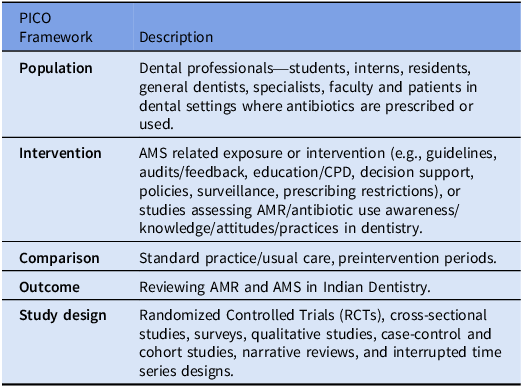
Eligibility criteria were established using the PICOS (Population, Intervention, Comparison, Outcome, Study design) framework to ensure systematic and comprehensive identification of relevant studies (Table 1).
PICO framework for systematic review

PICO, population, intervention, comparison, outcome; AMS, antimicrobial stewardship; AMR, antimicrobial resistance; CPD, continuing professional development.
Inclusion/exclusion criteria
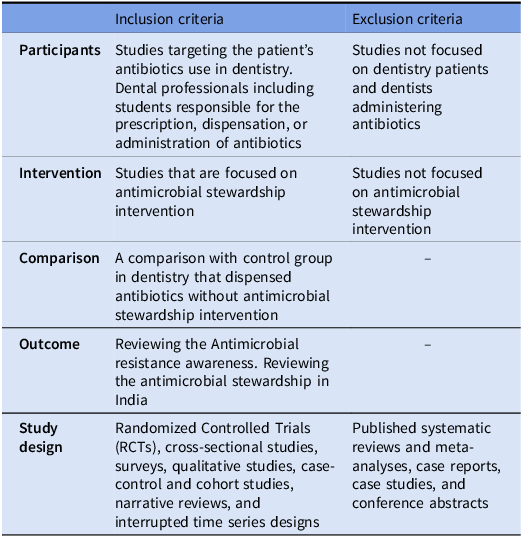
Full eligibility criteria are detailed in Table 2. Studies examining AMR awareness, AMS practices, or antibiotic prescribing behaviors among Indian dental professionals (any design, English language, January 2014–December 2024) were included; systematic reviews, non-dental settings, and non-English publications were excluded.
Inclusion and exclusion criteria for study selection

Information sources and search strategy
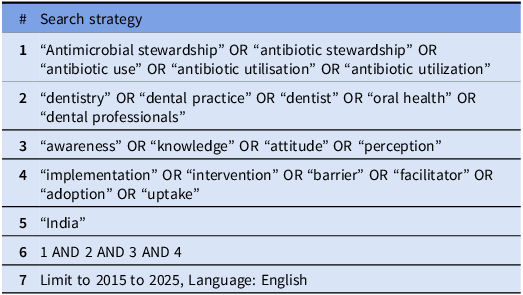
Five databases were searched (PubMed, Web of Science, CINAHL, Scopus, and Google Scholar) for studies published January 2014–December 2024, using Boolean combinations of terms related to AMR, stewardship, dentistry, and India, tailored to each database’s controlled vocabulary (Table 3).
Electronic database search strategy

Databases Searched: PubMed, Web of Science, Cochrane Library, Scopus, and Google Scholar were systematically searched using the above strategy. The search was conducted in [August,2025] with final updates in [October, 2025].
Study selection process
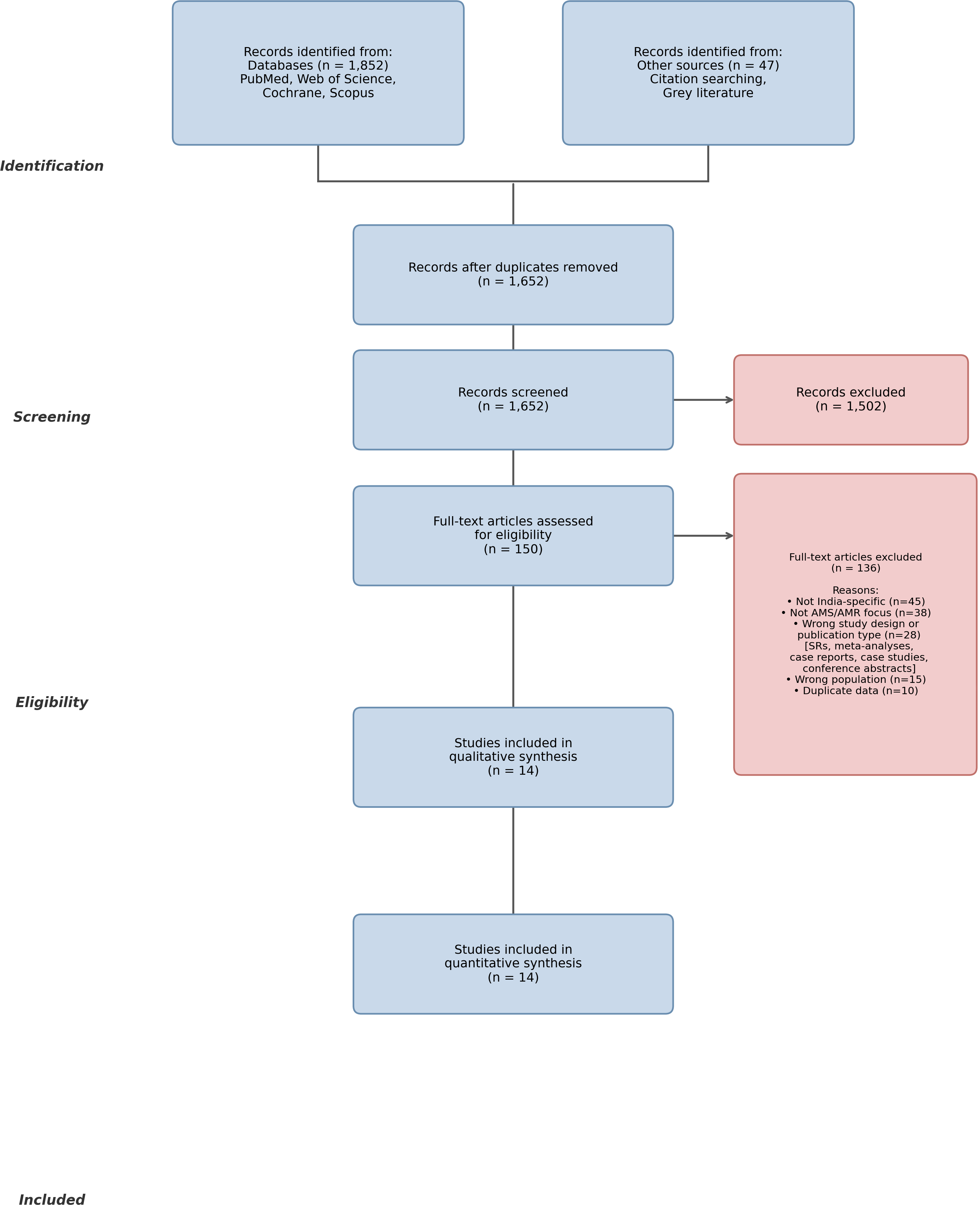
Following the comprehensive database search, all identified records were imported into Rayyan, an online systematic review management platform, and duplicates were removed. Titles and abstracts were independently screened by both authors (R.D. and R.A.E.) against the predetermined eligibility criteria, followed by full-text review of potentially relevant studies. Disagreements were resolved through discussion and consensus. The selection process is documented in the PRISMA flow diagram (Figure 1).
PRISMA 2020 flow diagram for systematic review of antimicrobial stewardship in Indian dentistry.

Quality assessment
Regarding the quality assessment, both authors (R.A.E. and R.D.) independently appraised all included studies using the Critical Appraisal Skills Programme (CASP) checklists (CASP UK, 2018; available at casp-uk.net), selecting the appropriate checklist for each study’s design. Discrepancies were resolved through discussion and consensus. Detailed quality ratings for each included study are reported in Supplementary Table 1.
Data extraction and synthesis
A standardized data extraction form captured study characteristics, participant details, AMR/AMS measures, prescribing behaviors, barriers and facilitators, and quality ratings. Data were extracted by one reviewer and verified by a second. Due to substantial heterogeneity, findings were narratively synthesized by grouping studies thematically and identifying consistent patterns.
Results
Study selection and characteristics
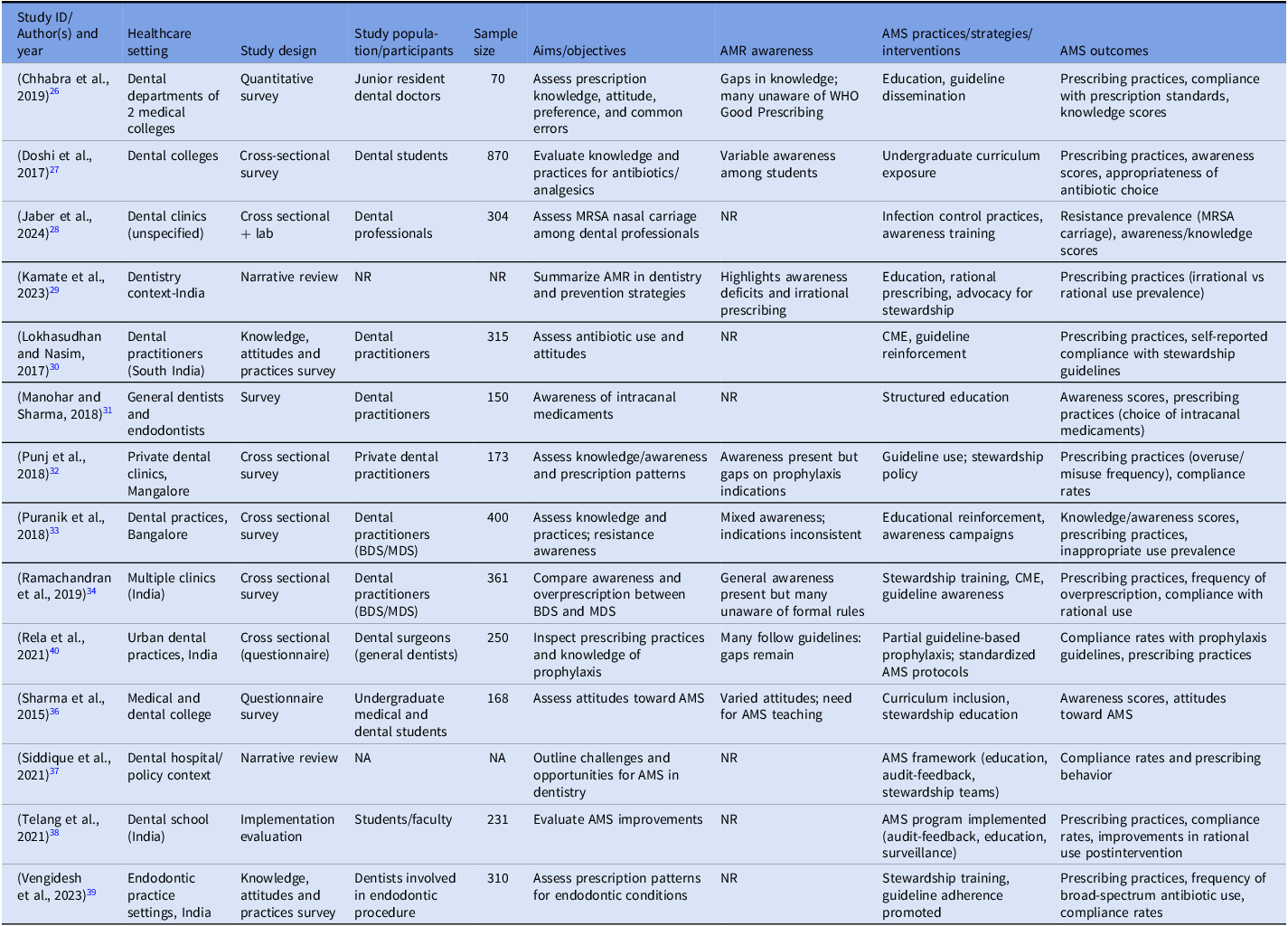
The search strategy identified 414 records, reduced to 357 after removing 38 duplicates and 19 non-eligible items. Title and abstract screening excluded 214 articles, leaving 143 full texts; 18 were inaccessible. A further 111 reports were excluded at full-text review for failing prespecified inclusion criteria: studies not addressing dentistry-related AMR/AMS outcomes (n = 45), absence of original empirical data such as editorials and opinion pieces (n = 38), wrong study design including published systematic reviews, meta-analyses, case reports, and conference abstracts (n = 28). Following the PRISMA process, 14 studies met all inclusion criteria and were included in the synthesis, representing 3,602 participants across Indian dental settings (Figure 1). The 14 included studies used the following designs: cross-sectional surveys, including Knowledge, Attitudes, and Practices surveys (11/14, 79%); narrative reviews (2/14, 14%); and one implementation evaluation (1/14, 7%) (Table 4).
Characteristics of included studies assessing AMR awareness, antibiotic prescribing, and AMS practices among dental professionals in India

AMR, antimicrobial resistance; AMS, antimicrobial stewardship; BDS, bachelor of dental surgery; MDS, master of dental surgery; CME, continuing medical education; MRSA, methicillin-resistant Staphylococcus aureus; WHO, World Health Organization; NR, not reported. Sample sizes represent the total number of participants in each study.
Antimicrobial resistance awareness and knowledge
Substantial AMR knowledge gaps were consistently reported. Most student-focused studies (4/6; 67%) identified insufficient understanding of AMR mechanisms and evidence-based prescribing. While AMR was widely recognized as a public health threat by practitioners (5/5; 100%), this did not equate to stewardship competence. Poor knowledge of WHO Good Prescribing practices, uncertainty about first-line antibiotic choices, and reliance on empirical experience rather than formal guidelines were common (Supplementary Table 1).
Antibiotic prescribing practices and behaviors
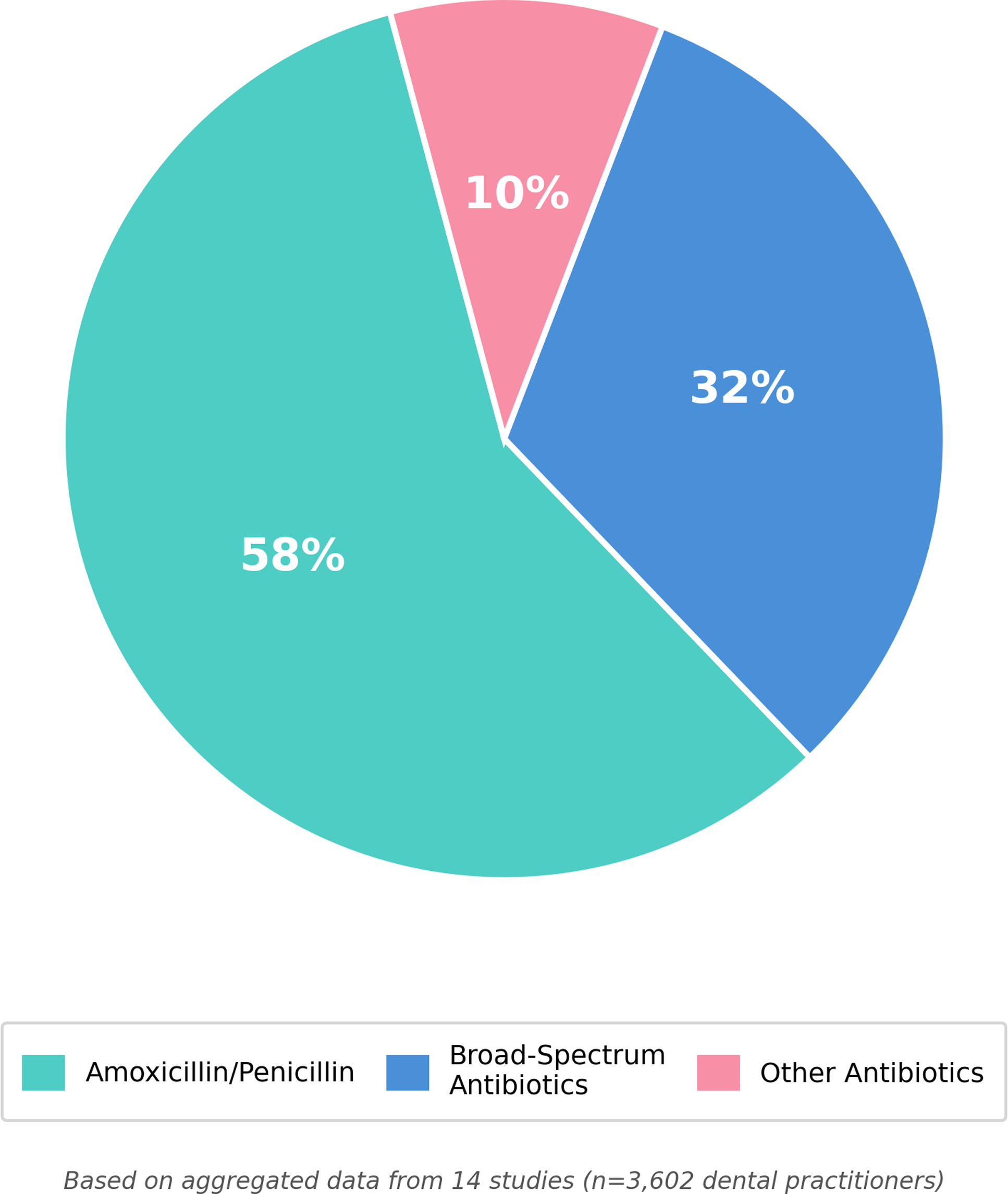
Prescribing behaviors across the studies revealed high rates of inappropriate antibiotic use. Incorrect dosing and duration errors appeared in 5/14 studies (36%), while overuse of broad-spectrum antibiotics was reported in 8/14 studies (57%). The most commonly prescribed agents were narrow-spectrum penicillin-class antibiotics, particularly amoxicillin and penicillin V, which collectively accounted for 58% of documented prescriptions. Broad-spectrum antibiotics, including amoxicillin–clavulanate and other extended-spectrum agents, represented a further 32%, with remaining prescriptions (10%) comprising other antibiotic classes (Figure 2).
Antibiotic prescribing patterns in Indian dentistry.

Antibiotics were prescribed for conditions manageable with local measures alone—including acute pulpitis, uncomplicated caries, and routine extractions—in 7/14 studies (50%), with additional reports of prophylactic use absent clear clinical indication (Supplementary Figure S1).
Antimicrobial stewardship implementation and interventions
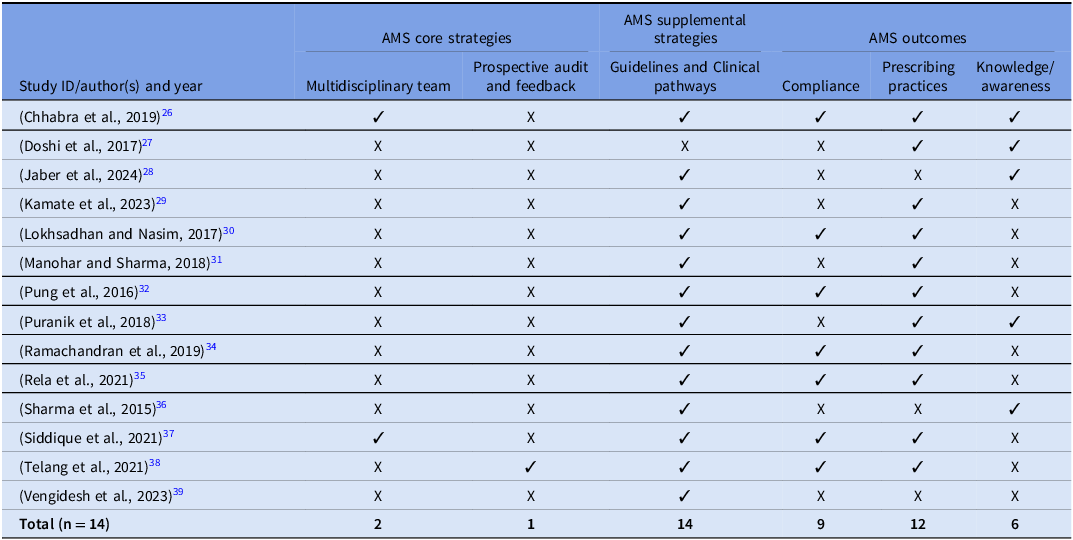
AMS activity within Indian dentistry was limited and fragmented. All 14 studies referenced guideline-based strategies, but only 1/14 (7%) incorporated a multidisciplinary AMS team and 1/14 (7%) implemented prospective audit and feedback. The most commonly assessed AMS-related outcomes were prescribing practices (12/14; 86%), compliance (8/14; 57%), and knowledge/awareness (6/14; 43%). Educational interventions in two studies showed short-term improvements in knowledge and prescribing intentions, though none included long-term validation (Table 5).
AMS strategies and outcomes in implementing dental stewardship in India

Checkmarks (✓) indicate that the study reported the respective AMS strategy or outcome. AMS, antimicrobial stewardship. However, checkmarks (X) indicate that the study did not report the AMS strategies/outcomes.
Facilitators and barriers to AMS
Thematic synthesis revealed both facilitators and barriers across the included studies. Facilitators identified included widespread recognition of AMR as a public health threat, professional willingness to engage with AMS activities, enthusiasm for digital guideline tools and continuous education, and leadership and institutional support where present. Educational barriers included curriculum deficiencies, a lack of CPD opportunities on AMR, and insufficient clinical training in evidence-based prescribing. Institutional barriers involved the absence of formal AMS programs, poor access to dental-specific guidelines, a lack of audit-feedback systems, and limited microbiology support. Regulatory challenges involved over-the-counter antibiotic availability, weak enforcement of prescribing restrictions, and minimal integration of dental prescribing data into AMR surveillance. Clinical barriers encompassed patient pressure, medico-legal concerns, and time constraints (Supplementary Figure S2).
Qualitative thematic analysis
This was the most prevalent theme (12 of 14 studies). Across both student and practitioner groups, fundamental misunderstandings existed regarding antibiotic indications, resistance mechanisms, and dosing principles. Nearly half of resident doctors were unaware of WHO prescribing requirements, Reference Chhabra, Nidhi and Jain26 and guideline awareness was markedly lower among BDS (Bachelor of Dental Surgery) practitioners (15%) than MDS (Master of Dental Surgery) practitioners (71%). Reference Ramachandran, Rachuri, Martha, Shakthivel, Gundala and Battu34 Several studies noted limited familiarity with prophylaxis standards, with only 67% of surgeons adhering to established recommendations. Reference Rela, Sejao and Singh40
Despite high AMR awareness, inappropriate prescribing remained common for uncomplicated caries (53%), simple extraction (55%), and acute pulpitis (61%). Reference Punj, Shenoy, Thomas and Ramesh32,Reference Puranik, Sabbarwal and Bose33,Reference Wasan, Gupta, Mathur, Mutneja, Mathur and Gupta19 Only 14% of practitioners were aware of national ADR systems, Reference Puranik, Sabbarwal and Bose33 and non-clinical pressures including patient expectations and medico-legal concerns further drove overprescribing. Reference Puranik, Sabbarwal and Bose33,Reference Thompson, Teoh and Pulcini41 BDS dentists showed higher overprescribing trends than MDS practitioners, Reference Ramachandran, Rachuri, Martha, Shakthivel, Gundala and Battu34 and 57% were unable to identify alternatives for penicillin-allergic patients. Reference Punj, Shenoy, Thomas and Ramesh32 Most studies (11/14) identified systemic weaknesses including inadequate stewardship coverage in curricula, absent formal AMS programs, and minimal audit mechanisms. Reference Doshi, Asawa and Bhat27,Reference Punj, Shenoy, Thomas and Ramesh32,Reference Puranik, Sabbarwal and Bose33
Discussion
This systematic review reveals a convergence of knowledge deficits, behavioral inconsistencies, and institutional barriers that collectively undermine rational antibiotic use in Indian dentistry. Reference Chhabra, Nidhi and Jain26,Reference Puranik, Sabbarwal and Bose33 While AMR awareness was generally high, it did not reliably translate into appropriate prescribing, confirming that structural, educational, and behavioral reinforcement are needed alongside awareness. Reference Punj, Shenoy, Thomas and Ramesh32,Reference Ramachandran, Rachuri, Martha, Shakthivel, Gundala and Battu34
A central finding was the knowledge–practice gap: antibiotic prescribing for non-indicated conditions including dental caries (53%), simple extraction (54.5%), and acute pulpitis (60.9%) contradicted established guidelines. Reference Cope, Francis, Wood and Chestnutt17,Reference Doshi, Asawa and Bhat27,Reference Kamate, Vibhute, Belgaumi and Kadashetti29 Non-clinical pressures—patient expectations, fear of litigation, and habitual prescribing patterns—drove this discordance over evidence-based decision-making. Reference Punj, Shenoy, Thomas and Ramesh32,Reference Ramachandran, Rachuri, Martha, Shakthivel, Gundala and Battu34
Guideline awareness varied markedly between BDS (15%) and MDS (71%) practitioners. Reference Doshi, Asawa and Bhat27,Reference Ramachandran, Rachuri, Martha, Shakthivel, Gundala and Battu34 Private practitioners relied heavily on empirical prescribing, reflecting limited institutional support, Reference Kamate, Vibhute, Belgaumi and Kadashetti29,Reference Punj, Shenoy, Thomas and Ramesh32 indicating that stewardship strategies must be tailored to practitioner background and workplace context.
These findings are not unique to India and reflect a global pattern of inadequate dental AMS. Vázquez-Cancela et al., in the most comprehensive systematic review of dentists’ knowledge, attitudes, and practices of antibiotic prescribing to date, examined 37 studies across multiple countries and found that inappropriate prescribing is predominantly driven by modifiable factors, including complacency, fear of litigation, lack of guideline trust, and tendency to defer definitive treatment, rather than by absence of awareness. Reference Vázquez-Cancela, Zapata-Cachafeiro, Herdeiro, Figueiras and Rodríguez-Fernández24 This mirrors precisely the non-clinical pressures identified across our included Indian studies. In the United Kingdom, dentists account for approximately 10% of all primary care antibiotic prescriptions, and the UKHSA Dental Subgroup has acknowledged that prescribing rates have remained above prepandemic levels despite sustained stewardship efforts. 42 Scotland’s Antimicrobial Prescribing Group has similarly identified the need for structured dental stewardship infrastructure, including audit tools, education programs, and CPD frameworks, to translate policy into practice. 43
In the United States, Goff et al. demonstrated that combining targeted education with individualized audit and feedback improved appropriate antibiotic use among private practice dentists from 19% to 87.9%, yet this intervention reached only 15 dentists, underscoring the scale of the challenge in reaching the majority of practitioners who operate outside institutional oversight. Reference Goff, Mangino, Trolli, Scheetz and Goff25 The World Dental Federation has similarly called on national dental associations globally to embed AMS within national AMR action plans, recognizing that the dental profession carries a distinct and under-addressed responsibility in global resistance containment. 44 Taken together, these international findings confirm that the knowledge–practice gap identified in Indian dentistry is a systemic global phenomenon, but one that is demonstrably amenable to structured, multifaceted intervention. The Indian context, characterized by a large prescriber population, absent national dental AMS guidelines, and minimal stewardship infrastructure, represents both an urgent priority and a significant opportunity for scalable impact.
Institutional and educational barriers are among the most entrenched challenges. Multiple studies identified the absence of formal AMS frameworks, limited guideline access, negligible ADR reporting, and insufficient continuing dental education (CDE) as key drivers of inappropriate prescribing. Reference Chhabra, Nidhi and Jain26,Reference Puranik, Sabbarwal and Bose33 Nearly half of resident doctors were unaware of WHO prescribing guidelines, reflecting foundational undergraduate and postgraduate training gaps that structured curricula and CDE must address. Reference Chhabra, Nidhi and Jain26,Reference Puranik, Sabbarwal and Bose33,Reference Sharma, Jain and Sharma36
These findings align with India’s National Action Plan on AMR priorities on education, training, and optimal antimicrobial use. Reference Garg, Agrawal, Tewari, Kumar and Chandra14,35 , Dentistry-specific guidelines and systems-level support—including decision-support tools, prescription monitoring, and audit feedback—are critical for translating policy into clinical practice. Reference Puranik, Sabbarwal and Bose33,Reference Rela, Sejao and Singh40,Reference Madhu, Siddique, Chhabra, Reche, Kunghadkar and Kalmegh37,Reference Telang, Nerali, Kalyan, Siddiqui and Telang38
Taken together, these findings underscore the need for coordinated, multifaceted action across education, policy, and institutional frameworks to address the deep-rooted barriers to AMS implementation.
The findings of this review point to several clear and actionable recommendations. At the policy level, there is an urgent need to develop national dental-specific antibiotic prescribing guidelines and clinical pathways, as their absence represents one of the most consistently identified barriers across included studies. Prescribing practices must be formally measured as a core AMS outcome to monitor progress and drive improvement. At the institutional level, dental settings should establish formal AMS programs incorporating local guidelines, prescription monitoring, and adverse drug reaction reporting, with audit and feedback embedded as routine practice, since evidence consistently demonstrates that guidelines alone do not change prescribing behavior. At the educational level, undergraduate and postgraduate dental curricula must integrate practical AMS training, supported by CPD throughout practitioners’ careers. At the clinical level, individual dentists must strengthen diagnostic reasoning, consult guidelines regularly, and resist non-clinical pressures that drive unnecessary prescribing. Multidisciplinary collaboration involving pharmacists and microbiologists further enhances stewardship capacity. Meaningful and sustained improvements in dental antibiotic prescribing in India will require coordinated, aligned action across policy, education, institutions, and clinical practice. Future work should focus on implementation science to bridge the knowledge-practice gap. Priority areas include clinical decision-support tools, audit and feedback mechanisms, behavioral nudges, and digital guideline platforms. Evaluating these interventions across varied Indian practice settings will be critical to advancing effective dental stewardship.
This review has several important strengths. It provides a comprehensive synthesis of AMS implementation in Indian dental settings, addressing a critical evidence gap in a country with one of the highest global AMR burdens. The review followed rigorous PRISMA 2020 guidelines, employed dual independent screening with substantial inter-rater agreement, and applied CASP quality appraisal to all included studies. The synthesis draws on evidence from 3,602 dental professionals across diverse Indian practice settings, lending breadth and relevance to the findings. Collectively, the evidence provides a strong empirical basis for urgently developing India-specific dental AMS strategies that are tailored to the educational, regulatory, and institutional realities of the Indian dental context, rather than simply adopting frameworks designed for high-income healthcare systems.
Several limitations must be acknowledged. The restriction to English-language publications may have excluded relevant studies or gray literature published in Indian regional languages. The predominance of cross-sectional survey designs introduces susceptibility to social desirability bias, and the absence of longitudinal studies or randomized controlled trials limits conclusions about the sustained impact of AMS interventions on prescribing behavior. Substantial heterogeneity in study design, outcome measurement, and participant populations precluded meta-analysis and complicates direct comparisons across studies. The inclusion of two narrative reviews, while providing useful contextual insight, deviates from strict systematic review methodology. Finally, the findings may not be fully generalizable beyond the urban and dental college settings that predominated in the included studies, and the experiences of rural or private practitioners may be underrepresented.
Conclusions
This review demonstrates that structured dental stewardship programs are urgently needed and achievable in India. While AMR awareness among Indian dental professionals is encouraging, translating this awareness into rational prescribing and effective stewardship practice remains the critical challenge. The findings of this study reveal that inappropriate antibiotic use is driven by modifiable factors including curriculum gaps, absent institutional frameworks, and non-clinical pressures, and strongly support the implementation of dental stewardship across Indian dental settings. Evidence from international dental stewardship programs further demonstrates that combining targeted education with audit and feedback can rapidly and substantially optimize antibiotic prescribing behavior. Developing national dental-specific prescribing guidelines, embedding AMS training within undergraduate and postgraduate education, and establishing formal audit and feedback mechanisms are practical, achievable, and necessary steps. Given that dentists account for approximately 10% of all antibiotic prescriptions in India, investing in dental stewardship can make a meaningful, lasting contribution to national and global efforts to combat AMR
Supplementary material
The supplementary material for this article can be found at https://doi.org/10.1017/ash.2026.10388.
Financial support
No funding was received for this study.
Competing interests
The authors have no conflicts of interest to disclose.


 Open access

