Acute respiratory distress syndrome is a serious complication that occurs after heart surgery in infants. After cardiopulmonary bypass, acute lung injury has been reported in 12% of patients and acute respiratory distress syndrome in 0.4%. Reference Milot, Perron and Lacasse1 The systemic inflammatory response and lung ischaemia-reperfusion injury caused by cardiopulmonary bypass during cardiac surgery are related to acute respiratory distress syndrome. Reference Bojan, Gioanni and Mauriat2,Reference Kogan, Segel and Ram3 Mortality from acute respiratory distress syndrome remains high, although therapies such as low tidal volume ventilation, permissive hypercapnia, prone ventilation, inhaled nitric oxide, and extracorporeal membrane oxygenation are recently developed. Reference Fan, Brodie and Slutsky4 High-frequency oscillatory ventilation is considered a rescue therapy for infants with acute respiratory distress syndrome. Reference Randolph5 Potential advantages of high-frequency oscillatory ventilation over conventional mechanical ventilation include the application of small tidal volumes and the safe use of higher mean airway pressure than commonly used conventional mechanical ventilation to achieve lung recruitment and improved oxygenation. Reference Rehan, Fong and Lee6 However, in the terminal lung unit, high-frequency oscillatory ventilation had lower mean airway pressure, which can lead to basal atelectasis and ventilation/perfusion mismatch. Persistent inflation, hyperinflation, or periodic sighs are necessary to prevent atelectasis, which can be achieved by high-frequency oscillatory ventilation combined with intermittent forced ventilation. Reference Murthy and Petros7 In our previous clinical practice, we found that high-frequency oscillation ventilation combined with intermittent mandatory ventilation has a good oxygenation improvement effect in infants with acute respiratory distress syndrome after congenital heart surgery and has no serious complications. However, no study has been conducted to analyse the efficacy of high-frequency oscillation ventilation combined with intermittent mandatory ventilation for acute respiratory distress syndrome after corrective cardiac surgery amongst infants. Therefore, we report our experience with high-frequency oscillation ventilation combined with intermittent mandatory ventilation mode using the Sophie ventilator.
Materials and methods
Patients and data collection
We conducted this retrospective analysis of data from infants intubated for acute respiratory distress syndrome at our cardiac ICU from January, 2020 to January, 2022 who received cardiac surgery (with or without cardiopulmonary bypass). This study was approved by the ethics committee of our hospital, and it conformed to the Declaration of Helsinki. The parents were informed of the study content in detail, and they signed the informed consent.
The inclusion criteria were as follows: post-operative infants suffering from acute respiratory distress syndrome who failed conventional mechanical ventilation and the commencement of high-frequency oscillatory ventilation in our cardiac ICU. The diagnosis of acute respiratory distress syndrome was established in accordance with the criteria defined in 2015 by the Pediatric Acute Lung Injury Consensus Conference Group. 8 The diagnosis of ventilator-associated pneumonia was based on the criteria established by the Centers for Disease Control and Prevention, with diagnosis aided by chest radiographs, positive sputum cultures, transtracheal fluid, bronchial washings, and clinical findings. Reference Horan, Andrus and Dudeck9 All patients had stable haemodynamics after the operation, and the results of anatomical correction were satisfactory. The exclusion criteria were as follows: haemodynamically significant residual lesions, pulmonary venous obstruction, air leak syndromes, and acute respiratory distress syndrome requiring extracorporeal membrane oxygenation treatment.
Ventilation strategies
We adopted high-frequency oscillation ventilation combined with intermittent mandatory ventilation as the rescue ventilation mode for infants who were failing conventional ventilation based on the following criteria: refractory respiratory failure (PaO2/FIO2 < 200 mmHg) with high peak positive pressure requirement (over 28 cmH2O) or a high VT (tidal volume) requiring conventional ventilation (> 10 mL/kg), diffuse atelectasis requiring lung recruitment, a high fraction of inspired oxygen (FiO2:0.8–1.0) required despite the appropriate positive end expiratory pressure, and intractable respiratory acidosis (PaCO2 > 60 mmHg and/or pH < 7.20). High-frequency oscillatory ventilation was delivered by using the Sophie ventilator (Sophie, Fritz Stephan, Gackenbach, Germany).
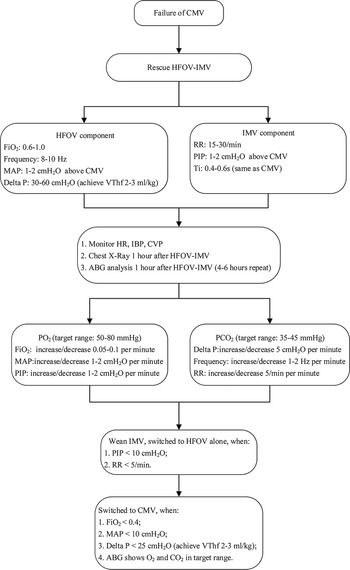
High-frequency oscillation ventilation combined with intermittent mandatory ventilation applied a fixed frequency of high-frequency oscillatory ventilation in the inspiratory and expiratory phases of intermittent mandatory ventilation ventilation; that is, the sinusoidal pressure waveform of the oscillator was superimposed on all intermittent mandatory ventilation breaths. High-frequency oscillation ventilation combined with intermittent mandatory ventilation aimed to recruit atelectatic lung units and then maintain lung volume at safe levels by oscillating on the deflation limb of the volume–pressure curve. The ventilation strategy of high-frequency oscillation ventilation combined with intermittent mandatory ventilation involved two parts, namely, high-frequency oscillatory ventilation and intermittent mandatory ventilation components. The specific settings are shown in Figure 1.
Flow chart management of HFOV-IMV. HFOV, high-frequency oscillation ventilation; IMV, intermittent mandatory ventilation; CMV, conventional mechanical ventilation; FiO2, fraction of inspired oxygen; MAP, mean airway pressure; PIP, peak inspiratory pressure; RR, respiratory rate; PO2, partial pressure of oxygen; PCO2, partial pressure of carbon dioxide; HR, heart rate; CVP, central venous pressure; IBP, invasive blood pressure; ABG, arterial blood gas; VThf, high-frequency tidal volume.

High-frequency oscillatory ventilation component
High-frequency oscillatory ventilation was commenced at a starting oscillation frequency of 10 Hz with sufficient delta P to produce optimal visible chest vibratory movement, usually starting at 30 cmH2O up to a maximum of 60 cmH2O. Delta P was increased in 2–4 cmH2O increments until vibrations were visible to achieve high-frequency tidal volumes of 2–3 mL/kg. mean airway pressure was initially adjusted to be 1–2 cmH2O higher than conventional mechanical ventilation to achieve the target PaO2 or transcutaneous oxygen saturation (TcSO2) and improve the oxygenation function of infants. FiO2 was maintained at the same concentration as the conventional mechanical ventilation. Frequency (Hz), delta P (cmH2O), and mean airway pressure (cmH2O) were recorded regularly or when any changes were made.
Intermittent mandatory ventilation component
Intermittent mandatory ventilation was commenced with peak inspiratory pressure of 20–25 cmH2O, initially 1–2 cmH2O above the conventional mechanical ventilation. The respiratory rate was initially set between 15 and 30 per minute and adjusted as necessary depending on the arterial blood gas, in particular PaCO2 levels. Inspiratory time was usually set between 0.4 and 0.6 s. Recordings of peak inspiratory pressure (cmH2O), respiratory rate (bpm), inspiratory time (seconds), I:E ratio, and FiO2 were recorded regularly or when changes were instituted.
Other measures
Arterial blood gas analysis was performed 1 h after rescue high-frequency oscillation ventilation combined with intermittent mandatory ventilation was initiated (ABLTM 700 radiometer, Copenhagen, Denmark). Arterial blood gas analysis was evaluated every 4–6 h or more often as needed. In addition, we performed real-time monitoring of heart rate, invasive blood pressure, and central venous pressure to monitor their impact on haemodynamics. After 1 h of mechanical ventilation, ideal lung inflation was examined by chest radiography, and the right diaphragm was generally kept at the level of the eighth to the ninth rib. The target PO2 range was 50–80 mmHg, whereas the target PCO2 range was 35–45 mmHg. All patients were sedated and paralysed throughout the study period with continuous infusion of sufentanil, midazolam, and rocuronium bromide.
Wean protocol
First, ventilator settings were adjusted to wean intermittent mandatory ventilation components by decreasing respiratory rate and peak inspiratory pressure, whilst maintaining acceptable oxygenation and ventilation. The peak inspiratory pressure was gradually decreased at a rate of 2 cmH2O per minute until reaching below 15 cmH2O. The respiratory rate was reduced to less than 5 beats per minute in steps of 5 beats per minute, and then we stopped intermittent mandatory ventilation and switched to high-frequency oscillatory ventilation alone. The management strategy and wean protocol of rescue high-frequency oscillation ventilation combined with intermittent mandatory ventilation are shown in Figure 1.
Statistical analysis
Data were analysed using SPSS software version 25.0 for Windows (IBM SPSS Inc., Chicago, IL, USA). Independent continuous variables were presented as the mean ± standard deviation and analysed by t-tests. Counts and percentages were used to describe the enumeration data. Means were compared using Student’s t-test, and Fisher’s exact test was used for categorical data. The Mann–Whitney U test was applied for non-normally distributed data. A two-sided p-value of <0.05 was regarded as statistically significant.
Results
Patient characteristics
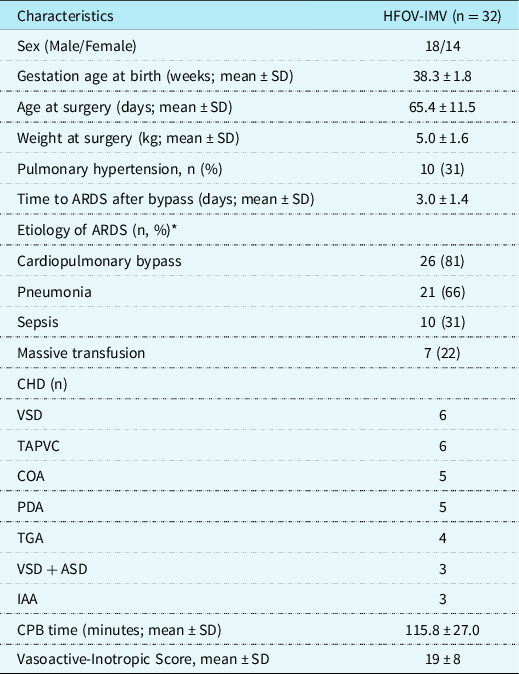
A total of 34 infants ventilated for acute respiratory distress syndrome after congenital heart surgery were included in the study. Two infants were excluded because of post-operative pneumothorax before the intervention. Finally, high-frequency oscillation ventilation combined with intermittent mandatory ventilation was used as rescue therapy for 32 infants after failing conventional mechanical ventilation. The mean body weight of the infants included in the study was 5.0 ± 1.6 kg, and the mean age at the high-frequency oscillation ventilation combined with intermittent mandatory ventilation intervention was 65.4 ± 11.5 days. The characteristics of the patients included in the study are shown in Table 1.
Demographic and baseline characteristics a

ASD atrial septal defect; COA coarctation of the aorta; CPB cardiopulmonary bypass; HFOV, high-frequency oscillation ventilation; IAA interrupted aortic arch; IMV, intermittent mandatory ventilation; PDA patent ductus arteriosus; TAPVC total anomalous pulmonary venous connection, TGA transposition of great arteries; VSD ventricular septal defect.
a Data reported as number and percentage or mean ± standard deviation.
* Some patients have more than one aetiology.
Outcomes
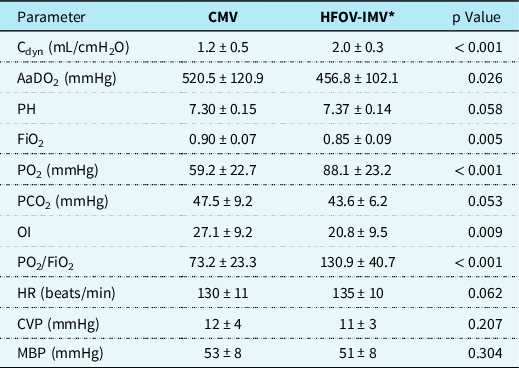
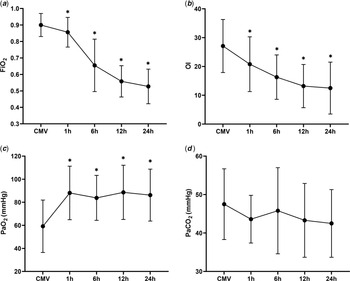
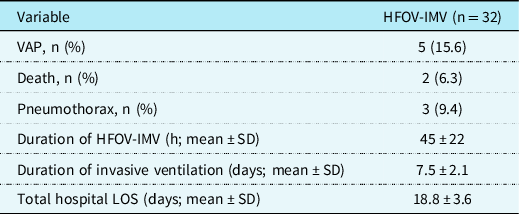
Changes in respiratory mechanics, arterial blood gas results, and haemodynamic parameters before and after 1 h of rescue high-frequency oscillation ventilation combined with intermittent mandatory ventilation are shown in Table 2. After recruitment by high-frequency oscillation ventilation combined with intermittent mandatory ventilation, the dynamic compliance (Cdyn), PaO2, and PaO2/FiO2 ratio of the infants were improved compared with conventional mechanical ventilation (p < 0.05). Moreover, high-frequency oscillation ventilation combined with intermittent mandatory ventilation resulted in a significant decrease in arterial-alveolar oxygen difference (AaDO2), FiO2, and oxygenation index (OI, p < 0.05). The changes in FiO2, PaO2, PCO2, and OI within 24 h after high-frequency oscillation ventilation combined with intermittent mandatory ventilation are shown in Figure 2. We found that FiO2 and OI significantly decreased, and PaO2 significantly improved after 1 h high-frequency oscillation ventilation combined with intermittent mandatory ventilation support. In addition, PCO2 levels decreased, but no significant change was observed after high-frequency oscillation ventilation combined with intermittent mandatory ventilation. Although mean blood pressure decreased compared with conventional mechanical ventilation after high-frequency oscillation ventilation combined with intermittent mandatory ventilation intervention, the difference was not statistically significant (p > 0.05). Moreover, no significant difference in heart rate or central venous pressure was found (p > 0.05). Complications and other secondary outcomes of high-frequency oscillation ventilation combined with intermittent mandatory ventilation are summarised in Table 3. The mortality rate of acute respiratory distress syndrome in our cardiac ICU was 9.4% (3/32), with one death caused by severe pulmonary fungal infection and the other two caused by multiple-organ failure. The duration of high-frequency oscillation ventilation combined with intermittent mandatory ventilation was 45 ± 22 h, and the duration of invasive ventilator use was 7.5 ± 2.1 days.
Respiratory mechanics and haemodynamic parameters during the study period a

Abbreviations: AaDO2, arterial-alveolar oxygen difference; Cdyn, dynamic compliance; CVP, central venous pressure; FiO2, fraction of inspired oxygen; HFOV, high-frequency oscillation ventilation; HR, heart rate; IMV, intermittent mandatory ventilation; MBP, mean blood pressure; OI, oxygenation index; PO2, partial pressure of oxygen; PCO2, partial pressure of carbon dioxide.
a Data reported as mean ± standard deviation.
* 1 hour after rescue HFOV-IMV.
FiO2, PO2, PCO2, and OI during the first 24 hours of HFOV-lMV. * indicated p < 0.05; A and B show a significant reduction in FiO2 and OI, as early as 1 hour after starting HFOV-IMV; C shows significant improvement in PaO2 at 1 hour after HFOV-IMV; D shows a reduction of PaCO2 level, though the changes do not achieve significance; FiO2, fraction of inspired oxygen; PO2, partial pressure of oxygen; PCO2, partial pressure of carbon dioxide; OI, oxygenation index; HFOV, high-frequency oscillation ventilation; IMV, intermittent mandatory ventilation.

Complications and secondary outcomes of the study infants a .

HFOV, high-frequency oscillation ventilation; IMV, intermittent mandatory ventilation; LOS, length of stay; VAP, ventilator associated pneumonia.
a Data reported as number and percentage, mean ± standard deviation.
Discussion
The main finding of this study indicates that the combination of high-frequency oscillatory ventilation and intermittent mandatory ventilation is well-tolerated, which may achieve rapid and sustained improvement in oxygenation through recruitment. In addition, weaning from high-frequency oscillation ventilation combined with intermittent mandatory ventilation and transitioning to conventional mechanical ventilation is practical and safe.
With the development of cardiac surgery and anaesthesia technology, performing cardiac surgery on high-risk infants is feasible. However, apart from cardiopulmonary bypass, these patients have many adverse conditions such as blood transfusion, pulmonary infection, and pulmonary hypertension, which are often associated with an increased risk of acute respiratory distress syndrome. Reference Silverboard, Aisiku and Martin10,Reference Beghetti and Tissot11 In recent years, lung-protective ventilation strategies have been widely developed to treat infants with acute respiratory distress syndrome. However, many infants with severe acute respiratory distress syndrome still fail to achieve oxygenation goals using traditional lung protection methods, and acute respiratory distress syndrome mortality can still be as high as 30 to 40%. 8,Reference Li, Wang, Li and Yan12
Given the small tidal volume at high-frequency oscillatory ventilation, a homogeneous alveolar dilation with a higher mean airway pressure than the commonly used conventional mechanical ventilation was used to achieve lung revascularisation and improve oxygenation. Reference Pillow13 Our previous studies have shown that high-frequency oscillatory ventilation is effective and well tolerated in paediatric acute respiratory distress syndrome. Reference Zheng, Xie and Liu14,Reference Zheng, Xie and Liu15 However, the peak-to-peak pressure fluctuation and volume fluctuation in the airway and alveoli of high-frequency oscillatory ventilation are smaller than those of conventional ventilation. High-frequency oscillatory ventilation achieves oxygenation at a relatively static lung volume depending on FiO2 and mean airway pressure. However, if the pressure of the terminal lung units is too low, then they may collapse, resulting in a ventilation/perfusion mismatch. Conversely, if mean airway pressure is high, then pulmonary blood flow may decrease. Reference Soe16 In 1984, Boynton and colleagues were the first to report that the combination of high-frequency oscillatory ventilation and intermittent mandatory ventilation improved pulmonary gas exchange in neonates with severe respiratory failure. Reference Boynton, Mannino and Davis17 The combination of intermittent mandatory ventilation may prevent high-frequency oscillatory ventilation-related basal airway closure and ventilator-perfusion mismatches. Unlike intermittent mandatory ventilation alone, high-frequency oscillation ventilation combined with intermittent mandatory ventilation can generate a large peak-to-peak pressure difference between the proximal airway connector and distal trachea. The intermittent mandatory ventilation rate, Inspiratory time, and peak inspiratory pressure were calculated independent of the oscillatory waveform.
Studies have shown that high-frequency oscillatory ventilation combined with intermittent mandatory ventilation can promote alveolar replenishment and improve oxygenation in infants who cannot be improved by intermittent mandatory ventilation and/or high-frequency oscillatory ventilation alone. Reference Murthy and Petros7,Reference Boynton, Mannino and Davis17 Our study also shows that rescue high-frequency oscillation ventilation combined with intermittent mandatory ventilation respiratory support significantly improves oxygenation in infants with acute respiratory distress syndrome. After 6 h of high-frequency oscillation ventilation combined with intermittent mandatory ventilation intervention, PO2 increased significantly, whereas FiO2 and OI decreased (Fig 2). Soe et al. reported that increasing mean airway pressure 1–2 cm H2O from conventional intermittent mandatory ventilation to high-frequency oscillatory ventilation can achieve a uniform distribution of inflation and ventilation. Reference Soe16 By improving gas distribution in the lungs, high-frequency oscillation ventilation combined with intermittent mandatory ventilation reduces local hyperinflation and alveolar collapse. This result may improve ventilation/perfusion matching, reduce FiO2, and possibly prevent oxidative damage.
DCO2 (CO2 diffusion coefficient) is considered the suitable predictor of CO2 removal during high-frequency oscillatory ventilation. Considering that DCO2 (mL2/s) is represented by ‘DCO2 = f × VThf2 (high-frequency tidal volume)’, even a small change in VThf affects DCO2 more than a change in frequency. Reference Singh, Courtney and Weisner18 The initial value of VThf commonly used in clinical practice is generally 1.5–2.0 mL/kg, whereas the range of VThf used in our study is 2–2.5 mL/kg. Infants with CHD often develop pulmonary oedema and atelectasis after surgery; thus, they require high-volume support to maintain normocapnia. Compared with the last measurement of conventional mechanical ventilation alone, high-frequency oscillation ventilation combined with intermittent mandatory ventilation improved CO2 elimination in our analysis, but the difference was not statistically significant.
We found that blood pressure decreased slightly after the commencement of high-frequency oscillation ventilation combined with intermittent mandatory ventilation compared with conventional mechanical ventilation/high-frequency oscillatory ventilation alone, but the difference was not significant. This finding was related to the increase of mean airway pressure during high-frequency oscillation ventilation combined with intermittent mandatory ventilation, resulting in increased transpulmonary pressure and decreased return to the heart, thereby affecting the related cardiac output. Reference Wu, Zheng and Zhuang19 Given the increased airway pressure, which may bring the risk of air leakage, two patients in this study developed pneumothorax during high-frequency oscillation ventilation combined with intermittent mandatory ventilation, and both of them improved after closed drainage. Therefore, during high-frequency oscillation ventilation combined with intermittent mandatory ventilation, timely adjustment of the airway pressure based on blood gas analysis is necessary to reduce the risk of air leakage. Finally, we observed a marked flow of secretions during high-frequency oscillation ventilation combined with intermittent mandatory ventilation, and tracheal secretions can lead to increased resistance and obstruction of the tracheal tube, resulting in a reduction in tidal volume, necessitating increased frequency of endotracheal suctions.
To our knowledge, this study is the first to report on the application of high-frequency oscillation ventilation combined with intermittent mandatory ventilation in infants following congenital heart surgery. However, this study has several limitations. First, this study was retrospective; thus, some inherent biases occurred. Second, this study was conducted in infants with acute respiratory distress syndrome after congenital heart surgery, which may hinder the application of current findings in other infants with acute respiratory distress syndrome. In addition, limitations such as small sample size, short observation period, and lack of long-term follow-up may affect the accuracy of the results. Moreover, infants included in this study were primarily patients with biventricular correction and normal systolic and diastolic function. Therefore, the application of this ventilation mode in single ventricle correction, especially in patients with superior caval vein-pulmonary anastomosis and patients with obvious diastolic dysfunction, needs to be further studied in the future. Despite being a retrospective study with a small sample size, the results suggest that high-frequency oscillation ventilation combined with intermittent mandatory ventilation is a potential rescue ventilation mode in acute respiratory distress syndrome, which will provide some reference value for further prospective studies in the future.
Conclusion
Rescue high-frequency oscillation ventilation combined with intermittent mandatory ventilation significantly improved oxygenation in infants who failed conventional mechanical ventilation for acute respiratory distress syndrome after congenital heart surgery; thus, it was considered safe and feasible. No significant effect on haemodynamic parameters was found. Moreover, no serious complication was noted. However, before the routine clinical application of this ventilation mode, more large-sample, multi-centre, and prospective studies must be conducted in the future to confirm the effectiveness, safety, and impact of this ventilation mode on the short-term and long-term prognosis in infants.
Availability of data and materials
The data sets used or analysed during the current study are available from the corresponding author on reasonable request.
Acknowledgements
We highly acknowledge the contribution by the participating researchers: Qi-Liang Zhang, Ze-Wei Lin, Li-Wen Wang, and Ling-Shan Yu.
Author contributions
Hua Cao, Qiang Chen, and Yi-Rong Zheng designed the study, performed the statistical analysis, participated in the operation, and drafted the manuscript. Wen-Hao Lin, Shi-Hao Lin collected the clinical data. All authors read and approved the final manuscript.
Funding
There was no funding for this research.
Conflict of interest
None.
Ethical approval
All procedures performed in studies involving human patients were in accordance with the ethical standards of the institutional and/or national research committee and with the 1964 Helsinki declaration and its later amendments, or comparable ethical standards.
Declarations
Not applicable.
Informed consent
Written informed consent to participate in this study was provided by the patients’ legal guardian/next of kin.