With the English, conversation is a languid silence broken by occasional monosyllables, and by the water flowing every quarter of an hour from the tea urn.
E. Jouy, ‘Conversation’, in Encyclopédie Moderne, ed. M. Courtin (Paris, 1823–32)Footnote 1
Writing about talking is a paradoxical activity. The apotheosis of print in the nineteenth century has led other forms of communication to seem feeble and ephemeral. This is especially true in science, where print has dominated ideas of what it means to make a contribution to knowledge. Historians have assumed that scientific talk is ornamental and supplementary, mattering only on the way to producing a published result, or as nothing more than a remnant of a fading oral culture. ‘Words are but wind’, as one etiquette manual noted in 1861, ‘and when spoken leave no mark behind.’Footnote 2
Oral performance, however, has been and remains at the heart of the making of knowledge. Although little has been written on the nineteenth century, scientific talk has been extensively examined in other settings. One body of literature is focused on the salon culture of Paris, London and other European cities of the eighteenth century, when leading figures came together in salons and coffee houses for discussions of natural philosophy along with literature, politics and the arts.Footnote 3 The other is the scientific laboratory of the twentieth century. Beginning in the 1970s, anthropologists and sociologists recorded the discourse of technicians, experimenters and others as part of a process of understanding contemporary science in the making.Footnote 4
By comparison the nineteenth century has been an uneasy borderland. This failure to understand scientific talk in this period is in large part because so many studies have depicted it in terms of decline from the supposedly golden age of conversation in the eighteenth century. On the positive side, this stress on polite civility, coffee houses and salons has enabled historians of Enlightenment natural philosophy to recover the intellectual life of an era that had been dismissed as an awkward pause between the scientific and industrial revolutions. Yet an idealised image of the eighteenth century as a conversational golden age is far from unproblematic.Footnote 5 Most significantly, the political implications of enlightened conversation have typically been understood in terms of social theorist Jürgen Habermas's concept of a bourgeois public sphere, arising in the late seventeenth and eighteenth centuries, and based on rational discussion between private individuals in a social realm free of state control. On this conception, the nineteenth century appears as a period of fragmentation and commodification, when the public sphere was transformed under the pressures of the emerging industrialised mass media. Habermas aimed to use history to sketch an ideal type of rational public discourse, and his account is thus primarily a social critique rather than a history.Footnote 6 Although Habermas's views have been decisively criticised, eighteenth-century conversation continues to hold a revered place in our own culture, in large part as a nostalgic reaction against the forces of modernity and technological progress.Footnote 7
My aim, in contrast, is to put conversation back at the centre of our historical understanding of science in the nineteenth century. Rather than charting the transformation of an Enlightenment ideal, I will look at the ways in which scientific talk was managed and how this changed. Science is of particular significance in this context, as it has been hailed on one hand as a model for unconstrained rational discussion, and on the other lamented as a force for specialisation leading to the fragmentation of public intellectual life. In tackling the issues, I will deal with a variety of different settings for talk, from papers delivered at scientific meetings to the rituals of courtship. My focus will be on informal conversation in the clubs, salons and soirées of the English social elite. This was a world characterised by the few hundred elite families that constituted ‘Society’ and dominated the annual Season. Among these circles, conversation – defined as the unplanned, easy talk of the well bred – was central to sociability.Footnote 8 Conversation, as I will suggest, remained central to science, although what could be said to whom, and under what circumstances, was transformed. The conventions of late Georgian and early Victorian science gave way in the final decades of the nineteenth century to a situation in which expertise played very different roles.
The story sketched in this essay is built upon a reassessment of what has usually been labelled ‘gentlemanly science’, a phrase that can better be rendered as ‘polite science’. The term ‘polite science’ makes sense for reasons of gender, as many practitioners were women;Footnote 9 but more fundamentally it brings out the significance of broader ideals of civil society and social deference that underpinned the pursuit of knowledge in England throughout much of the nineteenth century. The ethos, etiquette and attitudes of those engaged in scientific pursuits have been closely studied for the late seventeenth and eighteenth centuries, but far less thoroughly for the nineteenth. Historians of Victorian science have devoted a great deal of attention to gentlemen since the path-breaking work of Jack Morrell and Arnold Thackray, but only more recently have they begun to analyse the practices of gentility.Footnote 10 In consequence, the continuing significance of polite sociability for the aims and practice of science has often been minimised, with gentlemanly status simply reinforcing the dominance of a relatively modern-looking core of experts.Footnote 11 This too easily leads to a division between ‘specialist’ and ‘popular’ science that is inappropriate to understanding a period when people differing in gender, rank and depth of expertise not only talked about science but in doing so contributed directly to its making.
Talking and publishing
To understand polite science and the significance of conversation within it, we need to begin by examining the broader relationship between oral performance and publishing.Footnote 12 It is still too often assumed that the publication patterns of science took on a quintessentially modern form with the foundation of the Royal Society's Philosophical Transactions in the 1660s as a means for exchanging information among those engaged in the pursuit of natural knowledge.Footnote 13 Yet throughout the eighteenth and the first half of the nineteenth century, the routes to making public a novel finding were as many and diverse as the range of practitioners engaged in natural philosophy and natural history. Take a list of what became identified as major discoveries and see where they were first announced. Some were made public in lectures or demonstrations of new instruments, others in letters to friends or for publication in the Gentleman's Magazine and in newspapers, some in books of travel or philosophy.Footnote 14 Still others were shared among a small circle of friends and patrons, as with the botanist Robert Brown's work on particulate motion or the canal surveyor William Smith's findings about the role of fossils in determining the order of strata.
These publication patterns were part of a shared culture involving a wide variety of practitioners, from learned theologians and genteel women to quarry workers and skilled artisans.Footnote 15 The networks which brought these groups together were founded on prevailing ideals of a hierarchical order of gender, rank and status. Novelty was not identified with discovery events announced in scientific papers, a genre which became defined only during the later nineteenth century, but depended instead on a broad spectrum of communication. Contributions ranged from newly observed nebulae and rare mosses, to philosophical and theological frameworks for understanding nature. The work of science passed between various domestic settings and public meeting rooms, taverns and theatres. Collecting, travelling, experimenting and observing were important activities, but they were always valued in a system grounded in heredity and hierarchy.
Presentation in print was only one moment, and not necessarily the most significant, in the broader process of the making of a matter of fact within polite science. If we look at the groups central to the ideals of natural philosophy and natural history in this period, notably the aristocracy, high gentry and traditional professions, we find that knowledge was communicated primarily though the spoken word. Certain knowledge was intimate knowledge, grounded in private conversation, discussions at meetings and lectures by celebrated men. At Oxford and Cambridge the professors of science of the eighteenth century published little: enlightened university life was about local reputation and high table conversation – not about rushing into print or joining the world of commerce. Those who did publish extensively, such as Newton's successor William Whiston, were often on the margins of university life; after a series of theological scandals, he moved to London and made a living through his books and lectures. Publishing was only one part of the broad spectrum of ways to establish a position as a possessor of knowledge.
In medicine, too, physicians gained reputation not so much by publishing technical works on spa waters or the classification of diseases; but primarily through performance at the bedside, with skill in medical consultations demonstrating true mastery. Physicians needed Latin learning and traditional medical knowledge as signs of gentility: to focus too single-mindedly on publication could harm a practice, by highlighting those aspects of medicine that made it a less desirable career than other professions such as the law, the clergy and the military.Footnote 16 To stress new science-based research of the kind carried out in France, as Thomas Wakley did in founding the Lancet in 1823, was a new and radical idea.Footnote 17
In an intellectual culture in which oral performance held such high status, one could reach the pinnacle of scientific success with virtually no publications at all. The most notable case is that of the naturalist Sir Joseph Banks. President of the Royal Society and leader of British science for several decades, Banks published almost nothing. The flora from his Pacific travels was never issued (it was too expensive even for the tiny audience who traditionally would have underwritten such works), nor did he publish a book on his Icelandic travels or his researches into plants. Instead, his reputation was founded on his collections and library, his experience as a traveller and his status as a gentleman. He maintained his position not through publishing, but through personal contacts and correspondence. Banks and his sister Sarah Sophia welcomed numerous visitors to his great house on Soho Square, and his vast library, which held his books and collections, became a place to meet, eat and talk for those with natural history interests.Footnote 18 Conversation was central to this way of doing science.
From this perspective, the mathematician Charles Babbage's notorious polemical Reflections on the Decline of Science in Britain (1830) missed the point in decrying the large number of Fellows of the Royal Society who had not published a paper in its Transactions. Publishing in this way was a sign of merit, but by no means the only one. Status could derive from the possession of a fine collection of mineral specimens or dried plant specimens; a position as a patron of science; or through extensive reading and travels.
The foundation of specialist societies in London, starting with the Geological Society of London in 1807, is often taken as marking a fundamental shift in the pursuit of science, and a challenge to what David Miller has called ‘the Banksian learned empire’.Footnote 19 Although there was real conflict, it is important to recognise just how much those advocating a new order shared with their opponents. Although publication was given a higher priority, it remained embedded within a gentlemanly culture that placed a high value on face-to-face contact. Most of the new specialist societies grew out of informal meetings of enthusiasts in taverns and the premises of publishers. Their rooms were located in London's West End, near the leading metropolitan clubs. The most radically innovative of the new groups, the Geological Society of London, had been founded as a ‘little talking Geological Dinner Club’, and although it soon expanded its aims, the subject as a whole remained focused on verbal discussion and conversational contact.Footnote 20 Its first president, George Bellas Greenough, published only one short book and devoted most of his life to compiling maps and organising his impressive personal collection. Like-minded gentlemen could meet in the Society's rooms at Somerset House on the Thames; membership was expensive and women, as in other clubs, were not allowed. Or the members could visit, often with wives and sisters, Greenough's mansion in Regent's Park, which was purpose-built by the architect Decimus Burton for natural history research. These were the places where visiting foreigners really learned about what was going on in geology. Scientific practitioners inhabited a familiar landscape of upper-class metropolitan intellectual life, embedded in the regular calendar of Society and the Season. Annual charts, widely distributed and displayed, showed the main schedule of scientific meetings running from November through June.Footnote 21 This was when professional men were in town and when most books were published. Once parliament opened in the new year, the town experienced its largest influx of aristocrats and people of fashion: this was when most private parties were given, when the opera was in season, and when tailors and dressmakers were at their busiest.Footnote 22
Of course, societies such as the Geological, Astronomical and Linnean viewed publishing papers read at their meetings as one of their chief aims. But it is significant that until the 1840s quarto transactions were the main forum for publication – a luxurious format with fine paper, wide margins, good spacing between the lines, and a stately publication schedule.Footnote 23 These were works fit for a gentleman's library. To supplement these, most of the societies also issued proceedings, which recorded the basic contents of the papers read at each meeting. Their purpose, however, was as much to tell those who had not been at the meetings what they had missed as it was to communicate findings within the wider European community of learned specialists.Footnote 24 Priority was not defined as being primarily a matter of publication until the middle decades of the century. That was when discoveries such the planet Neptune and the composition of water emerged as subjects of fierce partisan rivalry.Footnote 25 The stress on publication was accompanied by the rise of new, heroic ideas of authorship, with discovery attributed to individual men of science whose celebrity was marked by their appearances in print.
Many aspects of the relation between publication, oral performance and scientific practice usually thought to be characteristic of the eighteenth century thus remained in place for much longer than is often assumed. Notably, the verbal presentation of a paper – even when not accompanied by immediate discussion – remained central to the presentation of new scientific work. Right through the 1840s, the great moment for any paper at the Geological Society was not when it appeared in print, but when it was read and debated at one of the meetings.Footnote 26 On his return from the Beagle voyage, Charles Darwin was struck by the way in which publishing in geology seemed secondary to verbal performance. ‘Geology is at present very oral’, he told a friend in 1846, ‘& what I here say is to a great extent quite true.’Footnote 27
Even the publication patterns of Charles Babbage, the astronomer John Herschel, the geologist Adam Sedgwick and other scientific reformers bear this out. Within the metropolitan setting for intellectual life, they were seen as ‘great men’, characters of exceptional ability and talent. Their characteristic writings were not articles in specialist journals, although they wrote many of these; instead, they were known for encyclopaedia essays, observational records, reflective treatises and speeches at the Royal Institution of London (f. 1799) and the British Association for the Advancement of Science (f. 1831), which rapidly emerged as key sites for oral performance in the new sciences. Contemporaries saw such men as possessing genius or talent not so much through publications, but through their persons. Their position was signalled by their status as ‘lions’, whose presence could give intellectual depth and sparkle to a social gathering.Footnote 28 Conversability was one of the key attributes of the gentleman.
The more formal, institutional platforms for oral scientific performance tended to be reserved for men, although women engaged fully in certain kinds of fieldwork, experiment and conversation. These could lead to an international reputation, especially in subjects (such as mineralogy and botany) dominated by private collections. In European natural history circles of the 1820s, Charlotte Murchison was better known as a conchologist than her husband Roderick was as a geologist.Footnote 29
Polite science
The importance of informal associations and conversation in establishing reputation is well illustrated by the case of Mary and William Somerville after they moved to London in 1816.Footnote 30 Married in 1812, they belonged to a circle of learned couples who became central to metropolitan science. Alexander and Jane Marcet – the latter's Conversations on Chemistry (1806) had recently appeared – were key figures, as were other couples such as the Katers, the Murchisons and the Youngs. Mary Somerville was a self-taught mathematician, who had been encouraged as a young woman in Edinburgh partly through the networks of military practitioners during the wars with Napoleonic France. Her second husband, William Somerville, was an experienced traveller who had served as an army physician in North America and in South Africa.
For the Somervilles, science offered a vital niche in urban society. They participated in a lively intellectual culture centred on informal gatherings that involved both men and women. They collected minerals, made observations, discussed new books and welcomed visiting foreigners. ‘All kinds of scientific subjects were discussed’, Mary Somerville recalled, ‘experiments tried and astronomical observations made in a little garden in front of the house.’Footnote 31 When William's army position was abolished after the end of the Napoleonic Wars, he and Mary travelled to the Continent, where they could live more cheaply until a new post turned up. Here they were welcomed to similar gatherings in the best scientific circles of Paris and Geneva. The Somervilles were not aspiring amateurs, nor potential patrons (even with Mary's substantial inheritance from her first marriage, they did not have the money for that); rather, they were valued participants in an enterprise which was open to many different kinds of practitioners. The scientific activities pursued by the Somervilles after their return to London in 1818 grew out of this predominantly domestic milieu. In mineralogy, for example, they devoted their efforts to what all serious mineralogists considered as the science's core activity: they formed a cabinet, filled with superb specimens given by friends and purchased on their travels. Their house was filled with paintings by Mary, and with books on literature, art and science.
The Somervilles were thus at the very heart of Regency science in London. This was not simply because of their social status – they were high gentry, but not in a position to purchase either the best specimens or to employ others in scientific work. And during the 1810s and 1820s, their status was certainly not based on their reputations as original discoverers or writers. Mary Somerville had published prize-winning contributions to the New Series of the Mathematical Repository both before and after her marriage to William, but she did this under a pseudonym (‘A Lady’). She was, rather, known for her mathematical skills by reputation. The primary significance of her pseudonymous puzzle-solutions did not derive from publication, but rather their status as marks of participation in a network of practice that ranged from working men to John Herschel and, in 1819, the thirteen-year-old John Stuart Mill.Footnote 32
Although Mary Somerville's status as a genteel woman might seem to involve special issues when publication was at stake, this is true only in part. The case of William Somerville shows that many of the same concerns applied to both sexes. When they married, he was a seasoned traveller, a friend of the poet Sir Walter Scott, and the first European to visit parts of the Cape Colony. Using his position as a medical man, he had conducted researches on the much-debated anatomy of the female sexual organs of the Khoi-khoi, a subject that soon came to be much in the news through the exhibition of Sara Baartman, the so-called ‘Hottentot Venus’.Footnote 33 He gave a paper to the Royal Society of London, which was published in the Medico-chirurgical Transactions in 1816, translated into Latin to limit its readership. The illustrations were too explicit to be published in this context and could only be viewed in the Royal Society's library, where the manuscript of his paper remains to this day.Footnote 34 Although this article was all that William Somerville ever published, he became a full participant in the learned life of London and was elected a Royal Society fellow in 1817.
It was, in fact, with the aim of meeting William and gaining access to Chelsea Hospital that the opinionated American physician Charles Caldwell presented himself at the Somervilles’ house in the winter of 1821–2. Like many foreign travellers, he recorded numerous customs that natives took for granted. Caldwell was especially interested in conversation, and left in the company of Somerville's wife while his host attended to his patients, Caldwell engaged her in talk. They began by discussing ‘the polite literature of the day’, a subject upon which she seemed completely at ease. Noticing some volumes on natural history in an opened bookcase, he found that she knew far more about mineralogy than he did. A volume of Pierre Simon Laplace's abstruse masterpiece, the Méchanique Céleste, suggested astronomy as a subject and in this ‘she conversed with such a familiarity and compass of knowledge as might have led to a belief that she had just returned from a tour among the heavenly bodies’. After realising that she was also a skilled experimentalist and an artist of some skill, he asked the crucial question: ‘who are you?’ ‘I am Mrs. Somerville, sir’, she purportedly replied. ‘I know that, madam, but who were you before you became Mrs. Somerville?’Footnote 35
Mary Somerville then is reported to have said that she had been ‘a little Scotch girl’, and ‘a pupil’ of the Edinburgh natural philosopher John Playfair. In Caldwell's novelised memoir, the reader has been moved from a commonplace conversational opening about literature, through a series of revelations of increasing understanding about science, and then is brought down again by a remark that was simultaneously modest but also revealed Somerville's connection to contemporary centres of expertise. The entire narrative depends on the fact that it reports an encounter with Somerville, when she was well known in London but before she had become famous in the United States; it also depends on the implication that the reader has low expectations of the conversation of the women of England.
Caldwell clearly said as much to Mary Somerville, and a few days later she sent him an invitation to a ‘conversation party of ladies’ at her home. The gathering was explicitly designed to prove the conversational powers of women in general and of English ones specifically. Here, at a single evening party, were Elizabeth Fry, Elizabeth Lamb, Maria Edgeworth and two of Edgeworth's sisters.
And when the introduction was over, my kind cicerone said to me playfully, but in an undertone, [‘]I have caught you; prepare yourself; you are about to have female conversation enough to convince you that the ladies of England can talk as well as those of your own country – a truth which you seem to doubt’. . .
And, in a moment, she disappeared, and ‘left me alone in my’ – no, not in my ‘glory’ – but in my half dismay, at the task of entertaining half a dozen of talk-loving ladies. ‘But,’ said I to myself, ‘they are all, I hope, so anxious to hear the vibrations of their own tongues, that they'll talk and entertain each other, and I shall have nothing to do but listen.’
Very soon, however, I discovered my mistake.Footnote 36
One by one, the women conversed with Caldwell in such a way as to convince him that Mary Somerville was not exceptional: English ladies could converse with all the propriety, skill and interest of American ones. Other than her husband, Caldwell was the only man present.
Caldwell noted that none of his interlocutors at this party, other than his hostess, had spoken to him on deep or scientific subjects; but that was not a reflection of the interests of women such as Fry or the Edgeworths, who were very conscious of moving in circles where such issues were regularly discussed. A typical evening party of the kind they frequented is described in a letter Maria Edgeworth wrote to her step-mother while staying at the country house of the agricultural improver Sir John Sebright:
Mrs. Somerville and I were sitting on the opposite sofa all night and Dr. Wollaston sitting before us talking most agreeably and giving us a clear account of the improvement of refining sugar which Mr. Howard who established his patent for the same just before his death has left five thousand a year to his children – a good reward for one invention! – for an improvement in a common process. Observe it is on an article of universal consumption.Footnote 37
There was, in fact, a striking continuity between the kind of topics that could be discussed at such intimate gatherings and the contents of the conversational genre of science books that became such a dominant feature of the educational literature of the 1820s and 1830s. For example, William Hyde Wollaston's lively description of sugar-making became the basis for a passage in Edgeworth's improving children's book, Harry and Lucy Concluded in 1825.Footnote 38 The most famous of these scientific dialogues, Jane Marcet's Conversations on Chemistry, first published in 1806, grew out of actual conversations with a ‘friend’, probably her husband Alexander Marcet, the Swiss chemist, mineralogist and physician.Footnote 39 The book also stressed that the experiments had been carried out by the author at home, thus demonstrating that science was a suitable part of domestic life. Works such as those by Marcet and Edgeworth became a major feature of the publishing scene in the 1820s and 1830s. The title – Conversations – that came to be most closely, but not exclusively, associated with the genre,Footnote 40 clearly involved a claim that scientific knowledge could be a polite accomplishment.
The etiquette of science
Even at the beginning of the century, not all science would have been deemed appropriate among mixed company or in general discussion. This was the tension surrounding the notion that, in principle, science was available to all. Some subjects were simply unfashionable. Mathematics, other than in the form of puzzles and conundrums, was generally seen as too obscure: Babbage was regularly quizzed for his use of abstruse mathematical analogies in everyday speech.Footnote 41 Phrenology appears to have been out of bounds in most London circles from the 1830s, after phrenological bores had been widely parodied and pilloried in the press. Major General John Mitchell, author of a pseudonymous semi-satirical Art of Conversation (1842), described his surprise on hearing an English lady express interest when an Italian marquis asks her if she has heard of phrenology:
‘The Italians,’ continued my companion, ‘know so little of these things themselves that they think other people equally ignorant; it was therefore kind of him to give us the information.’ ‘Then you would have voted an Englishman, who should have lectured you on this exploded old subject, a regular bore?’ ‘To be sure I would, and would have cut him and his lecture fast enough.’ ‘I am glad to hear it,’ said I, ‘for it shows how much more you really expect from your own countrymen than from all these foreigners, much as you praise and admire them.’ ‘Hem,’ said Lady C., ‘I wish you would employ your philosophy in getting me a good partner for the next quadrille.’Footnote 42
Other subjects were in bad taste. It was improper to pose certain kinds of direct question: ask a physician what his specialty was, and he might be forced to tell the company that he was a male midwife.Footnote 43
Certain topics were seen as opening the possibility of political or religious controversy. This was definitely the case with evolutionary debate in most circles before publication of Vestiges of the Natural History of Creation in 1844, and in some afterwards.Footnote 44 Even among men of science, open expression of heterodoxy was often seen as bad manners. Take the following exchange between the leading London physiologist William Sharpey, the mathematician Augustus De Morgan and the ambitious government geologist Andrew Ramsay, who recorded it in his diary in 1848:
‘You geologists’ said Sharpey ‘shock our religious feelings dreadfully, you make so light of all established chronologies as regards the age of the world.’ I was not aware’ quoth I, [‘]you had any religious feelings, or I might have managed my expressions better.’ ‘Oh’ said he ‘its not that, but you see we are of all sorts here, some of us have religious feelings, & others have none’ waving his hand to De Morgan. ‘Well’ said I ‘I can't stop to make an expression always that will please all, & must speak the plain truth.’ ‘I don't see the necessity’ growled De Morgan ‘if it be heterodox'!!!Footnote 45
The most common problem was pedantry: sparkling conversation could be hard to combine with the close study and intense devotion demanded by an independent scientific vocation. This could lead men of science to seem monomaniacal, self-absorbed, small-minded or eccentric.Footnote 46 Learning, no matter how profound, was ‘unwelcome and tiresome’ unless accompanied by good breeding and a proper sense of occasion.Footnote 47 An army friend who had known Roderick Murchison in his foxhunting days lamented his turn towards geology: ‘an excellent fellow and a most agreeable comrade’ now seemed able to talk only of dull grauwacke and the ‘Silurian system’.Footnote 48
Aware of the problem, those engaged in science recognised that conversation was only one kind of talk, and carefully distinguished between different kinds of spoken discourse. What might be said in an annual presidential address differed from what was appropriate for a report of new research; the verbal sparring used in the Geological Society's parliamentary-style meeting room was not the same as private chat in the corridor beforehand. Worries that the Society's lively debates might be misconstrued led to defences that they were ‘conversations’. Even the most expert practitioners sometimes refrained from talking about science at all. Gathering together until two in the morning in Lord Cole's rooms after the anniversary meeting, the gentlemanly Charles Lyell and his friends drank ‘fines inflicted of bumpers of cognac on all who talked any ’ology’.Footnote 49
Early Victorian novels often feature men of science obsessed with priority and insignificant detail. A classic example is the chapter ‘The Man of Science’ in Charles Kingsley's Alton Locke (1850). The episode involves the novel's eponymous hero and a clerical professor of natural history at Cambridge, but the caricature was intended to criticise the conversational faults of men of science more generally. The man of science proposes to carry out an experiment on Alton Locke, to see if a common working man can be turned into a naturalist.
‘“And what have you read on these subjects?”’ he asks.
I mentioned several books: Bingley, Bewick, ‘Humboldt's Travels’, ‘The Voyage of the Beagle’, various scattered articles in the Penny and Saturday Magazines, &c., &c.
‘Ah!’ he said, ‘popular – you will find, if you will allow me to give you my experience –’.
That experience turns out to be a complete knowledge, based on thirteen years’ study, of a single obscure reptile from the Balkans. The man of science claims that the fashionable world was ‘overstocked with the artem legendi – the knack of running over books, and fancying that it understands them, because it can talk about them’. In the end, Alton Locke does not find mastering the details of science so difficult after all: his mentor's attempt to denigrate learning by calling it ‘popular’ has failed the test of experience.Footnote 50
The case of Mary Somerville brings the increasing dangers of pedantry into clear relief. Her most widely read books, especially On the Connexion of the Physical Sciences (1834), were neither for narrow specialists nor for novices only; they were reflective treatises targeting an inclusive readership, based on her experiences in London in the 1810s and 1820s. As time went on, and especially after she became a potential ‘lion’ after publication of the Mechanism of the Heavens in 1831, she seems increasingly to have regulated her scientific talk, avoiding displays of knowledge except in conversations with those she knew to have an interest. People who met her hoping for a feast of witty repartee went away disappointed. As the celebrated talker Sydney Smith said in 1843, ‘as to herself I could never get anything out of her beyond what you might get from any sempstress. She avoids all depth in converse – and no pretty superficial – very amiable no doubt.’Footnote 51 Clearly Somerville feared being seen as a bizarre specimen, a bluestocking. As a young girl, Julia Clara Byrne remembered being terrified of a mathematical grilling from the author of the Mechanism of the Heavens, though recognising that her concern was groundless, ‘as no one could be less pretentious in manner, or more amiable and gentle in conversation’.Footnote 52
Somerville's own writings were explicitly part of the vast effort that went into facilitating talk about science. Good conversation was not chit-chat, gossip or small talk, it had to be planned for and carefully orchestrated. This is evident in the extensive machinery of review journals that emerged during the nineteenth century. These served as an adjunct to the literature of conduct, suggesting to readers what might be appropriate to say about particular books. The reviews selected passages and quoted them at length, pointing out ‘beauties’ and phrases that might be useful in discussion. Etiquette manuals were usually despised for communicating rules that everyone was supposed to know but not follow slavishly; but everyone read periodical reviews. Reading informed opinion about the latest books was part of the process of preparing for conversation.
From the 1830s onwards, a flood of etiquette manuals aimed at nouveaux-riches from the middle classes attempted to codify the rituals of conversation. These manuals tended to lay down formal rules, stressing that manners were the mask that made society function.Footnote 53 Initially this literature recommended science as a key element in the social game. As one evangelical guide told young ladies preparing for the marriage market, botany and botanical conversation were especially favoured topics: ‘even in the winter there are mosses and lichens, the very study of which is almost enough for a lifetime’.Footnote 54 The recommendation of botany as a feminine study was a commonplace (as in Mrs Sarah Ellis's best-selling books), but it is revealing to see an approach recommended that could lead to deep expertise. The recommendation here is not only of the pursuit of an ornamental knowledge of flowering plants, easily accessible and easily obtained, but also of the potential of botany as a lifelong interest, involving difficult subjects such as the cryptogams. Expertise about plants was particularly likely to be shared between women and men.
Etiquette manuals aimed at aspiring gentlemen recognised the role that the sciences could play in socialising with the opposite sex. The more cynical authors even encouraged male readers to exploit these as tactical openings and chat-up lines; an interest in the heavens could be the first step towards a seduction. Etiquette for Gentlemen: With Hints on the Art of Conversation (1847) told young men to think through topics and tactics before attending parties. Science could have a much more useful role than was often assumed.
It is a common practice with men to abstain from grave conversation with women. And the habit is in general judicious. If the woman is young, gay and trifling, talk to her only of the latest fashions, the gossip of the day, etc. But this, in other cases is not to be done. Most women who are a little old, particularly married women, – and even some who are young, – wish to obtain a reputation for intellect and an acquaintance with science. You therefore pay them a real compliment, and gratify their self-love, by conversing occasionally upon grave matters, which they do not understand, and do not really relish. You may interrupt a discussion on the beauty of a dahlia, by observing that as you know they take an interest in such things, you mention the discovery of a new method of analysing curves of double curvature. People who talk only trifles will rarely be popular with women past twenty-five.Footnote 55
From this worldly-wise point of view, women had to feign an interest in scientific knowledge, while men had to humour them by pretending that their interest was genuine.
Shop talk
Moving a conversation in a single step from the most ornamental parts of botany to the most complex realms of mathematics was not really a recommended strategy: it was a joke. The example does, however, illustrate the ambiguities conversation about science was beginning to pose in a society increasingly organised around formal rules rather than tacit agreement. The central distinction involved aspects of a topic suitable for all, and those that could be brought up for discussion among those engaged upon it as a paid professional career. Not least, this marked a widely regarded distinction between women and men. As one of the manuals put it, ‘Professional men must carefully avoid professional wit, as well as professional subjects, unless when called upon to bring forward some peculiar case or illustration; for general society tolerates no university, mess-table, or law-court stories.’Footnote 56
This became known as the problem of ‘shop talk’, which emerged as a major concern from the 1850s, when periodical essays, novels and etiquette manuals highlighted the difficulties of dealing with integrating a large influx of professionals, business men and industrial entrepreneurs into the higher ranks of society. The term had originated as slang, with ‘shop’ or ‘shoppy’ signifying talk of commerce or business. It carried strong class overtones, for to introduce money and finances into everyday conversation was bad form and a sign of low origins. As Fanny Trollope wrote in her industrial novel, The Life and Adventures of Michael Armstrong, the Factory Boy, ‘the gay fatherly phrase, “Don't talk of that, for God's sake, my dear! – it smells of the shop”, has turned away many innocent eyes from contemplating that, which had they looked upon it, could hardly have endured so long’.Footnote 57 Shop brought the politics of the machine into the salon.
During the first half of the century, scientific talk might be pedantic or inappropriate in other ways, but it was not ‘shoppy’. This is because a knowledge of nature was not considered the province of a specific profession or business pursued for pay. In fact, the lack of connection to ‘trade’ had long been one of the chief attractions of science as a topic for general conversation. Early in Conversations on Chemistry, Jane Marcet had one of the characters doubt the worthiness of chemistry as a subject for general conversation on the grounds that it was part of the trade of pharmacy. The authoritative Mrs B, however, corrects this misconception. Chemistry was a significant aspect of human learning, appropriate for all, while pharmacy ‘properly belongs to professional men, and is therefore the last that I should advise you to study’.Footnote 58 On the same grounds, attendance at scientific lectures could be encouraged, even when these were part of a medical course – as long as women and other members of the general public skipped those parts that were concerned with therapeutics or the more intimate aspects of human anatomy.Footnote 59
From the 1860s, the increasing dominance of the professions in intellectual life was one of the factors leading to a broadening of the debate about ‘shop talk’ beyond medicine, the law and similar fields. An article in the Cornhill Magazine for 1865 cautioned the new class of literary professionals against assuming that talk of literature was inherently of general interest.
But what we wish to impress upon the literary class is that such writing is shop, and just the same in principle as the parish talk of parsons, or the barrack talk of soldiers . . . In a word, the outside public cares not for professional topics except when they rise above the lower level of the workshop into that broader region where they are to some extent common property. In the case of literature this region is wider, and extends lower than in the case of other professions. But literature, too, like them, has its mere mechanical sphere, its ‘shop’, in fact; and this, we say, can be interesting only to the workmen.Footnote 60
This broader definition was being applied to areas from philosophy and philology to geography and geology. An article in the Saturday Review for 1875, for example, mentioned Egyptian antiquities and the origin of language as having potential for shop talk.
The blurring of boundaries is subtly brought out in Charles Dickens's Our Mutual Friend (1864–5). The indolent solicitor Mortimer Lightwood apologises for using ‘the phraseology of the shop’ in employing the term ‘client’ to refer to Mr Boffin. His excuse is that Boffin is likely to be the only client he shall ever have, and hence is ‘a natural curiosity probably unique’. Although the apology for shop talk is wholly unnecessary in the circumstances, it leads Lightwood to develop an analogy that does go into another kind of jargon, that of natural history. Not only is Boffin ‘The natural curiosity which forms the sole ornament of my professional museum’; but Boffin's secretary also becomes ‘an individual of the hermit-crab or oyster species, and whose name, I think, is Chokesmith – but it doesn't in the least matter – say Artichoke’.Footnote 61 Lightwood has worried so much about the rules of etiquette in talking about the law, that he fails to avoid shop about science.
As the polite science characteristic of the period up through the 1840s disappeared, the opportunities for using science in conversation among the social elite began to change. New discoveries and inventions remained suitable topics for discussion, but they were more closely tied to current affairs as reported in the daily newspapers and weekly press. In many circles, for example, Darwin's On the Origin of Species began to be widely debated only after Paul du Chaillu returned from Africa with his gorillas.Footnote 62 Such spectacles offered novelty and general interest in a form that was self-consciously aimed at a non-specialist audience. Controversial, difficult or specialised subjects could to be repackaged for ready use as specific ‘topics’, with a stress on the telling anecdote and the remarkable story. News events became increasingly central to introducing science and other forms of knowledge into public discussion. This can be seen in a cartoon from Punch, in which a young woman drawn by John Leech as self-consciously ‘pretty’ tells a young man attempting to engage her in conversation that she has already talked enough of the gorilla, the rebuilt Crystal Palace at Sydenham and the other regular topics of the day. She is thereby labelled as ‘A HORRID GIRL’ who has deprived an awkward admirer of his planned conversational openings.Footnote 63Punch became the great repository of bemused reflection on the problem of shared knowledge, as everyone could laugh at social gaffes that were just a bit more ridiculous than those going on all around them.
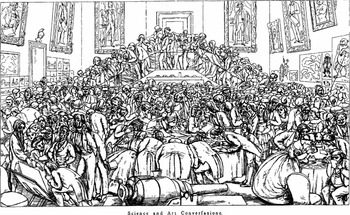
The sciences were by no means the only area affected by fears that Society, as it admitted new classes of experts, would be swamped by shop talk. In fact, the elite social world became more segmented and specialised, with specific occasions organised to appeal to the various ‘sets’ – artistic, literary, sporting, political. These are brilliantly depicted in a number of entertaining surveys of the contemporary scene, notably George Augusta Sala's Twice Round the Clock (1859) and Richard Doyle's Bird's Eye Views of Society (1864). Both men were survivors of the competitive world of journalism and keen observers of metropolitan life. Their books gave readers a sequence of panoramic views of the highly diversified settings of mid-Victorian London society: ‘At Home’ musical evenings; political banquets, art sales, clubland dinners and so forth. Doyle's ‘Conversazione: Science and Art’ (Figure 1) shows a room packed with ‘all kinds of novel, curious, interesting, and instructive objects’: antiquities, microscopes, telescopes, portraits, batteries, diving bells and weapons of war. The scientific soirée, which appears to have originated in France and was imported by Babbage in the 1820s, became one of the chief ways in which scientific discussion could take place on a more sustained basis within polite society.Footnote 64
‘Conversazione: Science and Art’, part of a series of engravings illustrating the increasingly distinctive spheres of mid-Victorian society. Richard Doyle, Bird's Eye Views of Society (1864), 45–6. Private collection.

Such occasions were attractive to the wider social world in that they offered a carefully mediated way of encountering scientific novelties. For those pursuing studies in the laboratory, field and museum, they increasingly provided opportunities for explaining science in a setting that was, in effect, halfway between a lecture and an informal conversation. As Doyle's cartoon shows, the role of the practitioner in these settings had changed: there is more overt didactic presentation and a stress on celebrity and individual discoverers. There are many women present, but they are part of the audience, with the exception of a lone ‘female savant’ talking to no one, identifiable by ‘a decided tendency she has to part her hair on one side’, standing alone in the middle of the right hand side of the picture. She does not belong to any of the groups of women taking a look through the telescopes or other stereoscopes; but neither is she engaged in the more specialised talk enjoyed by the scientific men. The implication is that learned women do not fit in to this new form of diffusing popularised science. As the accompanying text notes, the men of science ‘chat to one another, exchanging ideas, or criticising some new invention, or drinking tea’. The esoteric quality of their talk is signalled by their strange appearance: ‘Some with a half mild, half wild, slightly eccentric look, others eager and thoughtful, a good many with spectacles and long hair.’Footnote 65
The talk of such celebrities, even those without long hair, was seen to be worth recording. Those who knew the leading men of science well recognised the skill it took to manage conversations on topics that were increasingly seen as specialised and esoteric. A widely acknowledged master in such social settings was the lower-middle-class schoolmaster's son, Thomas Henry Huxley. Darwin thought him ‘the best talker I have known’, remarking that he was skilled in adjusting his conversation to the listener, retaining his fierce anti-clerical polemics for print or for conversation with intimates.Footnote 66 Huxley's son's biography made a special point of describing his style of conversation. A friend sent the following recollection:
I was in some trepidation, because I didn't know anything about science or philosophy; but when your mother began to talk over old times with my wife, your father came across the room and sat down by me, and began to talk about the dog which we had brought with us. From that he got on to the different races of dogs and their origin and connections, all quite simply, and not as though to give information, but just to talk about something which obviously interested me. I shall never forget how extraordinarily kind it was of your father to take all this trouble in entertaining a complete stranger, and choosing a subject which put me at my ease at once, while he told me all manner of new and interesting things.Footnote 67
Such eulogies, often found in late Victorian and Edwardian lives and letters, were effectively recommendations about how a man of learning could be a moral example to others in his consideration for the needs of others.Footnote 68 Huxley simultaneously encouraged his visitor to relax and showed that there was nothing to be feared about scientific conversation after all. In preserving such exchanges biographers felt that they were recording a style of talk that was disappearing.
Notably, it was in the waning years of the Victorian era that antiquarians developed the myth of the early eighteenth-century coffee-house as the apotheosis of civil conversation.Footnote 69 Certainly Huxley felt that the intellectual tone of high Society was declining. In an essay written just before his death in 1895, he raged against the ‘refined depravity among the upper classes’, who were taking in spiritualism and superstition rather than science. He spoke against the ‘half-cretinised products of over-civilisation’, who had become soft and weak-minded.Footnote 70 In this vividly imagined world of fin-de-siècle decadence, there seemed little place for the kind of serious, morally informed discourse on science that Huxley had attempted to bring into the highest realms of metropolitan social life.
Although Huxley's reaction was extreme, the final decades of the nineteenth century do mark a significant change in the relations between elite Society and what was rapidly becoming known as ‘the scientific class’. As Stefan Collini has pointed out, this is the period when ‘academic’ began to be used in a pejorative sense, as ‘not leading to a decision; unpractical; theoretical, formal, or conventional’.Footnote 71 In many of the trend-setting groups, the detailed pursuit of science became relatively unfashionable, replaced by a new emphasis on pleasure and partying for its own sake. Leonore Davidoff has shown in The Best Circles that Society became focused on the rituals of presentation to the queen, the marriage market and renewing the upper classes with American and industrial money – and less the matrix for discussing politics and ideas. Parties became more elaborate, with fantastic costume balls, more relaxed sexual attitudes and a stress on witty repartee.Footnote 72 As Lady Dorothy Nevill disapprovingly recalled at the end of her life:
In the old days Society was an assemblage of people who, either by birth, intellect or aptitude, were ladies and gentlemen in the true sense of the word. For the most part fairly, though not extravagantly, dowered with the good things of the world, it had no ulterior object beyond intelligent, cultured and dignified enjoyment, money-making being left to another class which, from time to time, supplied a select recruit for this corps d'élite. Now all this is changed, in fact, society (a word obsolete in its old sense) is, to use a vulgar expression, ‘on the make’.Footnote 73
Although her contrast is drawn too sharply, many commentators deplored the loss of moral earnestness as the century drew to a close. The social elite continued to learn (and talk) about scientific, technological and other ‘improving’ issues, but with a few distinguished exceptions,Footnote 74 this was increasingly not through contact with original investigators, but through articles by science journalists and professional writers. Topics for conversation were taken not from long articles in the Quarterly and Edinburgh, but from short punchy pieces in the dailies and weeklies. In effect, the best circles increasingly had their own ‘shop’, focused on high fashion, topical sensation and social ritual. Not surprisingly, commentators around this time acknowledged that within certain limits shop was ‘the best talk of all’, as it simply meant conversation informed by an understanding of the subjects under discussion.
Laboratory conversation
For their part, men of science at the end of the century increasingly sensed that the best conversations were to be had with those who possessed similar training. The typical practitioner was frequently pursuing science for pay, either as an academic, on behalf of the state, or as a professional writer.Footnote 75 The new breed of academically trained practitioners tended to look not to genteel Society for models of behaviour, but to middle-class ideals of propriety, or even to alternatives in scientific bohemia. One sign of this, found in many late Victorian scientific lives and letters, is the way in which biographers lamented what appeared as their subjects’ inordinate fondness for rank. Charles Lyell, Roderick Murchison and Mary Somerville seemed to belong to a different scientific world, one in which was seen to have paid undue obeisance to social rank.
Even Huxley's mastery of social chit-chat with the great, as we have seen, was considered as remarkable and worth recording. Such connections could be hugely important for public support and the funding of science. A quiet word in the corridors of the Athenaeum or Reform club could be worth hours of lobbying at Westminster; ties maintained through family or college connections could smooth over differences about the religious consequences of (say) evolution or materialism. But the generation of scientific men who came to power in the 1860s, however patient they might be in conversing with novices and potential patrons, thought of substantive scientific talk as occurring much more exclusively in their places of work. Memories of talk in general social settings are taken over by recollections of lively exchanges at the laboratory bench or in the field.
Younger scientists found such interactions intensely liberating. Talk of this kind, in their view, was just one of the many benefits that flowed from their campaign for professional careers. From this perspective, discipline boundaries were not Foucauldian prisons, but ways of maximising pleasurable occasions for the free exchange of ideas and a recognition of shared understandings.Footnote 76 At the most general level, proponents of science argued that the Enlightenment ideal of conversation as rational discussion among equals was realised most completely at the lab bench.
One sign of the new order was the increased significance of tea in the making of science. The situation in Cambridge, where the tensions of introducing science into a genteel culture of learning were especially acute, gives a good idea of the issues. Throughout most of the nineteenth century, tea had usually been served at evening parties. Some professors invited everyone around to their house or college rooms, part of the way in which scientific issues were part of more general patterns of academic life. John Stevens Henslow and his wife Harriet Jenyns Henslow hosted evening events of this kind in their home which the young Charles Darwin regularly attended.Footnote 77 Tea in the afternoon, an innovation introduced into London aristocratic houses during the 1840s,Footnote 78 does not appear to have become a university tradition for several decades. When new laboratories began to sprout up on the New Museums site during the 1870s and 1880s, they had no common rooms or facilities for refreshment.
So it was only in 1879 that the Cavendish professor, Lord Rayleigh, began to sponsor laboratory teas as a way of combining a relaxing break with possibilities for free discussion. It was an informal occasion, using a teapot with a broken spout. His wife Lady Rayleigh often attended, as did his sister-in-law Eleanor Sidgwick, who worked on determining the fundamental units of electricity.Footnote 79 As Rayleigh's son recalled, others in the laboratory soon joined in, so that tea afforded ‘a valuable opportunity for intercourse and exchange of ideas on scientific subjects’.Footnote 80 Afternoon tea, a fashionable innovation of the Victorian aristocracy, was thus reinvented by Lord and Lady Rayleigh as a means for ensuring that scientific discussion did not just focus on specific experiments, but retained the openness considered essential to innovation. At first the teas were held in the professor's rooms, but early in the twentieth century those engaged in planning new facilities began to set aside staff rooms and other spaces for scientific talk.Footnote 81
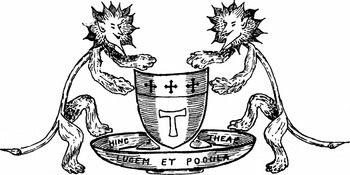
Many of the new research schools that developed in these years crystallised as much around the tea-room as the lab bench or field. A good example is archaeology, where new ideas which made the department famous from the early decades of the twentieth century were hatched over tea.Footnote 82 In 1908 the students at Cambridge's Botany School dubbed their magazine the Tea Phytologist, a spoof on ecologist Arthur Tansley's New Phytologist, founded six years before.Footnote 83 In a mock coat of arms from the 1934 issue (Figure 2), the teacup took its rightful place as the central symbol of modern scientific practice. Parodying the University's own celebrated motto, it proclaimed ‘Hinc lucem et pocula theae’ (‘from here, light and cups of tea’).Footnote 84 Informal scientific talk did not decline in the new circumstances of the twentieth century: but it moved into new places and assumed new forms.
Parody coat of arms for the Botany School in Cambridge, with rampant helianthuses facing a cup of tea. Tea Phytologist, 23 Jan. 1934, vol. x, no. 1, p. 1. University Archives, BG 66. By permission of the Syndics of Cambridge University Library.

Conclusion
There is no easy divide apparent in any part of this story between ‘popular’ and ‘expert’ science. The marketplace for science has always involved exchange, and never simply passive consumption. In the late Georgian and early Victorian era, the talk of the scientific elite had been an integral part of the conversational practice of polite society. This was even true of accounts of original research, as indicated by the case of the Geological Society and similar groups in London's West End clubland. By the end of the century, the situation had changed. Practices in science still drew upon those of polite society, but often in distinctive settings such as the laboratory tea room. As I have suggested, rituals associated with the genteel world of polite conversation became key elements in the academic research schools that dominated science in the late nineteenth and twentieth centuries. Such borrowings are no less significant or pervasive just because they were less obvious.
There could be a temptation to read the story I have told as yet another indication of the impact of specialisation and professionalisation within science. And clearly the creation of new roles, new academic structures and new forms of paid careers is part of what made the ‘scientist’ a less likely dinner companion in a Mayfair townhouse in 1900 than his counterpart three-quarters of a century earlier.
Science, with its arcane terminology and finely honed disciplinary categories, has often been depicted as a leading force in breaking down the possibilities for a coherent intellectual culture.Footnote 85 In Absent Minds, Collini shows how central the issue of specialisation became to debates about the character of intellectual life in early twentieth-century Britain.Footnote 86
Yet as Collini also points out, discussions of the subdivision of labour in the pursuit of knowledge have characteristically been accompanied by a sense of decline: the world of the generalist is always the world we have lost. Accusations of scholasticism and over-specialisation are as old as knowledge itself, and are certainly not peculiar to late Victorian and Edwardian Britain.Footnote 87 If anything, the arrival in domestic settings of science-based technologies such as electric lighting made the topicality of science more evident than ever before.Footnote 88 Moreover, the emergence of science as a paid career was the outcome of a campaign, by Babbage and others, to associate the pursuit of knowledge with the gentlemanly status long enjoyed by those in the existing professions of medicine, the military and the law. It was not intended to break the link between science and gentility, but to strengthen it. There is no reason, then, to see the drive for professionalisation within science as the primary reason for the transformation in practice I have sketched here.
Instead, the growing tensions in talking about science towards the end of the nineteenth century can best be understood as part of more general changes in the social organisation of elites in Britain. These changes had as much – probably more – to do with the specific needs of genteel society than with any changes in the comparatively small-scale world of science. During the agricultural depression of the 1870s through the 1890s, new money from America and the wealthy commercial classes had to be brought into the marriage market, and this made learned company at the dinner table potentially awkward. Men of science were increasingly excluded from the highest social circles not because their knowledge was more specialised than it had been, but because the purpose of conversation among the elite had been transformed.
Paradoxically, then, men of science began to gain the professional status some of them had craved, at the very moment that status was losing its cachet as an entry into genteel society. The new plutocrats, increasingly focused on creating a potent fusion between power and wealth, welcomed the money flowing into late Victorian and Edwardian London from the United States; but they did not have much of a taste for what appeared to be another American import, the ‘scientist’. The word had been invented at a meeting of the British Association for the Advancement of Science in the 1830s, but became regularly used in Britain only from the 1890s.Footnote 89 With a few exceptions, the fashionable world did not embrace the growing class of experts associated with industry, state education and government bureaucracy. The unwritten rules of talk had changed. To discuss the electron theory or fossil botany at ordinary dinners and soirées, other than when these subjects were in the news, was (with rare exceptions) seen to be talking shop.
The taboo reached its apotheosis around the time of the debate over the novelist C. P. Snow's Two Cultures of 1959, which in many ways was a meditation on scientific conversation. Snow puzzled about the kinds of subjects deemed appropriate for discussion at London parties and Cambridge high tables. ‘Oh, those are mathematicians’, he reported one college head as saying, ‘We never talk to them.’ Snow was appalled that so many otherwise well-educated people could complacently admit that they knew nothing of non-parity conservation or the second law of thermodynamics. The problem, in his partisan diagnosis, involved a divide between science and all the other main institutions of British public life, from the Westminster establishment to the haunts of the self-proclaimed literary avant-garde in Chelsea. The distance from those places to Imperial College and the Science Museum in South Kensington was the conversational equivalent of an ocean, ‘as though the scientists spoke nothing but Tibetan’.Footnote 90 The separation, Snow suggested, had been bad at the start of the twentieth century, but in the intervening decades it had only become worse.Footnote 91 Snow's book created a controversy that has continued for half a century, although the situation it described has since been transformed out of all recognition through television, the internet and the impact of science on everyday life. The ‘two cultures’ debate was itself one sign that things were beginning to change, as the problem of how to talk about science emerged as the topic of lively conversation it remains today.