Implications
We track efficiency on an intensively managed farm of 4000 Lacaune dairy-ewes during 7 years in which the farm switched from a five lambings per year system (5LY) to a 10 lambings per year system (10LY). During the 10LY-period, workload/worker fell by 50%, workload distributed more evenly throughout the year, investment in facilities became possible, ewes showed longer productive life, and productivity was similar to that during the 5LY-period. Therefore, switching to a 10LY system does not necessarily cause losses of productivity or animal welfare and may even be compatible with better human well-being and outcomes than less intensive management.
Introduction
Sheep is a markedly seasonal species but farm practices can be optimized to increase several production parameters and thereby ensure a steady supply of meat and milk throughout the year (Lewis et al., Reference Lewis, Notter, Hogue and Magee1996). Increasing the numbers of lambings/ewe per year and lambings outside the reproductive season can be particularly profitable because higher prices can charged on the market at these times (Caja and de Rancourt, Reference Caja and de Rancourt2002). Accelerated lambing systems involve breeding ewes more than once a year, which can be particularly effective with sheep that have already shown good out-of-season performance and long breeding seasons (Fogarty and Mulholland, Reference Fogarty and Mulholland2013). Several accelerated sheep mating systems have also been developed at the flock level, including the Morlam system, which involves continuous exposure to rams (Iniguez et al., Reference Iniguez, Quaas and Van Vleck1986); twice-yearly lambing at 6-month intervals (Walton and Robertson, Reference Walton and Robertson1974; Duncan and Black, Reference Duncan and Black1978); the Camal system, in which subflocks are successively mated at bimonthly intervals, potentially allowing lambings every 6, 8 or 10 months (Robinson, Reference Robinson1980; Iniguez et al., Reference Iniguez, Quaas and Van Vleck1986); accelerated 8-monthly lambing, allowing up to three lambings/ewe in 2 years (Notter and Copenhaver, Reference Notter and Copenhaver1980; Marai et al., Reference Marai, El-Darawany, Abou-Fandoud and Abdel-Hafez2009; Zarkawi, Reference Zarkawi2011; Fogarty and Mulholland, Reference Fogarty and Mulholland2013); a program of four lambings/ewe in 3 years (Menegatos et al., Reference Menegatos, Goulas and Kalogiannis2006); or the START system involving up to five lambings/ewe in 3 years through five concurrent annual breeding and lambing seasons (Lewis et al., Reference Lewis, Notter, Hogue and Magee1996; DeNicolo et al., Reference DeNicolo, Morris, Kenyon, Kemp and Morel2008a and Reference DeNicolo, Morris, Kenyon, Kemp and Morel2008b). The theoretical potential of accelerated systems is often not achieved because of seasonality (Lewis et al., Reference Lewis, Notter, Hogue and Magee1996); when these systems work well, they allow two to five labor-intensive lambing seasons during the year.
Dairy sheep production in Europe is relevant, with just 14.3% of the world dairy ovine population, but producing 29% of the world sheep milk. The European Union (EU) produces 93% of the European sheep milk, with an annual yield of 2 769 460 Tm, and Spain ranks third within the EU, producing 552.510 Tm/year (FAOSTAT, 2014). Regarding Spanish ovine breeds, from a total of ~1 300 000 breeders, 750 000 are sheep of foreign high producing breeds (mainly Assaf, Lacaune and crossbreeds; Ugarte et al., Reference Ugarte, Ruiz and Gabiña2001). Currently in Spain there is an official census of 47 497 full-blooded Lacaune breeders produced under intensive management conditions (MAPAMA, 2016).
In order to improve organization and management under intensive productive conditions, a high-yielding Lacaune dairy farm in Spain implemented a system of five lambing periods/year (5LY) (Hernandez et al., Reference Hernandez, Elvira, Gonzalez-Martin, Gonzalez-Bulnes and Astiz2011 and Reference Hernandez, Elvira, Gonzalez-Martin and Astiz2012; Elvira et al., Reference Elvira, Hernandez, Cuesta, Cano, Gonzalez-Martin and Astiz2013a), similar to the START system. Although the system achieved the objective of 1.4 lambings/ewe per year, high mortality occurred among newborn lambs, presumably because the high lambing concentration overwhelmed the farm staff’s ability to properly monitor lambs and ewes (own not published data). Lambings were concentrated in 5 months of the year, when workers had to care, each month, for more than 1440 newborn lambs from more than 900 lambings. During the remaining 7 months of the year, workers had a relatively light workload.
To distribute the workload more evenly over the year, this farm implemented a novel system of 10 lambing periods per year (10LY). The hypothesis of the study is that this more intensive reproductive rhythm with more lambing periods/year will distribute the workload throughout the year more evenly, with probable no negative consequences on the productivity of the flock. Therefore, to demonstrate this, the present study examined efficiency, productivity and workload on this intensively managed dairy sheep farm during a 7-year period covering when the 5LY and 10LY systems were in place, trying to determine whether a more intensive management system could be compatible with farm productivity, animal welfare, and rational workload distribution.
Material and methods
Animals and management
This observational study analyzed productive data from a dairy Lacaune herd of an average of 3700±231 adult ewes, managed in an intensive way during 2009 to 2015. A total of 27 415 lactations of 13 268 Lacaune sheep were recorded. The first lambing was recorded on 1 January 2009 and the last birth in the study occurred on 31 December 2015.
The ewes belonged to a single commercial Farm (Cerromonte Farm, San Juan de la Encinilla, Avila, Spain; continental weather, latitude of 40.90 N, altitude of 900 m). The original flock had been imported between 2005 and 2006 from the French Lacaune Association (Upra Lacaune Region, Aveiron, France). All sheep were housed indoors but exposed to natural photo- and thermoperiods, and monitored for adequate health status and specific pathogens. They received unifeed mixtures (total mixed ration system) according to the sheep’s production level. This ration contained corn, soybean, dried beet pulp, alfalfa, rye-silage and wet brewer´s grain.
Ewes were milked twice a day and the lambs were raised completely artificially. Lambs were weaned at 10 kg of live weight at ~18 to 25 days after birth. Facilities did not change essentially during the study period, except that new lamb facilities were built in April 2014. From 2009 until then, lambs were housed indoors in eight pens (~150 lambs/pen) with a concrete floor and straw bedding. Automatic lamb feeders were used, and temperature was not controlled. From April 2014 until the end of the study period, newborn lambs were kept in a closed ‘weaner unit’ initially designed for piglets, with a total capacity of 960 newborn lambs, distributed in four sub-units comprising pens containing 60 lambs per pen. Pens featured automatic lamb feeders, slatted flooring, controlled temperate (minimum, 17°C; maximum, 27°C) and a separate ventilation system in each sub-unit. This facility, which cost ~€150 000 (US$164 600) was sufficient for the 10LY system, which involved an average of 600 lambings per month and ~900 lambs per lambing period.
The average stay time for the lambs ranged from 18 to 25 days. Afterwards, rearing females and males were transferred to rearing pens, while male lambs were slaughtered.
The study did not include any experimental intervention on the animals, beyond the routine farming management practices that were in accordance with Spanish and European farming and animal welfare regulation.
Description of reproductive management systems
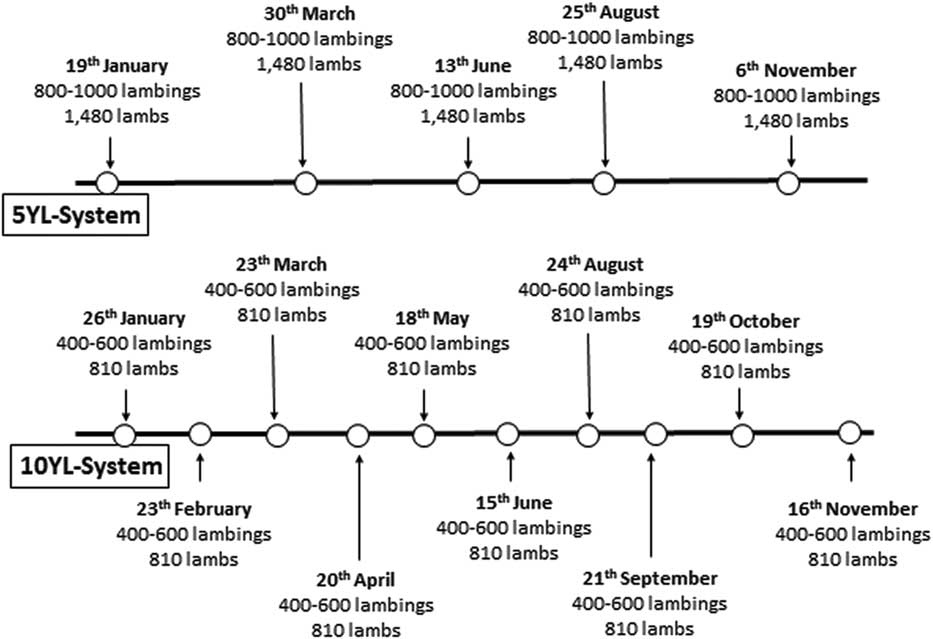
Reproductive management with the 5LY and 10LY systems aimed at optimizing individual reproductive capacity to a minimum index of 1.3 lambings/ewe per year with a prolificacy of 1.6 over the study period. The 5LY system consisted of five lambing periods/year, each lasting ~1 month, beginning on the following dates: 19 January, 30 March, 13 June, 25 August and 6 November. This system was implemented in 2010, 2011 and 2012. It was expected to result in ~800 to 1000 lambings and 1480 newborns per lambing period (Figure 1). Three full-time farm workers managed the lambing pens during 5LY implementation, with an expected ratio of 493 newborns per worker during each lambing period, and a total of 15 person-months needed, during 5 months throughout the year.
Diagram outlining the different lambing periods during the year implemented during two different management system: 5LY (five lambing periods per year) and 10LY (10 lambing periods per year) on dairy sheep managed intensively on one large farm in Spain.

The 10LY system consisted of 10 lambing periods per year, each lasting 28 days and starting on 26 January, 23 February, 23 March, 20 April, 18 May, 15 June, 24 August, 21 September, 19 October and 16 November. (August and December were ‘free’ months to allow personnel holidays). This system was applied in 2014 and 2015. It was expected to result in ~400 to 600 lambings and 810 newborns per lambing period (Figure 1). Two full-time farm workers managed the lambing pens during 10LY implementation, with an expected ratio of 405 newborns per worker during each lambing period and a total of 20 person-months needed during 10 months throughout the year.
Individual reproductive management on this farm was as described (Elvira et al., Reference Elvira, Hernandez, Cuesta, Cano, Gonzalez-Martin and Astiz2013a). In brief, the ewes and maiden sheep received a synchronization protocol based in the insertion of intravaginal progestogen-impregnated sponges (20 mg fluorogestone acetate, FGA; (Chronogest®, MSD AH, Boxmeer, the Netherlands)) for 14 days. On the day of sponge removal, sheep received 400 i.u. of eCG (Foligon®, MSD AH, Boxmeer, the Netherlands), then ewes were exposed to rams and natural mating was allowed for 25 days (5LY) or 28 days (10LY). The ratio of rams to ewes was 1 : 5 when ewes were synchronized with sponges and 1 : 20 when only the ram-effect was used. Ram fertility was checked individually by routine ram reproductive capacity test (libido, mounting capacity and sperm motility and concentration), performed by the veterinarian of the farm at the beginning of each breeding season by each ram.
Pregnancy was diagnosed by transabdominal ultrasonography at 35 to 60 days post-mating. The mean age at first lambing was 420±57 days (13.8 months). The ewes were mated again ~50 to 140 days after lambing. From the day after lambing, ewes were milked twice a day, with no suckling period for lambs, and milking continued until production dropped below 0.5 l/day or until 30 days before the next lambing, when ewes were dried off.
Statistical analysis of results
The observation period was 2009 to 2015, inclusive, with 2009 and 2013 considered transition periods before implementation of each system. Lactations that occurred during these years were included in the first descriptive analysis of the farm during the study period.
Lactations that occurred during 2010 to 2012 (under the 5LY system) and 2014 to 2015 (under the 10LY system) were included in the quantitative analysis. This second analysis did not include lactations during the transition years 2009 or 2013 in order to gain a picture of the ‘steady state’ situation under each management system. Given the observational nature of our study, it was not possible for us to exclude the influence of time-dependent factors on similarities and differences observed between the period 2010 to 2012 under the 5LY system and the period 2014 to 2015 under the 10LY system. Thus, we could not attribute observed differences and similarities between the two periods specifically to the respective management systems.
Over the entire period of 2009 to 2015, 27 415 lactations from an average of 3746 Lacaune sheep/year were recorded, and lactation orders ranged from 1 to 11. During 2010 to 2012 (under the 5LY system), 11 250 lactations were recorded from an average of 3580 ewes/year; during 2014 to 2015 (under the 10LY system), 7341 lactations were recorded from an average of 4051 ewes/year.
Productive parameters and their distribution over time under each management system were recorded for different types of lactations. Lactations were stratified by
∙ order (1 to 11);
∙ abortion, with ‘AL’ used to classify lactations with abortion; ‘AAL,’ lactations after a lactation with abortion; and ‘NAL,’ lactations with no abortion, lactations with no abortion that also followed a lactation without abortion;
∙ productivity, with productive lactations (PL) defined as lactations with >120 days in milk (DIM) and >100 l/lactation, and other lactations defined as nonproductive (NPL);
∙ and length, with extremely long lactations (ELL) defined as >350 DIM and other lactations defined as normal length lactations (NLL).
Performance records were collected, stored and validated using on-farm Alpro Windows software (DeLaval, Tumba, Sweden). Lactation records included dates of birth, lambing, drying-off and culling. Lactations were assigned to the year in which they began, independently of when they ended. The following productive parameters were calculated: milk yield/lactation (MY); daily milk yield (YDIM); lactation length (LL in days); dry period length (DPL); previous interlambing interval (ILI-P); interlambing interval of the current lactation (ILI); and DPL-P, previous dry period length (before the current lactation). The following demographic parameters were calculated: ewes on farm/year (n); lactations/year (n); ewes included/year (n), restricted to ewes whose lactations were included in the study; yield/ewe per year (l); lambings/ewe per year (n); prolificacy, calculated as born lambs/lambing each year; lambs/ewe per year, referring to live lambs/ewe (n); culling rate (%); culled ewes/year (n/N); milked ewes/year (%); live lambs/year (n); lamb mortality/year (%); and lamb mortality/year (n/N).
Missing or obviously erroneous data were discarded, including 465 of 27 880 lactations (1.67%) because of inconsistency in recorded data. These inconsistencies were due to inconsistency between lambing and drying-off dates (76 lactations); unrealistically long lactations (320), probably because of failure to enter the date of the next lambing; and erroneous recording of null liters of milk production for more than 20 days (69 lactations).
Data were analyzed using SPSS 22.0 (IBM, New York, USA) by the Statistical Department of the Center for Research Support of Complutense University of Madrid, Spain. Data were expressed as mean values±SD and SEM values were included for each stratification of the data (in tables); and as mean values±SEM (in figures). Lactation order was included as a fixed factor in the model. Differences between the results from the two periods were assessed for significance using analysis of variance (ANOVA) corrected for variance homogeneity by Bonferroni test and post hoc Duncan test. The threshold of significance was defined as P<0.05.
Results
Demography and productivity during the whole studied period (2009 to 2015)
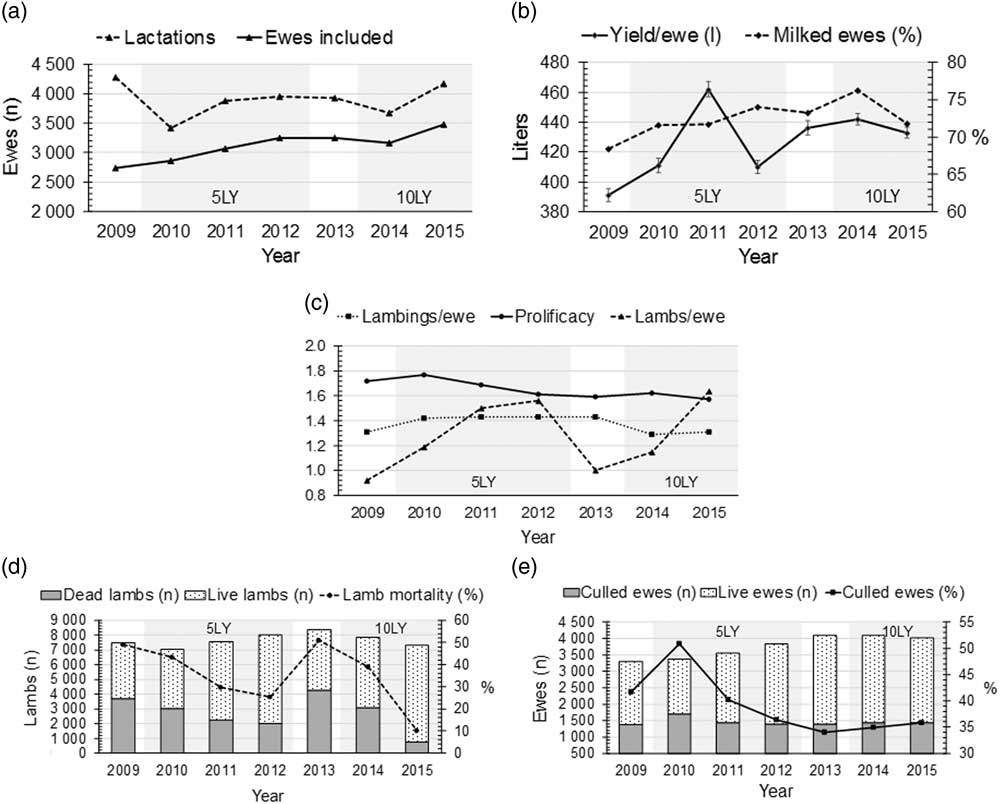
Figure 2 shows demographic data on the sheep population and data on the total set of lactations as well as the subset of lactations included in the comparative analysis. The population increased slightly during the period with the 5LY system, then remained stable from 2013 to 2015, with the 10LY system. Prolificacy and lambings/ewe per year were also stable (Figure 2c). The culling rate of adult ewes decreased slightly with time (Figure 2d). Live lambs per ewe increased at the same time that lamb mortality steadily decreased (Figure 2e).
Demographics and lactation data on dairy sheep managed intensively on one large farm in Spain, 2009 to 2015. Lactations and ewes included in the study (a); Average yield per ewe per year and total of milked ewes (b); Lambings per ewe per year, average prolificacy and average of lambs per ewe (c); Total of dead and live lambs, and lamb mortality (d); Total of culled and live ewes and annual culling rate (e). Shaded areas indicate years when the 5LY or 10LY management systems were implemented. `Ewes' in (a) refers to ewes whose lactations were included in the study; all other parameters were calculated for all ewes on the farm. Prolificacy in (c) was calculated as newborns/lambing and lambs/ewe was calculated live lambs/ewe/year.

Over the entire study period, 27 415 lactations were recorded. Average milk yield per lactation was 342±184 l/lactation; average daily production per ewe, 1.75±1.19 l/day per ewe; lactation length, 192±83 days; average length of dry period, 62.9±37.2 days; and interlambing interval, 287.0±48.3 days.
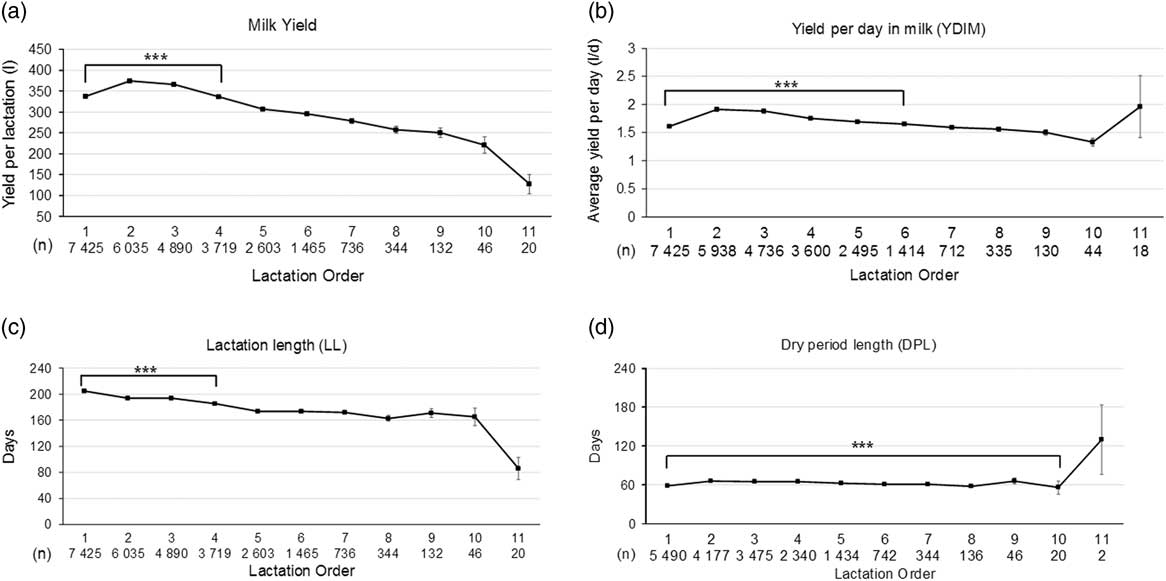
A total of 7425 lactations were first-order, 6035 second, 4890 third, 3719 fourth, and 2603 fifth. The remaining lactations were order ⩾6. The average productivity per lactation ranged from 0 to 1042 l/lactation. The most productive lactations were 1 to 4, which showed similar milk yield, which was significantly higher than that of later orders (P<0.0001, Figure 3a). The six first lactations showed similar milk yield per lactation and daily milk yield, which were significantly higher than those of later lactations (P<0.0001; Figure 3b). Lactation length was similar among lactations 1 to 4, and it was significantly longer than later lactations (Figure 3c). Dry period did not differ significantly across lactation orders, although it was significantly longer for lactation 11 (130 days) than the average across all lactation orders (63 days, P<0.0001, Figure 3d). This result should be interpreted cautiously since the dry period was recorded for only two lactations of order 11.
Productivity parameters on the dairy intensive farm by lactation order, 2009 to 2015. Milk yield (a); Yield per day in milk (b); Lactation length (c); Dry period length (d). Numbers below the lactation orders indicate the number of lactations included in the calculation of each parameter. Values within the square bracket marked with asterisks differ significantly from values outside the bracket (P<0.0001).

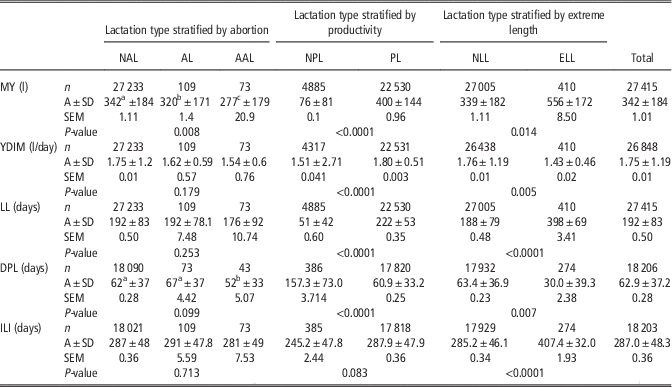
Table 1 summarizes other results obtained after stratifying lactations in different ways. Lactations after an abortion were less productive and involved a shorter dry period than lactations involving an abortion or normal lactation without an abortion. The dry period of a lactation before a lactation with abortion (79.65±46.31 days) was significantly longer than the dry period of a lactation before a normal lactation (62.84±37.07 days). Nonproductive lactations were less productive and shorter than productive lactations, and they involved a longer dry period. Extremely long lactations were associated with higher total milk yield, but lower daily production and longer interlambing interval.
Production parameters on a dairy sheep intensive farm during the period 2009 to 2015 by lactations stratified by abortion, productivity and length

NAL=normal lactation, without abortion; AL=lactation with an abortion; AAL=lactation after a lactation with abortion; NPL=nonproductive lactation or the opposite of PL; PL=productive lactation or lactation with ⩾120 DIM and >100 l/lactation; NLL=normal-length lactation; ELL=extremely long lactation (>350 DEL); MY=milk yield/lactation; A=average; YDIM=daily milk yield; LL=lactation length; DPL=dry period length; ILI=interlambing interval of the current lactation.
Comparison between 5LY (2010 to 2012) and 10LY (2014 to 1015)
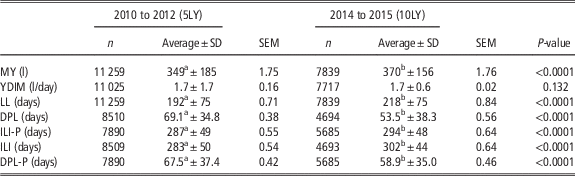
Table 2 summarizes productivity results during the earlier period featuring a 5LY management system and the later period featuring a 10LY system. Mean milk yield indices did significantly differ between both periods, with the latter period involving slightly higher total milk yield production, with shorter dry period lengths and longer lactations. The interlambing periods were longer when the 10LY system was implemented.
Productivity parameters on an intensive dairy sheep farm during an earlier period featuring a 5LY (five lambing periods per year) management system and a later period featuring a 10LY (10 lambing periods per year) system

MY=milk yield/lactation; YDIM=daily milk yield; LL=lactation length; DPL=dry period length; ILI-P=previous interlambing interval; ILI=interlambing interval of the current lactation; DPL-P=previous dry period length (before the current lactation).
Values labeled with superscripts a and b differed significantly between the two periods (P<0.0001).
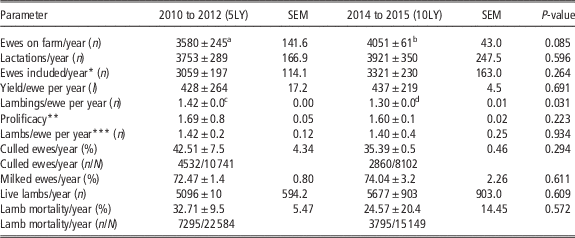
The sheep population increased slightly until 2012, with the two periods associated with similar total yield/ewe per year, lambs/ewe per year and prolificacy, but dissimilar number of lambings/ewe per year. During the 10LY period, adult ewe culling and lamb mortality numerically decreased (Table 3).
Demographics and lactation data on an intensive dairy sheep farm during an earlier period featuring a 5LY (five lambing periods per year) management system and a later period featuring a 10LY (10 lambing periods per year) system

Unless otherwise noted, data refer to the entire flock.
Values labeled with superscripts a and b tended to differ between the two periods (P=0.085). Values labeled with superscripts c and d differed significantly between the two periods (P<0.05).
* Includes only ewes whose lactations were included in the study.
** Calculated as newborns/lambing each year.
*** Refers to live lambs/ewe.
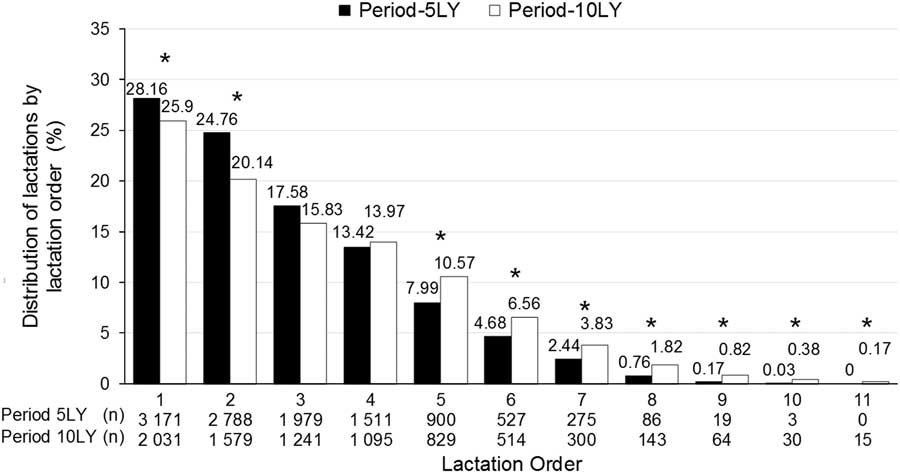
With the 5LY system, the number of lambings/ewe per year was 1.42±0.01, compared with 1.30±0.01 during 2014 to 2015 (P<0.05). Prolificacy, in contrast, remained stable between the two periods (1.69±0.78 v. 1.60±0.14 lambs; Table 3). The distribution of lactation orders differed only slightly between the two periods, though significantly more higher-order lactations were observed during 2014 to 2015 (P<0.0001, Figure 4).
Distribution of lactation orders during the periods when the 5LY (five lambing periods per year) and 10LY (10 lambing periods per year) systems were implemented on a dairy sheep intensive farm. Numbers below the lactation orders indicate the number of lactations included in the calculation of each parameter. The frequency of the different lactation orders differed significantly between the two periods (*P<0.0001), with the exception of lactation orders 3 to 4.

Similar rates of lactations with abortion were observed with both systems (0.4% v. 0.6%, P>0.05). In contrast, the rate of nonproductive lactations was significantly higher in the 5LY system (14.3%, 1607/11259) than in the 10LY one (8.4%, 657/7 841; P<0.0001). The rate of extremely long lactations was significantly lower during 2010 to 2012 with the 5LY system (1.0%, 115/11259 v. 2.7%, 208/7 841; P<0.0001). Dry periods were significantly shorter and interlambing intervals significantly longer with 10LY (both P<0.0001).
Workload distribution
During the 5LY period, an average of 889.19±158.47 lambings per lambing period (range, 664 to 1291) was recorded, resulting in an average of 1502.73±267.82 live newborn lambs/lambing period and 20.80±18.73 lambings/day (range, 1 to 110). This corresponded to 500.6 lambs and 296.6 lambings per worker during the lambing periods. Extra work hours were necessary during the first 2 weeks of lambing periods, when the number of lambings/day was highest.
During the 10LY period, an average of 443.66±253.18 lambings per period (range, 85 to 937) was recorded, resulting in an average of 709.85±405.10 live newborn lambs/lambing period and 15.16±7.83 lambings/day (range, 1 to 51). This corresponded to 354.5 lambs and 221.5 lambings per worker during the lambing periods.
Discussion
This long-term observational study of a single intensive dairy sheep farm in Spain verified the working hypothesis that a more intensive reproductive rhythm with more lambing periods/year would distribute the workload throughout the year more evenly, without negative consequences on the productivity of the flock. The results show more milk/ewe per lactation and longer ewe longevity under a 10LY management system than under a 5LY management system, without concomitant changes in other productivity or efficiency parameters. In addition, lambings and newborn lambs were distributed more evenly over the year under the 10LY system, with fewer lambs and lambings per worker. Although the observational nature of our study prevents us from attributing our results directly to one or other management system, our data clearly indicate that a 10LY system is compatible with high productivity, good animal welfare, lower worker burden and more efficient resource use than a 5LY system, translating to higher profitability. In fact, when the 10LY system was in place, the farm was able to purchase a new lamb facility, which may have helped reduce lamb mortality. The investment with a 5LY system could not have been possible due to the double amount of lambs per lambing period, that would have enhanced the investment to more than 100%.
Mean milk yield indices did not differ significantly between 5LY and 10LY system periods, though the 10LY period involved slightly higher total milk yield per lactation (349±185 v. 370±156 l), mainly due to a shorter dry period length and longer lactations. Studies from our group have already shown positive results of optimal dry period length (Hernandez et al., Reference Hernandez, Elvira, Gonzalez-Martin and Astiz2012). While interlambing period was longer by 20 days with the 10LY system than with the 5LY one, this difference is unlikely to be relevant in the field, and it may simply result from the fact that ewes were slightly older in 2014 to 2015 (Lewis et al., Reference Lewis, Notter, Hogue and Magee1996). The percentage of extremely long lactations was higher during the 10LY period than during the 5LY one, consistent with the longer previous interlambing interval, as previously observed (Hernández et al., Reference Hernandez, Elvira, Gonzalez-Martin and Astiz2012). The percentage of nonproductive lactations was lower with 10LY, which is consistent with slight increases in average milk yield/lactation and average milk/ewe per year.
Low aseasonal reproductive performance often reduces the effectiveness of accelerated or out-of-season lamb production systems (Lewis et al., Reference Lewis, Notter, Hogue and Magee1996; DeNicolo et al., Reference DeNicolo, Morris, Kenyon, Kemp and Morel2008b). Several factors helped reduce flock seasonality in our study. Lacaune sheep are intrinsically less sensitive to photoperiod than other dairy breeds (Palacín et al., Reference Palacín, Abecia, Forcada, Casao, Cebrián, Muiño, Palacios and Pontes2008; Ramírez-Andrade et al., Reference Ramírez-Andrade, Salama, Caja, Castillo, Albanell and Such2008), and sheep under intensive conditions are unaffected by seasonal variations in food availability and thermoperiod, which otherwise influence animal performance (Finocchiaro et al., Reference Finocchiaro, van Kaam, Portolano and Misztal2005). The slightly lower number of lambings/ewe per year during 2014 to 2015 (1.30±0.01 v. 1.42±0.01) is probably due to the fact that more mating periods occurred outside the reproductive season during this time than during 2010 to 2012.
None of the remaining lambing-related indices differed significantly between the periods with 5LY and 10LY (Table 3). Annual mortality was similar, although the relatively small datasets increase the risk that we failed to detect a true difference. Despite the huge quantity of individual data included in the study, annual index was one per year. Therefore, the total amount of them in our dataset were 3 v. 2, for the 5LY and 10LY periods, respectively. The new lambing facilities appeared to be associated with a tendency toward lower mortality, in part by reducing overcrowding in lamb pens; these effects have been observed on other intensive dairy farms (Dwyer et al., Reference Dwyer, Conington, Corbiere, Holmoy, Muri, Nowak, Rooke, Vipond and Gautier2016; Holmoy et al., Reference Holmoy, Waage, Granquist, L’Abee-Lund, Ersdal, Hektoen and Sorby2017). The investment in new facilities made sense only with the 10LY system because of the more intense reproductive rhythm. It would likely not have been cost-effective under the 5LY system.
Significantly more higher-order lactations occurred during the 10LY period (Figure 4). This may reflect the fact that the flock was growing until the end of 2012, so the proportion of ewes with fewer lactations was relatively large. It may also mean that the conditions with the 10LY system, extended the productive life of ewes, which would explain why the ewe culling rate decreased continuously (Figure 2). A similar lengthening of productive life was observed in an accelerated Churra dairy ewe management system involving three lambings in 2 years, relative to an annual lambing system (El-Saied et al., Reference El-Saied, de la Fuente and Primitivo2006). The potential ability of the 10LY system to prolong ewe productive life may be even greater than we observed because the culling rate during periods of flock growth is usually lower, and the flock was growing on the study farm during implementation of the 5LY system.
Lambing- and lamb-related workload with the 10LY system was lower and spread more evenly throughout the year than with the 5LY system, making the 10LY management system easier to implement with two workers needed all over the year than the 5LY system with three workers working just during 5 months/year at the lambing and lamb pens. This likely translated to better ewe management, which may help explain the observed decrease in culling and more higher-order lactations. Another benefit is likely to be worker welfare on the farm, which future studies should measure directly, as it is particularly important on large, intensively managed farms (Billikopf, Reference Billikopf2001; Requejo et al., Reference Requejo, Martín, López, Hernández and Ruíz Mantecón2011; Ripoll-Bosch et al., Reference Ripoll-Bosch, Joy and Bernues2014).
The average milk yield per lactation on the study farm decreased from 434±183 l/lactation for 2005 to 2009 (Elvira et al., Reference Elvira, Hernandez, Cuesta, Cano, Gonzalez-Martin and Astiz2013b) to 342±184 l for 2009 to 2015. This may be due, to the fact that our earlier study of this farm included only complete lactations of healthy ewes (78% of total lactations), while the present study included all lactations. Moreover, the flock was younger during the previous study, with most ewes producing their first three lactations. While Hernandez et al. (Reference Hernandez, Elvira, Gonzalez-Martin, Gonzalez-Bulnes and Astiz2011) found that mean milk yield declined with ewe age from the second lactation onwards, we found similar milk yield for lactations 1 to 4 in this study (Figure 3). Still other studies have shown lower milk yield during the first lactations in various sheep breeds, including Lacaune (Barillet et al., Reference Barillet, Boichard, Barbat, Astruc and Bonaiti1992; Thomas et al., Reference Selvaggi, D‘Alessandro and Dario2014), Latxa (Gabiña et al., Reference Gabiña, Arrese, Arranz and Beltran De Heredia1993), Awassi (Gootwine and Pollott, Reference Gootwine and Pollott2000) and Italian traditional breeds (Selvagi et al., 2017). These discrepancies may be due to differences in management systems. For example, average age at first lactation was 420±57 days in the present study, slightly lower than the average age in our previous study of the same farm (432±77 days; Hernández et al., Reference Hernandez, Elvira, Gonzalez-Martin, Gonzalez-Bulnes and Astiz2011). Females with a mean Age at first lambing >420 days probably achieve maximal milk productivity in the first lactations, because udder development is complete by the first lambing (Pollott and Gootwine, Reference Pollott and Gootwine2004). Our results likely also reflect the fact that our farm was no longer growing continuously from 2013 and ewes were aging. Nevertheless, the overall productivity during the study period was quite high, comparable with results reported for intensive management of Assaf sheep (Pollott and Gootwine, Reference Pollott and Gootwine2004) and Lacaune sheep (Regli, Reference Regli1999).
In our study, lactations following a lactation interrupted by an abortion were shorter and less productive than normal lactations. It is likely that such a metabolically challenging event impairs the next lactation. Surprisingly, we observed that the dry period of a lactation before a lactation with an abortion was significantly longer than the dry period of lactations before normal lactations. To our knowledge, this has never been reported before, and we are unable to explain it based on available data. Very often longer dry periods are linked to health problems, that could preclude an impaired health status during the next gestation, increasing perhaps the probability to suffer an abortion. Future research should verify this relationship and seek to explore its causes.
Conclusions
On this Lacaune dairy sheep intensive farm, milk yield was slightly higher, lambings/ewe per year and ewe culling rate were lower, and workload was more uniformly distributed during the period with a 10LY. Therefore, our data do indicate that a highly intensive 10LY system is compatible with a lack of animal overcrowding, long animal productive life, efficient resource use and relatively low worker burden. In fact, our results further show that these parameters can be better under a 10LY system than under a less intensive 5LY system.
Acknowledgments
The authors express their gratitude to Pedro Cuesta and Iagoba Cano (Research Support Department of the UCM, Madrid, Spain) for statistical analyses, and to the farm staff and veterinarians for their work.
Declaration of interest
None.
Ethics statment
The study did not include any experimental intervention on the animals, beyond the routine farming management practices that were in accordance with Spanish and European farming and animal welfare regulation.
Software and data repository resources
None.