Introduction
Binge eating refers to the consumption of a large amount of food in a discrete period, accompanied by a sense of loss of control. It is a core symptom of bulimia nervosa and binge-eating disorder (Fairburn, Reference Fairburn2008), is prevalent in one in 20 adults from the general population (Mitchison, Hay, Slewa-Younan, & Mond, Reference Mitchison, Hay, Slewa-Younan and Mond2012), and is associated with wide-ranging medical, psychological, and social complications (Kärkkäinen, Mustelin, Raevuori, Kaprio, & Keski-Rahkonen, Reference Kärkkäinen, Mustelin, Raevuori, Kaprio and Keski-Rahkonen2018).
The ability to effectively prevent or treat binge eating relies upon the identification and successful modification of key binge eating risk and maintaining factors. Dietary restraint is one variable hypothesised to be both a binge eating risk and maintaining factor according to theoretical models, such as the dual pathway model (Stice, Reference Stice2001) and the cognitive-behavioural model (CBT) (Fairburn, Cooper, & Shafran, Reference Fairburn, Cooper and Shafran2003a). Dietary restraint refers to the conscious attempt to restrict food intake to regulate body weight (Herman & Mack, Reference Herman and Mack1975), and if taken to the extreme, involves multiple demanding food rules that dictate eating behaviour. According to theory, dietary restraint can precipitate and perpetuate binge eating via the complex interplay of both physiological (extreme hunger and related processes) and psychological (all-or-none thinking resulting from a perceived dietary transgression) mechanisms (Fairburn et al., Reference Fairburn, Cooper and Shafran2003a, Reference Fairburn, Stice, Cooper, Doll, Norman and O'Connor2003b).
A large body of evidence supports theoretical proposals that extreme dietary restraint may be an important risk factor for binge eating. Early research in adolescent girls found that those who dieted at a severe level were 18 times more likely to develop an eating disorder at 3-year follow-up (Patton, Selzer, Coffey, Carlin, & Wolfe, Reference Patton, Selzer, Coffey, Carlin and Wolfe1999), whereas fasting patterns predicted consistent relations to future onset of recurrent binge eating and bulimia nervosa over 1- to 5-year follow-up (Stice, Davis, Miller, & Marti, Reference Stice, Davis, Miller and Marti2008). Several other large prospective studies have reported temporal relations between dietary restraint and future binge eating onset (Stice, Reference Stice1998, Reference Stice2001, Reference Stice2016).
Empirical evidence has also found dietary restraint to account for the persistence of binge eating. A 5-year prospective study on the natural course of bulimia nervosa showed that increases in dietary restraint predicted subsequent increases in binge eating, and that the prospective relationship between shape/weight overvaluation and binge eating was mediated by concurrent increases in dietary restraint (Fairburn et al., Reference Fairburn, Stice, Cooper, Doll, Norman and O'Connor2003b). Further support for the role of dietary restraint as a maintaining mechanism comes from interventional research. One early randomised controlled trial (RCT) of CBT for bulimia nervosa demonstrated that rapid reductions in dietary restraint by week 4 mediated post-treatment improvements in binge eating (Wilson, Fairburn, Agras, Walsh, & Kraemer, Reference Wilson, Fairburn, Agras, Walsh and Kraemer2002). In a more recent RCT, adherence to the regular eating (a core CBT strategy that involves encouraging individuals to eat three planned meals and snacks per day to disrupt the influences of delayed and undereating on binge eating) principle emerged as the only transdiagnostic CBT technique to mediate clinical improvement in binge eating at post-test (Sivyer et al., Reference Sivyer, Allen, Cooper, Bailey-Straebler, O'Connor, Fairburn and Murphy2020). Collectively, findings suggest that modifying dietary restraint patterns may be an important intervention target for binge eating.
Growing research indicates that CBT-based prevention and treatment programmes can effectively target dietary restraint, binge eating, and other risk and maintaining factors (Le, Barendregt, Hay, & Mihalopoulos, Reference Le, Barendregt, Hay and Mihalopoulos2017; Linardon, Reference Linardon2018). However, interventions that have demonstrated efficacy typically rely on face-to-face delivery with a trained professional, which can limit their dissemination. Barriers such as cost, geographical constraints, privacy concerns, and therapist availability can deter people from seeking out these interventions (Weissman & Rosselli, Reference Weissman and Rosselli2017). Reducing the existing treatment gap requires multiple innovations to treatment delivery.
Prevention and treatment programmes translated for delivery via the internet or smartphone applications (e-mental health) may help eliminate existing help-seeking barriers. Digital interventions can reach a large number of people at little to no cost and without the need for professional guidance (Andersson, Reference Andersson2016; Linardon, Cuijpers, Carlbring, Messer, & Fuller-Tyszkiewicz, Reference Linardon, Cuijpers, Carlbring, Messer and Fuller-Tyszkiewicz2019). Advances in modern technological features such as anonymous online screening, real-time symptom monitoring, and machine learning algorithms mean that the type, intensity, or format of a digital intervention can be personalised to the end-user (Fitzsimmons-Craft et al., Reference Fitzsimmons-Craft, Firebaugh, Graham, Eichen, Monterubio, Balantekin and Taylor2019). The enthusiasm for e-mental health has spurred an increase in the development of internet- and app-based interventions for eating disorders, with multiple RCTs demonstrating efficacy and acceptability of these interventions for numerous symptoms and risk factors (Linardon, Shatte, Messer, Firth, & Fuller-Tyszkiewicz, Reference Linardon, Shatte, Messer, Firth and Fuller-Tyszkiewicz2020a).
Currently, delivery of both face-to-face and digital intervention programmes typically form part of a packaged approach, composed of several distinct modules each designed to target a broad range of risk or maintaining factors. For example, outpatient transdiagnostic CBT (Fairburn, Reference Fairburn2008), and the internet-delivered SALUT BN (de Zwaan et al., Reference de Zwaan, Herpertz, Zipfel, Svaldi, Friederich, Schmidt and Schade-Brittinger2017) and StudentBodies (Winzelberg et al., Reference Winzelberg, Eppstein, Eldredge, Wilfley, Dasmahapatra, Dev and Taylor2000) programmes contain between 8 and 12 different modules that aim to address problems with body image, emotion regulation, self-esteem, dietary restraint, and other unhealthy weight-control behaviours. Although this multi-modular-packaged approach has many advantages, it is not without its limitations. First, it can take users upwards of 16 weeks to complete the entire programme, which may be unnecessarily long for those who do not require a full course of treatment because one or more of the target areas are not a cause of concern. Delivering intervention modules that are not relevant to users' symptom or risk profile may lead to issues with sustained motivation and attention, and subsequent drop-out (Andersson, Estling, Jakobsson, Cuijpers, & Carlbring, Reference Andersson, Estling, Jakobsson, Cuijpers and Carlbring2011). Second, in multi-modular programmes it can be difficult to distinguish those techniques that result in meaningful clinical change from those that are redundant (Murphy, Cooper, Hollon, & Fairburn, Reference Murphy, Cooper, Hollon and Fairburn2009). Knowledge of an intervention protocol's mechanisms of action could lead to significant improvements in its efficacy and cost-effectiveness (Kazdin, Reference Kazdin2007).
To overcome the limitations associated with multi-modular programmes, we developed a blended internet- and app-based intervention solely designed to target dietary restraint as a method to reduce binge eating. The self-guided, online nature of this intervention was principally designed for those who either exhibit elevated levels of dietary restraint and/or the presence of binge eating. As such, this intervention is best suited as either a selective or indicated preventative programme, although it could also be an appropriate low-intensity treatment option for those with a confirmed binge-eating-type eating disorder given that its content overlaps significantly with established CBT manuals (see below). Here, we report on the results of an RCT evaluating the acceptability and efficacy of this internet- and app-based intervention. We hypothesised that participants randomised to the digital intervention would experience greater reductions in binge eating and dietary restraint indices than participants randomised to the control group. We also hypothesised that participants randomised to the digital intervention would experience significantly greater reductions than the control group on other related secondary constructs. Finally, we hypothesised that improvements would be maintained at 8-week follow-up.
Method
Design
A two-armed, fully remote RCT was conducted to compare a blended internet- and smartphone app-based intervention against a control condition. Assessments were carried out at baseline, 4 weeks post-intervention, and 8-week follow-up. This trial received ethical clearance from Deakin University and was pre-registered (ACTRN12619001437156).
We note two deviations from the pre-registered protocol. First, we specified that one of the two primary outcome variables was the dietary restraint subscale of the Eating Disorder Examination Questionnaire (EDE-Q; Fairburn & Beglin, Reference Fairburn and Beglin1994). However, due to a technical error, items from the dietary restraint subscale were not recorded in the post-test period. This scale was thus omitted from subsequent analyses. Second, the Clinical Impairment Assessment was listed as a secondary outcome in the protocol. To minimise participant burden, we omitted this from the assessment battery.
Study population and recruitment
Participants were recruited in October and November 2020 via the authors' psychoeducational platform for eating disorders. This platform, an open-access website (https://breakbingeeating.com/) supported by Instagram and Facebook communities, showcases passive psychoeducational material related to eating disorders. The platform now attracts upwards of 40 000 users per month. For a detailed description of this platform, refer to Linardon, Rosato, and Messer (Reference Linardon, Rosato and Messer2020c).
Respondents to the trial advertisement first completed a brief screener to determine their eligibility. Participants were eligible if they were aged 18 years or over and had access to the internet. There were no other inclusion or exclusion criteria. Although the intervention was designed as a selective or indicated preventative programme, we did not include or exclude people on the basis of risk or symptom level for the following reason. We anticipated that almost all individuals interested in participating in this trial would exhibit elevated dietary restraint levels and/or binge eating due to recruiting through our psychoeducational platform for eating disorders. This is because we found that nearly 75% of platform visitors engaged in binge eating and 90% scored above community norms (Mond, Hay, Rodgers, & Owen, Reference Mond, Hay, Rodgers and Owen2006) on the EDE-Q dietary restraint subscale in a recent survey study (Linardon et al., Reference Linardon, Rosato and Messer2020c). In the unlikely event that a participant enrolled in this trial without elevated risk or symptom levels, we believed that such an individual could still benefit from the content of intervention, either by learning skills that could prevent the onset of harmful dietary restraint patterns or aid in the adoption of healthier eating patterns.
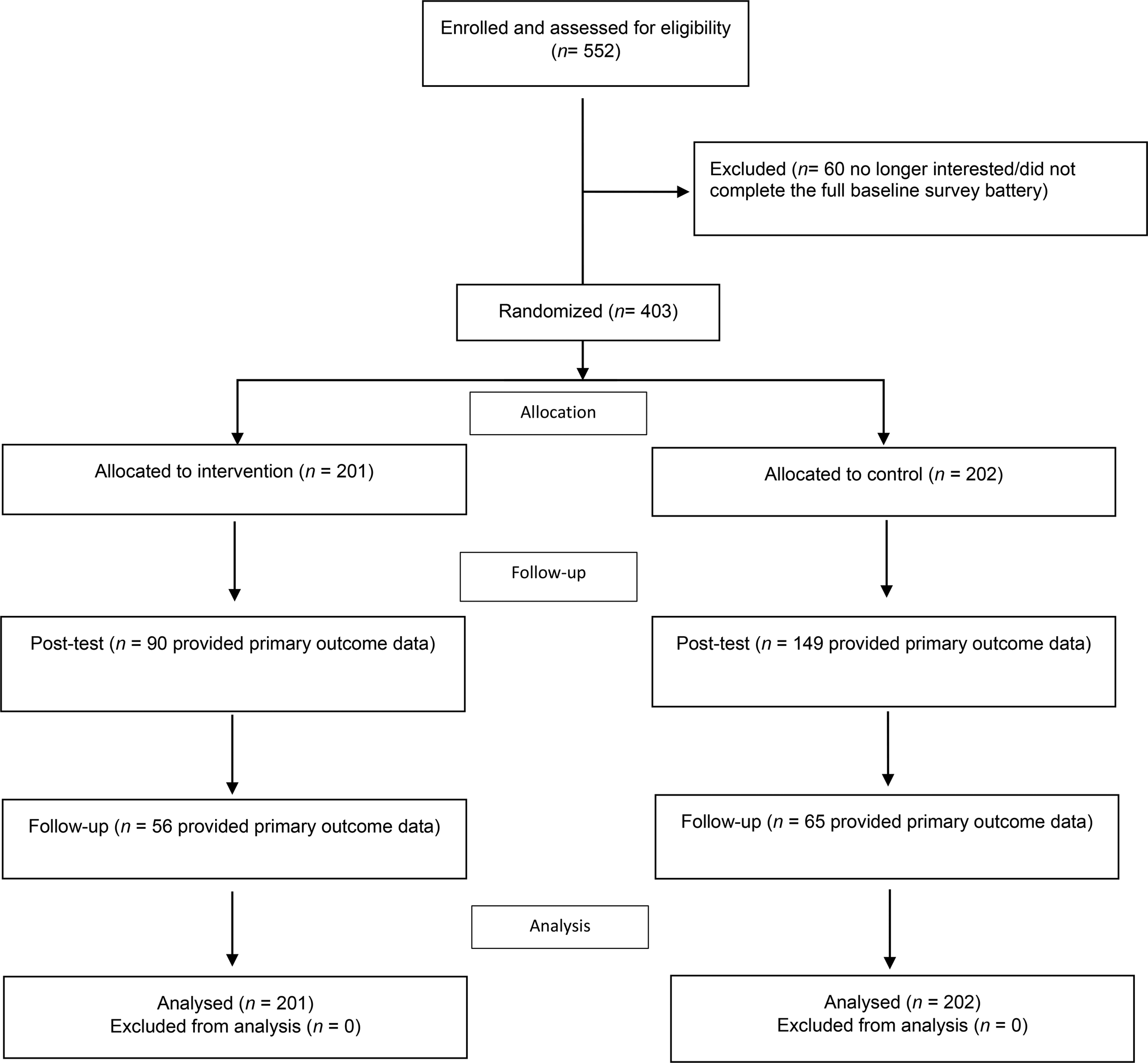
Flow of participants throughout the study.

Randomisation
Randomisation took place at a ratio of 1:1 and a block size of two using an automated computer-based random number sequence generated through Qualtrics. Upcoming allocations were concealed from the researchers and participants because the random allocation process was entirely automated. A total of 403 participants were randomised to the intervention (n = 201) or control (n = 202) condition (Fig. 1).
Study conditions
Intervention condition
The internet-based programme (‘Breaking the Diet Cycle’) contained a collection of evidence-based techniques principally designed to target extreme dietary restraint patterns as a mechanism to prevent or reduce binge eating. The techniques were derived mostly from Fairburn's (Reference Fairburn2008) transdiagnostic CBT manual, and broadly focused on normalising eating behaviour, eliminating delayed eating patterns, modifying beliefs about strict food rules, and reducing dietary restriction.
The intervention consisted of four sessions. The four sessions were designed for users to go through in a linear fashion. Each successive session ‘unlocked’ after a brief period of time (e.g. after 48 h of accessing session 1, session 2 became available). This meant that it was possible to access later content without viewing earlier content, although this was not recommended to participants.
Session 1 was psychoeducational in nature. It primarily aimed at teaching people about the cognitive, behavioural, and affective characteristics of extreme dietary restraint, biopsychosocial consequences of extreme diets, how dietary restraint can induce recurrent episodes of binge eating, and assessing one's readiness to change their dieting and eating behaviour.
Session 2 focused on self-monitoring. It helped users recognise the importance of self-monitoring, in terms of its ability to help them understand any idiosyncratic dietary patterns that may trigger a binge episode, and how to effectively engage in real-time monitoring as a first step for change.
Session 3 focused on the importance of regular eating. It taught users how to adopt a sustainable pattern of regular and flexible eating, as well as how to implement strategies for reducing grazing behaviour.
Session 4 focused on behavioural exposure techniques. It taught users how to safely reintroduce feared or forbidden foods, eliminate any irrational food rules, and correct cognitive distortions related to eating, food, and dieting. Brief content on relapse prevention was also provided in this session.
Content presented in each session (45–60 min) was based on a blend of interactive video tutorials, written text, and infographics. Each session also contained interactive quizzes to help users consolidate their learnings. Printable PDF handouts were also available to help users complete the prescribed exercises.
A smartphone app component was added to the main internet intervention to help users transfer newly acquired skills learnt from the programme into their daily life. The app was hosted through an open-source platform (Shatte & Teague, Reference Shatte and Teague2020). It allowed users to complete the exercises prescribed in the main programme digitally rather than in the pen-and-paper format. A key component of the app was the digital diary, where users could record their eating patterns in real time. A progress monitoring feature was also available. Here participants could record their binge-eating frequencies each day. These recordings were then converted to a bar chart so that participants could visualise their progress over the preceding 10 days. Participants had access to this feature as soon as they accessed the app.
The intervention was designed to be self-guided. Participants were instructed to proceed at a pace that suited them, although they were encouraged to practice the prescribed exercises daily. Participants were sent fortnightly reminder emails. The app component also prompted participants daily to encourage self-monitoring.
Control condition
Control participants were directed to passive educational articles on binge eating presented on the authors' open-access website (https://breakbingeeating.com/). Participants allocated to this condition were provided with this website link and were encouraged to search through it to ‘prepare themselves’ for the main intervention. This website contains ~20 different psychoeducational articles about eating disorders and binge eating, such as its causes, consequences, epidemiology, and evidence-based treatments. The contents of this website are largely passive reading materials, with brief self-management tips (e.g. monitoring and mindfulness meditation) presented sporadically. We refer the reader to Linardon et al. (Reference Linardon, Rosato and Messer2020c) for a comprehensive description of these articles. Given that this was an open-access website open to the public, it was not possible to obtain data on control participants' usage of this website or its content. Control participants then received access to the intervention at post-test.
Study assessments
Primary outcome
The number of objective binge-eating episodes experienced over the past 28 days, assessed via a single EDE-Q item (Fairburn & Beglin, Reference Fairburn and Beglin1994).
Secondary outcomes
The five-item eating concern, five-item weight concern, and eight-item shape concern subscales of the EDE-Q, and a single item to assess the frequency of subjective binge-eating episodes over the past 28 days. Two indices of extreme dietary restraint patterns were also assessed, including the 14-item Inflexible Eating Questionnaire total score (i.e. a measure that assesses an inflexible adherence to rigid food rules, and the tendency to feel distressed when such rules are not followed; Duarte, Ferreira, Pinto-Gouveia, Trindade, and Martinho, Reference Duarte, Ferreira, Pinto-Gouveia, Trindade and Martinho2017) and the four-item eating subscale of the Dichotomous Thinking in Eating Disorders Scale (i.e. a subscale that assesses the tendency to think about food in an all-or-none fashion; Byrne, Allen, Dove, Watt, and Nathan, Reference Byrne, Allen, Dove, Watt and Nathan2008). The 16-item disinhibition subscale of the Three Factor Eating Questionnaire (Stunkard & Messick, Reference Stunkard and Messick1985) and the four-item Patient Health Questionnaire (Kroenke, Spitzer, Williams, & Löwe, Reference Kroenke, Spitzer, Williams and Löwe2009) were also secondary outcomes.
Intervention acceptability
Participants indicated whether they would recommend the programme to others in need, its perceived usefulness, how engaging the content was, level of satisfaction, and the sessions and intervention techniques perceived to be most useful.
Sample size calculation
The required sample size was powered with the following assumptions: (1) a small group difference (d = 0.35) between the intervention and control groups for the post-test outcomes; (2) power set at 0.80; (3) alpha set at 0.05 (two-tailed); (4) expected attrition rate of 25%; and (5) an allocation ration of 1:1. Under these assumptions, the target sample size at baseline was 173 for each group.
Statistical analyses
Analyses were undertaken using Stata version 16. Linear mixed models were used for all outcome measures, except for the two binge-eating count variables for which Poisson mixed models were used. In both cases, the models included repeated measures (baseline to post-intervention) clustered within individuals. The comparison between the intervention and control group participants was limited to baseline v. post-intervention time-points as control participants were given access to the intervention at post-test. Evaluations of change from post-intervention to 8 week follow-up were conducted separately for both groups.
Across all models, any baseline differences between control and intervention groups were included as covariates in analyses. For continuous outcomes, effect sizes are reported as standardised mean differences, with values of 0.20 considered small, 0.50 moderate, and 0.80 and above considered large (Cohen, Reference Cohen1992). For count outcomes, risk ratios (RR) were used. RR values of 1.0 indicate no difference in change in outcome count scores across groups (baseline to post-intervention comparisons) or time (post-intervention to follow-up). RR values <1.0 indicate a reduction in binge-eating outcomes over time (post-intervention v. follow-up) or for the intervention group relative to the control condition (post-intervention differences). RR <0.60 may be considered small, <0.29 moderate, and <0.15 large (Chen, Cohen, & Chen, Reference Chen, Cohen and Chen2010).
All analyses were conducted in an intention-to-treat manner. In these models, missing data were handled using multiple imputation with 50 imputations. Significant effects for these models were followed with sensitivity analyses to evaluate the robustness of observed results to the possible presence of non-ignorable patterns of missingness (i.e. not missing at random; NMAR). Pattern mixture models via the mimix package (Cro, Morris, Kenward, & Carpenter, Reference Cro, Morris, Kenward and Carpenter2016) were used to conduct the sensitivity analyses. As per Linardon, Shatte, Rosato, and Fuller-Tyszkiewicz (Reference Linardon, Shatte, Rosato and Fuller-Tyszkiewicz2020b) several plausible NMAR patterns were tested with mimix: (1) last mean carried forward (LMCF), which imputes the mean at the previous time-point from one's assigned group; (2) jump to reference (J2R), in which an individual's missing data are imputed with the mean value from the control group at that time-point; and (3) copy increments in reference (CIR), in which an individual's missing data are imputed with the mean increment from the previous time-point for the control group, regardless of treatment assignment at baseline.
Results
Baseline characteristics
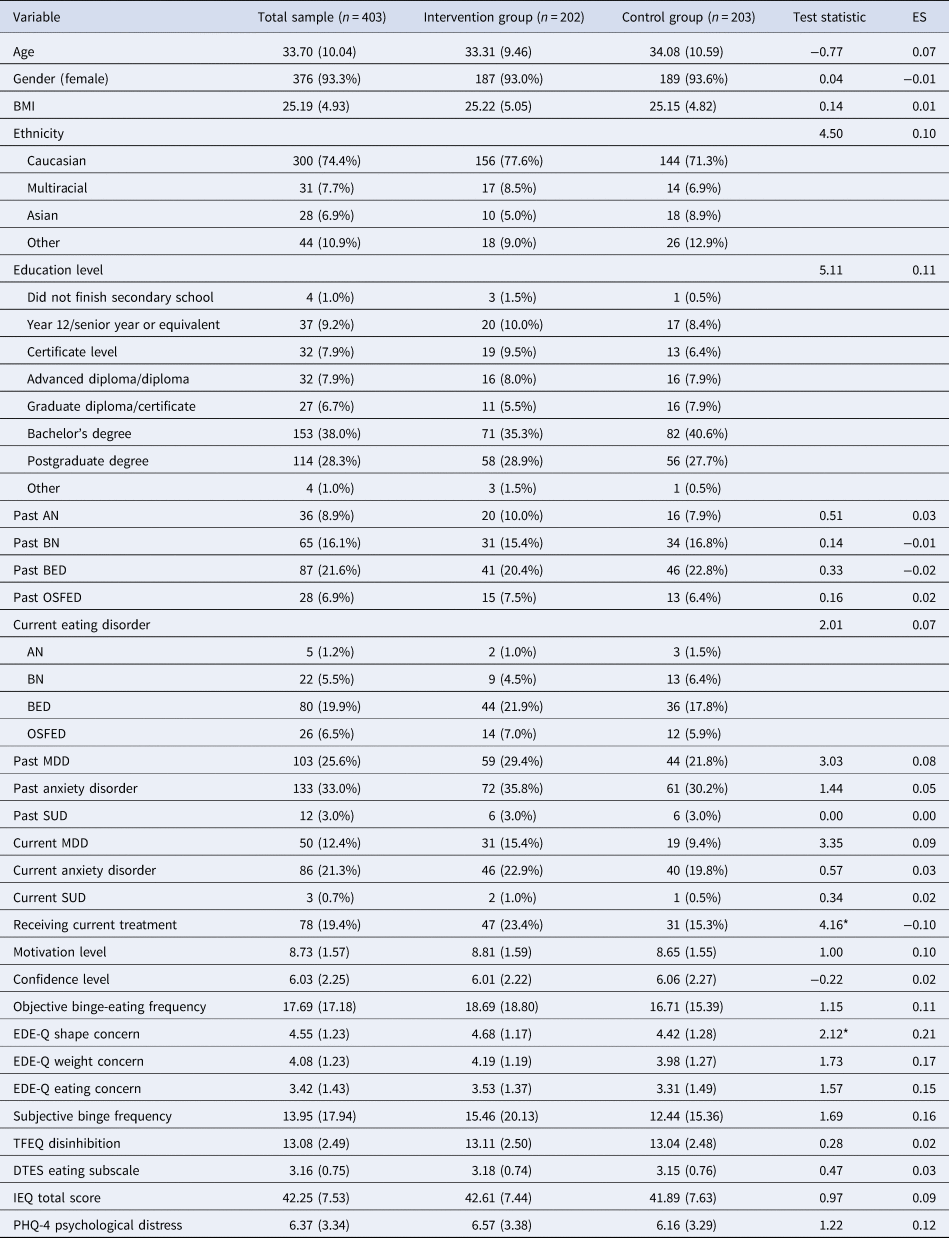
The sample was highly symptomatic (Table 1). The mean scores on the EDE-Q subscales were more than one-and-a-half standard deviations above community norms (Mond et al., Reference Mond, Hay, Rodgers and Owen2006). Most participants (n = 389; 96%) reported the presence of at least one objective binge-eating episode in the last month, with 362 (90%) reporting having engaged in at least one episode on average per week.
Baseline characteristics of all randomised participants

AN, anorexia nervosa; BN, bulimia nervosa; BED, binge-eating disorder; OSFED, other specified feeding or eating disorder; MDD, major depressive disorder; SUD, substance use disorder; EDE-Q, Eating Disorder Examination Questionnaire; TFEQ, Three Factor Eating Questionnaire; DTES, Dichotomous Thinking in Eating Disorders Scale; IEQ, Inflexible Eating Questionnaire; PHQ, Patient Health Questionnaire; Test statistic, independent samples t-test for continuous variables and chi square tests for categorical variables; ES, effect size. Effect size presented as Cohen's d for continuous variables and ϕ coefficient for categorical variables.
*p < 0.05.
The two groups did not differ significantly on any baseline variable except for current treatment status and shape concerns. The intervention group were more likely to report receiving current treatment and exhibited higher shape concerns.
Study attrition
Two-hundred-thirty-nine participants provided primary outcome data at post-test and 121 provided primary outcome data at follow-up. The control group was associated with lower post-test attrition rates compared to the intervention group (n = 149 v. n = 90; χ2 = 35.07, p < 0.001, ϕ = 0.29). No significant group differences emerged on follow-up attrition rates (n = 65 v. n = 56; p = 0.344).
Post-test drop-outs were younger (p = 0.017), had a higher body mass index (BMI) (p = 0.036), and had higher PHQ-4 scores (p = 0.031) compared to the post-test completers. Follow-up drop-outs were also younger (p < 0.001), and had higher baseline objective (p < 0.001) and subjective (p = 0.001) binge-eating frequencies compared to the completers.
Intervention usage
Thirty-two participants did not access the intervention post-randomisation. Of those that did, 67% accessed at least 50% of content from session 1, 47% for session 2, 31% for session 3, and 16% for session 4. In total, 47% accessed at least 50% of all intervention content. We refer readers to online Supplementary Table S1 for the proportion of participants who accessed each of the web pages.
Of those allocated to the intervention group, 105 (52%) accessed the app component. The mean number of unique days the app used was 12.61 (s.d. = 14.34) and the mean number of logins was 155.29 (s.d. = 203.21). The mean number of self-monitoring entries completed was 26.36 (s.d. = 48.35). Of those 33% of participants who did not complete 50% of session 1 content, 10 (15%) accessed and used this self-monitoring app feature. For the progress monitoring feature, the mean number of times this was used was 12.27 (s.d. = 20.54; min = 1; max = 143).
Post-test efficacy
Primary outcome
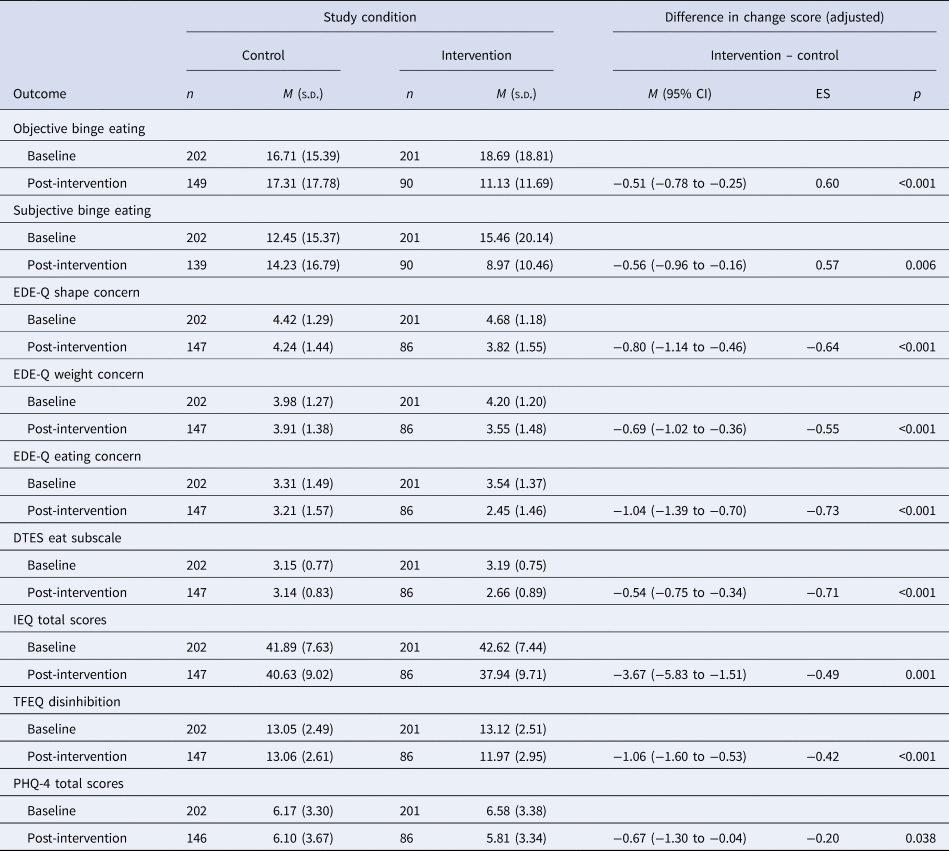
In intention-to-treat analyses, the adjusted mean difference in objective binge-eating frequency between the intervention and control groups was statistically significant with a small effect size (RR = 0.60). The intervention group reported greater reductions in objective binge-eating episodes compared to the control group (Table 2).
Means, s.d., and change scores on primary and secondary outcomes for study conditions

Covariates were current treatment; M and s.d. values are based on non-imputed data; mean differences and effect sizes are derive from intention-to-treat (ITT) analysis (n = 403) using multiple imputation; ES, effect size; for objective and subjective binge, the reported value is an RR. For all other outcomes, effect size is a standardised mean difference. 95% CI, 95% confidence interval.
Secondary outcomes
There were significant adjusted mean differences between the intervention and control groups on all secondary outcomes (favouring the intervention group). Effect sizes ranged from small to large (Table 2).
Sensitivity analyses. Post-test analyses were re-run in a series of sensitivity analyses using different methods to handle data that were potentially NMAR (LMCF; J2R; and CIR). These analyses used conservative imputation of values for drop-outs in the intervention group, assuming no change over time or change commensurate with the control group. We refer readers to online Supplementary Table S2. Overall, outcome effects were largely robust across sensitivity analyses, apart from subjective binge eating, inflexible eating adherence, and psychological distress (where non-significant differences emerged across certain sensitivity analyses).
Efficacy at follow-up
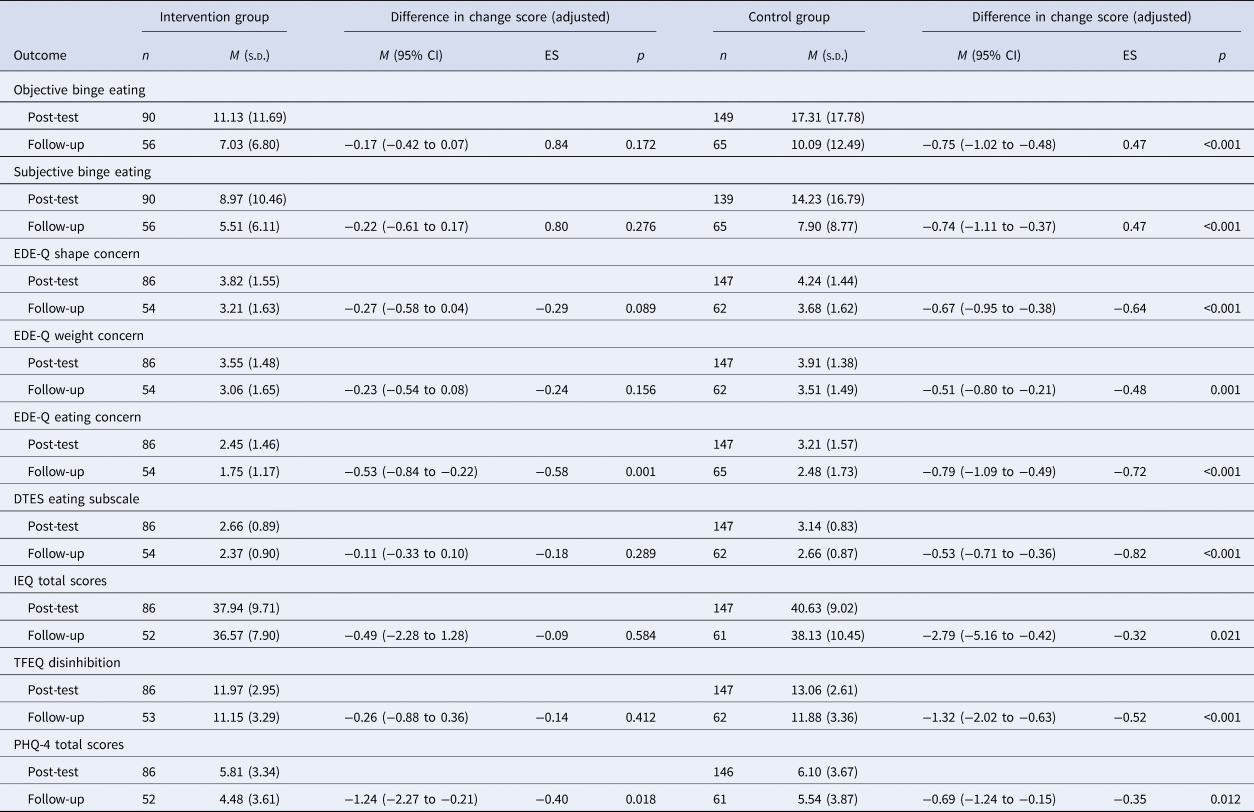
Eating concerns and psychological distress further reduced from post-test to follow-up (Table 3). Non-significant post-test to follow-up effects were observed for the remaining outcomes. For control participants, significant improvements from post-test to follow-up were observed for all outcomes.
Change scores from post-test to follow-up

Covariates were current treatment; M and s.d. values are based on non-imputed data; mean differences and effect sizes are derive from ITT analysis (n = 403) using multiple imputation; ES, effect size; for objective and subjective binge, the reported value is an RR. For all other outcomes, effect size is a standardised mean difference. 95% CI, 95% confidence interval.
Per protocol analyses
Analyses were re-conducted only for participants who accessed at least 50% of intervention content (see online Supplementary Table S3). Significant adjusted mean differences between the intervention and control groups at post-test were observed for each outcome variable, apart from psychological distress.
Acceptability
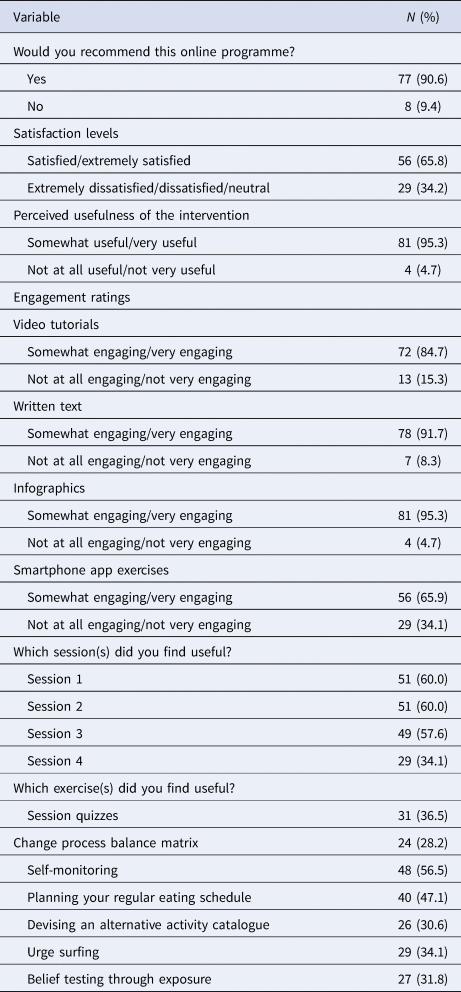
In total, 90% of participants would recommend the intervention to others, 66% were either satisfied or extremely satisfied with the intervention, and 95% found it somewhat or very useful. Video tutorials (85%), text (92%), and infographics (95%) were rated as somewhat or very engaging. In total, 66% rated the app as somewhat or very engaging. Sessions 1 and 2 were rated as most useful (Table 4).
Ratings of intervention acceptability

Perceived usefulness was rated on a scale from 1 (not at all useful) to 4 (very useful); engagement levels were rated on a scale from 1 (not at all engaging) to 4 (very engaging); satisfaction levels were rated on a scale from 1 (extremely dissatisfied) to 5 (extremely satisfied).
Discussion
We developed a blended internet- and app-based intervention principally designed to target extreme dietary restraint, with the prediction that modifying dietary restraint would decrease binge eating. Results support the efficacy of this digital intervention not only for the reduction in objective binge eating and dietary restraint, but also for a range of relevant mental health outcomes. Effects were largely robust across a series of sensitivity analyses, and improvements were mostly maintained over the follow-up period.
These findings align with the most recent meta-analytic efficacy estimates of digital interventions for eating disorders (Linardon et al., Reference Linardon, Shatte, Messer, Firth and Fuller-Tyszkiewicz2020a). The effect sizes observed on key eating-related outcomes are highly comparable to the magnitude of effects reported in treatment-focused trials, but are noticeably larger than effects reported in prevention-focused trials. Sample differences may account for this. Although an unselected sample was recruited in this trial, our sample was noticeably more symptomatic than samples recruited in prior prevention-focused trials, where participants are typically excluded based on elevated symptom severity (e.g. Jacobi et al., Reference Jacobi, Morris, Beckers, Bronisch-Holtze, Winter, Winzelberg and Taylor2007; Taylor et al., Reference Taylor, Kass, Trockel, Cunning, Weisman and Bailey2016). It is possible that highly symptomatic individuals are more motivated to change or have a greater opportunity to show improvements compared to asymptomatic or low-risk individuals, explaining the larger effects observed in this trial relative to other prevention trials.
Even though dietary restraint was the sole target of our digital intervention, it is noteworthy that improvements in eating, shape, and weight concerns, and general psychological distress were observed. These results may be interpreted within the context of the self-perpetuating cycle of eating disorder psychopathology proposed by the CBT model (Fairburn, Reference Fairburn2008). The multiple feedback loops postulated in this model indicate that engagement of binge eating further magnifies peoples' concerns about eating, shape, and weight, and their ability to control them. Similarly, the shame and guilt associated with repeated failures to control eating are suggested to exacerbate general emotional distress (Stice & Bearman, Reference Stice and Bearman2001). Therefore, reductions in binge eating – irrespective of how it is achieved – may indirectly lead to concomitant decreases in the other key factors implicated in this cycle.
Broader implications emerged from this research. First, our findings indicate that brief e-mental health interventions that focus on modifying one central risk/maintaining factor may be sufficient to induce meaningful clinical change on core eating disorder symptoms. Multi-modular digital interventions that take upwards of 16 weeks to complete may be burdensome for those who have difficulties with sustained attention and retaining new information, or for those who do not require a full course of treatment due to their baseline risk profile. In contrast, a highly focused digital intervention like this could be an attractive alternative for these individuals. A non-inferiority RCT that directly compares this brief intervention programme to an established multi-modular programme, and uncovers potential moderators of response (Kraemer, Wilson, Fairburn, & Agras, Reference Kraemer, Wilson, Fairburn and Agras2002), is an important future direction needed to accelerate the delivery of personalised eating disorder interventions.
Second, our study design provides possible insights towards understanding how online CBT programmes work. As it stands, the mechanisms of change during traditional CBT for eating disorders are largely unknown because most existing studies have failed to investigate the isolated effects of specific techniques that form part of the multi-modular programme (Linardon, de la Piedad Garcia, & Brennan, Reference Linardon, de la Piedad Garcia and Brennan2016). Present findings may suggest that digital CBT could ‘work’ at least in part via three core techniques emphasised in this intervention, namely self-monitoring, the prescription of regular eating patterns, or forbidden food exposure. A next step in future research involves assessing the relative contributions of these key intervention techniques on binge-eating reduction, ideally through dismantling designs.
Third, digital interventions like this may be well-suited to a stepped-care model. As a first step, individuals could be offered a low intensity and inexpensive digital programme like this, with more resource-rich services (e.g. outpatient face-to-face sessions) reserved for those who fail to respond after a month. As a whole, e-mental health prevention and treatment programmes show promise towards closing the treatment gap and better addressing the unmet needs of people with eating disorders.
There are important limitations to consider. First, outcome assessments were derived from participant self-report, which may overestimate the degree of improvement experienced (Berg, Peterson, Frazier, & Crow, Reference Berg, Peterson, Frazier and Crow2011). However, self-report assessments enabled us to recruit a large sample and provide anonymity for those who would otherwise not participate if face-to-face contact was required. Second, as with most fully remote RCTs of self-guided digital interventions (Linardon & Fuller-Tyszkiewicz, Reference Linardon and Fuller-Tyszkiewicz2020), issues with attrition and adherence were observed, potentially affecting the generalisability of findings. However, we investigated the generalisability of findings through a series of sensitivity analyses that dealt with different patterns of missing data, and found results to be largely robust. Third, the sample in the current trial was highly symptomatic due to the recruitment source, further limiting the generalisability of findings. Thus, we cannot confirm whether this brief intervention can prevent future binge-eating onset in asymptomatic individuals. Future RCTs may benefit from testing the efficacy of this intervention in different risk groups. Fourth, as the vast majority of our sample identified as Caucasian, the present findings cannot necessarily be generalised to individuals of different racial and ethnic backgrounds. Additional RCTs are needed to determine whether internet interventions like this are also effective for people of different racial and ethnic backgrounds.
In conclusion, results indicate that targeting dietary restraint via a brief internet- and app-based intervention was effective at reducing objective binge eating. We also observed improvements in other associated constructs, suggesting that highly focused intervention content that can effectively target a select few symptoms may have much broader effects. Brief digital interventions may have distinct advantages over multi-modular protocols and could help close the existing treatment.
Supplementary material
The supplementary material for this article can be found at https://doi.org/10.1017/S0033291721002786.
Financial support
J.L. (APP1196948) received a National Health and Medical Research Council Investigator Grant.
Conflict of interest
None.