Everyone Loves a Ladybird!
Children throughout the English-speaking world sing this endearing little nursery rhyme. It shows the caring way in which we regard these colourful creatures, which until recently were unique among the insects in being regarded benignly everywhere. Ladybirds are the first insects that most children learn to recognise. In Europe, I have yet to meet anyone who actively disliked ladybirds, let alone had a phobia about them. This is surprising because many people show a strong dislike of beetles, and ladybirds, belonging to the insect order Coleoptera, are beetles. So why do we view ladybirds in this way?
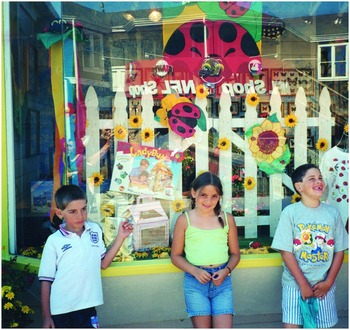
The essence of our rosy view of ladybirds is that they are fun. Their wide popularity is manifest in the commercial and charitable organisations that use them as a motif (Fig. 1.1). In Britain, the shopping chain Woolworth’s used the ladybird brand name for its range of children’s clothes. Ladybird Books have helped many youngsters in their early reading. In Germany, Coccinelle became a nickname for the early models of the Volkswagen, which, in America, was nicknamed the beetle. The nickname obviously did the car no harm, as the beetle-shaped Volkswagen has been one of the most successful models of car ever produced.
The popularity of ladybirds is evident from their wide use in merchandise and marketing as seen here alongside the Majerus children: Kai, Kara and Nic.
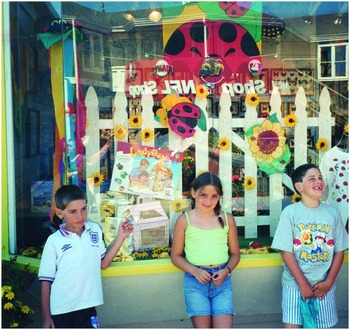
The popularity of ladybirds owes much to their bright colours, most often red or orange and black. They are easily spotted, being active mainly by day, and doing little to hide away. The habit some species have of overwintering in our dwellings, around window frames, or in corners of cool rooms, also brings them to our attention.
The use of ladybirds as pest controllers also contributes to their popularity. Most ladybirds are predators, eating sap-sucking plant pests, particularly aphids, and they are thus well regarded by farmers and gardeners. Indeed, the introduction of Rodolia cardinalis, from Australia into California, in 1888, to control the cottony cushion scale insect, Icerya purchasi, which threatened the citrus industry, is widely regarded as the first and still one of the most spectacularly successful instances of biological pest control. In Britain, Kirby and Spence, in their An Introduction to Entomology, noted the usefulness of ladybirds as early as Reference Kirby and Spence1815, where their importance in controlling hop aphids is noted. More recently, various supermarket chains have fronted campaigns promoting organic food with images of ladybirds and slogans such as ‘an insect is better than an insecticide’.
Ladybird Names and Myths
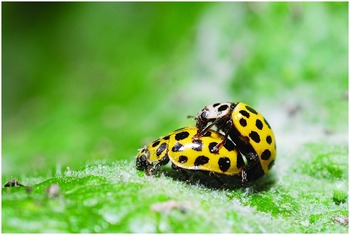
Their bright colours and use in pest control place ladybirds among the most widely venerated of animals. An examination of the vernacular names given to ladybirds in different languages shows strong religious connections. In English, the name ladybird is a dedication to Our Lady, The Virgin Mary. They are ‘Our Lady’s birds’. This name is thought to derive from one of the most common species across Europe and Asia, Coccinella 7-punctata (Fig. 1.2). This species was introduced into North America in the twentieth century and has become widely abundant. The red colour is said to represent the red cloak that Mary was usually depicted wearing in old paintings and statues, and the seven spots are for the seven joys and seven sorrows of The Virgin. In some parts of Scotland, ladybirds are still called ladyclocks, the clock being a corruption of cloak.
Coccinella 7-punctata mating pair.

The dedication to The Virgin Mary is not confined to English. It is common in European languages and, due to the colonising endeavours of the Europeans, has spread around the world. Exell (Reference Exell1991) made a life-long study of the common names given to ladybirds in different tongues. In his The History of the Ladybird, he cites some 329 names from 55 languages (Exell, Reference Exell1991). Of these, about a quarter refer to The Virgin Mary, and another 50 are dedications to God. Other names involve Saint Catherine, Saint James, Saint John, Saint Nicolas, Saint Martin, Heaven, Jesus and the Pope. Strangely, one of the Italian names is Galineta del Diablo – The Devil’s chicken, from Verona, which is applied to a black ladybird and is unique in its dedication to The Devil.
Although it is difficult to date the origin of many of the names, it is likely that some of the European names pre-date Christianity. Indeed, it is notable that The Virgin Mary is not featured in any Celtic language names. In Swedish, Frejhöna, Gullfrigga and Gullbagge, all meaning golden beetle, probably pre-date Christianity (Exell, Reference Exell1991).
Among the Swedish names is Himmelska nyckla – the Keys of Heaven. According to Blackman, The Virgin Mary takes care of the Keys of Heaven. As spring and summer are symbols of Paradise, it is the ladybirds that open the gates of Heaven. Professor Blackman’s interpretation of the Swedish equivalent of the English ‘Ladybird, Ladybird’ nursery rhyme:
is that it is a warning to beware the threat of purgatory and the fires of hell.
Dr Exell (Reference Exell1991) notes that the idea of the Keys of Heaven being attributed to The Virgin is contrary to the Bible. In St. Matthew’s gospel, chapter 16, verse 19, they are entrusted to Peter:
And I will give unto thee the keys of the kingdom of heaven: and whatsoever thou shalt bind on earth shall be bound in heaven: and whatsoever thou shalt loose on earth shall be loosed in heaven.
Connections with religion are not confined to the Christian world. In Hebrew, the name Pârat Noshe Rabbênu – Cow of Moses our Teacher – is used. In Sanskrit, Marathi, Pali and Hindi, dedication is to Indra, the most common name being Indra Gopa – Indra’s cowherd.
According to Mr Jerry L. King, a gentleman of Cherokee descent, ladybirds enjoy a place of reverence in the mythology of that tribe. Two names are given to them. One, A Weh Sa, means creature living in water. This name has an unlikely origin. Because ladybirds are carnivorous and patterned orange with black spots, they are associated with the jaguar, and the jaguar is a cat that is very fond of the water. This name is a common term for ladybird, but is considered too familiar to be used in the visible presence of a ladybird. Then, the name A Giga U E, meaning Great Beloved Woman would have been used for these most venerated of insects. This was the title of the highest office a woman could hold in the Traditionalist Native Cherokee Government. On ceremonial occasions, the woman holding this office would have her face painted orange with dyes made from bloodroot, bear grease and white kaolin clay, and spotted with 15 black dots using a paste of charcoal, pine tar, bear grease and blue kaolin clay. These markings are possibly based on one of the 15-spotted ladybirds, probably Hippodamia convergens, Hippodamia 15-signata or Anatis 15-punctata. The association between the Great Beloved Woman, the ladybird and the jaguar is of ancient origin, and extends to a fourth creature, the owl. It may pre-date the Cherokee language, which evolved about 4000 years ago, and is one of the oldest living languages.
Not all American Indians show such reverence for ladybirds. Their name in Cheyenne is Mhoynshimo, meaning playing-card beetle, and is surely a result of the similarity of the spotty patterns on cards and ladybirds. The name is probably post-colonial (Exell, Reference Exell1991).
Luck-bringers, Match-makers and Weather-forecasters
There are many old wives’ tales associated with ladybirds, some of which may be true, but at least one of which is false. The number of spots on a ladybird does not indicate its age. Once a ladybird becomes adult, it develops its basic colour pattern within about 24 hours, and the number of spots it has does not change thereafter.
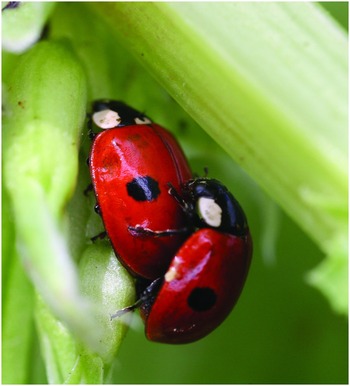
Ladybirds are considered both fortune-tellers and lucky omens in many parts of the world. One Italian name, from the Genoa region, is Porta Fortuna, meaning luck-bringer. Most commonly they are considered portents of romance. The use of ladybirds as foretellers of love may result from their own reproductive behaviour (Fig. 1.3).

Ladybirds are highly promiscuous. Adalia 2-punctata (Fig. 1.4) mate on average 20 times in their main reproductive period. They have strong powers of endurance; a successful mating rarely takes less than an hour and a pair may stay in copula for over nine hours, although two to three hours is the norm. Certainly, on a sunny morning in spring or early summer, when one’s fancy may turn to thoughts of love, it would not be unusual to find mating ladybirds, for up to 50% of a population may be mating at the same time. Indeed, the word ladybird has been used as a term of endearment, synonymous to sweetheart. In Shakespeare’s Romeo and Juliet (Act 1, scene 3), on the instruction of Lady Capulet, the Nurse, calls for Juliet thus:
‘What, lamb! What, ladybird! God forbid! Where’s this girl? What Juliet!’
Similarly, in Cynthia’s Revels (Act 2, scene 1) (Jonson, Reference Jonson1599) comes the line:
‘Is that your new ruff, sweet ladybird?’
The connection between ladybirds and fertility or love is a strong one. The Scandinavian association with the gods of fertility is now reflected when a young girl finds a ladybird and allows it to run around her hand. The maiden should then observe ‘She measures me for my wedding gloves’. This alleged ability of ladybirds to foretell romance is seen in many poems. For example:
While from Eastern England, where some still call ladybirds Bishie Barnie-bees, comes:

Bishie, Bishie Barnabee,
It is not certain whether ladybirds were dedicated to Bishop Barnabas or to Saint Barnabas. The latter is possible because ladybirds are often associated with fine weather, and Saint Barnabas’ Day, in the old calendar, used to fall around Midsummer’s Day. However, I think the former derivation more likely, as the name is centred on Norfolk and Suffolk, and Bishop Barnabas hailed from that region. I have been offered two reasons for the dedication to Bishop Barnabas. One is simply that Bishop Barnabas wore a red cloak and a black hat (Forster, pers. comm.). The other notes that Bishop Barnabas was burnt at the stake. As one of the names cited by Exell (Reference Exell1991) is Bishop is Burning, this explanation may have some credibility. However, doubt is again cast by Southey’s poem The Burnie-Bee (in Newell, Reference Newell1845) for the Burnie part of the name appears here to be derived from the shiny or ‘burnished’ appearance of ladybirds.
As tellers of the future, ladybirds are also alleged to have the ability to predict the weather and the quality of harvest. In some cases, there appears to be a belief that ladybirds can go further than predicting the weather; they can influence it. From Austria, courtesy of Mrs Gerlinde Southey, comes:
The translation is:
Mariabrunn lies about 12 miles from the Austrian capital and features a miracle-working image of the Virgin Mary, who sends good weather to the Viennese.
In northern Germany, it is thought that if most ladybirds (Maerspart) seen have more than seven spots, the harvest will be poor; if ladybirds with few spots are more abundant the harvest will be good. This belief leads to the request:
Ladybirds have even been rumoured to have medicinal properties. Newell (Reference Newell1845) notes ladybirds to be a cure for measles and colic. Others have noted that mashing up a ladybird and putting the pulp into the hollow tooth can treat toothache. Jaeger (Reference Jaeger1859) reports that he tried this treatment twice, and on both occasions his toothache was immediately relieved.
Ladybirds have a unique position among insects in literature and art. In poetry, ladybirds are well featured, particularly in children’s nursery rhymes. They are commonly featured on greeting cards of all sorts, and C. 7-punctata has been featured on 43 different postage stamps from around the world; more than any other insect species. I have assembled a collection of over two hundred poems, songs and rhymes featuring ladybirds from all parts of the world. Here I have selected just a smattering. I began this chapter with the best known of all ladybird rhymes. The first two lines are relatively invariant but the second couplet has a number of variations. Gordon (Reference 351Gordon1985) cites two versions, the first from Yorkshire and Lancashire, the second from Scotland.
The derivatives of this nursery rhyme have found their way into other literature. For example, Beatrix Potter’s Mrs Thomasina Tittlemouse shoos out ladybirds from her house with the words ‘Your house is on fire, Mother Ladybird. Fly away home to your children.’
Poems and rhymes tend to feature our own enchanted perception of ladybirds. Few reflect much about the ladybirds themselves. One song, however, written by Canada’s well-known television naturalist, John Acorn, for his show The Nature Nut, is an exception, emphasising the aphid-eating abilities and defensive qualities of ladybirds.
Munching on Aphids
John Acorn is an accomplished Blue Grass player and a compulsive composer. I recall that one day, while searching for rare, high alpine species in the Canadian Rockies, we had some discussion of the different pronunciations that he and I use for ladybirds/ladybugs. On my return to England, I found this composition in my e-mail.
Contemporary poets have also not ignored ladybirds. Following publication of results showing that genetically modified potatoes containing an anti-aphid gene from snowdrops can have adverse effects on ladybirds (Birch et al., Reference Birch, Geoghegan and Majerus1999), this poem appeared on the internet.
The Cambridge Ladybird Survey
Given all this fascination with ladybirds, their religious, mythological and literary associations, it amazed me to find, in 1984, four years into a study of mating behaviour in A. 2-punctata, that no book devoted to British ladybirds existed. Indeed, although many texts had been written on ladybirds in other parts of the world, these were, without exception, taxonomic or reference tomes, catering for scientific researchers. In October 1984, I presented some of my work on A. 2-punctata at an exhibition organised by the British Amateur Entomologists’ Society, in London, concluding the display with a request for help in obtaining information on all aspects of the natural history of ladybirds in Britain.
At this point, the inherent popularity of ladybirds came into play, with the aid of a man from the British Broadcasting Corporation (BBC). Having seen my appeal for help, he directed a reporter to find out more about our research and the survey. Within a month, more by luck than judgement, a nationwide survey on ladybirds, the Cambridge Ladybird Survey, was born. We had slots on a wide variety of national and local television and radio programmes. By mid-November we had over 500 ladybird recorders across Britain. Over the years of the Cambridge Ladybird Survey, we had further free advertising from all sections of the media, both in Britain and around the world. A full episode of Sir David Attenborough’s Wildlife on One, entitled simply Ladybird, Ladybird, based on information from the survey, was produced. In 1990, the Survey became embedded in British culture when, for a week or two, it became part of the story line of The Archers, when Linda Snell, a character in this daily radio drama that has run for over 50 years, became our first fictitious recorder.
In its life (1984–1994), The Cambridge Ladybird Survey had over 5000 individual recorders and thousands of others from the numerous schools and colleges that took part. Much of the information collected during the survey was published in a final report (Majerus, Reference Majerus1995), in a series of scientific papers and in my book Ladybirds (Majerus, Reference Majerus1994a). The success of The Cambridge Ladybird Survey in Britain led to the format being used for similar surveys in Canada, South Africa and various parts of Europe, some of which are still ongoing.
The Cambridge Ladybird Survey was reinvigorated in 2005 as the online UK Ladybird Survey, partly in response to the first record of the harlequin ladybird, Harmonia axyridis, in England the previous year (Roy et al., Reference Roy, Brown, Rowland and Majerus2005). Ladybirds have continued to attract considerable media attention through the UK Ladybird Survey and have featured on popular television programmes, such as BBC Springwatch and BBC Autumnwatch, and radio programmes, such as BBC Living World and BBC Saving Species. There have also been many features within national newspapers and magazines. The attention received by ladybirds has undoubtedly contributed to the growing interest in recording of these charismatic beetles.
The data collected during the Cambridge Ladybird Survey and the UK Ladybird Survey, alongside historic data from the Coccinellidae Recording Scheme, represent a rich resource for many investigations including the effect of global warming on insects and on the impact that the recent arrival of H. axyridis in England is having on native ladybirds (see www.ladybird-survey.org). Additionally, the data have contributed to a major review of the status and trends of UK wildlife, The State of Nature Report (State of Nature partnership, 2013).
The intention of all these surveys was to answer the question posed in the introduction to Sir David Attenborough’s Ladybird, Ladybird programme: ‘But what of the real ladybird?’
A Natural History of Ladybirds
In Britain, the first book to be devoted to the natural history of British ladybirds was that written by Peter Kearns and myself, for the Naturalists’ Handbooks Series, in the late 1980s (Majerus and Kearns, Reference Majerus and Kearns1989). This landmark publication was subsequently revised by Helen Roy, Peter Brown, Richard Comont, Remy Poland and John Sloggett (Roy et al., Reference Roy, Brown, Comont, Poland and Sloggett2013). In the early 1990s, I wrote a more comprehensive book on the natural history, ecology, evolution and genetics of British ladybirds for the New Naturalist series, published by HarperCollins (Majerus, Reference Majerus1994a).
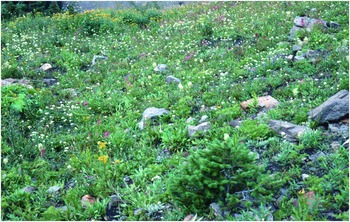
Since 1994, I have travelled widely, observing ladybirds on all the world’s continents with the exception of Antarctica. I have seen and studied ladybirds from the alpine slopes of the Canadian Rockies (Fig. 1.5) and the arctic wastes of Swedish Lapland, through the expanses of the Siberian steppes, to the tropics of Queensland, Uganda, Panama and Malaysia (Fig. 1.6). While A Natural History of Ladybirds is modelled on my New Naturalist book, it is a complete rewrite, with a global perspective and many new emphases and sections reflecting our increasing knowledge of the natural history of these fascinating beetles. Although many of the unanswered questions that I highlighted in 1994 have now been answered, many still remain to be addressed, and new puzzles and conundrums on the natural history of ladybirds have arisen as our understanding of these beetles has grown.
The alpine slopes of the Canadian Rockies.
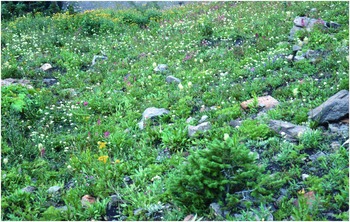
Tropical forest, Malaysia.

As an evolutionary biologist, who believes in Darwinian natural and sexual selection, I acknowledge that my writing has a strong evolutionary perspective.
In his autobiography, Charles Darwin (Reference Darwin and Barlow1887) wrote:
I have steadily endeavoured to keep my mind free, so as to give up any hypothesis, however much beloved (and I cannot resist forming one on every subject), as soon as facts are shown to be opposed to it.
I also enjoy speculating. In this book I will do so liberally. If others, who are caught up in a fascination of ladybirds as much as I have been in the last quarter of a century, subsequently put my ideas and theories to the test, I will be delighted, whether my ideas are verified or refuted.