Introduction
In the past few decades, models of aged care provision have attempted to increase consumer control, allowing consumers to choose services according to their needs and preferences, and offering them greater involvement in decision-making about how financial resources are spent. Such schemes are often collectively referred to as ‘consumer-directed care’ (CDC) or ‘individual budgets’ (IB), and view the consumer as capable of making informed choices and handling their service provisions. A number of international models have been implemented, including Consumer Directed Personal Assistance Programs and ‘Cash and Counselling’ schemes introduced in the United States of America (USA) during the 1990s (Heumann, Reference Heumann2003); personal budget models in the United Kingdom (UK) (Age UK, Reference Age2013); and the CDC scheme in Australia first piloted in 2010 (Department of Health and Ageing, 2012; Cash et al., Reference Cash, Moyle and O'Dwyer2017). In the majority of these schemes, responsibilities are placed on the consumer, in conjunction with staff, to plan what services will be provided, who will provide the services and when they will be provided.
Given the advent of schemes with emphasis on consumer choice, it is increasingly important to consider the collective experience of recipients, and to identify the qualities of service packages that are most important to them. A systematic review by Ottmann et al. (Reference Ottmann, Allen and Feldman2013) suggested that CDC-based services should offer a broad enough range of options to accommodate the wide range of needs and preferences of recipients. Another recent systematic review by Cash et al. (Reference Cash, Moyle and O'Dwyer2017) highlighted the need for research into relationships between CDC recipients, carers and providers. However, a review of the key drivers of choice for consumers when choosing service providers and types, and their perceptions of quality in these services, has not been undertaken.
This paper documents the outcomes of two rapid evidence reviews that sought to understand the experience of consumers participating in CDC schemes. It was not our intention to provide a comprehensive overview of CDC policies, which might include more detailed analyses across political, economic and social contexts (see Foster et al., Reference Foster, Brown, Phillips and Carlson2005, San Antonio et al., Reference San Antonio, Simon-Rusinowitz, Loughlin, Eckert, Mahoney and Ruben2009; Ottmann et al., Reference Ottmann, Allen and Feldman2013). Rather, our reviews focus explicitly on addressing two questions to inform assessment of consumer experience within CDC schemes:
(1) What are the drivers of choice, in terms of expectations of the characteristics sought by consumers when looking for a home- or community-based aged care service?
(2) What are consumers’ perceptions, or experience, of the quality of services and care in home- or community-based aged care?
We begin by introducing the context and search strategies for each rapid review. We then detail the results of both search strategies and identify common themes. Finally, we discuss the key outcomes and implications arising from both reviews, and draw conclusions on the consumer experience.
Method
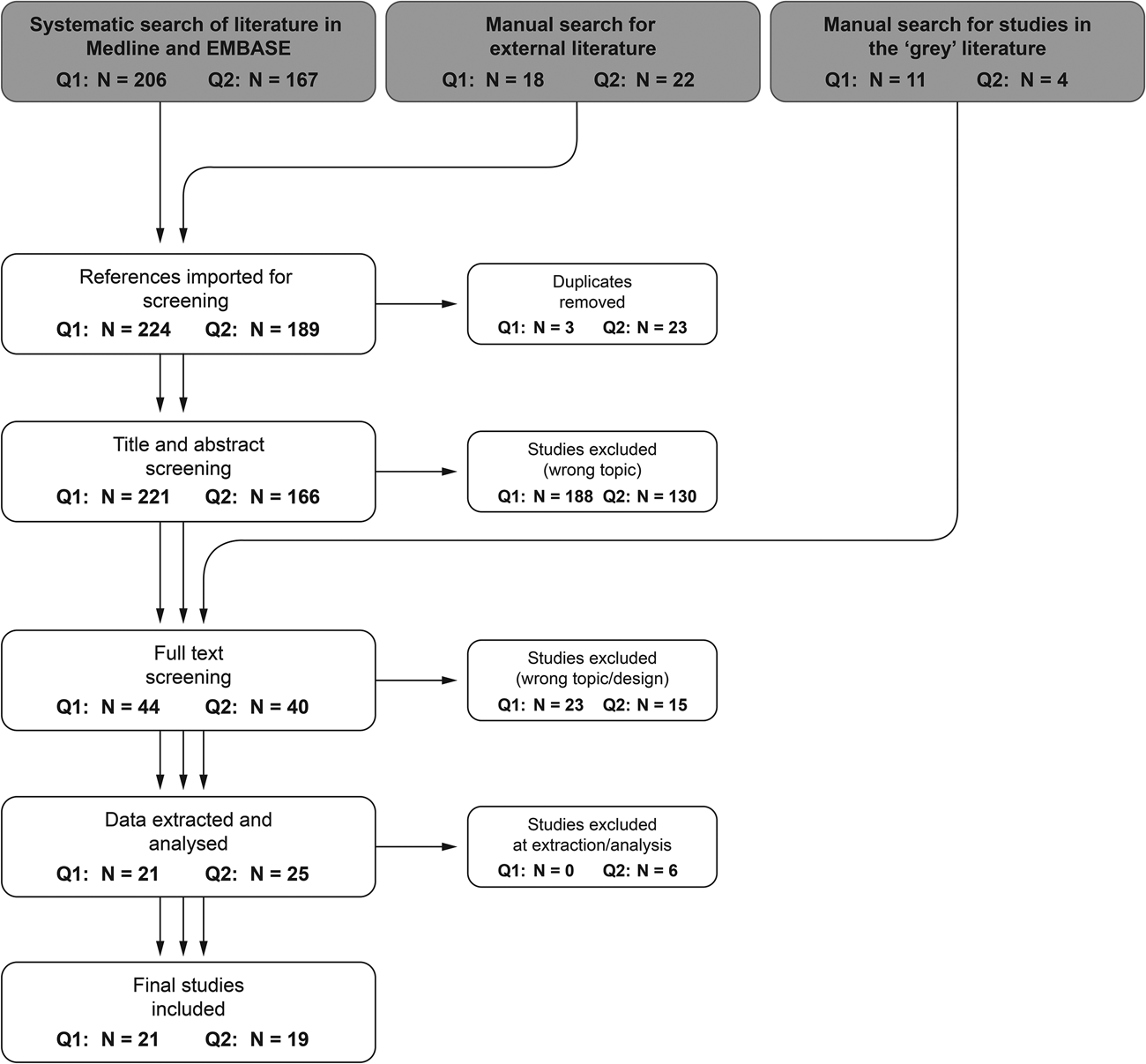
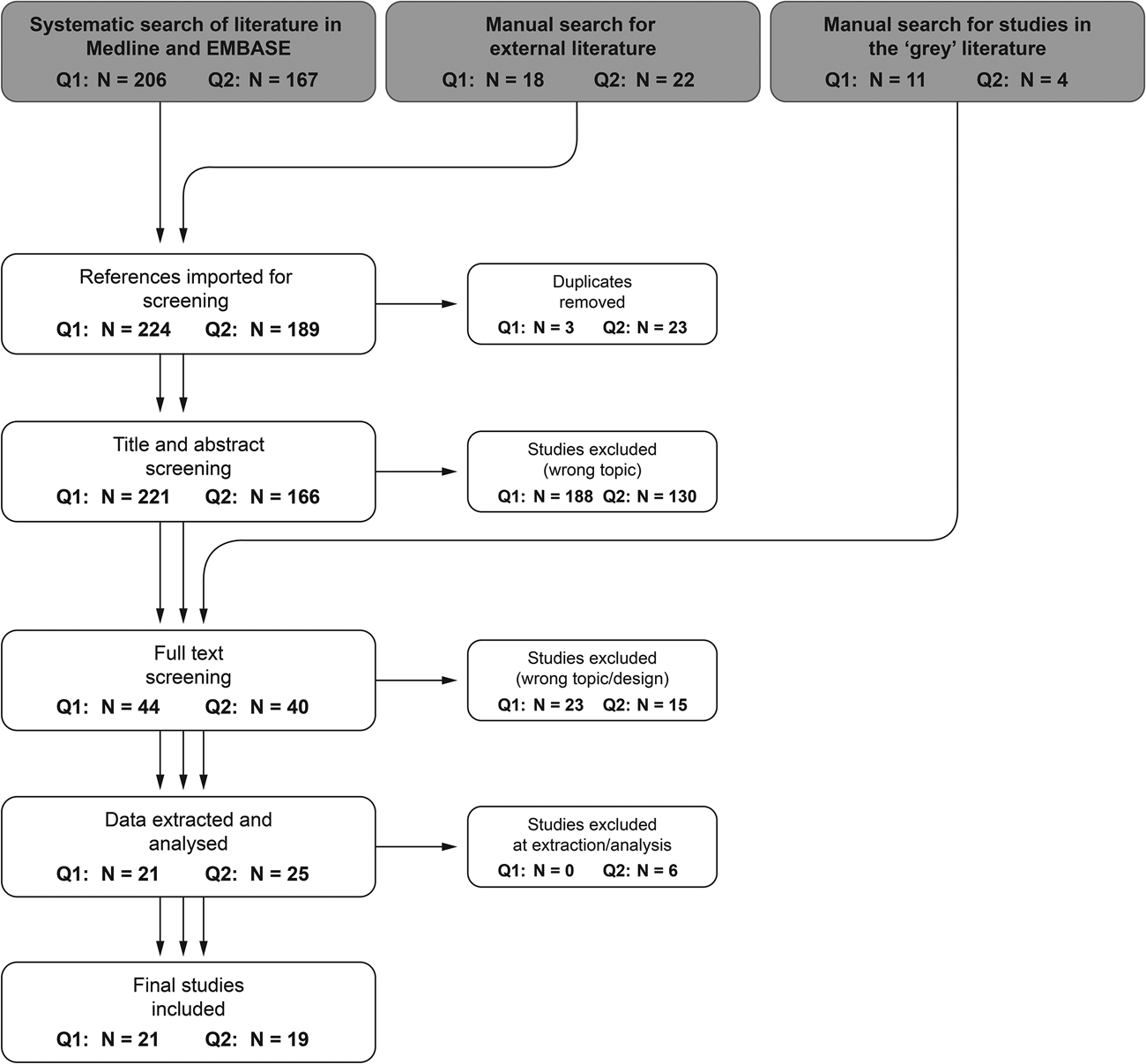
Our two rapid reviews were conducted to compile studies investigating consumer experience of home- and community-based care services, and to consider implications for the development of future policy. Whilst rapid evidence reviews aim for rigour and systematic methods, it must be borne in mind that they may be more susceptible to bias than other types of reviews (Grant and Booth, Reference Grant and Booth2009). This is an inevitable by-product of the speed with which they are produced. To control for this possibility, we have presented our workflow (see Figure 1) and the search terms (see Table S1 in the online supplementary material) that elicited this review's data.
Overview of the literature screening and extraction process for both reviews.
Notes: Q1: Question 1. Q2: Question 2.
We also included qualitative research in our searches, as studies involving perceptions and experiences may rely on use of such methodologies as exploratory techniques. We conceptualised home-based and community-based care as follows:
• ‘Home-based care’ covers personal care services (e.g. bathing, dressing), home adaptations (e.g. handrails, lift access), equipment procurement and maintenance, and domestic assistance.
• ‘Community-based care’ covers assistance with all services that are not based in the home (e.g. shopping and banking) and centre-based day care and respite.
Respite services for carers were also included in our search strategies, but not services that focus on carers only (e.g. educational services, counselling).
Search strategies
The workflow for both search strategies is presented in Figure 1. In both cases, we systematically searched MEDLINE and EMBASE databases (for search strategies, see Table S8 in the online supplementary material). In addition to their wealth of literature, these databases were chosen as they support Medical Subject Headings indexing, which allowed us to capture relevant articles that were not explicitly linked to the search terms. For Question 1 (Q1), search terms specifically focused on research on aged care services where ‘choice’ in how resources are allocated is an essential component of the service. Our search strategy made use of the range of terminologies that collectively refer to CDC (see Table S1 in the online supplementary material). For Question 2 (Q2), search terms focused on identifying what older consumers value in terms of how their care services (home- or community-based) are provided.
In response to any limitations of our search terms in capturing appropriate literature, we performed additional manual (non-systematic) searches of primary literature across CINAHL, Scopus, PsychINFO and Web of Science. To expand the scope of the review further, we also searched the grey literature (e.g. government and evaluation reports) using Opengrey, APO, Trove and Google (regions set to Australia, New Zealand, UK, USA and Canada). In both cases, search terms included ‘consumer-directed care’, ‘cash for care’, personal budgets’, ‘individual budgets’, ‘cash for counselling’, ‘self-directed care’, ‘self-directed support’, ‘ageing in place’ and ‘direct payments’. Limiters included ‘older persons’, ‘elderly’, ‘aged’ and ‘older people’ and were connected to search terms by the Boolean operator ‘AND’. Truncations and wildcards were used where appropriate. All searches took place between March and April 2018.
Inclusion and exclusion criteria
For both reviews, studies were included if they: (a) were written in English; (b) were published between 2007 and 2017, thus containing the most up-to-date knowledge; (c) reported data from countries with well-developed aged care frameworks and health-care systems; (d) included participants aged 50 and over (45 years for indigenous participants); and (e) focused on drivers of choice (Q1) or perceptions of quality (Q2) in home- or community-based aged care services where consumer choice is relevant (e.g. CDC, personal budget schemes). Studies were excluded in both cases if they reported: (a) drivers of choice (Q1) or perceptions of quality (Q2) in residential aged care facilities or retirement villages; (b) experiences of parties other than the consumer (e.g. family members, care-givers); and (c) data from countries with emerging (and thus non-comparable) systems of home- and community-based aged care.
Screening, extraction and evaluation process
Literature screening and extraction was undertaken by a team of four research assistants (RAs). Title/abstract and full text screenings for the systematic search were undertaken independently by two RAs using the Covidence software package (https://www.covidence.org). All studies that met the inclusion criteria and scope of the review proceeded to the data extraction stage. A third RA was appointed to screen studies where consensus on eligibility was not met. All RAs participated in conducting manual searches and compiling studies that met the inclusion criteria. Once duplicates were removed, eligible studies underwent full-text screening, from which all studies fitting the scope of the review proceeded to data extraction.
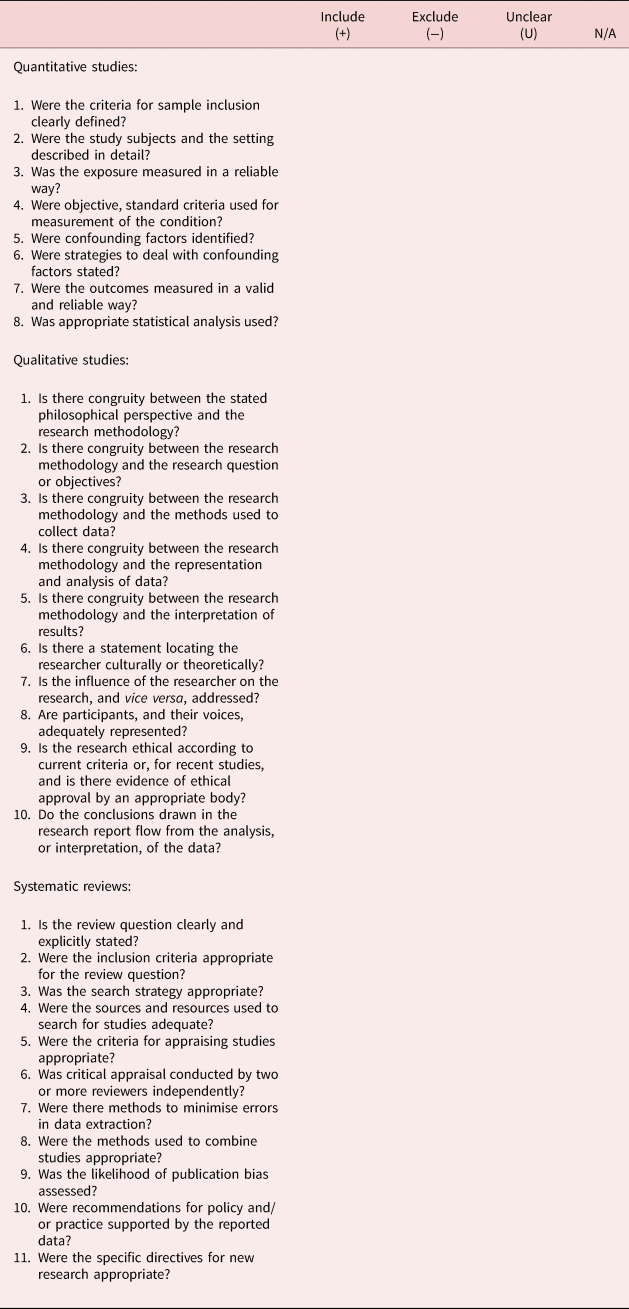
For extraction of both qualitative and quantitative studies, RAs used a modified version of Cochrane's data collection form (https://dplp.cochrane.org/data-extraction-forms). To ensure replicability and validity in our findings, each article included in the rapid reviews underwent a risk of bias assessment following data extraction. For qualitative and systematic review articles, we used the Joanna Briggs critical appraisal criteria (Table 1; http://joannabriggs.org/research/critical-appraisal-tools.html). For quantitative studies, we used a modified form of the Joanna Briggs critical appraisal checklist that combined evaluation criteria across cohort, randomised controlled trial and cross-sectional analysis studies. Risk of bias assessments were undertaken by the RAs, and a member of the research team with expertise in the field. Table 1 summarises evaluation criteria used to assess each of the study types. Any publications that did not satisfy the evaluation criteria, or were deemed to not meet the study scope and criteria, were excluded at the extraction stage. Included studies that satisfied the critical appraisal checklist were then presented before the wider research group, from which key themes were identified.
Evaluation criteria for assessing quantitative and qualitative primary articles, and systematic reviews
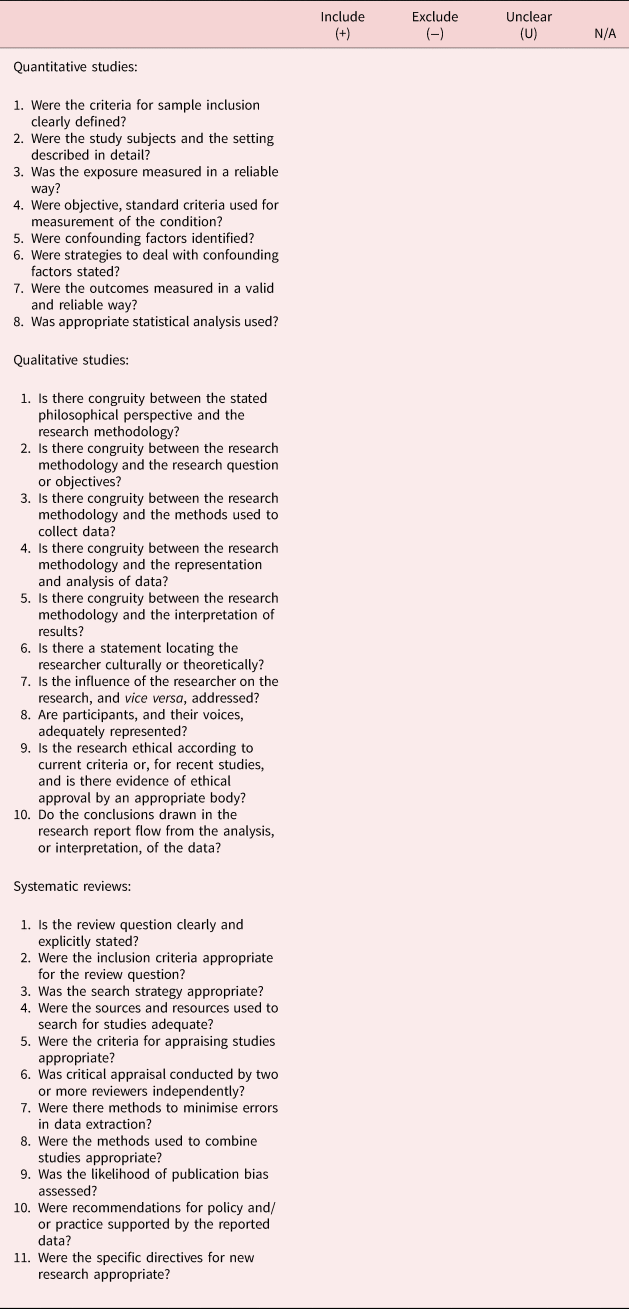
Note: N/A: not available.
Results
Summary of included studies
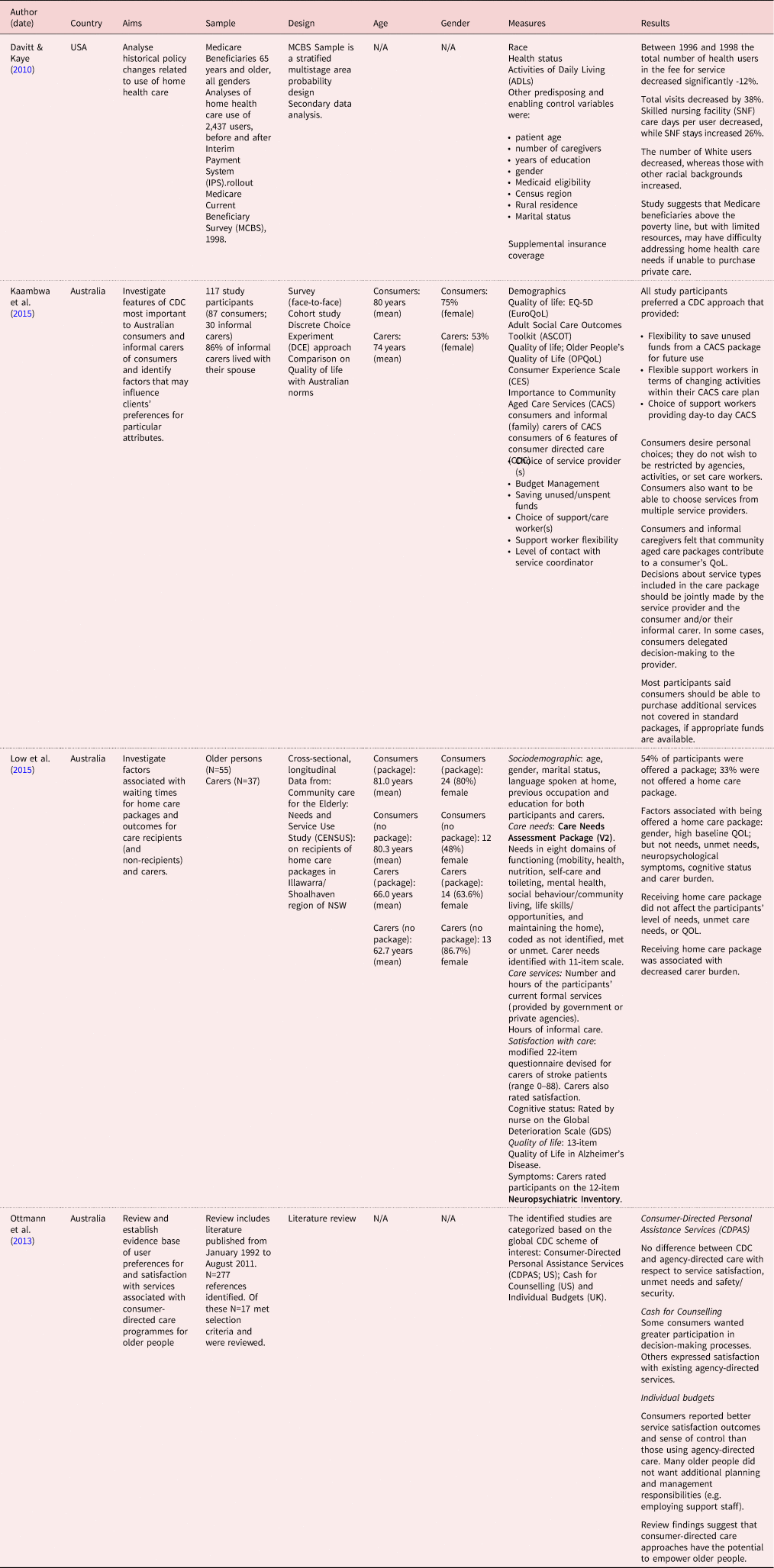
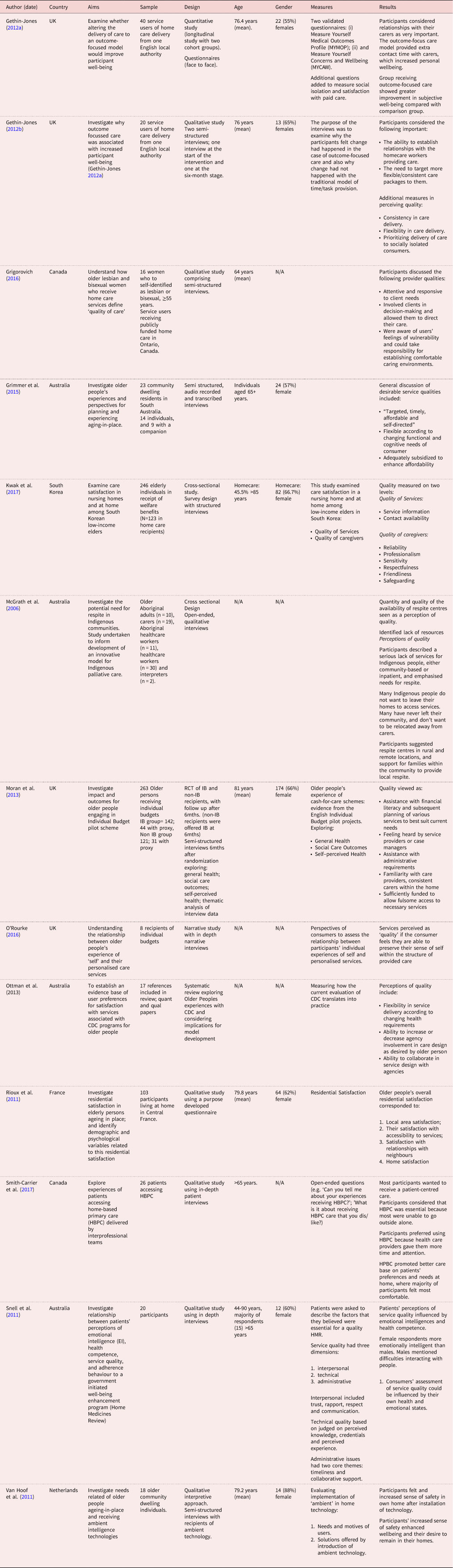
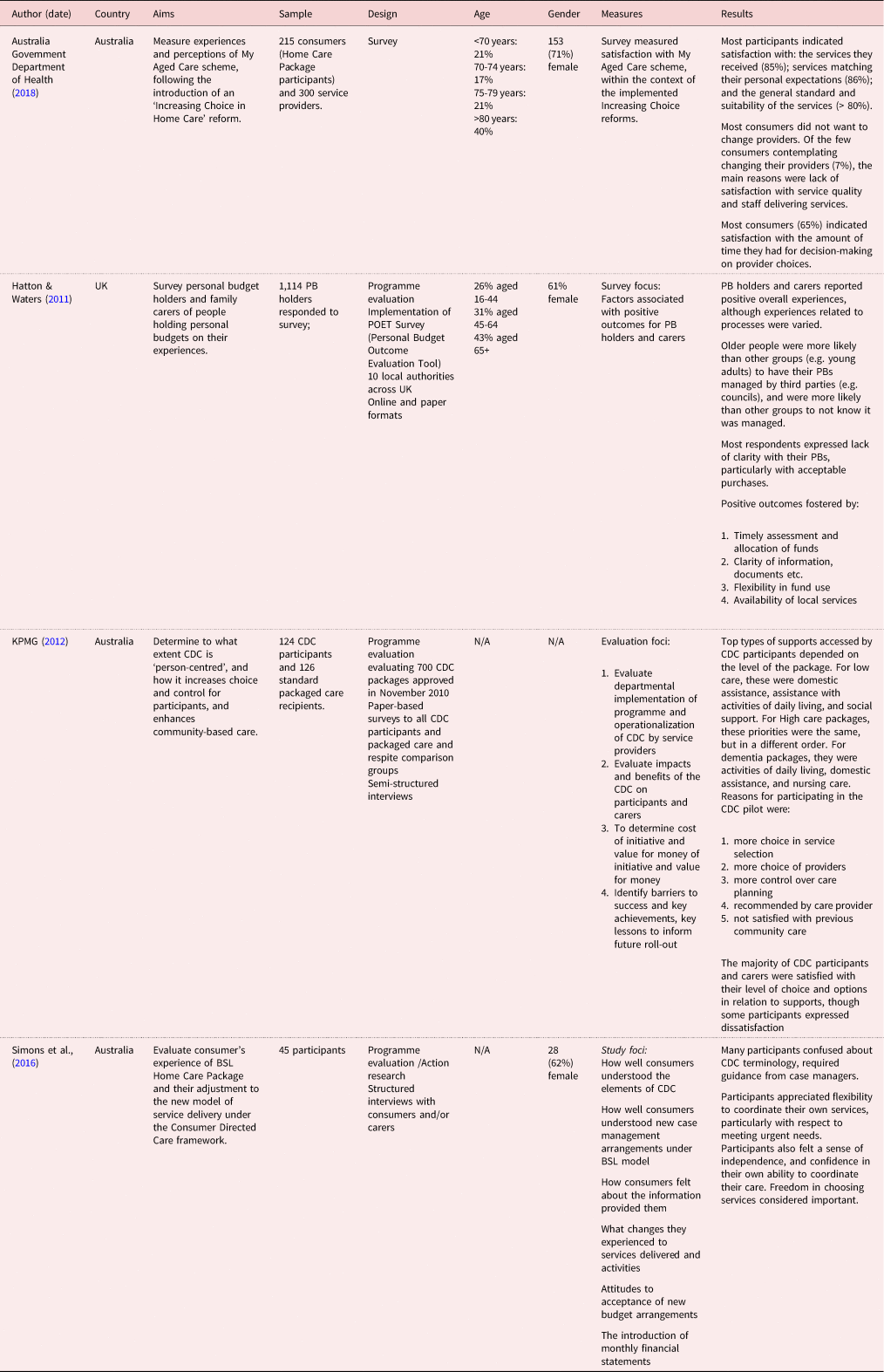
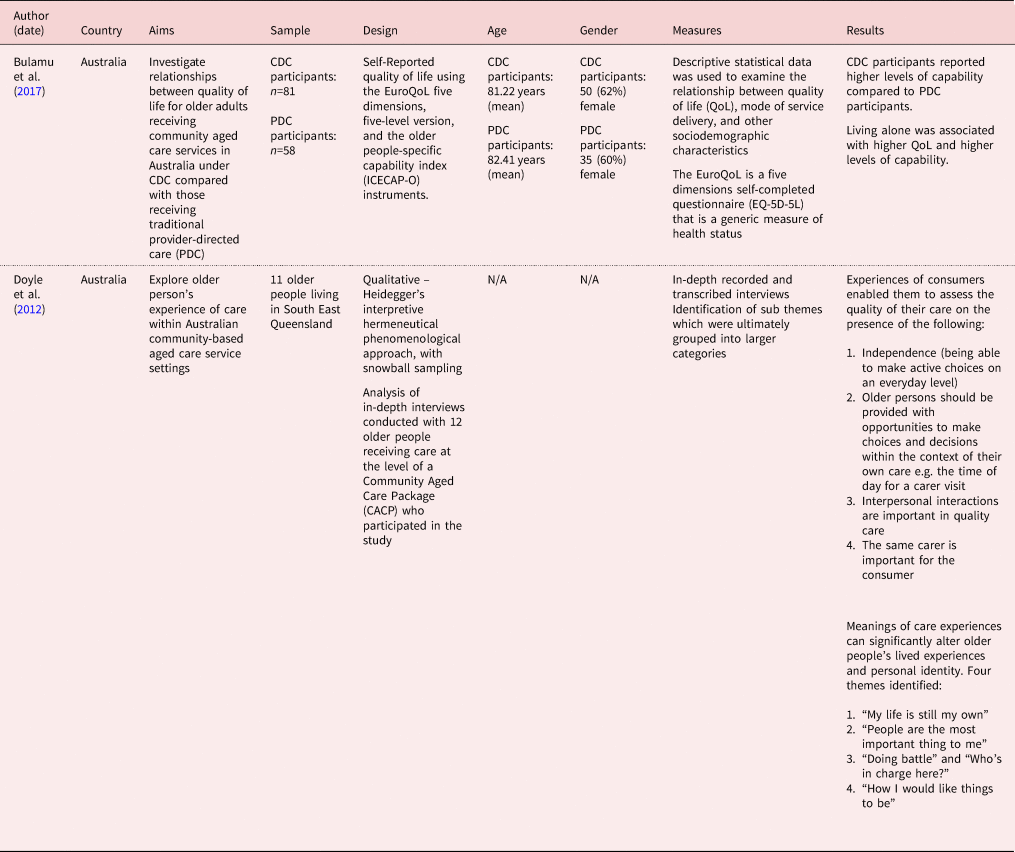
The search strategy for Q1 identified a total of 235 articles (MEDLINE/EMBASE: 206; CINAHL: 18; grey literature: 11). From this initial data-set 214 articles were excluded at screening and extraction rounds, leaving 21 articles for data extraction and risk of bias assessment (MEDLINE/EMBASE: 4; CINAHL: 12; grey literature: 5). The search strategy for Q2 identified 193 articles (MEDLINE/EMBASE: 167; CINAHL: 22; grey literature: 4). From this data-set we excluded 174 articles at the screening and extraction rounds, leaving a total of 19 articles for data extraction and risk of bias assessment (MEDLINE/EMBASE: 2; CINAHL: 13; grey literature: 4). Two studies were identified in both Q1 and Q2 search strategies (Moran et al., Reference Moran, Glendinning, Wilberforce, Stevens, Netten, Jones, Manthorpe, Knapp, Fernández, Challis and Jacobs2013; Ottmann et al., Reference Ottmann, Allen and Feldman2013).
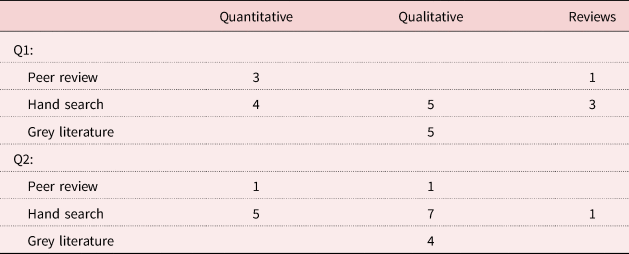
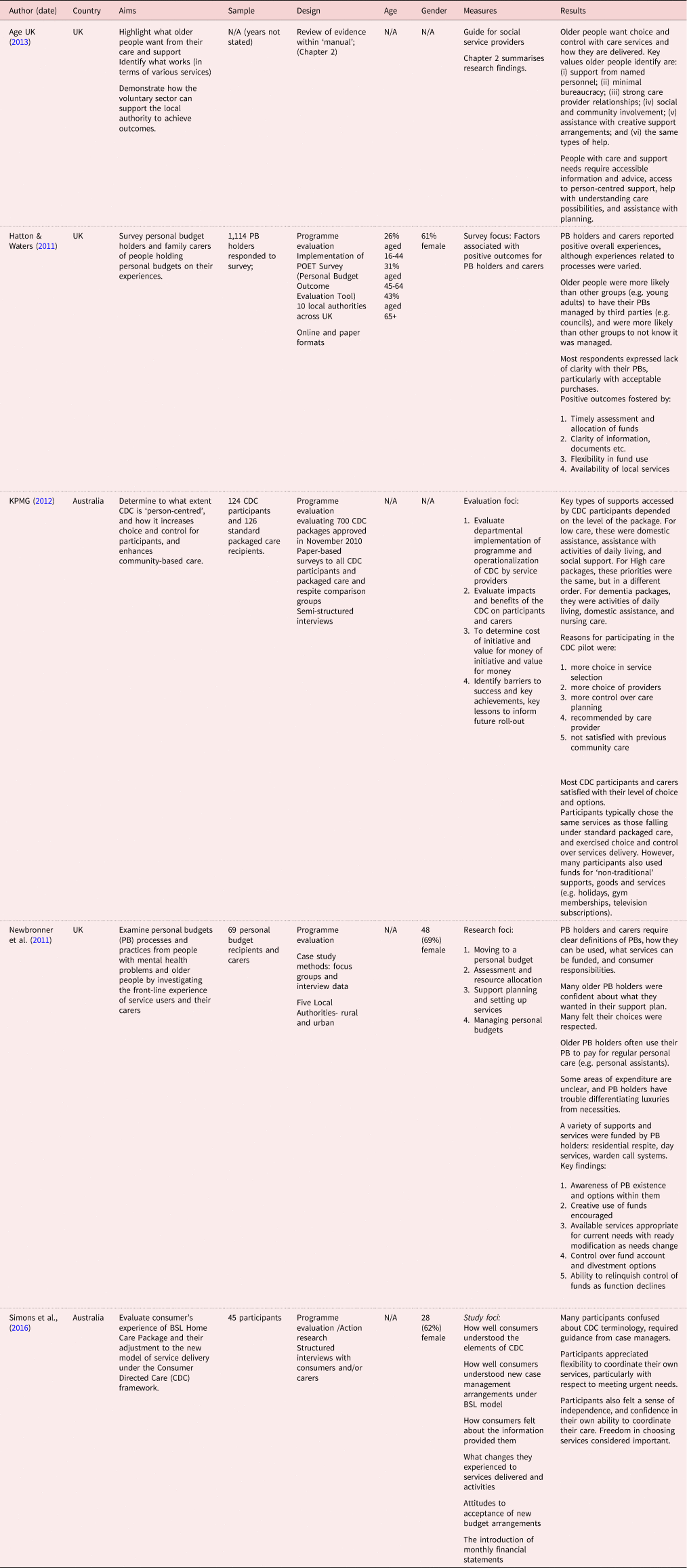
Over half of the 40 studies and reports included in the reviews were qualitative (22 studies; Table 2) and conducted in one of seven countries (Australia, Canada, Korea, The Netherlands, France, the UK and the USA), with a substantial proportion of the identified literature being Australian. Tables 3−8 summarise data extracted from included studies for Q1 and Q2. Risk of bias assessments associated with these studies are available as supporting material (see Tables S2–S7 in the online supplementary material). The extracted studies for Q1 and Q2 were found to have minimal bias, with some minor observations: (a) it was often unclear in quantitative studies how confounding factors were identified and addressed; and (b) a number of qualitative studies did not address any influence between the researcher and the topic addressed (see Tables S2–S7 in the online supplementary material).
Summary of quantitative, qualitative and systematic review articles in the included studies
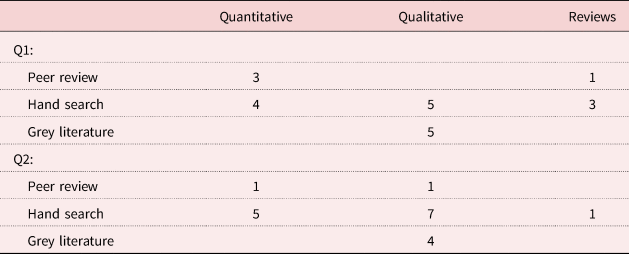
Note: Some studies appear in both Question 1 (Q1) and Question 2 (Q2) reviews.
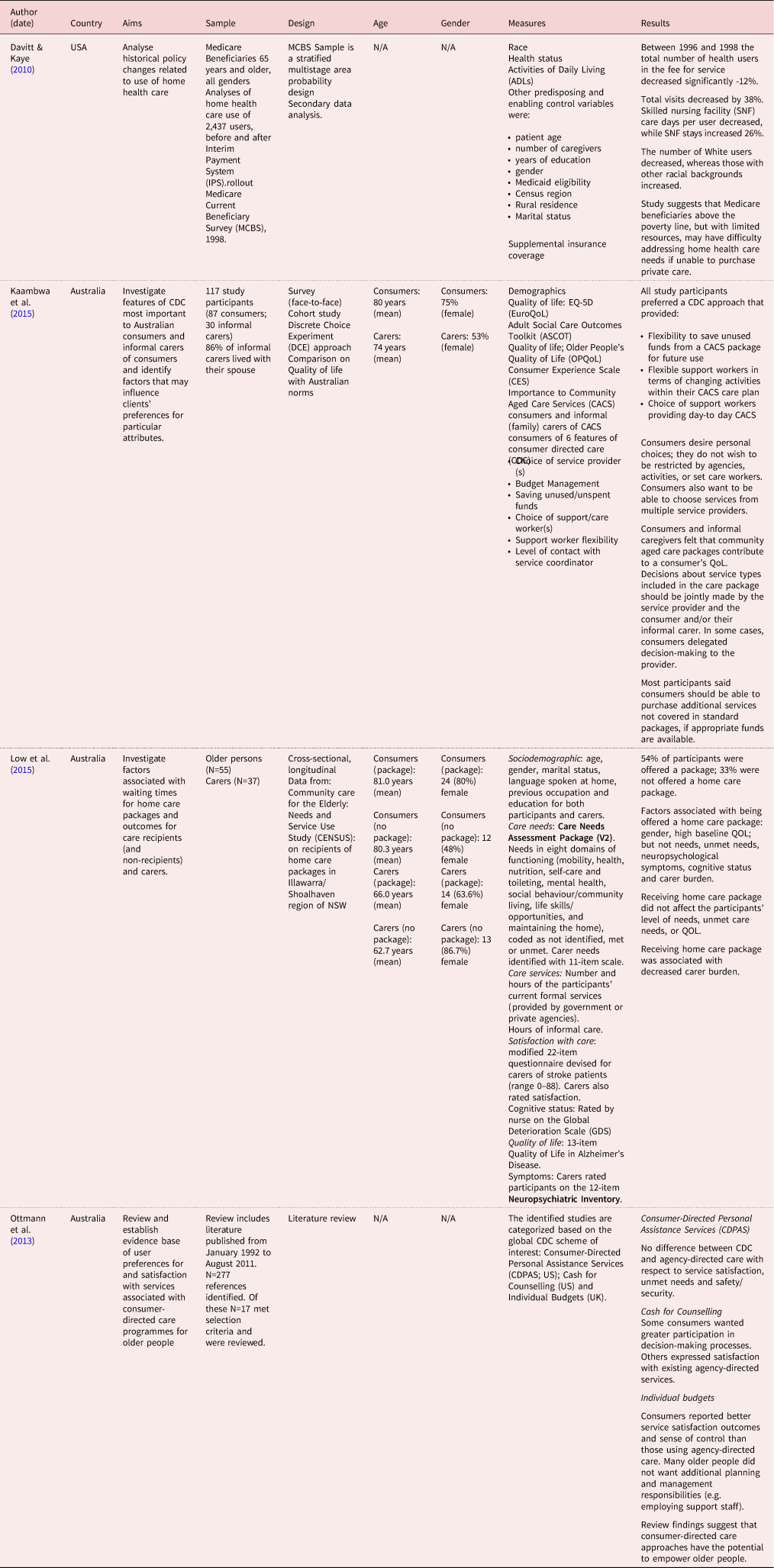
Data summary for studies in Q1, collected using a manual search.

Data summary for studies in Q1, collected using a manual search of grey literature.
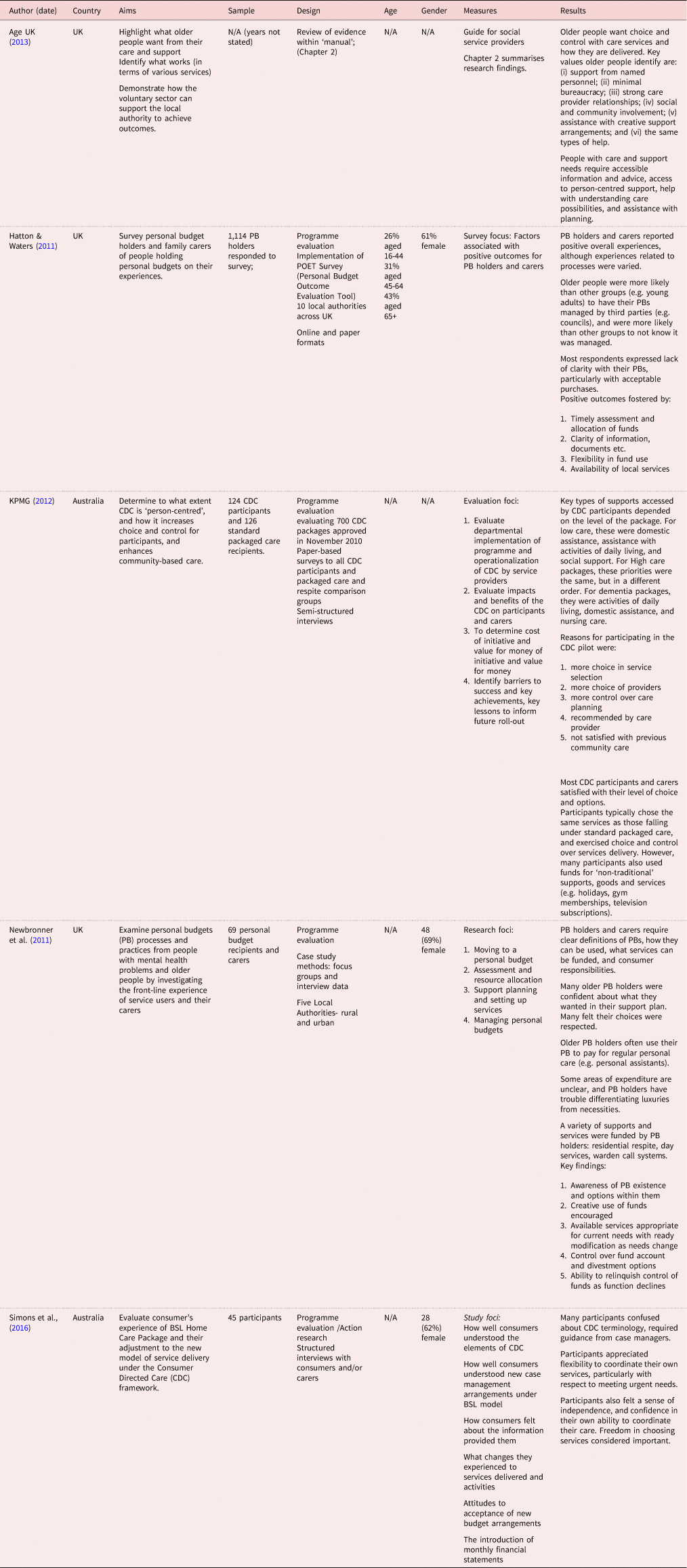
Data summary for studies in Q1, collected using a systematic search.
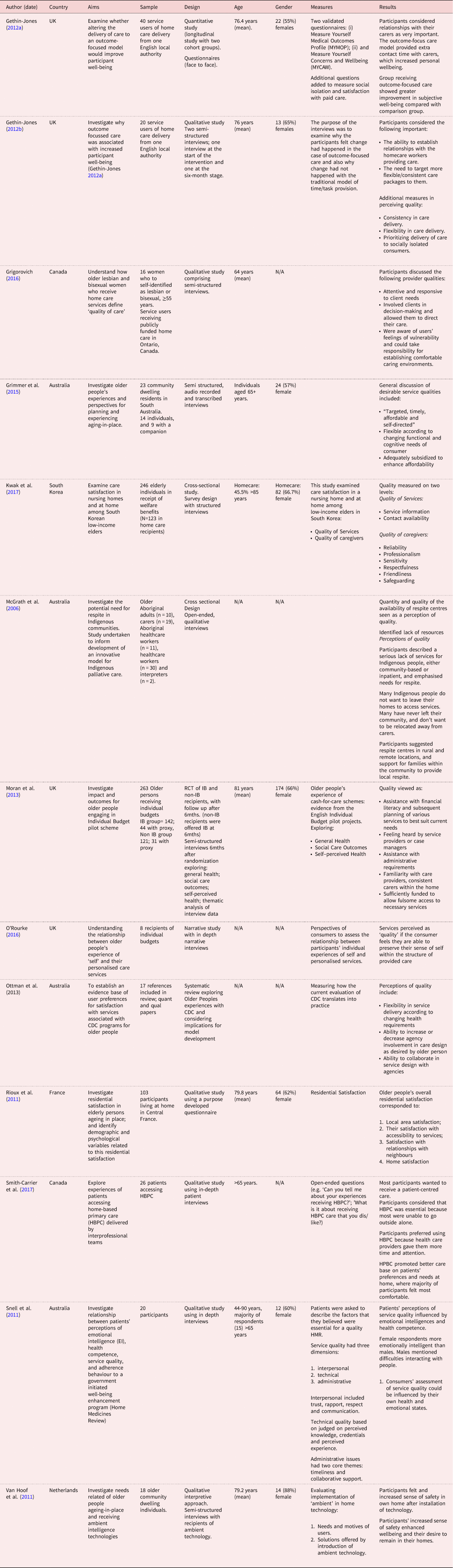
Data summary for studies in Q2, collected using a manual search.
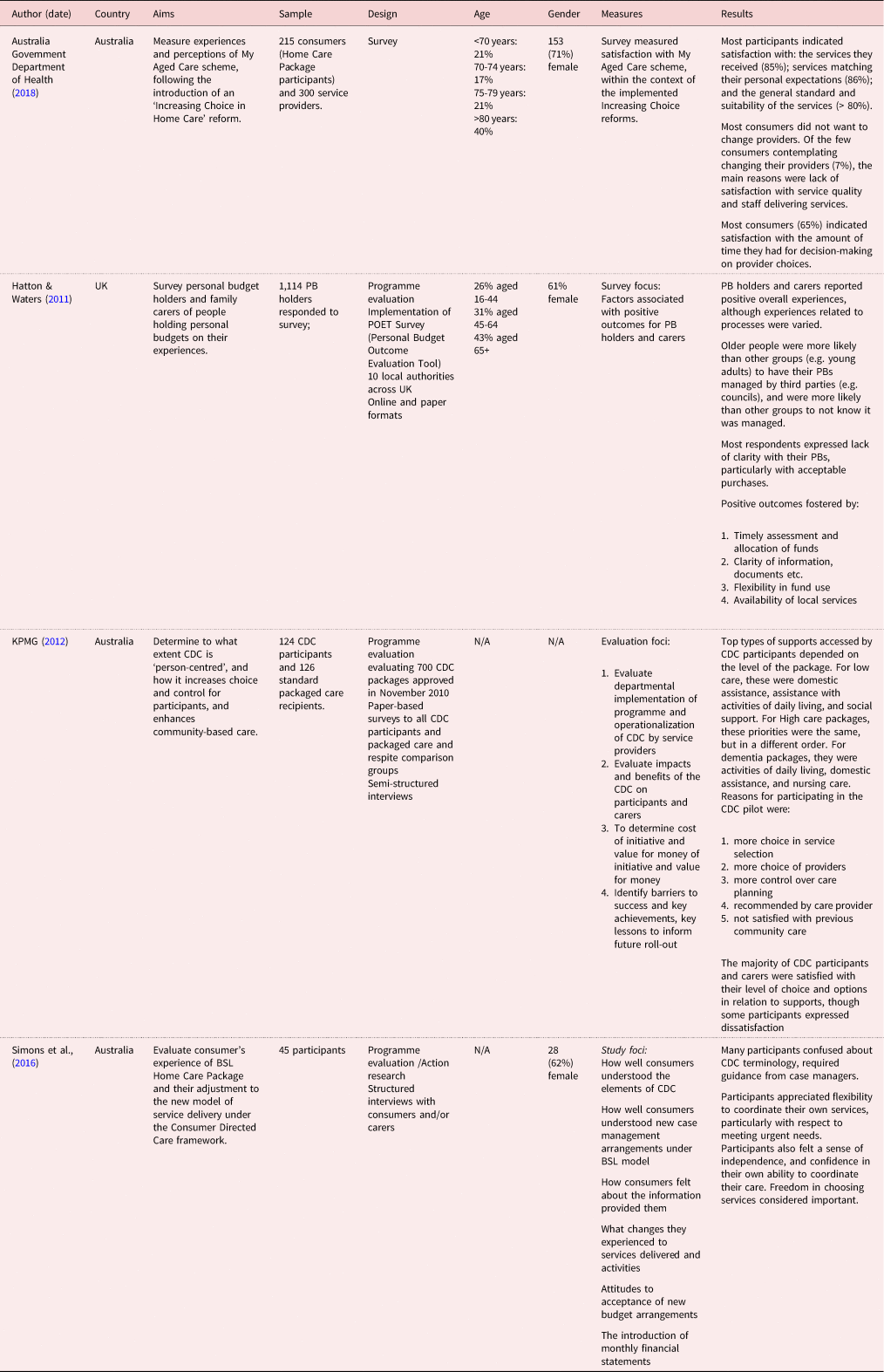
Data summary for studies in Q2, collected using a manual search of grey literature.
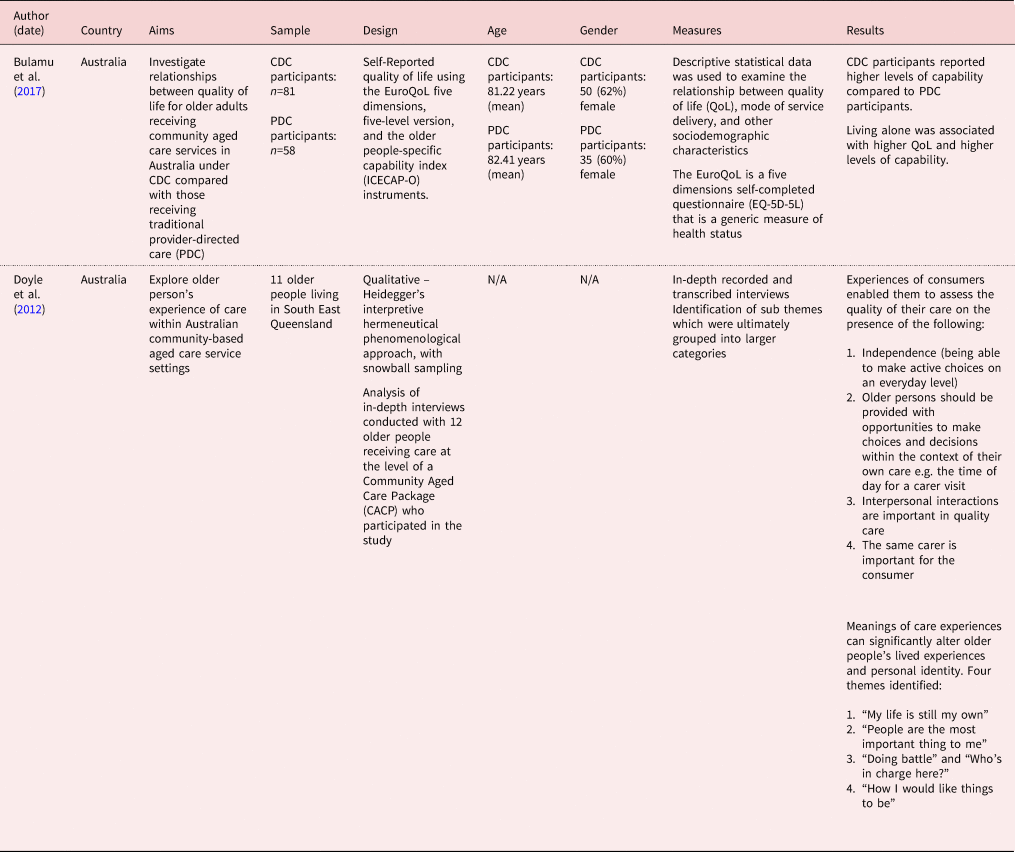
Data summary for studies in Q2, collected using a systematic search.
Services that consumers choose (Q1)
The studies included in Q1 revealed that choices in CDC and IB schemes are driven by several key factors, including needs for security and personal assistance (Day et al., Reference Day, Taylor, Summons, Van Der Riet, Hunter, Maguire, Dilworth, Bellchambers, Jeong and Haydon2017), desire for autonomy (Woolham et al., Reference Woolham, Daly, Sparks, Ritters and Steils2017), extent of mobility (Newbronner et al., Reference Newbronner, Chamberlain, Bosanquet, Bartlett, Sass and Glendinning2011; Age UK, Reference Age2013; Moran et al., Reference Moran, Glendinning, Wilberforce, Stevens, Netten, Jones, Manthorpe, Knapp, Fernández, Challis and Jacobs2013; Harrison et al., Reference Harrison, Low, Barnett, Gresham and Brodaty2014), social/leisure needs (Age UK, Reference Age2013; Harrison et al., Reference Harrison, Low, Barnett, Gresham and Brodaty2014; Manthorpe et al., Reference Manthorpe, Martineau, Ridley, Cornes, Rosengard and Hunter2015), valuing flexibility (Low et al., Reference Low, Yap and Brodaty2011; Norrie et al., Reference Norrie, Weinstein, Jones, Hood and Bhanbro2014; Kaambwa et al., Reference Kaambwa, Lancsar, McCaffrey, Chen, Gill, Cameron, Crotty and Ratcliffe2015; McCaffrey et al., Reference McCaffrey, Gill, Kaambwa, Cameron, Patterson, Crotty and Ratcliffe2015) and addressing unmet needs (Rabiee et al., Reference Rabiee, Moran and Glendinning2008).
A study by Rabiee et al. (Reference Rabiee, Moran and Glendinning2008) indicated that interviewees’ priority was generally to secure personal assistance, through directly employed personal assistants, agency staff or paying family carers. Consumers also intended to spend their IBs on: transport to enable them to be more involved in their communities; equipment (to support, for example, use of tele-health); short periods of respite care; and other things that mattered to them that would not have been funded under previous support arrangements.
Moran et al. (Reference Moran, Glendinning, Wilberforce, Stevens, Netten, Jones, Manthorpe, Knapp, Fernández, Challis and Jacobs2013) identified unmet needs as shaping consumers’ expectations about the provision of packages in the future. This study showed that older people in the UK used their IBs to purchase conventional mainstream services and personal assistance. Some (15 per cent) spent part of the IB on leisure activities. Recipients’ plans for using their IBs included: purchasing small pieces of equipment, including rails to aid mobility, bathroom adaptations to make personal care easier, personal alarm systems, adapted footwear and specialised chairs; paying for transport to enable the older person to continue to attend church; allocating money to maintain hobbies and attend related courses; acquiring support to attend community activities; and earmarking money to purchase a computer and broadband router to enable the older person to retain independence (e.g. through online shopping). Some participants planned to use their IB to pay someone to accompany them on outings; others indicated they would rather spend such times with family or friends and be able to compensate them financially for their assistance. Contingency planning was considered important by a small proportion (e.g. for purchasing agency care when their personal assistant took holidays). The drivers of these choices were not identified.
Similarly, the study by Newbronner et al. (Reference Newbronner, Chamberlain, Bosanquet, Bartlett, Sass and Glendinning2011) on personal budgets (PBs) in the UK found that older persons were most likely to use their PB to pay for regular personal care or help with getting out and about. A significant proportion employed personal assistants, usually with the help of a support provider organisation. A few PB holders employed family members or friends as personal assistants. The study by Newbronner et al. (Reference Newbronner, Chamberlain, Bosanquet, Bartlett, Sass and Glendinning2011) emphasised the importance of clear and understandable information about what a PB is, how it can be used and what is involved in holding one. Time spent discussing PBs with staff was critically important.
In the CDC pilot in Australia, most participants chose the same types of services as those available under standard packaged care but they exercised choice and control over how the services were delivered and who provided them. However, others spent at least part of their package on ‘non-traditional’ supports such as holidays and gym memberships. Similar results were reported in the study by Simons et al. (Reference Simons, Kimberley and McColl Jones2016) of Brotherhood of St Laurence clients, which found that most respondents prioritised personal care or domestic services over a social support programme.
Consumer perspectives on CDCs and IBs
The literature also highlighted several issues pertaining to the administration of CDC and IB/PB initiatives, which may have considerable impact on consumers’ choices (Manthorpe et al., Reference Manthorpe, Martineau, Ridley, Cornes, Rosengard and Hunter2015; Gill et al., Reference Gill, McCaffrey, Cameron, Ratcliffe, Kaambwa, Corlis, Fiebig and Gresham2017). In many cases, recipients expressed a need for clear information and guidance on how to use and manage their budgets (Hatton and Waters, Reference Hatton and Waters2011; Zamfir, Reference Zamfir2013; Norrie et al., Reference Norrie, Weinstein, Jones, Hood and Bhanbro2014; Rabiee and Glendinning, Reference Rabiee and Glendinning2014; Gill et al., Reference Gill, McCaffrey, Cameron, Ratcliffe, Kaambwa, Corlis, Fiebig and Gresham2017). Many clients and carers were not aware of terms such as ‘consumer-directed care’ or felt confused by them (Simons et al., Reference Simons, Kimberley and McColl Jones2016). Older people reported anxieties about the management and administration of the budget, given the possibility of directly employing staff carries responsibility and risk for the consumer (Moran et al., Reference Moran, Glendinning, Wilberforce, Stevens, Netten, Jones, Manthorpe, Knapp, Fernández, Challis and Jacobs2013; Zamfir, Reference Zamfir2013; Gill et al., Reference Gill, McCaffrey, Cameron, Ratcliffe, Kaambwa, Corlis, Fiebig and Gresham2017). However, Moran et al. (Reference Moran, Glendinning, Wilberforce, Stevens, Netten, Jones, Manthorpe, Knapp, Fernández, Challis and Jacobs2013) also described examples of people getting used to such administrative tasks and finding them less daunting over time, especially as support was generally freely available to help IB users manage their payroll and paperwork.
Dissatisfaction is also experienced when consumers have to wait excessive lengths of time to access their package, when payments are delayed or when restrictions apply to what IBs can be spent on (Day et al., Reference Day, Taylor, Summons, Van Der Riet, Hunter, Maguire, Dilworth, Bellchambers, Jeong and Haydon2017). In the UK, low levels of funding in IBs awarded to older people in comparison to younger ones with disabilities typically restrict older people's ability to use the IB on anything other than personal care and domestic support (Moran et al., Reference Moran, Glendinning, Wilberforce, Stevens, Netten, Jones, Manthorpe, Knapp, Fernández, Challis and Jacobs2013).
Moran et al. (Reference Moran, Glendinning, Wilberforce, Stevens, Netten, Jones, Manthorpe, Knapp, Fernández, Challis and Jacobs2013) found that, in contrast to the assumptions of care managers that older people would struggle to manage their own budgets or support arrangements, some could see many potential advantages to IBs, primarily greater opportunities for choice and control, compensating family and friends for the help they provided, respite, and improved wellbeing and social participation.
Consumer-perceived quality of services (Q2)
Our analysis of research identified in response to Q2 identified themes in consumer perceptions of quality in home- and community-based services, outlined below.
Relationships with paid carers
A common observation was that consistency in allocation of formal carers and consumers’ familiarity with them help older people feel comfortable receiving services from carers, as it promotes establishing an ongoing relationship (Moran et al., Reference Moran, Glendinning, Wilberforce, Stevens, Netten, Jones, Manthorpe, Knapp, Fernández, Challis and Jacobs2013). According to Gethin-Jones (Reference Gethin-Jones2012a), use of an outcome-focused care model instead of a task-focused model facilitates extra contact time between participants and formal care-givers, and can lead to improvements in participants’ wellbeing. Participants of Doyle's (Reference Doyle2012) qualitative study also emphasised ongoing continuity of care from the same carer is a key component of service quality.
Skills and competencies of carers
Preferred characteristics of carers were described in several studies. One study sample expressed the view that carers should be reliable, professional, sensitive, respectful and friendly, and safe (Kwak et al., Reference Kwak, Lee and Kim2017). Carers should also be responsive to participants’ needs and demonstrate appropriate competencies, including technical and emotional support (Grigorovich, Reference Grigorovich2016). Finally, given consumers’ lack of financial literacy, they require support from carers with financial management of their care services (Moran et al., Reference Moran, Glendinning, Wilberforce, Stevens, Netten, Jones, Manthorpe, Knapp, Fernández, Challis and Jacobs2013).
Flexible services according to the needs of consumers
Consumers expressed the need for flexible and consistent care packages, covering a wide range of needs (Hatton and Waters, Reference Hatton and Waters2011; Gethin-Jones, Reference Gethin-Jones2012b; Moran et al., Reference Moran, Glendinning, Wilberforce, Stevens, Netten, Jones, Manthorpe, Knapp, Fernández, Challis and Jacobs2013). This includes flexibility in care delivery according to clients’ changing functional and cognitive health needs (Grimmer et al., Reference Grimmer, Kay, Foot and Pastakia2015). In addition, carers should be able to undertake tasks as required, rather than following a fixed task list for each visit (Simons et al., Reference Simons, Kimberley and McColl Jones2016). Services should be targeted, timely, affordable and self-directed (Ottmann et al., Reference Ottmann, Allen and Feldman2013; Grimmer et al., Reference Grimmer, Kay, Foot and Pastakia2015). Thus, it is important that services are suitable and accord with participants’ needs if consumers feel that they are able to preserve their ‘sense of self’ within the structure of the care services (O'Rourke, Reference O'Rourke2016). This gives consumers a sense of independence and confidence in their own ability to control their care (Simons et al., Reference Simons, Kimberley and McColl Jones2016).
Participation in care
Consumers prefer services where they can be involved in the decision-making regarding their care. This involvement includes the flexibility to organise and co-ordinate their own services as required, either independently or in collaboration with a carer (Simons et al., Reference Simons, Kimberley and McColl Jones2016; Bulamu et al., Reference Bulamu, Kaambwa, Gill, Cameron, McKechnie, Fiebig, Grady and Ratcliffe2017); and to participate in selection from the range of options available to them (KPMG, 2012; Ottmann et al., Reference Ottmann, Allen and Feldman2013). Participation in the decision-making process ensures that care provision meets their needs and facilitates autonomy (Grigorovich, Reference Grigorovich2016; Bulamu et al., Reference Bulamu, Kaambwa, Gill, Cameron, McKechnie, Fiebig, Grady and Ratcliffe2017). Many consumers value highly being heard by service providers or case managers (KPMG, 2012; Moran et al., Reference Moran, Glendinning, Wilberforce, Stevens, Netten, Jones, Manthorpe, Knapp, Fernández, Challis and Jacobs2013).
Service information and funding allocations
Consumers prefer information about care services that is clear, easy to follow and readily accessible (Kwak et al., Reference Kwak, Lee and Kim2017; Australia Government Department of Health, 2018). However, many consumers do not recognise or fully understand the term ‘consumer-directed care’ (Simons et al., Reference Simons, Kimberley and McColl Jones2016).
Information considered important by consumers includes contact availability (Kwak et al., Reference Kwak, Lee and Kim2017), accessibility (Rioux and Werner, Reference Rioux and Werner2011) and availability of services (Hatton and Waters, Reference Hatton and Waters2011). Consumers also express the view that there should be clarity regarding how care budgets may be used (Hatton and Waters, Reference Hatton and Waters2011), and believe their entitlements should be sufficiently generous to allow unrestricted access to necessary services (Moran et al., Reference Moran, Glendinning, Wilberforce, Stevens, Netten, Jones, Manthorpe, Knapp, Fernández, Challis and Jacobs2013; Australia Government Department of Health, 2018).
Issues with Indigenous populations
In the study by McGrath et al. (Reference McGrath, Patton, McGrath, Olgivie, Rayner and Holewa2006), participants described a serious lack of services (community-based or inpatient) for Indigenous Australians, and emphasised the key need for local respite close to family. The lack of local respite may create hardship for older Indigenous people, as many have never left their local communities.
Caring and social support
A sense of being cared for is considered an important quality by consumers. Sometimes services are the only source of social support for participants who are isolated and lack adequate social interaction (Smith-Carrier et al., Reference Smith-Carrier, Sinha, Nowaczynski, Akhtar, Seddon and Pham2017). Consumers express their need to feel safe and comfortable with care services and to know that assistance is readily available to them, both in emergencies and more generally (McGrath et al., Reference McGrath, Patton, McGrath, Olgivie, Rayner and Holewa2006; van Hoof et al., Reference van Hoof, Kort, Rutten and Duijnstee2011).
Discussion
Key themes
The themes identified in both reviews, relating to drivers of choice and perceptions of quality in home- and community-based aged care, can be summarised as follows.
• Control: Most consumers want to participate actively in the decision-making for their care services, and value freedom to choose services based on their physical and mental needs.
• Local residence: Consumers want to be able to receive high-quality care locally or at home, and not have to move away from their friends and family. This is particularly an issue for Indigenous consumers and those living in remote areas.
• Interpersonal interaction: Consumers want supportive interpersonal interactions with their carers over the longer term. In many cases, consumers’ only regular social contact is with their formal carer, and thus carers should show respect, sensitivity and kindness.
• Flexibility: Consumers want the delivery of their care to be flexible, in terms of both their choice of daily activities, and adjustment over time according to their changing physical and mental needs.
• Affordability: Consumers want their services to be affordable and subsidised where possible.
• Administrative and financial literacy: Consumers benefit from assistance in understanding their care service entitlements and receiving support with the financial planning and management of their services.
• Safety: Consumers want to feel protected in their homes and local communities, and to know that both general and emergency assistance is readily available.
• Timeliness of service care provisions: Consumers prefer to receive their care entitlements and services in a timely manner.
Several implications for future model development are apparent, some of which considered in conjunction illustrate tensions between consumers’ needs and service providers’ obligations. For example, CDC packages need to allow for consumers’ service preferences to change with time, as shifts in their functional and cognitive abilities will influence their care needs. However, there is also evidence that consumers want to build and sustain trusting relationships with their carers over the long term, which would require such services to be provided over long periods with reasonable consistency. An ideal model, therefore, would strike a balance between allowing consumers to reconfigure their care packages, but also allow services, in particular those involving carers, to be stable over the long term. Providing more basic, user-friendly documentation on CDC packages and more opportunities to discuss them might allow consumers to understand better their rights and allowances under CDC schemes, and the implications of their decisions.
Limitations
The most important limitation in our rapid review methodology was its design. Due to the paucity of data captured by our search strategies, we chose to combine our findings with manual searching methods in primary and grey literature databases. These manual searches were non-systematic, which limits the replicability of the search and potentially introduces bias to the results.
The significant proportion of Australian literature identified across our reviews contrasted with our expectations, given large research outputs from the USA and UK. It is possible that this result was an artefact caused by attentional bias in our manual searches or by over-reliance on terms used in Australia (e.g. ‘consumer-directed care’ and ‘packaged care’), despite the research team's efforts to identify and specify the wider range of terms used in the UK, the USA and elsewhere (see the Appendix in the online supplementary material).
Conclusion
We conducted rapid evidence reviews of consumers’ drivers of choice when looking for a home- or community-based aged care service, and their perceptions of the quality of these services. Results from peer-reviewed and grey literature suggest that consumer choices of services are driven by a combination of the following: the desire for flexibility in service provision; the extent of mobility; the need for security, personal assistance, interaction and social/leisure activities; and to target and address previously unmet needs. Consumer perspectives of quality include control and autonomy, interpersonal interactions, flexibility of choice, and safety and affordability. Both reviews highlighted the consumer's need for personal/social interaction and community involvement, and for participating in the planning and decision-making on how to manage their budgets. These factors are critical to the further development of consumer-directed initiatives in home- and community-based aged care and to the wellbeing of service recipients.
Supplementary material
The supplementary material for this article can be found at https://doi.org/10.1017/S0144686X19001065
Financial support
This work was supported by the Australian Aged Care Quality Agency (reference number AACQA CERHC-01). Additional support was provided by La Trobe University Library.
Conflict of interest
The authors declare no conflicts of interest.