

INTRODUCTION
HIV/AIDS has been one of the most discussed issues in sub-Saharan Africa (SSA) in recent years, not only from a medical perspective, but also in terms of its effects on development. How the international aid system has reacted to the emergence of HIV/AIDS within the context of the global health agenda is a relevant and contentious issue. More than two decades after the beginning of the epidemic in SSA, the latest available figures show that today this is the world's most affected region. Exceptionally high rates of prevalence of the virus and its high rates of mortality mean that the disease has become the main cause of death in SSA. This has led to unprecedented falls in life expectancy in a number of SSA countries.Footnote 1
As a result, the approach to HIV/AIDS in SSA countries has shifted from seeing it principally as a health problem to seeing it as an obstacle to development. It has significant socio-economic effects on households and on a number of economic sectors, as well as on the supply of and demand for basic public services. A particularly disturbing feature is that as many as 61% of the infected population are women.Footnote 2 Consequently, the global financial response to HIV/AIDS in Africa, particularly Southern Africa, has been massive, leading to a complete reconfiguration of the aid industry in the region. Myriad well-funded new actors and international initiatives, including The Global Fund, have proliferated to deal specifically with HIV/AIDS.Footnote 3 This expansion in the number of actors involved in HIV/AIDS policies in Southern Africa, together with other features of the global response such as its top-down approach to policies, and its preference for vertical targeting on just one disease or a handful of them, to some extent contradict the Paris Agenda, one of the foundations of the new aid architecture.
The Paris Agenda, set up in 2005 and reinforced in 2008 with the Accra Agenda of Action, establishes four operating principles designed to achieve greater effectiveness in aid delivery: ownership, alignment, harmonisation and mutual accountability.Footnote 4 However, serious shortcomings appear in applying its principles to global health issues. Development agendas of recipient countries are highly influenced by donors, and instead of prioritising a horizontal development of public health structures, these privilege vertical targeting centred on particular diseases. This vertical approach deters alignment by donors to recipients' policies, as local structures are not flexible enough to relocate resources to combat just one or a few diseases. Vertical programmes also tend to create parallel structures, contributing to the fragmentation of health resources and thus often to a decline in equitable access to basic health services (Schreuder & Kostermans Reference Schreuder and Kostermans2001; Unger et al. Reference Unger, De Paepe and Green2003, Reference Unger, De Paepe, Ghilbert, Soors and Green2006). One proposed solution to this, harmonisation (the establishment of common arrangements among donors), gives the donors even more bargaining power, as they tend to set up coalitions, like the International Health Partnership (known as IHP+), established in 2007 to increase inter-donor coordination (Sridhar Reference Sridhar2010: 1369).Footnote 5
It is important to understand why global health issues are addressed mainly through vertical funds. Since the shift to a poverty-reducing approach to aid policies at the end of the 1990s, social issues have been prioritised in the new aid architecture, as the Millennium Development Goals show.Footnote 6 Thus, donors need to measure progress in order to satisfy taxpayers. But data collection mainly occurs in relation to disease-specific causes of death, the empirical effects on life expectancy of investing horizontally in public health systems are hard to observe, and so vertical approaches have been favoured by donors (Sridhar Reference Sridhar2010: 1370). In addition, the growth of certain communicable diseases and the World Bank's strong influence on the approach to health policies, based on cost-benefit analysis and privatisation measures, also favour vertical targeting. So does the assertive role of major donors, who see this approach as producing faster results and fewer problems for management, control and fundraising (Cueto Reference Cueto2004; Magnussen et al. Reference Magnussen, Ehiri and Jolly2004; Msuya Reference Msuya2004). In sum, the approach to the fight against HIV/AIDS is mainly vertical and highly controlled by foreign donors despite the spirit of the Paris Agenda.
This is not to say that HIV/AIDS policies in SSA correspond only to a Western agenda. The disease and its consequences are real (although there are some deniers), and there is a genuine response from local governments and civil society. But the influence of donors on the formation of public health policies and in the prioritisation of public health objectives in Southern Africa is strong.Footnote 7 In this article we examine the most recent trends and initiatives in HIV/AIDS policies in Mozambique, and the influence of foreign development agencies in these policies.
THE BACKGROUND TO HIV/AIDS POLICIES IN MOZAMBIQUE
The tendency to see SSA as a whole can be misleading. It is necessary to stress that detailed, disaggregated data show that there are significant differences between and within individual countries in SSA when it comes to the impact of the disease.Footnote 8 It is thus important to carry out case studies because they shed more light on the key features of the impact of HIV/AIDS, so that public policies can be better informed. Given that Southern Africa is the region most affected in the world, most of the case studies analysing the consequences of the HIV/AIDS pandemic and the suitability of the policies implemented against it concentrate on this region. Studies on Mozambique, however, remain scarce.
Although Mozambique is not one of the countries in the region with the highest rate of prevalence, it does raise interesting questions for the analysis of HIV/AIDS policies. For instance, the country is surrounded by others with higher prevalence rates, with the result that there are very high infection rates along cross-frontier transport corridors. After the end of the civil war in October 1992, when refugees started returning from neighbouring countries, there was a sharp increase in the infection rate. The fact that the epidemic developed later in Mozambique than in many of its neighbours should have allowed the country to draw lessons from them about how to fight it. However, it is difficult to judge the success of the policies pursued up to now. In Mozambique, as in other countries of the region, we find a complex combination of negative and positive features: on the one hand, the drastic extent and effects of the disease and the structural problems which make it so hard to tackle; on the other, the real progress which has occurred in recent years in a variety of areas.
With a current Human Development Index of 0·322, Mozambique is placed at 184 out of the 187 countries in the UNDP's ranking, even though its HDI score has steadily increased from 0·200 in 1990 to 0·322 in 2011 (UNDP 2011). Poverty is widespread: in 2008 it was estimated that 54·7% of the population lived below the national poverty line (World Bank 2011). Mozambique is not classified as a fragile state by any major international body, but it is certainly a weak post-conflict state, which faces severe structural difficulties in providing basic social services. Civil society in Mozambique is emerging, but still lacks the capacity to play an active role against the pandemic in the short term.Footnote 9 The lack of provision of basic needs is especially notable in rural areas where 49·7% of the population lives (estimates for 2010), and where infrastructure and access to basic social services are severely limited (World Bank 2011).
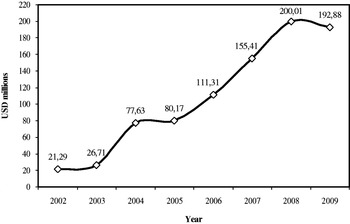
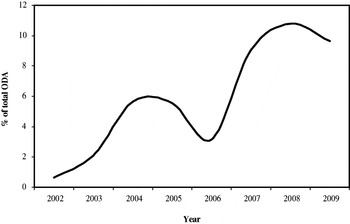
With the end of the war, the government's policy of greater international openness was reinforced, and soon Mozambique became a ‘donor-darling’ by virtue of its post-war situation and its engagement with orthodox economic policies. These developments led to a high level of dependence on the donor community. Public finance depended on foreign aid, and policy making was increasingly influenced by donors (Manning & Malbrough Reference Manning and Malbrough2010).Footnote 10 In particular, HIV/AIDS-related aid increased dramatically in a very short period of time, in both absolute and relative terms (see Figures 1 and 2), thus deeply influencing public health policies. Under such circumstances, channelling increased amounts of aid through local health structures (‘alignment’, in the jargon of the Paris Agenda) creates problems, because these structures lack the financial and technical ability to make good use of the money in the short term.
HIV/AIDS-related ODA from DAC countries to Mozambique, 2002–2009

HIV/AIDS-related ODA from DAC countries as a percent of total ODA from DAC countries to Mozambique, 2002–2009

The massive presence of development agencies has made it necessary to have greater coordination of their frequently differing agendas and strategies. Under the influence of the new aid architecture, many development agencies have begun to change their modus operandi, turning Mozambique into a ‘laboratory of international aid’. The presence of global health issues in this ‘laboratory’, specifically HIV/AIDS policies, is not as strong as it is in other neighbouring countries, but it is significant.
THE GOVERNANCE OF MOZAMBIQUE'S HEALTH SYSTEM AND THE ROLE OF DONORS
After independence in 1975, the Mozambique government's commitment to improve basic public services led the health sector to be considered one of the most advanced on the continent. Crucial financial support came from various friendly governments, and solidarity networks in Western countries. The 1977–92 civil war, however, destroyed a large part of the health infrastructure, both hard (facilities) and soft (human resources), weakening the supply side. But demand grew due to the serious deterioration in living conditions.
Post-conflict reconstruction included the health infrastructure and the launching of measures to raise the number of medical and paramedical staff, as well as the reinforcement of planning and management capacities in the health sector. This plan also aimed to raise the quality of health care from its existing low level, and to extend it territorially in order to reach the estimated 50% of the population without any access to the health system, or whose health centres were inadequate.Footnote 11 Exclusion from the health system is significant in rural areas, where transport and communications infrastructures restrict access to health facilities. Low levels of literacy, and local beliefs and customs, cause people to first seek help from traditional medicine (MAEC 2005; UNDP 2007).
Mozambique's health system was initially highly centralised, with low flexibility, and insufficiently dynamic to ensure that financial resources reached the geographically farthest points of the system where they were most needed. In order to increase efficiency, the government has recently begun a process of deconcentration of the structure of the public sector, transferring the management of health services to the provincial and district levels though without major decentralisation of decision-making, planning and public finance management.Footnote 12 The Provincial and District Health Directorates are in charge of the implementation of health plans and programmes, even though main decisions about resource allocation or overall planning remain centralised in the Ministry of Health (Ministério da Saúde, MISAU). There is little consultation with local bodies. This centralisation causes frequent financial stress in these local bodies, due to delays in the transfer of funds, and further worsening of the quality of services.Footnote 13
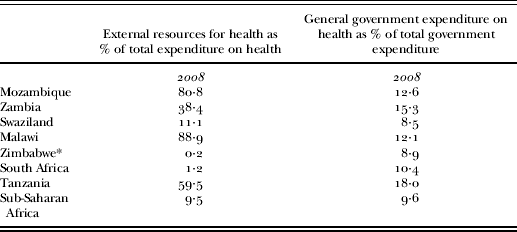
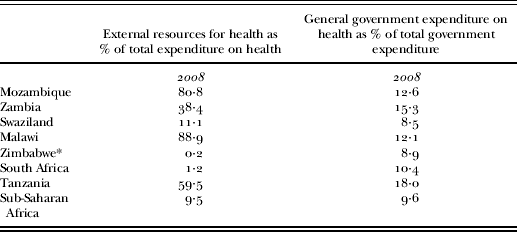
Despite these shortcomings, the country's health system planning has improved. MISAU has drawn up strategic plans for the health sector (Plano Estratégico do Sector Saúde, PESS 2000-05-10), as well as national strategic plans to combat HIV/AIDS (Plano Estratégico Nacional de Combate ao HIV/SIDA, PEN I, PEN II and PEN III). Improvements have been made in the management of donor contributions in the health sector by means of using sector-wide approaches (SWAps). This has led in recent years to a growth in the budgetary funds allocated to the health sector, through the state budget, the Common Provincial Fund, the Common Fund for Medicines and the General Common Fund PROSAUDE along with other external forms of financing (see Table 1).Footnote 14
Selected indicators of health expenditure in Mozambique, surrounding countries and sub-Saharan Africa
During the 1980s, donors (both public and private) allocated their health sector aid mainly by means of projects and vertical programmes, which led to an absence of coordination between them in terms of objectives and accountability standards. In order to increase efficiency, donors began at the end of the 1980s to introduce new forms of aid in Mozambique, using what came to be called programme-based approaches (PBAs). In particular, in 1989 the official Swiss Agency for Development and Cooperation granted the MISAU the money to cover sector costs, such as food and clothing in hospitals. The point was that the money had to be managed through the budget of the MISAU. Since the mid 1990s Switzerland, Norway and the Netherlands have led the process of shifting aid delivery from individual projects managed outside the recipient country's public budgets to public budgets managed by the recipient government. For that purpose ‘common funds’ were created to cover current spending in the health sector.
Since the Paris Declaration on Aid Effectiveness in 2005, a growing share of aid has been delivered through different kinds of PBA (mainly general budget support and SWAps), and the ratio of aid disbursed through PBAs should be a good indicator of alignment and harmonisation. In 2007, 46% of the total aid received by Mozambique from traditional donors was channelled through PBAs, and Mozambique received the second highest percentage of aid through PBAs in Africa, after Uganda (OECD 2008: 87).Footnote 15
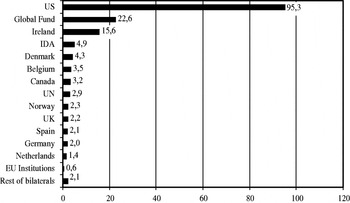
At the end of the 1990s decisive steps were taken to create a SWAp in health between MISAU and the main donors. The signing of a Code of Conduct (in 2000), and a Memorandum of Understanding applying to PROSAUDE and the rest of the common funds (in 2003), allowed the unification of funds of different origin, the design of common objectives, and the setting up of evaluation methods, using a set of agreed indicators (Martínez Reference Martínez2006).Footnote 16 MISAU took the lead in planning and implementing health policies, so donors had to align their agendas with MISAU's. Apparently, the Mozambican government has widened its policy-space and thus has more room to make decisions regarding the use of resources provided by donors. Hence the resources should now be more aligned with other government strategies and policies, and more coordinated or harmonised among themselves. But a careful analysis shows that the main donors have implicitly, and sometimes even explicitly, acted as a cartel. Under the denomination of G-19, the nineteen general budget support donors in Mozambique (that is to say, the main donors, except for the United States, Japan and the UN, which remain as ‘observers’) are regrouped in what is called a Programme Aid Partnership.Footnote 17 This has reinforced harmonisation but, rather contradictorily, it also has limited the government's policy-space because G-19 has more bargaining power, and thus more room to have its views on government policies heard (Di Renzio & Hanlon Reference Di Renzio, Hanlon and Whitfield2009: 259–61; Handley Reference Handley2008: 11). The financial importance of the main donors in the HIV/AIDS sector is shown in Figure 3.
HIV/AIDS-related ODA to Mozambique: average gross disbursements, 2006–2009

The complex jigsaw of the health sector in Mozambique is completed by the NGOs, most of them foreign.Footnote 18 The traditional way in which NGOs, public sector and donors have worked together (and still do to a great extent) has been mainly through micro-projects. To overcome the lack of harmonisation in this approach, an increasing number of NGOs work in a coordinated way with the local public sector, trying to avoid overlapping and parallel structures.
Despite the expectations produced by the SWAps, there remains considerable variation in the degree of engagement between different bilateral and multilateral agencies. While most donors consider Mozambique suited for PBAs, some crucial donors, such as USAID, remain reticent about shifting decision-making power to recipient governments or to sectorally coordinated groups of donors;Footnote 19 and a substantial number of donors in the health sector still prefer to channel their resources outside the public budgetary framework.Footnote 20 Lack of absorptive capacity, public finance management capabilities and transparency are the common arguments used against participation in public budgetary arrangements. However, following the ‘learning by doing’ logic, some important donors, including the World Bank, have come to accept the usefulness of PBAs. The reason for the growing support is that public sector finance management is gradually improving and the ability to absorb aid is accordingly growing.Footnote 21 Greater efficiency has been achieved in recent years due to higher decentralisation and improvements in planning and in putting policies into operation.Footnote 22
Nonetheless, the limits to the state's capacity still create problems for the management of an increasingly complex international aid framework, which comes from a tradition of fragmentation and lack of coordination, thus raising transaction costs for recipients.Footnote 23 In addition, there are also problems in establishing the indicators and yardsticks needed to assess policies. Volatility, lack of predictability in the donors' aid commitments, and the failure to transfer funds on time, also become important handicaps that undermine efficiency. In spite of the fact that the Paris Agenda set an objective of ‘mutual accountability’, there is no tradition of accountability on the donor side, which may hinder recipient countries' efforts to increase efficiency.
THE HIV/AIDS EPIDEMIC IN MOZAMBIQUE: FACTS AND EFFECTS
Twenty-five years have passed since the first cases of AIDS were diagnosed in Mozambique in the later 1980s.Footnote 24 The diagnoses coincided with the WHO's recommendation that countries should establish national committees to fight the disease. The first such structures in Mozambique were set up in 1986 around the Instituto Nacional de Saúde (INS), and these were then reorganised by the creation of a National Commission to Fight AIDS within MISAU. This Commission included representatives from other ministries and from civil society but, due to civil war disruptions, it gradually became an almost exclusive responsibility of MISAU.
The displacement of population because of the civil war and, above all, the return home from neighbouring countries with higher rates of infection at the end of hostilities contributed to the rapid spread of the disease. Yet the priorities of the post-war period were more concerned with the peace process, the removal of land mines, and the resettlement or feeding of the former refugees and displaced people, while the disease spread. Due to this prioritisation of resources, there was no systematic epidemiological surveillance, nor any generalised prevention activities, but some initiatives were launched. For instance, in Tete and Chimoio MISAU launched an EU supported programme of HIV surveillance in 1994, only two years after the signing of the peace agreement (De Hulsters et al. Reference De Hulsters, Barreto, Bastos, Noya, Folgosa and Fransen2003: 77). HIV surveillance was also given particular attention in the process of demobilisation of the armies of both sides. Later on, the reactivation of the economy increased trading activities in the transport corridors which connect the surrounding landlocked countries to the main seaports, such as Maputo and Beira. This contributed to a strong increase in prevalence rates in the provinces crossed by these corridors.Footnote 25
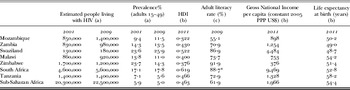
Mozambique and Swaziland have been the last countries in Southern Africa to stabilise their HIV prevalence rates. In Malawi, Zimbabwe, Botswana, Zambia, Lesotho and South Africa, HIV prevalence began to stabilise at the end of the 1990s, and in some cases even declined significantly. The average adult prevalence in Mozambique rose from the end of the 1980s, reaching 11·5% in 2009. Yet since 2005 this figure appears to have stabilised, and the number of new infections has actually decreased since 2003 (UNAIDS 2011). Although until recently the prevalence rate in Mozambique continued to rise, some surrounding countries still have higher rates of HIV prevalence (see Table 2). When considering the whole continent, Mozambique shares fourth place in the ranking of absolute numbers of people living with HIV, with a number similar to that in Tanzania, but lower than in South Africa, Nigeria and Kenya (UNAIDS 2010: 180).

The average rate of HIV prevalence for Mozambique conceals large internal differences between the northern provinces, with rates of about 9% in Cabo Delgado and Nampula, and the central and southern provinces, but about 20% in Gaza, Maputo, Manica and Zambezia. Similarly to SSA as a whole, present estimates for Mozambique show that about 60% of HIV-infected adults are women. Disaggregating by sex and age shows that from the beginning of sexual activity (the age group 15–19) prevalence rates rise rapidly, especially among women; in the broader 15–24 age category women's prevalence rate is three times that of men.Footnote 26 These data show the relevance of gender and age to the design of effective strategies and policies to fight the spread of HIV/AIDS in the country (CNCS 2010; Tvedten et al. Reference Tvedten, Paulo and Montserrat2008; UNDP 2007; WHO & UNAIDS 2009).
In particular, improving the level of education for girls is of outstanding importance for fighting the disease more effectively.Footnote 27 Many studies have shown that access to formal schooling raises the ability to access and assimilate the information provided by prevention campaigns, thereby increasing the number of people who follow advice about reducing risky practices which spread the virus. It also contributes to empowering women, and allowing them to take greater control of their lives in general and their sexual relations in particular (Bidaurratzaga Reference Bidaurratzaga, Oya and Santamaría2007).Footnote 28
As in other countries of the region, the epidemic has a wide range of serious negative socio-economic consequences; these range from implications for households and for the macro-economy, to impacts on factors which are basic to promoting human development, such as health and education. In households the disease has most effect on those of reproductive age, those who are sexually and economically most active. As a result, one of its main effects is to worsen the conditions in which many productive activities – formal, informal and self-consumed – are carried out. In both the minority formal sector and the informal sector, absenteeism, the reduction in labour supply, falling productivity and rising costs result in a decline in incomes from all economic activity (Cohen Reference Cohen2002; ILO 2006; Isaksen et al. Reference Isaksen, Songstad and Spissoy2002; Sachs Reference Sachs2001). When those affected by the disease are heads of families, the negative effects reach other areas of daily life, such as the provision of care, nutrition, hygiene and the schooling of children and other young people in their care, particularly girls (UNICEF 2006).Footnote 29
HIV/AIDS also has a serious impact on the supply of schooling since it affects teachers and reduces the already low quantity of qualified personnel in the country.Footnote 30 Although recent efforts to increase the supply of schooling have compensated for this loss, shortcomings are still present. The same goes for professionals in the health sector, with the added point that their professional activity itself exposes them to a greater risk of infection by the virus. In this sector, the decline of qualified human resources leads to a situation of scarcity which is worsened by growing demand (Bidaurratzaga Reference Bidaurratzaga, Oya and Santamaría2007).Footnote 31
In this regard, it was estimated in 2007 that, among the more than 15,000 people registered as working in the Mozambique health sector, the HIV prevalence rate was 17%. The disturbing picture on the demand side is that in the central hospitals of Maputo and Beira, and equally the provincial ones of Tete and Marica, between 60% and 80% of patients have HIV/AIDS-related illnesses. In recent years the gap between demand and supply in the health sector has been widened further by the growing availability of antiretrovirals, which for the sector as a whole means an increase in the number of patients seeking treatment and requiring check-ups, along with a series of other new demands for which the present health staff have not been properly trained (UNDP 2007; MISAU 2004).
POLICIES TO FIGHT HIV/AIDS IN MOZAMBIQUE: ACHIEVEMENTS AND LIMITS
As emphasised in the literature, success in fighting the spread of HIV/AIDS crucially requires an early recognition by the political authorities of the seriousness of the epidemic. Also crucial is their genuine willingness to lead the fight against it (UNAIDS 2010).Footnote 32 In Mozambique the political response was late, mainly because the disease took off during the civil war, when government priorities were deeply dependent on the evolution of the war, and public finances were in a state of stress, likewise because of the war. There was also a significant shortage of trained epidemiologists and specialised medical staff.
This is why the first steps taken by the government of Mozambique were timid, though there was a response, which followed the WHO recommendations at the Bangui meeting in 1985, when affected countries were advised to set up ‘national committees’ to deal adequately with the emerging new needs. Thus, as early as 1986, when the first cases were diagnosed in the country, a Comissão Nacional da SIDA was set up to advise MISAU. Later on, in 1988, a slightly more ambitious Programa de Combate ao HIV/SIDA was established, as well as the Centro de Coordenação da SIDA, intended as a body to implement the activities of the programme, with limited funding and results (Matsinhe Reference Matsinhe2005: 45).
In 1995 the Programa de Combate ao HIV/SIDA merged with the Programa Nacional de Controle das DTS to form the Programa Nacional de Controle das DTS/HIV-SIDA.Footnote 33 But it was not until 1999 that the government set up a meaningful structure, through the approval of the Plano Estratégico Nacional de Combate às DTS/HIV/SIDA 2000–2002, known as ‘PEN I’. Out of PEN I emerged the Conselho Nacional de Combate ao HIV/SIDA (CNCS), established by ministerial decree in 2000.Footnote 34 The creation of the CNCS, headed by the Prime Minister and with members from various ministries and from civil society, was based on the conviction that a medical response had to be accompanied by a multisectoral approach, linking social, cultural, economic and political factors. The main purpose intended for this new ad hoc body was the coordination of this approach.
Along the same lines, the government signed the 2001 Abuja Declaration (in which African governments agreed to allocate 15% of their budgets to improving the health sector), and promised to provide the resources for the CNCS to undertake the necessary multisectoral approach. This was also the year of the Declaration of Commitment on AIDS, signed by the government in the framework of a special session of the General Assembly of the United Nations on HIV/AIDS. This document recommended strong government leadership with the support of civil society in the fight against the epidemic.
HIV/AIDS became a crucial point in the government's agenda, and was emphasised in a large cross-section of development plans and policies. But the first really decisive treatment of HIV/AIDS appeared in the Economic and Social Plan (PES) of 2005, within the context of government activities to reduce poverty. The PES also established budget support for prevention, treatment and care. In the next two years HIV/AIDS became a dominant topic of the corresponding PES, clarifying previous state policies, in particular with regard to the finance of antiretroviral treatment and programmes for prevention of mother-to-child transmission. A second strategic document on the struggle against poverty (PARPA II), approved by the Council of Ministers in 2006, also made a specific call for better multisectoral coordination of different activities against the disease, emphasising the need for an appropriate equilibrium between prevention and treatment (UNDP 2007). PARPA III, approved in May 2011, continues to emphasise the commitment to better multisectoral coordination.Footnote 35
Since its inception, the CNCS has been somewhat controversial. First, there was some lack of enthusiasm for it on the part of MISAU because it received a growing amount of funding from the international donor community. Other critical voices questioned whether it made sense to create a virtual ‘Ministry of AIDS’ when other administrative structures already existed in MISAU. More recently, when CNCS' functions in the fight against HIV/AIDS have been defined and relations between the two organisations have improved, a more general criticism drew attention to the absence of effective coordination between the multiple organisations involved in the fight.
Following the rise in international aid funds allocated to global health issues, donors, both bilateral and multilateral, have been crucial to the funding of many of the projects and activities developed by the CNCS. The creation of a Common Fund to Combat HIV/AIDS, with initial contributions from the bilateral aid agencies or embassies of Ireland, the UK, Denmark, Canada and Sweden, along with the World Bank and the Global Fund, has been a fundamental factor. In particular, the participation of the World Bank and Global Fund in this Common Fund has been remarkable, since Mozambique is one of the very few countries where this has occurred, even though it is expected to become a more widely used feature of the new instruments in the health sector.Footnote 36 The resources which flow from the Common Fund cover HIV/AIDS activities by means of sub-projects executed by national and foreign NGOs, popular community organisations, religious and other organisations in both the public and the private sector. Other multilateral agencies such as UNICEF and UNDP, or bilaterals like USAID, directly finance the development and institutional training programmes of the CNCS (Dickinson et al. Reference Dickinson, Martínez, Whitaker and Pearson2007).
PEN I was approved at a critical moment in the international debate about prevention and treatment, especially regarding the production, availability and cost of antiretrovirals. This is why PEN I chose to prioritise measures in the area of prevention and to concentrate less on patient care and treatment, receiving support for this policy from a significant number of local and foreign actors.Footnote 37 Although these prevention measures contributed to raising the level of knowledge and consciousness about the disease, they were during the first phase sporadic and uncoordinated. Awareness has remained low and changes of attitude and improvements in risk behaviour continue to be limited.Footnote 38 With the launching of PEN II for the period 2005–9, and then PEN III for 2010–14, the CNCS has experienced a rapid expansion of activities as a result of the strong increase in the funds channelled by the main donors to these sub-projects.
Given the inadequate financing and coverage of the country's health centres, the government first, in PEN I (2000–2), argued that a policy of universal availability of antiretrovirals was impracticable. In 2002 a number of pilot projects on prevention of mother-to-child transmission and on treatment were tested by foreign NGOs. By the mid 2000s, as a result of the sharp drop in world prices, antiretrovirals became much more accessible to poor countries such as Mozambique.Footnote 39 In parallel, a number of new bilateral and multilateral initiatives, such as the Global Fund, the President's Emergency Plan for AIDS Relief (PEPFAR),Footnote 40 the World Bank's Multi-Country HIV/AIDS Program for Africa (MAP) and the Clinton Health Access Initiative (Clinton Foundation), started to fund antiretroviral treatments. It was in this context that PEN II (2005–9) accelerated the work of prevention and incorporated care and treatment into the national strategy against HIV/AIDS. So at the end of 2004 MISAU and a number of foreign NGOs were providing treatment to 7,000 people, a figure which rose rapidly to 170,200 in 2009; this meant that the percentage of adults and children with advanced HIV infection receiving antiretroviral therapy rose from 3% to 38% between 2004 and 2009 (CNCS 2010: 74; WHO & UNAIDS 2009).Footnote 41
One of the most successful areas has been the prevention of vertical (mother-to-child) transmission. The programme set up in 2002 by MISAU, with the participation of bilateral and multilateral aid agencies and foreign and national NGOs, was crucial to this success. Given Mozambique's lack of resources, this was felt to be one of the areas in which a comparatively simple intervention, easier to generalise than others, could make a real difference. In the period 2005–9 the number of HIV positive pregnant women receiving antiretrovirals to prevent vertical transmission rose from 3,117 to 68,300. Today, the programme covers more than half of HIV positive pregnant women. As a result, in 2007 the number of new child infections started to decline (UNAIDS 2011). Despite the rapid improvement in the prevention of mother-to-child transmission, the solution to the problem of treatment depends not only on the availability of drugs, but also on structural factors such as the horizontal coverage of the country's health services and their efficient provision, and the availability of sufficient human and material resources. Territorial issues are also relevant, since these shortages are more acute in rural areas and in the most isolated districts and municipalities.
With every increase in the number of people receiving treatment, the demands on the local health system also grow, since both new and existing patients need follow-up attention of reasonable quality. This rising demand for medical attention falls on health staff, who are ill-prepared for it, frequently overworked and lacking in motivation, leading to a deterioration in the supply of all medical services related to the disease. Mozambique has one of the lowest physician-to-population ratios (0·3 per 10,000 inhabitants), and one of the worst nursing and midwifery personnel-to-population ratios (3·1 per 10,000 inhabitants) in Africa (WHO 2011). Besides, some estimates state that as many as one third of the 548 doctors in the country are foreigners (UNDP 2007; WHO 2011). For this reason MISAU adopted a Human Resources Development Plan for the period 2006–10, which aimed to train 6,500 middle and low-level professionals to cope with the growing demand produced by the epidemic (UNDP 2007).
This and other short-term initiatives also require medium and long-term plans which can maintain the sustainability of the health system as a whole. Thus, the above mentioned plan for the unification and predictability of external funds, as part of the agenda of the government and other local agents, will be of great help. It will make it possible to plan the budgetary resources to pay decent salaries, which are essential to prevent the departure of its health professionals from the public sector or even from the country.
Despite recent improvements in the relationships between foreign and local organisations, in terms of ownership, harmonisation, alignment and accountability procedures, there is still much to be done to meet the main principles of the Paris Agenda. Agencies such as PEPFAR, the World Bank and the Global Fund show some of the obstacles now faced in Mozambique to increasing effectiveness in HIV/AIDS policies. PEPFAR, for example, one of the main providers of funds, makes payments unilaterally to meet its own requirements, minimising the transfer of resources to the Mozambique government, and financing activities of US NGOs with funds managed by US government personnel. The World Bank, as part of its support of national programmes, transfers funds to the government; but the money is used in accordance with the spending and accountability requirements of the Bank, thus producing an overload of work on government officials. The Global Fund transfers money to governments which is spent according to locally designed procedures, sometimes leading to bottlenecks due to the insufficient management capacity of the recipient institutions (Ooman et al. Reference Ooman, Bernstein and Rosenzweig2007). Hence, there is still significant room for more and better coordination between donors and for alignment towards local institutions and their policies, as well as for improvement in the capacities and implementation of the local institutions.
Regarding the on-going debate about vertical vs horizontal approaches to health policies, the pragmatic position adopted by the WHO in terms of maximising positive synergies tries to reconcile two contrasting visions about how to deal with the HIV/AIDS pandemic in countries in which very basic material and human resources are lacking in the health sector. The evidence shows, however, that the patterns are varied and the results are mixed.Footnote 42 The main argument of the WHO is that positive synergies are generated by vertical targeting of health initiatives, because such targeting leads to the provision of new material and human resources and therefore strengthens the whole national health system (WHO 2008, 2009). Nevertheless, even accepting the argument in favour of some of these synergies, there is still a clear need to adapt selective interventions against particular diseases to the national health systems, in order to avoid possible distortions and overlapping (Magnussen et al. Reference Magnussen, Ehiri and Jolly2004; Unger et al. Reference Unger, De Paepe and Green2003, Reference Unger, De Paepe, Ghilbert, Soors and Green2006).
Thus, more focus, effort and resources should be oriented towards the integration of vertical programming and building or strengthening the current health system in Mozambique, restoring the ‘health for all’ spirit of the Alma-Ata Declaration.Footnote 43 That would help to make the system more capable of facing this or any other epidemic, but should be based on a broad supply of basic services and the universal provision of quality Primary Health Care (PHC) as a precondition for appropriate and effective health interventions (Bidaurratzaga Reference Bidaurratzaga2011).
In the midst of the torrent of external funds now available for antiretroviral treatment, an ever-growing number of voices have warned about the dangers of relaxing concern about prevention, now that AIDS diagnosis is no longer seen as an automatic death sentence. In this sense, in addition to recognising the rights of infected people for care and treatment, and not to suffer discrimination, it is still necessary in the area of prevention to emphasise the responsibilities of seropositive people to make a contribution to restricting the spread of the pandemic, insisting particularly on the vulnerability of women.
The approach to prevention includes facilitating access to information, and also inducing change in sexual behaviour. More and more informed people, conditioned by multiple socio-economic and cultural factors, do not change their habits in the face of the epidemic. The higher incidence of HIV among women makes it necessary to strengthen women's ability to control their sexual relations and the terms on which these take place. Therefore, the focus of prevention campaigns should be open enough to include the putting in place of specific policies on a wide range of questions, from education to the ownership of land and other vital resources, since it is mainly socio-economic inequalities and differences of power which cause women to be more vulnerable to the pandemic. Given the poor results of prevention policies up to now, the methods and messages of the campaigns should be re-examined, especially by some of the foreign actors, with a view not only to changing the patterns of behaviour of the population, but also taking into account the concrete context in which they exist, especially the socio-cultural factors which determine sexual relations in the country and its different regions.Footnote 44
With regard to these issues it is important to assess the role of traditional healers as many people, especially poor people in rural areas, are accustomed to consult and follow the advice of these healers as a complement or an alternative to biomedicine. MISAU argues that, with the appropriate training, which is already occurring, they can crucially contribute to stem the transmission of HIV. However, there is strong reluctance on the part of traditional healers to be absorbed or influenced by biomedical structures.Footnote 45 Civil society organisations in Mozambique, especially seropositive groups, with appropriate funding and training, also have an important role to play in the area of prevention (UNDP 2007).
Since it is in rural areas and isolated communities where the resources needed to combat the spread of HIV/AIDS are hardest to find, it is important to expand the geographic coverage of HIV/AIDS policies. The on-going process of deconcentration and decentralisation of the public sector to the level of provinces or municipalities could also help to increase coverage and efficiency in the use of resources. This is essential to improvements and extensions to public health services which would allow faster access to human and material resources and give greater opportunity to public authorities and public servants to implement changes. Decentralisation would also help the development of joint activities by other relevant actors (local and foreign NGOs, communities, groups of people with HIV, etc.), thereby deepening the participation of civil society and the accountability of local authorities (Kaarhus & Rebelo Reference Kaarhus and Rebelo2003; ODI 2002; WHO-Africa 2007).
Finally, among other promising ways of promoting national autonomy (ownership) in Mozambique's health policies, partnerships with other developing countries should be considered more seriously. A factory for antiretroviral drugs built in Matola (near Maputo), thanks to a Brazilian grant in the framework of an strategic cooperation agreement signed in 2008 between the two lusophone countries, is a good example of such partnerships. At a cost of US$20 million, the factory is 100% publicly owned by the government through the Sociedade Moçambicana de Medicamentos.Footnote 46 The programme includes transfer of technology and expertise, very much needed in Mozambique (ABC 2010: 102; Fiocruz Reference Fiocruz2010; Sridhar Reference Sridhar2010: 1374–5).

As in other Southern African countries, the debate about the most appropriate policies to fight HIV/AIDS in Mozambique is certainly relevant, given that the epidemic constitutes a real obstacle to the promotion of development in the country in general, and in specific areas or among particular population groups. There has been a massive response in financial terms from the donor community, and also a progressive and genuine engagement of the Mozambican authorities and civil society, to combat the disease and alleviate its social impact.
In areas such as the expansion of antiretroviral treatments for those infected, and the prevention of mother-to-child transmission of HIV, success is real and has contributed to improving the quality of life of a considerable number of Mozambicans. Success in preventing new infections through awareness campaigns is more modest, due to anthropological factors which are not yet well managed by donors, the authorities, or by other actors, local and external. Certainly more work needs to be done in this area.
Although the Paris Agenda encourages PBAs to channel resources, and the use of general budget support (GBS) or SWAps by donors in Mozambique has increased in recent years, ownership, alignment and coordination fall still short of expectations. Donors still influence public health policies strongly, including HIV/AIDS policies, and major donors such as PEPFAR and the Global Fund continue to favour vertical programming because quick results in relation to one specific target can often be more easily achieved, and control over finance and operations remains largely in the donors' hands.
This vertical approach to public health policies, in spite of some positive synergies indirectly generated, is not the best option for strengthening the national health system and expanding basic health services in a country in great need of them. HIV/AIDS cannot be successfully fought in the absence of sufficient primary care to permit adequate prevention, follow-up during treatment and care of the patients. So, in addition to concrete initiatives which make a difference in the short term, there is a growing need, in order to cope with this or any other health emergency, for wider improvements in the public health system. Human and material resources need to be built up and kept stable, and their services need to be made more effective. The fight against HIV/AIDS requires a more integrated and horizontal structure for public health in place of the previous vertical one in which the epidemic could easily be compartmentalised.
Both approaches, vertical and horizontal, can be compatible, at least provisionally, as long as the absorptive capacity of the host countries is limited, and emergency action is designed to help build the public health system as a whole. But in the present conditions of a growing response to HIV/AIDS in Mozambique it is time to progressively abandon the old logic of individual projects, vertical funding, short-termism, high indirect costs and frequently scarce coordination and alignment. The alternative should be a logic which places more emphasis on long-term sustainability, on strengthening the health sector, and on the disbursement of aid as budget support, in which local actors, especially in the public sector and civil society, are trained and provided with the opportunity to lead the process. It is also important to improve the performance of the system as a whole, through the extension of PHC services to the most isolated zones and the most vulnerable groups, such as women and girls in rural areas. In terms of efficiency in the use of resources, higher deconcentration and decentralisation are also advisable, allowing the provincial and local levels of the public health system to have better access to existing health resources, and to adapt local policies to local realities.
In short, HIV/AIDS policies in Mozambique have up to now achieved a measure of success. However, the intense donor influence in policy formation in the health sector and the extensive use of vertical programming are partly in conflict with the main principles of the Paris Agenda and hinder a more comprehensive and balanced upgrading of the national health system. More emphasis should be given to African ownership, and the harmonisation of external actors who are willing to back up those developmental processes with sustainable and predictable resources. Bilateral and multilateral aid agencies from the traditional donor community, emerging partners from other developing countries, local and foreign NGOs working in the country, and different components of civil society, all still have an important role to play in helping to fulfil the objectives of this redefined agenda for international aid and cooperation.