Scholars have had a difficult time assessing the significance of Dinah Mulock Craik (1824–1887), best remembered as the author of John Halifax, Gentleman (1856).Footnote 1 The critical verdict on her life and letters has swung toward extremes. Some critics have seen her, to quote Henry James, as “kindly, somewhat dull, pious, and very sentimental” (172); her novels embody the Victorian values of self-help, moral earnestness, and hard work, and it is assumed that her life did too. Elaine Showalter's and Sally Mitchell's feminist recoveries of Craik's work in the 1970s and early 1980s found that just the opposite was true, and that Victorian sentimentality allowed Craik to voice the subversive desires of her female readers covertly, in a form that was acceptable to the general public (Showalter 5–7, Mitchell 31). This critical tradition tended to overemphasize the melodramatic aspects of Craik's life and career as a means of dramatizing the struggles of women in a patriarchal society. The most recent scholarship eschews Craik's life altogether for the most part, focusing on her novelistic representations of disability, of Irish and Scottish nationality, and of class and enfranchisement.Footnote 2 This criticism engages Craik's writing as an interesting cultural artifact rather than as an aesthetic object: her work is once again seen as embodying normative Victorian values, but to what extent the author was the cognizant promoter of these values, and to what extent she was their unwitting filter, and whether it matters, is unclear. But new archival work shows the importance of her life in understanding her career. The Mulock Family Papers, held at the University of California at Los Angeles, underscore Craik's challenges in managing an abusive father, who suffered from periods of dejection followed by periods of great happiness, and who was frequently absent and incarcerated.Footnote 3 Craik was intensely private when it came to her personal life, and scholars like Showalter have read her reserve as a bow to womanly decorum in a life otherwise dominated by literary celebrity. But the archive suggests that Craik's taciturnity was instead a strategy for managing the threat of violence and scandal.
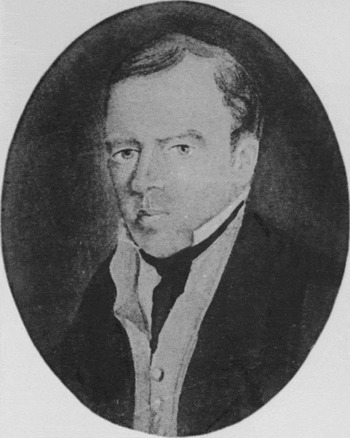
From an early age, Craik endured the increasingly volatile behavior of her father, Thomas Mulock (1789–1869) seen in a portrait from 1823 in Figure 13, who was repeatedly consigned to the Stafford County Lunatic Asylum, and whose correspondence records his abusive relationship with his wife and children. Previous scholarship on Craik's life has been based on a chapter in her second cousin Alleyn Lyell Reade's privately printed and often unreliable volume, The Mellards & their Descendants (1915). Following Reade, Showalter and Mitchell presume that Mulock, having pursued an “odd and marginally respectable career” (Showalter 8), only abandoned his children after the death of his wife in 1845, when Craik was nineteen. But the Mulock Family Papers reveal that Mulock was incarcerated as a “pauper lunatic” from approximately 1832 to 1840 (when Craik was six to just before her fourteenth birthday), as well as for shorter stints when his children were infants, and that he was often too difficult to manage when he was at home. These papers give us rare insight into how madness impinged on Victorian domestic life, the forms of suspicion it engendered – particularly as inflamed by Irish ancestry – and the peculiar vulnerabilities which women experienced from unstable husbands and fathers. The letters also give us more particular insight into Craik's career as a novelist, for they suggest that her domestic life from an early age nurtured in her a stoic discipline closely akin to the masculine resolve she celebrates in her most famous protagonist, the paradigmatic self-made man, John Halifax. Unfortunately, the popularity she attained with John Halifax, Gentleman only exacerbated her private difficulties, as she was newly afflicted both by literary gossip and by her father's unscrupulous desire to trade on her celebrity, to the point of selling her letters to him as autographs. But the self-effacement Craik displayed in her writing and her public life was far from an effusion of demure, sentimental domesticity; it was a strategy for coping with the madness that threatened to destroy her family life.
Thomas Mulock c. 1823. “From a Water-Colour drawing in the possession of W. M. Reade, made by an artist in the Potteries.” Photograph of Plate XIV from Alleyn Lyell Reade, The Mellards & their Descendants (London: Arden, 1915).

The most widely known account of Craik's relationship with her father, both in Victorian times and our own, stems from the obituary Margaret Oliphant wrote for her. Oliphant remarks that after watching her father treat her mother “untenderley” for too long, “the young Dinah, in a blaze of love and indignation, carried that ailing and delicate mother away” and in her rashness became a writer to support her family “upon her own slender shoulders” (Oliphant 82). Oliphant's story of how Craik became an author supports Elaine Showalter's influential assertion that, since seeking celebrity as an authoress was considered unwomanly, writers like Oliphant and Craik had to present themselves as being forced to write after suffering mistreatment and abandonment at the hands of their husbands and fathers (Showalter 9). There is a tension at the heart of Showalter's idea of the woman writer: on the one hand, she must insist on her privacy to maintain her womanliness, which is threatened by her entrance into the public sphere as an author; on the other, she must publicize the private story of her suffering at the hands of a cruel husband or father in order to justify her authorship. Craik's letters do not fit this paradigm – she told no one outside her family of her father's domestic abuse, which, in Showalter's view, would have shored up her claim to the need for income as an author. Instead, she managed the scandal with a degree of taciturnity and reserve befitting the hero of her best-selling novel. John Halifax, the paradigmatic self-made man, is a paragon of strength and silence. Like Halifax, Craik presents herself as someone with no familial origins, who toils on with “no inheritance but [her] head and [her] own two hands” to win literary success and a comfortable living (John Halifax 40; Ch II). Craik's letters therefore offer an alternative construction of female authorship that is remarkably similar to the masculine ideal of the gentleman-businessman. In this model, an ethics of reserve and integrity taken from the private sphere turns out to make good business sense in the public sphere. This ideal transcends notions of private and public as well as gender, and protects the author's (or the self-made man's) fragile private self from gossiping tongues, while at the same time suggesting that an indomitable character lies just beneath the surface of his or her reserve.
Or so one hoped. While versions of the scandal of the successful author keeping her father in the poorhouse swirled around the literary circles of London, Craik did not tell any version of her father's story to her friends. Even her letters to her brother Ben say less than the letters her father wrote himself, and Craik did her best to bear her burden in silence. This silence did not stop the rumours altogether, and the gossip in London was that the successful author was keeping her father locked up. She wrote to her brother Ben on 4 October 1860: “It's a nice bonne-bouche for ill-natured people concerning ‘the author of’ [John Halifax] – but it has been about as bitter a thing to bear as I ever had in my life.” Ultimately Craik seems to have been fairly successful in burying the rumours about her father. Reade's work, the only published account of her father's trials, appeared almost thirty years after her death. Nothing about the scandal was to appear afterwards, due in part to Craik's waning popularity after World War I. The letters detailing her father's early incarcerations came into Craik's possession through her Aunt Eliza Mulock, who sent them to her as evidence that his character had not changed in thirty years: “I enclose you some letters I found among my mother's papers,” she wrote, “I do not send them to embitter your spirit against him but to let you see the fluctuation of his mind when he is pleased or contradicted” (26 August 1856). These early letters and the author's own later letters to her father in the asylum likely only exist because Craik died suddenly, of heart disease, two weeks before her daughter's wedding. Had she been given more time to prepare her estate, it seems likely that she would have followed her own injunction to her brother concerning the letters: “burn them as soon as read” (14 July 1860).
I. Childhood and Early Family Life, 1828 to 1845
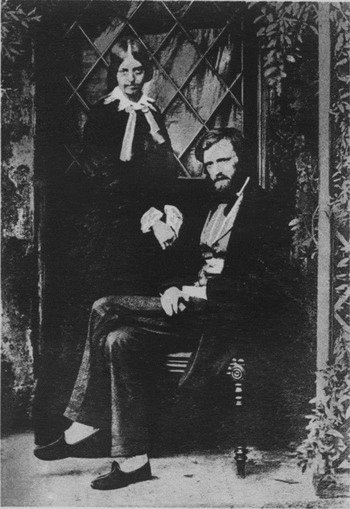
The difficulty of Craik's childhood suggests that her later valorization of the principles of self-help and perseverance were in part a reaction to the vicissitudes of her father's erratic temperament. Thomas Samuel Mulock had an unsettled and difficult youth. He was born in 1789 in a small house near Killiney Bay outside of Dublin, to Robert Mulock, Comptroller of the Stamp Office at Dublin, and Mariah Sarah Mulock, daughter of Samuel Horner of Finglas & co., Dublin (Reade 42). He was intended for the bar but never took it up. After leading an itinerant life that included an unsuccessful stint as a merchant in Liverpool and matriculation at Magdalene College, Oxford, Mulock became a dissenting preacher, a career to which his fiery temperament and loquaciousness suited him. He met his wife, Dinah Maria Mellard of Stoke-on-Trent, while on a religious crusade in the Staffordshire Potteries. Mellard was the daughter of a local tanner, living with her widowed mother and two sisters. The couple married on 7 June 1825, and had a daughter ten months later, on 23 April 1826, whom they named Dinah Maria Mulock. A son, Thomas Mulock, followed in November of 1827, and a third child, Benjamin Robert Mulock, in 1829 (Reade 52–53). A photograph of Craik and her youngest brother Ben from 1858 suggests the close relationship between the two siblings (Figure 14).
“Dinah Mulock and her Brother Benjamin in the Garden of Linacre Grange, Bootle. From a Photograph Taken in 1858.” Photograph of Plate XVII from Alleyn Lyell Reade, The Mellards & their Descendants (London: Arden, 1915).

At times Thomas Mulock pronounced himself to be a family man, happy as could be with his lovely wife and children. He wrote to his father Robert Mulock full of hope: “That it would give me pleasure that you should see your Grandchildren – my lovely boy & girl, is most true – but that we should remove from home is to the last degree impossible. I have been long a wanderer, but I am now thank God, truly settled – ” (1 March 1828). At other times, he was incarcerated in the Stafford Asylum, angry and dejected. He by turns praised and condemned his friends and family, asked for money, and protested that he was self-sufficient. He heaped most of the blame for his incarcerations on his wife. He describes her “envy, discontent, and disobedience” at length, holding her responsible for all of his trials (Letter to Mr. and Mrs. Robert Mulock, 9 July 1836). In such circumstances, Craik's upbringing could have been nothing but disrupted and difficult.
Mulock was in and out of the Asylum for most of his daughter's childhood, with his first recorded incarceration a mere nine days. Following Foucault, historians of psychiatry have often treated the rise of the asylum as an institution dedicated to the long-term management and cure of the insane, but the Mulock family reminds us that most stays were short-term committals initiated by family members desperate for a respite from the burden of disturbed relatives. The majority of asylum patients in the mid-century were incarcerated for less than twelve months, and as David Wright has pointed out, the asylum was often seen as a short-term solution for families to “care for and control dependent and violent relatives.” This seems to have been exactly the case for Thomas Mulock. He was imprisoned as a “pauper lunatic” from about the first to the tenth of May 1830, a week and a half after his daughter's fourth birthday on 20 April.Footnote 4 He wrote to his father: “Since our last and closing communications many and sore calamities have befallen me. I have been stripped of every thing house, goods, &c – and finally dragged to Prison.” Mulock felt that his misfortunes arose out of a suit against him for an article in the Staffordshire Inquirer, though it is difficult to say whether this was actually the case. He framed his imprisonment in terms of his failure to uphold his Christian duty as a son: “This you predicted, and I was sinful enough to rebuke you for your parental interference,” he wrote his father. “I have had great anguish of heart, at the remembrance of my error, and I do beseech you to forgive me for my undutifulness” (1 May 1830). Ten days later, he wrote again: “Through the amazing kindness and love of the Eternal God, I have been redeemed from Prison, and restored to my beloved wife and children – though I return naked and base – stripped of everything save my hope in God – I feel truly thankful for your kind offer respecting my babes – but I am now at large” (10 May 1830). Robert Mulock may have offered to take care of his son's young children at this point, who ranged in age from four to less than a year old. Mulock asked for nothing from his father, but did not “venture to restrict any seasonable liberality” that he might be moved to show towards (10 May 1830).
Mulock drew on the discourse of Christian suffering to portray himself as a victim, feeling that God was on his side if no one else was, and that if he was “stripped of everything” he at least had his religion. But more often than not it is apparent from his letters that his friends and family were doing the best that they could with a difficult man. The most dramatic of his incarcerations took place when Craik was just six years old. In 1832, her father was forcibly removed from his house, where it seems he did not return for eight years. He recapitulated his sufferings in a letter to his mother dated 9 June 1838:
On the 2d of Decr. 1832 I was seized, coerced of my liberty, and on the 4th of the same month transferred by the Warrant of Two Magistrates (who never saw me) as a “Pauper lunatic” to Stafford Asylum and in complete conformity to that warrant, I was classed with, and herded among pauper maniacs and idiots from the 20th of January 1833 until the 18th of May 1835 – and though subjected to great privation of the decencies and comforts of life, I did not murmur at my lot. My God sustained my soul. (Letter to Mrs. Robert Mulock, 9 June 1838)
During his time inside and outside of the asylum, Mulock suffered from periods of dejection followed by periods of elation. Mulock's streaks of melancholy began early in his life. In a letter to his parents, dated 20 March 1817 from Liverpool, when he was twenty-eight, Mulock writes: “So great has been my dejection of mind that I have wholly secluded myself here. I walk from my house to my Office & no farther” (Letter to Mr. and Mrs. Robert Mulock). Later in life, he became violent towards his family during the periods of elation that followed his dejection. In a letter dated from the Stafford Asylum on 9 July 1836, he wrote that in November of 1832:
After a season of tribulation and salutary sorrow . . . I was mercifully raised up from my deep dejection – and so far from rejoicing at my restoration, my wife manifested a spirit of envy, discontent, and disobedience, which utterly astonished and grieved me – In short she and her Sister actually turned me out of doors. I took a lodging at Newcastle and by continued communications, still manifested the affection which I felt for my wife and children. But O the pride, the cruelty, the covetousness, which my wife and her sister displayed! that I was not maddened by such conduct can only be ascribed to the upholding goodness of my God. At length in consequence of my having called to make a Christian remonstrance to my wife, I was by her sister given charge to a Constable! kept in custody at an alehouse two days and nights! (Letter to Mr. and Mrs. Robert Mulock)
Mulock seems to have been cruel to his wife during the periods of happiness that followed his periods of dejection, likely beating her. The call to the constable suggests that he had become violent and had to be forcibly removed from his wife with the help of her sister. Mulock's own eldest sister, Eliza, was also involved; she likely helped have her brother taken from the family home on learning of his treatment of his wife. Mulock wrote her in 1849, four years after his wife's death: “You could stigmatize my just and even necessary severity towards my poor wife with which you had no business to interfere – but you never shewed any Christian contrition for the treatment you manifested towards your brother in his affliction – your motive being as the Parrish authorities of Stoke plainly told me – ‘to save a few pounds’ – ” (4 July 1849). Mulock was right that the parish rather than his family was paying for his upkeep as a pauper lunatic, but the stigma against keeping a relative in the asylum was enough to make it a last resort for most families.
Mulock was highly aware of the consequences of exposing family privacies, but he felt that the shameful secret in his family was his wife's behaviour and not his own. He used the language of secrecy and scandal to frame his situation: he saw himself as a lone crusader who would bring the truth to light through his writing. “I discerned the delusion which my wife had succeeded in establishing with reference to me – and though deeply conscious of her guilty conduct, my chief desire was to screen her iniquity – It is horrible to be compelled to open up the mystery of domestic differences, but all secret things must sooner or later come to light” (Letter to Mr. and Mrs. Robert Mulock, 9 July 1836). Mulock felt that she had turned his own children, particularly his daughter, against him. “She indoctrinated my Maria Footnote 5 with her rebellious, repeal monstrosities . . . I did what I could for her – but she will ever destroy her bastard breed by unthankfulness and venomous villainy” (Letter to Eliza Mulock, n.d.). Mulock held several literary occupations during his lifetime – including newspaper editor and literary lecturer – and saw his letter-writing as a means of vindicating himself, driving his point home through forceful hyperbole and alliteration
Mulock felt he suffered as both a Christian husband and an Irishman: as a Christian husband, it was his wife's religious duty to obey him, and as an Irishman the prejudiced law favoured his English wife. He wrote to his mother: “During the night watches I have pondered deeply on the propriety of urging you to come over and see me, with the view of my eventual enlargement – if such should be the will of God.” “Six years space for repentance [from 1832–38], and reconciliation to her husband have now been afforded to my wife, and she disdainfully declines every overture of accommodation,” he wrote.
“She is an Englishwoman and I am an Irishman, which is quite sufficient to countenance any oppression towards me – if my kindred look tamely on. The plain fact is that I am detained in a Lunatic Asylum solely because my wife prefers the society of other men to that of her lawful husband. I do not mean to impugn her chastity – though I think a revolted wife holds her virtue by a very doubtful tenure” (Letter to Mrs. Robert Mulock, 28 July 1838).
He proposed returning to Bath to live with his mother and sisters and complete the volume he had been writing for three years, The Advocate with the Father: Or Christ's Love as a Supplicating Savior. He wrote to his mother: “you have been egregiously deceived by Dinah's representations. All her cant about her ‘poor husband’ &c &c is mere fraudulent fudge to make you and others deem her the most super excellent of wives, while in point of fact she was treating me worse than a beggar's dog.” “Her attention to her children is to gratify her pride, not from any truly good principle,” he continued, “for if Dinah Mulock were a really religious mother, she would reverence her husband” (Letter to Mrs. Robert Mulock, n.d. prior to 1845). Mulock was to continue to invoke the Christian duty of a wife and daughter to obey, but to little avail. Neither his wife nor his daughter capitulated to demands which they felt were unreasonable.
Meanwhile, at home, the ten-year-old Craik found her father's old commonplace book and continued the manuscript with the sentiments that were important to her at the time. In the first thirty-eight pages her father recorded his travels to Switzerland as a young man, his political opinions, and his own original poetry. One poem, entitled, “To Dinah Mellard, On following with uninterrupted commerce of views, her penciled marks and remarks, traced on the pages of Childe Harold,” details the tenderness he felt for Craik's mother as a young man, as well as his engagement with contemporary literature. Craik continued her father's pagination, opening a new leaf to page thirty-nine, and copying out sentimental verses by popular writers such as Elizabeth Barrett Browning, Felicia Hemans, and William Cullen Bryant. She too wrote her own verses, and was particularly taken by the image of a mother grieving for her dead infant only to be consoled by the consciousness that her child has been taken to heaven. “A Mother's Lament Over Her Dead Infant,” dated 4 April 1836 and signed DMM, is the first piece of Craik's writing extant, and shows the influence both of popular writers like Hemans and of periodicals such as the Keepsake.
Mulock's wife was in a difficult financial and legal position during her husband's incarceration. Her struggles to gain control over her property are a reminder of the precarious legal situation of women before the Married Women's Property Act of 1857 gave the femme couverte the right to her own property. Mellard paid a visit to the Asylum in January of 1839, accompanied by her eldest son Thomas, partly to smooth the way to having her husband sign papers that would leave her property directly to their children in the event of her death. It would also guarantee her the interest on this property, inherited from her father, which she was having difficulty collecting while her husband was in prison. She wrote to her mother-in-law that although Mulock at first received her with coldness, he was not long in warming up to his family: “he received me at first with a haughty dignified air which I passed over, and he softened as we entered into conversation – he is looking extremely well, much fatter than ever I saw him, and converses upon almost every Topic with extraordinary volubility and cleverness.” Mellard continued: “he takes exaggerated views of things – thinks that very many of the patients in the Asylum are not deranged but only placed there to avoid the just penalties of the law – therefore I am not surprised that he is unconscious of his own mental disease” (Letter to Mrs. Robert Mulock, 21 January 1839). Over the course of the year, Mellard changed her mind about her husband's mental condition when he wrote “a most kind affectionate and reasonable letter” suggesting that the property “should be vested in the hands of Trustees who should pay me the Interest during my life and afterwards be divided amongst our children” (29 December 1839). There was some difficulty as to whether a legal document signed by Mulock in an Asylum would be valid, and he and his wife, in consultation with the doctors, decided that he was mentally fit to be released. “[W]e talked over every part of our domestic matters” wrote Mellard, “and I at last consented to try and make him comfortable with our little family circle when he should be liberated and a certificate given by Dr. Knight of his sanity” (29 December 1839). So it was.
Mulock was ecstatic when this was accomplished. A letter dated 2 January 1840 to his mother proclaims: “on Tuesday last, I was ushered into an assemblage of the chief authorities of the Asylum, constituting the principal magistrates of the County, and after a very interesting discussion in which, I, as the expositor of my own sentiments bore the most prominent part, I was, with the unanimous consent and congratulations of the Committee, honourably and triumphantly discharged.” Mulock reached Newcastle at about seven in the evening where his wife and sons were waiting to escort him home. His attitude toward his wife was completely the reverse of his earlier sentiments: “My wife is looking as well as (in my opinion) she ever did in her earlier days,” he wrote. “She is entirely reunited to me in the best of all bonds – the truth and power of the everlasting gospel! It is impossible to behold, or commune with my children without perceiving that they have a matchless Mother!” (Letter to Mrs. Robert Mulock, 2 January 1840).
A brief period of domestic felicity followed. Mulock, according to his own letters, took on a central role in his daughter's education. She was just six years old when he was taken away to the Asylum; she was now thirteen. “My daughter is a sweet girl, more than pretty –intelligently handsome-fine eyes – and a countenance beaming with intellectual expression,” he wrote. “She has much of her mama's gentle and kindly spirit with a vivacity and almost Irish raciness of thought and expression, peculiarly her own!” (2 January 1840). (This was not the last time that Craik's vivacity would be attributed to her Irish parentage – an inheritance that she herself had mixed feelings about.) After moving the family to London, Mulock wrote his mother: “We are living very quietly and comfortably – my wife and the children in good health, and enjoying our change of abode. The boys improve in mind and appearance. And Thomas's taste and talent for Drawing are developed more largely every day – Maria [Craik] reads with me, and cultivates her music” (8 July 1841). Mulock's letters to his sisters from the same period, asking for money – “I always considered it a Christian privilege to lend as well as to give” – paint a less rosy picture (Letter to Eliza Mulock, 19 April 1841).
During the brief period of time, approximately January 1840 to March 1845, that he was reunited with his family, Thomas Mulock gave literary lectures, for which he felt he had a talent, He told his mother he was receiving £15 or £20 per lecture, and hoped to earn more. He asked his wife to write his mother an account of one of his lectures. “I cannot adequately convey to you the delight I have in observing the marked respect and attention with which my husband is received,” wrote Mellard of her husband's well-attended talks. “How I wished that yourself and his dear sisters could have sat beside me and listened to the interesting subjects as things were so delightfully and beautifully set before us by his powerful and truthful eloquence!” She was especially impressed by the emotional effect his fluency had on his audience: “What astonishes in his Auditory is the uninterrupted flow of thought, and his perfect mastering over language to give expression to that thought – it is at once truthful, elegant, powerful, unstudied, and original – he convinces the understandings of his auditory while engaging their feelings and hearts” (Addendum in letter from Thomas Mulock to Mrs. Robert Mulock, 7 June 1840).
This happy state of affairs did not last. For unknown reasons, Mulock left his family on Good Friday in March 1845, seven months before his wife's death. After learning of her passing from his eldest son Thomas, Mulock wrote to his sisters: “A Great calamity has fallen upon me since I wrote you last – the almost sudden death of my ever beloved wife Dinah – of which you have no doubt heard. But you will be pained to hear all that the event involves” (Letter to Mulock Sisters, 5 November 1845). Mulock felt that his daughter Dinah was at a delicate age, nineteen, and in need of paternal influence. She refused any such assistance. In a gesture echoing his treatment of his wife, Mulock copied out Craik's response to his sisters as proof that she was disobedient and unchristian:
I gather from the tenor of your letter that you wish me again to live with you – but I think it best for both parties to say at once, that this I can never do – our characters, views, and opinions are so totally opposite that I must say without meaning to give offence, that our wisest course will be to live apart as we now do. This Mamma well knew, and therefore just before her death she made me give a solemn promise that I would never live with you – and from that promise nothing shall induce me to swerve – I hope you may live happy in your own way, and I remain
Your daughter
DMM
(quoted in Letter to Mulock Sisters, 5 November 1845)
Despite her firmness in this letter, Craik was not without regret for the loss of her father. In a letter to Ben she wrote: “I eat my bisket alone this Good Friday feeling that after all the Family has not done ill since that Good Friday 15 years back when it dined together for the last time –& then burst like a bubble & met no more” (17 March 1860). Trying to content herself with life as a literary spinster, she wrote: “Perhaps life hasn't been such a very dreadful mistake after all. – anyhow no one has been made unhappy except oneself: & one is not by any means unhappy now. – Sometimes when I think of a few young people . . . it seems first a bit hard that one never shd have been really happy in all one's life – & one isn't quite a stone even at 34” (17 June 1860). It was her oft-repeated hope that Ben would “yet re-found the Family – & perhaps have a little daughter the very image of mama – which will be very comfortable” (17 March 1860). Despite her despair, Craik was ultimately the sibling to succeed in her career, marry, and raise a child. For many years, she never would have believed this to be the case, as she struggled to earn her bread as a writer and keep the secret of her father's behaviour buried.
II. The Father of the Author of John Halifax, 1855 to 1869
The story of Craik's arduous literary apprenticeship between the time of her mother's death in 1845 and the publication of John Halifax in 1856 is well known: instead of the self-made man who was her most famous hero, we have the self-made author who wrote endless stories and novels for children and adults, culminating in her most successful novel. John Halifax, Gentleman (1856) made Craik a household name, and for the rest of her life she was to be assured of the ability to earn by publishing as “the Author of John Halifax.” While she achieved a Halifax-like triumph in her career as a writer, her brother Ben's continued struggles to make his way as a civil engineer in the Crimea and Brazil, and to win fortune in the Australian gold-rush, remind us just how rare such success was. At the end of what was to be her most fruitful decade of writing, Craik was exhausted and unable to work. “It amuses me somewhat that the ‘run’ is upon me just now” she wrote to Ben in 1860, “I have had offers without end this year for magazines & publishers – they'd swallow anything–poor donkeys! – but I hope I have sense to see that it can't last & neither to kill myself nor write myself out – what's the use of making money – & writing trash” (21 October 1860). Part of Craik's exhaustion stemmed from her dealings with her father, who had been held once again at the Stafford County Lunatic Asylum from approximately 1856 to 1860, and was now on the brink of being released. Craik's family was terrified of what her father might do when at large: there were hints that he had been violent in the asylum, and that he would be even less easy to keep in line than usual.
In the 1850s, when her paternal grandparents, her mother, and her brother Thomas had all passed away, Craik was charged with deciding what was best to do with her father. Her aunt, Eliza Mulock felt that she had seen it all before, and that her brother was best off in the Asylum. “My very dear Dinah,” she wrote in response to a distressing letter from Mulock demanding money, “the only excuse I can make for him is that he is again falling back to his former state the only thing to be regretted is that it does not manifest itself in some outrage[ou]s act that could be laid hold of to require his being put into an Asylum and kept there” (26 August 1856). Mulock was already in the Asylum at this point – Eliza Mulock's main worry was that he might be freed. She praised her niece and nephew for their “forbearance and gentle language” towards their father, but recommended that they not answer his latest demands. “Silence is your only safeguard,” she wrote, “he is in that excitable state of mind that nothing short of money or liberation would silence him now and even that only for a time and then he would threaten you again, I know by bitter experience how he can write and act when he is refused money” (Letter to Dinah Mulock Craik, 26 August 1856).
Craik nonetheless offered to help her father, but Mulock refused her support. In 1856, he wrote to Major Fulford that he did not spurn her support out of any false pride:
But when I found from herself that she disclaimed “bounty” and refuged herself in “duty” – I could no longer consent to receive aid ministered on such false principles. True bounty is godlike and divine, and flows from Christian kindness and love – whereas duty, apart from affection, is a cold and calculating act lying out of the sphere of genuine Christianity – and which Christ will never recompense – For my Daughter's sake therefore I declined to yield any seeming sanction to her great error – (30 March 1856)
Mulock was induced to consent to Craik's financial support despite his initial misgivings. Although this was after the publication of John Halifax, the well-known author was not able to afford this extra expense as easily as scholars have supposed. Ben Mulock largely supported his sister through the writing of John Halifax. Hurst and Blackett were to give Craik £300 for the manuscript of John Halifax, plus £100 more when 1200 copies were sold and half profits if it came to a second edition (Letter to Ben Mulock, n.d. c. 1855). On the strength of John Halifax, Craik moved into a home in Hampstead, “Wildwood,” but she let it during the summers to pay the mortgage, and was not able to support herself and her father, whom she gave £4 a month, without continuing to write.
Mulock was incarcerated in the Asylum around the spring of 1856, where he established himself as a man of superior quality among the other inmates. He lived in comfort, and his letters from this period rival Dickens's descriptions of William Dorrit's delusions of grandeur in the Marshalsea. But, as Craik reported, despite this extended stay, Aunt Eliza still lived in horror of her brother getting out, and the whole family thought it best that he stay put. “Papa might get out any week if he liked” wrote Craik to her brother, “but he evidently will not, or is afraid to. – I think from his letters that he is best where he is – for being at large wd send him quite astray. I do believe – & he wd perhaps do something that would make Aunt Eliza miserable in her old age. – Her terror of his coming out is very great – for that reason alone I shd hesitate long before taking any steps concerning him.” Nevertheless, Craik promised her father that if he would clear himself by becoming insolvent she would pay his living expenses wherever he chose to take lodgings (13 May 1860).
Craik visited her father once he was established outside of the Asylum, and found that his dapper appearance belied his mental condition. She wrote to Ben, around 1860:
About papa. He wrote me letter after letter to Liverpool – & finally took new lodgings in Stafford having borrowed as I told you from the warden of the jail. He refused me his address & forbade my coming to see him but I got the address for Major Fulford & went. There I found him in a most thriving condition – good lodgings – well-dressed –looking about 60 only – & talking like anything – Really quite splendacious.Footnote 6 He was pleased at my coming – forgot his wrath – & treated me politely as a literary character. – He fancies he has been offered by Government a pension – at all events he has applied for it & believes it is sure. & he is very grand accordingly – of course nothing will come of it – & he will get into debt on the strength of it. – But nothing can be done – at all events he is comfortable now – & with the shirts & the new clothes looks exceedingly gentlemanly & venerable – quite like a papa in a play. (20 September, c. 1860)
Mulock was nothing if not melodramatic in his self-fashioning, and he had many stories of grandeur for friends and family. Ben also commented on his father's theatricality. After a rare visit to his father he wrote his sister: “I was met when the coach stopped by a youth who conducted me to Papa: when we met we had a regular stage embrace à la Crummles and Nickleby” (n.d. c. 1858). Thomas Mulock had a talent for embellishment. On hearing that her father had been telling some people that the two of them were going to Ireland together, and others that they “were going together, to winter in Italy & be at the opening of Mr. Sankey's [his brother-in-law's] railway!” Craik wrote: “Papa's ‘exaggerations’ are something enormous.” She was struck by the contrast between her father's mental state and his demeanour: “Yet anybody more entirely agreeable & gentlemanly than he is still could not be. – He beats every old gentleman I know” (20 September 1860).
Craik herself was worn out from the gossip circulating about her father. “I have been a good deal tried lately by catching tail ends of reports,” she wrote, “how I thrive & yet keep my father where he is – all sorts of ill-natured things which I knew wd be said – & must be borne. – I don't care, so long as I feel I am doing right.” After detailing her father's precarious financial situation, she repeated to Ben: “Well – it's no use bothering you about all this – & it does not fret me much because being clear in my own mind, I don't very much care what people say about me” (13 May 1860). Nevertheless, the gossip was clearly unsettling Craik, who had only told one or two friends anything about her father. More distressing still were the reports from the Asylum: a friend of a friend gave news of an awful row between her father and another prisoner that could only be accounted for by her father not being in his right mind, but Craik chose to ignore it because neither the prison warden, Major Fulford, nor her father told her about it directly. “Of course I shall live in perpetual fear now of some awful fuss occurring – or of his appearing at Wildwood – sometimes it turns me perfectly sick,” she wrote Ben. “His coming out will at least end the cruel stories that have gone about concerning me & anything he does to ‘disgrace the family’ must just be borne” (14 October 1860). Craik was more upset by the rumours about her father than his actions: the shame that her father had the potential to bring on the family was more distressing to Craik than any transgression he might actually commit.
Financial difficulties, and her father's hostility, plagued Craik. “He tells me that his sole reason for not becoming insolvent was the discredit it wd reflect on the Father of the Author of John,” she wrote to her brother, “as if I did not know that all his “sweet” letters are because he depends on me – & that if I couldn't send him money – he wd turn & blacken the Author of John in every possible way. “Well – well – I suppose he can't help it – ” she continued:
I always write him kindly – & never say a word that he might not print in the Times – & to other people I just hold my tongue – having learned at least one thing – that under any circumstances it is no credit to abuse one's father. But I cannot say black's white for all that – & pity him as you will & attribute as much as you will to a twist in his mind – there is a great deal in him which the largest charity cannot set down to insanity – & cannot help very cordially despising. (14 October 1860)
She did not believe that Mulock truly loved her as a daughter: “I may be wicked,” she wrote Ben, “but there is something in papa's ‘creeping’ ways to me – & in his elegant sentimental letters about ‘father & daughter’ – a daughter he has seen once in 15 years, & never written to but to abuse & to ask for money – that is so utterly contemptible: – I have to think 20 times a day ‘he is an old man’ – to prevent actually despising him” (4 November 1860). Later that same year, Craik complained to Ben: “A letter I wrote him about getting his clothes – he has gone & given away as an autograph!” Craik dreaded visits to her father as a result of this sort of behaviour, but paid them as a matter of duty: “I know he has not the slightest feeling for me except as ‘my daughter the author of’ – but he can't show me off very much between Saturday & Monday,” she wrote (4 December 1860).
Craik attributed some of her father's actions to his Irishness. There was a debate in the family about whether or not Mulock suffered from a hereditary disease, and how much of his behaviour could be accounted for by his nationality. Aunt Eliza felt sure there was nothing inherited in her father's disease: “Aunt Eliza says Ben that she is certain there is not the slightest taint of hereditary disease in the family,” wrote Craik, “only accidental eccentricity – from want of proper government in youth, so that all follies & bad tempers were left to ‘run riot’ – in papa's case. – He was simply a ‘naughty boy’ – left to himself – & spoiled – ” (2 August c. 1855). Craik was terrified that Ben had inherited his father's “Irish faults.” Admonishing her younger brother to see the difference between stinginess and carefulness, and not to waste things, she wrote: “Oh I didn't mean to scold – but it sometimes seems to me so dreadful that so good a boy as you are in other things shd have these Irish faults – no wonder I hate & loathe & abhor everything Irish” (23 October 1859). Later she wrote: “I think my horror of anything Irish has grown into a perfect monomania – the very tone of an Irish voice makes me feel like a Turkey in sight of red flannel” (4 December 1860).Footnote 7
It was Craik's fondest wish at this time that Ben should return to England and become the father of a family. But she was willing to abandon even this castle in the air on the slightest suspicion that his children might turn out like her father. “Oh Ben if you had been the least like father in anything but love of wandering – which you are not,” she wrote, “I do think I should have gone clean mad. – and rather than see one of your children the least like him – I think I wd put it in the water-butt. – ” (20 September 1860). Ben struggled throughout the 1850s to find a wife and a situation that would allow him to rise in the world. Craik's advice to her brother could serve as a model for John Halifax: “your working quietly & steadily on, through any amount of difficulties, I'm proud of,” she wrote, “but when you work yourself to death in a careless useless way, & then get cross & take a melancholy view of things, well that does fret me a good deal, I own” (4 September 1860). But neither the gold rush in Australia, nor the Army Works Corporation in the Crimea, nor time as a photographer on the railways in Brazil afforded Ben a comfortable living. He died in 1863 after a bout of melancholia.Footnote 8
Critics framed Craik's literary talent in terms of her national inheritances. French critic E. D. Forgue wrote of Craik that: “une veine irlandaise d'espirt et d’humour, tempérant sa gravité calédonienne et puritaine, circule comme une bouffée d'air vivifiant dans ses fictions, où la vivacité de la forme fait heureusement oublier la sévérité du fond” [a vein of Irish humour and spirit tempers her Caledonian gravity and Puritanism, breezing through her work like a breath of fresh air, so that the lively form happily overwhelms the serious content] (Forgue 831). Forgue knew nothing of Craik's upbringing, and his article makes no mention of her parents. Nevertheless, she wrote to her brother: “I have been amused by a long article on me in the Review des deux mondes – in which they ingeniously derive all my peculiarities from “un père Irlandais & une mère Ecossaise” & how I combine the liveliness of humour (!) of one country with the staunch “Puritaine” spirit of the other! As fine a specimen as could be produced of jumping at conclusions. A very beautiful article it is – I'll send it when I can get it” (17 March 1860). That Craik was so quick to attribute praise of her Irish humour to her father and her Scottish Puritanism to her mother suggests more about her feelings about her dual national inheritance than anything Forgue had to say.Footnote 9
While Craik and her brother were making their way in the world, their father described himself as being very content in prison. “I am thank God quite well” he wrote to Craik, “and very much of a French writer's mind who says “Entre tout l'etat d'une prison est le plus doux et le plus profitable” [of all states that of a prison is the most pleasant and the most profitable] “ – I am happy – and alone – perhaps social happenings may be better – but as folks are more content without me, all sides are satisfied” (31 July 1856). He claimed his years in prison with Major Fulford's kindness were “the happiest years I ever experienced in England.” He particularly enjoyed the calmness and quiet of the Asylum: “I was always enduring persecution of some kind or other until I attained to the secret of absolute separateness in this orderly Gaol” he wrote (21 August 1857). “I am not ashamed of being here, as I am not a criminal – I am only poor,” he wrote, “but poverty is a greater crime in English eyes than poisoning. I never received a thousandth part of the sympathy that Palmer has been shewn since his conviction, during all my experience of England and her people – But the world loveth its own – whereas I belong to Christ” (15 June 1856). Mulock was consistent in his belief that God was on his side; the same values that had supported him throughout his time as an itinerant preacher now supported him through his time in prison.
Mulock's conviction that he was a victim came at the expense of condemning others. Just as he had earlier spent much of his time in prison writing letters damning his wife, he now directed his attention, writing letters and even a vitriolic poem, condemning William Palmer, the Staffordshire doctor accused of the murder of more than a dozen people. The celebrated case of Palmer the poisoner was only one of Mulock's pet causes in his later years. He was convinced that the Crimean war was not over when the last battle was fought: “I suppose Ben and John Hyde are on the way home” he wrote to Craik, “They will be wanted again for our sham peace is only an extended cessation of arms – ” (31 July 1856). When Ben returned home he hoped that the “Czar would employ him on his projected line of Russian railways” (10 August 1856). The next year Mulock condemned Britain's involvement in the Indian Mutiny. Of “this pitiful Indian affair,” he wrote: “It is the knell of the British Empire . . . I have long forviewed England's fall – it is now imminent – and her doom is just. So much pride and so much covetousness have never been manifested by any people – and to crown their simpleness they actually believe themselves to be the most righteous of all nations!” (21 August 1857). Mulock had long written about Ireland's colonial situation and the suffering of the Scottish Highlanders, so it is not surprising that he condemned the role that the British played in the Indian mutiny. He saw himself as a Carlylean prophet in the wilderness, condemning injustice that no one else saw.
Mulock's literary opinions were equally vehement. Claiming to have borrowed the Countess of Dartmouth's copy of John Halifax from Major Fulford, he offered his opinion to his daughter: “I greatly admire its literary merits and from its story and style it bids fair to embrace a vast variety of readers.” “Not in the way of hyper-criticism, but merely to shew you how carefully I perused your book,” he wrote, “let me suggest that there is a leetle anachronism in a passage where an old dame execrates “Bonyparty.” This seems to me to be 1794, according to the chronology of your narrative. Now Bonapart[e] was not known in France until the siege of Toulon – and not known for hate in England until the campaign in Italy – ” (3 October 1856). Mulock kept abreast of literary affairs through the Prison Warden Major Fulford's copy of the Times: “I have been just skimming over in the Times a critique on the memoir of the authoress of “Jane Eyre” – To me it is perfectly clear that the whole Brontë family (the perpetual Curate included) were as mad as any given lot of lunatics in Beldam or elsewhere. But their madness chimes well with the World's incurable insanity – which is no affair of mine” (27 April 1857).
Craik's responses to her father during this period are not extant, but it seems that she learned to deal with the situation by keeping silent. She wrote to her Aunt Mary Reade, who had been forwarding her letters from an enquiring public, “I consider it the most unjust, unwarrantable & unkind liberty that can be taken with an author – & especially when she happens to be a woman – to make any personal comments on her during her life-time.” “All that the public has any right to know about me they may find in a list of authors of the time,” she continued, “ – viz – that I, Dinah Maria Mulock, daughter of Thomas & Dinah Mulock, was born at Stoke-upon-Trent in 1826. . .. my very quiet life, completely out of the literary world, ought to be a sufficient hint of how utterly I avoid & dislike personal publicity” (14 December, c. 1859). Craik had reasons for eschewing publicity that went far beyond any wish to maintain a womanly decorum. Silence was her only safeguard, against her father and against the rumours that still circulated about the Author of John Halifax.
III. Conclusion
In the 1860s, Craik's relationship with her father seemed to calm down considerably. Thomas Mulock took lodgings in Stafford, where she continued to support him financially. A photograph of Mulock posing at his desk in this period seems to belie the tumultuous decades that preceded it (Figure 15). Craik resigned herself to his release and even invited him to stay with her at Wildwood. Mulock declined the invitation and Craik herself quickly thought better of it. She wrote, “from his letters, I do think his mind is a little astray, tho’ Major Fulford thinks not. But there can be no question that he ought to come out. & he must whatever the consequences” (Letter to Ben Mulock, 4 October 1860). Mulock was full of importance about being the father of the Author of John Halifax, and also full of ideas about the state of the world and of the literary contributions he could make to it. In a letter congratulating Craik on the adoption of her daughter Dorothy, he appended a note to her husband George Lillie Craik, a partner at Macmillan's, proposing that he edit the diaries of the late Lord Hatherton for the “eminent publishing house.” “I am not prone to dwell upon my own qualifications,” he wrote, “but I have some peculiar capabilities for such a task – if my advanced years justified me in accepting so weighty a trust” (Letter to Dinah Mulock Craik, n.d. c. January 1869). George Craik's response is unknown, but no record exists of Macmillan publishing such a volume, and Mulock passed away a few months later.
Thomas Mulock at his Desk. c. 1863. Photograph of Plate XIX from Alleyn Lyell Reade, The Mellards & their Descendants (London: Arden, 1915).

The rumours about Thomas Mulock ceased for the most part with his death in 1869. His obituary described him as a literary man of uncommonly held views:
The Late Mr. Mulock – Our obituary list announces the death of Mr. Thomas Mulock, which took place on Wednesday Morning, at the advanced age of 81 years. . . . He was a man of vigorous intellect and extensive information, and expressed his ideas in a singularly chaste and forcible style. Many of his views, especially on religious subjects, were peculiar, and he asserted his convictions with uncompromising positiveness. His health had for some time been giving way. His funeral took place at Castle Church yesterday afternoon, and was attended by his gifted daughter, Mrs. Craik, and her husband, and also by Major Fulford and Mr Hughes, Surgeon. (Mulock Family Papers UCLA)
Mulock's quiet funeral belied the uproar in which he lived his life: no mention is made of what he felt was his victimization as an Irishman and a Christian husband and father, of his imprisonments as a pauper lunatic, or of his tumultuous relationship with his family. Yet, this is exactly as his daughter would have wished it. Craik outlived her father by eighteen years – years filled with watching her adopted daughter grow up, visits to friends, and further writing. But Craik's life was never again the subject of such speculation and attention that it had been when she experienced her first triumph as an author just as her father's tribulations reached their peak. These letters, held by the family for over a hundred years and buried in the archive for another fifty, attest to the difficulty of managing a public authorial persona that was threatened at every turn by a volatile and verbose relative. Craik's strategy of dealing with the rumours about her father through a determined silence and reserve extends to the archive itself – the only comments that escape the author are those in the letters to her brother Ben, and it is the letters of Thomas Mulock that speak most volubly. The record ends with him. Craik seems to have put the memory of her father, to quote her most famous novel, in those “deep quiet chambers where all griefs go: never forgotten, never removed, but sealed up in silence, as it should be” (John Halifax 146; ch XI).