




No CrossRef data available.
Article contents
- Abstract
- Activities
- Administrative Appointments
- New Appointments
- Promotions
- Retirements
- Visiting and Temporary Positions
- Awards
- FOR THE RECORD
- In the News…
- Award Winning Political Science Faculty, 2002–2003
- Kudos
- Political Scientists Honored as State Professors of the Year
- American Academy of Arts and Sciences Announces 2003 Fellows
- PS Political Science & Politics April 2004
- Symposium
- Features
- The Profession
- The Teacher
Abstract
An abstract is not available for this content. As you have access to this content, full HTML content is provided on this page. A PDF of this content is also available in through the ‘Save PDF’ action button.
Information
- Type
- Departments
- Information
- Copyright
- © 2004 by the American Political Science Association
Activities
John Foster, associate professor, Barbara Brown, lecturer, John Jackson, professor, department of political science, Southern Illinois University, Carbondale, conducted the American Studies Summer Institute for Iraqi Student Leaders funded by a large grant from the U.S. Department of State in July 2003.
Patricia M. Keilbach, assistant professor, department of political science, University of Colorado, Colorado Springs, received a Fulbright to teach and continue research at Vytautus Magnus University in Kaunas, Lithuania during the 2003–2004 academic year.
Hanna Kjellgren, associate professor in political science, department of work, economics, and health, University of Trollhattan/Uddevalla, Sweden, spent the fall semester at Furman University. Her visit was part of the Excellence in Teaching program sponsored by the Swedish Foundation for International Cooperation in Research and Higher Education (STINT).
Aristide Tessitore, professor, department of political science, Furman University, spent the last academic year as senior visiting scholar at the Liberty Fund in Indianapolis, Indiana.
Howard Tolley, professor, department of political science, University of Cincinnati, received a Fulbright to lecture in the Netherlands during autumn 2003.
Christopher Van Aller, associate professor, department of political science, Winthrop University, received a Fulbright, in which he visited Poland to study its integration into the European Union.
Administrative Appointments
David Lewis Feldman, head, department of political science, University of Tennessee, Knoxville.
James M. Glaser, dean, undergraduate education for the arts, sciences, and engineering, Tufts University.
Donald L. Gordon, director, Richard W. Riley Institute of Government, Politics, and Public Leadership, department of political science, Furman University.
Glen Halva-Neubauer, director, Mock Trial and Public Service Internship Program, department of political science, Furman University.
Thomas Kazee, vice-president of academic affairs and dean, Furman University.
Michael S. Lewis-Beck, F. Wendell Miller Distinguished Professor of Political Science, University of Iowa, was recently appointed chair of the department.
Brent F. Nelsen, chair, department of political science, Furman University.
Dorianne Norwood, coordinator, Richard W. Riley Emerging Public Leaders Program, department of political science, Furman University.
Richard Pacelle, professor and chair, department of political science, Georgia Southern University.
Gerry Riposa, associate dean, College of Liberal Arts, California State University, Long Beach.
Elizabeth Smith, coordinator, Richard W. Riley Summer Institute of Teachers of Government, department of political science, Furman University.
Vickie Sullivan, chair, department of political science, Tufts University.
Robert P. Watson, director, graduate programs, Florida Atlantic University.
Joel D. Wolfe, head, department of political science, University of Cincinnati.
New Appointments
Stefan Andreasson, lecturer, school of politics and international studies, Queen's University Belfast, United Kingdom.
Badredine Arfi, assistant professor, department of political science, Southern Illinois University, Carbondale.
Chia-Che (Eric) Chang, assistant professor, department of political science, Michigan State University.
William G. Jacoby, professor, department of political science, Michigan State University.
Michael Morrell, assistant professor, department of political science, University of Connecticut.
Glenn R. Parker, distinguished professor, department of political science, Purdue University.
Ricardo Ramirez, assistant professor, department of political science, University of Southern California.
Kirk Randazzo, assistant professor, department of political science, University of Kentucky.
Saundra K. Schneider, professor, department of political science, Michigan State University.
John Simpkins, assistant professor and associate director of the Richard W. Riley Institute of Government, Politics, and Public Leadership, department of political science, Furman University.
A. Maria Toyoda, assistant professor and director, the East Asia Studies Concentration, Villanova University.
Lee Walker, assistant professor, department of political science, University of Kentucky.
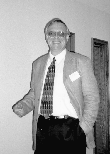
Cary J. Nederman, professor and director of graduate studies, department of political science, Texas A&M University, has been designated an Affiliate of the Center for the History of European Discourses at the University of Queensland, Australia. In this capacity, he will help plan conferences, collaborate in research with students and faculty, and participate in the life of the Center through regular visits.

Cary J. Nederman
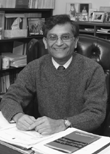
Uday Desai, professor and chair, department of political science, Southern Illinois University, Carbondale, has been awarded a Fulbright to spend spring 2004 at the University of Malaysia, Sabah. Desai is coeditor of the Policy Studies Journal and author of Environmental Politics and Policy in Industrialized Countries and Ecological Policy and Politics in Developing Countries.

Uday Desai
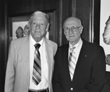
Malcolm E. Jewell and S. Sidney Ulmer, retired, department of political science, University of Kentucky, were honored at the 2003 APSA Annual Meeting with lifetime achievement awards from their respective APSA sections (Ulmer, Law and Courts; Jewell, State Politics and Policy). Jewell did pioneering studies of state legislative behavior and later of voting in state gubernatorial primaries. He has written or coauthored 18 books and over 40 journal articles since 1958 and, although retired from the University of Kentucky in 1994, is still active as a scholar. Ulmer was a pioneer in research in judicial behavior, focusing particularly on interactions in the Supreme Court and other collegial courts and on measuring justices' attitudes. He published six books and about 75 journal articles over a 30-year career.

Malcolm E. Jewell and S. Sidney Ulmer
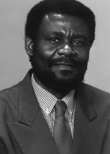
Tukumbi Lumumba-Kasongo, professor, department of political science, Wells College, has been appointed a Visiting Research Fellow in the Center for the Study of International Cooperation in Education (CICE) at Hiroshima University, Japan for a renewable two-year term. He was also elected vice president and member of the Executive Committee of the African Association of Political Science at the AAPS 14th Biennial Congress in Durban, South Africa.

Tukumbi Lumumba-Kasongo
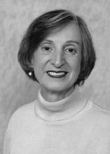
Mildred A. Schwartz, professor emeritus, department of sociology, University of Illinois, Chicago, visiting scholar, department of sociology, New York University, was honored with a Citation for Distinguished Scholarship in Canadian Studies by the Association for Canadian Studies in the United States.

Mildred A. Schwartz
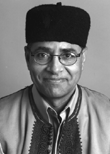
Ali Abdullatif Ahmida, professor, department of political science, University of New England, was presented with the University's Kenneally Cup Award for distinguished academic service. Ahmida is editor of Beyond Colonialism and Nationalism in the Maghrib: History, Culture, and Politics (Palgrave, 2000) and author of Forgotten Voices: Power and Agency in Colonial and Postcolonial Libya (Routledge, forthcoming).

Ali Abdullatif Ahmida
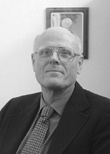
Herman L. Boschken, professor of management and public policy, San Jose State University, received the Best Book of 2002– 2003 award in the public sector from the Academy of Management for his Social Class, Politics and Urban Markets: The Making of Bias in Policy Outcomes.

Herman L. Boschken
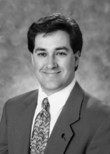
Richard Harknett, associate professor, department of political science, University of Cincinnati was appointed chair of the University's Phelps Taft Memorial Fund. He is author of Lenses of Analysis: A Visual Framework for the Study of International Relations (W. W. Norton, 2002) and the International Relations WebSource (W. W. Norton, 1999).

Richard Harknett
Promotions
Ali Abdullatif Ahmida, professor, department of political science, University of New England.
Michael Bressler, associate professor with tenure, department of political science, Furman University.
Nolan Jones, deputy director of state-federal relations, National Governors' Association.
Chandran Kukathas, Neal A. Maxwell Professor in political theory and public policy, department of political science, University of Utah.
Rolin G. Mainuddin, associate professor with tenure, department of political science, North Carolina Central University, Durham.
Brent F. Nelsen, professor, department of political science, Furman University.
Brendan O'Leary, Lauder Professor of Political Science, University of Pennsylvania.
Katherine Palmer Kaup, associate professor with tenure, department of political science, Furman University.
Robert Pirro, associate professor with tenure, department of political science, Georgia Southern University.
Debra Sabia, professor, department of political science, Georgia Southern University.
Stephen Shulman, associate professor and director of undergraduate studies, department of political science, Southern Illinois University, Carbondale.
Aristide Tessitore, professor, department of political science, Furman University.
C. Danielle Vinson, associate professor with tenure, department of political science, Furman University.
Retirements
Roger Brooks, deputy legislative auditor, State of Minnesota. Previously he held political science faculty positions at Macalester College, University of Minnesota, and University of Florida.
Brad Canon, department of political science, University of Kentucky, has begun a phased retirement.
Visiting and Temporary Positions
Lyman A. Kellstedt, visiting distinguished professor, department of political science, Furman University.
Awards
Richard Pierre Claude, professor emeritus, department of government and politics, University of Maryland, was awarded the 2003 Best Book on Human Rights Award by the Human Rights Section of the APSA for his Science in the Service of Human Rights.
Robert Clinton, professor, department of political science, Southern Illinois University, Carbondale, was awarded the Hughes-Gossett Prize for best article published in the Journal of the Supreme Court History for 2002.
Jennifer Disney, assistant professor, department of political science, Winthrop University, received two awards at the 2003 APSA annual meeting; the Christian Bay Best Paper Award given by the New Political Science section, and the Best Dissertation Award from the Women and Politics Section.
Stephen Engel, assistant professor, department of political science, Georgia Southern University, received the College of Liberal Arts and Social Science Award for Excellence.
Arthur Gunlicks, professor, department of political science, University of Richmond, received for his years of outstanding teaching and scholarship the Distinguished Educator Award, the University's highest honor for a professor.
James L. Guth, professor, department of political science, Furman University, has been named William R. Kenan, Jr., Professor of Political Science.
Scott Huffmon, assistant professor, department of political science, Winthrop University, and April Lovegrove, administrative assistant, department of political science, Winthrop University, were honored with a Community Service Award by the president of the University recognizing their efforts to commemorate the anniversary of the Rock Hill sit ins during the Civil Rights Movement.
Katherine Palmer Kaup, associate professor, department of political science, Furman University, received the Gordon White Award for the most original article published in the China Quarterly in 2002.
James Pfiffner, professor, School of Public Policy, George Mason University, was named “University Professor.”
Donald J. Puchala, department of political science, University of South Carolina, has been named the first James F. and Maude B. Byrnes Professor of International Studies.
Aristide Tessitore, professor, department of political science, Furman University, received the Alester G. Furman, Jr. and Janie Earle Furman award for meritorious teaching.
C. Danielle Vinson, associate professor, department of political science, Furman University, received the Alester G. Furman, Jr. and Janie Earle Furman award for meritorious advising.
FOR THE RECORD
Michael Lipsky, Senior Program Officer, Governance and Civil Society Program, Ford Foundation for the past 12 years, has joined the staff of Demos: A Network of Ideas and Action. Dr. Lipsky will serve as Senior Program Director for the State Governance for the Future Program and Washington representative for the organization.
Demos President Miles Rapaport welcomed Lipsky to the organization: “Michael Lipsky's work at the Ford Foundation has been groundbreaking in its tireless emphasis on citizens gaining the ability to deal effectively with government, and at the same time working with government, particularly at the state level, to make it responsive to citizens' needs. We are proud to have him continue that work at Demos; he will add immeasurably to the quality of our contribution to these and other critical issues facing our democracy.”
Dr. Lipsky looks forward to the challenge of working at Demos: “After 20 years of devolution, downsizing, privatization, hamstringing ballot initiatives and deregulation, America's state governments face profound challenges in their ability to solve the critical problems states are facing in the year ahead. Demos' commitment to a vibrant and accountable public sector is an opportunity to help states and the people in them meet those challenges.”
Dr. Lipsky is the author of five books, including the prize-winning Street Corner Bureaucracy: Dilemmas of the Individual in Public Service, and, most recently, Nonprofits for Hire: The Welfare State in the Age of Contracting (with S. R. Smith). Before joining the Ford Foundation, he was professor of political science at the Massachusetts Institute of Technology. Dr. Lipsky will be based in Washington, D.C., where he will also serve as professor in the Georgetown University Institute of Public Policy.
In the News…


Bruce E. Altschuler, SUNY, Oswego, CBC News, about the election of Arnold Schwarzenegger as governor of California.
Robert P. Watson, Florida Atlantic University, CNN's “Inside Politics,” featured his recent poll ranking the first ladies.
John Green, University of Akron, Detroit Free Press, on the effect of lost jobs on President Bush's prospects of winning Ohio.
Susan MacManus, University of South Florida, Tampa, Sarasota Herald-Tribune, on the charging of Sarasota City Commissioner Fredd Atkin with five counts of election law violations.
Laura Stoker, University of California, Berkeley, CNN, on the increasing polarization of the American electorate.
Eugene E. Huskey, Stetson University, Baltimore Sun, the spreading use of prosecution for political purposes in Russia's justice system.
Tim Lomperis, St. Louis University, Miami Herald, the effect of the mounting number of U.S. war dead as opposed to pictures of such on the war resolve of the American people.
Andrew Hernandez, St. Mary's University, Denver Post, on Latinos' increasing political clout at the local and national level.
Julien Zelizer, University of New York, Albany, NPR's “All Things Considered,” on the long historical linkage between political parties, corporate leaders, and money.
Linda Fowler, Dartmouth College, Los Angeles Times, on the Democratic presidential candidates changing tactics to attack Bush's foreign policies as the economy shows signs of improvement.
Peter Chalk, RAND Corporation, Scripps Howard Wire, the vulnerability of the U.S. food supply to terrorist attack.
David Yalof, University of Connecticut, CNN, on the possible legal significance of the Supreme Court's decision to hear first appeals concerning Guantanamo detainees.
Dario Moreno, Florida International University, Miami Herald, on secondgeneration Cuban-Americans evolving as politicians and as a voting bloc.
Gary Jacobsohn, Williams College, Smithsonian Magazine, on Supreme Court justices, past and present, viewing the terms “under God” and “In God we trust” as having historical, rather than religious, significance.
Charles Bullock, University of Georgia, Athens Banner-Herald, on the Libertarian Party's history of spoiling the Republican's chances for Georgia's open Senate seat.
Dean Spiliotes, St. Anselm College, Concord Monitor, on the political feasability of Joe Lieberman's (D-CT) proposal for paid family leave.
Jess Brown, Athens State University, WSFA Montgomery, on Alabama's upcoming tax package following voters' rejection of Governor Bob Riley's $1.2 billion tax plan by a 2-1 margin.
Peverill Squire, University of Iowa, USA Today, on how the use of personal politics can backfire in a campaign.
Suleiman Nyang, Howard University, Knight Ridder Newspapers, on the mixed message of Western strength and Arab-world weakness that the capture of Saddam Hussein connotes.
Matthew Crenson, Johns Hopkins University, Baltimore Sun, on the move in recent decades of environmental decisions from Congress and other elected bodies to less-visible bureacratic arenas.
Rod Yellon, University of Manitoba, CBC's “Information Radio,” analyzed the differences between Canada and the United States over the American military intervention in Iraq.
Glenda Suber, Benedict College, The State, predicting that the black vote in the South Carolina primary would split amongst several Democratic candidates instead of all going for one.
Ronald Walters, University of Maryland, BET, on the political boost to President Bush for U.S. troops capturing Saddam Hussein.
Bill Richardson, University of South Dakota, Associated Press, on whether South Dakota Republican John Thune is more likely to run for the U.S. Senate or House.
Jennifer Donahue, St. Anselm College, Associated Press, on the importance of undecided voters in the New Hampshire primary.
Award Winning Political Science Faculty, 2002–2003
APSA is pleased to recognize political science faculty who received campus-wide awards for teaching excellence during the 2002–2003 academic year. APSA and Pi Sigma Alpha, the national political science honor society, recognize award winning faculty each year through invitation to the APSA Honors Reception, issuance of a certificate noting their accomplishment, and announcement of their awards in PS and on the APSA web site. We regret that we did not include the following faculty members in our October issue.
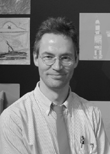
Rex Brynen, professor, department of political science, McGill University, was awarded The Principal's Prize for Excellence in Teaching, the University's highest award.

Rex Brynen
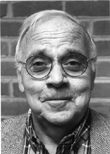
Charles F. Burke, professor and chair, department of political science, Baldwin-Wallace College, was awarded the Northeast Council on Higher Education for bringing distinction to higher education through excellence in teaching during the 2002–2003 academic year.

Charles F. Burke
Tansa George Massoud, associate professor, department of political science, Bucknell University, was awarded the Class of 1956 Lectureship, awarded annually in recognition of excellent teaching.
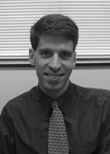
Alex Tuckness, assistant professor, department of political science, Iowa State University, was awarded the University's Foundation Award for Early Achievement in Teaching, given annually to faculty members who have demonstrated outstanding teaching performance unusually early in their professional career.

Alex Tuckness
Kudos

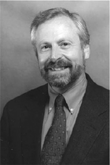
Ian S. Lustick
Ian S. Lustick, professor, department of political science, University of Pennsylvania, has been appointed to the Bess Heyman Professorship. Lustick joined the University of Pennsylvania in 1991 following 15 years at Dartmouth College. From 1997 to 2000, he served as chair of the department of political science and was appointed the Merriam Term Professor of Political Science in 2001. In addition to teaching introductory political science, he also teaches courses on Middle Eastern politics, techniques of hegemonic analysis, and the expansion and contraction of states. Lustick is also the associate director of the University's Solomon Asch Center for Study of Ethnopolitical Conflict, which advances research, education, and policy-relevant study in ethnic group conflict and political violence.
A specialist in areas of comparative politics, international politics, organization theory, and Middle Eastern politics, Lustick is responsible for developing the computational modeling platform known as PS-I. This software program, which he created in collaboration with Vladimir Dergachev, allows social scientists to simulate political phenomena in an effort to apply agent-based modeling to public policy problems. His current work includes research on rights of return in Zionism and Palestinian nationalism as well as on problems of counterfactual reasoning in historically-grounded social science. His research has been supported by grants from the Carnegie Corporation, National Endowment for the Humanities, National Science Foundation, Social Science Research Council, and United States Institute for Peace.
Lustick has published articles in journals such as American Political Science Review, Complexity, Foreign Affairs, Foreign Policy, International Organization, and Journal of International Law and Politics. The author of five books and monographs, he received the American Political Science Association's J. David Greenstone Award for the Best Book in Politics and History in 1995 for his Unsettled States, Disputed Lands: Britain and Ireland, France and Algeria, Israel and the West Bank-Gaza. In addition to serving as a member of the Council on Foreign Relations, Lustick is the former president of the Politics and History Section of the APSA and of the Association for Israel Studies.
Political Scientists Honored as State Professors of the Year
Five political scientists were recognized as state winners for the 2003 Professors of the Year Award from the Council for Advancement and Support of Education and the Carnegie Foundation for the Advancement of Teaching.
Suresht R. Bald, professor, department of political science, Willamette University (Oregon). Bald's teaching and research focus on the construction and relevance of nations in the 21st century, Asian politics, politics and literature, and women and politics. Currently, Bald is working on the impact of globalization and liberalization on Bollywood's construction of Indian desires and fantasies.
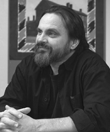
Don T. Dugi, professor, department of political science, Transylvania University (Kentucky). Dugi has built a reputation at Transylvania as a tough but caring professor who challenges his students to expand their perceptions and exceed their own expectations. He serves as Student Government Association adviser and pre-law adviser at Transylvania; he is also sponsor for both the College Democrats and College Republicans and supervisor for the University's legislative internship program.

Don T. Dugi
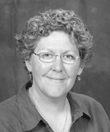
Kelly Elizabeth Eaton, assistant professor and chair, department of political science, Nebraska Wesleyan University. Eaton teaches European politics, international security, and political thought. In 2002, she was a Fulbright Grantee to Taiwan where she taught politics to students in the new International MBA program at Chengchi University in Taipei.

Kelly Elizabeth Eaton
Frank Guliuzza, professor and chair, department of political science and philosophy, Weber State University (Utah). Guliuzza teaches public law courses and serves as the University's due process officer, pre-law adviser, and coach of its nationallyranked intercollegiate mock trial team, which he founded in 1996. In 2003, Guliuzza received the John S. Hinckley Award for Outstanding Teaching from Weber State.

Frank Guliuzza
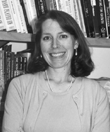
Patricia D. Siplon, associate professor, department of political science, Saint Michael's College (Vermont). Siplon recently published AIDS and the Policy Struggle in the United States (Georgetown University Press, 2002). At Saint Michael's, she has organized a Student Global AIDS Campaign and created a course to examine the AIDS pandemic in Africa with travel to Tanzania planned for December. She has also brought speakers, organized workshops, and worked continuously to educate the community about this issue.

Patricia D. Siplon
American Academy of Arts and Sciences Announces 2003 Fellows
The American Academy of Arts and Sciences was founded in 1780 by John Adams, James Bowdoin, John Hancock, and other scholar-patriots “to cultivate every art and science which may tend to advance the interest, honor, dignity, and happiness of a free, independent, and virtuous people.” The Academy's 2003 class of 187 Fellows and 29 Foreign Honorary Members includes four college presidents, three Nobel Prize winners, and four Pulitzer Prize winners. Among this year's Fellows and Foreign Honorary Members are Secretary-General of the United Nations Kofi Annan; journalist Walter Cronkite; and philanthropist William H. Gates, Sr. Joining this distinguished list are eight Fellows in the field of “Political Science, International Relations, and Public Policy,” listed below.
Henry E. Brady, professor, department of political science, director, UC Data Archive and Technical Assistance, University of California, Berkeley, is coauthor of Letting the People Decide: Dynamics of a Canadian Election (1992) and Voice and Equality: Civic Voluntarism in American Politics (1995). His recent work includes “Postponing the California Recall to Protect Voting Rights,” featured in the California recall symposium in this issue of PS.

Henry E. Brady
Donald Philip Green, A. Whitney Griswold Professor of Political Science, director, Institution for Social and Policy Studies, Yale University, is author of Pathologies of Rational Choice Theory: A Critique of Applications in Political Science (1994), with I. Shapiro. His research concerns public opinion, voting behavior, campaign finance, hate crime, and rationality.

Donald Philip Green
John J. Mearsheimer, R. Wendell Harrison Distinguished Service Professor of Political Science, co-director, Program on International Security Policy, University of Chicago, has written extensively about security issues and international politics more generally. He is author of three books, most recently, The Tragedy of Great Power Politics (2001), which won the Joseph Lepgold Book Prize.

John J. Mearsheimer
Michael J. Sandel, Anne T. and Robert M. Bass Professor of Government, Harvard University, is author of, most recently, Democracy's Discontent: America in Search of a Public Philosophy (1996) and editor of Liberalism and Its Critics (1984). He currently serves on the President's Council on Bioethics, a national body appointed by the president to examine the ethical implications of new biomedical technologies.

Michael J. Sandel
James MacGregor Burns, senior scholar, Jepson School of Leadership, University of Richmond, wrote Leadership (1978), the seminal work in the field of leadership studies, and is the Pulitzer Prize-winning author of Roosevelt: The Soldier of Freedom (1970). Burns was president of the APSA (1976) and, more recently, cochair of the Salzburg Leadership Seminar, which brought together leaders from over 50 countries.

James MacGregor Burns
John Mark Hansen, professor, department of political science, dean, division of social sciences, University of Chicago, is co-author of Mobilization, Participation, and Democracy in America (1993) and the Heinz Eulauaward winning “Individuals, Institutions, and Public Preferences over Public Finance” (1998). His research focuses on public opinion, public budgeting, and politicians' inferences from the outcomes of elections.

John Mark Hansen
Benjamin Ingrim Page, Gordon S. Fulcher Professor of Decision Making, department of political science, Northwestern University, is author of seven books, including, most recently, What Government Can Do: Dealing with Poverty and Inequality (with James Simmons, 2000). Page's interests include public opinion and policy making, the mass media, empirical democratic theory, political economy, policy formation, the presidency, and American foreign policy. He is currently studying the mass media, the role of international law in American foreign policy, and public policy and inequality in the context of globalization.
Kay Lehman Schlozman, J. Joseph Moakley Endowed Professor of Political Science, Boston College, has written numerous articles in professional journals and is editor of Elections in America and co-author of, most recently, The Private Roots of Public Action: Gender, Equality, and Political Participation (with Nancy Burns and Sidney Verba, 2001), which was co-winner of the APSA's Schuck Prize.

Kay Lehman Schlozman
PS Political Science & Politics April 2004
Here's a preview of some of the articles that will be published in the April issue of PS: Political Science and Politics:
Symposium
The Brown Decision at Age 50: Limitations and Emanations FEATURING ARTICLES BY: CHRIS FOREMAN, JENNIFER HOCHSCHILD, NATHAN SCOVRONICK, GERALD ROSENBERG, MARION ORR, HANES WALTON, NEAL DEVINS, AND PAUL SRACIC
Features
From the Inside Out: Ethnographic Methods in Political Research LORRAINE BAYARD DE VOLO AND ED SCHATZ
Using Inflation Adjusted Dollars in Analyzing Political Developments ROBERT C. SAHR
The Profession
Beating the House: How Inadequate Penalties for Cheating Make Plagiarism an Excellent Gamble MATTHEW WOESSNER
The Teacher
Undergraduate Research: A Graduate Student's Experience in Creating a Panel from a Class PATRICK VAN INWEGEN
Do Learning Communities Make a Difference? JUAN CARLOS HUERTA
The Green Building Project: Promoting Political Science Learning through a Collaborative Research Approach ANGELA C. HALFACRE, KATHARINE A. OWENS, KATHERINE S. ZIMMERMAN, AND ZACHARY H. HART
Bringing Ethnic Conflict into the Classroom: A Student-Centered Simulation of Multi-Ethnic Politics THOMAS AMBROSIO
Members can access PS: Political Science and Politics online at www.apsanet.org/PS/, made possible through Cambridge University Press.
Cary J. Nederman
Uday Desai
Malcolm E. Jewell and S. Sidney Ulmer
Tukumbi Lumumba-Kasongo
Mildred A. Schwartz
Ali Abdullatif Ahmida
Herman L. Boschken
Richard Harknett


Rex Brynen
Charles F. Burke
Alex Tuckness
Ian S. Lustick
Don T. Dugi
Kelly Elizabeth Eaton

Frank Guliuzza
Patricia D. Siplon
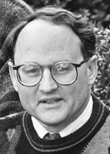
Henry E. Brady
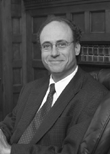
Donald Philip Green
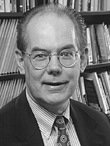
John J. Mearsheimer
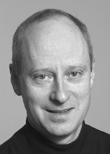
Michael J. Sandel
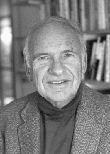
James MacGregor Burns
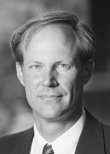
John Mark Hansen
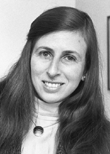
Kay Lehman Schlozman
 You have Access