

Introduction
Clinical audit is a rigorous procedure for measuring and improving the quality of health care against an agreed standard, at the local or national level [Gerrish and Lacey, Reference Gerrish and Lacey2006]. The use of audit has increased with emphasis on quality in health care and clinical governance [Department of Health, 1997a]; however, despite its wide use and accepted role in helping promote and maintain standards of care, there are misconceptions about the nature and purpose of audit and it is often confused with research [Russell and Wilson, Reference Russell and Wilson1992]. Audit shares some of its key characteristics with clinical research, whereby both involve systematic processes of analysis and topic selection leading to changes in clinical and non-clinical practice that improve patient care [Ashmore and Ruthven, Reference Ashmore and Ruthven2008]. Audit is usually undertaken as part of a process called the audit cycle (see Box 1), with stages that follow a systematic process of: establishing best practice; measuring against criteria; taking action to improve care; and monitoring to sustain improvement. As the process continues, each cycle aspires to a higher level of quality [Crossan et al, Reference Crossan, Curtis and Ong2004].
Box 1. Clinical audit cycle [adapted from Ashmore and Ruthven, 2008].

Pre-operative assessment clinics (POAC) vary greatly between Trusts. Bramhall [Reference Bramhall2002] noted that there was little national uniformity in POAC and that their purpose varied considerably between areas. Each hospital has its own method of pre-operative assessment (POA) based on the needs of its patients and the requirements of the anaesthetists and surgeons. The author works in a purpose-built POAC with six private examination rooms. Five advanced nurse practitioners (ANP) are available to assess approximately 120 patients each per week, with the support of a healthcare assistant. ANP are experienced clinical professionals who have developed their skills and theoretical knowledge to a high standard and who make high-level clinical decisions and carry their own caseload. They follow a systematic approach in documenting the patient's full medical histories and ordering investigations [Department of Health, 2006a]. A majority of patients attending POA are known hypertensive patients and are prescribed medication by their general practitioner (GP). However, white coat hypertension (WCH) and isolated systolic hypertension (ISH) can affect the accuracy of POA blood pressure (BP) measurements, thus creating referrals to the GP for BP monitoring. In the absence of a local hypertension management protocol, management of such patients can differ depending on a number of factors: the stage of presenting hypertension, patient history, the ANP's clinical decision, opinions of consulted anaesthetists and the amount of time to the patient's surgery date. These differences in management break away from a systematic uniformed POA approach and require addressing so that all patients receive the same care. Different managerial approaches see some patients proceeding with surgery without further BP monitoring; some are asked to attend their GP practice for BP monitoring, in which case some operation dates may be delayed to allow time for monitoring. The commencement or alteration of antihypertensive treatment could also delay the operation to allow stabilisation of BP depending on the number of weeks to the operation date. These inconsistencies in practice ideally should be changed: POA ANP ideally need to adopt a uniform approach to the management of the hypertensive patient under collaborative agreement with anaesthetists and in support of GPs.
A critical review of the literature on the prevalence of uncontrolled and untreated hypertension among an adult population presenting to pre-assessment prior to major orthopaedic surgery [Jenkinson, Reference Jenkinson2010] supports the above uncertainty of patient's management prior to non-cardiac elective surgery as there are no published national guidelines, as a direct association between pre-operative hypertension and peri-operative cardiac complications is unclear. Although there appears to be a general agreement that patients with mild to moderate hypertension can proceed with surgery because such hypertension poses little additional risk of peri-operative cardiovascular complications [Prys-Roberts et al, Reference Prys-Roberts, Melonche and Foex1971; Goldman and Caldera, Reference Goldman and Caldera1979; Eagle et al, Reference Eagle, Berger and Calkins2002], severe hypertension and the presence of hypertension-induced end organ damage should be postponed until better BP control is obtained [Eagle et al, Reference Eagle, Berger and Calkins2002; Fleisher, Reference Fleisher2002].
Aim
To evaluate the incidence and management of uncontrolled and untreated hypertension at pre-assessment among an adult population prior to major orthopaedic surgery.
Objectives
1. To develop and pilot an audit data collection tool to identify the number of patients attending POA prior to major orthopaedic surgery with uncontrolled or untreated hypertension as per the NICE guidelines.
2. To use the audit findings as evidence of the need for change and development in current clinical practice.
3. To initiate and monitor changes to clinical practice using an appropriate theoretical model.
Audit Design
Clinical audit aims to improve patient outcomes by improving professional practice and the general quality of services delivered, whereas research attempts to derive generalisable new knowledge by addressing clearly defined questions with systematic and rigorous methods requiring ethical approval [National Institute for Clinical Excellence (NICE), 2005]. Clinical audit rarely requires ethical approval [NICE, 2005].
This non-experimental prospective audit will take a quantitative descriptive approach and aim to audit a hundred patients. This chosen audit design allows the ability to study phenomena in a naturalised manner without controlling or manipulating variables; therefore, the design is considered not to be artificial unlike experimental studies [Parahoo, Reference Parahoo2006].
Access and Sampling Method
A non-probability sample of patients attending POAC was accessed by one ANP over a 6-week period. A random allocation of the sample by administration personnel increases reliability and validity as it reduces selection bias [Polit and Beck, Reference Polit and Beck2006]. Using a large sample is more representative of the target population [LoBiondo-Wood and Haber, Reference LoBiondo-Wood and Haber2002].
Data Collection Method
A questionnaire was developed with the help of The Trust audit department. Data collection included documenting biophysiological measurements and demographic data. Alternate choice, multiple choice and closed questions were used within the audit questionnaire (see Appendix 1). One ANP within the POAC collected the audit data at the end of the patient consultation (taking 1 min to complete) aiding consistency and increasing the reliability and validity of the data collection process and response rate [Parahoo, Reference Parahoo2006]. Data were collected at point of contact at the POAC consultation and therefore no ethical issues were identified. The participants’ identities were not disclosed and consent was not sought for the audit, as the audit had no impact on patient care and treatment. Questionnaires are potentially the quickest, cheapest, most confidential and frequently anonymous method of collecting large amounts of information on a large sample [Parahoo, Reference Parahoo2006]. The design of the questionnaire was piloted prior to use on 10 participants who were not part of the study but who closely represented the audit sample in order to evaluate the audit tool, allowing changes to be made before administering into the audit, thus increasing the reliability and validity [LoBiondo-Wood and Haber, Reference LoBiondo-Wood and Haber2002].
Audit Standards
The BHS [2003], World Health Organisation [2003] and Chobanian et al [Reference Chobanian, Bakris and Black2003] classifications of BP were adapted to classify the stage of hypertension each participant in the study presented with at the time of their POA (see Box 2).
Box 2. Classification of stage of hypertension.

The NHS [2010] body mass index (BMI) calculator will be used to derive participants’ BMI (see Box 3).
Box 3. BMI.

BP measurements were taken using an accurate, validated and well-maintained aneroid sphygmomanometer with an appropriately sized cuff and stethoscope. To standardise conditions, BP will be taken in a private, quiet and relaxed environment and explained to the participant in an attempt to alleviate anxiety and gain consent. The participant will be seated for 5 min before recording the BP and any tight clothing to the arm will be removed Wallymahmed [Reference Wallymahmed2008].
Ethical Considerations
Ethics is defined as a system of moral values concerned with the degree to which research procedures adhere to professional, legal and social obligations to the study participants [Polit and Beck, Reference Polit and Beck2006]. Six ethical principles must be considered to protect the rights of those persons involved in the audit and are very important in the health and social care setting, where personal and sensitive information will be collected (see Box 4) [Parahoo, Reference Parahoo2006].
Box 4. Six ethical principles.

The author will ensure that the participant's privacy is maintained throughout the audit and it is not more intrusive than it needs to be; any data that the participants provide will be kept in the strictest of confidence. Ethical approval for the audit is not required [The National Ethics Service, 2009]; however, permission was sought from clinical management and the local Trust audit department for the audit to be cleared in order for it to take place. The audit will not use identifiable information, thus maintaining confidentiality throughout, to protect patients, healthcare staff and the workplace [Department of Health, 1998; NICE, 2005]. To preserve anonymity in the audit tool, each respondent was identified by an allocated numerical code [Department of Health, 1997]. All questionnaire results information will be securely stored in The Trusts audit department for 7 years before being confidentially destroyed [Department of Health, 1998].
Analysis and Audit Findings
The results were analysed with the help of The Trust audit department and processed using a quantitative analytical software package [EXCEL, 2007] using descriptive statistics such as percentage analysis and measures of central tendency such as the mean and median; there were no previous audit results to compare data with. The audit results are presented in a tabular chart and graphical format such as bar charts and pie charts; these are referred to as figures (Figs 1–13). There were a total of 112 participants in the audit.
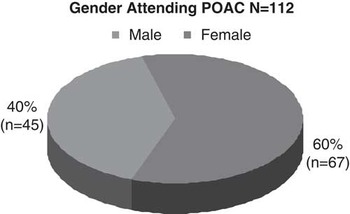
Gender. This pie chart demonstrated that out of 112 participants, 40% (n = 45) were male and 60% (n = 67) were female.

Age. The age range of the 112 participants was 34–89 years, the mean being 67 and the median 68.

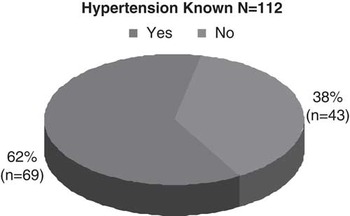
Hypertension known. The pie chart displays that 62% (n = 69) of participants out of 112 knew they had hypertensive disease and were prescribed antihypertensive medication, whereas 38% (n = 43) did not have known hypertension.

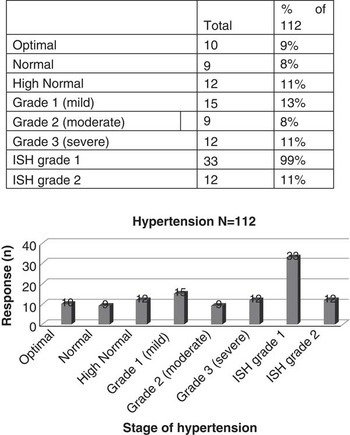
Hypertension. The table and bar chart demonstrate which stage of hypertension each participant presented with at pre-operative assessment clinics. Results show that n = 19 (17%) participants had optimal/normal blood pressure, and n = 12 (11%) had grade 3 hypertension.

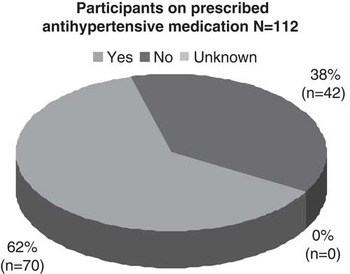
Participants on prescribed antihypertensive medication. The pie chart demonstrates that 62% (n = 70) answered yes to taking prescribed antihypertensive medication and 38% (n = 42) answered no.

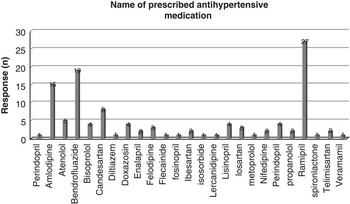
Name of prescribed antihypertensive medication. The bar chart shows 25 different antihypertensive medications prescribed by the general practitioner and the number of each medication prescribed to participants. The results demonstrate that there are three medications that are frequently prescribed; Ramipril® prescribed to n = 27 participants, Bendrofluazide® n = 19 and Amilodipine® n = 15.

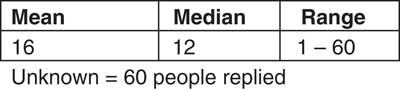
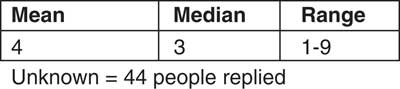
Number of weeks the general practitioner (GP) last checked blood pressure (BP). This table demonstrates that n = 60 participants did not know when they last had their BP checked by the GP. The range of weeks BP was last checked by the GP by participant recollection was 1–60 weeks, mean = 16 and median = 12.
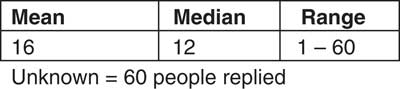
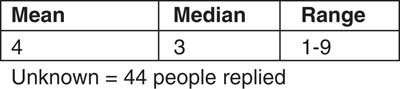
Number of weeks to the surgery date. The above table shows that out of n = 112 participants, n = 44 participants had no operation date at the time of pre-operative assessment clinics. However, out of the remaining participants, n = 68 had operation dates ranging from 1 to 9 weeks from their pre-operative assessment, with a mean = 4 and median = 3.
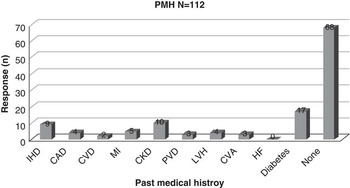
Past medical history (PMH). The above bar chart shows the reported PMH of participants; some participants gave more than one answer, and hence the total number of answers is more than 112. n = 68 participants reported having none of the conditions listed in the PMH categories. Interestingly, the two highest categories were not heart related, with n = 17 reporting yes to diabetes and n = 10 with CKD. IHD came third with n = 9 sufferers, and CAD and LVH were a joint 4th with n = 4. PVD was reported in n = 3 and n = 2 for CVA, but there were no reports of HF in the audit. (IHD, ischaemic heart disease; CAD, coronary artery disease; CVD, cardiovascular disease; MI, myocardial infarct; CKD, chronic kidney disease; PVD, peripheral vascular disease; LVH, left ventricular hypertrophy; CVA, cerebrovascular accident; HF, heart failure.)

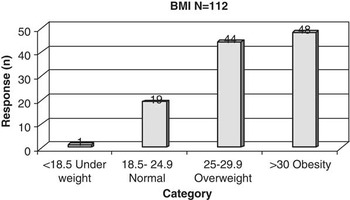
Body mass index. The bar chart results show that n = 1 participant was underweight, n = 10 were within a normal weight category, n = 44 were overweight, with n = 48 in the obese category.

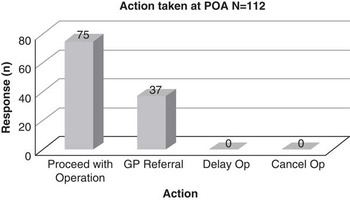
Action taken at the pre-operative assessment. The bar chart shows that in n = 75 participants, blood pressure (BP) was satisfactory at pre-operative assessment clinics (POAC) and they could proceed with their operation with no further BP monitoring being required. However, n = 37 required referral to the general practitioner as their BP required further monitoring due to elevation at POAC.

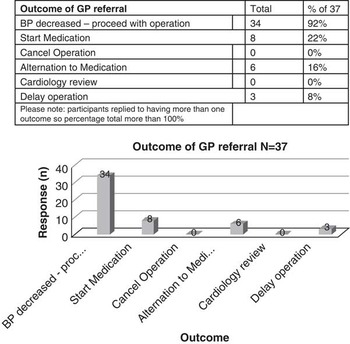
Outcome of the general practitioner (GP) referral. The table and the bar chart reflect the outcome of the GP referral. Some participants answered to more than one outcome, and therefore the percentage total is more than 100%. The results show that out of n = 37 referred to the GP for blood pressure (BP) monitoring, 92% (n = 32) of those with BP were satisfactory and could proceed with their operation without any further intervention; 22% (n = 8) needed to start medication; 16% (n = 6) needed alteration to the existing prescribed antihypertensive medication; and 8% (n = 3) had their surgery delayed to allow new treatment time to stabilise BP. 0% (n = 0) required a cardiology review or their operation to be cancelled.

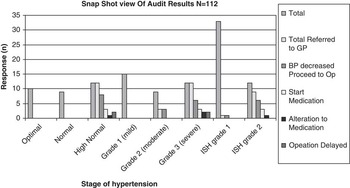
Overall review of audit results. The bar chart demonstrates a snapshot view of each stage of hypertension and its individual outcomes, demonstrating for each stage of hypertension the total number of participants in the audit, the total number referred to the general practitioner (GP), the number after GP referral who could proceed with the operation as no further invention was necessary, the number who started medication, the number of alterations to existing prescribed medication and the number who required their operation to be delayed.

Discussion of Audit Results
NICE [2006] characterises elevated BP >140/90 mmHg, meaning that 83% (n = 93) of participants in the study would be classified as having elevated BP. According to the BHS [2003], all adults should have their BP measured routinely at least every 5 years and those with high normal BP or those who have had high BP readings at any time previously should have their BP re-measured annually. n = 60 participants could not recall their last GP BP check and the remaining n = 52 BP checks ranged from 1 to 60 weeks before POA. This was identified as an area that needs improvement and where change is necessary, whereby the BP is measured as part of the patient referral process to secondary care.
n = 44 participants did not have an operation date specified when seen in POA; however, n = 68 participants did and these ranged between 1 and 9 weeks from the POA date, with the mean being 4 and the median being 3. This is running just under the recommended time of POA at 6 weeks before surgery [The Modernisation Agency, 2003; Jackson, Reference Jackson2009].
The observation findings support research from Francischettoi and Genelhu [Reference Francischettoi and Genelhu2007] and Hirani et al [Reference Hirani, Zaninotto and Primatesta2007] where an increasing prevalence of obesity is being seen in the United Kingdom. The average BMI for participants in the audit was 29, according to the BMI calculator [NHS, 2010], which is within the overweight category. Within the audit, only n = 19 participants were within a normal weight category, n = 1 being underweight, whereas n = 92 audit participants were overweight, of whom n = 48 were obese. With obesity being an independent risk factor for development of coronary vessel disease, coronary heart disease, heart failure and diabetes [Flack et al, Reference Flack, Peters, Shafi, Alrefai, Nasser and Crook2003; Hirani et al, Reference Hirani, Zaninotto and Primatesta2007], there is an opportunity for health promotion and education at the time of GP, surgeon and POA appointments. Significant long-term reductions in BP and reduced risk for hypertension can be achieved with even modest weight loss and lifestyle modifications may be effective in long-term primary prevention of hypertension [Stevens et al, Reference Stevens, Obarzanek and Cook2001; He et al, Reference He, Wheton, Apel, Charleston and Klag2000]. Both of these studies are supported by Elmer et al [Reference Elmer, Obarzanek and Vollmer2006] who also demonstrated that motivated individuals with pre-hypertension and hypertension stage 1 can make and sustain multiple lifestyle modifications to control BP and reduce the risk of chronic diseases, lose more weight and have a better reduction in fat and sodium intake. However, the author acknowledges through clinical experience that the audit population has reduced mobility to varying degrees, and that the cause is often due to the patient's actual orthopaedic condition or through contributory medical conditions and comorbidities. Rheumatoid arthritis is a chronic systematic inflammatory condition that affects the synovial lining of moveable joints; osteoarthritis is a common degenerative disease of a joint resulting in erosion of the cartilage that lines the bone ends [Oliver, Reference Oliver2007]. With both conditions, the patients can present with swelling of the joint, pain, reduced range of movement, loss of function, abnormal gait, limited mobility, deformity of limbs and reduced quality of life [Judge, Reference Judge2007]. Other orthopaedic conditions, such as osteoporosis, ankylosing spondylitis, polymyalgia rheumatica and spinal conditions (lordosis, kyphosis and scoliosis) all cause functional limitations [Estes, Reference Estes2006] as a result of which it is extremely difficult and painful to maintain a level of exercise to burn off calorie intake with these conditions. Therefore, professionals need to promote healthy diets, smoking cessation, sodium and alcohol reduction to maintain a healthy weight [Flack et al, Reference Flack, Peters, Shafi, Alrefai, Nasser and Crook2003].
At the time of POAC, 67% (n = 75) of participants had an acceptable level of hypertension and could proceed with surgery; however, 33% (n = 37) of the participants’ BP was elevated at POA and required referral to their GP for further BP measurements. The audit was conducted over a 6-week period and involved only 1 ANP in the POAC out of 5; therefore, this referral percentage figure is very high. The referral of these many participants to the GP affects all services involved in the patient's pathway to surgery, for instance, availability of GP appointments (cost implications), increased anxiety and apprehension experienced by the patient during this time because the possibility of their surgery may be delayed, counselling/educational needs for patients newly diagnosed with hypertension, delay for POA ANP in knowing whether patients are fit to be listed for surgery, theatre utilisation and organisation interrupted and delay in the process of discharge planning. The high referral rate demonstrates the increasing need for BP monitoring to be completed earlier in the patient's surgical pathway.
Among the n = 37 (33%) participants referred to the GP, n = 12 participants were classified as having high normal hypertension, n = 3 had Grade 2 (moderate) hypertension, n = 12 had Grade 3 (severe) hypertension, n = 1 had ISH Grade 1 and n = 9 had ISH Grade 2. Interestingly, there were no participants referred to the GP from the Grade 1 (mild) hypertension category, which poses the question: why were patients referred from the lower grade of high normal hypertension? One explanation is that the participants in the high normal category may have presented with one or more conditions evident with end organ damage as listed under past medical history question and the POA ANP clinical decision was to refer these patients for further monitoring to the GP. Interestingly, the high normal hypertension category saw the highest amount of participants (n = 8 out of n = 12) proceed with surgery as their BP readings at the GP were satisfactory. However, the other n = 4 participants needed intervention: n = 1 participant required alteration to an already prescribed antihypertensive medication; n = 3 participants were required to start treatment as they had newly diagnosed hypertension, seeing that n = 2 of these participants’ surgeries were delayed as the operation date was too close to them starting medication. This was as per the Trust anaesthetist's advice and in line with research recommendations from Fleisher [Reference Fleisher2002] and Eagle et al [Reference Eagle, Berger and Calkins2002], whereby the commencement or alteration to antihypertensive medication is required to take place 4 weeks prior to an elective major operation.
The n = 3 participants from the Grade 2 (moderate) hypertension category all proceeded with surgery after GP referral provided improved BP readings, with no intervention or delays being necessary; this was the same for the single participant in the ISH Grade 1 hypertension category.
The Grade 3 (severe) hypertension category saw n = 6 out of the n = 12 participants proceed with surgery after GP referral provided improved BP readings, with no intervention or delays being necessary. However, out of the remaining n = 6 participants, n = 2 participants required alteration to their already prescribed antihypertensive medication and n = 4 were newly diagnosed hypertensives who were required to start new medication, seeing that n = 1 participant's surgery was delayed as their operation date was too close to the start of treatment [Fleisher, Reference Fleisher2002; Eagle et al, Reference Eagle, Berger and Calkins2002].
The ISH Grade 2 category saw n = 5 out of n = 9 participants referred to the GP proceed with surgery without the need for intervention or delay. The remaining n = 3 required intervention, n = 1 required alteration to their already prescribed antihypertensive medication, and n = 3 were newly diagnosed hypertensives who were required to start medication. Fortunately, all 3 of the surgery dates were weeks ahead and therefore no delays were necessary.
In total, 33% (n = 37) were referred to the GP for untreated or uncontrolled hypertension across all hypertension categories. In all, 92% (n = 34) of n = 37 participants proceeded with surgery as their BP came down after monitoring at the GP with no necessary intervention, 22% (n = 8) of participants needed to start antihypertensive medication, 16% (n = 6) were uncontrolled and needed alterations made to their already prescribed antihypertensive medication and 3% (n = 3) required their surgery dates to be delayed.
Admission arterial pressure is a useful screening test to identify patients at risk of pre-operative myocardial ischaemia [Allman et al, Reference Allman, Muir, Howell, Hemming, Sear and Foex1994], and within the audit n = 6 participants were identified as newly diagnosed hypertensives all requiring commencement of treatment with antihypertensive medication. n = 6 newly diagnosed hypertensive participants over a 6-week period by 1 ANP out of 5 is a significant finding and is supported by Fleisher [Reference Fleisher2002] who identified POA as a unique opportunity to identify untreated hypertension and minimise on-the-day cancellations. POAC have reduced the chances of all participants who were referred to the GP and who were found to have uncontrolled or untreated hypertension risk of being cancelled on the day of surgery [Kerridge et al, Reference Kerridge, Lee, Latchford, Beehan and Hillman1995; Knox et al, Reference Knox, Myers, Wilson and Hurley2009]. These participants are now at less risk of larger declines in their mean arterial pressure and systemic vascular resistance intra-operatively than previously, with less risk of arrhythmias or electrocardiograph changes indicative of myocardial ischaemia [Prys-Roberts et al, Reference Prys-Roberts, Melonche and Foex1971; Goldman and Caldera, Reference Goldman and Caldera1979; Allman et al, Reference Allman, Muir, Howell, Hemming, Sear and Foex1994; Howell et al, Reference Howell, Hemming, Allman, Glover, Sear and Foex1997; Howell et al, Reference Howell, Sear and Foex2004]. POA allowed early detection of participants amounting to only 3% (n = 3) in delayed surgeries (none of which were on-the-day cancellations); these participants were all re-dated for several weeks at a time when their BP had stabilised on treatment.
Any factor that increases stroke volume (anxiety, apprehension or sympathetic nervous activation) results in a disproportionate increase in systolic pressure and numerous measurements are necessary to provide an overall picture of BP rather than a one-off reading [Prys-Roberts, Reference Prys-Roberts2000]. It is very evident that WCH and ISH are problematic for POAC, with 92% (n = 34) of n = 37 participants referred to the GP going on to proceed with surgery with no necessary intervention. Therefore, the nature of a busy POAC, patient fear/apprehension of tests, response to environment or ANP and pre-operative anxiety prior to major surgery make POAC not the most suitable place for BP measurements to be taken and make it quite possible that 92% (n = 34) were suffering from WCH or ISH. Khalil et al [Reference Khalil, Zaimi, Tazi, Bendahmane, Benaoud and Benomar2009] demonstrated a large difference between clinic and ambulatory BP, with higher clinic BP values than ambulatory BP, and Felix-Redondo et al. [Reference Felix-Redondo, Fernandez-Beges and Espinosa-Garcia2009] found a lower sensitivity in the detection of optimal control among hypertensive patients by conventional BP measurements compared to self-BP measurements. Despite these findings, NICE [2006] does not recommend the routine use of ambulatory blood pressure monitoring (ABPM) devices in primary care because their value has not been adequately established. Viewed in this light, the author is aware of only n = 1 participant out of n = 37 who was referred to a GP who organised ABPM. Pickering [Reference Pickering1995] recommends the use of ABPM devices as they can be worn at work where pressures may be higher; measuring at clinic and at home may give lower readings when it is actually higher in the work environment.
Change Strategies and Development of Clinical Practice
Increasing numbers of elderly patients with comorbidities are presenting for surgery and a higher proportion of surgery now consists of long and complex operations. Both of these factors increase the need for an early, systematic POA and optimisation for surgery meeting 18-week targets [The Modernisation Agency, 2003]. POA 6–8 weeks prior to surgery ensures that the patients’ medical conditions requiring further investigation or treatment are identified early and that appropriate action is taken [The NHS Modernisation Agency, 2003; Jackson, Reference Jackson2009].
The recent set-up of a group called PAG (patient access group) incorporates members from the multidisciplinary team, comprising doctors, surgeons, nurses, physiotherapists, managers and schedulers from the appointments office, to meet on a monthly basis to discuss and improve the patient pathway. A process mapping exercise was undertaken to identify the different parts of the process from GP referral to patient admission for treatment, and identify in what order these took place, when they took place and with whose involvement. By setting out this information time line, a pathway for elective surgery at The Trust was revealed and various clusters of activity and inactivity were highlighted. This was built upon in collaboration with close partnerships with other hospital departments and the development of a new referral pathway was formed. Several studies have supported this approach. Bevington [Reference Bevington2004] highlights how in order to be effective teams need to meet regularly and the importance of all members participating in the decision making and problem solving process. Cowper [Reference Cowper2008] identifies that maintaining the 18-week target will require good teamwork and improved staff dynamics and Lingard et al [Reference Lingard, Whyte, Espin, Baker, Orser and Doran2006] found that multidisciplinary team meetings provided a way of improving, understanding and empathising with other team members with regard to their roles and responsibilities.
Continuous quality improvement puts the needs of patients at the centre of every activity, at every level of an organisation and with the support and involvement of management [Sale, Reference Sale1996]. The PAG team has devised a new referral pathway from the point of GP referral to orthopaedic services (See Appendix 2) by which the GP is asked to provide more patient details than previously and perform a mini health screen on the patient before the new referral form will be processed and passed on to the correct outpatient department (See Appendix 3). This would aid the identification of unstable chronic conditions or the identification of new conditions that require treating prior to referral to secondary care where surgery is the likely option of treatment. This would allow more time for patients to be optimised, reduce POA referrals back to the GP for unstable conditions, increase the number of patients optimised for surgery in a timely fashion and reduce cancellations at POA and the number of delayed operations.
This new patient pathway with GP involvement is being implemented with the use of a managerial concept called LEAN, which challenges the way that an organisation works. The NHS Institute describes LEAN as an improvement approach to improve flow and eliminate waste. It is about getting the right things to the right place, at the right time, in the right quantities as well as minimising waste and being flexible and open to change, while being able to do more with the resources available [NHS Institute for Innovation and Improvement, 2007]. LEAN is a five-principle process that can be adopted into a healthcare setting to enhance the quality of patient's healthcare. From the patient's perspective, this means the avoidance of multiple referrals and the removal of all things that prevent the quick and safe flow of care in the patient's pathway, thereby enabling patients to be treated more quickly. Box 5 outlines the Institute's recommendations.
Box 5. NHS Institute for innovation and improvement [2007].

The piloting of this innovative model commenced in January 2010, and if a success, it will be implemented in other Trusts. The audit findings have helped to support the need for earlier screening of patients prior to referral to secondary care, in keeping with 18 weeks. The principle of LEAN thinking is to redesign processes, looking at the whole process, not just areas in isolation. Partial redesign to release one blockage all too often creates another worse one elsewhere [Jones and Filochowski, Reference Jones and Filochowski2006].
At the beginning of the new pathway, patients will present to the GP with a hip or a knee problem. The GP will order an X-ray of the specific joint and the patient is invited to complete an Oxford hip or knee score sheet to help assess the severity of their condition and need for surgery. GPs check BP and take bloods tests to check for anaemia and renal impairment and are encouraged to give advice on healthy lifestyles, diet, smoking cessation, alcohol reduction, increase in exercise and treatment of existing medical conditions, thus helping to reduce the number of patients referred back to the GP from POA for further treatment prior to surgery. The patient is then reviewed a week later by the GP and assessed as to the most appropriate onward referral. These referrals are then screened by an ANP and not accepted if missing data such as BP readings or blood results are not attached.
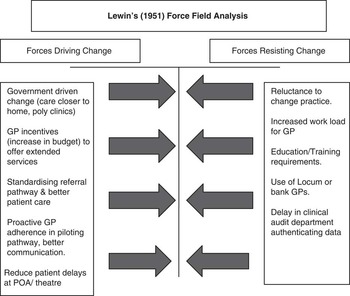
The whole surgical team, from primary through secondary care, including medical, nursing and administrative staff are involved in the piloting of the new pathway, helping to ensure that it is efficient and effective for patients and hospital staff. The challenges faced by implementing this new pathway were not underestimated and one of the major challenges has been to change the historical GP referral behaviour; this has been addressed by increased education and input from the lead ANP for POAC at Primary Care Trust (PCT) meetings, Trust partnership meetings and through feedback between POAC and PCTs. The aim is that other PCTs in the region will show further interest in this model and that it will expand to other Trusts. Lewin [Reference Lewin1951] developed a tool known as ‘Force Field Analysis’ for looking at factors that influence a situation and to analyse the opposing forces involved in change. This is demonstrated in Figure 14, illustrating Lewin's [Reference Lewin1951] framework of diving forces (those seeking to promote change) and resisting forces (those attempting to maintain the status quo) and visualising forces that may work in favour of or against change initiatives. When there is equilibrium between the two sets of forces, there will be no change; in order for change to occur, the driving forces must exceed the restraining force [Lewin, Reference Lewin1951].
Lewin's [Reference Lewin1951] Force Field Analysis for change management.

Change in organisations is influenced by its culture [Kleiner and Corrigan, Reference Kleiner and Corrigan1989] and sources of resistance to organisational change can be found both in the personalities of those affected by change and in the situations in which change takes place [Coghlan and McAuliffe, Reference Coghlan and McAuliffe2003]. These sources of resistance can include individual reactions to imposed change, a lack of faith in those implementing the change, and a preference to remain in the security of known situations even when the need for change has been accepted [Welford, Reference Welford2006].
The NHS [2009] identifies ten factors that are key to sustainability of improvement (see Box 6).
Box 6. The NHS Sustainability Model.

Until the innovative model has been rolled out to cover other Trusts, the audit results have highlighted an additional question that can be added to the health screening questions the patients are asked by the schedulers before booking a POA appointment (see Appendix 4). Patients are asked if they have had their BPs checked within the last 8 weeks. If they have, the scheduler contacts the GP for the measurement; if they have not, they are asked to make an appointment with the GP or Practice nurse for the BP measurement and advised to phone the measurement through to the schedulers. The BP reading is added to the patient's computerised record and this is reviewed by an ANP prior to the POA appointment. Ideally, this will identify patients earlier in the surgical pathway than those who prior to POA have uncontrolled or untreated hypertension allowing for earlier GP follow-up and reduced delays at POA and delayed operations working within the 18-week target [Department of Health, 2006a].
NICE [2006] suggests that if the patient's BP remains high after continual monitoring and the patient does not have established cardiovascular disease, GPs should perform a formal assessment of their cardiovascular risk. This would include tests to check for diabetes, evidence of hypertensive damage to the heart and kidneys and secondary causes of hypertension such as kidney disease. The patient's urine would be tested for protein, blood taken to assess plasma glucose, electrolytes, creatinine, serum cholesterol and HDL cholesterol and a 12-lead ECG. The POA ANP would have performed tests for all of the above at the time of POA, except plasma glucose (unless the patient was a known diabetic) and cholesterol, as this is not within the NICE [2003] standard pre-operative recommended tests. Therefore, when the ANP refers patients to the GP for hypertension monitoring, ideally a copy of the patient's blood results and ECG should be forwarded to the GP to assist in the review of the patient's cardiovascular risk assessment. This could provide the GP with baseline data before commencing antihypertensive treatment, saving time and money on repeating these tests in primary care that have already been completed in POAC, thus improving patient care and communication between primary and secondary care.
Recommendations for Future Practice
• Maintain regular meetings to share ideas within the POA team.
• Maintain regular PCT meetings with GPs.
• Re-audit in 6 months’ time comparing between the normal POA route and the piloting pathway.
• A written policy should be available to all staff regarding the management of the surgical hypertensive patient.
• POA ANP to support GPs by providing them with blood results and an ECG recording for patients referred to the GP for BP monitoring.
• GPs referring patients for surgery should optimise the patient in the primary setting as per the piloting pathway.
• Further, large, well-designed clinical trials and research are necessary to make more satisfactory conclusions about pre-operative management of hypertensive patients undergoing non-cardiac surgery.
• More studies measuring the effectiveness of using Beta Blocker pre-operatively.
Conclusion
According to its critics, the quantitative approach yields useful but limited data and provides only a partial view of the phenomena it investigates [Parahoo, Reference Parahoo2006]. A powerful tool used in the audit eliminating participant selection bias was the random selection of the sample, and although using one ANP to collect data aided the consistency of interpretation and response rate, which can be a methodological limitation of questionnaires, the results may have been subject to referral bias due to clinical decisions of the ANP [Polit and Beck, Reference Polit and Beck2006]. Using patient recollection for one of the questions in the audit tool may have given rise to social desirability; instead, this information could have been obtained from the GP records.
Implementing, re-auditing and evaluating were not possible due to time restraints, and will take place after 6 months in order to allow changes to take effect and allow comparison of results before and after the change process, thus completing the final stage of the clinical audit cycle [NICE, 2005].
POA is a process to ensure that patients are as fit as possible for surgery and anaesthesia; it ensures that patients fully understand the proposed operation and are ready to proceed. By noting the special requirements for surgery and peri-operative stay, scheduling of theatre lists could be improved. By identification and co-ordination of all resources and discharge requirements, the risk of late cancellations could be minimised and the length of stay reduced [The Modernisation Agency, 2003]. There is a substantial body of evidence indicating that weight loss is an effective strategy for reducing the risk of hypertension and diabetes, and that it can lead to clinical benefits and improvements in health; however, weight control is difficult for an arthritic patient whose ability to be mobile, let alone exercise, is limited due to painful and swollen joints.
Maximum pressure levels compatible with elective procedures are still not established and today criteria to delay surgery of poorly controlled hypertensive patients are based more on empirical data than on evidences, as direct association between pre-operative hypertension and peri-operative cardiac complications is unclear [Lorentz and Santos, Reference Lorentz and Santos2005]. There appears to be general agreement that patients with mild to moderate hypertension may be allowed to proceed with surgery, because such hypertension poses little additional risk of peri-operative cardiovascular complication [Prys-Roberts et al, Reference Prys-Roberts, Melonche and Foex1971; Goldman and Caldera, Reference Goldman and Caldera1979; Allman et al, Reference Allman, Muir, Howell, Hemming, Sear and Foex1994; Howell et al, Reference Howell, Hemming, Allman, Glover, Sear and Foex1997, Reference Howell, Sear and Foex2004]. Regarding severe hypertension (>180/>110 mmHg), the ACC/AHA [Eagle et al, Reference Eagle, Berger and Calkins2002] guidelines recommend that elective surgery should be postponed until better BP control is obtained. The urgency of surgery and the risk of cardiovascular complications should be balanced in each case; however, it is prudent to postpone elective surgery if hypertension-induced organ damage is present. For peri-operative management, beta blockers may help to maintain peri-operative haemodynamic stability and may prevent major cardiac complications [Weksler et al, Reference Weksler, Klien and Szendro2003; Mongano et al, 1996; Poldermans et al, Reference Poldermans, Boersma and Bax1999]; however, clinicians should be aware of the limitations of the current evidence base describing the effectiveness of this therapy.
The audit findings have helped to evaluate the patient's process through primary and secondary care and have seen the development of an alternative innovative model/pathway that is currently being piloted not only by addressing the necessity for earlier BP measurements but also by identifying other screening tests and questions that need to be addressed by the GP and by scheduling administrative staff, thereby initiating a uniform approach to patients being optimised in primary care prior to being seen in secondary care with the view to being placed on the waiting list.
Appendix 1

Appendix 2

Appendix 3

APPENDIX 4 Scheduling Questions to ask patients prior to booking for a pre-assessment
• Are you currently having any investigations undertaken by your GP or a hospital doctor?
• Are you waiting to have any other surgery?
• Have you been admitted to hospital within the last 3 months?
• If you suffer with high blood pressure is this under control? Advise they should have had a recent blood pressure check with their GP in the last 3 months.
• Do you have any mouth ulcers?
• Do you have any cuts, sores, open wounds or leg ulcers?
• Are you ready to have your surgery within the 18 week timelines?