Introduction
Human alveolar echinococcosis has a widespread distribution in the northern hemisphere including Switzerland (Gottstein et al., Reference Gottstein, Lengeler, Bachmann, Hagemann, Brossard, Witassek and Eckert1987) and other parts of central Europe (Eckert, Reference Eckert1996). In the vicinity of Switzerland, alveolar echinococcosis has been observed in Austria (Auer & Aspock, Reference Auer and Aspock1991), northern Italy (Casulli et al., Reference Casulli, Manfredi, La Rosa, Di Cerbo, Dinkel, Romig, Deplazes, Genchi and Pozio2005), Germany (Daugschies, Reference Daugschies1995) and France (Massif Central, Savoie and Franche-Comté) (Petavy et al., 1991). The incidence of human alveolar echinococcosis is low in the European endemic area with 0.02–1.4 new cases per year for 100,000 inhabitants (Eckert, Reference Eckert1996). The causative agent of human alveolar echinococcosis is the larval stage of Echinococcus multilocularis (Leuckart) (Cestoda: Cyclophyllidea: Taeniidae). Humans are an aberrant intermediate host, with the disease causing liver pathology. Natural intermediate hosts are wild rodents. The water vole Arvicola terrestris and the common vole Microtus arvalis have been found to be infected in Switzerland (Gottstein et al., Reference Gottstein, Saucy, Wyss, Siegenthaler, Jaquier, Schmitt, Brossard and Demierre1996). The red fox Vulpes vulpes is the most important final host, with between 1 and 50% of animals infected (Auer & Aspock, Reference Auer and Aspock1991). Domestic dogs and cats rarely harbour the adult parasite (mostly < 1%) in Europe, but dogs are frequently infected in other endemic areas such as China (Budke & Campos-Ponce, Reference Budke and Campos-Ponce2005). Because the parasite is a severe human pathogen, it is important to evaluate and to characterize the infection of red foxes in Switzerland. In the eastern part of the country, between 5 and 50% of foxes were reported to be infected with E. multilocularis (Ewald et al., Reference Ewald, Eckert, Gottstein, Straub and Nigg1992).
The aim of the present study is to define the prevalence of E. multilocularis in red foxes in the cantons of Soleure, Berne, Jura, Neuchâtel, Fribourg, Vaud and Valais (western Switzerland), and to study differences in prevalence between the Jura mountains (mean altitude of 700 m), the Plateau (mean altitude of 600 m) and the Alpine areas of these cantons (mean altitude of 1700 m). Variations of prevalence and intensity of infection with age and gender of the fox, in addition to seasonal patterns of infection, are described.
Material and methods
Between October 1990 and May 1995, 3793 red foxes originating from the cantons of Jura, Berne, Soleure, Neuchâtel, Vaud, Fribourg and Valais were examined for E. multilocularis infection. Most of them (n = 3020) were supplied by the Swiss Centre for Rabies, Bern. The remainder were provided by the Institute Galli-Valerio, Lausanne (n = 707) or the Institute of Zoology of the University of Neuchâtel (n = 66). The small intestine of each fox was carefully examined for E. multilocularis as described by Ewald et al. (Reference Ewald, Eckert, Gottstein, Straub and Nigg1992). The small intestine (or the whole fox as necessary) was deep frozen at − 80°C for at least one week to kill the eggs. Diagnosis was achieved by microscopic examination at a 12 × magnification of 15 samples of mucosa which were cut off with microscope slides and prepared in thin layers in Petri dishes. The total length of strobila (1.2–4.5 mm), the form of uterus (sac-like), the position of the genital pore (anterior to middle) and the number of proglottids (2–6) were used as criteria for identification (Thompson, Reference Thompson1986).
The intensity of infection was defined as the number of E. multilocularis adults in each infected fox according to Margolis et al. (Reference Margolis, Esch, Holmes, Kuris and Schad1982). Practically, positive foxes were classified into three classes, namely 1, less than 100 E. multilocularis adult worms; 2, from 100 to 1000 worms; and 3, over 1000 worms.
The age, sex and location where foxes were collected were recorded. Fox age, supplied by the Swiss Centre for Rabies, was estimated by X-ray examination of the teeth to measure the relative breadth of the canine cavity (Kappeler, Reference Kappeler1985). Foxes were categorized into two age groups, i.e. juveniles, less than one year old, and adults, more than one year old.
Statistical analysis
Calculation of 95% confidence intervals (CI) of prevalence was performed as described by Newcomb (2004). Pearson's χ2 test was used to compare the intensity and the prevalence of E. multilocularis infection between geographical areas of western Switzerland, between male and female foxes and to investigate the effect of season on the prevalence of infection in juvenile and adult foxes. Differences were considered significant at P < 0.05.
Results
Prevalence of E. multilocularis in red foxes
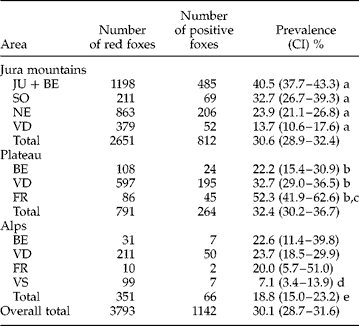
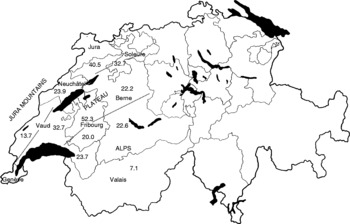
A total of 3793 red foxes were collected between October 1990 and May 1995 in the Jura mountains (Soleure, Jura, Berne, Neuchâtel and Vaud), the Plateau (Berne, Fribourg and Vaud) and the Alps (Berne, Fribourg, Vaud and Valais) of western Switzerland (table 1 and fig. 1). Echinococcus multilocularis adults were found in the intestine of 1142 foxes (30.1%) from all areas. The highest prevalence occurred in the Plateau in the canton of Fribourg (52.3%) and the lowest prevalence was recorded in Valais (7.1%).
Prevalence of Echinococcus multilocularis in red foxes in western Switzerland (1990–1995).
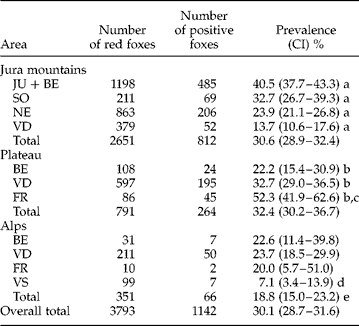
a, P < 0.05–P < 0.001 between all areas of the Jura mountains; b, P < 0.05–P < 0.001 between all areas of the Plateau; c, P < 0.05–P < 0.001 between the Plateau of Fribourg and all areas of the Jura mountains, the Plateau and the Alps; d, P < 0.01–P < 0.001 between the canton of Valais, the areas of the Jura mountains, the Plateau and the Alps of Berne and Vaud; e, P < 0.001 between the Alps and the Plateau or the Jura mountains.
CI, confidence interval; JU, Jura; BE, Berne; SO, Soleure; NE, Neuchâtel; VD, Vaud; FR, Fribourg; VS, Valais.
Prevalence values of Echinococcus multilocularis in red foxes in the Jura mountains, the Plateau and the Alps in western Switzerland (1990–1995).

Important variations in prevalence values were observed inside and between geographical areas. The prevalence of E. multilocularis in foxes varies between different parts of the Jura mountains. The highest prevalence rates were observed in the north-eastern part (Jura, Berne and Soleure) with 40.5 and 32.7%, respectively and the lowest rates were seen in the south-western part of the region (Neuchâtel and Vaud) with 23.9 and 13.7%, respectively (P < 0.01 to P < 0.001). The north-eastern part of the Jura mountains is considered later in the study as a high endemic area and the south-western part of the area as a low endemic area.
Overall, the prevalence of infection in foxes from the Jura mountains (30.6%) did not differ from that of the Plateau (32.4%) (P>0.05) but differed from that of the Alps (18.8%, P < 0.001). The prevalence of E. multilocularis in the canton of Valais (7.1%) was lower than that observed in other areas of the Alps (P < 0.01 to P < 0.001) and in all areas of the Jura mountains and the Plateau (P < 0.05 to P < 0.001).
In western Switzerland, infected foxes were observed between the altitude of 300 and 1900 m with the highest prevalence being found between 600 and 1000 m (results not shown).
Prevalence and intensity of E. multilocularis infection, relative to fox age and gender
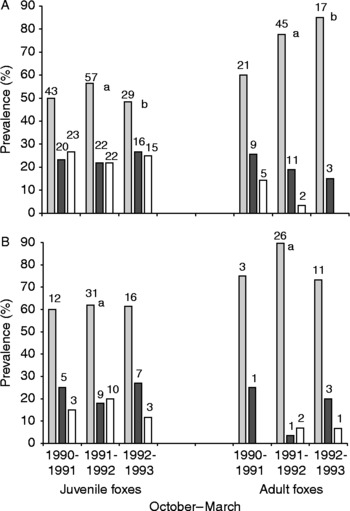
The age of 3016 foxes was estimated by X-ray examination. The prevalence of E. multilocularis was significantly higher in juveniles (34.1%) than in adults (27.6%) (table 2, P < 0.001). The intensity of infection was also higher in juveniles where 22.9% of positive individuals were highly infected (class 3) compared to only 8.9% found in adult (P < 0.001, table 2). Furthermore, 71.1% of adult foxes harboured a lower number of parasites (class 1) than juveniles (51.4%, P < 0.001). In the high endemic area of the Jura mountains the infection intensity was also higher in juveniles (6–12 months old) than in adult foxes during October 1991 to March 1992 and October 1992 to March 1993, (fig. 2A, P < 0.001 and P < 0.01). In the low endemic area the infection intensity of juvenile foxes was only statistically higher from October 1991 to March 1992 (fig. 2B, P < 0.01).
Prevalence (%) and intensity of infection of Echinococcus multilocularis in juvenile or adult red foxes in western Switzerland (1990–1995).

Degree 1 = < 100 worms; 2 = 100–1000 worms; 3 = >1000 worms; a, P < 0.001; b, P < 0.05 between juveniles and adults.
Intensity of infection of Echinococcus multilocularis in foxes from high (A) and low (B) endemic areas of the Jura mountains, Switzerland, in juvenile and adult foxes during 1990 to 1993. a, P < 0.001; b, P < 0.01: significant differences between juvenile and adult foxes between October–March. Number of foxes in each class is indicated.  degree 1, < 100 worms;
 degree 2, 100–1000 worms; □ degree 3, >1000 worms.

The gender of 3008 foxes was determined, making a total of 1293 females and 1715 males (table 3). No statistical differences were observed between prevalences in female and male foxes (30.2 and 30.9% respectively). Similarly, there was no difference in the intensity of infection of foxes with E. multilocularis, relative to gender.
Prevalence (%) and intensity of infection of Echinococcus multilocularis in female or male red foxes in western Switzerland (1990–1995).

Degree 1 = < 100 worms; 2 = 100–1000 worms, 3 = >1000 worms; P>0.05.
Seasonal variations in E. multilocularis infections in juvenile and adult foxes
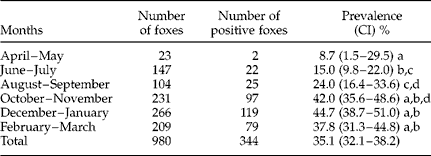
Data on the prevalence of E. multilocularis in juvenile and adult foxes originating from the Jura mountains (n = 2212) were collected during three consecutive years, from October 1990 to December 1993. In a first step, results have been grouped and analysed together on a seasonal basis, with juvenile and adult foxes analysed separately (tables 4 and 5).
The prevalence (%) of Echinococcus multilocularis in juvenile foxes in western Switzerland during 1990 to 1995.
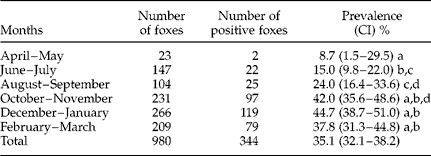
CI, confidence interval. a, P < 0.01; b, P < 0.001; c, P < 0.05; d, P < 0.01: significant differences between the monthly periods.
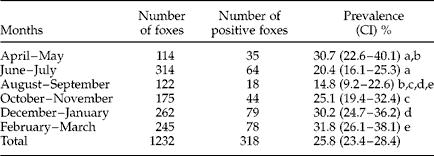
The prevalence (%) of Echinococcus multilocularis in adult foxes in western Switzerland during 1990 to 1995.
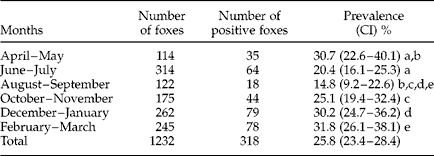
CI, confidence interval. a, P < 0.05; b, P < 0.01; c, P < 0.05; d, P < 0.01; e, P < 0.001: significant differences between the monthly periods.
Nine hundred and eighty juvenile foxes were examined during their first year of life (table 4). In Switzerland, foxes are born at the beginning of spring. In April and May, 2 of 23 young animals were infected but by the beginning of the summer, when foxes were three to four months old, the prevalence had increased to 15.0% (P>0.05), then to 24.0% by August–September (P < 0.05). In the autumn (October–November), a sudden and significant increase to 42.0% (P < 0.001) was observed followed by a stabilization of prevalence (44.7%) in winter (December–January) (P>0.05), then a decrease in February and March to reach 8.7% in April–May (P < 0.01).
In total, 1232 adult foxes were examined (table 5). Statistical differences in prevalences were observed between two periods, i.e. a decrease from 30.7% in April–May to 14.8% in August–September (P < 0.01) then a progressive increase from 14.8% to 31.8% in February–March (P < 0.001).
In a second step, results of 1990 to 1993 have been analysed on a seasonal and annual basis for the high and low endemic areas in the Jura mountains, with juvenile and adult foxes analysed separately.
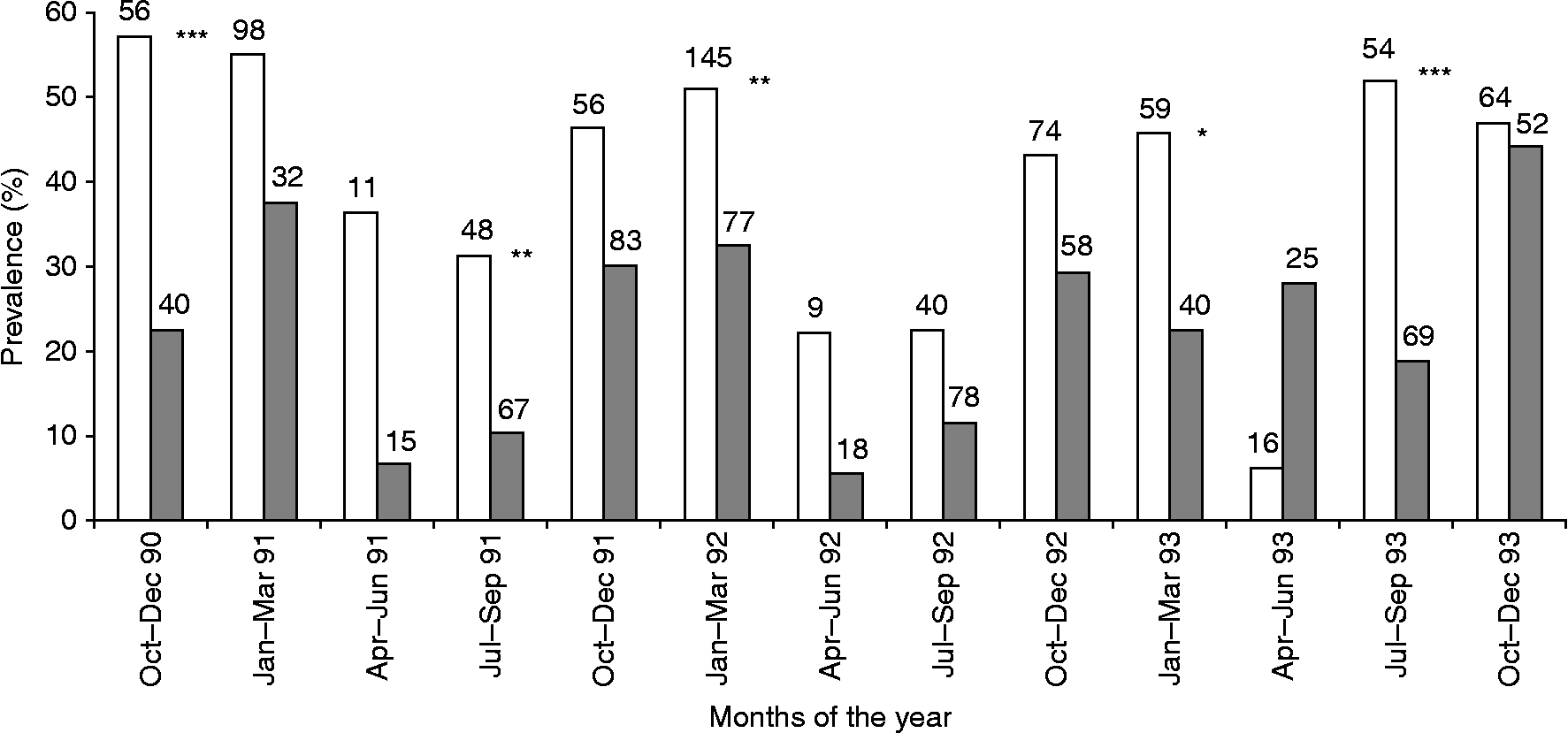
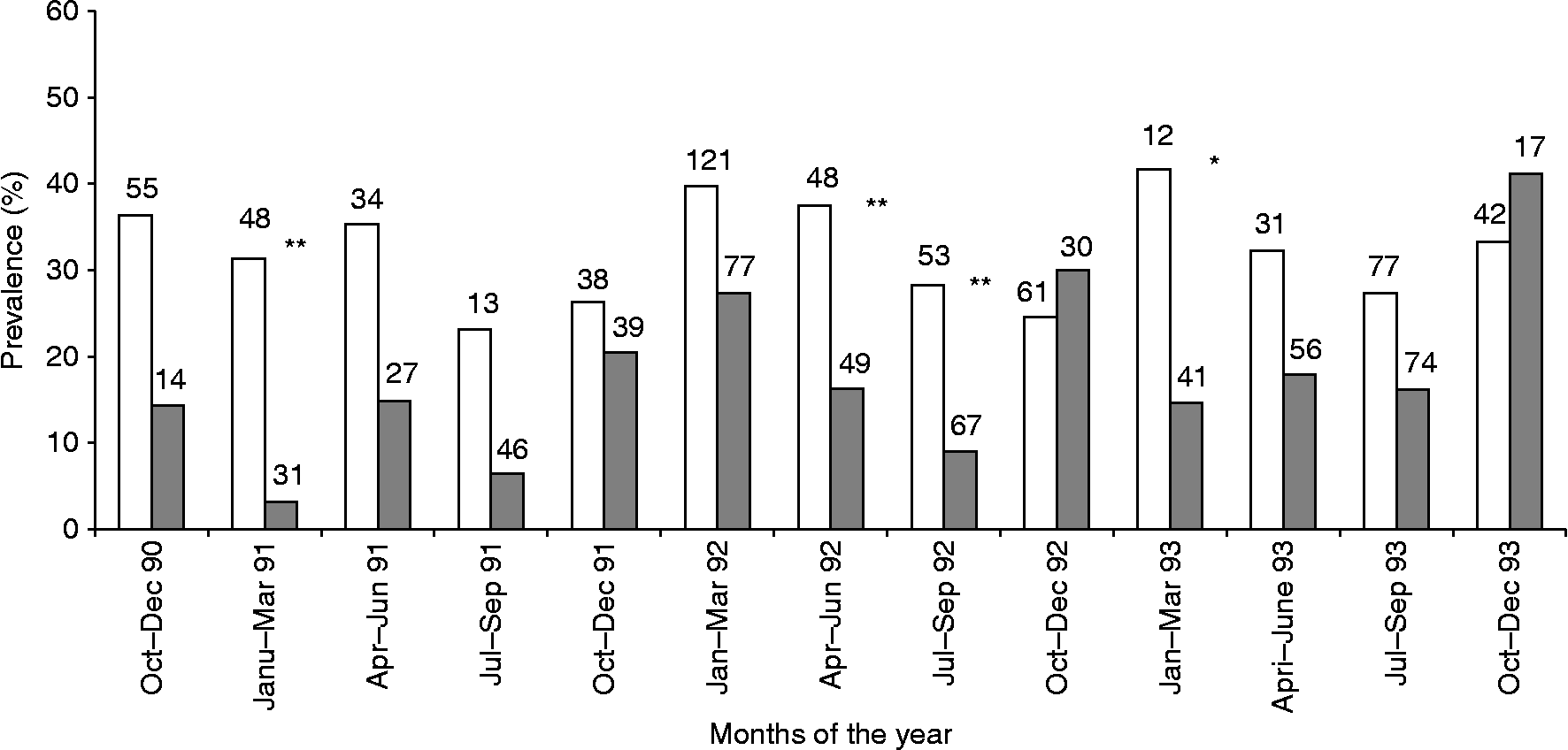
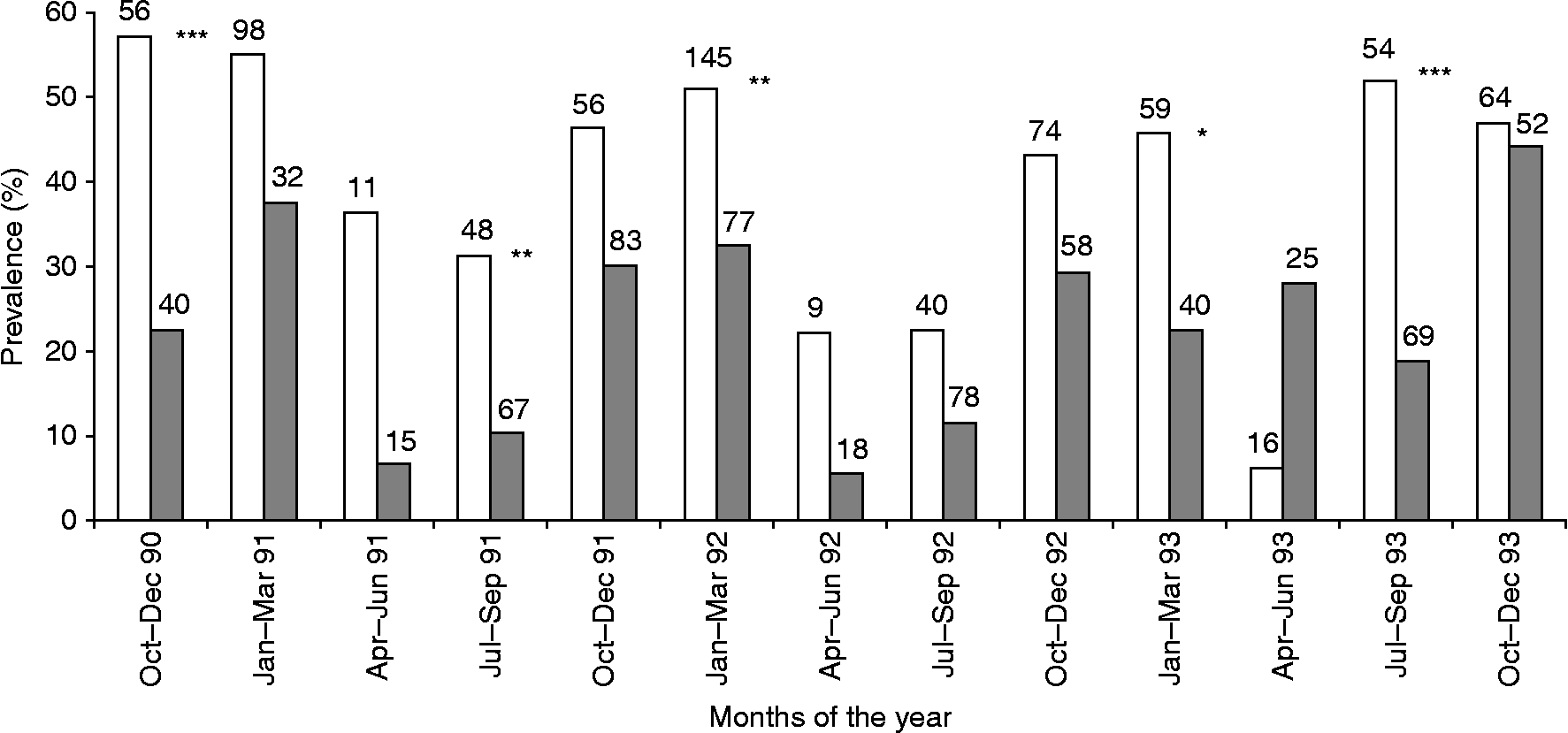
The prevalence of E. multilocularis infection in young foxes generally increased from spring to winter (April–March) (fig. 3). This tendency was more pronounced in the area of low endemicity. The prevalence of infection in adult foxes of the two areas diminished from spring (April–June) to summer (July–September) and increased again in autumn and winter (from October to March) (fig. 4).
The prevalence (%) of Echinococcus multilocularis in juvenile foxes during 1990 to 1993 in a high (□) or low () endemic area in the Jura mountains, Switzerland. Number of foxes in each class is indicated. *P < 0.05, **P < 0.01, ***P < 0.001: significant differences between high and low endemic areas.
The prevalence (%) of Echinococcus multilocularis in adult foxes during 1990 to 1993 in a high (□) or low () endemic area in the Jura mountains, Switzerland. Number of foxes in each class is indicated. *P < 0.05, **P < 0.01: significant differences between high and low endemice areas.
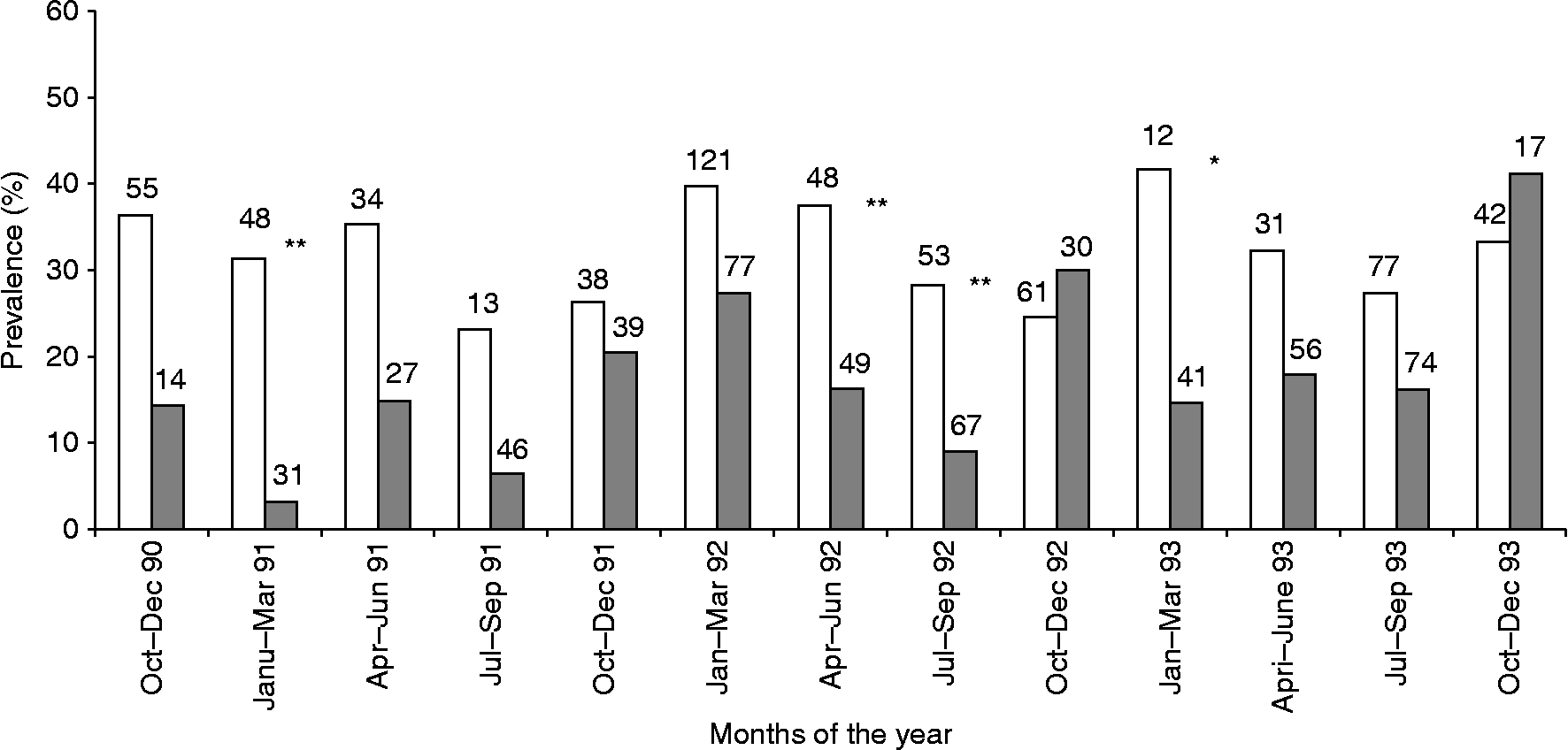
The prevalence of infection in juvenile foxes from the south-western area of the Jura mountains was generally lower than the prevalence in the north-eastern area during 1990 to 1993. The differences are statistically significant for five periods (fig. 3). The prevalence in adult foxes from the south-western area was also often lower than the prevalence from the north-eastern area. The differences are statistically significant for four periods (fig. 4). Although not significant, the prevalence in juvenile foxes increased in the low endemic area in spring 1993 (April–June) and in autumn 1993 (October–December). The same tendency was observed in autumn 1992 and winter 1993 for adult foxes (figs 3 and 4). The last results could indicate an epidemiological modification in a zone that was slightly infected.
Discussion
Echinococcus multilocularis is widespread in the northern hemisphere (North America, north and central Asia and central Europe). In central Europe, infected red foxes (V. vulpes) have been reported in Belgium, Luxembourg, France (Massif Central, Savoie and eastern parts), Switzerland, Lichtenstein, Austria, Germany, in northern parts of Poland and in Italy (Eckert, Reference Eckert1996; Deplazes, Reference Deplazes2006). Following the success of rabies vaccination (Aubert, Reference Aubert1995), foxes seem to be more abundant and now commonly inhabit urban areas (Stieger et al., Reference Stieger, Hegglin, Schwarzenbach, Mathis and Deplazes2002). This presents an increased risk of infection to a large human population. The prevalence rates of E. multilocularis in fox populations are highly variable regionally and range between < 1 and >50%. In the southern (canton of Tessin) and eastern parts of Switzerland 2 and 50% of foxes are infected, respectively (Deplazes et al., Reference Deplazes, Gottstein, Eckert, Jenkins, Ewald and Jimenez-Palacios1992). In the present work we studied the E. multilocularis infection of red foxes in the western part of Switzerland between 1990 and 1995 (cantons of Soleure, Berne, Jura, Neuchâtel, Fribourg, Vaud and Valais). Infected foxes were observed in all cantons studied and at altitudes from 300 to 1900 m, with the highest prevalence recorded between 600 and 1000 m. Human alveolar echinococcosis was specially mentioned in northern Switzerland (Gottstein et al., Reference Gottstein, Lengeler, Bachmann, Hagemann, Brossard, Witassek and Eckert1987). Nevertheless, foxes were also infected south of the Jura mountains on the Swiss Plateau (32.4%) and in the Alps (18.8%). In the isolated alpine canton of Valais, 7.1% of foxes were still infected. In the canton of Geneva, the prevalence decreased from the rural and residential areas (52 and 49% respectively) to urban areas (prevalence of 31%) (Fischer et al., Reference Fischer, Reperant, Weber, Hegglin and Deplazes2005). In several regions of Europe, a drastic prevalence increase has occurred since the early 1990s (Vuitton et al., Reference Vuitton, Zhou, Bresson-Hadni, Wang, Piarroux, Raoul and Giraudoux2003). This might account for the differences between the low rates given for western Vaud (13.7%), and the high rates cited for neighbouring Geneva obtained a decade later (Fischer et al., Reference Fischer, Reperant, Weber, Hegglin and Deplazes2005). As shown in the present study, the prevalence of infection in foxes of the south-western area of the Jura mountains increased from 1990 to 1993 and became comparable with that of the high endemic area of the north-eastern part (figs 3 and 4). In southern Germany, a long-term increase in the prevalence of E. multilocularis in foxes was reported, with a more widespread distribution than previously thought (Lucius & Bilger, Reference Lucius and Bilger1995). Despite high prevalences in foxes, alveolar echinococcosis in humans is relatively rare. In Switzerland, a relatively stable annual morbidity rate of 0.18 cases per 100,000 inhabitants was recorded in recent decades, with high annual incidence rates occurring more regionally, as observed in the Swiss canton of Jura (0.74/100,000) (Gottstein et al., Reference Gottstein, Lengeler, Bachmann, Hagemann, Brossard, Witassek and Eckert1987, Ammann et al., Reference Ammann, Fleiner Hoffmann and Eckert1999, Kern et al., Reference Kern, Bardonnet, Renner, Auer, Pawlowski, Ammann, Vuitton and Kern2003). From 1990 to 1993 we studied the infection of foxes from the Jura mountains, which constitute an area adjacent to the endemic Doubs department in France (Bresson-Hadni et al., Reference Bresson-Hadni, Laplante, Lenys, Rohmer, Gottstein, Jacquier, Mercet, Meyer, Miguet and Vuitton1994). The prevalence of the infection decreases from 40.5% in the canton of Jura and Berne (north-eastern area of the Jura mountains) to 13.7% in the north of the canton of Vaud (south-western area of the Jura mountains). A decrease in prevalence is spatially regular and could be explained by region differences in density of arvicolid species and prevalence of E. multilocularis metacestodes in the intermediate host. On the other hand the geology (altitudes), vegetation and the climate are all similar in the Jura range.
The only free living stage of E. multilocularis is the egg which survives better under cold than warm temperatures (Veit et al., Reference Veit, Bilger, Schad, Schafer, Frank and Lucius1995). These authors performed an interesting experiment in south-western Germany. Echinococcus multilocularis eggs were sealed into bags of nylon mesh and exposed there to the natural climate during various seasons. The maximal survival time was 240 days from autumn to spring but only 78 days in summer. Accordingly, the prevalence of E. multilocularis in adult foxes of western Switzerland was less pronounced during the second half of summer than in autumn and winter. The seasonal vole population densities, and the seasonal size of the fox population, with the resulting differences in egg production could also influence the seasonal prevalence of infection. Small mammals (Insectivora and Rodentia) are the intermediate hosts of E. multilocularis. In central Europe, the common vole M. arvalis and the water vole A. terrestris are important in transmission. As shown in the Doubs department (France), human alveolar echinococcosis is strongly influenced by the densities of arvicolid species (Viel et al., Reference Viel, Giraudoux, Abrial and Bresson-Hadni1999). In Switzerland, water and common voles also seem to be important intermediate hosts (Gottstein et al., Reference Gottstein, Saucy, Wyss, Siegenthaler, Jaquier, Schmitt, Brossard and Demierre1996, 2001). In a small area of the Plateau in canton of Fribourg E. multilocularis metacestode was found in 10–39% of an A. terrestris population and in 10–23% of an M. arvalis population during six seasons of investigation (1993–1998). A high prevalence ranging between 47% and 56% was consistently determined in the fox population of that area during 1993 and 1994, respectively.
Young foxes (less than 1 year old) were more frequently and more intensely infected by E. multilocularis than in older animals. In the high endemic area of the Jura mountains, prevalence and intensity of infection were lower in adult than in juvenile foxes. This may be due to parasite-induced host immunity to reinfection. This phenomenom was also observed in other studies (Hofer et al., Reference Hofer, Gloor, Müller, Mathis, Hegglin and Deplazes2004) and was also seen in dogs infected with E. granulosus (Torgerson et al., Reference Torgerson, Shaikenov, Rysmukhambetova, Ussenbayev, Abdybekova and Burtisurnov2004).
In brief, the prevalence of E. multilocularis in foxes of the Jura mountains and the Plateau was higher than that recorded in foxes in the Alps, with important variations inside each geographical area. Between 1990 and 1995, the highest rate was recorded in the Plateau in the canton of Fribourg with a prevalence of 52.3%. Moreover, the prevalence of E. multilocularis infection in foxes in the alpine canton of Valais was the lowest (7.1%). Young foxes were more often and more intensively infected than the adults.
Acknowledgements
The authors thank the Swiss Centre for Rabies, the Galli-Valerio Institute in Lausanne for providing intestines of red foxes, the Swiss Federal Office for Public Health and Wildlife Protection Service of Cantor Vaud for their financial support, and Dr P. Torgesson for critically reviewing the manuscript.