Childhood maltreatment increases the risk of multiple forms of psychopathology (e.g., Heim & Nemeroff, Reference Heim and Nemeroff2001; Sugaya et al., Reference Sugaya, Hasin, Olfson, Lin, Grant and Blanco2012; Widom, DuMont, & Czaja, Reference Widom, DuMont and Czaja2007). Likewise, persistent emotional neglect, family conflict, and conditions of harsh, inconsistent discipline increase the risk for mood disorders (Shanahan, Copeland, Costello, & Angold, Reference Shanahan, Copeland, Costello and Angold2008; van Brakel, Muris, Bögels, & Thomassen, Reference van Brakel, Muris, Bögels and Thomassen2006). Thus, cold, distant parent–child relationships and trauma, as well as childhood endophenotypes such as behavioral inhibition, predict an increased risk mood disorders (Hane & Fox, Reference Hane and Fox2006; Parker, Tupling, & Brown, Reference Parker, Tupling and Brown1979). These findings suggest that the influence of parental care on child development extends across a wide range of parent–child interactions and is not unique to extreme forms of maltreatment (e.g., Hane & Fox, Reference Hane and Fox2006).
Longitudinal analyses confirm the familial transmission of depression and related disorders (Pawlby, Hay, Sharp, Waters, & O'Keane, Reference Pawlby, Hay, Sharp, Waters and O'Keane2009; Weissman et al., Reference Weissman, Wickramaratne, Nomura, Warner, Verdeli, Pilowsky and Bruder2005, Reference Weissman, Wickramaratne, Nomura, Warner, Pilowsky and Verdeli2006). The offspring of depressed mothers are at increased risk for depression compared to those of nondepressed parents. Studies showing improved mental health outcomes for children of mothers successfully treated for depression suggest nongenomic influences (e.g., Wickramaratne et al., Reference Wickramaratne, Gameroff, Pilowsky, Hughes, Garber, Malloy and Weissman2011) and are consistent with the idea that maternal emotional well-being affects parenting that then influences the mental health of the offspring (e.g., Berlin, Appleyard, & Dodge, Reference Berlin, Appleyard and Dodge2011; Martinez-Torteya et al., Reference Martinez-Torteya, Dayton, Beeghly, Seng, McGinnis, Broderick and Muzik2014; Plant, Pariante, Sharp, & Pawlby, Reference Plant, Pariante, Sharp and Pawlby2015). Meta-analyses also confirm a relation between maternal depression and forms of child temperament that presage later psychopathology (Goodman et al., Reference Goodman, Rouse, Connell, Broth, Hall and Heyward2011). For instance, depressed mothers display less sensitivity, less face-to-face interaction, and less vocalizing, imitative, and smiling behaviors (Field, Diego, & Hernandez-Reif, Reference Field, Diego and Hernandez-Reif2006; Murray, Fiori-Cowley, Hooper, & Cooper, Reference Murray, Fiori-Cowley, Hooper and Cooper1996). They may also display more intrusive or passive behaviors (Malphurs, Raag, Field, Pickens, & Pelaez-Nogueras, Reference Malphurs, Raag, Field, Pickens and Pelaez-Nogueras1996). In turn, such mothering behaviors relate to offspring increased behavioral inhibition, negative emotionality, and social withdrawal (Martins & Gaffan, Reference Martins and Gaffan2000). Likewise, maternal childhood adversity, which increases the risk for depression, associates with an increased risk for psychopathology in the offspring (Berlin et al., Reference Berlin, Appleyard and Dodge2011; Bouvette-Turcot et al., Reference Bouvette-Turcot, Fleming, Wazana, Sokolowski, Gaudreau, Gonzalez and Meaney2015; Collishaw, Dunn, O'Connor, & Golding, Reference Collishaw, Dunn, O'Connor and Golding2007; Martinez-Torteya et al., Reference Martinez-Torteya, Dayton, Beeghly, Seng, McGinnis, Broderick and Muzik2014; Miranda, de la Osa, Granero, & Ezpeleta, Reference Miranda, de la Osa, Granero and Ezpeleta2013; Myhre, Dyb, Wentzel-Larsen, Grøgaard, & Thoresen, Reference Myhre, Dyb, Wentzel-Larsen, Grøgaard and Thoresen2014; Pawlby, Hay, Sharp, Waters, & Pariante, Reference Pawlby, Hay, Sharp, Waters and Pariante2011; Plant, Barker, Waters, Pawlby, & Pariante, Reference Plant, Barker, Waters, Pawlby and Pariante2013; Rijlaarsdam et al., Reference Rijlaarsdam, Stevens, Jansen, Ringoot, Jaddoe, Hofman and Tiemeier2014; Roberts, O'Connor, Dunn, Golding, & ALSPAC Study Team, Reference Roberts, O'Connor, Dunn and Golding2004). There is evidence for the importance of both depression and parenting as mediators of the relation between maternal childhood adversity and child development (Berlin et al., Reference Berlin, Appleyard and Dodge2011; Bouvette-Turcot et al., Reference Bouvette-Turcot, Fleming, Wazana, Sokolowski, Gaudreau, Gonzalez and Meaney2015; Collishaw et al., Reference Collishaw, Dunn, O'Connor and Golding2007; Martinez-Torteya et al., Reference Martinez-Torteya, Dayton, Beeghly, Seng, McGinnis, Broderick and Muzik2014; Miranda et al., Reference Miranda, de la Osa, Granero and Ezpeleta2013; Myhre et al., Reference Myhre, Dyb, Wentzel-Larsen, Grøgaard and Thoresen2014; Pawlby et al., Reference Pawlby, Hay, Sharp, Waters and Pariante2011; Plant et al., Reference Plant, Barker, Waters, Pawlby and Pariante2013; Rijlaarsdam et al., Reference Rijlaarsdam, Stevens, Jansen, Ringoot, Jaddoe, Hofman and Tiemeier2014; Roberts et al., Reference Roberts, O'Connor, Dunn and Golding2004). Mothers who were sexually abused in childhood or who are depressed are more likely to exhibit diminished confidence in their parenting, greater use of physical punishment, lack of emotional control in parenting situations, and neglect (Roberts et al., Reference Roberts, O'Connor, Dunn and Golding2004; Rubin, Both, Zahn-Waxler, Cummings, & Wilkinson, Reference Rubin, Both, Zahn-Waxler, Cummings and Wilkinson1991, and see Ertem, Leventhal, & Dobbs, Reference Ertem, Leventhal and Dobbs2000; Thornberry, Knight, & Lovegrove, Reference Thornberry, Knight and Lovegrove2012), suggesting that parenting mediates the relation between maternal childhood adversity and developmental outcomes in the offspring. The existing evidence suggests a sequential pathway that extends from maternal maltreatment through maternal depression/posttraumatic stress disorder and, then, parenting to infant behavioral regulation (Martinez-Torteya et al., Reference Martinez-Torteya, Dayton, Beeghly, Seng, McGinnis, Broderick and Muzik2014). Likewise, parental hostility and harsh discipline were found to mediate the association between maternal childhood maltreatment and both internalizing and externalizing problems in the offspring (Rijlaarsdam et al., Reference Rijlaarsdam, Stevens, Jansen, Ringoot, Jaddoe, Hofman and Tiemeier2014). These findings suggest that maternal childhood adversity compromises maternal mental health and thus promotes forms of parenting that influence the risk for depression in the offspring. Hence, maternal adversity enhances the risk for maternal depression as well as forms of parenting (e.g., low maternal sensitivity) that then increase the risk for offspring suboptimal emotional development (Fleming et al., Reference Fleming, Kraemer, Gonzalez, Lovic, Rees and Melo2002; Meaney, Reference Meaney2001). It is currently unknown whether this pathway is unique to overt maltreatment or includes a broader range of maternal childhood familial experience. Parenting that includes authoritarian or overly permissive styles, low proactive, and unsupportive parenting, harsh/inconsistent discipline and parental rejection all associate with increased risk for affective illness (e.g., Alink, Cicchetti, Kim, & Rogosch, Reference Alink, Cicchetti, Kim and Rogosch2009; Alink, Mesman et al., Reference Alink, Mesman, van Zeijl, Stolk, Juffer, Bakermans-Kranenburg and Koot2009; Towe-Goodman & Teti, Reference Towe-Goodman and Teti2008). As such, the influence of parental care on child development extends across a wide range of parent–child interactions and is not unique to extreme maltreatment. These findings suggest that a broad range of maternal childhood adversity might associate with the mental health of the offspring.
Core offspring developmental outcomes need to be targeted and studied to allow for a comprehensive understanding of the intergenerational risk transmission of maternal history of early adversity. A key variable to consider when examining the outcomes of such intergenerational transmission is child temperament. Given that early experience and environmental influences contribute to shaping child temperament as early as infancy and that early deviations in temperament characteristics predict later psychopathology (e.g., Compas, Connor-Smith, & Jaser, Reference Compas, Connor-Smith and Jaser2004), temperament appears as one of the main constructs to study as a potential early marker of offspring emotional development. Environmental factors play an important role with regard to how temperament will be shaped, especially in early infancy (e.g., Rothbart & Bates, Reference Rothbart, Bates, Damon, Lerner and Eisenberg2006). For instance, low parental involvement is associated with reduced child attention and regulation functions (Lawson, Parrinello, & Ruff, Reference Lawson, Parrinello and Ruff1992). Likewise, suboptimal parent–child interactions have been associated with increased fear levels in infants (Pauli-Pott, Mertesacker, & Beckmann, Reference Pauli-Pott, Mertesacker and Beckmann2004) as well as lower regulation efficiency in children (Gartstein, Crawford, & Robertson, Reference Gartstein, Crawford and Robertson2008). Furthermore, maternal depression is related to “difficult” temperament in children, which encompass deficits in biological functioning, slower adaptation to novel situations, increased withdrawal behavior when facing unknown stimuli, and increased negative mood (Rothbart & Bates, Reference Rothbart, Bates, Damon, Lerner and Eisenberg2006). The importance of studying temperament in early childhood is suggested by numerous studies demonstrating that it can be used as an early marker of emotional development and, to some extent, as a proxy measure for later psychosocial deficits. For instance, increased withdrawal in children, which involves avoiding or escaping an unpleasant or uncertain situation, has been related to an increased frequency of internalizing symptoms (Holzwarth & Meyer, Reference Holzwarth and Meyer2006; Johnson, Turner, & Iwata, Reference Johnson, Turner and Iwata2003). These documented links suggest that important variations in temperament components may be considered as early indicators of later emotional functioning, reinforcing the importance of studying temperament in early life, as a main outcome.
We previously reported that maternal childhood adversity predicts increased negative emotionality/behavioral dysregulation in the offspring (Bouvette-Turcot et al., Reference Bouvette-Turcot, Fleming, Wazana, Sokolowski, Gaudreau, Gonzalez and Meaney2015). That study defined adversity using a measure that integrated reports of both childhood trauma (the Childhood Trauma Questionnaire; CTQ; Bernstein et al., Reference Bernstein, Fink, Handelsman, Foote, Lovejoy, Wenzel and Ruggiero1994) as well as the quality of parental care (the Parental Bonding Index; PBI; Parker et al., Reference Parker, Tupling and Brown1979) to capture a wider range of maternal childhood experience. This approach provides a continuous measure of maternal adversity that reflects both endangering (childhood trauma/poor quality maternal care) and protective (high quality maternal care) influences to capture a wider range of relevant child experience than is normally used in studies of extreme adversity. In the current study, we extended these findings to examine the importance of both maternal symptoms of depression and maternal sensitivity as candidate mediators in the relation between maternal childhood adversity and childhood outcomes. We generated two alternative hypotheses: (a) that both maternal symptoms of depression and maternal sensitivity would independently mediate the relation between maternal history of early adversity and offspring negative emotionality/behavioral dysregulation (parallel mediation), and (b) that the association between maternal childhood adversity and offspring negative emotionality/behavioral dysregulation would be mediated by maternal symptoms of depression and, in turn, that the effects of maternal depression on offspring negative emotionality/behavioral dysregulation would act through maternal sensitivity (serial mediation).
Method
Participants
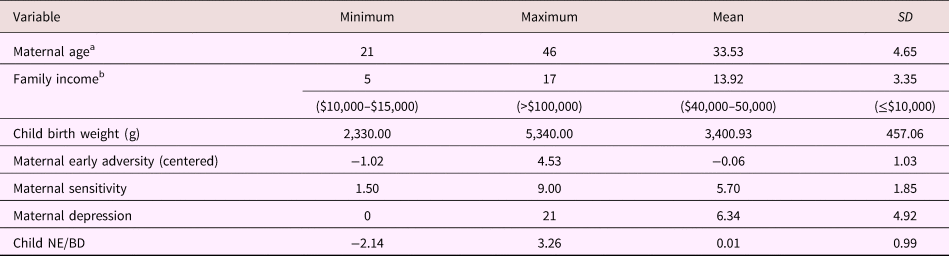
Our sample size was composed of 239 mothers who had enrolled in a longitudinal birth-cohort study (O'Donnell et al., Reference O'Donnell, Gaudreau, Colalillo, Steiner, Atkinson, Moss and Meaney2014). at birth and their children. Thus, the current sample consisted of 239 mother–child dyads (114 girls; Table 1) recruited in Montreal (Quebec) and Hamilton (Ontario) at 13–20 weeks gestation from antenatal care clinics or through advertisements at hospitals as part of a longitudinal birth-cohort study that examines the developmental origins of individual differences in phenotypes associated with multiple forms of psychopathology (O'Donnell et al., Reference O'Donnell, Gaudreau, Colalillo, Steiner, Atkinson, Moss and Meaney2014). Mothers were first assessed during their pregnancy (~26 weeks) and then followed at multiple time points that included both home visits and laboratory sessions. T tests revealed that participants included in the current sample did not differ from those excluded due to missing data (all ps > .05) except for maternal age (included mothers: M = 33.5, SD = 4.65; excluded mothers: M = 32.2, SD = 5.39). Eligibility criteria included age 18 or over, singleton gestation, and fluency in French or English and excluded women with severe physical chronic illness (other than hypertension, asthma, or diabetes) or psychosis. Only babies born at a gestational age of 37 weeks or later, above 2000 g, and with APGAR scores >7 were included in the cohort. Written, informed consent was obtained from all participants. Ethics approval was obtained from the Douglas Mental Health University Institute (McGill University) and St-Joseph Healthcare/McMaster University for the MAVAN project. The sample was composed of 88.7% European/Caucasian, 8.1% African descent/African American, and 3.2% Hispanic/Latino ethnicities, a distribution consistent with that of Central Canada. The sample included 100 primiparous (42%) and 19 (8%) single mothers.
Descriptive statistics
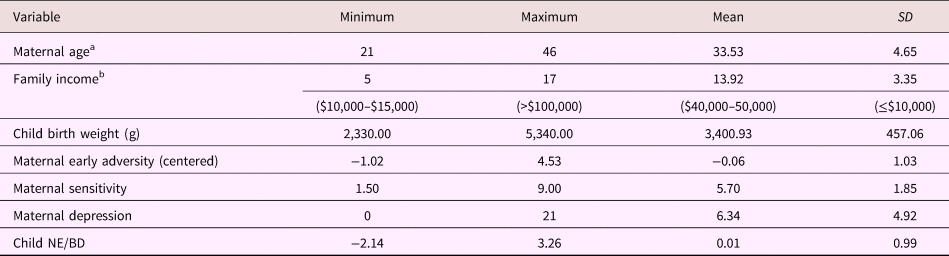
Note: n = 239. NE/BD, negative emotionality/behavioral dysregulation. aPostpartum (36 months). bCombined family income at 36 months, where 0 = no revenue, 1 = less than $5,000, 2 = at least $5,000, 3 = less than $10,000, 4 = at least $10,000, 5 = less than $15,000, 6 = at least $15,000, 7 = less than $20,000, 8 = at least $20,000, 9 = less than $30,000, 10 = at least $30,000, 11 = less than $40,000, 12 = at least $40,000, 13 = between $40,000 and $50,000, 14 = between $50,000 and $60,000, 15 = between $60,000 and $80,000, 16 = between $80,000 and $100,000, and 17 = at least $100,000.
Measures
Maternal adversity
Maternal childhood adversity was assessed using a derived measure that integrated data from the CTQ (Bernstein et al., Reference Bernstein, Fink, Handelsman, Foote, Lovejoy, Wenzel and Ruggiero1994) and PBI (Parker et al., Reference Parker, Tupling and Brown1979). Whereas the CTQ assesses more severe instances of adversity, the PBI captures the perception of parental care across the normal range. The CTQ was administered to mothers during a home visit prenatally and when children were aged 24 months. The CTQ was administered both prenatally and at 24 months postpartum in the Hamilton subjects and at 24 months postpartum in the Montreal subjects. Provided the strong correlations (r ≥ .90, p < .05) between the prenatal and 24-month time points in all CTQ subscales in the Hamilton sample, we retained the earliest complete time point for each participant in order to maximize sample size. All five subscales (emotional neglect, emotional abuse, physical neglect, physical abuse, and sexual abuse) were used in our analyses. The PBI, which is highly stable over time (Wilhelm, Niven, Parker, & Hadzi-Pavlovic, Reference Wilhelm, Niven, Parker and Hadzi-Pavlovic2005), was administered during a home visit when the infants were aged 6 months. PBI scores have been found stable over a 20-year period while no differences were reported over time as a function of life events and depression measures (Wilhelm, Boyce, & Brownhill, Reference Wilhelm, Boyce and Brownhill2004). Evidence for long-term test–retest reliability has also been found in a clinical sample of depressed patients with PBI scores remaining stable despite significant changes in levels of depressed mood and symptoms reduction (Lizardi & Klein, Reference Lizardi and Klein2005). Stability of the PBI scores was also assessed in depressed patients while depressed as well as a few weeks later following significant mood improvement. Analyses revealed intraclass correlations ranging between .87 and .96 (Parker, Reference Parker1981; Plantes, Prusoff, Brennan, & Parker, Reference Plantes, Prusoff, Brennan and Parker1988).
Only the maternal care scale of the PBI was entered into the analytical models as it was the subscale that related to the construct under study and focused on maternal transmission. We used a previously validated principal component analysis to derive one factor and reduce our measures of maternal childhood adversity (CTQ and PBI; Bouvette-Turcot et al., Reference Bouvette-Turcot, Fleming, Wazana, Sokolowski, Gaudreau, Gonzalez and Meaney2015; Mileva-Seitz et al., Reference Mileva-Seitz, Kennedy, Atkinson, Steiner, Levitan, Matthews and Fleming2011). This factor explained 52% of the total variance (eigenvalue = 3.134) and provides a single measure of maternal adversity that comprised all of the CTQ subscales (physical abuse, physical neglect, emotional abuse, emotional neglect, and sexual abuse) as well as the maternal care subscale of the PBI. Given the low-risk nature of the current community sample, such an aggregated, continuous measure allows us to capture individual variations even within the normal range of early childhood adverse experiences.
Maternal symptoms of depression
The Edinburgh Postnatal Depression Scale (EPDS; Cox, Holden, & Sagovsky, Reference Cox, Holden and Sagovsky1987) was administered at 6 months to assess maternal symptoms of depression. The scale consists of 10 short statements with four possible answers corresponding to how the mother has felt during the past week. Responses are scored 0, 1, 2, and 3 based on the seriousness of the symptom. A higher total sum score indicates more severe symptoms of depression. The EPDS has shown good psychometric properties (Eberhard-Gran, Eskild, Tambs, Opjordsmoen, & Ove Samuelsen, Reference Eberhard-Gran, Eskild, Tambs, Opjordsmoen and Ove Samuelsen2001). Given the low-risk nature of the current sample, only 28 mothers scored above the provided clinical threshold (i.e., ≥13).
Maternal sensitivity
A 20-min, nonfeeding mother–infant interaction was videotaped during a home visit at 6 months postpartum. Mothers were asked to freely interact/play with their child. A single rater, formerly trained by an expert, coded the videos for maternal sensitivity following the Ainsworth maternal sensitivity instrument (Ainsworth, Blehar, Waters, & Wall, Reference Ainsworth, Blehar, Waters and Wall1978). The instrument is composed of four subscales: accessibility, acceptance, cooperation, and sensitivity. A global score was also obtained averaging the four subscales. Scores range from 1 to 9. Notes were taken throughout the videos, but final ratings were obtained after viewing was completed. Interrater reliability with another blind, highly experienced rater was high (intraclass correlation = .88 for mean sensitivity rating; N = 28). The global maternal sensitivity score was retained for our analyses.
Negative emotionality/behavioral dysregulation
Child negative emotionality/behavioral dysregulation was measured using a composite score derived from the Early Childhood Behaviour Questionnaire (ECBQ; Putnam, Gartstein, & Rothbart, Reference Putnam, Gartstein and Rothbart2006) at 36 months. The ECBQ is a maternal-report questionnaire comprising 201 items grouped in 18 subscales: activity level/energy, attentional focusing, attentional shifting, cuddliness, fear, frustration, discomfort, high-intensity pleasure, impulsivity, inhibitory control, low-intensity pleasure, motor activation, perceptual sensitivity, positive anticipation, sadness, shyness, sociability, and soothability. The ECBQ items were entered into a principal component analysis to obtain one factor we termed “negative emotionality/behavioral dysregulation” comprising positive ratings of discomfort, fear, frustration, activity level, motor activation, and sadness, and negative ratings of attentional focusing, cuddliness, inhibitory control, and soothability, as previously validated (Bouvette-Turcot et al., Reference Bouvette-Turcot, Fleming, Wazana, Sokolowski, Gaudreau, Gonzalez and Meaney2015; see Table 1 for mean and standard deviation).
Statistical analyses
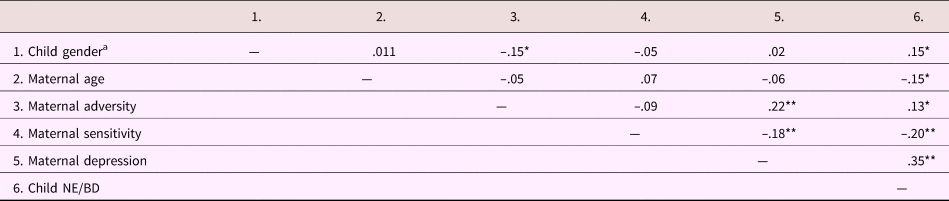
Zero-order correlations were performed between sociodemographic variables and child negative emotionality/behavioral dysregulation to identify potential confounding factors (see Table 2 for bivariate correlations between all study variables). Mediation analyses were performed using an IBM SPSS Macro (PROCESS; Andrew F. Hayes, School of Communication, Ohio State University, Release 2.15, 2016), which tests total indirect and specific indirect effects by bootstrapping confidence intervals (CIs; Hayes, Reference Hayes2013). The model parameters were set to give 95% confidence intervals and to run 10,000 bootstrap resamples. We tested our alternative hypotheses by examining the mediating effects of maternal symptoms of depression and maternal sensitivity on the association between maternal history of early adversity and child negative emotionality/behavioral dysregulation in a parallel and a serial mediation model. We included covariates as identified from the zero-order correlations (Table 2). The comparison of model fit was conducted using R version 3.2.0 (R Core Team, 2015).
Bivariate correlations among all study variables
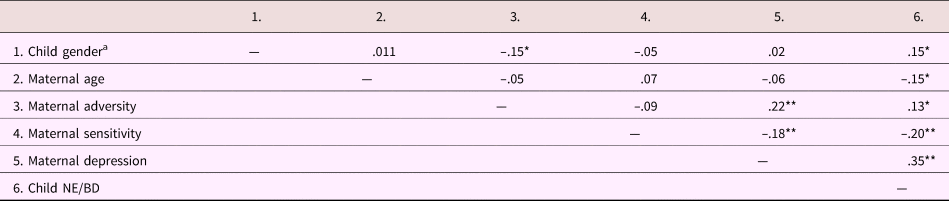
Note: n = 239. NE/BD, negative emotionality/behavioral dysregulation. aGirls = 1, Boys = 2. *p < .05. **p < .01.
Results
Maternal age and child gender were significantly associated with child negative emotionality/behavioral dysregulation (r = –.15; p < .01 and r = .11; p < .05, respectively; Table 2) and were thus included as covariates in all analyses.
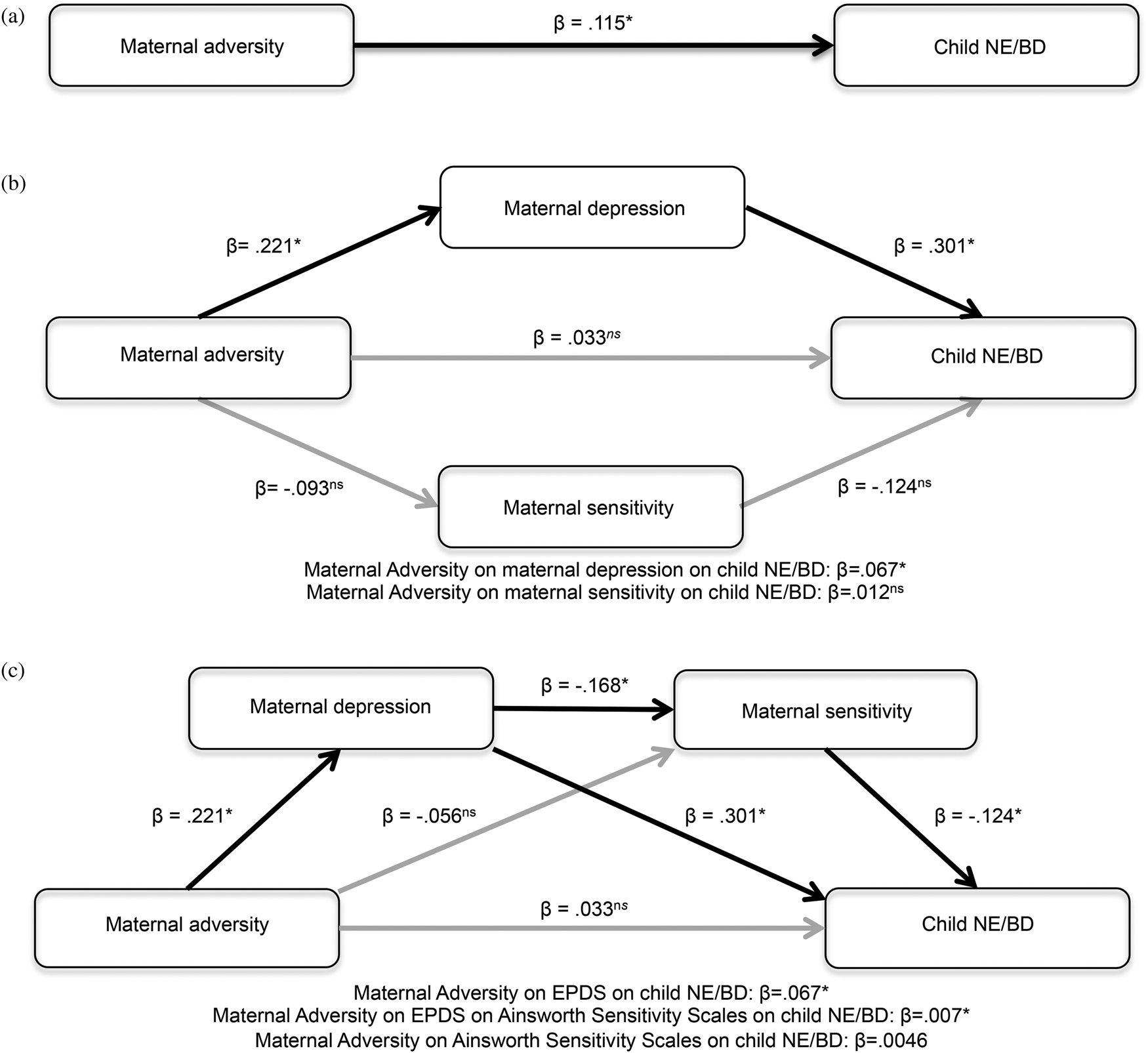
As expected, the preliminary bivariate analyses showed that child negative emotionality/behavioral dysregulation (at 36 months) was predicted by maternal childhood adversity (r = .12; p < .05), maternal symptoms of depression (r = .33; p < .01; at 6 months) as well as maternal sensitivity (r = –.19; p < .01, at 6 months; Table 2). Likewise, maternal childhood adversity predicted both maternal symptoms of depression (r = .25; p < .01, at 6 months) and maternal sensitivity (r = –.11; p < .10, at 6 months). These findings confirm the associations that form the basis for our mediational analysis. In the direct model (Figure 1a), we found a significant total effect of maternal childhood adversity on child negative emotionality/behavioral dysregulation (R 2 = .065, at 36 months). In a first step, we examined whether inclusion of maternal symptoms of depression (at 6 months) and maternal sensitivity (at 6 months) would improve the fit of the model. The residual sum of squares (RSS) decreased from RSS = 226.90 (total effect model) to RSS = 203.09 after inclusion of maternal symptoms of depression, F (1, 234) = 27.44; p < .01, and to RSS = 219.49 after inclusion of maternal sensitivity, F (1, 234) = 7.56; p < .01. Finally, inclusion of both maternal symptoms of depression and sensitivity showed the smallest RSS (i.e., 199.49) and was significantly better than both models including only one of the mediators: addition of maternal symptoms of depression, F (1, 233) = 23.731; p < .01; addition of maternal sensitivity, F (1, 233) = 4.202; p < .05. These findings are consistent with the expected contribution of maternal depression and maternal care on child socioemotional function.
Illustration of mediation models that were tested. (a) Direct effects model, (b) parallel mediation model, and (c) serial mediation model. *p < .05.
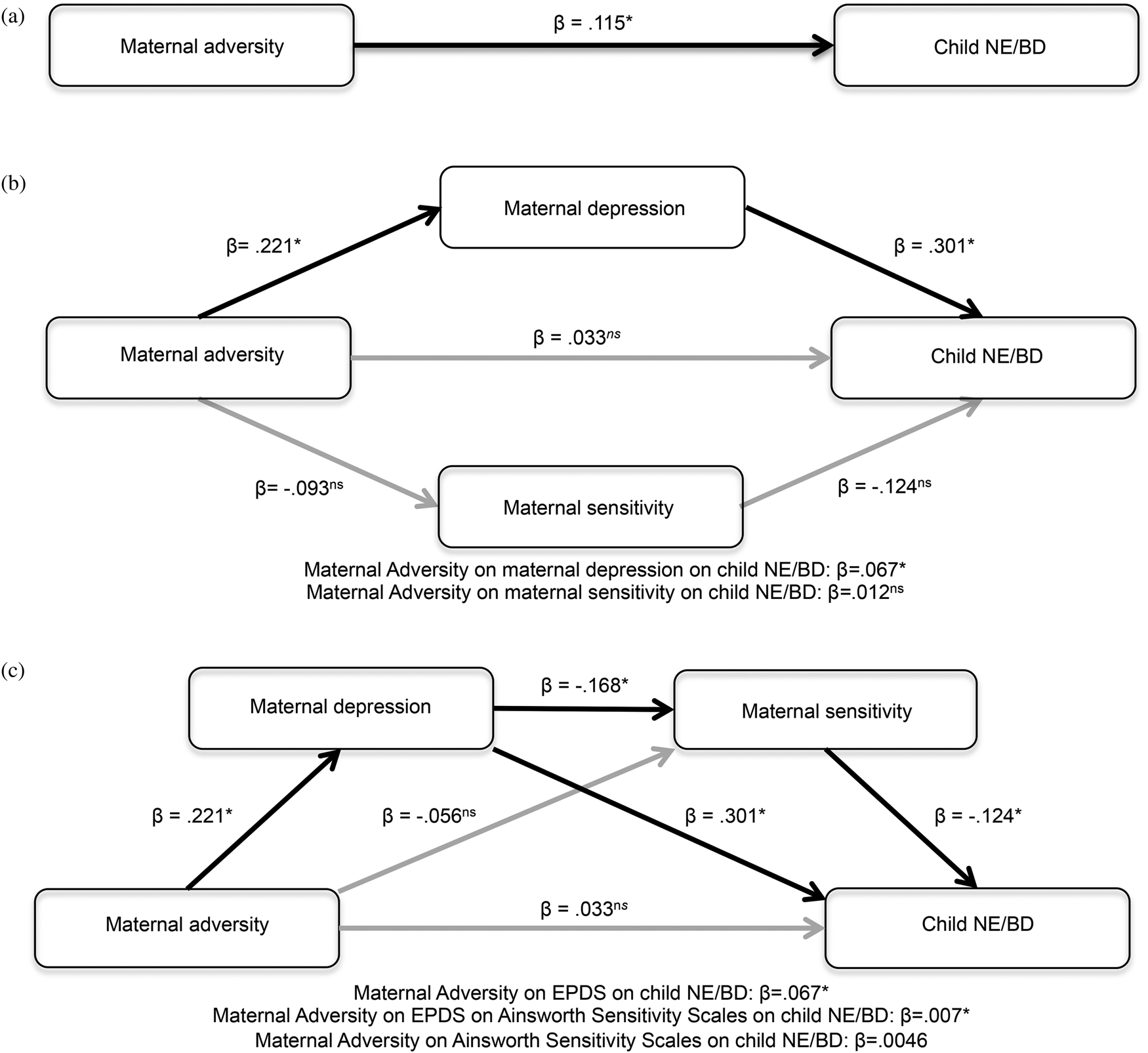
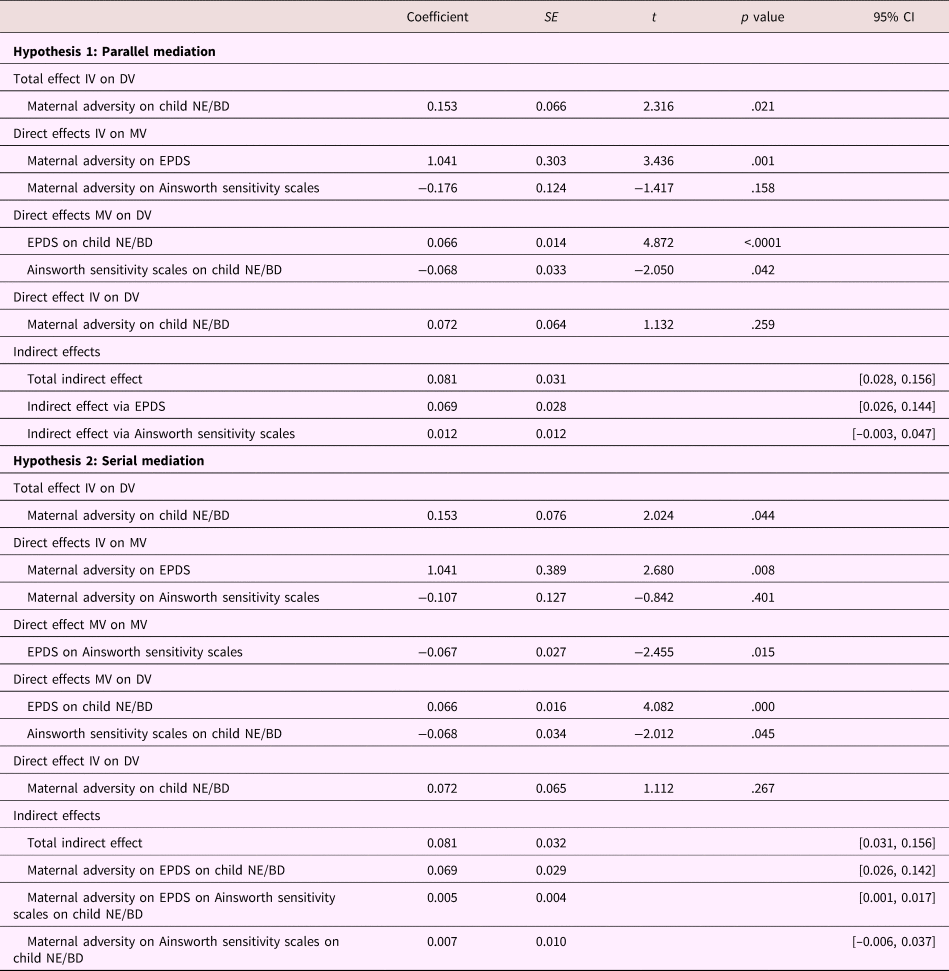
We then tested our first hypothesis that this association between maternal childhood adversity and child negative emotionality/behavioral dysregulation (at 36 months) would act through maternal symptoms of depression (at 6 months) and sensitivity (at 6 months) in two, parallel pathways (parallel mediation; Figure 1b). We found a significant total mediation through both mediators (95% CI [0.028, 0.156]), while the specific indirect effects were only significant for maternal symptoms of depression (95% CI [0.026, 0.144]), but not for maternal sensitivity (95% CI [–0.003, 0.047]). Thus, our first hypothesis could only be confirmed for maternal symptoms of depression as a mediator in the association between maternal childhood adversity and child negative emotionality/behavioral dysregulation, but not for maternal sensitivity. The model explained 17.8% of variation in child negative emotionality/behavioral dysregulation, F (5, 233) = 10.11.
We then examined the second, alternative hypothesis, which proposed that the effect of maternal history of early adversity on child negative emotionality/behavioral dysregulation (at 36 months) was mediated sequentially by maternal symptoms of depression (at 6 months) and sensitivity (at 6 months; serial mediation; Figure 1c). We again found a significant total indirect effect of maternal childhood adversity on child negative emotionality/behavioral dysregulation via maternal symptoms of depression and sensitivity together (95% CI [0.031, 0.156]). The specific indirect effects were significant for maternal childhood adversity on negative emotionality/behavioral dysregulation via maternal symptoms of depression (95% CI [0.026, 0.142]) and for maternal childhood adversity on child negative emotionality/behavioral dysregulation via maternal symptoms of depression and maternal sensitivity (95% CI [0.001, 0.017]), but not for maternal childhood adversity on child negative emotionality/behavioral dysregulation via maternal sensitivity alone (95% CI [–0.006, 0.037]). The model still explained 17.8% of variation in child negative emotionality/behavioral dysregulation, F (5, 233) = 10.11. Our second hypothesis was, thus, confirmed, despite the fact that the effect maternal sensitivity only showed a partial mediation effect. All coefficients, standard errors, t and p values, as well as 95% CIs are depicted in Table 3 and path coefficients are illustrated in Figure 1.
Mediation analyses of maternal history of early adversity (IV) on child NE/BD (DV) through maternal depression (MV) and maternal sensitivity (MV), controlling for child gender and maternal age. Depicted are path coefficients, total, direct, and indirect effects
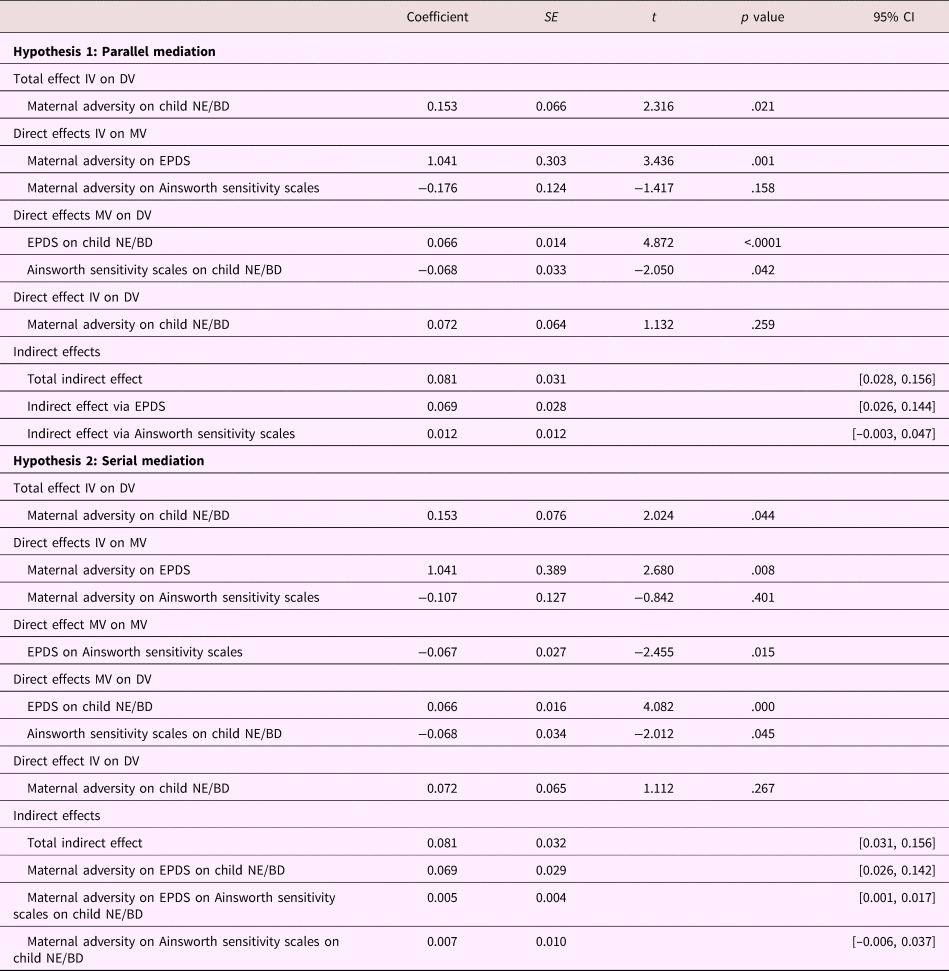
Note: n = 239. EPDS, Edinburgh Postnatal Depression Scale. DV, dependent variable. IV, independent variable. MV, mediator variable. NE/BD, negative emotionality/behavioral dysregulation.
Discussion
We examined maternal depression (at 6 months) and maternal sensitivity (at 6 months) as mediators of the association between maternal childhood adversity and negative emotionality/behavioral dysregulation (at 36 months) in the offspring. Maternal depression mediated the effects of maternal childhood adversity on offspring negative emotionality/behavioral dysregulation. We then showed that maternal sensitivity mediated the relation between maternal depressive symptoms and child negative emotionality/behavioral dysregulation, suggesting a serial pathway. Increasing levels of maternal childhood adversity associated with higher maternal depression scores that were then associated with lower maternal sensitivity, which, in turn, related to increased levels of negative emotionality/behavioral dysregulation in the offspring. Hence, our results suggest that maternal depression and maternal sensitivity act in a serial manner to define the transmission pathway between maternal childhood adversity and child negative emotionality/behavioral dysregulation. Our results are consistent with studies of the intergenerational consequences of maternal childhood adversity (Berlin et al., Reference Berlin, Appleyard and Dodge2011; Bouvette-Turcot et al., Reference Bouvette-Turcot, Fleming, Wazana, Sokolowski, Gaudreau, Gonzalez and Meaney2015; Collishaw et al., Reference Collishaw, Dunn, O'Connor and Golding2007; Miranda et al., Reference Miranda, de la Osa, Granero and Ezpeleta2013; Pawlby et al., Reference Pawlby, Hay, Sharp, Waters and Pariante2011; Plant et al., Reference Plant, Barker, Waters, Pawlby and Pariante2013). This finding is also consistent with the influence of maternal depression on child mental health development (Goodman et al., Reference Goodman, Rouse, Connell, Broth, Hall and Heyward2011). Maternal history of childhood maltreatment is associated with increased risk for offspring antisocial behavior (Pawlby et al., Reference Pawlby, Hay, Sharp, Waters and Pariante2011; Plant et al., Reference Plant, Barker, Waters, Pawlby and Pariante2013). Path analysis (Plant et al., Reference Plant, Pariante, Sharp and Pawlby2015) reveals that offspring experience of child maltreatment mediated the association between exposure to maternal depression in pregnancy and offspring psychopathology. These findings are consistent with the findings of the current study revealing that maternal childhood experience, maternal mental health, and parent–child interactions operate serially to influence the mental health of the offspring.
One limitation to this study is the use of retrospective reports of maternal childhood adversity and maternal reports of negative emotionality/behavioral dysregulation. However, both the CTQ and the PBI are measures with good psychometric properties (Bernstein et al., Reference Bernstein, Fink, Handelsman, Foote, Lovejoy, Wenzel and Ruggiero1994; Parker et al., Reference Parker, Tupling and Brown1979; Wilhelm et al., Reference Wilhelm, Niven, Parker and Hadzi-Pavlovic2005) and strong predictive validity for psychopathology. Moreover, our analyses included only a single measure of maternal depression. However, despite some variability in the prenatal period, symptoms of depression or anxiety appear relatively stable over the perinatal period (e.g., Heron et al., Reference Heron, O'Connor, Evans, Golding and Glover2004). Parental reports of their child's temperament, although not as objective as observational/laboratory measures, allow for information about the child in various real-life contexts at several points over development. Despite the potential mood bias in mother reports of their child's temperament, associations with later child reports of socioemotional functioning provide further support for the predictive and convergent validity of our negative emotionality/behavioral dysregulation measure. The independent, observational assessment of maternal sensitivity also reinforces the design. Moreover, because maternal sensitivity was rated by an external observer whereas maternal depression was self-reported, we minimized the risk of shared method variance for those two constructs. However, one may keep in mind that the strongest mediation effects were found with mother-reported measures. Hence, results may be interpreted with caution pending further replication with external ratings/clinical interviews assessing maternal symptoms of depression. Nevertheless, the current results suggest that mothers’ perception of emotional malfunctioning, namely, symptoms of depression, may be sufficient to have an impact on their children's emotional development.
Our findings suggest an intergenerational influence of maternal childhood experience that extends beyond more extreme forms of adversity, such as forms of maltreatment that includes measures of the quality of parental care. While integrating both measures of maternal trauma and quality of parental care might appear as an additional challenge to interpret the outcomes, one must bear in mind the low-risk nature of the current sample. Such a continuous measure encompassing several aggregated variables allows for capturing individual variations within the normal range. The results obtained in this study, thus, speak to the relevance of providing prevention and early intervention efforts even to subjects who do not reach significance criteria for clinical diagnoses. Furthermore, the inclusion of parental care within the adversity measure underlines the importance for clinicians to dig deeper than conventionally assessed trauma and include diverse forms of adverse or negative caregiving experiences. Moreover, the influence of maternal depressive symptoms and its mediation by maternal sensitivity was apparent in a community sample, suggesting that the influence of maternal depressive symptoms cuts across the population and is not unique to instances of clinical psychopathology, in line with previous findings (van der Waerden et al., Reference van der Waerden, Galéra, Larroque, Saurel-Cubizolles, Sutter-Dallay and Melchior2015). This conclusion is consistent with the findings from neuroimaging studies showing that the levels of depressive symptoms across the population associate with alterations in the structure and connectivity of corticolimbic regions implicated in mood disorders (e.g., Rifkin-Graboi et al., Reference Rifkin-Graboi, Bai, Chen, Hameed, Sim, Tint and Qiu2013). Our results emphasize the need to properly identify and treat symptoms of depression in young mothers. Our findings also underscore the importance of maternal sensitivity for child mental health. There is convincing evidence for the idea that parental sensitivity and parent–child attachment security is enhanced by relatively brief, evidence-based intervention (Bakermans-Kranenburg, van IJzendoorn, & Juffer, Reference Bakermans-Kranenburg, van IJzendoorn and Juffer2003). Such interventions increase maternal sensitivity even among mothers presenting with very high levels of psychosocial maladjustment (Moss et al., Reference Moss, Dubois-Comtois, Cyr, Tarabulsy, St-Laurent and Bernier2011). Parenting interventions may also need to be adapted to women who have severe and chronic depression, in relation to childhood adversity. Taken together these findings also suggest that maternal childhood adversity is a factor to be integrated into the assessment of vulnerability of individual children for later psychopathology.
Conclusion
Our findings suggest the intergenerational transmission effects of maternal childhood experience over a wide range through sequential influences of maternal mood and sensitivity. We emphasize that these findings emerge from a community, as opposed to a high-risk, sample and with values of maternal depressive symptoms across the normal range. These findings underscore the importance of intervention programs targeting parent–child interactions.
Financial support
This portion of the MAVAN study is funded by grants from the Canadian Institutes for Health Research. The authors gratefully acknowledge additional support from the Norlien Foundation (Calgary, Canada), the WOCO Foundation (London, Canada), the Faculty of Medicine of McGill University, the Ludmer Foundation, and the Sackler Foundation.