INTRODUCTION
Since the 1940s, the Ongamira Valley has been one of the key regions for the development of explanatory models linked to the process of human occupation in South America (e.g., Schobinger Reference Schobinger1958–1959; Willey and Phillips Reference Willey and Phillips1958; González Reference González1960). Most were based on relative chronological models or a unique radiocarbon (14C) date (Vogel and Lerman Reference Vogel and Lerman1969). For almost 60 years, those models were used, as no new archaeological work was done at the site, a situation that prevailed until recently (Izeta et al. Reference Izeta, Cattáneo, Takigami, Tokonai, Kato and Matsusaki2016).
Therefore, for in the last 10 years an archaeological research program has been implemented. A unique effort for the region, centred on surveys, controlled archaeological excavations, and determination of absolute ages by 14C dating has led to understanding the process of territory occupation throughout the Holocene.
Mobility is one characteristic of hunter-gatherer people (and other types of human social organization) that enabled the occupation of new territories and thus the colonization of new spaces (e.g., Kelly Reference Kelly1992). Knowing to which territories they moved and at what time addresses a fundamental question that needs to be answered with new methodologies for central Argentina. To understand the societies that inhabited those places in the past requires determining the location of inhabited spaces and temporal framework. Different methodologies are key to interpreting these processes of occupation, and the use of space and resources. For this reason, the stratigraphic excavation described by systems such as the Harris Matrix (Harris Reference Harris1989) and 14C dating and its calibration are tools that allow us to address this issue.
Hence, here we will add, from a multidisciplinary approach, recent information to contrast models of human occupation for the Southern Pampean Hills in central Argentina. Particularly, from the case study of the Ongamira Valley, where several authors have proposed population changes, discontinuities and complex cultural processes during the Holocene (e.g., Laguens and Bonnin Reference Laguens and Bonnín2009; Nores et al. Reference Nores, Fabra and Demarchi2011; Rivero Reference Rivero2012; Cattáneo and Izeta Reference Cattáneo, Izeta, Cattáneo and Izeta2016).
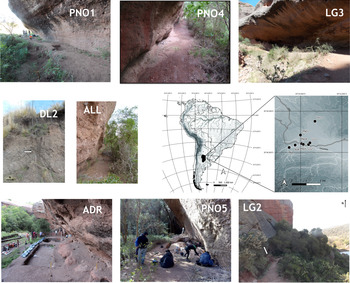
The Ongamira valley is located in Córdoba Province, a vast territory of 165,321 km2 with registered human occupations since ca. 10,000 BP (Figure 1). For that period and space, excluding the Ongamira 14C dates, we have registered only 132 14C dates related to archaeological contexts (Aguilar Reference Aguilar2019; Cattáneo et al. Reference Cattáneo, Izeta, Robledo, Takigami, Yoneda and Tokonai2019; Izeta and Aguilar Reference Izeta and Aguilar2020). Fifty correspond to unique dating of sites or human remains recovered from rescue archaeology activities. Specifically, human remains are not linked to cultural contexts since, in many cases, only bones could be retrieved. This number of 14C dates corresponds to 79 different places of origin, a very low quantity compared with the number of known archaeological sites for the province, which in 2015, reached 1936 (Cattáneo et al. Reference Cattáneo, Izeta and Costa2015). This number shows that only 4.08% of the known archaeological sites have absolute dates. It is also clear that in this situation there are few persistent occupation sites with over one dating per component. Therefore, there is no statistical robustness when defining the different archaeological occupations at the different sites in the region.
Location of archaeological sites in the Ongamira valley. ADR= DRR, Deodoro Roca rockshelter (Sector A and Sector B); PNO1= Ongamira Natural Park 1 -Parque Natural Ongamira 1; PNO4= Ongamira Natural Park 4 - Parque Natural Ongamira 4; PNO5= Ongamira Natural Park 5 - Parque Natural Ongamira 5; LG2= La Gruta 2; LG3= La Gruta 3; 2L2= Dos Lunas 2; ALL= La Leona rockshelter.

Thus, it was necessary to develop a dating program that would allow exploring the sequence of human occupation from absolute chronologies. The Ongamira valley emerged as an option due to its major implications for the South American prehistory from the 1940s to the 1970s (González Reference González2008; Laguens and Bonnin Reference Laguens and Bonnín2009; Cattáneo and Izeta Reference Cattáneo, Izeta, Cattáneo and Izeta2016).
During the 1940s and 1950s, researchers reported at least five different sites at the valley (Menghin and González Reference Menghin and González1954). However, they mostly focused on the Deodoro Roca Rockshelter (González Reference González1943; Montes Reference Montes1943; Menghin and González Reference Menghin and González1954). In 2010, we resumed archaeological research in the valley, after 50 years of abandonment. Since then, at least 60 new sites with distinctive characteristics have been identified, from which eight have been dated so far (Figure 1).
This work reports new dates from archaeological sites with controlled excavations. Those are integrated with dates previously obtained and correlated with the changes and continuities interpreted in the material culture, in addition to the paleoenvironmental changes associated with humidity and temperature throughout the Holocene (Yanes et al. Reference Yanes, Izeta, Cattáneo, Costa and Gordillo2014; Izeta et al. Reference Izeta, Cattáneo, Robledo and Mignino2017a).
THE ARCHAEOLOGICAL SITES OF THE ONGAMIRA VALLEY
Deodoro Roca Rockshelter (DRR)—Alero Deodoro Roca (ADR)
This rockshelter develops on the outcrop of the Saldán Formation (Zárate Reference Zárate, Cattáneo and Izeta2016). It is an amphitheater-shaped formation with faces to the south and east. It is about 100 m long. Montes (Reference Montes1943) divided the rockshelter into two sectors (A and B) from a small semi-permanent waterfall. This causes a small stream that drains into the Ongamira River network, located about 1200 m above sea level.
Deodoro Roca Rockshelter—Sector A
The sector lies in the west of the rockshelter. During the 1940s and 1950s, researchers excavated almost all of Sector A (Montes Reference Montes1943; Menghin and González Reference Menghin and González1954). This implied the removal of sediments of up to 6 m deep. González collected charcoal from the sector where excavations showed the greatest depth. In the 1960s, he sent the sample at the Groningen Laboratory to 14C date the site’s human occupation (Vogel and Lerman Reference Vogel and Lerman1969). The Heritage Reserve of the Anthropological Museum (Universidad Nacional de Córdoba, Argentina) hosts some objects from those excavations. Faunal (camelids, snails) and human remains (Izeta and Bonnin Reference Izeta and Bonnín2009; González et al. Reference González, Tavarone, Ramírez, Cattáneo and Izeta2016) are the more frequent ones in the collections. We dated some human remains to determine some absolute chronology from this rockshelter in Sector A (Table 1, samples YU-7740, YU-7739, YU-7738).

Deodoro Roca Rockshelter—Sector B
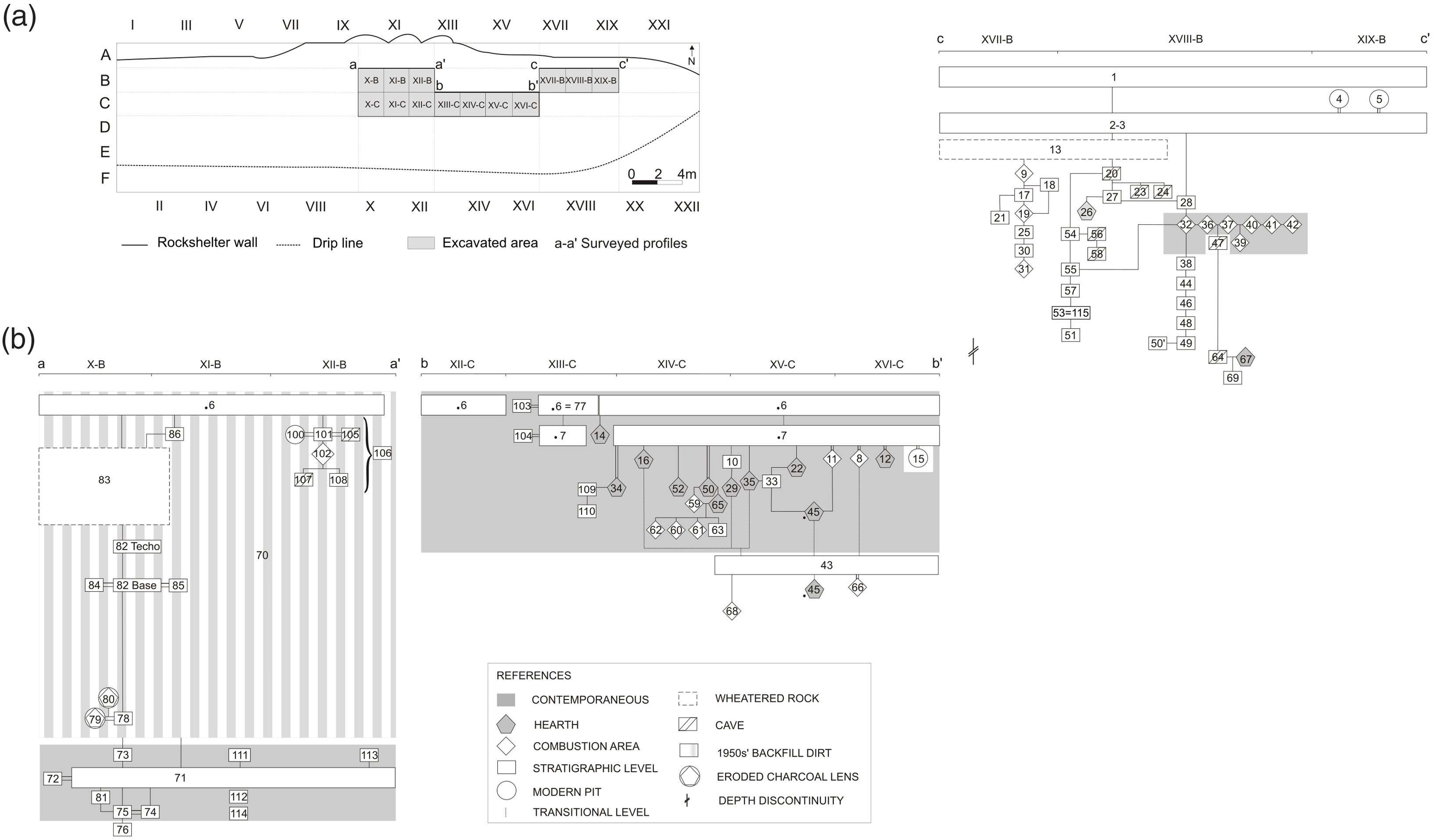
Sector B is located in the northern area of the rockshelter. In the 1950s, Menghin and González (Reference Menghin and González1954) excavated several areas with more controlled methodologies than those employed in Sector A. For that intervention, they used a grid comprising 220 squares (4 m2 each) from where they excavated 31. Artificial levels, 0.20 m depth, allowed interpreting the stratigraphic sequence and its cultural content resulting in the outline of four cultural horizons (Menghin and González Reference Menghin and González1954; Cattáneo et al. Reference Cattáneo, Izeta and Takigami2013; Cattáneo and Izeta Reference Cattáneo, Izeta, Cattáneo and Izeta2016; Laguens and Bonnin Reference Laguens and Bonnín2009). Since 2010, excavation has resumed using the Harris Matrix (Harris Reference Harris1989) in sectors not affected by previous interventions. During fieldwork, the original grid system was identified. This allowed us to relate the material culture recovered in the 1950s to those from modern excavations. These excavations cover an area of ˜24 m2 and ˜3.80 m deep in its deepest part. In this new area, 149 stratigraphic units were interpreted (Figure 2) (Cattáneo and Izeta Reference Cattáneo, Izeta, Cattáneo and Izeta2016). Sector B comprises 14 14C dates, mainly associated with combustion units (structured and unstructured hearths) and, in one case, the burial of an infant (González et al. Reference González, Tavarone, Ramírez, Cattáneo and Izeta2016).
Harris Matrix. Deodoro Roca Rockshelter Sector B. (a) Plan of Sector B. The areas intervened since 2010 are highlighted in gray; (b) Scheme of the northern profile of Sector B (modified from Cattáneo and Izeta Reference Cattáneo, Izeta, Cattáneo and Izeta2016).

To date, this is the most complete and extensively worked multi-component site in the valley, from which we interpreted the main occupation sequence.
Within a depth of less than a meter at the center of Sector B, we registered 19 combustion areas, more than 12,000 gastropod shells, 5000 charcoal fragments, 17,000 animal bone fragments and more than 10,000 lithic remains (Cattáneo and Izeta Reference Cattáneo, Izeta, Cattáneo and Izeta2016). This enabled us to characterize the site as a persistent place used by hunter-gatherers throughout the Holocene.
La Leona
This rockshelter is located approximately 400m southwest of DRR Sector A. In 1990, a survey was carried out recovering archaeological material from a single square.
Camelid and cervid faunal remains were described, as well as quartz flakes and some pottery fragments.
Ongamira Natural Park
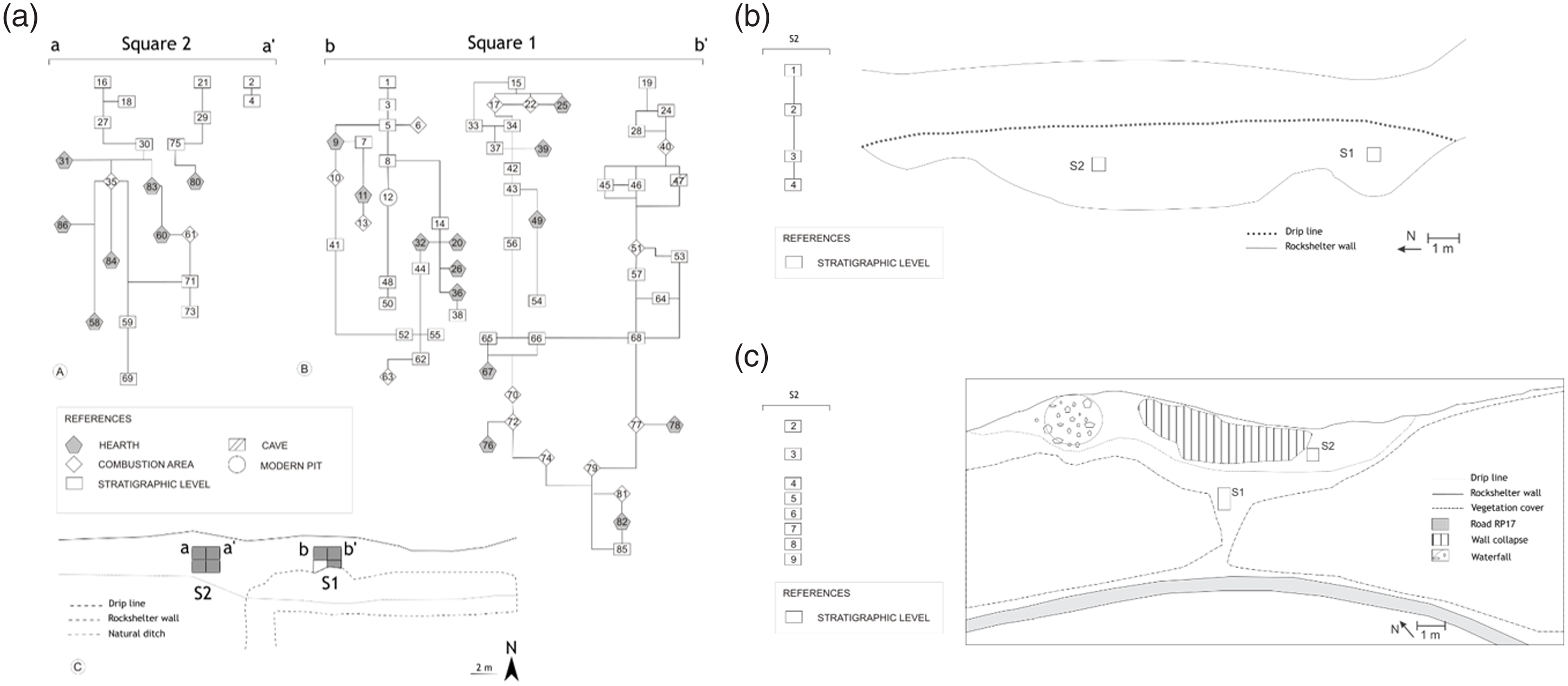
Several sites (mainly rockshelters) are combined under this nomenclature. Ongamira Natural Park 1, 4 and 5 are presented here (Figure 3)
(a) Harris Matrix. Ongamira Natural Park 1- Parque Natural Ongamira 1, Square 1; Harris Matrix. Ongamira Natural Park 1 - Parque Natural Ongamira 1, Square 2; Harris Matrix. (b) Ongamira Natural Park 4 - Parque Natural Ongamira 4; Harris Matrix. (c) Ongamira Natural Park 5 - Parque Natural Ongamira 5. Modified from Robledo (Reference Robledo2020).

Ongamira Natural Park 1—Parque Natural Ongamira 1 (PNO1)
Rockshelter at 1222 m above sea level, placed in the northern sector of the conglomerate outcrop (Saldán Formation). Two sectors of the rockshelter were excavated covering a surface of 10 m2. In square 1 a depth of 2.20 m was reached, while in square 2 only 0.50 m was excavated. Sedimentary composition and material evidence of past human activities allowed us to distinguish 86 stratigraphic units (Figure 3.a).
Occupation levels characterized by ceramic technology were found at the upper levels of the site and later associated with 14C dates. Square 2 shows this type of material culture at 0.15 m depth (SU35). For this occupation, processing and consumption of camelids, deer and smaller animals were interpreted. In addition, “debitage” from the last stages of the sequence of reduction of lithic instruments was recovered, such as quartz, it being the predominant raw material found, followed by silcrete and chalcedony. Further recorded elements included combustion features, (structured) characterized by charcoal and in situ ash lenses. From these features, high variability of woody taxa was observed. Nevertheless, most species could have been collected nearby.
The oldest date comes from a 2-m-deep stratigraphic unit (SU82). The dated sample was retrieved from a delimited combustion structure comprising charcoal, thermo-altered camelid bone fragments and lithic quartz flakes (Figure 3.a).
Ongamira Natural Park 4—Parque Natural Ongamira 4 (PNO4)
This is the rockshelter placed in the larger sandstone conglomerate at 1191 m above sea level. It has a north-south orientation. The surface shows heavy erosion resulting from modern trails connecting the rockshelter to other spaces. Archaeological excavations included two sectors of the rockshelter. Four different stratigraphic units were interpreted according to sediment changes (Figure 3.b). In stratigraphic unit SU3 (0.60–0.80 m deep), land-snail shells, small vertebrate bone remains, quartz core, flakes, and charcoal fragments were recovered.
Ongamira Natural Park 5—Parque Natural Ongamira 5 (PNO5)
This site is situated 100 m west from PNO 4 and at 1189 m above sea level, having an NW-SE orientation. It is a large amphitheater-shaped rockshelter similar to DRR. A semi-permanent waterfall at the west side disturbed much of the accumulated sediment. Outside the drip line there is a south-oriented esplanade currently covered by dense vegetation.
Two sectors of the site were excavated: one inside the drip line and the other, outside. Inside the rockshelter, nine stratigraphic units were identified. Occupation levels with variations in archaeological material density overlaps with sterile strata gaps without archaeological material. These last levels are events related to sedimentary processes such as the action of running water (Figure 3).
In the units with the highest concentration of materials (SU3 and SU9), two 14C dates were obtained. The first refers to rockshelter occupations showing the processing and consumption of major fauna such as camelids and cervids, manufacture of quartz instruments and concentration of charcoal in unstructured features.
The SU9, an in-situ combustion structure confined by granite rocks, contained nine different plant taxa (Robledo Reference Robledo2020). Faunal remains such as camelids and bone fragments of small vertebrates, fragments of ñandú (Rhea pennata) eggshells and land-snail shells were also inside the combustion feature.
Dos Lunas 2 (DL2)
DL2 is in a 2.5-m-high profile inside a creek with running water, at a height of 1192 m above sea level and in the northernmost part of the geological formation of conglomerates. In the profile, an archaeological material accumulation was observed, characterized by fragments of charcoal, dispersed ash, bone fragments and broken land-snail shells. A date on a complete juvenile camelid shaft was obtained from that sample. The bone was part of an assemblage showing Lama sp. specimens with cut marks and evidence of thermo-alteration. Lithic quartz material was also recovered, including cores, tools and debitage.
La Gruta Locality
At a height of 1188 m above sea level and close to the Ongamira river stream, we can find La Gruta. Menghin and González (Reference Menghin and González1954) previously surveyed the place. It comprises a large central amphitheater-shaped rockshelter and other smaller eaves. These rockshelters do not show sediments as they are heavily eroded by tourism-related activities. Therefore, places still having pre-Hispanic human occupation remnants were searched for. Two shelters locally known as Las cuevas del Indio and La Cocina de los Indios were named as the archaeological sites La Gruta 2 and 3.
La Gruta 2 (LG2) corresponds to a remnant of a stratified profile in the easternmost part of the big amphitheater that shapes the south side of the Saldán geological formation. The recovered archaeological material is characterized by the presence of quartz flakes, unidentifiable charcoal fragments, land-snail shell fragments (Plagiodontes sp.) and micro-vertebrates bone remains. One of the dates was obtained from a charcoal sample recovered.
La Gruta 3 (LG3) is also a remnant of the original stratification. It is located outside the drip line and showed remains of charcoal, fragments of camelid bones and quartz flakes. Radiocarbon dating was carried out from a guanaco molar (Lama guanicoe).
MATERIALS AND METHODS
Archaeological work involves adopting a series of decisions that will determine the methodological approach to be implemented, both in the field and in cabinet. For this reason, we defined standard parameters that would allow comparing archaeological interventions in different archaeological sites in the valley. Hence, we planned, from the outset, a standardized registry that would allow not only recovering as many elements of the material culture as possible, but also providing data that would serve as input to interpret the various human occupations at the valley (Cattáneo and Izeta Reference Cattáneo, Izeta, Cattáneo and Izeta2016).
During fieldwork planning, we used different resources for the registry of excavations. First, we kept a general record of daily activities, written on paper and in other formats. These were field diaries, where fieldwork directors made general annotations on researchers’ work, weather, advance in excavation, general ideas of the material culture recovered, general procedures, among others. (Izeta et al. Reference Izeta, Pautassi, Cattáneo, Robledo, Caminoa, Mignino and Prado2017b). Second, we recorded Stratigraphic Units using similar record sheets as used by the MoLAS (Museum of London Archaeological Service) (Brigham et al. Reference Brigham, Spence, Wootton and Westman1994). This worksheet is used in research projects in several regions of Argentina (e.g., including Ambato Project in Catamarca, Ongamira Project in Córdoba and Tebenquiche Project in Catamarca).
We based the registry of stratigraphic units on a description and interpretation model of the deposition sequences of the stratigraphy of archaeological sites. This mode of describing the stratigraphic sequence is the so-called “Harris Matrix” (Harris Reference Harris1989), a method based on a systematic and objective description of archaeological stratigraphy. Here we attempted to define stratigraphic units, facies, interfaces and features. This description was then plotted using diagrams that showed the relationships between the various components (Figures 2 and 3). As a result, we developed a sequence that considers superposition, interventions and a temporal succession of the series studied. This is a first relative chronological model based on sequence diagrams devised from the definition of the stratigraphy (Dye and Buck Reference Dye and Buck2015). All data were collected during fieldwork seasons starting in April 2010. During excavations, a Total Station was used to register the tridimensional positions of archaeological objects. In addition, natural and cultural features were recorded using this instrument. Fire hearths, post-holes and bioturbation areas were then added to the Harris Matrix of each site.
To develop the dating program for the Ongamira valley, we considered the provenance of the samples and the possibility offered by each for the construction of an occupation sequence in the area. Therefore, the systematic excavation of several sites aimed at completing the local chronological sequence. DRR Sector B was established in the sequence, the one to be completed, since the stratigraphic units corresponding to the end of the Late Holocene had been removed in previous excavations. The most modern date for the site held a value of 1915 ± 45 BP (MTC-15148) without association with ceramic technology (Cattáneo et al. Reference Cattáneo, Izeta and Takigami2013). Accordingly, similar sites were identified, such as PNO1, PNO4 and PNO5, with hunter-gatherer occupations and inside rockshelters. The samples from La Gruta 2 and 3 can be included here since the conditions in which the sites were found are similar, although excavations were limited to the sampling of profiles. Dos Lunas 2 also corresponds to a sampling in a profile; yet, unlike the others, it was not found in a rockshelter but in an open-air area (Robledo Reference Robledo2020).
As mentioned before, samples currently housed in museums were also used. One comes from the DRR Sector A human remains (n = 3) stored in the Heritage Reserve of the Museum of Anthropology (Universidad Nacional de Córdoba). A second sample of charcoal from Alero La Leona was retrieved from the collections of the Deodoro Roca Museum in Ongamira.
Samples with MTC and YU numbers were chemically pretreated at the University of Tokyo. Human and animal bone and dentine samples were treated with an improved of acid-alkali method and collagen extraction based on Longin’s method (Longin Reference Longin1971; Yoneda et al. Reference Yoneda, Tanaka, Shibata, Morita, Uzawa, Hirota and Uchida2002). Organic chemical contaminants were removed with sodium hydroxide and bone inorganic component was dissolved with hydrochloric acid. From the remaining bone organic components, bone gelatine collagen was taken. Condition of bone collagen preservation was estimated with carbon and nitrogen atomic ratio (C/N ratio). The range of 2.9–3.6 indicates good preservation (De Niro Reference De Niro1985). Charcoal samples were treated with acid-alkali-acid method using hydrochloric acid and sodium hydroxide solutions to remove inorganic carbonate and fulvic and humic acids from the organic content of soils.
Lastly, samples under AA number were pretreated as stated in Jull et al. (Reference Jull, Burr, Warren Beck, Hodgins, Biddulph, Gann, Hatheway, Lange and Lifton2006).
All the samples were measured using accelerator mass spectrometry (AMS) in three different laboratories: NSF-Arizona AMS Facility (AA), Research Center for Nuclear Science and Technology, The University of Tokyo (MTC), and AMS Center for Kaminoyama Research Institute, Yamagata University (YU).
The δ13C values of bone samples were measured with an elemental analyser coupled to an isotope ratio mass spectrometer (EA-IRMS) in two different laboratories: the National Museum of Nature and Science, Tsukuba, Japan for MTC numbers, and the Laboratory of Radiocarbon Dating, the University Museum, the University of Tokyo for YU numbers. The δ 13C values for charcoal samples were measured with AMS at each of the facilities mentioned above.
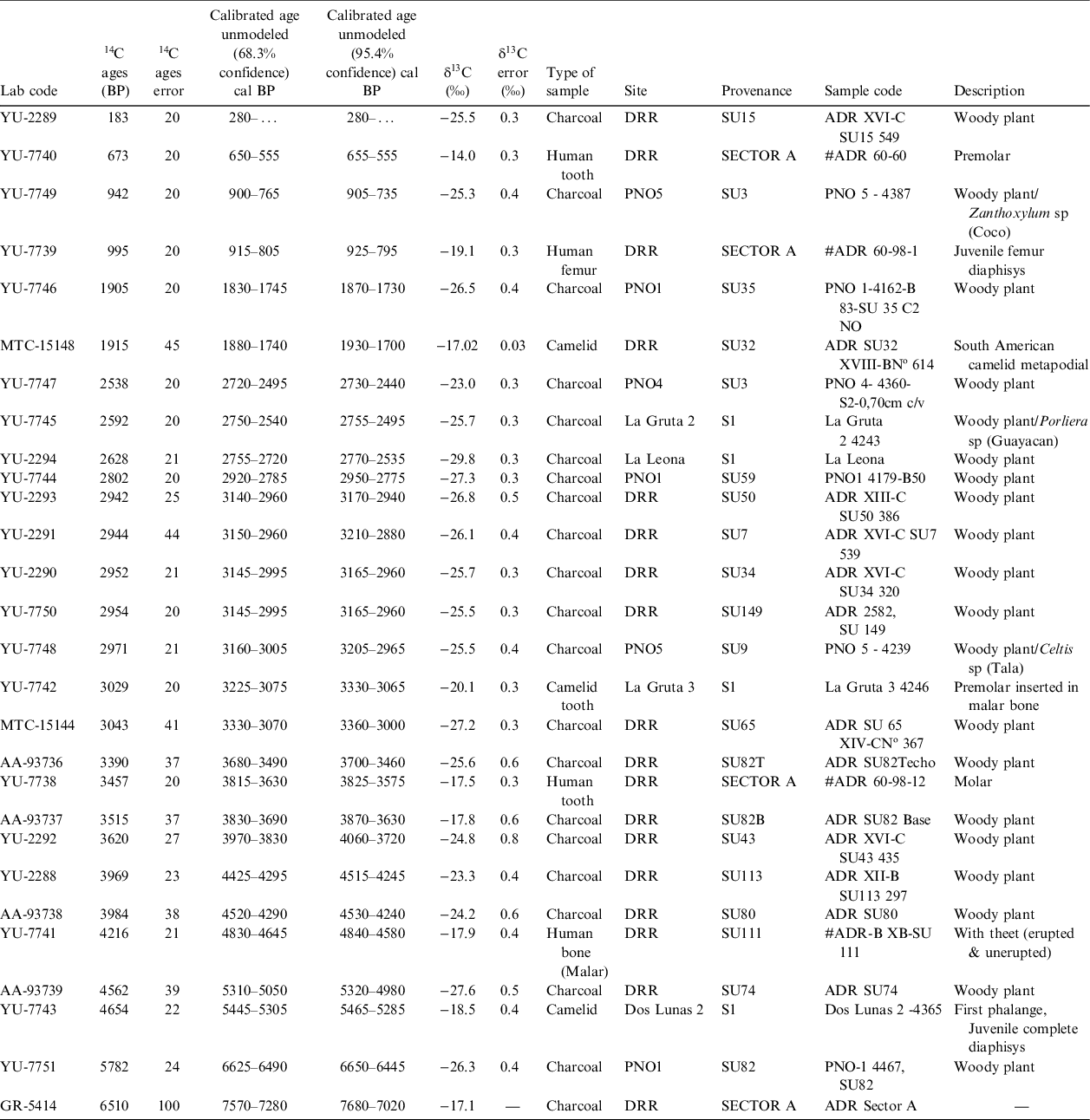
In the last 10 years, 27 14C dates were added to the local database (Table 1). Four were measured in AA and other two in MTC (Cattáneo et al. Reference Cattáneo, Izeta and Takigami2013); 23 were measured in YU from which 7 were reported by Izeta et al. (Reference Izeta, Cattáneo, Takigami, Tokonai, Kato and Matsusaki2016).
The 14C date under GrN-5414 code was published by Vogel and Lerman (Reference Vogel and Lerman1969). Sample was chemically pretreated “before combustion, in the usual manner with dilute acid, alkali and acid, respectively” (Vogel and Lerman Reference Vogel and Lerman1969: 351). These data were obtained by beta radiation measurements and the sample reported 6510 ± 100 BP (GrN-5414). A measurement method obtained differently from our new data.
This allows us to have 27 modern AMS dates. As mentioned before the date obtained at the end of the 1960s for DRR Sector A can be included here (Vogel and Lerman Reference Vogel and Lerman1969; Cattáneo et al. Reference Cattáneo, Izeta and Takigami2013). We understand that contamination attributed to the chemical processing standards at that time could affect this last sample. In addition, the archaeologist selection process of the sample can offer an averaged date and therefore with relative utility for its use in the local chronological sequence. Nevertheless, as the 1960s date remains as the oldest date for the valley, we decided to use it here. In sum, 28 dates are available, 21 come from charred plant remains, 4 come from human remains, and 3 come from faunal remains (camelids). This strategy allows comparing the dates obtained through different types of samples.
To select the charcoal samples, we considered them as related to woody plant structures with a brief development period (short-lived). Where possible, their taxonomic determination was made (Robledo Reference Robledo2020). The samples collected from human remains correspond to both long bones and teeth (molars). For faunal remains, this last strategy (long bones and teeth) was also used.
All dates were calibrated considering the SHCal 20 Curve (Hogg et al. Reference Hogg, Heaton, Hua, Palmer, Turney, Southon, Bayliss, Blackwell, Boswijk and Bronk Ramsey2020) using the program OxCal version 4.4.2 (Bronk Ramsey Reference Bronk Ramsey2017). Following Aranda Jiménez et al. (Reference Aranda Jiménez, Díaz-Zorita Bonilla, Hamilton, Milesi and Sánchez Romero2020), in all cases when error was fewer than 25 years, endpoints were rounded to 5 years (18 cases). On the other hand, when error was equal to or larger than 25 years, endpoints were rounded to 10 years (10 cases). An adaptation of the scripts described by Higham et al. (Reference Higham, Douka, Wood, Bronk-Ramsey, Brock, Basell, Camps, Arrizabalaga, Baena, Barroso-Ruíz, Bergman, Boitard, Boscato, Caparrós, Conard, Draily, Froment, Galván, Gambassini, Garcia-Moreno, Grimaldi, Haesaerts, Holt, Iriarte-Chiapusso, Jelinek, Jordá Pardo, Maíllo-Fernández, Marom, Maroto, Menéndez, Metz, Morin, Moroni, Negrino, Panagopoulou, Peresani, Pirson, de la Rasilla, Riel-Salvatore, Ronchitelli, Santamaria, Semal, Slimak, Soler, Soler, Villaluenga, Pinhasi and Jacobi2014) and Manning and Hart (Reference Manning and Hart2019) was used to process the 14C dates in Figure 4.
Probability distribution plot of unmodeled calibrated dates of all Ongamira samples, listed according to 14C age. Gray strips show the presence of land-snail shells related to structured hearths or combustion areas.

PROVENANCE OF THE 14C DATES
As stated earlier, to build an absolute chronology of the Ongamira valley, samples from the Deodoro Roca Rockshelter Sector B were used. In 2011, six samples were selected (one corresponding to a camelid metapodial and the other five belonging to charcoal remains) from the 2010 stratigraphic excavation and the northern profile of the XB grid left by Menghin and González in 1950 (Figure 2). The latter was considered to correspond to small charred branches to avoid the “old wood” effect (e.g., Schiffer Reference Schiffer1986) and attempt to achieve a “secure archaeological context” (Boaretto Reference Boaretto2009; Marconetto et al. Reference Marconetto, Gastaldi, Lindskoug and Laguens2014).
The selected samples come from undisturbed archaeological contexts. This was important in the upper section of the site as it featured many mammalian caves with fossorial habits. For example, in one of the caves, the skull and bones of the appendicular skeleton of a skunk (Conepatus chinga) were retrieved. Because of this, all micro faunal remains were taphonomically analysed to understand the process of site formation (Mignino et al. Reference Mignino, Izeta and Cattáneo2018). Considering this, a sample of this upper part was selected from an undisturbed sector, showing a large amount of archaeological material in situ, particularly a quartz straight base triangular projectile point. This sample comes from the stratigraphic unit SU32 located in the square XVIII-B (Figure 2). The result yielded a date of 1915 ± 45 BP (MTC15148, camelid metapodial).
A second dating was performed on a sample from a combustion structure having a large amount of charred remains of small branches. The sample corresponds to a branch fragment of an indeterminate taxon (Cattáneo et al. Reference Cattáneo, Izeta and Takigami2013) and was retrieved from stratigraphic unit SU65 from the square XIV-C, a combustion structure made up of many twigs with a diameter of less than 0.5 cm. The result yielded a date of 3043 ± 41 BP (MTC15144, charcoal).
Another set of four 14C dates (NSF-Arizona AMS Laboratory) was obtained from the northern profile of the X-B square, being exposed by emptying the back dirt fill left after the 1950 excavation. As stated above this profile was expanded by about 0.70 m depth to reach its base-rock and thus have the most complete possible sequence (Figure 3).
Accordingly, four charcoal samples with the same characteristics as those of the squares described above were selected. Starting from the base rock, a reddish component called SU75 could be identified. It is 0.60 m deep and contains the SU74, a bucket-shaped unit in which a large amount of charcoal and bone remains was found. Both stratigraphic units show similar sedimentological characteristics. A date of 4562 ± 39 BP (AA93739, charcoal) was obtained in this unit.
At about 0.20 m above SU74, a difference can be seen in the tonality and structure of the sediments. Although the matrix is similar, its colour is no longer reddish and turns grayish red. This forms a package of 0.40 m thick in average. The charcoal sample was retrieved from the base of this stratigraphic unit (SU80). A result yields a date of 3984 ± 38 BP (AA93738, charcoal).
At 0.40 m above the previous stratigraphic unit, another one begins. It is formed by a large amount of archaeological material (bone, lithic, land-snail shell, etc.) included in a gray matrix with charcoal and ash lenses. Charcoal samples were extracted from two concentrations: one at the base of this sedimentary package and another at the top. The one at the top coincides with the collapse of the eave wall, thus this event is sealing the occupations of this part of the sector. This stratigraphic unit was named SU82 (Figure 2). A date of 3515 ± 37 BP (AA93737, charcoal) was acquired/determined/established from the SU82 base. On the SU82 top, a date of 3390 ± 37 BP was obtained (AA93736, charcoal).
In 2014, new 14C dates from Alero Deodoro Roca Sector B were carried out at the Yamagata University (Japan). Previous dates had allowed observing a chronological sequence from which a persistent occupation of space was interpreted. The stratigraphic units were grouped into various components, which have allowed us to understand the site formation processes in which natural and cultural post-depositional processes occur. However, these have not disturbed the integrity of the stratigraphy, developed following a logical temporal sequence. This, in the words of Harris (Reference Harris1979) allows us to assume that the sector would comply with the law of superposition where,
“in a series of layers and interfacial features, as created, the upper units of stratification are younger and the lower are older, for each must have been deposited on, or created by the removal of, a pre-existing mass of archaeological stratification” (Harris Reference Harris1979: 112).
The new 14C dates presented here complement the previous ones, providing statistical support to some areas in which analyses were being carried out at a finer grain (e.g., Izeta et al. Reference Izeta, Costa, Gordillo, Cattáneo, Boretto and Robledo2014; Yanes et al. Reference Yanes, Izeta, Cattáneo, Costa and Gordillo2014; Costa Reference Costa2015; Caminoa Reference Caminoa2016; Robledo Reference Robledo and Izeta2016). For instance, samples were taken from units related to the SU65 date (MTC-15144, 3043 ± 41 BP, charcoal), particularly the SU7 (Figure 2). Therefore, in this case, the selected stratigraphic units correspond to SU7, SU34, and SU50.
Two other dates were connected to assemblages from greater depths. One was retrieved immediately below the component linked to SU7 (this is SU43). The other was related to an area where Zárate (Reference Zárate, Cattáneo and Izeta2016) defined, following geological attributes, a change between units 1 and 2 (SU82 base). A charcoal fragment was selected from stratigraphic units that we estimated to be contemporary with the date MTC15144, showing the same characteristics of the samples analysed previously (fine branch, small size, with structural integrity, etc.) for units SU7, SU34 and SU50.
Stratigraphic Unit 7 corresponds to a sediment of black coloration, mainly composed of silts and clays with gravel-size material from the eave walls. In some sectors, there is heavily fragmented land-snail shell, whereas in others we can find many whole snail shells, especially under bone remains, scattered charcoal and small lens-shaped hearths. These lenses were defined as other features: SU8, SU11, SU12, SU34, and SU50. Moreover, as detailed previously, these stratigraphic units show combustion features and land-snail shell concentrations (SU8 and SU11). The 14C date obtained for SU7 was 2944 ± 44 BP (YU-2291, charcoal).
Stratigraphic Unit 34, as seen previously, developed between squares XIII-C and XIV-C. It corresponds to the aggregation of small combustion areas. It also contains bone remains (some burned), whole land-snail shells and many quartz flakes. For this unit, an absolute date of 2952 ± 21 BP (YU-2290, charcoal) was obtained. This stratigraphic unit is contained in the SU7 matrix.
SU50 was defined as a combustion feature containing remains of ash and entire land-snail shells. It was surrounded by part of the rock structure and sparse thermo-altered skeletal remains. It is contained in SU7. This hearth was dated to 2942 ± 25 BP (YU-2293, charcoal).
In square XVI-C, SU 15 was interpreted as a pit containing charcoal and ash, land-snail shell fragments and large mammal bone fragments, long rodent bones and lithic material. It was shown as a discrete unit, easily recognizable from the units surrounding it. For this reason, it was included in the dating program, although we understood that this was a different stratigraphic unit. The 14C dating obtained shows that it is modern: 183 ± 20 BP (YU-2289, charcoal). Hence, we interpreted this trait as belonging to a sub-actual pit developed on a pre-existing stratigraphic unit (6/7). It is now interpreted as a fence post pit made after the 1950s excavation.
Below the previous stratigraphic units, two further dates were obtained. The first corresponds to a small-diameter charcoal fragment. This comes from the stratigraphic unit SU43 that is characterised by a dark brown sediment with many charcoal spicules and ground shell. There is a transitional limit with the SU7, in the SW sector of the square XV-C, where it appears below SU50, a stratigraphic unit composed of gravel, silt and fragments of bedrock. Considerable amounts of bone and stone remains with ash spots are found. An absolute dating was obtained from charcoal for SU43 (3620 ± 27 BP, YU-2292, charcoal).
Stratigraphic Unit 113 is a unit described on square XII-B north profile (after cleaning the landfill from the Menghin and González excavation in 1950). At the same level as SU111, there is an ash lens featuring charcoal and bones dated to 3969 ± 23 BP (YU-2288, charcoal).
In 2018, new samples were processed. In addition to those from ADR (from stratigraphic excavations and historic collections), samples from the sites PNO1, PNO4, PNO5, Dos Lunas 2, La Gruta 2 and La Gruta 3 were added. The analyses were again made at the Yamagata University (Japan).
Here we selected fragments of human remains recovered by Aníbal Montes in his excavations of ADR Sector A during the 1940s and 1950s. The samples were identified with the ADR inventory numbers 60-60 (YU-7740, 673 ± 20 BP, human remain); ADR 60-98-1 (YU-7739, 995 ± 20 BP, human remain); ADR 60-98-12 (YU-7738, 3457 ± 20 BP, human remain). The first case corresponds to a premolar; the second, to a juvenile femur diaphysis; and the third, to a molar. In two cases, dates correspond to the last millennium, not represented in the site stratigraphy (Table 1). A third case is contemporary with already excavated areas of Sector B, which allows us to interpret the simultaneous use of the two sectors of the rockshelter. A fourth date was delivered from remains of the malar of a juvenile individual recovered during archaeological excavations in stratigraphy (YU-7741, 4216 ± 21 BP, human remain).
A date from Alero La Leona was obtained. As explained above, this rockshelter is located around 400 m southwest of ADR Sector A. In the 1990s, a survey was carried out recovering archaeological material from a single square. A sample of the deepest sector of the survey was part of the material culture of the valley kept at the local museum (Deodoro Roca Museum). Although this eave has not yet been intervened by us, using a dated sample enables getting closer to the temporality of the occupation of this space. The result yielded a value of 2628 ± 21 BP (YU-2294, charcoal).
The PNO1 site presents three 14C dates. The first corresponds to square 2, sector NW, Stratigraphic Unit 35 considered as a sedimentary matrix of dark colouration composed of thermo-altered bone remains in different degrees of fragmentation, dispersed charcoal fragments, lithic material and ceramic fragments. This unit has a 14C dating of 1905 ± 20 BP (YU-7746, charcoal).
The second also corresponds to the NW sector of square 2 in SU59, a unit showing a redder layer of thermo-altered hearth with scattered carbon spicules. It is dated 2802 ± 20 BP (YU-7744, charcoal).
The third date comes from Stratigraphic Unit 82 (square 1). It was defined as a delimited combustion sector with an in situ structure, associated bone remains and granite rocks with evidence of thermo-alteration. The result obtained was 5782 ± 24 BP (YU-7751, charcoal).
PNO4 has a date (YU-7747, 2538 ± 20 BP, charcoal) from stratigraphic unit SU3. This is characterised by black sediment, merged with small clasts, land-snail shells, quartz flakes and charcoal fragments.
PNO5 has two 14C dates. The first comes from Stratigraphic Unit 3 of square 2. It presents a brown consolidated sediment with carbonates. Scattered archaeological material like charcoal, bone remains and land-snail shells was recovered. Regarding lithic material, various flakes and quartz cores were found. 14C dating was obtained from a charcoal sample of Zanthoxylum sp. (Coco) at this level of 942 ± 20 BP (YU-7749, charcoal).
The second date comes from SU9. This unit shows charcoal, ash and thermo-altered soil. It corresponds to a combustion structure with associated stones. Land-snail shells, thermally altered bone remains and lithic material were recovered. A 14C dating of 2971 ± 21 BP (YU-7748, charcoal) was obtained from a sample of Celtis sp. (Tala).
Dos Lunas 2 is the only open-air site dated so far. A complete juvenile first phalange diaphysis of Camelid dated 4654 ± 22 BP (YU-7743, charcoal) was recovered from a profile from the side of a gully.
La Gruta 2 it is characterized by a grayish sector with cultural content like quartz flakes, faunal remains, land-snail shells and charcoal fragments. 14C dating was performed on a sample of charcoal from Porliera sp (Guayacán) (YU-7745, 2592 ± 20 BP, charcoal).
La Gruta 3, like La Gruta 2, was sampled from the remains recognised in a natural profile. The presence of faunal remains allowed dating a camelid tooth (premolar inserted in malar bone). The result yielded a date of 3029 ± 20 BP (YU-7742, charcoal).
DISCUSSION AND FINAL REMARKS
As seen, the series of dates for the archaeological sites occupy the last section of the Middle Holocene and the entire Late Holocene. The sequence is proper, and the relationship is sequential since there are no inversions in the stratigraphy. Although the latter applies to the DRR site (Cattáneo et al. Reference Cattáneo, Izeta and Takigami2013), it can also be interpreted for the regional occupation in the valley (Figure 4). This means that for the first time a series of 14C dates allows building a chronology of the human occupations in the Ongamira valley.
Note that the characteristics of the cultural content of occupations allow more frequent dating contexts of the early-late Holocene, a period where archaeological contexts contains large assemblages of land-snail shell remains (Yanes et al. Reference Yanes, Izeta, Cattáneo, Costa and Gordillo2014; Izeta et al. Reference Izeta, Cattáneo, Robledo and Mignino2017a). The presence of Plagiodontes shells coincides with an environmental change that turned from arid to a more humid condition. Indeed, for DRR Sector B, seven of the stratigraphic units dated between 3620 and 2942 years BP contained land-snail Plagiodontes shell remains. This gives support to the idea of contemporaneity for the stratigraphic units of DRR Sector B related to SU7 (Figure 2). Therefore, 14C dates can confirm their penecontemporaneity, which we already proposed for SU7, and other stratigraphic units based on material culture specifics (e.g., Izeta et al. Reference Izeta, Costa, Gordillo, Cattáneo, Boretto and Robledo2014; Costa Reference Costa2015; Caminoa Reference Caminoa2016; Robledo Reference Robledo and Izeta2016). A similar situation can be seen for PNO 1 and PNO 5, where larger concentrations of land snails have been described in relation to the dates of 2802 ± 20 BP (YU-7744, charcoal) for the former and 2971 ± 21 BP (YU-7748, charcoal) for the latter (Robledo Reference Robledo2020).
This shows land-snail Plagiodontes as a marker for occupations from the beginning of the Late Holocene. In effect, this same evidence is found in six of the seven sites dated, allowing us to propose the contemporaneity of occupations throughout the Valley. This is somewhat expected since it confirms the mobility of human groups within the valley. Other methods have allowed observing that the mobility and circulation of people and objects affected spaces located beyond the limits of the Ongamira valley. Therefore, those circuits extend to other spaces and ecoregions (Cattáneo et al. Reference Cattáneo, Caminoa, Collo, Izeta, Rubio, Germanier and Faudone2020; Robledo Reference Robledo2020).
Regarding land-snail Plagiodontes, its presence in the archaeological record decreases towards the end of the Late Holocene and only appears in one site dated ca. 900 years BP.
On the other hand, combustion features and structured hearths having similar material culture assemblages also allowed us to interpret different stages in the rockshelter occupations. Indeed, some temporal differences were noticed between adjacent units with similar material culture, such as SU7 and other associated DRR Sector B stratigraphic units whose dates are between 2900 and 3000 years BP with SU43 that yielded older dates.
Other indicators of material culture also allow observing changes in technologies, although other aspects of the archaeological record do not seem to show significant changes. This is the case of ceramic technology. In excavated sites, ceramics is frequently found in the most superficial parts. However, the stratigraphically excavated contexts associated with the first occurrence of this technology are scarce for the central Argentina region. This is an issue not yet addressed; however, we obtained for PNO1 a date of 1905 ± 20 14C years BP (YU-7746, charcoal) in which at least 40 ceramic fragments were recovered. Those were classified into six diverse types based on their technical, morphological and functional characteristics, including surface treatment and decoration, manufacture and, where possible, evidence of use (Robledo Reference Robledo2020). This date is of interest and allows associating it with the earlier evidence of this technology in the region (Rocchietti et al. Reference Rocchietti, Tamagnini, Olmedo, Pérez Zavala, Ribero, Ponzio, Alaniz, Reinoso, Cavallin, Altamirano and Ponce2013). Here, Ongamira valley can be included as a part of a broader process that took place in neighbouring regions, as suggested by Marsh (Reference Marsh2017).
The method of stratigraphic excavations considered differences in terms of their geological formation and the natural events inherent in process of site formation (see Cattáneo et al. Reference Cattáneo, Izeta and Takigami2013; Cattáneo and Izeta Reference Cattáneo, Izeta, Cattáneo and Izeta2016; Zárate Reference Zárate, Cattáneo and Izeta2016; Robledo et al. Reference Robledo, Cattáneo and Conte2017; Robledo Reference Robledo2020). In addition, the cultural factors of this process were viewed as enabling the identification of specific events in the stratigraphy. The temporal control of these units by the series of dates has made it possible to observe and interpret the spatial and temporal relationship between these stratigraphic units and their content in terms of material culture. This will allow advancing in the discussion of some classic topics in the archaeology of central Argentina, like the association of one of the most recent DRR dates (MTC 15158) projectile point designs that were traditionally included in middle Holocene occupations (e.g., Menghin and González Reference Menghin and González1954; Pastor et al. Reference Pastor, Medina, Recalde, López and Berberián2012).
In short, this dating program for the Ongamira Valley allows observing a high integrity of the sites and their persistent occupation throughout much of the Middle and Late Holocene. Finally, and in a regional context, the series of Ongamira dates contribute to the development of a time frame for interpreting occupation in the geography of central Argentina.
ACKNOWLEDGMENTS
The authors would like to thank Supaga family (Miguel, Mónica, Feliciano, Margarita, Horacio), the Roca family, and the inhabitants of the Ongamira Valley. Thanks also go to Carolina Mosconi and Megumi Saitou.
Financial support
PICT 2016-0264 & PID MINCyT Córdoba (Roxana Cattáneo, Director) CONICET PIP 11220130100137CO (Andrés Izeta, Director). Finally, this study was supported by Grant-in-Aid for JSPS Fellows (No. 09J07140, 12J06868) of the Japan Society for the Promotion of Science (JSPS).