Introduction
Seasonal variation in forage accumulation, driven by changes in temperature and rainfall throughout the year, directly affects pasture-based animal production systems (Izidro et al., Reference Izidro, de Mello, da Cunha, da Silva, dos Santos, de Miranda Costa, Carvalho, da Silva, Coelho, Pessoa and de Oliveira Neto2024b, Reference Izidro, de Mello, da Cunha, da Silva, Dubeux Júnior, de Miranda Costa, dos Santos, do Nascimento, Rodrigues, Soares and Coêlho2026; Tlahig et al., Reference Tlahig, Neji, Atoui, Seddik, Dbara, Yahia, Nagaz, Najari, Khorchani and Loumerem2024). Therefore, integrating management strategies such as the use of genetically improved forage species with high forage accumulation potential, including elephant grass, together with appropriate harvest frequencies, may optimize forage accumulation and improve nutritive value (Alencar et al., Reference Alencar, Santos, da Cunha, de Mello, Lucena, Leopoldino Neto, Peixôto and Silva2023; Silva et al., Reference Silva, dos Santos, de Mello, Silva, Simões Neto, da Silva, Dubeux, Coelho, de Souza and da Cunha2023; Souza et al., Reference Souza, dos Santos, da Cunha, Gonçalves, da Silva, de Mello, Muir, Ribeiro and Dubeux2021).
Elephant grass [Cenchrus purpureus (Schumach.) Morrone] is widely recognized as one of the most important tropical forage species worldwide due to its high adaptability, elevated forage accumulation potential and animal acceptability (Silva et al., Reference Silva, Sales, Lemos, Silva, Ribeiro, Santos, Mello and Cunha2021, Reference Silva, dos Santos, de Mello, Silva, Simões Neto, da Silva, Dubeux, Coelho, de Souza and da Cunha2023). Different genotypes exhibit considerable morphological variation, which directly influences forage nutritive value (Peixoto et al., Reference Peixoto, de Mello, dos Santos, da Cunha, Pimentel, da Silva, Simões Filho, Coelho and Jimoh2023). Plant size determines plant architecture and tissue distribution, which directly influence forage nutritive value (Silva et al., Reference Silva, dos Santos, da Silva, Magalhães, da Cunha, da Silva, Souza, Alencar, de Souza and Ferreira2025). Dwarf genotypes generally maintain a greater leaf proportion and lower stem development than tall-size genotypes, whereas tall genotypes allocate more biomass to structural tissues required to support plant height (Alencar et al., Reference Alencar, Santos, da Cunha, de Mello, Lucena, Leopoldino Neto, Peixôto and Silva2023), increasing fibre and lignified tissue deposition (Peixoto et al., Reference Peixoto, de Mello, dos Santos, da Cunha, Pimentel, da Silva, Simões Filho, Coelho and Jimoh2023; Souza et al., Reference Souza, Santos, Cunha, Gonçalves, Mello, Abreu, Braz, Magalhães and Dubeux2026). Likewise, extending the regrowth interval increases plant maturity, stem elongation and cell wall deposition, whereas shorter harvest intervals maintain younger tissues with greater digestibility and crude protein (CP) concentration (Alencar et al., Reference Alencar, Santos, da Cunha, de Mello, Lucena, Leopoldino Neto, Peixôto and Silva2023; Flores et al., Reference Flores, Urquiaga, Alves, Collier, Morais and Prado2012; Silva et al., Reference Silva, dos Santos, da Silva, Magalhães, da Cunha, da Silva, Souza, Alencar, de Souza and Ferreira2025). Therefore, plant size and harvest frequency are expected to interact, since delayed harvesting may accentuate structural tissue accumulation in tall genotypes more than in dwarf genotypes, leading to greater reductions in forage nutritive value.
Understanding physiological, anatomical and morphological changes in plants is key for genotype selection, appropriate management and the production of higher-nutritive value forage (Gobbi et al., Reference Gobbi, Garcia, Ventrella, Neto and Rocha2011; Menezes et al., Reference Menezes, Daher, Gravina, Pereira, Sousa, Rodrigues, Silva, Gottardo, Schneider and Novo2015). In addition, evaluation of nutritive value may contribute to improving animal production efficiency, since chemical composition, digestibility and energy concentration allow proper diet formulation and better animal performance (Serafim et al., Reference Serafim, Antonelli and Santos2017). However, forage accumulation and nutritive value vary throughout the year, making it difficult to balance forage supply and demand under seasonal conditions (Izidro et al., Reference Izidro, de Mello, da Cunha, da Silva, de Miranda Costa, dos Santos, Carvalho, dos Santos, Costa and Dubeux2024a; Silva et al., Reference Silva, dos Santos, da Silva, Magalhães, da Cunha, da Silva, Souza, Alencar, de Souza and Ferreira2025; Souza et al., Reference Souza, dos Santos, da Cunha, Gonçalves, da Silva, de Mello, Muir, Ribeiro and Dubeux2021).
Despite the widespread cultivation of elephant grass, limited information exists on the interactions among cultivars, plant size and harvest frequency on forage nutritive value, especially across contrasting harvesting intervals and seasonal conditions (Silva et al., Reference Silva, dos Santos, de Mello, Silva, Simões Neto, da Silva, Dubeux, Coelho, de Souza and da Cunha2023; Souza et al., Reference Souza, dos Santos, da Cunha, Gonçalves, da Silva, de Mello, Muir, Ribeiro and Dubeux2021). Although dwarf-type genotypes generally exhibit higher nutritive value because of their greater leaf proportion, tall-size genotypes show greater stem and forage accumulation (Ribeiro et al., Reference Ribeiro, de Mello, da Cunha, Costa, Coelho, Souza and dos Santos2022; Silva et al., Reference Silva, Sales, Lemos, Silva, Ribeiro, Santos, Mello and Cunha2021). Additionally, anatomical differences among genotypes may help explain variations in nutritive value, as reported by Peixoto et al. (Reference Peixoto, de Mello, dos Santos, da Cunha, Pimentel, da Silva, Simões Filho, Coelho and Jimoh2023) and Souza et al. (Reference Souza, Santos, Cunha, Gonçalves, Mello, Abreu, Braz, Magalhães and Dubeux2026), who observed differences in the proportion of vascular sheath and lignified tissue area among genotypes. In cut-and-carry systems, elephant grass is commonly harvested between 60 and 90 days of regrowth, as this interval represents a practical compromise between forage accumulation and nutritive value (Valadares Filho et al., Reference Valadares Filho, Costa Silva, Gionbelli, Rotta, Marcondes, Chizzotti and Prados2016). Approximately 60 days of regrowth is generally associated with greater forage quality, whereas extending the harvest interval to 90 days maximizes forage accumulation due to morphological and structural changes during plant development (Flores et al., Reference Flores, Urquiaga, Alves, Collier, Morais and Prado2012; Sunusi et al., Reference Sunusi, Ito, Tanaka, Ishii, Ueno and Miyagi1997). Although regrowth periods of 45–60 days have also been recommended to optimize dry matter production and nutritive value (Lounglawan et al., Reference Lounglawan, Lounglawan and Suksombat2014), comparing 60- and 90-day harvest intervals provides an opportunity to quantify the trade-off between forage quality and biomass accumulation among elephant grass genotypes with contrasting plant sizes.
Thus, it is important to understand how elephant grass genotypes with contrasting plant sizes respond to harvest frequency under irrigated conditions. Therefore, we hypothesized that dwarf genotypes would maintain greater forage nutritive value than tall-size genotypes because of their greater leaf proportion and lower structural tissue deposition. We further hypothesized that harvesting at 60 days would better preserve forage nutritive value than harvesting at 90 days and that this reduction would be proportionally greater in tall-size genotypes owing to their faster stem development during regrowth. The objective of this study was to evaluate the nutritive value of elephant grass cultivars of different plant sizes under irrigation and contrasting harvest frequencies.
Material and methods
Experimental site, treatments and experimental design
The experiment was conducted at the Experimental Farm of the Federal Rural University of Pernambuco (UFRPE), located in Garanhuns-PE (8°53′25″ S latitude; 36°29′34″ W longitude), at an altitude of 896 m a.s.l. (Figure 1), from September 2019 to May 2022. According to the Köppen-Geiger classification, the climate is tropical wet and dry (Aw). The average annual temperature is 22.8°C, with an average annual precipitation of 866 mm (Barbosa et al., Reference Barbosa, De Souza, Galvíncio and Costa2016).
Geographic location of the Experimental Farm of the Federal Rural University of Pernambuco (UFRPE), Garanhuns, Pernambuco, Brazil. Source: SILVA, Reference da Silva2022.

The dry and rainy seasons were characterized based on sequential water balance (SWB) during the experimental period from September 2019 to May 2022 (Figure 2), calculated using the method proposed by Thornthwaite and Mather (Reference Thornthwaite and Mather1955) in Excel spreadsheets (Rolim et al., Reference Rolim, Sentelhas and Barbieri1998). Months with a positive water balance (water surplus) were considered the rainy period, whereas months with a negative water balance (water deficit) were considered the dry period.
Sequential water balance, precipitation and average temperature from September 2019 to May 2022 at the Experimental Farm of the Federal Rural University of Pernambuco (UFRPE), Garanhuns, PE, Brazil.

Based on the initial soil chemical analysis (core samples collect in April 2016), soil pH was corrected with 500 kg/ha of calcitic limestone to increase base saturation, followed by plowing and harrowing of the experimental area. After soil correction, soil samples were collected for chemical analysis, and based on the results, a basal fertilization was applied, consisting of 100 kg/ha of P2O5 and 80 kg/ha of K2O. The fertilizer sources were single superphosphate and potassium chloride, respectively, applied directly in the planting furrow prior to elephant grass establishment.
Soil sampling was conducted in July 2020 at a depth of 0–20 cm. The soil in the experimental area is classified as a Yellow Argisol and, according to the Brazilian Soil Classification System (EMBRAPA, 2013), has a sandy clay loam texture. The particle size distribution and physical–hydrological soil properties were as follows: clay 240 g/kg, silt 150 g/kg and total sand 610 g/kg; field capacity 0.16 g/g, permanent wilting point 0.10 g/g, available water 0.06 g/g, bulk density 1.29 g/cm3, particle density 2.53 g/cm and total porosity 75%. The soil chemical properties were: pH (H2O) 5.0; P (Mehlich-1 Extractor) 8 mg/dm3; K+ 0.07 cmolc/dm3; Na+ 0.02 cmolc/dm3; Al3+ 0.15 cmolc/dm3; Ca2+ 3.25 cmolc/dm3; Mg2+ 0.95 cmolc/dm3; H+ 1.80 cmolc/dm3; sum of bases (SB) 3.70 cmolc/dm3; cation exchange capacity (CEC) 5.50 cmolc/dm3; base saturation (V) 67.28%; carbon 1.30%; aluminium saturation (m) 0.00%; and soil organic matter (SOM) 2.24%.
Treatments consisted of four elephant grass cultivars, including two tall types (Elephant B and IRI 381) and two short types (Mott and Taiwan A-146–2.37), combined with two harvest frequencies (60 and 90 days) across rainy and dry seasons. The experimental design was a randomized complete block design in a split-plot arrangement with four replications. The main plots corresponded to harvest frequencies (60 and 90 days) and the subplots to the four genotypes.
The cultivar Elephant B, referred to as Mecker, was among the earliest materials introduced in Brazil. The IRI-381 genotype is a cultivar indicated for cut-and-carry systems in Pernambuco State (Lira et al., Reference Lira, Cunha, Pereira, Lira, Santos, Dubeux and Mello2010). The cultivar Mott is a dwarf type, originating in 1977 from a self-fertilized progeny of the Markeron cultivar in Georgia, USA (Sollenberger and Jones Jr, Reference Sollenberger and Jones1989). The Taiwan A-146–2.37 genotype was developed through a collaborative elephant grass breeding programme conducted by the Agronomic Institute of Pernambuco (IPA) and UFRPE.
Plot establishment and management
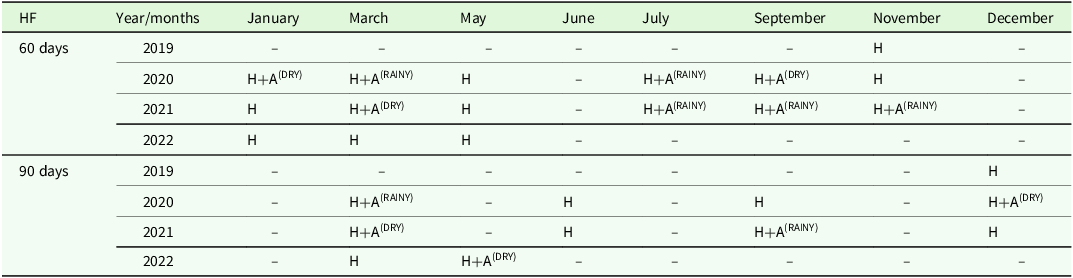
The genotypes were established by vegetative propagation in April 2016, in furrows spaced 1.0 m apart, using mature stems. The area was 1,820 m2 (91 × 20 m). Each main plot consisted of a bed measuring 546 m2 (91 × 6 m), with a spacing of 8 m between main plots. Each subplot had 24 m2 (4 × 6 m), totalling 32 subplots, with a usable area of 8 m2 (2 × 4 m) (Figure 3). The plots were subjected to successive harvests at intervals of 60 and 90 days, according to the experimental treatments. The experimental period began in September 2019, following a uniformity cut, and ended in May 2022. A total of 27 harvests were performed, with 16 and 11 corresponding to the 60- and 90-day harvest frequencies, respectively (Table 1).
Layout of the experimental area and arrangement of genotypes and harvest frequencies; 60 days – marked with red dots, 90 days – without marking. M = Mott, T = Taiwan A-146 2.37, I = IRI 381 and B = Elephant B.

Experimental period, harvest frequencies and cutting times, with their respective months of occurrence

Table 1. Long description
A table detailing harvest frequencies and cutting times over different months and years. The table has 8 columns and 8 rows, including headers. Columns are labeled as HF, Year/months, January, March, May, June, July, September, November, and December. Rows are labeled with different years and harvest frequencies (60 days and 90 days). Each cell contains specific data points indicating the occurrence of harvests, with annotations such as H, H+A(DRY), and H+A(RAINY). The table captures the experimental period from September 2019 to May 2022, showing the distribution of harvests across different months and years for both 60-day and 90-day intervals.
Only harvests identified by H + A were selected for laboratory analyses. Months without symbols (−) indicate that no harvest or laboratory evaluation was scheduled during the experimental period. HF: harvest frequency; H: harvest; A: laboratory analyses; RAINY, rainy season; DRY, dry season. Seasonal classification of harvests was based on the water soil balance (Figure 2).
Soil maintenance fertilization was carried out 15 days after harvest, in accordance with the regional recommendations for elephant grass cultivation in the state of Pernambuco (Cavalcanti, Reference Cavalcanti2008). The applied rates were 100 kg N/ha and 80 kg K/ha, both placed into the planting furrow. Ammonium sulfate [(NH4)2SO4] and potassium chloride (KCl) were used as the respective sources of nitrogen and potassium.
Irrigation management distributed the water needed to restore 100% of crop evapotranspiration (ETc) using the standardized Penman–Monteith method (FAO/56; Allen et al., Reference Allen, Pereira, Raes and Smith1998). The weather data used for ETc calculations were obtained from a weather station from located in Garanhuns, Pernambuco, Brazil.
Measured variables
At the beginning of the evaluation period, a uniformity cut was performed in each subplot, and five basal tillers representative of the average condition of each subplot were sampled (Souza et al., Reference Souza, Santos, Cunha, Gonçalves, Mello, Abreu, Braz, Magalhães and Dubeux2026). Leaves (leaf blade plus sheath) and stem fractions were manually separated, cut at ligule height, and their fresh weights recorded. Due to transport from Garanhuns to Recife, samples were stored in thermal boxes under low temperature to minimize changes in the material.
In the Animal Nutrition and Forage Science laboratories of UFRPE, samples were ground in a Wiley mill using 1-mm screens for chemical analyses and 2-mm screens for in vitro dry matter digestibility. Dry matter (DM) (930.15) was determined by drying samples in a forced-air oven at 55°C until constant weight. Ash (MM) (942.05), ether extract (EE) (920.39) and CP (984.13) were determined according to AOAC (1995), and total nitrogen (TN) was measured by the Kjeldahl method. Neutral detergent fibre (NDF) and acid detergent fibre (ADF) were determined according to Van Soest et al. (Reference Van Soest, Robertson and Lewis1991), as modified by Senger et al. (Reference Senger, Kozloski, Sanchez, Mesquita, Alves and Castagnino2008), using autoclave extraction at 110°C for 40 minutes. Lignin concentration was determined from the ADF residue treated with 72% sulfuric acid to solubilize cellulose, obtaining acid detergent lignin (ADL), according to Van Soest et al. (Reference Van Soest, Robertson and Lewis1991). The hemicellulose (HEM) and cellulose (CEL) fractions were calculated using the equations: HEM = NDF - ADF and CEL = ADF - ADL. Total carbohydrates (TC) and non-fibrous carbohydrates (NFC) were estimated using the equations (1, 2) proposed by Sniffen et al. (Reference Sniffen, O’connor, Van Soest, Fox and Russell1992):
 $${\rm TC}\% = 100 - (\%{\rm CP} + \%{\rm EE} + \%{\rm MM})$$
 $${\rm NFC}\% = 100 - (\%{\rm CP} + \%{\rm NDF} + \%{\rm EE} + \%{\rm MM})$$
The samples were sieved through a 2-mm sieve to estimate the in vitro dry matter digestibility (IVDMD) using the Tilley and Terry (Reference Tilley and Terry1963) methodology, adapted for the DAISYII ruminal fermenter (ANKOM Technology Corp., Fairport, NY), as proposed by Holden (Reference Holden1999).
Statistical analysis
Data residuals were tested for normality using the Shapiro–Wilk test and for homogeneity of variances using Bartlett’s test. After verifying these assumptions, analysis of variance was performed using PROC MIXED in SAS OnDemand. Genotype, harvest frequency and season of the year (treated as repeated measures over time), as well as their interactions, were considered fixed effects. Blocks, year and their interactions were considered random effects. When the F-test was significant, least squares means (LSMEANS) were estimated and compared using the probability of difference (PDIFF), adjusted by Tukey’s test. Orthogonal contrasts were performed to evaluate the effect of plant height (tall vs. dwarf genotypes). The significance level adopted was 5%. The three-way interaction was not significant (P > 0.05) and was therefore excluded from the final model. The statistical model was defined as follows:
 $$Y_{ijkl} = \mu + B_i + G_j + H_k + S_l + (G \times H)_{jk} + (G \times S)_{jl} \\\!\!\!\!\!\!\!\!\!\!\!\!\!\!\!\!\!\!\!\!\!\!\!\!\!\!\!\!\!\!\!\!\!\!\!\!\!\!\!\!\!\!\!\!\!\!\!\!\!\!\!\!\!\!\!\!\!+ (H \times S)_{kl} + \varepsilon_{ijkl}$$
where Yijkl = observed value; μ = overall mean; Bi = random effect of block i; Hj = fixed effect of harvest frequency j; Gk = fixed effect of genotype k; Sl = fixed effect of season l (repeated measure); (G × H)jk = interaction between frequency and genotype; (H × S)jl = interaction between frequency and season; (G × S)kl: interaction between genotype and season; ϵijkl = residual error.
Results
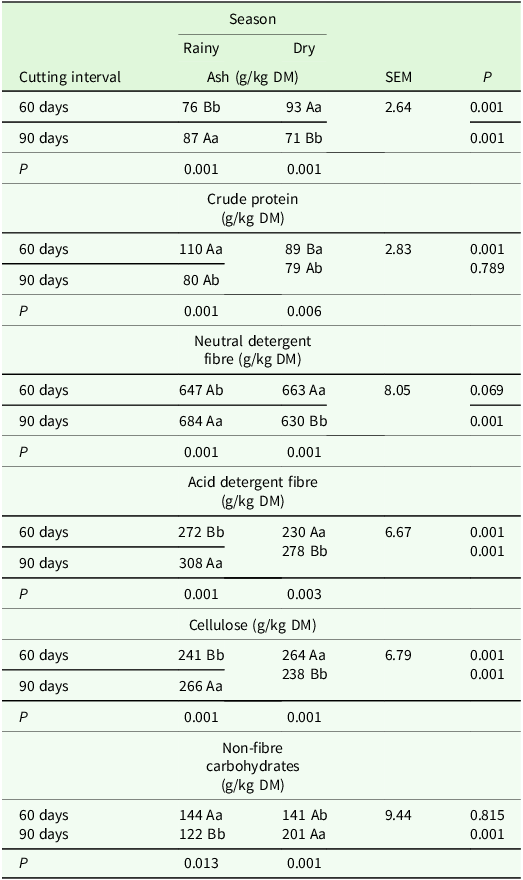
Significant interactions (P ≤ 0.05) between season and harvest frequency were detected for ash, CP, NDF, ADF and NFC in leaf blades, and for ash, CP, NDF, ADF, TC and NFC in stems (Table 2). In general, leaf CP concentrations were higher under the 60-day harvest frequency in both seasons, whereas NDF, ADF and NFC concentrations increased during the rainy season under the 90 days harvest interval (Table 2).
Interaction effect between cutting interval and season of the year on the chemical composition of leaves of elephant grass genotypes, Garanhuns, PE, Brazil

Table 2. Long description
A table comparing the chemical composition of elephant grass leaves across different cutting intervals and seasons. The table has 11 rows and 5 columns. Column headers are Cutting interval, Season, Ash (g/kg DM), SEM, and P. Row labels include 60 days, 90 days, and P under the Cutting interval column. Seasons are divided into Rainy and Dry. Ash content is measured in g/kg DM, with values such as 76 Bb for 60 days Rainy and 93 Aa for 60 days Dry. SEM values and P values are also provided. Additional rows compare Crude protein, Neutral detergent fibre, Acid detergent fibre, Cellulose, and Non-fibre carbohydrates across the same intervals and seasons, with corresponding values and statistical measures.
Means followed by different uppercase letters within rows and lowercase letters within columns differ from each other according to the F-test (P ≤ 0.05). SEM: standard error of the mean.
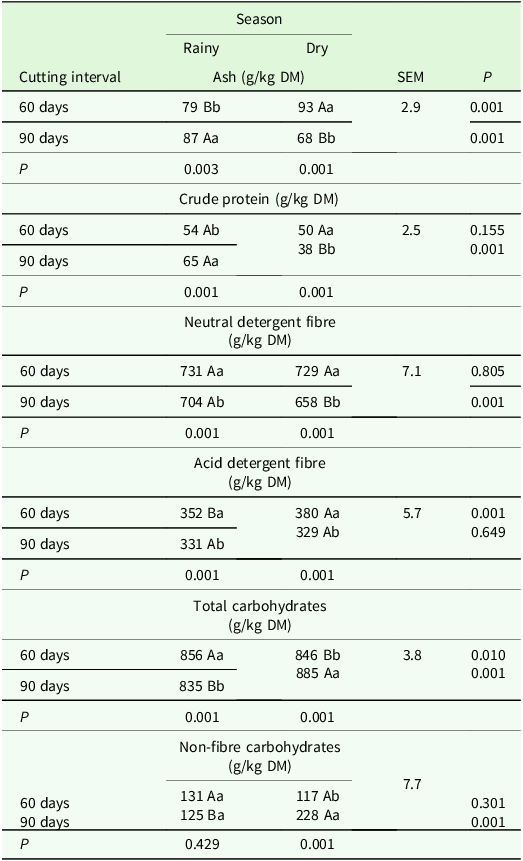
A significant interaction between harvest frequency and season (P < 0.01) was also observed for stem chemical composition (Table 3). Ash concentration was greater during the rainy season at the 90-day harvest interval (87 vs. 79 g/kg DM), while the lowest values occurred during the dry season at the same interval (66 g/kg DM). Stem CP concentration was higher during the dry season at the 60-day harvest interval (50 vs. 38 g/kg DM) but increased from 54 to 65 g/kg DM during the rainy season as the harvest interval increased from 60 to 90 days. Regardless of season, NDF and ADF concentrations were greater at the 60-day harvest frequency, whereas the lowest values were observed at the 90-day during the dry season. In contrast, TC and NFC concentrations increased at the 90-day interval during the dry season (Table 3).
Interaction effect between harvest frequency and season of the year on the chemical composition of stems of elephant grass genotypes, Garanhuns, Pernambuco, Brazil

Table 3. Long description
A table comparing the chemical composition of elephant grass stems across different seasons and cutting intervals. The table has 12 rows and 6 columns. Column headers are Cutting interval, Season, Ash (g/kg DM), SEM, P, and Crude protein (g/kg DM). Row labels include 60 days, 90 days, and P. The table also includes grouped rows for Neutral detergent fibre (g/kg DM), Acid detergent fibre (g/kg DM), Total carbohydrates (g/kg DM), and Non-fibre carbohydrates (g/kg DM). Row 1: 60 days, Rainy, 79 Bb, 2.9, 0.003, 54 Ab. Row 2: 60 days, Dry, 93 Aa, 0.001, 50 Aa. Row 3: 90 days, Rainy, 87 Aa, 68 Bb, 0.001, 65 Aa. Row 4: 90 days, Dry, 38 Bb, 0.001. Row 5: P, 0.003, 0.001, 0.155, 0.001. Row 6: 60 days, Rainy, 731 Aa, 7.1, 0.805, 352 Ba. Row 7: 60 days, Dry, 729 Aa, 0.001, 380 Aa. Row 8: 90 days, Rainy, 704 Ab, 658 Bb, 0.001, 331 Ab. Row 9: 90 days, Dry, 5.7, 0.649, 856 Aa, 846 Bb. Row 10: P, 0.001, 0.001, 0.010, 0.001. Row 11: 60 days, Rainy, 835 Bb, 3.8, 131 Aa. Row 12: 60 days, Dry, 885 Aa, 117 Ab, 0.301. Row 13: 90 days, Rainy, 125 Ba, 228 Aa. Row 14: 90 days, Dry, 0.429, 0.001.
Means followed by different uppercase letters within rows and lowercase letters within columns differ from each other according to the F-test (P ≤ 0.05). SEM: standard error of the mean.
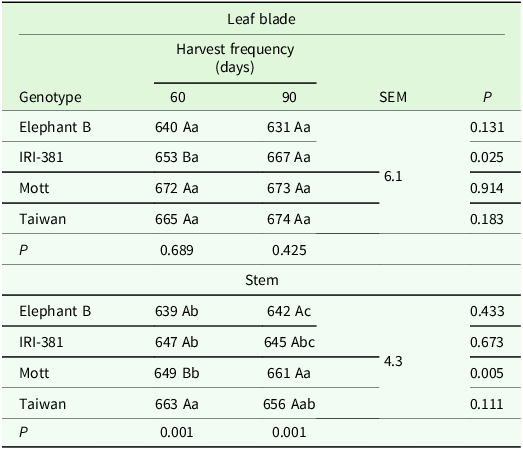
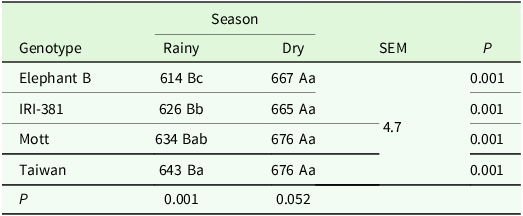
Genotype × harvest frequency interactions affected in vitro digestibility of dry matter (IVDMD) in both leaves and stems (Tables 4). In leaves, the IRI-381 genotype showed lower IVDMD at the 60 days harvest interval. In stems, Mott exhibited greater IVDMD at the 90-day harvest interval than at 60 days (661 vs. 649 g/kg DM; P = 0.005), whereas Taiwan A. 146–2.37 showed no significant difference between the 60- and 90-day harvest intervals (656 vs. 663 g/kg DM; P = 0.111) (Table 4). The lowest stem IVDMD values were observed for Elephant B at both harvest frequencies. A significant genotype × season interaction was also detected for stem IVDMD (Table 5), with higher digestibility during the dry season across all genotypes. During the rainy season, Taiwan and Mott presented greater IVDMD, whereas Elephant B showed the lowest values.
Interaction between genotype and harvest frequency on the in vitro dry matter digestibility (g/kg DM) of leaf blade and stem of elephant grass, Garanhuns, Pernambuco, Brazil

Table 4. Long description
A table comparing the in vitro dry matter digestibility (g/kg DM) of leaf blade and stem of elephant grass across different genotypes and harvest frequencies. The table has 10 rows and 5 columns. Column headers are Genotype, Harvest frequency (days), SEM, and P. Row labels include Elephant B, IRI-381, Mott, Taiwan, and P. For leaf blade, harvest frequencies are 60 and 90 days with corresponding values for each genotype. For stem, harvest frequencies are also 60 and 90 days with corresponding values for each genotype. Notable trends include variations in digestibility values across genotypes and harvest frequencies, with specific P values indicating statistical significance.
Means followed by different uppercase letters within rows and lowercase letters within columns differ according to Tukey’s test (P ≤ 0.05). SEM: mean standard error.
Interaction between genotype and time of year on the in vitro dry matter digestibility (g/kg DM) of the stem of elephant grass, Garanhuns, Pernambuco, Brazil

Table 5. Long description
A table comparing the in vitro dry matter digestibility (g/kg DM) of elephant grass genotypes across rainy and dry seasons. The table has 6 rows and 5 columns. Column headers are Genotype, Season (Rainy, Dry), SEM, and P. Row labels are Elephant B, IRI-381, Mott, Taiwan, and P. Row 1: Elephant B, Rainy: 614 Bc, Dry: 667 Aa, SEM: 4.7, P: 0.001. Row 2: IRI-381, Rainy: 626 Bb, Dry: 665 Aa, SEM: 4.7, P: 0.001. Row 3: Mott, Rainy: 634 Bab, Dry: 676 Aa, SEM: 4.7, P: 0.001. Row 4: Taiwan, Rainy: 643 Ba, Dry: 676 Aa, SEM: 4.7, P: 0.001. Row 5: P, Rainy: 0.001, Dry: 0.052.
Means followed by different uppercase letters in the row and lowercase letters in the column differ by Tukey’s test (P ≤ 0.05). SEM: means standard error.
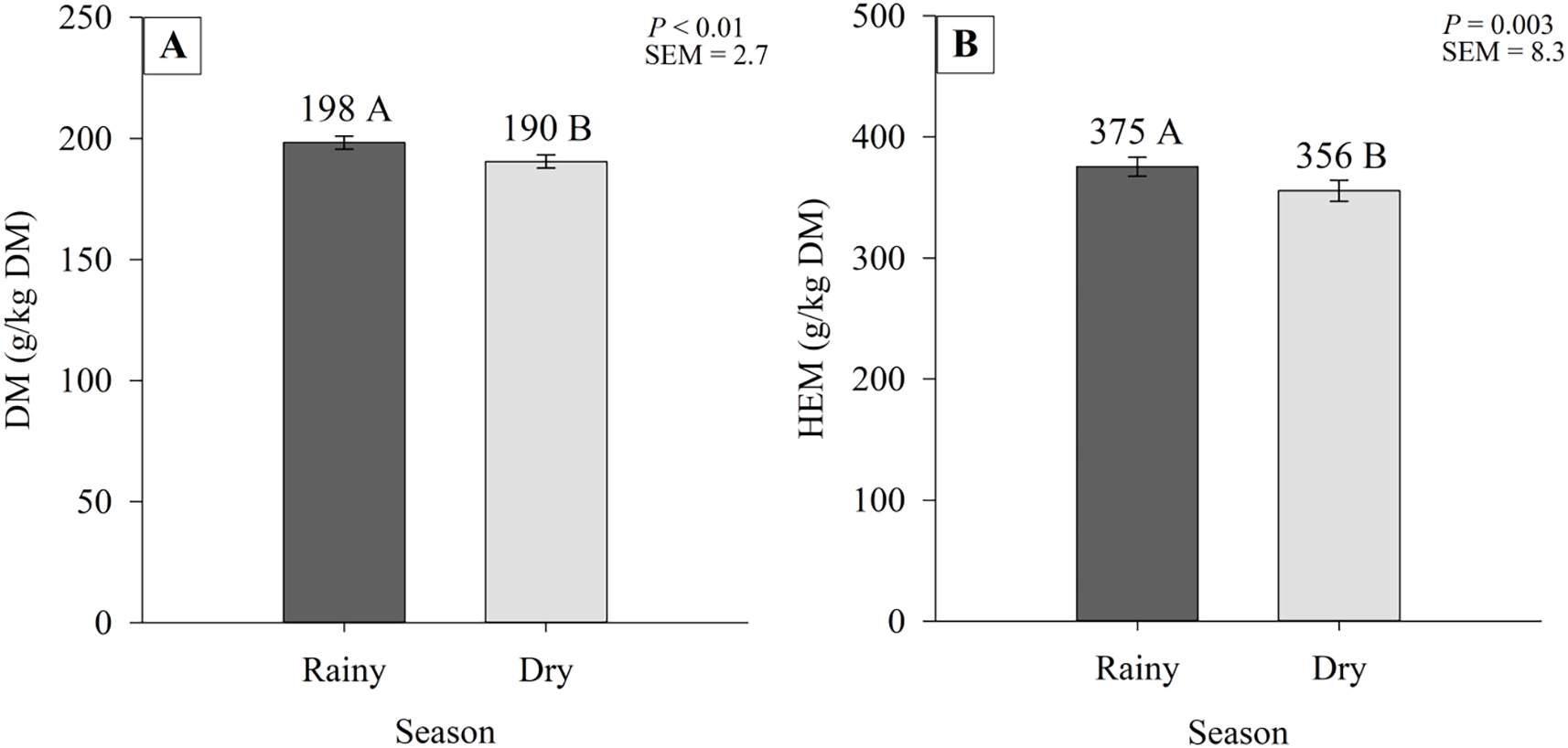
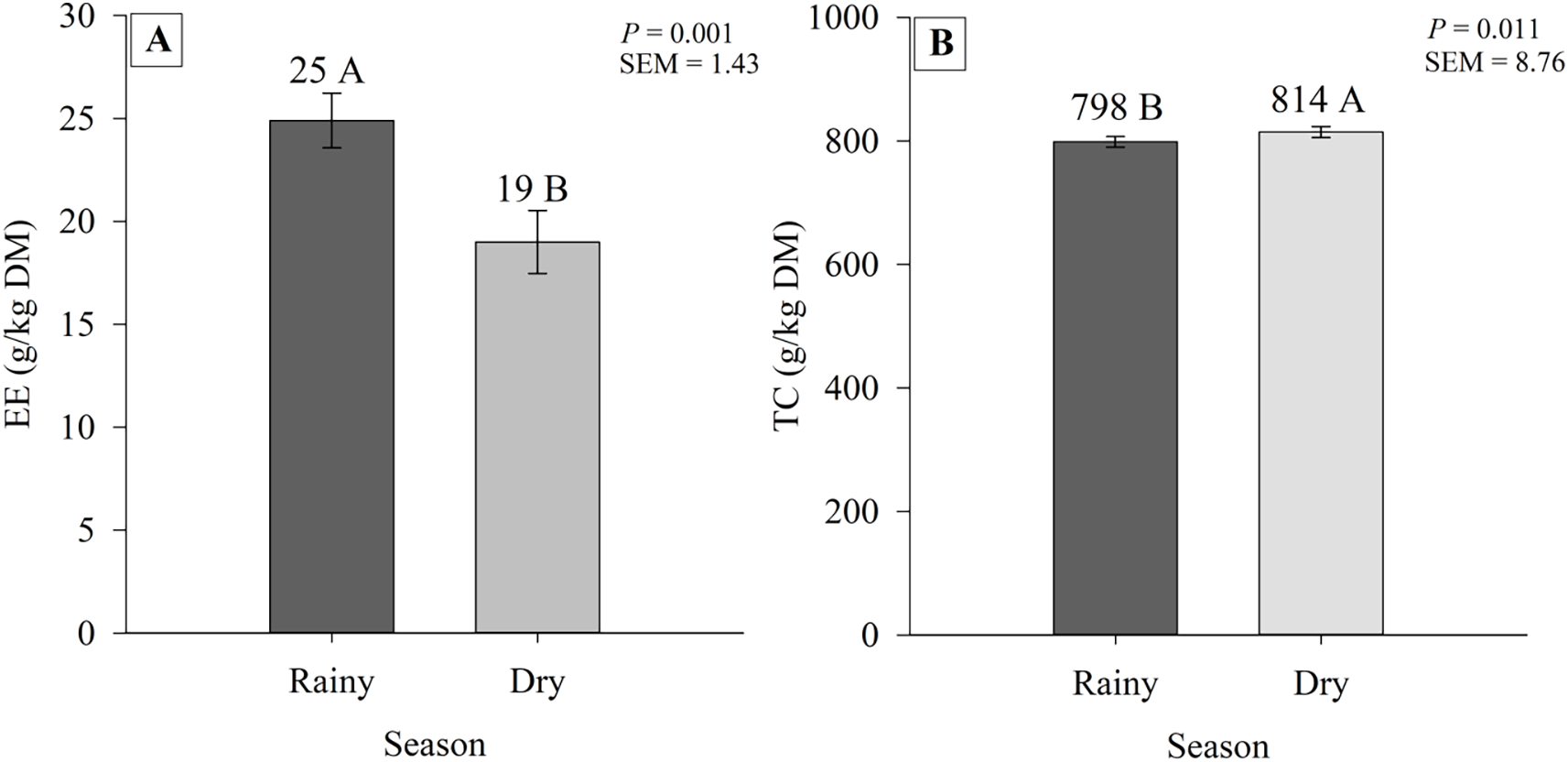
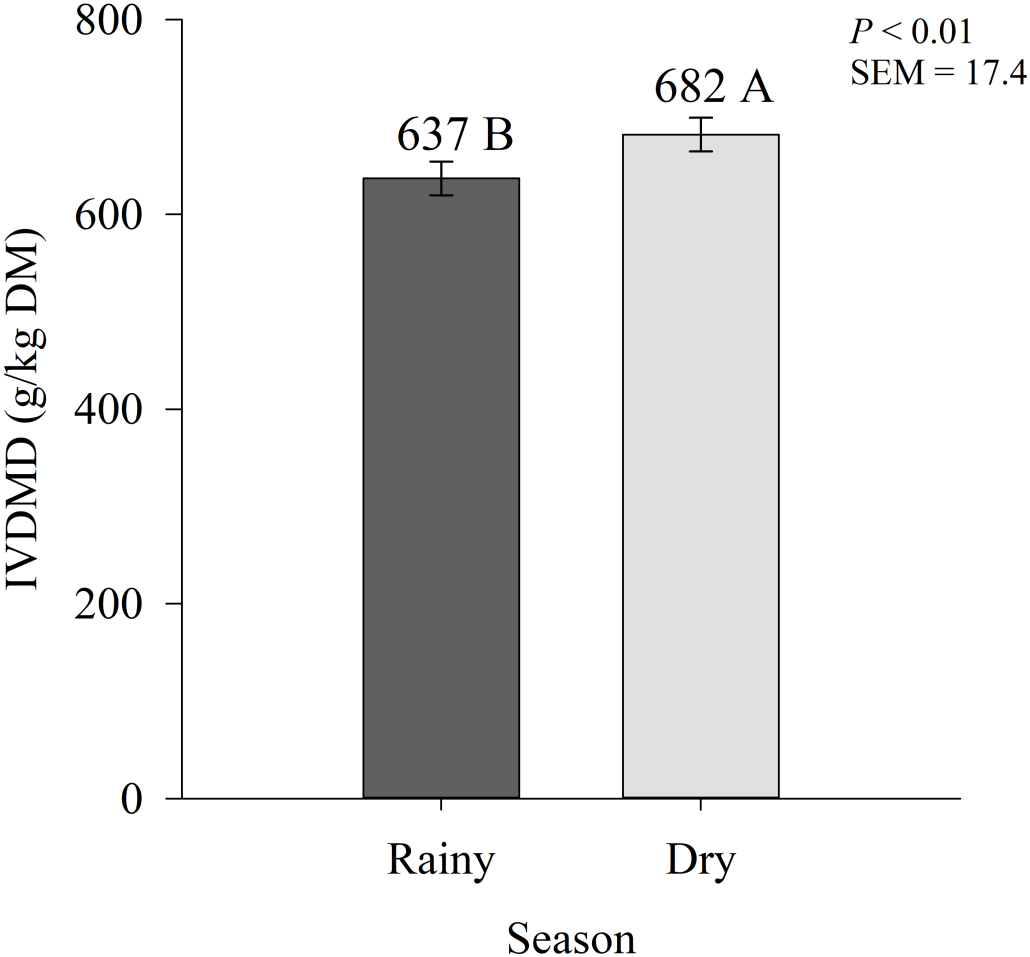
Season significantly affected all evaluated variables (P ≤ 0.01; Figures 4, 5 and 7). EE concentration in leaves was higher during the rainy season, whereas TC and IVDMD increased during the dry season. For structural components, stem DM and leaf HEM were greater during the rainy season compared with the dry season (Figures 4A, B and 5).
Effect of season on stem dry matter concentration (A) and leaf hemicellulose concentration (B) of elephant grass genotypes in Garanhuns, Pernambuco, Brazil. Means followed by different letters in the bars differ from each other according to the F test (P ≤ 0.05). Vertical bars represent the standard error of the mean (SEM).

Effect of season on ether extract concentration (A) and total carbohydrates (B) in the leaves of elephant grass genotypes in Garanhuns, Pernambuco, Brazil. Means followed by different letters in the bars differ from each other according to the F test (P ≤ 0.05). Vertical bars on the columns indicate the standard error of the mean (SEM).

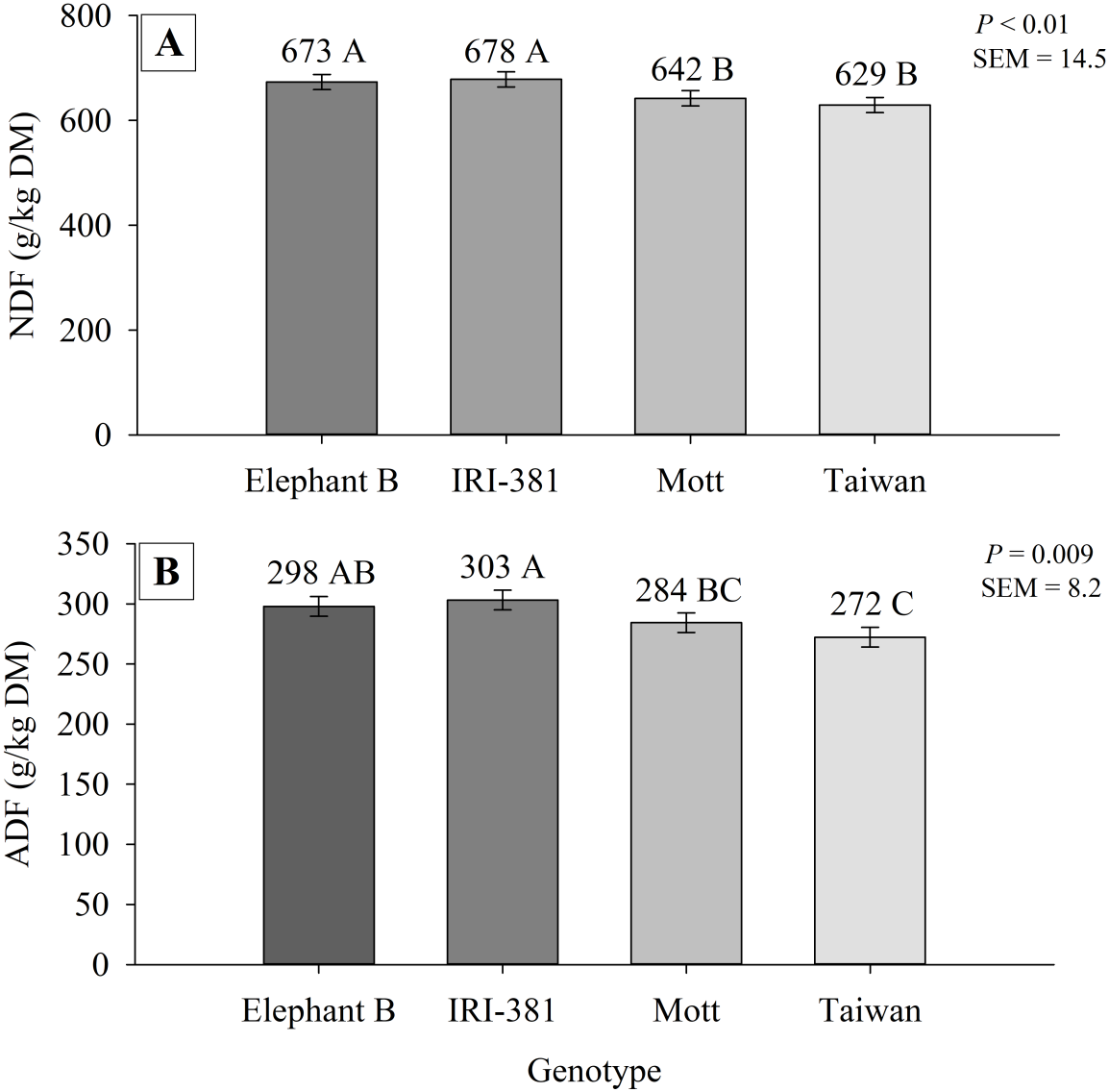
Effect of genotype on neutral detergent fibre (A) and acid detergent fibre (B) concentrations in the leaves of elephant grass during the experimental period, Garanhuns, Pernambuco, Brazil. Means followed by different letters in the bars differ according to the F test (P ≤ 0.05). Vertical bars indicate the standard error of the mean (SEM).

Effect of season on in vitro dry matter digestibility (IVDMD) of leaves in elephant grass genotypes, Garanhuns, Pernambuco, Brazil. Means followed by different letters in the bars differ according to the F test (P ≤ 0.05). Vertical bars represent the standard error of the mean (SEM).

Significant differences among genotypes were observed for leaf fibre fractions (P ≤ 0.05). NDF concentrations were higher in Elephant B and IRI-381, whereas Mott and Taiwan presented lower values (Figure 6A). For ADF, IRI-381 showed the highest concentration, Taiwan the lowest and Elephant B intermediate values that did not differ from either IRI-381 or Mott (Figure 6B).
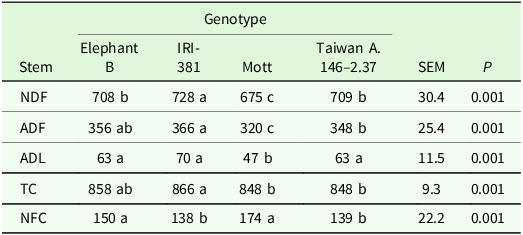
Genotype significantly affected fibre fractions, TC and NFC in elephant grass stems (P ≤ 0.05; Table 7). Genotype significantly affected fibre fractions, TC and NFC in elephant grass stems (P ≤ 0.05; Table 7). Stem NDF concentration ranged from 675 to 728 g/kg DM, with IRI-381 presenting the highest concentration (728 g/kg DM), Elephant B (708 g/kg DM) and Taiwan A. 146–2.37 (709 g/kg DM) showing intermediate concentrations and Mott exhibiting the lowest concentration (675 g/kg DM). A similar pattern was observed for ADF (320–366 g/kg DM) and ADL, with Mott presenting the lowest concentrations for both variables (320 and 47 g/kg DM, respectively). TC were lower in Mott and Taiwan A. 146–2.37 (848 g/kg DM) than in Elephant B (858 g/kg DM) and IRI-381 (866 g/kg DM). Conversely, NFC concentration was greater in Mott (174 g/kg DM) and Elephant B (150 g/kg DM) than in Taiwan A. 146–2.37 (139 g/kg DM) and IRI-381 (138 g/kg DM) (Table 7).
Effect of harvest frequency (60 and 90 days) on the chemical composition (g/kg DM) of morphological components (leaf and stem) of elephant grass genotypes, Garanhuns, Pernambuco, Brazil

Table 6. Long description
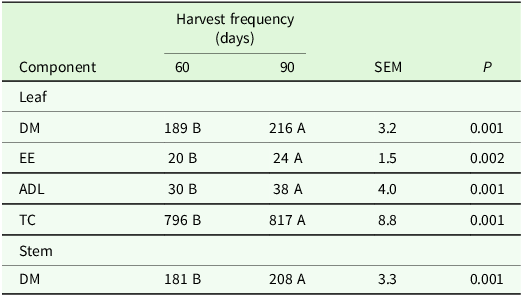
A table with two main components: Leaf and Stem, each with various subcomponents. The table compares the effects of harvest frequency (60 and 90 days) on these subcomponents. It includes columns for harvest frequency in days (60 and 90), standard error of the mean (SEM), and P-value. The Leaf component includes subcomponents DM, EE, ADL, and TC, while the Stem component includes DM. Each subcomponent has values for both harvest frequencies, SEM, and P-value. Notable trends include generally greater values observed at the 90 days harvest interval for all measured subcomponents.
Means followed by different letters differ from each other according to the F-test (P ≤ 0.05). SEM: standard error of the means; DM: dry matter; EE: ether extract; ADL: acid detergent lignin; TC: total carbohydrates.
Effect of genotype on the chemical composition (g/kg DM) of elephant grass stem

Table 7. Long description
The table presents the chemical composition of elephant grass stems across different genotypes, measured in g/kg DM. It has 5 rows and 6 columns. The columns are labeled as Genotype, Stem, NDF, ADF, ADL, TC, NFC, SEM, and P. The genotypes listed are Elephant B, IRI-381, Mott, and Taiwan A. 146-2.37. The table shows the following data: Row 1: Stem, NDF, 708 b, 728 a, 675 c, 709 b, 30.4, 0.001. Row 2: ADF, 356 ab, 366 a, 320 c, 348 b, 25.4, 0.001. Row 3: ADL, 63 a, 70 a, 47 b, 63 a, 11.5, 0.001. Row 4: TC, 858 ab, 866 a, 848 b, 848 b, 9.3, 0.001. Row 5: NFC, 150 a, 138 b, 174 a, 139 b, 22.2, 0.001.
Means followed by different letters differ from each other according to the F-test (P ≤ 0.05). SEM: standard error of the means. NDF: neutral detergent fibre; ADF: acid detergent fibre; ADL: acid detergent lignin; TC: total carbohydrates; NFC: non-fibrous carbohydrates.
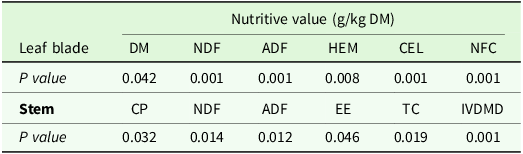
Harvest frequency alone affected (P ≤ 0.05) leaf DM, EE, ADL, TC and stem DM (Table 6), with generally greater values observed at the 90 days harvest interval. In addition, tall- and short-sized elephant grass genotypes significantly affected leaf blade DM, NDF, ADF, HEM, cellulose and NFC, as well as stem CP, NDF, ADF, EE, TC and IVDMD (Table 8).
Effect of plant size, evaluated using an orthogonal contrast (tall genotypes: Elephant B + IRI-381 vs. dwarf genotypes: Mott + Taiwan A-2.37), on the nutritive value of morphological components (leaf blade and stem) of different elephant grass genotypes, Garanhuns, Pernambuco, Brazil

Table 8. Long description
A table comparing the nutritive value of leaf blade and stem of different elephant grass genotypes. The table has two sections: Leaf blade and Stem. Each section lists various nutritional components and their corresponding P values. Leaf blade section includes DM, NDF, ADF, HEM, CEL, and NFC. Stem section includes CP, NDF, ADF, EE, TC, and IVDMD. Row 1: Leaf blade, DM, 0.042, NDF, 0.001, ADF, 0.001, HEM, 0.008, CEL, 0.001, NFC, 0.001. Row 2: Stem, CP, 0.032, NDF, 0.014, ADF, 0.012, EE, 0.046, TC, 0.019, IVDMD, 0.001.
DM: dry matter; CP: crude protein; NDF: neutral detergent fibre; ADF: acid detergent fibre; EE: ether extract; HEM: hemicellulose; CEL: cellulose; NFC: non-fibrous carbohydrates; IVDMD: in vitro dry matter digestibility.
Discussion
Seasonal conditions and harvest frequency strongly influenced the chemical composition and digestibility of elephant grass, reflecting coordinated changes in plant morphology, tissue development and carbon allocation. Water availability directly alters plant growth dynamics, promoting increases in tillering, leaf blade expansion and stem elongation, particularly under favourable moisture conditions (Carvalho et al., Reference Carvalho, de Arruda, de Abreu, de Souza, Rodrigues, Lima, Cabral and Behling2018). Consequently, greater plant height and canopy development during the rainy season enhance light interception and biomass accumulation (Ribeiro et al., Reference Ribeiro, de Mello, da Cunha, de Miranda Costa, Coelho, Souza and dos Santos2023), but are typically associated with increased deposition of structural components and reduced forage nutritive value (Velásquez et al., Reference Velásquez, Berchielli, Reis, Rivera, Dian and Teixeira2010).
Advancing plant maturity, especially under longer harvest intervals (90 days), resulted in increased fibrous fractions (NDF and ADF) and reduced digestibility, consistent with greater deposition of cell wall constituents and lignification. This response is widely reported for elephant grass, where extended regrowth periods increase the proportion of structural tissues and reduce CP concentration (Cabral et al., Reference Cabral, Valadares Filho, Detmann, Malafaia, Zervoudakis, de Souza, Veloso and Nunes2006; Silva et al., Reference Silva, dos Santos, da Silva, Magalhães, da Cunha, da Silva, Souza, Alencar, de Souza and Ferreira2025). However, the effect of harvest interval on CP depended on season. During the dry season, the reduction in stem CP with advancing maturity was consistent with the expected dilution of nitrogen caused by increasing deposition of structural tissues (Cabral et al., Reference Cabral, Valadares Filho, Detmann, Malafaia, Zervoudakis, de Souza, Veloso and Nunes2006; Van Soest, Reference Van Soest1994). In contrast, stem CP increased at the 90-day harvest interval during the rainy season, suggesting that favourable moisture and temperature conditions maintained active vegetative growth throughout the regrowth period (Alencar et al., Reference Alencar, Santos, da Cunha, de Mello, Lucena, Leopoldino Neto, Peixôto and Silva2023; Carvalho et al., Reference Carvalho, de Arruda, de Abreu, de Souza, Rodrigues, Lima, Cabral and Behling2018). Under these conditions, continued stem elongation and tissue turnover may have increased the proportion of newly formed stem tissues with greater nitrogen concentration, partially offsetting the decline in CP generally associated with advancing maturity (Ribeiro et al., Reference Ribeiro, de Mello, da Cunha, de Miranda Costa, Coelho, Souza and dos Santos2023; Silva et al., Reference Silva, dos Santos, da Silva, Magalhães, da Cunha, da Silva, Souza, Alencar, de Souza and Ferreira2025). These results indicate that the response of CP to harvest interval should not be interpreted as a general pattern, since the reduction in CP was observed only during the dry season, whereas favourable environmental conditions during the rainy season maintained active vegetative growth and greater stem CP despite the longer regrowth period.
In the present study, the advancement of plant maturity and the associated structural changes in plant tissues (Alencar et al., Reference Alencar, Santos, da Cunha, de Mello, Lucena, Leopoldino Neto, Peixôto and Silva2023; Souza et al., Reference Souza, Santos, Cunha, Gonçalves, Mello, Abreu, Braz, Magalhães and Dubeux2026) explain the lower CP and higher fibre concentrations observed at 90 days in both leaves and stems. The negative relationship between fibre concentration and IVDMD is, therefore, primarily driven by structural modifications that limit microbial access and reduce ruminal fermentation efficiency (Islam et al., Reference Islam, Garcia, Sarker, Islam and Clark2023; Van Soest et al., Reference Van Soest, Robertson and Lewis1991).
The reductions in CP and IVDMD and the increase in fibre concentration observed with advancing plant maturity are closely linked to plant morphological traits. Tall genotypes exhibit greater internode elongation and stem accumulation, which increases fibre and lignin deposition to provide structural support (Ribeiro et al., Reference Ribeiro, de Mello, da Cunha, de Miranda Costa, Coelho, Souza and dos Santos2023), thereby reducing nutritive value. In contrast, dwarf genotypes tend to maintain a greater leaf/stem ratio and improved nutritive characteristics (Silva et al., Reference Silva, dos Santos, da Silva, Magalhães, da Cunha, da Silva, Souza, Alencar, de Souza and Ferreira2025; Souza et al., Reference Souza, dos Santos, da Cunha, Gonçalves, da Silva, de Mello, Muir, Ribeiro and Dubeux2021). However, structural adaptations may also occur in short genotypes, as observed for Taiwan A-146–2.37, whose “needle-like” leaf architecture requires greater rigidity and contributes to relatively high fibre concentration despite its reduced stature (Silva et al., Reference Silva, Santos, Lira, Dubeux Junior, Freitas and Ferreira2009).
Seasonal variation further modulated these responses. During the rainy season, enhanced growth rates may contribute to increase stem elongation, total dry matter production and the accumulation of structural carbohydrates and lignin (Velásquez et al., Reference Velásquez, Berchielli, Reis, Rivera, Dian and Teixeira2010), and this may occur also under irrigated conditions. Conversely, under drier conditions, reduced growth rates may limit structural deposition and favour a greater proportion of digestible tissues. This helps explain the higher leaf IVDMD observed during the dry season, which may also be associated with morphogenic traits such as higher leaf appearance rate and shorter phyllochron under warm conditions (Alencar et al., Reference Alencar, Santos, da Cunha, de Mello, Lucena, Leopoldino Neto, Peixôto and Silva2023), as well as lower NDF and lignin concentrations and higher NFC in certain genotypes (e.g., Mott). In the current study, even though irrigation was provided, the IVDMD was generally greater during the dry season.
The relationship between chemical composition and IVDMD can be further interpreted through ruminal fermentation kinetics. Substrates rich in soluble and NFC are rapidly fermented, whereas structural carbohydrates require longer microbial colonization and exhibit lower degradation rates (Cosgrove, Reference Cosgrove2016; Silva et al., Reference Silva, dos Santos, da Silva, Magalhães, da Cunha, da Silva, Souza, Alencar, de Souza and Ferreira2025). Increased fibre and lignin concentrations, therefore, reduce both the extent and rate of digestion. Evidence from gas production studies supports this interpretation, showing that shorter harvest intervals (60 days) enhance fermentation efficiency by increasing the availability of rapidly degradable substrates, while longer intervals increase the proportion of slowly degradable fractions (Silva et al., Reference Silva, dos Santos, da Silva, Magalhães, da Cunha, da Silva, Souza, Alencar, de Souza and Ferreira2025).
Differences between plant fractions were also evident. Leaf blades generally exhibited higher nutritive value due to greater nitrogen concentration and metabolic activity compared with stems (Vymazal, Reference Vymazal2016), which was confirmed by greater mineral matter and CP concentrations under favourable conditions. Adequate nitrogen availability, supported by fertilization and irrigation, likely maintained CP levels above the minimum threshold required for rumen microbial activity (70 g/kg DM), ensuring efficient utilization of fibrous substrates (Bezerra et al., Reference Bezerra, Emerenciano Neto, Silva, Fernandes, Urbano, Chagas, Difante, Costa, Gurgel, Sousa, Santos and Costa2024; Van Soest et al., Reference Van Soest, Robertson and Lewis1991). In contrast, stems may contribute disproportionately to reductions in IVDMD due to higher fibre and lignin concentrations (Souza et al., Reference Souza, dos Santos, da Cunha, Gonçalves, da Silva, de Mello, Muir, Ribeiro and Dubeux2021).
Harvest frequency also influenced other chemical components, such as EE and TC, which are affected by plant maturity and environmental conditions. Greater EE during the rainy season may be associated with increased cuticular lipid deposition, which plays important roles in plant physiology and protection (Misra and Ghosh, Reference M Misra, Ghosh, Linskens and Jackson1991; Ohlrogge and Browse, Reference Ohlrogge and Browse1995; Reina-Pinto and Yephremov, Reference Reina-Pinto and Yephremov2009). Additionally, TC dynamics reflect seasonal and species-specific responses, with structural carbohydrates generally increasing under conditions that favour plant maturation (Mlyneková et al., Reference Mlyneková, Zaťko, Halo, Imrich and Halo2026; Vieira et al., Reference Vieira, Pereira, Malafaia, Queiroz and Gonçalves2000).
The orthogonal contrast between tall- (Elephant B and IRI-381) and dwarf-sized (Mott and Taiwan A-2.37) elephant grass genotypes significantly affected the nutritive value of both leaf blades and stems. Leaf blades differed in DM, NDF, ADF, HEM, CEL and NFC, whereas stems differed in CP, NDF, ADF, EE, TC and IVDMD, demonstrating that plant size is associated with marked changes in the chemical composition of morphological components. These differences are closely related to the contrasting growth patterns of tall and dwarf genotypes. According to Alencar et al. (Reference Alencar, Santos, da Cunha, de Mello, Lucena, Leopoldino Neto, Peixôto and Silva2023), tall genotypes exhibited greater forage accumulation rates than dwarf genotypes, reaching 92.7 and 86.2 kg DM/ha/day for Elephant B and IRI-381, respectively, under the 60-day harvest frequency, compared with 74.3 and 71.5 kg DM/ha/day for Mott and Taiwan A-2.37. Furthermore, IRI-381 maintained a high forage accumulation rate even at the 90-day harvest frequency (104.2 kg DM/ha/day), confirming the greater biomass production potential of tall genotypes. This greater forage accumulation is generally associated with increased internode elongation and a higher proportion of structural tissues, resulting in greater deposition of cell wall components and, consequently, significant differences in fibre fractions and other nutritive attributes of both leaf blades and stems observed in the present study.
Stem in vitro dry matter digestibility responses to harvest interval were genotype-dependent. Contrary to our initial interpretation, Taiwan A. 146–2.37 did not differ between the 60- and 90-day harvest intervals (P = 0.111), indicating that extending the regrowth period was insufficient to promote structural modifications capable of altering stem digestibility. This response is consistent with the chemical composition observed for this genotype, which exhibited NDF, ADF and ADL concentrations similar to those of the tall genotypes. Likewise, Souza et al. (Reference Souza, Santos, Cunha, Gonçalves, Mello, Abreu, Braz, Magalhães and Dubeux2026) reported that Taiwan A. 146–2.37 presents proportions of sclerenchyma, xylem and associated fibres comparable to those of tall elephant grass genotypes. These supporting tissues are resistant to microbial degradation and are negatively associated with in vitro dry matter digestibility (Cosgrove, Reference Cosgrove2016; Souza et al., Reference Souza, Santos, Cunha, Gonçalves, Mello, Abreu, Braz, Magalhães and Dubeux2026), which may explain the absence of changes in digestibility between harvest intervals. In contrast, Mott exhibited greater stem digestibility at the 90-day harvest interval (P = 0.005), demonstrating that the response to harvest frequency depends on genotype. Although advancing plant maturity generally promotes greater deposition of cell wall components, Mott consistently presented the lowest concentrations of NDF, ADF and ADL among the evaluated genotypes, indicating reduced accumulation of structural carbohydrates and lignin, together with a greater concentration of NFC, particularly compared with Taiwan A. 146–2.37. This response is consistent with the reduced stem elongation characteristic of dwarf elephant grass genotypes (Cunha et al., Reference Cunha, Lira, Santos, Freitas, Dubeux Junior, Mello and Martins2011), which limits the development of supporting tissues during plant growth. Similarly, Souza et al. (Reference Souza, Santos, Cunha, Gonçalves, Mello, Abreu, Braz, Magalhães and Dubeux2026) demonstrated that dwarf genotypes generally develop smaller proportions of sclerenchyma, xylem and associated fibres than tall genotypes. Therefore, the slower structural development characteristic of Mott may have attenuated the negative effects of advancing maturity on stem digestibility, contributing to the greater in vitro digestibility observed after the 90-day regrowth period.
Conversely, the superior nutritive value observed for dwarf genotypes is consistent with their greater ruminal fermentation potential reported by Silva et al. (Reference Silva, dos Santos, da Silva, Magalhães, da Cunha, da Silva, Souza, Alencar, de Souza and Ferreira2025). These authors demonstrated that Mott and Taiwan exhibited a greater leaf-to-stem ratio, lower concentrations of lignin and fibre and higher gas production from the fermentation of NFC, particularly in leaf blades, indicating greater availability of rapidly fermentable substrates for ruminal microorganisms. Moreover, dwarf genotypes produced greater total gas volume during leaf blade fermentation at the 90-day harvest frequency and showed greater degradation of soluble carbohydrates, whereas tall genotypes exhibited longer lag time and reduced degradation of the fibrous fraction as plant maturity advanced. These fermentation responses are consistent with the differences observed in the chemical composition of both morphological components, particularly regarding the fibre fractions and IVDMD of stems, reinforcing the trade-off between forage yield and nutritive value. Therefore, although tall genotypes have greater forage production potential, dwarf genotypes maintain a more favourable chemical composition and greater fermentative efficiency, characteristics that are likely to improve nutrient utilization and animal performance under grazing or cut-and-carry systems.
Overall, the results demonstrate a clear trade-off between forage accumulation and nutritive value. Less frequent harvests increased forage accumulation but promoted greater fibre deposition and reduced digestibility, whereas shorter harvest intervals maintained a higher proportion of digestible tissues and improved fermentation efficiency (Lounglawan et al., Reference Lounglawan, Lounglawan and Suksombat2014; Silva et al., Reference Silva, dos Santos, da Silva, Magalhães, da Cunha, da Silva, Souza, Alencar, de Souza and Ferreira2025). This pattern is further supported by the significant genotype × harvest frequency interaction reported by Alencar et al. (Reference Alencar, Santos, da Cunha, de Mello, Lucena, Leopoldino Neto, Peixôto and Silva2023) under the same experimental conditions, reported that the response of forage accumulation to harvest interval is genotype-dependent.
The contrasting forage accumulation responses among elephant grass genotypes reinforce that harvest frequency should not be generalized across materials with different growth habits. According to Alencar et al. (Reference Alencar, Santos, da Cunha, de Mello, Lucena, Leopoldino Neto, Peixôto and Silva2023), dwarf genotypes maintained relatively stable forage accumulation across harvest intervals, whereas tall genotypes exhibited greater responsiveness to regrowth duration. These contrasting responses are consistent with the distinct morphophysiological characteristics of elephant grass genotypes, since plant stature, stem elongation, canopy architecture and biomass partitioning strongly influence forage accumulation and regrowth dynamics (Cunha et al., Reference Cunha, Lira, Santos, Freitas, Dubeux Junior, Mello and Martins2011; Ribeiro et al., Reference Ribeiro, de Mello, da Cunha, de Miranda Costa, Coelho, Souza and dos Santos2023). Dwarf genotypes generally exhibit reduced stem elongation and a higher leaf/stem ratio, whereas tall genotypes allocate a greater proportion of biomass to supporting tissues, making their forage accumulation more sensitive to harvest interval (Silva et al., Reference Silva, dos Santos, da Silva, Magalhães, da Cunha, da Silva, Souza, Alencar, de Souza and Ferreira2025; Souza et al., Reference Souza, dos Santos, da Cunha, Gonçalves, da Silva, de Mello, Muir, Ribeiro and Dubeux2021). Among the dwarf genotypes, Mott has been identified as particularly suitable for ruminant feeding systems requiring high-quality forage because its reduced development of supporting tissues, especially sclerenchyma, promotes greater digestibility and provides greater flexibility in harvest management under irrigated conditions (Souza et al., Reference Souza, Santos, Cunha, Gonçalves, Mello, Abreu, Braz, Magalhães and Dubeux2026).
These findings demonstrate that extending the harvest interval does not consistently enhance forage accumulation because the magnitude and direction of the response depend on genotype-specific growth dynamics and regrowth capacity. Therefore, harvest management should be tailored to the morphophysiological characteristics of each genotype rather than adopting a single regrowth interval for all materials. Collectively, these results indicate that harvest frequency, seasonal conditions and genotype should be considered jointly when defining management strategies according to whether the primary objective is to maximize forage accumulation or preserve forage nutritive value under irrigated conditions.
Conclusion
Harvest frequency, genotype and season significantly influenced the chemical composition and in vitro dry matter digestibility of elephant grass, with responses depending on the interaction among these factors. In general, the 60-day harvest interval favoured greater nutritive value, whereas extending the regrowth period promoted genotype- and season-dependent changes in CP concentration and fibre fractions. Mott exhibited the most favourable nutritive characteristics, with lower concentrations of structural carbohydrates and greater stem digestibility, whereas Taiwan A-146–2.37 showed chemical and digestibility responses more similar to those of the tall genotypes. These findings indicate that harvest frequency should be adjusted according to genotype and seasonal conditions to optimize the nutritive value of irrigated elephant grass.
Acknowledgements
The authors thank the Coordination for the Improvement of Higher Education Personnel (CAPES) for granting a doctoral scholarship to T. V. F. R. Peixôto. They also acknowledge the Foundation for Science and Technology Support of the State of Pernambuco (FACEPE) for awarding a postdoctoral fellowship (BFP-0236-5.04/26) to J. L. P. S. Izidro. The authors further thank the Federal Rural University of Pernambuco (UFRPE) for providing the experimental area, laboratories and equipment. In addition, the authors are grateful to the National Council for Scientific and Technological Development (CNPq) for the financial support provided through research grants and for awarding research productivity fellowships to A. C. L. de Mello and M. V. da Cunha and the PET/SESU/MEC for the scholarship to V. J. da Silva (PET scholarship).
Author contributions
A.C.L. de Mello, R.M.M. Pimentel, M.V. da Cunha, V. J. da Silva, M.V.F. dos Santos and N. A. Costa: supervision, conceptualization, funding acquisition, project administrator; T.V.F.R. Peixôto: investigation, sampling, formal writing; E.J.S. Alencar, A. Leopoldino Neto, J.L.P.S. Izidro: data curation; and J.L.P.S. Izidro: writing review.
Funding statement
This research was received financial support from the National Council for Scientific and Technological Development (CNPq) through research grants. Additionally, this study was partially financed by the Coordination for the Improvement of Higher Education Personnel (CAPES) - Brazil, Finance Code 001.
Competing interests
The authors declare there are no conflicts of interest.
Ethical standards
Not applicable.