Introduction
Schizophrenia and bipolar disorder have traditionally been considered to be discrete categories in diagnostic classification. In contrast, studies examining clinical features, genetic risk and neuroimaging data suggest there are overlaps between these disorders (Craddock & Owen, Reference Craddock and Owen2010; Ivleva et al., Reference Ivleva, Bidesi, Keshavan, Pearlson, Meda, Dodig and Tandon2013; Keshavan et al., Reference Keshavan, Morris, Sweeney, Pearlson, Thaker, Seidman and Tamminga2011; Ruderfer et al., Reference Ruderfer, Ripke, McQuillin, Boocock, Stahl, Pavlides and Kendler2018). The intermediate diagnosis, ‘schizoaffective disorder’ was introduced due to the observation that some patients exhibit symptoms of schizophrenia and mood disturbance (Jäger, Haack, Becker, & Frasch, Reference Jäger, Haack, Becker and Frasch2011). Schizoaffective disorder can be separated into two distinct subtypes: depressive and bipolar. However, the relationship between schizoaffective disorder, including the two subtypes, and schizophrenia or bipolar disorder remains unclear. Investigating the nature and degree of the cognitive impairments associated with schizoaffective disorder may further elucidate the relationship between these psychotic disorders.
It is well established that a broad range of cognitive abilities is impaired in a large number of patients with schizophrenia (Fatouros-Bergman, Cervenka, Flyckt, Edman, & Farde, Reference Fatouros-Bergman, Cervenka, Flyckt, Edman and Farde2014; Fioravanti, Carlone, Vitale, Cinti, & Clare, Reference Fioravanti, Carlone, Vitale, Cinti and Clare2005; Heinrichs & Zakzanis, Reference Heinrichs and Zakzanis1998). Cognitive impairments are also present in patients with schizoaffective disorder and bipolar disorder, albeit milder than in schizophrenia (Bora, Yucel, & Pantelis, Reference Bora, Yucel and Pantelis2009; Krabbendam, Arts, van Os, & Aleman, Reference Krabbendam, Arts, van Os and Aleman2005; Stefanopoulou et al., Reference Stefanopoulou, Manoharan, Landau, Geddes, Goodwin and Frangou2009). These differences are not consistent across cognitive domains. Bora et al. (Reference Bora, Yucel and Pantelis2009) reported differences between participants with schizophrenia and affective psychosis (schizoaffective disorder and bipolar disorder) in verbal memory, IQ, verbal working memory and executive function but no differences in visual memory, attention or spatial working memory tests in their meta-analysis of 12 cognitive abilities.
Meta-analyses comparing cognitive performance between schizophrenia and affective psychosis have detected heterogeneity of effect sizes between studies (Bora et al., Reference Bora, Yucel and Pantelis2009; Krabbendam et al., Reference Krabbendam, Arts, van Os and Aleman2005). More recent reviews have attempted to reduce this heterogeneity by examining specific diagnoses and subgroups (Bora, Yucel, Fornito, Berk, & Pantelis, Reference Bora, Yucel, Fornito, Berk and Pantelis2008; Kuswanto et al., Reference Kuswanto, Chin, Sum, Sengupta, Fagiolini, McIntyre and Sim2016; Lewandowski, Cohen, & Öngur, Reference Lewandowski, Cohen and Öngur2011a; Madre et al., Reference Madre, Canales-Rodríguez, Ortiz-Gil, Murru, Torrent, Bramon and Amann2016). These reviews have concluded that participants with schizophrenia, particularly those with prominent negative symptoms, exhibit the most severe cognitive deficits (Bora et al., Reference Bora, Yucel, Fornito, Berk and Pantelis2008; Kuswanto et al., Reference Kuswanto, Chin, Sum, Sengupta, Fagiolini, McIntyre and Sim2016; Lewandowski et al., Reference Lewandowski, Cohen and Öngur2011a). Participants with bipolar disorder and no history of psychosis have the least severe cognitive deficits (Bora et al., Reference Bora, Yucel, Fornito, Berk and Pantelis2008; Kuswanto et al., Reference Kuswanto, Chin, Sum, Sengupta, Fagiolini, McIntyre and Sim2016; Lewandowski et al., Reference Lewandowski, Cohen and Öngur2011a). There is also evidence that participants with bipolar disorder – type II have better cognitive functioning than participants with bipolar disorder – type I (Simonsen et al., Reference Simonsen, Sundet, Vaskinn, Birkenaes, Engh, Hansen and Andreassen2008; Torrent et al., Reference Torrent, Martínez-Arán, Daban, Sánchez-Moreno, Comes, Goikolea and Vieta2006). The cognitive performance of participants with either bipolar disorder and psychosis or schizoaffective disorder appears to be intermediate between bipolar disorder without psychosis and schizophrenia (Bora et al., Reference Bora, Yucel, Fornito, Berk and Pantelis2008; Kuswanto et al., Reference Kuswanto, Chin, Sum, Sengupta, Fagiolini, McIntyre and Sim2016). Bora et al. (Reference Bora, Yucel, Fornito, Berk and Pantelis2008) concluded that participants who were experiencing psychotic symptoms during assessment exhibited similar cognitive impairments irrespective of diagnosis. However, Madre et al. (Reference Madre, Canales-Rodríguez, Ortiz-Gil, Murru, Torrent, Bramon and Amann2016) suggest that the degree of cognitive impairments in schizoaffective disorder is closer to that of schizophrenia than bipolar disorder and schizoaffective disorder may represent a subtype of schizophrenia.
To date, reviews examining the subtypes of disorders have conducted a narrative synthesis of the studies but there have been no attempts to aggregate this existing data into a meta-analysis. To our knowledge, there have been no meta-analyses comparing cognitive function between schizoaffective disorder and bipolar disorder or comparing the subtypes of schizoaffective disorder. We feel this is an important consideration as there is evidence to suggest that the depressive subtype of schizoaffective disorder may be associated with cognitive impairment closer to that of schizophrenia, whilst those with the bipolar subtype are less impaired (Hill et al., Reference Hill, Reilly, Keefe, Gold, Bishop, Gershon and Sweeney2013; Lynham et al., Reference Lynham, Hubbard, Tansey, Hamshere, Legge, Owen and Walters2018). This suggests that the proportion of each subtype included in schizoaffective disorder samples could influence study results.
Our aim was to conduct meta-analyses to examine cognitive performance across the bipolar-schizophrenia diagnostic spectrum. Studies that compared the subtypes of schizoaffective disorder to schizophrenia and bipolar disorder were also reviewed. Our hypothesis was that cognitive impairments in schizoaffective disorder would be intermediate between those observed in bipolar disorder and schizophrenia. We further hypothesised that the depressive subtype of schizoaffective disorder would be associated with more severe cognitive impairments similar to schizophrenia, whilst impairments in the bipolar subtype would be less severe than those of schizophrenia but more impaired than those of bipolar disorder.
Methods
Study selection
This review was conducted following guidelines from the Preferred Reporting Items for Systematic Reviews and Meta-Analyses (PRISMA) (Moher, Liberati, Tetzlaff, & Altman, Reference Moher, Liberati, Tetzlaff and Altman2009). We conducted searches for articles published between January 1980 and February 2019 in PubMed, PsycINFO, Web of Science and EMBASE. The keywords, ‘schizophrenia’, ‘schizoaffective’ and ‘bipolar’ combined with ‘cogniti*’, ‘neurocogniti*’ and ‘neuropsycholog*’ were used. The latter terms were also replaced with keywords that describe cognitive domains (memory, attention and executive function). The bibliographies of published articles were also reviewed.
The inclusion criteria included all full-text publications that:
(1) Directly compared participants with schizoaffective disorder to those with schizophrenia, bipolar disorder or both disorders but did not combine different diagnoses into a single group (e.g. affective psychosis).
(2) Included adults (aged 16 years or over) diagnosed using versions of DSM, ICD or Research Diagnostic Criteria (RDC).
(3) Included published assessments of cognition for the following domains: executive function, speed of processing, working memory, immediate verbal learning, immediate visuospatial learning or verbal fluency.
(4) Reported independent data. When studies with overlapping samples were identified and both met inclusion criteria, the study with the largest sample was selected.
Recorded variables were:
(1) Name of the first author and year of publication
(2) Number of participants in each diagnostic group and proportion of subtypes for schizoaffective disorder
(3) Sample characteristics (inpatients or outpatients, diagnostic criteria used) and status of patients (acute, stabilised, in remission), where defined
(4) Cognitive test or battery results.
Authors were contacted for missing data.
Neuropsychological variables
We set a priori primary study outcome of a general cognitive performance measure that allowed comparisons across studies. We calculated this composite cognition effect size and its 95% confidence intervals using the mean and standard error of the effect sizes of the individual tests or domains. This included all tests reported in each paper in order to maximise the number of studies included. Composite scores were only calculated for studies with three or more tests available, as has been done in previous studies (Lencz et al., Reference Lencz, Knowles, Davies, Guha, Liewald, Starr and Malhotra2013).
In addition to general cognitive function, we selected domains based on the Measurement in Assessment and Treatment Research to Improve Cognition in Schizophrenia (MATRICS) initiative (Nuechterlein et al., Reference Nuechterlein, Barch, Gold, Goldberg, Green and Heaton2004), as we have done in our previous work (Niarchou et al., Reference Niarchou, Zammit, Walters, Lewis, Owen and van den Bree2013). Tasks were assigned to domains based on the MATRICS and previous reviews (Bora et al., Reference Bora, Yucel and Pantelis2009; Kuswanto et al., Reference Kuswanto, Chin, Sum, Sengupta, Fagiolini, McIntyre and Sim2016). The domains included were verbal learning, visuospatial learning, executive function, speed of processing, verbal fluency and working memory. The tasks included in each domain can be found in online supplementary Table S1. If a study included more than one task for a single domain, the effect sizes were averaged to create a single domain score. For tasks with multiple outcome measures, the most common outcome measure used across the studies was included.
Statistical analyses
Meta-analyses were conducted to compare general cognitive performance and domain-specific cognition between the following diagnoses:
(1) Schizoaffective disorder and schizophrenia (N = 22)
(2) Schizoaffective disorder and bipolar disorder (N = 10)
(3) Schizoaffective disorder and bipolar disorder with psychosis (N = 4)
(4) Schizoaffective disorder and bipolar disorder without psychosis (N = 3)
(5) Schizoaffective disorder – depressive type and schizophrenia (N = 4)
(6) Schizoaffective disorder – depressive type and bipolar disorder (N = 3)
(7) Schizoaffective disorder – bipolar type and schizophrenia (N = 3)
(8) Schizoaffective disorder – bipolar type and bipolar disorder (N = 4)
(9) Schizoaffective disorder – bipolar type and schizoaffective disorder – depressive type (N = 2)
Effect sizes were calculated for each pair of comparisons using the formulas described by Rosnow & Rosenthal (Reference Rosnow and Rosenthal1996) and Rosnow, Rosenthal, & Rubin (Reference Rosnow, Rosenthal and Rubin2000). We used Hedge's correction for bias due to uneven group sizes to calculate the pooled standard deviation (Hedges & Olkin, Reference Hedges and Olkin1985). All effect sizes were calculated such that a positive effect size would indicate that the schizoaffective disorder group had performed better than the comparison group.
Meta-analyses were conducted using the package, ‘meta’ in R v3.3.1. A random-effects model was used [DerSimonian-Laird estimate (DerSimonian & Laird, Reference DerSimonian and Laird1986)]. Effect sizes were weighted using the inverse variance method. Homogeneity of the effect sizes was tested using the Q-test. Funnel plots and Egger's test were used to assess reporting bias.
Meta-regression analyses were conducted to estimate the moderating effects of age, sex, years in education, age of onset, illness duration, current antipsychotic medication use, current psychotic symptoms, current depressive symptoms, current negative symptoms, and current manic symptoms on the composite cognition findings. Meta-regression analyses were performed with a random-effects model using the restricted-information maximum likelihood method in R using the package, ‘metafor’.
A sensitivity analysis was conducted by repeating the meta-analysis comparing bipolar disorder and schizoaffective disorder excluding papers that included bipolar disorder – type II in their sample.
Results
Retrieved studies
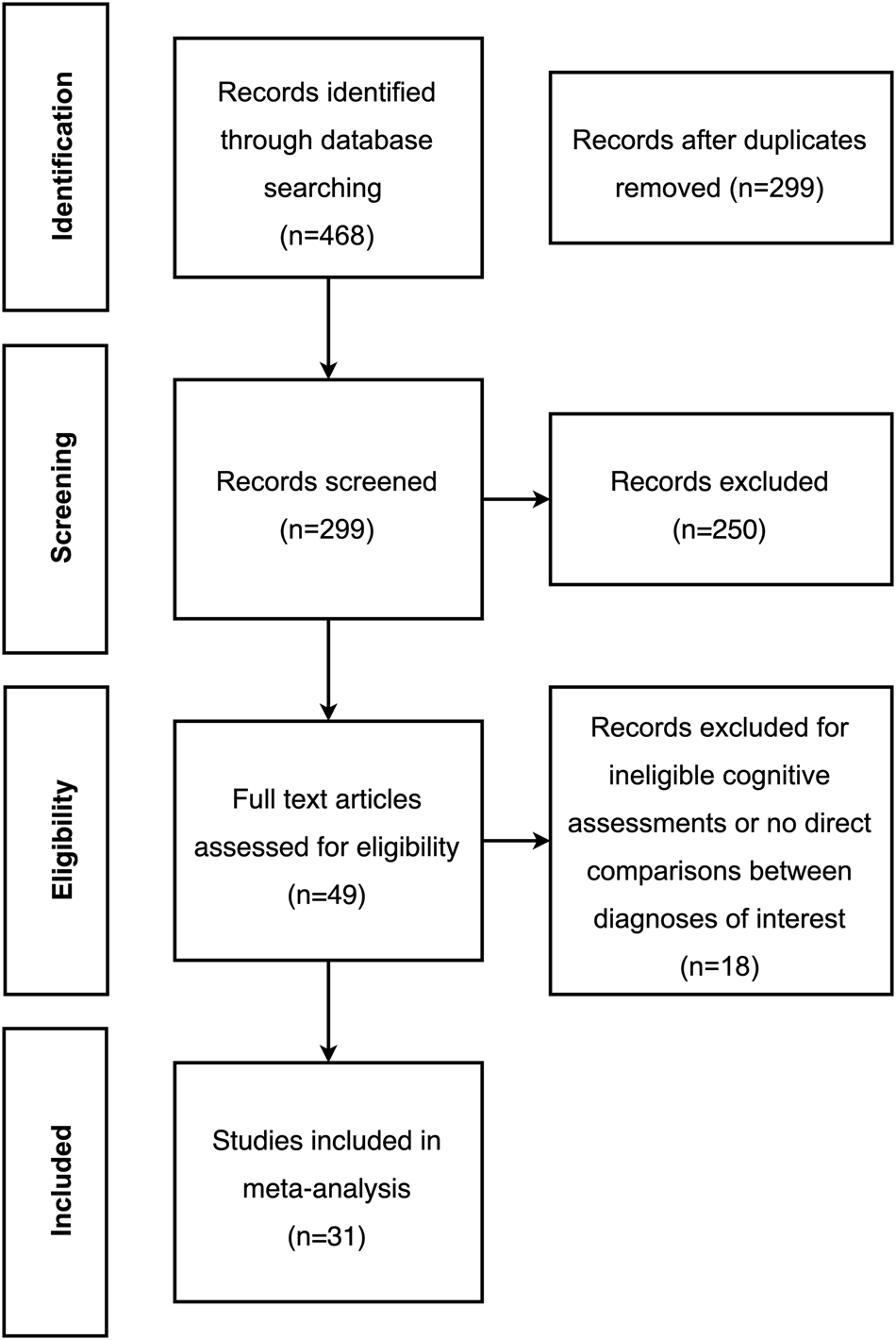
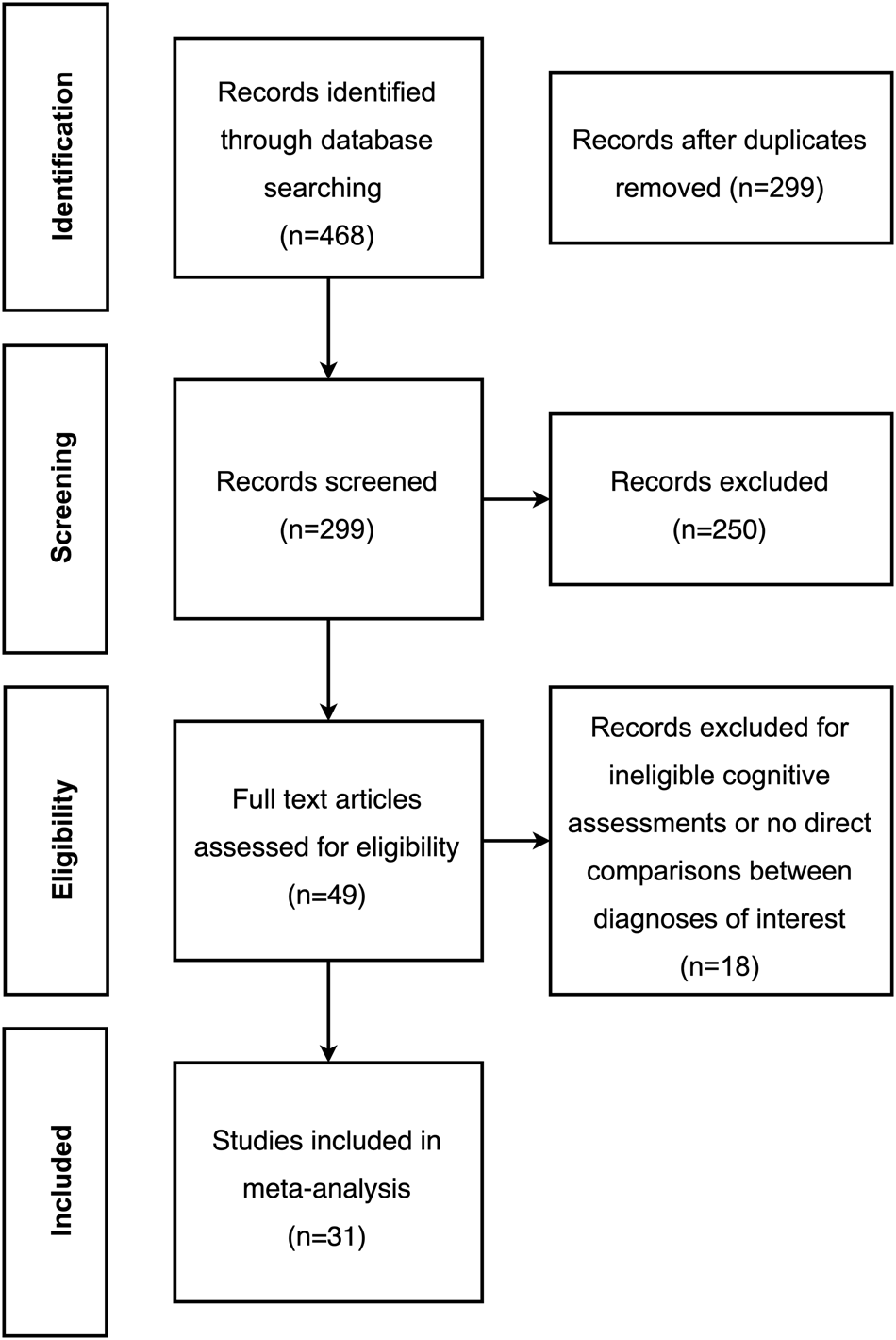
A total of 468 records were identified from the initial searches and the abstracts screened for inclusion. Initially, 419 studies were excluded as either duplicate or not meeting inclusion criteria. A further 18 articles were excluded after examination of the full texts, mainly because these studies had combined diagnostic groups and thus, we were unable to calculate separate effect sizes. One study was excluded because summary statistics or effect sizes were not available. This resulted in 31 studies being included in the meta-analysis. In total, there were 1685 participants with schizoaffective disorder, 3357 participants with schizophrenia and 1095 participants with bipolar disorder. Figure 1 shows the PRISMA flowchart illustrating the process of filtering potential studies. Full details of the final studies included can be found in online supplementary Table S2.
PRISMA flowchart illustrating the methodological process of filtering potential studies. The records excluded at the screening phase (n = 250) included 25 reviews and meta-analyses, 93 studies that compared schizophrenia and bipolar disorder but not schizoaffective disorder and 132 studies that did not fit the aims of this reviews. Full-text articles were excluded due to combining diagnoses (n = 10), children or adolescent participants (n = 2), studies with unsuitable cognitive assessments (n = 3), studies reported proportion of participants impaired or not impaired (n = 2) or data were not available (n = 1).
Schizophrenia and schizoaffective disorder
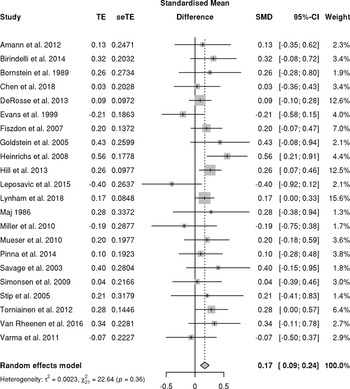
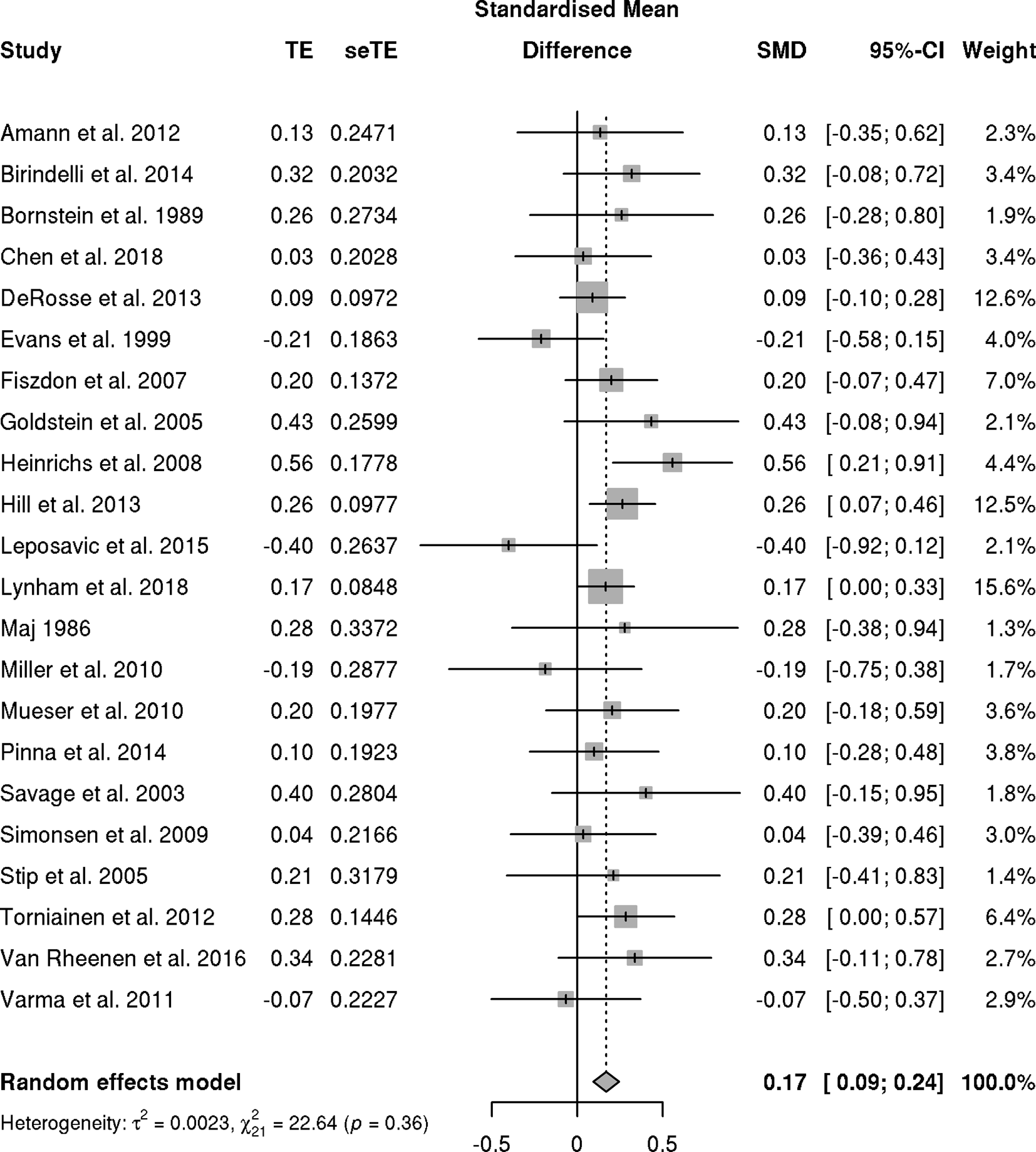
Composite cognition effect sizes were calculated for 22 studies comparing schizoaffective disorder (n = 1166) and schizophrenia (n = 2851). Participants with schizoaffective disorder performed better than participants with schizophrenia based on composite cognition scores (g = 0.17, p < 0.0001, see Fig. 2). Effect size distributions were homogeneous (T 2 = 0 0.002; Q = 22.64, p = 0.36) and there was no evidence of publication bias (Egger: bias = −0.23). Meta-regression analyses were conducted to investigate the influence of nine variables: age, sex, years in education, age of onset, duration of illness, antipsychotic use, psychotic, depressive and negative symptoms. Meta-regression analyses were not significant for any of the variables examined (see online supplementary Table S3).
Forest plot of individual and pooled random effect estimates of mean differences between schizophrenia and schizoaffective disorder. Positive effect sizes indicate better performance in the schizoaffective disorder group.
In analyses examining individual cognitive domains, the schizoaffective group outperformed the schizophrenia group in verbal learning (g = 0.24), speed of processing (g = 0.18), visuospatial learning (g = 0.20), verbal fluency (g = 0.14) and working memory (g = 0.09), although there was evidence of heterogeneity in the domains of verbal learning, executive function and speed of processing (see online supplementary Table S4).
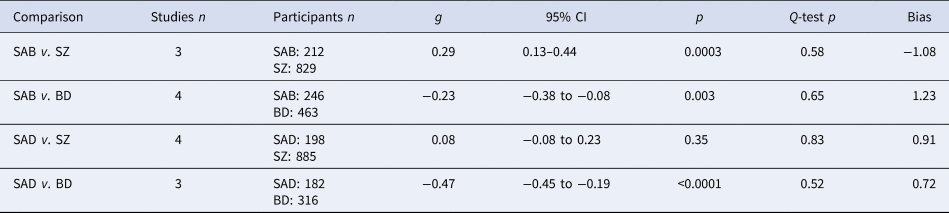
The meta-analyses were repeated for the separate subtypes of schizoaffective disorder: schizoaffective bipolar type and schizoaffective depressive type (see Table 1 for results). There was no significant difference between participants with schizophrenia and participants with schizoaffective disorder – depressive type (g = 0.08, p = 0.35). Participants with schizoaffective disorder – bipolar type outperformed participants with schizophrenia (g = 0.29, p = 0.0003). The results of the Q-test and Egger's test indicated that there was little evidence of heterogeneity or publication bias, but these tests have low power when there is only a small number of studies included.
Pooled effect sizes for comparisons between subtypes of schizoaffective disorder and schizophrenia/bipolar disorder
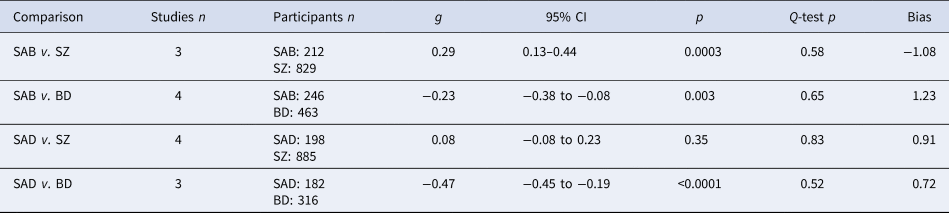
BD, bipolar disorder; SAB, schizoaffective disorder – bipolar type; SAD, schizoaffective disorder – depressive type; SZ, schizophrenia.
The null hypothesis of a Q-test is that the studies' effect sizes are homogeneous. A p-value less than 0.1 indicates there is evidence of heterogeneity. Egger's statistic is a measure of publication bias and values further from zero indicate greater evidence of publication bias.
Bipolar disorder and schizoaffective disorder
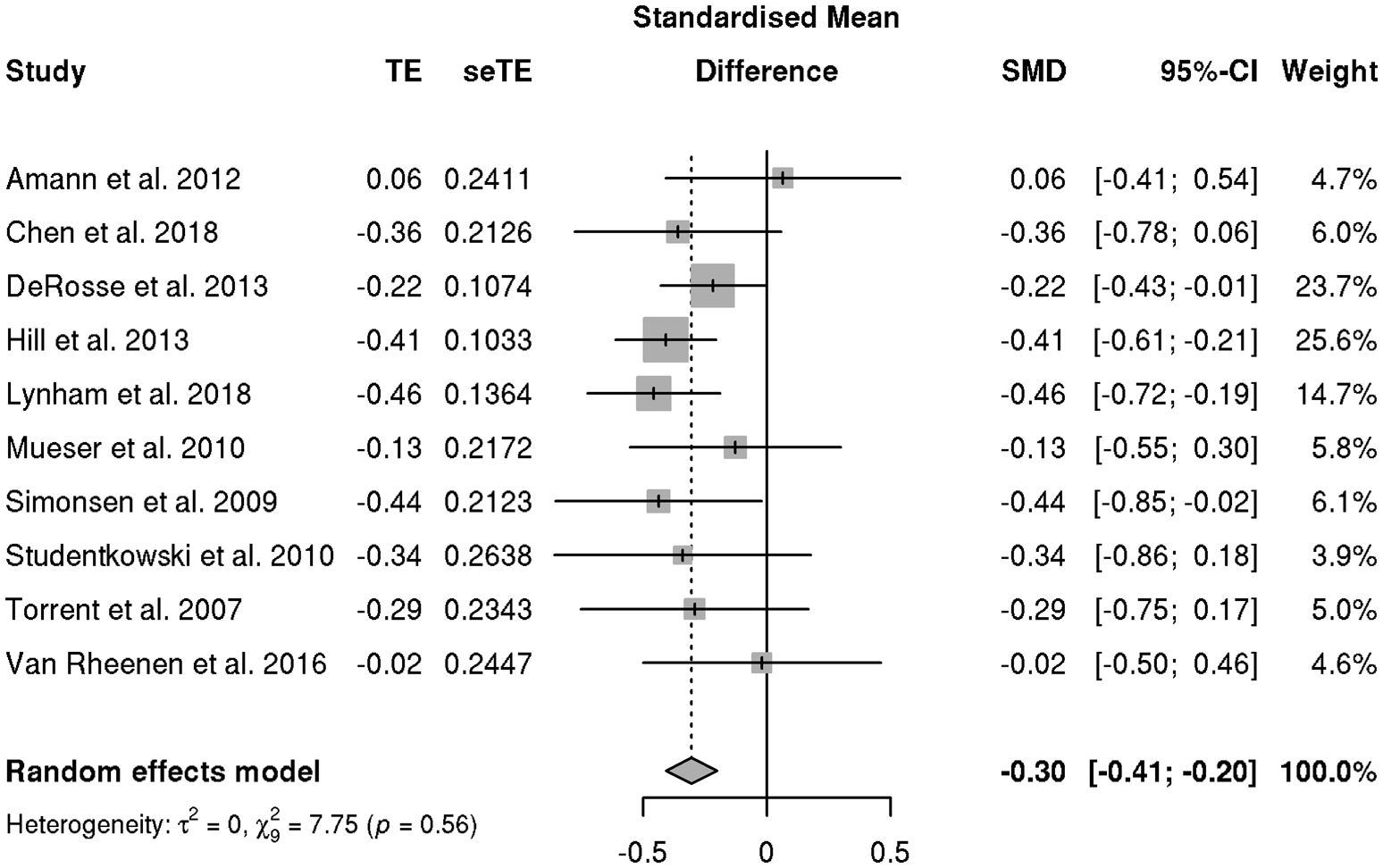
Composite cognition effect sizes were calculated for 10 studies comparing schizoaffective disorder (n = 732) and bipolar disorder (n = 946). Participants with schizoaffective disorder performed worse than participants with bipolar disorder (g = −0.30, p < 0.0001, see Fig. 3). Effect size distributions were homogeneous (T 2<0.0001; Q = 7.75, p = 0.56) and there was no evidence of publication bias (Egger: bias = 0.99). These results did not change when the analysis was repeated including participants with bipolar disorder – type I only (g = −0.30, p < 0.0001). Participants with schizoaffective disorder performed worse than participants with bipolar disorder and psychosis (g = −0.39, p = 0.0002), and participants with bipolar disorder without a history of psychosis (g = −0.47, p = 0.001). Meta-regression analyses were conducted to investigate the influence of eight variables: age, sex, duration of illness, antipsychotic use, psychotic, depressive, negative and manic symptoms. There was insufficient data to examine the influence of age of onset and years in education for studies comparing bipolar disorder and schizoaffective disorder. Meta-regression analyses were not significant for any of the variables examined (see online supplementary Table S3).
Forest plot of individual and pooled random effect estimates of mean differences between schizoaffective disorder and bipolar disorder. Positive effect sizes indicate better performance in the schizoaffective disorder group.

In analyses examining individual cognitive domains, performance in the schizoaffective group was worse than bipolar disorder in verbal learning (g = −0.42), executive function (g = −0.36), speed of processing (g = −0.35), verbal fluency (g = −0.32) and working memory (g = −0.30, see online supplementary Table S4). Data comparing visuospatial learning between bipolar disorder and schizoaffective disorder were not available. There was evidence of heterogeneity in the effect sizes for speed of processing (Q = 13.45, p = 0.04) and verbal learning (Q = 13.41, p = 0.02).
The meta-analyses were repeated for the separate subtypes of schizoaffective disorder: schizoaffective bipolar type and schizoaffective depressive type (see Table 1 for results). The schizoaffective bipolar group had lower overall cognitive scores than bipolar disorder (g = −0.23, p = 0.003). The schizoaffective depressive group were more impaired than those with bipolar disorder (g = −0.47, p < 0.0001). The results of the Q-test and Egger's test indicated that there was little evidence of heterogeneity or publication bias, but these tests have low power when there is only a small number of studies included.
Subtypes of schizoaffective disorder
Only two studies reported separate cognitive data for both subtypes of schizoaffective disorder, bipolar (N = 186) and depressive (N = 167). Participants with the depressive subtype of schizoaffective disorder had worse performance than those with the bipolar subtype but this difference was not significant (g = 0.25, p = 0.05). Effect size distributions were homogeneous (T 2 = 0.008; Q = 1.31, p = 0.25). Egger's bias cannot be calculated for two studies.
Discussion
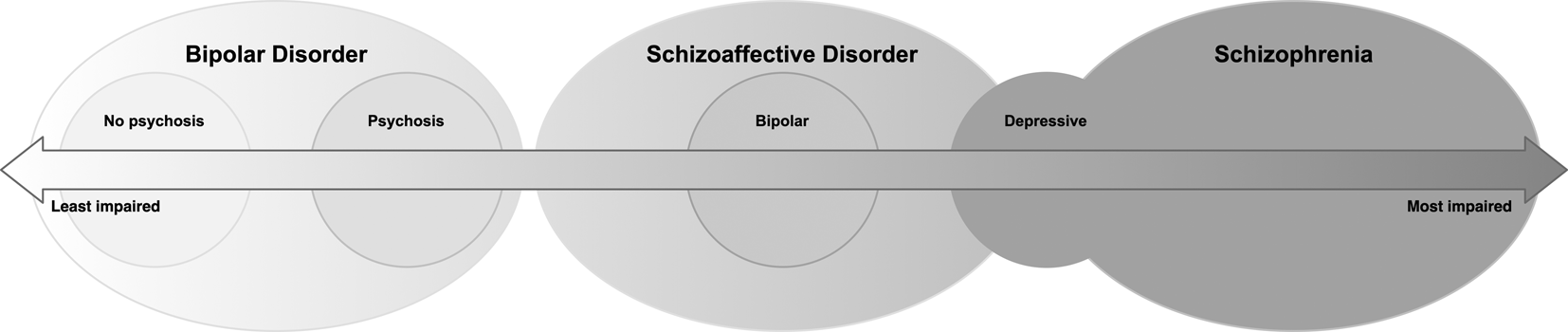
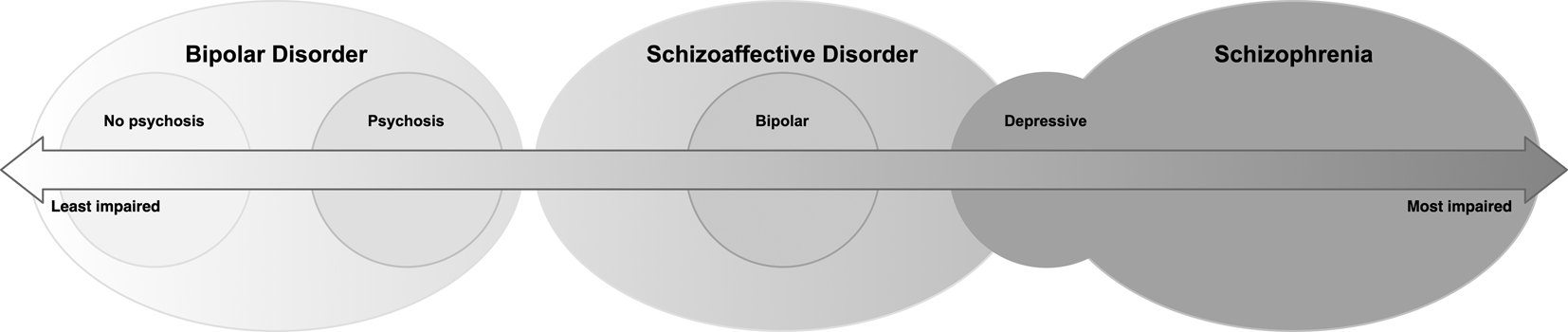
The aim of this meta-analysis was to compare the cognitive outcomes of schizoaffective disorder with schizophrenia and bipolar disorder. This is the first meta-analysis to compare the cognitive performance of participants with schizoaffective disorder and bipolar disorder. It is also the first review that has examined whether the subtypes of schizoaffective disorder differ in cognitive outcomes compared to schizophrenia and bipolar disorder. Cognitive performance of participants with schizoaffective disorder was intermediate between those with bipolar disorder and schizophrenia. Meta-analyses of the subtypes of schizoaffective disorder indicated that participants with the depressive subtype had cognitive impairments closer in severity to those seen in participants with schizophrenia, whereas those with the bipolar subtype were more impaired than participants with bipolar disorder and less impaired than those with schizophrenia (see Fig. 4). Participants with the depressive subtype had worse cognitive performance than those with the bipolar subtype but this was not significant and only two studies had reported separate cognitive data for both subtypes.
Cognitive performance across the bipolar-schizophrenia diagnostic spectrum.
Schizoaffective disorder and bipolar disorder
The schizoaffective disorder group exhibited worse performance across all cognitive domains compared to the bipolar disorder group. This supports the conclusions of a review by Madre et al. (Reference Madre, Canales-Rodríguez, Ortiz-Gil, Murru, Torrent, Bramon and Amann2016) who suggested that cognitive impairments are more severe in schizoaffective disorder than in bipolar disorder. Other reviews have concluded that bipolar disorder and psychosis are associated with similar cognitive impairments to those seen in schizoaffective disorder (Bora et al., Reference Bora, Yucel, Fornito, Berk and Pantelis2008), whilst participants with bipolar disorder and no history of psychosis have less severe deficits (Bora et al., Reference Bora, Yucel, Fornito, Berk and Pantelis2008; Kuswanto et al., Reference Kuswanto, Chin, Sum, Sengupta, Fagiolini, McIntyre and Sim2016; Lewandowski et al., Reference Lewandowski, Cohen and Öngur2011a). We found evidence that both subtypes of bipolar disorder (with and without history of psychosis) had less severe impairments than schizoaffective disorder, although a larger magnitude of effect size was found between schizoaffective disorder and bipolar disorder without psychosis than the difference between schizoaffective disorder and bipolar disorder with psychosis. Our results expand on previous reviews by showing that mania within schizoaffective disorder is associated with less impaired cognition, compared to participants with schizoaffective disorder – depressive type and schizophrenia. Taken together, these results suggest that there is not a simple dichotomy in cognitive function between those with a history of psychosis and those without. The reasons why participants with a diagnosis of a manic disorder are less cognitively impaired than participants with schizophrenia are unclear but could include differences in illness course (episodic or chronic), symptom profiles, age of onset, medication or underlying psychopathology. In their meta-analysis comparing cognition between schizophrenia and bipolar disorder, Bora et al. (Reference Bora, Yucel and Pantelis2009) reported that variability in the magnitude of the effect sizes between studies was driven by the percentage of males, severity of negative symptoms and age of onset of the schizophrenia samples included, and these factors may also impact performance in schizoaffective disorder. There is some evidence that current mood symptoms, particularly depressive symptoms, are associated with greater impairments in executive function and verbal fluency (Chaves et al., Reference Chaves, Lombardo, Bearden, Woolsey, Martinez, Barrett and Glahn2011; Frangou, Donaldson, Hadjulis, Landau, & Goldstein, Reference Frangou, Donaldson, Hadjulis, Landau and Goldstein2005). However, we did not find any moderating effects of current depressive, psychotic, manic or negative symptoms in these analyses.
Bipolar disorder – type I has been shown to be associated with more widespread cognitive impairments than type II (Bora, Yücel, Pantelis, & Berk, Reference Bora, Yücel, Pantelis and Berk2011). The results of a sensitivity analysis including type I only was comparable to the meta-analysis including both subtypes. However, it was not possible to compare bipolar disorder – type II and schizoaffective disorder, as only one study reported separate data for type II.
Schizoaffective disorder and schizophrenia
Participants with schizoaffective disorder were less cognitively impaired than participants with schizophrenia. This is consistent with the findings of an earlier meta-analysis (Bora et al., Reference Bora, Yucel and Pantelis2009). The effect size reported in the current study (g = 0.17) fell within the range of effect sizes reported by the earlier meta-analysis (d = 0.08–0.32). The difference between schizoaffective disorder and schizophrenia was smaller than the effect size of the schizoaffective disorder and bipolar disorder analysis (g = −0.30). This is consistent with the conclusions drawn in the review by Madre et al. (Reference Madre, Canales-Rodríguez, Ortiz-Gil, Murru, Torrent, Bramon and Amann2016), which suggested that the degree of cognitive impairments in schizoaffective disorder is closer to that of schizophrenia than bipolar disorder.
There were inconsistencies between the results of the individual studies, with approximately half of the studies reporting greater impairment in the schizophrenia group than the schizoaffective disorder group and the remaining studies reporting no differences. There are a number of factors that may account for these inconsistent findings, including differences in cognitive assessments, the recruitment of acutely unwell v. euthymic patients, and the inclusion of subtypes of schizophrenia and schizoaffective disorder. Studies included in this meta-analysis have reported that the presence of negative symptoms or the inclusion of participants with non-paranoid subtypes of schizophrenia are associated with more severe impairments (Bornstein et al., Reference Bornstein, Nasrallah, Olson, Coffman, Torello and Schwarzkopf1990; Goldstein, Shemansky, & Allen, Reference Goldstein, Shemansky and Allen2005; Savage, Jackson, & Sourathathone, Reference Savage, Jackson and Sourathathone2003; Torniainen et al., Reference Torniainen, Suvisaari, Partonen, Castaneda, Kuha, Suokas and Tuulio-Henriksson2012). In addition, we found evidence that the subtypes of schizoaffective disorder may be associated with differing levels of cognitive impairment (Hill et al., Reference Hill, Reilly, Keefe, Gold, Bishop, Gershon and Sweeney2013; Lynham et al., Reference Lynham, Hubbard, Tansey, Hamshere, Legge, Owen and Walters2018) (discussed further in the next section). However, we did not find any moderating effects of age, sex, age of onset, duration of illness, years in education, psychotic, depressive or negative symptoms. In conclusion, the proportion of participants with each subtype of schizoaffective disorder or schizophrenia may influence the effect sizes in comparisons of cognitive function between schizophrenia and schizoaffective disorder.
Cognition across the three disorders
It has been hypothesised that schizoaffective disorder may represent the midpoint in a bipolar-schizophrenia diagnostic spectrum (Crow, Reference Crow1990). This spectrum ranges from bipolar disorder without psychosis at one end and schizophrenia without affective symptoms at the other with patients with features of both disorders falling at some point in the middle (Craddock & Owen, Reference Craddock and Owen2005; Crow, Reference Crow1990; Owen, Reference Owen2014). Support for a dimensional approach comes from research showing the overlap in the symptom profiles of these disorders (Keshavan et al., Reference Keshavan, Morris, Sweeney, Pearlson, Thaker, Seidman and Tamminga2011), as well as evidence that the functional outcome of schizoaffective disorder is poorer than bipolar disorder but better than schizophrenia (Benabarre et al., Reference Benabarre, Vieta, Colom, Martínez-Arán, Reinares and Gastó2001; Harrow, Grossman, Herbener, & Davies, Reference Harrow, Grossman, Herbener and Davies2000). Our finding that the degree of cognitive impairment increases from bipolar disorder to schizoaffective disorder to schizophrenia is consistent with this view.
In our analyses of individual cognitive domains, participants with schizoaffective disorder were more impaired across all domains compared to participants with bipolar disorder. Effect sizes were smaller in comparisons between schizoaffective disorder and schizophrenia, but the most significant differences were observed for verbal learning (g = 0.24) and speed of processing (g = 0.18). Comparable effect sizes were reported in an earlier meta-analysis (Bora et al., Reference Bora, Yucel and Pantelis2009), which found the schizophrenia group were more impaired than the schizoaffective disorder group on verbal memory (d = 0.23), Wisconsin Card Sorting Test (d = 0.21) and processing speed (d = 0.24). This is an interesting finding as previous studies have shown that most of the impairments in specific domains seen in participants with schizophrenia can be accounted for by a general intelligence factor (‘g’) but ‘g’ does not fully account for deficits in processing speed and verbal learning (Dickinson, Iannone, Wilk, & Gold, Reference Dickinson, Iannone, Wilk and Gold2004; Dickinson, Ragland, Gold, & Gur, Reference Dickinson, Ragland, Gold and Gur2008). This suggests that these abilities may be disproportionately affected in patients with schizophrenia and may differentiate them from participants with schizoaffective disorder.
Few studies reported the proportion of subtypes of schizoaffective disorder in their sample. Therefore, it is difficult to draw any firm conclusions about differences in cognitive performance between the subtypes. In the subgroup analysis, no difference in cognitive performance was detected between participants with the depressive subtype and schizophrenia, although performance was marginally better in the schizoaffective disorder – depressive type group. A larger effect size was observed between the bipolar subtype and schizophrenia. Both subtypes were more impaired than bipolar disorder. These results suggest that the depressive subtype of schizoaffective disorder may have more severe cognitive impairments than those seen in the bipolar subtype and more closely resemble that of schizophrenia. Whilst there was some evidence of this in our comparison of the subtypes, this difference was not significant and should be interpreted with caution given that only two studies had data available.
Limitations
Several limitations of this meta-analysis should be noted. A small number of studies specified the subtypes of schizoaffective disorder and only two studies contained disaggregated data on both subtypes. Therefore, the results for the subtypes should be interpreted with caution. The studies included in this review employed different measures of cognition, which may explain the heterogeneity in the distribution of effect sizes for some domains. However, there was little evidence of heterogeneity in the analyses of composite cognition scores. There were also differences in the inclusion of stabilised and symptomatic participants across studies and few included a definition of remission. It has been argued that cognitive impairment may be affected by illness state at the time of assessment and studies of inpatients included in this meta-analysis reported no differences in cognitive performance between patient groups (Amann et al., Reference Amann, Gomar, Ortiz-Gil, McKenna, Sans-Sansa, Sarró and Pomarol-Clotet2012; Lewandowski et al., Reference Lewandowski, Cohen, Keshavan and Öngür2011b; Szoke et al., Reference Szoke, Meary, Trandafir, Bellivier, Roy, Schurhoff and Leboyer2008). Most studies included in this analysis recruited participants from outpatient clinics and therefore our results may not be generalisable to acutely unwell participants.
This meta-analysis included studies from a wide range of countries and thus their methodologies differed on diagnostic criteria and cognitive assessments (both type and language). The use of different diagnostic criteria is particularly relevant in this meta-analysis, as criteria for schizoaffective disorder varies considerably between the Diagnostic and Statistical Manual (DSM), International Classification of Diseases (ICD) and Research Diagnostic Criteria (RDC). The majority of the studies (N = 27) used DSM criteria so the diagnosis of schizoaffective disorder relied on mood symptoms being present for a substantial proportion of the total illness duration, with a period of at least 2 weeks of psychosis in the absence of mood. In contrast, ICD (utilised by one study) places an emphasis on first rank symptoms of schizophrenia for the diagnosis of schizoaffective disorder. Vollmer-Larsen et al. (Vollmer-Larsen, Jacobsen, Hemmingsen, & Parnas, Reference Vollmer-Larsen, Jacobsen, Hemmingsen and Parnas2006) demonstrated that using ICD-10 and DSM-IV to diagnose schizoaffective disorder results in a different set of patients. Four studies defined schizoaffective disorder according to the RDC. Schizoaffective disorder in RDC includes a broad range of patients including those with brief psychotic symptoms and chronic mood symptoms, and the converse (Spitzer, Endicott, & Robins, Reference Spitzer, Endicott and Robins1978). Thus, participants diagnosed with RDC schizoaffective disorder are a broad, heterogeneous group. The results of this meta-analysis are most generalisable to patients diagnosed according to the DSM and the results of studies using ICD or RDC may differ from those presented here.
Conclusions
Based on this review, we make several recommendations for future research. Studies should report the clinical characteristics of their sample, including patient status (with defined remission criteria), measures of mood, psychosis and negative symptoms, and classes and doses of psychiatric medication. The results of our analyses separating the subtypes of schizoaffective disorder have important implications for diagnostic classification and highlight the importance of considering heterogeneity within disorders. Studies that simply combine the subtypes of schizoaffective disorder may produce conflicting results and hamper efforts to understand the relationship between this disorder and schizophrenia or bipolar disorder. Given the heterogeneity of cognitive performance within diagnoses and the overlap in clinical features and underlying biology between disorders, a dimensional approach to measuring psychopathology [such as the National Institute for Mental Health's Research Domain Criteria (Insel, Reference Insel2014; Insel et al., Reference Insel, Cuthbert, Garvey, Heinssen, Pine, Quinn and Wang2010; Morris & Cuthbert, Reference Morris and Cuthbert2012)] may better inform investigations of the underlying aetiology of cognitive impairments in psychotic and mood disorders.
Supplementary material
The supplementary material for this article can be found at https://doi.org/10.1017/S0033291720002020
Acknowledgements
We thank the authors of included studies who responded to our requests for data. This work was supported by a Medical Research Council (MRC) PhD studentship to A.J.L. The work at Cardiff University was funded by the Medical Research Council (MRC) Centre (MR/L010305/1) and Program Grant (G0500509).
Conflict of interest
None.