


The revival of early music performed on original instruments has resurrected the role of the violinist-conductor ‘maestro dei concerti’, one historical designation among many describing a conductor equipped with an instrument rather than a baton. Prior to this revival, one rarely saw an orchestra led without a baton, particularly if the orchestra was sizeable. Exceptions included a few historically minded ensembles – here I'd like to mention I Musici of Rome for the baroque repertory and, for a case involving a large symphonic orchestra, the Vienna Philharmonic's 1996 New Year's Eve Concert, at which Lorin Maazel directed one of the popular Strauss encores from the violin. Yet the idea of having a violinist conduct a romantic symphony, let alone a nineteenth-century opera, seems hardly conceivable today. Such a lost practice, though common in the past, would be bound to baffle modern audiences.
Let us begin by recalling a few historical facts. Whereas in the eighteenth century the harpsichord shared directorial duties with the first violin, in the early to mid-nineteenth century the keyboard instrument maintained pride of place in opera, partly because of the continuing performance of works that included secco recitatives. But how did the roles of first violin and ‘maestro al cembalo’ (or, depending on time and place, ‘al fortepiano’) interact? On the one hand, composers were often contractually required to supervise the first three performances of an opera from the keyboard while also giving important performance directions to the orchestra; on the other, as Giuseppe Scaramelli writes in his Saggio sopra i doveri di un primo violino direttore d'orchestra (Trieste: Weis, 1811; Essay on the Duties of a First-Violin Orchestral Conductor), the first violin was the undisputed leader of the orchestra and the individual responsible for a successful performance. Still, various nineteenth-century sources inform us that both the keyboard player and the first violinist led performances, at times even cooperating. Here are just a few examples:
-
• In Paris in 1825 Johann Baptist Cramer conducts symphonic music from the violin, while an unidentified violinist conducts at the Théatre Italien.
-
• Also in the 1820s Gioacchino Rossini leads from the fortepiano in London, as does Giovanni Pacini in Rome.
-
• In 1831 a conductor from the fortepiano is again attested to in London, in 1839 Françoise-Antoine Habeneck conducts with his violin at the Paris Conservatoire (as reported by Richard Wagner), and as late as 1859 (!) a violinist conducts at the opera house in Trieste.
To these examples we can add those revealing a ‘noisy’ trend (una direzione ‘rumorista’), whereby conductors beat time percussively in apparent imitation of the metronome – an irritating and unthinkable practice today:
-
• In Naples in 1820 a conductor marks the beat by hitting a stand with his bow (reported by Felix Mendelssohn).
-
• In Vienna around 1820 rolled-up paper is used in similar fashion.
-
• In Naples (1831) and an unspecified German city (1840) the first violinist beats on the stand with a baton (reported by Hector Berlioz in both cases).
We should also note that Italian opera librettos between about 1800 and 1860 typically credited not only a ‘primo violino e direttore d'orchestra’ but also a ‘direttore della musica’. What was the latter's function? Opera is a complex machine, and we might interpret the ‘direttore della musica’ as a manager whose responsibilities ranged from coordinating stage action and the orchestra during rehearsals to accommodating singers’ myriad requests for alterations (interpolation of arias, transpositions and so forth), to supervising materials and making choices regarding scores (whether the ‘official’ voice-and-piano reductions used by singers and printed by publishers who owned a given opera's rights, pirated copies of orchestral parts that helped dodge rental costs or adapted versions made necessary by local contexts and performance abilities).
Let us now return to the violinist-conductor: what are the benefits of such a now-obsolete role? One valuable interpretative goal is approximating historical performance styles (a personal interest of mine, by which I do not intend to discredit other, different goals), but here two caveats must be addressed. First, to conduct and perform any work with an orchestra of more than twenty players, one must know the score almost by heart or at least possess a first-violin part that includes the cues for all other parts. Several specimens of such extraordinary parts survive, embracing the chronological span between Cimarosa's operas and Verdi's of 1855–1860. However, in these original materials the vocal cues often reproduce the text but not the notes of their respective parts (singers evidently possessed such clear diction that conductors were able to follow them without notated vocal parts), but occasionally cues are missing altogether. Which comparable modern materials can we employ to conduct an opera while at the same time playing the violin? My experience tells me that a vocal score, purposefully modified to include the first violin part, offers a good solution and resembles in function the old parts for violinist-conductors that we can peruse in libraries and archives.
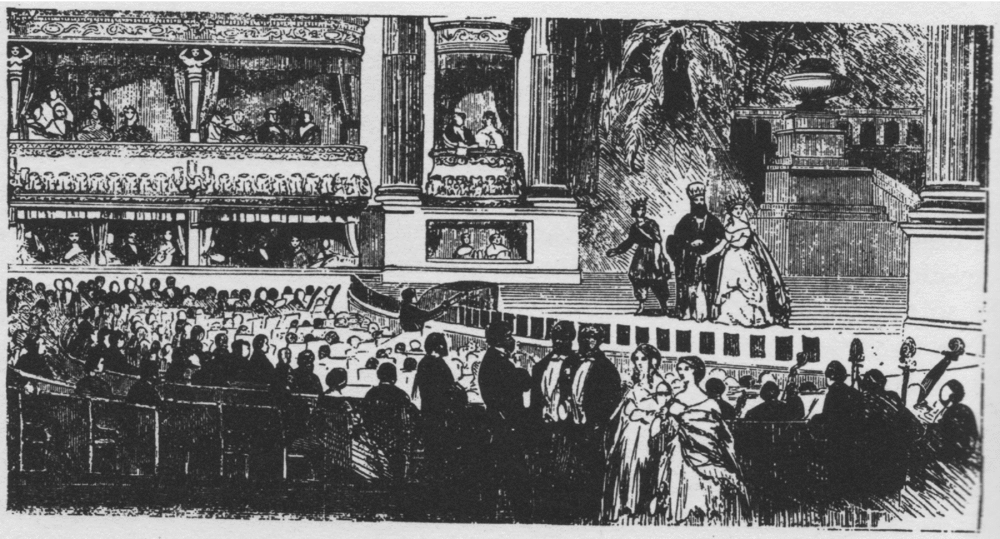
The second caveat concerns the orchestra's seating plan, which needs readjustment. Modern symphonic orchestras typically keep exaggerated spaces among stands, with the result that the percussion and woodwinds in the back row are far removed from the conductor, as are the double basses. In opera, one must also consider that the orchestra led by the violinist-conductor should be raised to a level at which musicians’ heads almost reach the stage – an arrangement historically attested until the ‘mystic gulf’ caused the pit's collapse toward the netherworld. In addition, we should evaluate the diverse spatial dispositions orchestras adopted during the nineteenth century, which varied according to the configurations and sizes of theatres. This topic deserves fuller treatment elsewhere, but we should nevertheless note that some old seating arrangements provide interesting solutions that might dispel the constant threat of excessive ‘sonorization’ (‘fonizzazione’ eccessiva) from the brass, which repeatedly prompts conductors to plead for a softer sound or even to suppress some instrumental entries (often those of the trombones). Generally speaking, the revival of a historical seating arrangement might benefit singers, for instance by allowing them to hear the orchestra optimally without relying on ‘riporti’ (objects used to project the sound, thus rendering it unnatural). However, such an approach should be accompanied by a directorial rethinking that favours positioning singers on the proscenium, thus placing them in helpful proximity to the violinist-conductor and thus to the source of the orchestral sound. Iconography confirms this practice until approximately 1860 (see, for example, Figure 1).
Michael Costa conducting Rossini's Semiramide on the opening night of the Royal Italian Opera at Covent Garden, 6 April 1847. Reproduced from Adam Carse, The Orchestra from Beethoven to Berlioz: A History of the Orchestra in the First Half of the 19th Century, and of the Development of Orchestral Baton-Conducting (New York: Broude, 1949), 386
Conducting from the violin is generally beneficial because the violinist's gestures communicate phrasing and expression naturally to all other musicians in the orchestra, fostering a common way of ‘breathing’. A violinist's movements are less mechanical than those of a baton conductor and therefore provide singers with greater expressive freedom, facilitating a relaxation and ‘humanization’ of the accompagnati while also preserving rhythmic precision in arias and ensembles. Another advantage pertains to the handling of tempo changes during arias and ensembles (changes that abound in the operas of Bellini, Donizetti and Verdi). At such junctures, those who conduct from the violin are almost forced to find proportional tempo relationships that will facilitate such transitions. (Let us not forget that a nineteenth-century conductor faced significant logistical difficulties and typically had limited time to learn a new score, not to mention limited prospects for performance.) The problem of tempo change is especially evident when the onset of a new tempo is sudden, and it is occasionally complicated by entries of the chorus, particularly within accompagnati. It would be impossible to manage these moments without two strategies derived from historical practice. The first, which is especially interesting in view of recent insights regarding eighteenth-century accompagnato, derives from my conviction that long chords for the strings were not necessarily meant to be held for the entirety of their notated duration. Several composers’ performance directions preserved in scores, such as markings of ‘tenuto’, prove this and suggest that the string players’ custom of shortening semibreves and breves in secco recitatives should at times be applied by the orchestra in accompagnati as well.
The second strategy is a distinct way of handling tempo transitions that I employed in my recent experience with the original 1847 version of Verdi's Macbeth (at the festival Chopin and His Europe, Warsaw, August 2017). I find that the recitative's freedom of execution, which Verdi encouraged in his interpreters, may be abandoned when approaching a choral entry. Here the free and quasi-spoken delivery should become more rhythmically motoric, which in my view creates a fascinating effect. Such a technique enables the violinist-conductor to make a smooth exit from the role of accompanist and shift to conducting choruses and ensembles with the bow; this is necessary whenever the need for effective handling of the orchestra prevents him or her from playing.
Rubato is a technique that is often used excessively by modern interpreters, forcing the orchestra into a sort of ‘push-and-pull’ accompanimental style. I do not intend to discuss the historical basis for such practice, which has already been the subject of extremely interesting studies. Yet scores from the early nineteenth century onwards offer guidance with regard to this technique. In arias, frequent directions such as ‘colla parte’, ‘abbandonandosi a piacere’ and ‘con libertà’ indicate unmistakably where composers required tempo flexibility, and these indications should be honoured by conductors today. However, lacking such directions, a generally rigorous approach to tempo should be favoured, permitting a degree of freedom in melodic delivery only to the extent that it preserves clarity of pulse. When conducting from the violin, there is in fact a ‘physiological’ limit to how consistently one can wait for singers in arias and cabalettas. A general sharpness and regularity of tempo in the set pieces makes the tempo plasticity and theatricality of the recitatives more effective by virtue of contrast.
Moving back to the keyboards, I would like to point out that the removal of these instruments from the orchestra probably did not occur prior to the years 1840–1850. It is at any rate difficult to establish a date because the keyboard's exclusion depended to some degree on the gradual withdrawal of works featuring secco recitative, which was considered ‘ancient’ (a parallel phenomenon is the gradual disappearance of the ‘primo violoncello al cembalo’, a skilled musician possessing not only good taste but also knowledge of harmony and the ability to improvise chords over the bass line). It is worth noting that for some of these works, such as Rossini's Cenerentola (an opera that remained popular for practically the whole nineteenth century), new accompagnati were later composed expressly to replace the secco recitatives then deemed old-fashioned. At any rate, the keyboard remained in the orchestra until mid-century for various purposes, including its cooperation in the harmonic realization of the bass and the percussive-agogic effect it provided.
I am willing to concede that one can justifiably oppose the use of such keyboard instruments, with their unique timbre, in the operatic repertory so dear to today's melody lovers (melomani). And yet we still encounter people who are astonished to hear a Mozart symphony with a harpsichord or fortepiano in the orchestra. But if we take taste into consideration, we cannot consider the orchestral use of keyboard instruments from the late baroque to the romantic eras as improper.
To conclude this discussion, which is of course far from exhaustive, I would like to suggest a few conclusions. The existence of a violinist-conductor is undeniable until the middle of the nineteenth century, and this fact invites us to reflect on the interpretive practices of that time. Librettos and other sources pique our interest in this musician, who was entrusted by composers with the successful delivery of their works. The violinist-conductor embodied the virtuoso connoisseur and the cultivated professional who relied on experience to guide the orchestra through paths of astounding stylistic change. Examples of such musicians include Alessandro Rolla and Giuseppe Scaramelli who, at the Milanese Teatro alla Scala and in Trieste respectively, managed to remain at the forefront of their profession between the end of the eighteenth century and the full flowering of romanticism.



