Introduction
In France, smoking prevalence has decreased for a few years (Pasquereau, Andler, Arwidson, Guignard, & Nguyen Thanh, Reference Pasquereau, Andler, Arwidson, Guignard and Nguyen Thanh2020). However, social inequalities in tobacco consumption remain significant (Kotz & West, Reference Kotz and West2009; Pasquereau et al., Reference Pasquereau, Andler, Arwidson, Guignard and Nguyen Thanh2020). Also, 42.7% of the unemployed smoke as opposed to 25.3% of the employed in France (Pasquereau et al., Reference Pasquereau, Andler, Arwidson, Guignard and Nguyen Thanh2020). As a matter of fact, smoking prevalence is higher among those with low income or low education (Kotz & West, Reference Kotz and West2009; Pasquereau et al., Reference Pasquereau, Andler, Arwidson, Guignard and Nguyen Thanh2020). Conflicting findings in the literature suggest that, compared with more affluent smokers, socially disadvantaged smokers are either (1) as likely to attempt to quit but less likely to succeed or (2) less likely to attempt to quit for reasons other than intentional, such as high nicotine dependence, presence of smokers in their social circle, or high levels of stress due to financial constraints (Kotz & West, Reference Kotz and West2009; Reid, Hammond, Boudreau, Fong, & Siahpush, Reference Reid, Hammond, Boudreau, Fong and Siahpush2010).
Factors associated with socially disadvantaged smokers’ difficulties to quit may include lesser adherence to smoking cessation support and treatment (Hiscock, Judge, & Bauld, Reference Hiscock, Judge and Bauld2011). Moreover, disadvantaged smokers have fewer opportunities for social interaction, they use cigarettes for stress management and often perceive lack of support from health providers to quit smoking (Jackson, Prebble, Rose, & Holborn, Reference Jackson, Prebble, Rose and Holborn2002; Twyman, Bonevski, Paul, & Bryant, Reference Twyman, Bonevski, Paul and Bryant2014). Such a lack of social support may be associated with continued smoking or failure of smoking cessation attempts (Brown, Platt, & Amos, Reference Brown, Platt and Amos2014a). Yet, general social support for smoking cessation is important to behaviour change (Ochsner et al., Reference Ochsner, Luszczynska, Stadler, Knoll, Hornung and Scholz2014).
According to several researchers, disadvantaged smokers are nonetheless interested in cessation interventions (Roddy, Antoniak, Britton, Molyneux, & Lewis, Reference Roddy, Antoniak, Britton, Molyneux and Lewis2006). The effectiveness of smoking cessation methods among disadvantaged smokers is mixed. Individual interventions have not shown any positive equity impact among low-income smokers (Brown, Platt, & Amos, Reference Brown, Platt and Amos2014b). However, some literature reviews have pointed out the positive impact of financial support and emotional support in assisting smoking cessation (Merson, Perriot, Underner, Peiffer, & Fieulaine, Reference Merson, Perriot, Underner, Peiffer and Fieulaine2014; Stead, Carroll, & Lancaster, Reference Stead, Carroll and Lancaster2017).
Moreover, a recent study highlighted that a multi-component intervention with five motivational phone calls and provision of free nicotine replacement therapy (NRT) led to an increased rate of attempts to quit and a reduction in the number of cigarettes smoked per day (Bonevski et al., Reference Bonevski, Twyman, Paul, D'Este, West, Siahpush, Oldmeadow and Palazzi2018). Finally, covering the costs of smoking cessation treatment promotes adherence to treatment and increases quit attempts (Over et al., Reference Over, Feenstra, Hoogenveen, Droomers, Uiters and van Gelder2014).
Randomised clinical trials have demonstrated the effectiveness of group interventions for smoking cessation (McEwen, West, & McRobbie, Reference McEwen, West and McRobbie2006; Stead & Lancaster, Reference Stead and Lancaster2005). However, there is still a paucity of literature on the effectiveness of group interventions implemented in real-life settings among smokers, especially socially disadvantaged smokers (Guignard et al., Reference Guignard, Nguyen-Thanh, Delmer, Lenormand, Blanchoz and Arwidson2018).
So, based on the literature and social support theory, we designed an intervention combining the three components, which could help disadvantaged smokers making a quit attempt: informational support, emotional support, and instrumental support by distributing NRT free of charge on a weekly basis (Cohen & Wills, Reference Cohen and Wills1985). First, informational support was delivered through the group sessions content, with the provision of guidance and advice to assist the smokers in coping with withdrawal symptoms, and problem-solving due to their stressful life conditions for example. Secondly, instrumental support consisted of distributing NRT free of charge on a weekly basis. And finally, emotional support was provided through the team behaviours, which reflected empathy and supportive relations, to develop smokers’ self-confidence in their capability to reach their objectives for the upcoming group session. One way of providing informational and emotional support in real-life settings is through group therapy, where smokers can benefit from encouraging peer support by being regularly in contact with others who are trying to quit (McEwen et al., Reference McEwen, West and McRobbie2006; Westmaas, Bontemps-Jones, & Bauer, Reference Westmaas, Bontemps-Jones and Bauer2010).
We compared smokers’ smoking status at 6 weeks and 6 months as well as adherence to follow-up. We made the following hypotheses: the content of the group support would allow smokers to better deal with their tobacco dependence by examining the situations and emotions associated with cigarette consumption and as a result, they would accept to reduce their daily consumption as a first step to quit, due to their group participation. In addition, the information given on the health consequences of smoking linked to the different components of the tobacco smoke would encourage them to use NRT, as the low-income smokers often believe that NRT is not safe and might even be dangerous for their health (Roddy et al., Reference Roddy, Antoniak, Britton, Molyneux and Lewis2006). Our aim was to measure the real-life effectiveness of the choice of a multi-component group intervention, based on social support theory in comparison with individual usual care, among socially disadvantaged smokers in a French hospital-based smoking cessation service.
Methods
We implemented a two-arm non-randomised design, comparing the effectiveness of a multi-component structured behavioural intervention delivered in weekly group sessions for 6 weeks with free NRT, to a control group who received usual individual care, with free NRT, including three assessment points (baseline, 6-week follow-up, and 6-month follow-up). This study took place to study in the smoking cessation service of the Georges Pompidou European Hospital (HEGP) in Paris (France) between May 2011 and December 2012.
Recruitment, Screening, and Participants
Between January 2011 and December 2012, every adult smoker who contacted or was referred to the HEGP smoking cessation service was systematically screened for social precariousness. As an incentive for participation, the offer of free NRT during visits was underlined for disadvantaged smokers, as NRT had to be paid directly to the pharmacist on a specific prescription containing NRT products exclusively, with a differed reimbursement of a maximum annual sum of 150€ by the medical coverage insurance system (whereas there are no out-of-pocket expenses for usual medications).
During the first phone contact with the HEGP smoking cessation service, all participants received clear and adequate information on the differences between the course of the social support intervention and the individual visits.
To assess the socio-economic level, we used the Evaluation of Precariousness and Inequalities Health Examination Centers (EPICES) questionnaire, an individual indicator of precariousness with 11 items that take into account the multidimensional nature of the precariousness. The EPICES questionnaire was developed and validated in French health examination services and has been presented in previous literature (Nahon et al., Reference Nahon, Lahmek, Macaigne, Faurel, Sass, Howaizi, Fleury, Baju, Locher, Barjonet, Saillant, Moulin and Poupardin2009).
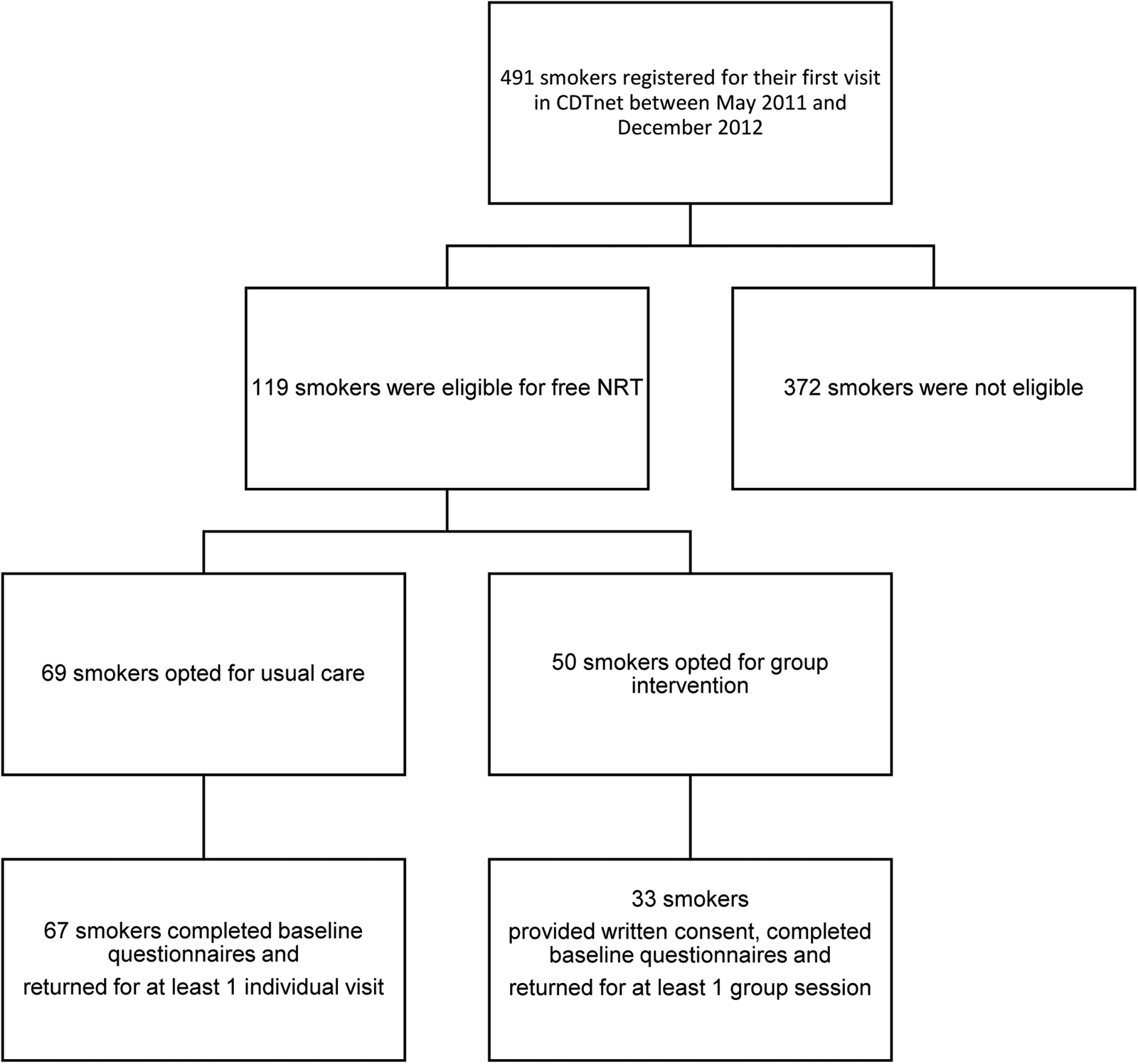
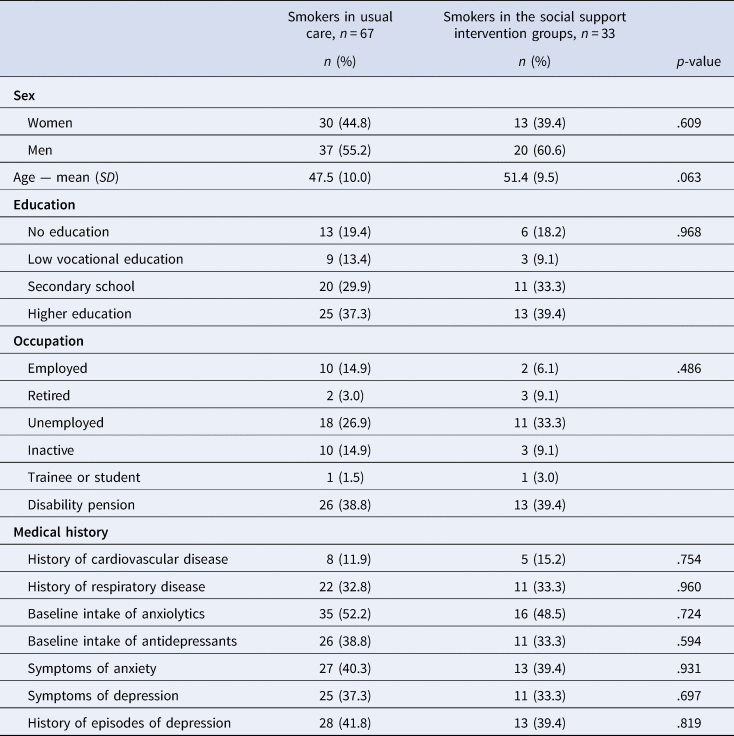
A group of 119 smokers with an EPICES score of ≥30 was potentially eligible to participate in the study. For those who completed the EPICES questionnaire by phone, we performed a second validation during their first visit. After this validation, those who were not disadvantaged smokers according to the EPICES score (n = 2) and those who did not come to the first consultation (n = 17) were not included in the study. A total of 67 smokers preferred individual visits (usual care), whereas 33 smokers chose to participate in the group intervention (Figure 1). Table 1 presents the socio-demographic characteristics and medical history of study participants. Smokers who chose the group intervention presented with similar baseline characteristics that were not statistically different from those of smokers in usual care. The median age of the participants included in the study was 47.5 years for the usual care and 51.4 years for those who received the group intervention. Men accounted for 55.2% (n = 37) of those who received usual care and 60.6% (n = 20) (p = .609) of those who chose to participate in the group intervention.
Study flowchart.

Socio-demographic Characteristics of Study Participants

Ethical Standards
This research received the agreement of the Committee for the protection of human subjects of the southwest of the greater Paris for this study as well as the agreement of the French National Auditing Committee on Informatics and Individual Liberty for the collection of data through the national smoking cessation services database CDT-Net (www.cdtnet.fr).
Content of Behavioural Support
In usual care, smokers were offered behavioural support during 30-min individual visits, except 45–60 min for the first visit. The frequency of the visits was flexible, ranging from once a week to once a month according to patients’ needs and the availability of staff. Usual care support included the following behaviour change techniques (BCTs), according to the Michie et al. (Reference Michie, Richardson, Johnston, Abraham, Francis, Hardeman, Eccles, Cane and Wood2013) taxonomy: facilitating action planning and goal setting; review outcomes goals; pharmacological support; information about health consequences of smoking and smoking cessation; and biofeedback (carbon monoxide — CO — monitoring).
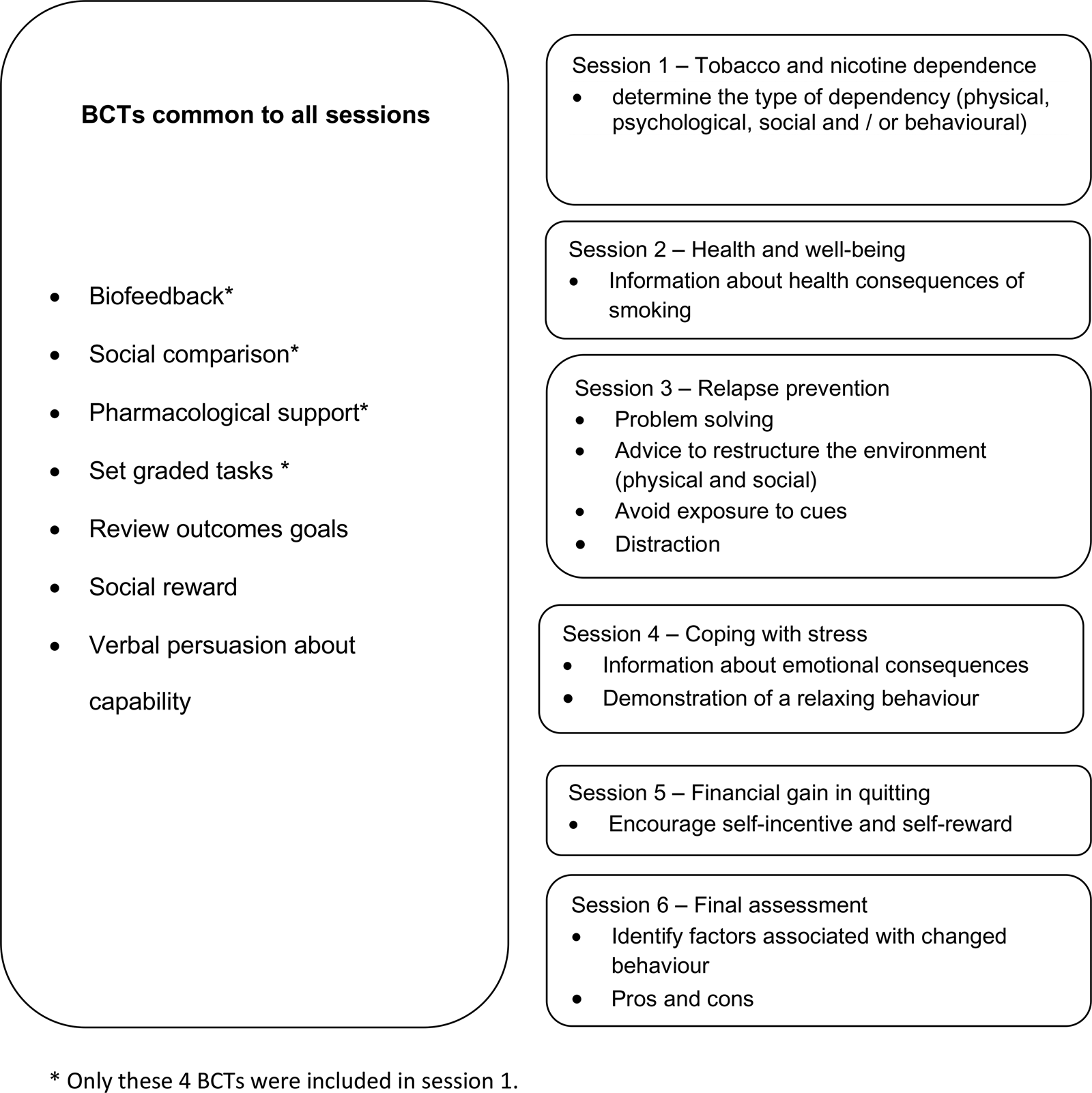
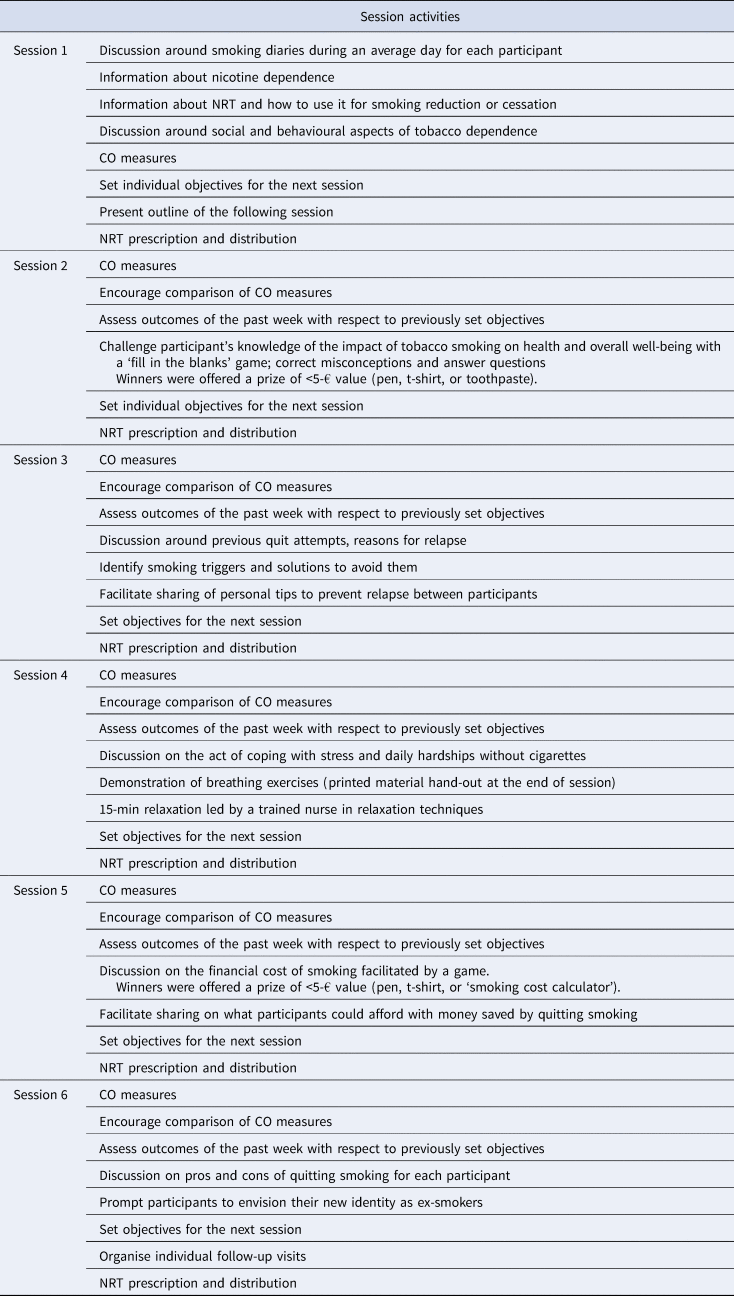
Participants of the group intervention were included in several consecutive groups according to their order of arrival. The group intervention offered behavioural support with structured content. Each group focused on a specific theme weekly according to the following programme: (1) tobacco dependence: physical, psychological, social, and/or behavioural; (2) health and overall well-being; (3) relapse prevention; (4) coping with stress without cigarettes; (5) financial cost of smoking; and (6) pros and cons of smoking cessation and perception of new identity as an ex-smoker. Table 2 presents sessions’ content and activities. Figure 2 presents the BCTs used in the different group sessions.
BCTs used in group sessions: common content and additional BCTs according to session topics.

Group-based Social Support Intervention Outline

On average, there were five patients per group. Each group attended closed sessions of 1.5 h, conducted by two team's members once a week for six consecutive weeks. For session 4 on the topic of coping with stress, a trained nurse in relaxation techniques joined the research team. During all sessions, the research team emphasised verbal encouragement for every progress and verbal persuasion about capability.
NRT Distribution and Individual Follow-up Visits
For this study, only NRT was delivered, as first-line smoking cessation treatment recommended in France (Haute Autorité de Santé, 2014). NRT preparations and doses available for prescription were transdermal patches (10, 15, or 25 mg over 16 h; 7, 14, or 21 mg over 24 h), 2-mg gums, 10-mg inhalers, and 2-mg sublingual tablets. Doses were adjusted during follow-up according to smokers’ progress. Smokers were only given enough treatment for 1 week (until their next visit). French smoking cessation guidelines include cutting down to quit with NRT (Haute Autorité de Santé, 2014). In the group intervention, smokers were thus encouraged to use NRT as soon as distributed. All patients who were offered NRT received a combination of nicotine patches and oral forms of NRT.
After 6 weeks, the group intervention participants were offered the same individual follow-up as smokers in usual care with free NRT.
Baseline Measures
Prior to their first visit, each study participant (n = 100) was asked to fill the national paper questionnaire used in French smoking cessation services contributing to the national smoking cessation database CDT-Net (Le Faou, Baha, Rodon, Lagrue, & Ménard, Reference Le Faou, Baha, Rodon, Lagrue and Ménard2009). This questionnaire provided information on the smokers’ socio-demographic data, medical history, tobacco information, alcohol, and cannabis use. Screening for anxio-depressive disorders was based on the Hospital Anxiety and Depression (HAD) Scale, which is a screening scale, including 14 items (seven for anxiety symptoms and seven for depression symptoms), with a scoring from 0 to 3, according to the symptom severity (Mykletun, Stordal, & Dahl, Reference Mykletun, Stordal and Dahl2001; Olssøn, Mykletun, & Dahl, Reference Olssøn, Mykletun and Dahl2005). A HAD-A score greater than 8 suggests an anxiety state, and a HAD-D score greater than 8 suggests a depressive state. The Fagerström score was used to determine cigarette dependence. It is a standard instrument for assessing the intensity of physical addiction to nicotine. It contains six items that evaluate the quantity of cigarette consumption, the compulsion to use, and dependence. In scoring the Fagerstrom Test for Nicotine Dependence, yes/no items are scored from 0 to 1, and multiple-choice items are scored from 0 to 3. The items are summed to yield a total score of 0–10. The higher the total Fagerström score, the more intense is the patient's physical dependence on nicotine (Heatherton, Kozlowski, Frecker, & Fagerström, Reference Heatherton, Kozlowski, Frecker and Fagerström1991). The DETA test, based on the English CAGE score, is a 4-item questionnaire, each question requiring a simple yes or no answer. We used it to assess the perception of alcohol consumption over a lifetime, a score greater than or equal to 2 characterising alcohol misuse (Aertgeerts, Buntinx, & Kester, Reference Aertgeerts, Buntinx and Kester2004).
Outcomes
The primary outcome was the rate of 1-month continued abstinence at 6 weeks after inclusion, assessed in group intervention as well as in usual care. Smoking abstinence was self-declared and biochemically verified by a CO measure in exhaled air of <10 ppm (Judge, Bauld, Chesterman, & Ferguson, Reference Judge, Bauld, Chesterman and Ferguson2005). The secondary outcome was the rate of reduction by 50% of baseline cigarette consumption assessed in each group (Hughes, Reference Hughes2000). During follow-up visits, cessation specialists measured CO levels in exhaled air, which verifies smoker's self-reported smoking status. Abstinence at 6 weeks after inclusion was biochemically validated with CO measures of <10 ppm. At 6 months, continued abstinence could be self-reported via a telephone call for patients who no longer attended follow-up visits. However, 91% of self-reported abstinence was CO-validated. Participants who missed more than one group intervention session were excluded from the study. Also, to ensure the internal validity of the study, all the group intervention sessions were conducted using the same procedures, using a pre-developed intervention manual for this study.
Statistical Analysis
A descriptive analysis was performed for all variables by calculating the mean and standard deviation for the quantitative variables and the proportion for the qualitative variables. Chi-square tests were used for categorical data: sex, education, occupation, medical history, referral origin, number of previous attempts to quit, history of alcohol abuse, and use of cannabis during the last 12 months. A Chi-square test was also performed to assess the association between smoking outcomes at 6 weeks post-quit between intervention group and usual care group. A Fisher's test was used to small samples of <5 to compare abstinence rates at 6 months between group intervention and usual care groups and adherence to follow-up in these two groups, respectively. The analysis of variance was used for continuous data for descriptive bivariate analysis: age, self-efficacy to quit, number of cigarettes per day, exhaled CO at first visit, and Fagerström score. People lost to follow-up were counted as smokers. Two-tailed p-values of ≤ .05 were considered statistically significant. Analysis was done using SAS software (version 9.2; SAS Institute, Cary, NC, USA).
Results
Between May 2011 and December 2012, 119 persons were eligible to participate in the study as disadvantaged smokers. Among them, 100 were included in our study.
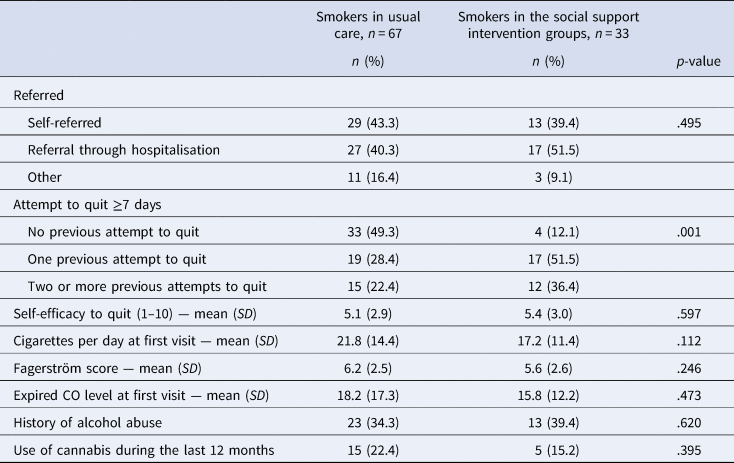
Table 3 presents addictive behaviour characteristics. The only significant difference between the two groups laid in the history of previous quit attempts. Smokers who opted for the group intervention had more often reported several previous quit attempts than smokers in usual care (p < .001). Only two patients (6.1%) dropped out of group intervention after their first session, whereas 31.3% (n = 21) of patients in usual care never returned to the cessation service after their initial visit (p = .005). All patients in the group intervention (n = 33) and 98.5% (n = 66) of the usual care patients received free NRT.
Addictive Behaviour Characteristics of Study Participants

Six weeks after their first visit, 24.2% (n = 8) of patients in the group intervention were abstinent versus 11.9% (n = 8) of patients in usual care (p = .115). In total, 36.4% (n = 12) of patients in the group intervention had cut down by half their cigarette consumption versus 16.4% (n = 11) in usual care (p = .026). Taking into account the baseline difference in quitting history, we did a second analysis excluding smokers with ≥2 previous quit attempts. Only differences in the percentages of patients who cut down their cigarette consumption by half became significantly different: 47.6% (n = 10) in the group intervention versus 15.4% (n = 8) in usual care (p = .007).
Six months after their first visit, patients from the group intervention attended more visits than patients in usual care. Means were, respectively, 10.2 (±5.6) visits versus 7.4 (±5.4) visits (p = .027). These results were significant once we excluded from the analysis smokers with ≥2 previous quit attempts. Likewise, 15.2% (n = 5) of patients from the group intervention and 4.5% (n = 3) of smokers in usual care were still abstinent (p = .111).
Discussion
Our study has enabled us to evaluate the real-life effectiveness of the choice of a multi-component group intervention in comparison with individual usual care among disadvantaged smokers seeking help to quit. This study showed that 1-month continued abstinence at 6 weeks was higher among disadvantaged smokers who chose group intervention. More precisely, 6 weeks after their first visit, 24.2% (n = 8) of intervention patients were abstinent versus 11.9% (n = 8) of usual care patients (p = .115). Our intervention also significantly increased the percentage of smokers who reduced their cigarette consumption. A study at a national scale had revealed that smokers who had never attempted smoking cessation before visiting a smoking cessation service were more likely to quit gradually than to do so abruptly (Baha & Le Faou, Reference Baha and Le Faou2014). Furthermore, the content of behavioural support was clearly structured and based on the theory of social support in the group intervention as well as distinct from what was offered in usual care. Some components of the group sessions might have accounted for its effectiveness. Particularly, it seems that game-based interventions contained in our group programme might have played a role in our results, by satisfying participants, increasing their current competences, while bringing them into a social context. Challenging participants’ knowledge of the impact of tobacco smoking on health and overall well-being allowed us to incorporate health communication in the game, as well as engage our group members to implement behaviour change, for example, by discovering the cardiovascular consequences of CO presence in blood when smoking. As a result, the weekly-based CO measure became an important moment of the programme sessions, as the participants tried to make a quit attempt or delay their first cigarette of the day to obtain a decrease of the CO measure result, compared to the previous week. These routine measures were conducted to positive interactions between the participants who shared personal tips to avoid smoking. Finally, it seems that the weekly repetition of assessment of outcomes of the past week with respect to previous set objectives consolidated the structure of the group sessions into a coping skill.
However, these results observed could be explained by the fact that the participants in intervention groups might be more motivated. The fact that they had chosen to join the group intervention despite the constraints (six group intervention sessions weekly including at least five mandatory) could explain their level of motivation. According to several authors, a high motivation score indicates successful quitting (Piñeiro et al., Reference Piñeiro, López-Durán, del Río, Martínez, Brandon and Becoña2016). Also, the participants receiving usual care reported more often a history of depressive episodes, as well as depression and anxiety symptoms, both predicting factors of the failure of quitting attempt (Covey, Bomback, & Yan, Reference Covey, Bomback and Yan2006). In addition, smokers who had chosen the group intervention had made significantly more previous quit attempts in comparison with smokers followed in usual care, partly explaining their better outcomes. Their choice of group intervention might be due to the failure of past attempts, encouraging them to seek for a new modality to quit. Despite these limits, our findings might indicate superior effectiveness of the content of the group programme, taking into consideration the fact that all smokers were given a choice between individual care and group support. If the choice was the key to cessation outcomes, participants should have improved equally in both conditions. The content of the group programme and/or participants’ formation of a group identity might explain our results. Nevertheless, we were not able to test these potential explanations, as our questionnaire did not allow to characterise previous quit attempts and our study did not include any measure of group identity (Haslam, Jetten, Cruwys, Dingle, & Haslam, Reference Haslam, Jetten, Cruwys, Dingle and Haslam2018)
Our data suggested that abstinence may be achieved through gradual quitting among socially disadvantaged smokers who have been kept in treatment with intensive group therapy at the beginning of their quit attempt. Moreover, findings from the UK Smoking Toolkit have shown that, despite being offered similar smoking cessation aids than more affluent smokers, socially disadvantaged smokers often tend to end treatment prematurely rather than quitting smoking (Hiscock et al., Reference Hiscock, Murray, Brose, McEwen, Bee, Dobbie and Bauld2013). Also, gradual quitters may require more follow-up visits to achieve 1-month continued abstinence knowing that odds of cessation improve with the number of follow-up visits in real-life settings (Baha & Le Faou, Reference Baha and Le Faou2014; Dorner, Tröstl, Womastek, & Groman, Reference Dorner, Tröstl, Womastek and Groman2011).
Therefore, our results constitute an encouraging first step towards improving cessation success among disadvantaged smokers.
Our main limitation was the small number of participants who opted for group intervention. Despite efforts to advertise this intervention, our recruitment rate remained low. Socially disadvantaged smokers’ lack of participation in cessation programmes has been discussed in previous literature, often explained by the fact that smoking cessation is not considered a priority when compared with other daily hardships (Jackson et al., Reference Jackson, Prebble, Rose and Holborn2002; Peretti-Watel & Constance, Reference Peretti-Watel and Constance2009; Twyman et al., Reference Twyman, Bonevski, Paul and Bryant2014). In addition, disadvantaged smokers could have been discouraged to call our hospital-based smoking cessation service, due to its location. The implementation of French smoking cessation services was not planned to correspond to health action zones like in the UK, making our activities less accessible for smokers who could benefit from specialised support to stop smoking (Bauld, Judge, & Platt, Reference Bauld, Judge and Platt2007). Finally, this research was carried out 8 years ago. However, this does not reduce its interest for an implementation in real-life settings. Thus, a recent review of the literature has highlighted the need for tailored interventions with appropriate forms of behavioural support and pharmacotherapy to help smokers of low economic status to quit (Smith, Hill, & Amos, Reference Smith, Hill and Amos2020).
Our study has several strengths. First, eligible participants were screened thanks to a validated assessment tool of social disadvantage, which allowed for a clear definition, including various aspects of social deprivation. Previous research has underlined the importance of not limiting the definition of social disadvantage to a single criterion (e.g. education or income), given that several others may also be related to smoking (e.g. housing tenure or financial difficulties) (Laaksonen, Rahkonen, Martikainen, & Lahelma, Reference Laaksonen, Rahkonen, Martikainen and Lahelma2005; Rueger, Weishaar, Ochsmann, Letzel, & Muenster, Reference Rueger, Weishaar, Ochsmann, Letzel and Muenster2013). Secondly, we had a long duration of follow-up (i.e. 6 months), which could inform on potential long-term benefits of the group intervention. Finally, our abstinence rates were biochemically validated with CO exhaled measure. Our real-life results are not in agreement with those mentioned in a systematic review of behavioural interventions targeting disadvantaged smokers: randomised controlled trials showed small positive effects for smoking cessation, which were not maintained over time (Bull, Dombrowski, McCleary, & Johnston, Reference Bull, Dombrowski, McCleary and Johnston2014).
To conclude, smokers who chose to participate in a cessation group intervention seemed to have better outcomes as well as improved adherence to follow-up compared to smokers who preferred individual usual care. Given its clearly structured behavioural content, we believe that our intervention could be replicated in other healthcare settings.
Acknowledgements
We are grateful to Mrs Sylvie Le Quemener, an executive assistant, who helped the research team screening smokers to participate in this study and to the smokers for the interactions during the intervention groups who were of considerable interest to prepare a Massive Open Online Course: ‘Smoking: Quit your own way!’ prepared to train health professionals to help smokers to quit.
Funding
This work was supported by the Institut du Cancer (grant no.: SP10–084, 2010).
Declaration of interest
A.L.L.F. has received speaker and consulting fees from Pfizer and Johnson and Johnson, outside the submitted work. G.A. has received speaker and consulting fees from Lundbeck, Pierre Fabre, and Pfizer, outside the submitted work. F.L. has received speaker and/or consulting fees from AstraZeneca, Lundbeck, Janssen, Roche, Servier, and Otsuka Pharmaceuticals, outside the submitted work. I.A. and M.B. have no conflict of interest for this study.
Ethical standards
The authors assert that all procedures contributing to this work comply with the ethical standards of the relevant national and institutional committees on human experimentation and with the Helsinki Declaration of 1975, as revised in 2008.