Highlights
-
• This is the first Canadian qualitative investigation documenting firsthand care challenges and recommendations from people living with FND.
-
• Participants report prolonged diagnostic delays, fragmented care pathways, limited specialist access, stigma and reliance on self-advocacy.
-
• Improved clinician education, integrated services and sustainable public funding for FND are recommended.
Introduction
Functional neurological disorder (FND) is a prevalent yet extremely underrecognized and underserved condition. It is the second most common reason to see a neurologist and represents up to one-third of neurology clinic visits. Reference Saxena and Yogarajah1 The incidence of FND is estimated at 10–22/100,000/year, and its prevalence ranges between 50 and 1,600/100,000, which is greater than that of multiple sclerosis (30/100,000). Reference Finkelstein, Diamond, Carson and Stone2 FND is a syndrome composed of various neurological symptoms, including but not limited to movement disorders (e.g., tremors/weakness/incoordination/gait changes), sensory disturbances (chronic pain/numbness/balance/visual issues), dissociative seizures, fatigue and brain fog. The hallmark of FND is its variability or fluctuating pattern of symptoms, resulting from an abnormal communication of neural networks. Reference Drane, Fani, Hallett, Khalsa, Perez and Roberts3 This presentation contrasts with structural neurological disorders (e.g., stroke/multiple sclerosis/Parkinson’s disease), wherein symptoms are relatively more constant.
The absence of biomarkers and the incongruence of patients’ symptoms with other known neurological/psychiatric disorders make the diagnosis of FND challenging. Reference Clemente Fuentes, Bucaj and Wonnum4 Currently, diagnosis relies on clinical assessment by a limited number of FND-trained subspecialists (often neurologists/psychiatrists). As a result, most patients endure a lengthy diagnostic odyssey, averaging 6–8 years of circling the healthcare system with multiple investigations, frequent emergency department visits and hospital admissions, costing >$80,000/individual/year. Reference Gilmour and Lidstone5,Reference O’Mahony, Nielsen, Baxendale, Edwards and Yogarajah6 Recent US economic analyses show that the national financial burden of FND reached $2.0 billion for inpatient/emergency department charges in 2019 for adult/pediatric FND, a nearly 50% increase from 2017. Reference Stephen, Fung, Perez and Espay7 Despite escalating healthcare expenditures, research funding for FND remains disproportionately low compared to other neurological disorders.
Moreover, 85% of patients feel disbelieved by providers. Reference Bailey, Tamasauskas and Bradley-Westguard8 The persistence of myths and misconceptions about FND is detrimental to patients, families and the healthcare system. Reference Lidstone, Araújo, Stone and Bloem9 Various reports worldwide have found clinicians display negative attitudes toward patients with FND and have low levels of knowledge in FND management. Reference Lehn, Bullock-Saxton, Newcombe, Carson and Stone10 Relative to other neurological diseases like multiple sclerosis and Parkinson’s, FND remains underprioritized in Canadian health policy and funding, despite its high prevalence and clinical impact. Reference Kashif, Leochico and Guo11
Establishing a comprehensive local evidence base on how persons with FND experience the Canadian healthcare system remains challenging, as only limited qualitative work – largely focused on dissociative seizures rather than FND more broadly – has been conducted to date. In a small Canadian qualitative study from Montreal, five individuals with dissociative seizures described substantial challenges in making sense of their diagnosis, navigating care and forming realistic treatment expectations due to ambiguities in diagnostic explanation. Reference Dickinson, Looper and Groleau12 No prior qualitative studies have examined the healthcare experiences of people with FND across symptom subtypes or care pathways within Ontario or the broader Canadian health system.
In the absence of a broader Canadian literature, insight must therefore be drawn from international contexts, most notably the United Kingdom. In London, a qualitative investigation documented the significant burden experienced by individuals living specifically with functional motor disorder, including dissatisfaction with healthcare, perceived abandonment, iatrogenic harm and a sense of powerlessness. Reference Nielsen, Buszewicz, Edwards and Stevenson13 A systematic review that found studies largely from the UK reported comparable themes, such as losses associated with illness, feelings of being in limbo and pervasive doubt or uncertainty among people with dissociative seizures. Reference Rawlings and Reuber14 While these studies offer an initial textual framework, their applicability is limited by differences in healthcare structures, including the presence of dedicated FND care pathways in the UK that are not currently mirrored in the Canadian system. This qualitative study, therefore, aimed to analyze patients’ and care partners’ challenges with the healthcare system in Ontario, Canada, and their perspectives on how to improve FND care. Understanding the lived experiences of persons with FND is essential for informing responsive and effective healthcare approaches.
Methods
Ethics statement
This study was approved by the research ethics board at the University of Toronto.
Data collection
A qualitative descriptive approach was used to obtain low-inference, clinically relevant accounts of participants’ experiences. This methodology is well suited for health services research because it remains close to participants’ own language while producing findings that can directly inform clinical care. Reference Sandelowski15 The study was also informed by patient journey mapping, which highlights patient experience across the continuum of care over time as “the patient is the only person who has a continuously active and firsthand role during their health journey.” Reference Beleffi, Mosconi, Sheridan, Donaldson, Ricciardi, Sheridan and Tartaglia16 Patient journey mapping was used as a conceptual and analytic framework rather than as a standalone data collection method. Conceptually, it helped structure the focus group guide so that discussions followed the typical stages of an FND care trajectory. This stage-based approach encouraged participants to reflect on their experiences longitudinally and allowed the research team to capture system-level enablers and barriers across the continuum of care. In the analytic phase, it served as a scaffold for organizing the transcripts and synthesizing themes within and across these care stages. It enabled the research team to generate an integrated, stage-based representation of the FND experience. The study did not involve creating individualized maps with participants; instead, journey-mapping principles informed the design and interpretation of the focus groups.
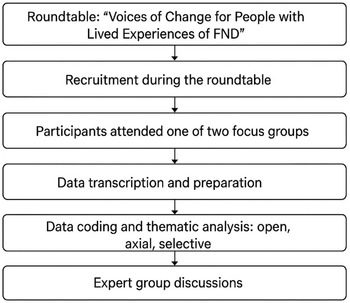
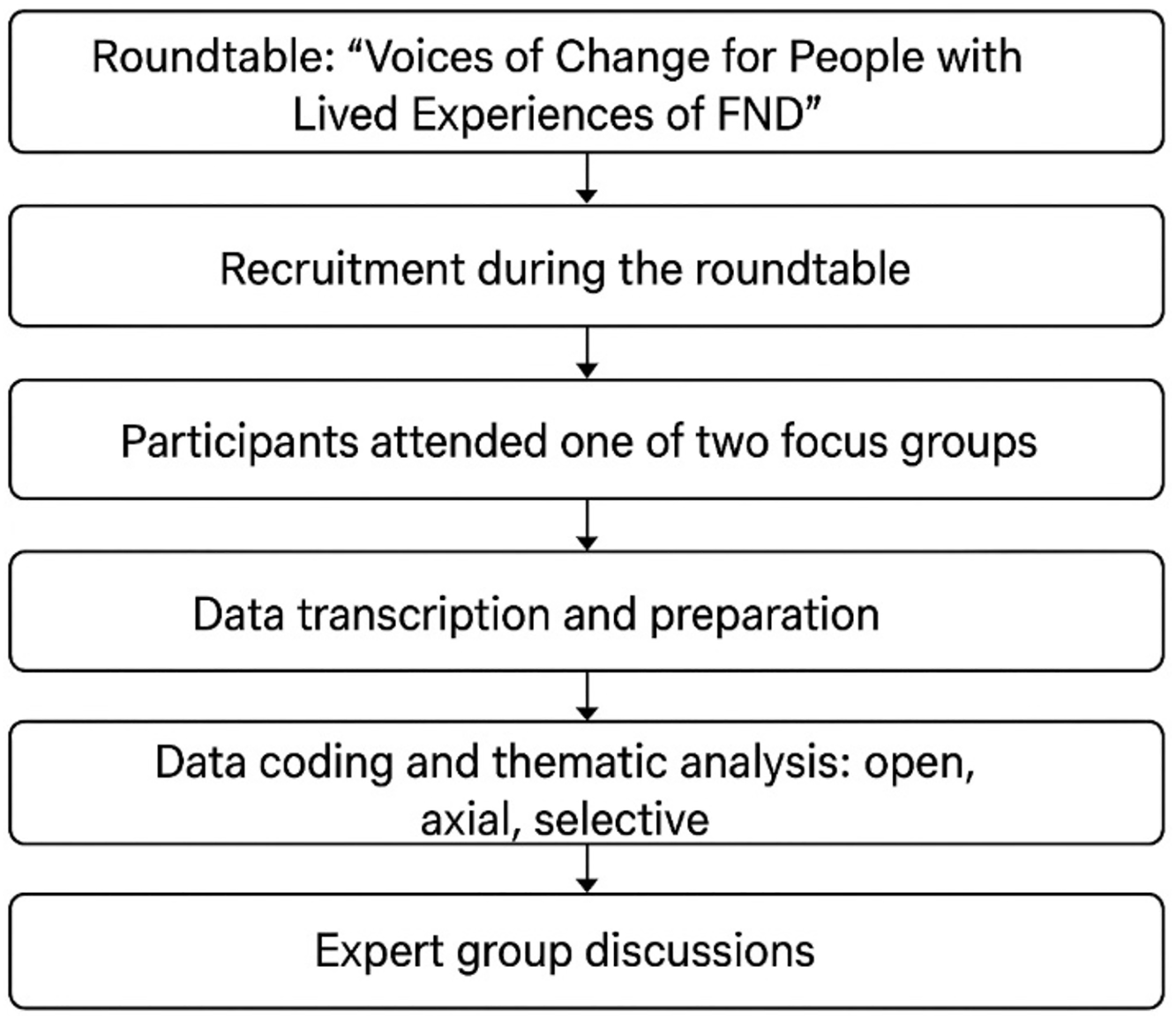
The study aimed to recruit a minimum sample of 12 English-speaking adults diagnosed with FND and their care partners residing in Ontario, Canada. This number was chosen based on a qualitative systematic review of lived experiences of individuals with FND, which included eight studies with sample sizes ranging from 1 to 20. Reference Szasz, Korner and McLean17 Purposive sampling was used. Participants were recruited during a virtual roundtable, Voices of Change for People with Lived Experiences of FND, held via Zoom on May 23, 2025. Twenty-six individuals attended (14 patients, 2 family members, 3 physicians, 3 allied healthcare professionals, 2 researchers and 2 students). This roundtable part of a translational research initiative designed to gather firsthand testimonials from patients, families, clinicians and advocates to support the need for enhanced provincial FND-informed services. Testimonials were compiled into an impact video and shared with the FND Provincial Ask Working Group, a coalition of Ontario-based experts advocating for improved FND care. Following the roundtable, eligible attendees were invited to participate in one focus group discussion and were offered a selection of predetermined time slots based on their availability and preference. An overview of the methodological steps followed in this study is depicted in Figure 1.
Overview of study methods. FND = functional neurological disorder.
C.L. and D.K., master’s students in Translational Research with a shared interest in neurosciences, facilitated the two Zoom focus groups on May 28 and 31, 2025. They have been involved either as facilitators or participants in non-FND-related focus groups in the past. Their earlier interaction with the attendees of the roundtable supported rapport building. C.L. is also a physician with clinical training in FND care. The focus groups followed a semi-structured discussion guide (Supplementary Material 1) developed by the research team based on a literature review and consultation with patients, care partners, healthcare providers and FND experts. The questions or prompts were geared toward understanding the typical journey of a person living with FND in navigating the Ontario healthcare system and their recommendations in improving FND care based on their lived experiences. Relevant demographic and clinical information were collected (i.e., role being either a patient or care partner, city of residence, age, gender, employment status, travel time to access FND care, time from symptom onset to FND diagnosis and FND type).
Because recounting illness experiences may be distressing, member checking was not performed to avoid potential re-traumatization. Instead, facilitators summarized key points in real time for participant clarification. All participants provided informed consent; none withdrew. Sessions lasted 90–120 minutes and were recorded on Zoom. Participants received a $35 CAD gift card.
Zoom-generated transcripts were exported to Microsoft Word and cleaned to improve accuracy, clarity and analytic usability. Filler words, repeated phrasing, tangential content and background noise were removed so transcripts stayed relevant to the study objectives prior to analysis. This improved data readability, allowing for better coding, theme identification and quote extraction. It also facilitated the study team’s greater data immersion, improving their qualitative rigor and reflexivity. Reference Johnson, Adkins and Chauvin18 Throughout the process, data were anonymized to protect participant privacy. The research team analyzed the content of each focus group transcript and the focus or direction of subsequent focus groups. Data gathering was continued until thematic saturation, defined as the point at which no new substantive insights emerged.
Data analysis
Data were managed using NVivo 15.1.3 (2023). An inductive thematic analysis was employed, which is consistent with a qualitative descriptive approach and aimed to identify patterned meanings across participants’ accounts. To support systematic organization and refinement of the data, the research team drew on cyclical/nonlinear coding techniques commonly associated with grounded theory, namely, open, axial and selective coding. Reference Williams and Moser19 However, these techniques were used simply as analytical tools rather than to develop a formal grounded theory.
The first transcript was reviewed repeatedly to support immersion, after which open coding was done to generate initial categories grounded closely in participants’ own words. Axial coding was then undertaken to examine relationships among these categories, refine the coding structure and return to the transcript to ensure accuracy. Finally, selective coding was used to synthesize axial codes into broader, descriptive themes aligned with the study’s aim of determining FND-related care challenges and participant-generated recommendations.
The same analytic process was applied to the second transcript. During coding of the second transcript, the research team felt the themes were similar to those found in the first transcript and interpreted this as the study’s point of data saturation. The research team reviewed and refined the themes over several meetings, reflecting the iterative nature of the study’s data analysis. Discrepancies were resolved through discussion or consultation with FND experts.
Rigor was maintained through multiple strategies consistent with established qualitative research standards. Credibility was enhanced through team-based coding, iterative comparison of themes across focus groups and real-time clarification of participant statements during discussions. Reflexivity was practiced throughout all phases of the study. During study design, the team reflected on how their professional backgrounds (e.g., clinical experience with FND, prior advocacy or research involvement) might shape the development of the discussion guide and framing of the questions. Throughout data collection, the facilitators continually examined how their interactions with participants, particularly the dual clinician–researcher role of one facilitator (C.L.), could influence rapport, question phrasing or interpretation. This reflexive process continued during analysis, where assumptions were explicitly discussed in analytic meetings and considered when refining codes and themes.
To ensure transparency, reflexive observations and analytic decisions were documented in an audit trail. For example, when early versions of the coding framework included labels such as “dissociative seizure presentation” or “psychogenic symptom onset,” terms familiar to the clinical members of the team but not used by participants, the team revisited the transcripts and replaced these labels with the language participants themselves used (e.g., “my episodes,” “blanking out” or “my body shutting down”). This ensured that coding and themes remained grounded in participants’ own perspectives rather than clinical terminology.
Member checking, a process in which transcripts or preliminary interpretations are returned to participants for validation, was not conducted due to the sensitive nature of the material. Asking participants to review and comment on detailed accounts of their diagnostic challenges, functional limitations or distressing healthcare encounters could potentially re-expose them to emotionally difficult experiences and risk re-traumatization. Instead, accuracy was supported through real-time summarization and clarification during the focus groups themselves.
Results
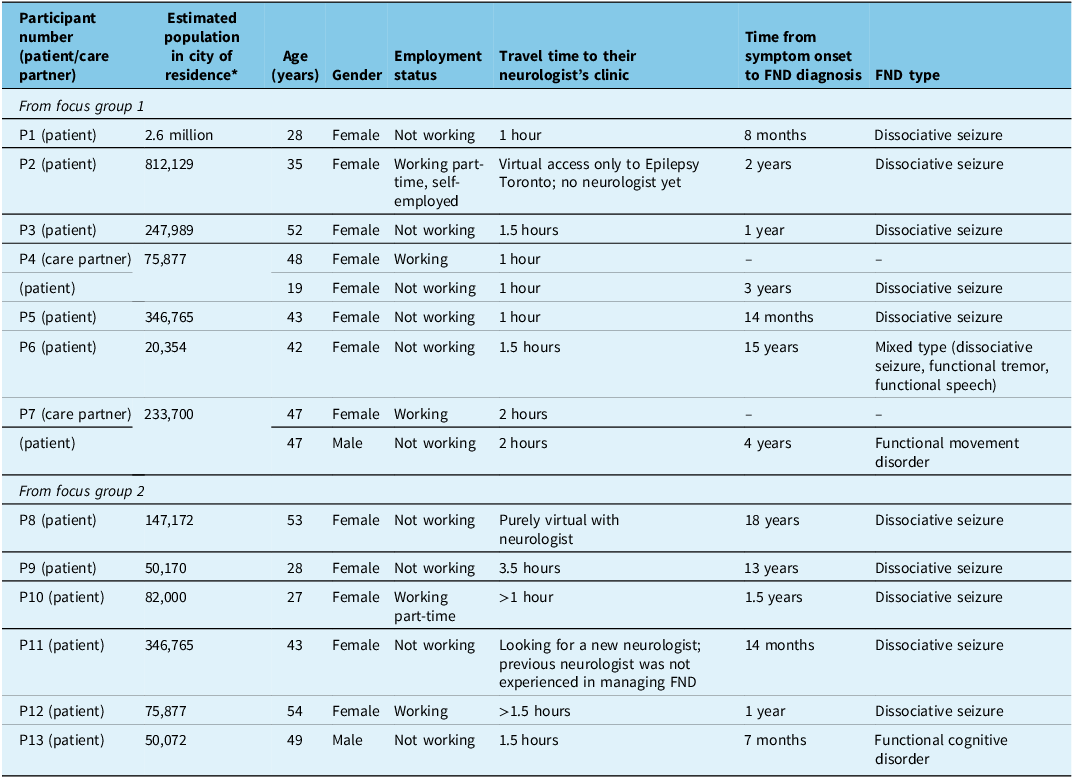
A total of 11 patients and 2 care partners participated in the focus groups. The first focus group had seven participants, and the second had six; the patients represented by their care partners also attended in the background (Table 1). Among the 13 participants, 12 were female; ages ranged from 27 to 54 years (mean: 51). All but two patients had dissociative seizures; two of them did not have a neurologist following them. The majority were not currently employed. All patients experienced diagnostic delays, ranging from 8 months to 18 years (mean: 4.8 years; median: 1.5 years). One patient resided in a city that had a population of 2.6 million, while another came from a city of 20,000 people. Participants’ travel time to reach neurological care was typically at least 1 hour, with one participant commuting 3.5 hours each way.
Characteristics of participants from the two focus groups
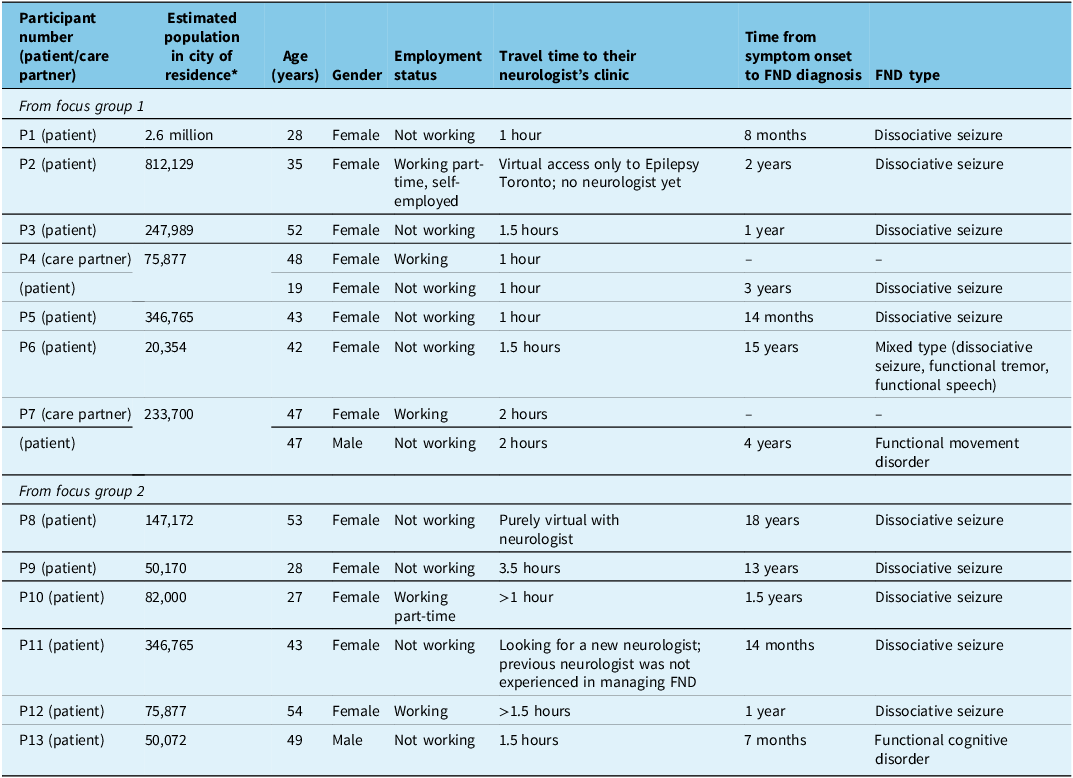
* Source: World Population Review. Canada Cities by Population 2025. Accessed on September 22, 2025, from https://worldpopulationreview.com/cities/canada. FND = functional neurological disorder; P = participant.
Patient journey map
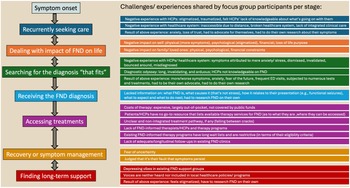
During each focus group, participants shared when and how their FND symptoms started and progressed and their impact on personal and family life. The majority of the discussion was focused on the challenges they experienced in navigating the healthcare system for diagnosis, treatment and support. These challenges were coded, and from these, themes emerged (Figure 2). Patients often moved back and forth between stages, as reflected by the bidirectional arrows in the map.
Participants’ challenges experienced in every stage of their functional neurological disorder (FND) journey. HCPs = healthcare providers.
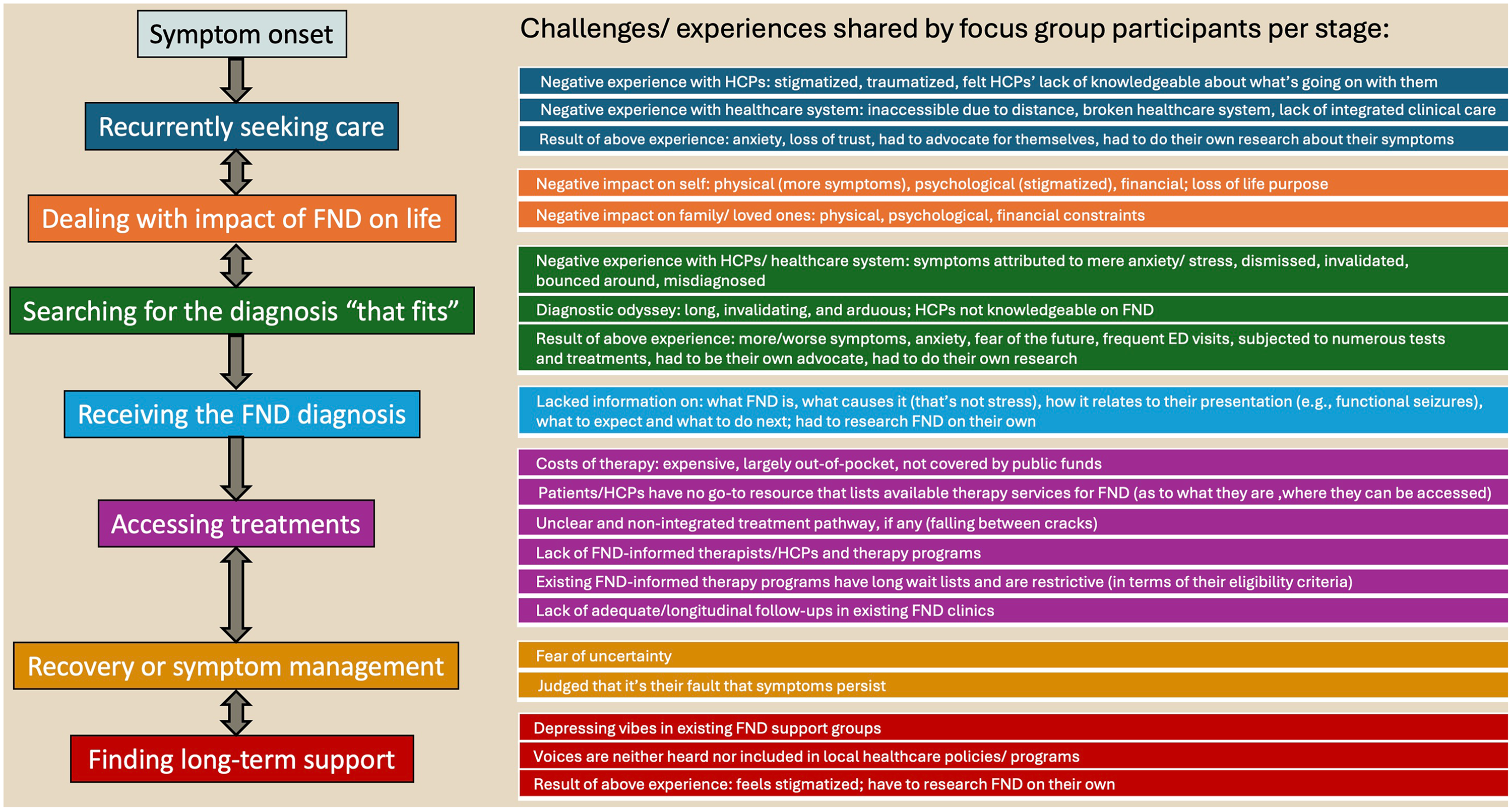
Figure 2. Long description
A flowchart illustrating the challenges and experiences of individuals with functional neurological disorder (FND) at various stages of their journey. The flowchart is divided into several stages: Symptom onset, Recurrently seeking care, Dealing with impact of FND on life, Searching for the diagnosis that fits, Receiving the FND diagnosis, Accessing treatments, Recovery or symptom management, and Finding long-term support. Each stage is accompanied by a list of challenges or experiences shared by focus group participants. For example, during the Symptom onset stage, participants reported negative experiences with healthcare providers (HCPs) and the healthcare system, leading to anxiety and loss of trust. In the Recurrently seeking care stage, participants faced physical, psychological, and financial impacts. The Searching for the diagnosis that fits stage highlights the long and arduous diagnostic odyssey. The Receiving the FND diagnosis stage mentions the lack of information about FND. The Accessing treatments stage points out the costs and lack of resources. The Recovery or symptom management stage includes fear of uncertainty and judgment. Finally, the Finding long-term support stage mentions the lack of inclusion in healthcare policies and programs.
Challenges of patients in each stage of their FND journey
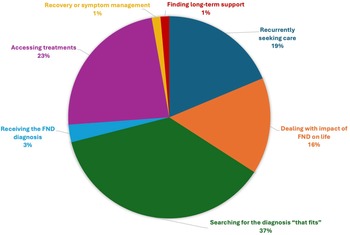
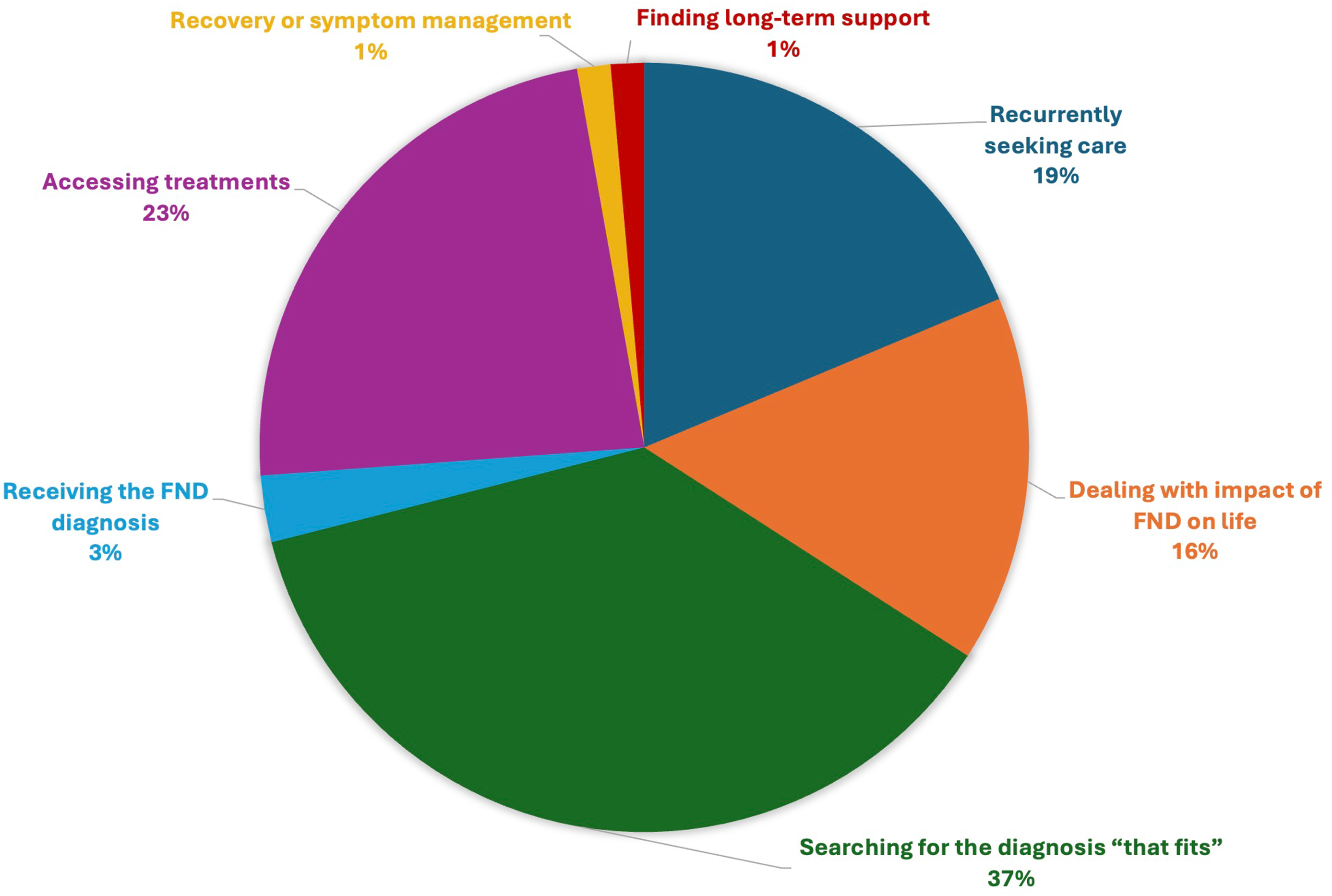
Participants described a range of challenges, with certain issues more prominent at specific stages of their FND journey. Across stages, the greatest concentration of coded challenges occurred while recurrently seeking care (n = 40/214; 18.7%), searching for a diagnosis that fits (n = 79/214; 36.9%) and accessing treatments (n = 50/214; 23.4%) (Figure 3). These top three stages are summarized here along with representative quotes, while the rest of the stages are presented in Supplementary Material 2.
The distribution of participants’ challenges according to stages in their functional neurological disorder (FND) journey.
Recurrently seeking care
Recurrently seeking care was an emotional and logistical labor for patients and care partners. Participants reported negative experiences during their initial and subsequent, often numerous, medical encounters. One participant said:
I can have 8 appointments in a week… I go to a neurologist, a pain specialist, rehab, osteopathy, chiropractor… So it’s a lot of time off work for my husband as well… I was going to the ER once a week as well… just trying to get some kind of help, some kind of anything. (P3, age 52, dissociative seizures, diagnosed after 1 year)
Another participant remarked, “And also, you know, they’ll just say, ‘I don’t know, like you have to ask your neurologist.’ But I don’t have a neurologist. So, you just end up bouncing around” P2 (age 35, dissociative seizures, diagnosed after 2 years).
As a result, participants experienced fatigue, anxiety and loss of trust in healthcare providers and the local healthcare system as a whole. At this early stage of their journey, participants already felt they had no ally who understood them and had to therefore advocate for themselves. They reported being disbelieved and stigmatized by healthcare providers, including physicians (e.g., family doctors, emergency room physicians), nurses, paramedics and firefighters.
Beyond logistics, participants emphasized the emotional labor required to re-enter clinical spaces. A few of them also experienced trauma from some healthcare encounters. P2 stated:
We do end up in situations where there is fear of going to medical settings. …And this is something I hear a lot that we feel like we have to put on armor to go in and feel like we’re in the car trying to like amp ourselves up and like with all of our notes, and to like go in strong.
P11 (age 43, dissociative seizures, diagnosed after 14 months) added a similar sentiment:
I feel so alone going into those [emergency] visits. And now I don’t even bother because I feel like I’ve been like blacklisted, or whatever they call it, and I’m in there for about six hours, and then they send me home, and I’ve done absolutely nothing. So it just scares me for the future that if something more serious were to happen, I’m less likely to go, because I’m just going to be brushed aside.
Participants linked these experiences to avoidance of emergency care and attrition from services. They commented on the healthcare system, which P5 (age 43, dissociative seizures, diagnosed after 14 months) described as broken: “…it’s not just broken for us. It’s broken for a lot of other people.” Because of such negative experiences with healthcare, patients reported doubting or blaming themselves at some point:
It made me not want to go see a doctor for what I was feeling. And it also made me feel like, is this all in my head? Am I actually just making this up? Yeah, furious and alone? Yeah, I agree with [P5]. (P1, age 28, dissociative seizures, diagnosed after 8 months)
Searching for the diagnosis “that fits”
Participants characterized their diagnostic odyssey as long, invalidating and exhausting. Three interrelated drivers underpinned this experience:
a. Limited FND awareness across points of entry
Numerous encounters with healthcare, primarily emergency clinicians and primary care, often reflected limited familiarity with FND. Every participant described their healthcare providers as uninformed and inexperienced in relation to FND:
The ER (emergency room) had no clue what was going on with me. They thought I had Parkinson or MS (multiple sclerosis) because of my stutter and my tremors. And every time I went back to ER and then even taken by ambulance, when I was having my seizures, they had no awareness of what my disorder is. (P6, age 42, mixed type, diagnosed after 15 years)
Everyone has the same story. They were told it was anxiety. They were dismissed. That kind of thing. I don’t know how much of it is a lack of education with FND and just a systemic problem… (P10, age 27, dissociative seizures, diagnosed after 1.5 years)
There is a neuropsychiatrist who handles my meds. Yeah, the neurologist, neuropsychiatrist, and therapist. And I do have my primary care physician as well. But again, they have never heard of FND. (P9, age 28, dissociative seizures, diagnosed after 13 years)
b. Misdiagnosis
The patients reported having received multiple misdiagnoses over time (e.g., anxiety, restless legs syndrome, multiple sclerosis, myasthenia gravis, post-concussion syndrome, hemiplegic migraines, Parkinson’s disease, amyotrophic lateral sclerosis, multiple system atrophy). P7’s husband (47-year-old with functional movement disorder or FMD, diagnosed after 4 years) was even told he had only 4–5 years left to live, which just devastated him and the whole family. Patients also reported undergoing numerous investigations, such as repeated brain scans, lumbar puncture, muscle biopsy, electroencephalogram and exercise stress test. Subsequently, they also received various treatments like psychotropic medications that did not help and instead caused side effects and symptom worsening. Some of them also tried traditional physiotherapy, occupational therapy, psychotherapy, chiropractic and osteopathy, which they felt did not work because the therapies were not FND-informed. P8 (age 53, dissociative seizures, diagnosed after 18 years) reported ending up undergoing cardiac pacemaker implantation, which she believed her doctors thought would cure her syncopal episodes but did not.
While most patients received various diagnoses other than FND, P2, on the other hand, was not given any diagnosis and was dismissed by her family physician as being “healthy.” She had difficulty believing this, given the persistence of her symptoms, and so she bounced from one healthcare provider to another, seeking clarity regarding her condition:
I think the problem that a lot of us face sometimes is when we do ask for answers we’re just met with, I don’t know, like you would have to ask your GP. And when I asked my GP, my GP told me a few months ago that I was perfectly healthy, and that there was nothing wrong with me.
c. Long waits escalate distress and self-reliance
All participants expressed frustration from the significant delay they experienced in getting referred to and being seen by a neurologist and/or an FND subspecialist. This long waiting period in turn caused various forms of distress among patients, intensifying their emotional, functional and financial strain:
As you are waiting for that diagnosis, your symptoms just escalate so much because there’s so much stress. It’s financial stress. It’s emotional stress. It is mental stress. (P3)
Self-driven search for answers. Due to extended delays in obtaining a diagnosis or accessing an FND-informed clinician, many participants felt helpless, abandoned and without meaningful clinical guidance. With no clear pathway forward, they turned to independent research, such as searching online, engaging with patient communities, compiling symptom lists and bringing information back to their clinicians. Several participants noted that they learned about FND on their own before any provider mentioned it, often becoming the first to introduce the diagnosis within their clinical encounters in hopes of securing appropriate referrals or diagnostic clarification. P4 (mother of a 19-year-old with dissociative seizures diagnosed after 3 years) said that they came to a point when they learned what FND was on their own and were the ones relaying information to their healthcare providers about what they had researched or Googled so far about the condition and pushing for a neurology referral for confirmation. Feeling stalled within the system, many turned to relentless self-education to fill the vacuum left by long waits and inconsistent clinical guidance. P5 described the emotional toll of this necessity: “I’ve been on my own… it’s been unbelievably frustrating. And this disorder is work – you have to do the research. You have to, and it’s exhausting.”
Similarly, others emphasized how being left without answers or direction compelled them to search for a “diagnosis that fit,” often out of desperation rather than curiosity. During these prolonged lapses in care, participants and their care partners felt they had to shoulder the investigative burden themselves:
We did not have any idea what was wrong… my husband was just Googling things because we did not have any idea what was wrong. …I came across FND online. …and I started recording myself to show the doctor, because nobody could tell me what was happening. (P3)
The pattern reflected a broader systemic issue: diagnostic ambiguity, inconsistent messaging and limited FND familiarity. This shifted substantial labor onto patients and families, who were forced to act as their own researchers, care coordinators and advocates, often while patients continued to experience distressing and disabling symptoms.
Accessing treatments
After receiving an FND diagnosis, participants described significant uncertainty about what treatments were available, where to access them and which providers were qualified to help. Their accounts revealed three interrelated challenges that together shaped the treatment landscape:
a. Limited dissemination of FND-informed resources
Participants consistently reported receiving little to no guidance after diagnosis. Many left clinical encounters without educational materials, care pathways or referrals, placing the burden of information-seeking on patients themselves. This lack of structured guidance often led to delays in therapy initiation and frustration among both patients and their primary providers: “There definitely needs to be more resources out there for doctors in terms of finding treatment. It is so hard for them to figure out where to send their patients who have FND” (P10). Without a clear roadmap, patients felt adrift and often unsure whether recommended therapies existed locally or were even appropriate for FND.
b. Structural and financial barriers to accessing recommended therapies
Even when patients identified potential treatments, such as psychotherapy, accessing them was rarely straightforward. High out-of-pocket costs, limited insurance coverage and long waitlists made therapy difficult to obtain and sustain. Several participants explained that therapies recommended by clinicians were financially prohibitive, leaving them unable to pursue consistent care:
My previous workplace, they have given me medical [disability payments] until October this year, just to help support me. But they don’t help with everything. So a lot of it does come out of our pocket as well… (P3)
Participants felt like having virtually nonexistent public-funded treatment is equal to having no treatment at all, especially amid expensive therapies that are being recommended to them, uncertain if such therapies are even effective or not for FND:
My family doctor kind of knew what it was. He said that I wasn’t really going to get very much help in the medical field, because he had had other patients with FND, and basically they had been dismissed for years. (P10)
This combination of financial burden and limited coverage often led to interrupted care, delayed progress or complete disengagement from treatment.
c. Fragmented treatment system and scarcity of FND-trained clinicians
Participants repeatedly highlighted how poor coordination between providers resulted in duplicated efforts, conflicting advice and gaps in care. Even when specialty clinics existed, they often had restrictive referral criteria or long delays. Some programs accepted only certain FND subtypes, leaving others without appropriate services. Participants described interdisciplinary clinics that only accepted patients with functional movements, excluding those with dissociative seizures, or clinics with a sole physician who was unable to follow patients over time. Compounding this was the difficulty of locating therapists familiar with FND rehabilitation. Many participants described exhausting lists of providers only to find none with FND experience
When you are looking for psychotherapists, because in my experience I was given a list from the hospital, I called every single person on that list. And no one had treated anyone with functional seizures. And I have done a lot of research n therapists. And it is so hard to find a therapist who has any experience in functional seizures. (P2)
Recommendations to improve FND care
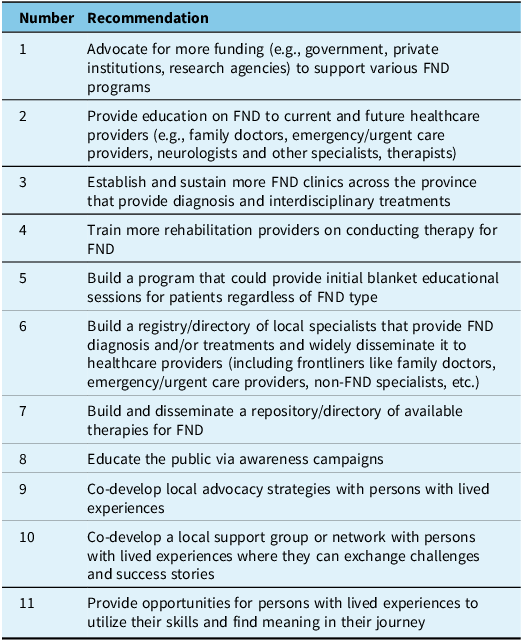
Several key recommendations emerged from the participants themselves, summarized in Table 2. These were organized into four interconnected themes: education and training, service programs, advocacy and funding. Participants emphasized the need for increased funding to support FND-informed services and for developing targeted educational and training resources for healthcare providers, including frontliners. Financial support was widely seen as essential for driving progress and ensuring the sustainability of any FND-related initiatives.
Recommendations to improve FND care in Ontario, Canada
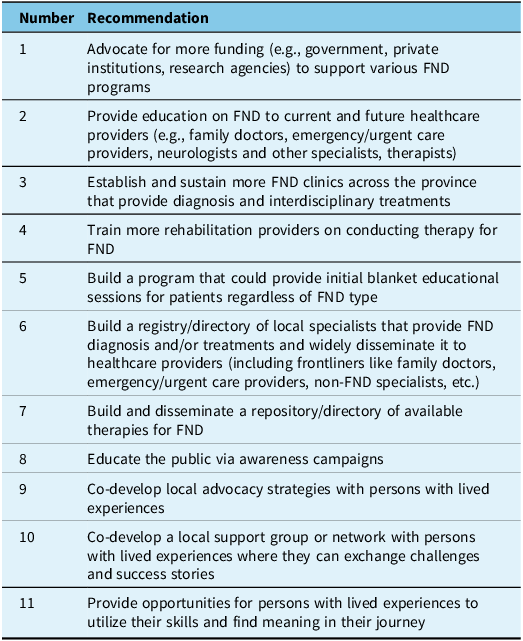
FND = functional neurological disorder.
Education and training
Participants recommended targeted education to various stakeholders, ranging from the general public to clinicians (e.g., physicians across disciplines, therapists involved in rehabilitation, nurses, frontliners like paramedics and firefighters) and policymakers (e.g., government, private insurance companies, research funding agencies) to help minimize misconceptions and stigma against FND.
…the more the community knew about FND, just like we are more aware about other chronic illnesses or disabilities, people might be more mindful to be able to treat you nicely. …Because you know, if there was more out there about FND, then people may be more aware of being able to understand and be thoughtful with their words. (P3)
In terms of educating clinicians, participants recommended to prioritize family doctors and emergency room staff:
Prioritize definitely GPs. Because obviously, they’re the first line of defense. We don’t get to see neurologists and everything until we get referred to that specialist. (P4, mother of a 19-year-old with dissociative seizures, diagnosed after 3 years)
So definitely, there needs to be more education about what FND is amongst definitely in emergency rooms. (P10)
They also expressed concern with respect to medical training and opportunities within the current system to adequately train students and those currently providing care: “It seems like there’s a lot of gaps in the medical system for providing that education into the school system, as well as into those that are already practicing” (P6).
Service programs
Participants shared their desired state of FND care, where there is an adequate number of FND-informed service programs or clinics that have the following capacities:
-
Can accommodate more patients
-
Have more staff (doctors and therapists) skilled in treating FND
-
Have shorter waiting times.
-
Interdisciplinary or integrated care that can provide public-funded therapies
-
Offer multiple follow-ups over time
-
Accept patients regardless of FND type
-
Provide informational educational sessions on FND as initial treatment
-
Offer educational videos, useful resources or other learning opportunities on FND that patients can share with their family doctors, other healthcare providers, family members, friends and workplace
-
Have a registry or directory of various therapies that other patients have tried
Having them all under one roof would be so amazing. I mean, that seems, you know, like a real dream, …but just to have all the service providers in one area, I mean collaborating. So have the funding for that. Really having therapies all under one roof would be super, because I know so many different people have accessed a variety of like disciplines collaborating together so they can share information. So it would be amazing to be able to have that as well, like that’s holistic care. (P12, age 54, dissociative seizures, diagnosed after 1 year)
Furthermore, these subspecialty clinics and other centers across the province that provide FND-informed therapies should be included in a unified registry or directory, which can be made widely available and disseminated to the public and frontliners.
There definitely needs to be more resources out there for doctors in terms of finding treatment. It is so hard for them to figure out where to send their patients who have FND. …more resources for doctors, and more kind of communication about where those resources are. For patients as well, it’s not like I have access to the informational video. But I would like to be able to tell my specialists and my family doctor that kind of thing where they can sign up for that. (P10)
Advocacy
Participants recommended developing various programs (e.g., awareness campaigns, advocacy strategies, patient support networks, patient advisory board) that they can potentially lead, co-lead or simply participate in. The aims of such programs can be manifold: 1) to help raise public awareness on FND; 2) to assist other people with FND to cope, navigate the healthcare system and access relevant services; and 3) to utilize their voices, time, talents and skills in helping other people through their experiences.
I did the program again with Epilepsy Toronto. I did it with a group program instead and just doing it with a group support. I realized that I think I want to work with people with epilepsy. I know it’s possible, even with my diagnosis, as I have both (epilepsy and FND). So I feel like I can pull in both knowledge and help people in both ways. So that’s kind of my end goal. And I feel like people can benefit from somebody who actually has the diagnosis and can talk about it. (P1, age 28, epilepsy and dissociative seizures, diagnosed after 8 months)
One thing that just strikes me is, every time I’m in a room with all of the people who have FND, I just am truly amazed by the wealth of knowledge and wisdom, and also very aware that many of us do not work full time anymore, and yet still have a lot of skills and resources and capacity. And so one thing that I do think about is, you know, I know there’s like the FND Society. I know there’s FND Hope. If there could in some way like, and I know you know we have like Epilepsy Toronto. But if there was some kind of advocacy body like in Ontario, since we’re talking about Ontario that had a medical arm, but also a patient board that could be consulted. There are just some brilliant people who I’ve spoken to and have just fascinating backgrounds. And from a mobilization perspective as well as even like a place where there could be patients organizing like a monthly workshop on different topics. Like I just feel like there’s a lot of room to do it in a way. (P2)
I like how we can do fundraising. I already have some ideas for like how we can raise money, how we can start an advocacy group, patient-led, patient-oriented. And we can start getting some ideas there. We’ll start small… (P13, age 49, functional cognitive disorder, diagnosed after 7 months)
All participants also expressed their appreciation of the roundtable and focus groups that were conducted in this study. They even recommended having a roundtable annually so patients could be heard:
In a way, that lets people’s voices really be a part of it. I know sometimes the medical system can feel like our voices aren’t in it. So if it was possible to have some kind of yearly chance, but also like what other venues and opportunities might there be, to put patient voices at the center, similar to, I think, what has been done in other spaces, potentially like MS, Parkinson’s. Some of these things I think could be really powerful and really empowering for a lot of us. (P2)
Funding
Each participant acknowledged the need for more public and private funding toward FND programs that can support training, service and research, as well as equip patients with devices or therapy services needed to ensure their quality of life.
For sure, this just seems definitely to be a condition where you’re basically paying for your own treatment. It doesn’t feel like a condition that’s covered by the healthcare system in Canada. (P10)
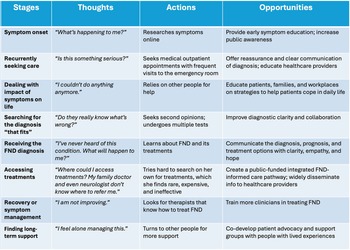
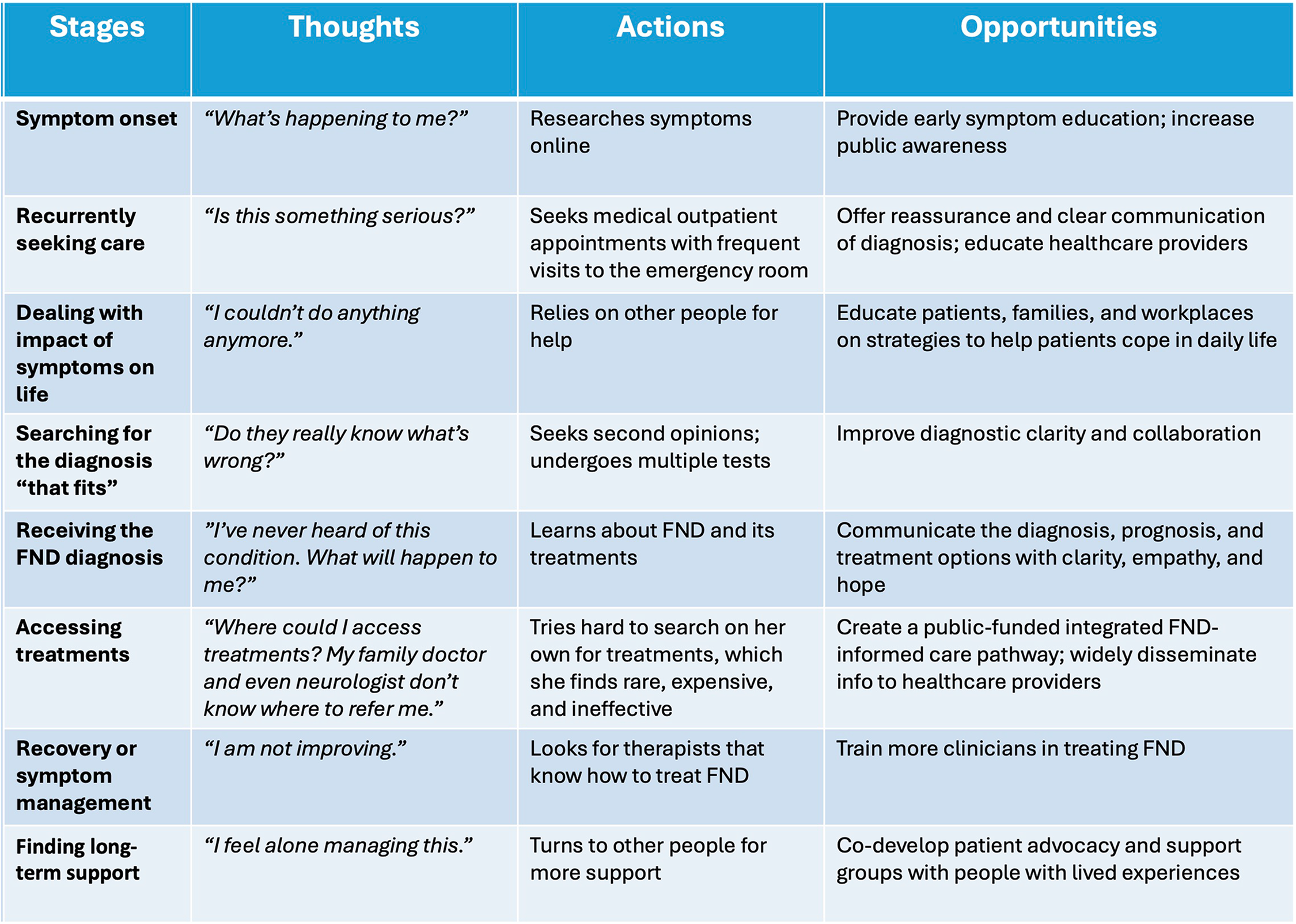
Based on the participants’ lived experiences, a sample patient journey map was created (Figure 4) depicting prevailing thoughts and actions in every stage of their FND journey. Each stage had corresponding opportunities for intervention based on the participants’ recommendations.
A sample patient journey map with potential opportunities for intervention. FND = functional neurological disorder.
Of note, the study had one adverse event reported. During the focus group, P3 (age 52) suddenly had her usual dissociative seizure episode, triggered by a loud sound when her room door was slammed shut by the wind. She had her video turned off during the seizure and did not inform the facilitators until she had recovered spontaneously after a few minutes. She did not sustain any injury and wanted to resume participating in the focus group despite the research team’s advice that she could already leave the meeting to rest. She finished the meeting without any adverse event recurrence or complication. The adverse event was anticipated by the research team based on clinical experience and was handled with understanding and compassion.
Discussion
This study aimed to determine the challenges faced by people living with FND in navigating care in Ontario, Canada, and to capture their recommendations to inform future healthcare reforms. Participants described multifaceted, interrelated obstacles across every stage of their FND journey. From initial medical consultations through diagnosis, treatment access and long-term management, the Ontario healthcare system was perceived as consistently falling short.
One of the central themes of this study was the routine dismissal and marginalization of the concerns of this population, rooted in a widespread lack of awareness and education around FND. Participants described being questioned, redirected or discharged without clear follow-up, experiences that were reinforced by the absence of publicly funded FND-informed clinical programs or structured care pathways. Reference McLoughlin, McWhirter and Pisegna20 FND remains to have low visibility across healthcare training, services and research. This contributes to persistent misconceptions, particularly the belief that FND symptoms are “not real” or are “all in the patient’s head,” a perception that participants reported encountering frequently in both clinical and social contexts. Despite this, participants emphasized that they deserve equitable access to prompt, appropriate care akin to that offered for other neurological conditions, as delayed care can significantly worsen quality of life and functional ability. Reference Lidstone, Araújo, Stone and Bloem9
Another central theme of the study findings is the participants’ self-directed search for answers, which could have complex implications for their access to care. While some participants felt empowered to advocate for referrals, many described how presenting their own research provoked skepticism or dismissal from clinicians. Rather than facilitating care, self-advocacy sometimes led to being labeled as “anxious,” “overly fixated” or a patient who “Googles too much,” labels that further impeded access and eroded trust.
One participant explained how the lack of answers pushed her into exhaustive self-education: “I’ve been on my own… it’s been unbelievably frustrating. And this disorder is work – you have to do the research. You have to, and it’s exhausting” (P5). Another described cycling between providers who interpreted her efforts as a sign of health anxiety: “I kept being told to ask my GP, and then my GP told me I was perfectly healthy… you just end up bouncing around” (P2). Others described the emotional consequence of repeatedly not being believed when bringing forward the information they had gathered: “It made me not want to go see a doctor… I felt like, is this all in my head?” (P1) Together, these accounts illustrate how long waits not only escalated distress but shifted the diagnostic labor onto patients, who were compelled to act as their own researchers and advocates. Far from improving access, these efforts sometimes reinforced the very dynamics of gaslighting and delegitimization that participants were trying to overcome, which consequently deepens participants’ emotional burden and delays engagement with appropriate FND-informed care.
The findings of this study align with existing literature documenting FND patients’ frequently fraught relationships with the healthcare system. Reference Burke21–Reference Rezaei and Stanley23 Every participant in this study except for one reported having to consult multiple specialists over several years before receiving an FND diagnosis. Many felt they had to educate their healthcare providers themselves to fill in the latter’s lack of FND knowledge. Participants also reported feeling disconnected from healthcare providers following their diagnosis, which deepened their sense of isolation. The majority of healthcare providers reportedly did not know how to help the patients and where to send them for treatment.
Another issue found in this study was the participants’ overwhelming financial burden. Although Canada has a publicly funded healthcare system, FND-informed service programs remain extremely limited across Ontario. Specialized treatments, such as FND-specific physiotherapy, psychotherapy and integrated rehabilitation programs, are scarce and, when available, are impacted by long wait lists. This scarcity is driven not only by limited clinical capacity but also by insufficient provincial investment, as FND has historically been poorly recognized by healthcare leadership and research-granting agencies. Persistent stigma and the underappreciation of FND’s clinical and economic burden have contributed to minimal funding for service expansion and research. As a result, patients often rely on personal savings or family support to access private and often costly therapies, creating substantial financial strain and representing a significant barrier to timely and effective treatment.
Additionally, participants living outside urban centers faced serious geographic barriers. One participant from a small community in Northern Ontario with an estimated population of 50,000 reported traveling 3.5 hours to Toronto for brief neurology visits, highlighting the lack of FND care in many regions. Commuting back and forth consumed nearly one whole day and often required patients and care partners to take time off work. Hence, telehealth is a viable solution to improve FND care access. Reference Jiang, Margalik and Lazaris24–Reference Bhatt, MacGillivray, Gilmour, Marcelle, Langer and Lidstone25
A systematic review of qualitative literature from 1980 to 2020 on the lived experience of FND found only eight high-quality studies, indicating a clear lack of in-depth, broad-scope studies. Reference Szasz, Korner and McLean17 The majority focused on patients’ experiences after the diagnosis of FND. There was a study, however, that explored the period pre-diagnosis (i.e., from symptom onset to diagnosis of FMD) and identified the following three themes that reflected their stages in the patient journey: body-mind dualism, relatedness and feeling lost. Reference Dosanjh, Alty and Martin26 The authors of the systematic review summarized the studies they found through an overarching concept called “relationally regulated selves,” suggesting that patients’ experiences are deeply shaped by their relationships and responses to stress within a regulatory context.
This study offers critical insights into the lived experiences of people living with FND pre- and post-diagnosis, revealing an extensive and often inefficient use of healthcare resources across the spectrum of care, particularly in Canada. Healthcare policy improvements are better driven by their lived experiences and through interdisciplinary collaboration among physicians, therapists, decision-makers and patient advocates. The three most challenging stages of care identified in this study involved the diagnostic search (37% of coded challenges), access to treatment (23%) and recurrently seeking care (19%). Participants’ recommendations (Table 2) build on existing literature, echoing earlier calls to reduce stigma, strengthen therapeutic relationships and create multidisciplinary, patient-centered FND care models. Reference Szasz, Korner and McLean17 These findings can guide the development of healthcare policies that are more responsive to the needs of this underserved community.
Study strengths
To the research team’s knowledge, this is the first qualitative study in Canada to document the challenges and recommendations for improving FND care directly from people with lived experience. Existing Canadian literature is limited; a recent qualitative systematic review found only two relevant studies, neither of which explored patients’ navigation of the local healthcare system. Reference Szasz, Korner and McLean17 Centering patient voices is essential in advocating for meaningful change. The episodes of care highlighted by patients and care partners are often different from those that healthcare providers usually report; the latter only sees the portion of care for which they are responsible and in which they have an active role, while the former knows the entire care experience. Reference Beleffi, Mosconi, Sheridan, Donaldson, Ricciardi and Sheridan27
Breaking the cycle of stigma and distress requires healthcare decision-making to be guided by the insights of those directly affected. Reference McLoughlin, McWhirter and Pisegna20,Reference Ahad, Sanchez-Gonzalez and Junquera28 Through patient journey mapping, we were able to organize the participants’ numerous insights based on the chronological stages that comprised their FND care journey. The stages provided a glimpse to responsive and context-specific strategies for improving patients’ FND care experiences and outcomes. These improvements can occur at various levels: individual, model of care and/or health systems. Reference Bulto, Davies, Kelly and Hendriks29
The focus groups revealed a range of interconnected recommendations, which were grouped into four key areas: education/training, services, advocacy and funding. Mobilizing change in these areas will require active support across government, healthcare and academic institutions. Such collaboration is essential to develop and sustain FND-informed clinical and research programs, as well as to improve education for current and future providers – so they can diagnose and manage FND safely, effectively and affordably.
This study also mapped participants’ challenges to specific stages in the FND care journey. While some issues spanned multiple stages, this stage-based organization offers policymakers a simplified yet comprehensive framework for understanding what patients typically experience. Methodologically, the study was strengthened by rigorous data collection, cleaning and analysis. The research team practiced reflexivity through peer discussions and self-reflection throughout the process. In reporting, numerous direct quotes were included to ensure participants’ voices, so often silenced, were heard clearly and authentically.
The results of the study are important in advancing a broader initiative advocating for funding and support of FND-specific programs locally. The voices of the FND population have been neglected for a long time, Reference O’Neal, Dworetzky and Baslet30 but through the roundtable and focus groups, participants were given a platform to share their personal journeys and propose recommendations grounded in lived experience.
Study limitations
Several limitations should be considered when interpreting these findings. First, because most roundtable attendees were formerly or currently involved with the Epilepsy Toronto program, the resulting focus group sample consisted predominantly of individuals with dissociative seizures. This overrepresentation is important, as clinical pathways, treatment approaches and service needs for dissociative seizures may differ substantially from those of other FND subtypes such as functional movement disorder, functional cognitive disorder or persistent perceptual-postural dizziness. As a result, the experiences reported here may more closely reflect the trajectories of individuals with dissociative seizures, and perspectives from other subgroups of the FND population remain underrepresented.
Second, the sample was recruited entirely from a single roundtable event. This not only contributed to the high proportion of participants with dissociative seizures but also reflects self-selection among individuals who were motivated to attend a patient-focused discussion session. People who participate in such forums may differ from those who do not, for example, in symptom burden, help-seeking tendencies and engagement with patient support organizations, which limit broader generalizability.
Third, the demographic composition of the sample further constrained representativeness. Nearly all participants were women and resided within or near the Greater Toronto Area. Given documented gender differences in presentation, stigma experiences and help-seeking patterns in FND more broadly, the experiences of male and gender-diverse individuals may not be adequately captured. Similarly, individuals from smaller or more remote regions, who may face different access challenges, were underrepresented.
Fourth, several data elements such as time to diagnosis and sequences of clinical encounters were based on participant recollection. As is typical in qualitative research, these accounts reflect individuals’ remembered and interpreted experiences, which may differ from those documented in medical records or understood by treating clinicians. Nevertheless, these narratives provide essential insights into how patients experience and make sense of their care journeys.
Finally, potential power dynamics may have influenced the focus group discussions, as one facilitator was a physician involved in FND care. This role could have shaped how openly some participants shared their experiences, and the research team acknowledges the possibility that their own perspectives may have influenced interpretation. To mitigate these risks, the team engaged in reflexive discussions and employed systematic coding processes grounded in participants’ own words and contexts.
Future research would benefit from broader recruitment strategies, inclusion of more diverse FND subtypes and additional focus groups or individual interviews to capture a wider range of lived experiences across genders, regions and clinical presentations.
Conclusion
In summary, this study demonstrates that people living with FND frequently encounter invalidating clinical interactions, inconsistent messaging and fragmented care across the Ontario healthcare system. Rather than reflecting patient-driven overuse, the high levels of healthcare utilization described in this study represent a system-level failure to provide timely diagnosis, clear explanations and FND-informed care pathways. Participants’ repeated help-seeking, self-education and self-advocacy reflect their resilience and determination to understand and manage disabling symptoms in the context of limited provider expertise and suboptimal care structures.
By centering the lived experiences of patients and care partners, this study highlights the ways in which systemic gaps (e.g., prolonged diagnostic delays, limited access to appropriate therapies and the absence of coordinated models of care) shape patients’ care-seeking patterns and clinical trajectories. These insights underscore the need for reforms that build on patient strengths and priorities, ensuring that their efforts to seek help are met with responsive, integrated and compassionate care. Improving provider education, diagnostic communication and access to structured FND-informed pathways represents a high-yield target for reform. Such efforts have the potential to reduce unnecessary healthcare utilization, improve patient experience and trust and support more effective, equitable care not only for individuals with FND and their families but for the healthcare system as a whole.
Supplementary material
The supplementary material for this article can be found at https://doi.org/10.1017/cjn.2026.10629.
Acknowledgments
The authors would like to thank all the participants of the roundtable and focus groups and the clinics across Ontario, Canada, that recommended these events to their patients.
Author contributions
CL: Conceptualization, Data curation, Investigation, Methodology, Writing – original draft, Writing – review & editing. DK: Conceptualization, Data curation, Investigation, Methodology, Writing – review & editing. HB: Conceptualization, Supervision, Writing – review & editing. MB: Conceptualization, Supervision, Writing – review & editing. SL: Conceptualization, Supervision, Writing – review & editing. MG: Conceptualization, Supervision, Writing – review & editing. GS: Conceptualization, Supervision, Project administration, Writing – review & editing. EM: Conceptualization, Supervision, Project administration, Funding acquisition, Writing – review & editing.
Funding statement
The study was supported by the Translational Research Program, Department of Laboratory Medicine and Pathobiology, Temerty Faculty of Medicine, University of Toronto, Toronto, Ontario, Canada. The funders had no role in study design, data collection and analysis, decision to publish or preparation of the manuscript.
Competing interests
The study team received funding for participant remuneration and provision of study materials from the Translational Research Program, Department of Laboratory Medicine and Pathobiology, Temerty Faculty of Medicine, University of Toronto, Toronto, Ontario, Canada. Dr Burke’s research is supported by the Academic Scholars Awards from the Department of Psychiatry at the University of Toronto and Sunnybrook Health Sciences Centre. Dr Lidstone receives payments from UpToDate for her article on Functional Movement Disorder, Parkinson Canada for consultations and various academic institutions as honoraria for relevant Neurology Grand Rounds. Dr Guo has received funding either for research or lectures from the following: University Health Network Foundation, Princess Margaret Hospital Foundation, Sinai/University Health Network Academic Medical Organization, Choosing Wisely Canada, University Health Network, Social Sciences and Humanities Research Council, Canadian Association of Physical Medicine and Rehabilitation and World Federation for Neurorehabilitation. All other authors declare that they have no known competing financial interests or personal relationships that could have appeared to influence the work reported in this paper.