Writers turn to Hollywood as to Mecca. When I was given my railroad ticket, I went west with something of the spirit of the modern crusader. I do not mean I went to Hollywood to improve the movies. I am neither a reformer nor a hypocrite. My whole intention was to improve myself. My dreams were avaricious and consisted of a low racing car, in which I could sit on my spine with toes pointing heavenward; of so many glad rags that I could go forth on a rainy morning dressed in the raiment of a Joseph and defy the sun and my friends on Fifth Avenue when it cleared up in the afternoon, as it is always sure to do when one wears an old cravenette and goloshes [sic].Footnote 1 Sonya Levien, “My Pilgrimage to Hollywood,” 1922
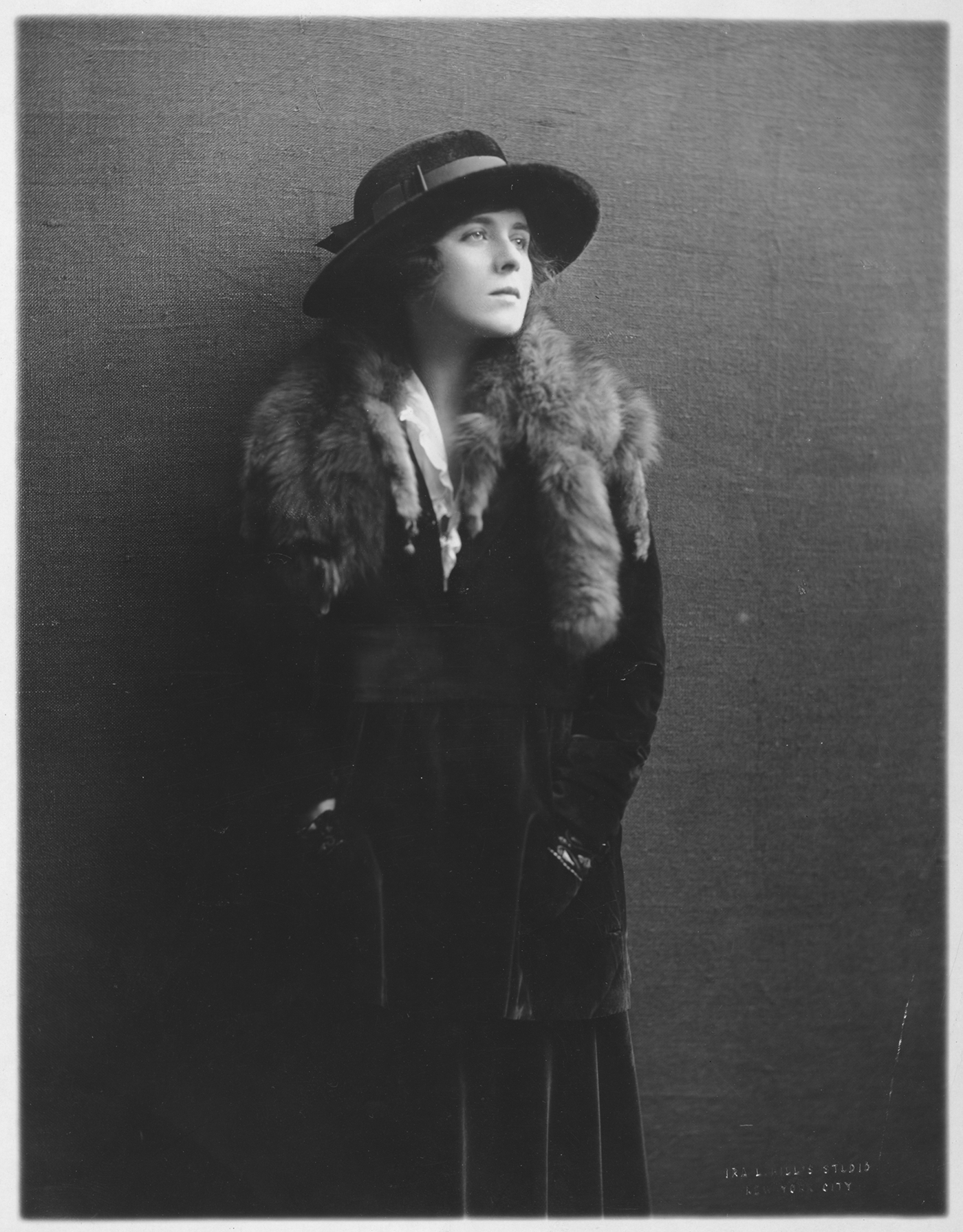
Sonya Levien evokes the image of a flapper, the decidedly apolitical icon of modern womanhood, in a striking self-portrait that links her affinity for fun and fashion to her flight to Hollywood. Contemporary photographs enhance her dramatic appeal by confirming the fashionable persona this working woman projected in her first decade as a scenarist and screenplay writer. To the casual observer, Sonya Levien appears only as she suggested above, a stylish and self-centered consumer. Yet Levien also was a non-conformist who participated actively in the women's suffrage movement, regularly attended the meetings of the Heterodoxy Club, and worked at The Metropolitan Magazine when the debates of the prewar years dominated its pages. During the 1910s, Levien transformed routine jobs in the New York City magazine world into a literary apprenticeship that eventually made her one of the most highly paid and sought after screenwriters in Hollywood.
Levien's rite of passage from Greenwich Village to Hollywood became an extraordinary journey from working girl to career woman—a remarkable tale that began where New York's immigrant cultures overlapped with its intellectual and reform communities. During the 1910s, she thrived among those from contrasting social and cultural milieu, finding a niche in the spaces between such well-known figures as Rose Pastor Stokes, Frances Perkins, John Reed, Mabel Dodge (Luhan), and former President Theodore Roosevelt. Still in New York, she wrote her first original story for the moving pictures in 1919. By the 1930s, she reportedly ranked as the most highly paid female screenwriter for Fox Studios, and by the time of her death in 1960, boasted over one hundred scripts. In bestowing its first lifetime achievement award on Sonya Levien in 1954, the Screenwriter's Guild of America recognized the outstanding quality of her work.
Despite the recognition of her peers, Levien has not received the scholarly attention she so richly deserves. Indeed, Sonya Levien has played hide and seek with historians most interested in her early career before she reached a modicum of fame and material comfort from her film writing. Her one biographer Larry Ceplair argues in A Great Lady: A Life of the Screenwriter Sonya Levien that Levien deserted the feisty and politically engaged choices of her youth to conform to more traditional standards of female behavior and acquiesce in the scourges of the 1950s. But this unsatisfying portrait prejudges the extent to which her strengths rather than her weaknesses informed her ability to thrive in a male-centered industry and minimizes the extent to which Levien remained true to the core values that motivated her throughout her life.Footnote 2
That Levien proved so elusive stems in large part from the challenge of ascribing to her a class identity. The insights of Nan Enstad that working girls such as Levien used fashion as form of self-expression and independence are suggestive of the desires and dreams that she shared with others of her generation.Footnote 3 Later, her embrace of middle-class standards and tastes and her ascent into a world so far removed from her working-class origins, leads too easily to see her at best as upwardly mobile and at worst as a traitor to her class. Yet that assessment does little justice to understanding the complexities Sonya Levien faced in her coming of age. Instead, placing Levien among the progressive reformers with whom she shared so much in the 1910s offers a productive starting point. In this endeavor, the works of Leon Fink and Kevin Mattson provide enough elasticity in their discussions of those writers searching for democracy in this time period to offer perspective on how Levien managed to bounce successfully between two worlds without denying either. For in the final analysis the impulse toward democratic reform that motivated the public intellectuals that occupy Fink's attention or the engaged citizens and activists at the center of Mattson's work similarly inspired Levien in her personal and her political life.Footnote 4 By elucidating how progressive reform in the hands of activists such as Frederic Howe, John Collier, and George Creel sought to increase democratic participation, Mattson helps define the complicated terrain of American progressivism in a way that embraces Levien. During the early 1910s, Levien held firm to the belief that progress toward a more democratic politics and civic life was possible in America.Footnote 5 If Levien stood apart from progressive reformers for a number of reasons—not the least because she clearly did not consider herself a reformer—she nevertheless struggled to find common ground with them. In this regard, Fink's study suggests an alternative path of inquiry for understanding the context in which Levien came of age. Fink's convincing analysis of the generation of public intellectuals in the Progressive Era underscores the relationship between the intellectual and the worker citizen and the special role of woman's culture in the search for a more democratic and just society.Footnote 6 At particular moments in her life, Levien represents each of these analytic perspectives: worker citizen, intellectual, and self-conscious woman. Ultimately, though, historiographical categories can only take us so far, for it would be unfair for a historian to assign one or the other of these identities to a woman whose life by any measure was so much richer and that by its very definition rejected the boundaries of its own day.
The essay that follows gives Sonya Levien a chance to speak for herself. In this way, Levien's move from New York to Hollywood highlights the fluidity between popular culture and public intellectual life in the first decades of the twentieth century. Because in so many ways Levien's path diverged from that of those with whom she worked most closely in the 1910s, it is important to underscore the unique—perhaps extraordinary—aspects of her public life. Nevertheless, her journey from Greenwich Village to Hollywood raises several related questions in American social history. First, Levien came of age in a culture that held deeply divisive ideas about the potential of immigrants and women to achieve the full promise of American citizenship. Did her immigrant origins propel her to become a lawyer, editor, and writer who consistently championed suffrage, birth control, and women's emancipation? Second, how did her apprenticeship prepare her for her career in Hollywood? Levien migrated west to Hollywood when filmmakers such as Jesse Lasky and William Fox were expanding their West Coast studios to serve an ever-growing middle-class audience. Unlike many of her contemporaries who looked down upon writing for the movies, Levien aspired to and enjoyed the financial stability that such work brought. She helped create a professional standard in writing for the movies and did not, at least publicly, proclaim disdain for the commercialization of artistic standards. Levien embraced her move to Hollywood in the context of her life-long struggle to achieve and then sustain a professional identity as a writer. In this spirit, she transformed an arduous journey into a successful adventure.
Told in her own words, Levien's biography represents a narrative of upward mobility and access to the American dream. Ultimately, an analysis of her mostly charmed life reveals the inner dynamics of her civic vision, a vision born out of a particular moment in American political culture. Herein lays the significance of Sonya Levien to an understanding of American progressivism. By bridging the divides that separated Americans into groups defined by gender, class, ethnicity, and even politics, Levien's coming of age offers a window into the process through which America invited those at the fringes to join in defining its national and civic creed.
OUT OF THE TENEMENTS
There is little in Levien's early life that sets her apart from the mass migration of Jews from the shtetls in the Russian Pale of Settlement. Her father, Julius Opesken, made his way to America in 1891, leaving his wife and three or four young children in their hometown of Ponomunok, Lithuania.Footnote 7 Here, her paternal grandfather introduced her to the study of languages—French, Latin, Russian, Hebrew, and German—and showed her how to accommodate social and religious conflicts. In accepting a humanitarian award in the early 1950s, Levien credited her grandfather with teaching her the values of religious tolerance and cultural pluralism, values with which she identified throughout her life.Footnote 8
Her father—who took the name Levien somewhere between Siberia and New York—found a job in the garment industry in Manhattan and sent for his family in 1895. Sara (Sonya) was the oldest and, at age seven or eight, experienced the grinding poverty of the immigrant ghetto in Brooklyn, where the family rented a cold-water flat. Food was scarce, and Sara reluctantly left school at the end of eighth grade to start working in a feather duster factory. Some years later, she told a reporter, “without ambition, you sink into the [Lower] East side.”Footnote 9 Levien's determination to escape such poverty led her after less than a year in the factory to borrow thirty-six dollars from a member of the local school board—a loan she repaid over four years—and enroll in secretarial classes where she learned how to use a typewriter and take shorthand.Footnote 10 Levien pursued secretarial work at a time when fewer than 2 percent of women wage earners held jobs as clerks, cashiers, typists, or stenographers, and such coveted positions were especially difficult for non-native English speakers to secure.Footnote 11
Levien's first secretarial job was as a private secretary for Rose Pastor and her husband James Graham Phelps Stokes, reformers and members of the Socialist Party of America. Levien first met Rose Pastor in 1903 in New York, where Pastor was writing a self-help column for adolescent girls published in the Jewish Daily News. Born in Poland, Pastor immigrated as a child to the United States, went to work rolling cigars, and joined the labor movement.Footnote 12 She mentored a number of teenagers at a local settlement where they met to talk about books but also about their home life and their individual problems. About ten years older than they, she advised them about middle-class tastes in fashion and other social customs to help them Americanize.Footnote 13 Reportedly, Levien introduced Pastor to Phelps Stokes for an article she was researching, and, despite their vastly different backgrounds—he was a member of an old, wealthy, Protestant New York family—they married in 1905.Footnote 14 Levien maintained a close personal friendship with her throughout the time she lived in New York City.Footnote 15
Rose Pastor and James Graham Phelps Stokes mentored Levien; how much their politics changed her is unclear. At the least, the household seems to have offered Levien a space to negotiate some nontraditional venues for young, foreign-born women. During this period, Levien passed the New York State Regents examination and then enrolled in law school in the evening division of New York University Law School, graduating with the night class of 1908, one of two women to finish that year.Footnote 16 In testifying to her character when Levien applied for admission to the Bar, Phelps Stokes, himself an attorney and social reformer, wrote that she “had been a member of my household for a number of years.”Footnote 17 Their household was a gathering place for their friends, many members of the Socialist Party of America and the Intercollegiate Socialist Society to whom Levien was probably introduced.Footnote 18 Like others in this circle, Levien was photographed at the Stokes's compound at Caritas Island off the coast of Connecticut.Footnote 19 She corresponded with a number of activists later associated with the Socialist movement in America, including Rose Strunsky, Anna Strunsky Walling, and Charmaine London, although their exchanges were social and personal rather than political.
Levien, c. 1909. HM 56712.

In addition to earning the right to practice law in New York, Levien gained considerable practical experience in publishing during this period while working at Success, a short-lived but influential magazine that attracted literary manuscripts and the investigative nonfiction popular at the time.Footnote 20 Both its editor Samuel Merwin and chief manuscript reader Viola Roseboro mentored Levien, who proved an eager apprentice. Merwin may have originally hired her in 1907 to do office work because of her clerical and typing training, but she also had written squibs—the witty or sarcastic brief essays or even titles—for some of the city's popular magazines, a skill that made her even more valuable. Merwin tutored Levien in all aspects of writing and editing and suggested that she read from a wide range of books and magazines. For a while, she helped to edit one of the magazine's regular departments, Mrs. Curtis's Home Corner. Written by Isabel Gordon Curtis, the column advised young female readers on various topics, including home and careers.Footnote 21
More importantly, Levien became adept at recognizing a good story and providing constructive criticism under the guidance of Roseboro, whose credits included discovering O. Henry and, while working at McClures, developing Willa Cather's career.Footnote 22 Frances Perkins, then a young social worker living at Greenwich House and later Secretary of Labor during Franklin Roosevelt's administration, remembered Roseboro as having encouraged “a girl named Sonia Levine [sic]” and Levien as being a general handyman around Success.Footnote 23 Levien, she noted, had “lovely Irish eyes” and an excellent grasp of what made a good writer. In particular, Perkins recalled that at Success Levien would
interview aspiring authors who came in with their manuscripts or who came in because their manuscripts had been returned … to … pacify them because she could get on with them. It turned out that she also had some of Miss Roseboro's flair for picking a good story that wasn't as yet well-written, but was a good story. She taught many a person to write by going over their manuscript. Miss Roseboro used to say, and Sonia would agree with her, “Every American has one good story in him. The thing to do is to get him to tell that story.”Footnote 24
Levien described the years at Success between 1907 and 1911 as her “entering wedge into the literary field.”Footnote 25 While the magazine offered her an opportunity to learn different aspects of the magazine business including editing and writing, the time and place of her apprenticeship is particularly significant. New York—and particularly Greenwich Village—were emerging as extraordinary milieus for writers of all sorts. The developing professions of social work and journalism and the discussions of writers, reformers, academics, and artists created a lively intellectual and social world for young people. Levien became part of that informal network of young men and women who loved the excitement of producing for a mass market, of finding new authors, and of turning out visually engaging magazines.Footnote 26
Years later when asked by his biographer about a rumored affair with the young writer Sinclair Lewis, she declined to talk in depth about her romantic relationship with Lewis, but confirmed only that “‘we kept company’ for several years. … Yes, we talked of marriage—seriously.”Footnote 27 She participated in the soirees at the home of Mabel (Ganson) Dodge, where suffrage, municipal ownership, birth control, the rights of working women, and free speech stimulated long and frequent discussions among her friends. Her friendship with Dodge (later Luhan) deepened during the 1930s and 1940s, and the two sustained a long correspondence later in their lives. Levien became especially close to George Creel, who headed the New York State chapter of men in support of women's suffrage, and John Collier, her coworker at the community-based People's Institute.Footnote 28 Through him, she befriended Josephine Roche, a researcher for the Russell Sage Foundation in the Tenement House Department, and when Roche lost her job as the first policewoman in Denver in 1913, she turned to Levien for help in finding a new job in the “social center scheme.”Footnote 29 Roche and Frances Perkins, at the time a lobbyist for the National Consumers' League, both championed the cause of improved conditions for female factory labor.Footnote 30 Perhaps Frances Perkins summarized best how Levien bridged the bohemian world of the young social reformers to the immigrant and working-class culture when she recalled that “[Levien] was the girl from whom I got such an amount of education because she was a speeder-up in a feather-duster factory when she was thirteen years old.”Footnote 31
Levien's eagerness to educate others about the needs of working-class women manifested itself in a variety of ways over the next decade but most immediately in her writing, work at the People's Institute, and involvement in the woman's suffrage movement. Her portfolio from this period includes political reporting, literary reviews, municipal legislation, and social advocacy as well as short stories. Later in her life, Levien told family and friends that she had always wanted to be a writer and that she had only gone to law school as a pragmatic alternative if she could not make a living from her writing.Footnote 32 What legal work she did focused on research and writing, and there is no record of much trial experience. It remains open to conjecture to what extent her naturalized status, accent, and social discrimination, as well as systemic sexism, affected her ability to succeed in a law career, but she reportedly lost her enthusiasm for courtroom appearances after criticism from a judge.Footnote 33
The woman suffrage campaign presented Levien an opportunity for challenging work. In April 1912, the National American Woman Suffrage Association (NAWSA) hired her—she was using her formal name, Sara A. Levien—as assistant editor and business manager of The Woman's Journal.Footnote 34 NAWSA sent her to Boston to work under Alice Stone Blackwell, editor-in-chief of The Woman's Journal. NAWSA Board members Katharine McCormick, Mary Dennett, Jessie Ashley, and Mary Beard, concerned that The Woman's Journal had become stodgy in its presentation, were seeking a glossier and more modern outlook to compete with the new magazines hitting the stands in Times Square. In this way, they hoped to increase circulation among new readers and mold public opinion in support of women's suffrage.Footnote 35 This was indeed a daunting task for Levien, who from the moment she arrived at The Woman's Journal met with resistance from office manager Agnes Ryan.Footnote 36
The first edition of The Woman's Journal to bear Levien's name as its managing editor appeared on July 6, 1912. In writing her column HELP US PLAN, she focused on a summer campaign to increase circulation by hooking the “Joy seekers,” presumably young women from both the working and middle classes enjoying the possibilities of city life.Footnote 37 Ironically, a sixty-three-year-old woman who had heard Lucy Stone speak decades before and supported her own luxuries by making preserves for the neighbors hastened to respond that she “put on my hat and went to the next town to get a subscriber … [since] there isn't any new person in my town that I could get because all those that have any brains at all I have already made readers of The Woman's Journal.”Footnote 38 Still, Levien sought to appeal to new readers, most important among those interested in empowering wage-earning women. In the aftermath of widespread national coverage of the recent labor strike at Lawrence, Massachusetts, Levien featured a lively cartoon by pro-suffragist Lou Rogers that caricatured a fat, masked man as business greed, yielding a hot iron to brand “unregulated hours” on the back of “the woman wage-earner” scarcely able to grasp her baby. Despite her efforts, Levien left The Woman's Journal in the fall of 1912, seemingly defeated by intra-office politics. Nevertheless, she maintained cordial relations with Blackwell and others at NAWSA and developed what became a life-long friendship with Katharine McCormick. Levien no longer commuted to Boston and, living full-time in New York, she rented space from Viola Roseboro in an apartment that became the center of her busy professional life and where, although it was crowded and noisy, she created the proverbial “room of one's own.”Footnote 39
New York was exciting, but Levien believed that American readers would find the dramatic story on the woman question unfolding in London even more interesting. With that in mind, she approached the managing editor of The Metropolitan, Carl Hovey, and proposed to cover the story. The Woman's Journal had printed a piece by Hovey where he criticized both the unprofessional behavior of police officers toward settlement workers leaving night court at 1:30 a.m. and similarly inappropriate police behavior during the suffrage parade down Fifth Avenue earlier that year. Hovey was well known and respected among reform writers, and his article, originally invited by New York Mayor Gaynor on “The Police Question,” had received positive attention. Most important, Hovey unequivocally supported the rights of women to public spaces.Footnote 40
Hovey recognized that Levien—like John Reed, another Hovey protégé—had talent and energy. In March 1913, he published an article Levien had written on female labor activism and the exploitation of child labor. Above all, that essay rallied support for industrial feminism by taking its readers on a walk through the Lower East Side and listening to the speeches of a fictionalized organizer, “the Little Old Girl,” who by virtue of her age, foreign birth, work experiences, and impassioned speech bore an uncanny resemblance to Clara Lemlich, the spirited labor organizer. In “The Little Prophet of the Immigrants,” Levien drew a vivid picture of the “hopes and spirit” of New York's garment workers, many of whom had participated in the Great Uprising against New York shirtwaist manufacturers in 1909/10. Levien's indictment of female wage slavery is most remarkable in how she told the story. By seeing faces “half-hidden in the lamplight,” by listening to female speakers on the street corners, and finally by merging into the crowd outside the “Labor Temple,” the working people's church, Levien initiated her readers to a world they might not have known.Footnote 41 Levien captured her readers' interest by making them voyeurs to events still raw in the memory of New York's garment workers. Refusing to victimize her heroine, she described “the Little Old Girl” who “Except for her eyes and mouth … was ordinary in the sense that there was nothing about her to suggest the so-called atmosphere of the downtrodden.” On the contrary, Levien emphasized that “the Little Old Girl had on a small becoming hat with a pert feather peeping over its brim, a suit too thin to be comfortable in January, but obviously the best effort of a poor tailor; and at her throat she wore a ribboned flower.”Footnote 42 In this way, Levien created empathy for the young labor activist voicing grievances against an exploitative industrial system.
Equally effective as its descriptive power, the story's critical perspective forced the readers to look inward. Levien carefully minimized ethnic and religious differences among the workers but highlighted the class differences between the laborer and the consumer. “We hurried on in silence. Turning a corner we were stopped by a big street gathering … The speaker was wailing her complaints. ‘In the big department stores’ she continued, ‘we are having January sales of white goods and grand ladies are buying their lingerie we make. Now is the time for us to tell them that while their little girls are reading Alice in Wonderland ours are sewing button-holes for the princely wage of 1cent for 36 holes.’”Footnote 43 Published on the second anniversary of the Triangle Factory Fire, this essay bore witness to Levien's advocacy of women's rights to organize as well as to rejection of wage slavery.
Drawn by the political moment in England, Levien arrived in London early in June 1913, holding letters of introduction procured from Alice Stone Blackwell and a five hundred dollar subsidy from the magazine.Footnote 44 With good instincts for knowing how to make new professional contacts, she followed leads while staying with suffragists and sympathizers.Footnote 45 Levien immediately began to draft the article that became “In the Militant Camp,” where she raised provocative questions about the relationship between class and gender in England. Levien's trip to London sent her in search of the Pankhursts—mother and daughters—as well as those less well-known who worked together toward suffrage and the improvement of the lives of the working poor, particularly those who lived in the “miseries” of London's East End. Levien identified her audience, “the girl back home, serious-eyed,” reacting to the headlines of the American newspapers on Fleet Street that proclaimed, “Militants are hysterical insane Women.” She was determined to present an alternate view. In what was already emerging as her trademark style, the essay presented the militants in their own milieu; she explored different types of activism, most particularly among those who forsook the soapboxes for more demonstrative behaviors.Footnote 46 Levien, who called herself an “inquisitive American,” squeezed into the crowd and followed along by foot and bus. As she searched for the young women whose notoriety came from “planting bombs and throwing hatchets,” Levien found not “Amazons” but young and middle-aged women, alternatively pretty or worn, but equally outraged by a Parliament that denied them the vote.
As violence and civil disobedience increased within the militant camp, the tolerance of free speech both in oratory and in its symbolic representation declined among the authorities. Levien conveyed to American readers the courage of the militants, and she directed a measure of anger toward the police. Using the first person to narrate her walk about London, Levien quoted a taxi driver describing the commotion of the street: “the suffragettes and bobbies were ‘avin’ a row.” As she arrived at Hyde Park, Levien observed the crowd and from among their numbers a “young girl was seen to mount a platform, and unfurl the flag of the W.P. & S.U [Women's Political and Social Union] … Here was new blood” an altogether new test of their free speech fetish! … The police were making a frantic effort to get at her tho she had not yet commenced her attack on the government … It took them at least five or ten minutes to reach the platform and drag her down and the flag with her.”Footnote 47
The drama in this piece of writing built as Levien described how the infamous and the anonymous worked together for suffrage. She vividly evoked the image of women who suffered from deadening poverty either at the hand of abusive husbands or as factory workers, typically widows or girls with no prospects of marriage and its economic benefits. She often dramatized the plight of the many with reference to the singular working-class woman who joined the militants because she saw in suffrage the possibility that “if women had the vote her husband might have been forced to support her, her son educated to be decent, and her two babies would have had a better chance to live.” Levien's empathy for these women was palpable and found its way into some of her most descriptive phrases. She contrasted the possibilities of the embittered young woman quickly becoming a “dried up old maid” to those of her American sister, the “bachelor-girl.” Moreover, in what was a racially charged mixed metaphor, Levien described a particularly tough woman who “pulled up her sleeve and displayed a muscle that showed all the possibilities of a new kind of white hope.”Footnote 48
In writing about the British militants for an American audience, Levien convincingly portrayed the class politics that informed the movement. She compared the possibilities for working-class women—both single and married—in Britain and the United States and suggested that there existed greater opportunity for happiness on the American side of the Atlantic. She held a deep-seated conviction that suffrage empowered working women and allowed them the possibility of self-support; economic independence; and, if they were also mothers, opportunity for their children. Levien told the story of the working women through multiple perspectives—that of the inquisitive American, the English middle-class reformer, and the working woman—and in this way she emphasized the points of convergence rather than conflict. Above all, free speech provided common ground in both American and British political traditions and across socioeconomic divides.
By choosing the theme of free speech as an organizing motif for her essay on the British militants, Levien reprised a significant issue that had interested her before she left for London. She had worked on the campaigns in opposition to legalized censorship of moving pictures while on the paid staff at the People's Institute, a community-based organization in New York that tackled problems of modern urban life and provided services, clubs, and activities for a broad mix of reformers and workers.Footnote 49 The well-known civic reformer Frederic Howe assumed leadership of the People's Institute in 1912, and James Graham Phelps Stokes sat on its board. The institute operated from a small budget with a small number of paid staff, and Levien's position was partly with the People's Institute and partly with one of its affiliated groups, the National Board of Censorship of Motion Pictures (NBC), where she served as educational secretary. Despite its name, the NBC opposed municipal, state, or federal censorship of moving pictures and focused its efforts on guiding producers to voluntarily submit their pictures to volunteer committees that would shape film tastes through criticism and reinforced by giving approved films its imprimatur. Much of Levien's work at the NBC revolved around promoting the Board's commitment to free speech, its opposition to legalized censorship, and its efforts to regulate theaters to minimize hazardous physical conditions.Footnote 50 Levien's interest in the moving picture theaters was part of her broader social concern with the role of recreation in building civic pride and affirming cultural continuity.Footnote 51 As educational secretary for the NBC, Levien focused primarily on forming public opinion. To that end, Levien did much of the research and writing for “Suggestions for a Model Ordinance for Regulating Motion Picture Theaters,” which focused on making moving picture theaters safer for it projectionists and audience.Footnote 52 In addition to her investigative work, she served as a publicist, propagandist, and lobbyist for the Board, testifying against legalized censorship before “commissions appointed by Mayors, Governors … private organizations … legislative committees in New York and in States in the vacinity[sic].”Footnote 53
Like her intolerance of censorship, Levien's commitment to an open and free exchange of ideas figured at the core of her political values. Nowhere is this more evident than in her decision to join the circle around Marie Jenney Howe, who was a founding member of the Heterodoxy Club, a group committed to discussing various woman rights theories including the relationship of feminism to socialism and the issues of inequality that women confronted in their daily lives.Footnote 54 Without any formal orthodoxy on the woman question to structure their ideas, they all shared an understanding of the importance of female independence and a zeal for the centrality of free speech to women's rights. Levien became a regular participant at the lunches of the Heterodoxy Club, whose membership included Crystal Eastman, Henrietta Rodman, and Charlotte Perkins Gilman, and her old friend and mentor Rose Pastor Stokes.Footnote 55
The Metropolitan
In the 1914–15 edition of Woman's Who's Who of America, a business directory, Levien—using her given name Sara—defined herself as Editor and Author. Her entry called attention to all she had accomplished. She had escaped the poverty of her youth by virtue of her own hard work and the support of others to become a professional woman. To that end, she listed past jobs with Success Magazine and The Woman's Journal and her current employment as Educational Secretary at the People's Institute. She included “settlement work and socialistic theories” and woman suffrage as her main interests and included her memberships in the National Ameircan Woman Suffrage Association, the New York Bar Association, the Intercollegiate Socialist Society, the University Settlement of New York, the Women's Lawyer's Association, and the College Club of Boston.Footnote 56 Significantly, her immigrant origins did not figure overtly in this piece of self-advertising. She was already looking for a new job, and by the time the directory went to print Levien had joined the permanent staff at The Metropolitan.
In the beginning, Levien wrote on women and politics, but her natural affinity for fiction, her finely honed editorial skills from her time at Success, and her travels abroad gave her work breadth. Sometime late in 1913—it is unclear whether it was before or after she had permanently joined the staff at the magazine—Levien traveled west, where campaigns for the Susan B. Anthony amendment were under way in seven states. Subsequently she published several columns on the American suffrage movement. In one, she rejected the notion that women naturally shared a common sisterhood and, while showing respect for the past achievements of NAWSA, wrote that the more radical Congressional Union (CU) would appeal to “women who are tired of the door-to-door canvass and dread the dreary road to another election are joining the union in its spectacular war on Congress, which promises a rather interesting winter for Washington.”Footnote 57
Levien's coverage of European suffrage movements took her back to England in the early summer of 1914 to cover the meetings of the International Woman's Suffrage Alliance, and she was still overseas when hostilities erupted.Footnote 58 Returning home to American neutrality, she shared the peace sentiments of her socialist friends who saw in the war an expression of class conflict. Frustrated by the lack of serious reporting for female readers, Levien berated male editors who were “quite unprepared to meet the unsuspected intelligence of their women readers” and did not take their interests seriously. Seeing political writing broadly defined as an appealing alternative to traditional female subject matter, Levien wanted magazines to publish articles on something different from “fashion, babies, and tubs.” Levien disagreed with those middle-class suffragists of her generation who resolved to campaign exclusively for suffrage, and she therefore refused to write “straight suffrage propaganda.” For Levien the larger issues of the war and the economy were inseparable from the cause of woman suffrage. “It is how they [women] are using the vote, what is their greater usefulness that is interesting us;” wrote Levien, who asked our women readers for support in “the legislative fight for widows' pensions … in helping us solve the problems of sanitation—poor schooling—and corrupt politics.” She concluded, “‘If only women realized their power,’ I heard a diplomat say. ‘They could stop this war.’”Footnote 59
The Great War sharpened even more Levien's empathy for the working class, which was apparent in earlier essays. Now, she wrote about the social consequences of war on women and the heavy burdens borne by working women and their children. For Levien, suffrage emerged above all as a means to a more just society. In 1915's “Girls for Sacrifice,” for example, Levien squarely faced the problem of war babies, those children born out of wedlock in war-torn Europe. Although her analysis verged on the melodramatic, she effectively compared illegitimacy in Germany, France, and Belgium and dramatized the rape of women by invaders, which often resulted in infanticide. While the horror of rape was clear, Levien argued at the end of her essay that the English, too, devalued women by applying a double standard, tolerating the illegitimate children of soldiers going to war but denying “the healthy birthright that is due all children.”Footnote 60
Since The Metropolitan devoted space and considerable resources to international politics, the paper's editorial offices were pleased when former President Theodore Roosevelt began to publish a monthly column in 1915. Levien edited his column as part of her regular set of tasks. Her memorial reminiscences brought to life what it was like to work with him: “The advent of his [Colonel Theodore Roosevelt] opening New York headquarters with the Metropolitan Magazine was the beginning of tempestuous two days a week for all of us that were as entertaining and humorous as they were inspiring. … He joined our ordinary existence in the office as if it were some new and rare adventure for him, and imbued with his energy and robust attitude toward life, we suddenly felt ourselves promoted into participants in adventurous living.”Footnote 61 The relationship Levien developed with the former president had a profound impact on her. She came to call him “The Great Friend,” and he referred to her as his “Little Anarchist,” a nickname that seemed marginally appropriate to her political sympathies at least through 1915. Yet, the closer she became to the Colonel, the more she seemed reminded of her own political values; his teasing especially reminded her of the fundamental differences of class in America. At one point, Levien tried to record some of his mini-lectures and witticisms, and a few survived in notes in what she called “Boswelling his sessions.”Footnote 62 Mesmerized by Roosevelt's personality, she nevertheless remained an independent thinker particularly in relation to the woman question. Levien and the Colonel disagreed dramatically on women's reproductive rights. When The Metropolitan Magazine published Roosevelt's essay against birth control, Levien persuaded the editors to publish Margaret Sanger's reply as part of an essay that advocated a “progressive social program” that included suffrage as well as “legislative fights for better factory and housing conditions, [and] in the school teachers [sic] campaign for equal pay.” Levien explained that she supported birth control because she was “one of many children brought up on the East side, and know to unforgetfulness the bitter struggle of a large family on a small income.”Footnote 63
As she had done before, Levien used her personal experience to make her voice more dramatic and more authoritative. She recalled a particularly difficult period in her life when she returned to her old neighborhood with President Roosevelt sometime in the late fall or early winter of 1917/18 after American troops had gone overseas. For Levien this was a particularly emotional moment. She recognized the extent to which her upward mobility had propelled her away from the trials of those for whom she had a natural affinity. The distance she had traveled, both literally and figuratively, forced her to clarify where she stood in response to the class struggle and to middle-class reform efforts. Upon reflection, she wrote that she had developed a distaste for the “professional reformer” who was “unmarried, and amazingly muddled as to the emotional elements of parenthood overestimating the dull submission of the poor mothers, and the brute cruelty of poor fathers.”Footnote 64
Nowhere was the challenge of her conflicting emotions more apparent than in the draft essay for “Milk” published in The Metropolitan in 1918. Here she writes as the daughter of the tenements, a champion of the Woman's Suffrage Party of New York, and above all as a student of American history with a fundamental belief that “this country affords opportunities for equality and democracy as no other nation in the world.”Footnote 65 Levien wrote “Milk” following a tour of the East Side of New York where she went “from house to house with Colonel Roosevelt … in an effort to do something for the starving babies in these days of stress.” As she walked in the old neighborhood, she experienced “confusing emotions” and a sense of estrangement from these places of her youth. She expressed an antipathy for “slummers, charity investigators and adolescent uplifters” that dated from her youth when she “played Exhibit A in the life of the University Settlement.”Footnote 66 But she confessed that the “pinched faces of the mothers brought me to. The inalienable bond between us asserted itself, and instead of an interloper I saw myself as a deserter.”Footnote 67 What followed was a defense of why radicalism had appealed to her, as it did to those who still lived with the deadly consequences of urban poverty and who needed to send children to work in exploitative conditions. At her most impassioned, she described the mothers of the East Side and the “small dried-up and tear-stained old woman” who wanted above all to protect her sons from being conscripted into the army and sent to war.Footnote 68
What was most remarkable about “Milk” was that the essay did not hold together logically and that, in her confusion, Levien struggled to reconcile a belief in America and the values of democracy, liberty, and freedom with the inequalities born of class and exacerbated by the new demands of the war. Most importantly, Levien wanted to honor the sacrifices of those immigrant mothers who haunted her dreams. Seeing their faces reminded her that “In times of peace we forget the nation's dependence upon its working classes, in time of war we cannot.” Levien then continued, “ the nation is demanding from them so much, more than from any other class.”Footnote 69 What was consistent in the midst of her confusion was the gendered perspective on what citizenship meant to the immigrant women, especially those who would be eligible to vote in the next election. She praised the efforts of the Woman's Suffrage Party of New York State to “educate these women to citizenship,” and yet she concluded that this work, even combined with the private initiative of the social uplifters for whom she had already expressed a modicum of antipathy, was insufficient to solve the greater problems of social and economic inequality. Rather, she concluded that the needs of these people “be the concern of the nation” and that, while not a perfect solution, “the federal government … is the only agency that can provide sufficient opportunities for these people to work out their own problems.” In the final analysis, Levien understood and supported that the “great dream and passion and energy of this age is the prolteriat's [sic] dream of its control over its own destiny.”Footnote 70
Levien was editing Colonel Roosevelt's column and was closely following the dramatic events unfolding on the world's stage. Most of her work was as fiction editor, but she had a good relationship with the radical journalist John Reed, who was sending dramatic reports from the European trenches to The Metropolitan. However, when Reed “acted from foolhardy impulse” and went in search of material beyond the trenches into “forbidden Allied territory,” Levien, Hovey, and Roosevelt questioned Reed's sense of responsibility.Footnote 71 Levien was excited when Reed traveled to Russia for the magazine in 1917, and she found time to begin formally to study Russian herself, perhaps in the expectation that she too would travel there soon. The popular short story writer Fannie Hurst, who Levien knew reasonably well, wrote to Levien: “I can imagine how you are shaken to your innermost by the superb drama of Russia at this moment—somehow there doesn't seem to be anything quite like it in the history of the world—and what must you people with Russian soil in your blood be feeling. Like you, Jack [Reed] writes that he wants to fly there.”Footnote 72 Levien did not return to Russia, but her life changed nevertheless when the office extended into her private life; in October 1917, she married Carl Hovey. Their marriage surprised their friends, perhaps because of differences in religion and age; Hovey came from a New England Protestant heritage and was eleven years her senior. They were celebrated most notably by playwright Israel Zangwill who rejoiced at “your romantic announcement showing the Melting Pot efficiently at work.”Footnote 73
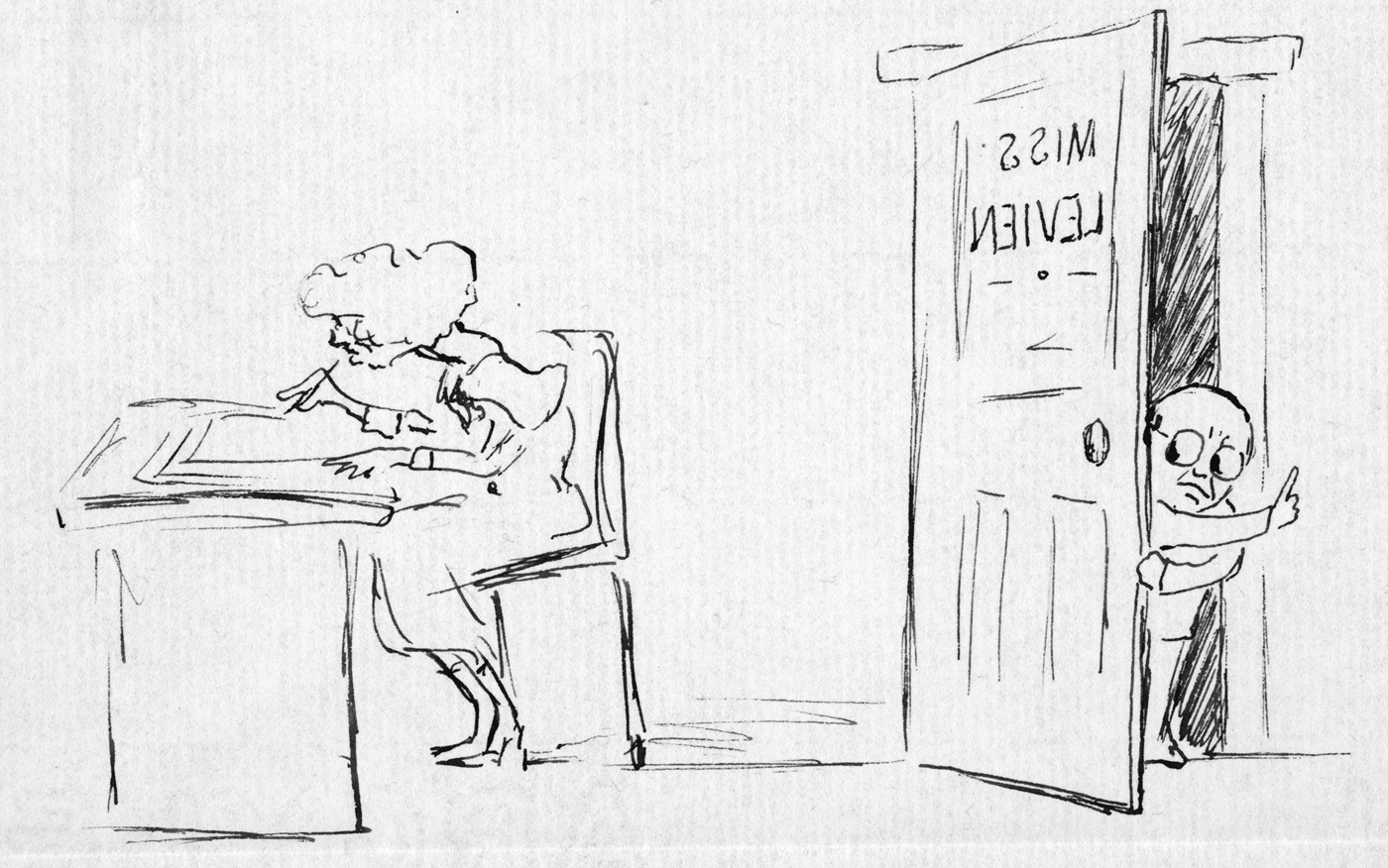
Drawing by Clarence Day of Levien in the offices of The Metropolitan. HM 55917.
Even as their personal relationship blossomed, it became increasingly difficult to publish the magazine in the increasingly fevered political climate. War-related measures affected The Metropolitan throughout 1918. The price of paper forced the magazine to retrench, and Hovey became increasingly budget conscious as the magazine saw a 900 percent increase in carrying costs.Footnote 74 Although Hovey as managing editor made most business-related decisions, Levien seems to have been a key player and in constant communication over editorial matters. In addition to economic concerns, the restrictions imposed by censorship on political speech during the war gave pause to Hovey and Levien as well as to their good friends such as Max Eastman, who witnessed the closing of his paper The Masses.
The Great War challenged America to rethink its position in the world, to define and then protect its interests, and to explore basic assumptions about American national life. These debates became more urgent in 1918 after the consolidation of the Bolshevik Revolution. Accusations against foreign-born activists festered in trials and resulted in deportations. The loyalty of “hyphenated” Americans emerged as a central theme in the demands for 100% Americanism. Alternatively, the quest for social justice that had captured the imagination of so many a few short years before paled in comparison. Yet although it may have seemed impossible to reconcile these two voices, Levien was among those who continued to try.Footnote 75 In the midst of these polarizing issues, Levien reflected on her own past. She defined the promise of America as a contract with the immigrant and working-class families. The war had demanded loyalty and sacrifice. In military service men fulfilled their civic duty, and immigrant women earned their badge of courage by sending their sons off to fight. For Levien, the way forward was to empower the immigrant class as a way of energizing the nation itself. Here, in difficult times, was a vision of the future based on democratic politics.
THE MOVIES
When asked how she started writing for the movies, Levien often told interviewers that her husband would tease her that if she started a Greek tragedy, it would end up a Mack Sennett comedy.Footnote 76 This light-hearted self-deprecation belies what she had learned from a decade of writing for popular magazines and, perhaps even more importantly, editing the work of others. Levien knew how to build tension, how to develop characters, how to appeal to a mass audience, and most important how to visualize a story line. And she understood the political struggles the motion picture producers waged to fend off attempts at legal censorship across the country and why they were unsuccessful in New York State, which legislated motion picture censorship beginning in 1921. The Metropolitan also published advertisements for writers seeking to learn the art of the photoplay, although there is nothing to suggest she read any of these how-to books. There is no specific evidence explaining what motivated her to send a story to filmmakers, whether someone solicited her work, or if she did so as an experiment. It was consistent with Levien's sense of adventure for her to try her hand at a new form of writing. She earned her first moving picture credit in January 1919 for Bluebird's Photoplays, “Who Will Marry Me?”Footnote 77
The transition for Levien from the magazine world to script writing was neither automatic nor smooth. Above all she worried about how much time working for the studios left for her own writing. Nevertheless, four factors eased the transition and pushed her toward a permanent move to Hollywood where the studios had largely relocated by the mid-1920s. First, Theodore Roosevelt's death early in January 1919 claimed one of The Metropolitan's most popular columnists. For Levien and Hovey the social, political, and international debates that were ongoing in the postwar period were at the core of their thinking, and Levien sorely missed working with a man she clearly idolized. Second, there was pressure from the publisher to change the nature of The Metropolitan, neutralizing its progressive pulse and thus making Carl Hovey increasingly unhappy. In February 1922, the magazine ceased publishing nonfiction articles altogether and Hovey accepted a position at Hearst's International. During this period, Levien began publishing her pieces in other venues, including for Famous Players-Lasky, a motion picture production company that took the name Famous Players-Lasky Paramount in 1927, and she began a stint in 1924 at McClures Magazine.Footnote 78 Third, her growing family depended upon her earnings, and there were even times when she considered herself their primary breadwinner. She had her first child in 1920 and a second in 1923. Additionally, she had to pay mortgages for a farm in Westchester and a home on 92nd Street in the city. The potential of earning significant sums of money for her scripts proved to be a powerful incentive that loomed large in her decision making. Finally, working for McClure's further depressed her. As that magazine floundered, she saw little in publishing to compel her. Writing frankly to her fellow writer and confidante at The Metropolitan, Clarence Day Jr., from the farm where she was “working on a short story,” she admitted:
I've been so low in my mind that I've had to escape the office. It is a terrible place. We're practically suspended as the Sept. issue is due on the stand in a few days and hasn't been even printed. Once before I presided at the death of a magazine—Success—and it made me sick. Fortunately I escaped that fate at The Metropolitan. I have no feeling involved about McClures. I knew it and anticipated it from the first.Footnote 79
As she built a career for herself in Hollywood, Levien developed the reputation of being easy to work with and of accommodating others. Her daughter remembers that she was exceptionally good at putting ideas in others' heads and letting them claim them as their own.Footnote 80 Her personal attributes notwithstanding, Levien was a skilled writer and editor and knew a lot about what appealed to mass culture from her years in the magazine world. Writing in The Writer's Monthly, A Journal for All Who Write, Levien explained “Why I Decline Stories.”Footnote 81 At the time, she was still fiction editor for The Metropolitan. The “essential quality” of a popular magazine story, she articulated, is to “surmise the temper of our audience by intuition, by intelligence, if we can.” Levien admitted that “As a normal person, of catholic taste, an editor who finds himself aroused and stirred by a story stands a better chance of pleasing his audience with that story than if he were constantly trying to guess at the tastes of a vague and inarticulate mass of subscribers.”Footnote 82 She concluded her advice with the admonition to “Read to study the market” but not to imitate others. Above all, Levien thought “honesties of characterization and motive” most important, trumping the beautifully written but “conventional, machine-made manuscript.” Such “monotonous, mechanical stuff” that satisfied the “temptation to write for money” Levien deemed as characteristically American.Footnote 83
Levien's published advice came at her own expense. Several months before the appearance of “Why I Decline Stories,” Levien sent one of her stories to Day. He must have told her it contained an old and dull theme, and she thanked him profusely for his “frank criticism and how it straightened me out on the brink of a mess.” Indeed, Levien realized that despite the popularity of the “romantic plot,” she was better served by “choosing from the life I am familiar with,” promising to “take the time to think about these yarns more clearly, more realistically and hope not to repeat that stupid offense of the story I sent you.”Footnote 84
The life Levien knew defies simple reduction: she was neither a Cinderella of the Tenements nor a Jazz Age Flapper. When her first child Serge was born in 1920, and she was finding the constant crying of her nursing son a challenge for her nerves, she could scarcely wait to get back to the office. She took responsibility for the family finances, investing in the stock market, which she found “like a fascinating game,” and “preparing for an active part should it go down again.”Footnote 85 She also invested in real estate, buying a farm in Westchester. But the boldness she displayed in public was accompanied by expressions of anxiety that seemed only to inspire her to work harder. Having put herself on a steady track, Levien later wrote to Day describing a crisis sometime between 1923 and 1925 and confiding that her analyst [Dr. Brill] “saved her from a nervous breakdown” and that she had “never fallen as low in my spirits as at that time—due to a sort of sanity he gave me.”Footnote 86
In moving from the magazine world to the movies, Levien suffered the financial as well as emotional ups-and-downs of success and failure, of signing and breaking contracts, and of accommodating a new style of work organization. In December 1922, she bragged to Day about the reaction of Famous Players-Lasky, whose offices at the time were in Astoria, to one of the script continuities she had written: “they have all decided I am the new child wonder of the movie … It has set me up a lot—not because I think the story any good, but because I had the guts to stick it out … I proved that I am not a failure at it, and made them all change their minds. How I have been tempted to run away ever since I've gotten into this business. Now I am so pleased I didn't.”Footnote 87
But less than three months later she wrote him, “I've terminated my contract … I feel as if I had been released from Sing Sing.” She detailed her reasons, which included differences with the “head hack,” as an excuse for more structural inequities, namely, that her bosses do not accept stories “I've written on order, or give me time for writing between continuities, with the result I'm 50% worse off finally than I bargained for.” In a sigh of relief, she told Day that she looked forward to being a “free and white citizen.”Footnote 88
Above all Levien remained true to her ambition to become a writer. During the years of her apprenticeship, she came to realize that writing for Hollywood studios might be the only alternative that would allow her to satisfy both her desire to write and enjoy financial stability. She expressed dismay about the fate of writers such as William Hard who had published in The Metropolitan and lamented, “When I think of Bill Hard having to look for work, the whole writing game makes me sick.” She also recognized the extraordinary success of her friend F. Scott Fitzgerald, who told her over lunch about his next novel set around the Stanford White murder and the “gay cabaret life of that period.”Footnote 89 Highly motivated to support her family through the craft she knew best, she made up her mind definitively to leave magazines. When she “went up to a big motion picture house to see about a connection there … [she] realized what a fool I was to stick to magazine jobs. I got two tentative jobs from them in view.”Footnote 90
While Hollywood regaled and welcomed Levien, she indulged in a moment of self-pity, recognizing her future in a flash of tremendous self-understanding. She poured out her misery again to Day, who had become perhaps her closest confidante, that she was
a soul lost in the wilderness … Most of the time my work is a nightmare … Sometimes I work with a person who's got a glimmer of creativeness and sweetness … For the most part it is horrible drudgery, pleasing terrible people, ignorant and bad of heart—all for a good salary. But what am I to do? There is no other source of income. If I stick it out long enough, say five or ten years, I shall probably reach independence, but also I know I shall be worthless for any other sort of work. This is a waste of precious life, but what guarantee have I, except an insatiable desire that I can write any other stuff besides pictures that will be any good?Footnote 91
Brutally honest in describing the parameters of her writing, Levien seemed to despair yet was hardheaded enough to accept that Hollywood was her home, at least in the short run. She explained “The farm is tightly closed … The New York [house] is rented until July 1927. I left everything behind me in the most housewifely fashion and walked out of the place with babies and family, very much like those women in the covered wagon period.”Footnote 92
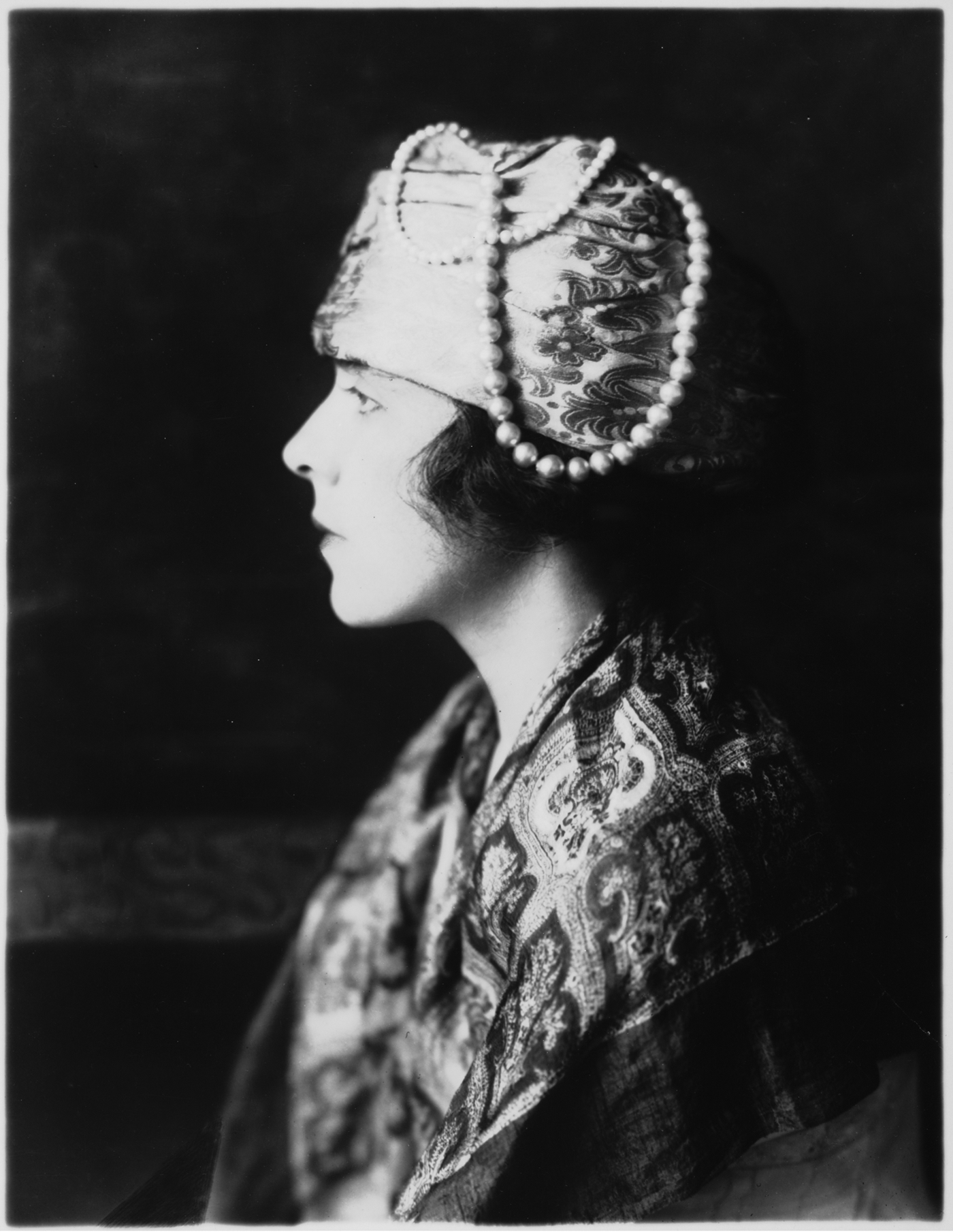
Levien, c. 1925. HM 56714.
HOLLYWOOD
Levien never returned to New York City for any extended period. Despite her misgivings and harsh criticism of the nature of writing for the movies, she was indeed successful at it. Once hired by Fox Studios in 1929, she wrote for popular actors Janet Gaynor, Charles Farrell, Will Rogers, Joan Bennett, and Spencer Tracy, among others. For this reason, she was invited and accepted an invitation to summarize the nature of her work in Careers for Women: New Ideas, New Methods, New Opportunities—To Fit a New World, edited by Catherine Filene, for the Women's Division of the Employment Service at the Department of Labor. In her article, Levien identified key features unique to scripting motion pictures, namely, the position and movement of the camera that tells the story and the continuity that details the “smooth, unretarded flow of screen narrative from scene to scene … [and] brings about the heightening of suspense and drama by providing the very best arrangement of camera shots, dialogue passages, and accompanying action.”Footnote 93 As to employment opportunities specifically for women, Levien responded more as a mentor might rather than as an investigative reporter exploring inequities between men and women in studio employment. She reported that while the supply of screenwriters clearly exceeded the demand, studios are nevertheless “always short-handed when it comes to first-class writers.” On that score, she stated in encouragingly that “a woman has as good a chance as a man to become a successful screen writer … She has always been a familiar figure in the screen ranks. Nor does an age limit come into consideration except in so far as there is a premium on freshness of invention and point of view.”Footnote 94
Levien had never really identified with the women who had come to Hollywood in search of a career as a screenwriter. She had come of age in New York, enjoyed responsibilities in the magazine world, and had published a variety of literary pieces in a number of popular magazines. And so, in this context, she expressed some “horror of the female scenarist who pierces you with a fanatical eye” and distanced herself from what she called “the poisonous species.”Footnote 95 Her characterization of other female scenarists notwithstanding, she helped bring “Salome of the Tenements” from novel to film scenario after her friend Anzia Yezierska had failed. And, her compassion for the struggles of the working girl in screenplays such as the melodramatic Christine of the Big Tops (1926), Lucky Star (1927), and the amusing Delicious (1931) dignified the screen with feisty heroines.Footnote 96
When Levien was not writing for a movie deadline, off on a shoot, or raising her children, she still found time for self-reflection. She wrote about her Jewish and ethnic heritage, her Gentile husband, and her decision to raise her children in secular rather than religious traditions.Footnote 97 In an especially revealing and heartfelt essay entitled “The Franks Case Makes Me Wonder,” published in Hearst's International in December 1924, Levien considered the horrific murder of a Jewish boy by two wealthy young Jewish men—Nathan Leopold and Richard Loeb—and what it might suggest about Jewish cultural assimilation to American life. She questioned the moral code of behavior among American Jews and described a lost generation caught between the anachronisms of Orthodoxy and the moral relativism developing in contemporary America. The essay weighed the pros and cons of assimilation and the potential vacuum created when one culture has lost its command. As she had done in earlier pieces, Levien began with a personal story, a “chance reunion” of three Jews, one a bachelor, one married to a Catholic woman, and herself married to “a Gentile New Englander.” In discussing the case, each bemoaned the crime's impact on them since “like members of other minority groups … the disgrace of one reflected upon the glory of the others.” To underscore the value of “Jewish training and Jewish morality,” Levien rehearsed how her grandfather insisted on her Hebrew training, most unusual for a girl, and specifically on studying the Shulhan ‘Aruk’ [sic] which she identified as a “complete summary of Jewish civil and ritual laws.” Her training was “cruel and grinding” but taught her the “power to concentrate … the power to achieve.”Footnote 98 Most important, she suggested, it promoted her visual imagination. Levien explained her point:
Think of bringing up children from the age of four to thirteen on rules of behavior, stories that do not end with “and they lived happily forever afterwards,” but stories warning you that if you came to the table to eat without washing your hands, the evil spirits of death that dwelt on dirty finger-tips would probably strike you … the penalty immediately visualized itself and I could not get free of it.Footnote 99
Here Levien offered profound insight into why she thought she had moved successfully from Greenwich Village to Hollywood and why she believed there were “so many Jews in the world's greatest make-believe profession, the theatrical business.”Footnote 100
In reflecting on the Jewish component of her identity, Levien brought to the fore the significance of her own early childhood training in both the law and folklore of the rich cultural traditions of European Jewry. Hers was a background steeped in visual, oral, and aural traditions as well as in the formal narratives of Torah and its interpretation. In her professional life, Levien had incorporated these same tensions. Her legal training informed much of her journalism, but it was in writing for the movies that she unleashed all her senses to summon forth what she could for the democratic art.
***
The unscripted life of Sonya Levien emerges as an extraordinary tale of defying the odds that so often prevented immigrants, women, and workers from crossing the boundaries that defined their lives in the early twentieth century. And, as for many good stories, the narrative of upward mobility in America sits at the center of the scripted life Levien chose to tell about herself. In striving to rise out of the poverty of her youth, Levien embraced the promise of America. Still, her own success in significant ways enhanced her compassion especially for wage-earning women and perhaps above all for their children. Levien believed in the central role of the vote and woman's suffrage as a lever of social change that meant using the vote to end the consequences of poverty and in particular urban poverty. Child labor and hunger as well as physical abuse made Levien angry, and she acted on that anger. If on the surface her politics overlapped with the goals of middle-class reform, her fury came from the heart of her immigrant and working-class origins. Levien struggled to figure out how she could best address the injustices of an economic system where all women suffered, but women in the working class suffered more. This was the way she reconciled feminism and socialism, by championing birth control, and by looking to an enlarged federal government to protect working women.
The path Levien took from Greenwich Village to Hollywood reveals a desire for economic security and a keen understanding of both the possibilities and the limits of writing for a popular audience. Along the way, each of her choices reflected the realities of her life. Levien took away from her literary apprenticeship three invaluable lessons that helped account for her successful transition to a new career. First, she had learned to work collaboratively from her earliest days at Success Magazine. Editorial work, like script writing, relies on exchanging ideas, writing and rewriting, and trying to accommodate alternative viewpoints. There was little room in the profession for stubborn egotism. Such skills were essential in making films. Second, Levien had developed a work ethic that made it possible for her to work tirelessly and within the parameters of unpredictable schedules punctuated by turning out the product rather than the mechanics of a clock. Finally, Levien recognized, perhaps intuitively, that she had a good story to tell. And that was a story of triumph over adversity. That theme resonated for her, in part, because it was authentic to her own unscripted life.
If the years that followed Levien's embracing the movies seem to pale in comparison to the heady days of progressivism and the cultural milieu generated by writers as different as John Reed and F. Scott Fitzgerald, the onus should not be borne by her. Levien did not pander to the masses, nor did she seek to uplift them through some sense of cultural superiority. Rather she expanded on her open and sincere appreciation of humanity and the desire of everyday people to enjoy an accessible popular culture that might inspire them to reach beyond themselves.
Levien's remarkable journey from the tenements to Hollywood was a testimonial to the possibilities of a democratic America. Initially mentored by James Graham Phelps Stokes and Rose Pastor Stokes, she worked as a secretary, lawyer, editor, and screenwriter—her mobility measured by increasing financial security and larger homes. She abjured the idea of being the exhibit of settlement workers, evidence of the success of their mission. Her friendships with Frederic Howe, John Collier, and Frances Perkins were relationships of peers focused on shared goals of building community, bridging cultures, and empowering working and immigrant people. Unable to separate her feminism from her working-class origins, Levien struggled to balance her own idealism with the political and economic realities she faced in the late 1910s and early 1920s. Ironically, as she became increasingly assimilated, most dramatically in her becoming Mrs. Carl Hovey, Sonya Levien also became increasingly clear about her own identity as the daughter of the Jewish immigrant working class. From this dual vantage point, she embraced the movies as a place to celebrate the democratic ethos.