




No CrossRef data available.
Outcome following, and impact of, prenatal identification of the candidates for the Norwood procedure
Published online by Cambridge University Press: 20 January 2005
Abstract
Objectives: Our study evaluates hospital survival following prenatal identification of candidates for the Norwood procedure, and the impact of prenatal diagnosis on survival, preoperative stability, and postoperative morbidity. Methods: We reviewed records of all patients who were identified prenatally as candidates for the Norwood procedure, and compared them to all postnatally diagnosed patients who underwent the Norwood procedure between August 1995 and May 2002. Results: Of the 98 patients studied, 45 (46%) were diagnosed prenatally. Of these, 35 underwent the Norwood procedure, 29 (83%) of who survived. Thus, 29 of 45 (64%) patients survived from prenatal diagnosis to discharge following the Norwood procedure. Of the 53 postnatally diagnosed patients who underwent the Norwood procedure, 42 (79%) survived. Prenatal diagnosis was not associated with improvement in survival, preoperative stability, or postoperative morbidity. By multivariate analysis, ascending aortic diameter equal to or greater than 2 mm (p = 0.01), and gestational age 36 weeks or greater (p = 0.01) independently predicted survival. Based on this, patients were stratified into groups at low risk, consisting of 69 patients, and at high risk, consisting of 19 patients. Prenatal diagnosis was unassociated with improved survival in either group. Results were unchanged when the analysis was restricted to patients with hypoplasia of the left heart. Conclusion: From the time of prenatal diagnosis, 64% of patients survived to discharge following the Norwood procedure. Prenatal diagnosis did not affect preoperative stability, survival or postoperative morbidity. This remained the case after stratifying patients by risk, or restricting analysis to patients with hypoplasia of the left heart. Ascending aortic diameter and gestational age independently predicted survival.
Information
- Type
- Original Article
- Information
- Copyright
- © 2004 Cambridge University Press
Prenatal diagnosis of congenital cardiac malformations allows adequate time for counselling of parents regarding options for management, and for planning perinatal management.1 Prenatal diagnosis may help eliminate delays in treatment and, in doing so, may decrease the risk of systemic hypoperfusion, shock, and multisystem organ damage.2–4 There is still controversy, however, as to whether prenatal diagnosis has a positive impact on surgical outcomes for patients with complex disease, particularly for infants undergoing the Norwood procedure.5–8 While there has been a trend towards improved survival following the Norwood procedure, large proportions of families have either chosen non-intervention, opting for either termination of pregnancy or comfort care, or have been deemed non-candidates for the Norwood procedure. As a result, only a minority of prenatally diagnosed patients, ranging from 14 to 42%, has been reported to survive from the time of prenatal diagnosis to hospital discharge following the Norwood procedure.7, 9–11
Our institution has offered the Norwood procedure and staged surgical palliation to patients deemed to be at both low and high risk with functionally univentricular hearts and obstruction to the systemic outflow tract. Since 1999, this policy has been integrated with a statewide effort to provide coordinated care for patients who are diagnosed prenatally with these defects. The statewide effort includes coordinating the birth of these patients at the centre where surgery is provided, and postnatal and perioperative management by dedicated pediatric cardiac intensivists. We undertook the current study to evaluate outcomes among all patients who were identified prenatally as potential candidates for the Norwood procedure based on their cardiac diagnosis alone. In order to identify the impact of prenatal diagnosis on preoperative stability, hospital survival and postoperative morbidity, all prenatally diagnosed patients who underwent the Norwood procedure were compared to all contemporaneous postnatally diagnosed patients who underwent the Norwood procedure. We also sought to identify variables associated with hospital survival following the Norwood procedure for the entire group.
Materials and methods
We studied 98 consecutive patients who were diagnosed at our institution between August 1995 and May 2002, of whom 78 had hypoplasia of the left heart, and 20 had other forms of functionally univentricular heart with hypoplasia of the aortic arch, thus making them potential candidates for the Norwood procedure. The latter group included 13 patients with a functionally single left ventricle. These consisted of 6 patients with double inlet left ventricle with hypoplasia of the aortic arch, 5 patients with tricuspid atresia, discordant ventriculo-arterial connection, and hypoplasia of the aortic arch, and 1 patient each with an unbalanced left ventricular dominant atrioventricular septal defect with a hypoplastic right ventricle, and interrupted aortic arch with severe subvalvar and valvar aortic stenosis. Four other patients had a functionally single right ventricle, consisting of 2 patients with unbalanced right ventricular dominant atrioventricular septal defect, and 2 patients with double outlet right ventricle with a hypoplastic left ventricle. The remaining 3 patients had biventricular anatomy. These consisted of 1 patient each with criss-cross atrioventricular relations and superior-inferior ventricles, atrioventricular septal defect with double outlet right ventricle, and the Taussig-Bing variant of double outlet right ventricle with severe hypoplasia of the aortic arch.
The prenatally diagnosed patients consisted of all 45 consecutive patients who were diagnosed by fetal echocardiography, and confirmed by postnatal echocardiography in liveborns, to be potential candidates for the Norwood procedure based on their cardiac anatomy alone. No patients were excluded based on anatomic criterions such as atretic valves or diminutive ascending aorta, or any other criterions. The postnatally diagnosed patients consisted of all the remaining 53 patients who underwent the Norwood procedure during the same period. Patient records were reviewed along with hospital databases. For patients transferred from other institutions, records sent from referring hospitals and transport teams were also reviewed.
Fetuses were followed from the time of prenatal diagnosis to death at any time prior to the Norwood procedure: either prenatally, consisting of intrauterine fetal death or termination of pregnancy, or postnatally, including situations where the family opted for comfort care, to death in hospital following the Norwood procedure, or to hospital discharge. Management choices and outcomes were recorded.
Patient variables analyzed for their effect on outcomes were birth weight, gestational age, diagnosis of hypoplasia of the left heart versus all other cardiac diagnoses, ascending aortic diameter measured by postnatal echocardiography, restrictive atrial septal defect, and presence or absence of extracardiac anomalies. The outcome variables studied were hospital survival following the Norwood procedure, preoperative stability, and postoperative morbidity. Markers of preoperative stability analyzed were lowest arterial pH, duration of mechanical ventilation, age at surgery, and number of hospital days prior to surgery, as well as markers of end organ status, including highest recorded serum blood urea nitrogen and serum creatinine, and preoperative occurrence of seizures. Markers of postoperative morbidity analysed were the need for extracorporeal membrane oxygenation, postoperative occurrence of seizures, postoperative duration of mechanical ventilation, postoperative duration of stay in the intensive care unit, and postoperative duration of hospital stay.
At the time of either prenatal or postnatal diagnosis, a pediatric cardiologist and a nurse counselled parents regarding available options for management, namely staged surgical palliation via the Norwood procedure, cardiac transplantation, or comfort care. The option of termination of pregnancy was offered to all prenatally diagnosed patients in whom this was legally possible. All prenatally diagnosed patients underwent placement of umbilical venous and arterial lines and initiation of prostaglandin E1 infusion at 0.03 μg/kg/min during the period of postnatal stabilization. Operative management for the Norwood procedure included side-to-side anastomosis of the pulmonary trunk and ascending aorta, and reconstruction of the ascending aorta and aortic arch with pulmonary allograft. Atrial septectomy was performed and a systemic to pulmonary arterial shunt was placed from the innominate artery to the central pulmonary arteries. A single surgeon (SMB) performed all Norwood procedures.
Statistical analysis
Continuous variables are reported as the mean plus or minus standard deviations for normally distributed variables, and as median and range for others. Categorical variables are reported as percentages. To examine the association of patient variables with preoperative stability, hospital survival and postoperative morbidity, univariate testing was performed with Fisher's exact test and chi-square analysis. Multivariate analysis, using logistic regression, was employed to identify factors independently associated with hospital survival. All analyses were performed with NCSS 2000, Statistical System for Windows, NCSS, Kaysville, Utah. A p value <0.05 was considered statistically significant.
Results
From August 1995 to May 2002, 45 fetuses were identified as potential candidates for the Norwood procedure. Management choices for all fetuses are summarized in Figure 1. Of these 45 patients, 3 were not considered Norwood candidates. These consisted of one patient with trisomy 13, one with diaphragmatic hernia and hypoplastic lungs, and one who was born with obstructed pulmonary venous drainage, underwent emergency repair of this lesion, and died several hours after completion of surgery. Of the 45 prenatally diagnosed patients, 35 (78%) underwent the Norwood procedure. During the same period, 53 postnatally diagnosed patients underwent the Norwood procedure. The prenatally and postnatally diagnosed patients did not differ with regards to birth weight (2.96 ± 0.57 kg and 3.22 ± 0.65 kg, p = 0.06), gestational age (37.9 ± 1.7 weeks and 38.5 ± 1.6 weeks, p = 0.08), or diameter of the ascending aorta (3.8 ± 1.8 mm and 3.7 ± 2.2 mm, p = 0.81). Of the 35 patients who were diagnosed prenatally, 29 (83%) survived to hospital discharge following the Norwood procedure. Thus, 29 (64%) of 45 prenatally diagnosed patients survived from diagnosis to hospital discharge following the Norwood procedure. Of the 53 postnatally diagnosed patients, 42 (79%) survived. These data are summarized in Figure 2. The difference in hospital survival subsequent to the Norwood procedure between patients diagnosed prenatally and postnatally was not statistically significant (p = 0.89). Overall hospital survival for the 88 patients who underwent the Norwood operation was 71/88 (81%). Prenatal diagnosis was not associated with improvement in any markers of pre-operative stability or post-operative morbidity, as shown in Table 1.

Figure 1. Choices in management for the 45 fetuses identified prenatally as candidates for the Norwood procedure. dx: Diagnosis; preg: pregnancy.

Figure 2. Prenatal diagnosis and hospital survival in the 88 patients who underwent the Norwood procedure.
Table 1. Preoperative and postoperative variables in prenatally and postnatally diagnosed patients.

Next, we sought to determine whether, during the seven-year study period, there had been any change in the proportion of prenatally diagnosed patients, and whether hospital survival following the Norwood procedure had changed over time for all patients, and, separately, for prenatally diagnosed patients. While there was a trend towards a greater proportion of patients diagnosed prenatally during the most recent years of the study than during the initial years of the study, this difference did not meet statistical significance. Hospital survival following the Norwood procedure did not change during the study period either for all patients (p = 0.57), or those diagnosed prenatally (p = 0.63).
We sought to identify predictors of hospital survival for all patients who underwent the Norwood procedure. By univariate analysis, an ascending aortic diameter greater than or equal to 2 mm (p = 0.012), gestational age greater than or equal to 36 weeks (p = 0.004) and diagnosis other than hypoplasia of the left heart (p = 0.018) were significantly associated with hospital survival. Not surprisingly, the diameter of the ascending aorta was strongly correlated with the diagnosis of hypoplasia of the left heart (p = 0.025). The median diameter of the ascending aorta in patients with hypoplasia of the left heart was 2.8 mm, ranging from 1.1 to 8.4 mm. Among patients with lesions other than hypoplasia of the left heart, the median diameter of the ascending aorta was 6.2 mm, ranging from 4 to 11 mm (p < 0.001).
Logistic regression was used to identify independent predictors of hospital survival. Only those variables that were found to be statistically significant predictors with p < 0.05 in the univariate analysis were considered for inclusion in the multivariate analysis. The diagnosis of hypoplasia of the left heart presented a numerical problem sometimes encountered in logistic regression. All of the operative deaths were among patients with hypoplasia of the left heart. Of 70 patients with this diagnosis, 17 died as opposed to no deaths among 18 patients with other cardiac diagnoses. Entering a variable that perfectly predicts the outcome results in unstable calculations, a phenomenon known as model overdetermination. We therefore elected to exclude the diagnostic variable of hypoplasia of the left heart from the logistic regression. The resulting analysis selected both ascending aortic diameter greater than or equal to 2 mm (p = 0.01) and gestational age greater than or equal to 36 weeks (p = 0.011) as independently associated with hospital survival. Prenatal diagnosis was not associated with hospital survival by either univariate (p = 0.79) or multivariate (p = 0.44) analysis.
We further sought to determine whether prenatal diagnosis had any impact on hospital survival after stratifying patients by risk. For this purpose, patients were stratified into two groups. The group deemed to be at low risk was made up of patients with an ascending aortic diameter greater than or equal to 2 mm, and gestational age greater than or equal to 36 weeks. Those deemed to be at high risk were those with any value less than either threshold. There were 69 patients in the group deemed to be at low risk, and 19 in the group at high risk. Prenatal diagnosis did not affect hospital survival for either group, as shown in Figures 3 and 4.

Figure 3. Prenatal diagnosis and hospital survival in the group of patients deemed to be at low risk.

Figure 4. Prenatal diagnosis and hospital survival in the group of patients deemed to be at high risk.
Finally, we evaluated survival among patients with hypoplasia of the left heart alone, with 34 patients being diagnosed prenatally in this category. Of these, 26 underwent the Norwood procedure, and 20 (77%) survived. These 20 survivors constitute 59% of all patients who were diagnosed prenatally with hypoplasia of the left heart. Hypoplasia of the left heart was diagnosed in 44 patients postnatally, and 33 of these (75%) survived. The difference in hospital survival after the Norwood procedure between patients diagnosed prenatally and postnatally with hypoplasia of the left heart was not significant (p = 0.92).
Discussion
The Norwood procedure is now widely used as palliation in neonates with a functionally univentricular heart and systemic outflow tract obstruction, including hypoplasia of the left heart. While results continue to improve, operative mortality remains significant. In recent large series from experienced centers comprising more than 100 patients each, mortality rates have ranged from 24% to 36%.2, 12–14 It has been suggested that prenatal diagnosis may help optimize medical management in neonates with complex heart defects.3 Prenatal diagnosis has been shown to improve the preoperative condition of neonates with hypoplasia of the left heart awaiting the Norwood procedure, with less acidosis and azotemia,6, 7 and fewer perioperative adverse neurologic events.8 Studies evaluating the impact of prenatal diagnosis on preoperative and hospital mortality, however, have yielded differing results. Thus, while Tworetzky et al.7 detected a positive impact of prenatal diagnosis on hospital survival, several others have found no such association.4–6, 8 We found that prenatal diagnosis was not associated with improvement in hospital survival, preoperative stability or postoperative morbidity.
Comparisons between studies are difficult because of widely varying criterions for inclusion and years of study. Ventricular morphology and weight at birth constitute two of the areas of difference in criterions for inclusion among studies. Most studies to date have evaluated patients with hypoplasia of the left heart,6–8 while we included all patients with functionally univentricular heart and obstruction of the systemic outflow tract. Anatomy other than hypoplasia of the left heart was encountered in one-fifth of our patients. Patients with a systemic left ventricle may represent a subset at more favorable risk compared to hypoplasia of the left heart.14, 15 In fact, all of the 18 patients in our series who underwent the Norwood procedure for lesions other than hypoplasia of the left heart survived. Nevertheless, our findings regarding the impact of prenatal diagnosis did not change significantly when the data were re-analysed after restricting the analysis to patients with hypoplasia of the left heart. Other studies have excluded patients with low birth weight, prematurity, or extracardiac anomalies of more than minor severity, or recognizable syndromes that would impact outcome following prenatal diagnosis.6, 7 In the current study, no patients were excluded based on such criterions or, in fact, any criterions. The patients included premature babies who were allowed to grow until they achieved body weight that was compatible with ability to undergo the Norwood procedure, and neonates who developed infections both prior to and following the Norwood procedure. Inclusion of such patients accounts for the widely variable duration of preoperative and postoperative mechanical ventilation, as shown in Table 1.
A recent report by the Task Force on research in pediatric cardiovascular disease has emphasised the importance of delineating the natural history of prenatally diagnosed congenital cardiac malformations.16 Table 2 summarizes the results of several centers that have examined survival following prenatal diagnosis of hypoplasia of the left heart.7, 9–11 Comparisons are made difficult by the variability of criterions for inclusion and differing definitions of survival, the latter ranging from survival to hospital discharge in some studies7, 9, 11 to survival to six months of postnatal life in others.10 Nevertheless, between 13 and 59% of families opted for termination of pregnancy in these studies. An additional 10 to 24% of families either opted for comfort care, or were considered non-candidates for the Norwood procedure. In the four studies cited, 31 to 60% of prenatally diagnosed patients with hypoplasia of the left heart underwent the Norwood procedure, and only 14 to 42% of patients survived from prenatal diagnosis to hospital discharge following the Norwood procedure.7, 9–11 In contrast, our experience was more encouraging, with almost four-fifths of all prenatally diagnosed patients undergoing the Norwood procedure, and with almost two-thirds surviving from prenatal diagnosis to hospital discharge after the Norwood procedure. When we restricted this analysis to the 34 patients with hypoplasia of the left heart, the results were similar. Thus, three-quarters of all prenatally diagnosed patients with hypoplasia of the left heart underwent the Norwood procedure, and three-fifths survived from prenatal diagnosis to hospital discharge after the Norwood procedure (Table 2). Regional cultural differences in the acceptability of non-intervention may account for the increased proportion of families opting for the Norwood procedure in our series. A recent study has shown that families from the Southern United States are more likely to choose the Norwood procedure than comfort care.17 In addition, while we strove to provide unbiased counselling, it is possible that our emphasis on our center-specific results may have encouraged more families to opt for staged palliation.
Table 2. Published studies of survival to hospital discharge following the Norwood procedure for hypoplasia of the left heart.

In contrast to our results, Tworetzky et al.7 found improved preoperative clinical status and hospital survival following the Norwood procedure in prenatally diagnosed compared to postnatally diagnosed patients with hypoplasia of the left heart. Only 14 of 33 (42%) prenatally diagnosed patients in their series, however, underwent the Norwood procedure. In contrast, 35 of 45 (78%) prenatally diagnosed patients in our series underwent the Norwood procedure, including 26 of 34 (76%) patients with hypoplasia of the left heart. It is possible that the improved outcomes that they attribute to prenatal diagnosis may also reflect selection bias within the prenatally diagnosed group. In contrast, our inability to find a difference in outcomes between prenatally and postnatally diagnosed groups may reflect broader criterions for inclusion. This might potentially decrease selection bias, and unmask the influence of factors other than prenatal diagnosis. If this were indeed the case, the predictors of hospital survival in our prenatally diagnosed patients might be expected to be similar to those seen following postnatal diagnosis. Interestingly, our findings associating gestational age and ascending aortic diameter with survival are in keeping with studies that have focused on postnatal determinants of hospital survival after the Norwood procedure.12–14, 18
Our inability to demonstrate improvement in outcomes with prenatal diagnosis may be due to a general approach of performing the Norwood operation only after end organ recovery in postnatally diagnosed patients who have experienced a preoperative ischemic insult. It is also possible that the management of postnatally diagnosed patients may be improving due to increased awareness of the condition and the increased availability of pediatric cardiology expertise around the state.
Limitations
This retrospective single-center study focuses on short-term measures of outcome. We did not evaluate the postnatally diagnosed patients who did not undergo the Norwood procedure. We did not evaluate the psychosocial effects of prenatal diagnosis, which have been shown to be an important intangible benefit for these families.19 The number of patients in each group was small, and may not provide adequate statistical power to discern small advantages attributable to prenatal diagnosis that might be clinically important.
Conclusion
Of all prenatally identified candidates for the Norwood procedure, two-thirds survived to hospital discharge. Prenatal diagnosis had no impact on preoperative stability, hospital survival or postoperative morbidity. These findings held true after stratifying patients by risk, and also after restricting the analysis to patients with hypoplasia of the left heart alone. More than four-fifths of our overall group survived to leave hospital following the Norwood procedure. Ascending aortic diameter, and gestational age, were independently associated with hospital survival.
References
Allan LD, Sharland GK, Milburn A, et al. Prospective diagnosis of 1006 consecutive cases of congenital heart disease in the fetus. J Am Coll Cardiol 1994; 23: 1452–1458.Google Scholar
Jacobs ML, Blackstone EH, Bailey LL. Intermediate survival in neonates with aortic atresia: a multi-institutional study. The Congenital Surgeons Society. J Thorac Cardiovasc Surg 1998; 116: 417–431.Google Scholar
Chang AC, Huhta JC, Yoon GY, et al. Diagnosis, transport, and outcome in fetuses with left ventricular outflow tract obstruction. J Thorac Cardiovasc Surg 1991; 102: 841–848.Google Scholar
Eapen RS, Rowland DG, Franklin WH. Effect of prenatal diagnosis of critical left heart obstruction on perinatal morbidity and mortality. Am J Perinatol 1998; 15: 237–242.Google Scholar
Kern JH, Hayes CJ, Michler RE, Gersony WM, Quaegebeur JM. Survival and risk factor analysis for the Norwood procedure for hypoplastic left heart syndrome. Am J Cardiol 1997; 80: 170–174.Google Scholar
Kumar RK, Newburger JW, Gauvreau K, Kamenir SA, Hornberger LK. Comparison of outcome when hypoplastic left heart syndrome and transposition of the great arteries are diagnosed prenatally versus when diagnosis of these two conditions is made only postnatally. Am J Cardiol 1999; 83: 1649–1653.Google Scholar
Tworetzky W, McElhinney DB, Reddy VM, Brook MM, Hanley FL, Silverman NH. Improved surgical outcome after fetal diagnosis of hypoplastic left heart syndrome. Circulation 2001; 103: 1269–1273.Google Scholar
Mahle WT, Clancy RR, McGaurn SP, Goin JE, Clark BJ. Impact of prenatal diagnosis on survival and early neurologic morbidity in neonates with the hypoplastic left heart syndrome. Pediatrics 2001; 107: 1277–1282.Google Scholar
Brackley KJ, Kilby MD, Wright JG, et al. Outcome after prenatal diagnosis of hypoplastic left heart syndrome: a case series. Lancet 2000; 356: 1143–1147.Google Scholar
Allan LD, Apfel HD, Printz BF. Outcome after prenatal diagnosis of the hypoplastic left heart syndrome. Heart 1998; 79: 371–373.Google Scholar
Andrews R, Tulloh R, Sharland G, et al. Outcome of staged reconstruction surgery for hypoplastic left heart syndrome following antenatal diagnosis. Arch Dis Child 2001; 85: 474–477.Google Scholar
Bove EL, Lloyd TR. Staged reconstruction for hypoplastic left heart syndrome. Annals of Surgery 1996; 224: 387–395.Google Scholar
Ishino K, Stumper O, De Giovanni JJV, et al. The modified Norwood procedure for hypoplastic left heart syndrome: early to intermediate results of 120 patients with particular reference to aortic arch repair. J Thorac Cardiovasc Surg 1999; 117: 920–930.Google Scholar
Daebritz SH, Nollert GD, Zurakowski D, et al. Results of Norwood stage I operation: comparison of hypoplastic left heart syndrome with other malformations. J Thorac Cardiovasc Surg 2000; 119: 358–367.Google Scholar
Bradley SM, Simsic JM, Atz AM, Dorman BH. The infant with single ventricle and excessive pulmonary blood flow: results of a strategy of pulmonary artery division and shunt. Ann Thorac Surg 2002; 74: 805–810.Google Scholar
L'enfant C. Report of the task force on research in pediatric cardiovascular disease. Circulation 2002; 106: 1037–1042.Google Scholar
Chang RK, Chen AY, Klitzner TS. Clinical management of infants with hypoplastic left heart syndrome in the United States, 1988–97. Pediatrics 2002; 110 (2 pt 1): 292–298.Google Scholar
Forbess JM, Cook N, Roth SJ, Serraf A, Mayer JE, Jonas RA. Ten-year institutional experience with palliative surgery for hypoplastic left heart syndrome. Circulation 1995; 92: II-262–II-266.Google Scholar
Sklansky M, Tang A, Levy D, et al. Maternal psychological impact of fetal echocardiography. J Am Soc Echocardiogr 2002; 15: 159–166.Google Scholar

Choices in management for the 45 fetuses identified prenatally as candidates for the Norwood procedure. dx: Diagnosis; preg: pregnancy.

Prenatal diagnosis and hospital survival in the 88 patients who underwent the Norwood procedure.
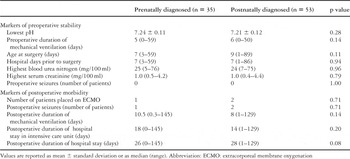
Table 1.

Prenatal diagnosis and hospital survival in the group of patients deemed to be at low risk.

Prenatal diagnosis and hospital survival in the group of patients deemed to be at high risk.
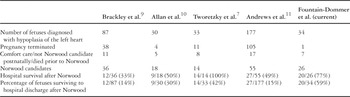
Table 2.
 You have
Access
- 14
- Cited by