Introduction
Changing climate and environmental conditions in the Arctic have increased opportunities for marine tourism development in many parts of the region through improved accessibility (ACIA 2004; Johnston Reference Johnston, Gössling and Hall2006; Pashkevich and Stjernström Reference Pashkevich and Stjernström2014). In the Canadian Arctic, significant increases in tourism vessel traffic are evident in both the expedition cruise tourism sector and the pleasure craft sector (Pizzolato and others 2013; Dawson and others Reference Dawson, Stewart and Johnston2016). Further, the routes and patterns of these vessels are changing in relation to greater accessibility of the Northwest Passage, enabling vessels to regularly travel further northward and westward (Stewart and others Reference Stewart, Draper, Dawson, Lück, Maher and Stewart2010; Johnston and others Reference Johnston, Dawson and De Souza2015; Lasserre and Têtu Reference Lasserre and Têtu2015).
Until recently, the Canadian Arctic Archipelago has been ice-choked for much of the year and not regularly passable without ice breaker support. In 1984 M/S Explorer was notable as the first cruise ship to transit the passage during an unusually low ice year (Marsh and Staple Reference Marsh, Staple, Hall and Johnston1995). In recent years tourist vessel traffic in the Canadian Arctic and in the Northwest Passage has grown dramatically. Changes in the ice regime have opened the Canadian Arctic to regular expedition cruise traffic. Many itineraries now include some travel into the Northwest Passage, though not necessarily a full transit due to the distance involved. Management issues related to this changing environment for the expedition cruise industry have been explored through stakeholder interviews and focused policy analysis (Johnston and others Reference Johnston, Johnston and Stewart2012; Dawson and others Reference Dawson, Johnston and Stewart2014; Lasserre and Têtu Reference Lasserre and Têtu2015; Dawson and others Reference Dawson, Stewart and Johnston2016). Though attention thus far has largely been focused on the implications of a changing climate for expedition cruise tourism, it has been recognised that the smaller vessels can pose problems for communities, the environment, and government regulators (for example Stewart and others Reference Stewart, Dawson and Howell2012; Stewart and others Reference Stewart, Dawson and Johnston2015).
The pleasure craft segment – those vessels used by non-commercial tourists – is the fastest growing category of vessels in Arctic Canada and it appears likely to continue to grow substantially (Johnston and others Reference Johnston, Dawson and Pizzolato2014; Pizzolato and others Reference Pizzolato, Howell and Derksen2014). Though annual numbers remain low in comparison to mid-latitude and equatorial pleasure craft tourism destinations, growth in their numbers and their geographic expansion in the Canadian Arctic has raised substantial concerns in relation to appropriate management of the sector. The Canadian Arctic is a vast, sparsely populated region with widely dispersed communities and limited infrastructure and services available for marine tourism, particularly for small, independent vessels (Fig. 1). Although some of the management strategies identified for larger expedition style cruise ships are relevant for pleasure crafts, these small vessels present different challenges and require distinct management approaches. Yet, little is known about what is needed to support the development of this sector in the Canadian Arctic and what is needed to ensure a suitable regulatory approach.
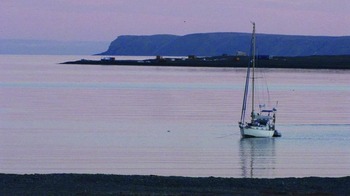
A sailboat visiting the community of Resolute, Nunavut in 2012. Photo credit: E.J. Stewart

The Canada Shipping Act, 2001 defines a pleasure craft as a ‘vessel that is used for pleasure and does not carry passengers’ (Minister of Justice 2013: p. 3), thus differentiating it from a cruise ship which carries passengers and has overnight accommodation (Canadian Coast Guard 2013a). A pleasure craft does not transport passengers or goods for a financial return and is not registered as a commercial vessel. The category includes vessels such as sail boats, motor yachts, and rowboats so long as they are used for pleasure and recreation rather than commercial activities (see also Orams Reference Orams, Lück, Maher and Stewart2010). Often the sector is called yacht tourism, though the broader designation of pleasure craft is preferable as it includes all non-commercial tourism vessels. Furthermore, in the Canadian context the pleasure craft sector is distinct from commercial cruise vessels by regulatory definition. The dramatic growth in this sector offers potential for much needed economic development in the region, but it also brings the potential for adverse environmental and cultural impacts, alongside risks for safety and security, therein warranting management that both supports and controls this form of tourism.
This paper reports on research aimed at: identifying change in the pleasure craft sector in Canadian Arctic waters since 1990; exploring management concerns held by stakeholders about changes in the sector; and, providing a set of recommendations for government stakeholders for the management of this sector. The context for the development of the sector is provided by describing growth in marine tourism in the polar regions and related management issues. The patterns of pleasure craft travel in the Canadian Arctic are described and the concerns of stakeholders are summarised. The final section outlines recommendations for industry, researchers and government managers.
Pleasure craft management in the polar regions
Marine tourism has been growing throughout the polar regions and appears to be the fastest growing polar tourism sector (Stonehouse and Snyder Reference Stonehouse and Snyder2010), largely through the expansion of expedition cruise shipping and the advent of larger, more traditional cruise vessels, but also through increases in pleasure craft traffic. The pleasure craft sector has benefitted from advances in technology that have supported polar travel and through increased awareness of the opportunities now available for such travel (Orams Reference Orams, Lück, Maher and Stewart2010). The ‘adventure mariners’ category, according to Stonehouse and Snyder (Reference Stonehouse and Snyder2010: p. 119), is a ‘small but hazardous market segment [that] will probably continue to grow.’ Travel by pleasure crafts, once the sole purview of skilled adventurers, is likely to continue to broaden and diversify, even to the extent of ‘super-yachts, soft adventurers and rallies’ (Orams Reference Orams, Lück, Maher and Stewart2010: 22). Growth in the sector is supported by the efforts of governments to expand tourism development and by the interests of visitors themselves in diversification of activities and destinations (Stonehouse and Snyder Reference Stonehouse and Snyder2010).
While the number of yachts cruising within the Arctic Circle annually could be in the thousands, Orams (Reference Orams, Lück, Maher and Stewart2010) notes a lack of reliable data on numbers and types of polar yachts. This lack of information is reinforced by the contents of the Arctic Marine Shipping Assessment (AMSA) Report (Arctic Council Reference Council2009), where the pleasure craft category is all but absent and small numbers are reported only for Greenland. Comprehensive data on the sector are difficult to find with any consistency, largely because of the non-commercial nature of these vessels and the lack of regulatory oversight. Several sources provide a partial picture. For Alaska, pleasure craft vessels (termed adventurers) observed in the Arctic have increased from five in 2008 to more than 20 in 2012 (U.S. Committee on the Marine Transportation System 2013). For the National Park Russian Arctic, established in 2009, Gavrilo (Reference Gavrilo2013) notes that while cruise vessels had a history of visiting the area of the park, it was only in 2011 that yachts were recorded: three in 2011, two in 2012, and four in 2013. The advent of pleasure craft vessels is likely linked to the increasing accessibility of the area and is mirrored in increases in cruises vessels in 2011, following several years of low numbers. It is also likely that improved accessibility, combined with supportive tourism management approaches in the park, will result in growth in both categories. Given these developments in other regions and the increasing accessibility of the Canadian Arctic, the desire to assess available records and develop the picture of pleasure craft growth was a major motivation for this study within the context of exploring appropriate management.
The growth of yacht tourism in the Arctic and the Antarctic over the past three decades presents a variety of challenges for management (Orams Reference Orams, Lück, Maher and Stewart2010). Stonehouse and Snyder (Reference Stonehouse and Snyder2010) identify concerns related to search and rescue needs, communication difficulties, and a general lack of preparedness among marine adventurers. In the Arctic context, they note that it is difficult to regulate and monitor adventure tourists, including yacht tourists, because they tend to be independent, self-reliant and widely dispersed (Stonehouse and Snyder Reference Stonehouse and Snyder2010). Gavrilo (Reference Gavrilo2013) describes the management challenges presented by yacht traffic in National Park Russian Arctic related to vessel monitoring, control and permitting in the context of managing for sustainable tourism. Given the tendency of tourism vessels in general toward wide dispersion, Hall and others (Reference Hall, James and Wilson2010) emphasise the need to consider marine expeditions, including yachts, as vectors for the spread of invasive species. They recommend an increased management focus on biosecurity in relation to marine expeditions in the Arctic and note that a stronger approach to this issue is being taken in the Antarctic (Hall and others Reference Hall, James and Wilson2010).
The Antarctic experience provides useful insights for management of pleasure crafts in the Canadian Arctic. Prior to 1970, only five separate yacht voyages were recorded in Antarctic waters, in part due to the long distances from protected ports, the lack of facilities and anchorages in Antarctica, and challenging conditions in the Southern Ocean. Private yacht visits to Antarctica began to grow dramatically, with 77 visits recorded in the 1980s and 217 in the 1990s (Orams Reference Orams, Lück, Maher and Stewart2010), with the majority of vessels visiting the Antarctic Peninsula (IAATO 2015). As has been the case in the Canadian Arctic, more recently the Antarctic has witnessed an increase in the number of luxury super-yachts (more than 30 m in length) (Orams Reference Orams, Lück, Maher and Stewart2010).
Good records for the Antarctic exist for cruise ship numbers, passengers carried and landings through an industry-led reporting system, but, like elsewhere, there are poorer records about yachts (Krakau and Herata Reference Krakau, Herata, Müller, Lundmark and Lemelin2013). Without mandatory reporting or a self-regulation system, it is difficult to build accurate numbers and a picture of the destinations and of visitor behaviour because yachts might not be observed by anyone (Hall and Wilson Reference Hall, Wilson, Hall and Saarinen2010). Hall and Wilson (Reference Hall, Wilson, Hall and Saarinen2010) note that the swift expansion of private yacht travel in the Antarctic has also extended to the sub-Antarctic islands and that the general proliferation of yachts is accompanied by concerns about a lack of control over behaviour (Hall and Wilson Reference Hall, Wilson, Hall and Saarinen2010). The Antarctic Treaty System requires that permits are obtained for all vessels entering the Antarctic through national applications; the registry of permits provides some indication of numbers, especially the great increase in numbers since 1990 (Orams Reference Orams, Lück, Maher and Stewart2010). Nonetheless, not all private vessels obtain permits.
While the expedition cruise industry in Antarctica has been managed closely through self-regulation, primarily via the International Association of Antarctica Tourism Operators (IAATO) and the development of tourism regulations through the Antarctic Treaty Consultative Meeting (ATCM) process, much less attention has been paid to issues related to private yachts (Krakau and Herata Reference Krakau, Herata, Müller, Lundmark and Lemelin2013) despite the increase in this form of travel in the Southern Ocean (Antarctica and the sub-Antarctic islands) and the need for management (Hall and Wilson Reference Hall, Wilson, Hall and Saarinen2010). However, in an Information Paper recently submitted to the ATCM (XXXVIII) in 2015, it was recommended to continue to monitor the level of yachting activities in Antarctica, taking particular note of those yachts that may have been in the region without authorisation from a Treaty Party (IAATO 2015).
Problems with private yachts have been identified in relation to lack of knowledge of requirements, lack of national permits for visiting Antarctica, and insufficient preparedness for polar yachting challenges (Krakau and Herata Reference Krakau, Herata, Müller, Lundmark and Lemelin2013). Additional concerns raised about adventure activities in the Antarctic include the rapid diversification in tourism and the advent of activities such as sea kayaking, snorkeling and diving (Lamers and others Reference Lamers, Stel, Amelung, Snyder and Stonehouse2007; Lamers and Gelter Reference Lamers and Gelter2012). Tourists on private expeditions, though smaller in number than cruise ship passengers in the Antarctic, are viewed as more independent and self-reliant, and therefore as more vulnerable to greater risk and activity-related fatalities (Lamers and others Reference Lamers, Stel, Amelung, Snyder and Stonehouse2007). Indeed, some view Antarctic yacht tourists as irresponsible and without the ability to pay for misadventure, causing particular concerns around insurance, and search and rescue (see Murray and Jabour Reference Murray and Jabour2004).
A series of incidents in the Antarctic involving private yachts has led to greater emphasis on sector management. Following the sinking of Berserk II in the Ross Sea in February 2011, more attention has been paid to the provision of information for potential tourists and the regulation of the technical aspects of yachting in the Antarctic through national permitting (Krakau and Herata Reference Krakau, Herata, Müller, Lundmark and Lemelin2013). However, it must be noted that Berserk II did not have a national permit to visit, raising the question of how feasible and effective the national permitting system is as a method of control (Krakau and Herata Reference Krakau, Herata, Müller, Lundmark and Lemelin2013) for those travellers intent on avoiding detection.
Alongside the approach of national permitting and regulations among Antarctic Treaty Parties is the provision of information through IAATO, the industry self-regulation body. IAATO provides information to potential yacht tourists on its website, directly accessible through the main page, thereby providing some prominence to the issue (see IAATO 2016). Details include information about safety, self-sufficiency, preparedness and permitting/authorisation and about yacht construction, equipment and operations. IAATO has become an authoritative tourism voice in the Antarctic, with a broad reach beyond its membership, and most notably into the realm of the ATCM.
The expansion of pleasure craft numbers in the polar regions brings with it concerns about safety, preparedness, and communication, leading to proposals and/or implementation of some form of regulation. In the Canadian Arctic, numbers are increasing rapidly, accompanied by concerns about appropriate management. Though most recorded incidents involving ships in the region are not tourism-related, in an examination of national, criminal and individual incidents in the Canadian Arctic, Teeple (Reference Teeple2010) notes two incidents involving small craft: one a yacht and one a motor boat. Johnston and others (Reference Johnston, Dawson and Stewart2013) list incidents involving pleasure craft with concerns as diverse as criminal offences (for example liquor and fireworks offences), equipment failure (for example sails and engine failure), environmental conditions (for example stuck in ice), operator error (for example insufficient fuel), abandoned vessel, and medical evacuation. High profile incidents, such as criminal and culturally inappropriate behaviour of tourists on luxury yachts, have increased attention on the need for management of the sector (Johnston and others Reference Johnston, Dawson and Stewart2013).
Approach to research
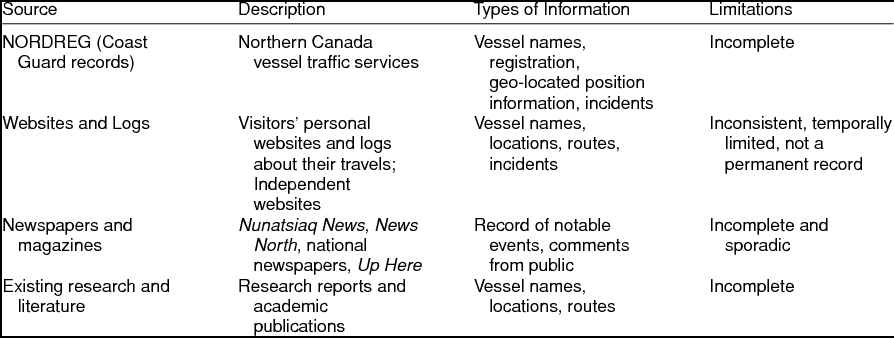
In order to explore developments in the pleasure craft sector in the Canadian Arctic and related management issues, the first stage of this research was the development of an inventory of these vessels in the Canadian Arctic. Table 1 describes the data sources used to build the inventory, the types of information provided and limitations of the sources.
Sources of data used to create the pleasure craft inventory.

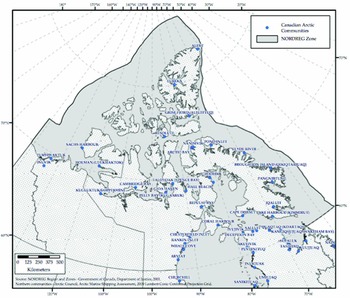
The primary source of information for the inventory is the NORDREG database maintained by the Canadian Coast Guard through a system that contains records for vessels that reported their entry to and exit from the Canadian Arctic (Fig. 2). This vessel tracking system was created under the Canada Shipping Act for all vessels operating in Canadian Arctic waters north of 60⁰N and in Hudson Bay, James Bay, Kigmallit Bay and Ungava Bay (Canadian Coast Guard Reference Guard2013b). As of 2010, reporting is mandatory for large vessels (300 tonnes or more and those towing or pushing with a combined tonnage of 500 tonnes or more) and for other identified categories of vessels. Vessels that are required to report must provide a sail plan, daily position reports (including position at entry), a final report and deviation reports. Because pleasure craft are not required to report, their reporting is voluntary and is likely connected to a desire for services that they can then access such as information on ice conditions and routing, weather forecasts, and search/rescue (Knight Reference Knight2010; Johnston and others Reference Johnston, Dawson and Stewart2013). Prior to mandatory reporting for the larger vessels, it was estimated that 98% of vessels voluntarily reported to NORDREG (Romkey and Cochrane Reference Rompkey and Cochrane2008), likely because of these types of benefits. The Canadian Coast Guard records include: nationality, category of vessel, dates in reporting zone, daily position data recorded at 1600 Coordinated Universal Time (UTC), general location, and additional remarks such as the vessel entering/leaving the NORDREG Zone, or any assistance requested.
NORDREG Zone and Canadian Arctic communities.

NORDREG data are available beginning in 1980; however, information is inconsistent until about 1990. Data from 1990 to 2013 were reviewed and records for 164 pleasure craft vessels were extracted. Although voluntary reporting is believed to be high, it is possible that serious under-reporting exists. Furthermore, vessel classification in the NORDREG system may have changed over time without being apparent, leading to vessels being missed in the extraction stage. In order to verify the accuracy of the records and contribute to the inventory, potential sources of additional information were sought through searches for any additional vessels that travelled in the Canadian Arctic during the relevant time period that were not present in the extracted subset. Searches were made of literature (for example Brigham and Ellis Reference Brigham and Ellis2004; Orams Reference Orams, Lück, Maher and Stewart2010; Headland Reference Headland2014) and the internet through systematic searches on all relevant topics and the names of vessels already found in the NORDREG records. This resulted in 27 additional vessels being identified. Verification that these vessels had entered the NORDREG zone was determined through route details; verification of the vessel as a pleasure craft was determined through information on whether it carried passengers. Vessels found through these searches were cross-checked against the extracted subset to avoid duplication. Vessels were also cross-checked against an independent record of vessel visits maintained by a key informant for part of the time period. It must be noted that these additional sources provide valuable information on the number of vessels, but do not necessarily include data comparable with the level of detail provided in the NORDREG records. The number of discrete vessels found in the NORDREG records and through further searches is 191.
The NORDREG database also includes information about incidents, but includes insufficient detail to provide a clear picture of specific issues and concerns. There is no means of determining the accuracy and completeness of the information provided in relation to incidents, so it is possible, even likely, that incidents occurred that were not reported to the Coast Guard. Further, an examination of newspaper articles indicates that information for only a few incidents is available in the broader public domain. In order to explore the nature and extent of issues and concerns with pleasure craft travel, the second stage of this research comprised a series of interviews (n = 22) in 2013 with key informant stakeholders involved in managing or supporting the pleasure craft vessel sector in Arctic Canada. An initial list of potential interviewees was created through existing author contacts in the field and through contact information for membership on a national committee dealing with transportation issues in the Canadian Arctic. This list was extended through snowball referrals to cover all stakeholder groups, resulting in a potential informant pool of 29 persons. Five individuals did not reply to the initial invitation to participate; two individuals declined, citing that they were not the appropriate person, while two others declined and provided the contact information for a more appropriate person.
The stakeholder groups included experts in: tourism, transportation, economic development, and protected areas. The areas of stakeholder representation or responsibility were: federal, territorial, Inuit and municipal government, and private organisations and businesses. Interviewees’ roles and activities covered functions such as decision making and policy, monitoring and compliance of transportation and marine use, and marketing for and provision of tourism experiences. Interviewees cannot be identified in any greater detail in order to maintain their anonymity, in accordance with institutional research ethics protocols, instead they are referred to numerically in the following section.
Interviews were held in person (11) or via telephone (11), and lasted between 10 minutes and 30 minutes. Notes were taken during the interviews. Questions focused on four themes: concerns expressed by management stakeholders about pleasure craft tourism management; sources of data being used as a base for concerns; systems in place to gather further information; and, strategies being proposed to manage and adapt to these issues. The focus of analysis of the interview material was on understanding the breadth of management concerns and the proposed management strategies in a comprehensive and inclusive way. Broad thematic groupings are used to organise the results section, the first of which relates to the growth of the sector.
Growth of the pleasure craft sector
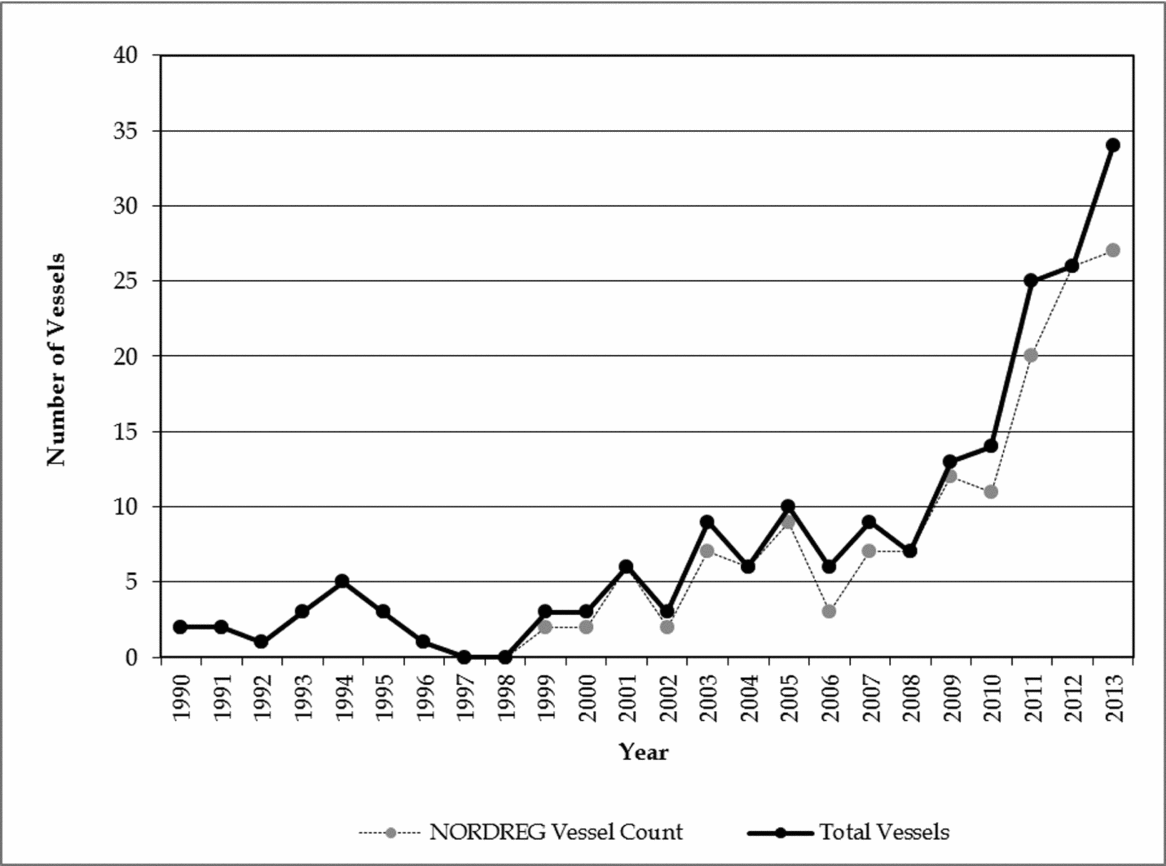
Figure 3 shows annually recorded pleasure craft activity in Arctic Canada from 1990 to 2013 based on the NORDREG records and the additional sources of information described above. The number of vessels confirmed through this process is 191. A consistently low level of activity is apparent from 1990 through to 2000, with some years seeing no pleasure craft travel recorded, a moderate increase in annual activity for 2001 to 2008, and large increases in the period of 2009 to 2013. Annual increases in the most recent time period demonstrate the rapid growth in the sector that resulted in a greater than doubling of numbers from the year 2010 to 2013. These observations reflect those of Pizzolato and others (Reference Pizzolato, Howell and Derksen2014), who compared growth in all Arctic vessels types between 1990 and 2012, finding that pleasure craft is the fastest growing marine sector in the region.
Annual counts of recorded pleasure craft in the Canadian Arctic (1990-2013).

Twenty-three of the vessels analysed made multiple voyages to the Canadian Arctic, sometimes over sequential years and sometimes over several years separated by one or two seasons. Thirteen vessels made two trips to the Canadian Arctic, seven made three visits, two made four visits and one made six visits. A few vessels overwintered in the Canadian Arctic and are counted in successive seasons, but it is difficult to identify these vessels with certainty through the records. Vessels with multiple visits, especially the higher numbers of visits, might be ‘bare-bones’ charter vessels, available for hire to competent mariners and so would appear in the records in multiple years.
The NORDREG data provide additional information for 164 of the 191 vessels, including vessel registration. Unlike expedition cruise vessels, which tend to all be ‘foreign flagged,’ pleasure crafts are normally flagged to their country of ownership. European registered vessels comprised 51% and North America 38% of the total number of vessels recorded. Canadian registered vessels were the highest frequency, numbering 27, and the United Kingdom, United States of America, and France followed with 24, 23, and 18 vessels respectively.
From 1990 to 2013, 75% of pleasure crafts recorded in the NORDREG data provided the number of persons on board the vessel, but reporting is most consistent for the years 2000 to 2013. In order to extrapolate the number of persons visiting the Canadian Arctic by pleasure craft, an average for the vessels reporting in a particular year was used to approximate numbers for those vessels not reporting in that year. The total number of persons on board is extrapolated as 928 for the time period 2000 to 2013 inclusive. It is important to note that the occasional visit of a large pleasure craft has the potential to skew the average. In three out of the four most recent years examined a vessel carrying more than 50 persons on board is present.
Management concerns with the emerging pleasure craft sector
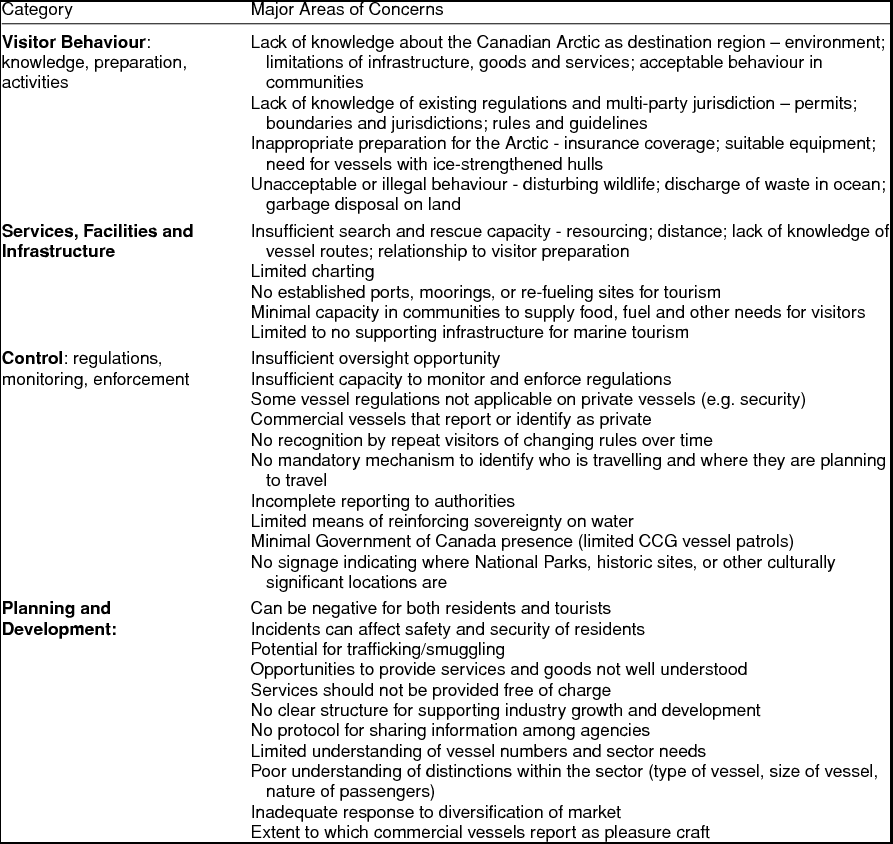
Numerous management concerns were identified by interviewees and they have been grouped into four categories: visitor behaviour; services, facilities and infrastructure; control; and planning and development (Table 2). This section describes each category and provides some examples, but it is important to note that the concerns in one category are often linked to those in another.
Management concerns regarding pleasure craft travel in the Canadian Arctic as identified by interviewees.

The ‘visitor behaviour’ category includes concerns related to knowledge, preparation and activities. A lack of knowledge on the part of visitors was identified in two key ways by nearly all interviewees: a lack of knowledge about the Canadian Arctic as a pleasure craft destination region, and a lack of knowledge about existing regulations. The lack of Arctic-specific knowledge was troubling for interviewees because they linked it to inadequate preparation and/or inappropriate actions. A lack of knowledge about limitations in marine infrastructure might mean that visitors did not properly dispose of their waste. A lack of knowledge about available goods and services for tourists meant that, as Interviewee 12 noted, visitors did not arrange re-supply in advance, but upon arriving in a community on a weekend, for example, expected stores to be open to serve them. A lack of knowledge about specific conditions meant that insufficient insurance might be carried by the visitor and that inappropriate equipment for the conditions might be used. Interviewee 5 asked: “Do yachts have safety and survival gear on board? Do they realize how far they are from help?”
Of particular concern was the lack of Arctic sailing experience and ice navigation competence. Several interviewees identified categories of visitors on the basis of motivation, awareness and preparation, with some noting that pleasure craft with hired crew tended to be better prepared. Interviewee 16 stated: “The nuance here is that folks who don't have experience, but have their boat operator's license believe they can do the trip.” Excitement about the “opening” of the Northwest Passage and the disappearance of sea ice is seen as partly responsible for increasing pleasure craft traffic, especially among those without Arctic experience who, according to Interviewee 4, might see the Arctic as a “free-for-all” destination.
The lack of knowledge about existing regulation and multi-party jurisdiction is also linked with preparation and actions. For example, a proportion of pleasure craft tourists was identified as being in parks or protected areas without permits, either because they did not know they needed a permit in a park or they did not know they were in a park. Interviewee 13 noted that, without appropriate permitting, these visitors do not have access to park information packages and visitor orientation; this interviewee spoke of providing an ad hoc orientation and registration for such visitors upon finding them in the park. Other visitors knew about permitting and prohibited activities in protected areas, yet flaunted the rules by undertaking prohibited activities and then promoting their experiences through media (Interviewee 3). Interviewee 12 suggested that visitors on the smaller vessels were more adaptable and flexible than those on the luxury yachts, characteristics that others linked to their independence or reluctance to follow regulation. Interviewee 15 noted that smaller tourism vessels “don't see themselves as being regulated” and so might be unaware of regulation such as the zero discharge of waste requirement that applies to all vessels in the Canadian Arctic.
The ‘services, facilities and infrastructure’ category includes concerns about the availability and resourcing of marine and visitor services. Nearly all interviewees commented on deficiencies related to the Search and Rescue (SAR) System. Interviewee 1 raised the concern that the use of non-ice strengthened hulls was taxing the SAR system. Related to this was the point that pleasure craft visitors did not necessarily have enough (or any) insurance to cover the costs of their rescue. Pleasure crafts, like cruise ships, travel in areas that are far distant from help. SAR assistance was two days away by ship in a recent rescue incident involving a cruise ship (Interviewee 16). For pleasure crafts, this issue of distance is compounded by the fact that government service providers do not have sufficient knowledge of routes taken by an individual vessel to be able to maintain ongoing risk awareness and support (Interviewee 15). Limited hydrographic charting was noted as an issue with regard to the need for enhanced SAR services.
A key area that was raised numerous times was the lack of established ports, moorings, and re-fueling sites specifically for tourism vessels. This lack of infrastructure was a concern in two ways: it limited the economic development potential of increased marine tourism; and, it presented safety implications for vessels that were in need of a safe harbour. Numerous comments were made about the floating docks and small craft harbours that had been planned and not implemented. Further concerns were raised about the capacity of communities to respond to the other needs of pleasure craft tourists (Fig. 4). Re-supply needs such as food and fuel were mentioned frequently, as were the need for drug stores, internet access, laundry/shower services, and access to medical services and customs/immigration sites. These services reflect both general tourism needs and marine tourism needs in particular.
The Fortrus visiting Pond Inlet, Nunavut. Photo credit: E.J. Stewart

The category of ‘control’ included emphasis on regulations, enforcement and monitoring. The overriding theme evident throughout the interviews was the lack of opportunity and/or capacity of government to oversee pleasure crafts in order to ensure regulations were being followed. Interviewee 14 noted that the lack of domain awareness on the part of pleasure craft visitors and the minimal availability of government services meant that there was an insufficient ability to regulate and track these vessels, including a limited means of reinforcing sovereignty over water. Interviewee 1 stated that there was no proof of the route taken and sites visited of a particularly troublesome vessel, so there was little opportunity to exact fines for illegal actions. This point was reinforced by Interviewee 19, who stated that ‘no one knows what people are doing when they get off [the vessel], where they land, whether there is garbage.’ Other interviewees noted the lack of oversight opportunity also means a lesser ability to provide assistance and information. The lack of awareness extends to national parks, historic sites and other culturally significant locations and also ties in with the limited presence of government agencies to reinforce domain awareness. Incomplete reporting to authorities is related to the lack of a mandatory mechanism to identify who is travelling and the planned route.
An area of particular concern regarding government oversight was the possibility that some commercial vessels identify as private vessels, resulting in them evading regulation and the possibility of inspections. For example, regulations regarding required safety equipment and crew qualifications apply to commercial vessels, but not recreational vessels (Interviewee 15). Requirements for commercial vessels are much more stringent and adherence to them may involve costs for the operator. A commercial operator that ‘masquerades’ as a pleasure craft has an advantage over commercial operators that follow the rules. Furthermore, concern was raised that repeat visitors did not recognise changing rules and/or practices over time and so were not prepared to meet requirements.
Interviewee 18’s ‘biggest concern’ was that pleasure crafts do not fall under particular safety and security regulations because of their category. This may make them and the places they visit more vulnerable to disruption and loss. There were numerous comments about appropriate regulation for mega-yachts and whether they should be treated as passenger ships because of their size and number of persons on board, leading to ‘closer scrutiny’ of mega-yachts, according to Interviewee 20. Particular concerns were noted regarding the travel of vessels that do not fit current regulatory categories, such as a condominium ship that is not regulated as a passenger vessel, and luxury yachts that return frequently, carrying over 50 persons on board.
The final group of concerns is categorised as ‘planning and development issues.’ The overriding theme in this group was that the growth of the pleasure craft sector, while providing opportunities, could also be negative for both residents and tourists, and therefore future research and planning needed to inform management. In particular, research was needed in order to improve the currently limited understanding of vessel numbers, sector and visitor needs. Further to this was the need for more information on visitor preparedness in relation to information, safety, motivation and intentions, and the need for research on routes, sites visited, tourist activities and satisfaction. Interviewee 1 bluntly said: ‘We need to know why they are coming, how long they are staying, how much money they will leave in Nunavut.’ Interviewee 4 emphasised the need to understand how better to communicate with pleasure craft tourists to provide information about safety, appropriate actions, and Arctic conditions, not to discourage visitors, but to provide a ‘reality check’ to help avoid problems.
Several interviewees talked about their observations that the opportunities to provide goods and services to the pleasure craft sector were not well understood by residents in the small communities of the north. This includes the services needed by visitors when they arrive in a community, but also the possible development of day trips and events that could be tailored to the small vessels. Interviewees reported that there might be a need to develop the entrepreneurial capacity in the communities in order to take advantage of opportunities. They also noted that it would be necessary to provide such entrepreneurs with information on the needs of the visitors and a model for determining appropriate pricing. In order to communicate needs for product and service development, research on the pleasure craft sector must recognise distinctions within the sector. Interviewee 8 made distinctions among four categories of pleasure craft visitors that reflected size of vessel, motivation, experience levels, and behaviour. An appropriate development response must recognise this diversity, particularly in respect of the possibilities associated with high end tourism.
Particular concerns regarding government involvement in planning and development included the lack of a clear structure for supporting sector growth and the absence of a protocol for information sharing among agencies. Frustration was expressed that most of the decision-makers and communicators for the federal agencies with a role were outside the region, limiting conversations about inter-agency information exchange and planning (Interviewee 13). A multi-lateral partnership was recommended as a possible resolution to managing sector development (Interviewee 14), relating to the oft-noted issue that the agencies and departments, both federal and territorial had distinct mandates that presented barriers to information sharing and problem resolution.
In addition to the concerns raised by stakeholders interviewed in this study, other issues have emerged subsequently including those related to national security and the protection of remote environments and Arctic wildlife. Many of the concerns mirror those described regarding the increases in expedition cruise tourism (see Stewart and others Reference Stewart, Dawson and Howell2012; Stewart and others Reference Stewart, Dawson and Johnston2015) that have led to an emphasis in Nunavut on responding to the challenges (Viken and others 2014; Dawson and others Reference Dawson, Stewart and Johnston2016), yet growth in the sector does involve some particular and distinct issues that reflect the nature of pleasure crafts, the motivations and behaviour of visitors, and the capacity of government agencies in the region to manage the sector.
Concluding discussion
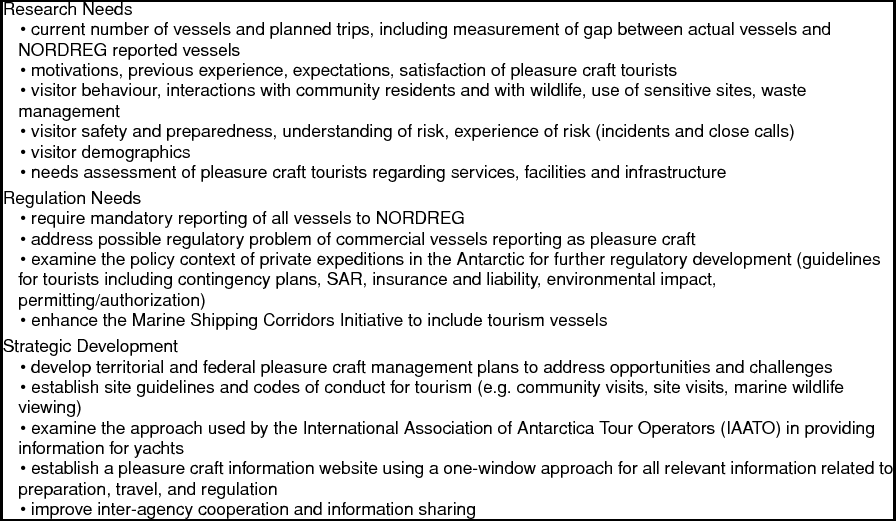
This exploration of pleasure craft development in the Canadian Arctic leads to three main recommendations for management: responding to the need for research, addressing regulatory challenges, and undertaking strategic development of the sector (Table 3).
Recommendations for management stakeholders.

The pleasure craft sector continues to grow in Arctic Canada, but this development is occurring within a knowledge vacuum. Given the nature of stakeholder concerns about the sector changes and their implications, there is a need to prioritise the collection of data about pleasure crafts and tourists. Information is needed about current and future numbers and types of vessels; tourist motivations, previous experience, expectations and satisfaction; visitor behaviour, especially at remote and sensitive sites, including interactions with wildlife and residents of communities, as well as the discharge of waste; safety, preparedness, self-rescue capacity, and perceptions/knowledge of risk among passengers and crew; and, the nature of non-reported incidents and ‘close calls.’ In addition, determining passenger and crew numbers (and their demographics) is an important aspect of understanding tourists who access the Arctic on board these vessels.
The major regulatory challenges presented by interviewees reflect limits to government responsibilities, opportunities for monitoring vessels, and challenges related to poor domain awareness. While it is not necessary to create barriers to visitation through regulation, it seems particularly important to ensure mandatory reporting of pleasure craft activities in the NORDREG Zone. Until all vessels are required to report, managers will not have full information upon which to base their decisions regarding support and services, and any additional controls needed. Management decisions should be based on a comprehensive understanding of the pleasure craft sector and this can be obtained, in part, through mandatory reporting. The current picture of patterns and trends is constrained by incomplete reporting to NORDREG and a resulting degree of inconsistency in details available about vessels and their voyages. Mandatory reporting might also provide opportunities to address the extent to which commercial vessels are counted as pleasure crafts. Further, regulatory efforts appear to be constrained by the lack of inter-agency cooperation, and this may be related to a lack of recognition of the significance of the pleasure craft sector, small in numbers and economic impact, yet still the fastest growing shipping sector in the Canadian Arctic. For example, the Northern Marine Shipping Corridors initiative does not yet recognise the need for pleasure craft (or cruise ship) corridors. Furthermore, the newly implemented Polar Code also does not specify recommendations for pleasure crafts across the global Arctic.
Given the evident deficiencies in the existing management structure, there is a need for a strategic approach to development in the pleasure craft sector that recognises the dual responsibility of management to both support and control, with roles for both federal and territorial agencies. A good starting place would be an assessment of management approaches in other polar regions experiencing increasing pleasure craft travel, particularly in Antarctica, Alaska, Greenland, Russia, Svalbard and even Newfoundland, to see what approaches to vessel and visitor management have been successful, and for what reasons, and whether any lessons can be applied to the situation in Arctic Canada. Of particular interest might be communications strategies that support potential visitors in understanding Arctic requirements related to vessel construction, equipment on board, and vessel operation in ice-infested waters, and that reinforce the value of reporting to NORDREG for safety reasons. Strategic development should also make good use of social science research on the experience and behaviour of pleasure craft travelers, in concert with overall government infrastructure and facilities planning, to identify specific tourist site attributes suitable for pleasure craft visitation. Related to this approach is the question of determining whether it is appropriate to attempt to concentrate traffic around new port facilities, re-supply centres, preferred routes and sites in order to better control impacts and monitor vessels. Finally, inter-agency cooperation should be used to support information sharing, resource use and development activities.
Changing environmental conditions in the Canadian Arctic have led to a dramatic increase in pleasure craft traffic. Using the NORDREG records and additional searches, this research provides both a quantitative and qualitative picture of the change over time and indicates the sizable underreporting of these vessels. Further, this research indicates that management concerns are focused on challenges related to inappropriate or unsafe visitor behaviour; a lack of services, facilities and infrastructure; inadequate control over vessels; and, the need for planning and development of the sector. Pleasure craft travel in the Arctic requires not only suitable personal skills and experience, but also considerable preparation, knowledge and specialised equipment, sufficient to enable self-rescue, alongside identification of emergency support services. Government managers must be prepared to address both their own needs and those of the visitors. The rapid development of the sector should be addressed through management strategies reflecting specific needs for social science research, improved regulation, and strategic development.
Acknowledgements
The authors wish to thank those who participated in this study as interviewees. Appreciation is also extended to Transport Canada for funding, and to the Department of Fisheries and Oceans, Canada and Canadian Coast Guard for the provision of data and information. We particularly thank Larissa Pizzolato for her assistance with data preparation. The authors assert that all procedures contributing to this work comply with the ethical standards of the Tri-Council Granting Agencies of Canada and the ethical standards of our respective institutions.