




No CrossRef data available.
Article contents
- Extract
- Acknowledgements
- I. Introduction
- II. Background Context
- Mode of Procedure in Contested Election Cases
- A Short Historical Overview of Contested Senate Elections
- Grounds of Contest in Election Cases
- III. Analyzing Contested Election Cases
- Resolution of Cases
- Partisanship: A First Cut
- Committee Rolls
- Roll-Call Voting
- IV. Explaining House-Senate Differences
- V. Case Studies
- John P. Stockton, 39th Congress (1865–1867)
- Daniel F. Steck versus Smith W. Brookhart, 69th Congress (1925–1927)
- Patrick J. Hurley versus Dennis Chavez, 83rd Congress (1953–1955)
- VI. Conclusion
Partisanship and Contested Election Cases in the Senate, 1789–2002
Published online by Cambridge University Press: 17 August 2005
Article contents
- Extract
- Acknowledgements
- I. Introduction
- II. Background Context
- Mode of Procedure in Contested Election Cases
- A Short Historical Overview of Contested Senate Elections
- Grounds of Contest in Election Cases
- III. Analyzing Contested Election Cases
- Resolution of Cases
- Partisanship: A First Cut
- Committee Rolls
- Roll-Call Voting
- IV. Explaining House-Senate Differences
- V. Case Studies
- John P. Stockton, 39th Congress (1865–1867)
- Daniel F. Steck versus Smith W. Brookhart, 69th Congress (1925–1927)
- Patrick J. Hurley versus Dennis Chavez, 83rd Congress (1953–1955)
- VI. Conclusion
Extract
While the Founding Fathers included a number of checks and balances in the U.S. Constitution as a way of dispersing power across the various branches of the federal government, they made no such allowance regarding the internal makeup of Congress. Specifically, Article I, Section 5, Clause 1 of the Constitution states that “Each House shall be the Judge of the Elections, Returns, and Qualifications of its own Members. . . .” This clause, in effect, provides each chamber of Congress with the exclusive authority to determine how its membership will be comprised. Thus, when an election is contested, that is, when a dispute arises regarding who is the rightful occupant of a seat after all votes have been counted and a winner announced, the given chamber operates as the sole arbiter, insulated completely from Executive and Judicial pressures or constraints.
Information
- Type
- Research Article
- Information
- Copyright
- © 2005 Cambridge University Press
Acknowledgements
An earlier version of this article was presented at the Annual Meeting of the Midwest Political Science Association, April 15–18, 2004, Chicago, IL. Thanks to Gerald Gamm and Bruce Oppenheimer for helpful comments. Thanks also to Karren Orren and Steve Skowronek for their support and encouragement throughout the review process.
I. Introduction
While the Founding Fathers included a number of checks and balances in the U.S. Constitution as a way of dispersing power across the various branches of the federal government, they made no such allowance regarding the internal makeup of Congress. Specifically, Article I, Section 5, Clause 1 of the Constitution states that “Each House shall be the Judge of the Elections, Returns, and Qualifications of its own Members. . . .” This clause, in effect, provides each chamber of Congress with the exclusive authority to determine how its membership will be comprised.1
This congressional right has been challenged on several occasions, without success. The last challenge occurred in 1972, in the U.S. Supreme Court case of Roudebush v. Hartke, which involved a Senate election contest. The Court ruled that each chamber of Congress, per the guidelines of the Constitution, retains the unconditional and final judgment in contested election cases.
The origins of this constitutional guarantee trace back to both English and colonial rule, as similar protections were adopted by the House of Commons as well as most colonial legislatures in response to fears regarding Executive tyranny. See George H. Haynes, The Senate of the United States: Its History and Practice, Volume I (New York: Russell & Russell, 1938), 121–22; John T. Dempsey, “Control byCongress over the Seating and Disciplining of Members,” (Ph.D. diss., University of Michigan, 1956), 12–20, 25–28.
This article investigates the procedures and outcomes in contested election cases in the Senate from the 1st through 107th Congresses (1789–2002). To this point, while some scholarly work has examined the contested election process in the House of Rep- resentatives, very little research has focused on the Senate.3
See C. H. Rammelkamp, “Contested Congressional Elections,” Political Science Quarterly 20 (1905): 421–42; De Alva Alexander, History and Procedure of the House of Representatives (Boston: Houghton Mifflin, 1916), 313–30; Vincent M. Barnett, Jr., “Contested Elections in Recent Years,” Political Science Quarterly 54 (1939): 187–215; Dempsey, “Control by Congress,” Nelson W. Polsby, “The Institutionalization of the House of Representatives,” American Political Science Review 62 (1968): 144–68, Matthew N. Green, “Disputing the Vote: Explaining the Decline of Contested Elections to the U.S. House of Representatives,” (working paper, Yale University, 2003), and Jeffery A. Jenkins, “Partisanship and Contested Election Cases in the House of Representatives, 1789–2002,” Studies in American Political Development 18 (2004): 113–35. Moreover, lengthy pieces by House leaders have discussed various elements of the House's contested election process. See Henry L. Dawes, “The Mode of Procedure in Cases of Contested Elections,” Journal of Social Science 2 (1870): 56–68; Thomas B. Reed, “Contested Elections,” North American Review 151 (1890): 112–20.
Haynes, The Senate of the United States; Dempsey, “Control by Congress.”
In addition, I will examine the degree to which partisanship has been a significant factor in the disposition of contested Senate election cases. Evidence that the majority party in Congress uses rules, procedures, and institutions for the benefit of its members, both in the contemporary period and historically, is ubiquitous in the literature.5
See, for example, Charles Stewart III and Barry R. Weingast, “Stacking the Senate, Changing the Nation: Republican Rotten Boroughs, Statehood Politics, and American Political Development,” Studies in American Political Development 6 (1992): 223–71; Ronald F. King and Susan Ellis, “Partisan Advantage and Constitutional Change: The Case of the Seventeenth Amendment,” Studies in American Political Development 10 (1996): 69–102; David W. Rohde, Parties and Leaders in the Postreform Congress (Chicago: University of Chicago Press, 1991); Gary W. Cox and Mathew D. McCubbins, Legislative Leviathan: Party Government in the House (Berkeley: University of California Press, 1993); John H. Aldrich, Why Parties?: The Origins and Transformation of Party Politics in America (Chicago: University of Chicago Press, 1995); Sarah A. Binder, Minority Rights, Majority Rule: Partisanship and the Development of Congress (Cambridge: Cambridge University Press, 1997); Douglas Dion, Turning the Legislative Thumbscrew: Minority Rights and Procedural Change in Legislative Politics (Ann Arbor: University of Michigan Press, 1997); David W. Brady and Mathew D. McCubbins, eds., Party, Process, and Political Change in Congress: New Perspectives on the History of Congress (Palo Alto, CA: Stanford University Press, 2002).
Jenkins, “Partisanship and Contested Election Cases.”
An enduring theme in American politics is the battle for control of the electoral process, as control of elections (and the electoral machinery) inevitably means control of policymaking. Dempsey had this notion in mind when he wrote: “Control by the legislature over membership matters is a dangerous power, and it is susceptible to abuse.”7
Dempsey, “Control by Congress,” 6.
The article is organized as follows: Section II provides a general overview of contested election cases in the Senate, as a means of painting a broad portrait of the process across time. Section III presents a systematic analysis of election contests, examining the resolution of cases and the role that partisanship has played in case outcomes both across time and within historical eras from a variety of empirical angles. Section IV focuses on differences in the application of contested election cases in the House and Senate, notably during the late-nineteenth century. Section V presents three in-depth case studies of election contests that had significant institutional or policy implications and were also strongly partisan in nature. Section VI concludes.
II. Background Context
Before proceeding to an analysis of contested elections, and an investigation of the impact of partisanship on outcomes, I will first provide some background context. In the following three subsections, I describe the historical mode of procedure in contested Senate election cases, present an overview of contested Senate elections across time, and detail the grounds of contest in Senate election cases.
Mode of Procedure in Contested Election Cases
The Senate has taken a much different track from the House in the handling of election contests. While the House struggled with the crafting of contested election procedures from the First Congress, before adopting a uniform mode of procedure in 1851 that lasted for more than a century, the Senate has avoided adopting any general rules or procedures.8
Senate procedures have traditionally been less formal than House procedures in general. For a discussion, as well as explanations for the chambers' differences, see Charles Stewart III, “Responsiveness in the Upper Chamber: The Constitution and the Institutional Development of the Senate,” in The Constitution and American Political Development, ed. Peter F. Nardulli (Urbana: University of Illinois Press, 1992), 85–88.
Dempsey, “Control by Congress,” 87–88.
However, a variety of informal precedents have emerged over time. For example, the most common manner in which an election contest in the Senate originates is by petition. While the same is true in the House, petitions in the Senate can be brought not only by the losing candidate (as in the House), but also by private citizens, private or public associations, or state governmental units. Moreover, petitions can be brought at any time in the Senate, while a short window following an election has been established in the House. Senate petitions can take any form, and grounds for the contest are typically stipulated in detail. The subsequent investigation, which often involves recounting ballots, holding public hearings, recording testimony, and collecting materials germane to the case, and the timing thereof is then left up to the relevant committee or the Senate as a whole. In the end, the relatively informal nature of the process results in contestants having wide discretion to bring a case and the Senate having wide discretion as to how it will handle such a contest.
Should a contest be brought against a senator-elect prior to his being sworn in, the chamber's custom has been to seat the individual contingent upon his credentials being in order.10
For simplicity, here and throughout the paper, I use the male version of the possessive pronoun.
Like most of the Senate's informal precedents, this has not been hard-and-fast. Exceptions include the refusal to read the oath of office to William S. Vare (R-PA) and Frank L. Smith (R-IL) in 1926, despite the legality of their election certifications. Both cases dealt with allegations of fraud and excessive campaign expenditures.
Anne M. Butler and Wendy Wolff, United States Senate Election, Expulsion, and Censure Cases from 1793 to 1990, Sen. Doc. 103–33 (Washington, DC: U.S. Government Printing Office, 1995), xvi–ii.
The Senate has also relied heavily on committees to investigate election contests and provide recommendations to the chamber. However, unlike the House, which established the Standing Committee on Elections in the First Congress to handle election contests specifically, the Senate has pursued a more varied pattern of delegation. Until about 1850, election contests were dealt with almost exclusively by select committees. A process of institutionalization then began. For the next 20 years, most contested election cases were referred to the Judiciary Committee.13
Ibid., 458–60.
Butler and Wolff report that no justification for the creation of the Standing Committee on Privileges and Elections was offered by Senate leaders. They suggest that it was created “to relieve the burden on the Judiciary Committee,” due to the proliferation of election cases during Reconstruction (ibid., xix). Haynes echoes this sentiment (Senate of the United States, 122–23). Dempsey, however, thinks otherwise, positing that the creation of the committee was “prompted not so much by a desire to assure that a regularly constituted committee should handle these matters as by the decision to remove Charles Sumner from the chairmanship of the Foreign Relations Committee” (“Control by Congress,” 89–90). Sumner had clashed with President Ulysses S. Grant over the proposed annexation of Santo Domingo; this rift led Senate Republicans eventually to remove him from his chairmanship. However, to avoid overly embarrassing Sumner, they created the Committee on Privileges and Elections and appointed him as chairman. Sumner responded by refusing to accept the chairmanship and went without a committee assignment for his remaining years in the Senate.
From the 1920s through the 1950s, special ad-hoc committees were established to supplement the work done by the Committee (Subcommittee) on Privileges and Elections. These special committees focused almost exclusively on campaign expenditures, in an attempt to crack down on fraud and irregularities in the campaign financing process.
A Short Historical Overview of Contested Senate Elections
There have been 132 contested election cases in the Senate between the 1st and 107th Congresses (1789–2002), or an average of just over 1.2 per Congress.16
Sources used to code contested election cases include George S. Taft, Compilation of Senate Election Cases from 1789 to 1885, Sen. Misc. Doc. No. 47, 49th Cong., 1st sess. (Washington, DC: Government Printing Office, 1885), which covers the 1st through 48th Congresses; George P. Furber, Compilation of Senate Election Cases from 1789 to 1893, Senate Misc. Doc. No. 67, 52nd Cong., 2nd sess. (Washington, DC: Government Printing Office, 1893), which covers the 1st through 52nd Congresses; George M. Buck, Compilation of Senate Election Cases from 1789 to 1903, Sen. Doc No. 11, 58th Cong., special Sess. (Washington, DC: Government Printing Office, 1903), which covers the 1st through 57th Congresses; Charles A. Webb and Herbert R. Peirce, Compilation of Senate Election Cases from 1789 to 1913, Sen. Doc. No. 1036, 62nd Cong., 3rd sess. (Washington, DC: Government Printing Office, 1913), which covers the 1st through 62nd Congresses; Frank E. Hays, Compilation of Senate Election Cases from 1913 to 1940, Sen. Doc. No. 147, 76th Congress, 3rd sess. (Washington, DC: Government Printing Office, 1940), which covers the 63rd through 76th Congresses; Dempsey, “Control by Congress over the Seating and Disciplining of Members,” which covers the 1st through 82nd Congresses; Richard D. Hupman, United States Senate Election, Expulsion, and Censure Cases, 1793–1972, Sen. Doc. 92–7 (Washington, DC: U.S. Government Printing Office, 1972), which covers the 1st through 92nd Congresses; and Butler and Wolff, United States Senate Election, Expulsion, and Censure Cases from 1793 to 1990, which covers the 1st through 101st Congresses. Data on election cases from the 102nd though 107th Congresses were collected by the author. Some coding discrepancies exist between the various works; to determine which coding scheme to use, I examined the debates in Congress, using the Annals of Congress, the Register of Debates, the Congressional Globe, and the Congressional Record as guiding materials.

Fig. 1. Number of Contested Election Cases and Contested Seats, 1789–2002
The dotted line in Figure 1 illustrates the number of contested seats in each Congress. For the most part, there has been a one-to-one mapping between contested election cases and Senate seats, that is, each contested election case has usually involved a single Senate seat. However, this has not always been so. First, some cases have dealt with multiple seats. Specifically, election irregularities or admission issues have at times been state-focused, rather than seat-focused, and thus have affected both Senate seats in a particular state. This has occurred on thirteen occasions. Second, multiple cases have sometimes involved the same seat. While rare (only six occurrences), this has resulted from multiple elections for (or appointments to) a single seat in the same Congress, due to death, resignation, rejection, or some other vacancy, which has opened the door for multiple contests.
Figure 2 illustrates the percentage of Senate seats contested in each Congress. Because the number of seats per Congress has varied over time, the impact of election contests is better assessed on a percentage basis, rather than using raw per-Congress seat totals. As the figure illustrates, the percentage of contested Senate seats has fluctuated considerably over time. While exceeding 10 percent on one occasion – 10.3 percent in the 40th Congress (1867–1869) – and 9 percent on two other occasions – 9.4 percent in the 4th Congress (1795–1797) and 9.2 percent in the 45th Congress (1877–1879) – the average across the 107 Congresses is only 1.9 percent. This is due, in large part, to a significant decline in election contests in recent decades. Since the 63rd Congress (1913–1915), the percentage of contested House seats has exceeded 3 percent on only three occasions, and the average over that time-span is 0.8 percent.
Election contests have also been widely distributed across the various states. This distribution, by cases and seats, is presented in Table 1. Forty-two of the fifty states have experienced an election contest, with Louisiana leading the way in most cases (eight) and seats contested (ten). On the whole, the distribution of election contests reveals a Southern bias, as slightly less than a third of all cases (and 36 percent of all contested seats) originate from the eleven former-Confederate states.17
A similar bias exists in the House, as more than 40 percent of the contested House election cases derive from the eleven former-Confederate states. See Jenkins, “Partisanship and Contested Election Cases.”

Fig. 2. Percentage of Seats Contested, 1789–2002
Grounds of Contest in Election Cases
Contested election cases in the Senate have been brought on several different grounds. While individual election contests are often based on multiple charges, I have attempted to identify the primary ground in each case.18
This can sometimes be difficult to determine, based on a reading of the case reports. As Dempsey states: “the breakdown of these cases into categories is a subjective decision” (“Control by Congress,” 91). For instance, my own coding for several cases differs from that of Dempsey.
The breakdown of House contests is more varied, involving a dozen different categories; however, the main categories of Senate contests encapsulate over 65 percent of all House contests. See Jenkins, “Partisanship and Contested Election Cases.”
The first category reflects elections contested on the basis of fraud, corruption, and/or bribery. This category includes all cases involving allegations that a senator-elect gained his seat as a result of criminal actions, whether committed by him directly or individuals working indirectly on his behalf. Most of these cases occurred before the passage of the Seventeenth Amendment – and, thus, the direct election of senators – and dealt with the alleged bribing of state legislators or voters in state legislative elections. More recent charges have included bribery of voters and/or election officials, violation of federal and state corrupt practices acts, fraudulent certification of election results, and fraudulent alteration and counting of ballots.
The second category reflects elections contested on the basis of serious irregularities not involving criminal action. These allegations have been far ranging and have included such charges as insufficient provision of polling places, failure to ensure the secrecy of ballots, failure to comply with state-level ballot certification laws, failure to secure the sanctity of the ballot box, inadequate provision of election officials, and voting by those not properly registered.
The third category reflects elections contested during the Civil War and Reconstruction. This category includes two basic types of cases. The first type deals with questions of election legitimacy during the Civil War. On several occasions, individuals presented their election credentials at a time when their respective states were under military occupation, raising questions as to whether the elections were conducted in accordance with stipulations detailed in the Constitution. The second type deals with complications involving the readmission of the former Confederate states into the Union during Reconstruction. Many issues were in play, such as a senator-elect's loyalty or activities during the Civil War, whether a state had adequately fulfilled all requirements for readmission, and the legitimacy of the state legislature conducting the election. In the last case, two rival legislatures existed within a state on several occasions, each claiming that it was the sole legal and duly elected legislative organ of the state.20
Rival legislatures emerged in several states, including Alabama, Louisiana, and South Carolina, in response to white Democrats' attempts to undermine Radical Reconstruction efforts.

The fourth category reflects elections contested as a result of (perceived) illegal appointment by a governor. Many such cases occurred prior to the Seventeenth Amendment, when Article I, Section 3 of the Constitution set the guidelines for vacancies of Senate seats: “If vacancies occur by resignation, or otherwise, during the recess of the Legislature of any State, the executive thereof may make temporary appointments until the next meeting of the Legislature, which shall then fill such vacancies.” The major question in such cases involved the timing of the vacancy, specifically whether it actually occurred during a legislative recess. In some cases, the vacancy preceded the recess, but the legislature was subsequently unable to choose a replacement;21
At times, the legislative deadlock was premeditated. In some states, majorities were necessary in each chamber of the legislature in order to choose a senator. This played into the hands of partisan leaders in cases where one party controlled one chamber and the governorship. In such cases, the party in question would refuse to compromise with the other chamber on the choice of senator, thereby creating a legislative deadlock and opening the door to a recess appointment by the governor. To prevent this partisan abuse, as well as to eliminate institutional differences across states by providing a uniform mode of procedure, the Congress passed an act in 1866 governing the election of Senators, which stipulated that such elections were to occur in a joint legislative assembly and follow specified procedural guidelines. See Statutes at Large, 14:243–44. Attempts to refine this law were made in 1883 and 1888, but failed each time. For a general overview, see George H. Haynes, The Election of Senators (New York: Henry Holt and Company, 1906), 23–31. Despite the passage of the 1866 statute,
legislative deadlocks continued, opening the door eventually for the direct election of Senators. See Wendy Schiller and Charles Stewart III, “U.S. Senate Elections before 1914,” paper presented at the 2004 annual meeting of the Midwest Political Science Association, Chicago, IL.

The fifth category reflects elections contested due to a (perceived) lack of qualifications by the senator-elect. Typically, such cases have involved the three requirements for membership set forth in Article I, Section 2 of the Constitution: An individual must be at least thirty years of age, a citizen of the United States for nine years, and an inhabitant of the state from which elected. Several contests have delved into the timing of such requirements, such as whether the age and citizenship requirements apply to the date of election or the date of seating. Other cases have explored other potential qualifications, including religion22
Religion became an issue in the Reed Smoot case in the 59th Congress (1905–1907). Smoot (R-UT) was a Mormon and a leader within the Church hierarchy. His election led to a wave of protests from Protestant churches, women's groups, and newspaper editors over the Mormon practice of polygamy (which the Mormon Church had eliminated more than a decade earlier). After a four-year ordeal, religious tolerance won out and Smoot retained his seat, as the motion to remove him failed by a vote of 28 to 42.
The mental competence of John Niles (D-CT) was questioned in the 28th Congress, when it appeared that he was suffering from (what would likely be diagnosed today as) depression. The matter was referred to committee, which reported that Niles was “not of ‘unsound mind’ in the technical sense” (quoted in Butler and Wolff, United States Senate Election, 50). In effect, the committee felt that adding a mental competence qualification would be a slippery slope, potentially inviting future charges of “insanity” against Senators-elect, which, while likely baseless, would require subsequent investigations.
III. Analyzing Contested Election Cases
In this section, I will analyze contested election cases across time in a more systematic way. I focus first on trying to identify patterns in Senate and committee outcomes, before proceeding to examine the specific role that partisanship has played in case dispositions.
Resolution of Cases
Rulings in contested Senate election cases have typically favored the contestee (i.e., the individual holding the election certificate). Of the 132 contested election cases, the contestee has emerged victorious in ninety-three cases (or 70.5 percent), the contestant has won two cases (or 1.5 percent), and the seat has been vacated in thirty-seven cases (28 percent). Thus, in just over two of every three cases, the contestee has retained his seat.
The low success rate for contestants (i.e., losers in the initial Senate election) is partly indicative of the mode of procedure in the Senate. Because a case can be initiated via petition by any individual or group, a contestant is not often involved directly. Of the 132 cases, only forty-seven (35.6 percent) have involved a contestant. Nevertheless, the norm has been to protect sitting members, as the “net” success rate for contestants is only 4.3 percent.
The top of Table 3 breaks down contested election outcomes in both the Senate and House across time. As the numbers indicate, contestants have fared much better in the House, even accounting for procedural differences between the chambers. However, the rate for vacating seats has been considerably higher in the Senate. In the end, when one simply considers how often a decision has gone against a contestee (i.e., either seating the contestant or vacating the seat), the rates across the two chambers have been quite similar.
Historically, the percentages in contested Senate elections have fluctuated somewhat. The bottom of Table 3 illustrates this. During the Antebellum period, contestees won 57.7 percent of contested election cases. During the Civil War/Reconstruction and Gilded Age/Progressive Era periods, contestees fared better, winning 68.6 and 66.7 percent of contested election cases, respectively. In the modern period, since the advent of direct elections, contestees have fared exceedingly well, winning 85.7 percent of contested elections cases. Moreover, since the 72nd Congress (1931–1933), only one of twenty-three cases (or 4.3 percent) has resulted in a seat being vacated.24
This was the contest between John A. Durkin (D) and Louis C. Wyman (R) in New Hampshire in the 94th Congress (1975–1977). Wyman appeared to have won the election by 355 votes in a race in which more than 200,000 were cast. Durkin charged irregularities in the counting of ballots and demanded a recount. The Committee on Rules and Administration attempted to sort through 3,500 disputed ballots, but could not agree on whom to seat. Eventually, the full Senate was left to decide the matter, and voted 71 to 21 to declare the seat vacant.

Partisanship: A First Cut
To investigate the degree to which partisanship has influenced contested election cases, I first examine the extent to which case outcomes have favored the majority party.25
Party affiliation data for contestees and contestants were obtained from Kenneth A. Martis, The Historical Atlas of Political Parties in the United States Congress, 1789–1989 (New York: Macmillan, 1989) and Michael J. Dubin, United States Congressional Elections, 1788–1998 (Jefferson, NC: McFarland & Company, 1997).
Eight cases were dropped because of difficulty in obtaining party affiliations for contestees or determining benefit/cost to the majority party.
This result, however, might be misleading. If cases are brought at a higher rate against minority-party seat holders, because petitioners assume they will be unseated by the majority party, then there will likely be a selection effect. That is, many potential frivolous cases will be brought against minority-party seat holders, and subsequently dismissed, while only serious cases will be brought against majority-party seat holders. Thus, to get a better sense of the degree to which partisanship influences contested election outcomes, I pursue additional avenues of inquiry.
One such avenue is to evaluate only those cases that have produced a split within the committee handling the contest. That is, cases that generate an intracommittee division can serve as a means of “quality control.” For example, if a high number of frivolous cases are in fact brought by majority-party petitioners, they should receive a unanimous (negative) committee report and subsequently be defeated on the Senate floor. Thus, my assumption is that only serious cases will yield committee splits. The question then becomes: do we see a difference in majority-party versus minority-party outcomes when committee splits occur? The answer is yes: the majority party wins 60.9 percent of split-committee cases, versus 44.2 percent of unanimous-committee cases. Thus, when frivolous cases are stripped away, the evidence for majority-party bias in election-contest disposition increases.
Another avenue is to examine only those cases in which a contestee (sitting member) loses his seat, by the Senate either awarding the seat to the contestant or declaring the seat vacant. The relevant question here is: do we observe impartiality when a senator loses his seat? The logic for partisan behavior is straightforward – it is one thing for the majority party to allow a minority-party member to retain a seat, while it is quite another for the majority party either (a) to unseat one of its own in favor of a minority-party member or (b) to vacate one of its own seats. If a similar ratio of majority-minority and minority-majority seat losses is observed, this would, I argue, constitute evidence of nonpartisan behavior in decision making. In fact, the results indicate that seat losses were relatively even, as the minority party was slightly favored: in 51.4 percent of the seat-loss cases, the minority party has benefited. In only seventeen of thirty-five cases has a seat loss favored the majority party.
Thus, this initial set of evidence can best be characterized as mixed. While the initial case tally and split-committee findings support a story of partisanship (i.e., majority-party influence) in contested Senate elections, the seat-loss evidence suggests otherwise. This contrasts with evidence from contested House elections, where the case tally, the split-committee findings, and the seat-loss evidence all correspond to a story of majority-party influence.27
Jenkins, “Partisanship and Contested Election Cases.”
Committee Rolls
Another issue to investigate is the degree to which outcomes have differed from committee recommendations in contested Senate election cases, or in other words, the frequency with which the committee has been “rolled.” This question is related directly to the issue of partisanship, in that committees will be dominated by members of the majority party. Theory developed by Andrea C. Campbell, Gary W. Cox, and Mathew D. McCubbins posits that majority-party contingents on committee should act as “agents” for the interests of the underlying majority in the Senate.28
Andrea C. Campbell, Gary W. Cox, and Mathew D. McCubbins, “Agenda Power in the U.S. Senate, 1877–1986,” in David W. Brady and Mathew D. McCubbins, eds., Party, Process, and Political Change in Congress: New Perspectives on the History of Congress (Stanford: Stanford University Press, 2002). For a similar argument for the House, see Gary W. Cox, “Agenda Setting in the U.S. House: A Majority-Party Monopoly,” Legislative Studies Quarterly 26 (2001): 185–210; Gary W. Cox and Mathew D. McCubbins, “Agenda Power in the U.S. House of Representatives, 1877–1986,” in Party, Process, and Political Change in Congress: New Perspectives on the History of Congress, ed. David W. Brady and Mathew D. McCubbins (Palo Alto, CA: Stanford University Press, 2002).
In the 104 contested election cases in which a Senate committee has made a recommendation, it has been rolled on nineteen occasions, or 18.3 percent of the time. The relevant information for these cases is reported in Table 4. This rate is considerably higher than the 7 percent roll rate on election cases in the House,29
Jenkins, “Partisanship and Contested Election Cases.”
Campbell, Cox, and McCubbins, “Agenda Power in the U.S. Senate,” 154.
Yet, there are reasons to believe that this high committee roll rate in Senate election cases may not be as extreme as it initially appears. First, the Campbell, Cox, and McCubbins roll-rate data are temporally limited, as the series begins in 1877 with the 45th Congress. Moreover, the roll rates for the first ten Congresses in their series are quite considerable, exceeding single digits in nine Congresses with a high of 44.4 percent. Beginning with the 55th Congress (1897–1899), however, roll rates drop instantly to zero and remain at zero or single digits (except in seven Congresses) through the mid-1980s. As the authors note: “Prior to the emergence of formal leadership positions [in the Senate], we see partisan floor management as early as the mid-1890s through the Republican Steering Committee.”31
Ibid., 157. See also Gerald Gamm and Steven S. Smith, “Steering the Senate: The Consolidation of Senate Power Leadership, 1892–1913” (working paper, University of Rochester, 2002).
Second, the nature of the committee rolls must be examined, to determine whether the Senate's decision to override was a function of the committee not operating as a faithful majority-party agent. As Table 4 illustrates, the committee's recommendation was inconsistent with the interests of the majority party in only nine of nineteen cases. In the other ten cases, the Senate overruled the pro-majority-party recommendation of the committee.32
Interestingly, a unanimous committee recommendation has been rolled on two occasions. In both cases, the committee recommendation was inconsistent with the interests of the majority party.
Roll-Call Voting
Another way to examine whether partisanship influences contested Senate election cases is to examine roll-call votes. Specifically, the distribution of individual vote choices in election contests decided by roll call can be used to assess whether partisanship was a major factor in case outcomes. In addition, party-based models of roll-call voting can be compared to ideological models, to determine the relative importance of party and ideology as competing explanatory factors.


Before proceeding to an analysis of roll-call votes, I first consider the distribution of cases that elicited roll calls. The top portion of Table 5 presents roll-call rates for the Senate as well as the House. First, nearly one-half of all contested Senate election cases have been decided by roll call, compared to less than one-third of all House election cases.33
Jenkins, “Partisanship and Contested Election Cases.”
A similar drop off occurs across time in the House; see Jenkins, “Partisanship and Contested Election Cases.”
Another angle from which to view the distribution of election contests is by case category. Table 6 revisits the five major case categories presented in Table 2, illustrating the rate at which election contests in each category have been decided by roll call. Meaningful differences exist across the five categories, with perhaps the most serious charges (fraud, bribery, or corruption) eliciting the lowest roll-call rate. What explains these differences? One explanation could relate to the difficulty of decision; cases in the first two categories – Fraud, Bribery, or Corruption and Other Serious Election Irregularities – required senators to spend a great deal of time and energy sorting through the various pieces of evidence for a resolution. Often, this may not have been worth their effort, as the opportunity costs were too high. Cases in the other three categories, however, could be dealt with more pragmatically: Civil War and Reconstruction issues often came down to requirements for a state's readmission and the perceived loyalty of the senator-elect; illegal appointment issues often revolved around subjective interpretations of Article I, Section 3 of the Constitution and, later, the Seventeenth Amendment; and lack of qualifications issues often involved subjective interpretations of the membership requirements laid out in Article I, Section 2 of the Constitution. Stated another way, coherent arguments (and party positions) could be established quickly and easily for cases in the latter three categories, making them cost-efficient to undertake.
Moving beyond case distribution, I examine whether partisanship has been a factor in those Senate election contests determined by roll call. A first cut is to determine how many roll calls constitute “party votes,” that is, votes in which at least 50 percent of one major party opposed at least 50 percent of the other major party. The top portion of Table 7 presents summary percentages for the Senate as well as the House.35
For House data, see ibid.
The breakdown of party votes by category is as follows: (1) Fraud, Corruption, or Bribery = 71.4 percent; (2) Other Serious Election Irregularities = 78.6 percent; (3) Civil War and Reconstruction Issues = 61.5 percent; (4) Illegal Appointment by Governor = 88.2 percent; and (5) Lack of Qualifications = 77.8 percent.

Additional evidence of partisanship can be gleaned by examining Senators' individual roll-call vote choices. Here, a party model of roll-call voting can be tested against a “naïve” model, to determine how much better the party model fits the underlying vote-choice data. Moreover, a party model can be compared to a competing ideological model to determine whether ideological cleavages provide a better explanation than partisan cleavages. In terms of methodology, the party model is a basic logistic regression, where an individual roll-call vote is regressed on a senator's party affiliation. A vote is considered “correctly classified” if a member votes with the majority of his party. The ideological model follows the same basic approach, except that two ideological “scores” developed by Keith T. Poole and Howard Rosenthal, instead of party affiliation, are included as independent variables in the logistic regression.37
For a fuller discussion of these ideological scores, typically referred to as NOMINATE scores, see Keith T. Poole and Howard Rosenthal, Congress: A Political-Economic History of Roll Call Voting (New York: Oxford University Press, 1997). In effect, these scores represent members' placements on spatial “dimensions” that are recovered from a multidimensional unfolding technique applied to the set of roll-call votes in a given Congress. Thought of another way, the scores represent spatial dispositions, or “ideologies,” over the issues inherent in the underlying pool of roll-call votes. Over time, Poole and Rosenthal argue that the first NOMINATE dimension generally taps economic cleavages across parties, while the second NOMINATE dimension typically taps cleavages within parties (such as sectional or geographic differences).
This naïve model characterization is a typical benchmark used in congressional roll-call voting studies. See Herbert F. Weisberg, “Evaluating Theories of Congressional Roll-Call Voting,” American Journal of Political Science 22 (1978): 554–77; Poole and Rosenthal, Congress, 29–30.
The performance of each model for election contests in the Senate as well as the House is illustrated in the top portion of Table 8. The naïve model correctly classifies around 65 percent of all individual-level roll-call votes across the set of contested-election roll calls in both chambers. The party model easily outperforms the naïve model generally in both chambers; however, the party model is itself outperformed by the ideological model in both the Senate and the House (with the classification discrepancy larger in the Senate). Cross-period Senate performance is illustrated in the bottom portion of Table 8. The party model does display some classification variance, with a high of 87.8 percent in the Civil War/Reconstruction period and a low of 77.6 percent in the Gilded Age/Progressive Era. Nevertheless, consistent with the across-time results, the ideological model outperforms the party model in each period.
Based upon the aforementioned results, the party model provides a solid fit to the underlying individual-level vote choices; however, its performance is consistently surpassed by the ideological model. This, though, does not necessarily mean that ideological determinants are always more important than party determinants in explaining individual-level vote choices in contested Senate election cases. The findings in Table 8 were based on individual-level vote choices aggregated across all election-contest roll calls, either across time or within a particular era. Another option is to compare how the party and ideological models compare in explaining individual-level vote choices on each roll call. This provides a way to determine if the ideological model outperforms the partisan model systematically, or if the partisan model emerges as superior in a head-to-head competition on some subset of roll calls (or in some eras).


Table 9 illustrates how the party and ideological models perform on a roll-call by roll-call basis. The top portion of the table compares Senate results to House results across all election-contest roll calls. A significant difference exists across the two chambers. As before, the ideological model is dominant in the Senate, providing superior explanatory power on a majority (just over 50 percent) of roll calls. However, in the House, the party model emerges as the best performer, providing superior explanatory power on a plurality (just over 42 percent) of roll calls. Incorporating “ties,” those roll calls in which the party and ideological models achieve the same degree of fit, provides a fuller picture: framed in this way, the party model performs either as well or better than the ideological model almost 50 percent of the time in the Senate, and over 66 percent of the time in the House. Finally, the bottom portion of Table 9 presents a period-by-period analysis in the Senate. The results are largely consistent with the across-time findings, as the ideological model predominates generally, but performs a little less well during the Antebellum era. Moreover, the party model performs best during the Gilded Age/Progressive Era, generally considered to be the most partisan period in U.S. history.

These goodness-of-fit results suggest that partisanship, rather than an afterthought, has been a major determinant on a significant number of contested-election roll calls in the Senate across time. However, a cross-chamber comparison suggests that partisanship has had an even greater impact on contested-election roll calls in the House.
IV. Explaining House-Senate Differences
While the time series of contested election cases in both the House and Senate have exhibited a similar general trend – few cases on a per-Congress basis during the Antebellum era, a significant rise in cases starting during the Civil War, and few cases on a per-Congress basis since the turn of the twentieth century – there is one major cross-chamber difference: the degree to which the surge in cases beginning in the early-1860s lasted. Specifically, the number of Senate election cases increased through Reconstruction and dropped off thereafter, while the number of House election cases remained high for two additional decades, peaking in the mid-to-late-1890s. This finding connects to a larger point: contested election cases were part of a broader party-building strategy in the House during the late-nineteenth century. That is, during a period in which the national parties were evenly divided and battling tooth-and-nail for every advantage, the Republicans sought to build a base of partisan support in the post-Reconstruction South, as a way of maintaining an edge. Contested election cases would be their primary strategic tool in this regard; specifically, on the five occasions when the Republicans controlled the House during the 1880s and 1890s, in the 47th (1881–1883), 51st (1889–1891), 54th (1895–1897), 55th (1897–1899), and 56th (1899–1901) Congresses, twenty of the party's fifty-eight seats in the former-Confederate South resulted from election contests.39
Jenkins, “Partisanship and Contested Election Cases.”
Between the 46th and 55th Congresses (1879–1899), only two contested elections cases from Southern states (both from Florida) were considered in the Senate.
A glance at the Republican Party's seat share in southern state legislatures (both lower and upper chambers) from the end of the Civil War through the turn-of-the-century, which is documented in Table 10, suggests an answer.41
Data comes from Walter Dean Burnham, Partisan Division of American State Governments, 1834–1985 [computer file], conducted by Massachusetts Institute of Technology, ICPSR ed. (Ann Arbor, MI: Inter-university Consortium for Political and Social Research, 1984).

As a result, the contested election process in the Senate was problematic for the Republican Party after the late-1870s. Specifically, since senators were elected by state legislatures, and the Republicans controlled such a small share of southern state legislative seats, each Senate contest would require an investigation into many elections. That is, in order to generate a state-legislative majority so that a Republican senator could be elected in the South, a substantial number of seats would need to be flipped – this would require investigating a substantial number of state-level elections. After the end of Reconstruction, this was simply not worth the effort. However, the Republican Party could still contest elections in the House. This was because a simple, direct link existed between a district election and a House seat. Stated another way, while each Senate seat was tied to multiple state-level elections and thus required multiple investigations, each House seat was tied to one district election, and thus required one investigation. At a time when every House seat mattered, this was worth the party's effort.
Variance in the “electoral connection” between the House and Senate in the late-nineteenth century, therefore, led to different patterns of election contests in the two chambers. This did not mean, however, that the Republicans failed to adopt a partisan strategy for maintaining control of the Senate during this time. Rather, they pursued a different approach, focusing on the strategic admittance of western territories into the Union. That is, the Republicans were largely able to control the Senate (and the Presidency) from the late-1870s through the mid-1890s despite the Democrats' mass resurgence by granting statehood to key western territories with Republican bents, while denying statehood to other western territories with Democratic bents.42
For a more extensive discussion, see Stewart and Weingast, “Stacking the Senate.”
Stewart and Weingast, for example, show that while the Republicans controlled the Senate eight of ten times between the 45th (1877–1879) and 54th (1895–1897) Congresses, this outcome was heavily dependent on the creation of Republican “rotten boroughs;” a more politically neutral statehood-admission rule would have given the Democrats control of the Senate six of ten times during these same Congresses. (“Stacking the Senate,” 257).
Thus, to summarize: during Reconstruction, the majority Republican Party in both the House and Senate used contested election cases in a defensive fashion to combat Democratic electoral fraud. Thereafter, the party leadership in the two chambers devised divergent strategies. In the House, the Republicans made contested election cases the centerpiece of an aggressive partisan strategy to vie for control of the chamber, amid growing Democratic electoral gains throughout the nation.44
See Jenkins, “Partisanship and Contested Election Cases in the House of Representatives.” For a description of other strategic techniques and initiatives used by the Republican Party during this time, see Richard M. Valelly, “National Parties and Racial Disenfranchisement,” in Classifying by Race, ed. Paul E. Peterson (Princeton, NJ: Princeton University Press, 1995); The Two Reconstructions: The Struggle for Black Enfranchisement (Chicago: University of Chicago Press, 2004), 47–72.
V. Case Studies
In the preceding section, I explained how different institutional contexts led Republican leaders to adopt different strategic initiatives in their battle for congressional predominance with the Democrats in the late-nineteenth century. While contested election cases were a critical component of an aggressive Republican party-building plan in the House, they did not serve the same function in the Senate. As a result, election contests have never played a systematic role in party-building strategies in the Senate. This does not mean, however, that Senate election contests have played no role at all. In fact, on several occasions, Senate election contests have been crucial in generating important partisan outcomes, from securing a veto-proof policy agenda to determining majority control of the chamber. As such, contested election cases have often played a contingent role in party-building strategies in the Senate. That is, when contested election cases could be pivotal to partisan success, Senate party leaders have strategically (and vigorously) used them.
In this section, I examine three Senate election contests in detail; in each case, partisanship was the guiding force in the eventual outcome and significant institutional or policy consequences resulted. These three cases were: (1) the John P. Stockton case in the 39th Congress (1865–1867), which solidified the Radical Republicans' version of Reconstruction policy; (2) the Daniel F. Steck versus Smith W. Brookhart case in the 69th Congress (1925–1927), which helped resolve an intraparty rift within the governing Republican party; and (3) the Patrick J. Hurley versus Dennis Chavez case in the 83rd Congress (1953–1955), which dictated which party would constitute a working majority of the chamber.
John P. Stockton, 39th Congress (1865–1867)
On March 4, 1865, the credentials of Democrat John P. Stockton from New Jersey were presented at the opening of the 39th Congress. Stockton came from a long line of political dignitaries – both his father and grandfather served in the U.S. Senate. His own entry into the chamber would not be easy, however, as a petition from several members of the New Jersey legislature contested his seat.
The issue revolved around the validity of Stockton's election. The New Jersey legislature had difficulty initially electing a senator; after some time, in a joint session, members of the legislature voted 41–40 to rescind the state requirement that a majority was necessary for election. Stockton then emerged as the plurality winner on the next ballot. The petitioners claimed that a majority of each chamber of the legislature was needed to rescind the state's majority-rule requirement; in fact, they claimed that a majority of the lower chamber opposed the change in voting rule. In response, the Senate seated Stockton “without prejudice” and referred his credentials to the Judiciary Committee for inquiry.
In late January 1866, the Judiciary Committee, chaired by Lyman Trumbull (R-IL), reported back a recommendation that Stockton's election had been valid. The committee concluded that the relevant New Jersey law required that Senators be chosen in a joint assembly, but provided no stipulations as to how the meeting would be organized or the vote conducted. Thus, from the committee's point of view, a joint ballot to revise the voting rule was as valid as any other procedural choice.
In late March 1866, debate on the committee's recommendation commenced.45
For the full debate, see Congressional Globe, 39th Cong., 1st sess., 1564–73, 1589–1602, 1635–48, 1666–79.
On March 23, 1866, the Senate voted 22–21 to accept the committee's recommendation and confirm Stockton's appointment. This did not end the matter, however, as the dynamics of the vote had been controversial. Two of the chief Radical Republicans in the chamber, William Fessenden (ME) and Charles Sumner (MA), had lobbied strongly against Stockton's confirmation. Surveying the landscape, they realized they were short a vote and convinced Lot Morrill (R-ME), who had paired initially with William Wright (D-NJ), to break his pairing agreement and vote against Stockton. After some persuasion, Morrill agreed, leaving the vote deadlocked. Stockton responded by demanding that his own vote be counted, despite a strong institutional norm against a member voting in his own case.46
William A. Barnes, History of the Thirty-Ninth Congress of the United States (New York: Harper & Brothers, 1868), 568–69.
Congressional Globe, 39th Cong., 2nd sess., 1602.
On March 26, Sumner moved to revisit the matter, arguing that Stockton's decision to vote in his own case established a poor precedent and that a new roll call should therefore be taken. This elicited more debate, after which the Senate concurred in Sumner's assessment and moved to reconsider the vote. This occurred on the following day, and the outcome changed: by a three-vote margin (23–20), the Senate voted to deny Stockton his seat.48
Ibid., 1677. Barnes mistakenly reports this vote as 22–21 against Stockton (History of the Thirty-Ninth Congress, 569).
Table 11 breaks down the two roll calls. There were nine individual changes between the two roll calls: two Republicans, Morrill (ME) and Lafayette Foster (CT), who voted yea and nay, respectively, on the first roll call decided to pair on the second roll call; two Republicans, James Doolittle (WI) and Peter Van Winkle (WV), who did not participate on the first roll call, voted nay on the second roll call; two Republicans, Jacob Howard (MI) and George Williams (OR), who did not participate on the first roll call voted yea on the second roll call; one Republican, William Stewart (NV), who voted yea on the first roll call cast no vote on the second roll call; Stockton, who voted yea on the first roll call cast no vote on the second roll call; and one Democrat, George Riddle (DE), switched his support, voting yea on the first roll call (to seat Stockton) and yea on the second roll call (to deny Stockton his seat).
In effect, Sumner and Fessenden emerged victorious by recruiting two new voters to their side (Howard and Williams), convincing one prior voter to sit out the second roll call (Stewart), and taking advantage of one voter's flip (Riddle). These changes, in combination with the Morrill-Foster pair and Stockton sitting out the vote, were enough to overcome two additional Stockton supporters (Doolittle and Van Winkle).

Sumner and Fessenden's motivations for opposing Stockton extended beyond the case itself into the realm of Reconstruction policy-making. While the Stockton case was being considered, Sumner and Fessenden were involved in an intraparty battle over the particular form that Southern Reconstruction would take. Some Republicans (later known as Liberal Republicans) supported President Andrew Johnson's vision of an amicable reunion with the South; such a “Liberal Reconstruction” would impose few penalties on white Southerners and maintain a socially subservient role for Freedmen. Sumner and Fessenden wanted a more Radical Reconstruction policy, which would initiate a social upheaval and raise the social stature of blacks to that of whites. Although most Republicans supported the Radical plan, enough backed Johnson to make policy-making difficult. Specifically, Johnson vetoed early Radical policy-making attempts, such as the creation of a Freedmen's Bureau, and the Radicals did not possess enough votes to override.
As a result, Sumner and Fessenden sought ways to gain votes (or eliminate votes of the opposition). In addition to working to convert the moderate Republican Edwin Morgan (NY) to the Radical side, they saw unseating Stockton as critical to breaking Johnson's veto.49
See W. R. Brock, An American Crisis: Congress and Reconstruction, 1865–1867 (New York: St. Martin's Press, 1963), 114.
David Herbert Donald, Charles Sumner and the Rights of Man (New York: Random House, 1970), 260.
Thus, the Stockton case proved critical to the subsequent Radical Reconstruction. Had the unseating of Stockton failed and the Radicals suffered additional legislative defeats, Sumner and Fessenden very likely would have struggled to maintain their Radical coalition. As a result, Reconstruction policy probably would have taken on a more liberal flavor, closer to that favored by Johnson and the white South.
Daniel F. Steck versus Smith W. Brookhart, 69th Congress (1925–1927)
In 1924, Smith W. Brookhart, a progressive Republican from Iowa, won reelection to the Senate over Daniel F. Steck, a conservative Democrat, state lawyer, and World War I veteran. Brookhart's maverick tendencies while in office – among other things, he had opposed President Harding's pet ship subsidy bill and privatization increases in the railroad industry, while supporting an excess profits tax – had angered mainstream leaders in both the state party organization and the Senate, and efforts were made to squelch his reelection. Brookhart, however, won the primary nomination and squeaked by Steck in the general election by a mere 755 votes (out of more than 896,000 votes cast).51
See Dubin, United States Congressional Elections, 459.
Yet, Brookhart's candidacy was anything but a sure thing. First, shortly after the congressional elections, mainstream Senate Republicans decided to take a hard line against those progressive party members who had gone on record as opposing the Republican presidential ticket of Calvin Coolidge and Charles G. Dawes.52
Brookhart claimed Coolidge belonged to the “Wall Street bloc,” while he himself belonged to the “farm bloc.” However, Brookhart saved his strongest words for Dawes, whom he claimed was a tool of “international banking powers,” and demanded be removed from the ticket. See Ronald F. Briley, “Smith W. Brookhart and the Limitation of Senatorial Dissent,” The Annals of Iowa 48 (1985): 56–79; George William McDaniel, “The Republican Party in Iowa and the Defeat of Smith Wildman Brookhart, 1924–1926,” The Annals of Iowa 48 (1987): 413–34.
Twelve House Republicans who also defected from the Coolidge-Dawes ticket were punished in similar ways by the House Republican leadership. See Eric Schickler, Disjointed Pluralism: Institutional Innovation and the Development of the U.S. Congress (Princeton: Princeton University Press, 2001), 129–132.
The basis of Steck's case revolved around the rejection of so-called “arrow ballots.” Prior to the election, mainstream Iowa Republicans had attempted to forestall Brookhart's reelection by promoting a split ticket: a straight-Republican vote plus a vote for Steck. Their promotional efforts often took the form of printing “sample” ballots in Iowa newspapers, which showed an “x” in the Republican column along with an arrow pointing to an “x” beside Steck's name in the Democratic column. Unfortunately, a number of Republican voters replicated this sample ballot precisely, including the arrow, which violated an Iowa law that forbade “distinguishing marks” on ballots.54
See Briley, “Smith W. Brookhart,” 71; McDaniel, “Republican Party in Iowa,” 421–23; George William McDaniel, Smith Wildman Brookhart: Iowa's Renegade Republican (Ames: Iowa State University Press, 1995), 167–68; Butler and Wolff, United States Senate Election, 312–13.
Brookhart was seated “without prejudice” when the 69th Congress convened on March 4, 1925, and Steck's election challenge was referred to the Committee on Privileges and Elections. In July, the committee began its work. More than 900,000 ballots had been transported from Iowa to Washington, and a general recount was conducted. Included in the recount were the “arrow ballots,” which the committee examined one-by-one in an attempt to ascertain each voter's true intent. If it appeared clear that a voter had intended to split his ticket between the Republican candidates generally and Steck, the committee counted the ballot.
On March 29, 1926, the committee released its report, concluding in a 10–1 ruling55
The dissenting member of the Subcommittee, Hubert D. Stephens (D-MS), argued that a number of ballots never reached Washington and that more than 1,300 straight-Republican ballots were not counted for Brookhart, despite their legitimacy under Iowa law. See Sen. Rep. No. 498, 69th Cong., 1st sess., 1926.
The revised vote was 450,169 for Steck and 448,749 for Brookhart. See Dubin, United States Congressional Elections, 460.

Debate culminated on April 12, 1926, and the Senate proceeded to a roll call on the matter.57
For the full debate, see Congressional Record, 69th Cong., 1st sess., 6501, 6859–76, 6939–44, 6947–62, 7097–116, 7166–83, 7243–52, 7281–302.
Ibid., 7301.
One reason for Republicans' continued support of Brookhart revolved around the standing of Republican Albert Cummins, the other Senator from Iowa. Concerns were raised that an ousted Brookhart might enter the Republican primary for Cummins' seat in 1926. This could lead to Cummins' defeat, and either Brookhart's return to the Senate or the election of a Democrat. See Briley, “Smith W. Brookhart,” 73–74; McDaniel, “Republican Party in Iowa,” 425–26.
The reasons for Brookhart's defeat were clear. As Ray Tucker and Frederick Barkley stated, Republicans “preferred a conservative Democrat to a radical Republican.”60
Ray Tucker and Frederick R. Barkley, Sons of the Wild Jackass (Boston: L. C. Page, 1932), 364.
Quoted in Briley, “Smith W. Brookhart,” 74.
Patrick J. Hurley versus Dennis Chavez, 83rd Congress (1953–1955)
In the 1952 Congressional elections, Republican Patrick J. Hurley, a retired Major General and former-secretary of war in the Hoover administration, opposed the incumbent Democratic senator from New Mexico, Dennis Chavez, who was seeking a fourth term in office.62
For details of Hurley's career as Secretary of War, see Russell D. Buhite, Patrick J. Hurley and American Foreign Policy (Ithaca, NY: Cornell University Press, 1973).
Hurley, however, was not ready to admit defeat. He charged fraud in the election, secured court orders to impound several ballot boxes in the northern part of the state, and called for both state and federal investigations.63
Richard Lowitt, “Two-Star General, Three-Time Loser: Patrick Hurley Seeks a Senate Seat in New Mexico,” in Politics in the Postwar American West, ed. Richard Lowitt (Norman: University of Oklahoma Press, 1995), 164.
Lowitt mistakenly writes that Chavez's majority increased by 295 votes (ibid., 166).
Hurley mustered on, filing a petition of contest with the U.S. Senate on December 30, 1952. While Chavez was allowed to take the oath of office “without prejudice” when the 83rd Congress convened on January 3, 1953, the Senate referred Hurley's petition to the Committee on Rules and Administration (specifically, the Subcommittee on Privileges and Elections) four days later. The subcommittee reported back in April 1953, announcing that it would conduct a full inquiry into the election, which would include hearings, investigations, and a recount of all ballots.
By August 1953, the degree of partisan urgency surrounding the case increased substantially. When the Senate convened seven months prior, the Republicans held a two-seat majority over the Democrats. Two events altered this balance. First, Senator Wayne Morse from Oregon switched parties, from Republican to Independent.65
Morse announced his resignation from the Republican Party in September 1952, but it was not considered credible until he officially declared his independence upon the convening of the 83rd Congress. Robert C. Byrd, The Senate, 1789–1989: Addresses on the History of the United States Senate, vol. 1 (Washington, DC: U.S. Government Printing Office, 1988), 599.
Despite having one fewer seat than the Democrats, the Republicans were able to maintain organizational control of the chamber and thus held the leadership posts and committee chairmanships. This was achieved thanks to Morse, who agreed to vote with the Republicans on organizational matters. William Knowland (R-CA) would replace Taft as Majority Leader. See Byrd, The Senate, 608, 664.
The growing partisan importance of the case quickly spread beyond Washington. As Anne M. Butler and Wendy Wolff note, “Because of the pivotal nature of the Hurley-Chavez contest, it often received front-page coverage in major national newspapers.”67
Butler and Wolff, United States Senate Election, 400.
Butler and Wolff (United States Senate Election, Expulsion, and Censure Cases from 1793 to 1990) and Lowitt (“Two-Star General, Three-Time Loser”) both state that the Subcommittee was pressured by the Democrats to present a report. But the accounts disagree as to the Democrats' reasoning. Wolff and Butler contend that the Democrats believed the Republicans were holding off until the Fall elections, hoping that they would gain more seats and thus more easily replace Chavez with Hurley. Lowitt contends that the Democrats believed they had enough votes to seat Chavez and thus pressed their advantage.
The dissenting member of the Subcommittee, Thomas C. Hennings, Jr. (D-MO), charged the two Republican members on the committee with pursuing a distinctly partisan inquiry. He argued that no evidence implicating Chavez in fraud or corruption was uncovered and no evidence indicating how Chavez (versus Hurley) benefited from the alleged irregularities was presented. See Sen. Rep. No. 1081, pts. 1–2, 83rd Cong., 2nd sess., 1954.
After a full day of debate on March 22, Minority Leader Lyndon Johnson (D-TX) submitted a unanimous consent agreement the next morning, which was agreed to, that limited debate and set a time for a final Senate vote later that afternoon.70
For the full debate, see Congressional Record, 83rd Cong. 2nd sess., 3610–11, 3613–43, 3696–733.
Ibid., 3732.
Ibid., 3733.
Table 13 provides a breakdown of the two roll calls. In each case, all forty-seven Democrats were unified in opposition, and were joined by five Republicans and Morse (the Independent). The only Democrat not to participate in the votes was Chavez himself. This cohesion did not occur by happenstance. As Butler and Wolff note: “[Minority Leader] Lyndon Johnson had worked for weeks to make certain that none of his party colleagues would be absent.”73
Butler and Wolff, United States Senate Election, 402.
Four of the six abstainers did pair (two paired-yeas, two paired-nays).
These three cases document the contingent use of contested Senate elections by party leaders. When a situation has been especially important or pivotal to the party's fortunes, party leaders have not hesitated to use election contests as a strategic initiative. The addition of a single seat via an election contest proved crucial in insulating a Radical Reconstruction from President Johnson's veto power, squelching an internal rift within the governing Republican Party during the 1920s, and deciding which party possessed a working majority in the mid-1950s.
VI. Conclusion
To a large extent, the contested election process in the U.S. Senate has been something of an academic mystery. A surprisingly small body of literature has emerged to investigate the many important and interesting questions involving contested Senate election cases. While unfortunate, this dearth of research provides wonderful opportunities for those students of Congress who are historically inclined. This article is an attempt to provide the first systematic examination of the contested election process in the Senate from the beginning of the U.S. Constitutional system through the present day. In addition to generating an accounting of all election contests across time, I have detailed the mode of procedure in contested election cases, discerned patterns in the disposition of cases across time, and examined the role of partisanship in determining outcomes in election contests.

In summarizing my Senate findings, it is useful to compare them to parallel results from the House across time. In fact, the House and Senate are similar in many respects. First, election contests in both chambers have tapered off considerably since the beginning of the twentieth century. Moreover, those contests that have arisen have generally been resolved through dismissal, rather than roll-call voting, and have typically resulted in non-controversial outcomes (i.e., the sitting member usually retains the seat). Second, the grounds of contest are quite similar, as the same set of charges, including fraud and corruption, serious election irregularities, Civil War and Reconstruction issues, and lack of qualifications, underlie a majority of cases in each chamber. The only meaningful difference is the charge of illegal appointment by the governor, which relates directly to the contingency of recess appointments that only affects the Senate. Third, partisanship has been a significant factor in influencing contested election outcomes across time. This evidence is stronger in the House than in the Senate – especially with regard to majority-party influence – but it is clear from an analysis of case outcomes, using a variety of methods and angles, that partisanship has greatly affected the disposition of Senate election contests.
In addition to these similarities, two major differences exist between the Senate and House. One is the mode of procedure in contested election cases, which has evolved quite differently across the chambers. In the House, procedures have been well established since the mid-nineteenth century, while no uniform mode of procedure has ever emerged in the Senate. As a result, petitioners have wider discretion to bring a case in the Senate, and the chamber has greater flexibility in how to handle a given contest.
A second major difference has been the extent to which contested election cases have played a major role in partisan strategies. While election contests have been an important part of an aggressive Republican party-building plan in the House, they have not served the same function in the Senate. Specifically, contested election cases were used as a major strategic initiative by Republican House leaders in the late-nineteenth century, as a way to maintain a party wing in the South, even as the Democrats were methodically scaling back Reconstruction-era Republican gains. In the Senate, however, Republican leaders turned to the strategic admittance of western territories, rather than contested election cases, as their chief party-building initiative. As a result, election contests have never played a systematic role in party-building strategies in the Senate. Yet, this should not be construed to mean that election contests have not played any important role in partisan endeavors in the Senate. For example, from time to time, Senate election contests have been crucial in generating important partisan outcomes. The Stockton, Steck versus Brookhart, and Hurley versus Chavez cases are prime examples. Thus, it can be argued that contested election cases have often played a contingent role in party-building strategies in the Senate. That is, at critical times when contested election cases could be pivotal to partisan success, such as when institutional or policy consequences have been great and legislative success has been in doubt, Senate party leaders have strategically and forcefully turned to them.75
Indeed, it makes sense that contested elections would serve a contingent role in the Senate rather than the House; for example, in the modern era, the House is 4.35 times larger than the Senate, making the addition of a Senate seat via an election contest, all else equal, more meaningful toward the fulfillment of some institutional or policy goal.

Fig. 1. Number of Contested Election Cases and Contested Seats, 1789–2002
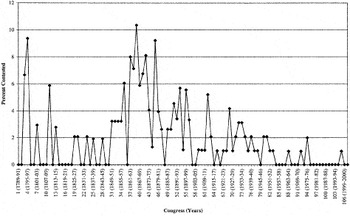
Fig. 2. Percentage of Seats Contested, 1789–2002

Table 1. State Distribution of Contested Election Cases
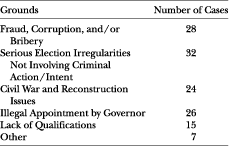
Table 2. Grounds in Contested Election Cases
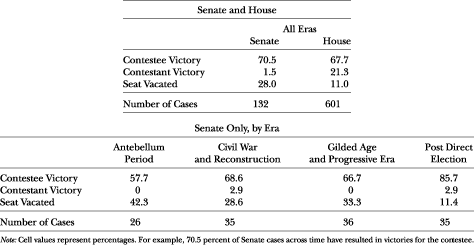
Table 3. Outcomes in Contested Election Cases
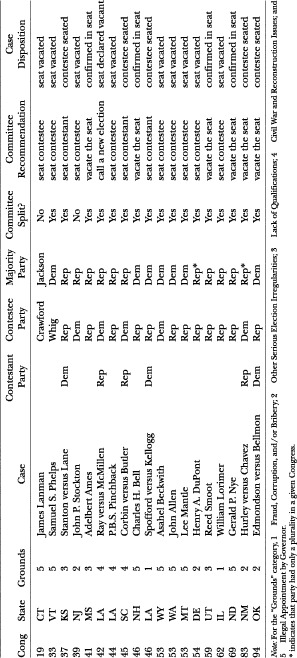
Table 4. Contests Leading to Committee Rolls
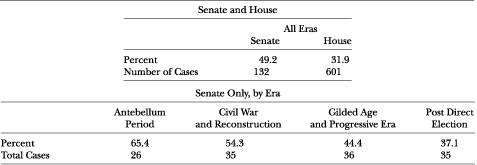
Table 5. Percentage of Election Contests Decided by Roll-Call Vote

Table 6. Percentage of Election Contests Decided by Roll-Call Vote, by Major Category
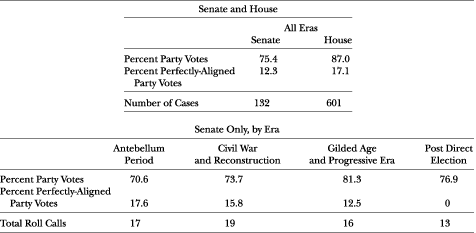
Table 7. Percentage of Election-Contest Roll Calls Classified as “Party Votes”
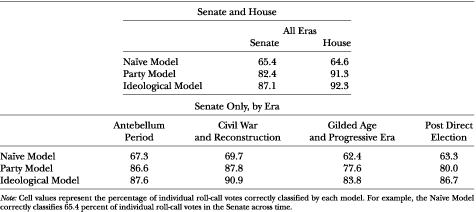
Table 8. Percentage of Individual-Level Roll-Call Votes Correctly Classified
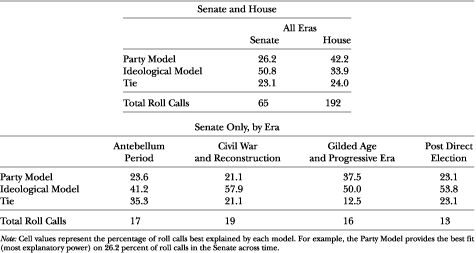
Table 9. Goodness of Fit Comparison between Party and Ideological Models
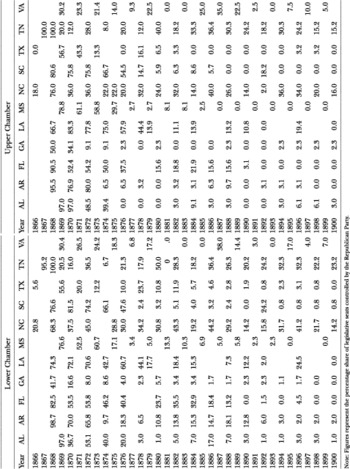
Table 10. Republican Party Seat Share in Southern State Legislatures, 1866–1900
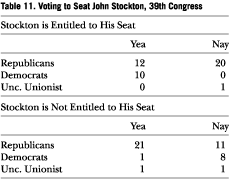
Table 11. Voting to Seat John Stockton, 39th Congress
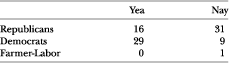
Table 12. Voting to Seat Daniel Steck and Unseat Smith Brookhart, 69th Congress
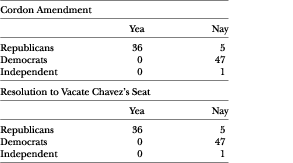
Table 13. Voting on Cordon Amendment and Resolution to Vacate Dennis Chavez's Seat, 83rd Congress
 You have
Access
- 13
- Cited by