Introduction
Every organism requires a certain amount of energy for development and survival. Favourable conditions with adequate food and energy resources combined with an inoffensive environment maximize the survival of organisms. Organisms must respond in an adaptive manner to achieve higher fitness levels in adverse conditions. Adaptation to the surroundings is a natural process that improves survival. Organisms are known to vary their structure, function and behaviour to maximize their fitness (Stearns, Reference Stearns1992). The quality and quantity of diet are the key components that influence life history traits in organisms including insects (Blackenhorn, Reference Blackenhorn2000).
Numerous studies abound on the effect of varying quality (Lawton et al., Reference Lawton, Thompson and Thompson1980; Moczek, Reference Moczek1998; Stamp, Reference Stamp2001) and quantity (Baumgartner et al., Reference Baumgartner, Bieri and Delucchi1987; Hodek and Honek, Reference Hodek and Honek1996) of diet on growth, development and reproduction in insects. Prey scarcity is known to affect fitness of the developing life stages (Agarwala et al., Reference Agarwala, Bardhanroy, Yasuda and Takizawa2001; Stamp, Reference Stamp2001) and the development of ovarioles (Hodek and Honek, Reference Hodek and Honek1996; Evans, Reference Evans2000). There are reports that parental diets affect reproduction and ovipositional pattern of progeny (Boggs and Ross, Reference Boggs and Ross1993; Fox and Dingle, Reference Fox and Dingle1994) and even resorption of eggs (Cope and Fox, Reference Cope and Fox2003; Omkar and Pervez, Reference Omkar and Pervez2003).
The immediate effects of diet on survival and reproduction of adults are well recorded; however, the trans-generational effects need more attention. A few studies in insects, viz. the flour beetle Tribolium destructor Uyttemb (Reynolds, Reference Reynolds1944), gypsy moth Lymantria dispar (L.) (Rossiter, Reference Rossiter1991a) and predatory wasp Polistes fuscatus (Fab.) (Stamp, Reference Stamp2001), indicate that parental diet has a carry-over or trans-generational effect on offspring even when the affecting factors are nullified.
Environmental effects can act directly on the developing organism. They can also come indirectly through parents, influencing the phenotypic development of the offspring, and are referred to as paternal and maternal effects (Mousseau and Fox, Reference Mousseau and Fox1998; Bonduriansky and Head, Reference Bonduriansky and Head2007). These effects influence the quality and quantity of parental investment, which has been an area of interest to evolutionary biologists under varying abiotic and biotic conditions (Gwynne, Reference Gwynne1990; Rossiter, Reference Rossiter1991b; Hunt and Simmons, Reference Hunt and Simmons2000). It has been suggested that this investment may be either from parents that increase the offspring survival or may be genetic, leading to changes in phenotype or genotype of the offspring. Variation in parental investment has many implications in animal mating systems and sexual selection (Thornhill and Alcock, Reference Thornhill and Alcock1983; Anderson, Reference Anderson1994). The development of offspring is influenced both by the nutrient reserve in eggs and by the food provided to them during development (Bertram and Strathmann, Reference Bertram and Strathmann1998).
The ladybird Anegleis cardoni (Weise) is an attractively patterned, medium-sized beetle, which has earlier been reported from patches of aphids, viz. the cotton aphid Aphis gossypii Glover and the groundnut aphid Aphis craccivora Koch (Omkar and Bind, Reference Omkar and Bind1993). Both larvae and adults feed on e.g. A. gossypii on eggplants, Solanum melongena L. (Solanaceae), the cabbage aphid Brevicoryne brassicae L. on Brassica oleracea L. (Brassicaceae), the wheat aphid Macrosiphum miscanthi (Takahashi) on wheat, Triticum aestivum L. (Poaceae) and the pea aphid Macrosiphum pisi Kaltenbach on peas, Pisum sativum L. (Fabaceae) (in Afroze, Reference Afroze2000). It has also been reported to feed on whiteflies (Ramani et al., Reference Ramani, Poorani and Bhumannavar2002) and scale insects (Sundararaj, Reference Sundararaj2008).
A review of available literature revealed earlier studies on this ladybird regarding the effect of prey quality (Afroze, Reference Afroze2000; Omkar et al., Reference Omkar, Kumar and Sahu2009). Since a biocontrol agent has to survive under both prey-scarce and prey-abundant conditions in the field, it is necessary to evaluate immediate and trans-generational effects of prey quantity on parents and their progeny. This study thus examines the effects of parental resource conditions on reproductive traits in a female ladybird beetle, and also looks for interactions between the conditions experienced by the parental generation and those experienced by offspring. It is expected that the results of the study will shed light on the fitness plasticity of A. cardoni under varying prey conditions and thus its efficacy as in aphid biocontrol.
Materials and methods
Laboratory maintenance
To establish stock culture, eggs, larvae, pupae and adults of A. cardoni were collected from Ashoka (Polyalthia longifolia Sonn. (Annonaceae)) trees infested with A. gossypii located within the campus of the Lucknow University (26°50′N, 80°54′E). Mating pairs and different life stages of A. cardoni were placed in separate Petri dishes (9.0 × 2.0 cm) under constant abiotic laboratory conditions (25 ± 2°C; 65 ± 5% relative humidity and 14 h light–10 h dark photoperiod) in an environmental test chamber, and were provided with A. gossypii along with the leaves of the host plant Lagenaria vulgaris Seringe (Cucurbitaceae). The change in the host plant was a result of the short duration of A. gossypii infestations on P. longifolia. The aphid supply was replenished every 24 h. Egg laying and hatching were recorded. The hatched neonates were reared in glass beakers (11.0 × 8.5 cm) provided with A. gossypii on leaves/twigs until adult emergence. To ensure the adaptation of ladybirds on a new host plant, the stock was maintained for four generations prior to experimentation. Wild stock was continuously added to experimental stock to avoid inbreeding.
Experimental set-up
Two sets of experiments were designed to evaluate the immediate and trans-generational effects of prey quantity on parental and progeny generations. In the first experiment, the immediate effect of diet on parental reproductive performance was investigated. In the second experiment, the trans-generational effect of parental diet and immediate effect of larval diet on the progeny developmental attributes were investigated.
Effect of diet on parental reproductive performance
Early instars of A. cardoni, viz. first, second and third instars, consume 6–12 third instars of A. gossypii per day, while fourth instars and adult males and females consume 10–20 aphids per day (Omkar, unpublished data). The treatments of prey-abundant and prey-scarce conditions were established on the basis of these data.
For evaluating the immediate effects of diet, 10-day-old adults were paired in plastic Petri dishes and were allowed to mate. They were kept paired for the entire duration of the experiment so as to provide enough mating opportunities and thus high fecundity and % egg viability. The pairs were provided with either scarce or abundant supply of A. gossypii. In prey-abundant conditions, the pairs were provided with infested leaves bearing 25 third instars of A. gossypii per day, while in the prey-scarce set-up, the pairs were provided with 4–8 third instars of A. gossypii per individual per day. A new supply of aphids was provided every day. The adults were kept on these diets for 40 days to observe oviposition of females. The number of eggs laid was counted once per day at the time of food change. Egg cannibalism was not observed during the experiment. The pre-oviposition period (from mating to first oviposition), daily fecundity and % egg viability were recorded. The above set-up was used in eight replicates (N = 8) for both treatments.
Effect of diet on progeny development
One hundred first instar larvae were randomly selected from both prey-abundant and prey-scarce treatments in experiment I. Half of the selected larvae from each treatment were reared in glass beakers (five larvae per beaker) under prey-scarce (2–4 aphids/larvae/day) and prey-abundant (8–12 aphids/larvae/day) conditions. These amounts were increased when the larvae became fourth instars and adults as in experiment I. The larvae were reared until adult emergence. Larval rearing was done in groups rather than individually to ensure maximum survival (Omkar and Pathak, Reference Omkar and Pathak2009). The experimental design thus resulted in a total of four set-ups, viz. (1) parental abundant, larval abundant conditions, (2) parental abundant, larval scarce conditions, (3) parental scarce, larval abundant conditions and (4) parental scarce, larval scarce conditions.
The duration and survival of different immature stages and partial developmental period (from first instar to adult emergence) were recorded. Immature survival (%) (no. of adults emerged/no. of first instars × 100), growth index (% pupation/mean larval duration), generation survival (no. of females/no. of first instars), sex ratio and mass of emerging adults were recorded.
Data processing
The immediate effect of diet on parental generation (experiment I) was assessed in terms of pre-oviposition period, fecundity and % egg viability using Student's t-test. Correlation analysis was also performed to determine the relationship between fecundity and % egg viability in abundant and scarce diet conditions using the MINITAB 13.1 statistical software.
To study the effect of larval diet on immature development, survival and growth, data from the prey-abundant and prey-scarce conditions within a parental treatment were subjected to Student's t-test. The parameters that showed a statistically significant effect of larval diet under both parental conditions were selected for two-way ANOVA followed by Tukey's post hoc test, with parental and larval diets acting as independent factors and the measures acting as dependent factors. Furthermore, male and female masses were also subjected to two-way ANOVA as they form important determinants of development and growth. Offspring from within a diet regime were considered non-independent.
Results
Effect of diet on parental reproductive performance
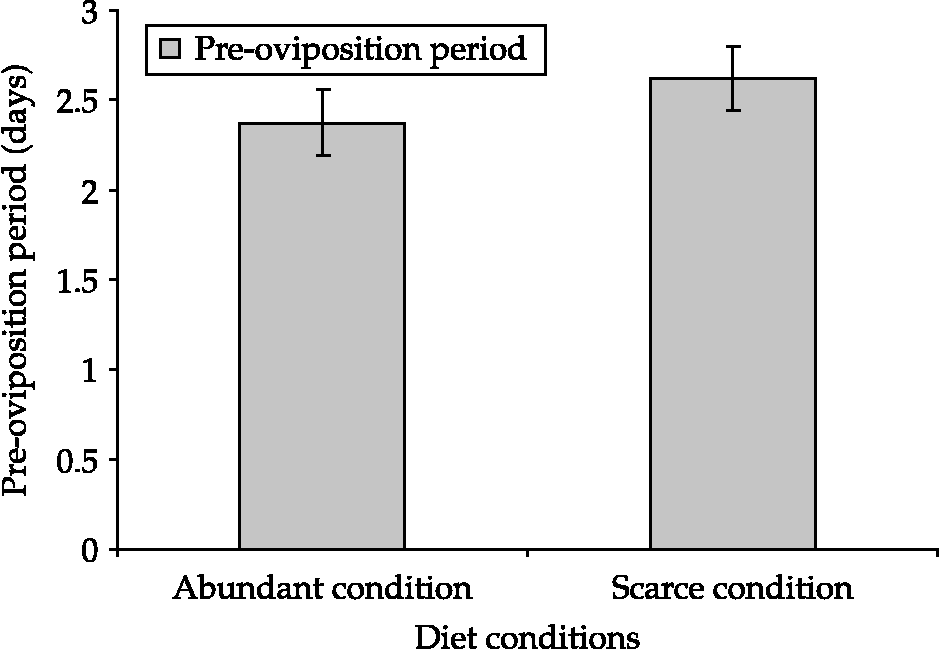
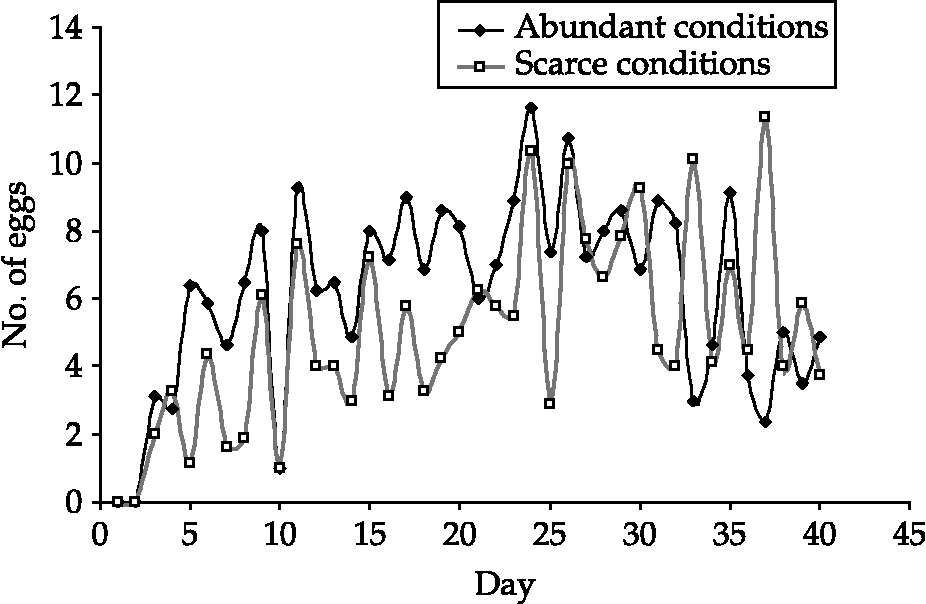
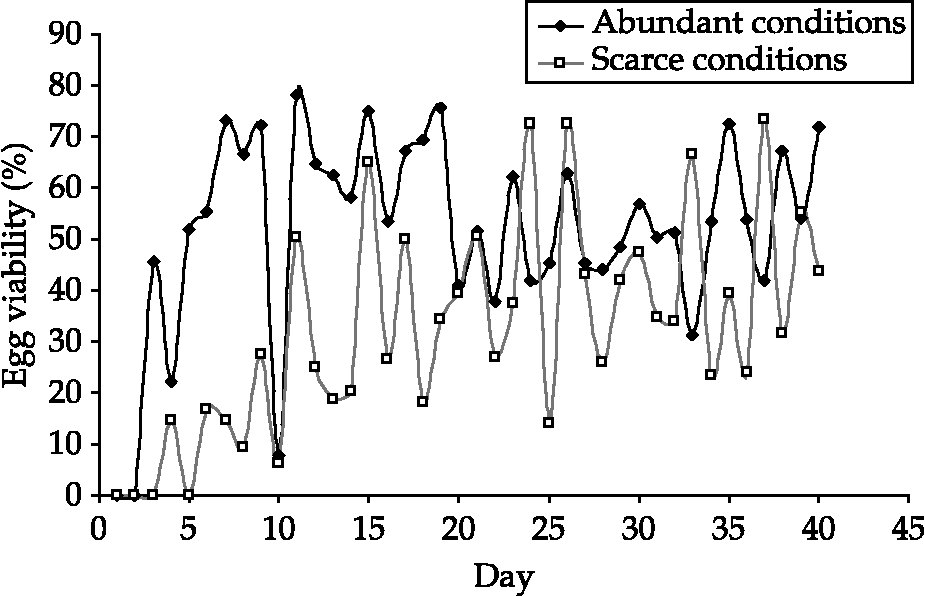
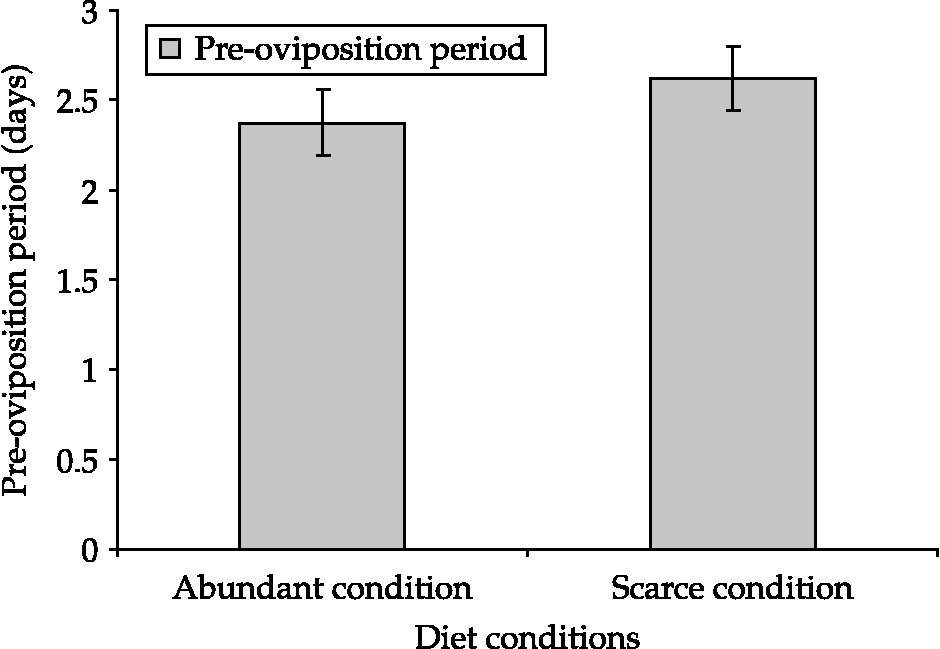
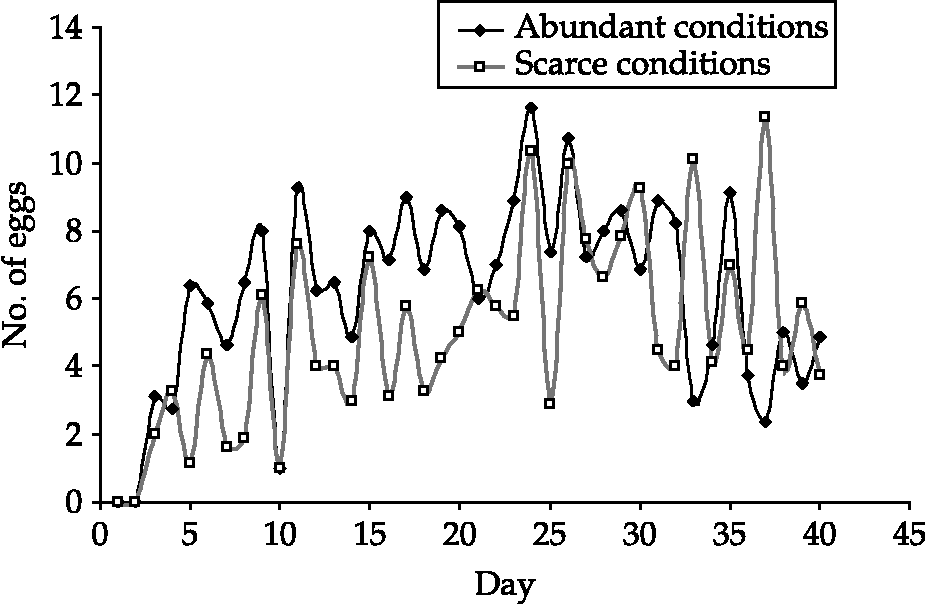
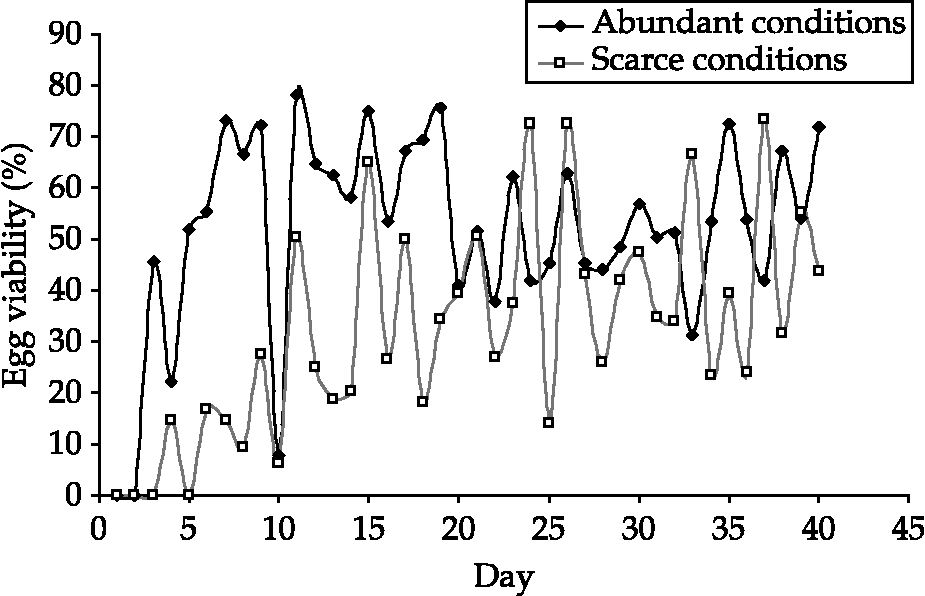
Data revealed that pre-oviposition period (T = − 2.16, P < 0.05, df = 14) was significantly influenced by the diet provided to the adults. It was longer (2.75 ± 0.16 days) in adults fed on scarce amounts of prey (Fig. 1). The difference in fecundity (T = 9.98, P < 0.001, df = 14) and % egg viability (T = 7.76, P < 0.001, df = 14) revealed statistically significant effects of diet, with both being higher in adults reared under prey-abundant conditions. Results showed a significant and positive correlation between fecundity and egg viability in abundant diet conditions (r = 0.928, P < 0.001), but an insignificant positive correlation in scarce diet conditions (r = 0.057, P>0.05). Average age-specific fecundity of A. cardoni when plotted reveals a regular pattern of increased oviposition followed by troughs at almost regular intervals of 2–3 days. This oviposition pattern was found to be persistent under both prey-scarce and prey-abundant conditions. However, difference in the height of peaks and depths of troughs was visually evident under the two prey conditions, especially in early life, with peaks being higher and troughs being shallower under prey-abundant conditions (Fig. 2). Similar results were also found for age-specific egg viability (Fig. 3).
Pre-oviposition period of Anegleis cardoni when fed on abundant and scarce diets
Average age-specific fecundity of Anegleis cardoni when fed on abundant and scarce diets. Dots with thick line for abundant diet conditions and dots with thin line for scarce diet conditions denote the average fecundity of eight adults.
Average age-specific % egg viability of Anegleis cardoni when fed on abundant and scarce diets. Dots with thick line for abundant diet conditions and dots with thin line for scarce diet conditions denote the average % egg viability of eight adults.
An insignificant (F = 0.84, P>0.05, df = 1, 14) effect of diet treatments on % adult survivorship was observed, with it being numerically greater (81.25 ± 13.15%) in the case of prey-scarce conditions compared with the case of abundant diet conditions (62.5 ± 15.66%).
Individual and combined effects of diets on progeny development
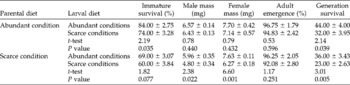
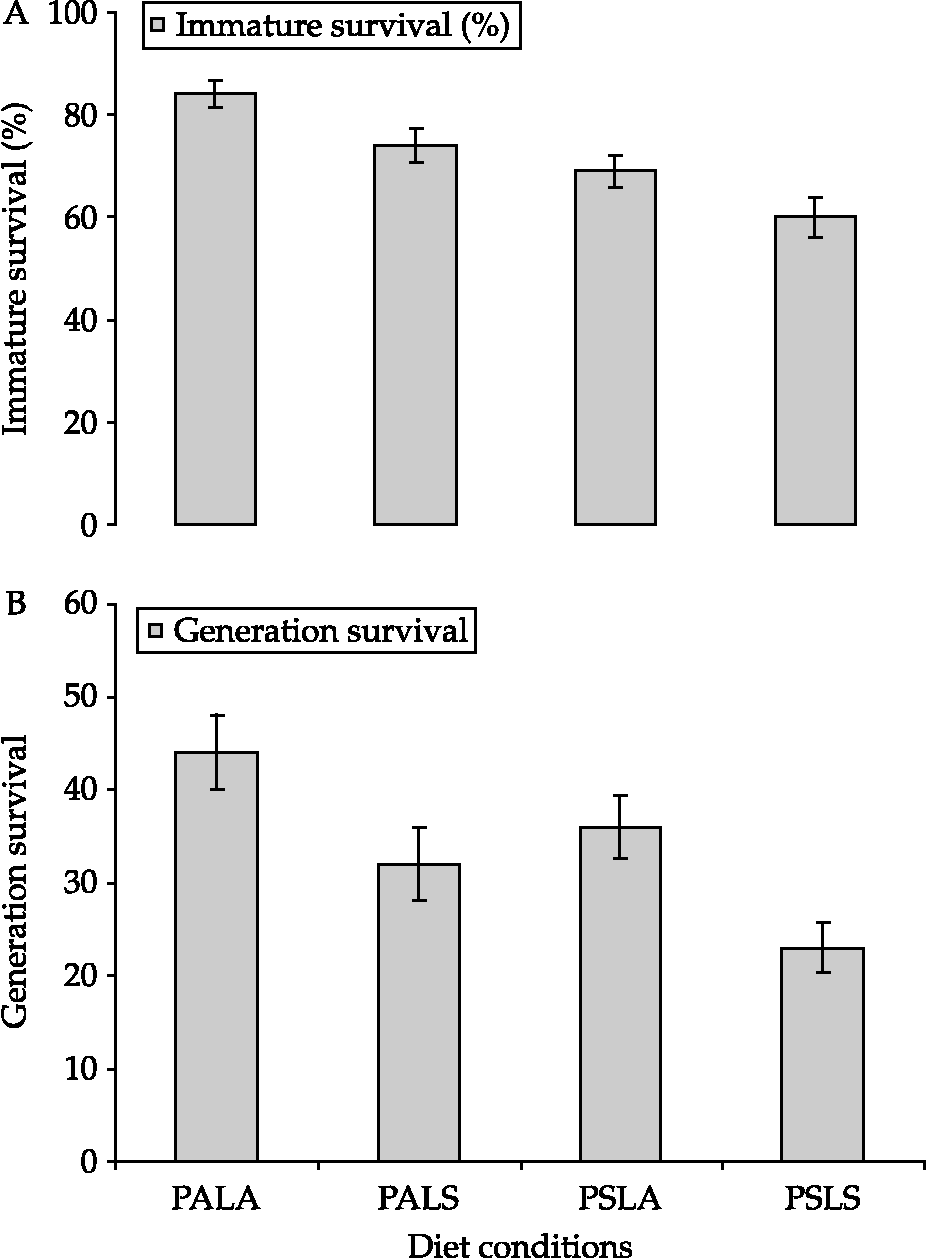
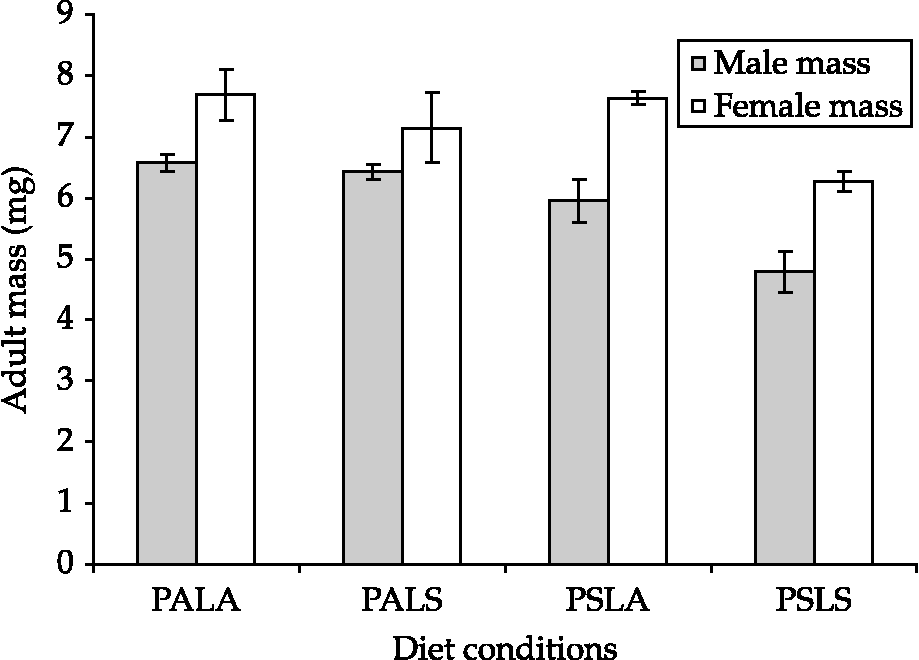
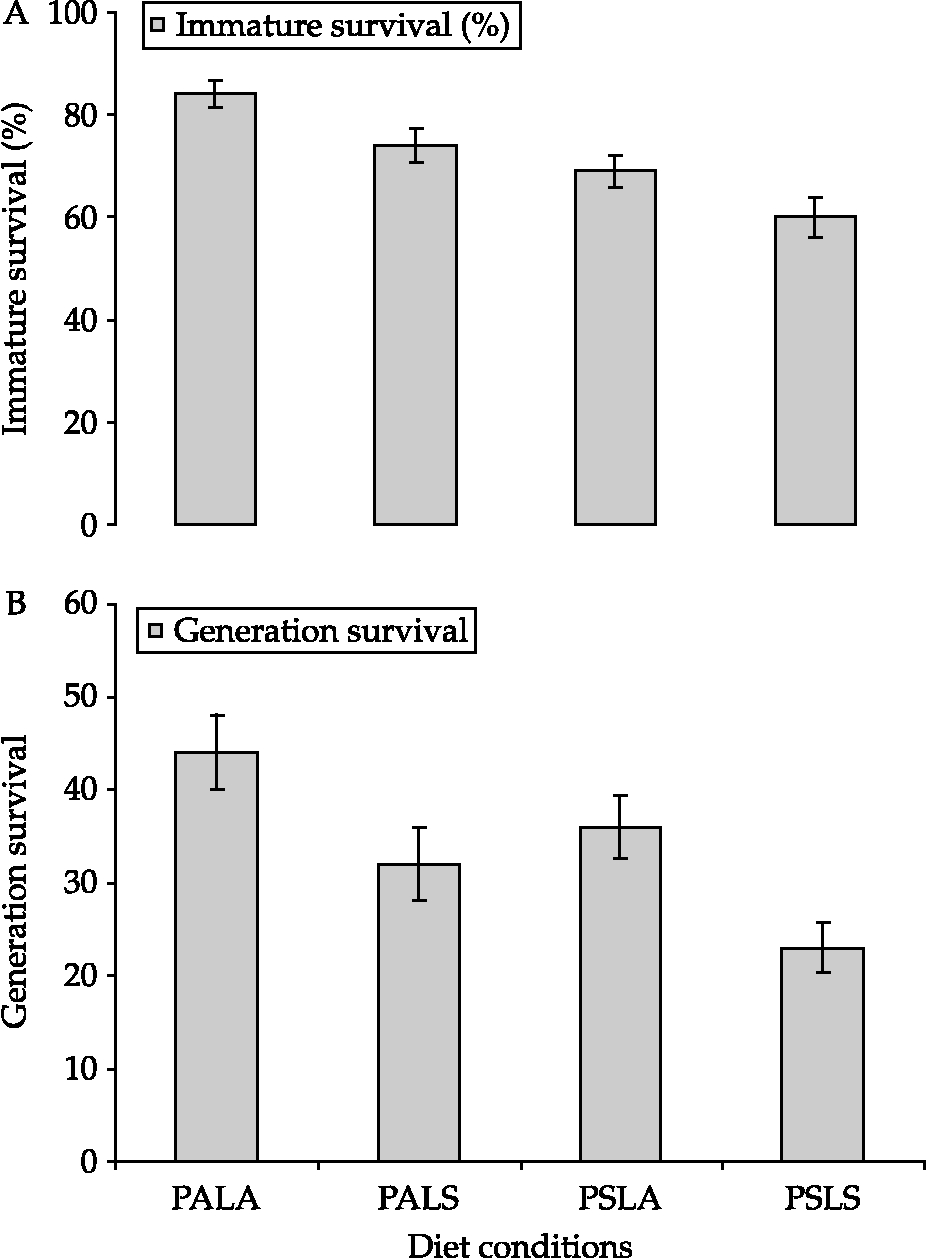
The partial developmental period (Fig. 4) and generation survival (Table 1) were significantly influenced by larval diet under both parental regimes. The partial developmental period (Fig. 4) was lesser and generation survival (Fig. 5) was higher under abundant larval diet conditions. There was no significant effect of larval diet under both parental regimes on sex ratio and growth index. When parents were provided with abundant diet, scarce larval diet was found to significantly reduce the developmental duration of first instars (Fig. 4) and increase % immature survival (Table 1) under abundant larval diet conditions. However, when the parents were reared under prey-scarce conditions, abundant larval diet significantly reduced the duration of second instars and pupa (Fig. 4), and increased the male and female mass (Fig. 6).
Effect of different combinations of parental and larval diets (PALA, parental abundant, larval abundant; PALS, parental abundant, larval scarce; PSLA, parental scarce, larval abundant; and PSLS, parental scarce, larval scarce) on developmental durations of different life stages of Anegleis cardoni (* and ** denote t-values to be significant at P < 0.01 and P < 0.001, respectively).

Results of t-test showing the effects of different parental and larval diet combinations on developmental attributes of Anegleis cardoni

Values given are means ± SE.
Effect of different combinations of parental and larval diets on (A) immature survival (%), and (B) generation survival of Anegleis cardoni (PALA, parental abundant, larval abundant; PALS, parental abundant, larval scarce; PSLA, parental scarce, larval abundant; and PSLS, parental scarce, larval scarce).
Adult mass of Anegleis cardoni when fed on different combinations of parental and larval diets (PALA, parental abundant, larval abundant; PALS, parental abundant, larval scarce; PSLA, parental scarce, larval abundant; and PSLS, parental scarce, larval scarce).
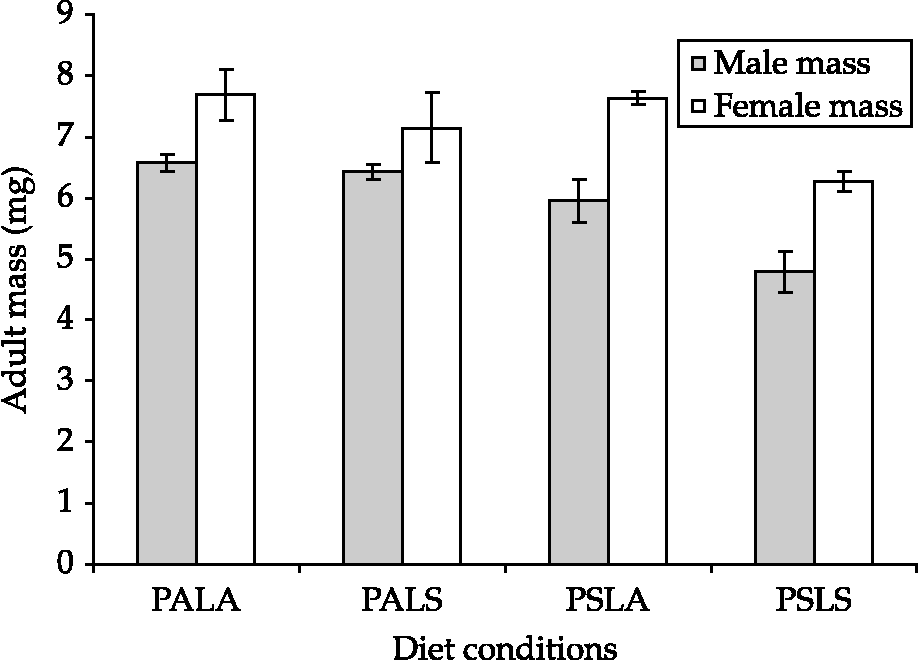
Results of two-way ANOVA revealed that partial developmental period was significantly influenced by parental and larval diets individually; however, their interaction was found to be insignificant. The comparison of individual means also showed a significant effect of both parental and larval diets on the partial developmental period. Both parental and larval diets were found to significantly influence male mass individually as well as via interaction, while no such effect was seen on female mass. The interaction of both diets had no significant effect on generation survival, whereas parental and larval diets significantly influenced it (Table 2).
Results of two-way ANOVA showing the individual as well as the combined effect of parental and larval diets on biological traits of Anegleis cardoni

Values given in columns 2 and 4 are F values; df = 1, 76.
Discussion
In the present investigation, a two-tiered effect of diet was studied. The first tier involved deciphering the effect of diet on parental reproductive output, while the second tier tried to comprehend the immediate effect of larval diet and the trans-generational influence of parental diet on the growth, developmental and survival attributes of the offspring. Through this study, we measured the effect of food restriction on parental and progeny generations.
Parental diet was found to increase both fecundity and % egg viability under prey-abundant conditions and to reduce pre-oviposition periods. Results revealed that the prey quantity is directly proportional to the fecundity and egg viability, i.e. if prey quantity is reduced, then the fecundity and egg viability will also reduce. This negative influence of reduced prey quantity can be attributed to the availability of decreased nutrient resources, which restrict the development and reproduction of the predator (Majerus, Reference Majerus1994; Hodek and Honek, Reference Hodek and Honek1996; Moczek, Reference Moczek1998; O'Brien et al., Reference O'Brien, Boggs and Fogel2005).
Reduced fecundity under decreased food supply may be due to (1) non-availability of critical dietary proteins (or amino acids), which facilitate oogenesis (Fox et al., Reference Fox, Martin, Thakar and Mousseau1996; Cope and Fox, Reference Cope and Fox2003) and development of chorion (Lemos et al., Reference Lemos, Medeiros, Ramalho and Zanuncio2001), (2) reduction in sperm or ancillary fluid production, which in turn might limit female reproductive output (Droney, Reference Droney1996) and (3) resorption of eggs or holding back of oviposition under prey-scarce conditions in anticipation of prey-abundant conditions (Boggs and Ross, Reference Boggs and Ross1993). These reasons individually or collectively might be responsible for the lower fecundity of females fed on prey-scarce diet than those fed on prey-abundant diet, with (1) and (3) being more likely to explain the phenomenon.
The age-specific fecundity (Fig. 2) as well as egg viability (Fig. 3) graphs under both prey-scarce and prey-abundant conditions revealed a peculiar pattern of peaks and troughs, with repeats every 2–3 days. Previous studies have mentioned triangular fecundity graphs with consistent increase in oviposition till the peak, followed by a decrease (Dixon and Agarwala, Reference Dixon and Agarwala2002). However, such an undulating increase has not been reported previously in any ladybird. Despite the changes in the pattern of age-specific fecundity, it was observed that parents that were reared under prey-abundant conditions reproduced more actively in the earlier phase of life, as has been reported previously (Kindlmann et al., Reference Kindlmann, Dixon and Dostalkova2001; Dixon and Agarwala, Reference Dixon and Agarwala2002).
The reduced egg viability under prey-scarce conditions as recorded in the present investigation may be attributed to (1) decreased yolk quality and quantity due to a low level of nutrients, which may not support development (Omkar and James, Reference Omkar and James2004; Boggs and Freeman, Reference Boggs and Freeman2005; Geister et al., Reference Geister, Lorenz, Hoffman and Fisher2008), and (2) reduced sperm production due to slow spermatogenesis and lower rate of sperm survival in the males (Ponsonby and Copland, Reference Ponsonby and Copland1998).
A strong positive correlation between fecundity and egg viability in both abundant and scarce diet conditions was recorded in this study. Results revealed that abundant diet promotes increased fecundity and egg viability, which may partly be attributed to acceleration in spermatogenesis and increased sperm survival (Ponsonby and Copland, Reference Ponsonby and Copland1998). Dixon and Guo (Reference Dixon and Guo1993) also proposed that although fecundity was associated with the size of the female, availability of food might have a greater impact.
An interesting result is the decreased survival or decreased longevity of adults reared under prey-abundant conditions. This may be a result of the increased expenditure on reproduction under prey-abundant conditions, as it is well known that increased reproduction reduces adult longevity (Tatar et al., Reference Tatar, Carey and Vaupel1993; Mishra and Omkar, Reference Mishra and Omkar2006). However, those reared under prey-scarce conditions are likely to spend more energy for maintenance instead of for reproduction, thus increasing survival. This has also been reported in the ladybeetle Harmonia axyridis (Pallas) (Agarwala et al., Reference Agarwala, Yasuda and Sato2008) and in a water strider Gerris buenoi Kirkaldy (Rowe and Schudder, Reference Rowe and Schudder1990).
Immediate effects of larval diet were observed on partial developmental period and generation survival in both parental diet conditions. Slower overall development of immature stages and reduced survival were observed under the prey-scarce larval diet. Such a slowing down of development under prey-scarce conditions has also been reported previously (Bertram and Strathmann, Reference Bertram and Strathmann1998; Agarwala et al., Reference Agarwala, Bardhanroy, Yasuda and Takizawa2001; Boggs and Freeman, Reference Boggs and Freeman2005; Agarwala et al., Reference Agarwala, Yasuda and Sato2008), and may be ascribed to the decreased availability of nutrition. It is well known that the minimum amount of energy required by each larval stage to develop into the next stage is regulated by diet quantity (West and Costlow, Reference West and Costlow1987). However, the interesting point is that variation in larval diet was found to significantly influence the development of first instars when parents had been reared on abundant diet, while in the other case of prey-scarce parental diet, the differences were observed at the second instar and pupal stage levels. This needs to be checked for repeatability, and if found to be persistent, it would form an interesting point of research.
Two-way ANOVA also revealed a trans-generational effect of parental diet. Partial developmental period, male mass and generation survival were found to be influenced by not only larval diet but also parental diet. This indicates a probable paternal investment in the development and survival of progeny. Such an effect of parental diet on the development of immature stages has been reported in the flour beetle T. destructor (Reynolds, Reference Reynolds1944), the gypsy moth L. dispar (Rossiter, Reference Rossiter1991a) and the predatory wasp P. fuscatus (Stamp, Reference Stamp2001). These effects are suggested to be transmitted to developing offspring in various ways and stages. They can simply constrain development. For example, parental diet-scarce conditions give rise to poorly provisioned, low-quality offspring. However, it is also possible that environmental conditions during the development shape the offspring phenotype in such a way as to better prepare it for adverse environments (Fox et al., Reference Fox, Czesak and Savalli1999; Fox and Czesak, Reference Fox and Czesak2000; Monaghan, Reference Monaghan2008).
The faster development of offspring under parental abundant, larval scarce conditions than those under parental scarce, larval abundant conditions signifies that retardation of offspring development due to nutrient deficiencies in parental diet was not completely compensated by sufficient diet provided to the offspring. This has also been reported in T. destructor (Reynolds, Reference Reynolds1944), the sooty copper Lycaena tityrus Poda (Fisher and Fiedler, Reference Fisher and Fiedler2001) and Telostylinus angusticollis (Enderlein) (Diptera: Neriidae) (Bonduriansky and Head, Reference Bonduriansky and Head2007).
Campbell (Reference Campbell1962) hypothesized that the developmental capabilities of an individual were fixed during embryogenesis by offspring genotype and maternal egg provisions (maintained by quantity and quality of diet), which together set the rates of cell division and cell expansion for biological attributes (i.e. developmental rate, body size and reproductive capacity). An explanation for the observed effects of parental diet on offspring is an elevation of the germline maturation rate in stressful (scarce diet) environments (Agarwal, Reference Agarwal2002), probably accounting for reduced quality of offspring from parents reared under scarce diet conditions, as seen in the present study.
The parental investment is usually controlled by the nutrient supply. Parental nutrition had significant and detectable effects on offspring growth, but the effects on growth were small compared with the effects of offspring nutrition (Bertram and Strathmann, Reference Bertram and Strathmann1998). Alteration in the patterns of allocation based on qualitative and quantitative diet variations and the switching on of genetic mechanisms in offspring of underfed parents probably causes them to develop more slowly. This may cause them to gain enough food resources slowly and steadily to facilitate moulting to the next stage (Boggs and Ross, Reference Boggs and Ross1993), which may be a mechanism to explain the present results. Earlier genetic studies in insects have revealed the expression of a particular subset of genes in order to survive environmental stress, such as low food quality or quantity, which induces a number of physiological and behavioural alterations in insects (Slansky and Scriber, Reference Slansky, Scriber, Kerkut and Gilbert1985). Feeding on a suboptimal diet is also suspected to lead to alteration of gene expression over generations (Yocum and Evenson, Reference Yocum and Evenson2002), whereas increased food availability is likely to enhance the response of a predator by a direct and rapid improvement in fitness and enhancement of its progeny.
Such probable paternal and maternal provisioning influenced the body size and survival of offspring produced in our study. Similar findings were recorded earlier (Schmid-Hempel and Schmid-Hempel, Reference Schmid-Hempel and Schmid-Hempel1998; Hunt and Simmons, Reference Hunt and Simmons2000). In the present study, parental diet influenced the survival and mass of males, but not of females. The reason for the lack of effect in female mass may be that males are better competitors than females. However, offspring diet is known to affect the adult mass (Boggs and Freeman, Reference Boggs and Freeman2005; Agarwala et al., Reference Agarwala, Yasuda and Sato2008) and subsequent reproductive success (Spence et al., Reference Spence, Zimmermann and Wojeicki1996).
Thus it may be inferred that the life history traits change in response to nutrient stress. The diet not only has effects directly at the parental level but also has a trans-generational effect. The successful development of both larvae and adults under food-stressed conditions indicates the ability of ladybird beetles to survive and reproduce even under adverse conditions. The probable existence of a trans-generational effect in A. cardoni needs to be further worked upon through rigorous experimentation.
Acknowledgements
The authors are thankful to Dr Robert L. Koch, Research Scientist, Minnesota Department of Agriculture, Minnesota, USA, for reading the manuscript and providing some valuable suggestions.