The National Institute of Mental Health's Research Domain Criteria (RDoC) approach concerns itself with identifying psychological dysfunction across multiple domains (e.g., valence, cognitive, social processes, arousal/regulatory, sensorimotor) and levels of analysis (e.g., molecules, cells, circuits, physiology, behavior, self-report, paradigms) (Cuthbert & Insel, Reference Cuthbert and Insel2013). Fully adapting an RDoC perspective is essential for modeling complexity in developmental models of psychopathology (Franklin, Jamieson, Glenn, & Nock, Reference Franklin, Jamieson, Glenn and Nock2015). Biosocial developmental models conceptualize psychological and biological vulnerabilities as leading to a host of behavioral outcomes, depending on the transactional nature of the environment during the course of childhood and adolescence (Beauchaine, Gatzke-Kopp, & Mead, Reference Beauchaine, Gatzke-Kopp and Mead2007). As such, measuring environmental influences, as well as taking into context sensitive developmental periods, are equally critical in interpreting relations to psychopathology. Conceptualizing these relations with regards to transdiagnostic domains, measured using multiple levels of analysis, is essential to furthering etiological and mechanistic understandings. Integrating these RDoC perspectives into developmentally focused research is key to unpacking the dynamic interplay of different units of analyses within specific developmental periods, ultimately providing insight into environmental contributions to developmental heterogeneity (Cicchetti & Blender, Reference Cicchetti and Blender2004; Cicchetti, Beauchaine, & Hinshaw, Reference Cicchetti, Beauchaine and Hinshaw2008; Cuthbert & Insel, Reference Cuthbert and Insel2013).
RDoC Conceptualizations of Discrimination, Implicit Emotion Regulation, and Mental Health During Key Developmental Periods
With regards to environmental influences and relations to risk for psychopathology, experiences of discrimination (e.g., feeling discriminated against due to factors such as one's race, ethnicity, immigration status, weight, sexuality) have been associated with a host of adverse physical and mental health outcomes (Bazargan & Galvan, Reference Bazargan and Galvan2012; Belle & Doucet, Reference Belle and Doucet2003; Ellis, MacDonald, Lincoln, & Cabral, Reference Ellis, MacDonald, Lincoln and Cabral2008; Kessler, Mickelson, & Williams, Reference Kessler, Mickelson and Williams1999; Kim, Jung, Cho, Park, & Kim, Reference Kim, Jung, Cho, Park and Kim2019; Noh & Kaspar, Reference Noh and Kaspar2003; Pearce, Rafiq, Simpson, & Varese, Reference Pearce, Rafiq, Simpson and Varese2019; Phinney, Madden, & Santos, Reference Phinney, Madden and Santos1998; Shaikh et al., Reference Shaikh, Ellett, Dutt, Day, Laing, Kroll and Valmaggia2016; Williams, Yu, Jackson, & Anderson, Reference Williams, Yu, Jackson and Anderson1997). Theorized transdiagnostic mechanisms for this environmental domain include chronic stress, feelings of social exclusion, and lack of belonging (Butler & Muir, Reference Butler and Muir2017; Finney & Jivraj, Reference Finney and Jivraj2013; Oliver & Cheff, Reference Oliver and Cheff2014; Pan & Carpiano, Reference Pan and Carpiano2013). These experiences are liable to be particularly impactful during key developmental periods, including late childhood (ages 9–12 years) (Johnson, Whisman, Corley, Hewitt, & Rhee, Reference Johnson, Whisman, Corley, Hewitt and Rhee2012). Late childhood marks a plastic period of widespread neurocognitive development, during which environmental factors could be particularly influential in conferring risk for mental illness (Drzewiecki & Juraska, Reference Drzewiecki and Juraska2020; Spear, Reference Spear2013). A clearer understanding of neurocognitive functions that could be affected by discrimination (at the behavior level of analysis) during this developmental period would be informative for prevention and intervention approaches for individuals at risk for developing mental illness, as well as lead to a more thorough understanding of environmental influences across multiple levels of analysis.
Implicit (automatic) emotion regulation is a promising transdiagnostic domain of interest, recruiting neurocognitive processes including cognitive control, information storing, manipulation, and updating (Koole & Rothermund, Reference Koole and Rothermund2011). Neurocognitive functions facilitating emotion regulation are in ascendance in late childhood, a time where vulnerability to depressive and psychotic disorders can also begin to appear (Dekker et al., Reference Dekker, Ferdinand, Van Lang, Bongers, Van Der Ende and Verhulst2007; Gartstein & Bateman, Reference Gartstein and Bateman2008; Johnson et al., Reference Johnson, Whisman, Corley, Hewitt and Rhee2012; Kelleher et al., Reference Kelleher, Connor, Clarke, Devlin, Harley and Cannon2012; Keyes, Gary, O'Malley, Hamilton, & Schulenberg, Reference Keyes, Gary, O'Malley, Hamilton and Schulenberg2019; Reinke, Eddy, Dishion, & Reid, Reference Reinke, Eddy, Dishion and Reid2012). Further parsing our understanding of how environmental factors such as discrimination relate to neurocognitive functions undergoing normative developmental maturation during childhood has strong potential to aid conceptualizations of markers, mechanisms, and processes conferring risk for mental illness. Incorporating transdiagnostic phenotypes and multiple units of analysis (self-report/symptoms, behaviors/discrimination and affective states, and paradigms/neurocognitive tasks), consistent with the RDoC approach, is liable to be valuable for parsing out complex patterns underlying emerging psychopathology.
Discrimination and Mental Health Outcomes
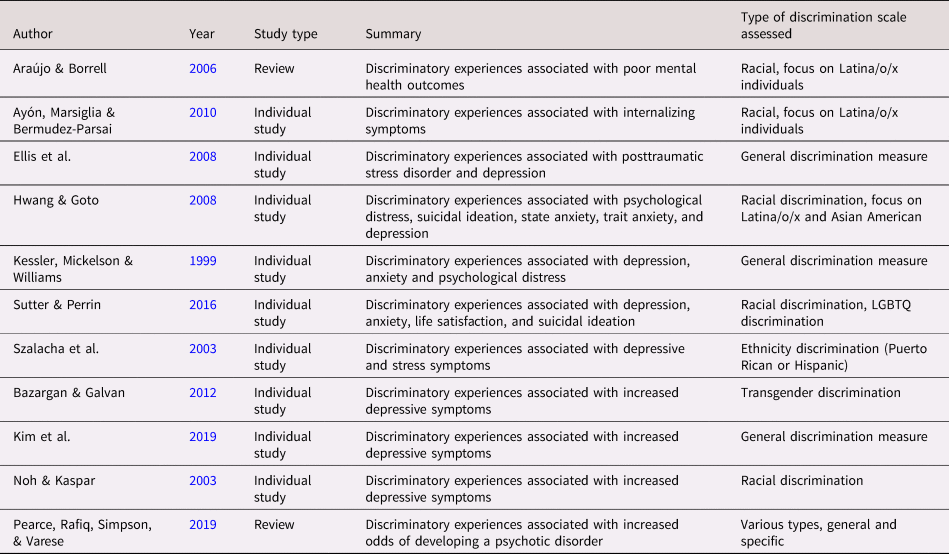
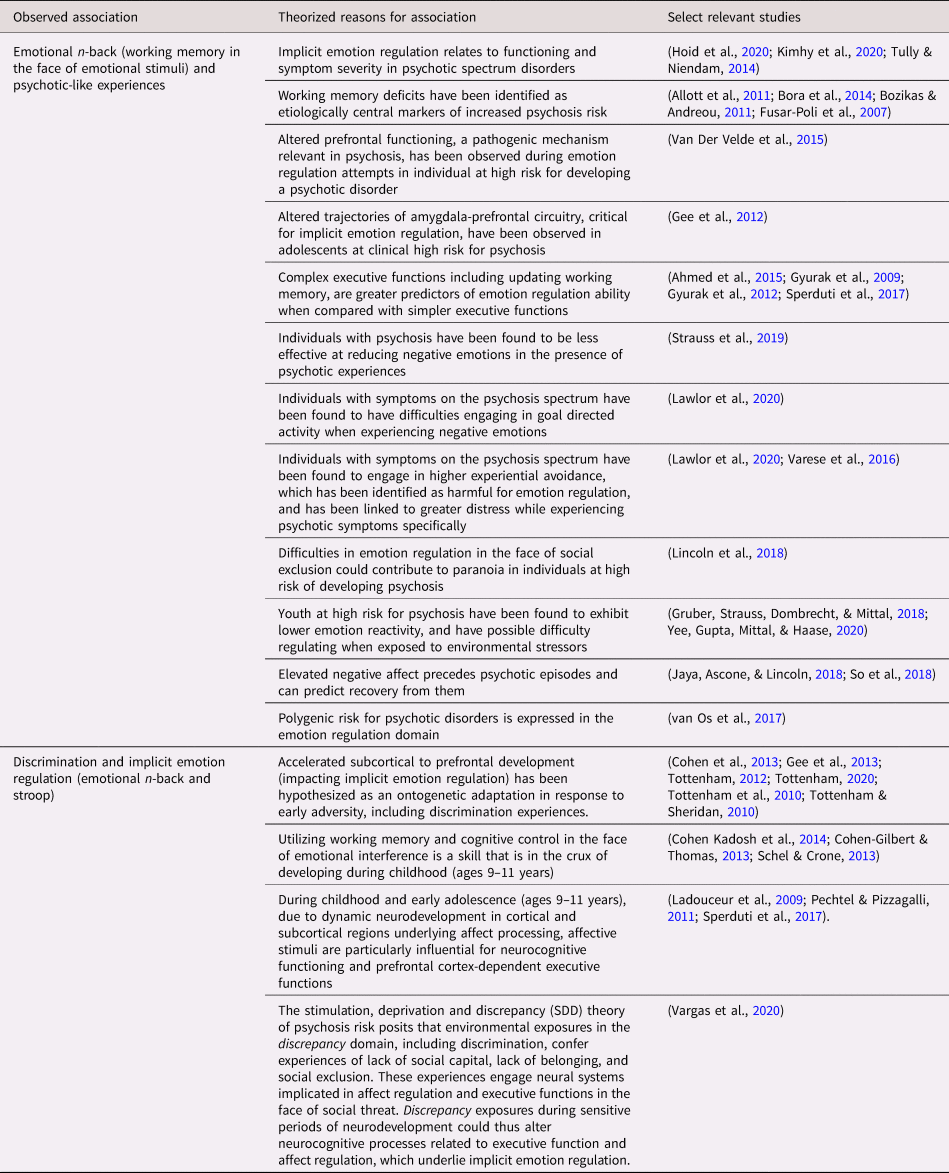
Discriminatory experiences due to a mix of general and specific factors including race, ethnicity, lesbian, gay, bisexual and transgender status, immigration status, and weight (see Table 1) are robustly associated with poor mental health outcomes (Araújo & Borrell, Reference Araújo and Borrell2006; Ayón, Marsiglia, & Bermudez-Parsai, Reference Ayón, Marsiglia and Bermudez-Parsai2010; Ellis et al., Reference Ellis, MacDonald, Lincoln and Cabral2008; Hwang & Goto, Reference Hwang and Goto2008; Kessler et al., Reference Kessler, Mickelson and Williams1999; Sutter & Perrin, Reference Sutter and Perrin2016; Szalacha et al., Reference Szalacha, Erkut, Coll, Alarcon, Fields and Ceder2003). Experiences of discrimination are associated with, for example, increased endorsement of depressive symptoms (Bazargan & Galvan, Reference Bazargan and Galvan2012; Kim et al., Reference Kim, Jung, Cho, Park and Kim2019; Noh & Kaspar, Reference Noh and Kaspar2003). Likewise, discrimination has been found to increase odds of developing a psychotic disorder (Pearce et al., Reference Pearce, Rafiq, Simpson and Varese2019). Of note, there is evidence that suggests vulnerability for developing depressive and psychotic disorders can emerge during childhood (Dekker et al., Reference Dekker, Ferdinand, Van Lang, Bongers, Van Der Ende and Verhulst2007; Gartstein & Bateman, Reference Gartstein and Bateman2008; Johnson et al., Reference Johnson, Whisman, Corley, Hewitt and Rhee2012; Kelleher et al., Reference Kelleher, Connor, Clarke, Devlin, Harley and Cannon2012; Keyes et al., Reference Keyes, Gary, O'Malley, Hamilton and Schulenberg2019; Reinke et al., Reference Reinke, Eddy, Dishion and Reid2012). Depressive symptoms and psychotic-like experiences (PLEs) span components from both the negative and positive valence RDoC domains, consistent with a developmentally informed RDoC framework (Barch, Pagliaccio, & Luking, Reference Barch, Pagliaccio and Luking2019; Paulus et al., Reference Paulus, Stein, Craske, Bookheimer, Taylor, Simmons and Fan2017). Further understanding factors that could increase vulnerability early in life for depression and psychosis bears critical potential for prevention, intervention, and treatment, given the significant public health toll of these disorders.
Summary of types of discrimination covered in studies on discrimination and mental health outcomes

Discrimination Across Development
While the relation between discrimination, depressive and psychosis symptoms is well documented, it is less clear at which stage of development this association becomes apparent. Late childhood is marked by significant neural maturation and restructuring of inhibitory control systems, executive functions, and affect regulation (Spear, Reference Spear2013). The neural plasticity, ongoing brain transformation and developmental processes in this age period can also result in increased sensitivity to environmental stressors such as discrimination. Environmental stressors like discrimination which have been linked to affective dysfunction could thus impact affect regulation and neurocognitive function during sensitive periods for neurocognitive development of these functions. Environmental factors at play throughout this sensitive period could lend themselves to lasting influence on neurocognitive systems throughout the life span (Drzewiecki & Juraska, Reference Drzewiecki and Juraska2020). As such, this age period constitutes a valuable target for understanding how neurodevelopmentally sensitive periods and environmental factors combined influence early vulnerability for developing psychopathology. Moreover, it provides an opportunity to enrich conceptualizations of candidate mechanisms that could contribute to the association. Discrimination could act as a direct influence on affect regulatory and cognitive processes, with affect regulatory and cognitive processes in turn also conferring increased vulnerability for mental illness outcomes downstream.
Emotion Regulation
Emotion regulation abilities (which help with monitoring, modifying, or evaluating emotional responses to accomplish goals) have been proposed as mechanisms underlying part of the relation between discrimination and adverse health and functional outcomes (Gill & Matheson, Reference Gill and Matheson2006; Hatzenbuehler, Nolen-Hoeksema, & Dovidio, Reference Hatzenbuehler, Nolen-Hoeksema and Dovidio2009; Riley et al., Reference Riley, DeLaney, Brown, Lozada, Williams, Dick and Group2020). Emotion regulation contains explicit (effortful) as well as implicit (automatic) components (Gyurak, Gross, & Etkin, Reference Gyurak, Gross and Etkin2011). Implicit emotion regulation refers to processes aimed at modifying the quality, intensity, or duration of an emotional response which take place without conscious supervision or explicit intentions to regulate (Koole & Rothermund, Reference Koole and Rothermund2011). Though implicit emotion regulation is likely to be essential to everyday life, along with being a contributor to explicit emotion regulation, the literature has yet to explore whether implicit emotion regulation relates to discrimination during childhood.
The literature suggests that implicit emotion regulation could be closer to indexing automatic handling of daily life demands on the organism (Colich et al., Reference Colich, Williams, Ho, King, Humphreys, Price and Gotlib2017; Koole & Rothermund, Reference Koole and Rothermund2011; Zhang et al., Reference Zhang, Ding, Chen, Wei, Zhao, Zhang and Li2016). Further, implicit emotion regulation is theorized as a precursor to explicit emotion regulation, thus exerting a pervasive influence on the emotion regulatory system through multiple pathways (Sperduti et al., Reference Sperduti, Makowski, Arcangeli, Wantzen, Zalla, Lemaire and Piolino2017). Implicit emotion regulation could index differing neurocognitive systems depending on the needs of the situation at hand. For example, one situation might call for inhibition of maladaptive responses, thus largely recruiting inhibitory control capacities. Another situation may require constant analysis and uninterrupted processing of the surrounding environment in the face of difficult emotions, thus recruiting information storing, manipulation, and updating capacities for implicit emotion regulation. As such, exploring these distinct neurocognitive components offers an opportunity for a fine-grained understanding of processes of influence. Teasing out differing neurocognitive components underlying implicit emotion regulation could be highly informative to hypotheses for mechanisms through which discrimination could drive increased risk for depressive and psychotic symptoms. Despite this fact, studies teasing out differing neurocognitive components underlying implicit emotion regulation with regards to associations with discrimination are lacking.
Broadly, implicit emotion regulation measures span RDoC domains including the arousal/regulatory and cognitive systems. The arousal/regulatory systems pertain to sensitivity of an organism to external and internal stimuli, which functionally facilitates engagement with the environment in a context specific manner. The emotional stimuli incorporated within cognitive tasks indexing implicit emotion regulation, such as the emotional n-back (O'Brien, Barch, Kandala, & Karcher, Reference O'Brien, Barch, Kandala and Karcher2020) and stroop (Buhle, Wager, & Smith, Reference Buhle, Wager, Smith, Hassin, Ochsner and Trope2010; Williams, Mathews, & MacLeod, Reference Williams, Mathews and MacLeod1996) tasks, stimulate an arousal state in which implicit emotion regulatory abilities can be observed (Dillon, Ritchey, Johnson, & LaBar, Reference Dillon, Ritchey, Johnson and LaBar2007; Droit-Volet & Berthon, Reference Droit-Volet and Berthon2017; Sperduti et al., Reference Sperduti, Makowski, Arcangeli, Wantzen, Zalla, Lemaire and Piolino2017; Thompson, Reference Thompson2011; Zhang & Zhou, Reference Zhang and Zhou2014). Conversely, the cognitive tasks themselves dissociate components of the RDoC cognitive system domains. The emotional stroop task, for example, is consistent with the cognitive control RDoC construct, while the emotional n-back most relates to the working memory construct. While the emotional stroop task was most congruent with the inhibition subconstruct within the cognitive control domain, the emotional n-back is most consistent with active maintenance and flexible updating subconstructs.
Emotion Regulation Across Development
Similarly, a growing body of evidence suggests that emotion regulatory abilities are compromised in depressive (Bocharov, Knyazev, & Savostyanov, Reference Bocharov, Knyazev and Savostyanov2017; Hopp, Troy, & Mauss, Reference Hopp, Troy and Mauss2011; Powers, Etkin, Gyurak, Bradley, & Jovanovic, Reference Powers, Etkin, Gyurak, Bradley and Jovanovic2015; Zhang et al., Reference Zhang, Ding, Chen, Wei, Zhao, Zhang and Li2016) and psychotic disorders (Chapman et al., Reference Chapman, Visser, Mittal, Gibb, Coles and Strauss2020; Lincoln, Hartmann, Köther, & Moritz, Reference Lincoln, Hartmann, Köther and Moritz2015; Lincoln, Sundag, Schlier, & Karow, Reference Lincoln, Sundag, Schlier and Karow2018). Further, neurocognitive functions which can be exerted outside conscious awareness, supporting implicit emotion regulation (including cognitive control and working memory) show evidence of impairment in individuals with depressive (Dotson et al., Reference Dotson, McClintock, Verhaeghen, Kim, Draheim, Syzmkowicz and De Wit2020; Koster, Hoorelbeke, Onraedt, Owens, & Derakshan, Reference Koster, Hoorelbeke, Onraedt, Owens and Derakshan2017; Quinn, Harris, Felmingham, Boyce, & Kemp, Reference Quinn, Harris, Felmingham, Boyce and Kemp2012; Rock, Roiser, Riedel, & Blackwell, Reference Rock, Roiser, Riedel and Blackwell2014) and psychotic disorders (Allott, Liu, Proffitt, & Killackey, Reference Allott, Liu, Proffitt and Killackey2011; Bozikas & Andreou, Reference Bozikas and Andreou2011; de Gracia Dominguez, Viechtbauer, Simons, van Os, & Krabbendam, Reference de Gracia Dominguez, Viechtbauer, Simons, van Os and Krabbendam2009; Schmidt et al., Reference Schmidt, Cappucciati, Radua, Rutigliano, Rocchetti, Dell'Osso and Valmaggia2017). A bulk of the literature has concerned adult or adolescent samples. It is unclear at which developmental stage the associations become apparent with regards to implicit emotion regulation. Increasing our understanding of how factors supporting implicit emotion regulation relate to exposure to discrimination could enrich our understanding of mechanisms through which discrimination could impact depressive and psychotic-like symptoms.
Broadly, ability to withstand interference by emotional stimuli increases with age, and late childhood marks a period of relative sensitivity to emotional and aversive stimuli (Jones, Schlund, Kerestes, & Ladouceur, Reference Jones, Schlund, Kerestes and Ladouceur2020; Mincic, Reference Mincic2010; Spear, Reference Spear2013; Tottenham, Hare, & Casey, Reference Tottenham, Hare and Casey2011). There is ample evidence that suggests implicit emotion regulation is supported by neurocognitive functions that are undergoing dynamic developmental processes during late childhood going into early adolescence (Ahmed, Bittencourt-Hewitt, & Sebastian, Reference Ahmed, Bittencourt-Hewitt and Sebastian2015; Spear, Reference Spear2013). Processes underlying implicit emotion regulation are likely to both overlap and contain distinct components, and include inhibitory control, emotional conflict adaptation (Colich et al., Reference Colich, Williams, Ho, King, Humphreys, Price and Gotlib2017; Gyurak et al., Reference Gyurak, Gross and Etkin2011; Sperduti et al., Reference Sperduti, Makowski, Arcangeli, Wantzen, Zalla, Lemaire and Piolino2017), and executive functions such as information storing, manipulation and updating (Gyurak et al., Reference Gyurak, Gross and Etkin2011; Sperduti et al., Reference Sperduti, Makowski, Arcangeli, Wantzen, Zalla, Lemaire and Piolino2017). Research has shown younger adolescents’ performance in inhibitory control is more impaired compared to older adolescents when faced with emotional stimuli (Cohen Kadosh, Heathcote, & Lau, Reference Cohen Kadosh, Heathcote and Lau2014; Cohen-Gilbert & Thomas, Reference Cohen-Gilbert and Thomas2013; Schel & Crone, Reference Schel and Crone2013). Similarly, studies have shown that information storing, manipulation and updating performance is negatively impacted in younger adolescents when faced with emotional stimuli (Ladouceur et al., Reference Ladouceur, Silk, Dahl, Ostapenko, Kronhaus and Phillips2009; Sperduti et al., Reference Sperduti, Makowski, Arcangeli, Wantzen, Zalla, Lemaire and Piolino2017). Marked dysfunction in processing emotional cues at this stage (caused or exacerbated by environmental factors) could thus constitute a foundational vulnerability for developing mental illness later on, including depressive and psychotic disorders (Hoid, Pan, Wang, & Li, Reference Hoid, Pan, Wang and Li2020; Zhang et al., Reference Zhang, Ding, Chen, Wei, Zhao, Zhang and Li2016). As such, indexing neurocognitive processes that are protective for emotion regulation during this age period could be informative for assessments of risk, intervention and prevention models.
Discrimination and Emotion Regulation
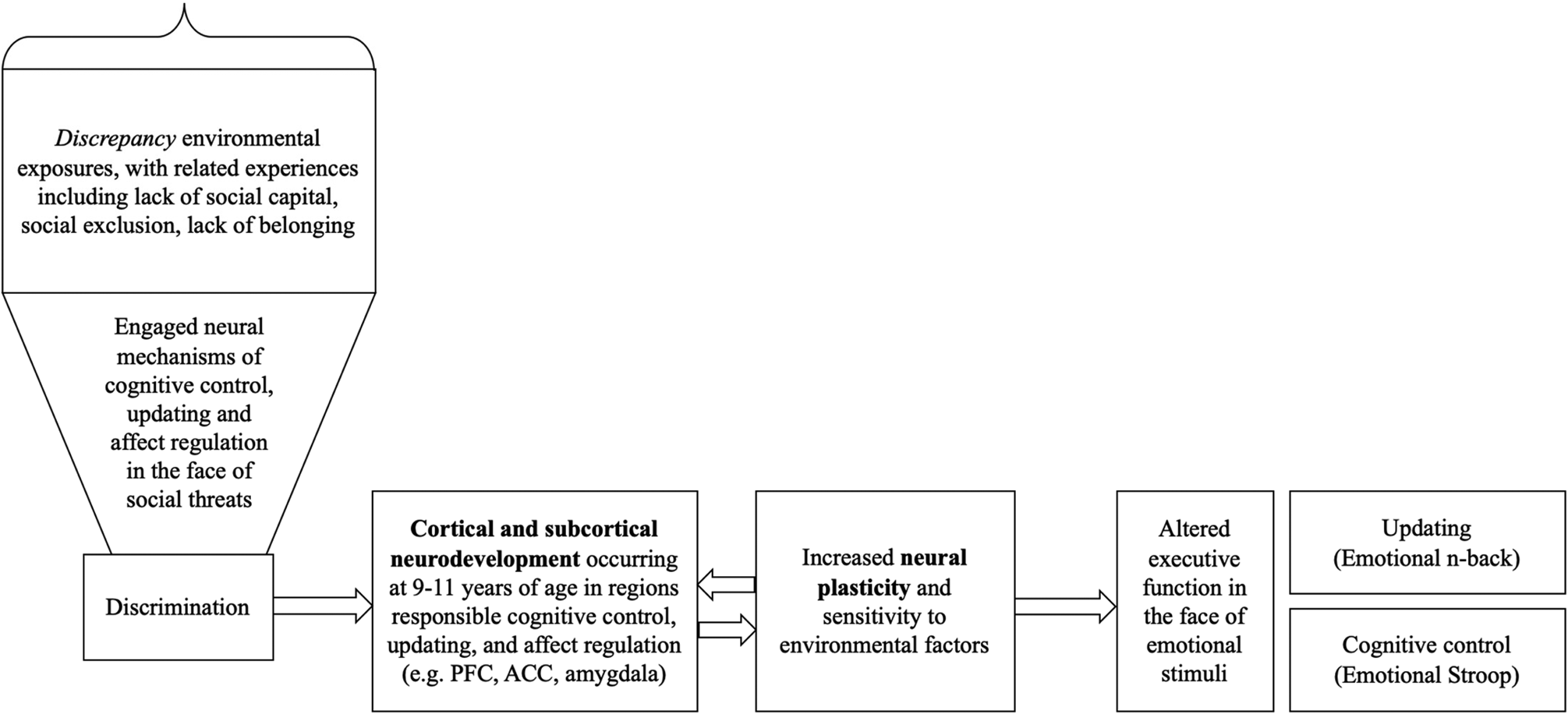
As mentioned above, discrimination could relate to neurocognitive functioning and emotion regulation through altering naturally occurring developmental processes as a general stressor. However, there is also reason to theorize that discrimination, as a specific type of stressor, could be particularly liable to impact implicit emotion regulation and underlying neurocognitive processes. For example, the stimulation deprivation and discrepancy (SDD) theory of systemic environmental factors and psychosis risk poses that different dimensions of environmental exposures could relate to distinct neural and cognitive processes (Vargas, Conley, & Mittal, Reference Vargas, Conley and Mittal2020). Discrimination exposure fits within the Discrepancy domain of the SDD theory, with theorized intermediate mechanisms including social exclusion, lack of belonging, and lack of social capital. In turn, the discrepancy dimension of environmental exposures is theorized to relate to neural systems underlying regulation of affect, including prefrontal regions such as the ventromedial prefrontal cortex, and subcortical regions including the amygdala and anterior cingulate cortex – all regions that are implicated in neurocognitive processes underlying implicit emotion regulation (Cohen et al., Reference Cohen, Jing, Yang, Tottenham, Lee and Casey2013; Gee et al., Reference Gee, Gabard-Durnam, Flannery, Goff, Humphreys, Telzer and Tottenham2013; Pechtel & Pizzagalli, Reference Pechtel and Pizzagalli2011; Tottenham, Reference Tottenham2012, Reference Tottenham2020; Tottenham et al., Reference Tottenham, Hare and Casey2011). As such, discrimination could relate to implicit emotion regulation both as a general stressor, and as a type of environmental factor that could specifically engage regions and functions relating to implicit emotion regulation.
Study Aims
The current study utilized a nationally representative sample of 9–11-year-old youth to examine associations between discrimination, depressive and psychotic-like symptoms. The first aim was to determine whether discrimination would relate to depressive and psychotic-like symptoms; based on the literature of adolescents and adults, we hypothesized that increased discrimination would relate to increased PLEs (Chapman et al., Reference Chapman, Visser, Mittal, Gibb, Coles and Strauss2020; Lincoln et al., Reference Lincoln, Hartmann, Köther and Moritz2015, Reference Lincoln, Sundag, Schlier and Karow2018) and depressive symptoms (Bocharov et al., Reference Bocharov, Knyazev and Savostyanov2017; Hopp et al., Reference Hopp, Troy and Mauss2011; Powers et al., Reference Powers, Etkin, Gyurak, Bradley and Jovanovic2015; Zhang et al., Reference Zhang, Ding, Chen, Wei, Zhao, Zhang and Li2016). The second aim was to assess whether differing measures of implicit emotion regulation indexing inhibitory control (emotional stroop) and updating working memory (emotional n-back) would relate to discrimination; it was hypothesized that these measures would relate to discrimination, given models of impacts of stress on emotion regulatory capacities during sensitive developmental periods (Drzewiecki & Juraska, Reference Drzewiecki and Juraska2020). The final aim was to assess whether implicit emotion regulation measures would mediate an existing relationship between discrimination, depressive, and psychotic-like symptoms; we hypothesized implicit emotion regulation would mediate an existing association between discrimination, depressive symptoms and PLEs.
Method
Participants
The multisite Adolescent Brain Cognitive Development (ABCD) study is a nationally representative cross-site collaboration aiming to better understand adolescent development (Volkow et al., Reference Volkow, Koob, Croyle, Bianchi, Gordon, Koroshetz and Conway2018). The ABCD study utilized a school-based recruitment strategy, collecting cognitive and neuroimaging data from 9- to 11-year-old children (Garavan et al., Reference Garavan, Bartsch, Conway, Decastro, Goldstein, Heeringa and Zahs2018). Written informed consent was obtained from participants, and data collection was approved by respective institutional review boards. The current study extracted data from the ABCD Release 2.0 (March 2019; DOI: 10.15154/1520613). Data are available as part of the ABCD study. Permission to access the data can be applied for at nda.gov. The current sample used participants that had complete data for relevant variables of interest. In the case that there were two or three siblings that completed the study, one youth per family was randomly chosen for inclusion. The average age was 10.08 years, with 47.6% of the sample being female. The total sample was 3,839 people, of which 0.4% were American Indian, 0.5% Asian Indian, 7.8% Black, 0.7% Chinese, 0.3% Filipino, 0.1% Japanese, 0.2% Korean, 4.9% Non-white Latina/o/x, 12.1% White Latina/o/x, 9.3% Multiracial, 0.2% other Asian or Pacific Islander, 0.03% Samoan, 0.1% Vietnamese, 57.6% White, and 5.4% other/unknown/did not answer. Of the total sample, participants with missing data or with data that did not meet quality control criteria (in the case of neurocognitive tasks, detailed below) were excluded from relevant analyses. Of the total sample, 3,839/100% were used for the PLE and discrimination analyses, 2,130/55% had data for depressive symptoms and discrimination analyses, 3,759/97.92% had data for emotional stroop and discrimination analyses, and 2,702/70.38% had data for emotional n-back and discrimination analyses. Finally, 1,473/38.37% had data for mediation analyses with depressive symptoms, and 2,652/69.08% had data for mediation analyses with PLEs. Results did not change in direction or magnitude when analyses were conducted only on participants that had available data for all analyses (i.e., excluding anyone that was missing data for any analyses from all analyses). As such, analyses were presented as originally intended based on participants that had available data for each analysis.
Measures
Discrimination
Items from two scales were taken to assess participant perceptions of experiencing discrimination due to race, ethnicity, color, country of origin, sexual identity, and body type (Supplementary Table 1). Items relating to feeling discrimination in the past 12 months due to race, ethnicity, color, country of origin, sexual identity, and body type were taken from the 2006 Boston Youth Survey (Garnett et al., Reference Garnett, Masyn, Austin, Miller, Williams and Viswanath2014). Additional items querying on feeling unfair treatment due to ethnic background as well as ethnic discrimination more broadly were taken from the measure of discrimination (Phinney et al., Reference Phinney, Madden and Santos1998). A sum score for endorsement of discrimination was computed and used in analyses. Scored ranged from 7–29, and the average for sum scores was 8.18, SD = 2.47.
PLEs
The Prodromal Questionnaire-Brief Child version is a 21-item self-report questionnaire used to assess psychotic-like experiences (Cicero, Krieg, & Martin, Reference Cicero, Krieg and Martin2019; Karcher et al., Reference Karcher, Barch, Avenevoli, Savill, Huber, Simon and Loewy2018; Loewy, Pearson, Vinogradov, Bearden, & Cannon, Reference Loewy, Pearson, Vinogradov, Bearden and Cannon2011), and has been previously validated in the ABCD study sample (Karcher et al., Reference Karcher, Barch, Avenevoli, Savill, Huber, Simon and Loewy2018). The questionnaire asked participants about PLEs endorsed with a binary response option (yes/no). Scores range from 0 to 20 for number of PLEs endorsed. For the current sample, 53.50% of participants had a rating of >0 on the PLEs scale. Of those that endorsed at least one symptom, the average was 3.92, SD = 3.44.
Depressive symptoms
The Kiddie Schedule for Affective Disorders and Schizophrenia for Diagnostic and Statistical Manual of Mental Disorders, fifth edition (DSM-5; KSADS-5) was utilized to measure endorsement of depressive symptoms, and prompts for the presence of symptoms of irritability, anhedonia, insomnia, fatigue, trouble concentrating, indecision, altered appetite, altered psychomotor presentation, guilt, hopelessness, lowered self-esteem, self-harm, suicidality, and change in functioning related to these symptoms. A sum score was created of total number of items endorsed. The KSADS-5 has been established as a valid and reliable measure of psychopathology in children and adolescents (Chambers et al., Reference Chambers, Puig-Antich, Hirsch, Paez, Ambrosini, Tabrizi and Davies1985; Kaufman, Birmaher, Brent, Ryan, & Rao, Reference Kaufman, Birmaher, Brent, Ryan and Rao2000; Orvaschel, Puig-Antich, Chambers, Tabrizi, & Johnson, Reference Orvaschel, Puig-Antich, Chambers, Tabrizi and Johnson1982). The KSADS-5 was adapted as a computerized version for use in the ABCD study, and has been shown to exhibit high concordance with clinician administered paper and pencil versions, with percent agreement in diagnostic categories ranging from 88% to 96%, with kappas in the good to excellent range. Of the total sample, 14.23% of participants endorsed at least 1 depressive symptom. The range of scores was 0–11, and for participants that endorsed at least 1 depressive symptom, the average was 1.90, SD = 1.68.
Emotional stroop
The emotional stroop task (Stroop, Reference Stroop1935) assessed cognitive control under emotionally salient conditions (Buhle et al., Reference Buhle, Wager, Smith, Hassin, Ochsner and Trope2010; Williams et al., Reference Williams, Mathews and MacLeod1996). One block shows an emotional word, which participants are asked to categorize as either a “good” feeling (happy, joyful) or a “bad” feeling (angry, upset). Another block shows an image of a teenager's face with either a happy or an angry facial expression. Trials are either congruent or incongruent. On congruent trials, the word and facial emotion are of the same valence (i.e., an angry face paired with the word “angry”). On incongruent trials, the word and facial expression are of different valence (e.g., a happy face paired with the word “angry”). The location of the word varies from trial to trial, presented either on the top of the image or at the bottom. Accuracy and response times for congruent versus incongruent trials were collected. Lower accuracy rates and longer reaction times for incongruent relative to congruent trials index relative difficulties with cognitive control. Difference scores were computed for reaction time and percent correct for performance during congruent versus incongruent trials. The difference scores were used in analyses. The average accuracy difference score was 3.74, SD = 6.37, indicating greater accuracy for congruent versus incongruent trials, as expected. The average difference score reaction time was −75.55, SD = 64.10, indicating greater reaction time for incongruent versus congruent trials, as expected.
Emotional n-back
The emotional n-back task was used to measure working memory, implicit emotion regulation, and reactivity (O'Brien et al., Reference O'Brien, Barch, Kandala and Karcher2020). The task consists of two runs of eight blocks, with 160 total trials. For each run, two blocks were 2-back conditions and four blocks were 0-back conditions. For the 0-back condition, participants were asked to respond “match” when the current stimulus was the same as the target presented at the beginning of the block. For the 2-back condition, participants were asked to respond “match” when the current stimulus was the same as the stimulus shown two trials ago. The stimuli consisted of positive faces, negative faces, neutral faces, or an image of a place. Stimuli were presented for 2 s and immediately followed by a 500 ms fixation cross. Average performance was 83.71%, SD = 7.50; performance with accuracy below 60% was flagged by the ABCD team as poor performance; these participants were excluded in analyses to rule out concerns related to lack of attention or effort to complete the task on the participant's part.
Data analysis
For Aim 1, the relation between discrimination, depressive symptoms, and psychotic-like experiences was assessed using linear regression, accounting for age and sex. For Aim 2, the relation between emotional stroop, emotional n-back, and discrimination was assessed using linear regression, accounting for age and sex. For Aim 3, a mediation analysis was conducted using PROCESS v3.5 Model 4 (Hayes, Reference Hayes2017). In the model, age and sex were accounted for. Given the observed main effect from Aim 2, emotional stroop and emotional n-back performance were tested as mediators. For all analyses, group demeaning per site was conducted to account for possible effects of nesting within sites according to recommendations (Bear, Gaskins, Blank, & Chen, Reference Bear, Gaskins, Blank and Chen2011; Huang, Reference Huang2016; Huang & Cornell, Reference Huang and Cornell2016). All analyses were conducted with site-demeaned values. All variables of interest showed evidence of skew, as did residuals (Shapiro–Wilk p < .05). Simulation studies have reliably shown linear regression is robust to skewed distribution in large samples (500 or larger) (Lumley, Diehr, Emerson, & Chen, Reference Lumley, Diehr, Emerson and Chen2002). Variables were log transformed and analyses re-run with the transformed variables. Observed findings were not significantly altered, and so results are presented using the original data.
Results
Associations between discrimination, PLEs, and depressive symptoms
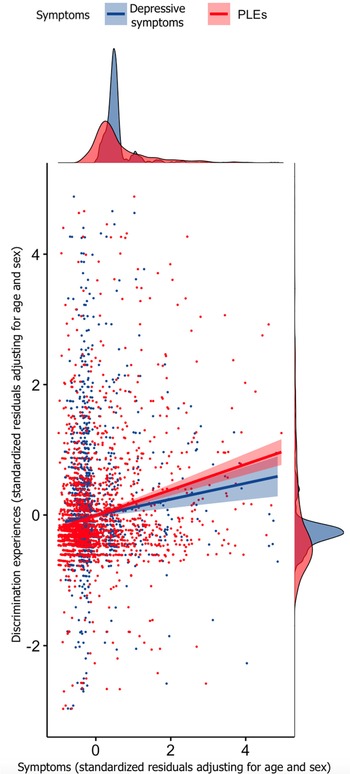
Discrimination related to depressive symptoms, such that increased endorsement of discrimination was associated with increased endorsement of depressive symptoms, β = 0.14, t = 6.48, p < .001 (Figure 1). Similarly, discrimination related to PLEs, such that greater levels of discrimination predicted higher endorsement of PLEs, β = 0.26, t = 16.60, p < .001 (Figure 1).
Associations between discrimination and psychotic-like experiences, along with associations between discrimination and depressive symptoms. Distributions for discrimination experiences are on the y axis, and distributions for symptom endorsement are on the x axis, separated by PLEs and depressive symptom groups. Site-demeaned values are presented. Values represent standardized residuals accounting for age and sex. Results remain comparable in magnitude with both Raw and site demeaned values.

Associations between discrimination and implicit emotion regulation tasks
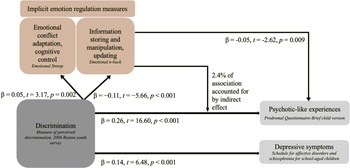
For the emotional stroop task, increased endorsement of discrimination predicted lower performance accuracy in incongruent versus congruent trials, β = 0.05, t = 3.17, p = .002. In contrast, discrimination did not significantly predict higher reaction time in incongruent versus congruent trials, contrary to study predictions, β = 0.01, t = 0.52, p = .604. For the emotional n-back task, increased endorsement of discrimination predicted lower performance accuracy, β = −0.11, t = −5.66, p < .001. Increased endorsement of discrimination did not significantly predict reaction time, β = 0.01, t = 0.31, p = .754.
Mediation of implicit emotion regulation on the relationship between symptoms and discrimination
Given results from Aim 2, both accuracy on the emotional stroop and emotional n-back were tested as mediators of the relationship between discrimination and depressive symptoms/psychotic-like experiences. For depressive symptoms and the first mediator (emotional n-back), the Sobel test for indirect effects had a 95% confidence interval of −0.0071 to 0.0033, calculated using 5,000 bootstrap samples. The model did not find evidence for mediation (β = −0.0014, SE = 0.003). Emotional n-back performance did not predict endorsement of depressive symptoms, β = 0.02, t = 0.65, p = .51. For the second mediator (emotional stroop accuracy on incongruent vs. congruent trials), the Sobel test for indirect effects had a 95% confidence interval of −0.0017 to 0.0039, calculated using 5,000 bootstrap samples. The model did not find evidence of mediation (β = 0.0007, SE = 0.001). Emotional stroop performance did not predict endorsement of depressive symptoms, β = 0.02, t = 0.83, p = .41.
For psychotic-like experiences and the first mediator (emotional n-back), the Sobel test for indirect effects had a 95% confidence interval of 0.0012 to 0.01, calculated using 5,000 bootstrap samples. The model suggests partial mediation; 2.4% of the association between discrimination and PLEs is accounted for by emotional n-back performance (β = 0.01, SE = 0.002) (Figure 2). Increased emotional n-back performance predicted lower endorsement of psychotic-like symptoms, β = −0.05, t = −2.62, p = .009. For the second mediator (emotional stroop accuracy on incongruent vs. congruent trials), the Sobel test for indirect effects had a 95% confidence interval of −0.002 to 0.0015, calculated using 5,000 bootstrap samples. The model did not find evidence of mediation (β = −0.002, SE = 0.001). Emotional stroop performance did not predict endorsement of PLEs, β = −0.005, t = −0.28, p = .78 (Table 2).
Summary of study findings. The association between discrimination and implicit emotion regulation is depicted, along with the association between discrimination, PLEs, and depressive symptoms. The partial mediation of implicit emotion regulation on the association between discrimination and psychotic-like experiences is also shown along with the association of emotional n-back and PLEs. Results are presented along with standardized coefficients.

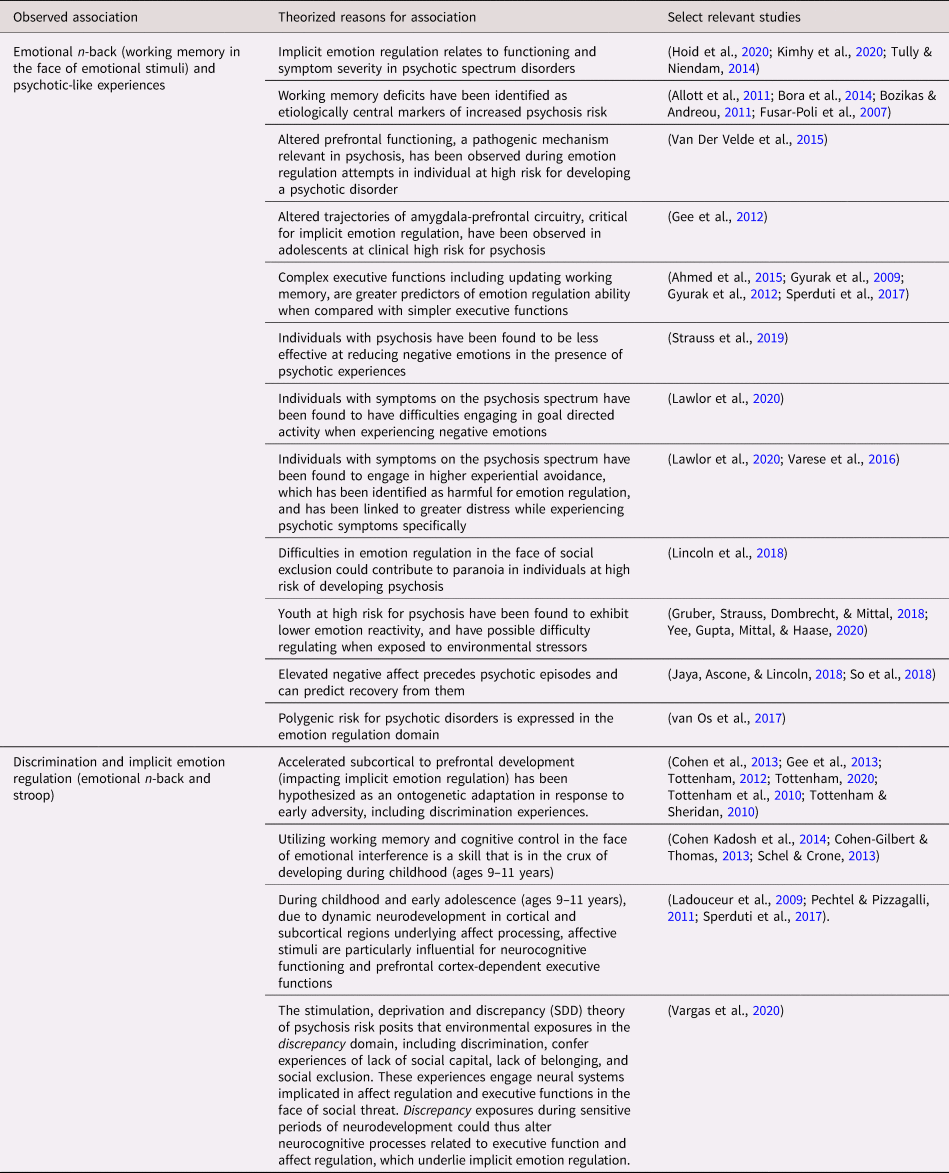
Theoretical framework for study findings
Discussion
The current study sought to inform conceptualizations of processes of risk for developing psychopathology by assessing relations between discrimination, depressive and psychotic-like symptoms, and implicit emotion regulation. For the first aim, discrimination related to greater endorsement of both depressive and psychotic-like symptoms. Results are consistent with both the broader literature on discrimination, and the disorder-specific literature on discrimination and risk for developing psychotic and depressive disorders (Garnett et al., Reference Garnett, Masyn, Austin, Miller, Williams and Viswanath2014; Hwang & Goto, Reference Hwang and Goto2008; Kessler et al., Reference Kessler, Mickelson and Williams1999; Pearce et al., Reference Pearce, Rafiq, Simpson and Varese2019; Phinney et al., Reference Phinney, Madden and Santos1998; Wickham, Taylor, Shevlin, & Bentall, Reference Wickham, Taylor, Shevlin and Bentall2014; Williams et al., Reference Williams, Yu, Jackson and Anderson1997). For the second aim, greater endorsement of discrimination predicted both lower emotional stroop and emotional n-back performance. The observed association extends the broader literature on emotion regulation and exposure to chronic stressors by establishing implicit emotion regulation measures as relevant theorized mechanisms for future longitudinal research (Gill & Matheson, Reference Gill and Matheson2006). Finally, mediation analyses tested whether implicit emotion regulation measures accounted for the association between discrimination, depressive and psychotic-like symptoms. Evidence was found of partial mediation of emotional n-back performance (but not emotional stroop) on the association between discrimination and psychotic-like symptoms, with increasing emotional n-back performance predicting less endorsement of psychotic-like experiences. Evidence was not observed for mediation of emotional n-back or emotional stroop for the association between discrimination and psychotic-like symptoms. Taken together, results suggest that updating working memory capacities as they relate to implicit emotion regulation could serve as a putative target and process of influence with regards to associations between discrimination and mental illness (Figure 3).
Theoretical framework for the observed association between discrimination and implicit emotion regulation cognitive measures (emotional stroop and emotional n-back). PFC = prefrontal cortex, ACC = anterior cingulate Cortex.

As expected, increased endorsement of discrimination predicted increased endorsement of depressive and psychotic-like symptoms. Current findings extend the existing literature on the relation between discrimination and depressive symptoms previously observed in adult and older adolescent samples (Belle & Doucet, Reference Belle and Doucet2003; Noh & Kaspar, Reference Noh and Kaspar2003; Park, Du, Wang, Williams, & Alegría, Reference Park, Du, Wang, Williams and Alegría2019). However, to our knowledge studies had not yet documented the association at this stage of the life span. Similarly, the association between discrimination and psychotic symptoms has been observed in adult and adolescent samples. While the link with psychotic disorders and clinical high risk for psychosis individuals is well-documented in adult and older adolescent samples (Pearce et al., Reference Pearce, Rafiq, Simpson and Varese2019; Shaikh et al., Reference Shaikh, Ellett, Dutt, Day, Laing, Kroll and Valmaggia2016; Stowkowy et al., Reference Stowkowy, Liu, Cadenhead, Cannon, Cornblatt, McGlashan and Walker2016), the current study shows that the association with psychosis spectrum experiences is evident much earlier in the lifetime, during childhood. Findings are consistent with theories that established normative neurodevelopmental plasticity during this age period results in increased sensitivity to environmental stressors (Drzewiecki & Juraska, Reference Drzewiecki and Juraska2020; Gogtay et al., Reference Gogtay, Giedd, Lusk, Hayashi, Greenstein, Vaituzis and Toga2004; Shaw et al., Reference Shaw, Kabani, Lerch, Eckstrand, Lenroot, Gogtay and Rapoport2008; Spear, Reference Spear2013). Future studies would benefit from establishing duration of exposure to discrimination, and gauging whether exposure during differing sensitive developmental periods could yield differing magnitudes of impact later in life. Results are also consistent with models posing discrimination as a chronic stressor conferring negative mental health outcomes (Ellis et al., Reference Ellis, MacDonald, Lincoln and Cabral2008; Garnett et al., Reference Garnett, Masyn, Austin, Miller, Williams and Viswanath2014; Wickham et al., Reference Wickham, Taylor, Shevlin and Bentall2014; Williams et al., Reference Williams, Yu, Jackson and Anderson1997). Vulnerable groups including ethnic, gender, and sexual minorities are systematically more likely to experience discrimination, making it a putative systems-level risk factor (Vargas et al., Reference Vargas, Conley and Mittal2020); Given experiences of discrimination systemically impact certain vulnerable groups, targeted structural prevention and intervention initiatives could target exposure at the aggregate level.
With regards to tasks indexing implicit emotion regulation, as predicted, discrimination was associated with the emotional stroop, such that increased experiences of discrimination related to decreases in performance in incongruent relative to congruent trials. Findings suggest experiences of discrimination could relate to distinct facets of the implicit emotion regulatory system. The emotional stroop task is designed to index cognitive control in the face of emotional stimuli, and as such could aid implicit emotion regulatory capacities including emotional conflict adaptation (Gyurak et al., Reference Gyurak, Gross and Etkin2011). Utilizing inhibitory capacities in the face of emotional interference is a possibly foundational skill, and also one that is in the crux of developing during late childhood (Cohen Kadosh et al., Reference Cohen Kadosh, Heathcote and Lau2014; Cohen-Gilbert & Thomas, Reference Cohen-Gilbert and Thomas2013; Schel & Crone, Reference Schel and Crone2013). Likewise, lower updating working memory performance in the face of emotional stimuli related to higher levels of discrimination. These results complement the literature suggesting emotion regulation as an intermediary mechanism between discrimination and adverse outcomes (Gill & Matheson, Reference Gill and Matheson2006; Riley et al., Reference Riley, DeLaney, Brown, Lozada, Williams, Dick and Group2020), as well as the literature suggesting that late childhood to young adulthood constitutes a period where affective stimuli are particularly impactful for neurocognitive functioning (Ladouceur et al., Reference Ladouceur, Silk, Dahl, Ostapenko, Kronhaus and Phillips2009; Sperduti et al., Reference Sperduti, Makowski, Arcangeli, Wantzen, Zalla, Lemaire and Piolino2017). If exposure to discrimination contributes to aberrant inhibitory function and updating capacities in the face of emotional stimuli at this age, youth exposed to discrimination could face stable alterations in the development of these functions that could contribute to risk for developing mental illness. Cognitive functions including working memory constitute informative transdiagnostic vulnerability factors (Goodman, Freeman, & Chalmers, Reference Goodman, Freeman and Chalmers2019). Future RDoC conceptualizations could benefit from further incorporating paradigms for neurocognitive functions underlying implicit emotion regulations as potential protective or exacerbating factors for developing psychopathology. Thus, current results provide clues as to possible facets of affective neurocognitive functioning that are associated with exposure to structural, systems level environmental features that lead to vulnerable groups experiencing discrimination (due to, for example, race, gender identity, immigration status, sexual orientation, and weight).
To determine whether neurocognitive functions underlying implicit emotion regulation would account for the observed relation between discrimination, depressive, and psychotic-like symptoms, mediation analyses were run. The association between discrimination and psychotic-like experiences was partially mediated by emotional updating working memory (emotional n-back) performance. By contrast, evidence for mediation was not found for emotional inhibitory control performance (emotional stroop). Results contribute to investigations finding implicit emotion regulation related to functioning and symptom severity in psychotic spectrum disorders (Hoid et al., Reference Hoid, Pan, Wang and Li2020; Kimhy et al., Reference Kimhy, Lister, Liu, Vakhrusheva, Delespaul, Malaspina and Wang2020; Tully & Niendam, Reference Tully and Niendam2014). Findings also corroborate literature finding that difficulty regulating affect can precede psychotic experiences and increase severity of distress and impairment related to psychosis symptoms (Chapman et al., Reference Chapman, Visser, Mittal, Gibb, Coles and Strauss2020; Lawlor, Hepworth, Smallwood, Carter, & Jolley, Reference Lawlor, Hepworth, Smallwood, Carter and Jolley2020; Strauss et al., Reference Strauss, Zamani Esfahlani, Visser, Dickinson, Gruber and Sayama2019). It is unclear why evidence of mediation was not found with regards to emotional inhibitory control. One possibility is that perhaps the influence of emotional inhibitory control becomes more apparent in older samples, given that the majority of literature on the subject has been focused on adult samples. Another possibility is that current results provide evidence of specificity. Some investigations have theorized and presented evidence that complex executive functions such as updating working memory, when compared with simpler executive functions, could be greater predictors of emotion regulation ability (Ahmed et al., Reference Ahmed, Bittencourt-Hewitt and Sebastian2015; Gyurak et al., Reference Gyurak, Goodkind, Madan, Kramer, Miller and Levenson2009; Gyurak, Goodkind, Kramer, Miller, & Levenson, Reference Gyurak, Goodkind, Kramer, Miller and Levenson2012; Sperduti et al., Reference Sperduti, Makowski, Arcangeli, Wantzen, Zalla, Lemaire and Piolino2017). Further, working memory deficits have long been specifically identified as etiologically informative markers of increased psychosis risk (Bora et al., Reference Bora, Lin, Wood, Yung, McGorry and Pantelis2014; Bozikas & Andreou, Reference Bozikas and Andreou2011; Fusar-Poli et al., Reference Fusar-Poli, Perez, Broome, Borgwardt, Placentino, Caverzasi and Barale2007). Perhaps updating working memory in the face of interference from emotional stimuli functions as a putative mechanism underlying the association between discrimination and psychotic-like symptoms. Future longitudinal studies will be necessary to confirm this theory. However, it is important to note that the partial mediation effect was rather modest, with 2.4% of the association being accounted for by emotional updating working memory (emotional n-back) performance. Implicit emotion regulation is one of a multitude of factors that could contribute to the association between discrimination and psychotic-like symptoms. Future investigations further parsing out other possible systemic, social, and neurocognitive mechanisms could aid targeted prevention and treatment efforts.
Counter to predictions, evidence of mediation was not found for implicit emotion regulation tasks with regards to the association between discrimination and depressive symptoms. Results are partially inconsistent with previous studies that found relations between discrimination, emotion regulation, and depressive symptoms, one of which found associations to emotional inhibitory control (Bocharov et al., Reference Bocharov, Knyazev and Savostyanov2017; Knyazev, Bocharov, Savostyanov, & Slobodskoy-Plusnin, Reference Knyazev, Bocharov, Savostyanov and Slobodskoy-Plusnin2015; Zhang et al., Reference Zhang, Ding, Chen, Wei, Zhao, Zhang and Li2016). It could be that neurocognitive functions underlying implicit emotion regulation become mechanistically relevant later on in life for relations between discrimination and depressive symptoms. It could also be that discrimination relates to depressive symptoms regardless of implicit emotion regulation capabilities. Future investigations tracking changes longitudinally will aid in clarifying this point.
In the present study, an RDoC perspective was incorporated into our developmentally informed questions of interest. Incorporating multiple levels of analysis (self-report, behavioral, paradigms), within domains that are conceptually organized around brain circuits and physiological correlates, was particularly informative for our understanding of emotion. Valence, arousal, and motivation are understood to be foundational determinants of emotion (Droit-Volet & Berthon, Reference Droit-Volet and Berthon2017; Fairfield, Mammarella, Di Domenico, & Palumbo, Reference Fairfield, Mammarella, Di Domenico and Palumbo2015; Hopp et al., Reference Hopp, Troy and Mauss2011; Ribeiro, Albuquerque, & dos Santos, Reference Ribeiro, Albuquerque and dos Santos2018; Ribeiro, Santos, & Albuquerque, Reference Ribeiro, Santos and Albuquerque2019). Within the present study, emotional stroop and n-back tasks represented neurophysiological processes that relate to both arousal/regulatory systems and cognitive systems domains. In addition, performance in these tasks was related to symptomatology which includes constructs congruent to negative and positive valence systems domains. As such, the study integrated information across domains and multiple levels of analyses during a sensitive developmental period, allowing for a richer transdiagnostic perspective of complex and interwoven pathways to a multifinality of symptom outcomes (Cicchetti & Rogosch, Reference Cicchetti and Rogosch1996).
Further, RDoC conceptualizations stressed the value of environmental, social, and developmental context for emotional experience, regulation, and symptom presentation (Barrett, Reference Barrett2012; Barrett, Mesquita, & Gendron, Reference Barrett, Mesquita and Gendron2011; Wilson-Mendenhall, Barrett, Simmons, & Barsalou, Reference Wilson-Mendenhall, Barrett, Simmons and Barsalou2011). The arousal domain, for example, enables sensitivity to internal or external stimuli such that context-sensitive action can be undertaken. In this case, chronic high arousal due to environmental threats (such as discrimination), could constitute a neurotypical, adaptive response. When exposure occurs during sensitive developmental periods, however, this could contribute to emerging vulnerability for psychopathology. The present investigation allowed us to measure whether performance in the cognitive systems domain would be impacted by high arousal induced by emotional stimuli, as well as by exposure to environmental factors that could confer increased arousal levels (discrimination). As such, adapting an RDoC perspective allowed for a more granular understanding of differing transdiagnostic components possibly conferring vulnerability for psychopathology during a developmentally sensitive period. Conceptualizing research questions into transdiagnostic domains, and measuring these across multiple levels of analysis, also allowed for a fuller understanding of convergence and divergence across levels of analysis.
Results suggest discrimination could serve as a transdiagnostic risk factor for developing depression and psychotic disorders. Discrimination is one of many risk factors that occur at the systems level, and as such, could be a target for public health policy. Our results suggest that exposure to discrimination could be impactful as early as childhood. Given exposure during sensitive developmental periods, detrimental effects could compound across the lifetime to confer increased vulnerability. As such, early identification and intervention for these vulnerability factors could be essential. Neurocognitive functions underlying implicit emotion regulation could be one of many processes underlying the association between discrimination and psychotic-like symptoms. As such, it could serve as a protective factor under certain circumstances, mitigating effects of the environment on vulnerability for mental illness. Conversely, it could also serve as a risk factor if negatively impacted by early life stressors. Nonetheless, evidence of mediation accounted for a rather modest proportion of the variance, and so future exploration of protective and risk mechanisms relevant for this association will be essential. Further, it is essential to highlight that because the data are cross-sectional, any references to hypothesized mechanisms or influential factors are theoretical. We used mediation to test whether implicit emotion regulation accounted for some of the variance in the association between discrimination, PLEs, and depressive symptoms. Though promising preliminary evidence was found, the present study was not able to test mechanism as there was no longitudinal component. As a result, findings should be interpreted as preliminary and confirmed in future longitudinal investigations. Longitudinal tracking across the life span will also facilitate our understanding of which age periods are the most sensitive to environmental exposures such as discrimination. In addition, the used discrimination measure allowed for an estimate of experiences of discrimination as well as frequency of the experiences. However, it is critical to note that the measure was compiled across two separate scales (Garnett et al., Reference Garnett, Masyn, Austin, Miller, Williams and Viswanath2014; Phinney et al., Reference Phinney, Madden and Santos1998), which have not together been psychometrically validated to be used as a sum score. As such, results ought to be interpreted as preliminary, and future studies would greatly benefit from working toward creating and validating measures of discrimination that encompass both diversity of experiences of discrimination, and frequency of experiences of discrimination. Further, the current study assessed general experiences of discrimination due to factors including race, ethnicity, nationality, and weight. Isolating discrimination experiences due to race and ethnicity did not alter findings (Supplementary Table 3). While the current study was interested in general experiences of discrimination, it will be key for future investigations to explore whether certain types of discrimination are qualitatively different (i.e., racial vs. other kinds of discrimination). Finally, assessments of cumulative exposure to multiple protective factors along with risk factors could aid in providing a transdiagnostic perspective of broader risk for psychopathology (Vargas, Zou, Conley, & Mittal, Reference Vargas, Zou, Conley and Mittal2019). Incorporating systemic environmental factors contributing to vulnerability for experiencing discrimination could be particularly fruitful in this line of work. It is clear that certain groups such as ethnic/racial minorities are systemically more likely to be exposed to experiences of discrimination (indeed, in our sample there were differences across races in experiences of discrimination; Supplementary Table 2). The present study did not seek to parse out effects based on participant race, but rather sought to conceptualize discrimination as a transdiagnostic environmental risk domain from an RDoC perspective. However, future investigations examining interactions between individual and systemic factors resulting in vulnerability to experiencing discrimination) could further build on this line of work.
Supplementary Material
The supplementary material for this article can be found at https://doi.org/10.1017/S0954579421000638.
Acknowledgments
We want to thank the ABCD team for access to the data, as well as the participants that chose to participate in the study.
Funding Statement
Data used in the preparation of this article were obtained from the Adolescent Brain Cognitive Development (ABCD) study (https://abcdstudy.org), held in the NIMH Data Archive (NDA). This is a multisite, longitudinal study designed to recruit more than 10,000 children age 9–10 and follow them over 10 years into early adulthood. The ABCD study is supported by the National Institutes of Health and additional federal partners under award numbers U01DA041022, U01DA041028, U01DA041048, U01DA041089, U01DA041106, U01DA041117, U01DA041120, U01DA041134, U01DA041148, U01DA041156, U01DA041174, U24DA041123, U24DA041147, U01DA041093, and U01DA041025. A full list of supporters is available at https://abcdstudy.org/federal-partners.html. A listing of participating sites and a complete listing of the study investigators can be found at https://abcdstudy.org/Consortium_Members.pdf. ABCD consortium investigators designed and implemented the study and/or provided data but did not necessarily participate in analysis or writing of this report. This manuscript reflects the views of the authors and may not reflect the opinions or views of the NIH or ABCD consortium investigators. The ABCD data repository grows and changes over time. The ABCD data used in this report came from [NIMH Data Archive Digital Object Identifier (DOI) 10.15154/1506121]. DOIs can be found at https://nda.nih.gov/generalquery.html?q=query=studies%20%7Eand%7E%20orderBy=id%20%7Eand%7E%20orderDirection=Ascending. The research reported in this manuscript was also supported by the National Institute of Mental Health of the National Institutes of Health under Award Number F31MH119776 (T.V.). The content is solely the responsibility of the authors and does not necessarily represent the official views of the National Institutes of Health
Conflicts of Interest
None.