Summations
• The most consistent findings in the literature show increased activity of the HPA axis in depression associated with hypercortisolaemia and reduced inhibitory feedback.
• The findings suggest that this dysregulation of the HPA axis is partially attributable to an imbalance between GR and MR. While most of the existing studies in depression has consistently showed that GR function is impaired in major depression, resulting in reduced GR-mediated negative feedback on the HPA axis, the data about the functioning of MR in depression are still controversial.
Considerations
• It is emphasised that most of the articles included in this review use the dexamethasone/corticotropin-releasing hormone test and dexamethasone suppression test for assessing the HPA axis. These studies, preferentially, investigate the functioning of GRs in depression.
• Although new tests that evaluate both the GR and MR are being developed, studies that explored the role of MR in depression by tests with the use of prednisolone (GR/MR agonist), fludrocortisone (MR agonist) and spironolactone (MR antagonist) are still restricted.
Introduction
Stressful life events play an important role in the pathogenesis of depressive disorders and are well established as acute triggers of psychiatric illness (Reference Kendler, Sheth, Gardner and Prescott1). Moreover, early life stress, such as child abuse, neglect or parental loss, has been associated with significant increase in the risk of developing depression in adulthood (Reference Heim, Newport and Heit2–Reference Cohen, Brown and Smailes4). Whereas a certain level of stress is healthy and necessary for an organism's survival, stress becomes unhealthy when it occurs for a prolonged period of time, at a high intensity, or involves the accumulation of many stressors. A large body of research has documented an increased prevalence of life stress, particularly psychosocial stress, before the onset of major depression, suggesting that these could play a key role in the development of depression. Clinical observation documented that the first episode of affective disorder is more likely to be associated with major psychosocial stressors than episodes occurring later in the course of the disease. This suggested that both sensitisation to stressors and episode sensitisation occur in depressed patients. This is consistent with the proposal that stress effects are consolidated with time and become evident when the organism is submitted to a new stressful situation (Reference Post5).
Considerable evidence suggests that this vulnerability for developing psychiatric disorders is associated to changes in neurobiological systems related to stress regulation. Studies indicate that stress in early phases of development can induce persistent changes in the ability of the hypothalamic–pituitary–adrenal (HPA) axis to respond to stress in the adult life, and that mechanism can lead to a raised susceptibility to depression (Reference Heim, Newport and Heit2,Reference Shea, Walsh, Macmillan and Steiner6,Reference Mello, Mello, Carpenter and Price7). Abnormalities in the function of the HPA axis have been described in people experiencing mood disorder. Hyperactivity of the HPA axis in major depression is one of the most consistent findings in psychiatry. A significant percentage of patients with major depression have been shown to exhibit increased concentrations of cortisol, an exaggerated cortisol response to adrenocorticotropic hormone (ACTH), and an enlargement of both the pituitary and adrenal glands (Reference Parker, Schatzberg and Lyons8–Reference Carroll, Cassidy and Naftolowitz10), but the mechanisms underlying this abnormality are still unclear (Reference Pariante11).
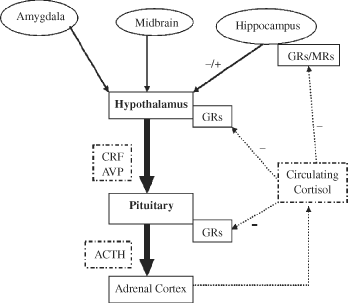
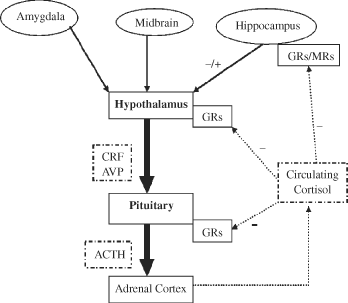
One of the mechanisms thought to be involved in the HPA axis hyperactivity in depression is the impaired feedback inhibition of the HPA axis by the circulating glucocorticoids (Reference Pariante and Miller12). HPA axis activity leads to the production of glucocorticoids from the adrenal cortex (cortisol in humans and corticosterone in rodents). In turn, glucocorticoids mediate their actions, including a feedback inhibition of the HPA axis, through two distinct intracellular receptor subtypes: the type I or mineralocorticoid receptor (MR) and the type II or glucocorticoid receptor (GR) (Fig. 1). These receptors differ in their affinity for glucocorticoids, with MR demonstrating the highest affinity for cortisol and GR demonstrating lower affinity for cortisol. Their distribution in rodent brain differs, with MR predominantly in limbic areas, particularly the hippocampus, and GR more widely distributed across all brain regions; in primates, MR is also found in cortex and subcortical structures (Reference Herman, Patel, Akil and Watson13,Reference Patel, López, Lyons, Burke, Wallace and Schatzberg14). Therefore, MR is believed to play a role in the regulation of circadian fluctuations in these hormones, whereas GR is believed to be more important in the regulation of the response to stress, when endogenous levels of glucocorticoids are high (Reference de Kloet, Vreugdenhil, Oitzl and Joels15,Reference Young, Lopez, Murphy-Weinberg, Watson and Akil16).
Schematic diagram of HPA axis. It describes regulation and negative feedback (−) of cortisol through GR and MR. Adapted from Juruena et al. 2004 (Reference Juruena, Cleare and Pariante9).
The impaired feedback inhibition has been showed in depressed patients by a variety of studies, many occurring in the 1970s and the 1980s. During the 1980s, the dexamethasone suppression test (DST) became a widely used research tool for the assessment of HPA function in depression. Back then, Carroll et al. (Reference Carroll, Curtis and Mendels17) have found that severely depressed patients had non-suppression in the DST. DST, while widely used in initial studies, currently has limited use in clinical routine and research practice because of its low sensitivity (20–50%), i.e. low ability to distinguish between patients with major depression and patients with other psychiatric disorders or healthy subjects (Reference Arana, Baldessarini and Ornsteen18,Reference Ribeiro, Tandon, Grunhaus and Greden19). Furthermore, dexamethasone (DEX) has pharmacodynamic and pharmacokinetic features that are very distinct from cortisol. For example, DEX binds preferentially to GR (Reference Pariante, Papadopoulos and Poon20).
Nearly 10 years after the development of the DST, Holsboer et al. (Reference von Bardeleben and Holsboer21) have developed a more sensitive neuroendocrine function test to detect HPA axis dysregulation. It combines the DST and the corticotropin-releasing hormone (CRH) stimulation test, and it is called the dexamethasone/corticotropin-releasing hormone (Dex/CRH) challenge test. The test involves oral administration of a single dose of DEX 1.5 mg at 23:00 h, followed the next day at 15:00 h by an intravenous bolus of CRH 100 µg. Administration of supraphysiological doses of CRH elicited ACTH-blunted response in depressives, while DEX pre-treatment produces the opposite effect and paradoxically enhances ACTH release following CRH. Similarly, CRH-induced cortisol release is much higher in DEX pre-treated patients than in patients treated with CRH challenge alone. DEX because of its low binding to corticosteroid-binding globulin (CBG) and its decreased access to the brain acts primarily at the pituitary to suppress ACTH. The subsequent decrease of cortisol and the failure of DEX to compensate for the decreased cortisol levels in the nervous tissue create a situation that is sensed by central regulatory elements of the HPA system as a partial and transient adrenalectomy, thus leading to an increased secretion of central neuropeptides – mainly CRH and vasopressin (AVP), which are capable of activating ACTH secretion (Reference Juruena, Cleare and Pariante9). In healthy individuals, cortisol secretion after DEX remains suppressed after the injection of CRH; however, depressed patients show elevated cortisol concentrations in response to this test, probably as a result of reduced GR sensitivity that attenuates the suppressive effects of DEX at the pituitary and fails to inhibit CRH and AVP secretion in the hypothalamus, which, in turn, enhances the stimulatory effects of the exogenous CRH in the Dex/CRH test (Reference von Bardeleben and Holsboer21,Reference Heuser and Yassouridis22). One of the most consistent findings in the literature related to the Dex/CRH test is the association between persistent HPA hyperactivity with higher rates of relapse. Zobel et al. (Reference Zobel, Nickel, Sonntag, Uhr, Holsboer and Ising23) have described a cohort of patients receiving the Dex/CRH test on two different moments: after starting the first antidepressant treatment and a few days before the discharge. The authors have found that those patients who had an increase in cortisol levels after the Dex/CRH test between admission and discharge tended to relapse during the follow-up period, whilst those who showed a decrease in the post-Dex/CRH cortisol levels tended to remain clinically stable in the follow-up period. Although Heuser et al. (Reference Heuser and Yassouridis22) concluded from their studies that the sensitivity of this test is above 80%, depending on age and gender, the findings of HPA axis hyperactivity in the test have not been consistently confirmed in a series of studies investigating a variety of subtypes of depression. Nevertheless, the Dex/CRH test remains limited by the pharmacokinetic features of DEX and the lack of MR receptor activity.
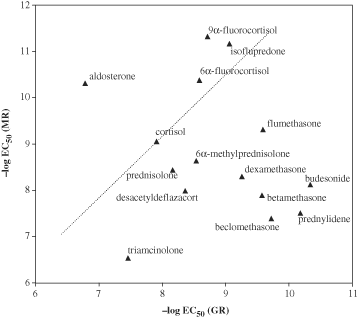
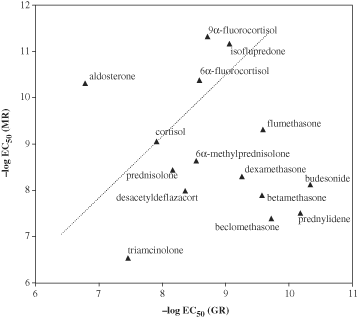
Recently, a suppressive test using another synthetic glucocorticoid, prednisolone, has been developed by Pariante et al. (Reference Pariante, Papadopoulos and Poon20). Such test has a higher affinity for the MR. Prednisolone is a synthetic glucocorticoid that is similar to cortisol in its pharmacokinetic and pharmacodynamic features. In particular, it binds to the CBG, like cortisol, and its half-life is similar to that of cortisol. However, the most important of these similarities is that prednisolone and cortisol are similar in their abilities to bind and activate the GR and the MR, especially when compared to DEX (Fig. 2) (Reference Pariante, Papadopoulos and Poon20,Reference Grossmann, Scholz and Rochel24). In studies examining human GR, prednisolone has an affinity that is two-fold higher than that of cortisol, while DEX has an affinity than is seven-fold higher than that of cortisol (Reference Ballard, Carter, Graham and Baxter25); in another study examining mice GR, prednisolone has a relative potency to activate GR function that is the same as corticosterone, while DEX has a relative potency that is four-fold higher than that of corticosterone (Reference Ballard, Carter, Graham and Baxter25). Current evidences suggest that the prednisolone suppression test (PST), in contrast to the DST and the Dex/CRH test, probes both the MR and the GR and hence provides a more physiological measure of suppression (Reference Pariante, Papadopoulos and Poon20).
Selectivity of steroids regarding MR and GR. GR potency increases from left to right, and MR potency increases from bottom to top. The diagonal line separates typical glucocorticoids from mineralocorticoids. Selectivity increases with the perpendicular distance from that line: to the bottom right for glucocorticoids, to the top left for mineralocorticoids. Prednisolone lies close to cortisol in this scheme, unlike DEX. Adapted from Grossmann et al. 2004 (Reference Grossmann, Scholz and Rochel24).
Preclinical and clinical studies have explored the role of MR in depression through treatment with spironolactone (MR antagonist) and fludrocortisone (MR agonist) to assess HPA regulation (Reference Heuser, Deuschle, Weber, Stalla and Holsboer26–Reference Otte, Hinkelmann, Moritz, Yassouridis, Jahn, Wiedemann and Kellner28). The results of Heuser et al. (Reference Heuser, Deuschle, Weber, Stalla and Holsboer26) indicate a significant increase of cortisol concentrations after the Dex/CRH test in subjects treated with spironolactone. In a recent study, Otte et al. (Reference Otte, Hinkelmann, Moritz, Yassouridis, Jahn, Wiedemann and Kellner28) reported similar findings in depressed patients treated with spironolactone or fludrocortisone as adjunct to escitalopram. In this study, the authors found an increased plasma cortisol level during spironolactone treatment and a decreased level during fludrocortisone treatment. Thereby, the results of these studies indicate that the MR is involved in human HPA system regulation.
Once the mechanisms involved in the dysregulation of the HPA axis, especially in the functioning of GR and MR in depressed patients, are not well elucidated, the objective of this study was to conduct a systematic review of articles that assess the HPA axis activity from GR and MR in depressed patients and healthy controls with or without early life stress.
Methods
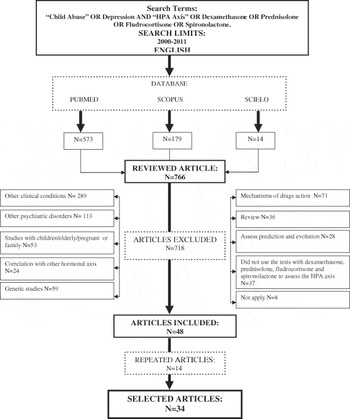
We conducted a systematic review of articles indexed in PubMed, SCOPUS and SciELO published in English between 2000 and 2011. The search terms were the following: child abuse, depression, HPA axis, dexamethasone, prednisolone, fludrocortisone and spironolactone. We later refined the search through a systematic review of the articles' abstracts, excluding articles that did not examine predictive values. See the exclusion criteria with detail in Fig. 3
Methodology for article selection.

Results
PubMed identified 573 articles, SCOPUS identified 179 and SciELO identified 14 articles. The combined searches yielded a total of 776 articles. Following the application of the exclusion criteria, we selected 48 items, and 14 of these were excluded because it was a duplicate study between the databases, yielding a total of 34 articles to be examined in this review.
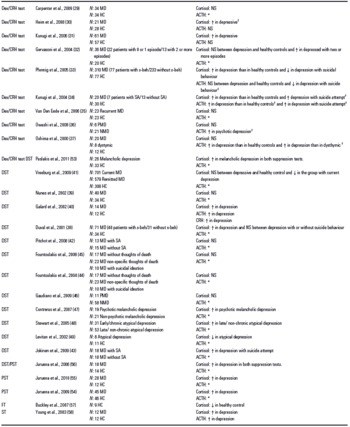
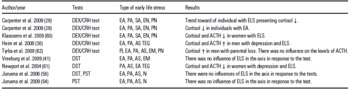
The results of the 34 articles are arranged below according to test used to evaluate HPA axis activity: Dex/CRH test, DST, PST, HPA axis activity test with fludrocortisone and HPA axis activity test with spironolactone (Table 1). The papers that evaluated early life stress were grouped in a separate item at the end of the results (Table 2).
Characterisation of the articles distributed by tests

HC, healthy control; MD, major depression; NMD, non-psychotic major depression; NS, not significant; PMD, psychotic major depression; SA, suicide attempt; s-beh, suicidal behaviour; ST, HPA axis spironolactone test.
* Not evaluated.
† Trend toward.
Characteristics of articles that evaluated the early life stress distributed by tests

EA, emotional abuse; ELS, early life stress; EN, emotional neglect; N, neglect; PA, physical abuse; PL, parental loss; PN, physical neglect; SA, sexual abuse; TEG, traumatic experiences general.
Dex/CRH test
Nine studies were included in this category; six of these studies (Reference Carpenter, Ross, Tyrka, Anderson, Kelly and Price29–Reference Kunugi, Urushibara and Nanko34) evaluated the HPA axis through the combined Dex/CRH test in patients with current major depression compared to healthy controls. Higher plasma cortisol levels in the depressed patients compared to controls after the combined Dex/CRH test were found in four (Reference Heim, Mletzko, Purselle, Musselman and Nemeroff30,Reference Kunugi, Ida and Owashi31,Reference Pfennig, Kunzel and Kern33,Reference Kunugi, Urushibara and Nanko34) of the six studies, while two studies (Reference Carpenter, Ross, Tyrka, Anderson, Kelly and Price29,Reference Gervasoni, Bertschy and Osiek32) found no difference in cortisol levels between depressed patients and controls. However, Gervasoni et al. (Reference Gervasoni, Bertschy and Osiek32) have found no difference in axis suppression between depression and control, when the patients group was subdivided according to the number of previous depressive episodes: no previous or one previous episode (n = 21) and two episodes and more than two episodes (n = 13). The authors found higher levels of cortisol in depressed patients with two or more previous episodes compared to healthy controls. Thus, these authors suggest that the number of depressive episodes may impact on the cortisol response to Dex/CRH test (Reference Gervasoni, Bertschy and Osiek32). In addition to the cortisol after the Dex/CRH test, four studies (Reference Heim, Mletzko, Purselle, Musselman and Nemeroff30,Reference Kunugi, Ida and Owashi31,Reference Pfennig, Kunzel and Kern33,Reference Kunugi, Urushibara and Nanko34) have also evaluated the response of the axis through the dosage of plasma ACTH. In three of these studies (Reference Heim, Mletzko, Purselle, Musselman and Nemeroff30,Reference Kunugi, Ida and Owashi31,Reference Pfennig, Kunzel and Kern33), there was no significant difference in ACTH levels between depressed patients and controls, and just one study (Reference Kunugi, Urushibara and Nanko34) found a trend towards depressed patients having higher levels of ACTH after the test.
The data on the involvement of the HPA axis in the pathophysiology of suicidal behaviour in depressed patients are controversial. This review identified two studies (Reference Pfennig, Kunzel and Kern33,Reference Kunugi, Urushibara and Nanko34) that evaluated the HPA axis to the Dex/CRH test between depressed patients with and without suicide attempts. While Kunugi et al. (Reference Kunugi, Urushibara and Nanko34) found a trend towards depressed patients with suicide attempts having higher levels of cortisol and ACTH, Pfening et al. (Reference Pfennig, Kunzel and Kern33) observed a trend towards depressed patients with suicide attempts having lower levels of cortisol and ACTH in the test.
Of the nine articles included in this category, one study evaluated the HPA axis through the Dex/CRH test in remitted out-patients with recurrent depressive disorder compared to healthy controls. In this study, Van Den Eede et al. (Reference Van Den Eede, Van den Bossche, Hulstijn, Sabbe, Cosyns and Claes35) found no difference between groups in levels of salivary cortisol after suppression test. The HPA axis was also compared by Dex/CRH test between the patients with psychotic and non-psychotic depression.
This review included only the study of Owashi et al. (Reference Owashi, Otsubo, Oshima, Nakagome, Higuchi and Kamijima36), in which the author found no difference between groups in cortisol levels but found that the psychotic depression group exhibited greater elevation of ACTH responses to the Dex/CRH test. Also included in this category was one study by Oshima et al. (Reference Oshima, Yamashita and Owashi37), in which the authors performed the Dex/CRH test on patients with major depressive and dysthymic disorders as well as healthy controls. The ACTH response was significantly enhanced in the major depression group compared to the control group and tended to be heightened compared to the dysthymia group. The cortisol response was not significantly different among the three groups.
Dexamethasone suppression test
In this category, 12 studies were included; 3 of these studies (Reference Duval, Mokrani and Correa38–Reference Galard, Catalán, Castellanos and Gallart40) evaluated the HPA axis by DST in patients with current major depression compared to healthy controls and 1 study (Reference Vreeburg, Hoogendijk and van Pelt41), besides comparing patients with a current depression and controls, also assessed patients with prior depressive episodes. Higher plasma cortisol levels were found among depressed patients compared to controls after DST in two (Reference Duval, Mokrani and Correa38,Reference Galard, Catalán, Castellanos and Gallart40) of the three studies, while one study (Reference Nunes, Reiche and Morimoto39) found no difference in cortisol levels between depressed subjects and controls. Vreeburg et al. (Reference Vreeburg, Hoogendijk and van Pelt41) also found no difference between salivary cortisol levels at awakening when comparing patients with current major depression, patients with remitted major depression and healthy controls, but patients with current depression showed more cortisol suppression than the remitted major depressive group after DST. Besides the plasma cortisol after DST, a study (Reference Galard, Catalán, Castellanos and Gallart40) also evaluated the response of the axis through the measurement of salivary cortisol, of plasma ACTH and CRH. Galard et al. (Reference Galard, Catalán, Castellanos and Gallart40) evaluated patients with a current depression compared to controls and found increased plasma cortisol, salivary cortisol and plasma ACTH in depressed patients after DST. With regard to the CRH, depressed patients had decreased the CRH plasma values after test, but no significant changes were observed in the controls.
The suicidal behaviour was assessed in 3 studies (Reference Duval, Mokrani and Correa38,Reference Pitchot, Scantamburlo, Pinto, Hansenne, Reggers, Ansseau and Legros42,Reference Jokinen and Nordström43) of the 13 articles included in this item. Duval et al. (Reference Duval, Mokrani and Correa38) and Pichot et al. (Reference Pitchot, Scantamburlo, Pinto, Hansenne, Reggers, Ansseau and Legros42) found no difference in cortisol levels between depressive patients with and without suicide attempt after the suppression test. Jokinen et al. (Reference Jokinen and Nordström43), different from the other two authors, found that DST non-suppression distinguished between suicide attempters and non-attempters in the group of young adult depressed patients p = 0.049). In this category were also included two studies (Reference Fountoulakis, Iacovides and Fotiou44,Reference Fountoulakis, Gonda, Rihmer, Fokas and Iacovides45) by the same author in which depressive patients with or without suicidal thought were evaluated. In these studies, Fountoulakis et al. compared depressed patients without thought of death, patients with non-specific thoughts of death and patients with suicidal ideation and found no differences between groups in cortisol levels after DST.
Two studies (Reference Gaudiano, Epstein-Lubow and Miller46,Reference Contreras, Menchon, Urretavizcaya, Navarro, Vallejo and Parker47) evaluated the HPA axis through the DST in patients with psychotic depression compared to patients with depression without psychotic symptoms. Gaudiano et al. (Reference Gaudiano, Epstein-Lubow and Miller46) evaluated 11 patients with major depression with psychotic symptoms and 58 patients with major depression without psychotic symptoms and found no difference between groups in cortisol levels after the test. Contreras et al. (Reference Contreras, Menchon, Urretavizcaya, Navarro, Vallejo and Parker47), however, assessed the presence of psychotic symptoms only in melancholic depression. In this study, the author found higher levels of cortisol after the DST in patients with psychotic depression and a trend of the psychotic group to have a higher rate of non-suppression compared to the non-psychotic group. The axis was also evaluated by DST in patients with atypical depression in two articles (Reference Stewart, Quitkin, McGrath and Klein48,Reference Levitan, Vaccarino, Brown and Kennedy49). Both studies suggest that patients with atypical depression have an increased suppression of cortisol secretion after DEX. In relation to the atypicality, Stewart et al. (Reference Stewart, Quitkin, McGrath and Klein48) divided the patients into two groups: patients with early/chronic atypical depression and patients with late/non-chronic atypical depression. According to their findings, patients with early/chronic atypical depression had significantly lower post-DEX cortisol levels than did patients with late/non-chronic atypical depression. Thus, the authors suggest that late/non-chronic atypical depression seems to have findings that are more similar to those expected in melancholic depression than those expected in depression with early/chronic atypicality.
We include in this review also a recent meta-analysis (Reference Stetler and Miller50) published in 2011. This meta-analysis concluded that both for the cortisol and ACTH and CRH, the effect sizes were larger after administration of DEX or Dex/CRH compared with basal levels in depressive subjects. In this sense, the administration of DEX should result in reduced HPA axis activity, given the negative feedback loop that exists. The results suggest that this process is less intact in depressed subjects compared with healthy controls.
Of the 34 articles included in this review, 2 articles (Reference Watson, Gallagher, Del-Estal, Hearn, Ferrier and Young51,Reference Watson, Gallagher, Smith, Ferrier and Young52) by the same author compared the Dex/CRH test with DST in depressed patients and controls. Watson et al. (Reference Watson, Gallagher, Del-Estal, Hearn, Ferrier and Young51,Reference Watson, Gallagher, Smith, Ferrier and Young52) found a close correlation between cortisol responses in both tests. The sensitivity of the Dex/CRH was 61.9% and specificity was 71.4%. The sensitivity of the DST was 66.6% and specificity was 47.6%. Thus, these data suggest that the two tests measure common pathology but that the Dex/CRH test has better diagnostic utility. However, recently, Paslakis et al. (Reference Paslakis, Krumma, Gilles, Schweiger, Heuser, Inga Richter and Deuschle53) compared the diurnal (24 h) cortisol profiles with the DST and Dex/CRH test outcomes with regard to their ability to discriminate between inpatients with major depressive disorder and healthy controls. The authors found that the 10:00–12:00 h interval of the cortisol profile shows higher values for sensitivity and specificity to correctly identify depressed melancholic inpatients and controls. In this study, the specificity of the DST was 93.3%, while the specificity of the cortisol profiles and the Dex/CRH test were 87.9% and 78.8.%, respectively. The sensitivity of the DST was very low (30.8%), in fact, similar to that of the Dex/CRH test (30.8%) but much lower than that of the 10:00–12:00 h interval (83.3%).
Prednisolone suppression test
We identified only two articles (Reference Juruena, Pariante, Papadoulos, Poon, Lightman and Cleare54,Reference Juruena, Cleare, Papadopoulos, Poon, Ligtman and Pariante55) with the prednisolone suppression test and a third article of the same author, who compared two synthetic glucocorticoids, DEX and prednisolone, in their ability to suppress the HPA axis in depressed patients. The two studies (Reference Juruena, Pariante, Papadoulos, Poon, Lightman and Cleare54,Reference Juruena, Cleare, Papadopoulos, Poon, Ligtman and Pariante55) with PST showed that patients with depression have marked hypercortisolism both before and after the administration of prednisolone but a similar percentage suppression of salivary cortisol to healthy controls. These data suggest that in patients with severe depression, HPA axis activity is reset at a higher level, although feedback remains intact.
Juruena at al. (Reference Juruena, Cleare, Papadopoulos, Poon, Lightman and Pariante56) compared the DST and the PST in patients with depression and a control group. After DST, depressed patients show less suppression than controls; however, these same patients who are resistant to DEX show normal suppression after prednisolone, i.e. the same degree as shown in control group. Furthermore, in control group, there was a correlation between suppression by prednisolone and suppression by DEX, indicating that controls are equally sensitive to both GR and MR. In contrast, no such correlation was present in depressed patients, confirming the dissociation between sensitivity to prednisolone and resistance to DEX in depression. These data suggest the existence of a selective impairment of GR sensitivity while the MR sensitivity is maintained.
HPA axis activity test with fludrocortisone
In this category, only the study of Buckley et al. (Reference Buckley, Mullen and Schatzberg57) was identified. This study measured the acute effects of fludrocortisone (MR agonist) on nocturnal HPA axis activity in healthy subjects. Results show that 0.5 mg fludrocortisone decreases nocturnal cortisol and ACTH. Thus, the authors suggest that because of the ability of fludrocortisone to lower nocturnal HPA axis activity in healthy subjects, this glucocorticoid may have clinical applications, in populations with increased nocturnal HPA axis activity, such as those with major depression and insomnia.
HPA axis activity test with spironolactone
Of the 34 articles analysed, only 1 study (Reference Young, Lopez, Murphy-Weinberg, Watson and Akil58) was found with the use of spironolactone for assessing the HPA axis. Young et al. (Reference Young, Lopez, Murphy-Weinberg, Watson and Akil58) administered spironolactone, a MR antagonist, to patients with major depression and matched control subject and assessed ACTH and cortisol secretion in response to this acute challenge. Spironolactone treatment resulted in a significant increase in cortisol secretion levels in both groups, but depressed patients showed higher cortisol secretion levels than control subjects. Furthermore, a significant effect of spironolactone treatment on ACTH secretion levels can be observed in depressed patients, whereas controls show no such effect. The results of this study indicate that MR is still quite active in patients with major depression, suggesting that MR is still playing an important role in restraining the HPA axis. These data indicate that patients with depression are more sensitive to MR antagonism, with increased MR function at baseline. On the basis of consistent evidence showing decreased sensitivity to GR agonists, these data suggest the possibility of an imbalance in the GR/MR ratio.
HPA axis and early life stress
This category included nine studies (Reference Carpenter, Ross, Tyrka, Anderson, Kelly and Price29,Reference Heim, Mletzko, Purselle, Musselman and Nemeroff30,Reference Vreeburg, Hoogendijk and van Pelt41,Reference Juruena, Pariante, Papadoulos, Poon, Lightman and Cleare54,Reference Juruena, Cleare, Papadopoulos, Poon, Lightman and Pariante56, Reference Carpenter, Tyrka, Ross, Khoury, Anderson and Price59–Reference Tyrka, Wier, Price, Ross, Anderson, Wilkinson and Carpenter62) that evaluated the functioning of the HPA axis in individuals with early life stress (Table 2). Regarding the composition of the sample of nine articles included in this item, six (Reference Carpenter, Ross, Tyrka, Anderson, Kelly and Price29,Reference Heim, Mletzko, Purselle, Musselman and Nemeroff30,Reference Vreeburg, Hoogendijk and van Pelt41,Reference Juruena, Pariante, Papadoulos, Poon, Lightman and Cleare54,Reference Juruena, Cleare, Papadopoulos, Poon, Lightman and Pariante56,Reference Newport, Heim, Bonsall, Miller and Nemeroff61) evaluated the HPA axis in individuals with early life stress associated with depression, while only three (Reference Carpenter, Tyrka, Ross, Khoury, Anderson and Price59,Reference Klaassens, van Noorden, Giltay, van Pelt, van Veen and Zitman60,Reference Tyrka, Wier, Price, Ross, Anderson, Wilkinson and Carpenter62) evaluated the HPA axis in individuals with early life stress without associated psychiatric disorder. There was a variety of instruments for assessing early life stress, four papers (Reference Carpenter, Ross, Tyrka, Anderson, Kelly and Price29,Reference Carpenter, Tyrka, Ross, Khoury, Anderson and Price59,Reference Klaassens, van Noorden, Giltay, van Pelt, van Veen and Zitman60,Reference Tyrka, Wier, Price, Ross, Anderson, Wilkinson and Carpenter62) used the Childhood Trauma Questionnaire (CTQ), three (Reference Heim, Mletzko, Purselle, Musselman and Nemeroff30,Reference Klaassens, van Noorden, Giltay, van Pelt, van Veen and Zitman60,Reference Newport, Heim, Bonsall, Miller and Nemeroff61) the Early Trauma Inventory (ETI), two (Reference Juruena, Pariante, Papadoulos, Poon, Lightman and Cleare54,Reference Juruena, Cleare, Papadopoulos, Poon, Lightman and Pariante56) the Childhood Experiences of Care and Abuse Questionnaire (CECA-Q and the CECA), one (Reference Vreeburg, Hoogendijk and van Pelt41) the Childhood Trauma Interview and one article (Reference Tyrka, Wier, Price, Ross, Anderson, Wilkinson and Carpenter62) used the Parental Bonding Instrument (PBI).
The evaluation of the HPA axis was conducted in five (Reference Carpenter, Ross, Tyrka, Anderson, Kelly and Price29,Reference Heim, Mletzko, Purselle, Musselman and Nemeroff30,Reference Carpenter, Tyrka, Ross, Khoury, Anderson and Price59,Reference Klaassens, van Noorden, Giltay, van Pelt, van Veen and Zitman60,Reference Tyrka, Wier, Price, Ross, Anderson, Wilkinson and Carpenter62) of these studies through the Dex/CRH test, two (Reference Vreeburg, Hoogendijk and van Pelt41,Reference Newport, Heim, Bonsall, Miller and Nemeroff61) used the DST, one (Reference Juruena, Cleare, Papadopoulos, Poon, Lightman and Pariante56) used both DST and the PST and one study (Reference Juruena, Pariante, Papadoulos, Poon, Lightman and Cleare54) used the PST alone.
Regarding the effect of early life stress on the HPA axis measured by the Dex/CRH test, the findings are controversial. Of the five articles included, three (Reference Carpenter, Ross, Tyrka, Anderson, Kelly and Price29,Reference Carpenter, Tyrka, Ross, Khoury, Anderson and Price59,Reference Klaassens, van Noorden, Giltay, van Pelt, van Veen and Zitman60) found plasma cortisol levels lower among individuals with early life stress, while in two articles (Reference Heim, Mletzko, Purselle, Musselman and Nemeroff30,Reference Tyrka, Wier, Price, Ross, Anderson, Wilkinson and Carpenter62), cortisol levels were higher in individuals with early life stress. Although the results are divergent, there seems to be an agreement about the association between abnormalities in the HPA axis in response to Dex/CRH test in patients with early life stress. HPA axis changes in individuals with childhood parental loss were reported in a study. According to the findings of Tykra et al. (Reference Tyrka, Wier, Price, Ross, Anderson, Wilkinson and Carpenter62), individuals who experience prolonged separations, abandonment or death of a parent during childhood have increased cortisol response to Dex/CRH test. Association between HPA axis alterations in individuals with early life stress and psychiatric disorders in adulthood has been suggested by Heim et al. (Reference Heim, Mletzko, Purselle, Musselman and Nemeroff30). The results of this study indicate that men with childhood trauma histories exhibited increases in ACTH and cortisol responses to Dex/CRH test compared with non-abused men. In particular, abused men with current depression showed increased responsiveness compared with control subjects and depressed men without childhood abuse experience. Increased response was associated with the severity, duration and earlier onset of the abuse. Thus, these authors suggest that stressful events early in life can have a significant aetiologic role in the HPA abnormalities found in people with psychiatric disorders.
Of the two studies (Reference Vreeburg, Hoogendijk and van Pelt41,Reference Newport, Heim, Bonsall, Miller and Nemeroff61) that examined the HPA axis through the DST, one (Reference Vreeburg, Hoogendijk and van Pelt41) found no influence of early life stress on axis response to the test in depressed patients, while in the study of Newport et al. (Reference Newport, Heim, Bonsall, Miller and Nemeroff61), lower levels of cortisol and ACTH in women with depression and early life stress were found.
The effect of early life stress on the HPA axis was evaluated by the PST in two studies (Reference Juruena, Pariante, Papadoulos, Poon, Lightman and Cleare54,Reference Juruena, Cleare, Papadopoulos, Poon, Lightman and Pariante56). Juruena et al. (Reference Juruena, Cleare, Papadopoulos, Poon, Lightman and Pariante56), both in the 2006 study with DST and PST and in the 2009 study (Reference Juruena, Pariante, Papadoulos, Poon, Lightman and Cleare54), in which patients were evaluated only with PST, did not find significant difference in the percentage suppression of cortisol after prednisolone between depressed patients with and without early life stress.
Discussion
In the 34 papers, there was a diversity of methodologies, ranging from the testing conducted to assess the HPA axis and the subtype of depression analysed. Three articles (Reference Owashi, Otsubo, Oshima, Nakagome, Higuchi and Kamijima36,Reference Pitchot, Scantamburlo, Pinto, Hansenne, Reggers, Ansseau and Legros42,Reference Stewart, Quitkin, McGrath and Klein48) analysed the specific subtypes of depression and did not associate healthy subjects as a control group, and in one article (Reference Buckley, Mullen and Schatzberg57), the HPA axis was evaluated only in healthy subjects.
Although there is large methodological variation, the association between alterations of the HPA axis and depression seems a consensus of the articles. Of the nine articles (Reference Carpenter, Ross, Tyrka, Anderson, Kelly and Price29–Reference Oshima, Yamashita and Owashi37) that evaluated the HPA axis in depression through the Dex/CRH test, only two articles (Reference Carpenter, Ross, Tyrka, Anderson, Kelly and Price29,Reference Van Den Eede, Van den Bossche, Hulstijn, Sabbe, Cosyns and Claes35) found no significant difference in axis response to the test between the groups. One of these papers with depressive patients in remission compared to controls found no difference in cortisol levels between the groups; however, Van Den Eede et al. (Reference Van Den Eede, Van den Bossche, Hulstijn, Sabbe, Cosyns and Claes35) suggested that this result is possibly due to a normalisation of the functioning of the axis in patients in remission, similar to controls. The increase of cortisol and the decrease of axis suppression in response to the Dex/CRH test were found in four (Reference Heim, Mletzko, Purselle, Musselman and Nemeroff30,Reference Kunugi, Ida and Owashi31,Reference Pfennig, Kunzel and Kern33,Reference Kunugi, Urushibara and Nanko34) of the six studies (Reference Carpenter, Ross, Tyrka, Anderson, Kelly and Price29–Reference Kunugi, Urushibara and Nanko34) that compared the HPA axis in patients with depressive disorders and controls.
Among 12 articles (Reference Duval, Mokrani and Correa38–Reference Levitan, Vaccarino, Brown and Kennedy49) that investigated the HPA axis through the DST, 8 (Reference Duval, Mokrani and Correa38,Reference Galard, Catalán, Castellanos and Gallart40,Reference Vreeburg, Hoogendijk and van Pelt41,Reference Jokinen and Nordström43,Reference Contreras, Menchon, Urretavizcaya, Navarro, Vallejo and Parker47–Reference Levitan, Vaccarino, Brown and Kennedy49) found response change of the axis between the groups. In this category were included several studies that evaluated the comparisons between subtypes of depressive disorders. Only three studies (Reference Duval, Mokrani and Correa38–Reference Galard, Catalán, Castellanos and Gallart40) assessed patients with current depression compared with controls. Hypercortisolaemia in depressed patients was found in two studies (Reference Duval, Mokrani and Correa38,Reference Galard, Catalán, Castellanos and Gallart40), while one study (Reference Nunes, Reiche and Morimoto39) found no significant difference in axis response to the DST between the groups.
It is emphasised that most of the articles included in this review, thus as the rest of the literature produced in the area, use the Dex/CRH test and DST for assessing the HPA axis. Although the Dex/CRH test and DST continue to be much used and extensively studied as biological markers in psychiatry, both have some limitations because of the pharmacokinetic and pharmacodynamic features of DEX, which are very distinct from cortisol. Thus, these studies preferentially investigate the functioning of GR receptors in depression (Reference Carroll, Cassidy and Naftolowitz10,Reference Carroll, Curtis and Mendels17,Reference Arana, Baldessarini and Ornsteen18,Reference Pariante, Papadopoulos and Poon20,Reference Grossmann, Scholz and Rochel24). Several studies in the literature suggest that the hypercortisolaemia observed in depression is associated with a reduction of GR receptor function (GR resistance) leading to a decrease in inhibitory feedback(Reference Pariante11,Reference Pariante and Miller12,Reference Heim, Mletzko, Purselle, Musselman and Nemeroff30). Spencer et al. (Reference Spencer, Kim, Kalman and Cole63) and de Kloet et al. (Reference de Kloet, Vreugdenhil, Oitzl and Joels15) have clarified that GR activation is necessary for the HPA feedback regulation when levels of glucocorticoids are high (response to stress, circadian peak) but that the MR also plays an important role by modulating GR-dependent regulation. Thus, the authors suggest that the HPA axis activity is mediated by the regulation between GR and MR receptors.
In this sense, a new tool has been proposed to study the neuroendocrine abnormalities in psychiatric disorders. The PST allows a better evaluation of the functioning of GR and MR receptors (Reference Pariante, Papadopoulos and Poon20). Studies using this model are restricted, and this review identified only three articles (Reference Juruena, Pariante, Papadoulos, Poon, Lightman and Cleare54–Reference Juruena, Cleare, Papadopoulos, Poon, Lightman and Pariante56, Reference Mello, Juruena and Pariante64), all from the same group. The findings of Juruena et al. (Reference Juruena, Cleare, Papadopoulos, Poon, Lightman and Pariante56) comparing the response of depressed patients and controls to both the DST and PST suggest that there is a clear dissociation between the cortisol responses to DEX and prednisolone, in patients compared with controls, associated with a selective impairment of GR sensitivity, probed by DEX, while MR sensitivity, probed by prednisolone, is maintained.
Also, there are few studies using MR agonists and antagonists. This review found only one study (Reference Buckley, Mullen and Schatzberg57) with the use of fludrocortisone (MR agonist) and one (Reference Young, Lopez, Murphy-Weinberg, Watson and Akil58) with spironolactone (MR antagonist). According to the findings of Buckley et al. (Reference Buckley, Mullen and Schatzberg57), the fludrocortisone is able to inhibit nocturnal activity of the HPA axis in healthy subjects, showing significant clinical implications for the treatment of insomnia and depression. Thus, since this paper evaluates the use of fludrocortisone only in healthy subjects, studies with the use of fludrocortisone in depression were not found in this review. In this review, only one study directly evaluated the role of MR receptors in depression with the use of spironolactone, an MR antagonist. The results of the study by Young et al. (Reference Young, Lopez, Murphy-Weinberg, Watson and Akil58) indicate that MR receptor activity is increased in patients with depression compared with controls. On the basis of the studies of literature with the use of spironolactone associated with the Dex/CRH test (Reference Holsboer27), which showed a decrease in GR receptor sensitivity, the authors suggest that depression is accompanied by a shift in the balance between GR and MR receptors.
Although studies are still restricted, it seems a consensus that early life stress is associated with modification of the HPA axis in the early stages of life, which leads to a biological vulnerability to developing depression in adulthood (Reference Heim, Mletzko, Purselle, Musselman and Nemeroff30,Reference Newport, Heim, Bonsall, Miller and Nemeroff61,Reference Tyrka, Wier, Price, Ross, Anderson, Wilkinson and Carpenter62). However, controversy about this association is due to identified hyper- or hypoactivity of the HPA axis. Whereas six of the nine articles found association between early life stress and alteration of HPA axis, only three (Reference Vreeburg, Hoogendijk and van Pelt41,Reference Juruena, Pariante, Papadoulos, Poon, Lightman and Cleare54,Reference Juruena, Cleare, Papadopoulos, Poon, Lightman and Pariante56) found no association. Of the six articles that identified alterations of the axis, two (Reference Heim, Mletzko, Purselle, Musselman and Nemeroff30,Reference Tyrka, Wier, Price, Ross, Anderson, Wilkinson and Carpenter62) found increased levels of cortisol and ACTH in individuals with early life stress, while the other four studies (Reference Carpenter, Ross, Tyrka, Anderson, Kelly and Price29,Reference Carpenter, Tyrka, Ross, Khoury, Anderson and Price59–Reference Newport, Heim, Bonsall, Miller and Nemeroff61) showed decrease in cortisol and ACTH response to the suppression tests.
In the investigation of early life stress and depression, most studies (Reference Carpenter, Ross, Tyrka, Anderson, Kelly and Price29,Reference Heim, Mletzko, Purselle, Musselman and Nemeroff30,Reference Vreeburg, Hoogendijk and van Pelt41,Reference Carpenter, Tyrka, Ross, Khoury, Anderson and Price59–Reference Tyrka, Wier, Price, Ross, Anderson, Wilkinson and Carpenter62) used tests for assessing HPA axis that allows GR receptors' assessment preferentially; only in two studies (Reference Juruena, Pariante, Papadoulos, Poon, Lightman and Cleare54,Reference Juruena, Cleare, Papadopoulos, Poon, Lightman and Pariante56), the PST was used (GR/MR agonist). Thus, as well as depression needs to be further investigated as to the role of MR receptors in regulating the inhibitory feedback of the HPA axis, changes that early life stress generate in the HPA axis need further elucidation, either by studies that better control the variables or by tests that assess functioning of both GR and MR receptors.
Conclusions
The results of the studies evaluated in this review suggest that the HPA axis has a primary role in the predisposition and the onset of major depression. The HPA axis is a major element of the stress system, and both acute and chronic stress can trigger major depression. Although the results of studies that examined the relationship among early life stress, depression and HPA range, the majority of the studies show that early life stress leads to persistent neurobiological adaptations, which could make some individuals vulnerable to developing depression in adulthood.
The most consistent findings in the literature show increased activity of the HPA axis in depression associated with hypercortisolaemia and reduced inhibitory feedback. These findings suggest that this dysregulation of the HPA axis is partially attributable to an imbalance between GR and MR. Evidence has consistently showed that GR function is impaired in major depression, resulting in reduced GR-mediated negative feedback on the HPA axis, but few studies have assessed the activity of MRs in depression. Thus, although a few studies suggested that MR activity remains intact or is possibly oversensitive to compensate for reduced GR function in depressed patients, more studies are needed to elucidate this issue.
Acknowledgement
We thank Fabio Camacho who helped with grammar and style corrections.