Why does one federation succeed while another fails? Federations may fail for
exogenous reasons: foreign invasion, collapse of its currency, or global
market forces. If we focus on endogenous factors, the possible reasons for
failure include diversity, where populations drift apart or clash too often,
or jealousy from redistributive asymmetry, with unequal shouldering of costs
or dispersion of benefits, and, of course, corruption and insurrection.
While potentially significant, these problems are not particular to
federalism; they threaten all democracies. There is, however, one threat
that afflicts federations in particular. It is the one that perplexed and
animated James Madison in the American context: opportunistic authority
migration between levels of government.
Authority may be manipulated by two kinds of actors: the public and the
governments themselves. Authority migration can be beneficial: the
distribution of authority may be adjusted to make governments more
efficient. When initiated by public demand, authority migration demonstrates
governmental responsiveness. But it can also be harmful. It can occur not by
benevolent design or by majority demand, but instead to serve particular
interests, often at the cost of the general welfare. In these cases,
authority migration is opportunistic.
Federalism is a solution designed to protect democracy from tyranny, but it
creates a new problem: opportunistic authority migration instigated by
governments competing for voter affection. Constitutional designers and
students of federalism need to take a two-pronged approach to counter
opportunistic authority migration. Of immediate concern is overcoming the
problem of non-compliance; we need to compel governments to obey the
boundaries set upon their power. But to do so we must enlist a deeper
remedy: solving the coordination problem necessary to make compliance
remedies work. This essay will first describe the problem of opportunistic
authority migration by defining opportunism in federations, establish a
claim that opportunism endangers federal unions, and then provide the logic
of the motivation to behave opportunistically, despite its threat to the
union. The essay will then suggest institutional remedies, beginning with
those proposed by the American founders, and continuing with current
amendments to the theory. The essay concludes with a discussion of a
higher-order necessary condition: establishment of a federal culture as a
force to coordinate the safeguards of federalism.
Classifying Authority Migration
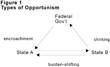
In federations, governments may take advantage of other governments in
one of three ways (see Figure 1). State
governments may try to shirk their responsibilities to the
federation: they may fail to implement federal policy or may take it
upon themselves to enact policy that is normally in the federal domain
rather than respect the division of powers. States may also shift
the burden of making the union work onto the shoulders (and
economies) of other states, for example by creating barriers to trade
between the states, or affecting the mobility of citizens across state
borders. Federal governments may centralize, encroaching upon
the jurisdictions of the states, or decentralize to shift burdens away
from the center.
Of the three forms of opportunism, shirking and encroachment are
unauthorized acts of authority migration. They involve one government
pulling authority toward itself (or perhaps abdicating it) when it suits
that government's interests.
The Hazards of Authority Migration
Opportunistic authority migration troubled James Madison. The union's
inefficiencies under the Articles of Confederation were clear to him. In
notes he wrote in April of 1787, known as “Vices of the Political System
of the United States” (Rakove 1999, 69–80),
Madison recorded some of the symptoms of the ills affecting the union.
He lists 12 problems, annotating 11. The first eight describe rivalry
between the states and rebellion by the states against their
responsibilities to the union.1
Notes 9,
10, and 11 are dedicated to the problems of representational
democracy. Note 11 sketches his arguments in Federalist
10.
In these notes, Madison describes the
states' opportunism—burden-shifting and shirking—that plagued the union
under the Articles of Confederation.
Here I will agree with Madison's preoccupation with opportunism, arguing
that it destabilizes federations, making them vulnerable to endogenous
and exogenous attacks.
Federalism combines many of the advantages of unitary and confederal
systems. When effective, it offers the military security of a unitary
system without sacrificing demands for local autonomy. Arguably, it
offers more opportunities for economic growth and protection of
individual rights than either other democratic form. Citizen
satisfaction with the government weighs all of these factors, among
others. Some of these factors, such as security and democratic rights,
the government provides directly, while others, most notably wealth or
economic growth, the government does not provide directly, but may
encourage through its policies.
For the purposes of this essay, let us make the following useful
distinction. Varying the distribution of authority can influence
allocative efficiency: how the pie is split and whether
that distribution agrees with the wishes of the public, admitting that
the public's preferences may not be well defined.2
In a diverse society—seemingly a prerequisite in
federations—it is difficult to rank the alternative allocations
of resources and opportunities. The Pareto criterion or the
Rawls criterion—both relevant to a governmental form that
includes representation of the states and supermajority voting
requirements—will not create a complete ordering. Majority rule
will likely admit cycles
It can also influence
productive efficiency: how large the pie is. Changes in
allocative efficiency are necessarily political. Redistribution means
that some will do better while others are worse off. In contrast, all
else equal, reductions in productive efficiency are unambiguous. A
smaller pie is worse for everyone.
Authority migration can reduce both allocative and productive efficiency.
When authority is redistributed opportunistically, it is carried out for
strategic reasons, to reallocate resources to the advantage of the
opportunistic government's constituents. Because it is engineered to
serve the electoral interests of a particular government, this new
distribution of authority may not—and most often will not—improve the
union's productive efficiency. Authority migration through opportunism
shifts the federal system to a less efficacious distribution of
authority, reducing the benefits of federalism and rendering the union
weaker.
Apparently exogenous factors contributing to the failure of federations
may be attributable to opportunistic authority migration when examined
more closely. While a government may be punished at the polls for
initiating a less effective distribution of authority, there is a danger
lurking in the background that extends beyond electoral consequences
should the government fail to be productive. If the government fails, it
is vulnerable to external and internal threats. The government must
generate sufficient returns to be able to mount a credible defense
against invasion, and it must work well enough that citizens would not
accept an alternative.3
Consider the
potential correlation between the weak performance of the
Argentine federation and its history of military coups; the lack
of confidence in the federal division of powers in the United
States prior to the civil war and in Canada today; the tenuous
hold on democracy in the Nigerian federation
Of
particular concern is the threat to democracy. There is no shift of
authority more odious than when the people lose control of their
government. Federalism is an insufficient armor for democracy's fight
against tyranny if it performs inefficiently: tyranny, either from
external threats or internally, looms as a potential alternative.
What Motivates Opportunism?
Opportunistic behavior destabilizes unions. If member governments value
the union, why would any one of them engage in destructive behavior?
James Madison took up this problem in notes 7 and 8 of the Vices. In
Note 7 he makes the following two observations:
Perceived
hardship: “Every general act of the Union must
necessarily bear unequally hard on some particular member or
members of it. Secondly the partiality of the members to their
own interests and rights, …will naturally exaggerate the
inequality where it exists, and even suspect it where it has no
existence.”
Suspicion leads to opportunism: “[A]
distrust of the voluntary compliance of each other may prevent
the compliance of any, although it should be the latent
disposition of all.”
In the first observation, Madison notes that the burden of making the
union work falls unequally upon the shoulders of the states; some may be
asked to make greater sacrifices than others. All will be sensitive to
the hardships of union, and each is likely to believe that it bears more
of the burden than the others. In the second observation, Madison
laments the inefficient outcome generated by the common knowledge of
perceived hardship: each member state will be suspicious that others
might shirk—behave opportunistically—in order to deflect some of the
burden. If there is a danger that the collective good will not be
provided, then it too should shirk. This pairing of observations lead
him to conclude that it is impossible to sustain full compliance within
the union of states: “It is no longer doubted that a unanimous and
punctual obedience of 13 independent bodies, to the acts of the federal
Government, ought not be calculated on” (Rakove 1999, 72). Madison diagnosed the union's problem as a
collective action dilemma, where shirking and burden-shifting are its
manifestations.4
Another result from
the public good provision literature further explains the
motivation to shirk. If the collective good could be provided
without the full cooperation of all, then actors may be tempted
to free ride off the efforts of others. In other work, I have
shown that under a wide range of circumstances, partial
compliance is the best that can be hoped; opportunism is
inevitable (Bednar 2004)
Federalism is particularly vulnerable to unplanned or unwanted authority
migration because it has multiple levels of government that may be put
into competition with one another by the electoral system.
Paradoxically, it is the democratic nature of federalism that threatens
the performance of its democracy. Opportunism is not corruption. It is
not a politician using his office to extract rents from taxpayers. To
the contrary: opportunism is the government using its position to
extract rents from other governments to benefit its taxpayers. Credit
assignment is inherently ambiguous in the federal structure, where
multiple governments serve the same constituents. Governments want to
claim credit for good outcomes and distance themselves from bad. This
electoral instinct can put them into competition with one another, and
even cause them to try to adjust domains of authority opportunistically.
Even in a union that clearly benefits its members, the electoral
independence of the governing bodies makes each put the interests of its
own constituents over the general body. Authority becomes the object in
a tug of war between competing governments, and the ensuing authority
migration reduces the efficacy of the union.
Even when the opportunistic authority migration is (incidentally)
utility-enhancing, it may destablize the union, not because of the
outcome, but because of the process. With opportunistic authority
migration the federation is altered not by design or by popular
amendment, but instead due to self-interest of one or more parties to
the federation. The commission of any opportunism fuels the suspicions
that lead to further acts of opportunism.
Instituting Compliance
Madison's federalism was designed to make republican democracy feasible.
Should democracy fail, tyranny would result, either by force, as the
union would succumb to a better equipped and organized outside force, or
by choice, as the people might willingly abandon the inefficient
democratic government in hopes that a home-grown alternative might
improve their circumstances. Madison asked the question: How do you
structure a sufficiently effective democratic government so that its
defense is fearsome to outsiders, and its citizens are not tempted to
abdicate authority? That is, how do you guarantee the distribution of
authority that maximizes the federation's productive efficacy?
While a unitary government would seem to be the neatest solution to the
problem, elimination of the states was not politically feasible in 1787,
just as it is not an alternative for many newly emerging democracies
today. It is a throw-out-thebaby-with-the-bathwater solution; it ignores
the many benefits of decentralization. A shift from a confederacy to a
federal union, with a stronger and effective federal government and a
system of institutions, was designed to overcome shirking and
burden-shifting, harmful acts of opportunism that may reduce the
efficiency of the union.
But in creating a solution to the burden-shifting and shirking common in
the confederation, federalism also created the potential for the third
form of opportunism: encroachment. Madison in the Federalist papers was
dedicated to defending the design of the union against fears that there
were insufficient checks on the power of the federal government. A
central government that could capture power from the state governments
might also be capable of tyrannizing the states or their citizens in the
same fashion that Britain was tyrannizing the colonists. Therefore
federalism, unlike a unitary government, has a second authority
migration battle to contend with: the tug of war for authority between
the states and the federal government.
State shirking is managed in federations constitutionally through the
supremacy clause, the dormant Commerce Clause and the unifying clauses
of Article IV: Full Faith & Credit, Privileges & Immunities, and
the Guarantee Clause.5
In the Guarantee
Clause (adopted in some form in many other federal
constitutions), the federal government guarantees to its
citizens that the governments of the states will remain
republican democracies. Apart from justifying certain aspects of
the federal government's interventionist policies during the
Reconstruction, the Guarantee Clause has not been relied upon in
the United States, causing some legal scholars to argue that its
usefulness has withered away. However, in other federations,
most notably Argentina and India, the Guarantee Clause has been
used frequently to justify federal intervention in state
government affairs. The efficiency gains of its use are not
clear and its use remains controversial
Politically,
the states are subordinated to the federal government through their
fiscal dependence. A greater threat to the balance of federations seems
to be federal encroachment. In a confederation, states may protect
themselves and their citizens through the threat of unilateral secession
should the central government become too heavy-handed. But how does one
guard against inefficient overcentralization in a federation, where
secession is not such a ready option? This problem plagued Madison, and
it became the chief form of authority migration that he had to defend
against in the Federalist papers. There, he suggested three safeguards
of federalism, and I append two more.
Structural Safeguards
Madison's checks and balances solution was a combination of
fragmentation and joint responsibility. “The different governments
will control each other, at the same time that each will be
controlled by itself” (Federalist 51). “So it is to be
hoped,” Madison later wrote in a newspaper editorial, “the two
governments possess each the means of preventing or correcting
unconstitutional encroachments of the other” (Rakove 1999, 508).
State Supervision
States will watch what the federal government does, and if any one
perceives encroachment it will spread a cry of alarm. Madison wrote
in Federalist 45: “But ambitious encroachments of the
federal government, on the authority of the State governments, would
not excite the opposition of the single State, or of a few States
only. They would be signals of general alarm. Every government would
espouse the common cause.” The 1798 Virginia and Kentucky
Resolutions were attempts to trigger this safeguard to resist the
Alien and Sedition Acts of the Adams administration. Wechsler (1954) renewed interest in state supervision
by noting the states' involvement in federal decisionmaking.
Electoral Safeguards
Madison's goal was an effective representative democracy. He believed
that if the people had the right instruments for governance, then no
government could better guarantee their individual rights than a
representative democracy. He believed that the people could serve as
a back-up safeguard of federalism: he relished the electorate's
rejection of the Adams administration after its transgressions
(Rakove 1999, 846).
The last two forms of safeguards were not part of Madison's plan for
federalism, but have been introduced by modern scholars.
Political Safeguards
Although the states are often fiscally dependent upon the federal
government, politically, a reversal of the tables helps balance the
federation. A decentralized party system can counter encroachment
because the federal government is dependent upon the state party
apparatus for support (Riker 1964; Kramer
2000; Filippov, Ordeshook, and
Shvetsova 2004). However, political
ambitions may reduce the decentralizing tendency of this safeguard
as local and state politicians imagine themselves in higher public
office and appreciate the expanded authority federal encroachment
would provide. It can also affect allocative efficiency when it
spurs inefficient distributions of pork.
Judicial Safeguards
The court, freed from electoral incentives, may be poised to stop
opportunism (e.g., Bednar and Eskridge 1995; Yoo 1997). The ability
of the court to interject is determined by its independence. In
particular, the court is often viewed as dependent upon the federal
government—a “handmaiden of the executive,” in Riker's (1964) words—a position that jeopardizes its
ability to patrol federal encroachment or its credibility in
defining shirking.
Each of these institutions operates like a trigger mechanism: in
theory, there is a common understanding of acceptable behavior, and
if that threshold is crossed, then a punishment—structural,
political, electoral, or judicial—is triggered. For example, the
decentralized party system is a safeguard of federalism when local
and state parties react to attempts by the federal government to
overreach its power at their expense. They may withhold support for
the federal government's activities and otherwise signal displeasure
as a punishment for overstepping the boundaries on federal
authority. Several of the safeguards may themselves trigger
electoral responses: public acknowledgment of tension within a party
or (in structural safeguards) of disagreements between the branches
or between houses in the legislature may alert voters to attempts to
unbalance the federation.
The effects of each of these safeguards on opportunistic behavior are
not yet fully understood, but their vulnerabilities, many identified
above, are known. Therefore, it is improper to consider any one
safeguard to be sufficient. They work best in complement to one
another. Safeguards may complement one another in coverage: for
example, there may be policy dimensions that the court is
jurisdictionally excluded, or excludes itself, from considering via
a political question doctrine. Other safeguards will need to fill in
to monitor and punish where the court is excluded.6
An example is the Argentine executive's
interventions in provincial governments. The Argentine
Supreme Court has long held that these acts are political
questions and not subject to their review. Political
safeguards serve as the chief restraint on the federal
government
Safeguards may also complement one
another in the design of the trigger: some may have thresholds that
trigger a reaction fairly frequently, but have a mild corrective
mechanism, while others may be triggered rarely but with a severe
reaction. For example, the court may have a fine-grained lens,
triggering often for minor opportunistic acts, but with relatively
minor punishment. Civil war, the most severe trigger, would occur
only in instances of the most egregious opportunism. Opportunistic
authority migration is managed by a combination of these safeguards.
When the complementarity is well tuned, the distribution of
authority is maintained.
Coordination
The political economy literature on federalism relies heavily on the work
of James Madison and, much later, William Riker. Both men were concerned
with the appropriate institutional design of federalism. But neither
rested his theory entirely on institutional mechanics. Riker argued that
the key to the maintenance of federalism is citizens' shifting
allegiance from state to federal government. Madison urged a shift from
a compact of the states to a compact of the people. Both arguments join
these thinkers with the majority of those who study federalism, most
notably Daniel Elazar, Samuel Beer, and Vincent Ostrom, in invoking
culture.
The solution to any collective action dilemma, including the problem of
opportunistic authority migration in federations, is context dependent
(e.g., E. Ostrom 1998). Any institutional
remedy—or, most appropriately considered, any combination of
institutions—is a legacy of the country's history. In this sense,
culture acts as an exogenous force, determining both the availability of
remedies and their usefulness. For example, a country that has a history
of a politically dependent court or the dominance of a single party may
be poorly suited to rely upon judicial or political safeguards against
authority migration. The exogenous factors of political culture, as
determined by a shared history, may alter the effectiveness of some
safeguards.
But the cultural aspects of federalism that Madison and Riker refer to
are endogenous, or at a minimum, dynamic; a successful federation
demands a shift in the political culture. For Riker, it is a shift in
allegiance, or identification, from state to federation; for Madison, it
is a shift in the power base, from a government controlled by the states
to a government controlled by the people. For both, it is an exercise in
nation-building. This statement of the necessity of a nation is
provocative and perplexing. How, logically, would it matter?
In game theory, we typically assume common knowledge of the rules of the
game: the players, the strategies available to them, the payoffs, and
the assumption that each is a rational maximizer. When strategies
require cooperation—such as group reactions to violations in public good
provision—the coordination occurs automatically, as all pursue optimal
strategies. But in those settings we presume that there is a single
trigger mechanism, and so a unique optimal strategy. If we have several
trigger institutions interacting, as we do with the structural,
political, electoral, and judicial safeguards of federalism, the number
of equilibria is likely to be enormous, and there may even be multiple
optimal combinations of institutions. When this is the case, we need
refinements to select among the multiple Nash equilibria. Refinements
generate (or are a way of logically discussing) common expectations, or
the existence of a focal solution.
Played out in practice, the actors who safeguard a federation need to
know when to respond to aberrant behavior, and how severely. Shirking,
encroachment, and burden-shifting are abstract concepts; we can argue
that they damage the stability of the union, but in order to create
monitoring devices to limit opportunism, we need to be able to identify
it. Some opportunism is egregious but most is ambiguous. Opportunism is
always subjective; it involves interpretations. In monitoring, we ask:
Does this action represent a shift in authority, or is it a new
consequence of an old routine? Does it follow naturally from the
country's history, while from the outside it looks sanctionable? We need
a set of common expectations about governmental behavior in order to
identify opportunism.
If we want to see how culture might matter, game-theoretically, to the
stability of the distribution of authority, then we may argue that it
creates a set of common expectations. That is, the existence of a common
culture may legitimize the proclamation of what the law is, and its
defense by any of the safeguards. Submitting to authority—and respect of
the distribution of authority—is a coordination problem as much as it is
a compliance problem. As Chwe (2001, 19) writes, we are more likely to
accept authority if we know that it is also accepted by others. Hardin
(1989) argues that constitutions serve as
coordinating devices, creating the common knowledge of mutual
expectations of behavior necessary to make government possible.
However, there is a significant complication in the translation from
theory to practice: How do we balance such a variety of mechanisms? That
is, how do we adjust the system to achieve optimal complementarity?
These questions leap to the frontiers of research in the political
economy of federalism. We must confront two problems: first how to
design the trigger mechanism, and second, how to cope with a public that
openly debates the balance of power within the federation.
Each institutional safeguard is composed of actors with interests that
may not align with maximization of the federation's productive
efficiency. That is, they may be willing to trade off productive
efficiency for a redistribution that favors them. The incentive scheme
that boosts the federation's performance depends upon a particular
subset of the population, with specialized interests, to carry out each
trigger. An effective federation demands that these triggers be
balanced. If one trigger gets out of line, then the system of triggers
is not optimal, and the federation is not as effective as possible.
The second consideration takes us to the public debate about federalism.
The people are not of one mind when it comes to the appropriate balance
of the federation: different distributions of authority generate
different outcomes, with asymmetric effects. And so legal scholars,
politicians, and citizens debate the appropriate balance of power
between states and the federal government, and they often disagree with
one another about the role of each safeguard in maintaining that
distribution.
So is culture a red herring? With orchestration of the safeguards against
opportunistic authority migration apparently impossible, it would seem
that luck alone explains the successful coordination of the U.S.
federation's safeguarding institutions. Madison and Riker and Elazar and
others believed otherwise, and so do I. But if there is something to the
importance of nationhood, of a common federal culture, then we have to
understand how it might exist despite healthy debate about appropriate
distributions of authority and blends of safeguards. We would need to
know how disagreement might still generate coordination in federations,
or how coordination might occur despite disagreement.
Let's return to the basic sketch of trigger mechanisms. Generally, we
consider that a reaction is triggered when behavior crosses some
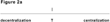
threshold. Let the distribution of authority fall along a single axis
ranging from decentralization to centralization, as in Figure 2a. Suppose we could identify a point to
correspond to the current balance of authority. If the federal
government pulled authority to the right, centralizing, or the states
pulled it to the left, decentralizing, then a safeguard would be
triggered to defend the distribution at T.
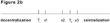
Public dispute and self-interested safeguards mean that the threshold is
not at a single point, but instead might be a set of points, a range of
acceptable behavior, as in Figure 2b. We might
all agree and be able to identify extreme authority migration, when
authority is decentralized to the left of TL or centralized to the right
of TU, but debate the ideal distribution of authority between these two
points.
The range between the two thresholds presents a new disincentive to the
government contemplating opportunistic authority migration. While it may
at times be able to move authority about in the space between the two
thresholds, if it shifts authority outside of this range, it faces a new
hazard. Suppose that the distribution of authority is at x2, and the
federal government centralizes, shifting the distribution to x3. Not
only will the federal government incur the punishment triggered by the
move beyond TU, but after the punishment, the distribution may be
“corrected” to a point even more decentralized than the original
position, such as x1.
The benefit of a large—or thick—boundary is that there is room for
discussion, for deliberation over the appropriate distribution of
authority.7
This thick boundary—that
is, the distance between the thresholds—may capture formally
Sunstein's (2001) argument about what
constitutions do: their ambiguity ensures space for discussion
and compromise, when possible, between opposing parties
It tolerates experimentation, perhaps leading to higher levels of
governmental efficacy, as well as innocent mistakes. It may also
encourage us to think about the leeway that the safeguarding
institutions have from the public. Any one of these safeguards may have
space between the upper and lower bounds; the size of this space
determines the amount of tolerance for authority migration. The downside
of a thick boundary is that the efficacy of the federation, in both the
productive and allocative senses, is not certain. That is, the larger
the area, the greater the range of efficiency—allocative and
productive—tolerated by the union. Therefore, the union may slip to
lower efficiency, performing suboptimally, without any corrective
institutional reaction. Its productive capacity, all else equal, is less
certain.
The band of tolerance will be tighter the more the electorate agrees
about the distribution of authority, and the more closely it controls
the various safeguards. Agreement may come from a common culture, a set
of common expectations. Therefore we return to Madison and the others: a
federal culture, the making of a nation, may direct attention away from
the zerosum games of allocative efficiency and toward the positive-sum
gains in productive efficiency. In so doing, it reduces the range of
uncertainty in what the federation does and causes to happen. Absent
significant external threats that put pressure on the federation's
immediate performance, in nascent federations, a wide band of tolerance
is likely to be beneficial; it allows the experimentation necessary to
discover the most effective distribution of authority. Over time,
however, we may prefer the certainty of a more constricted federation as
we gain more experience with what distribution of authority is most
productive.
Conclusion
This essay has presented in brief a framework for analyzing federal
success and failure. It has argued that opportunistic authority
migration is endemic to federations, and weakens them by reducing their
productive capacity. Institutional safeguards exist and work best as
complementary remedies. However, public debate about the ideal
distribution of authority, as well as a lack of direct control over the
self-interested actors within the safeguards, means that there will be a
range of distributions possible, and the state and national governments
may be able to manipulate authority within this range. The importance of
a federal culture remains ambiguous, but it might help coordinate the
safeguards by reducing the size of the range, thereby generating a more
reliable level of productive efficiency.