Introduction
The larger grain borer Prostephanus truncatus (Horn) (Coleoptera: Bostrichidae) is an important pest of stored maize and dried cassava roots. The pest originated from Central America and Mexico (Markham et al., Reference Markham, Wright and Rios Ibarra1991) and was accidentally introduced to East and West Africa in the late 1970s and the early 1980s, respectively. To date, the pest presence has been confirmed in 17 African countries: five in Eastern and Central Africa, eight in West Africa and four in Southern Africa (Farrell, Reference Farrell2000; Farrell and Schulten, Reference Farrell and Schulten2002; Gueye et al., Reference Gueye, Goergen, Badiane, Hell and Lamboni2008). There is consensus among scientists that where P. truncatus occurs, losses for farm-stored maize have increased from about 5% or less to approximately 10% per year (Dick, Reference Dick1988). However, in places where farmers grow improved maize varieties, which are more susceptible to pest attack, storage losses averaging 17.9% after 6 months and 41.2% after 8 months have been recorded mainly due to P. truncatus (Keil, 1988; as cited by Boxall, Reference Boxall2002).
Prostephanus truncatus is a notifiable pest of quarantine importance in Zimbabwe (CABI, 2004). To date, there had been anecdotal evidence of its presence in maize-growing areas of the country. With erratic rainfall patterns over the last 10 years during the country's main farming season, coupled with macroeconomic challenges that resulted in critical shortages of agricultural inputs such as seed and fertilizer, crop yields dropped considerably. The resultant grain deficit had to be met by importation of food grains, especially maize, the main staple food for the majority of the population. In August 2008, a food security survey covering ten districts of the country, to assess inter alia, grain availability and coping strategies, it was found that stored grain was generally not available in all but three districts (Shoko, Reference Shoko2008).
Zimbabwe is porous to the entry of the pest through legal as well as illegal entry points along the borders with nations where P. truncatus has established (Marange and Mvumi, Reference Marange and Mvumi1998). When P. truncatus occurs in a country for the first time, the pest is highly likely to establish and spread in areas with similar habitats and climatic conditions as those prevailing in the already-infested countries (Rwegasira et al., Reference Rwegasira, Jowah and Mvumi2003). In-country spread of the pest is inevitable, as informal markets facilitate grain movement and trade, especially when there are critical food deficits in other areas of the country (Shoko, Reference Shoko2008). Accidental entry of the pest into Zimbabwe through formal trade is also possible as it is estimated that maize grain imports until the end of the marketing year in March 2009 were 115,000 mt/month (Magunda, Reference Magunda2008). Some of the grain was imported from Malawi and Zambia where the pest is already endemic (Semple and Kirenga, Reference Semple and Kirenga1995).
In Zimbabwe, the Plant Protection Research Institute (PPRI) of the Department of Research and Specialist Services (DR&SS) in the Ministry of Agriculture, Mechanisation and Irrigation Development has been periodically conducting countrywide P. truncatus surveillance using male-produced aggregation pheromone traps. Between May 2006 and April 2007, trap catches showed the presence of P. truncatus in some parts of the country. Reports of P. truncatus damaging maize have been received by PPRI since April 2007 through agricultural extension officers, especially from Mashonaland Central and Mashonaland West provinces. The objectives of the current study were, therefore, to confirm the occurrence of P. truncatus in selected parts of Mashonaland West and Mashonaland Central provinces and to determine P. truncatus spatial distribution in Zimbabwe based on trap catch data.
Materials and methods
Mapping of P. truncatus-infested areas using geographical positioning system (GPS)
Surveillance data compiled by PPRI staff from May 2006 to April 2007, based on the male-produced aggregation pheromones of P. truncatus, were used in the current study. The trap catch data were used in combination with GPS 315 co-ordinates, generated through a system of satellites and handheld receivers for determining geographical location (Landres et al., Reference Landres, Spildie and Queen2001), to map out the geographical spread of P. truncatus in Zimbabwe using the Health Mapper version 4.2.1, a geographic information system software.
To detect the presence of the pest and establish the spatial distribution, cardboard ‘Delta’ traps with a sticky base facing up and baited with 2 mg of the P. truncatus male-produced aggregation pheromone contained in small plastic vials (AgriSense-BCS Ltd, Pontypridd, UK), were set up along major highway roads in the country. The traps were tied to trees at a height of approximately 2 m above ground and placed in secure sites with minimal disturbance as recommended by Hodges and Pike (Reference Hodges and Pike1995). The traps were labelled with the date of placement and location and retrieved after at least 2 weeks from the set-up for P. truncatus catch assessment.
Survey of P. truncatus-infested areas
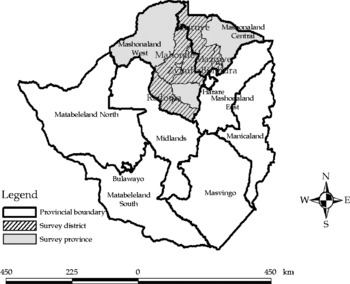
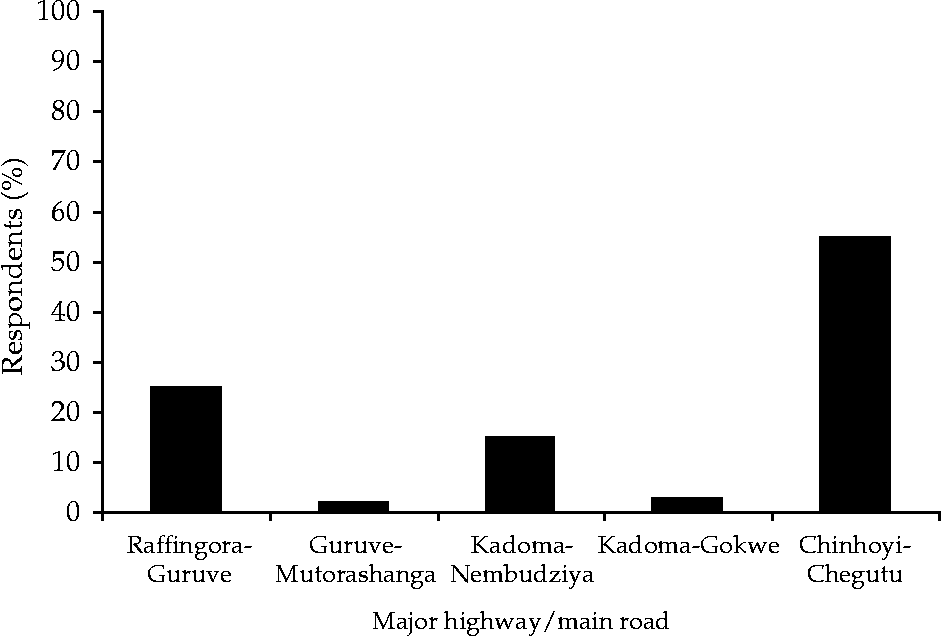
A standard structured questionnaire was used for surveying areas suspected to be P. truncatus-infested in Mashonaland West and Mashonaland Central provinces during the April 2007–March 2008 post-harvest season. The survey questionnaires were administered to 296 farming households in five districts: Makonde, Kadoma and Zvimba districts in Mashonaland West province; and Guruve and Mazowe districts in Mashonaland Central province (Fig. 1). A team of trained PPRI staff (at least one Research Officer and a Research Technician) undertook the survey with the assistance of field extension staff from the Department of Agricultural Technical and Extension Services (AGRITEX) resident in the survey locations. The initial respondents were selected based on reports made on the pest in the area followed by interviewing their neighbours up to a radius of at most 10 km from the initial reported site. The majority of the interviewees were located along the major roads (Fig. 2).
Provinces and districts visited for surveys or observations

Percentage of respondents situated along major roads of Zimbabwe

The household questionnaire survey sought to evaluate farmer perception of the P. truncatus pest status and probable source of infestation, to identify control strategies used by farmers and to collect basic ecological information about the pest. The survey was also conducted against a background of reports by some farmers that initial P. truncatus infestations were first observed on donated seed maize and/or grain for consumption.
Reports of P. truncatus attacking maize were also received from Bindura district, Mashonaland Central province. The reports were followed up, and observations were made. No questionnaires, however, were administered in this area. Eradicative measures were undertaken by fumigating infested grain and storage facilities with methyl bromide.
The Statistical Package for Social Sciences version 12 was used to analyse the survey data. Cross tabulations and frequencies were computed, and the results presented in tables or graphs.
Results
Mapping of P. truncatus-infested areas
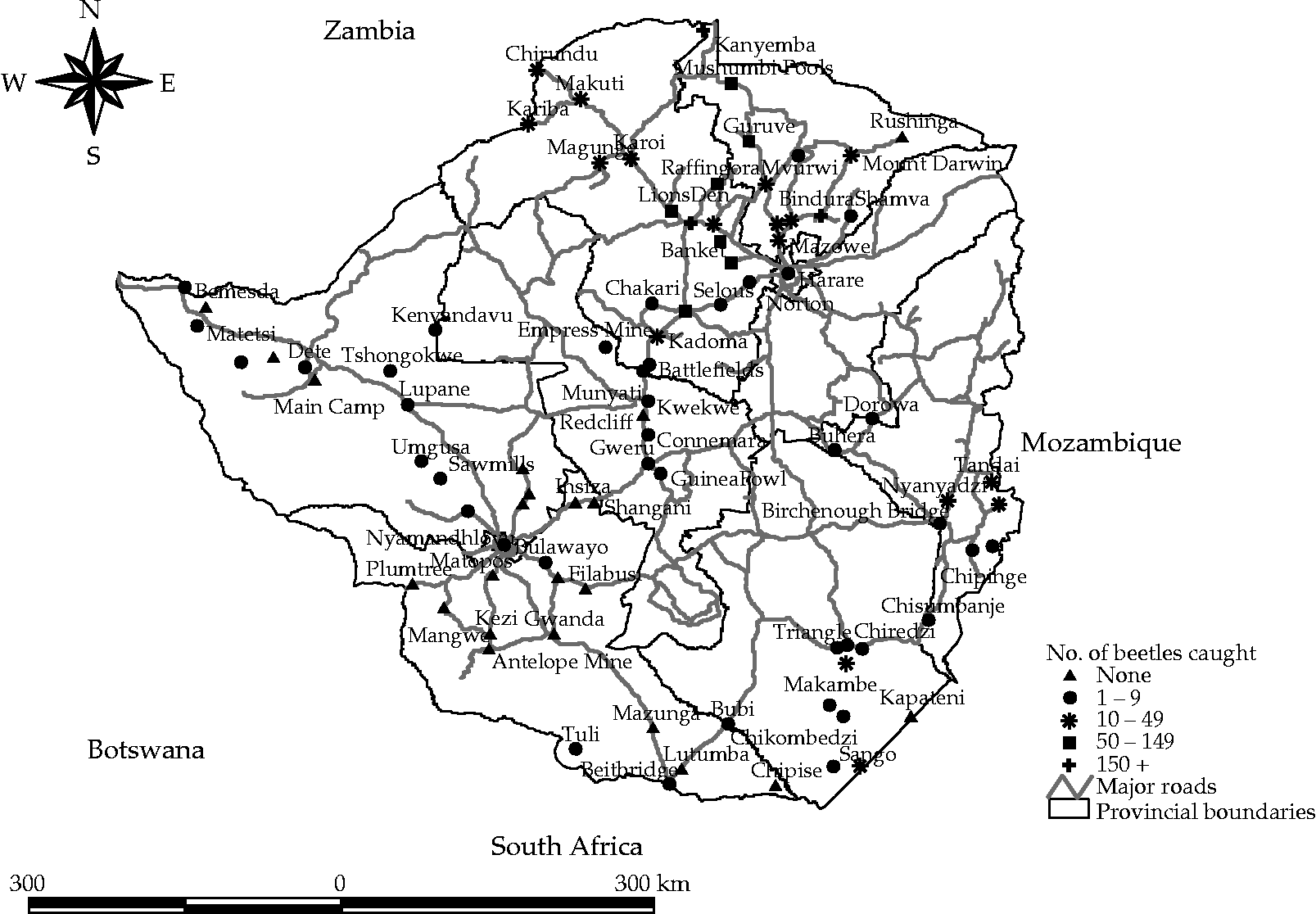
The distribution map of P. truncatus (Fig. 3) shows that the pest occurs in most parts of the country with the greatest concentration found along the highway route from Chirundu border post (bordering Zimbabwe with Zambia) to Harare (the capital city of Zimbabwe). Fairly high (10–49 beetles per trap) but isolated catches were also observed in the Midlands provinces such as Gweru. Relatively lower trap catch counts (1–9 beetles per trap) were recorded in the northwestern part of the country.
The distribution of Prostephanus truncatus in Zimbabwe based on trap catch data
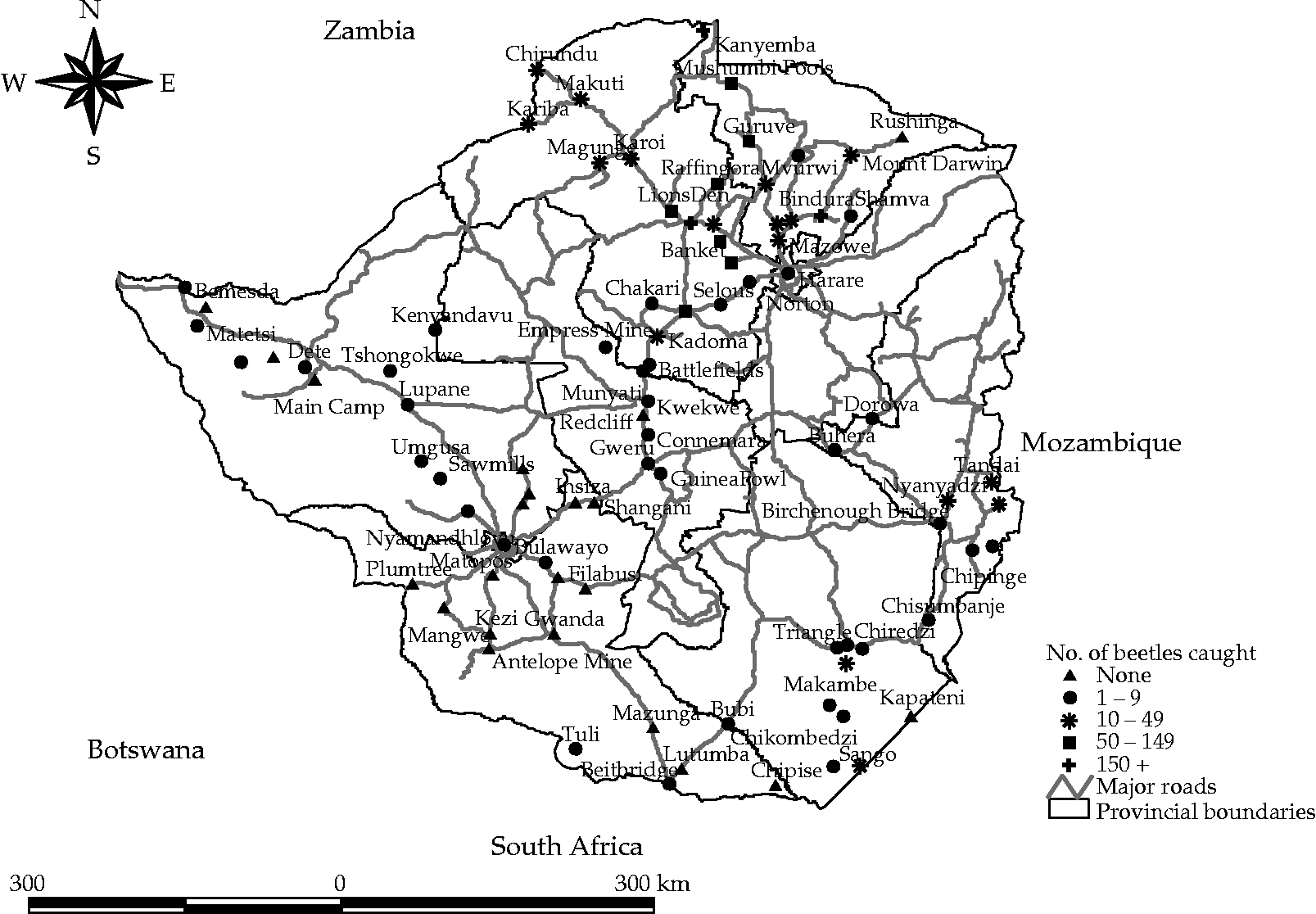
In the eastern parts of the country, covering areas near Mutare moving down south to Chipinge, relatively high (10–49 beetles per trap) but isolated counts were recorded. The highest P. truncatus trap catches were found along the Chinhoyi–Chegutu highway, which branches off the Chirundu–Harare route. No Teretrius nigrescens (Lewis) (Coleoptera: Histeridae), the imported predator of P. truncatus, was observed in the traps.
Household survey of P. truncatus-infested areas
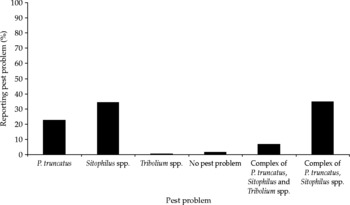
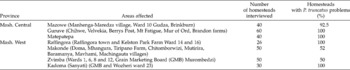
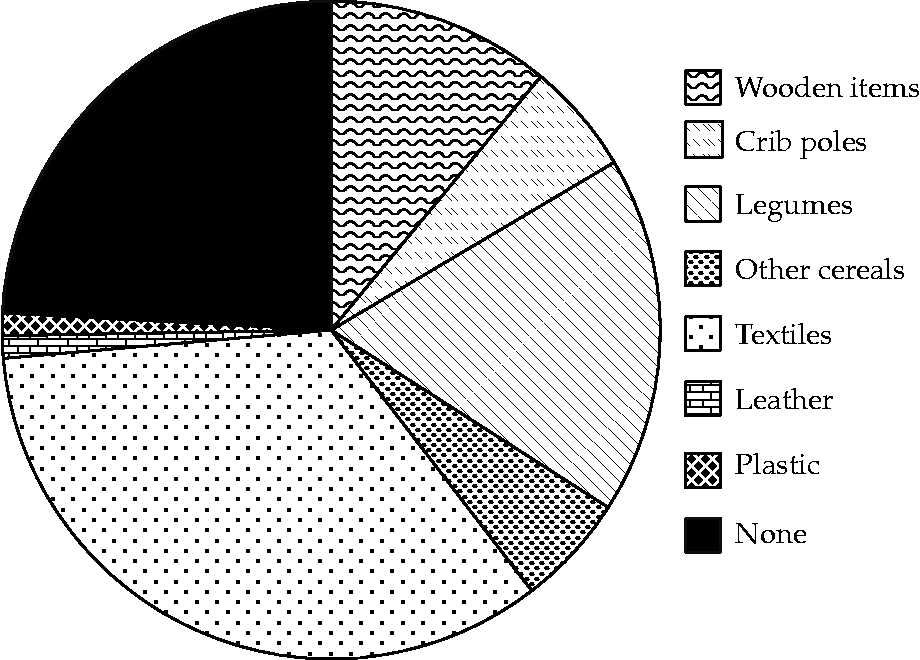
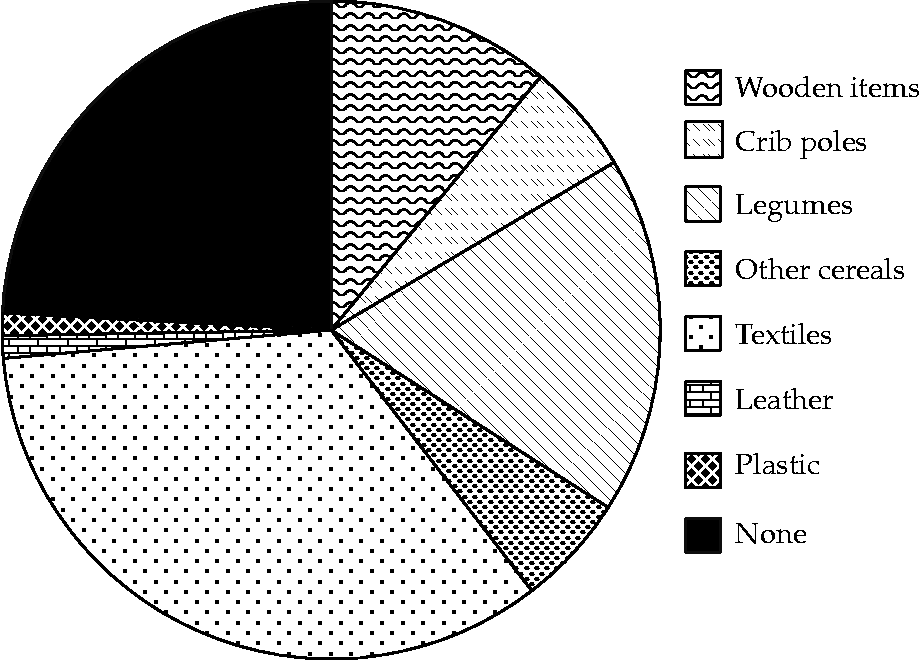
In the five districts surveyed, despite P. truncatus having been observed, farmers had varying opinions of which pest was a major problem in their stores (Fig. 4). Sitophilus zeamais (Motsch.) (Coleoptera: Curculionidae) and Tribolium spp. (Coleoptera: Tenebrionidae) were cited by farmers as major problems, especially in Zvimba district where half the respondents (Table 1) reported facing P. truncatus problems. At least 90% of the respondents in four districts indicated having problems with the pest (Table 1). Damage was also observed on other items other than grain, such as polypropylene bags, wooden materials (cooking sticks, crib poles, furniture, axe and hoe handles), gumboots, leather shoes, dry calabashes/gourds and plastic materials (trays, bottles, opaque beer containers and bags) (Fig. 5).
Percentage of respondents reporting major storage insect pest problems in five districts of Zimbabwe

Areas where Prostephanus truncatus has been observed and proportion of respondents affected

Proportion of respondents reporting other commodities that were attacked by Prostephanus truncatus
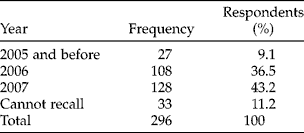
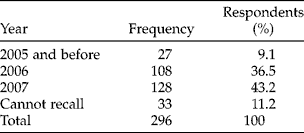
The respondents had varying responses as to when they first observed P. truncatus and/or its related damage. The majority of farmers (about 80%) reported to have observed the pest or its damage in 2006 or 2007 while for some farmers (9%) it was 2005 or earlier (Table 2). In three out of the five districts surveyed (i.e. Kadoma, Makonde and Guruve), P. truncatus has become a major primary storage pest over the commonly found S. zeamais. In Zvimba district, however, S. zeamais remains the most important pest, although P. truncatus was also reported. The secondary pest Tribolium spp. was ranked as a major pest in Zvimba. In Makonde and Zvimba, there were also a number of respondents who highlighted that they experienced no pest problems in their stores (Fig. 4).
Period when Prostephanus truncatus and related damage was first observed by farmers
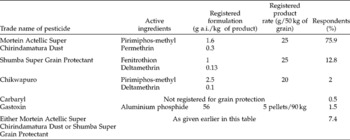
In the areas where P. truncatus was causing damage, the most common control strategy was the use of chemical insecticides, dominated by Actellic Super dust (a.i. pirimiphos methyl) while use of other registered chemical insecticides were reported by only 16% of the interviewees (Table 3).
Percentage of respondents using various chemicals used to protect stored products against pests

There were isolated reports of fake Actellic Super dust that was being used, which could have aggravated the spread of the pest. Unfortunately, efforts to obtain samples of the supposedly fake grain protectants were futile, and only exhibits of empty containers were found. Verifications with the Pesticides Registrar at PPRI confirmed that some of the labels differed from the registered ones. Despite grain protectants having clear instructions on how they are supposed to be applied on shelled grain, various application rates and methods were mentioned by the respondents in the survey, clearly indicating the improper use of the pesticides (Table 4). Table 4 also shows that products not recommended for grain protection or for smallholder farmer use were being used.
Percentage of farmers using certain application rates for chemical treatment of stored grain

+ Recommended application rates: 25 g/50 kg for pirimiphos-methyl 16 g/kg+permethrin 3 g/kg and fenitrothion 10 g/kg+deltamethrin 1.3 g/kg; 20 g/50 kg for pirimiphos-methyl 25 g/kg+deltamethrin 1 g/kg.
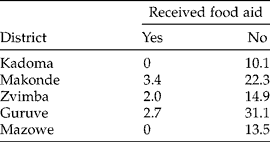
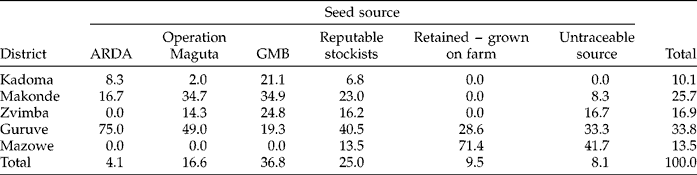
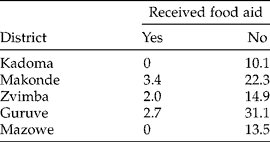
When asked whether they had received any food aid in the recent past, most respondents (91.9%) in all five districts claimed they had never received food aid (Table 5). In Kadoma and Zvimba, the two main sources of seed were the Grain Marketing Board (GMB) and reputable (registered) dealers, while in Makonde, there were an equal number of respondents who sourced seed from reputable dealers as those who obtained seed from ‘Operation Maguta’ a government programme meant to provide agricultural inputs including seed to farmers on a loan basis (Table 6). Other minor sources of seed were the Agricultural Rural Development Authority (ARDA) and use of retained seed.
Percentage of respondents who received food aid
Percentage of respondents indicating various sources of seed used or stored
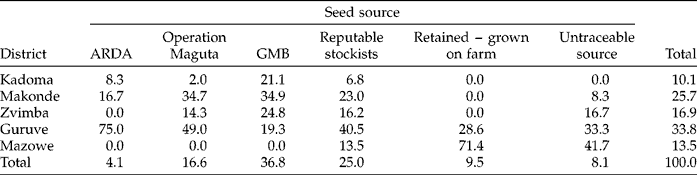
ARDA, Agricultural Rural Development Authority; GMB, Grain Marketing Board.
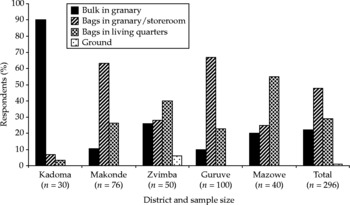
All the interviewees store their maize in shelled form in various storage facilities. The majority of respondents in Guruve and Makonde districts store their maize in bags that are then placed in solid walled and closed granaries (Fig. 6). In all districts, some respondents stored their grain in bulk in granaries. Across all the districts, there was a strong tendency to store grain in bags stacked in living quarters. There were relatively more such respondents in all the districts (except Kadoma) than those who stored in bulk. Some storage facilities found in the survey areas were made of brick and cement mortar. Some respondents, however, despite having sound storage structures, preferred to use their living quarters (kitchens and bedrooms) to store their grain.
Storage place for shelled maize in the surveyed districts

Discussion
The mapped trap catch counts indicate that P. truncatus is present in most parts of the country with greater concentration in the top northeastern parts of Zimbabwe, indicating a high probability of grain stores being infested (Birkinshaw et al., Reference Birkinshaw, Hodges, Addo and Riwa2002). The areas in that belt are close to the Zambian and Mozambican border in the top eastern part of Zimbabwe. This observation fits in well with our survey result that farmers citing major problems of P. truncatus were situated along roads that are linked to the Harare–Chirundu highway. The high trap catches recorded in Gweru, a centrally positioned location in the Midlands province, could be ascribed to internal grain and seed movements bringing further inland P. truncatus, within this major maize-producing area and its surrounding areas.
Although the northwestern parts of the country are known to be dry and record average temperatures of 30 oC, which are suitable conditions for establishment of P. truncatus, the relatively low counts in comparison with other areas could be attributed to the absence or low levels of maize production. Some areas in that region are covered by stretches of cattle ranches and game parks; hence trap catches could be attributed to beetle infestations in the wild, e.g. catches recorded in the Hwange National Park. P. truncatus is known to exist as a forest insect in the natural habitat (Nang'ayo et al., Reference Nang'ayo, Hill, Chandi, Chiro, Nzeve and Obiero1993; Farrell et al., Reference Farrell, Hill, Nang'ayo and Stabrawa1996; Borgemeister et al., Reference Borgemeister, Goergen, Tchabi, Awande, Markham and Scholz1998a, Reference Borgemeister, Tchabi and Scholzb; Hill et al., Reference Hill, Borgemeister and Nansen2002). The distribution from the northwestern part of the country moving down to the southwestern areas (areas near and around Bulawayo) is an indication of the spreading pattern of P. truncatus initially from the ‘source’ areas in the northeastern part of Zimbabwe to the hotter areas in the southwestern parts of the country. The high trap catches found in the eastern border highlands could possibly have resulted from the movement of grain between the heavily maize-producing provinces of Mashonaland (West, East and Central) and Manicaland. In Manicaland province, which borders Mozambique, illegal trade of various commodities through unofficial border entry points between Zimbabwe and Mozambique is particularly rife. P. truncatus is present in Mozambique (B.M. Mvumi, personal observation), and trade in maize grain, coupled with natural flight of the beetle, may have attributed to the numbers that were caught in traps there.
The foundation of pest management depends on understanding the pest ecology and behaviour. For P. truncatus, once detected, monitoring of the spread and seasonal dynamics is one critical activity in management of the pest. It is a key requirement for IPM strategies for stored grain (Wakefield, Reference Wakefield, Lorini, Bacaltchuk, Beckel, Deckers, Sundfeld, dos Santos, Biagi, Celaro, Faroni, de, Bortolini, Sartori, Elias, Guedes, da Fonseca and Scussel2006). Although extensive information is available on aggregation pheromone use in monitoring predominant storage beetle pest species (Hodges, Reference Hodges2002; Olsson et al., Reference Olsson, Ryne, Wallen, Anderbrant and Lofstedt2006), the relationship between the number of insects caught in a trap and those found on a commodity or product has still not been clearly established, making the interpretation of the trap catch data difficult (Toews et al., Reference Toews, Arthur and Campbell2005).
Hodges (Reference Hodges2002) reviewed extensively the use of pheromones to detect or monitor P. truncatus. Pheromone-baited flight traps have the disadvantage of only capturing flying pests that are in the process of dispersing. Thus the pests might be present in a habitat but not yet dispersing, hence may escape detection. In addition, the efficacy of the sticky surfaces to trap insects may be reduced when the surface is coated by dust or when there are already too many insects caught. Hodges (Reference Hodges2002) concluded that trap catch data might not indicate the size of the population in the habitat but only indicate the magnitude of dispersal activity. Factors influencing flight activity of P. truncatus are not yet well understood, but research has shown links with environmental variables such as day length, relative air humidity and temperature (Nansen et al., Reference Nansen, Korie, Meikle and Holst2001; Hodges et al., Reference Hodges, Addo and Birkinshaw2003).
Unlike the common indigenous pests of stored products, P. truncatus distribution and the associated damage caused can be sporadic and unpredictable (Boxall, Reference Boxall2002; Birkinshaw et al., Reference Birkinshaw, Hodges, Addo and Riwa2002; Hodges et al., Reference Hodges, Addo and Birkinshaw2003). For example, in neighbouring villages or stores, one can suffer very heavy infestations, while others remain pest free. Research has shown that the occurrence of P. truncatus in one year will not guarantee a recurring infestation in the following year or subsequent years (Hodges et al., Reference Hodges, Addo and Birkinshaw2003). Even after the beetle has been introduced, its geographical distribution may be very aggregated and can therefore escape detection.
The fact that T. nigrescens, which is attracted to the same pheromone as P. truncatus (Meikle et al., Reference Meikle, Rees and Markham2002), was not caught in the traps may be by chance or may indicate that the predator may not have successfully established in the natural habitats of Zimbabwe. The histerid is exotic to Africa and was released in Zambia as a classical biological control agent for P. truncatus (A. Sumani, personal communication), but the current status of the predator in relation to the pest is unknown. Teretrius nigrescens has not yet been released in Zimbabwe.
Farmers were not able to pinpoint any possible source of pest infestation, although a few had purchased seed from the Grain Marketing Board (GMB) that was already infested with P. truncatus. Some seed packets inspected had foreign addresses where the pest has already been declared. It is therefore likely that P. truncatus entered into Zimbabwe mainly through seed maize (which probably had not been fumigated prior to importation) and food-relief maize grain as a result of the poor harvests experienced in the country in recent years. The most plausible route of entry, as evidenced by trap catch counts observed from the northern part of Zimbabwe, is the Chirundu border post, an entry point from Zambia. Despite the existence of standard phytosanitary measures to reduce the risk of spread, donations and subsidized maize seed distributed from GMB depots to farmers could have further spread the pest as most farmers bought or received the seed and stored it in preparation for planting on average six months prior to the planting season. In addition, some farmers kept the seed for longer than one year, for speculative reasons due to uncertainty during the economically turbulent years, and in some instances, the seed donations came in too late in the season and farmers would decide to keep them for the next season. This practice would obviously compromise the efficacy of the seed treatments. The hotter temperatures (Tigar et al., Reference Tigar, Osborne, Key, Flores-S and Vasquez1994) in northern to northeastern Zimbabwe most likely supported the establishment and hence the abundance of the pest in those areas.
The survey confirmed the presence of P. truncatus in Mashonaland West (Makonde, Zvimba and Kadoma districts) and Mashonaland Central (Mazowe and Guruve districts) provinces causing severe damage on maize grain, both before harvest in the fields, during drying and in the storage facilities. The presence of secondary pests such as Tribolium spp. is indicative of high infestations of primary pests such as P. truncatus and S. zeamais.
The extensive bag damage by P. truncatus suggests that farmers cannot use the bags for long. Besides being a threat to stored products, P. truncatus also caused severe damage to seed maize after harvest before treatment, causing an even greater threat to food security. Because of critical nationwide shortages of hybrid maize seed (a dominant characteristic of the Zimbabwean maize industry pre-2000) in the last 10 years, coupled with affordability challenges even when available, open pollinated maize varieties (OPVs) have been widely promoted to resource-constrained farmers through non-governmental organizations (NGOs). Through this extension system, farmers are encouraged to retain part of the harvested OPV seed for use in subsequent seasons. The areas where P. truncatus was confirmed, namely Mashonaland West and Central provinces, are the major maize-producing areas of Zimbabwe. Farmers normally predominantly grow the hybrid seed varieties as was also reported by Derera et al. (Reference Derera, Tongoona, Langyintuo, Laing and Vivek2006) in other parts of Zimbabwe, which according to Golob (Reference Golob2002) have been modified by cross-fertilization and have lost the intrinsic resistance that they had. The harvested grain is often severely attacked, and farmers in Kadoma district (Sanyati area) reported it to have a bitter taste when milled for consumption.
Despite the introduction of the new pest, farmers have continued using grain storage methods that they have been employing before. Over-reliance on one type of chemical by the farmers can result in the development of insect resistance in the long term. In Africa, it is not uncommon for adulterations of commonly used pesticides (Nkwame, Reference Nkwame2010). Documented evidence exists for Actellic Super dust adulterations by addition of inert materials such as lateritics and other clays (Golob, Reference Golob2002). The total replacement of all active ingredients with fake constituents is also possible. This results in farmers losing confidence in the efficacy of a chemical as was observed with Actellic Super dust in northeastern Tanzania (Urono, 1999; cited by Golob, Reference Golob2002). The occurrence of fake products for grain protection has also been reported in East and Southern Africa (Phiri and Otieno, Reference Phiri and Otieno2008).
It is possible that, despite having knowledge of the correct application rates, farmers under-dose or over-dose in practice. Such cases were observed during the survey. Golob (Reference Golob2002) observed that highly toxic chemicals could be opted for as alternatives to recommended ones if the recommended pesticides are considered expensive. It is therefore not surprising that some farmers were found using carbaryl as a grain protectant as well as controlling other pests attacking other crops such as cotton.
Although interviews of farmers provide isolated evidence that the pest was observed in the country by 2005, its rampant spread could have been limited by several factors. These include the fact that up until the late 1990s, Zimbabwe was exporting grain in most years, reducing the chances of introducing the pest via grain importation. When grain had to be imported by the Government of Zimbabwe, it was recommended that it should be milled soon after arrival at designated GMB depots before distribution to consumers. This reduces the chances of pest infestations reaching the household level. As natural flights of P. truncatus are possible (Markham et al., Reference Markham, Wright and Rios Ibarra1991), it cannot be ruled out that some infestations could have come into the country through active flight from neighbouring countries (South Africa, Mozambique and Zambia) and initially settled in the natural vegetation as predicted by Rwegasira et al. (Reference Rwegasira, Jowah and Mvumi2003). The limited production of cassava in Zimbabwe (also attacked by P. truncatus as dried chips) could have reduced the rate of spread of the pest.
Another strong point that could have slowed down the spread of P. truncatus could be the sound storage facilities, which are based on burnt brick or thick earth as opposed to pole and mud used by some farmers, as well as the fact that grain is generally stored in shelled form (Mvumi et al., Reference Mvumi, Giga and Chiuswa1995) whereas the pest prefers cobs (Boxall, Reference Boxall2002). The use of solid earth or brick structures is not necessarily in response to the occurrence of P. truncatus but probably due to culture, the scarcity of construction material such as timber used in the past and simply modernization. However, in some provinces, the Ministry of Agriculture deliberately promoted improved granaries made of bricks with a concrete base in anticipation of the occurrence of the pest in the country (Mvumi et al., Reference Mvumi, Chigariro and Tembo1997). In comparison with other countries such as Malawi and Mozambique where grain is stored on the cob with or without husks (B.M. Mvumi, personal observation), the damage on shelled grain is less severe. In Zimbabwe, smallholder farmers usually dehusk maize in the field and then transport the crop to the homestead for further drying. Drying is usually done on a prepared surface on the ground or in cribs constructed using wooden poles and wiremesh or thatch grass (Mvumi et al., Reference Mvumi, Giga and Chiuswa1995). After drying, the cobs are shelled/threshed, winnowed, treated and then stored in bulk or in bags in granaries. The process of winnowing grain prior to storage can also reduce the initial level of pest infestations at storage.
Although some farmers have sound granaries to store maize grain, the preference to store in living quarters is highly prevalent, probably due to fear of grain theft, a threat exacerbated by grain deficits at local level. Typically, granaries are detached from the living quarters. The storage of maize grain in living quarters poses a risk to human health especially considering smallholder use of fumigants and high doses of grain protectants. For maize grain, the existence of solid stores that can be sealed seem to suggest appropriateness of fumigation, as a quick-fix solution to manage resident populations of pests before storage. However, these storage facilities are actually rarely airtight; hence fumigation at smallholder level is generally not recommended.
The occurrence of P. truncatus in Zimbabwe has rekindled interest in post-harvest pest management by various stakeholders. The findings of this study make it imperative for stakeholders to develop serious strategies to reduce the impact of this notorious pest. Stakeholders including field extension staff, media, NGOs, transporters, the GMB and agrochemical companies need to work together to send an unconflicting message to the farming fraternity. In this era of grain market liberalization and frequent crop failures due to droughts, there is a high likelihood of increased grain retention in times of good harvests, for later sale or for food security; thereby exerting a greater challenge on the traditional or conventional post-harvest management skills possessed by farmers and field extension staff.
Acknowledgements
The authors are grateful to PPRI and AGRITEX field staff for reporting larger grain borer presence and for assistance in the survey work. The authors also thank PPRI staff for providing technical assistance during the laboratory work and for their invaluable advice and assistance throughout the study. In particular, special mention goes to the following staff who assisted in the administration of questionnaires: S. Nyamutukwa, G. Hama, N. Mangombe, A. Mukute, E. Magunda, M. Nyamangodo, G. Magwenya, T. Mboma, E. Majongwe, T. Makumbe and G. Makunde (DR&SS). Many thanks go to Dr C. Mguni of DR&SS for granting the permission for these studies to be conducted. We are also grateful to Dr S. Kageler (University of Zimbabwe) and the staff from Department of Biometrics (DR&SS), in particular F. Moyo and S. Banana, for assistance in statistical analysis. Useful discussions were also held with the following individuals: Dr G. Chikwenhere (PPRI), Dr P. Chinwada (University of Zimbabwe), Professor R. Makundi (Sokoine University of Agriculture, Tanzania), S. Sadya, T. Jeke and M. Nyagwaya (Seed Co). Gratitude is also extended to A. Machisvo for assistance with mapping.