INTRODUCTION
The trend towards an ecosystem approach to fisheries management requires a thorough understanding of marine ecosystems, their composition and their organization (Fulton, Reference Fulton2010; Jennings & Rice, Reference Jennings and Rice2011). Information on species composition and spatial distribution are essential for the development of such an approach. Cetaceans, by their size, abundance and status as predators that forage at different levels of marine trophic webs, are a fundamental component of flows of energy and materials in marine ecosystems (Hooker & Gerber, Reference Hooker and Gerber2004; Pershing et al., Reference Pershing, Christensen, Record, Sherwood and Stetson2010). Development of robust ecosystem models for marine ecosystems also poses an acute need for information about species diversity, levels of abundance and spatial distribution (Smith et al., Reference Smith, Fulton, Day, Shannon and Shin2015).
Morocco has an extensive Atlantic coastline from 36°N to 21°N that lies alongside the northernmost part of the Canary Current Large Marine Ecosystem. This ecoregion is one of the major eastern boundary systems and is classified as a Class I, highly productive (>300 gC m−2 year−1) ecosystem (Carr, Reference Carr2001; Carr & Kearns, Reference Carr and Kearns2003), in contrast to the oligotrophic Mediterranean ecosystem to the east (Lochet & Leveau, Reference Lochet and Leveau1990; Psarra et al., Reference Psarra, Tselepides and Ignatiades2000; Christaki et al., Reference Christaki, Giannakourou, Wambeke and Grégori2001; Holmer et al., Reference Holmer, Marba, Diaz-Almela, Duarte, Tsapakis and Danovaro2007; Crombet et al., Reference Crombet, Leblanc, Quéguiner, Moutin, Rimmelin, Ras, Claustre, Leblond, Oriol and Pujo-Pay2011). These ecosystems are in a major transition zone between tropical waters in the south, temperate waters in the north and the Mediterranean to the east. The fishing industry is an economically important part of the Moroccan food industry. All the marine ecosystems around Morocco have been heavily exploited by fishing since the late 1950s, and have been subject to management based on single-species approaches since the mid-1970s (Kifani et al., Reference Kifani, Masski and Faraj2008). Marine resources have been subject to annual scientific surveys carried by the Institut National de Recherche Halieutique (INRH) since 1983. These surveys provide information on the species exploited, the associated fauna and their environment. However, cetaceans are among the groups that are surveyed only sporadically, and thus suffer from a lack of information.
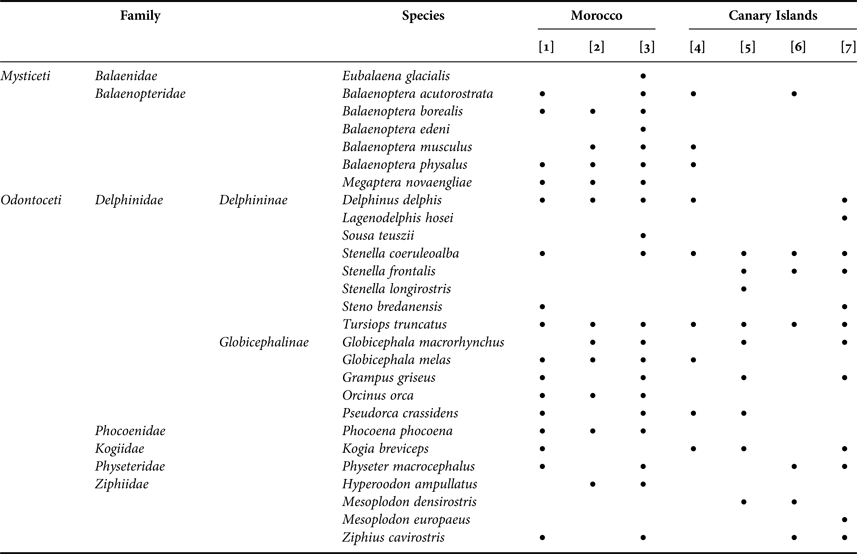
Moroccan cetaceans have been described in several species inventories (see Table 1 for review), and the extent of their geographic distribution is based on observations at sea and stranding reports. The best known area is the Strait of Gibraltar, where seven species of cetaceans have been described. Striped dolphins (Stenella coeruleoalba (Meyen, 1833)), common dolphins (Delphinus delphis Linnaeus, 1758) (Cañadas et al., Reference Cañadas, Sagarminaga, De Stephanis, Urquiola and Hammond2005; de Stephanis et al., Reference de Stephanis, Cornulier, Verborgh, Salazar Sierra, Pérez Gimeno and Guinet2008a), bottlenose dolphins (Tursiops truncatus (Montagu, 1821)) (Louis et al., Reference Louis, Viricel, Lucas, Peltier, Alfonsi, Berrow, Brownlow, Covelo, Dabin, Deaville, De Stephanis, Gally, Gauffier, Penrose, Silva, Guinet and Simon-Bouhet2014; Pérez et al., Reference Pérez, García-López, Stephanis, Giménez, García-Tiscar, Verborgh, Mancera and Martínez-Rodriguez2011), long-finned pilot whales (Globicephala melas (Traill, 1809)) (de Stephanis et al., Reference de Stephanis, García-Tíscar, Verborgh, Esteban-Pavo, Pérez, Minvielle-Sebastia and Guinet2008b, Reference de Stephanis, Verborgh, Pérez, Esteban, Minvielle-Sebastia and Guinetc; Verborgh et al., Reference Verborgh, De Stephanis, Pérez, Jaget, Barbraud and Guinet2009; Giménez et al., Reference Giménez, Stephanis, Gauffier, Esteban and Verborgh2011; Senigaglia et al., Reference Senigaglia, de Stephanis, Verborgh and Lusseau2012; Wierucka et al., Reference Wierucka, Verborgh, Meade, Colmant, Gauffier, Esteban, de Stephanis and Caadas2014), killer whales (Orcinus phoc (Linnaeus, 1758)) (Guinet et al., Reference Guinet, Domenici, De Stephanis, Barrett-Lennard, Ford and Verborgh2007; Foote et al., Reference Foote, Vilstrup, De Stephanis, Verborgh, Abel Nielsen, Deaville, Kleivane, Martín, Miller, Øien, Pérez-Gil, Rasmussen, Reid, Robertson, Rogan, Similä, Tejedor, Vester, Víkingsson, Willerslev, Gilbert and Piertney2011; Esteban et al., Reference Esteban, Verborgh, Gauffier, Giménez, Afán, Cañadas, García, Murcia, Magalhães, Andreu and de Stephanis2013; de Stephanis et al., Reference de Stephanis, Giménez, Esteban, Gauffier, García-Tiscar, Sinding and Verborgh2014), sperm whales (Physeter macrocephalus Linnaeus, 1758) (Engelhaupt et al., Reference Engelhaupt, Rus Hoelzel, Nicholson, Frantzis, Mesnick, Gero, Whitehead, Rendell, Miller, De Stephanis, Canãdas, Airoldi and Mignucci-Giannoni2009; de Stephanis et al., Reference de Stephanis, Giménez, Carpinelli, Gutierrez-Exposito and Cañadas2013; Carpinelli et al., Reference Carpinelli, Gauffier, Verborgh, Airoldi, David, Di-Méglio, Cañadas, Frantzis, Rendell, Lewis, Mussi, Silvia Pace and De Stephanis2014) and fin whales (Balaenoptera physalus (Linnaeus, 1758)) (Bentaleb et al., Reference Bentaleb, Martin, Vrac, Mate, Mayzaud, Siret, de Stephanis and Guinet2011) are regularly seen in the Strait of Gibraltar. Opportunistic observations of other species in the area of the Strait include Risso's dolphin (Grampus griseus (G. Cuvier, 1812)), minke whales (B. acutorostrata Lacepede, 1804), and blue whale (B. musculus (Linnaeus, 1758)) (de Stephanis personal observation). A second well-known area is the Alboran Sea because of research programmes in northern Alboran Spanish waters. In addition to the species that occur in the Strait of Gibraltar, Cuvier's beaked whales (Ziphius cavirostris G. Cuvier, 1823) are common in the Alboran Sea (Cañadas et al., Reference Cañadas, Sagarminaga and García-Tiscar2002; Cañadas & Vázquez, Reference Cañadas and Vázquez2014). Apart from these research programmes which do not focus on Moroccan waters, a number of inventories or collections of information have been done in the last 50 years, but unfortunately suffer from significant gaps, both in terms of described species and in the extent of their spatial and temporal distribution (see Table 1 for review), due mainly to economic constraints.
Cetacean species inventory from Morocco and Canary Islands. [1] This work, [2] Aloncle (Reference Aloncle1964, Reference Aloncle1967), [3] Bayed & Beaubrun (Reference Bayed and Beaubrun1987, Reference Bayed and Beaubrun1996), [4] de Stephanis et al. (Reference de Stephanis, Cornulier, Verborgh, Salazar Sierra, Pérez Gimeno and Guinet2008a), [5] Herráez et al. (Reference Herráez, de los Monteros, Fernández, Edwards, Sacchini and Sierra2013), [6] Gutiérrez & Qninba (Reference Gutiérrez Exposito and Qninba2010), [7] Fernández et al. (Reference Fernández, Esperón, Herraéz, de los Monteros, Clavel, Bernabé, Sánchez-Vizcaino, Verborgh, DeStephanis, Toledano and Bayón2008).

Various studies have demonstrated the viability of using cetacean strandings for studies on the biology, pathology and ecology of cetaceans as indicators of population density at sea (Fernández et al., Reference Fernández, Esperón, Herraéz, de los Monteros, Clavel, Bernabé, Sánchez-Vizcaino, Verborgh, DeStephanis, Toledano and Bayón2008; Castège et al., Reference Castège, Soulier, Hémery, Mouchès, Lalanne, Dewez, Pautrizel, d’ Elbée and D'Amico2013; van Elk et al., Reference van Elk, van de Bildt, Jauniaux, Hiemstra, van Run, Foster, Meerbeek, Osterhaus and Kuiken2014; Peltier et al., Reference Peltier, Jepson, Dabin, Deaville, Daniel, Van Canneyt and Ridoux2014). In Morocco, in addition to the efforts made to build a stranding response network, research programmes are developing in the field of ecosystem modelling with a real need for local knowledge on ecosystem components. The use of historical strandings information is therefore a necessity for areas with low research coverage. In this study, we reconstructed a database of cetaceans stranded along the Moroccan coast during the period 1980–2009 and used it to describe the species present in the area, their relative importance and potential distribution, and their possible interactions with human activities.
MATERIALS AND METHODS
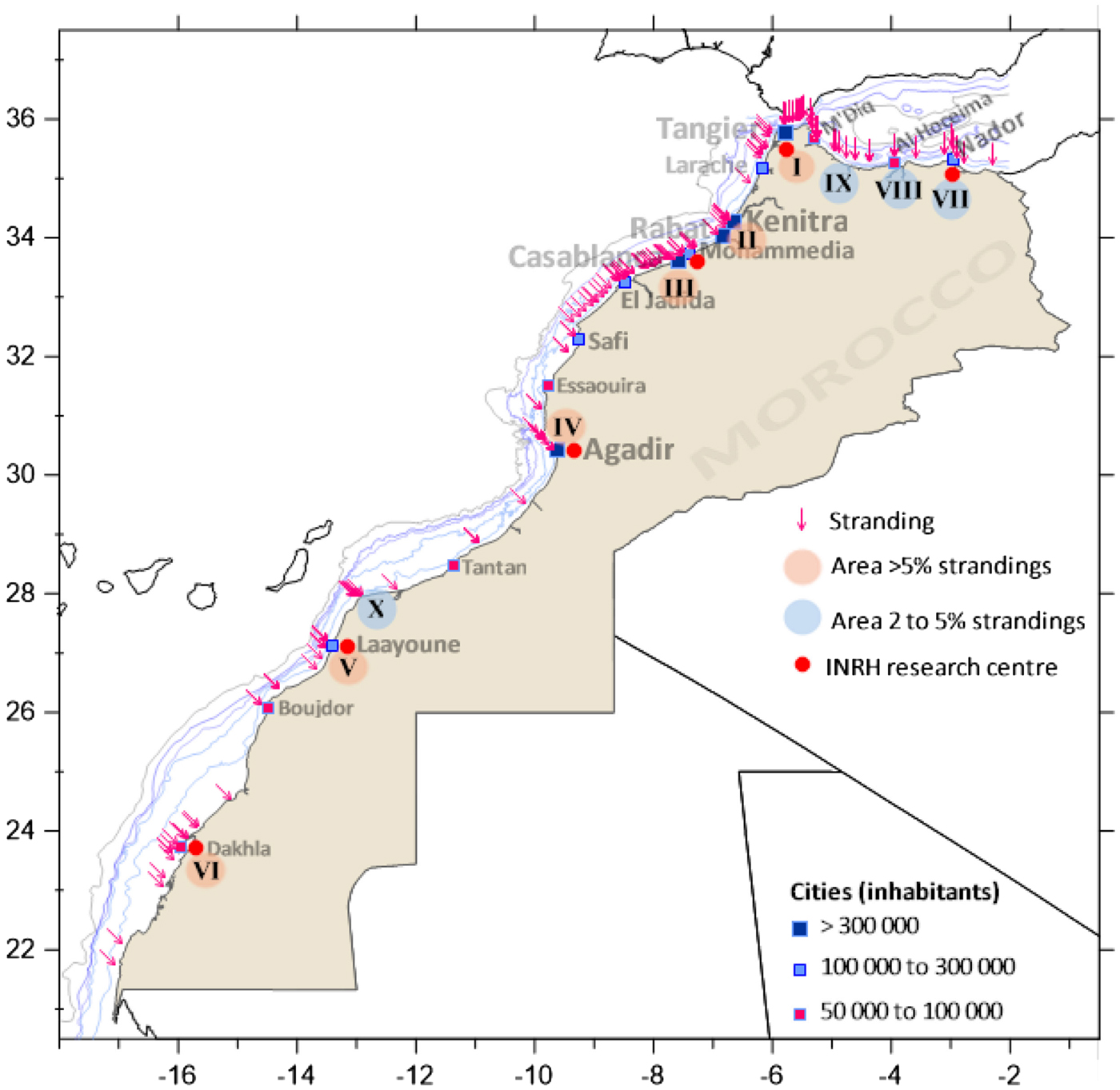
A review of cases of stranding was based on reports from state agencies available at INRH. The minimum criteria for acceptability of a stranding report were: (i) the source of the document was identifiable; (ii) taxonomic resolution was at least to Family; (iii) date and place of stranding were available. The main source of information came from internal stranding reports of INRH which has six research centres along the coast of Morocco (Figure 1) and which traditionally has provided scientific support in managing strandings at the request of local authorities and law enforcement agencies.
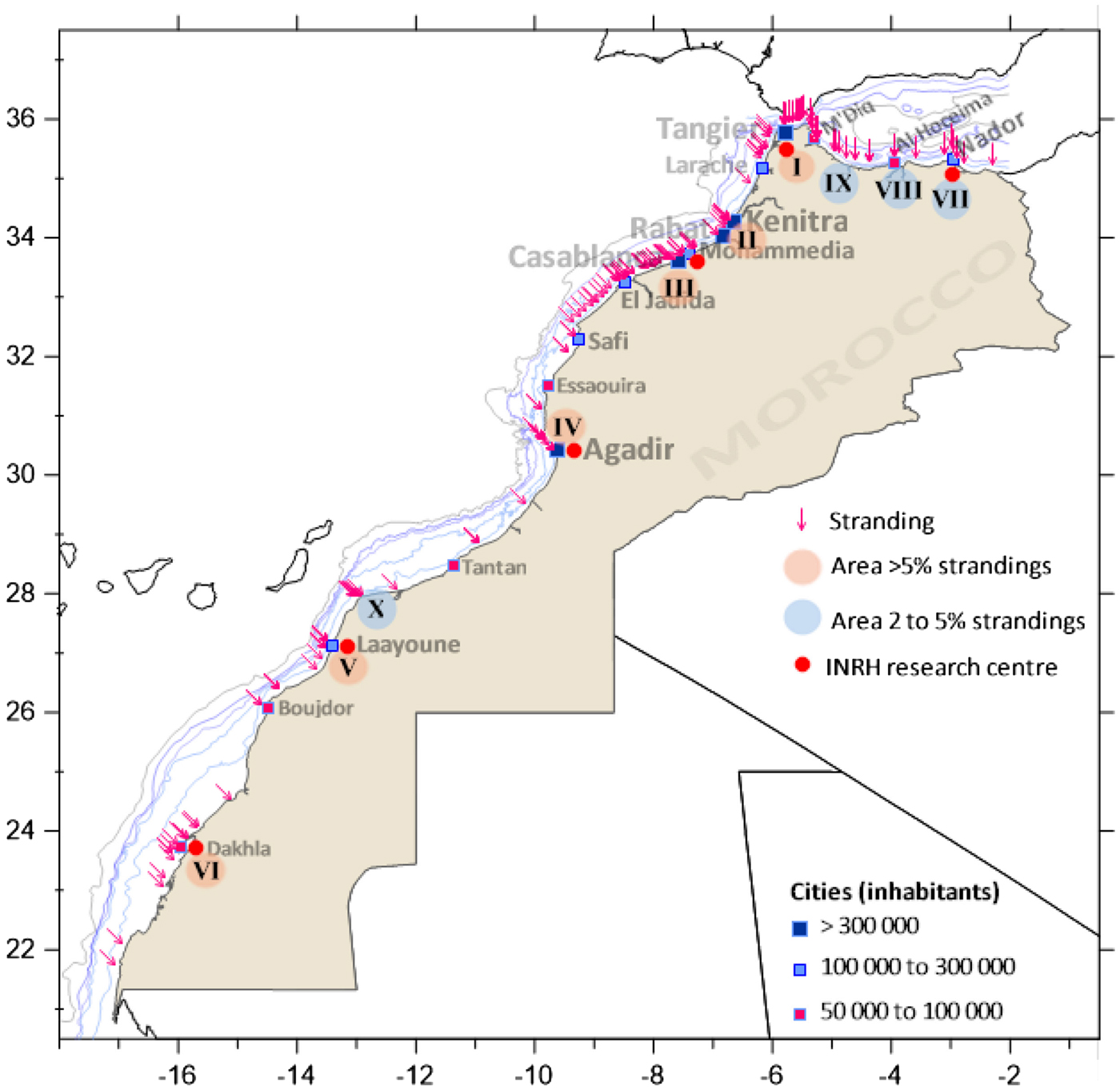
Stranding records along the Moroccan coast during the period 1980–2009. Areas were defined by grouping stranding events of less than 40 km apart.
Various state agencies active in the field of fisheries (Department of Fisheries, National Fisheries Board) have regional structures and are involved in the management of strandings alongside local authorities and law enforcement agencies (National Police Force, Royal Navy). When established, reports of stranding are sent to INRH, sometimes accompanied by photos. These documents were also used and supplemented with press clippings relating mostly to strandings of large species frequently accompanied by usable images.
The results of the review were included in a database with standardized indicators. Species identification was improved on the basis of descriptions in the reports, biometric parameters and images when available. A confidence index from 1 to 3 was assigned to each individual identified to the species: level 1 was a confident identification; level 2 corresponded to a reasonable identification that could not be verified with the information available; level 3 corresponded to an identification made by an amateur without the possibility of a quality check of the identification. A latitude and longitude was assigned to each stranding using information in the reports, and gender, biological and biometric parameters were included in the database when available. The DCC (Decomposition Condition Code) (Jauniaux et al., Reference Jauniaux, Garcia-Hartmann, Haelters, Tavernier and Coignoul2002) was estimated on the basis of the description of the carcass and an indicator of the state of the animal was recorded: live; intact; injured (as an indicator of possible interaction with boats and collision); and fin(s) removed (as an indicator of possible interaction with fisheries).
In order to distinguish geographic areas of stranding, a criterion of geographic continuity was defined on the basis of the average distance between 90% of the strandings (that was 40 km). Strandings of less than 40 km separation (large circle distance in Figure 1) were considered to belong to the same area. Only the sections containing more than 2% of the strandings (four cases) were considered, and isolated strandings were not retained for defining stranding areas. This simple design criterion distinguished 10 sections of variable length of the Moroccan coast in which stranding densities have been estimated. This approach was used in order to discard areas where stranding probability is low, such as areas with strong drift currents and areas with steep cliffs permanently in contact with waves that are hundreds of km in the Saharan zone. The unpopulated areas where little or no stranding was reported are also discarded.
RESULTS
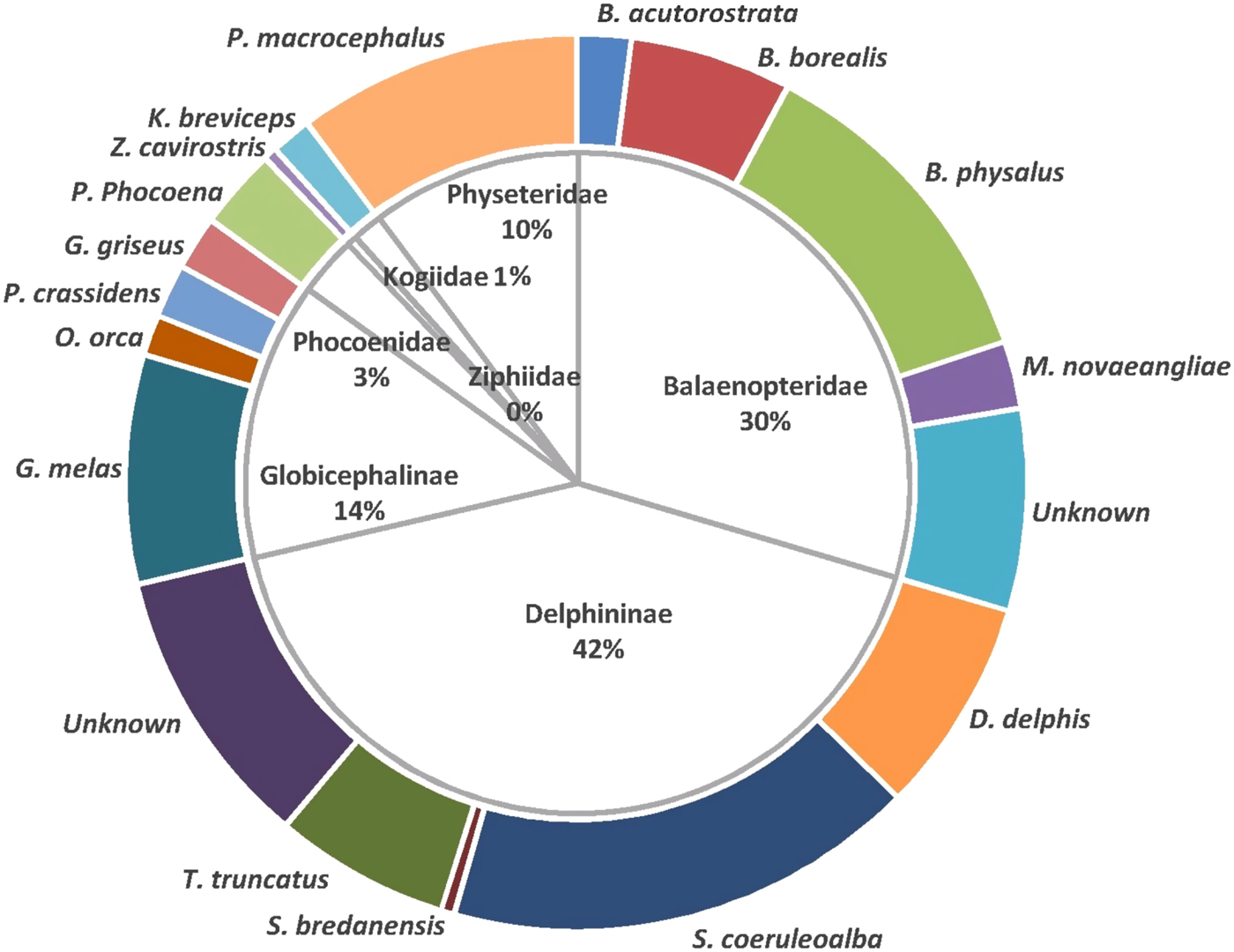
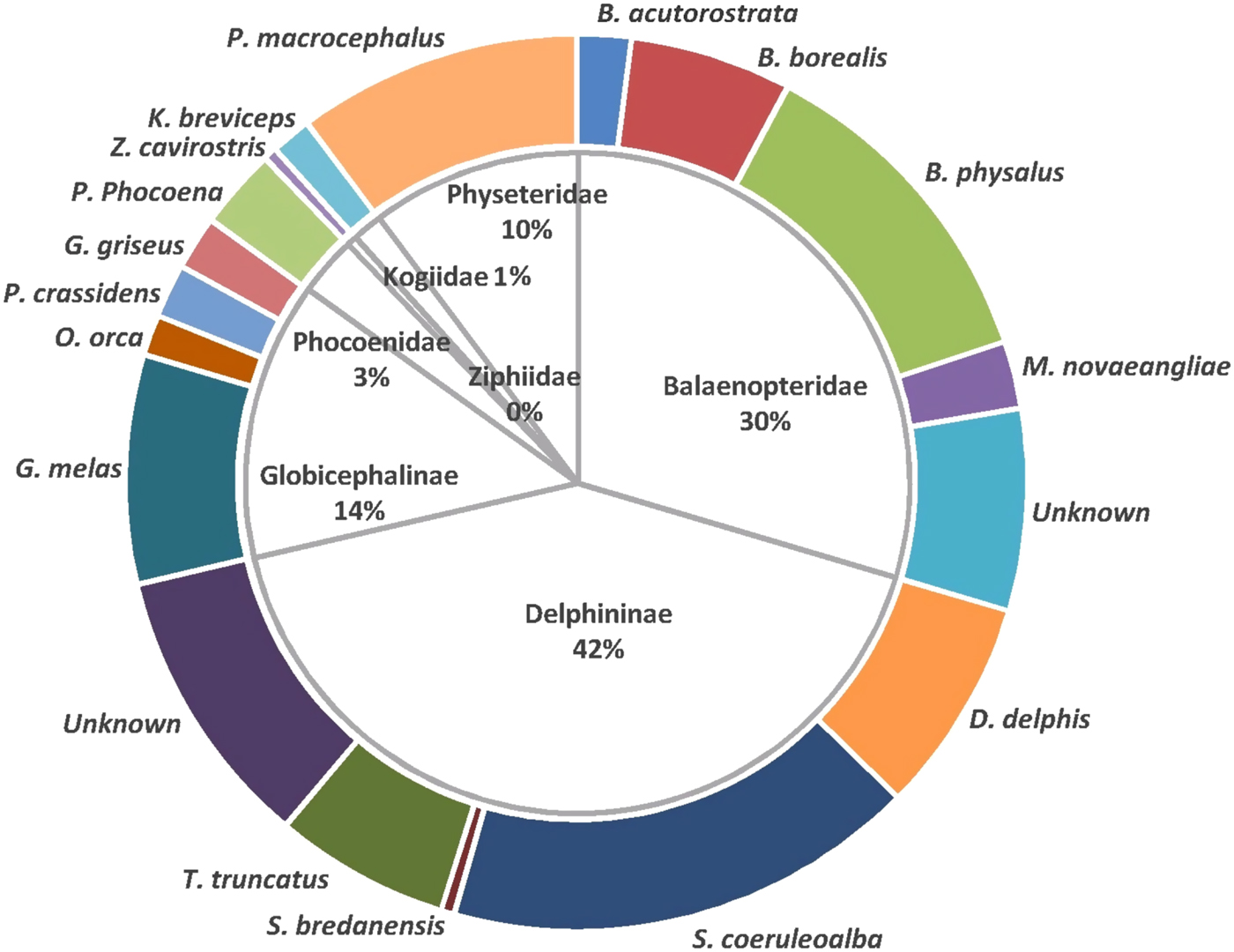
Strandings of marine mammals have been recorded all along the Moroccan coast, from the border with Algeria in the Mediterranean to the east, to the north of Cape Blanc in the Atlantic Saharan region at 21°50′N. The review documented 205 cases of stranding between 1980 and 2009 along the Moroccan coast that are identified to Family, 180 cases identified to the level of genus and 169 identified to species. In total, 16 species belonging to six families were identified. The Delphinidae predominated (composed of Delphininae 44% and Globicephalinae 12%), followed by Balenopteridae (29%), Physeteridae (10%), Phocaenidae and Kogiidae (3% each) and Ziphiidae (1 case) (Figure 2). In the stranding identified to species, the degree of confidence in the identification was high for 42% of strandings, medium in 47% of cases and low in 12% of cases. The estimated misidentification rate in 48 strandings for which images were gathered was 5%.
Relative importance of stranded cetacean species off Morocco in the reconstructed stranding database for the period 1980–2009.
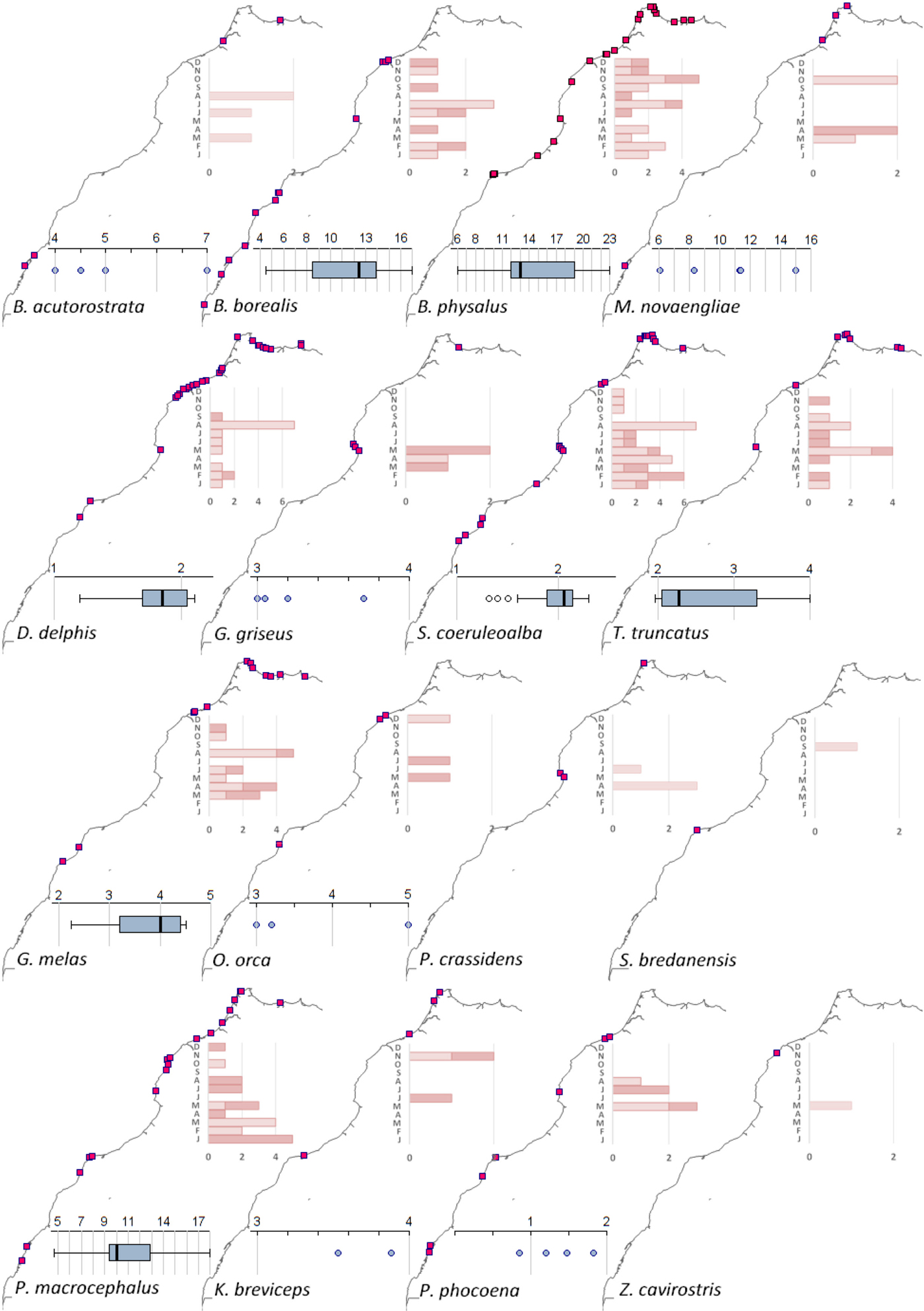
Seven species appear as the most abundant in strandings along the Moroccan coast. These were the fin whales, sei whales (B. borealis Lesson, 1828), sperm whales (Physeter macrocephalus Linnaeus, 1758), striped dolphins, common dolphins, bottlenose dolphins and the long-finned pilot whale. Seven individuals of Phocoena phocoena (Linnaeus, 1758) stranded on the Atlantic coast between Dakhla and Casablanca (Figure 4). Finally, a single stranding of a 5.2 m Ziphius cavirostris was recorded at 32°60′N.
The spatial distribution of strandings was not homogeneous (Figure 1); areas with high stranding densities alternated with areas with few or no strandings, both in the Atlantic and the Mediterranean. Six areas can be identified as major areas of stranding with more than 95% of the stranding records: the area of Casablanca (area III in Figure 1, length 283 km) accounting for 27% of strandings with a density of 0.2 strandings km−1; the area of the Strait of Gibraltar (area I, 180 km length) represents 22% of the strandings with a density of 0.26 strandings km−1; the Bay of Agadir (area IV, 60 km length) totalling 9% of strandings with a density of 0.32 strandings km−1; the areas of Kenitra (area II, 35 km length), Laayoune (area V, 90 km length) and Dakhla (area VI, 83 km length) each had around 5% of strandings with densities of 0.31, 0.12 and 0.14 strandings km−1, respectively. Approximately 2% of strandings occurred in each of the following three areas: the Mediterranean of Nador (area VII, 70 km long), El Hoceima (area VIII, 40 km long) and El Jebha (area IX, 63 km long) with densities of 0.7, 0.1 and 0.1 strandings km−1, respectively. Finally the area of Cape Juby (area X, 15 km long) accounted for 4% of strandings with a density of 0.53 strandings km−1.
Of the 169 cases of strandings with reliable information regarding the status of the animals, 8% reached the shore alive. A total of 43% were found in very early stages of decomposition (DCC 1 and 2), 17% were at the start of decomposition (DCC 3) and 32% were in an advanced state of decomposition (DCC 4 and 5).
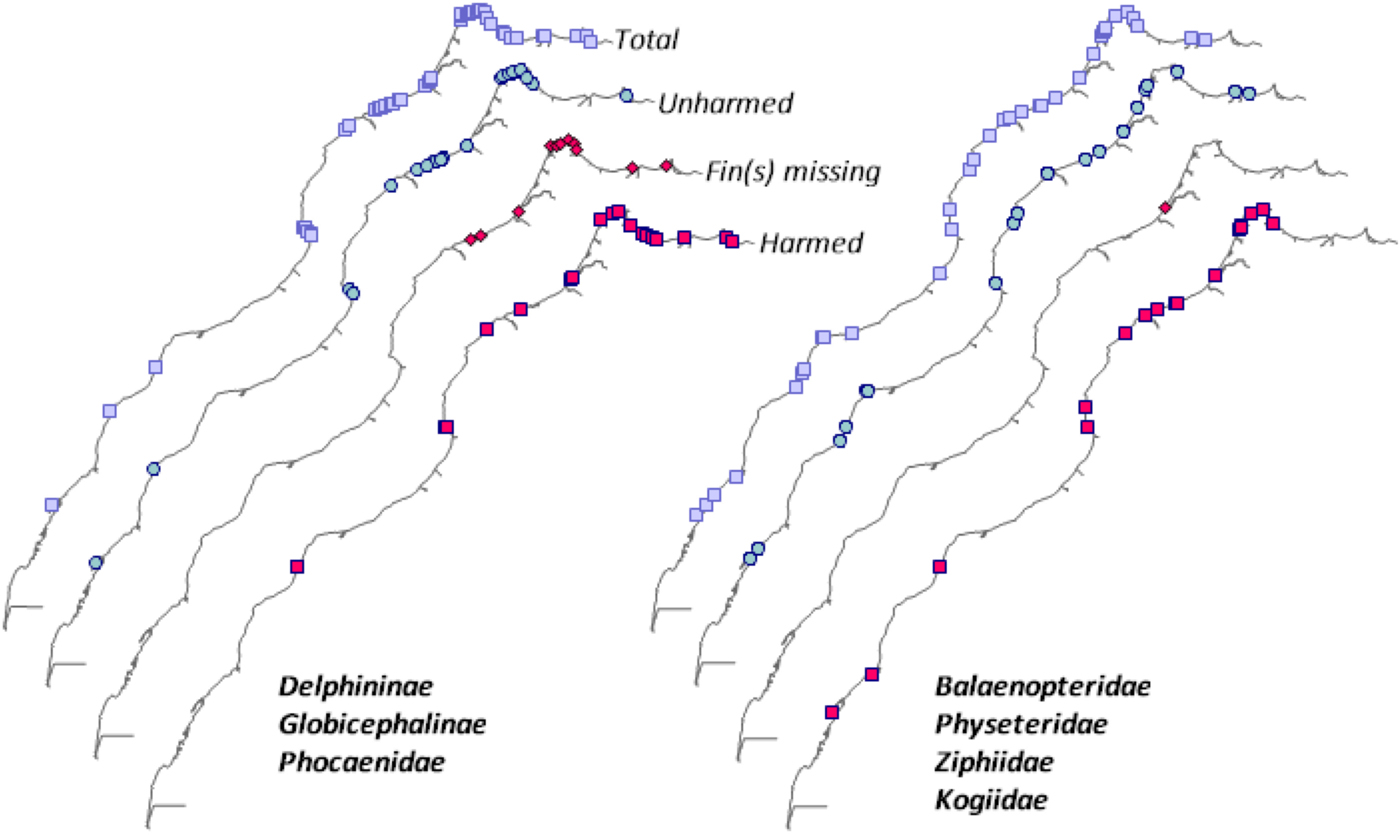
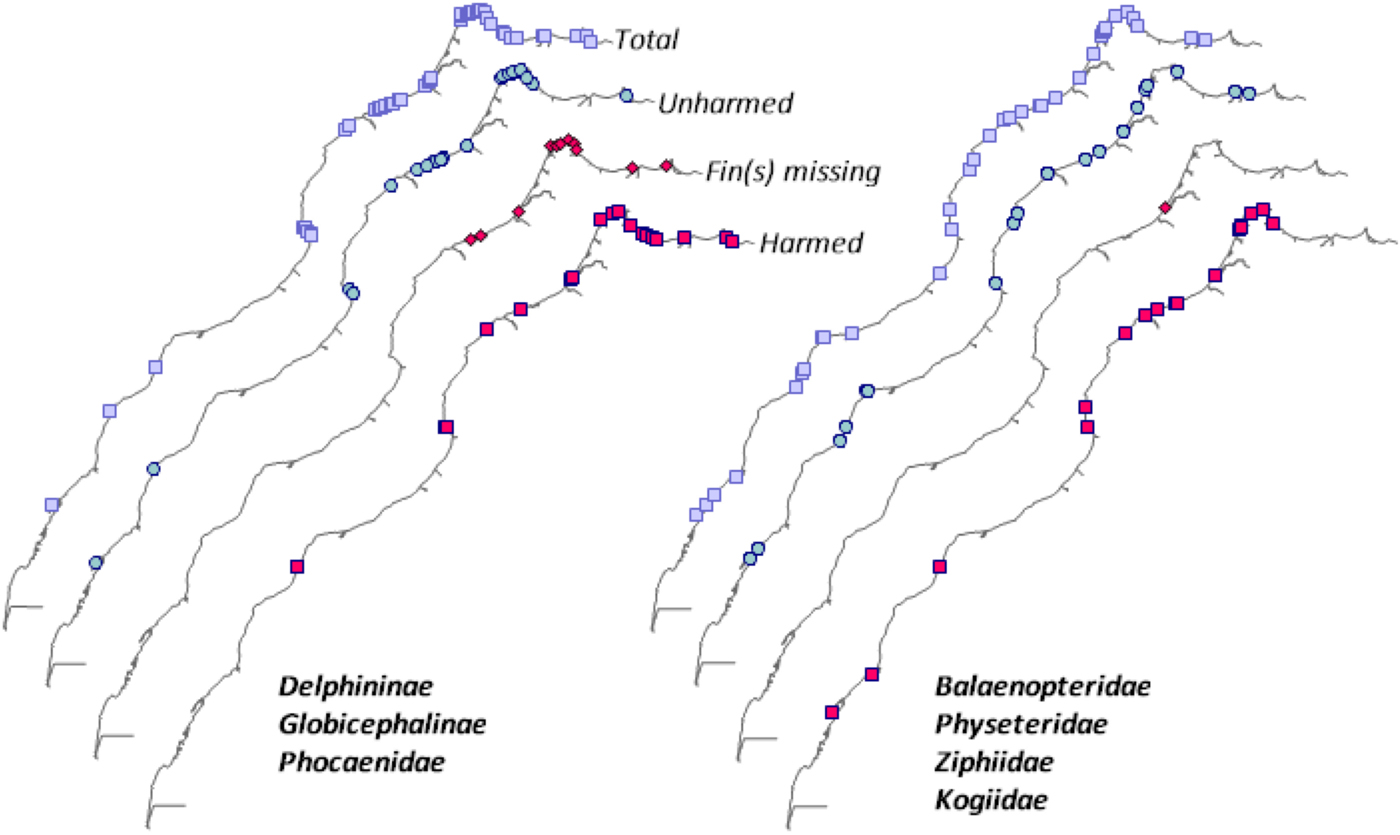
Injuries and mutilations were evident in 114 cases. A total of 47% of stranded animals did not show any injury, 40% had various injuries, some of which could be clearly identified, especially for whales, as the result of successive collisions at sea. However, the number of injuries by collision was only four individuals of the 33 documented, including one that arrived at the port of Casablanca on the bow of a ship. The majority of injuries could not be identified as antecedent to the stranding, except in cases of sectioned fins (11%), a common practice among fishermen to release the animal from the net. Fin removal was found primarily in dolphins and a few pilot whales. One case of a minke whale with pectoral fins removed was observed north of Rabat. The geographic distribution of intact individuals and that of injured individuals fit the general pattern of stranding. However, the Strait of Gibraltar showed a higher percentage of dolphins with fins removed (25%) when compared with the Casablanca region (14%), the whole Mediterranean (11%) and Agadir (0%) (Figure 3).
Geographic distribution of cetacean stranding along the Moroccan coast categorized according to carcass condition and focusing on injuries (1980–2009).
DISCUSSION
The review of strandings along the Moroccan coast identified 16 species of cetaceans. Only one has not been described in previous studies in Morocco; Steno bredanensis (G. Cuvier in Lesson, 1828) was identified once in an area (Tarfaya) close to the Canary Islands where this species has been found previously. Five species cited in the Canary Islands (Table 1) were not observed in the strandings database: Mesoplodon densirostris (Blainville, 1817), M. europaeus (Gervais, 1855), Stenella frontalis (G. Cuvier, 1829), S. longirostris (Gray, 1828) and Lagenodelphis hosei Fraser, 1956. Furthermore, six species have been described in other works carried out in Morocco: Sousa teuszii (Kükenthal, 1892), Balaenoptera musculus, B. edeni Anderson, 1878, Eubalaena glacialis (Müller, 1776), Hyperoodon ampullatus (Forster, 1770) and Globicephala macrorhynchus Gray, 1846. The Canarian strait that separates the Canary islands from the Moroccan coast is 60 NM wide; therefore the species found in the Canary Islands have a high probability of also being present on the Moroccan coast. Therefore, the expected number of cetacean species for the Moroccan coast is 26 species.
The work of Pyenson (Reference Pyenson2010) and Peltier et al. (Reference Peltier, Jepson, Dabin, Deaville, Daniel, Van Canneyt and Ridoux2014) provides insights on the possibilities offered by the use of stranding data as proxy population indicators. They claim that strandings provide similar rank-order relative abundance as surveys (Pyenson, Reference Pyenson2010) if data are sufficiently robust. Statistical credibility can be achieved if there are structured cetacean observation networks that have proactive monitoring. The database built for this study was constructed on the basis of archived and accessible documents. The number of strandings which satisfied the criteria for acceptable levels of information was 205 over the period 1980–2009, however the data were sporadic before 1993. For the period 1993–2009, when information was continuous, the average number of annual strandings was 12, low compared with the 700 annual strandings (average for 2000–2010) along the French Atlantic coast with a length equivalent to the Moroccan Atlantic coast (Van Canneyt, Reference Van Canneyt, Kerric, Authier, Dabin, Demaret, Dorémus and Spitz2014). This suggests a low level of documentation of stranding events, combined with the bias associated with the concentration of stranding's observations in populated areas due to unequal detection probabilities and reporting rates, which is a common issue in opportunistic sampling designs (Authier et al., Reference Authier, Peltier, Dorémus, Dabin, Van Canneyt and Ridoux2014; De Barba et al., Reference De Barba, Waits, Genovesi, Randi, Chirichella and Cetto2010). Thus, the identified stranding areas and associated frequencies do not fulfil the conditions to be used as stranding indicators but can be considered as indicative information for further investigations. Nonetheless, two identified areas draw attention with their high stranding occurrences despite unfavourable geographic characteristics to stranding detection: the strait of Gibraltar and the area of Tarfaya. The first one is dominated by steep cliffs with few low-access creeks and beaches and the second one is a sparsely populated desert area. In addition, cetacean identification is difficult for people with little or no training and additionally difficult when carcasses are partly degraded. However, the level of estimated species misidentification was 5%.
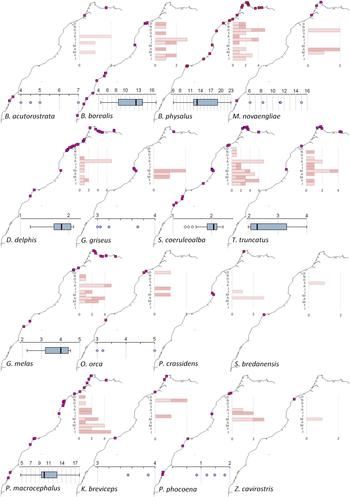
Despite the low relative frequency of strandings, the rarity of records of some species (B. musculus was mentioned twice) (Bayed & Beaubrun, Reference Bayed and Beaubrun1987, Reference Bayed and Beaubrun1996; de Stephanis, personal observation), the unclear location of sightings (sightings of B. edeni and E. glacialis could not be traced), and other possible problems associated with the nature of the data, this study enhances the knowledge on cetaceans of the Moroccan coast which is a poorly documented area. Stranding distributions help to identify species distributions. For example, the spatial distributions of strandings of D. delphis and S. coeruleoalba are telling (Figure 4); while strandings of S. coeruleoalba are concentrated in the Strait of Gibraltar and the Bay of Agadir (67% of total), those of D. delphis are concentrated in the western Mediterranean and on the Atlantic coast at 33–34°N (79%). This comparison is valid only if both species have similar sensitivity to the causes of stranding. The occurrence of stranding at different periods of the year indicates whether species visit Moroccan waters continuously or seasonally (Figure 4). When considering only fresh animals (DCC 1 and 2), fin and sei whales were present throughout the year, but strandings of common and striped dolphins were minimal between September and December. Length distributions in the stranding database provide information on the stage of life at stranding: the fin, sei and sperm whales appear to be present in Moroccan waters at birth and at different stages of their life cycle. This suggest the presence of resident populations of fin and sei whales in the Northern Canary Current region. The spatial distribution of strandings highlights areas of frequent interactions with humans. Confirmed cases of collisions with vessels were exclusively with baleen whales in areas with high traffic or near major commercial ports, in the Strait of Gibraltar, Casablanca and Agadir. Nevertheless, the proportion of cases of collisions accounts for less than 10% of all of the baleen whale strandings. Similarly, the western Mediterranean and the Strait of Gibraltar appear to be areas where interactions with dolphins and pilot whales seem more frequent than on the Atlantic coast. The areas of Casablanca (27% of total strandings) showed few sectioned fins (2%) compared with the Strait of Gibraltar (22% of total strandings, with 16% of sectioned fins). The frequent use of drift nets in the latter area, currently under eradication, may be directly responsible.
Distribution of cetacean species strandings along the Moroccan coast during the period 1980–2009. Boxplots or point graphics indicate the length distributions (m) of each species, and histograms show intra-annual frequencies of strandings categorized by the state of the carcass (DCC 1–3 in light and 4–5 in dark colour).
Information from strandings is increasingly used in ecological studies on cetaceans for estimation of population indicators (Maldini et al., Reference Maldini, Mazzuca and Atkinson2005; Pyenson, Reference Pyenson2010; Peltier et al., Reference Peltier, Jepson, Dabin, Deaville, Daniel, Van Canneyt and Ridoux2014), as well as in traditional areas where strandings are an essential source of information (e.g. pathology, toxicology). In the context of a developing country such as Morocco, where the cost of acquiring information is a major obstacle to scientific research, using strandings as an information source is a necessity in the study of cetaceans in particular, and for ecological studies in general. The data gathered in this study cannot be used as proxy of population densities, but can direct the choices when building ecosystem models (end to end models) and for prioritizing future research programmes on cetaceans. Two Moroccan research organizations have structures that collect information on strandings: INRH through its research centres network and the Cetacean and Pinnipeds Study Group Morocco (GECPM). INRH has regularly produced stranding reports with restricted distribution since 2010, and GECPM communicates through publication of summaries of comments received (Bayed & Beaubrun, Reference Bayed and Beaubrun1996). Establishing an observation network and structured monitoring of sufficient and sustainable density in Morocco are the most likely ways to collect robust data for the calculation of credible population indicators for cetaceans. Monitoring of cetaceans in Morocco will certainly improve through better collaboration among Moroccan institutions (including research) and a greater awareness in Moroccan civil society of environmental issues.
FINANCIAL SUPPORT
R. de Stephanis was supported by the Spanish Ministry of Economy and Competitiveness through the Severo Ochoa Programme for Centres of Excellence in R+D+I (SEV-2012-0262), and by the ‘Subprograma Juan de la Cierva’.
Supplementary materials and methods
The supplementary material for this article can be found at http://www.journals.cambridge.org/mbi