INTRODUCTION
The centenary of this journal coincides with the centenary celebration of publication of one of the most remarkable discoveries in parasitology and tropical medicine. In 1909 Carlos Chagas described Trypanosoma cruzi, the agent of American trypanosomiasis (Chagas disease) (Chagas, Reference Chagas1909). This discovery was unusual because Chagas first found the organism, not in patients, but in the faeces of the insect vector, the bloodsucking triatomine bug, infesting poor quality housing in Minas Gerais state, Brazil. Marmosets exposed to infected bugs sent to Rio de Janeiro developed parasitaemia with a new trypanosome, which Chagas named Trypanosoma cruzi, after his mentor Oswaldo Cruz. Chagas then saw the same trypanosome in acutely ill infants living in bug-infested houses. He and his colleagues went on rapidly to describe the basic features of the life cycle, the pathology, vector species and reservoir hosts (Miles, Reference Miles, Wakelin, Despommier, Gillespie and Cox2006). The illustrations of pseudocysts and triatomines from those early years are beautifully drawn and still entirely valid. Carlos Chagas became an international celebrity and was twice nominated for the Nobel Prize: the history of these early years is of considerable scientific and political interest (Miles, Reference Miles2004).
In this Centenary Issue of Parasitology the senior author looks back, with members of his current research group, at the development of research on the genetic diversity and molecular epidemiology of T. cruzi, focusing on some of his own work and interests from the early 1970s onwards. We also briefly examine the development of parallel interests in the genetic diversity of Leishmania. In the context of this historical reflection, we consider the current state-of-the-art, indicating questions that have been answered and some of those that remain to be addressed.
The lead author's interest in both Chagas disease and leishmaniasis arose from attending inspirational lectures by the late Professor Philip Marsden. Here were two fascinating and gruesome diseases that surely deserved research and public health attention. At the time two salient features of Chagas disease were enigmatic. Firstly, why did the clinical manifestations of chronic Chagas disease appear to be distinct in different geographical regions, with megaoesophagus and megacolon prominent in the southern countries of South America but either absent or rare in northern South America and Central America? Secondly, why were there so few cases of Chagas disease in the vast Amazon region of South America?
A PRIMER ON NOMENCLATURE
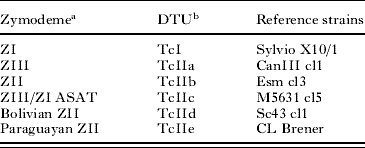
As we shall see, Trypanosoma cruzi, was found to be a highly diverse species and to this day some researchers use various nomenclature systems to describe the subdivisions within the species, which have been extensively reviewed elsewhere (Momen, Reference Momen1999; Campbell et al. Reference Campbell, Westenberger and Sturm2004). For the sake of clarity in this review we shall use Miles's zymodemes, which were based on multilocus enzyme electrophoresis (MLEE) and their modern equivalents – discrete typing units (DTUs), which are supported by multiple genetic markers (Table 1). Where possible we have retrospectively applied the 6 DTU nomenclatures to some of the studies reviewed.
Comparison of Trypanosoma cruzi zymodemes and DTUs
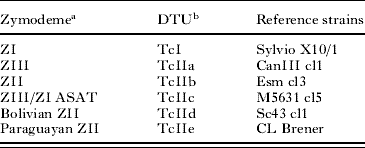
a Based upon MLEE; (Miles et al. Reference Miles, Toye, Oswald and Godfrey1977, Reference Miles, de Souza, Povoa, Shaw, Lainson and Toye1978, 1981 b; Tibayrenc and Miles, Reference Tibayrenc and Miles1983; Chapman et al. Reference Chapman, Baggaley, Godfrey-Fausset, Malpas, White, Canese and Miles1984; Póvoa et al. Reference Póvoa, De Souza, Naiff, Arias, Naiff, Biancardi and Miles1984).
b Based upon MLEE, RAPD and nuclear loci (Brisse et al. Reference Brisse, Verhoef and Tibayrenc2001).
TRYPANOSOMA CRUZI: HETEROGENEITY AND A COMPARISON OF TRANSMISSION CYCLES IN BRAZIL AND VENEZUELA
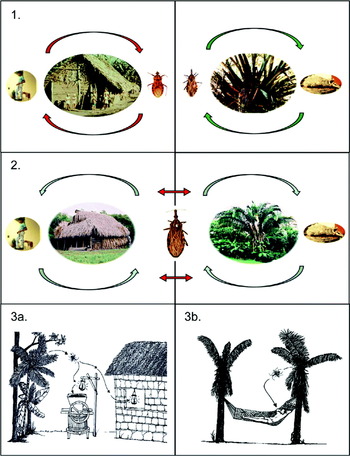
To address the first question, regarding ostensible geographical differences in disease presentation, at the invitation of Professor Aluisio Prata in Brazil and with support from the late Dr David Godfrey in London, we applied the relatively new technique of MLEE to domestic and sylvatic isolates of T. cruzi from the village of São Felipe, Bahia State, Brazil. The results were immediately striking and illuminating. Heterogeneity within the species T. cruzi had been suspected previously, and phenotypic variability had been apparent (Miles, Reference Miles, Lumsden and Evans1979). However, the MLEE results demonstrated that the domestic and sylvatic strains of T. cruzi in São Felipe were dramatically distinct, by 11 of 18 enzymes examined, far more than separated named species of Leishmania. This landmark paper (Miles et al. Reference Miles, Toye, Oswald and Godfrey1977) fundamentally changed perceptions of T. cruzi. The vector of the domestic genetic lineage (ZII, now TcIIb) was Panstrongylus megistus, and we discovered the vector of the sylvatic lineage (ZI, now TcI) to be Triatoma tibiamaculata, living in bromeliad epiphytes with the opossum, Didelphis albiventris. We described this situation as one of separate, non-overlapping domestic and sylvatic transmission cycles (Fig. 1), implying that P. megistus might be controlled without fear of re-invasion from sylvatic habitats.
Non-overlapping, overlapping and enzootic Trypanosoma cruzi transmission cycles. (1) Domestic transmission of TcII by Panstrongylus megistus in Bahia State, Brazil and separate sylvatic transmission of TcI to Didelphis albiventris by Triatoma tibiamaculata. (2) Overlapping domestic and sylvatic transmission of TcI in parts of Venezuela. (3) Sporadic enzootic transmission of TcI and occasionally TcIIa in the Amazon basin: (a) by light attraction of adult triatomine bugs to palm presses or houses and (b) by exposure of piassaba palm frond collectors to faecal contamination from Rhodnius brethesi.

Subsequently, in collaboration with Professor Rafael Cedillos and others, we characterized numerous T. cruzi isolates from various locations in Venezuela, where the principal domestic vector is Rhodnius prolixus. These results were again surprising and enlightening. T. cruzi ZI (TcI), which was sylvatic in Brazil turned out to be the domestic agent of Chagas disease in Venezuela, as well as being present in sylvatic habitats (Table 2). This large comparative study was published in 1981 (Miles et al. Reference Miles, Cedillos, Povoa, De Souza, Prata and Macedo1981b) but is often overlooked in the subsequent and contemporary literature. On the basis of MLEE we described the situation in Venezuela as comprising contiguous or potentially overlapping domestic and sylvatic transmission cycles (Fig. 1), implying that re-invasion by sylvatic Rhodnius might prejudice vector control programmes. However, we will see below that MLEE does not give full insight into the molecular epidemiology of T. cruzi in Venezuela; microsatellite analysis has recently been applied to both the vector and parasite and provided a higher resolution understanding of transmission dynamics.
Zymodemes of 316 isolates of Trypanosoma cruzi from Venezuela and Brazil (Miles, 1981)

* Also 12 T. cruzi I acute cases in an outbreak in the Sao Francisco valley (Luquetti et al. Reference Luquetti, Miles, Rassi, De Rezende, De Souza, Póvoa and Rodrigues1986).
Thus, here was a potential answer to the first of our questions. Apparent rarity of megasyndromes in Venezuela might circumstantially be linked to the radical genetic differences between the strains of T. cruzi that predominantly cause Chagas disease in Brazil (ZII/TcIIb) and in Venezuela (ZI/TcI).
ENZOOTIC TRANSMISSION OF TRYPANOSOMA CRUZI IN THE AMAZON REGION
To address the second question concerning the reasons why there were so few cases of Chagas disease in the Amazon region, attempts were made to hunt for sylvatic triatomine species and their habitats in Amazon forest, adjacent to Belém, Pará State, Brazil. Initial searches yielded virtually nothing, despite considerable effort. This led to the development of ‘spool-and-line mammal tracking’, initially with makeshift components. The first animal tracked, an opossum, Didelphis marsupialis, was released at the trap site, carrying the tracking device with the free end of the thread tied to vegetation. The next day the thread was followed through the forest for a considerable distance and the opossum recovered from its arboreal nest, which contained 2 triatomine species, one a new species record for Brazil and both species infected with T. cruzi. Improved tracking devices were devised, using non-rotating, precision-wound spools of thread (Miles, Reference Miles, Cedillos, Povoa, De Souza, Prata and Macedo1981a). Spool-and-line mammal tracking has become a standard and widely applied method for investigating mammal nesting sites and behaviour (Wells et al. Reference Wells, Pfeiffer, Lakim and Kalko2006). In the Amazon basin, this method helped to reveal that all the local triatomines are fortunately species that do not readily adapt to colonizing houses (Miles et al. Reference Miles, de Souza and Povoa1981c). Furthermore, this approach helped to give insight into the exquisite adaptation of several triatomine species to their particular ecological niche, including their camouflage colouration, which can give a clue to the nature of that niche (Gaunt and Miles, Reference Gaunt and Miles2000). Thus, for example, Panstrongylus lignarius has nymphs in arboreal tree holes and adults perfectly camouflaged to roam on the trunks of their elected tree species. Using spool-and-line mammal tracking a new species, Rhodnius paraensis, was discovered in nests of the arboreal rodent, Echimys chrysurus (Sherlock et al. Reference Sherlock, Guittton and Miles1977). The sporadic cases of Chagas disease that do occur in the Amazon region are thus not due to domestic triatomine colonies but are caused by adult bugs attracted to dwellings, especially to artificial light. More than half of these cases are attributable to triatomine contamination of food and oral outbreaks, especially due to infected bugs entering juice presses, such as those used for açai palm or sugar cane (Coura et al. Reference Coura, Junqueira, Fernandes, Valente and Miles2002; Valente et al. Reference Valente, Da Costa Valente, Das Neves Pinto, De Jesus Barbosa Cesar, Dos Santos, Miranda, Cuervo and Fernandes2009; Pan American Health Organisation, 2009). Of triatomine species in the Brazilian Amazon, only Panstrongylus geniculatus has shown some new peridomestic adaptation to pig sties (Valente et al. Reference Valente, Valente, Noireau, Carrasco and Miles1998; Feliciangeli et al. Reference Feliciangeli, Carrasco, Patterson, Suarez, Martinez and Medina2004). Fortunately, peridomestic Triatoma rubrofasciata, which occurs in Belém and is widespread in ports around the New and Old Worlds, has a preferred animal host, the rat Rattus rattus and very rarely bites humans. This epidemiological situation in the Amazon region was described as one of an enzootic transmission cycle, with T. cruzi highly prevalent in sylvatic mammal reservoirs and vectors but without household triatomine colonies (Fig. 1). The transmission of T. cruzi in the USA, where triatomines are occasionally peridomestic with dogs but do not colonize houses, is analogous to that in the Amazon region. In North America there may be some risk of sporadic blood transfusion transmission if Latin American donors from endemic regions are not screened serologically for T. cruzi infection (Leiby et al. Reference Leiby, Herron, Garratty and Herwaldt2008). Thus, the comparative rarity of Chagas disease in the Amazon basin is due to the good fortune that local triatomine species do not readily colonize houses, and domiciliated bug species have not yet been imported from other endemic regions. However, as human disturbance continues to impact on Amazonia, active surveillance is necessary to monitor the status of domestic T. cruzi transmission. In recognition of this, the Intergovernmental Initiative for Surveillance and Control of Chagas Disease in the Amazon Region (AMCHA) was launched in 2004 (Aguilar et al. Reference Aguilar, Abad-Franch, Dias, Junqueira and Coura2007).
TRYPANOSOMA CRUZI DIVERSITY IN THE AMAZON AND BEYOND
Not unexpectedly, T. cruzi ZI (TcI) was found to be the cause of sporadic Chagas disease in Amazonian Brazil corresponding with its sylvatic presence elsewhere in Brazil. A novel, third T. cruzi zymodeme (ZIII, now TcIIa) was identified from a small oral outbreak of Chagas disease in the suburbs of Belém, and this was furthermore shown to be the secondary agent of Chagas disease in Venezuela (Miles et al. Reference Miles, de Souza, Povoa, Shaw, Lainson and Toye1978, Reference Miles, Cedillos, Povoa, De Souza, Prata and Macedo1981b). Subsequently, a fourth T. cruzi zymodeme (ZIII+ASATI, now TcIIc) was characterized from sylvatic cycles in Amazonian Brazil. Collaborative studies in Bolivia and Paraguay, yielded 2 further groups that were characterized by highly heterozygous novel MLEE profiles (Bolivian ZII, now TcIId and Paraguayan ZII, now TcIIe) (Tibayrenc and Miles, Reference Tibayrenc and Miles1983; Chapman et al. Reference Chapman, Baggaley, Godfrey-Fausset, Malpas, White, Canese and Miles1984; Miles et al. Reference Miles, Apt, Widmer, Povoa and Schofield1984).
Michel Tibayrenc and his collaborators performed a further series of collaborative T. cruzi genotyping studies in the Americas, initially using MLEE and later supplemented with random amplification of polymorphic DNA (RAPD) (Tibayrenc et al. Reference Tibayrenc, Neubauer, Barnabe, Guerrini, Skarecky and Ayala1993). Various authors applied a plethora of different genetic markers, including kDNA fragment length polymorphisms (schizodemes), karyotype variation, PCR amplicon size polymorphisms, PCR restriction fragment length polymorphisms (PCR-RFLPs) and comparative DNA sequencing of nuclear and mitochondrial targets (Morel et al. Reference Morel, Chiari, Camargo, Mattei, Romanha and Simpson1980; Brisse et al. Reference Brisse, Verhoef and Tibayrenc2001; de Freitas et al. Reference De Freitas, Augusto-Pinto, Pimenta, Bastos-Rodrigues, Goncalves, Teixeira, Chiari, Junqueira, Fernandes, Macedo, Machado and Pena2006; Rozas et al. Reference Rozas, Botto-Mahan, Coronado, Ortiz, Cattan and Solari2007). These studies revealed additional diversity within each principal zymodeme. A confusing profusion of conflicting nomenclature arose in the literature, largely resolved, firstly by consensus in 1999 (Anon, Reference Anon1999) to define 2 major T. cruzi lineages TcI and TcII and secondly by development of the DTU nomenclature system (Brisse et al. Reference Brisse, Verhoef and Tibayrenc2001), which is now clearly supported by all but the most conserved nuclear genetic markers (Westenberger et al. Reference Westenberger, Barnabe, Campbell and Sturm2005). The original principal zymodemes thus correspond with the T. cruzi DTUs, as summarized in Table 1.
ECOLOGICAL NICHES AND PHYLOGEOGRAPHY OF THE TRYPANOSOMA CRUZI LINEAGES
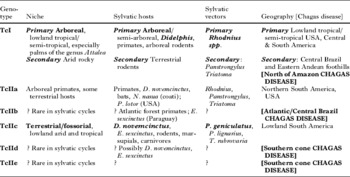
What then is the biological, ecological and epidemiological significance of these distinct T. cruzi lineages or DTUs? Increasing evidence supports the idea that the 6 T. cruzi DTUs are historically and currently associated with distinct ecological niches, with concomitant implications for the epidemiology of Chagas disease. The niches are not fully understood, partly due to limited sampling and genotyping of T. cruzi isolates. As to be expected, interaction between niches occurs, changing as ecologies are disturbed, as evidenced by mixed DTU infections in vectors and mammals, including humans (Breniere et al. Reference Breniere, Carrasco, Revollo, Aparicio, Desjeux and Tibayrenc1989). Here we review each DTU in the context of its known or putative ecological niche associations, summarized in Table 3.
Sylvatic niche, host, vector, geographical distribution and disease associations of the major Trypanosoma cruzi DTUs

Trypanosoma cruzi lineage (DTU) TcI
This is the predominant agent of Chagas disease in countries North of the Amazon and in the Amazon region. This was revealed in 1981 by the comparative study mentioned above (Miles et al. Reference Miles, Cedillos, Povoa, De Souza, Prata and Macedo1981b), where it was also proposed that the rarity of megaoesophagus and megacolon in these regions could be ascribed to the local predominant endemicity of TcI. It was not, however, suggested that TcI infection was entirely benign, in fact we demonstrated clearly by analysis of an unusual outbreak of TcI infection in Goiania State, Brazil, associated with drought and incursion of sylvatic rodents into houses, that both TcI and TcIIb could cause severe acute Chagas disease (Luquetti et al. Reference Luquetti, Miles, Rassi, De Rezende, De Souza, Póvoa and Rodrigues1986). Furthermore, chagasic cardiomyopathy is commonplace in TcI endemic countries such as Venezuela, and elsewhere TcI has been associated with severe disease, including meningoencephalitis (Anez et al. Reference Anez, Crisante, Silva, Rojas, Carrasco, Umezawa, Stolf, Ramirez and Teixeira2004; Burgos et al. Reference Burgos, Begher, Silva, Bisio, Duffy, Levin, Macedo and Schijman2008). Nevertheless, the perception that megaoesophagus and megacolon are uncommon North of the Amazon remains (Sanchez-Guillen Mdel et al. Reference Sanchez-Guillen Mdel, Lopez-Colombo, Ordonez-Toquero, Gomez-Albino, Ramos-Jimenez, Torres-Rasgado, Salgado-Rosas, Romero-Diaz, Pulido-Perez and Perez-Fuentes2006).
In the context of TcI pathogenesis, the lead author of this review noted, some years ago, pericardial sequestration in experimental TcI infections in immunocompromised (SCID) mice that were severely ill but had barely detectable peripheral parasitaemias (Miles, unpublished data). Cardiac puncture retrieved clear effusion with parasitaemias 100 to 1000-fold greater than that detectable in the peripheral blood of the same animals. There is a prior reference to such elevated pericardial parasitaemias in experimentally infected hamsters but the DTU involved is not clear (Ramirez et al. Reference Ramirez, Lages-Silva, Soares Junior and Chapadeiro1994). Acquatella (Reference Acquatella2007) notes the high frequency of pericardial effusion in acute Chagas disease in Venezuela, French Guiana and the Amazon region, regions endemic for TcI. In a summary of 233 acute cases of Chagas disease in the Brazilian Amazon, Pinto et al. (Reference Pinto, Valente, Valente Vda, Ferreira Junior and Coura2008) observed that the most frequent echocardiographic feature was pericardial effusion. We speculate therefore that pericardial sequestration may explain the cardiomyopathy associated with low peripheral parasitaemias and be a hitherto neglected aspect of the pathogenesis of Chagas disease.
As mentioned above, the presence of TcI in both sylvatic and domestic transmission cycles in Venezuela suggested triatomine re-invasion of dwellings, not an unreasonable hypothesis, because fronds from triatomine-infested palms are used to roof rural houses. In contrast, it had been suggested that all bugs in Venezuelan palms were not Rhodnius prolixus but were actually Rhodnius robustus and, because this species does not colonize houses, are of little threat except as a cause of sporadic cases of Chagas disease from lone, short-lived adult bugs light-attracted to dwellings (Fitzpatrick et al. Reference Fitzpatrick, Feliciangeli, Sanchez-Martin, Monteiro and Miles2008). To resolve this issue we applied mitochondrial markers and a new range of microsatellites to the high resolution analysis of populations of Rhodnius from palms and adjacent dwellings. The results clearly demonstrated that bona fide Rhodnius prolixus, the domestic vector species, was present in palms and that at some sites but not all, mitochondrial haplotypes were shared between palms and houses, and this was confirmed by the distribution of microsatellite genotypes (Fitzpatrick et al. Reference Fitzpatrick, Feliciangeli, Sanchez-Martin, Monteiro and Miles2008). The implication was that in some cases R. prolixus did indeed re-invade houses from sylvatic foci, whilst there was also concomitant spread of R. prolixus between palms and between houses.
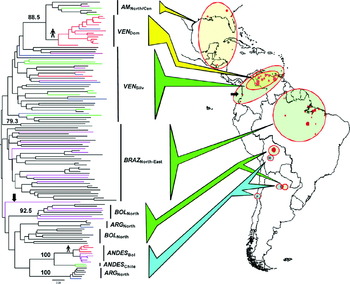
To investigate this phenomenon of re-invasion more thoroughly, we used a large panel of polymorphic microsatellite markers optimized for genotyping of T. cruzi for fine-scale resolution of the geographical distribution and population structure of TcI (Llewellyn et al. 2009 a). Research in Colombia and elsewhere has shown that miniexon sequencing detects diversity within TcI, which appears to be associated with type of transmission cycle, i.e. domestic, peridomestic or sylvatic (Herrera et al. Reference Herrera, Bargues, Fajardo, Montilla, Triana, Vallejo and Guhl2007; O'Connor et al. Reference O'Connor, Bosseno, Barnabe, Douzery and Breniere2007). Our microsatellite analysis revealed substantial diversity within TcI, potential founder events in Venezuela and Bolivia and evidence of structure between distant populations, including indications of the dispersal of TcI from South to North America, presumably facilitated by mammals crossing the Isthmus of Panama. Interestingly, in some cases notable genetic structure could be detected between nearby populations. In Bolivia, adjacent lowland and highland TcI populations – corresponding to primary and secondary TcI niches, as described below and in Table 3, showed greater subdivision than that between lowland Bolivia and Venezuelan sylvatic strains, thousands of kilometres to the north. Highland Bolivian strains were also characterized by a reduction in diversity, indicating a probable founder event. Crucial in terms of our understanding of disease transmission was detection of a potential founder event in Venezuela among most cases of chronic Chagas disease (Llewellyn et al. 2009 a) (Fig. 2). Here, although we found evidence that sylvatic strains of TcI do occasionally infect humans in Venezuela, it appears that a domestic strain of TcI with restricted genetic diversity has become widespread across endemic areas. This may be explicable by the precarious contaminative transmission route of T. cruzi and the fact that an invading infected sylvatic adult R. prolixus has a low likelihood of transmitting the infection compared to the probability of its offspring transmitting an established domestic strain. In this context, it may be of interest to examine the comparable genetic diversity of Trypanosoma rangeli, which is transmitted by the less precarious route of inoculation from Rhodnius salivary glands (Miles et al. Reference Miles, Arias, Valente, Naiff, Souza, de Povoa, Lima and Cedillos1983). Alternatively or additionally, there may be selection of a particular genotype of TcI within the human population. Intriguingly, sylvatic TcI (and TcIIc) populations show an unexpectedly high level of homozygosity, which does not theoretically accord with prolonged clonal propagation, whereas the founder domestic TcI populations show a somewhat increased level of heterozygosity.
Unrooted neighbour-joining D AS tree showing TcI population structure across the Americas. Based on the multilocus microsatellite profiles of 135 TcI isolates. D AS-based bootstrap values were calculated over 10 000 trees from 100 re-sampled datasets and those >75% are shown on major clades. Branch colour codes indicate strain origin. Black: Didelphis species; Purple: non-Didelphis mammalian reservoir; Green: silvatic triatomine; Red: human; Blue: domestic triatomine. Coloured block arrows and circles indicate broad population types. Yellow: Venezuelan domestic and North/Central American groups; green: major silvatic populations; blue: South-Western clade. Black arrow indicates Colombian outlier assigned to Brazilian population. Human symbol indicates putative genetic association with domestic transmission. Closed red circle area is proportionate to sampling density. Population codes: North and Central American (AM North/Cen), Venezuelan silvatic (VEN silv), North Eastern Brazil (BRAZ North-East), Northern Bolivia (BOL North), Northern Argentina (ARG North), Bolivian and Chilean Andes (ANDES Bol/Chile) and Venezuelan domestic (VEN dom). Reproduced from Llewellyn et al. (Reference Llewellyn, Miles, Carrasco, Lewis, Yeo, Vargas, Torrico, Diosque, Valente, Valente and Gaunt2009a).

There is now a wealth of TcI isolate and genotype records (Yeo et al. Reference Yeo, Acosta, Llewellyn, Sanchez, Adamson, Miles, Lopez, Gonzalez, Patterson and Gaunt2005; Llewellyn et al. Reference Lewis, Llewellyn, Gaunt, Yeo, Carrasco and Miles2009a). These observations reinforce the fact that among arboreal mammals, the common opossum, Didelphis marsupialis, is by far the most abundantly recorded mammal host of TcI and that Rhodnius species (tribe Rhodniini), most of which are associated with palm tree ecotopes, predominantly but by no means exclusively transmit TcI. It can therefore be stated that TcI is largely associated with arboreal transmission cycles. Strict boundaries are hard to define, however, and a secondary, allopatric TcI population is also now evident from arid rocky ecotopes in Piaui (Central/Eastern Brazil) (Herrera et al. Reference Herrera, D'andrea, Xavier, Mangia, Fernandes and Jansen2005) and around Cochabamba (Cortez et al. Reference Cortez, Pinho, Cuervo, Alfaro, Solano, Xavier, D'andrea, Fernandes, Torrico, Noireau and Jansen2006). It remains to be seen how widely sylvatic TcI strains occur within these ecotopes, and their possible link(s) with domestic cycles of TcI transmission if, as was noted by Luquetti et al. (Reference Luquetti, Miles, Rassi, De Rezende, De Souza, Póvoa and Rodrigues1986), rodents can provide a bridge by invading dwellings in times of drought.
Trypanosoma cruzi lineage (DTU) TcIIa
This is a relatively poorly understood group. It is a secondary cause of Chagas disease in Venezuela (Miles et al. Reference Miles, Cedillos, Povoa, De Souza, Prata and Macedo1981b) and was also responsible for the first recorded outbreak of presumed orally transmitted simultaneous acute cases of Chagas disease in the suburb of Canudos, Belém, Pará State Brazil (Miles et al. Reference Miles, de Souza, Povoa, Shaw, Lainson and Toye1978); a TcIIa reference strain, one of the few isolated from humans, is from that outbreak (the CANIII strain and its clones). Nevertheless, few isolates of TcIIa are available and its sylvatic ecological niche is poorly understood. In the Amazon basin a few isolates were initially obtained from the armadillo, Dasypus novemcinctus, and the terrestrial opossum Monodelphis, suggesting an ecological niche similar to that of TcIIc, described below. However, a series of new isolates has been obtained from primates (Saguinus, Aotus and Cebus) and from Rhodnius brethesi and R. robustus in the Amazon basin, with an overlapping distribution with TcI (Marcili et al. Reference Marcili, Valente, Valente, Junqueira, Da Silva, Pinto, Naiff, Campaner, Coura, Camargo, Miles and Teixeira2009c). Understanding of the distribution and phylogeography of TcIIa is complicated by the fact that several genotyping methods fail to distinguish the lineage from others, particularly from TcIIc.
Importantly, TcIIa is known to be endemic, with TcI, in North America, and has there been provisionally associated with raccoons (Clark and Pung, Reference Clark and Pung1994; Roellig et al. Reference Roellig, Brown, Barnabe, Tibayrenc, Steurer and Yabsley2008). Furthermore, firstly, there is evidence that TcIIa in North America is quite distinct from TcIIa in South America (Barnabé et al. Reference Barnabé, Yaeger, Pung and Tibayrenc2001b; Marcili et al. Reference Marcili, Valente, Valente, Junqueira, Da Silva, Pinto, Naiff, Campaner, Coura, Camargo, Miles and Teixeira2009c) and secondly, the presence of identical mitochondrial DNA sequences in North American TcIIa strains and TcI strains suggests that genetic exchange has contributed to the diversity of the T. cruzi strains seen in North America (Machado and Ayala, Reference Machado and Ayala2001; Yeo et al., unpublished data). A further concerted research effort is therefore required to understand the origin of TcIIa cases of Chagas disease in Venezuela, the ecological niche of its natural populations, and its molecular epidemiology in the USA.
Trypanosoma cruzi lineage (DTU) TcIIc
Although, like TcIIa, TcIIc is relatively rare in domestic transmission cycles it is one of the better understood of the T. cruzi lineages. It is predominantly associated over a vast geographical expanse from Northern South America to Argentina, with the armadillo Dasypus novemcinctus and less frequently with other terrestrial burrowing animals, namely the armadillo Euphractus sexcinctus, skunk (Conepatus), Monodelphis brevicaudata and terrestrial rodents (Yeo et al. Reference Yeo, Acosta, Llewellyn, Sanchez, Adamson, Miles, Lopez, Gonzalez, Patterson and Gaunt2005; Marcili et al. Reference Marcili, Lima, Valente, Valente, Batista, Junqueira, Souza, Rosa, Campaner, Lewis, Llewellyn, Miles and Teixeira2009b). In view of its mammal host association it would be interesting to investigate whether TcIIc might also be found in North America. The implicated triatomine vector species, although not well known, are terrestrial Panstrongylus and Triatoma (tribe Triatomini). A high resolution microsatellite analysis revealed genetic diversity and spatial population substructure within TcIIc (Llewellyn et al. Reference Llewellyn, Lewis, Acosta, Yeo, Carrasco, Segovia, Vargas, Torrico, Miles and Gaunt2009b). Sylvatic populations showed an elevated level of homozygosity that is not consistent with clonal propagation, although it is not clear whether this is explicable by intralineage recombination or gene conversion. TcIIc rarely causes human Chagas disease but has been recorded from domestic dogs (Chapman et al. Reference Chapman, Baggaley, Godfrey-Fausset, Malpas, White, Canese and Miles1984; Cardinal et al. Reference Cardinal, Lauricella, Ceballos, Lanati, Marcet, Levin, Kitron, Gürtler and Schijman2008; Marcili et al. Reference Marcili, Lima, Valente, Valente, Batista, Junqueira, Souza, Rosa, Campaner, Lewis, Llewellyn, Miles and Teixeira2009b), threatening to be an emergent disease agent as transmission cycles evolve.
Trypanosoma cruzi lineage (DTU) TcIIb
This is, with TcIId and TcIIe, a main agent of Chagas disease in the Southern Cone region of South America, where Triatoma infestans is the principal domestic vector. TcIIb is a primary cause of severe acute and chronic Chagas disease in the Atlantic forest region of Brazil and central Brazil, where megaoesophagus and megacolon are recorded. It is the disease agent described from the São Felipe study in Bahia State, where domestic Panstrongylus megistus is the vector.
Like TcIId and TcIIe, TcIIb has rarely been recorded from sylvatic cycles and its natural ecological niche is yet to be defined. A few isolates have been reported from opossums in the Atlantic forest and from sylvatic primates, which led to the suggestion that such primates might be the primary original mammalian host of TcIIb (Lisboa et al. Reference Lisboa, Mangia, De Lima, Martins, Dietz, Baker, Ramon-Miranda, Ferreira, Fernandes and Jansen2004). Accordingly, we investigated whether primates in the Amazon region might be a hitherto undiscovered reservoir of TcIIb. However, we found that Amazonian primates mainly carried TcI and to some extent TcIIa, with no isolate of TcIIb recorded (Marcili et al. Reference Marcili, Valente, Valente, Junqueira, Da Silva, Pinto, Naiff, Campaner, Coura, Camargo, Miles and Teixeira2009c). The original primary host of TcIIb thus seems not to be primates and its ecological niche has yet to be ascertained. In a separate study we obtained a single isolate of TcIIb from E. sexcinctus in the Paraguayan Chaco and, in this context, it could be important to isolate more T. cruzi from terrestrial opossums and from edentates in the Atlantic forest region (Yeo et al. Reference Yeo, Acosta, Llewellyn, Sanchez, Adamson, Miles, Lopez, Gonzalez, Patterson and Gaunt2005).
Trypanosoma cruzi lineage (DTUs) TcIId and TcIIe
These two appear to be the main causes of severe acute and chronic Chagas disease in the greater Gran Chaco region and neighbouring countries, namely Bolivia, Chile, northern Argentina, Paraguay and parts of southern Brazil, where they are present almost exclusively in domestic transmission cycles, transmitted by domestic Triatoma infestans (Chapman et al. Reference Chapman, Baggaley, Godfrey-Fausset, Malpas, White, Canese and Miles1984; Miles et al. Reference Miles, Apt, Widmer, Povoa and Schofield1984; Bosseno et al. Reference Bosseno, Telleria, Vargas, Yaksic, Noireau, Morin and Breniere1996; Barnabe et al. Reference Barnabe, Brisse and Tibayrenc2000, Reference Barnabé, Neubauer, Solari and Tibayrenc2001a; Virreira et al. Reference Virreira, Serrano, Maldonado and Svoboda2006b; Cardinal et al. Reference Cardinal, Lauricella, Ceballos, Lanati, Marcet, Levin, Kitron, Gürtler and Schijman2008). It is important to note, however, that mixed lineage infections may occur in single patients, for example in Bolivia and Argentina, with local transmission of TcI occurring, also by T. infestans (Breniere et al. Reference Breniere, Carrasco, Revollo, Aparicio, Desjeux and Tibayrenc1989; Bosseno et al. Reference Bosseno, Telleria, Vargas, Yaksic, Noireau, Morin and Breniere1996; Cardinal et al. Reference Cardinal, Lauricella, Ceballos, Lanati, Marcet, Levin, Kitron, Gürtler and Schijman2008; Valadares et al. Reference Valadares, Pimenta, De Freitas, Duffy, Bartholomeu, Oliveira Rde, Chiari, Moreira Mda, Filho, Schijman, Franco, Machado, Pena and Macedo2008). TcIId and TcIIe are associated with megaoesophagus and megacolon (Carranza et al. Reference Carranza, Valadares, D'avila, Baptista, Moreno, Galvao, Chiari, Sturm, Gontijo, Macedo and Zingales2009). TcIId is also linked to congenital transmission of Chagas disease in Bolivia, although this may only be a reflection of the local abundance of that lineage (Virreira et al. Reference Virreira, Alonso-Vega, Solano, Jijena, Brutus, Bustamante, Truyens, Schneider, Torrico, Carlier and Svoboda2006a; Corrales et al. Reference Corrales, Mora, Negrette, Diosque, Lacunza, Virreira, Breniere and Basombrio2009). In contrast, however, congenital Chagas disease appears to be rare in both TcI and TcIIb endemic regions.
Fascinatingly, TcIId and TcIIe are inter-lineage hybrids derived from hybridization between TcIIb and TcIIc. They are also exceedingly rare in sylvatic transmission cycles, raising questions about their origin. The circumstances that led to the evolution of TcIId and TcIIe are the focus of current research in our laboratory and the large number of microsatellite markers that we have developed should allow a deeper understanding of these important disease agents.
NEW TOOLS, OLD QUESTIONS
As highlighted above, a number of knowledge gaps exist with respect to the geographical distribution of the T. cruzi DTUs as well as their mammalian hosts and vectors. This is largely due to inadequate sampling but also because genotyping methods lacking sufficient discriminatory power have often been applied to characterize isolates. For example, isolates have frequently been described simply as TcII (or various equivalent terms) without assignment into one of the 5 DTUs encompassed by this grouping. This situation has made interpretation of data and comparison of different studies problematic and led to confusion over the geographical distribution of the lineages. To overcome this problem, we have recently proposed the adoption of a standardized, simple combination of 3 genotyping assays that can reliably distinguish between all 6 known lineages. The protocol comprises the combination of the popular LSU rDNA PCR assay (Souto et al. Reference Souto, Fernandes, Macedo, Campbell and Zingales1996) with PCR-RFLP assays targeted to the GPI and HSP60 loci (Lewis et al. Reference Lewis, Llewellyn, Gaunt, Yeo, Carrasco and Miles2009).
In order to answer questions regarding the phlyogeography of the T. cruzi lineages, and to resolve intra-lineage relationships, a different set of genetic markers is required to that used for simple DTU assignment. In the modern era 3 techniques potentially provide the requisite level of resolution: multilocus sequence typing (MLST), multilocus microsatellite typing (MLMT) and comparative genomics. The development and application of MLMT in our laboratory has already been discussed in the previous sections; a brief overview of MLST and comparative genomics now follows.
MULTILOCUS SEQUENCING TYPING (MLST) AS A POPULATION GENETIC, TAXONOMIC AND PHYLOGENETIC TOOL
Multilocus sequence typing (MLST) is a typing approach in which short regions of 7 or more genes are targeted, amplified and sequenced to provide a highly resolutive and reproducible typing system. Originally developed for bacterial epidemiology and evolutionary phylogenetics, chosen targets are usually ‘housekeeping genes’ subject to stabilizing selection, avoiding false evolutionary associations in genes subject to diversifying selection. In most MLST typing schemes the SNPs (single nucleotide polymorphisms) from chosen genes produce a ratio of non-synonymous to synonymous amino acid changes (dN/dS) of below 1·0 (Odds and Jacobsen, Reference Odds and Jacobsen2008). The global spread of clonal populations can be monitored and the lack of contiguity between individual gene trees has led to the detection of genetic recombination among bacterial populations previously thought to be clonal. MLST has also been applied to an increasing number of diploid organisms and is applicable to T. cruzi and other protozoa, with the complication that such organisms are not haploid but minimally diploid and carry at least 2 alternative alleles at each locus. Heterozygous loci are usually detected as split peaks from direct sequencing and allelic phase determined by cloning, allele specific PCR or by haplotype reconstruction algorithms. Sequences from multiple loci are typically concatenated to produce a diploid sequence type (DST) for each isolate. A basic MLST approach, comparing incongruence between two individual phylogenetic trees, was in effect initiated by Machado and Ayala in their study of the genetic recombination in natural T. cruzi populations (Machado and Ayala, Reference Machado and Ayala2001) and this is now being expanded by others to additional targets (Subileau et al. Reference Subileau, Barnabe, Douzery, Diosque and Tibayrenc2009). We have investigated 5 single-locus MLST targets, encoding proteins with varying functional roles. We find that some MLST targets are relatively conserved, whereas others have high resolute power, emphasizing the importance of a multilocus approach, although not equivalent to that of microsatellites. Not only can MLST resolve the lineages but we find some evidence of intra-lineage genetic recombination, population structuring and discrete host associations and the data may enable us to infer the evolutionary origins of the hybrid lineages TcIId and TcIIe (Yeo et al. manuscript in preparation).
Until superseded by high throughput comparative genomics of many T. cruzi genomes, MLST has the potential to provide a substantial contribution to the understanding of the epidemiology, transmission and phylogenetics of T. cruzi, particularly if a standardized MLST protocol can be adopted and data deposited in easily accessible databases such as MLST.net (Aanensen and Spratt, Reference Aanensen and Spratt2005), which contains typing schemes for a growing number of pathogens.
COMPARATIVE GENOMICS
To date, only 1 T. cruzi genome sequence has been generated, for the CL Brener strain of the TcIIe lineage, with an imperfect assembly that has been complicated by the hybrid nature of the strain and the abundance of repetitive sequences (El-Sayed et al. Reference El-Sayed, Myler, Bartholomeu, Nilsson, Aggarwal, Tran, Ghedin, Worthey, Delcher, Blandin, Westenberger, Caler, Cerqueira, Branche, Haas, Anupama, Arner, Aslund, Attipoe, Bontempi, Bringaud, Burton, Cadag, Campbell, Carrington, Crabtree, Darban, Da Silveira, De Jong, Edwards, Englund, Fazelina, Feldblyum, Ferella, Frasch, Gull, Horn, Hou, Huang, Kindlund, Klingbeil, Kluge, Koo, Lacerda, Levin, Lorenzi, Louie, Machado, Mcculloch, Mckenna, Mizuno, Mottram, Nelson, Ochaya, Osoegawa, Pai, Parsons, Pentony, Pettersson, Pop, Ramirez, Rinta, Robertson, Salzberg, Sanchez, Seyler, Sharma, Shetty, Simpson, Sisk, Tammi, Tarleton, Teixeira, Van Aken, Vogt, Ward, Wickstead, Wortman, White, Fraser, Stuart and Andersson2005). A new attempt has been made to assemble the CL Brener genome sequence but this assembly is apparently still incomplete (Weatherly et al. Reference Weatherly, Boehlke and Tarleton2009). The application of second generation sequencing technologies to trypanosomatid genomes should imminently improve the situation with respect to coverage of the diversity of the species and for assembly accuracy. Indeed, new genome sequencing initiatives are under way, notably for a reference strain of the TcI lineage (Andersson et al., in progress) and for multiple T. cruzi reference strains isolated from diverse cases of Chagas disease. These genome sequences will be incisively informative on characteristics that may relate to pathogenesis, drug susceptibility and evolution of the different DTUs, although considerable skill will be required in this context to elucidate differential gene expression and regulation. Furthermore, although these new sequencing technologies can quickly generate a vast amount of data, the resolution of multigene families, which are characterized by highly repetitive regions and are thus potentially consolidated in genome sequence output, may require supplementary approaches. Nevertheless, the fundamental value of comparative genomics can be seen from the impact on understanding of other organisms, for example Candida (Butler et al. Reference Butler, Rasmussen, Lin, Santos, Sakthikumar, Munro, Rheinbay, Grabherr, Forche, Reedy, Agrafioti, Arnaud, Bates, Brown, Brunke, Costanzo, Fitzpatrick, De Groot, Harris, Hoyer, Hube, Klis, Kodira, Lennard, Logue, Martin, Neiman, Nikolaou, Quail, Quinn, Santos, Schmitzberger, Sherlock, Shah, Silverstein, Skrzypek, Soll, Staggs, Stansfield, Stumpf, Sudbery, Srikantha, Zeng, Berman, Berriman, Heitman, Gow, Lorenz, Birren, Kellis and Cuomo2009).
NOMENCLATURE AND TAXONOMIC CONSIDERATIONS
Questions have been raised as to whether the current nomenclature for T. cruzi lineages or DTUs should be updated and modified. Should TcI and TcII be named as different species? No, at least not until we have the wealth of new data that will soon emerge from comparative genomics, more widespread availability of simple methods to distinguish them, and clarification of which species definition should apply. Additionally, it is clear from numerous sequencing studies (Machado and Ayala, Reference Machado and Ayala2001; Brisse et al. Reference Brisse, Henriksson, Barnabe, Douzery, Berkvens, Serrano, De Carvalho, Buck, Dujardin and Tibayrenc2003; Westenberger et al. Reference Westenberger, Barnabe, Campbell and Sturm2005; Broutin et al. Reference Broutin, Tarrieu, Tibayrenc, Oury and Barnabe2006) that TcII does not represent a monophyletic group (TcIIc for example is, at most loci, more genetically similar to TcI than to TcIIb). Should TcIIa and TcIIc be merged? Not at the moment, TcIIc seems to have the most discrete ecology of all the lineages and consistently clusters separately; knowledge of TcIIa is still rudimentary and distinct TcIIa populations have been found in the USA. Should the hybrid lineages TcIId and TcIIe be merged, or re-named because they are derived from TcIIb and TcIIc? Probably not, partly because these hybrids have fundamental epidemiological significance and it would require an unnecessary new round of adjustment in the literature but also because it is not yet clear whether they arose from discrete hybridization events (Westenberger et al. Reference Westenberger, Barnabe, Campbell and Sturm2005; de Freitas et al. Reference De Freitas, Augusto-Pinto, Pimenta, Bastos-Rodrigues, Goncalves, Teixeira, Chiari, Junqueira, Fernandes, Macedo, Machado and Pena2006). Although we are currently in favour of maintaining the status quo, it should be borne in mind that the current nomenclature needs to be dynamic, new lineages and lineage interactions will certainly emerge as sampling improves, and vector and reservoir species have yet to be fully explored, notably the Chiroptera (bats) (Marcili et al. Reference Marcili, Lima, Cavazzana, Junqueira, Veludo, Maia Da Silva, Campaner, Paiva, Nunes and Teixeira2009a).
What is certainly required is the more uniform adoption of nomenclature in the scientific literature, with vigilant referees excluding both presumptive conclusions based on inadequate identification of the lineages and throwbacks to historical terms. This will be aided by the transfer to endemic areas of technologies to allow the simple identification of all the known lineages. Issues of biased sampling, mixed infections and in vitro selection of genotypes can also not be ignored.
MOLECULAR EPIDEMIOLOGY IN THE CONTEXT OF CONTROL OF CHAGAS DISEASE
What then has the study of the genetic diversity of T. cruzi to do with the control of Chagas disease? This has been addressed in a previous review (Miles et al. Reference Miles, Feliciangeli and De Arias2003), but can be summarized in 5 key points. (1) As we have seen, the application of molecular methods has shown that T. cruzi is not one organism but a fascinating heterogeneous complex, which will inevitably have diverse phenotypes; (2) we have shown that the molecular epidemiology unravels the different types of transmission cycle and this is important to devising vector control strategies and understanding limitations; (3) genotyping demonstrates that the T. cruzi lineages have an historical and current ecological framework that broadly makes biological sense, although all the details are not yet clear; (4) surveillance measures are facilitated by genotyping methods because they allow the identification and molecular tracking of lineages, such as TcIIc and TcIIa, that at present rarely cause human disease but represent emergent risks as they infiltrate peridomestic and domestic transmission cycles; (5) an understanding of the genetic lineages and access to representative strains provides a basis for broad-ranging fundamental phenotypic, genetic and genomic comparisons relevant to pathogenesis and therapy. Ideally, the conundrum of whether infecting genotypes, as well as host factors, govern clinical manifestations (Carranza et al. Reference Carranza, Valadares, D'avila, Baptista, Moreno, Galvao, Chiari, Sturm, Gontijo, Macedo and Zingales2009) can be addressed, although this hope is yet to be fully realised and may require innovative technical approaches to reveal the T. cruzi genotypes present in blood and internal organs (Vago et al. Reference Vago, Andrade, Leite, D'avila Reis, Macedo, Adad, Tostes, Moreira, Filho and Pena2000; Valadares et al. Reference Valadares, Pimenta, De Freitas, Duffy, Bartholomeu, Oliveira Rde, Chiari, Moreira Mda, Filho, Schijman, Franco, Machado, Pena and Macedo2008) and to resolve the patient's prior history of exposure to such genotypes.
THE CLONALITY PARADIGM
In the 1990s a prominent theory proposed to explain population structures of parasitic protozoa, including T. cruzi, was that of clonality, with genetic exchange considered to be absent or rare and of little consequence (Tibayrenc and Ayala, Reference Tibayrenc and Ayala1991). At this juncture, our group embarked upon a new series of T. cruzi studies, convinced that recombination may well occur, based on the MLEE and RAPD profiles seen among TcI in the Amazon basin, and on the heterozygosity of TcIId and TcIIe. A renewed study in Serra das Carajas, Pará State, Brazil, displayed MLEE profiles circumstantially compatible with some genetic recombination within the local sylvatic TcI populations (Carrasco et al. Reference Carrasco, Frame, Valente and Miles1996). Consequently, research was undertaken to investigate experimentally whether T. cruzi had an extant capacity for genetic exchange.
SEX IN VITRO
We took advantage of new methods that allowed trypanosomatid protozoa to be genetically manipulated to express selectable marker genes. A pair of putative parental biological clones of TcI chosen from the Carrasco et al. study (Carrasco et al. Reference Carrasco, Frame, Valente and Miles1996) was transformed with plasmids bearing drug resistance markers such that each of the parents was resistant to a different antibiotic. The drug-resistant putative parents were then co-passaged through mammalian cells, through mice and through triatomines. Double drug selection was applied to isolate potential recombinants from among the recovered populations. Six double drug-resistant TcI clones were recovered from parental pairs passaged through mammalian cell cultures. Although the plasmid vectors were episomal and not integrated into the parental chromosomes, characterization of the double drug-resistant clones (Stothard et al. Reference Stothard, Frame and Miles1999) demonstrated that they were indeed hybrids that carried MLEE, RAPD and karyotype markers inherited from both parents. Subsequent microsatellite and DNA sequence analysis provided additional evidence of hybridization, and showed that the maxicircle kDNA genotypes of the hybrids had been uniparentally inherited (Gaunt et al. Reference Gaunt, Yeo, Frame, Stothard, Carrasco, Taylor, Mena, Veazey, Miles, Acosta, De Arias and Miles2003). When the pattern of inheritance was examined in the hybrids it was immediately clear that they had not acquired parental alleles in a Mendelian fashion. In fact, at almost all the loci examined every parental allele was found to be present, with the exception of one microsatellite locus (L660) and the tryparedoxin locus where parental alleles were absent. This indicated that the hybrids were most likely to have been formed by diploid-diploid fusion, creating a tetraploid intermediate, which subsequently underwent a limited degree of genome erosion. Measurement of the DNA content of the hybrids using flow cytometry supported this conclusion: when compared to the parents, the hybrids had profiles consistent with an aneuploid DNA content mid-way between triploidy and tetraploidy (Lewis et al. Reference Lewis, Llewellyn, Gaunt, Yeo, Carrasco and Miles2009). This aneuploid state was found to be relatively stable, even after passage through a mammalian host model, and in response to stressful growth conditions. Strikingly, the passage of the subtetraploid experimental hybrids through mice demonstrated that they retained full competence to establish infection, including clear parasitism of both cardiac and skeletal muscle tissues (Lewis and Miles, unpublished data). We are currently investigating the comparative pathogenesis of hybrid and non-hybrid populations in more detail.
This series of experiments has therefore proved for the first time that T. cruzi has an extant capacity for genetic exchange and furthermore demonstrated that the mechanism involved hybridization through diploid fusion and genome erosion, similar to the parasexual processes of fungi (Heitman, Reference Heitman2006). Nevertheless, until more data become available the occurrence of orthodox meiosis in T. cruzi cannot be excluded, nor can the additional presence of genetic exchange within triatomine vectors.
SEX IN NATURE
The heterozygous MLEE profiles of TcIId and TcIIe led to occasional speculation that they could be consistent with some level of genetic exchange in natural transmission cycles. Sequencing of a number of genes has now proven that TcIId and TcIIe strains do indeed have recombinant genotypes and are the products of one or more hybridization events between a TcIIb parent and a TcIIc parent (Machado and Ayala, Reference Machado and Ayala2001; Brisse et al. Reference Brisse, Henriksson, Barnabe, Douzery, Berkvens, Serrano, De Carvalho, Buck, Dujardin and Tibayrenc2003; Gaunt et al. Reference Gaunt, Yeo, Frame, Stothard, Carrasco, Taylor, Mena, Veazey, Miles, Acosta, De Arias and Miles2003; Westenberger et al. Reference Westenberger, Barnabe, Campbell and Sturm2005; de Freitas et al. Reference De Freitas, Augusto-Pinto, Pimenta, Bastos-Rodrigues, Goncalves, Teixeira, Chiari, Junqueira, Fernandes, Macedo, Machado and Pena2006). Analysis of polymorphisms in additional targets led to the proposal that TcIIa and TcIIc may be the products of a more ancient hybridization event between TcI and TcIIb (Westenberger et al. Reference Westenberger, Barnabe, Campbell and Sturm2005), however the far greater maxicircle sequence identity of TcIIa and TcIIc, as compared to their nuclear sequence divergence (de Freitas et al. Reference De Freitas, Augusto-Pinto, Pimenta, Bastos-Rodrigues, Goncalves, Teixeira, Chiari, Junqueira, Fernandes, Macedo, Machado and Pena2006) has yet to be reconciled with a model of ancient hybridization.
The finding that TcIId/IIe are the products of hybridization, and the emerging evidence of some degree of genetic exchange on an evolutionary time-scale has made it clear that recombination has had a profound influence on the evolution of natural T. cruzi populations. The 6 T. cruzi DTUs do exhibit strong linkage disequilibrium and their characteristic multi-locus genotypes are found across vast geographical distances (Tibayrenc and Ayala, Reference Tibayrenc and Ayala1991). This can only be explained by predominantly inter-DTU clonality. However, the frequency of genetic exchange within natural transmission cycles, its epidemiological significance, and whether the mechanism in nature corresponds with that in our laboratory are still being resolved.
FREQUENCY OF GENETIC EXCHANGE AND ITS EPIDEMIOLOGICAL SIGNIFICANCE
Virtually all protozoan pathogens previously considered to be clonal have now been shown to posess the capacity for genetic exchange, the latest being Giardia and Leishmania (Miles et al. Reference Miles, Yeo and Mauricio2009). Early studies of genetic exchange in T. cruzi were drastically constrained, because the isolates examined were few, collected from distant geographical sites and represented distinct genetic lineages. Whilst this eventually led to the detection of the inter-lineage hybrids TcIId and TcIIe, there was little or no capacity to detect the more likely presence of intra-lineage recombination, which has still not been adequately studied. This requires much more intensive sampling of natural populations, similar to that in the first study in São Felipe and to recent studies of Trypanosoma congolense (Morrison et al. Reference Morrison, Tweedie, Black, Pinchbeck, Christley, Schoenefeld, Hertz-Fowler, Macleod, Turner and Tait2009) and Trypanosoma gambiense (Koffi et al. Reference Koffi, De Meeus, Bucheton, Solano, Camara, Kaba, Cuny, Ayala and Jamonneau2009). The frequency of genetic exchange in natural T. cruzi populations is therefore unknown, as are the precise range of genetic mechanisms (see following section), the possible locations of genetic exchange and the stimuli involved. The extensive linkage disequilibrium that characterizes T. cruzi populations analysed so far does suggest, however, that if it does occur it is most likely to be between closely related individuals. Unfortunately the more pronounced this putative phenomenon is, the more difficult it becomes to detect. Levels of microsatellite homozygosity provide a clue that intra-lineage genetic recombination in some undisturbed natural transmission cycles might be commonplace, although it is not yet clear if this is explicable by gene conversion (Llewellyn et al., unpublished data). The fundamental importance of genetic exchange to the evolutionary history of T. cruzi and to the current epidemiology and distribution of Chagas disease is profound and beyond doubt. One has only to look at the endemic range of the hybrid lineages TcIId and TcIIe and associated severe disease to appreciate this. There are also parallels with the actual or potential distribution of hybrid strains of Leishmania, as indicated below.
GENETIC EXCHANGE IN TRYPANOSOMA CRUZI: HOW MANY MECHANISMS?
Did the hybridization event(s) that generated TcIId and TcIIe involve the same diploid-diploid fusion mechanism that we described for our TcI experimental hybrids? One approach to understanding the relevance of our experimental intra-lineage TcI hybrids to the natural T. cruzi inter-lineage hybrid populations TcIId and TcIIe, is to compare their DNA contents. This approach was pioneered by James Dvorak who used flow cytometric analysis of T. cruzi to show that DNA content varied dramatically between T. cruzi stocks (Dvorak et al. Reference Dvorak, Hall, Crane, Engel, Mcdaniel and Uriegas1982). As a basis of this comparative work we prepared a cohort of approximately 50 biological clones of T. cruzi representing all the known genetic lineages and including well-established reference strains. DNA content analysis of this reference panel confirmed an extraordinarily wide variation in DNA content within T. cruzi of up to 47·5% (Lewis et al. Reference Lewis, Llewellyn, Gaunt, Yeo, Carrasco and Miles2009). In particular, TcI strains had a significantly lower DNA content than the other DTUs. Importantly, the hybrid lineages TcIId and TcIIe had DNA contents that were equivalent to those found in their parental lineages, TcIIb and TcIIc. It was therefore concluded that the natural hybrid lineages were basically of diploid constitution. This was in marked contrast to the subtetraploid experimental TcI hybrids. Microsatellite analysis of TcIId/IIe using 8 loci supported the conclusions drawn from DNA content measurements, since only 1 case of allelic aneuploidy was identified (Lewis et al. Reference Lewis, Llewellyn, Gaunt, Yeo, Carrasco and Miles2009). Again, this was in contrast to the experimental TcI hybrids which exhibited >2 alleles at multiple loci (Gaunt et al. Reference Gaunt, Yeo, Frame, Stothard, Carrasco, Taylor, Mena, Veazey, Miles, Acosta, De Arias and Miles2003).
Thus, there are fundamental differences between the naturally occurring hybrid DTUs and the experimental hybrids generated in our laboratory. It is not clear whether these differences reflect the operation of 2 different mechanisms of genetic exchange or whether the requisite triggers that would cause the experimental hybrids to return to diploidy are absent under the laboratory conditions so far tested. Likewise it is not known how the diploid state was reached by TcIId/IIe. The relevant hybridization event(s) could theoretically have occurred through orthodox meiosis, diploid fusion followed by either meiotic reduction (i.e. loss of complete haploid sets of chromosomes) or parasexual reduction (i.e. by random loss of individual chromosomes), or other mechanisms. The proximate triggers that precipitate genetic exchange in vitro have not been identified, nor what processes govern hybridization in natural populations. By analogy with other organisms, such as pathogenic fungi, it has been suggested that initiation of genetic exchange might occur in response to particular selective pressures (Heitman, Reference Heitman2006).
TRANSGENIC ORGANISMS FOR STUDIES OF RECOMBINATION AND PATHOGENESIS
Several attempts were made prior to our experimental production of hybrids to discover genetic recombination in T. cruzi. For example we gave triatomine bugs interrupted feeds on opossums and armadillos, known to be carrying different T. cruzi lineages and then looked for recombinant biological clones (Miles, Reference Miles and Baker1982). However, only the ability to transform trypanosomatid parasites to carry selective drug-resistant markers gave such experiments sufficient power to detect and select recombinants. Without genetic transformation and the consequent ability to select double drug-resistant organisms, the T. cruzi experimental hybrids would certainly never have been recovered (Stothard et al. Reference Gaunt, Yeo, Frame, Stothard, Carrasco, Taylor, Mena, Veazey, Miles, Acosta, De Arias and Miles1999).
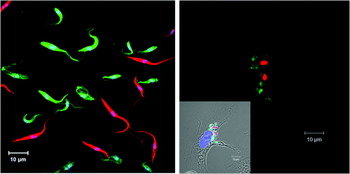
The availability of transgenic trypanosomatids carrying fluorescent proteins, such as GFP and DsRed, adds a new dimension to research on recombination and pathogenesis. Single organisms of different lineages, carrying distinct fluorescent and drug-resistant markers, can now be visualized to look for co-infection and interaction (Fig. 3). This allows renewed investigation of the presence and frequency of genetic recombination and the mechanisms involved, throughout the entire life cycle. In addition, the efficiency of this approach allows multiple vector and host interactions to be explored. For example, there are approximately 140 different triatomine species and our present appreciation of the diversity of vector parasite interactions may be simplistic. Furthermore, co-infection of individual experimental animals with transgenic strains carrying different fluorescent markers will allow the competitive virulence and pathogenesis of such strains to be explored. This approach circumvents the need for large comparative cohorts of experimental animals, and it will be aided by the development of powerful in vivo imaging techniques.
Transgenic Trypanosoma cruzi expressing GFP or DsRed. Left: mixed epimastigote culture. Right: mixed infection of a Vero cell with amastigotes.

PARALLEL RESEARCH ON THE GENETIC DIVERSITY OF LEISHMANIA
Along with T. cruzi, the authors have followed a parallel interest in the genetic diversity of Leishmania that has become mutually beneficial and informative. The naming of Leishmania species has followed an entirely different route from T. cruzi, and it was primarily based on associated clinical presentation, whether visceral (VL) or cutaneous (CL) with potential for diffuse (DCL) and metastatic mucocutaneous (MCL) presentations. Two subgenera, Leishmania and Viannia, were distinguished by the distribution of their development in the sand fly vector, Viannia being found in the hindgut but also being confined to the New World and cutaneous (CL) or mucocutaneous (MCL) presentations. In addition the clinical features were, where possible, associated with the presence of particular vectors and reservoirs and with zoonotic or anthroponotic transmission (Ashford, Reference Ashford2000).
Genetic diversity of Leishmania
As with T. cruzi, pioneering work on the genetic diversity of Leishmania was based on the application of MLEE (Miles et al. Reference Miles, Lainson, Shaw, Povoa and De Souza1981d; Rioux et al. Reference Rioux, Lanotte, Serres, Pratlong, Bastien and Perieres1990; Cupolillo et al. Reference Cupolillo, Grimaldi and Momen1994). It became clear that several named Leishmania species were less divergent than the T. cruzi lineages TcI and TcII and that there was a tendency to ‘split’ Leishmania into multiple species not only based on the criteria briefly explained in the above section, but often on minor enzyme polymorphisms. The introduction of a wide range of molecular markers has broadly validated the taxonomic approach to Leishmania (Mauricio et al. Reference Mauricio, Howard, Stothard and Miles1999, Reference Mauricio, Stothard and Miles2004, Reference Mauricio, Yeo, Baghaei, Doto, Pratlong, Zemanova, Dedet, Lukes and Miles2006, Reference Mauricio, Gaunt, Stothard and Miles2007; Lukes et al. Reference Lukes, Mauricio, Schonian, Dujardin, Soteriadou, Dedet, Kuhls, Tintaya, Jirku, Chocholova, Haralambous, Pratlong, Obornik, Horak, Ayala and Miles2007). However, it has revealed interesting cases that call for revision of Leishmania taxonomy. The analysis of the L. donovani complex, for example, showed that some isolates had been misclassified as L. infantum, revealed a hidden extent of genetic diversity but also demonstrated that some species names are certainly not valid. Leishmania archibaldi turned out to be synonymous with L. donovani and Leishmania infantum synonymous with L. chagasi (also referred to as L. infantum chagasi). L. archibaldi strains are simply heterozygous for the gene coding for aspartate amino transferase, but are otherwise indistinguishable from strains of the Sudanese genetic group. The case of L. infantum and L. chagasi is quite interesting, as most studies used to justify their separation were based on 1 strain of each, whereas all studies in which a large number of strains were used showed that Latin American strains could not be distinguished from L. infantum, even with the most polymorphic markers available (Mauricio et al. Reference Mauricio, Stothard and Miles2000, Reference Mauricio, Gaunt, Stothard and Miles2001; Kuhls et al. Reference Kuhls, Keilonat, Ochsenreither, Schaar, Schweynoch, Presber and Schonian2007). The future status of L. infantum is also uncertain, given that this named species is simply a genetic group of L. donovani, giving Leishmania researchers another dilemma between prolificacy and conservatism. Several similar cases are emerging in the literature, such as for L. tropica and L. killicki (Schwenkenbecher et al. Reference Schwenkenbecher, Wirth, Schnur, Jaffe, Schallig, Al-Jawabreh, Hamarsheh, Azmi, Pratlong and Schonian2006). Thus, in the case of Leishmania there is a strong case for progressive taxonomic revision as more advanced molecular methods are extensively applied (Lukes et al. Reference Lukes, Mauricio, Schonian, Dujardin, Soteriadou, Dedet, Kuhls, Tintaya, Jirku, Chocholova, Haralambous, Pratlong, Obornik, Horak, Ayala and Miles2007). Maintenance of the status quo seems to confuse researchers who use species names indiscriminately and even erroneously, while the acutely needed revision will provide a basis for more in depth comparative studies of virulence, pathogenesis, host specificity and epidemiology, leading to an overall better understanding of leishmaniasis. Nevertheless, a balanced approach to taxonomic nomenclature is required, for example if striking phenotypic differences or a unique clinical presentation should be proven to depend on minor genetic diversity, unrelated to host confounders.
Development of multilocus sequence (MLST) and microsatellite (MLMT) typing for Leishmania
Many different typing methods have been developed and different targets used over the years to address Leishmania genetic diversity, recently reviewed by Botilde et al. (Reference Botilde, Laurent, Quispe Tintaya, Chicharro, Canavate, Cruz, Kuhls, Schonian and Dujardin2006); and Schonian et al. (Reference Schonian, Mauricio, Gramiccia, Canavate, Boelaert and Dujardin2008). Common and important drawbacks regard lack of portability, mainly for PCR-RFLPs, and capacity to detect genetic diversity, mainly for MLEE. Two new methodologies have emerged recently that, combined, should allow the entire Leishmania genus to be addressed from the subpopulation to the genus level. Sequence and microsatellite typing, used as multilocus approaches and developed in the same context as for T. cruzi, have provided new insight on population genetics, taxonomy and evolutionary history of Leishmania. At the moment there are 10 published MLST targets available for the L. donovani complex (Mauricio et al. Reference Mauricio, Yeo, Baghaei, Doto, Pratlong, Zemanova, Dedet, Lukes and Miles2006; Zemanova et al. Reference Zemanova, Jirku, Mauricio, Horak, Miles and Lukes2007), most of which are also readily applicable to other Old World Leishmania (unpublished observations). In addition to the published 4 targets for the sub-genus Leishmania (Viannia) (Tsukayama et al. Reference Tsukayama, Lucas and Bacon2009) we and our collaborators are developing up to 11 more, which should allow better discrimination at a population level. Preliminary results show that MLST can be used for the same targets across the Leishmania genus, which will enable comparisons not only of distances between species but also of the degree of genetic diversity within species. It will be possible to make more informed decisions about species validity and to compare species diversity, as well as investigate deeper evolutionary events. MLST has also emerged as a powerful tool to explore recombination between and within species and populations, as seen for the L. donovani complex (Mauricio et al. Reference Mauricio, Yeo, Baghaei, Doto, Pratlong, Zemanova, Dedet, Lukes and Miles2006).
Simultaneously, microsatellite typing has been developed for Leishmania strains by different groups. Microsatellite typing has beautifully shown the genetic structures of the L. donovani complex (Kuhls et al. Reference Kuhls, Chicharro, Canavate, Cortes, Campino, Haralambous, Soteriadou, Pratlong, Dedet, Mauricio, Miles, Schaar, Ochsenreither, Radtke and Schonian2008), L. tropica (Schwenkenbecher et al. Reference Schwenkenbecher, Wirth, Schnur, Jaffe, Schallig, Al-Jawabreh, Hamarsheh, Azmi, Pratlong and Schonian2006) and L. major (Al-Jawabreh et al. Reference Al-Jawabreh, Diezmann, Muller, Wirth, Schnur, Strelkova, Kovalenko, Razakov, Schwenkenbecher, Kuhls and Schonian2008) but also the finer population structure of South European L. infantum (Kuhls et al. Reference Kuhls, Chicharro, Canavate, Cortes, Campino, Haralambous, Soteriadou, Pratlong, Dedet, Mauricio, Miles, Schaar, Ochsenreither, Radtke and Schonian2008) and hybridization events in North Africa (Seridi et al. Reference Seridi, Amro, Kuhls, Belkaid, Zidane, Al-Jawabreh and Schonian2008).
Both of these techniques produce data that are easily loaded into databases and shared between researchers around the world. Even with the advent of cheap and high throughput genome sequencing, they have the capacity to resolve several questions on the molecular epidemiology of Leishmania at a fraction of the cost.
GENETIC RECOMBINATION IN LEISHMANIA
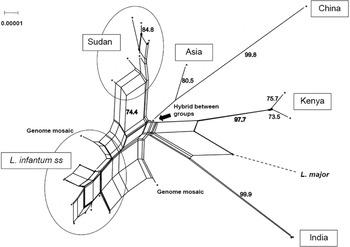
Similarly to T. brucei and T. cruzi, Leishmania were initially thought to be clonal, although occasional hybrids had been found between species (Evans et al. Reference Evans, Kennedy, Elbihari, Chapman, Smith and Peters1987; Kelly et al. Reference Kelly, Law, Chapman, Van Eys and Evans1991; Belli et al. Reference Belli, Miles and Kelly1994; Dujardin et al. Reference Dujardin, Banuls, Llanos-Cuentas, Alvarez, Dedoncker, Jacquet, Le Ray, Arevalo and Tibayrenc1995; Delgado et al. Reference Delgado, Cupolillo, Bonfante-Garrido, Silva, Belfort, Grimaldi Junior and Momen1997; Ravel et al. Reference Ravel, Cortes, Pratlong, Morio, Dedet and Campino2006; Nolder et al. Reference Nolder, Roncal, Davies, Llanos-Cuentas and Miles2007). In our first studies of the L. donovani complex, particularly using MLST, however, we were able to show that a strain previously characterized by multilocus enzyme electrophoresis was, in fact, a hybrid between L. donovani genetic groups and that recombination played an important role in the genetics of this complex of species (Mauricio et al. Reference Mauricio, Yeo, Baghaei, Doto, Pratlong, Zemanova, Dedet, Lukes and Miles2006) (Fig. 4). Mosaic genotypes were seen in strains from local populations with high prevalence and diversity, such as Sudanese L. donovani and Spanish L. infantum.
Leishmania donovani complex MLST network suggests the importance of recombination through genetic mosaic structure and a hybrid between populations. Network built with Neighbor–Net using complete DNA sequences for asat, gpi, nh1, nh2 and pgd coding regions, with 1000 bootstrap replicates. IUPAC codes for two bases were used for heterozygous sites. Distances were calculated using the Kimura-2-parameter. All strains were included and haplotypes were used where possible. The tree is rooted by Leishmania major Friedlin genome sequences (branch not to scale). Adapted from Mauricio et al. (Reference Mauricio, Yeo, Baghaei, Doto, Pratlong, Zemanova, Dedet, Lukes and Miles2006).

In parallel, MLMT (recently supported by MLST, unpublished) uncovered a widespread and successful lineage of L. tropica that seems to have been the product of a single recombination event (Schwenkenbecher et al. Reference Schwenkenbecher, Wirth, Schnur, Jaffe, Schallig, Al-Jawabreh, Hamarsheh, Azmi, Pratlong and Schonian2006), mirroring the hybrid lineages of T. cruzi TcIId/e. In our group, (Nolder et al. Reference Nolder, Roncal, Davies, Llanos-Cuentas and Miles2007) also found MLMT evidence for the emergence and epidemiological significance of multiple L. braziliensis/L. peruviana hybrids in Peru. A preliminary study of Sudanese populations of L. donovani suggests that at least one population may be in Hardy-Weinberg equilibrium (Baleela et al., unpublished observations) in contrast with other Sudanese L. donovani and L. infantum. If Leishmania are mainly clonal they should show high heterozygosity due to accumulation of random mutations, but heterozygosity could be lowered by a high rate of gene conversion. On the other hand, high rates of inbreeding could explain the high homozygosity seen in most Leishmania populations, as found for L. braziliensis (Rougeron et al. Reference Rougeron, De Meeus, Hide, Waleckx, Bermudez, Arevalo, Llanos-Cuentas, Dujardin, De Doncker, Le Ray, Ayala and Banuls2009).
A long quest to produce the first laboratory hybrids of Leishmania, was meanwhile, underway. The first successful crosses of L. major were finally achieved, in the sand fly vector, at the end of 2008 (Akopyants et al. Reference Akopyants, Kimblin, Secundino, Patrick, Peters, Lawyer, Dobson, Beverley and Sacks2009). In addition, the L. major crosses suggest that meiosis, although not seen in Leishmania, must play a role, given that the recovered clones were either diploid or triploid. The mechanism of recombination in Leishmania thus seems to mirror T. brucei, but contrasts with T. cruzi (see above).
In future, experimental crosses, if routinely established, should enable genome mapping of determinants of important phenotypic traits, such as drug resistance, pathogenesis and virulence.
Genetic exchange may be crucial to survival and expansion of parasites that happily undergo clonal expansion in an ideal environment (Heitman, Reference Heitman2006). Through genomic re-assortment, some recombinant lineages may be able to adapt to new niches (vectors, mammalian hosts and climate) and may lead to future epidemics. A sobering reminder of the potential epidemic spread of Leishmania hybrids is the fact that L. infantum/L. major hybrids become transmissible by the widespread sand fly vector Phlebotomus papatasi, which is normally only competent to transmit L. major (Volf and Sadlova, Reference Volf and Sadlova2009).
HOST SUSCEPTIBILITY
As succinctly mentioned for Chagas disease by Carranza et al. (Reference Carranza, Valadares, D'avila, Baptista, Moreno, Galvao, Chiari, Sturm, Gontijo, Macedo and Zingales2009), an important dimension has intentionally been omitted from this review, that of the host variation in susceptibility. It is abundantly clear, however, that in addition to genetic diversity of the disease agent, host susceptibility, whether due to genetic differences, age, immunocompetence, presence of co-infection, nutrition or hormonal status, plays a major role in the outcome of infection by either Leishmania or T. cruzi. A simple example in this historical context is the lead author's first paper on T. cruzi in this journal, showing differences in male and female susceptibility and in female susceptibility dependent on pregnancy (Miles, Reference Miles1972). However, this and several other interesting aspects of Chagas disease and leishmaniasis lie beyond the scope, and space, for this review.
In conclusion, as reviewed here, molecular epidemiology and phylogeography, combined with incisive laboratory experiments, have transformed our perception of Trypanosoma cruzi and Leishmania and their corresponding diseases. Fascinating questions remain to be answered but will surely fall to this rational approach.
ACKNOWLEDGEMENTS
We are extremely grateful to our overseas collaborators, cited in the accompanying bibliography, for their friendship and support. We also thank the Wellcome Trust, EC contracts 015407 LeishEpiNetSA and 223034 ChagasEpiNet, and other financial contributors to the work on which this review is based.