Transthoracic echocardiography is a common procedure for the diagnosis of cardiac diseases. However, anxiety and consequent movement may interfere with the diagnostic quality of the images in children. Obtaining precise images is necessary in order to prevent repeated studies as well as obviating more invasive tests. Reference Ghaffar, Haverland, Ramaciotti, Scott and Lemler1 , Reference Narendra, Naphade, Nallamilli and Mohd2 Therefore, appropriate sedation is required for some children, especially for infants. Reference Ghaffar, Haverland, Ramaciotti, Scott and Lemler1 Midazolam, ketamine, and chloral hydrate have been used by various routes (oral, intramuscular, intravenous, rectal, sublingual, or nasal) for paediatric premedication and sedation before several procedures. Reference Narendra, Naphade, Nallamilli and Mohd2 – Reference Napoli, Ingall and Martin5 However, onset and duration of sedation as well as side effects of these sedative agents vary.
Midazolam is a fast-acting benzodiazepine that provides short-term sedation by inhibitory mechanisms on the central nervous system. Reference Conway, Rolley and Sutherland6 It has a clinical active metabolite: 1-hydroxymidazolam, whose contribution is the depression of neuronal activity. Reference Conway, Rolley and Sutherland6 On the other hand, ketamine is a non-competitive N-methyl-D-aspartate and glutamate receptor antagonist and produces its action primarily by blocking HCN1 receptors of central nervous system. Reference Narendra, Naphade, Nallamilli and Mohd2 , Reference Buonsenso, Barone, Valentini, Pierri, Riccardi and Chiaretti7 Usually, oral route is easier with predictable efficacy and without significant side effects. However, higher effective doses are required for sedation when oral route is used. Reference Gutstein, Johnson, Heard and Gregory8 While oral bio availability of ketamine and midazolam is 16 and 27%, respectively, the nasal bio availability of these two sedatives is unknown. Reference Grant, Nimmo and Clements9 , Reference Payne, Mattheyse, Liebenberg and Dawes10 In addition, chloral hydrate has a long history of use in paediatrics as an effective sedative/hypnotic for facilitating a wide range of diagnostic procedures with successful sedation rates ranging from 60 to 92.8%. 11 , Reference Wilson, Karaoui, Al Djasim, Edward, Al Shamrani and Friedman12 However, it may result in undesirable side effects including vomiting and longer periods of sleepiness. Reference Kao, Adamson, Tatman and Berbaum13 Chloral hydrate can be administered by mouth or by rectum, and it is absorbed from the gastrointestinal tract, with peak serum concentrations within 30–60 minutes. Reference Pershad, Palmisano and Nichols14
The aim of this study is to investigate the effectiveness of three sedatives: intranasal ketamine, intranasal midazolam, and oral chloral hydrate for transthoracic echocardiography in children. More specifically, it aims to determine the optimal sedative medication for children undergoing transthoracic echocardiography that provides adequate sedation and has rapid onset with an optimal duration of sedation while showing a lower side effect profile.
Materials and methods
Study design and population
After obtaining approval from the University Institutional Review Board (2018/448), this prospective randomised study, conducted in a tertiary hospital, was performed between March 2018 and January 2019. Written informed consent was obtained from all patients before participating in the trial.
Patients within 9–36 months of age who were referred to paediatric cardiology for further evaluation of a heart murmur were enrolled. The inclusion criteria were full consciousness before transthoracic echocardiography, lack of hypotonia, and a successfully completed procedure. Exclusion criteria were history of associated drug hypersensitivity, presence of neurologic deficits and/or developmental delay, presence of respiratory distress, presence of upper or lower respiratory system infection, gastroenteritis with/without vomiting, presence of genetic diseases such as Down syndrome, presence of any disease that suggests pulmonary hypertension or history of pulmonary hypertension, current medications and/or associated medical conditions known to contraindicate sedation, instability of patient’s vital signs, meanwhile intensive care unit stay, detection of pulmonary hypertension, and failure to complete the procedure. Also, successful transthoracic echocardiography evaluation under sedation was defined as obtaining high-quality images (i.e. lack of artefacts). Side effects of the drugs were noted.
The procedure
Patients were randomly divided into 3 groups: intranasal midazolam, intranasal ketamine, and oral chloral hydrate. In all groups, the children were awake for at least 6 hours before receiving the drug. Patients were weighted before the procedure for dosing. Heart rate, body temperature, respiratory rate, blood pressures (systolic/diastolic), and oxygen saturation were assessed before and during the procedure. Intranasal midazolam and ketamine were given with droppers as a dose of 0.2 mg/kg (maximum of 5 mg) and 4 mg/kg (maximum of 100 mg), respectively. Oral chloral hydrate syrup (50 mg/kg, maximum of 1 g) was mixed with cherry juice and administered for the last group. Reference Napoli, Ingall and Martin5 – Reference Buonsenso, Barone, Valentini, Pierri, Riccardi and Chiaretti7 , Reference Geva, Powell, Allen, Gutgesell, Clark and Driscoll15 Children were followed up for every 15 minutes for the onset and duration of sedation and complete recovery. Transthoracic echocardiography was performed when sedation was achieved. No rescue dose was given during the procedure. Also, during the follow-up period, gastrointestinal, respiratory, and neurologic side effects were evaluated and compared between the groups. Additionally, the depth of sedation was evaluated by the Richmond Agitation–Sedation Scale (RASS) scores. Reference Sessler, Gosnell and Grap16 Patients were classified as alert and calm, drowsy, or sedated according to the deepness of sedation. Children were assessed as per the scale on 15th, 30th, 45th, and 60th minutes by two paediatricians who were blinded to the study. Complete unconsciousness and lack of body movements were defined as sedation. Also, sedation success was evaluated with RASS scores as well as the quality of images determined by transthoracic echocardiography.
Echocardiographic evaluation
Echocardiographic investigations were performed using Philips Affiniti 50 (Philips Healthcare, Andover, Netherlands) with 5.0 MHz transducers in our paediatric cardiology echocardiography laboratory by the same observer. A full echocardiography including conventional Doppler, colour images, and M-mode measurements was performed. Echocardiograms were recorded on a flash drive for repeated evaluation. All measurements were performed according to the American Society of Echocardiography. Reference Lopez, Colan and Frommelt17 The quality of echocardiographic images was classified as high or low in order to determine the success of sedation.
Statistical analyses
Descriptive statistics were calculated using counts, frequencies, medians, and interquartile ranges for patient demographics and sedation procedure characteristics. Categorical data were presented as frequencies (%) and analysed using Chi-square test. Differences between scores were compared with the use of the analysis of variance and Kruskal–Wallis variance analysis. If a difference was detected between the parameters by analysis of variance, two-tailed test was used. Statistical significance was inferred at p < 0.05. Statistical analyses were done using SPSS for Windows Version 17.0 software (Chicago, IL, USA).
Results
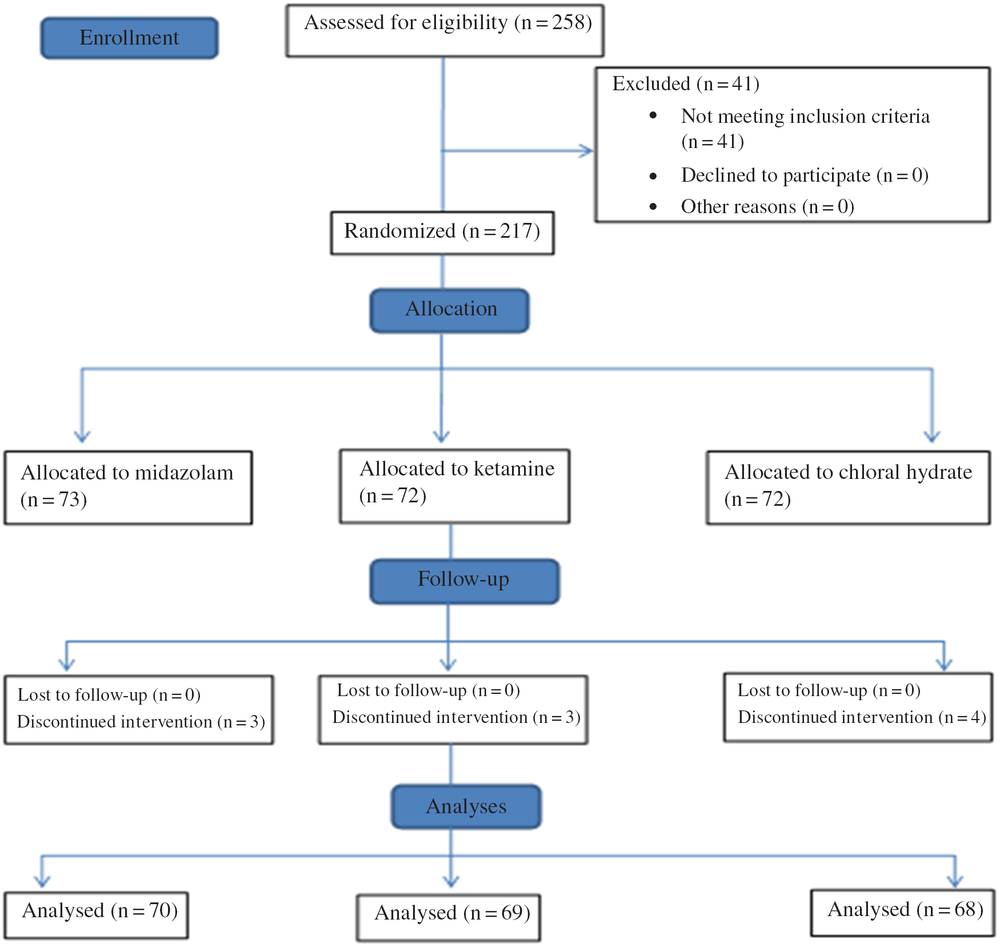
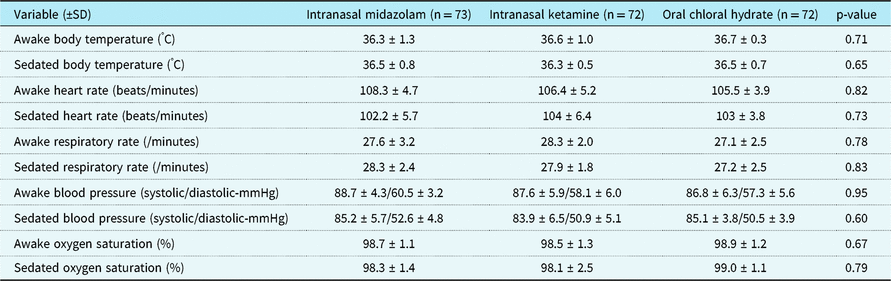
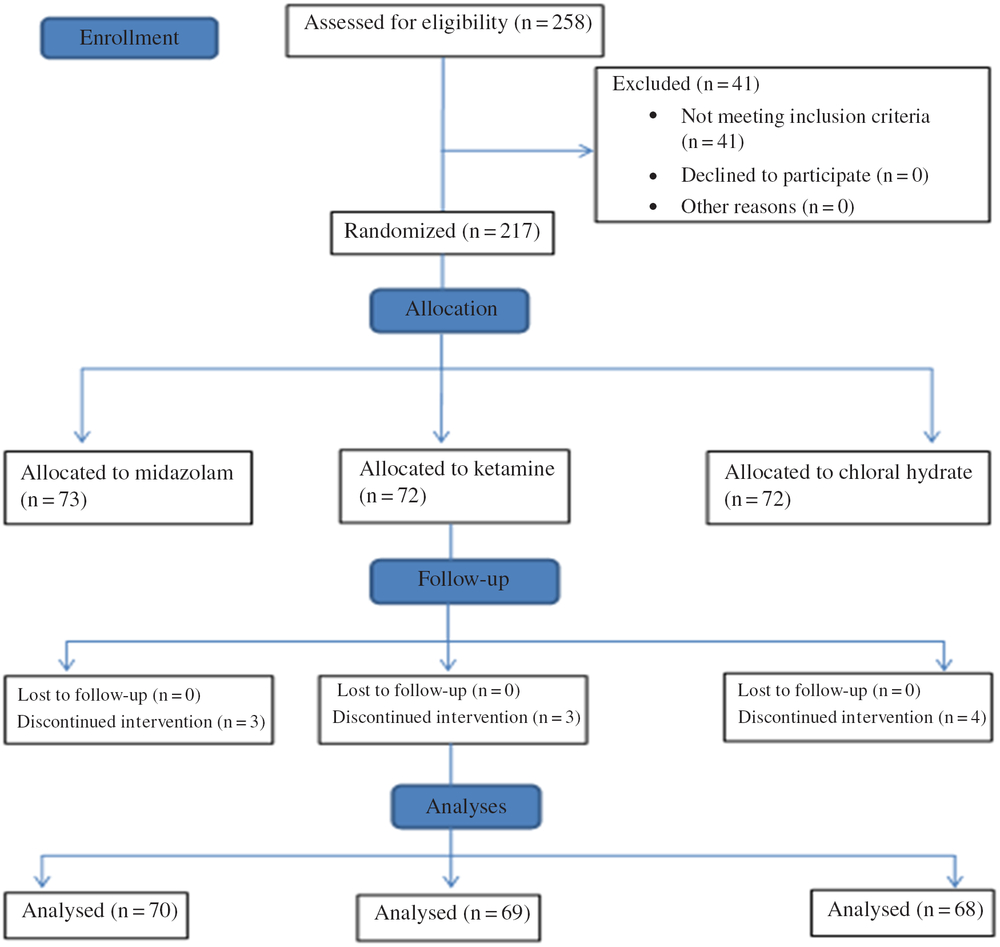
In total, 217 children were enrolled in the study (115 girls, 53% and 102 boys, 47%) with a median age of 22 months (range 9–38). There were 73 patients in the midazolam group, 72 in the ketamine group, and 72 in the chloral hydrate group (Fig 1). All three groups were similar with regard to age, gender, and weight. Median age of children was 20 months (range 9–36), 23 months (range 10–38), and 24 months (range 12–37) in the midazolam, ketamine, and chloral hydrate groups, respectively (p = 0.312). Also, 53.5% patients in the midazolam group, 59.8% in the ketamine group, and 45.9% in the chloral hydrate group were female and comparison of the gender did not achieve statistical significance (p = 0.072). Additionally, the median weights of the three groups were 14 kg (range 7–19), 14 kg (range 7–23), and 13 kg (range 9–16), respectively (p = 0.234). There was no statistical difference between the groups with regard to body temperature (p = 0.65 and 0.71), heart rate (p = 0.73 and 0.82), respiratory rate (p = 0.83 and 0.78), automated blood pressure measurement (p = 0.95 and 0.60), and transcutaneous oxygen saturation (p = 0.79 and 0.67) during sedated and non-sedated phases (Table 1).
Consolidated standards of reporting trials flow diagram of patients included in the study.
Comparison of the vital signs while awake and sedated

Three patients in midazolam group, three patients in ketamine group, and four patients in chloral hydrate group could not be sedated with designated doses of the sedatives, and transthoracic echocardiography could not be performed in these patients. Therefore, success rates of the drugs for sedation in each group were calculated as 95.9, 95.9, and 94.5%, respectively. One patient in midazolam and one in chloral hydrate groups needed oxygen supplementation to maintain the oxygen levels above 95%, and oxygen saturation became normal levels in room air during the first hour of sedation.
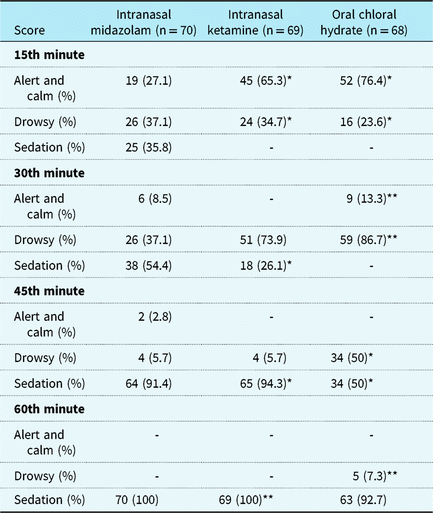
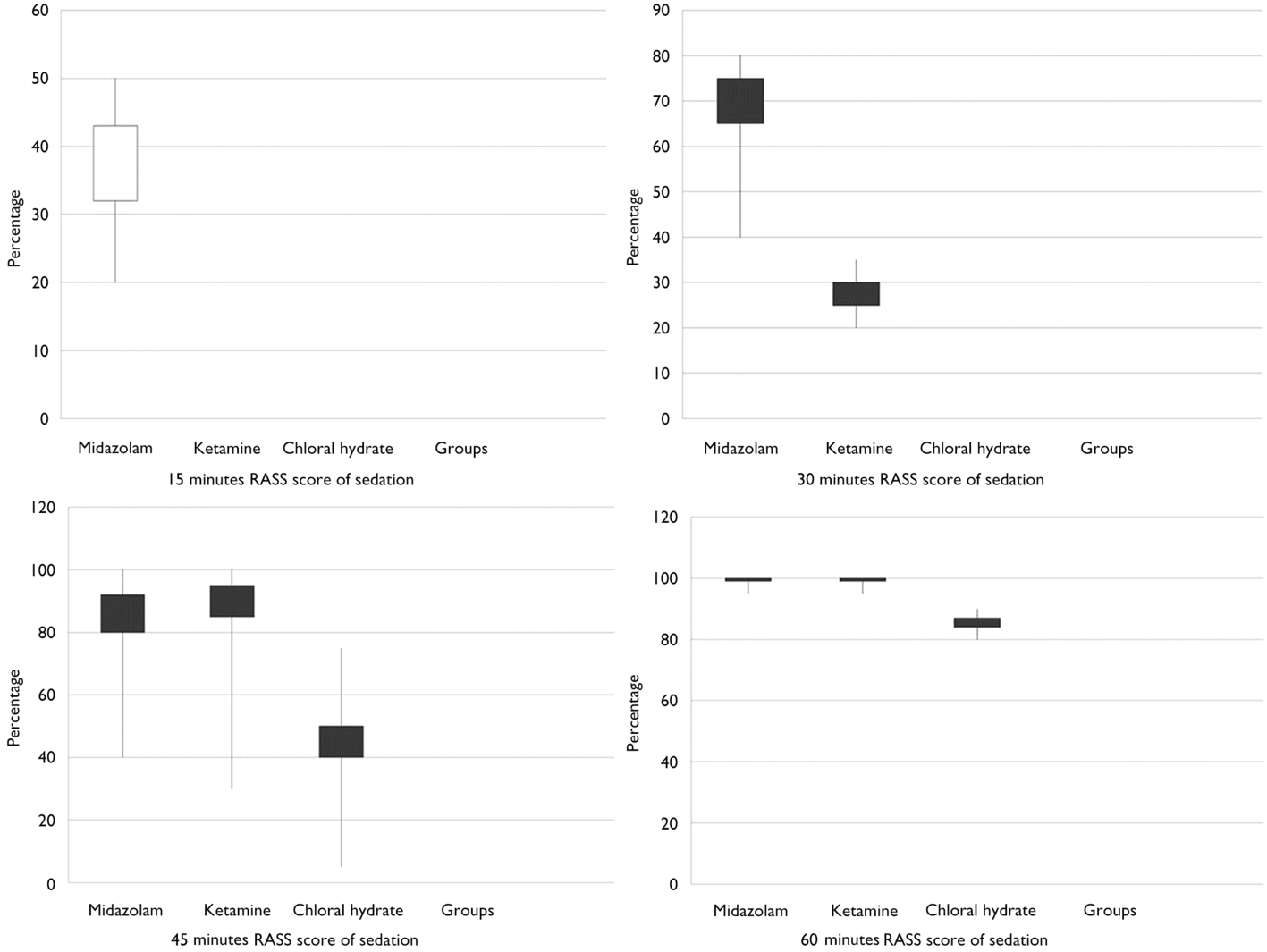
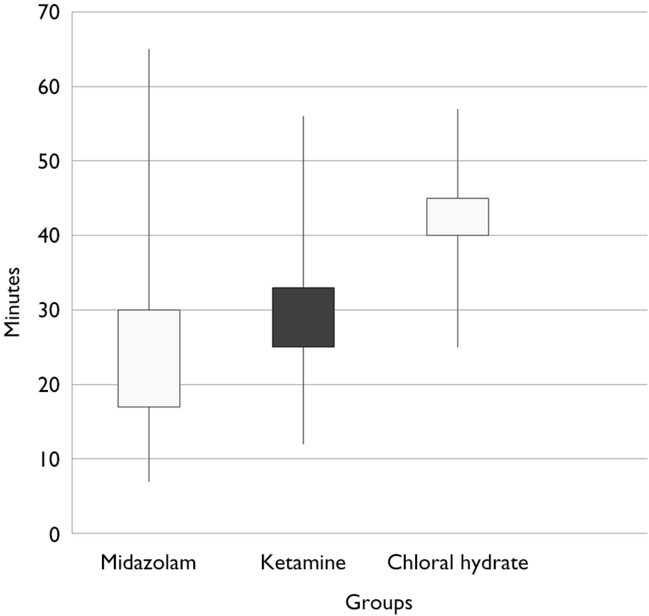
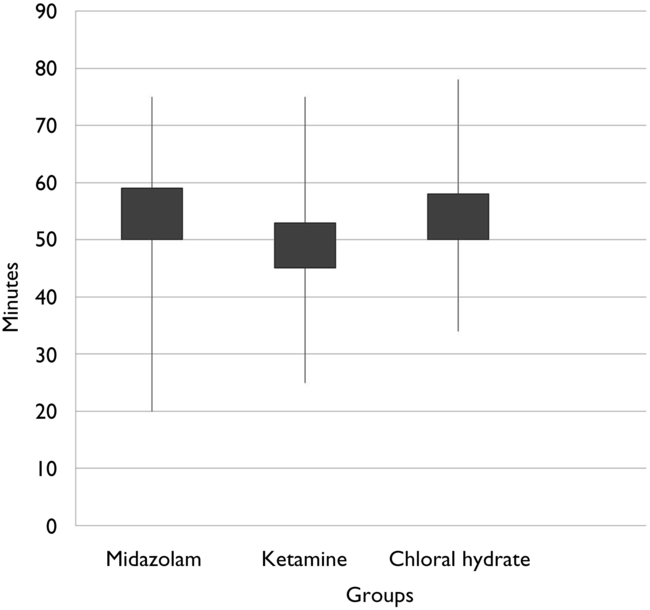
Comparing the degree of sedation based on the RASS scores in three groups (Table 2, Fig 2) revealed that frequency of alert and calm score during the 15 minutes in the chloral hydrate group was 76.4% (for all p < 0.001). Midazolam group has a higher frequency of drowsy and sedation scores during 15 minutes than the other two groups (37.1 and 35.8%, respectively, for all p < 0.001). The 30 minutes RASS scores showed that midazolam group has the highest frequency of sedation score (54.4%, p < 0.001 and p = 0.065), while the 45 minutes RASS scores revealed the frequency of sedation scores in the midazolam, ketamine, and chloral hydrate groups was 91.4, 94.3, and 50%, respectively (for all p < 0.001). Also, chloral hydrate group has the highest frequency of drowsy score in the 45 minutes evaluation (50%, p < 0.001). The 60 minutes evaluation revealed that all the patients of midazolam and ketamine groups were in sedation score, while 7.3% of chloral hydrate group was still in drowsy score (p = 0.003 and 0.005). The median onset of sedation in the three groups was 14 minutes (range 7–65), 34 minutes (range 12–56), and 40 minutes (range 25–57), respectively (p < 0.001 for all) (Table 3 and Fig 3). Also, the median duration of sedation in the midazolam, ketamine, and chloral hydrate groups was 68 minutes (range 20–75), 55 minutes (range 25–75), and 61 minutes (range 34–78), respectively (p = 0.023, 0.712, and 0.045, respectively, Fig 4). Echocardiographic evaluations were completed during the sedation period in all groups. Results of the side effects in the studied groups indicated that only two patients had temporary respiratory side effects, one in midazolam and one in chloral hydrate groups. Agitation was reported in three cases in the midazolam group, while nausea and vomiting were observed in two and eight cases in the ketamine and chloral hydrate groups, respectively. So, chloral hydrate group has the highest incidence of gastrointestinal side effects, when compared with the other two groups (11.7% in chloral hydrate group versus 0% midazolam group and 2.8% ketamine group, p = 0.002).
Richmond Agitation–Sedation Scale Scores in the study groups
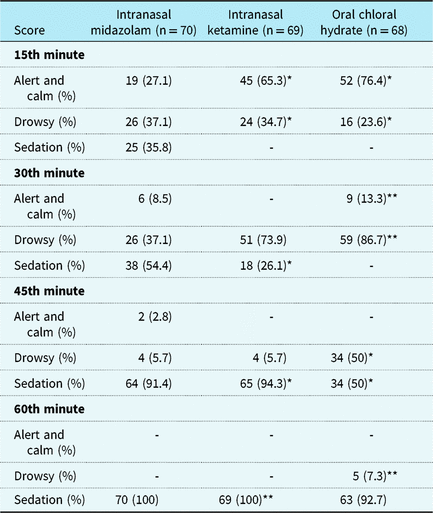
* p < 0.001, compared with midazolam.
** p < 0.005, compared with midazolam.
The percentages of the drowsy to sedated patients in three groups during the follow-up period.

Comparison of onset and duration of sedation in study groups

* p < 0.001
** p = 0.023
*** p = 0.712
**** p = 0.045
Comparison of the mean onset of sedation time in the study groups.

Comparison of the mean total duration of sedation time in the study groups.

Discussion
In our prospectively randomised study, sedative effectiveness of intranasal midazolam, intranasal ketamine, and oral chloral hydrate for paediatric transthoracic echocardiography were compared. We reported that the median onset of sedation was significantly shorter in midazolam group, while the median duration of sedation was significantly shorter in ketamine group. Also, frequency of gastrointestinal side effects in chloral hydrate group was significantly higher than the other two groups.
Infants and young children often require premedication before minor surgery and imaging procedures such as transthoracic echocardiography. During echocardiography in small infants with congenital heart diseases, and even in those with normal hearts, certain views are easier to obtain in a relaxed or sleeping infant. On the other hand, children with complex cardiac diseases such as cyanotic congenital heart diseases and pulmonary hypertension should not be sedated with such sedatives because of rapid decrease in oxygen saturation. Reference Salehi, Riasi, Ebrahimzadeh and Askari Janatabadi3 – Reference Napoli, Ingall and Martin5 , Reference Sessler, Gosnell and Grap16 , Reference Zilberman18 Imaging in the suprasternal notch and subcostal position during transthoracic echocardiography is easier to perform in a quiet and relaxed patient. Imaging can be performed optimally in a quiet, relaxed patient. To achieve optimal imaging for diagnosis, appropriate sedation may be necessary in infants and small children. However, sedation practices differ among paediatric cardiac centres, as chloral hydrate, midazolam, pentobarbital, dexmedetomidine, ketamine, or propofol are used for this purpose. Reference Ghaffar, Haverland, Ramaciotti, Scott and Lemler1 , Reference Salehi, Riasi, Ebrahimzadeh and Askari Janatabadi3 – Reference Napoli, Ingall and Martin5 , Reference Zilberman18 – Reference Yu, Liu and Sun20 Also, administration routes differ such as oral, intranasal, rectal, or intramuscular Reference Salehi, Riasi, Ebrahimzadeh and Askari Janatabadi3 – Reference Conway, Rolley and Sutherland6 , Reference Zilberman18 – Reference Yu, Liu and Sun20 as well as dosage. Reference Napoli, Ingall and Martin5 – Reference Buonsenso, Barone, Valentini, Pierri, Riccardi and Chiaretti7 , Reference Geva, Powell, Allen, Gutgesell, Clark and Driscoll15
In a previous study, researchers reported that onset of sedation was not significantly different between midazolam and chloral hydrate groups, but they found significantly shorter recovery time in the midazolam group. Reference Wheeler, Jensen and Poss21 Also, the study revealed that chloral hydrate provided a deeper sedation and no considerable side effects were observed in any of children who underwent echocardiography. Reference Wheeler, Jensen and Poss21 However, in our study, it was showed that onset of sedation was significantly shorter in midazolam group than ketamine and chloral hydrate groups. Additionally, chloral hydrate had the longest time interval to achieve sedation. Recently, it was shown that the average onset and duration of sedation in the children sedated with midazolam before echocardiography were significantly shorter than in those sedated with chloral hydrate. Reference Salehi, Riasi, Ebrahimzadeh and Askari Janatabadi3 However, the authors found gastrointestinal side effects more frequent in chloral hydrate group. In their study, Heistein et al evaluated 1095 children who were sedated by chloral hydrate before echocardiography and reported no irreversible side effects or mortalities while the most common side effects were respiratory and gastrointestinal. Reference Heistein, Ramaciotti, Scott, Coursey, Sheeran and Lemler22 Similarly, our study revealed gastrointestinal side effects were more common in chloral hydrate group. On the other hand, the adverse effects reported following intranasal ketamine and midazolam are unpleasant bitter taste that disappeared after drinking fluids and burning or irritation in the nose. Reference Fantacci, Fabrizio, Ferrara, Franceschi and Chiaretti23 No such adverse effects were observed in our study groups.
A recent study also investigated the use of intranasal ketamine and midazolam in children undergoing various surgical procedures and revealed that both midazolam and ketamine were an effective paediatric premedication when administered nasally, but midazolam had an early onset of sedation with fewer side effects. Reference Narendra, Naphade, Nallamilli and Mohd2 Our results indicate shorter average onset of sedation in midazolam group; however, duration of sedation was significantly shorter in ketamine group. Also, the combination of intranasal midazolam (0.1 mg/kg) and ketamine (3 mg/kg) provided better and effective paediatric premedication with no side effects in the study of Akçay et al. Reference Akçay, Kılıç and Akdemir24 On the other hand, it has been reported that oral chloral hydrate was superior to intranasal midazolam with an earlier time to onset of sedation, a faster recovery and successful sedation. Reference Stephen, Mathew, Varghese, Kurien and Mathew25 On the contrary, our study revealed that intranasal midazolam and ketamine use before transthoracic echocardiography provided an earlier onset of sedation than chloral hydrate. Beyond all, a systematic review of 30 trials showed that there is no high-quality evidence to determine if midazolam, when administered as the sole sedative agent prior to a procedure, produced more or less effective sedation than other sedatives. Reference Conway, Rolley and Sutherland6 Also, they concluded that there was moderate-quality evidence suggesting that oral midazolam produces less effective sedation than oral chloral hydrate for children undergoing non-invasive diagnostic procedures. Reference Conway, Rolley and Sutherland6
There are some limitations of our study. Firstly, we only included infant and small children in our study. So, the results of our study are only representative for them not for older children. Secondly, children with cyanotic congenital heart diseases were excluded from the study. Thus, we could not evaluate the effect of sedatives on aforementioned parameters and cyanosis in these children. Thirdly, standard single doses of sedatives were used and no rescue doses were given for children who could not be sedated. So, we could not evaluate the possible effective higher doses of drugs in the current study.
In our study, intranasal midazolam, intranasal ketamine, and oral chloral hydrate were given to study groups before transthoracic echocardiography. All agents showed good sedative features with no difference in achieving sedation. Our results indicate median onset of sedation was significantly shorter in midazolam group, while ketamine provided shorter duration of sedation with lesser side effects. Finally, while midazolam has an averagely rapid onset of sedation time, ketamine has an optimal and shorter duration of sedation. Intranasal ketamine can be used safely with lesser side effects in children undergoing transthoracic echocardiography. However, further studies are needed to determine the optimal sedative drug, dosage, and route of administration in children.
Acknowledgements
We would like to thank M.D, MD for kindly reviewing the manuscript.
Trial registry name: The comparison of the sedatives: intranasal midazolam, intranasal ketamine, and oral chloral hydrate before paediatric echocardiography. Which one is more useful?
Registration identification number: 2018/448.
URL: Selçuk University Ethics Committee.
Financial Support
This research received no specific grant from any funding agency, commercial, or not-for-profit sectors.
Conflicts of Interest
The authors have no conflicts of interest.
Ethical Standards
All procedures performed in this study involving human patients were in accordance with the ethical standards of the institutional research committee and with the 1964 Helsinki Declaration and its later amendments or comparable ethical standards.
Authorship Statement
This study was designed by H.A. and A.M.E. H.A. and E.K.A. approached the patients. H.A. and B.S. designed the data collection. H.A. A.M.E., and B.S. performed study measurements and observations. E.K.A. and B.S. analysed the data. H.A. and A.M.E. wrote the manuscript. All authors read and approved the manuscript.
Informed Consent
Informed consent was obtained from all individual patients included in the study.