


Introduction
Weak snow layers frequently fail in shear, resulting in the release of slab avalanches. The traditional shear-frame technique, yielding the shear strength of weak layers, has been widely used for avalanche forecasting (Reference RochRoch, 1966; Reference PerlaPerla, 1977; Reference FöhnFöhn, 1987; Reference JamiesonJamieson, 1995). However, the stress-strain and the stress strain-rate relationships have not been measured concurrently until now, even though it is known that the strain and the strain rate are decisive for snow strength and hence for slab formation. The main objective of this work was to describe how snow containing weak layers responds to a shear stress applied rapidly by pulling a shear frame comparable to dynamic loading by skiers. The shear-frame tests were made in situ, because snow samples containing weak layers or interfaces can rarely be transported into a cold laboratory and prepared for mechanical measurements without rupturing.
The second objective of this work was to measure the shear strength of various types of snow, usually present in weak layers, and to relate the strength to both the snow macro- and microstructure. The relationship between snow structure and mechanical behaviour is still not well known as Reference DentDent (1995) and Reference JohnsonJohnson (1995) recently pointed out. To assess the strength-macrostructure relationship, we analysed our long-term database containing macroscopic structural properties and measured shear-strength values of weak layers. To explore the strength microstructure relationship, we report on some recent preliminary micro-structural analysis of weak layers.
Experimental Procedures
The instrumental set-up consisted of a 0.05 m2 shear frame to which an accelerometer and a displacement sensor were attached. The frame is embedded in the snow above the weak layer then pulled by hand to failure (Figs 1 and 2). The shearing was done in two modes, either within some tenths of a second (called “fast”) or within 1-3 s (called “slow” in older to obtain a possible loading-rate effect and to simulate the range of loading by a skier (Reference Schweizer., Camponovo, Fierz, Föhn. and Sivar-diere.Schweizer and others, 1995). Acceleration, displacement and applied force were measured continuously during a test and recorded on a laptop computer. Tests were done under a fairly constant normal pressure of 250 Pa, due to the weight of the shear frame with the sensors and of the snow contained in the shear frame. The instrumental set-up and the measuring procedures have been described in detail by Pohn and Camponovo (1997). During 12 field campaigns in the winter 1995-96,11 weak layers and one interface were investigated and nearly 200 measurements were made in situ. Before each test, a full snow profile was made and the weak layers identified.
Shear-frame measurement of a weak layer in situ. The shear-frame position in the snow and the mounted accelerometer on top of the frame are visible in the centre of the picture. The displacement meter is visible in the upper right corner of the picture.

Schematic of the shear frame, showing snow layering and definitions of axes. Layer thickness (dz), displacement (dy) and shear angle ( ) are labeled for reference.

Results
Stress-Strain and Stress–Strain-Rate Relationship
Figure 3 shows typical shear stress-strain curves for three weak layers. The results demonstrate that the shear stress increases almost linearly with the strain until the weak layer breaks, at which point the stress decreases abruptly. This linear rise to a maximum stress at failure shows that the weak layers behave like a “brittle” material. Reference McClungMcClung (1977) reported such behaviour 20 years ago and recently Reference Fukuzawa, Narita. and ArmstrongFukuzawa and Narita (1993) have shown that brittle fracture in an artificially prepared depth-hoar layer typically takes place at a shear strain rate higher than 1–5 x 10⁻⁴s-1. All our shear measurements for weak layers were at strain rates of 10-2 to 1 s-1 and all layers showed brittle behaviour. The results of all the tests are given in Table 1, including the shear strength, the displacement and the strain rate.
Three typical shear stress-strain curves, showing the almost linear rise of the stress-strain curve and the peak stress. Strain rates at rupture are 0.92, 0.58 and 0.76s-1, respectively. Measuring date is 29 March 1996 (A).

Snow structure and mechanical properties of 11 weak layers and one interface together with date of measurement for identification purposes

Because the instrumentation and the procedure were new in the winter 1995-96, instrumental difficulties and sample rupturing occurred during many tests. Only about 50% of the data points could be used for the detailed analysis. These are shown in Figure 4, where the shear stress is plotted against strain for 11 weak layers. The points are scattered because:
-
(1) The measurements were not made under controlled conditions as in a cold room, so both temperature and the strain rate varied slightly from one test to another.
-
(2) The measured weak layers consisted of various snow types and were, as always, variable in space.
In spite of the scatter, Figure 4 shows that the fracture stress increases with increasing strain.
Shear stress-strain relationship for 13 layers. The scattering of the individual layer points is mainly due to slightly changing measuring and snow conditions in the field (sample preparation, pull action, temperature differences, snow inhomogeneities).

However, because the stress-strain curves of Figure 3 imply a quasi-linear elastic behaviour up to fracture, our experimental data can be described by the linear constitutive equation for plane shear (Reference Sommerfeld.Sommerfeld, 1978)
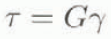
where  is the shear stress,
 is the shear angle (
 = tan(dt/dz)
 dy/dz for small dy) and G is the shear modulus. Values of G were determined by linear interpolation from 0 to 50% of the fracture stress. The shear modulus G Cart be related to the more common Young's modulus E

where v is the Poisson's ratio. For dry low-density snow, the Poisson's ratio is generally small. Reference SalmSalm (1971) and Reference Oh'izumi and Huzioka.Oh'izumi and Huzioka (1982) determined, for dry coherent snow of similar density and temperature, Poisson's ratios between 0. 01 to 0.15. If we assume for our weak layers v
 0.1 , we may approximate the Young's modulus by
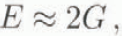
i. e. we may compare our values of E with previous data. Table 2 lists values of the shear modulus G determined for different weak layers on various dates and hence for various snow types and environmental conditions. The G values cover the range from 0.1 up to 0.6 MPa. Using Equation (3), corresponding values of the Young's modulus would be between 0.2 and 1.2 MPa. These values compare reasonably with values for similar density, if the different snow types (dry, coherent snow) of the former studies are taken into consideration (Reference Shapiro, Johnson, Sturm and Blaisdell.Shapiro and others, 1997). Our values are smaller by a factor of 0.5 than those published. This seems reasonable, because E values for granular snow with low cohesion are expected to be smaller than those for dry coherent snow (Reference MellorMellor, 1975).
Snow structure and G moduli, calculated from the stress-strain relationship for various weak layers using different snow types. The shear strain is determined by the accelerometer measurements (acc.) or by the displacement sensor (displ.). Comparisons of the two methods have been described by Reference Föhn and Camponovo.Fohn and Camponovo (1997)

Shear Strength of Various Weak Layers and Snow Types
In this second part, the strength of various weak layers and snow types is analysed in relation to the macro- and microscopic structure. The data from our long-term database include macroscopic structural parameters such as grain shape, mean grain-size, layer thickness, snow temperature, overburden snow pressure, age and of course mean shear strength (average of about ten measurements per layer). Data for 169 weak layers and for 201 interfaces are available. The largedataset allows a relationship between the shear strength and the structural snow parameters of weak layers to be developed.
Figure 5 shows the shear-strength data as a function oi grain shape. The strength data have been corrected for size effects and details have been given by Reference FöhnFöhn (1987). The data suggest that lower shear-strength values are associated with more “crystalline” grains. These are grains showing euhedral features like facets, striations or dendrite branches. Rounded grains showed the highest shear strength. The large scatter bars for the data can be explained by the fact that pure grain types have almost never been observed and that the layers have different temperatures, age and grain-sizes. In most cases, a combination of various shapes (e.g. metamorphic stages between small rounded grains and faceted grains or surface hoar and melt-freeze grains) have been observed but only the main shape is classified in Figure 5. The relative distribution of each type of grain is shown at the bottom of Figure 5. The percentages indicate that in our climate weak layers consist mainly of surface hoar, faceted crystals and depth hoar (Reference Föhn and ArmstrongFöhn, 1993). Figure 5 represents, for comparison, also the shear strength of weak interfaces, i.e. in these cases, a distinct thin layer of a given snow type could not be detected by visual inspection. The mean temperature of the analysed weak layers or interfaces was –5.5° ± 2.7°C. The total temperature range was –2.6° to –12.0° C. This total temperature range could be responsible for a strength variation between 20 and 25%, at least for fine-grained snow, according to data of Reference SalmSalm (1971) and Reference SchweizerSchweizer (1997).
In-situ measured shear strength as a function of the macroscopic main grain shape. Each sample was classified by the majority of grains, which were in the given snow-shape class (Reference ColbeckColbeck and others. 1990). The percentage indicates the occurrence of such main grain shapes in our long-term database. Interfaces are boundaries between two thick layers, where no distinct, thin weak layer has been observed.

Until now, only the relationship between macrostructure and mechanical parameters of weak layers has been analysed. In order to explain at least some aspects of the mechanical behaviour, we decided to start an analysis of microstructural parameters for one sample (26 January 1996).
The sample was serially sectioned into 46 single-sided serial planes with an area of 4.5 x 4.2 cm2. The section planes were cut after impregnating the sample with dark dyed, liquid diethyl phtalate, then freezing the liquid. The section planes were prepared using a Policut Ultramiller and a fibre-optic ring-light source to illumine the sample. Then, the structure was recorded by a video camera. The sample-preparation procedure has been described in more detail by Ciood (1989).
As Figure 6 shows, this sample contained an upper weak layer (uwl), an intermediate layer (il) that was not weak and a lower weak layer (lwl). The upper weak layer (uwl) consisted of surface hoar of 2 mm size. It was 3 mm thick. The window in the middle of Figure 6 shows part of the intermediate layer (il). It contains rounded and angular grains of 0.5-1 mm. The lowest window shows the lower weak layer (lwl). Shear tests were done on this layer. It consisted of surface hoar and faceted grains with a mean diameter of 2 mm. The layer was about 7 mm thick. The shear strength was measured as 2500 ± 425 Pa.
A serial plane section of sample (26 January 1096) showing two weak layers and an intermediate layer. 1 he microstructural snow parameters for the two weak layers, plus the non-weak (intermediate) layer are given in Table 3. (uwl, upper weak layer; il, intermediate, fine-grained snow layer; uwl, lower weak layer; ice = dark).

Some of the microstructural characteristics of the three layers are given in Table 3. The point densities show that the two weak layers have a lower density than the fine-grained intermediate layer. This is consistent with field observations that suggest weak layers are of lower density than surrounding layers but it is the first time we have been able to quantify the difference. The most remarkable thing is the fact that, by microstructural analysis, we are able to obtain densities of layers which are no thicker than a few millimetres and which therefore cannot be measured by the usual field methods. The other micromechanical characteristics in Table 3 do not differentiate the weak layers quite as clearly as density. The two different particle diameters, each determined by separate methods, do not correspond well with the macroscopically determined particle diameters. The calculated diameters for the weak layers are almost 100% smaller than those estimated macroscopically in the field. The diameters of the intermediate layer, in contrast, correspond quite well to the field estimation. This is not surprising, because the weak layers consist mainly of large snow crystals (several millimetres), which are cut into smaller particles during the preparation of the section planes. According to Reference UnderwoodUnderwood (1970) and Reference DeHoffDeHoff (1983), we can only reconstruct three-dimensional structures, e.g. real diameters, from two-dimensional section planes if the elements are of regular geometric shapes or if detailed assumptions and definitions about the three-dimensional properties are obtainable. As we have not been able to tackle these problems in this preliminary study, we give in Figure 7 an additional feature of structural analysis which shows part of the difficulty. The frequency distribution of the diameters of the three layers in the section planes shows clearly that any kind of “mean” is debatable. They suggest that two-dimensional cuts of a weak layer have large distribution “tails”. The form and roundness factors in Table 3, defined according to Reference RussRuss (1994), describe the shape differences of the snow grains. The mean form factor, which is the inverse version of the dendricity used by Reference Lesaffre, Pougatch and Martin.Lesaffre and others (1997), describes the tendency of grains to be dendritic like stellar new snow: the smaller the values, the more dendritic the snow. Even so, this dendritic tendency is larger for our two weak layers than for the intermediate layer, i.e. the two form factors are smaller than those for the intermediate layer, the differences are so small that this parameter seems to be a poor form factor for this type of grain. The last parameter in Table 3, the roundness, describes the tendency of particles to be “symmetric”. Here again, the rather rounded particles of the intermediate layer are somewhat more symmetric than the complex, partly feathery crystals in the two weak layers but the differences are too small to promise a good potential for clear identification. These factors seem to be unsuited for differentiating weak from non-weak layers, at least by using the method of section planes. These factors may be informative when single grains are described (Reference Lesaffre, Pougatch and Martin.Lesaffre and others, 1997). In order to describe the most significant structural parameters for the mechanical behaviour of snow grains, three-dimensional reconstructions have to be performed and new definitions will have to be developed. These may include measurements related to the number and area of bonds.
Frequency distribution of the maximum grain diameters for the three layers shown in Figure 6. Only the two “tails” of the weak layers extend further than 3 mm, a feature which may be characteristic for weak layers containing large surface-hoar crystals.

Some microstructural characteristics of snow layers measured on 26 January 1996 and given in Figure 6

Conclusions
In-situ shear-frame measurements are well suited to determining some of the important mechanical parameters of thin weak layers or interfaces. Due to their fragility, samples containing thin weak layers can seldom be transported into cold laboratories for measurement. By applying a shear force using a rather fast stroke (pull), samples fail in a brittle manner. Strain rates are between 10-2 and 1 s-1, and correspond roughly to the loading range of a skier. Weak layers frequently form the failure plane of snow-slab avalanches and have a shear strength that ranges from 0.2 to 3 kPa, depending on snow type. Young's modulus, calculated from the measured stress-strain curves, ranges from 0.2 up to 1.2 MPa, assuming a Poisson's ratio of 0.1, according to previous studies. These values of Young's modulus compare reasonably with published values of other dry-snow types. The relationship between measured shear strength and grain shape, determined macroscopically, shows it is mainly grains containing euhedral features like facets, striations or dendritic branches that show low shear strength. Micro-structural analysis of weak layers does not uniquely identify the layers, except that their density is generally lower than the surrounding snow. Mean diameters and measures of roundness and dendricity do not differentiate Sufficiently between the weak layers and the fine-grained layers. In addition, such microstructural analysis requires assumptions and definitions about three-dimensional properties. New methods based on the three-dimensional connection between grains, which is most likely important for the mechanical behaviour, will need to be derived.
Acknowledgements
We are very grateful to K. Plattner for his help in analysing primarily the snow structure. Thanks are also due to C. Fierz and J. Sehwcizer for stimulating discussions, and to M. Sturm for his helpful comments and suggestions.



