INTRODUCTION
Pearl millet (P. glaucum (L.) R. Br.) is an important food crop widely produced in Africa and India. Estimated world area of pearl millet is 24.2 million ha with approximately 45% of the world's production in West Africa where it is of major importance in 17 countries (FAO, 2014). Pearl millet is ranked as the sixth most important cereal crop in the world.
Pearl millet is grown in semi-arid to arid zones where soils predominately have sandy textures, low organic matter and nutrient levels; rainfall is limited and erratic; air and soil temperatures are high; and the growing season length is short and varies greatly across years. In West Africa, pearl millet is grown primarily for grain used for human consumption, but the stover is also of great economic importance for livestock feed, building materials and fuel. Average pearl millet yields worldwide are lower than for other cereal crops (FAO, 2014), but improved production practices and cultivars result in more efficient use of photosynthetically active radiation (PAR), water, and nutrients and can greatly increase grain and stover yields. Research and demonstrations clearly indicate that adoption of improved production practices increase pearl millet grain yields and affords opportunities to use grain for value-added human food and livestock feed. The goals of this review were to provide a comprehensive review of the research literature on crop, soil and pest management research on pearl millet production in West Africa during the past 40 years, with emphasis on the Sahelien agro-ecological zone in Burkina Faso, Mali and Niger. Research citations from Senegal, Ghana, Nigeria, Cameron and Chad are also included. Variety selection, improved cropping systems and crop, soil, nutrient and pest management have been shown to increase yield, but have not been widely adopted, thus a short review on reasons for limited adoption of ‘improved practices’ is included. From this information, some general suggestions for future research and policy needed to increase adoption of improved practices and yields of pearl millet are provided.
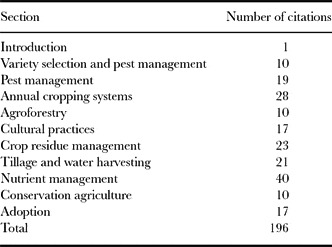
Summary of article citations in this review based upon title and citation in this review.

VARIETY SELECTION
Pearl millet is a highly cross-pollinated species exhibiting a high-level of heterosis, ability to adapt to seasonal climatic differences, evolve with changes in biotic and abiotic factors (Rai and Andrews, personal communication), and adapt to climate change (Jat et al., Reference Jat, Craufurd, Sahrawat and Wani2012). Varieties range from short oasis types that mature in two months to highly photoperiod-sensitive types that grow 4.5 m tall and have a five-month life cycle. Most pearl millet varieties are short-day photoperiod sensitive (Bilquez, Reference Bilquez1963). Pearl millet varieties need to survive soil surface temperatures up to 55 °C, tolerate water and heat stress while responding through tillering to favourable conditions (Bidinger and Hash, Reference Bidinger, Hash, Nguyen and Blum2004; Winkle et al., Reference Winkle, Renno and Payne1997). Varieties should be planted with the first significant rainfall, survive early season water and heat stress and sand blasting in order to capture the flush of nutrients present after early-season rains, but also must mature late enough to efficiently utilize seasonal rainfall, PAR, and nutrients to optimize growth and crop yield, and to produce the highest quality grain (Rai and Andrews, personal communication). Yield potential and maturity classification are important variety selection criteria, as water use efficiency of pearl millet is closely related to yield (Payne et al., Reference Payne, Wendt and Lascano1990) and seasonal water use (Dancette, Reference Dancette1983). Disease and insect resistance is also important, and tolerance to the parasitic weed Striga (Striga hermonthica (Del.) Benth) is desired.
Traditional varieties are tall, and produce low, but relatively stable, grain yield and harvest indices. Research has developed shorter maturity varieties with high-grain yield potential and harvest index, allow greater light penetration through the canopy to afford higher yields of intercropped species, and minimize risk from the short, variable length rainy seasons of semi-arid West Africa. However, the increased yield potential of these varieties is often not realized in farmer's fields due to water and nutrient stress, and sub-optimal plant populations (Maman et al., Reference Maman, Mason and Sirifi2000a; Payne, Reference Payne1997). The best variety varies with location, farm situation and end-use. FAO (2008) has catalogued over 70 of the most common pearl millet varieties in West Africa for genetic background, maturity, height, ability to tiller, panicle length, kernel weight and yield potential.
INTEGRATED PEST MANAGEMENT (IPM)
The most serious pest problem of West Africa is the parasitic weed Striga (S. hermonthica). Host plant resistance has been identified for grain sorghum (Sorghum bicolor (L.) Moench), but not for cultivated pearl millet (Tesso and Ejeta, Reference Tesso and Ejeta2011), thus production practices remain the only way to manage Striga. Infestation with Striga increases with low soil fertility, drought, and continuous planting of pearl millet and other host cereals (Andrews and Brammel-Cox, Reference Andrews, Brammel-Cox, Burton, Shibles, Forsberg, Blad, Asay, Paulsen and Wilson1993). Historically, build-up of Striga seed in the soil has been minimized by long fallow periods. Multiple-year crop rotation eliminates the host plant from the field, and is effective in controlling Striga. Late planting (Gworgwor et al., Reference Gworgwor, Anaso, Turaki, Emechebe, Ikwelle, Ajayi, Aminu-Kano and Anaso1998), minimum tillage, recommended fertilizer application rates (Andrews and Brammel-Cox, Reference Andrews, Brammel-Cox, Burton, Shibles, Forsberg, Blad, Asay, Paulsen and Wilson1993; Hess and Ejeta, Reference Hess, Ejeta, Weber and Forstreuter1987), and intercropping with legumes (Carsky et al., Reference Carsky, Singh and Ndikawa1994; Carson, Reference Carson1988) have been shown to reduce Striga infestation. None of these methods are completely effective, but integration of these practices improves control (Gworgwor et al., Reference Gworgwor, Anaso, Turaki, Emechebe, Ikwelle, Ajayi, Aminu-Kano and Anaso1998). Physical control by timely hand weeding, promoting pearl millet growth in order to be more competitive, and intercropping are commonly used to control other weed problems (Hatcher and Melander, Reference Hatcher and Melander2003).
Downy mildew (Sclerospora graminicola) is the most serious pearl millet disease in West Africa with reported yield losses of 20–30% (Ndiaye, Reference Ndiaye2002). This disease can be effectively controlled by use of resistant varieties (Hess et al., Reference Hess, Thakur, Hash, Sérémé, Magill and Leslie2002; Thakur et al., Reference Thakur, Veeranki and Sharma2011), seed treatments of Apron Star (metalaxyl fungicide plus furathiocarb insecticide) (Scheuring et al., Reference Scheuring, Katilé, Kollo and Leslie2002; Thakur et al., Reference Thakur, Veeranki and Sharma2011), and rouging of disease plants (Mbaye, Reference Mbaye1992). Apron Star produces an average pearl millet yield increase of 30% (Scheuring et al., Reference Scheuring, Katilé, Kollo and Leslie2002), but is effective for only the first 35 days of growth (Hess et al., Reference Hess, Thakur, Hash, Sérémé, Magill and Leslie2002). Since most serious infestation of downy mildew occurs in the seedling stage, Apron Star reduces 80+% of crop yield losses (Andrews, personal communication). Other economically important diseases are rust (Puccinia substriata), smut (Moesziomyces penicillariae), ergot (Claviceps fusiformis) and leaf spot (Pyricularia grisea), and when available, resistant or tolerant varieties are the best means of control (Hess et al., Reference Hess, Thakur, Hash, Sérémé, Magill and Leslie2002).
Major insect pests include pearl millet leaf miner (Heliocheilus albipunctella de Joannis), stem borer (Coniesta ignesfusalis), armyworms (Spodoptera exempta), and grasshoppers (several species). Recently, a biological control method for pearl millet leaf miner has been implemented in West Africa through the release of the wasp Habrobracon hebstor Say which parasitizes the larvae (Payne et al., Reference Payne, Tapsoba, Baoua, Malick, N’Diaye and Dabire-Binso2011). Production practices of crop rotation, intercropping, adjusting planting date and harvest time, field selection and mechanical control minimizes losses from insect pests (van Huis and Meerman, Reference van Huis and Meerman1997), but insect problems increase with intensification of production (Abate et al., Reference Abate, van Huis and Ampofo2000). Crop rotation can reduce problems for insects that have a limited number of hosts and are not mobile, and is especially effective for reducing nematode infestations (Bagayoko et al., Reference Bagayoko, Buerkert, Lung, Bationo and Römheld2000a). Intercropping can reduce insect infestations by increasing diversity present in the field, but the use of pesticides (Buntin et al., Reference Buntin, Hanna, Wilson and Ni2007) or pesticidal plant extracts (Anaso et al., Reference Anaso, Lale, Kano, Anaso, Emechebe, Ikwelle, Ajayi, Aminu-Kano and Anaso1998) are often the most effective means of control. Pearl millet has a high level of tolerance to insects (Buntin et al., Reference Buntin, Hanna, Wilson and Ni2007), and insecticides are expensive and have safety issues, thus are not commonly used in pearl millet production in West Africa (Abate et al., Reference Abate, van Huis and Ampofo2000).
Birds are a major pest problem for pearl millet in West Africa. Pearl millet varieties are not bristled and unlike grain sorghum, grain does not contain tannins. Thus, bird tolerance is not available. This likely contributes to farmer decisions to plant similar maturing varieties at the same time, as earlier or later maturing varieties in the field suffer more bird damage.
ANNUAL CROP SYSTEMS
Pearl millet in West Africa is most widely grown in intercropping systems with cowpea (Vigna unguiculata (L.) Walp) (Reddy et al., Reference Reddy, Visser and Buckner1992), and often in agroforestry systems (Reij and Smaling, Reference Riej and Smaling2008). Pearl millet is also grown as a sole crop, or intercropped with groundnut (Arachis hypogaea L.), grain sorghum, or maize (Zea mays L.).
Bush fallow systems
Bush fallow has traditionally been a key component of West African cropping systems to improve soil organic matter and nutrient levels at low cost to farmers. These systems traditionally produced crops for 3–5 years then 7–15 years in bush fallow to replenish soils. Due to increased population growth, soil degradation, and economic development, bush fallow cannot currently meet crop nutrient needs (Schlecht and Buerkert, Reference Schlecht and Buerkert2004) and is presently used by only 2% of pearl millet producers in West Africa.
Crop rotation systems
Rotation of pearl millet with other crops in West Africa has been promoted for decades to enhance yields (Bagayoko et al., Reference Bagayoko, Mason, Traore and Eskridge1996, Reference Bagayoko, Buerkert, Lung, Bationo and Römheld2000a; Bationo et al., Reference Bationo, Ntare, Pierre and Christianson1996; Buerkert et al., Reference Buerkert, Piepho and Bationo2002; Mason et al., Reference Mason, Ouattara, Taonda, Palé, Sohoro and Kaboré2014; Nicou, Reference Nicou1978; Subbarao et al., Reference Subbarao, Renard, Payne and Bationo2000), reduced pest infestations (Abdou et al., Reference Abdou, Koala, Bationo, Bationo, Waswa, Kihara, Adolwa, Vanlauwe and Saidou2012; Buerkert et al., Reference Buerkert, Piepho and Bationo2002; van Huis and Meerman, Reference van Huis and Meerman1997), improve soil physical properties (Kadi et al., Reference Kadi, Lowenberg-Deboer, Reddy and Abdoulay1990), increase infestation with beneficial arbuscular mycorrhizae (Bagayoko et al., Reference Bagayoko, Buerkert, Lung, Bationo and Römheld2000a; Buerkert et al., Reference Buerkert, Bationo and Piepho2001), promote more efficient nutrient cycling (Bagayoko et al., Reference Bagayoko, Mason, Traore and Eskridge1996, Reference Bagayoko, Buerkert, Lung, Bationo and Römheld2000a; Bationo et al., Reference Bationo, Ntare, Pierre and Christianson1996; Buerkert et al., Reference Buerkert, Piepho and Bationo2002) and increase productivity, stability and sustainability (Peter and Runge-Metzger, Reference Peter and Runge-Metzger1994; Sauerborn et al., Reference Sauerborn, Sprich and Mercer-Quarshie2000).
Intercropping systems
Intercropping is widely practiced to maximize return from the most limiting production factors, to reduce risk, and to take advantage of the beneficial effects of legumes on other crops (Bationo et al., Reference Bationo, Kimetu, Vanlauwe, Bagayoko, Koala, Mokwunye, Bationo, Waswa, Okeyo, Maina, Kihara and Mokwunye2011; Norman, Reference Norman1977). In Niger, traditional pearl millet intercropping systems involve hill planting of seed of tall, late-maturing pearl millet varieties following the first 10–20 mm rain of the growing season (Reddy, Reference Reddy1988; Reddy et al., Reference Reddy, van der Ploeg and Maga1990). Photoperiod sensitive, indeterminate cowpea varieties (Reddy et al., Reference Reddy, van der Ploeg and Maga1990) are planted two to six weeks later depending on completion of pearl millet planting on the entire farm, first hand weeding, and seasonal rainfall (Reddy, Reference Reddy1988). Pearl millet plant population is typically low (approximately 5000 hills ha−1 or 15,000 plants ha−1) and the cowpea population is commonly 1000–5000 plants ha−1 (Ntare and Williams, Reference Ntare and Williams1992; Reddy et al., Reference Reddy, van der Ploeg and Maga1990) but varies depending upon cowpea growth habit and climatic conditions. In Niger, the recommendation is for pearl millet row spacing of 1.5 m with two rows of an indeterminate cowpea variety planted between the pearl millet rows at the time of first weeding (Reddy, Reference Reddy1988). Pearl millet matures before cowpea, which is dependent upon residual soil water or late season rains to produce reasonable yields (Fussell and Serafini, Reference Fussell, Serafini, Ohm and Magy1985). In general, grain legume yields are very low (Singh and Emechebe, Reference Singh, Emechebe, Emechebe, Ikwelle, Ajayi, Aminu-Kano and Anaso1998) and influenced by the degree of competition for PAR and water from pearl millet (Ndunguru and Williams, Reference Ndunguru and Williams1993). In this system, pearl millet dominates cowpeas for sunlight, water, and nutrients, and the goal of farmers is full production of pearl millet grain and stover, while cowpea grain or stover production is of secondary importance.
Research has shown that the pearl millet/cowpea and pearl millet/groundnut intercrop system productivity can be increased by choosing appropriate pearl millet (Reddy et al., Reference Reddy, van der Ploeg and Maga1990) and cowpea cultivars (Ntare, Reference Ntare1990); adjusting plating date, populations, and spacings (Ntare and Williams, Reference Ntare and Williams1992, Reddy et al., Reference Reddy, Visser and Buckner1992); and application of fertilizer (Ntare and Bationo, Reference Ntare and Bationo1992). Shorter, early maturing pearl millet varieties combined with indeterminate, spreading cowpea genotypes result in the highest yields and land use ratios (Reddy et al., Reference Reddy, van der Ploeg and Maga1990). Relative number of rows and spacing of pearl millet and intercropped grain legumes varies greatly depending upon location, rainfall and rainfall distribution during the growing season (Odo and Bibinu, Reference Odo, Bibinu, Emechebe, Ikwelle, Ajayi, Aminu-Kano and Anaso1998). In general, pearl millet intercropping systems are site specific, and production practices vary greatly depending upon soil, climate, input availability and crop varieties available. Published recommendations for intercropping in West Africa of pearl millet are largely for Niger, and 20 years old, thus updating recommendations for use of new improved varieties and other production practices is needed.
AGROFORESTRY SYSTEMS
Production of pearl millet together with trees, especially Faidherbia albida (Del.) A. Chev., is common in West Africa (Garrity et al., Reference Garrity, Akinnifesi, Ajayi, Weldesemayat, Mowo, Kalinganire, Larwanou and Bayala2010). F. albida is a multipurpose, deep-rooted, leguminous tree species with reverse phenology, as it has leaves present during the dry season then drops the leaves during the growing season (Roupsard et al., Reference Roupsard, Ferhi, Granier, Pallo, Depommier, Mallet, Joly and Dreyer1999). Pearl millet growth and yields are dramatically greater under the F. albida trees, with reports of 36–169% increase (Mokgolodi et al., Reference Mokgolodi, Setshogo, Ling-ling, Yu-jun and Chao2011; Reij et al., Reference Reij, Tappan and Smale2009) attributed to higher soil nutrient levels, higher water availability, improved microclimate, and better soil physical properties (Breman and Kessler, Reference Breman and Kessler1997; Kho et al., Reference Kho, Yacouba, Yayé, Katkoré, Moussa, Iktam and Mayaki2001). Zaï pits, rock bunds and manure application have synergistic effects on yields when planting pearl millet into stands of F. albida (Reij et al., Reference Reij, Tappan and Smale2009). Gnankambary et al. (Reference Gnankambary, Bayala, Malmer, Nyberg and Hien2008) found that N and P applications increased the rate of F. albida and Vitellaria paradoxa litter decomposition and nutrient release, which contributed to late season growth stimulation under trees. Mokgolodi et al. (Reference Mokgolodi, Setshogo, Ling-ling, Yu-jun and Chao2011) reported that a dense stand of F. albida ha−1 added the equivalent of 50 t ha−1 of manure to soil. Greater early-season pearl millet growth has been associated with lower soil temperature (Vanderbeldt and Williams, Reference Vanderbeldt and Williams1992) and/or greater water availability (Kho et al., Reference Kho, Yacouba, Yayé, Katkoré, Moussa, Iktam and Mayaki2001). Payne et al. (Reference Payne, Williams, Maï Moussa and Stern1998) found that soil fertility and fine-particle content decreased with distance from the tree centres, and that maize and sorghum produced 50% greater yields near the tree centres, while pearl millet yielded more near the edge of the tree canopy. They suggested that variation in soil water, nutrient levels and temperature between the tree centre and perimeter could be used to diversify cropping systems and increase grain yields. Studies with other parkland tree species without reverse phenology (V. paradoxa and Parkia biglobosa) indicate that soil nutrient levels are higher but crop yields are reduced under trees due to shading and less interception of PAR by crops (Boffa et al., Reference Boffa, Taonda, Dickey and Knudson2000). Given the need for higher pearl millet grain and stover yields, and value of fire wood and other tree products, increased adoption of pearl millet production in stands of F. Albida is merited.
CULTURAL PRACTICES
Planting date
The pearl millet growing season in West Africa ranges from 60 days in the north to 150 days in the south. Yearly variation in length of growing season is largely due to onset date of the rainy season (Sivakumar, Reference Sivakumar1988). The traditional photoperiod sensitive, late-maturing varieties produce the highest yields, and yields are highest when planted following the first major growing season rain of 10–20 mm (Reddy, Reference Reddy1988; Reddy and Visser, Reference Reddy and Visser1993; Reddy et al., Reference Reddy, van der Ploeg and Maga1990). Pearl millet is always the first planted crop, often 10 days earlier than other crops (Andrews, personal communication) which then benefits from the nutrient flush that follows early season rains. The fact that pearl millet has a large early season root-to-shoot ratio, tolerates high soil temperatures (Bidinger and Hash, Reference Bidinger, Hash, Nguyen and Blum2004), and tolerates sand blasting (Buerkert and Stern, Reference Buerkert and Stern1995; Buerkert et al., Reference Buerkert, Bationo and Dossa2000a; Michels et al., Reference Michels, Sivakumar and Allison1995b, Reference Michels, Armbrust, Allison and Sivakumarc) makes early planting a viable option. The optimum planting date range for pearl millet is only 10–14 days, which is a major constraint to using soil tillage with animal traction (Grema and Odo, Reference Grema, Odo, Emechebe, Ikwelle, Ajayi, Aminu-Kano and Anaso1998).
Plant population and spacing
West African pearl millet farmers traditionally plant low plant populations of approximately 5000 hills ha−1 (2–5 plants hill−1) in order to reduce risk of yield loss from water stress (Bationo et al., Reference Bationo, Christianson and Baethgen1990, Reference Bationo, Christianson, Baethgen and Mokwunye1992) and allows plants to scavenge large soil volumes for the limited amount of nutrients available (Charreau and Nicou, Reference Charreau and Nicou1971). Increased plant populations, combined with use of improved varieties and recommended fertilizer application, have been found to increase pearl millet grain yields. Bationo et al. (Reference Bationo, Christianson and Baethgen1990) found that increasing population from 5000 to 40,000 hills ha−1 increased yields in years with normal and above average rainfall, with only a slight yield decrease in drought years in Niger. Payne (Reference Payne1997) reported that even in dry years, higher grain yield and water use efficiency are possible using a plant population of 20,000 hills ha−1 with application of 40 kg N ha−1 and 18 kg P ha−1. Maman et al. (Reference Maman, Mason and Sirifi2000a, Reference Maman, Mason and Sirifib) confirmed these results, while de Rouw (Reference de Rouw2004) reported that higher plant populations increased the risk of crop failure.
Pearl millet recommendations for plant population and spacing vary with anticipated seasonal rainfall and soil water holding capacity. Hill planting ranges from 45 × 45 cm to 100 × 100 cm, and seedlings are thinned to 2–5 plants hill−1 when approximately 15 cm tall, thus giving a final plant population between 10,000 and 50,000 plants ha−1. Some producers keep plant populations low to enhance intercropped cowpea yield in intercropping systems (Grema and Odo, Reference Grema, Odo, Emechebe, Ikwelle, Ajayi, Aminu-Kano and Anaso1998) but increased pearl millet yields can be produced by plant populations that are two to four times greater than traditionally used (Bationo et al., Reference Bationo, Christianson and Baethgen1990; Maman et al., Reference Maman, Mason and Sirifi2000a, Reference Maman, Mason and Sirifib; Payne, Reference Payne1997).
CROP RESIDUE MANAGEMENT
Crop residue management is important to reduce runoff and increase infiltration of water into the soil (Nicou and Charreau, Reference Nicou, Charreau, Ohm and Magy1985), capturing Aeolian material with higher nutrient levels (Drees et al., Reference Drees, Manu and Wilding1993; Geiger et al., Reference Geiger, Manu and Bationo1992; Michels et al., Reference Michels, Sivakumar and Allison1995a), increase soil organic matter content (Klaij and Hoogmoed, Reference Klaij and Hoogmoed1993), lower soil temperature and reduce soil evaporation (Buerkert et al., Reference Buerkert, Bationo and Dossa2000a; Stroosnijder et al., Reference Stroosnijder, Ridder and Kiepe2001), reduce sandblasting damage and stand variability of young pearl millet seedlings (Buerkert and Stern, Reference Buerkert and Stern1995; Buerkert et al., Reference Buerkert, Bationo and Dossa2000a; Michels et al., Reference Michels, Sivakumar and Allison1995b, Reference Michels, Armbrust, Allison and Sivakumarc), minimize soil crusting effect on crop emergence; enhance nutrient recycling and crust remediation through termite and microbial decomposition (Geiger et al., Reference Geiger, Manu and Bationo1992; Mando and Stroosnijder, Reference Mando and Stroosnijder1999), stimulate early season root and shoot growth (Muehlig-Versen et al., Reference Muehlig-Versen, Buerkert, Bationo, Marshcner, Renard, Neef, Becker and von Oppen1997; Rebafka et al., Reference Rebafka, Hebel, Bationo, Stahr and Marschner1994), increase soil pH and nutrient levels (Bationo et al., Reference Bationo, Christianson and Klaij1993; Coulibaly et al., Reference Coulibaly, Bagayoko, Traore and Mason2000; Michels et al., Reference Michels, Sivakumar and Allison1995a), increase yield and fertilizer response (Bationo and Mokwunye, Reference Bationo and Mokwunye1991; Bationo et al., Reference Bationo, Christianson and Klaij1993; Coulibaly et al., Reference Coulibaly, Bagayoko, Traore and Mason2000), and increase biological N fixation by rotated or intercropped legumes (Rebafka et al., Reference Rebafka, Hebel, Bationo, Stahr and Marschner1994). Most studies show yield increases (Mason et al., Reference Mason, Ouattara, Taonda, Palé, Sohoro and Kaboré2014) from leaving residue on the soil surface, but some report greater yield with residue incorporation into the soil (Coulibaly et al., Reference Coulibaly, Bagayoko, Traore and Mason2000; Rebafka et al., Reference Rebafka, Hebel, Bationo, Stahr and Marschner1994) due to improved microbial activity, increased rate of crop residue decomposition, and reduced soil bulk density promoting root proliferation and penetration. Most soils in semi-arid West Africa have low water holding capacities and organic matter, but it should be remembered that on poorly drained, high water holding capacities in high rainfall areas or in landscape position where water may accumulate, leaving crop residues can actually lower crop (Baudron et al., Reference Baudron, Jaleta, Okitoi and Tegegn2014).
Although agronomic studies indicate that leaving (or incorporating) crop residues is important for soil maintenance and pearl millet yield (Coulibaly et al., Reference Coulibaly, Bagayoko, Traore and Mason2000; Mason et al., Reference Mason, Ouattara, Taonda, Palé, Sohoro and Kaboré2014), residues are commonly removed from fields due to multiple uses, including livestock feed and fuel (Bationo and Mokwunye, Reference Bationo and Mokwunye1991; Lamers and Bruentrup, Reference Lamers and Bruetrup1996; Lamers et al., Reference Lamers, Bruentrup and Buerkert1998; Schlecht and Buerkert, Reference Schlecht and Buerkert2004). The issue is further complicated by the low production level of residues associated with low grain yields resulting from the harsh production climate and degraded soils (Michels et al., Reference Michels, Sivakumar and Allison1995b). In general, farmers prioritize crop residues for livestock feed (Giller et al., Reference Giller, Corbeels, Nyamangara, Triomphe, Affholder, Scopel and Tittonell2011). Freely roaming animals, especially goats (Capra species), and rapid turnover of organic matter due to presence of termites and temperature induced microbial action (Bationo and Buerkert, Reference Bationo and Buerkert2001) complicate maintaining adequate levels of crop residues in fields. Termite decomposition of crop residues is a key factor in rehabilitating crusted soils (Mando and Stroosnijder, Reference Mando and Stroosnijder1999). Farmers typically do not apply crop residues to entire fields, but rather to low producing micro-sites within fields or to fight wind erosion, and economic studies have shown this to be a rational practice from an agronomic and economic viewpoint (Lamers et al., Reference Lamers, Bruentrup and Buerkert1998; Schlecht and Buerkert, Reference Schlecht and Buerkert2004). Even though there are large economic incentives for removal of crop residues from fields, leaving crop residues in the field is a key sustainable crop and soil management practice. However, it should be remembered that leaving crop residues on poorly drained soils can have an adverse effect on yield, in these cases, competition for crop residue use seldom exists (Baudron et al., Reference Baudron, Jaleta, Okitoi and Tegegn2014)
TILLAGE AND WATER HARVESTING
West African soils have both physical and chemical limitations, which combined with the limited and erratic rainfall patterns, negatively impact plant growth (Nicou and Charreau, Reference Nicou, Charreau, Ohm and Magy1985). Practices to stimulate total root weight or root density positively correlate with plant growth (Nicou and Chopart, Reference Nicou, Chopart, Lal and Greenland1979). Tillage has been shown to increase plant growth and yield (Mason et al., Reference Mason, Ouattara, Taonda, Palé, Sohoro and Kaboré2014) by increasing soil porosity, root density, depth of rooting, water storage and plant water use, and reduced evaporation (Nicou and Charreau, Reference Nicou, Charreau, Ohm and Magy1985). Tillage also speeds nutrient cycling from crop residues and soil organic matter. The combined effect of these factors is increased pearl millet yields by 17–25% for pearl millet. Klaij and Hoogmoed (Reference Klaij and Hoogmoed1993) found that pre-plant tillage improved use of fertilizer and crop residues, stand establishment, and pearl millet yield, and water use efficiency. Adoption of tillage by farmers in West Africa has been limited due to lack of availability of a power source (especially due to poor condition of draft animals) and limited time to complete tillage between the first seasonal rains and planting (Grema and Odo, Reference Grema, Odo, Emechebe, Ikwelle, Ajayi, Aminu-Kano and Anaso1998; Nicou and Charreau, Reference Nicou, Charreau, Ohm and Magy1985).
Tillage options available include shallow cultivation with a harrow (tines), ridging and mounding, tied ridging and localized tillage to form micro-catchments termed zaï (Fatondji et al., Reference Fatondji, Martius and Vlek2001; Nicou and Charreau, Reference Nicou, Charreau, Ohm and Magy1985). Harrow systems are performed during the dry season to increase water infiltration of early season rains, and have little effect on crop root growth with yield increases from 0 to 15% (Nicou and Charreau, Reference Nicou, Charreau, Ohm and Magy1985).
Formation of ridges attempts to trap water to prevent runoff and promote plant water use. This method works best when ridges are formed perpendicular to the slope in the field (Doraiswamy et al., Reference Doraiswamy, McCarty, Hunt, Yost, Doumbia and Franzluebbers2007; Doumbia et al., Reference Doumbia, Jarju, Sène, Traoré, Yost, Kablan, Brannan, Berthe, Yamoah, Querido, Traoré and Ballo2009). They found that ridging increased grain yield 30–50% and soil C by 12–26% in Mali, Gambia and Senegal. Subbarao et al. (Reference Subbarao, Renard, Payne and Bationo2000) likewise found a 35% pearl millet yield increase with ridging in Niger, while Nicou and Charreau (Reference Nicou, Charreau, Ohm and Magy1985) and Mason et al. (Reference Mason, Ouattara, Taonda, Palé, Sohoro and Kaboré2014) found approximately 20% grain yield increase. Often the yield increase of ridging interacts with fertilizer application (Doraiswamy et al., Reference Doraiswamy, McCarty, Hunt, Yost, Doumbia and Franzluebbers2007) but not always (Subbarao et al., Reference Subbarao, Renard, Payne and Bationo2000). However, ridges deteriorate during the rainy season due to rainfall, wind translocation of soil, and weeding (Fryrear, Reference Fryrear1984), and thus, in-season (Bielders et al., Reference Bielders, Michels and Rajot2000) and annual maintenance (Doumbia et al., Reference Doumbia, Jarju, Sène, Traoré, Yost, Kablan, Brannan, Berthe, Yamoah, Querido, Traoré and Ballo2009) is required. Ridging also helps reduce wind erosion by creating a rough soil surface (Bielders et al., Reference Bielders, Michels and Rajot2000).
Ridges can be tied to hold water in place rather than to flow down the furrow. Tied ridging works best on heavier soils with tying occurring within one month of planting. Tied ridging does not work as well on sandy soils because of lower water holding capacity and ease of ridge destruction, but if used, later tying works best to make water available at the critical flowering growth stage. Tied ridging collects and stores surface water (van Duivenbooden et al., Reference van Duivenbooden, Pala, Studer, Bielders and Beukes2000), which leads to more stable yield increases to fertilizer application (Ohm et al., Reference Ohm, Nagy, Sawadogo, Ohm and Magy1985) and greater length of the growing season (Stroosnijder, Reference Stroosnijder, Beukes, Villers, Mkhize, Sally and Rensburg2003). Sanders et al. (Reference Sanders, Nagy and Ramaswamy1990) found that tied ridges increased grain yield by 40%, fertilizer by 75%, and the combination of tied ridges and fertilizer by 132%.
Zaï is a traditional system in which small pits 20–30 cm in diameter and 10–20 cm deep are dug and in the bottom of the pit an organic matter source (manure, compost, crop residues) is placed and seeds planted (Fatondji et al., Reference Fatondji, Martius and Vlek2001). This system combines the benefits of tillage, micro-catchments to capture water, and supplying nutrients needed to increase plant growth and yield. Yields have tripled and water use efficiency doubled with use of a zaï pit without an organic matter application (Fatondji et al., Reference Fatondji, Martius, Bielders, Vlek, Bationo and Gerard2006). With manure or crop residue application in combination with zaï, nutrient uptake has been increased by 43–87 and yield by 35–220% (Ouattara et al., Reference Ouattara, Hien, Lompo, Pala, Studer C. and Bielders1999). The zaï system has contributed to pearl millet grain yield increases (Mason et al., Reference Mason, Ouattara, Taonda, Palé, Sohoro and Kaboré2014), restoration of degraded soils, and regeneration of indigenous herbaceous plants and trees in northwest Burkina Faso (Sawadogo, Reference Sawadogo2011; Sawadogo et al., Reference Sawadogo, Zombre, Bock and Lacroix2008a, Reference Sawadogo, Bock, Lacroix and Zombreb). Implementation of zaï has a high initial labour investment of 40–60 days ha−1 and recurrent costs for maintenance, manure transport and/or compost production, but this had not impeded adoption in Burkina Faso and Niger (Riej and Smalling, Reference Riej and Smaling2008).
Bunds and barriers
Stone rows and vegetative barriers have been shown to increase soil water storage and reduce runoff by 20% and reduce soil carbon loss by reducing erosion (Stroosnijder and Hoogmeoed, Reference Stroosnijder and Hoogmoed2004), but fertilizer application was required in order to obtain a yield response (Stroosnijder, Reference Stroosnijder, Beukes, Villers, Mkhize, Sally and Rensburg2003). Ouattara et al. (Reference Ouattara, Hien, Lompo, Pala, Studer C. and Bielders1999) and Reij and Smalling (Reference Riej and Smaling2008) reported yield increases from stone rows of 35–65% in Burkina Faso.
NUTRIENT MANAGEMENT
Regional, national and individual experiment evaluation of soil nutrient status in West Africa, all indicate that crop nutrient removal is greater than nutrient additions (Bagayoko et al., Reference Bagayoko, Mason, Traore and Eskridge1996; Bekunda et al., Reference Bekunda, Bationo, Ssali, Buresh, Sanchez and Calhoun1997; Smalling et al., Reference Smalling, Stoorvogel and Sindmeijer1993, Reference Smalling, Nandwa, Janssen, Buresh, Sanchez and Calhoun1997). Sanchez et al. (Reference Sanchez, Shepherd, Soule, Place, Buresh, Izac, Mokwunye, Kwesiga, Ndiritu, Woomer, Buresh, Sanchez and Calhoun1997) reported an average of 660 kg N ha−1, 75 kg P ha−1 and 450 kg K ha−1 loss during the past 30 years on 200 million ha of cultivated land in 37 African countries. Nutrient removal increases with increasing population density; increasing yields especially when both stover and grain are removed; and through runoff, leaching and gas emissions (Bekunda et al., Reference Bekunda, Bationo, Ssali, Buresh, Sanchez and Calhoun1997). In a study in southern Mali, pearl millet was the biggest nutrient mining crop (−47 kg N, −3 kg P, −37 kg K ha−1 yr−1) because no fertilizer is commonly applied and pearl millet has a high nutrient content per unit of harvested product (Smalling et al., Reference Smalling, Stoorvogel and Sindmeijer1993). Nutrient depletion is complicated by the low nutrient status of many African soils, and has contributed to decreasing agricultural productivity in Africa during the past six decades (Sanchez et al., Reference Sanchez, Shepherd, Soule, Place, Buresh, Izac, Mokwunye, Kwesiga, Ndiritu, Woomer, Buresh, Sanchez and Calhoun1997).
Generally phosphorus is considered to be the most limiting nutrient for pearl millet production in West Africa, with nitrogen being second most important (Bationo and Mokwunye, Reference Bationo and Mokwunye1991). In some cases, low soil pH, potassium or micronutrients are important. Pearl millet yield responses to phosphorus and nitrogen applications are wide spread throughout West Africa, but fertilizer use is very low due to limited supply, high cost relative to pearl millet grain price, and lack of disposable income of poor farmers. The net result is that low application rates combined with methods to minimize cost and maximize nutrient use efficiency are used.
Traditional systems depended upon bush fallow to regenerate soil organic matter and nutrient supply as described earlier. Grazing animals recycle nutrients through faeces and urine deposition, but there is an inadequate manure production to meet crop needs and due to un-uniform distribution. Corralling animals facilitates composting manure and urine for field application to provide nutrients and improve soil physical properties (Bationo and Mokwunye, Reference Bationo and Mokwunye1991), but compost has low nutrient concentrations (Sanchez et al., Reference Sanchez, Shepherd, Soule, Place, Buresh, Izac, Mokwunye, Kwesiga, Ndiritu, Woomer, Buresh, Sanchez and Calhoun1997), is labour intensive, and manure supply is inadequate (Bationo et al., Reference Bationo, Lompo and Koala1998; Giller et al., Reference Giller, Cadisch, Ehaliotis, Adams, Sakala, Mafongoya, Buresh, Sanchez and Calhoun1997). Application of good quality organic amendments increases pearl millet yields (Fatondji et al., Reference Fatondji, Martius, Bielders, Vlek, Bationo and Gerard2006; Maman and Mason, Reference Maman and Mason2013). Site specific application of manure based upon micro-topography has been shown to increase nutrient use efficiency (Brouwer and Powell, Reference Brouwer and Powell1998). Several studies indicate that integrated nutrient management combining crop residue management, manure and/or compost application along with fertilizer affords the greatest opportunity to increase yields (Bationo and Buerkert, Reference Bationo and Buerkert2001; Michels and Bielders, Reference Michels and Bielders2005; Pieri, Reference Pieri1989; Stroosnijder and Hoogmoed, Reference Stroosnijder and Hoogmoed2004) and to build soil organic C (Ouédraogo et al., Reference Ouédraogo, Mando and Stroosnijder2006, Reference Ouédraogo, Mando, Brussaard and Stroosnijder2007). Fertilizer application rates for grain crops in West Africa are low, while fertilizer is widely applied to profitable cash crops (Buerkert et al., Reference Buerkert, Bagayoko, Bationo, Römheld, Graef, Lawrence and von Oppen2000b).
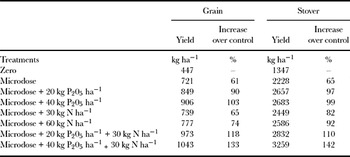
Phosphorus fertilizer can be applied to feed the crop, as a one-time investment to rapidly increase the soil level, or applied to gradually build soil levels while meeting crop needs (Buresh et al., Reference Buresh, Smithson, Hellums, Buresh, Sanchez and Calhoun1997). Applications can consist of low reactive rock phosphate, although partial acidulation is required to have immediate benefits (Bationo et al., Reference Bationo, Mughogho, Mokwunye, Mokwunye and Vlek1986, Reference Bationo, Christianson, Baethgen and Mokwunye1992; Buresh et al., Reference Buresh, Smithson, Hellums, Buresh, Sanchez and Calhoun1997); intermediate reactive rock phosphates which reduces phosphorus deficiencies, has long-term residual effects and does not acidify the soil (Gerner and Mokwunye, Reference Gerner and Mokwunye1995); soluble phosphate fertilizers which are immediately available to meet crop needs; or some combination of the above. Point applications at planting (microdose) or to young seedling can reduce phosphorus fixation in the soil, and promote stand establishment and early season growth due to increased root and shoot growth, and enhance colonization with vesicular arbuscular mycorrhizae further increasing nutrient uptake (Bagayoko et al., Reference Bagayoko, George, Römheld and Buerkert2000b; Valluru et al., Reference Valluru, Vadez, Hash and Karanam2010). This results in increased grain and stover yields (Table 2; Bagayoko et al., Reference Bagayoko, Maman, Palé, Sirifi, Taonda, Traore and Mason2011; Buerkert et al., Reference Buerkert, Bationo and Piepho2001; Muehlig-Versen et al., Reference Muehlig-Versen, Buerkert, Bationo and Roemheld2003) and has been widely adopted (Abdoulaye and Sanders, Reference Abdoulaye and Sanders2005).
Microdose, and N and P fertilizer application influence on pearl millet grain and stover yields on sandy soils in Burkina Faso, Mali and Niger, 2001–2005 (adapted from Bagayoko et al., Reference Bagayoko, Maman, Palé, Sirifi, Taonda, Traore and Mason2011).

Due to high pearl millet plant demand, the multiple soil nitrogen transformations and potential nitrogen losses to leaching and volatilization, nitrogen is recommended to be applied based upon the soil level and expected grain yield. Application is usually split with partial application at planting or shortly thereafter, and the balance side-dress applied near pearl millet hills at the time of the first hand weeding. Nitrogen use efficiency has been shown to increase with split application (Uyovbisere and Lombin, Reference Uyovbisere and Lombin1991), greater soil water storage using tied ridges (Nyakatawa, Reference Nyakatawa1996), leaving crop residues on the soil surface (Bationo et al., Reference Bationo, Christianson and Klaij1993), presence of adequate soil phosphorus level (Fussell et al., Reference Fussell, Serafini, Bationo and Klaij1987), applying jointly with manure with fertilizer (Baidu-Forson and Bationo, Reference Baidu-Forson and Bationo1992), and for pearl millet rotated with legumes (Bationo et al., Reference Bationo, Ntare, Pierre and Christianson1996; Bekunda et al., Reference Bekunda, Bationo, Ssali, Buresh, Sanchez and Calhoun1997).
Deficiencies of other nutrients are not common in West Africa, presumably due to higher native soil levels; being supplied by bush fallow, crop residues and other organic amendments; or nutrients being present in other fertilizers products (Bekunda et al., Reference Bekunda, Bationo, Ssali, Buresh, Sanchez and Calhoun1997). Acid soil reaction (pH) and aluminium toxicity are often a concern on low buffer capacity sandy soils with low organic matter. Small, but important, changes in soil pH occur as the soil organic matter content is raised (Buerkert et al., Reference Buerkert, Bationo and Dossa2000a; Geiger et al., Reference Geiger, Manu and Bationo1992) and/or ashes are added to fields (Rebafka et al., Reference Rebafka, Hebel, Bationo, Stahr and Marschner1994) which increase plant growth and soil nutrient availability.
It is commonly assumed that available water is the limiting factor in crop production in the semi-arid West African, but several studies (Bationo and Mokwunye, Reference Bationo and Mokwunye1991; Maman et al., Reference Maman, Mason and Sirifi2000a; Payne, Reference Payne1997, Reference Payne2000; Payne et al., Reference Payne, Wendt and Lascano1990; ) indicate that this is only true in the very driest northern part of the region and/or in the very driest years. Yield and water use efficiency can be increased in most situations by increasing plant population and applying recommended fertilizer rates, especially when combined with appropriate soil tillage, water harvesting methods, and leaving crop residues on the soil surface.
CONSERVATION AGRICULTURE
Conservation agriculture, the combination of minimal soil disturbance, residue cover for the entire year and crop rotation to promote crop diversity (Giller et al., Reference Giller, Witter, Corbeels and Tittonell2009; Kassam et al., Reference Kassam, Friedrich, Shaxson and Pretty2009), has contributed to reducing soil erosion and major improvements in crop yields in the Americas (Triplett and Warren, Reference Triplett and Warren2008), and has been promoted for Africa (Pretty et al., Reference Pretty, Noble, Bossio, Dixon, Hine, Penning de Vries and Morison2006). Concerns exist about the level of crop residues produced and competing uses, lack of tradition for crop rotation, inputs of herbicides and fertilizers not being readily available, and that the components of conservation agriculture do not fit into the context of the majority of small farmers in West Africa (Giller et al., Reference Giller, Witter, Corbeels and Tittonell2009, Reference Giller, Corbeels, Nyamangara, Triomphe, Affholder, Scopel and Tittonell2011; Mason et al., Reference Mason, Ouattara, Taonda, Palé, Sohoro and Kaboré2014). In addition, pearl millet yields during the first years of no tillage practice are often lower even when crop residues are applied (Ikpe et al., Reference Ikpe, Powell, Isirimah, Wahua and Ngodigha1999). Some scientists believe that no-till is not a viable option for West Africa due to the soil physical properties, the prolonged dry season, and the lack of crop residues, but intensive tillage reduces soil C and soil water holding capacity unless manure (Ouattara et al., Reference Ouattara, Ouattara, Serpantié, Mando, Sédogo and Bationo2006; Stroosnijder and Hoogmoed, Reference Stroosnijder and Hoogmoed2004) or other amendments are added. Creative approaches to adapt the conservation agriculture principles to different environmental and soil conditions, farmer resource levels, and build complex management skills will be important for wide-spread adoption in West African pearl millet production systems.
ADOPTION
The literature on adoption of conservation agriculture or its components is quite limited both in quantity and quality, and it can be concluded that economic considerations are heterogeneous and site specific (Pannell et al., Reference Pannell, Llewellyn and Corbeels2014). Economic studies indicate that conservation agriculture and components are usually, but not always, more profitable which contrasts with low actual adoption. They found that the rotation maize yield increase was not adequate to offset the reduced benefits from sale from the legume crop. Bagayoko et al. (Reference Bagayoko, Mason, Traore and Eskridge1996) concluded that limited adoption of grain sorghum or pearl millet – cowpea or groundnut rotation was due to tradition, need for use of expensive pesticides to control pests in monoculture cowpea and groundnut production systems, increased risk associated with fewer crops in a field during the growing season, and greater land use efficiency associated with intercropping.
Pannell et al. (Reference Pannell, Llewellyn and Corbeels2014) concluded that zero tillage (with or without crop residue mulching) was best suited to larger farmers with secure land property rights and fenced fields with less urgent food needs, and with access to credit with low interest rates. The adoption of crop residue mulching has received considerable attention, with the focus on competition, or opportunity cost, between crop residue mulching and use of crop residues for livestock feed (Bationo and Mokwunye, Reference Bationo and Mokwunye1991; Baudron et al., Reference Baudron, Jaleta, Okitoi and Tegegn2014; Giller et al., Reference Giller, Corbeels, Nyamangara, Triomphe, Affholder, Scopel and Tittonell2011; Lamers and Bruentrup, Reference Lamers and Bruetrup1996; Lamers et al., Reference Lamers, Bruentrup and Buerkert1998; Schlecht and Buerkert, Reference Schlecht and Buerkert2004). Control of crop residue use is a key issue due to social norms. Pannel et al. (Reference Pannell, Llewellyn and Corbeels2014) found that the additional benefit to a farmer to exploit his/her own crop residues is not adequate to pay for fencing. Baudron et al. (Reference Baudron, Jaleta, Okitoi and Tegegn2014) concluded that agricultural intensification in Africa will require practices that increase crop residue production adequate to ‘feed’ both the soil and livestock.
Low adoption of fertilizer recommendations for pearl millet has been attributed to risk, labour limitations, immediate cash needs, markets; failure to recognize variability of farmer objectives; availability and price of fertilizers; high fertilizer/grain price ratios, and a lack of demonstration trials (Abdoulaye and Sanders, Reference Abdoulaye and Sanders2005, Reference Abdoulaye and Sanders2006; Schlecth et al., Reference Schlecht, Buerkert, Tielkes and Bationo2006; Vitale and Sanders, Reference Vitale and Sanders2005). Increased grain prices due to storage and selling at times of the year with higher price, and increasing demand for grain as food or feed have been shown to promote adoption of fertilizer application (Vitale and Sanders, Reference Vitale and Sanders2005).
Camara et al. (Reference Camara, Bantilan and Ndjeunga2006) studied adoption of improved sorghum and pearl millet varieties across semi-arid West Africa. They found that farmer's preferred early maturity, high food quality, productive and disease resistant varieties, and that adoption of varieties with these characteristics were limited by lack of available seed, fertilizer and information. de Rouw (Reference de Rouw2004) studied adoption of variety selection, plant population and fertilizer application, and concluded that lack of adoption was due to new, recommended practices not reducing the risk of yield loss and crop failure. They concluded that practices that reduced risk and easily adopted were low plant population without fertilizer, planting both early and late maturing varieties, and manure application. Pannell et al. (Reference Pannell, Llewellyn and Corbeels2014) also found that low uncertainty and risk, especially in initial years, contributed to adoption of conservation tillage and/or components. High farmer education level has also been shown to promote adoption of improved crop production methods (Alene and Manyong, Reference Alene and Manyong2007)
Aune and Bationo (Reference Aune and Bationo2008) proposed a ladder approach for agricultural intensification, with the initial step being practices without cash costs based upon improved management of local resources such as application of organic fertilizer, seed priming, and water harvesting technologies, all of which require additional labour which may be limiting. They proposed a second step of microdose fertilizer application with low financial cost, then crop and livestock intensification terminating in development of commercial agriculture with agroforestry systems, cash crops, and dairy production. Abdoulaye and Lowenberg-DeBoer (2000) basically concluded this same process in studies of agricultural intensification in south central Niger.
RECOMMENDATIONS AND CONCLUSIONS
Pearl millet is an exceptionally adaptable crop in the harsh climatic and soil environment of semi-arid West Africa. Although grain and stover yields are currently low, it responds to use of improved, adapted varieties with resistance to major pests, appropriate cropping systems using recommended cultural practices, tillage and water harvesting/conservation practices, organic and inorganic fertilizer application, and IPM practices to control striga and downy mildew and other crop pests. There is a critical need to adopt an appropriate a suite of these management practices to overcome the difficulties of continuous cropping, since current population pressures on the land preclude the possibility of using the well-established bush-fallow systems that restored soil fertility and helped control some pests. Although these practices are well known and proven to increase yields, there is a long tradition of less-intensive management practices and substantial barriers to introduce change. Site specificity due to soil, climate, farm family priority, and/or market opportunities complicates developing a menu of practices with wide applicability. Most of the articles cited in this review were published between 1985 and 2005, a reflection that research funding has declined. Scientists need to become more actively involved in national agricultural policy development in order to provide an environment conducive to farmer adoption of improved practice. Of particular importance is utilization and marketing of pearl millet grain, and production input availability at economically reasonable prices. Additional funding of research that focus on the integration of pearl millet production practices, both on-farm and on-station, that can generate large data sets to combine with existing data sets would allow broader use of powerful computer simulation tools to increase our knowledge to increase pearl millet productivity in a sustainable and environmentally friendly manner. Pearl millet will continue to be one of the most important crops contributing to food security in semi-arid West Africa, a major crop that provides food to millions of poor people in this region, and stover as an animal feed and fuel source. However, improved policy and increase research efforts are needed to fully exploit this crops potential to produce much higher grain and stover yields, and to contribute to food security and economic growth.