Introduction
Work is a central part of life, and people spend a considerable portion of their time at work. Some employees spend more time working than others, and some spend more than was formally expected or preagreed (Brett & Stroh, Reference Brett and Stroh2003). Hence, some employees invest more time and energy in their work than others; that is, they work both more extensively and more intensively. This phenomenon was defined by Snir and Harpaz (Reference Snir and Harpaz2012) as ‘heavy work investment’ (see also Houlfort, Philippe, Vallerand, & Ménard, Reference Houlfort, Philippe, Vallerand and Ménard2014). Heavy work investment can be expressed through different behaviors of work extension (such as working long hours, working overtime or being available after work), that is, expanding the formally planned working time, but also through different behaviors of work intensification (such as skipping breaks during the work day or working at a fast pace).
Such behaviors are not uncommon in the working population. The findings of the 6th European Working Conditions Survey (Eurofund, 2016) indicate that 16% of European employees work long hours, which is defined as spending at least 48 h at work per week. In Germany, 17% of employees state that they work 48 h or more per week (BAuA Arbeitszeitreport Deutschland, German Working Time Monitor, 2016). For the USA, the figures are similar, with 16.5% of the working population working long hours (Bureau of Labor Statistics, 2016). Even if they do not work long hours, employees often work more than preagreed. For instance, 47% of German employees state that they put in at least 2 hr of overtime per week (BAuA German Working Time Monitor, 2016). That study also showed that employees who are already working long hours tend to skip mandatory rest breaks.
The potential negative consequences of working long hours, working overtime and skipping mandatory rest breaks are evident. These behaviors adversely affect employees' necessary recovery processes (Meijman & Mulder, Reference Meijman, Mulder, Drenth, Thierry and de Wolff1998; Wendsche & Lohmann-Haislah, Reference Wendsche and Lohmann-Haislah2017), work-life balance (Holland, Reference Holland2007), and well-being and health (Clark, Michel, Zhdanova, Pui, & Baltes, Reference Clark, Michel, Zhdanova, Pui and Baltes2016; Ng & Feldman, Reference Ng and Feldman2008). Working long hours and working overtime have also been found to be related to incident coronary heart disease as well as stroke and major depressive episodes (Kivimäki et al., Reference Kivimäki, Jokela, Nyberg, Singh-Manoux, Fransson, Alfredsson and Virtanen2015; Virtanen et al., Reference Virtanen, Ferrie, Singh-Manoux, Shipley, Vahtera, Marmot and Kivimäki2010; Virtanen, Stansfeld, Fuhrer, Ferrie, & Kivimäki, Reference Virtanen, Stansfeld, Fuhrer, Ferrie and Kivimäki2012; Virtanen et al., Reference Virtanen, Jokela, Madsen, Hanson, Lallukka, Nyberg and Kivimaki2018). Negative consequences are possible not only at the individual level but also at the team or organizational level, for example, through fostering destructive organizational behaviors (Galperin & Burke, Reference Galperin and Burke2006), an overwork climate (Mazzetti, Schaufeli, & Guglielmi, Reference Mazzetti, Schaufeli and Guglielmi2014), or severe errors at work (Olds & Clarke, Reference Olds and Clarke2010).
Therefore, a central question is under which conditions employees dedicate more time to work than is officially necessary and, in turn, are exposed to the risks outlined above. Most of the research on the factors driving employees to work longer than expected or preagreed has focused on work extension, investigating the drivers of long working hours and overtime, and has widely neglected work intensification which is characterized, for instance, by a shortage of recovery time at work. Therefore, in our study, we examine both behavioral indicators of work extension (total working hours, overtime) and work intensification (skipping mandatory rest breaks). We use (moderated) regression analyses to examine job demands as well as job-related and personal resources (skill discretion and educational level) as the possible drivers of working longer. Our examination is based on the most recent data of a large-scale, representative survey study, that is, the sixth wave of the German employee survey of the Federal Institute for Vocational Education and Training and the Federal Institute for Occupational Safety and Health (BIBB/BAuA employee survey, N = 10 148). We consider previous theoretical developments (Genin, Haines, Pelletier, Rousseau, & Marchand, Reference Genin, Haines, Pelletier, Rousseau and Marchand2016) and derive a total of four hypotheses based on different theoretical perspectives.
Theoretical Background
Employees behave in certain ways at work for many different reasons. One of the most important factors determining work behavior is job characteristics, that is, job demands and job resources (Parker, Morgeson, & Johns, Reference Parker, Morgeson and Johns2017). Employees are not only affected by job demands and job resources (Schaufeli & Taris, Reference Schaufeli, Taris, Bauer and Hämmig2014) but also react to them with different behaviors (Humphrey, Nahrgang, & Morgeson, Reference Humphrey, Nahrgang and Morgeson2007), for instance, by working longer.
Working longer as a constraint in the light of coping with job demands
Employees must cope with the demands of their jobs on a daily basis. High job demands seem to encourage or even force employees to devote an additional amount of time and energy to their work (Johnstone & Johnston, Reference Johnstone and Johnston2005; Ng & Feldman, Reference Ng and Feldman2008). In the case of high job demands, employees tend to work more intensively (e.g., through skipping breaks) and more excessively (e.g., through overtime) to get their jobs done (Snir & Harpaz, Reference Snir and Harpaz2012). Therefore, working longer through working long hours, working overtime or skipping breaks is sometimes a reaction to a working environment that is characterized by high job demands (Dewe, O'Driscoll, & Cooper, Reference Dewe, O'Driscoll and Cooper2010; Mazzetti, Schaufeli, & Guglielmi, Reference Mazzetti, Schaufeli and Guglielmi2014). In particular, the specific job demands of time and performance pressure seem to elicit such behaviors (Schulz-Dadaczynski, Reference Schulz-Dadaczynski2017) and to challenge employees to work longer and harder (Podsakoff, LePine, & LePine, Reference Podsakoff, LePine and LePine2007). When an employee is confronted with high demands, such behavior may be functional in terms of the attainment of work goals, but it is not functional in terms of employee health in the long term (Podsakoff, LePine, & LePine, Reference Podsakoff, LePine and LePine2007; Crawford, LePine, & Rich, Reference Crawford, LePine and Rich2010; Dettmers, Deci, Berset, & Krause, Reference Dettmers, Deci, Berset, Krause, Wienke, Cacace and Fischer2016).
The German working time monitor (2016) also indicates an association between weekly working hours and the job demands of time and performance pressure. For example, 65% of male and 71% of female employees working between 48 and 59 h per week claim to face high time and performance pressure, but only 40% of male and 48% of female employees with ‘normal’ working hours (between 35 and 39 h per week) make this claim. The main reason employees give for working overtime is that they would otherwise not be able to complete their work. Additionally, employees working overtime and working long hours often skip mandatory rest breaks (BAuA German working time monitor, 2016).
Thus, our first hypothesis posits an association between job demands, which are represented in our study by items related to time and performance pressure, and the coping behaviors outlined above.
Hypothesis 1
Job demands are positively associated with (a) total working hours, (b) working overtime, and (c) skipping mandatory rest breaks.
Working longer as a behavioral choice in the light of motivation through job resources
In agreement with Genin et al. (Reference Genin, Haines, Pelletier, Rousseau and Marchand2016), we assume that total working hours as well as working overtime and skipping mandatory rest breaks are not only constraints in the case of high job demands but also voluntary behavioral choices that employees make under certain circumstances. One plausible reason why employees voluntarily work longer is that they have interesting and motivating jobs with important job resources (Kühnel, Sonnentag, & Bledow, Reference Kühnel, Sonnentag and Bledow2012). An important and well-studied job resource that is part of many prominent models of job design, such as the job characteristics model (Hackman & Oldham, Reference Hackman and Oldham1976) or the job demand-control model (Karasek, Reference Karasek1979) and its further developments (Demerouti, Bakker, Nachreiner, & Schaufeli, Reference Demerouti, Bakker, Nachreiner and Schaufeli2001), is the job resource of skill discretion. Skill discretion represents opportunities to learn and apply new things and procedures (Karasek, Reference Karasek1979) and is evidenced to be a central job resource for employees; for example, it enhances their job satisfaction (Bos, Dongers, Bouwman-Brouwer, & Van der Gulden, Reference Bos, Dongers, Bouwman-Brouwer and Van der Gulden2009), prevents turnover (Clausen, Tufte, & Borg, Reference Clausen, Tufte and Borg2014), reduces fatigue (Parhizi, Steege, & Pasupathy, Reference Parhizi, Steege and Pasupathy2013), and improves well-being and mental health (Griffin, Greiner, Stansfeld, & Marmot, Reference Griffin, Greiner, Stansfeld and Marmot2007; Gao, Pan, Sun, Wu, Wang, & Wang, Reference Gao, Pan, Sun, Wu, Wang and Wang2012). Employees normally should strive for skill discretion and to be willing to offer other factors showing their work engagement in exchange. One factor employees may offer in this process could be additional work, such as by working more extensively and more intensively. This voluntary process of exchange can be explained in terms of social exchange theory (Gouldner, Reference Gouldner1960; Blau, Reference Blau1964), which considers working life as an ongoing process of social exchange between employers and their employees according to the principles of reciprocity and equivalence. Employees who work longer get more interesting jobs, as represented by the key job resource of skill discretion, in exchange.
From a different angle, an association between skill discretion and longer working hours can also be supported by self-determination theory (Gagné & Deci, Reference Gagné and Deci2005). According to this theory, people need to feel competent and autonomous to maintain intrinsic motivation, which is nourished by their interest in an activity itself. The fulfilment of basic psychological needs such as competence and autonomy moves individuals in the direction of intrinsic motivation, which, in turn, fosters engaged behaviors at work, such as working longer (Gagné, Senécal, & Koestner, Reference Gagné, Senécal and Koestner1997; Gagné & Deci, Reference Gagné and Deci2005). The need for competence and the need for autonomy could also be fulfilled through the job characteristic of skill discretion. Jobs that are interesting because they offer opportunities to learn and to apply new things contribute to the fulfillment of such universal needs (Kanfer, Frese, & Johnson, Reference Kanfer, Frese and Johnson2017). This assumption is also consistent with the job characteristics model of Hackman and Oldham (Reference Hackman and Oldham1976). This model examines skill discretion (named skill variety in the model) as one core job dimension and assumes an association between skill discretion and intrinsic motivation, although this association is mediated by the psychological state of task meaningfulness (Humphrey, Nahrgang, & Morgeson, Reference Humphrey, Nahrgang and Morgeson2007).
Associations between increased intrinsic motivation and engaged behavior at work, for example, working longer, have been confirmed in several empirical studies (Grant, Reference Grant2008; Van den Broeck, Ferris, Chang, & Rosen, Reference Van den Broeck, Ferris, Chang and Rosen2016). Therefore, based on the theoretical arguments and research outlined above, we assume positive relationships between skill discretion and behaviors of work extension and intensification.
Hypothesis 2
Skill discretion is positively associated with (a) total working hours, (b) working overtime, and (c) skipping mandatory rest breaks.
Individual differences in responses to Job demands and resources
People differ in their reactions to job characteristics (Kanfer, Frese, & Johnson, Reference Kanfer, Frese and Johnson2017). In agreement with Genin et al. (Reference Genin, Haines, Pelletier, Rousseau and Marchand2016), we assume that certain groups of employees value skill discretion more than others. On the one hand, this valuation should depend on employees' specific value system, which is, according to social identity theory, formed through the process of organizational and professional socialization (Ashforth & Mael, Reference Ashforth and Mael1989). The social identities of qualified workers should encompass competent and professional autonomous functioning as one salient group characteristic. Therefore, employees who are more qualified should have a stronger need for work that offers autonomy and possibilities for personal development. Consequently, they should value skill discretion to a greater degree than less qualified employees and reciprocate more by working longer in exchange.
On the other hand, personality characteristics also play an important role in the motivation potential of job characteristics. In their job characteristics theory, Hackman and Oldham (Reference Hackman and Oldham1976) postulate that individuals' ‘growth need strength’, that is, their pursuit of personal growth and challenge is such personality characteristic. They assume growth need strength to be an important moderator in the relationship between job characteristics such as autonomy and skill variety and intrinsic motivation. The higher the level of growth need strength, the stronger the relationship between task characteristics and intrinsic work motivation should be. This assumption has been confirmed by several empirical studies (e.g., Spector, Reference Spector1985; Fried & Ferris, Reference Fried and Ferris1987; Algera, Reference Algera, Kleinbeck, Quast, Thierry and Häcker1990). Compared to less qualified employees, more qualified employees should have a higher level of growth need strength (Feldman & Arnold, Reference Feldman and Arnold1978). Therefore, they should be more motivated through skill discretion and, in turn, show more engaged behaviors at work.
In summary, we propose the qualification of an employee, as represented through his level of education, to be an important moderator of the expected relationships outlined above.
Hypothesis 3
The positive relationships between skill discretion and (a) total working hours, (b) working overtime, and (c) skipping mandatory rest breaks are moderated by employees' level of education. The positive relationships are stronger for employees with a higher level of education.
Working longer as a constraint and a behavioral choice
As outlined above, the level of job demands as well as the level of skill discretion should have associations with working longer, even though the underlying motivational processes of those associations should differ. In the case of jobs that combine high job demands with high skill discretion, working longer should not only be required of but also desired by employees. This is because on the one hand, working longer is a necessary response to job demands, but on the other hand, employees are intrinsically motivated, and working longer is a plausible social exchange for more interesting and challenging jobs. Therefore, working longer is motivated by two very different angles. We thus assume an interaction effect of job demands and skill discretion on working longer, and we derive our fourth hypothesis as follows.
Hypothesis 4
The positive relationships between job demands and (a) total working hours, (b) working overtime, and (c) skipping mandatory rest breaks are moderated by skill discretion. The relationships become stronger with increasing skill discretion.
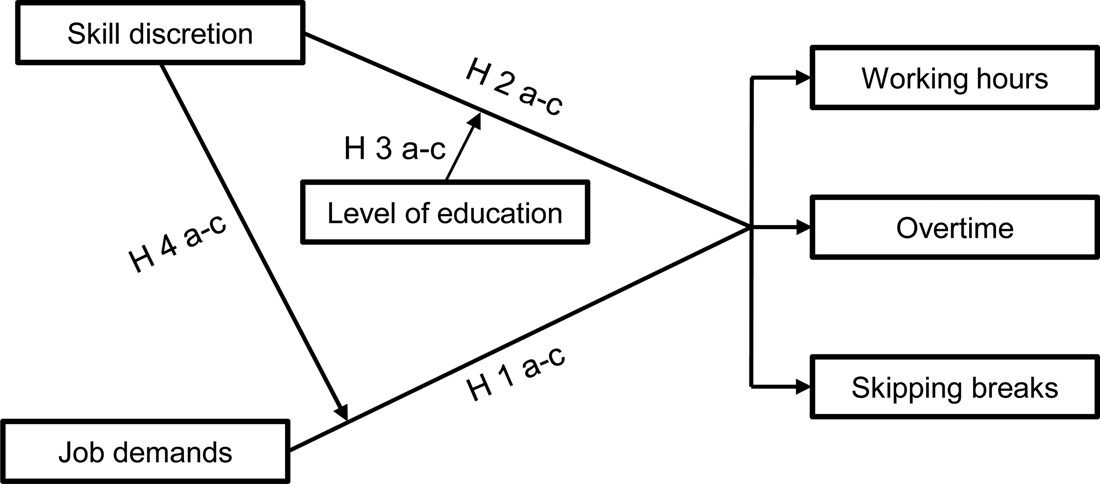
Figure 1 summarizes our research model and hypotheses based on the theoretical arguments and research outlined above.
Conceptional research framework of the study with Hypotheses (H).

Data And Methods
Data and sample
This study uses cross-sectional data from the sixth wave of the BIBB/BAuA employee survey 2012 (Hall, Siefer, & Tiemann, Reference Hall, Siefer and Tiemann2015). This survey is conducted approximately once every 6 years (the scientific use file for the BIBB/BAuA employee survey 2018 will be not available until 2020). This survey has been carried out regularly since 1998 with the participation of the Federal Institute for Occupational Safety and Health. The aim of this survey is to reflect the working environment by capturing a broad range of working conditions and describing its changes.
The sampling consisted of two steps. In the first step, households were chosen by a random digit dialing procedure in accordance with ADM Standards (Standards for Quality Assurance in Market and Social Research and the further development of the Gabler-Häder-Procedure, Gensicke, Tschersich, & Hartmann, Reference Gensicke, Tschersich and Hartmann2012). In the second step, the target subjects were selected at random using a Kish grid, and 20,036 German employees were asked about their working conditions in a computer-assisted telephone interview. In this representative sample, the participants were in paid employment for at least 10 h a week and ranged in age from 15 to 64 years. The response rate was 44.3%.
For our analyses, we used a subsample of N = 10 148 employees who fulfilled all of the following criteria: (1) were at least 18 years old, (2) were legally employed (not self-employed), (3) had a working contract of at least 30 h/week, (4) had an actual total working time of at least 30 h/week (precondition for mandatory rest breaks), (5) had a permanent work status, and (6) had no missing values in one or more of the assessed variables. The mean age of employees was 45.90 (± 10.01) years, and approximately 45% of them were female.
Variables
Independent variables
Job demands. The participants responded to the following three items on a four-level frequency scale (1 = ‘never’ to 4 = ‘frequently’): ‘How frequently does it happen during your work that you have to work under great time pressure or pressure to perform?’ (Item 1), ‘How frequently does it happen during your work that you have to keep an eye on different tasks or processes at the same time?’ (Item 2), and ‘How frequently does it happen during your work that you have to work very quickly?’ (Item 3). The mean internal consistency of this combined scale for job demands was α = 0.56.
Skill discretion. The participants responded to the following two items on a four-level frequency scale (1 = ‘never’ to 4 = ‘frequently’): ‘How frequently does it happen during your work that you are faced with new tasks that you have to try to understand and become familiar with?’ (Item 1) and ‘How frequently does it happen during your work that you improve previous procedures or try out something new?’ (Item 2). The mean internal consistency of this combined scale for skill discretion was α = 0.57.
Educational level. Employees with an (applied) university degree or being a high-level official were categorized as having a higher educational level (=4). Employees with advanced further training (foremen, technicians, senior clerks or equivalent certificated) were categorized as having a medium educational level (=3). Employees who had an occupational or school-based vocational education and training or were a medium-level official were categorized as having a lower educational level (=2). Employees reporting no education or training were categorized as having no educational level (=1).
Dependent variables
Working hours. The participants reported their average total working hours a week in their main job, including overtime, with no reference period.
Overtime. We calculated overtime in hours per week as the difference between the reported average total working hours per week and the reported contracted working hours per week.
Skipping breaks. Skipping mandatory rest breaks (at least 30 min for 6 or more working hours per day in Germany) was assessed with the item ‘Does it happen frequently that breaks are canceled during working days with over 6 h? Breaks longer than 15 min are meant here’. The responses were labeled as 0 = ‘no’ or 1 = ‘yes’.
Control variables
In our analyses, we controlled for age (in years), sex (0 = female, 1 = male), and employees' managerial role (0 = without leadership responsibilities, 1 = with leadership responsibilities).
Statistical analyses
We first calculated descriptive statistics (means, standard deviations) and pairwise correlations for all variables. Correlation coefficients provided a first impression regarding the relationships proposed in Hypotheses 1 and 2, but they neglected the influence of other variables.
Therefore, we used moderated regression analyses (Dawson, Reference Dawson2014) to examine our four hypotheses in a more sophisticated way. First, we mean-centered all continuous predictors (i.e., age, education, job demands, and skill discretion) and computed interaction terms to investigate Hypothesis 3 (skill discretion × education) and Hypothesis 4 (job demands × skill discretion). In our analyses, we also considered other potential interactive effects between our three core predictors to bolster our findings against alternative explanations. Thus, we computed the two-way interaction term of job demands × education and the three-way interaction term of job demands × education × skill discretion. Second, we ran a series of hierarchical linear regression analyses for working hours and overtime as outcomes and logistic regression analyses for skipping breaks as an outcome. In Model 1, the outcome variables were regressed on all three control variables. In Model 2, we added the main effects of job demands, skill discretion, and education. Significant effects of job demands and skill discretion would support Hypotheses 1 and 2. In Model 3, we added the three two-interaction terms to assess the suggested moderator effects, and in Model 4, we controlled for a potential three-way interaction. The significant interaction terms of skill discretion × education and job demands × skill discretion would support Hypotheses 3 and 4, respectively (Dawson, Reference Dawson2014). To gain further insights into the pattern of interaction effects, we plotted the slopes between the independent and dependent variables at different levels of the proposed moderating variables (interaction plots with templates from ) and examined the significance of the slopes with simple slope analyses (Dawson, Reference Dawson2014).
We used IBM SPSS Statistics 22 for all statistical analyses. We considered coefficients with p < .05 (two-tailed) to be significant.
Results
Descriptive statistics
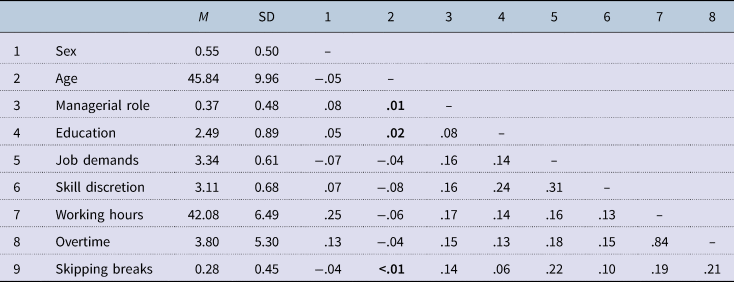
Table 1 shows the descriptive statistics for all study variables and their intercorrelations. Most of these pairwise correlations were significant also because of the large sample size. Only the relationships between age and managerial role, education, and skipping breaks were not significant. Employees with a working contract of at least 30 h/week reported working an average of approximately 42.1 h a week, including approximately 3.8 h of overtime. Twenty-eight percent of all employees reported missing or skipping their rest breaks.
Descriptive statistics and correlations between all study variables

Note. N = 10 148; M = mean; SD = standard deviation; Sex (0 = female, 1 = male); managerial role (0 = without leadership responsibilities, 1 = with leadership responsibilities); education (1 = no occupational degree; 2 = lower educational degree; 3 = medium educational degree; 4 = higher educational degree); skipping breaks (0 = no, 1 = yes). Correlation coefficients with |r| > .02 are significant with p < .05. Only bold-faced coefficients are not significant with p < .05.
Hypothesis testing
As depicted in Table 1, job demands and skill discretion had a weak (.10 ≤ rs ≤ .22; Cohen, Reference Cohen1992) positive correlation with total working hours, working overtime, and skipping breaks, lending some initial support to Hypotheses 1 and 2.
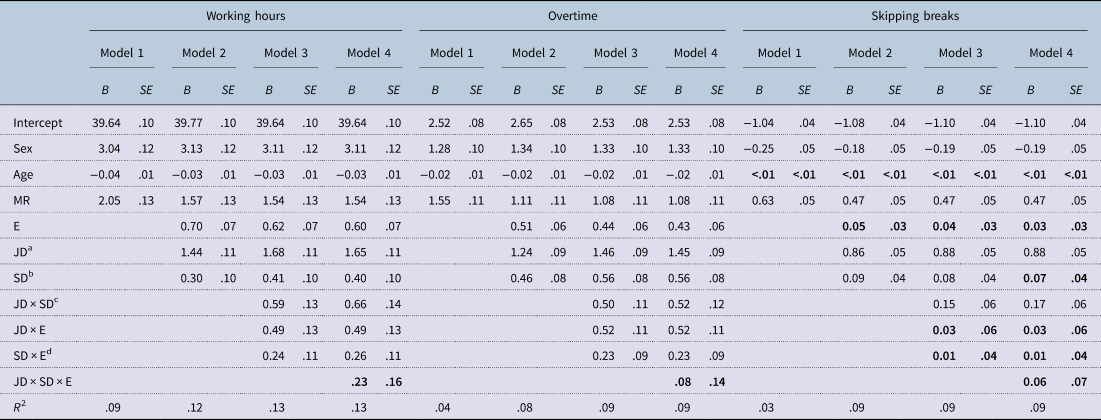
Table 2 shows the results of the hierarchical linear and logistic regression analyses. Hypotheses 1 and 2 would be supported if job demands and skill discretion significantly predict the three outcome variables after adjusting for the control variables and the other predictors (Model 2) and the two- and three-way interactions between job demands, skill discretion, and education (Models 3 and 4). Our results fully supported Hypotheses 1a–c. Job demands significantly predicted working hours, working overtime, and skipping breaks in all three of Models 2–4. However, our data fully supported only Hypotheses 2a and 2b; thus, skill discretion had a significant positive relationship with working hours and working overtime in Models 2–4. In contrast, the point estimate for the positive relationships between skill discretion and skipping breaks slightly dropped above the threshold for significance in Model 4 (p = .054) when we further controlled for the 3-way interaction between education, job demands, and skill discretion. Therefore, Hypothesis 2c was only partially confirmed.
Results of multiple linear and logistic regression analyses

Note. N = 10 148; B = unstandardized regression weight with its standard error (SE); JD = job demands; SD = skill discretion; sex (0 = female, 1 = male); managerial role (MR; 0 = without leadership responsibilities, 1 = with leadership responsibilities); education (E; 1 = no occupational degree; 2 = lower educational degree; 3 = medium educational degree; 4 = higher educational degree); skipping breaks (0 = no, 1 = yes). Continuous variables were mean-centred. Only bold-faced coefficients are not significant with p < .05. We used linear regression analyses for working hours and overtime as outcomes and logistic regression analyses with Nagelkerkes R 2 for skipping breaks as outcome.
a Positive relationship expected according to Hypothesis 1.
b Positive relationship expected according to Hypothesis 2.
c Significant effect expected according to Hypothesis 4.
d Significant effect expected according to Hypothesis 3.
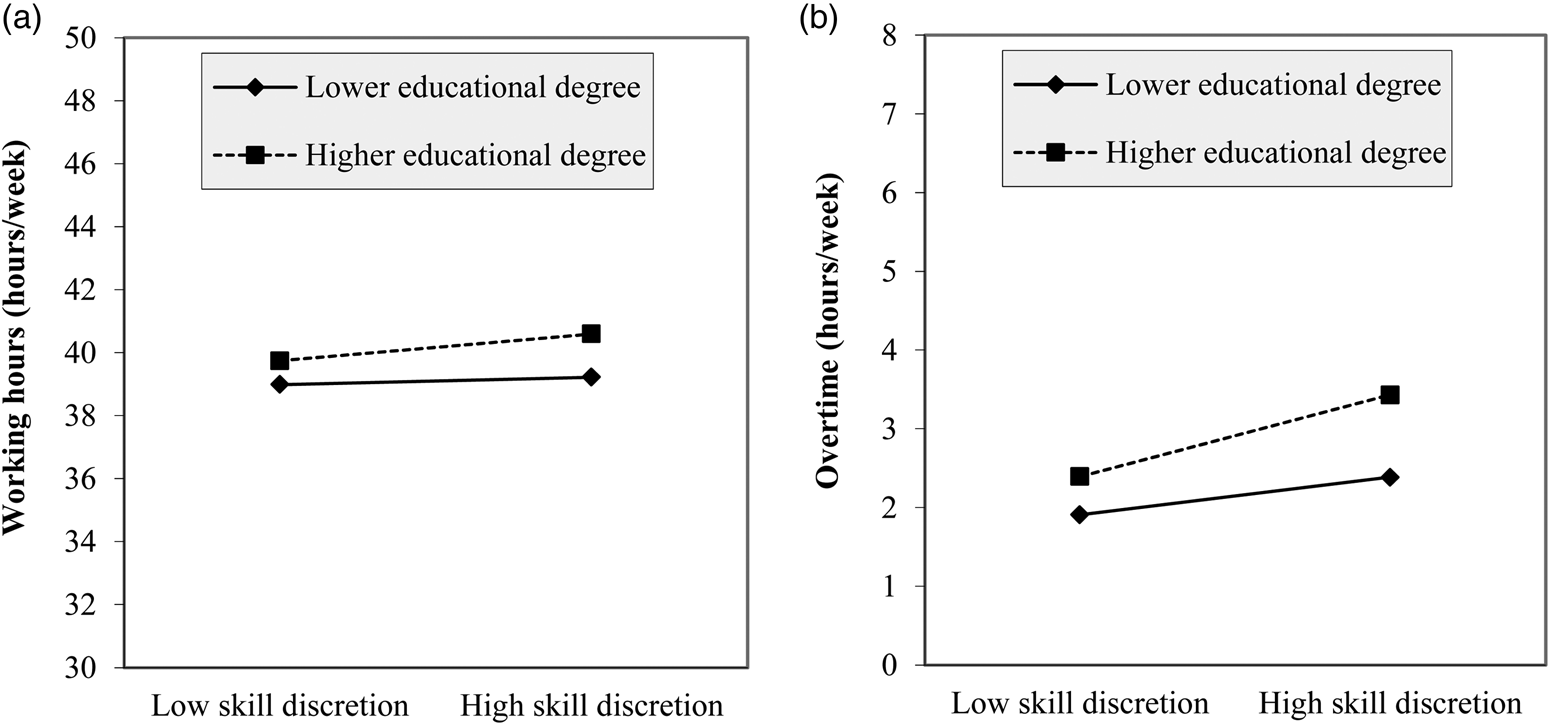
In Hypotheses 3a–c, we assumed that the relationships between skill discretion and the three outcome variables would be moderated by employees' level of education. We found significant two-way interaction effects of skill discretion and education for working hours and working overtime as outcomes but not for skipping breaks as an outcome (Table 2, Model 3). These effects remained stable even after we adjusted for a potential three-way interaction effect between job demands, skill discretion, and education (Table 2, Model 4). Figure 2 shows the pattern of interaction effects for working hours and overtime as outcomes. In line with our assumptions, the relationships between skill discretion and working hours and overtime were stronger positive for employees with a higher educational level (working hours: B = 0.63, t = 4.30, p < .001; overtime: B = 0.76, t = 6.05, p < .001) than for those with a lower educational level (working hours: B = 0.17, t = 1.28, p = .200; overtime: B = 0.35, t = 3.17, p = .002). In summary, our results support Hypotheses 3a and 3b, but Hypothesis 3c must be rejected.
Moderator effects of educational level (± 1 SD) for relationships between discretion (± 1 SD) and working hours (a) and overtime (b) as outcomes.

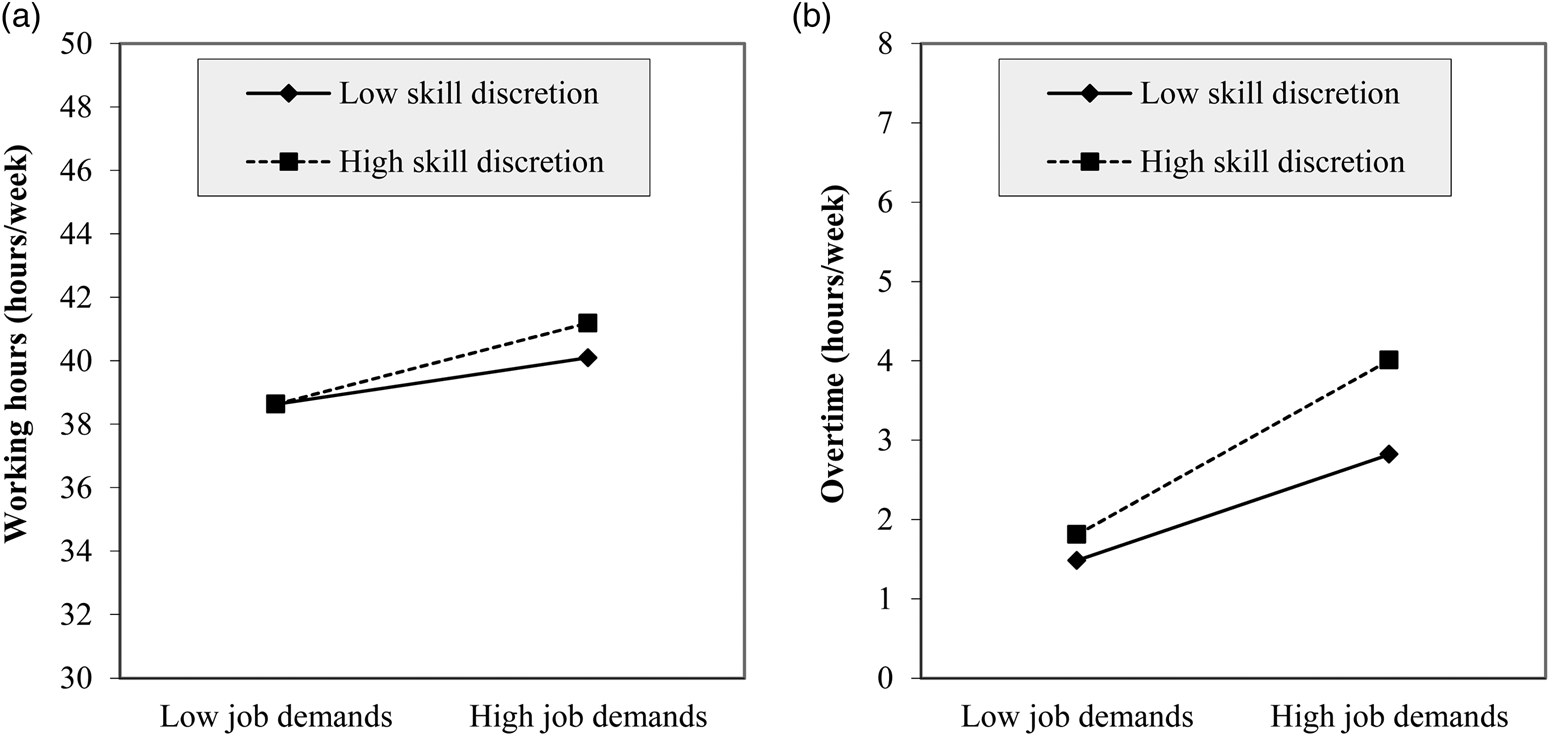
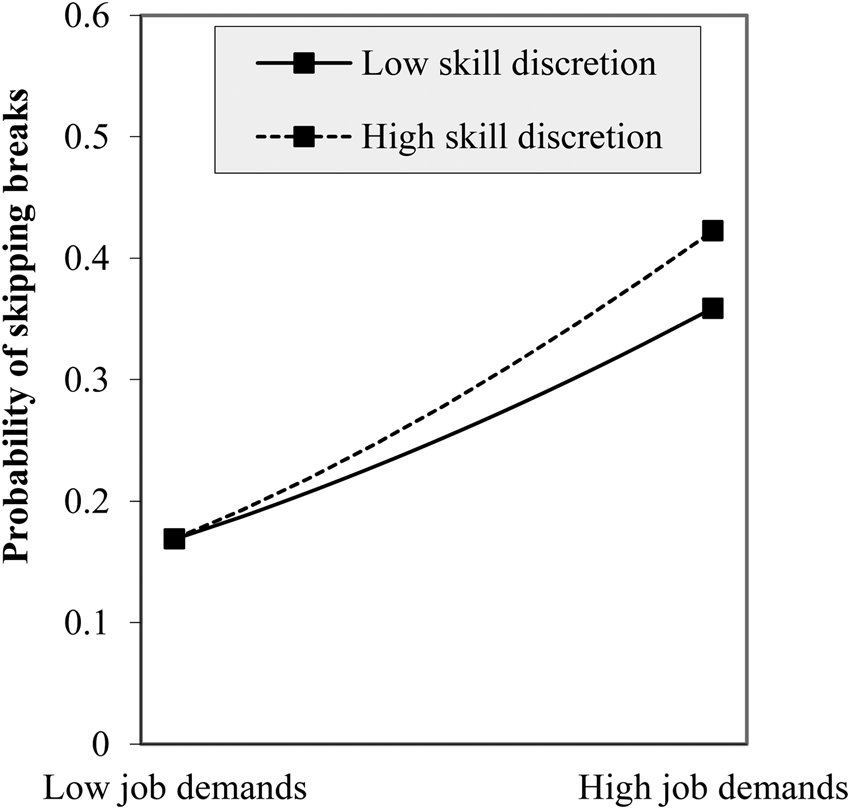
In Hypotheses 4a–c, we assumed that the relationships between job demands and the three outcome variables would be moderated by skill discretion. Significant two-way interaction effects of job demands and skill discretion (Table 2, Models 3 and 4) supported this assumption. As expected, the relationships between job demands and working hours (Hypothesis 4a) and overtime (Hypothesis 4b) were stronger positive for employees with higher skill discretion (working hours: B = 2.10, t = 13.55, p < .001; overtime: B = 1.80, t = 13.90, p < .001) than for those with lower skill discretion (working hours: B = 1.20, t = 8.83, p < .001; overtime: B = 1.10, t = 9.23, p < .001; see also the interaction plots in Figure 3). Figure 4 shows a similar pattern for skipping rest breaks. With increasing job demands, the risk of skipping rest breaks increased more strongly for employees with higher skill discretion than for those with lower skill discretion. In summary, our results fully support Hypotheses 4a–c.
Moderator effects of skill discretion (± 1 SD) for relationships between job demands (± 1 SD) and working hours (a) and overtime (b) as outcomes.

Moderator effects of skill discretion (± 1 SD) for relationships between job demands (± 1 SD) on probability of skipping breaks.

The six model variables explained 14, 9, and 9% of the variance in employees working hours, working overtime, and break behavior, respectively.
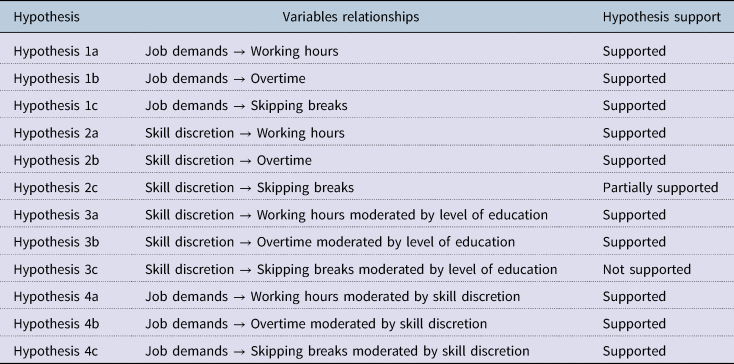
Table 3 summarizes the results of our hypothesis testing.
Summary of hypotheses testing

Further findings
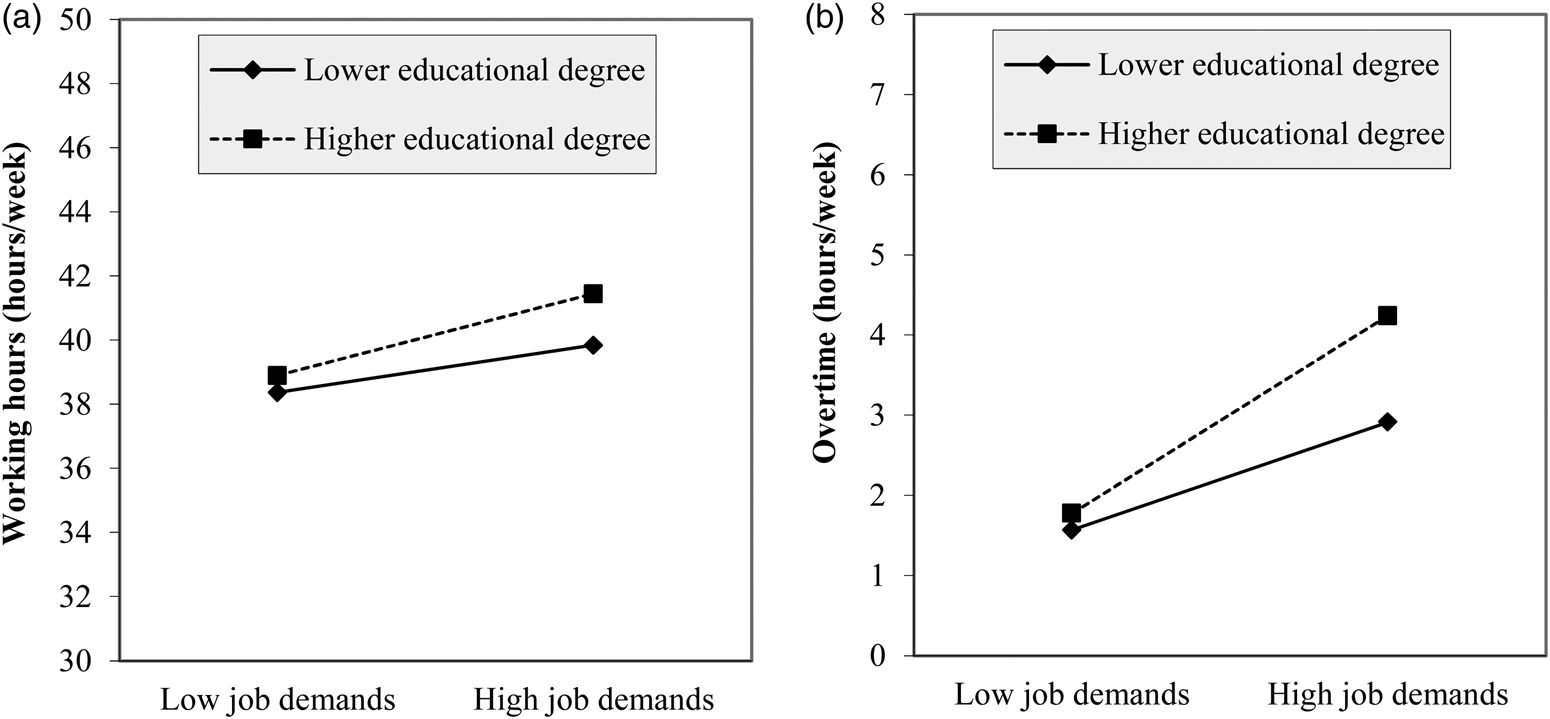
Our analyses revealed additional findings. For instance, we found a significant two-way interaction effect between job demands and level of education for working hours and overtime as outcomes (see Table 2, Models 3 and 4). As depicted in Figure 5, the relationships between job demands and working hours and working overtime were more strongly positive for employees with a higher educational level (working hours: B = 2.09, t = 12.28, p < .001; overtime: B = 2.02, t = 12.04, p < .001) than for those with a lower educational level (working hours: B = 1.21, t = 8.18, p < .001; overtime: B = 1.10, t = 10.21, p < .001).
Moderator effects of educational level (± 1 SD) for relationships between job demands (± 1 SD) and working hours (a) and overtime (b) as outcomes.

Supplementary analyses
In the following, we report the results of supplementary analyses that examined the robustness of our results (sensitivity analyses), the potential impact of overtime compensation, and the potential impact of a common method bias.
Sensitivity analyses
As reliability estimates (Cronbach's α) for our scales on job demands and skill discretion were rather low (<.7; Nunally & Bernstein, Reference Nunally and Bernstein1978), we conducted further sensitivity analyses and repeated all statistical analyses on a single-item basis (detailed results are not shown here and can be requested from the authors). Our findings on Hypotheses 1a–c and Hypotheses 2a and 2b remained unaffected. In contrast to the results reported above, the relationships between item 2 of our skill discretion scale and skipping breaks were now, as expected, significantly positive and in support of Hypothesis 2c. On a single-item level, we found support only for Hypothesis 3a. In this respect, working hours were significantly predicted by the interaction term of skill discretion (item 2) and the level of education. Furthermore, the findings from our sensitivity analyses supported Hypotheses 4a–c, with at least three out of six significant possible interaction terms. In summary, the results of these sensitivity analyses widely confirmed the findings reported above.
Overtime compensation as moderator
We further examined whether the relationships between the variables might further depend on monetary or temporary overtime compensation. Respondents reporting overtime work (n = 5900) were also asked about the type of compensation (unpaid, paid, transitory, paid or transitory) they received. In this way, we ran stratified moderated regression analyses for all three outcome variables and checked whether the effects proposed in Hypotheses 1–4 reported above were further moderated by overtime compensation and its specific type.
Regarding compensation in general (unpaid vs. compensated), we found that it had significant negative relationships with working hours (β = −.18, p < .001), overtime (β = −.15, p < .001), and skipping breaks (OR = 0.59, p < .001). For working hours (β = −.07, p = .038) and overtime (β = −.11, p = .003), we also found significant interaction effects between job demands and overtime compensation. Simple slope analyses revealed a weaker positive relationship between job demands and working hours and overtime for those reporting overtime compensation (working hours: B = 0.95, t = 6.13, p < .001; overtime: B = 0.89, t = 6.63, p < .001) than for those reporting no overtime compensation (working hours: B = 2.20, t = 5.47, p < .001; overtime: B = 2.32, t = 6.70, p < .001). There were no other significant interaction effects of compensation in relation to our hypotheses.
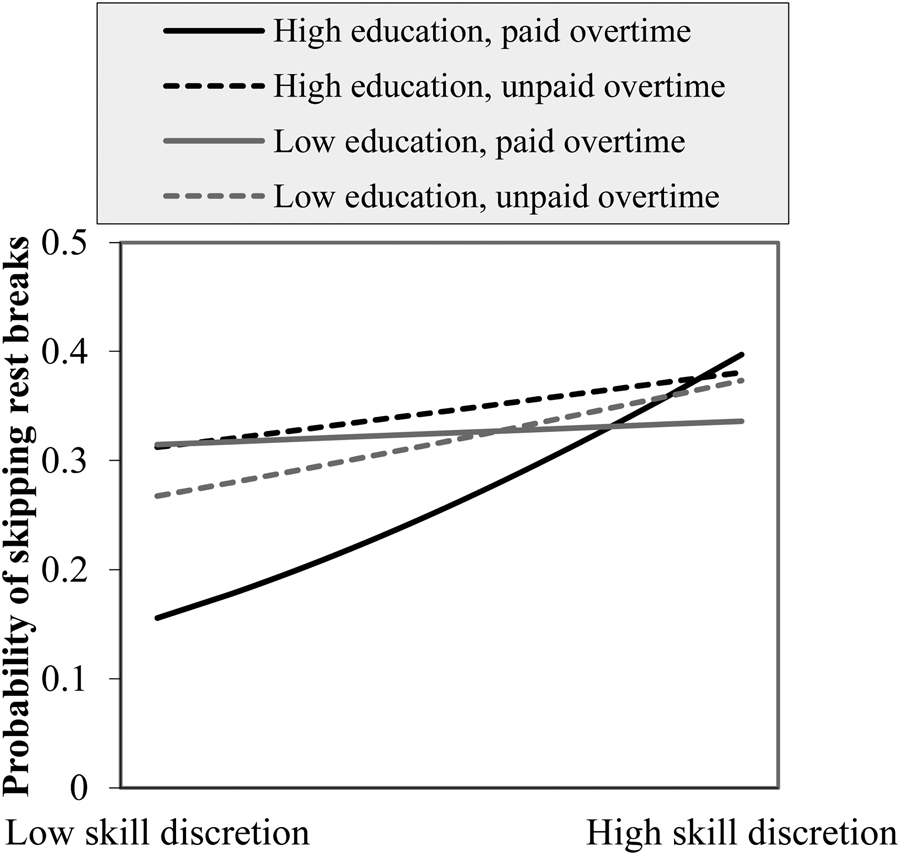
In the next step, we used dummy coding and compared the effects of different types of compensation (paid vs. transitory vs. both) with the effects of unpaid overtime. Again, all types of compensation were associated with reduced working hours, overtime, and skipping breaks. For working hours, the effects proposed by Hypotheses 1–4 were not affected by the type of compensation. In contrast, the relationship between overtime and job demands was consistently moderated by all three types of compensation and in line with the patterns reported above (interaction effects: demands × type of compensation; unpaid vs. paid with β = −.04, p = .057; unpaid vs. transitory with β = −.07, p = .011; unpaid vs. paid or transitory with β = −.07, p = .003). No other interactions of the type of compensation proposed by Hypotheses 2–4 were significant. For skipping breaks, we only found one significant interaction effect influencing the results, and Hypothesis 3c was rejected according to the findings of the main analyses reported above. In more detail, we found a significant three-way interaction effect of skill discretion × education × compensation (unpaid vs. paid; B = 0.57, SE = .20, p = .004). The pattern of the effect is presented in Figure 6, which shows that the expected positive relationship between skill discretion and skipping breaks is strongest for highly educated employees with paid overtime.
Three-way interaction between skill discretion (± 1 SD), education (± 1 SD) and compensation of overtime (unpaid vs. paid) for relationships to rest break skipping.

Common method bias
As our analyses relied on self-reported data, we statistically estimated the extent to which a common method bias might have influenced our results (Podsakoff, MacKenzie, & Podsakoff, Reference Podsakoff, MacKenzie and Podsakoff2012). In the case of a common method bias, a model with all variables loading on one factor would show an appropriate statistical fit to our data. However, using the IBM SPSS tool AMOS 21 to run a confirmatory factor analysis, we found that such a model yielded a poor fit (χ2(54) = 7700.05, p < .001; GFI = .863; RMSEA = .118, 90% CI [.116, .120]). An unmeasured common latent method factor explained approximately 13% of common variance in the variables. This suggests that it is unlikely that a common method bias fully explains our results.
Discussion
In this paper, we aimed to shed more light on the question of why employees dedicate more time to work than is officially necessary or pre-agreed. To address this question, we examined the interplay among job demands, skill discretion, and employee qualifications. All three aspects contribute separately and in combination with the explanation for working longer. Their respective contributions can be interpreted through specific underlying mechanisms that are embedded in different research perspectives.
Employees tend to work longer hours, work overtime, and skip mandatory rest breaks when their job demands are high; thus, Hypothesis 1 was completely confirmed. As a central job characteristic, skill discretion also has associations with working longer, although only in the form of longer working hours and working overtime (and, after sensitivity analyses, only in the form of working overtime), whereas an association with skipping mandatory rest breaks could not be confirmed. Thus, Hypothesis 2 was partially confirmed. The positive association between skill discretion and total working hours and working overtime is stronger for employees who are more qualified. However, this positive association does not hold true for skipping breaks (or, according to the sensitivity analyses, for working overtime). Thus, Hypothesis 3 was partially confirmed. In particular, longer total working hours, working overtime, and skipping mandatory rest breaks appear to be triggered in jobs that combine high demands with high skill discretion. Thus, Hypothesis 4 was completely confirmed. Although it was not necessarily expected, the positive association between job demands and total working hours and working overtime is also stronger for more qualified employees. We also found that overtime compensation is a relevant moderator for working longer: the effects of uncompensated overtime are stronger than the effects of compensated overtime, regardless of the specific type of compensation.
Our findings support our theoretical assumptions that two different mechanisms may contribute to the behavior of working longer. First, a mechanism in which working long hours, working overtime, and skipping mandatory rest breaks is more of a constraint than a choice in the face of high demands and is a functional and necessary coping behavior to get the work done (Dewe, O'Driscoll, & Cooper, Reference Dewe, O'Driscoll and Cooper2010; Snir & Harpaz, Reference Snir and Harpaz2012; Dettmers et al., Reference Dettmers, Deci, Berset, Krause, Wienke, Cacace and Fischer2016). Second, working longer can be explained as a social exchange and an intrinsically motivated process in which this behavior is more of a choice in the case of jobs that offer opportunities to learn and apply new things by providing a high level of skill discretion (Gouldner, Reference Gouldner1960; Blau, Reference Blau1964; Gagné, Senécal, & Koestner, Reference Gagné, Senécal and Koestner1997; Gagné & Deci, Reference Gagné and Deci2005). It is notable, however, that in such a situation, employees do not work more intensively by skipping mandatory rest breaks. Explanations may include the fact that rest breaks are necessary for constant performance during the workday, have a social function, and are legally regulated, so employees choose to skip them only if pressured to do so by high demands. Finally, in the case of jobs that combine high demands with a high level of skill discretion, working longer can also be kind of a ‘chosen constraint’. Regardless of the situation, employees differ in their reactions to certain job characteristics (Ashforth & Mael, Reference Ashforth and Mael1989; Hackman & Oldham, Reference Hackman and Oldham1976). In this respect, qualified employees not only seem to value skill discretion more by responding with working longer but also seem to feel a stronger obligation to respond with working longer to successfully meet job demands. Employees' social identity may influence their valuation of particular job characteristics such as skill discretion, but it also implies a tendency to work longer on the basis of a particular professional self-conception (Beckers, van der Linden, Smulders, Kompier, Taris, & Geurts, Reference Beckers, van der Linden, Smulders, Kompier, Taris and Geurts2008).
Based on our findings, excessive and intensive work behaviors, such as working longer hours, working overtime and skipping rest breaks, can be a double-edged sword. On the one hand, these behaviors might be a sign of pressure from high job demands and linked with an increased risk of impairments to employees' well-being, health, and work performance (Van Beek, Taris, & Schaufeli, Reference Van Beek, Taris and Schaufeli2011; Houlfort et al., Reference Houlfort, Philippe, Vallerand and Ménard2014; Taris, Van Beek, & Schaufeli, Reference Taris, Van Beek, Schaufeli, Harpaz and Snir2015). On the other hand, these behaviors might be a sign of high work engagement and high work motivation, which are positively valued by employers and are rewarded with wage increases and career promotions (Pannenberg, Reference Pannenberg2002; Anger, Reference Anger2005). High work engagement and high work motivation also have immediate positive consequences for employees, such as experiences of positive affect and self-efficacy as well as job satisfaction (Houlfort et al., Reference Houlfort, Philippe, Vallerand and Ménard2014; Clark, Michel, & Stevens, Reference Clark, Michel, Stevens, Harpaz and Snir2015). This motivational path through interesting and challenging jobs might also explain the stronger effects for uncompensated overtime than for compensated overtime (Beckers et al., Reference Beckers, van der Linden, Smulders, Kompier, Taris and Geurts2008; Papagiannaki, Reference Papagiannaki2014).
Job situations are always an interplay between different job and person factors (Kristof-Brown, Zimmerman, & Johnson, Reference Kristof-Brown, Zimmerman and Johnson2005). In our study, we have demonstrated that both separately and in combination, job (i.e., high job demands, high skill discretion) and personal factors (e.g., higher education) are the drivers of working longer hours, working overtime, and skipping rest breaks. On this basis, our findings underline recent calls in the work design literature (Bakker & Demerouti, Reference Bakker, Demerouti, Chen and Cooper2014) to study job demands, job resources, and personal resources mutually when understanding employee outcomes (Bakker, Boyd, Dollard, Gillespie, Winefield, & Stough, Reference Bakker, Boyd, Dollard, Gillespie, Winefield and Stough2010). This is increasingly occurring within the scope of the job-demands resources model (e.g., Clausen, Nielsen, Carneiro, & Borg, Reference Clausen, Nielsen, Carneiro and Borg2012; Guglielmi, Simbula, Schaufeli, & Depolo, Reference Guglielmi, Simbula, Schaufeli and Depolo2012; Huynh, Xanthopoulou, & Winefield, Reference Huynh, Xanthopoulou and Winefield2014). Job behaviors such as heavy work investment are important mediators in such processes and explain additional variance. Furthermore, our results show that it is important to consider both facets of heavy work investment, that is, working more excessively and working more intensively. Understanding their causes and the underlying mechanisms is highly relevant for job design (Houlfort et al., Reference Houlfort, Philippe, Vallerand and Ménard2014; Taris, Van Beek, & Schaufeli, Reference Taris, Van Beek, Schaufeli, Harpaz and Snir2015).
Thus, job characteristics contributing to extensive and intensive work behaviors through intrinsic motivation and reciprocity in a social exchange process should be more sustainable than job characteristics leading to those behaviors due to pressure. Nevertheless, possible consequences of heavy work investment should be monitored closely even if they are performed voluntarily as an expression of motivation and social exchange. Posterior negative consequences or side effects of heavy work investment are likely, regardless of the specific underlying motivation. The present research within the challenge-stressor hindrance-stressor framework (Lepine, Podsakoff, & Lepine, Reference Lepine, Podsakoff and Lepine2005; Widmer, Semmer, Kälin, Jacobshagen, & Meier, Reference Widmer, Semmer, Kälin, Jacobshagen and Meier2012), concerning flexibility requirements (Höge, Reference Höge2011) or autonomy (Bredehöft, Dettmers, Hoppe, & Janneck, Reference Bredehöft, Dettmers, Hoppe and Janneck2015), for example, shows that job design is not just black and white or unambiguous. It is often the case that positive as well as negative consequences exist side by side, so the specific job situation should be addressed for job design research and practice.
In fact, employees reported working longest if they were (1) highly educated and had high skill discretion and (2) if their job demands and skill discretion were both high, that is, if they performed active jobs according to the job demand-control model (Karasek, Reference Karasek1979). Such jobs have been recommended as ‘good practice’ in the work design and human resource management literature (Häusser, Mojzisch, Niesel, & Schultz-Hardt, Reference Häusser, Mojzisch, Niesel and Schultz-Hardt2010; Parker, Reference Parker2014) and as ergonomic principles in the design of work systems (DIN EN ISO 6385).
Practical implications
As discussed in the previous section, behaviors of working longer, such as working long hours, working overtime or skipping breaks, may be motivated very differently and therefore have very different possible outcomes for employee health, well-being, and performance. These behaviors should be monitored carefully, and their underlying causes should be explained. The more of a choice and the less of a constraint extensive and intensive work behaviors are, the less harmful they should be for employee health and well-being as well as for organizational functioning.
From a practical point of view, we recommend that managers keep a close eye on the potential adverse health-related and performance-related consequences of working longer, such as employee exhaustion, work/life conflicts, destructive organizational behaviors or errors at work, especially in the long run. They should reconsider extreme levels of employees' work design characteristics and seek optimal levels (Demerouti, Bakker, & Fried, Reference Demerouti, Bakker and Fried2012). In doing so, the interplay between job demands, job resources, and personal characteristics should be taken into consideration to strive for the achievement of good balance as well as a good match. The latter, in particular, has received increasing attention in job design research (Chrisopoulos, Dollard, Winefield, & Dormann, Reference Chrisopoulos, Dollard, Winefield and Dormann2010; Spoor, de Jonge, & Hamers, Reference Spoor, de Jonge and Hamers2010; De Jonge, Spoor, Sonnentag, Dormann, & van den Tooren, Reference De Jonge, Spoor, Sonnentag, Dormann and van den Tooren2012; Van den Tooren, de Jonge, & Dormann, Reference Van den Tooren, de Jonge and Dormann2012). However, in the case of high job demands, providing matching job resources and enhancing challenge and motivation should never be the only approach. A reduction of demands should always be taken into consideration as a key aspect of job design (Schulz-Dadaczynski, Reference Schulz-Dadaczynski2017), also in relation to norms and standards of occupational safety. Moreover, in such situations, the issue of recovery management becomes more important. Thus, if employees work overtime and reduce their after-work recovery time, sufficient within-work breaks should be scheduled at the least (Wendsche, Lohmann-Haislah, & Wegge, Reference Wendsche, Lohmann-Haislah and Wegge2016). Finally, the overtime compensation also seems to have an impact on employees' health, which should be considered for management policies (Van Der Hulst & Geurts, Reference Van Der Hulst and Geurts2001; Beckers et al., Reference Beckers, van der Linden, Smulders, Kompier, Taris and Geurts2008).
Limitations and future research directions
Our study is not without limitations. First, it relies on a cross-sectional, correlative study approach. Thus, we cannot draw causal relations between the variables of interest and reverse causal relationships might be plausible. Therefore, there is an urgent need for longitudinal data to rule out such explanations.
Second, it is important to consider that our analyses relied on self-reported data. Therefore, a common method bias might have inflated the relationships under investigation (Podsakoff, MacKenzie, & Podsakoff, Reference Podsakoff, MacKenzie and Podsakoff2012). However, the statistical analyses revealed that the influence of such a bias might be rather small in our data. Moreover, Siemsen, Roth, and Oliveira (Reference Siemsen, Roth and Oliveira2010) showed that significant interaction effects cannot be explained by such a bias. In this way, a common method bias is not a conclusive explanation for our results. Nevertheless, future studies should validate the research model with more objective data (e.g., working time records, objective indicators of work demands or skill discretion from task analyses or workplace observations).
Third, in line with other studies, we used rather global measures to access the outcome variables. The measurements of working hours and overtime do not allow for any information about the voluntary nature of extra work. Like the compensation for working longer, this further differentiation could have consequences for the relationships, at least for the one between skill discretion and working overtime. The effects might be even stronger if the overtime is voluntary. Regarding the variable of skipping breaks, the same consideration also seems possible. There is no information as to whether breaks are canceled voluntarily or due to interruptions from supervisors or others. Correlations with voluntarily canceled breaks might also have stronger effects.
Fourth, the internal consistencies of skill discretion and demands were rather low. One reason for this could be the small number of items, which makes it difficult to attain high Cronbach's α. Another reason could be that different occupational groups are included in the sample. Kristensen, Bjorner, Christensen, and Borg (Reference Kristensen, Bjorner, Christensen and Borg2004), for example, demonstrate that several demand items function very differently for different occupational groups. Therefore, in further analyses, blue- and white-collar workers should at least be considered separately. However, sensitivity analyses using single items support the results of the study; therefore, the same conclusions can be drawn.
Finally, studies show that scholars should focus not only on the quality and the intensity of work characteristics but also on their temporal dynamics, thus, the exposure time (Hu, Schaufeli, & Taris, Reference Hu, Schaufeli and Taris2017; Reina-Tamayo, Bakker, & Derks, Reference Reina-Tamayo, Bakker and Derks2017). Therefore, these temporal dynamics are just as relevant for further research.
Conclusion
Working longer, such as working long hours, working overtime or skipping rest breaks, is a widespread phenomenon in the working population. However, there are a variety of possible reasons why people are working longer, and these underlying reasons determine the consequences of working longer for employees and for organizations. Thus, their exposure and consideration are relevant to job design research and practice. Specific job characteristics, such as the level of job demands and skill discretion, as well as personal characteristics, such as educational level, help explain why people work longer. While high job demands seem to pressure employees to work longer, a high level of skill discretion seems to motivate them; highly qualified employees, in particular, respond to job characteristics. In this way, the level and interplay of those characteristics should be considered in job design with regard to employee behaviors of work extension and intensification and their possible consequences.
Author Note
The authors have no actual or potential financial and other conflicts of interest related to the submitted manuscript. This study was supported by a research grant from the Federal Institute for Occupational Safety and Health to the first author of this paper (F 2406). Correspondence concerning this article should be addressed to Anika Schulz-Dadaczynski.
Author ORCIDs
Anika Schulz-Dadaczynski, 0000-0002-3427-1138.
Dr. Anika Schulz-Dadaczynski is a research fellow at the Federal Institute for Occupational Safety and Health (Nöldnerstr. 40-42, D-10317 Berlin), Germany. She received a Master's Degree (2007) in Organisational Management and a Doctoral Degree (Dr. phil., 2013) from Leuphana University Lüneburg (Germany). Her research focuses on job analyses and job design, work intensity and psychosocial risks at work. E-mail: schulz-dadaczynski.anika@baua.bund.de
Dr. Johannes Wendsche is a research fellow at the Federal Institute for Occupational Safety and Health (Fabricestraße 8, D-01099 Dresden), Germany. He received a Diploma (2007) in psychology and a Doctoral Degree (Dr. rer. nat, 2017) from TU Dresden (Germany). His research focuses on work stress, recovery, job design, and turnover behavior. E-mail: wendsche.johannes@baua.bund.de
Dipl.-Psych. Andrea Lohmann-Haislah is a research fellow at the Federal Institute for Occupational Safety and Health (Nöldnerstr. 40-42, D-10317 Berlin), Germany. She received a Diploma (1997) in psychology from Freie Universität Berlin. Her research focuses on recovery from work stress, job analysis and job design. She is the author of the German Stressreport 2012. E-mail: lohmann-haislah.andrea@baua.bund.de
Dr. Nicole Stab is a research fellow at the Federal Institute for Occupational Safety and Health (Fabricestraße 8, D-01099 Dresden). She received a Diploma (2010) in public health and a Doctoral Degree (Dr. rer. medic, 2008) from TU Dresden (Germany). Her research focuses on work organization and work design, especially in the field of nursing, and work intensity. E-mail: stab.nicole@baua.bund.de