INTRODUCTION
Rationality is generally thought to constrain our beliefs in at least two ways. First, rationality constrains the structure of our beliefs – it prohibits various forms of incoherence among our beliefs, at least at a time, and perhaps over time as well. Second, rationality constraints the substance of our beliefs – it requires them to be appropriate to the evidence that we possess. Many philosophers have attempted to reduce one of these kinds of constraint to the other.Footnote 1 Worsnip (Reference Worsnip2015) has argued against the possibility of such reduction, on the grounds that these two kinds of constraint can conflict with each other. In this paper, I will attempt to undermine Worsnip's argument for the possibility of conflict between these two kinds of constraints.
Although I disagree with Worsnip that the two kinds of constraint are inconsistent, and I agree with Worsnip that neither is reducible to the other, I will not attempt to establish either of those two points in this paper: my goal is simply to undermine Worsnip's argument for the possibility of conflict between substantive and structural constraints that rationality imposes on our beliefs. But I will not devote much attention to the details of Worsnip's own exposition, since the points that I take to be crucial for his argument have already been made by others, only not in the service of an anti-reductionist program. What I will do here is to attempt to undermine several recent arguments for the claim (crucial to Worsnip's argument) that evidential constraints on our beliefs sometimes require us to have epistemically akratic, and therefore incoherent, beliefs.
Three prefatory remarks. First, I've used the term “beliefs” in the preceding paragraph to denote the kind of mental states to which evidential and coherence constraints both apply. But this term is arguably too narrow: there are judgments, degrees of confidence, doubts, suspensions of judgment, and various other psychological components of our overall view of the world, and evidential and coherence constraints apply to all of these. Although I have views about the relations among these various sorts of states and acts, those views are not relevant to our present concern, which has to do not so much with the sorts of states and acts that are normatively governed by evidential and coherence constraints, but rather with the issue of whether those different constraints can ever be inconsistent, i.e., jointly unsatisfiable.
Second, while Worsnip's argument is about the consistency of enkratic and evidential norms of belief, enkratic norms are taken to be just one (relatively uncontroversial) example of structural norms on belief, and evidential norms are taken to be just one (relatively uncontroversial) example of substantive norms on belief. If structural norms on belief do not include enkratic norms, or if substantive norms on belief do not include evidential norms, then Worsnip's argument fails, but not in an interesting or instructive way. For the purposes of this paper, I will simply assume what is anyway widely accepted – viz., that substantive norms on belief include at least evidential norms and structural norms include at least enkratic norms.
Third, there are lots of different enkratic principles that plausibly serve as structural constraints on our beliefs (judgments, credences, etc.). Worsnip (Reference Worsnip2015) considers one, while Horowitz (Reference Horowitz2014) considers another, and Lasonen-Aarnio (Reference Lasonen-AarnioForthcoming) still another. Consider, for instance, the following two enkrasia principles (the first is similar to Worsnip's, and the second is similar to Horowitz's):
Rationality requires of S that
(i) If S believes that her evidence supports her in believing that p, then she believes that p, and
(ii) If S believes that her evidence does not support her in believing that p, then she does not believe that p.
Rationality requires of S that she not believe a proposition of the form “P, but my evidence doesn't support P.”
The two principles just stated are similar in that both speak of what rationality requires, rather than what it merely permits, or what states are more or less rational. And they are also similar in that both speak of the targets of rational requirement as belief, rather than judgment, degrees of confidence, etc. Finally, they are also similar in that both speak of our beliefs about our evidence, rather than in speaking of our beliefs about rationality, or about substantive requirements, etc. All three of these respects of similarity can be altered to produce various other enkrasia principles – principles that speak of what rationality permits rather than requires, or principles that speak of credences rather than beliefs, or principles that speak of our attitudes about rationality rather than evidence, etc. But the two principles already differ in that the first requires S to hold or not hold certain combinations of beliefs, whereas the second requires S not to hold a particular belief in a conjunction. To this extent then, the second principle may appear to be a substantive rather than a structural constraint on belief. But I believe this appearance is at least to some extent misleading: I don't see what could explain the truth of the second principle (assuming it is true) other than some structural constraint like the first principle. Although I will devote considerable space in this paper to following Horowitz's exposition, and so discussing an enkratic principle like the second principle stated above, I will assume that it is a structural requirement because it is explained by an explicitly structural principle like the first. And Horowitz seems to share this assumption: her arguments in defense of her Non-Akrasia principle all proceed by showing that what rationality prohibits is simultaneously being very confident that p, while also being very confident that one's evidence doesn't support p. Her arguments don't specify that such confidence is closed under conjunction.
I begin by considering some arguments that proceed from cases in which it seems that substantive (specifically evidential) constraints of rational belief jointly make it rational for the believer to be epistemically akratic. After criticizing the discussion of these cases in Horowitz (Reference Horowitz2014) in Section 1 of the paper, I then proceed, in Section 2, to develop what I take to be a more effective reply to the cases, and conclude that they do not show that evidential constraints ever license, let alone require, epistemic akrasia. In Section 3, I consider an argument from Worsnip (Reference Worsnip2015) that proceeds from a case very similar to the case that Horowitz considers, to the conclusion that substantive and structural constraints on belief can sometimes conflict. Finally, in Section 4, I critically discuss an argument from Lasonen-Aarnio (Forthcoming) for the conclusion that epistemic akrasia is sometimes rational. I show that this argument rests on the same dubious assumption as Worsnip's argument, and I sketch a picture of rational constraints on which we should expect that assumption to be false. I conclude that the case for conflict has not yet been successfully prosecuted.
1. HOROWITZ ON EPISTEMIC AKRASIA
Consider the following case from Horowitz (Reference Horowitz2014):
Sleepy Detective. Sam is a police detective, working to identify a jewel thief. He knows he has good evidence – out of the many suspects, it will strongly support one of them. Late one night, after hours of cracking codes and scrutinizing photographs and letters, he finally comes to the conclusion that the thief was Lucy. Sam is quite confident that his evidence points to Lucy's guilt, and he is quite confident that Lucy committed the crime. In fact, he has accommodated his evidence correctly, and his belief are justified. He calls his partner, Alex. “I've gone through all the evidence,” Sam says, “and it all points to one person! I've found the thief!” But Alex is unimpressed. She replies: “I can tell you've been up all night working on this. Nine times out of last ten, your late-night reasoning has been quite sloppy. You're always very confident that you've found the culprit, but you're almost always wrong about what the evidence supports. So your evidence probably doesn't support Lucy in this case.” Though Sam hadn't attended to his track record before, he rationally trusts Alex and believes that she is right – that he is usually wrong about what the evidence supports on occasions similar to this one.
In Sleepy Detective, it seems rational for Sam (given all the evidence he's collected) to be highly confident of Lucy's guilt, but it also seems rational for Sam (given Alex's point about his track record) to be highly confident that his evidence doesn't support Lucy's guilt. Thus, Sleepy Detective is a paradigm of the kind of case that several epistemologists (e.g., Williamson Reference Williamson and Dougherty2011; Coates Reference Coates2012; Lasonen-Aarnio Reference Lasonen-AarnioForthcoming) regard as a counterexample to the following non-akrasia constraint on an agent.
NON-AKRASIA CONSTRAINT: It isn't rational for an agent to be highly confident in a proposition of the form “P, but my evidence doesn't support P.”
Horowitz (Reference Horowitz2014) argues that, despite appearances, cases like Sleepy Detective are actually not counterexamples to the Non-Akrasia Constraint. But, as Horowitz admits, her attempt to undermine the case against the Non-Akrasia Constraint enjoys only limited success, for there is a kind of case different in structure from Sleepy Detective that is more plausibly a counterexample to that constraint.
In this section, I will criticize Horowitz's defense of the Non-Akrasia Constraint, and then offer my own somewhat different defense of that Constraint. As I will argue here, once we see why cases like Sleepy Detective are not counterexamples to the Non-Akrasia Constraint, we'll also be able to see why the cases that Horowitz regards as potentially real counterexamples to the Non-Akrasia Constraint are not counterexamples either.
So first, why does Horowitz think that cases like Sleepy Detective are not counterexamples to the Non-Akrasia Constraint? She has three main arguments. The first argument relies on three auxiliary assumptions: first, that it is rational to reason from any proposition, P, just in case one is rationally highly confident in P; second, that if one is rationally confident of a proposition, Q, then it is also rational for one to reason from the proposition that one is confident of Q; and third, that if one is confident of a hypothesis on the basis of misleading evidence, then it is lucky if that hypothesis turns out to be true. If these three assumptions are all granted, then, if Sam is rationally confident both that Lucy is the thief, and also rationally confident that his evidence doesn't support that Lucy is the thief, then Sam can rationally reason as follows:
(a) Lucy is the thief.
(b) My evidence does not support that Lucy is the thief.
(c) My evidence is misleading concerning the identity of the thief. (from a, b)
(d) I am confident that Lucy is thief.
(e) I am confident in a truth about the identity of the thief. (from a, d)
(f) I got very lucky in arriving at a truth about the identity of the thief. (from c, e)
Steps (a) and (b) are the propositions of which Sam is (according to the opponents of the Non-Akrasia Constraint) simultaneously rationally highly confident in Sleepy Detective. Step (c) follows from the conjunction of (a) and (b) by the definition of “misleading.” Step (d) is licensed by the fact that Sam is rationally confident of (a), and it is rational to use step (d) on the assumption that if one is rationally confident of a proposition Q then it is also rational to reason from the proposition that one is confident of Q. Step (e) follows from (a) and (d), and step (f) follows from the conjunction of (c) and (e), on the assumption that if one is confident of a hypothesis on the basis of misleading evidence, then it is lucky if that hypothesis turns out to be true. Thus, given the three aforestated assumptions, it follows that, if it is rational for Sam in Sleepy Detective to be highly confident in “Lucy is the thief” and also in “my evidence doesn't support that Lucy is thief,” it will also be rational for Sam to draw the conclusion “I got very lucky in arriving at a truth about the identity of the thief.” But it clearly is not rational for Sam to draw this conclusion. And so, Horowitz concludes, it must not be rational for Sam to be simultaneously highly confident in both of “Lucy is the thief” and “my evidence doesn't support that Lucy is the thief,” and so Sam cannot be rationally highly confident of the conjunction “Lucy is the thief and my evidence doesn't support that Lucy is the thief”: Sleepy Detective cannot be a counterexample to the Non-Akrasia Constraint. This is Horowitz's first argument.
Her second argument relies on just two auxiliary assumptions: first, that it is rational to reason from any proposition, P, just in case one is rationally highly confident in P, and second, that if one rationally reasons from any proposition, Q, then it is also rational to reason from the proposition that one is reasoning from Q. If these two assumptions are granted, then, if Sam is rationally confident both that Lucy is the thief, and also rationally confident that his evidence doesn't support that Lucy is the thief, then Sam can rationally reason as follows:
(g) Lucy is the thief.
(h) My evidence does not support that Lucy is the thief.
(i) My evidence is misleading concerning the identity of the thief. (from g, h)
(j) I am reasoning from the premise that Lucy is the thief.
(k) I am reasoning from a true premise about the identity of the thief. (from g, j)
(l) Despite the misleadingness of my evidence concerning the identity of the thief, I am nonetheless reasoning from a true premise about the identity of the thief. (from i, k)
Steps (g) and (h) are the propositions of which Sam is (according to the opponents of the Non-Akrasia Constraint) simultaneously rationally highly confident in Sleepy Detective. Step (i) follows from the conjunction of (g) and (h) by the definition of “misleading.” Step (j) is licensed by the fact that Sam is reasoning from (g), on the assumption that if one reasons from a proposition Q then it is also rational to reason from the proposition that one is reasoning from Q. Step (k) follows from (g) and (j), and step (l) is the conjunction of (i) and (k). Thus, given the two aforestated assumptions, it follows that, if it is rational for Sam in Sleepy Detective to be highly confident in “Lucy is the thief” and also in “my evidence doesn't support that Lucy is the thief,” it will also be rational for Sam to draw the conclusion “despite the misleadingness of my evidence with regard to the identity of the thief, I am nonetheless reasoning from a true premise about the identity of the thief.” But it clearly is not rational for Sam to draw this conclusion. And so, Horowitz concludes, it must not be rational for Sam to be highly confident in both “Lucy is the thief” and “my evidence doesn't support that Lucy is the thief”, and so Sam cannot be rationally highly confident of the conjunction “Lucy is the thief and my evidence doesn't support that Lucy is the thief”: Sleepy Detective cannot be a counterexample to the Non-Akrasia Constraint. This is Horowitz's second argument.
Both of these first two arguments are unsound, because their shared auxiliary assumption is false: it is not true that it is rational to reason from any proposition P just in case one is rationally highly confident in P. I may be rationally highly confident that lottery ticket 1 will lose, that lottery ticket 2 will lose, and so on, but I would be irrational to reason from each of these premises to the conclusion that no ticket will win. Horowitz considers this sort of objection to her first two arguments, but points out that, even if it is correct, and so Sam cannot draw the conclusions (f) or (l) by means of the arguments above, it is still a counterintuitive consequence of denying the Non-Akrasia Constraint that Sam's total evidence in Sleepy Detective can support (c) (= (i)). But the opponent of the Non-Akrasia constraint can explain the intuition to which Horowitz appeals here: since (a) and (b) are logically and metaphysically independent, contingent claims, and since an agent's total evidence typically does not support the conjunction of two independent, contingent claims as strongly as it supports either one of those claims individually, it follows that Sam's total evidence typically will not support (c) as strongly as it supports either (a) or (b). What is implausible, the opponent of the Non-Akrasia Constraint will say, is not that Sam's total evidence can support (c) to some extent, but rather that it can support (c) to the same extent that it supports either (a) or (b). But the opponent of the Non-Akrasia Constraint is not committed to claiming that it does.
Horowitz's third argument for the claim that Sleepy Detective is not a counterexample to the Non-Akrasia Constraint relies on the following two auxiliary assumptions: first, it is rational to act on any proposition, Q, just in case one is rationally sufficiently highly confident of Q, and second, it is rational to act on any proposition, P, just in case acting on P maximizes expected value. If both assumptions are granted, then Sam can be rationally highly confident of the proposition that Lucy is the thief when acting on that proposition maximizes expected value, and Sam can also be rationally highly confident of the proposition that his evidence doesn't support that Lucy is the thief when acting on that proposition maximizes expected value. If Sleepy Detective is a counterexample to the Non-Akrasia Constraint, then it will be possible for Sam to be rationally highly confident in both of these two propositions at the same time. It follows that there will be some situations in which it will maximize expected value for Sam to act on both of these two propositions at the same time. But this, Horowitz claims, is not possible. Thus, Horowitz concludes, it is not possible for Sam to be simultaneously rationally highly confident of both Lucy is the thief and also of my evidence doesn't support that Lucy is the thief. Sleepy Detective cannot be a counterexample to the Non-Akrasia Constraint.
While we might raise questions about precisely how to understand the notion of “expected” value (is it determined by the agent's rational degrees of confidence, or by her actual degrees of confidence, or by her beliefs about probabilities, or by something else?) and how to understand the notion of “acting on” a proposition (is it to employ the proposition as a premise in reasoning, or to treat the probability that the proposition is false as irrelevant to deliberation, or something else?), I think that such questions are irrelevant to assessing this third argument. That's because, no matter how the auxiliary assumption is understood, the argument clearly proves too much. Suppose that God offers to give everyone maximal value if you simultaneously act on the proposition that Lucy is the thief and also act on the proposition that your evidence doesn't support that Lucy is the thief. In such a case, it is clear you would maximize expected value by being very confident in both of these propositions, even if doing so would make you incoherent. So such a case is one in which, either, one of the two auxiliary assumptions is false and it is possible for acting on each of two propositions to maximize expected value despite it's being irrational to be very highly confident in both, or else both auxiliary assumptions are true but Horowitz's verdict about the kind of case at issue is wrong, and Sam can rationally act on the proposition that Lucy is the thief (e.g., asserting it, betting on it, etc.) while also rationally acting on the proposition that his evidence doesn't support that Lucy is the thief (e.g., asserting that, betting on it, etc.) And whichever verdict we reach about this case will also be a verdict we can reach about the kind of case in which Sam acts on the proposition that Lucy is the thief while also acting on the proposition that his evidence doesn't support that Lucy is the thief.
I conclude that none of Horowitz's three arguments succeed: for all they show, Sleepy Detective is a counterexample to the Non-Akrasia Constraint. Indeed, Horowitz concedes that whether or not cases like Sleepy Detective are counterexamples to the Non-Akrasia Constraint, there is another class of cases that are even more plausibly counterexamples to the Non-Akrasia Constraint. This latter class of cases is represented by the following:
Dartboard. You have a large, blank dartboard. When you throw a dart at the board, it can only land at grid points, which are spaced one inch apart along the horizontal and vertical axes. (It can only land at grid points because the dartboard is magnetic, and it's only magnetized at those points.) Although you are pretty good at picking out whether the dart has landed, you are rationally highly confident that your discrimination is not perfect: in particular, you are confident that when you judge where the dart has landed, you might mistake its position for one of the points an inch away (i.e., directly above, below, to the left, or to the right). You are also confident that, wherever the dart lands, you will know that it has not landed at any point farther away than one of those four. You throw a dart, and it lands on a point somewhere close to the middle of the board.
Now, suppose the dart lands on <3,3 > . You should then be certain – or at least nearly certain – that the dart landed on one of the following five points: <3,2>, <2,3>, <3,3>, <4,3>, or <3,4 > . But now consider the proposition RING that the dart landed on one of the four of those five points other than <3,3>: you should be nearly 80% confident in that proposition, since it mentions four of the five points on which the dart could have landed. But this level of confidence in RING is rational only if the dart landed at <3,3>; if it landed anywhere else, then you should be able to rule out some of the four locations mentioned in RING as locations on which the dart could have landed, and so should be less confident in RING. But this last conditional is one you can deduce, and so come to know, simply given the stipulations of the case. Furthermore, given those same stipulations, you should be no more than 20% confident that the dart landed at <3,3 > . Thus, you should be highly confident in RING, while also having no more than 20% confidence that your evidence supports RING. This case is then a violation of the Non-Akrasia Constraint, even though its structure is very different from that of Sleepy Detective. Of course, the case assumes that it's possible for an agent to be uncertain what evidence she currently has – but Horowitz concedes that, if this widely shared assumption is granted, then Dartboard constitutes a counterexample to the Non-Akrasia constraint.
2. WHY NEITHER SLEEPY DETECTIVE NOR DARTBOARD IS A COUNTEREXAMPLE TO THE NON-AKRASIA CONSTRAINT
What I would like to argue now is that, if we can get clear on why Dartboard is not a counterexample to the Non-Akrasia constraint, we'll be in a position to see why Sleepy Detective isn't a counterexample to it either. To get clear on this, let's begin by asking what we are committed to when we grant the stipulations made in the argument above, and thereby grant this conditional: if the dart had landed anywhere other than <3,3>, your evidence would support RING less strongly than it does now. Is this stipulation one that is known by the protagonist looking at the Dartboard? Let's consider each possibility.
Suppose that the protagonist knows this stipulation of the case, and thus knows not only that the dart landed on one of the five points <3,2>, <2,3>, <3,3>, <4,3>, or <3,4>: she also knows that, had the dart landed on any point other than <3,3>, then her visual evidence would have represented a different set of five points as the points at which the dart could, for all she sees, have landed. But if the protagonist knows this conditional, and she also knows that the dart landed on one of the five points <3,2>, <2,3>, <3,3>, <4,3>, or <3,4>, then she can deduce, and thereby come to know, that the dart landed on <3,3>; thus, she can deduce, and thereby come to know, that RING is false. Thus, if we grant the stipulation made in the argument above, we are granting that we are in a position to know by deduction that RING is false. And whatever we can know by deduction to be true cannot be something that is less than very likely on our total evidence. Thus, if we grant that the protagonist knows that the stipulated conditional is true – i.e., that if the dart had landed anywhere other than <3,3>, then her evidence would support RING much less strongly than it does now – then we are committed also to granting both that the protagonist can know that RING is false, and therefore we are also committed to granting that the protagonist's evidence does not support RING. But this is contrary to the stipulations of the case, which include the fact that the protagonist's evidence does support RING. It follows that, if Dartboard is to be a coherent case, the protagonist cannot know that, if the dart had landed anywhere other than <3,3>, then her evidence would support RING less strongly than it does now.
Suppose, then, that the protagonist does not know this conditional. But if she doesn't know this conditional, then what grounds do we have for thinking that the protagonist should be only 20% confident that her evidence supports RING? Recall that we figured that the protagonist should be only 20% confident that her evidence supports RING on the grounds that she is 20% confident that the dart landed at <3,3>, and she knows that her evidence supports RING to 80% only if the dart landed at <3,3 > . But the present horn of the dilemma denies this second conjunct: on this horn, we are assuming that the protagonist does not know that her evidence supports RING only if the dart landed at <3,3 > . (Recall: if we granted that the protagonist does know this conditional to be true, then we reach the conclusion that the protagonist can know by deduction that RING is false, but that is inconsistent with the stipulation that RING is strongly supported by her evidence.) Thus, on this second horn of the dilemma, we have no basis for the conclusion that the protagonist's evidence supports RING more strongly than it supports the proposition that her evidence supports RING. So, on the first horn of the dilemma, the stipulations of the case are incoherent, whereas on the second horn, there is no basis for taking the case to be a case of akrasia, i.e., a case in which your evidence supports false hypotheses about what your evidence supports.
Could the argument be redone so as to avoid this dilemma? In Williamson's “Unmarked Clock” example (Williamson Reference Williamson and Dougherty2011), no stipulations are made about the subject's background knowledge, or about what the subject can deduce from their evidence: it is stipulated only that the evidence includes a particular set of points on the clock (points at which the clock hand could, for all the subject can see, be pointing), but that the subject's evidence does not include the fact that her evidence includes a particular set of points on the clock – thus, the evidential probability that the subject's evidence includes that set of points is lower than the evidential probability of that set of points. But for such an example to demonstrate the possibility of rational akrasia, it would have to be an example in which it's rational for the subject to proportion her credences to her evidential probabilities. But Williamsonian evidential probabilities are obviously not designed to fix rational credence – it is, for instance, not rational to assign maximal credence to every known proposition, on Williamson's view, even though all known propositions have evidential probability 1 on that view. A subject's rational credences are fixed by her evidence only in so far as that evidence is accessible to her. To the extent that her so-called “evidence” contains information that is not accessible to her – because, say, it is too fine-grained – it cannot impose a rational constraint on credence. I should note that this point is fully consistent with Williamson's argument that no non-trivial condition is “luminous,” i.e., such that the subject is in a position to know that she's in that condition whenever she's in that condition: even if that conclusion is true, it can also be true that the only facts that enter into a subject's evidence set at a time are those facts that the subject is in a position to know that she's in at that very time. Of course, if we prefer to let Williamson have the word “evidence,” then we could state the latter point differently: the only facts that fix a subject's rational degrees of confidence at a time are the facts that the subject is in a position to know at that time.
What does this discussion of the evidence in Dartboard have to do with whether Sleepy Detective is a counterexample to the Non-Akrasia constraint? Because of the limits of visual acuity, your evidence in Dartboard involves some disjunction of ostended visible points. But we can also use disjunctions and ostension to characterize your evidence in Sleepy Detective. After being reminded by Alex of his poor track record with night-time investigation, what evidence does Alex then have? We could characterize his evidence by using ostension, along with an enumeration of possible classifications of the thing ostended. His evidence might include the fact that he read those letters over there (ostending the letters), and that they had some subset of the following properties: they were written in Lucy's handwriting, and expressed an intention to commit the crime, or they were written in the handwriting of Lucy's sister, and reported an intention to commit the crime, or, etc. In other words, Alex's testimony should lead Sam to reduce his confidence that Lucy is the thief because it generates changes in the contents of Sam's total evidence, and in particular, it makes Sam's total evidence less specific than it previously was. Alex's testimony can have the same effect on Sam's evidence that a diminution of your visual acuity would have on your evidence in Dartboard. And if it does have this effect, Sleepy Detective is not a counterexample to the Non-Akrasia constraint, but rather an illustration of how higher-order evidence is one of the things (along with forgetfulness) that can lead to loss of some first-order evidence over time.
We could of course stipulate that Alex's higher-order evidence has no such effect on Sam's evidence set – but the only sort of case in which such a stipulation could be true is a case in which Sam's evidence consists entirely of facts that Sam cannot easily be brought to doubt (e.g., facts about the most obvious qualitative features of Sam's consciousness at the moment). If we make this stipulation, then we are describing a version of Sleepy Detective in which the contents of Sam's evidence set are very clear and resistant to doubt; but then couldn't Alex's testimony simply raise doubts about whether that particular body of clear and relatively indubitable evidence supports the conclusion that Lucy is the thief? In other words, in so far as Alex's evidence is of a kind that makes it difficult for Alex to say or do anything that could make it rational for Sam to doubt his own views about what evidence he has, to that same extent it becomes easier for Alex to say or do something that could make it rational for Sam to doubt, or revise, his views about what hypothesis is supported by that evidence. In such a case, even though Sam knows exactly what evidence he has, couldn't it still be rational for Sam to continue to have high confidence in Lucy is the thief, but have much lower confidence in my evidence supports that Lucy is the thief?
An affirmative answer to this question confronts the following dilemma. Consider the question to what extent a particular body of total evidence supports a hypothesis. Either the answer to this question is fixed a priori by the standards of good reasoning itself, or it is not so fixed. Either way, the hypothesis that Alex could make it rational for Sam to doubt his earlier views about what hypothesis his total evidence supports confronts a difficulty.
Suppose the answer to this question is fixed a priori by the standards of good reasoning itself. In that case, the standards of good reasoning require that a believer never violate the constraints imposed by this answer in her own reasoning. But suppose a believer receives evidence that seems to tell in favor of violating these constraints? Suppose, for instance, that a believer knows two facts – p and q – and that these two facts entail some conclusion r, but the believer is assured by a team of eminent logicians that p and q do not entail r: what would it be rational for her to do then? Notice that, if the believer doubts the entailment for any reason, then she is doubting something of which good reasoning alone would make her certain. Thus, she is guilty of a common and easily excusable shortcoming of rationality. Perhaps the closest that she can come to being fully rational given her limited time and energy is to trust the experts. But even if this is the closest she can come in the circumstances to being fully rational, it is not the same as her being fully rational, i.e., fully complying with the standards of good reasoning. Full rationality requires certainty concerning the requirements of full rationality. Titelbaum (Reference Titelbaum2015) puts the same point by saying that “mistakes about rationality are mistakes of rationality,” but this is not precise – if we use the term “rational” (as we often do) to denote a status that is close enough for contextually salient purposes to full rationality, then it need not be true that mistakes about rationality are mistakes of rationality. Titelbaum's point, however, is about rationality understood as full compliance with all the standards of good reasoning, not about rationality understood as some contextually appropriate approximation to that ideal notion.Footnote 2 I conclude that, if support relations between bodies of total evidence and what they support are fixed a priori by the standards of good reasoning, then those relations must be knowable a priori, and any failure to know them constitutes a failure of reasoning, and thus a form of irrationality. An epistemically akratic agent would, in that case, be guilty of such irrationality.
But suppose that support relations between bodies of total evidence, on the one hand, and what they support, on the other, are not fixed a priori by the standards of good reasoning: what then? If this is true, it leaves open the possibility that our coming into possession of higher-order evidence might alter not just the contents of our evidence set (as we saw in Sleepy Detective) – it might also alter the support relations that obtain between our total evidence set and various hypotheses. One way it could do this – but not the only way – is by changing which prior probability function it is rational for the believer to conditionalize on in distributing her confidence across hypotheses in light of her evidence: for instance, the believer might have originally had a prior probability function that treated two hypotheses as complements (e.g., the hypothesis H1 that the murderer used a gun, and the hypothesis H2 that the murderer did not use a gun), but higher-order evidence might make it rational for the believer to change her view about this (e.g., it might make it rational to believe that “the murderer” does not denote any unique individual), and so to redistribute her confidence over the hypotheses in a way that would not be determined by conditionalizing over the higher-order evidence if the latter is independent of the relative likelihood of H1 vs. H2.Footnote 3
To sum up the argument of this section: In many cases, higher-order evidence can alter the contents of an agent's total evidence, and there are versions of Sleepy Detective in which this is precisely what is happening. In cases in which higher-order evidence does not have this effect, what effect does it have on the degree of support that various hypotheses receive from an agent's total evidence? It depends. If the degree to which a body of total evidence supports a hypothesis is something fixed a priori by the standards of good reasoning, then a believer's coming into possession of higher-order evidence can have no effect on how she can rationally distribute her confidence over propositions (on the assumption that such evidence does not affect the contents of her total evidence in a way that would affect this level of support). If, however, the degree to which a body of total evidence supports a hypothesis is not something fixed a priori by the standards of good reasoning, then the believer's coming into possession of higher-order evidence can nonetheless alter what prior probability function it is rational for her to use in conditionalizing on her total evidence. In none of the kinds of cases just described is a believer fully rational to be epistemically akratic.
3. WORSNIP ON THE CONFLICT BETWEEN SUBSTANTIVE AND STRUCTURAL NORMS OF BELIEF
Worsnip (Reference Worsnip2015) discusses a case very similar to Sleepy Detective in order to argue for the possibility of conflict between the requirements that evidence imposes upon our beliefs and the requirements that coherence imposes upon them. Although I've discussed Sleepy Detective in the preceding two sections, Worsnip develops his case in much greater detail in a forthcoming manuscript, and it may help us to understand the preceding points to see how they apply to Worsnip's attempt to develop his case in detail.
Here is Worsnip's detailed case:
Miss Marple and her niece Mabel visit a murder scene, where they survey the evidence. This (first-order) evidence does not support any particular verdict about who committed the crime. However, Miss Marple – who is generally an expert about what the evidence supports – makes an uncharacteristic mistake – and declares that the evidence supports believing that the vicar did it. …
… I will give a simple model to show that, given a few eminently possible stipulations, Miss Marple's testimony supports the higher-order belief (that the evidence supports believing that the vicar did it) better than it supports the first-order belief (that the vicar did it). …
Three values are important here:
X: The probability that the evidence supports believing that the vicar did it, conditional on Miss Marple saying that the evidence supports believing that the vicar did it.
Y: The probability that the vicar did it, conditional on the evidence supporting believing that the vicar did it.
Z: The probability that the vicar did it, conditional on the evidence not supporting believing that the vicar did it.
Remember that what we are trying to show is that Miss Marple's testimony … supports the higher-order belief … better than it supports the first-order belief … . For the former level of support, we just look at the value of X. For the latter, we want the chance that Miss Marple is right that the evidence supports believing that the vicar did it and the vicar actually did do it, plus the chance that Miss Marple is wrong that the evidence supports believing that the vicar did it but as it happens, the vicar did do it all the same. We can get this by multiplying X by Y, and multiplying (1–X) by Z, and then adding the two together … . So, in order for Miss Marple's testimony to support the higher-order belief more strongly than it supports the first-order belief, we need values of X, Y, and Z such that:
 $${\rm X} \gt {\rm} \left[ {\left( {{\rm XY}} \right){\rm} + {\rm} \left( {\left( {1{\rm} -{\rm X}} \right){\rm Z}} \right)} \right]$$
It's easy to obtain values such that this is the case.
As Worsnip makes clear a few paragraphs further on, all of his references to what “the evidence” supports in his definitions of X, Y, and Z should be understood as references to what the agent's total evidence (including her higher-order evidence) supports.
Of course Worsnip is right that, for any three real numbers X, Y, and Z between 0 and 1 (inclusive), it's easy to find values of those numbers such that X > [(XY) + ((1 – X)Z)]. But this mathematical fact leaves it open whether those three numbers can be the values of the probabilities mentioned above. In fact, given the stipulations of the case (in particular, that Miss Marple's testimony about what the evidence supports is mistaken), here's what we can determine:
If support relations between bodies of evidence and hypotheses are fixed a priori by the standards of good reasoning, then X = 0, and so it cannot happen that X > [(XY) + ((1 – X)Z)]. In that case, it is impossible for Worsnip's case to constitute a case of conflict between the requirements of evidence and those of coherence.
But what if support relations are not fixed a priori by the standards of good reasoning? In that case, Miss Marple's testimony can still constitute a change in what her niece's total evidence is, by reducing her niece's total evidence concerning the murder. But that testimony can also constitute a change in the support relations that obtain between the niece's total evidence and various hypotheses: it can do that by, for instance, constituting a change in the prior probability function that it's rational for the niece to use in conditionalizing on her evidence. In either of the latter two cases, Miss Marple's testimony can – independently of conditionalization – change the values of Y and Z from what they were prior to the niece's receipt of that testimony. So long as the testimony changes the values of Y and Z in tandem, so that it remains the case that X ≤ [(XY) + ((1 – X)Z)], it will be impossible for Worsnip's case to constitute a case in which the requirements of evidence conflict with the requirements of coherence.
What does this show? Two things: first, Worsnip has not succeeded in making the case that the requirements of evidence and those of coherence can ever conflict. Making the case would require showing that Miss Marple's testimony can affect X, Y, and Z in ways that allow for the inequality above to hold, and Worsnip hasn't done this. But second, Worsnip has succeeded in laying down a challenge to those who defend the view that the requirements of evidence and coherence cannot conflict, and that rationality does not license epistemic akrasia. The challenge is to explain why we should expect higher-order evidence to impact particular cases in such a way that the inequality mentioned above is never satisfied. This is a challenge that I will address briefly in the final section of this paper, where I will say something about why we should expect the requirements of evidence and the requirements of coherence to be jointly satisfiable.
4. LASONEN-AARNIO ON EPISTEMIC AKRASIA, AND HOW TO MEET THE CHALLENGE
Lasonen-Aarnio offers what seems to me to be the most fundamental critique of anti-akrasia principles. Using the term “justification” to denote the property that a belief possesses when it satisfies the substantive requirements on belief, Lasonen-Aarnio writes: “Whatever the true justification-making property F is, it seems that one could be in circumstances in which a false belief (or at least high degree of confidence) concerning what the true justification-making property is could itself have F” (Lasonen-Aarnio Reference Lasonen-AarnioForthcoming: 17). In such a case, one could be guided by one's justified false belief concerning what the true justification-making property is to false views about which of one's own beliefs are justified. Thus, one could have justified beliefs while also justifiably believing that those beliefs are not justified.Footnote 4
This argument assumes that the issue of whether a belief B has property F is independent of the issue of whether the believer's other actual or possible beliefs – in particular her other actual or possible beliefs about B – have property F. But, without a general account of the nature of F, why should we assume this? It's not true of evaluative properties in general that they distribute independently over distinct states of the same agent. For instance, consider whether an agent's anger towards a particular offense is intemperate. Although intemperance is an evaluative property of the agent's anger, whether or not this property obtains is not simply a function of intrinsic features of the state of anger itself, but also a function of the agent's other beliefs, perceptual states, memories, and so on. For Lasonen-Aarnio's argument to show that epistemic akrasia is licensed, she would have to provide some reason to think that justification-making properties distribute over beliefs independently of one another. And she hasn't done this.
But Lasonen-Aarnio, like Worsnip, issues an important challenge to those who uphold epistemic akrasia constraints, and who think that the requirements of evidence and those of coherence cannot conflict. The challenge that Lasonen-Aarnio issues is to explain why we should think that the justification-making property F distributes in such a way as never to license epistemic akrasia. And the challenge that Worsnip issues is a specific version of this more general challenge: to explain why misleading higher-order evidence can never make it the case that inequalities of the kind that Worsnip specified are satisfied – viz., why misleading higher-order evidence can never support a claim about evidential support for a hypothesis more than it supports the hypothesis itself. These are powerful challenges. Can they be met?
Here, I will not attempt to do more than sketch a picture of rational requirements on which it is possible to meet these challenges. I will not attempt to argue in favor of the picture: I aim only to show that there is a coherent conception of rationality on which substantive and structural requirements cannot conflict, and akrasia cannot be licensed.
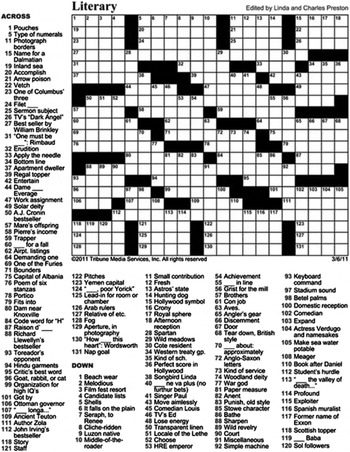
Consider a sophisticated crossword puzzle like that in Figure 1Footnote 5:
Figure 1.

The clue for 24 across is “Filet _____”, and the space is 6 letters: my hypothesis is that the correct response to this clue is “mignon”. But of course this hypothesis is defeasible: it depends on whether the correct answer to 5 down has “m” as its third letter, the correct answer to 6 down has “i” as its third letter, and so on. In filling out this crossword puzzle, we try to respond in what seems to us the correct way to each clue. But what constitutes the correct response to each clue will depend upon how the various responses fit together, since the structure of the puzzle demands that the third letter of 5 down be the same as the first letter of 24 across, and so on. Since what constitutes the correct response to each clue depends on precisely how the clue is to be interpreted, the correct interpretation of each clue also indirectly depends on the structure of the puzzle.
Notice, by the way, that the clues can vary without varying the structure of the puzzle, and the structure of the puzzle can also vary without varying the clues. An example of the first would be changing the wording of one of the clues to a different wording, and an example of the second would be moving a whole row or column farther away from neighboring rows or columns (something that could be done without affecting the clues only in a crossword puzzle that's less densely packed than the one pictured).
Haack (Reference Haack1993) develops a fruitful analogy between the different determinants of the correct solution to a crossword puzzle, on the one hand, and the different determinants of what it is rational for an agent to believe, on the other. We can see why the analogy is relevant for present purposes if we think about what determines the correct solution to a crossword puzzle.
The correct solution to a crossword puzzle always complies with two sets of constraints. The first set of constraints is structural, and is imposed by the way in which the various words intersect in their letters. The second set of constraints is substantive, and is imposed by the clues to the crossword puzzle. Of course, those clues can be interpreted in various ways, but not any interpretation is as good as any other. Which interpretations are correct will depend upon which responses to the clues are correct, which will in turn depend upon the structure of the puzzle. Thus, the structure of the puzzle is part of what metaphysically determines the correct interpretation of the clues, and so the correct responses to the clues.
Analogously, Haack says, the most rational body of beliefs for an agent to hold always complies with two sets of constraints. The first set of constraints is structural, and is imposed by coherence constraints on belief. The second set of constraints is substantive, and is imposed by the agent's total evidence. Of course, that evidence can be interpreted in various ways, but not any interpretation is as good as any other. Which interpretations are correct will depend upon which responses to the evidence are correct, which will in turn depend upon coherence constraints on an agent's body of beliefs. Thus, coherence constraints are part of what metaphysically determine the correct interpretation of an agent's evidence, and so determine the substantive constraints on an agent's beliefs.
If this analogy is on the right track – and I have not attempted to argue that it is, but only to sketch the prospect that it is – then the structural and the substantive constraints that rationality imposes upon our beliefs are not going to conflict. They are rather metaphysically related, though not necessarily in a way that allows for either to be reducible to the other: clearly, neither kind of constraint on the crossword puzzle can be reduced to the other.
The questions we will have to leave to another occasion, then, are these: Why should we think that the substantive and structural constraints of rationality work together in this way? What could explain their working together in this way?Footnote 6