In 1937, George Orwell located commercial travelers within a “sinking middle-class,” alongside clerks, civil servants, private schoolteachers, and “thrice bankrupt drapers.” Footnote 1 Echoing the Communist Manifesto’s vision of a lower middle class sinking into the proletariat, Orwell advised salesmen in Britain to recognize their class identity with workers. Orwell emphasized the precarious nature of lower–middle-class life, the routine character of white-collar work, and the control and supervision exerted by employers. The experiences of salespeople have particular resonance for exploring modernization and work identities. In the 1950s, C. Wright Mills identified salespeople as agents of modernization and as alienated victims of corporate strategies that molded their appearance, behavior, and interactions with customers. Footnote 2 Echoing Orwell’s analysis, Mills presented salesmen in particular as representative of an American middle class that was politically fragmented, socially marginalized, and alienated at work. Wider literary and academic perspectives on the middle classes depicted an “enfeebled conforming group without a politics, an organisational mass without a soul, a ‘consensual class’ that denied the ‘reality of classes themselves’.” Footnote 3
This article explores the ways in which British commercial travelers, or sales representatives, negotiated their occupational identity in the mid-twentieth century. It draws on notions of “commercial cultures” that have emphasized the interplay among working practices, daily routines, and the prevailing attitudes of employees and managers. Footnote 4 Du Gay argued that occupational identities were fluidly created through interactions among workers, employers, and customers. Individuals assigned meaning to their activities through a sense of their personal career position and trajectory. Footnote 5 As Orwell and Mills showed, the experiences and attitudes of sales staff can provide perspectives on these processes that have a wider relevance. The study draws on extensive records of commercial travelers’ local and national associations and reports in trade journals on different aspects of selling and sales management, as well as on information about individuals, strategies, and meetings from corporate archives. These sources allow the activities and concerns of traveling salesmen to be assessed over a lengthy period (the terms “salesman” and “salesmen” will be used in this article to reflect the prevailing gender balance in the period, although, as discussed below, the number of women working as commercial travelers increased gradually). The discussion is structured into five sections, beginning with a historiographical review and then a brief outline of the origins of commercial traveling. The main part of the article proceeds chronologically, dividing analysis of the evolution of occupational identities into a third section dealing with the 1920s and 1930s and a fourth part examining the period from 1945 to the 1970s, followed by the conclusion. The article demonstrates that a sense of identity developed through an extended process of “modernization” that was more pronounced in certain sectors. Nonetheless, core features persisted through which salesmen distinguished themselves from other workers.
Historiographic Context
The occupational identities of salesmen have been featured in the literature on the nature of the middle class, employers’ control over work, professionalization, and the development of new marketing techniques. Footnote 6 In a classic study, Braverman argued that managers, accountants, and other professions were simultaneously part of capital and labor. Footnote 7 Employers ceded a degree of authority and status to ensure loyalty when professional expertise was important and hard to replicate. Equally, employers’ incentive to rationalize such work created an underlying threat that status and economic leverage might decline. In retailing and services, new work systems and forms of automation resulted in de-skilling that increased employers’ control, mirroring trends in the manufacturing sector. Braverman’s nuanced account of the advantages and insecurities of professional work is valuable in exploring the world of salesmen.
A complementary perspective located white-collar work within large-scale businesses and the growth of an “organization” society led by the middle classes. The capacity to influence the identity and status of certain occupations was central to the emergence of professionalism, which Bledstein considered as increasingly defining American society from the late nineteenth century. Footnote 8 Key developments included greater occupational specialization based on bodies of knowledge that demonstrated expertise. Programs of training and credentials excluded others, undermined rival claims to authority, and gave advantage to those who acquired specific professional status. Along with codifying precise sets of expertise, each profession established its own career paths and code of ethics. Footnote 9 By claiming privileged knowledge, professionals asserted their qualities of dispassionate judgement and a capacity for service. These claims for authority facilitated social leadership and status. Harold Perkin documented similar trends in Britain. Footnote 10 Professional status involved regulating entry to an occupation via training, qualifications, or selection mechanisms to acquire greater job security and improved earnings. Footnote 11 Medicine and law were particularly successful; other examples included accountancy, pharmacy, engineering, education, town planning, surveying, management and social work. Perkin argued that middle-class people became “spiralists” who were willing to relocate to advance their careers; in comparison, working-class people remained more rooted in local communities. Footnote 12 By the interwar period, new patterns of consumption and sources of British culture contributed to a move away from the localism of shopkeepers and small firms to a more national community. Footnote 13 More recently, Ross McKibbin emphasized the emergence of a “technical-scientific-commercial-managerial class” that perceived itself as modern and progressive from the 1940s onward. Footnote 14 Mike Savage identified new middle-class identities founded on technical expertise and greater mobility that echoed Perkin’s depiction of the “spiralists.” Footnote 15 For Savage, technocratic middle-class claims to intellectual qualities and essential skills were increasingly important as Britain de-industrialized. Footnote 16 These overlapping perspectives on professionalism and occupational identities allow commercial travelers to be located within a comparative setting.
The historical literature on salesmen has highlighted the force of corporate modernizing impulses on salesmen in North America, Britain and Europe between 1870 and 1930. Footnote 17 Leading works on U.S. business have emphasized the development of standard ways of managing and selling that diminished salesmen’s control over their work. Timothy Spears suggested that new marketing techniques depersonalized selling, although he believed that salesmen retained autonomy. Footnote 18 Walter Friedman highlighted the impact of more formal sales methods, advertising, and scripted sales pitches on day-to-day sales work. Footnote 19 He noted the persistence of less formal ways of selling in small and medium-sized firms. Olivier Zunz concluded that salesmen and other white-collar corporate staff contributed as “an active class” to the creation of modern business practices, rather than being passively molded. Footnote 20 However, his analysis implied that such influence was confined to a transitional phase; the dictates of corporate structures and rules were pervasive by the 1920s. These historical accounts support sociological interpretations of business imperatives and rules as regulating salesmen’s working practices. C. Wright Mills believed that the presentation of a persona to customers to make a sale created a sense of alienation among salesmen. Arlie Hochschild depicted this development as “emotional labor”: employees were required to infuse routine transactions with the qualities of personal service. Footnote 21 The sense of pervasive corporate control was questioned in Susan Porter Benson’s dynamic analysis of sales cultures in American department stores. Footnote 22 Managers advocated efficient business systems and tried to influence the ways in which workers engaged with customers, emphasizing the importance of creating an impression of providing an individual service. As a result, Benson concluded that saleswomen retained considerable autonomy over the conduct of their work. The shop floor culture of selling was refined through the interactions and shifting alliances among store managers, saleswomen, and customers. The act of selling was less scripted and more personal than Mills and others assumed.
British and European studies of salesmen have identified a gradual development of new marketing approaches that was not associated with the emergence of mass production and large firms that was characteristic of the American experience. Instead, a densely clustered and affluent domestic market and extensive export sales were integrated through effective distribution and communication systems. A decentralized business system of specialist agents and wholesalers enabled relatively small producers to access markets widely. In a notable contribution, Roy Church identified elements of “modern” marketing practice at Reckitt and Colman, Lever Brothers, and Burroughs Wellcome from the 1870s. Footnote 23 He highlighted the use of detailed reporting, defined sales territories, oversight by firms’ head offices, and support from assistant travelers and local product placement staff. These steps were part of a gradual evolution of “modern” marketing. French and Popp highlighted significant continuities in the experiences, attitudes, and self-images of generations of commercial travelers from the early nineteenth century to the 1930s. Footnote 24 New business practices emerged, but, as Church noted, were centered in particular firms rather than being general, or were compatible with established ways of selling. In contrast to the U.S. case, the implication is that processes of adjustment, negotiation, and change between British firms and salesmen operated gradually. There was scope for changing balances of power or agency over long periods, rather than these being a temporary features of a transition from “old” to “new” practices. In a recent article, French showed that interwar processes of modernization in Britain were disrupted by the impact on consumption and marketing of World War II and postwar austerity. Footnote 25 Subsequently, new efforts to implement American-style sales techniques illustrated the ebb and flow of modernizing. This pattern reflected the time required for new ideas to be implemented and the interactions between managers and salesmen. Attitudes and actions displayed continuities, including suspicion of change and regular negotiations over work roles. Sales managers accepted that selling involved individualism, an echo of Benson’s findings. A corollary of the corporate desire to shape the sales persona was that space existed for staff to exercise autonomy. This article extends the study of their occupational identity over a longer period through exploring the nature of collective activities, particularly attitudes to associational life, trade unionism, and professionalization. It demonstrates that although tendencies emphasized by Braverman applied to British salesmen, they retained agency because of their role and resources. Their individualistic attitudes, in turn, inhibited the development of professionalism among salesmen, placing them apart from new technocratic white-collar groups in postwar Britain.
The Emergence of Commercial Traveling
In the nineteenth century, many occupations—including harvest laborers, fairground showmen, construction workers, boatmen, sailors, and railway workers—involved travel for varying periods of time. Raphael Samuel stressed that such “wandering tribes (like other nomadic people) followed well-established circuits and journey according to a definite plan.” Footnote 26 However, he concluded that these groups diminished due to agricultural mechanization and the advent of more regular urban employment toward the end of the century. Commercial travelers or traveling salesmen, though, were an exception; their numbers expanded rapidly. On behalf of wholesalers or manufacturers, salesmen visited retailers and industrial or commercial customers to solicit orders and collect payments due. Some carried light goods such as jewelry; others had boxes or trunks packed with products or displayed sample books with images of their goods. They called at shops or set up their wares in display rooms in hotels. Salesmen acquired market intelligence about demand, rival products, and the reputations and creditworthiness of current and prospective customers. Footnote 27 Town travelers operated within particular cities, especially regional wholesale centers. Country travelers journeyed to smaller towns, often being “on the road” continuously for several months. Their day-to-day work took place away from direct supervision. Their employers met transport, accommodation, and subsistence expenses, providing support and access to a range of facilities and social settings.
From the 1870s, manufacturers increasingly employed their own salesmen to establish direct contacts with retailers. Footnote 28 Firms monitored travelers through their flow of orders and written reports. Performance could be measured precisely: effectiveness in selling was always the critical measure. In the 1890s, a Rowntree manager reported, “There would be no difficulty in getting a very much smarter man or a man with considerably more style but for these West Riding towns, such as Bishop would probably be quite as successful as the average smart commercial.” Footnote 29 The salesmen can be compared in relation to the classic urban figures of the flaneur and the detective. Footnote 30 The former traversed cities, observing and crossing social boundaries with the poise and detachment of a dilettante. Detectives worked within bureaucratic organizations, surveyed the city more surreptitiously, and enforced order. Salesmen traveled for business purposes, analyzed the city in commercial terms, and moved purposefully from place to place.
Mobility contributed to the formation of a group identity. A hierarchy existed based on the firm being represented. One account noted that “the dignity of the house requires that its representative should bear the appearance of, and enjoy the appointments, of a perfect gentleman; so this is how we come to have a commercial aristocracy; for, be well assured, there is an ‘upper ten’ amongst us.” Footnote 31 Christopher Hosgood identified self-confidence among late Victorian and Edwardian travelers as a significant counter to the belief that Britain’s middle class lacked cultural resources or a sense of identity. Footnote 32 These travelers’ journeys generated common experiences. Meetings in commercial rooms, spaces reserved for salesmen in many hotels, fostered a “culture of fraternity” rooted in social interactions. In the nineteenth century, a key element was dining together in the commercial room, which involved formal etiquettes based on seniority and prescribed manners. Beyond these events, informal drinking and socializing created an awareness of common interests. Such contacts led to the formation of local associations and benefit societies that coalesced into national organizations. These organizations were fraternal through their support for unemployed or sick members and the dependents of deceased travelers. Their meetings, oriented around dining and socializing, resembled Masonic lodges or unions of skilled workers in their use of rituals and chains of office. Mobility provided regular contacts among members of different local associations as well as transfers to new branches when salesmen moved to new territories. It was almost entirely a masculine culture, although a few women worked as travelers starting in the late nineteenth century. During World War I, some wives took on routes after their husbands joined the military, maintaining personal connections and family income. The 1921 census identified 2,117 women as commercial travelers in England and Wales, although they had little presence in associational life or commercial hotels.
The largest collective body was the United Kingdom Commercial Travellers’ Association (UKCTA), formed in 1883, which had 16,000 members and 65 branches by 1900. Its journal provided a regular source of information and advice nationally and locally, contributing to a sense of occupational identity. The Scottish Commercial Travellers’ Association (SCTA) broke away in 1904; separate specialist groups emerged in the tobacco and confectionery trades, although some members also joined UKCTA or SCTA. Footnote 33 The principal occupational self-image was that of the enterprising salesman who met every risk, challenge, and discomfort. Personality was regarded as a key to achievement, with the consequence that poor sales were often attributed to individual failings, thereby intensifying psychological pressures. Within popular culture, traveling salesmen were portrayed as disreputable, associated with excessive drinking, sexual immorality, and vulgarity in appearance and manners. Footnote 34 Their style and transiency made traveling salesmen into consumers with a reputation that placed them in the realms of commercial leisure, sometimes in liaisons with barmaids or actresses. For Peter Bailey, sexualized glamour aided selling of drink or entertainment with boundaries structured by the bar, theater, or other premises, but open to transgression. Footnote 35 Salesmen embraced such environments along with elements of the negative popular image, in terms of being quick-witted, urbane, and attractive to women—all qualities reminiscent of the flaneur.
Salesmen after 1920
The interwar period is frequently identified with a decline in salesmen’s standing, which Orwell’s portrayal encapsulated. The sense of crisis featured in later presentations of the period. In 1947, UKCTA’s president, Herbert Davis, asserted that before 1918 salesmen were valued by their employers and sold without using national advertising. In short, it was a “respected and conscientious profession.” Footnote 36 After the war, ex-servicemen were exploited by employers; the advent of sales managers diminished salesmen’s autonomy. Consequently, Davis argued, salesmen’s collective identity and the good-humored atmosphere of life on the road were undermined. This theme was repeated in UKCTA’s journal in 1958. Footnote 37 Although these later accounts involved some nostalgia, a sense of crisis existed among salesmen in the early 1920s, centering on three interrelated influences: corporate growth, new approaches to marketing, and increasing competition.
In the 1920s, the sense of decline was articulated in Orwellian terms by the National Union of Commercial Travellers (NUCT), which was formed in 1921. Its literature urged salesmen to recognize that they were no longer “confidantes” with personal connections to their employers. Rather, they argued, the commercial traveler was “an ordinary industrial unit” in an increasingly corporate world of bureaucracy, monopolistic firms, and advertising. With more men on the road, the “commercial traveller’s calls are more frequent and less cordial than of old. So in many instances the commercial traveller is crushed between managerial domination and what might be called American ideas and methods of salesmanship, and undignified, not to say frosty, receptions from some buyers.” Footnote 38 The idea that American sales practices epitomized modern methods was widely accepted and normally used critically. Such attitudes reflected real differences in the pace of change in marketing: U.S. firms were more active and innovative in applying systematic approaches. The critiques asserted that selling to British customers required different skills and knowledge. In advocating greater activism, NUCT accused commercial travelers—and UKCTA in particular—of being apathetic, too laissez-faire in their approach, and maintaining an “air of exclusiveness” in relation to membership that limited collective action. Footnote 39 Arguing that travelers were ordinary employees who ought to organize as workers, NUCT drew inspiration from the prewar growth of trade unionism among clerks, bank staff, and other white-collar workers, which had been based on similar arguments. They cited the examples of professionals, such as doctors and lawyers, who had adopted a more collective approach; both had distinguished themselves as legitimate practitioners from a variety of others and acted to counter a poor public perception of their activities. NUCT advocated a minimum wage and the introduction of licensing of commercial travelers to regulate entry. The union’s membership peaked at 742 in 1931 and fell to 576 in 1938, with only a small minority contributing to its political fund after the General Strike. Footnote 40 It continued on a diminishing scale, however, until 1969. Footnote 41 The main sources of decline were the higher levels of unemployment among salesmen in the 1930s and NUCT’s failure to achieve influence with employers or among other travelers’ associations. Ultimately, its brief growth and long decline indicated that white-collar unionism held little appeal for salesmen, whose work was individualistic.
UKCTA continued to be the largest association; its 19,000 members in 1934 constituted around 14 percent of all traveling salesmen. The qualification for membership was traveling for at least six months annually, which excluded temporary or seasonal salesmen. There was a churn: between 3 and 4 percent of travelers who joined in the 1920s never renewed their initial subscription. Fred Coysh, UKCTA’s secretary from 1896 to 1931, noted the existence of a “large floating population of commercial travellers who take up the work and after a short trial find themselves quite unsuited for the work and drop out.” Footnote 42 Coysh believed that commercial traveling was fundamentally individualistic. From his perspective, a union approach would create tensions without producing greater recognition from employers. In a similar vein, Charles Thompson, a confectionery salesman and MCCTA member, used his long-running column in the trade press to depict unionism as contrary to the individualism and enterprise of commercial traveling. Footnote 43 He supported associations as a collective resource, but attributed success to personal qualities. Thompson identified cooperatives, centralized buying, and multiple stores as major threats to independent retailers and, thus, to travelers’ prospects. The expansion of multiple stores weakened independent retailers; multiples often purchased direct from the head office, bypassing commercial travelers. Confectionery travelers blamed the buying power of multiple stores for low prices and their reduced income. Footnote 44 UKCTA supported independent retailers’ unsuccessful attempt to legislate against multiples in 1937. Footnote 45
The association’s definition of occupational identity firmly differentiated commercial travelers from traveling sales occupations that dealt directly with consumers. This reflected differences in earnings and popular image, as well as individual and collective fears of slipping into the lower category of work. Fred Coysh characterized UKCTA members as legitimate salesmen distinct from “hawkers, canvassers, insurance agents and occupations of that sort and very many people of no occupation at all” who claimed to be commercial travelers. Footnote 46 UKCTA and NUCT barred door-to-door salesmen, which was a particularly arduous and poorly paid occupation in the 1920s. Footnote 47 Their definition of commercial traveling shaped UKCTA’s approach to regulation and training. Unlike NUCT, UKCTA opposed state licensing of salesmen because it would associate them with peddlers and street-sellers who required operating licenses from local governments. Footnote 48 The association advocated regulation of private schools of salesmanship in the hope of limiting the inflow of travelers. The schools were criticized for deluding unsuitable men into believing that they could be successful, thereby contributing to an “excess” supply of labor that depressed earnings. Apart from pragmatic opposition to the schools, UKCTA argued that sales capabilities were individual attributes honed through practical experience. This attitude ruled out developing qualifications as a route to professionalization.
Instead, the association focused on providing services, campaigning, and providing a social setting for its members. Local branches advertised job opportunities before 1914. UKCTA established an Appointments Bureau in 1935, which notified vacancies to unemployed members. Footnote 49 Only nineteen appointments resulted, however, from eighty-eight vacancies publicized in 1936. Footnote 50 Few leading firms used the service. Instead, UKCTA concentrated on delivering practical services, such as legal assistance over dismissals or unpaid earnings and lobbying railway companies about fares and timetables as well as police and local councils on car parking, motoring, and other issues. Specialist benefit societies supplied welfare support to travelers and their families on a contributory basis; their membership overlapped, partly, with that of general associations. At the branch level, separate ladies’ committees of travelers’ wives ran programs of whist drives, teas, and fund-raising activities, which included children’s Christmas parties, annual dinner dances, and summer outings for men and women. Thus, locally, associations blended homosocial events and business meetings with more family-oriented social functions that affirmed an occupational identity within conventional middle-class parameters.
The depression of the 1930s prompted greater anxieties, resulting from depressed incomes, which led UKCTA to debate the question of professionalization. Wide income differentials inhibited collective action: a 1937 article estimated that salesmen’s earnings ranged between £250 and £750 per year. Footnote 51 However, the generation of salesmen experienced considerable uncertainty so were interested in new approaches. At the 1938 conference, delegates instructed UKCTA’s executive to devise strategies to improve commercial travelers’ status and earnings. The leadership was less willing to contemplate change. Although establishing a more professional identity was desirable, they considered it to be impractical in the absence of a standard body of knowledge applicable to all sales work. The executive retained the belief that selling relied on individual qualities of tact, perseverance, and personality that were either innate or acquired only through practical experience. Having rejected ways of building professional status built on credentials, the executive recommended creating a Commercial Travellers’ Council to establish links with employers. The aims were to address interwar employment issues, particularly commission-only contracts, and to define a fair notice period, to gain protections against loss of income when a business liquidated, and to establish transferable company pension schemes. Even this agenda provoked criticisms from within UKCTA for interfering inappropriately in employment matters. In response, Walter Lovell, general secretary of UKCTA from 1936, was emphatic that UKCTA retained its “anti-trade union basis.” He predicted that dealing with employment terms and conditions was likely to take twenty years rather than result in immediate advances or fundamental change. His prediction proved accurate. UKCTA invited seventy-two employers’ associations to attend preliminary meetings, but only four had accepted before the outbreak of war stalled matters. Footnote 52 Overall, the association continued to define commercial traveling as an individual pursuit suited to only limited forms of collective action.
New approaches to marketing between the wars contributed to travelers’ feeling that their status was under threat. Branded products were advertised more intensively, primarily for confectionery, soap, tobacco products, pharmaceuticals, and other consumer goods. Footnote 53 Salesmen feared de-skilling. Thus, Coysh lamented that a salesman for a “big advertising house like Lever or Nestle” was “largely a collector of orders and not a commercial traveller.” Footnote 54 In 1931, a leading trade journal claimed that American high-pressure selling was displacing the old-style commercial traveler. Footnote 55 This opinion echoed NUCT’s earlier linking of new marketing practices with Americanization. The connection reflected a cultural ambiguity in which the United States was perceived to be the leading edge of a new era of mass consumption and modern management. These tendencies were often portrayed as crass, inappropriate for the British market, or liable to destabilize existing class and social relationships. Salesmen might have been expected to embrace advertising as a support, but many focused on a potential loss of craft or personal skills. A contributory factor was that the depression had made selling more competitive. As manufacturers of branded goods increased their contacts with retailers, wholesalers’ travelers in London complained that commission-only terms were making them “almost hawkers” of confectionery. Footnote 56 In fashion-driven trades, such as drapery, more frenzied sales efforts drove down commission rates; additional travelers were engaged on commission-only terms. Footnote 57 New systems of reporting and monitoring were seen as implying that salesmen were becoming routine employees. Walter Lovell described them as “a cog in the machine” directed by an often-inexperienced sales manager. Footnote 58 Lovell reiterated earlier criticisms of schools of salesmanship for hiring unsuitable men on commission-only contracts.
A more nuanced picture of negotiated and evolutionary change is revealed in the relationship between Cadbury’s and its commercial travelers between the wars. The firm’s high-quality products and efficiency in production made Cadbury’s the leading British confectionery manufacturer, so its salesmen enjoyed good prospects and high status. Footnote 59 The career paths of Cadbury’s salesmen were typical of other firms. Men usually began as office or warehouse staff who tried out for a period on the road, having been identified as having potential. Training consisted of briefly accompanying an experienced traveler. There was a basic salary plus commission, with deductions if any customers incurred bad debts. Salesmen were visited occasionally by senior managers, but were monitored primarily through detailed records of their sales. Commission accounted for the majority of annual income from the 1890s for all except the newest travelers, which enabled employers to incentivize effort. When business expanded, more travelers were added, taking over parts of sales territories previously handled by other salesmen. A Cadbury’s traveler based in Stockton had his sales ground reduced seven times between 1897 and 1928. His total sales increased, though, because territories were divided only on the basis of forecasts of higher demand; Cadbury’s performed well over the period. From the 1890s on, salesmen traveled more intensively within smaller areas, calling on individual retailers more frequently, particularly in the grocery and confectionery trades. Their contacts became more routine. Some customers, however, objected to the frequency of sales calls from competing travelers. One response was to limit the hours in which they would see salesmen. Footnote 60 Further dimensions of the personal contacts were evident from the work of a salesman for a Sheffield ironworks. Footnote 61 H. E. Woods sold a wide range of tools to ironmongers, garages, factories, and workshops. During his visits he listened to complaints about the quality of earlier deliveries. He regularly reported that a company would place an order in return for its own products being purchased, indicating the trade-offs involved in selling. At Christmas Woods distributed gifts, primarily cigarettes, to buyers. His personal contacts with customers became more frequent, rather than less.
Cadbury’s records show that career patterns altered as systems of sales management developed. Previously, leading salesmen in major cities operated in a quasi-autonomous fashion with extensive business responsibilities. For instance, William Davenport was based in London from 1885; in 1900 he received a salary of £252, a commission of £622, plus expenses of £1028. Footnote 62 Among his expenses were rent on Cadbury’s main office in Eastcheap, another property and storage facilities, office costs, and personal travel and subsistence spending. In 1912, as well as rent, his expenses included the costs of samples and “cinema exhibit boxes.” His income made Davenport securely middle class; his expenses indicated that he operated more as an agency or local manager than just a salesman. The arrangement was lucrative: In 1900, his area generated a profit of £44,294 on sales of £276,000. Gradually, such roles became structured into new managerial hierarchies. By the time that Davenport retired in 1924, Cadbury’s had created the role of senior representatives, who took over local coordinating responsibilities. In 1933, senior representatives were retitled as area sales managers, although their responsibilities were unchanged.
Some salesmen resented central direction. They asserted their claims to expertise by complaining that sales managers lacked practical sales experience or by stressing the importance of personal contacts. Footnote 63 Managers countered that they did not want men who just booked orders, but rather required salesmen with a grasp of “modern marketing.” This view was expressed repeatedly by UKCTA presidents, who were business leaders, including the first Lord Leverhulme. In 1937 his son, Viscount Leverhulme, proclaimed the importance of integrity, confidence, and personality, noting that salesmen could not be “a kind of robot repeating ‘selling talk’ written by someone else, and automatically booking orders.” Footnote 64 The emergence of sales managers was accompanied by a new advocacy of professionalism in marketing. The Incorporated Sales Managers Association (ISMA), which originated in 1911, introduced examinations in 1928, including a salesmanship diploma, to educate sales managers. In developing this scheme, ISMA began a process of defining bodies of knowledge relevant to marketing and managing that drew heavily on American exemplars.
The nature and impact of new systems and approaches can be assessed through experiences at Cadbury’s, which was among the leading adopters of branding and advertising in Britain between the wars. New managerial thinking was apparent in the merger of the sales, advertising, and marketing departments in 1932. The firm stated, “It is clear that ‘selling’ today is much more than just booking orders, and that advertising and all correspondence from Head Quarters are very important factors which affect sales most intimately.” Footnote 65 Greater central direction was couched in terms of working cooperatively with travelers. The firm used weekly circulars to inform salesmen about company policies and any events affecting production or distribution, as well as to circulate personal news about the sales force. Senior representatives received a separate newsletter, emphasizing the hierarchy. The opinions of salesmen were solicited through their representation on a central sales committee, which met regularly to discuss marketing strategies and issues such as pricing, shortages, products, packaging, and customers’ reactions to particular sales promotions. Rather than resenting new promotional activities, Cadbury’s travelers commented favorably about initiatives to improve shop window displays and the use of advertising. Such acceptance was reciprocated by the continuing importance that Cadbury’s attached to the role of salesmen. In 1928, the central sales committee noted that a major expansion of orders was “more likely to be attained by greater representation than advertising.” As telephones came into wider use, salesmen were reminded that “unquestionably a personal interview is the best method of selling our lines.” Footnote 66 The importance of personal contacts was re-emphasized when motoring replaced rail travel. Salesmen were advised not to “become the slave of a car” because “selling results” and personal health might benefit from walking. More strikingly, car ownership, though potentially valuable for business, was seen as liable to induce salesmen to live beyond their means. A company circular in 1934 cautioned, “The possession of a car may suggest to one’s friends a financial position not wholly in accordance with facts, and Representatives owning cars must guard against being involved in extravagant expenditure as a result of such an impression.” Footnote 67 The comments indicated that managers had a very precise sense of their salesmen’s class position and the potential hazards of being too showy or spendthrift. Overall, the evolution of the firm’s sales system, advertising, and interactions with salesmen indicated a gradual process that valued and used the personal contacts and knowledge of individual travelers rather than implementing draconian changes.
The continuing significance of personal links was evident in other ways. All salesmen met with Cadbury’s chairman, sales manager, and other senior executives at annual sales conferences. Typically, there were formal presentations on the firm’s strategy and open discussions of issues such as price cutting or the relative merits of different products. Managers used these direct contacts to tap into salesmen’s knowledge of the market and to use them as conduits to their customers by highlighting the firm’s strengths and future plans. Initially, conferences were men-only events involving dinners and socializing that promoted more of a corporate sense of identity. The emphasis on social aspects broadened from 1935, when salesmen’s wives were invited to attend the conference dinner as well as being entertained locally. Footnote 68 These activities provided a corporate dimension to socializing that further embedded salesmen in middle-class culture, but offered an alternative to their own associational life. In practice, sales conferences and meetings of travelers’ associations featured identical forms of socializing: formal lunches, dances, musical evenings, golf, card playing, and outings to nearby parks, gardens, historic buildings, or seaside attractions. In these respects, salesmen were firmly embedded in middle-class culture. Personal contacts between salesmen and Cadbury’s senior managers extended to a practice of interviewing salesmen and their prospective wives when they became engaged.
Developing the Sales Profession, 1945–1970
The outbreak of war checked modernizing impulses in marketing because business became limited and highly regulated. Salesmen’s work was constrained by controls over raw materials, rationing of consumer goods, and limits on petrol supplies. For many goods, manufacturers were allowed to supply only specified areas. Government purchasing increased direct ordering from head offices, which cut out salesmen. Indeed, UKCTA criticized the government for discouraging the employment of travelers as part of its strategies for regulating consumption and inflation. Footnote 69 Salesmen’s role changed. In 1939, Cadbury’s advised its salesmen to “entirely readjust [their] idea of selling. It is not a case of selling as much as you can but of treating all customers fairly and ensuring that the best use is made of the stocks available.” Footnote 70 The firm was assigned responsibility for confectionery distribution in the English Midlands and Rowntree was allocated northern regions, so their salesforces were similarly refocused. As sales declined, Cadbury’s abandoned the use of commission in favor of straight salaries to ensure a baseline income. Another confectionery firm’s salesmen experienced a 21 percent reduction in real earnings between 1938 and 1947. Footnote 71 Postwar austerity and an export drive limited domestic consumption throughout the late 1940s and early 1950s. Salesmen still essentially allocated scarce supplies among retailers. Much postwar work involved re-establishing contacts and acquiring information about former or potential customers as civilian business slowly resumed. Footnote 72 The challenges of accessing potential buyers were apparent from a textile salesman’s reports: “Usual cold reception here”; “Card returned, nothing wanted”; “Notice up: no representatives seen today for anything.” Footnote 73 He emphasized the importance of personal expertise by recounting a customer’s comments about a rival firm that had employed a famous sportsman: “They told me that some time ago, S. W. Whaley engaged Bill Bowes, the cricketer, and sent him round looking for orders. He did not stay long with them. Peall did not agree with Whaley’s policy, and said he didn’t want to talk about cricket with someone who knew nothing about the article he was trying to sell.” The comment illustrated commercial travelers’ sense of professional pride and expertise.
Feelings of vulnerability, which had been evident in UKCTA in the 1930s, resurfaced in the mid-1940s amid fears of a return to economic depression. Salesmen were anxious that the post-1918 influx of ex-servicemen and the unemployed into selling would be repeated. Such concerns were magnified as inflation and taxation depressed real incomes in the late 1940s. Footnote 74 An editorial in On the Road, UKCTA’s journal, positioned salesmen as part of a middle class being squeezed between the power of employers, unions, and, above all, government. Footnote 75 The occupation’s individualistic ethos was seen as being fundamentally at odds with the Labour government’s interest in planning and the persistence of controls over private consumption. UKCTA and NUCT considered applying for Wages Council status, but rejected the idea, on the grounds that the system was for the “sweated trades” in manufacturing and, therefore, not appropriate for salesmen.
In this context, travelers reasserted their traditional demarcation line between themselves and direct selling to consumers. In 1950, a senior salesman resigned rather than dress in a white smock to distribute tins of soup as part of a sales promotion. Footnote 76 He considered the stunt undignified and “alien” to commercial traveling; other salesmen viewed the episode as evidence of their occupation’s waning status. Such attitudes were reflected in UCTA’s reaffirmations that men who sold from vans (1946) and vacuum cleaner salesmen (1951) were not “bona fide” commercial travelers. Footnote 77 Staff that negotiated hire purchase agreements (1955), salesmen of films to cinemas (1955), and Avon ladies (1963) were similarly deemed unacceptable. Footnote 78 Recognition was extended, however, to sellers of advertising space and salesmen of equipment such as machinery and telephone rentals. Footnote 79 In part, this reflected the emergence of new lines of business, emphasizing the processes of negotiating occupational identities. Drawing of boundaries rested on the assertion that a hierarchy of sales work existed in which engaging with business customers had a higher status than dealing directly with the public. In this context, the expansion in the employment of female shop workers added a gender dimension to commercial travelers’ desire to distinguish their own role as different and superior. This was reflected in the decision that Avon employees were not commercial travelers. The issue of gender gradually became more significant as the number of female travelers increased. Women travelers sold mainly pharmaceuticals, lingerie, babywear, cosmetics, and expensive dresses; reportedly, many came from backgrounds in retailing, modeling, or demonstrating products. Footnote 80 In many of these areas, their presence did not affect the work of salesmen, but there was a direct challenge in pharmaceuticals and the prospect of a greater future impact, especially in the fashion and clothing trades. Women’s presence within travelers’ associations remained small. There were around 100 women in UKCTA between the wars and a similar number in 1958. Footnote 81 MCCTA had three female members in 1935, but resistance to admitting women as members continued into the 1950s. The opposition was based on male travelers’ preference for their masculine work culture and concerns that employment of women might result in lower salaries.
In the 1940s, UKCTA embraced the idea of building a professional identity based on qualifications for the first time in the hope of enhancing salesmen’s status and earnings. Initially, the impetus was a purely defensive desire to stem any postwar inflow of labor into selling. From 1942, UKCTA collaborated with ISMA, which shared concerns about the quality of salesmen. Footnote 82 ISMA had developed a professional identity for sales managers, including qualifications based on knowledge of contemporary marketing theories and practices. After 1945, local UKCTA/ISMA panels interviewed ex-servicemen to determine their suitability for a career in selling, a marked change compared to the period after World War I. Footnote 83 The two organizations cooperated in devising standards of practice for salesmen and model employment contracts designed to set minimum standards for salaries, expenses, and notice periods. The role of ISMA advanced its earlier strategy of developing credentials that could buttress its own claims for legitimacy and professional status. For UKCTA, these steps reactivated prewar efforts to engage with employers. The standards of practice and model contracts were publicized in 1945, but employers appear to have ignored them, suggesting that ISMA’s influence within business was slight. Footnote 84
UKCTA’s efforts to build credentials as a route to professionalization after 1945 were part of the new technical and scientific work identities highlighted by McKibbin and Savage. As a quintessentially mobile group, salesmen fitted with Perkins’ notion of “spiralists.” In practice, it proved difficult to define a technical identity. UKCTA’s proposals were modeled on ISMA’s initiatives. The latter’s secretary provided details of its syllabus, teaching and examination arrangements, internal publicity leaflets, and contacts with education authorities. Footnote 85 His participation ended abruptly after criticisms from within UKCTA that the scheme was employer driven. There are no indications of any broad business interest in the scheme beyond ISMA’s own professionalizing strategy. Within UKCTA the agents of change were a small leadership group. The chairman of a new Education and Examinations committee proclaimed that “the importance of commercial travellers being qualified technically as well as psychologically had now been recognised.” In this context, Herbert Davis advanced his vision of a new generation of sales managers who would treat commercial travelers as “fellow-officers, rather than privates, or even sergeants.” Footnote 86 These first steps, however, were controversial. UKCTA’s 1947 conference rejected proposals for examinations for salesmen as unnecessary; delegates criticized cooperation with ISMA. In response, the executive successfully brought its proposals back in 1948, supported by more detailed information. Significantly, UKCTA assumed full control of the proposed qualifications, ending its engagement with ISMA. The executive endeavored to balance creating qualifications with acknowledging the value of personal knowledge and skills. Thus, a diploma in the “science of selling” was presented as essential to equip salesmen for modern business, but it was emphasized that the content of the course would be derived from practical experience.
Initial proposals included an oral interview intended to assess each individual’s personality and capacity to make a sales pitch, modeling life on the road. The idea was dropped, however, after discussions with technical college staff who were to teach the salesmanship classes. These educationalists advocated examinations as proper academic measures, indicating the way in which other claims to expertise shaped the creation of credentials. The final syllabus ranged over sales techniques, advertising, market research, and the place of selling within firms and the economy, with an emphasis on reflecting current theory and practice. Classes were delivered through local colleges; 320 candidates took the first examinations in 1950. Footnote 87 The early examiners’ reports indicated that the initial cohorts had not embraced new marketing perspectives readily. One question was based on a firm proposing to reduce in its sales force to spend more on press advertising. Examiners noted that the best marks went to “those who showed a proper understanding of the respective values of advertising and personal salesmanship.” Footnote 88 However, many answers simply advocated dismissing production or administrative staff rather than justifying the importance of the sales function itself. An expression of status and self-image, such answers highlighted the divide between academic and practitioner attitudes and priorities. UKCTA’s diploma scheme matured, but only small numbers of salesmen gained qualifications. More ambitious plans for an Institute of Commercial Travellers as a further step to professionalization were blocked by internal opposition. Footnote 89 Older salesmen regarded qualifications as threatening to their own prospects. For newcomers, alternative routes were less expensive or time consuming. Leading employers increasingly offered in-house training designed to make their salesmen more than just “order takers.” Cadbury’s salesmen attended company courses periodically, starting in the late 1940s. These options may have been more closely related to daily work or merely tolerated as company requirements. In any event, educational routes to professional status developed only slowly, even after ISMA and UKCTA codified core knowledge. Most salesmen continued to be promoted from within their firms with educational backgrounds that reflected the character of their particular industries. Only salesmen of complex technical products were selected for their relevant prior education, and even these individuals had generally acquired practical experience that was deepened by ad hoc training.
The difficulties of implementing a collective route to higher status and earnings remained evident throughout the 1950s. One UKCTA delegate argued that “many firms in this country are owned by Americans, and what independence is left to those men who are victims of those systems with daily reports, area managers, sales managers, divisional managers, and clock-checking managers to see the time of the first call?” This view echoed NUCT’s blending of Americanization and modernization in the 1920s as threats to salesmen’s autonomy, emphasizing a sense of being under attack from new systems and less valued. At Cadbury’s, managerial systems evolved between the wars. Nonetheless, some travelers defended older notions of salesmanship as based on innate personal qualities and a rather mysterious craft identity. This perspective militated against education as the basis for occupational identity. One UKCTA delegate doubted that cohesive action was possible. He noted, “We are individualists. We meet in the commercial room late at night, but we walk out of our various hotels singly.” Footnote 90 The case for a trade union approach was advocated strongly by Sam Liversage, a prominent member of the executive. Footnote 91 He drew on his past experiences and emphasized the potential advantages of collective bargaining, but ultimately left the association in 1959, frustrated by resistance to change.
The association redoubled its drive to become a service agency for members. Efforts were made to energize the prewar Appointments Bureau to enable individual salesmen to obtain better-paying positions. An Executive Officer for Employment was appointed in 1956 and an Employment Bureau committee created a year later. Footnote 92 The overall impact was modest: information was circulated about 640 vacancies and 146 men were placed in 1957. The Appointments Bureau was used primarily by men in their forties, who experienced the greatest difficulty in finding work. But a review in 1962 concluded that ambitious travelers did not use the scheme and few employers had any interest in it. Footnote 93 Firms continued recruiting salesmen internally. UKCTA’s reluctance to adopt a new image was illustrated by protracted discussions of how to attract more young salesmen. There were regular proposals to replace the use of “commercial traveler” with the term “sales representative” to be more modern. One critic favored the label of “salesman” or “technical representative,” arguing that the image of the commercial traveler had become “old-fashioned.” Footnote 94 The belief that technical work was a source of higher status prompted suggestions that UKCTA be renamed variously as the Salesman’s Organization, the Institute of Sales Technology, or the Chartered Institute. The last proposal found favor with the leadership, but not with conference delegates. Loyalty to the label of “commercial traveler” was conservative, even backward looking, especially given its disreputable connections and the greater contemporary use of “salesman” or “sales rep.” It was a claim to tradition by the older generation, who were looking back nostalgically, and also reflected a continuing belief that being a commercial traveler involved broader qualities and skills than making a sale.
There were continuities in the character of travelers’ associations. With membership increasing in the late 1940s and early 1950s, new branches were formed. Schedules of business meetings, talks, dinners, and drinking among men continued the prewar patterns, as did social events around golfing, bowling, snooker, and musical evenings. Ladies’ committees still organized teas, card games, and fund-raising fetes, jumble sales, and raffles, as well as children’s Christmas parties. Footnote 95 Family outings in the summer and an annual dinner dance remained standard. Branches continued to be well connected to local churches, community activities, and local politicians and business leaders. Footnote 96 There were signs of a changing gender balance, however. A few women emerged as officers at branch level in the mid-1960s; the first woman was elected to UCTA’s national council in 1966. Footnote 97 These changes were the first real breaks in the masculine work culture; their consequences warrant further study in terms of travelers’ work culture. The more immediate influence was a continuing tendency for travelers to work smaller territories closer to home. Access to domestic life and local social activities became easier compared with that of earlier generations. A gradual downward trend in membership and participation in local branches suggested that salesmen increasingly socialized in other places, becoming less occupationally centered. The character of middle-class communities perhaps appealed more to salesmen as a geographically and socially mobile middle class developed along the lines of Perkin’s “spiralists” and Savage’s technocrats. Travelers’ associational life was aligned with middlebrow culture, even if in the public mind travelers continued to be perceived as showy and aggressive figures who were not entirely legitimate. UCTA’s journal stated that popular culture presented them as either pushy “foot in the door merchants” or affluent “sur-tax payers driving Jaguars.” Footnote 98 In 1960, UCTA complained to the BBC that a salesman depicted in a television play “gave the impression of being indifferent to his dress and habits and that is far removed from the typical commercial traveller.” Footnote 99 In any case, UCTA claimed that the misrepresentation was even worse because the character was actually a door-to-door salesman, not a genuine commercial traveler.
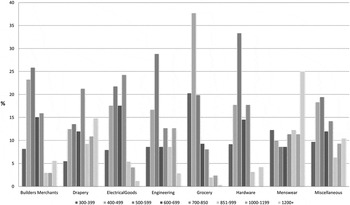
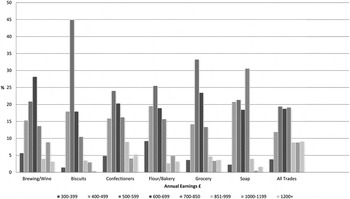
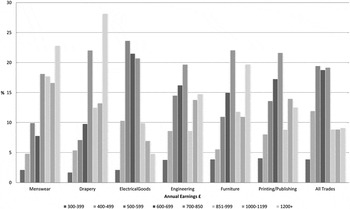
The blend of conservatism and anxiety reflected income, and perhaps class, differences. Associations included groups of relatively low-paid travelers, usually younger and less experienced individuals, but also many affluent and successful men. Substantial differences in earnings were demonstrated in the results of a UCTA questionnaire in 1951. Salesmen employed by manufacturers earned £740 on average, significantly above the average annual earnings of £665 for those working for wholesalers. Commission-only contracts, condemned so often between the wars, were now rare. In the context of austerity, employers more often paid salaries. Those on commission-only terms included well-paid salesmen who earned more than £1200 per year, primarily those in the leather goods, jewelry, footwear, drapery, and menswear trades. This reflected greater risks in these lines, which perhaps attracted individuals who particularly valued independence and the opportunity for high returns. The majority of salesmen received salary plus a small percentage of commission; earnings varied widely within trades, as shown in Figures 1 through 3. The proportion of high earners were greatest in menswear, drapery, and furniture; in electrical goods, engineering and publishing, income distributions clustered more in a mid-range, from £500 to £850. Income distributions were particularly compressed in the grocery, soap, biscuit and other household trades, in which few salesmen earned more than £700 (Figure 2). These industries were those in which leading firms had pioneered marketing innovations before 1900 and in which the salesman had been called a “collector of orders and not a commercial traveller” by Coysh in the mid-1920s. Grocery travelers were particularly dissatisfied, according to UKCTA’s 1951 survey, which perhaps contributed to the senior traveler’s decision to quit rather than wear a white smock to hand out cans of soup. Footnote 100 In these sectors, travelers were becoming “sales promotion men” with good incomes, but a ceiling existed for all but the most dynamic, who would usually have to move into management to earn more.
Distribution of earnings of wholesalers’ travelers by trade, 1951.

Income distribution of manufacturers’ travelers in household goods trades, 1951.

Income distribution of manufacturers’ travelers in selected trades, 1951.

Overall, the 1951 report indicated that travelers were content with their work and earnings. Almost two-thirds were satisfied with their current appointment. Some were high earners, which included many of the older travelers, who were most active in local branches and national meetings. Given this evidence, the association’s executive, always cautious over direct involvement in employment matters, concluded that there was only “a minority of unscrupulous employers.” Footnote 101 It reaffirmed its opposition to trade unionism or any more assertive collective action on the grounds that neither was required. A decision to try to “uplift” the poorly paid on an individual basis fell far short of the general advancement, through the promotion of codes of practice and standard contracts, which had been contemplated during the 1940s. This outcome discouraged Liversage and other activists, contributing to a decline in the influence of the pro-union strand that had emerged during the 1930s and 1940s within the association. Instead, the ineffectual Appointments Bureau was cited as a mechanism to assist individual salesmen obtain better jobs. UCTA officials met with a group of food industry employers, including Cadbury’s, Reckitt and Colman, and Huntley and Palmers, plus the National Federation of Wholesale Grocers and Provision (FWGP) and the Food Manufacturers’ Federation (FMF), in 1955. Footnote 102 They highlighted the findings of the 1951 questionnaire and other evidence of low pay. Employers asserted that low salaries applied to early-career salesmen who could expect higher incomes as their careers progressed. Although expressing broad support for good pay, they refused to arrange follow-up meetings, confounding UCTA’s tentative efforts to influence earnings. When UCTA renewed its campaign in 1957, FWGP presented evidence that average earnings were higher; FMF simply stated that salaries were a matter for individual companies. Footnote 103 There were pressures on earnings. On the Road claimed that real incomes declined between 1925 and 1960. Footnote 104 A book salesman estimated that his income in 1959 was only £40 higher than in 1951, and that, on average, his earnings had declined since 1951. Footnote 105 Failure to achieve effective negotiations with employers generated internal criticisms. A former UCTA member complained that branch meetings were “mediocre and routine.” In his view, there were too few practical benefits and too much time devoted to charitable bazaars. Footnote 106 One branch treasurer described UCTA as in a “state of stagnation.” Footnote 107 Such comments suggested that the bonds among travelers through associational life were fraying.
The diversity of experiences and earnings among travelers continued during the 1960s, contributing to further strains. Only 6 percent of salesmen earned less than £750, according to a 1960 study. Income differentials, however, remained significant: 26 percent earned from £750 to £1000; 30 percent earned between £1000 and £1500; and 36 percent earned more than £1200. One report distinguished between “speciality men” and those selling “staple” goods. The former demonstrated capital equipment and industrial machinery, had scientific or engineering training, and earned at least £1500. Travelers in “staple goods,” by contrast, particularly those selling tobacco products, toiletries, agricultural machinery, and building materials, were low earners. Footnote 108 In 1962, Geoffrey Moorhouse noted that “whereas some technical salesmen are on a salary of between £1000 and £2000 a year, with up to £500 to be earned in commission, the representatives of a tobacco firm may earn as little as £500 and no more than £700 without any commission.” Footnote 109 The journalist described travelers as smartly dressed and “more of a representative and less of a reprobate.” The sense of improved status was weakened, however, by his statement that evenings were “spent in hotels which are generally a cut above boarding houses and never quite in the one star class.” In a repetition of Coysh’s phrase from the 1920s, Moorhouse reported that tobacco salesmen were labeled as “order takers” because advertising, rather than individual ability, determined their sales.
Pressures in specific household goods trades, evident in UKCTA’s 1951 survey, intensified during the 1960s. In confectionary, travelers experienced low earnings, inflation, and changing marketing practices. After a phase of very rapid expansion when rationing terminated in 1953, the real value of confectionery sales declined during the late 1950s and early 1960s. Footnote 110 A contributory factor was the ending of resale price maintenance, which had allowed manufacturers to set standard prices for their products. Initiated by government with the aim of increasing competition, the change strengthened the market power of multiple retailers with a significant impact in the grocery, tobacco, and confectionery trades. Footnote 111 Increasing public health concerns about sugar consumption and smoking added to uncertainty about future sales. Confectionery travelers feared “slowly becoming sales promotion men” as these developments unfolded. Footnote 112 Threats from modern marketing, even more firmly associated with U.S. practice, appeared greater, although the actual impact continued to be moderated through cautious implementation at the level of the firm. American ideas of management and marketing were disseminated more actively in Europe from the late 1940s through policy initiatives, a resurgence of U.S. multinational investment, and promotional activities by business consultants. In confectionery, a new generation of sales managers advocated more scientific approaches. Footnote 113 Mergers reduced the number of smaller family manufacturing and wholesale firms, which affected a generation of salesmen, including older men whose jobs had previously been secure. These changes undercut personal connections to the owners of firms. In terms of earnings, the “sales promotion” man working for a leading firm still fared well. Competitive forces in the late 1950s and early 1960s had their greatest impact on salesmen employed by confectionery wholesalers who were squeezed between manufacturers’ marketing campaigns and the power of multiples. Footnote 114
The responses of confectionary travelers were expressed through MCCTA, which represented those employed by manufacturers. The association advocated an £800 minimum salary plus commission rates that would create a realistic prospect of earning £1000 per year. Footnote 115 This approach was significantly more assertive than prewar individualism and reliance on personal ties to company owners that Charlie Thompson espoused between the wars. However, MCCTA lacked any effective bargaining relationships. Indeed, there were fears that campaigning might be counterproductive if employers reacted badly. A public relations officer was appointed in 1960, indicative of the new generation of salesmen’s lack of self-confidence. He presented salesmen as friends and advisers to retailers, not merely “order takers.” This view assimilated travelers’ stress on personal expertise into the more intensive postwar efforts by confectionery manufacturers to support independent retailers in resisting the advance of the multiple stores. It was consistent with the prevailing attitudes among sales managers who wanted more than “order takers” and believed that personality was an important part of selling.
The context in which salesmen operated continued to evolve as the scope and power of advertising increased. Cadbury’s and other firms placed television advertising at the center of press, poster, and cinema campaigns intended to create and reinforce the image of key brands. In 1958, an external market research report claimed that television advertising “automatically encourages the idea that the advertiser is modern—merely because of the status of television as the most modern medium.” Footnote 116 It recommended treating packaging and advertising holistically. In the trade press, manufacturers announced when specific brands of chocolate were due to be advertised on regional television networks, to stimulate advance orders from local retailers. The salesman’s personal visit was used to canvass for sales, to brief shopkeepers about marketing campaigns, and to ensure that counter displays were attractive and eye catching. The ultimate measure of effectiveness was making a sale that left space for different personalities, rather than generating a conformist model. In this vein, a trade journal in 1962 contrasted two images of confectionary salesmen. One was a “youngish man with the curly brimmed trilby, the immaculate suit, the company tie,” embodying the modern approach. The other was described as “[c]asually dressed, hat (if worn) on back of head, comes in breezily. … Makes a few wisecracks if the buyer happens to be a woman,” epitomizing the less reputable “drummer,” an older, even traditional, figure. Footnote 117 The article concluded that either style could be effective depending on the retail customer—and, by extension, the market or class of consumer—being served. This view reiterated the importance of practical skills, including personal abilities, echoing the opinion of the Rowntree’s manager of the 1890s that certain types of salesmen suited particular markets. The same approach was evident in the marketing of industrial adhesives. Evode paid for 120 television commercial spots and placed advertisements in do-it-yourself journals and the trade press in 1959. The firm’s sales manager believed that the work of sales representatives remained vital, “as past experience has proved that an advertising campaign of this capacity can only succeed if our material is freely available from every possible source.” Footnote 118
In the changing post-1960 context, salesmen retained many of their predecessors’ attitudes. In 1968, an academic study concluded that salesmen valued personal achievement and freedom from supervision. The growth of white-collar work reinforced these preferences, perhaps reflecting the career trajectory of salesmen out of office work into traveling or the self-selecting character of occupation. Salesmen consistently expressed a dislike for routines, paperwork, poor supervision, long hours, driving, and difficulties in parking in busy places. Their daily travel still distinguished them from office workers. Although leisure suits had become a middle-class standard, their cut and style, as well as accessories such as ties, watches, and hats, created distinctions in appearance. Salesmen regarded income as the key marker of status; few in the 1968 sample complained about low pay. They accepted that contacts with customers were necessarily superficial, though friendly, to “oil the wheels of commerce.” Sales calls in which “customers bared their souls would be time wasting and emotionally exhausting.” Footnote 119 This pragmatic acceptance of an element of performance indicated an effective adjustment to the demands on personality that C. Wright Mills had considered so corrosive.
A new UCTA questionnaire in 1971 revealed that the majority of salesmen were securely middle-class: average earnings were £2149. Footnote 120 Incomes generally increased until the age of 55, indicating that selling provided in a career structure, but left older salesmen more exposed to falls in real earnings. Overall, 59 percent of UCTA salesmen were satisfied with their terms and conditions of employment, down from 66 percent in the 1951 survey. The majority of those paid less than £1500 were dissatisfied; earnings above £1750 produced increasing levels of satisfaction. Income differentials by trade persisted. The highest-paid travelers sold durable goods and capital equipment that generated high commissions. Average earnings continued to be far less in the “repeat” consumer goods trades, including grocery, reinforcing the trend in those sectors toward becoming “sales promotion men.” The same patterns were manifest in the United States, suggesting systematic differences in the nature of sales work between different lines of business. Lower earnings and discontent over the nature of the work were key factors in turnover rates above 50 percent in the first five years among U.S. salesmen of food or tobacco products. Footnote 121 A National Industrial Conference Board study distinguished between sales engineers who sold equipment to industry, direct contact salesmen, and promotional salesmen. The last sold “heavily advertised merchandise” to multiple stores and accounted for around a quarter of salesmen. Their work was seen as less skilled. Sales engineers required technical expertise; direct contact salesmen sold to industrial and retail customers. Both groups were credited with possessing in-depth product knowledge and greater sales skills than the promotional salesmen. Footnote 122 The distinctions echoed those made by British observers in the 1960s.
Salary differentials and discontent were not new and, as ever, difficult economic conditions intensified insecurities. During early 1970s, sales, commissions, and earnings declined. The SCTA expressed concerns about the rising cost of living and greater frequency of industrial disputes that disrupted production. Its journal described salesmen in 1974 as regulated through managerial hierarchies and bypassed as major retailers dealt directly with sales teams at head offices. It claimed that firms now valued accountants more than salesmen. In a new bout of nostalgia, commercial travelers of the 1920s and 1930s, previously seen as the first generation to lose status, were portrayed as second in importance only to directors in their firms. Footnote 123 This image was contrasted with contemporary experiences of corporate mergers, redundancies, and earnings equivalent to those of manual workers.
Within UCTA, escalating tensions finally generated a decisive split. Renewed debate over the merits of being called commercial travelers or sales representatives indicated renewed self-doubt about their place in the modern business world. Footnote 124 UCTA’s ineffectual Appointments Service was brought back in-house in 1973 in the hope of assisting out-of-work travelers. Footnote 125 The association re-emphasized its service functions and the value of its educational schemes and qualifications as part of professionalization. Footnote 126 However, membership declined from 28,643 in 1968 to 21,000 in 1975, which undermined UCTA finances. Footnote 127 In a repeat of the early 1920s, UCTA’s 1970 conference rejected the idea of becoming a trade union. A small breakaway group, the Association of Sales and Technical Representatives, affiliated to the Union of Shop, Distributive and Allied Workers. When NUCT (the 1921 breakaway) disbanded, its members joined the Association of Scientific Technical and Managerial Staffs (ASTMS), a large and increasingly effective white-collar union that expanded from 1968 via mergers. ASTMS’s rhetoric of professional expertise and modernization, combined with effective local officers who negotiated with employers, appealed to many technical employees. Footnote 128 It offered a model of a dynamic organization for white-collar workers who benefited from new technologies but were anxious about their status and prospects. With UCTA shrinking, its membership finally voted in favor of joining ASTMS, a judgment that membership services and representation could be delivered more effectively via the union. About one-quarter of UCTA members, however, rejected the union route: Membership of the UCTA section of ASTMS fell to 16,130 within a year. Footnote 129 Even for those in favor, the transition proved difficult. A senior union official claimed that UCTA’s reputation, particularly its lack of bargaining with employers, undermined ASTMS recruitment drives among younger salesmen. The aging UCTA cohort was dismissed as the “old contemptibles.” The official recommended attaching younger salesmen to firm or industry-level bargaining units along with other employees, rather than preserving a separate section. Footnote 130 His views suggested that the clash between professional and employee identities persisted within the ASTMS framework, even among salesmen who embraced trade unionism. In his history of UCTA’s Bradford branch, Clifford Bateson emphasized the value of ASTMS for legal advice and in relation to major companies, such as Reckitt and Colman and Lever Brothers, that UCTA had never been able to influence. The old sense of being more than an employee persisted, however. Bateson noted, “Many members were self-employed as representatives in direct contact with the ‘Boss’ and therefore did not want to bring the Union in to negotiate for them.” This restated the terms of interwar discussions about the role and status of salesmen. In 1984, the Bradford branch complained to UCTA’s executive about an ASTMS donation to a miners’ hardship fund during the year-long strike against pit closures and job losses. Footnote 131 With rising subscriptions, an ageing membership, and declining participation in its social activities, the Bradford branch closed in 1989.
Conclusion
Nineteenth-century commercial travelers evolved into sales representatives in the late twentieth century. The change of occupational label has been seen as a marker of greater managerial direction that increasingly alienated salesmen. In many respects, however, salesmen’s attitudes, concerns, and comments revealed continuities rather than decisive transformations. Their work depended on being mobile, operating independently, and engaging with industrial, commercial, or retail customers. Because travelers spent significant periods spent away from home, contacts “on the road” fostered a masculine occupational culture and vibrant associational life. Whatever their preferred job title, there was a consistent self-image that emphasized autonomy, resourcefulness, and individual enterprise. This was buttressed by favorable comparisons with the routine nature of office work and the parochialism or stupidity of customers and sales managers. Salesmen stressed that business and the economy ultimately relied on the act of selling to generate profits and economic growth. Their sense of identity centered on performing this key function, negotiating diverse social settings, and being not quite respectable in terms of their drinking, manners, or style. As the Cadbury’s evidence in the 1930s illustrated, salesmen’s use of motor cars and expense accounts for business purposes gave them access to forms of expenditure beyond lower–middle-class means. Popular culture consistently portrayed salesmen as flashy in appearance, devious, and immoral in business and socially. In response, traveling salesmen distanced themselves from door-to-door salesmen, hawkers, and peddlers who met the public directly. This boundary reflected an attempt to limit the dangerous connotations of mobility (transiency; deceit) associated with lower class occupations. These were further modified through asserting the “legitimate” salesmen’s closer personal connection to their firm or wholesale house and role in representing the business. Because no credentials existed to buttress this divide from door-to-door salesmen, personal qualities became critical markers of occupational identity.
As Hosgood showed, Victorian commercial travelers were concerned about growing competition, increasing numbers of salesmen “on the road” and a perceived loss of respect from their employers. Their fears intensified during recessions, featured in the nostalgic reminiscences of older travelers, and were frequently mentioned by leaders of travelers’ associations. These concerns were the flip side of salesmen’s positive self-image. When sales declined, earnings and status came under greater pressure. During lengthy recessions even previously successful salesmen struggled, especially when firms hired more commission-only travelers in the hope of generating orders. Thus, recessions generated complaints about declining earnings and status in the 1890s, interwar period, late 1940s, late 1950s, and early 1970s. Each generation bemoaned its inability to control the entry of additional or “unsuitable” salesmen; each feared sliding down into the status of door-to-door selling.
The emergence of “modern” marketing, including Mills’s case for its alienating effects, raises questions about how far sales work changed. New features were evident. By the 1960s, salesmen typically traveled in a company car, wore leisure suits, reported to area sales managers, and attended annual sales conferences. In comparison, the Victorian commercial traveler journeyed by train, carriage, or horse; spent longer periods away from home; and met each customer less often. Sales remained a predominantly masculine occupation, although the number of saleswomen increased rapidly from the late 1960s. Advertising extended from its print forms in the 1880s to the use of television. A body of marketing theories and training developed that applied social science concepts. However, the new marketing methods evolved slowly in Britain. Church highlighted the promotion of branded goods, use of promotional assistants, and imitation of U.S. methods by leading consumer goods firms from the late nineteenth century onward. The proliferation of print advertising was part of the growth of consumer society in the same period. These practices were applied more extensively between the wars, when sales management became more formal and hierarchical. After being checked during World War II and the subsequent period of austerity, these ideas were more widely disseminated in the 1950s and 1960s. The greatest use of “modern marketing” occurred in the grocery and confectionery trades, in which commercial travelers were indeed “slowly becoming sales promotion men.” This was reflected in lower earnings in the 1950s and 1960s, as the ending of resale price maintenance and the growing influence of multiple stores intensified competition. Similar patterns of lower earnings, higher quit rates, and lower status for “promotional salesmen” were evident in the United States. Footnote 132 This added to the hierarchies among salesmen by firm and earnings within each trade. Cadbury’s prominence added to the reputation of its salesmen, as well as their employment stability, compared with those of salesmen working for confectionery wholesalers.
In many respects, modernizing was diffuse. Even in the 1880 and 1890s, salesmen were subject to oversight through their sales returns, letters, and reports. Generally, firms identified potential salesmen within their organizations and then sent them out to sell with minimal training. Those who prospered continued; those who did not returned to other duties, were dismissed, or quit. Salesmen then were a select group tested by experience. Both salesmen and employers believed that sales expertise was either innate or best acquired practically. Commission pay and deductions for bad debts allowed employers to monitor and incentivize employees who might shirk or cheat. From this perspective, the advent of sales managers in the 1920s formalized systems of oversight, perhaps challenging salesmen’s autonomy in the process. It did not, however, impose monitoring of individual sales performances for the first time. At Cadbury’s, the roles of men such as William Davenport, responsible for the London market, were brought within new management structures, but the culture in which they operated was less altered. Indeed, the first area sales managers were usually leading salesmen transferring to new career paths, but retaining their ideas about the importance and personalized nature of sales work.
Contacts with salesmen were routinized into committee structures and annual sales conferences, but discussions still focused on established topics such as market conditions, how products were received, and the impact of advertising. British sales managers accepted the individualistic nature of selling in the 1920s and in the 1950s. To some extent, their public statements were rhetorical, seeking to identify new methodologies as nonthreatening and supportive. However, their attitudes mirrored salesmen’s emphasis on the value of experience and the importance of interactions with customers. The point of contention was the appropriate degree of autonomy. Managers framed activities within a firm or group context. Salesmen emphasized their personal performance and autonomy. Further research is needed to determine fully how far corporate cultures accommodated or shaped the attitudes of salesmen in the 1950s and 1960s, but sales results consistently were the ultimate measure. Evidence from the confectionery industry indicates that managerial prescription and direction were more limited than either Mills or Braverman assumed. New practices, with elements of de-skilling, were greatest in consumer goods trades. Overall work was co-constructed through continual adjustments along the lines that Benson found among department store managers and saleswomen.
Salesmen sustained a distinctive occupational culture from the 1870s on. Their associational life was firmly middle class, closely resembling the cultures and activities of shopkeepers and small business owners. As the wider middle class became more mobile, salesmen fitted more easily into national middlebrow culture. Indeed, their work routines became focused within smaller areas, with more time spent in the family home rather than on extended road trips. Being more embedded in local communities may have contributed to the declining membership of commercial travelers’ associations during the 1960s. A secure middle-class position was achievable as long as the flow of orders continued. There were efforts to augment travelers’ identity with professionalism that would embed salesmen within the new technical occupations that McKibbin and Savage identified, but salesmen made slow progress in establishing training and qualifications, and none at all in restricting entry to their line of work. The emphasis on personal skills and experience, to which both salesmen and their employers subscribed, and the diversity of sales jobs impeded the formulation of a definitive body of sales knowledge. It was, therefore, difficult to define expertise and, thus, capture higher economic rents for the sales function. In this sense, salesmen remained apart from the new technocratic middle class or the professions.
The recurring debates over the leading association’s name signaled a concern that “commercial traveler” was becoming an old-fashioned identity. However, salesmen were distanced from the white-collar and professional occupations that increasingly turned to trade unionism in search of greater bargaining power over their wages and working conditions. They lacked the economic leverage or cohesion that facilitated the growth of public sector unionism. Many did feel squeezed between employers who valued them less and a working class that benefited from union organization and greater political power. A handful of salesmen chose the worker/union path by joining NUCT in the 1920s. Fifty years later, a more significant number accepted Orwell’s injunction to embrace their status as employees. This signaled a greater appeal of trade unionism as economic pressures in the 1970s increased the long-running divide between high-paid salesmen and those on lower earnings in more competitive trades. Those who rejected ASTMS were left either to align themselves more closely with corporate sales cultures or to pursue an independent course. Their identities would become aligned with a new political and cultural form of enterprise culture promoted by the Conservative party and business leaders during the 1980s. Footnote 133 Its advocacy of free markets and entrepreneurship and attack on organized labor offered a new approach to the issues that commercial travelers had wrestled with as an occupational group throughout the twentieth century.