According to the American Heart Association, CHDs are the most common congenital anomaly in newborns, occurring in approximately 8 per 1000 live-born children.Reference Dolk, Loane and Garne1 As advancements in medicine lead to improved longitudinal outcomes, CHDs are increasingly common among the adolescent population. The majority of CHDs have a genetic basis, but environmental causes like teratogens can also cause disease.Reference Blue, Kasparian, Sholler, Kirk and Winlaw2 CHDs can result from a variety of chromosomal or single gene abnormalities, the former accounting for 8–10% of all CHDs, and the latter 3–5% of CHD cases.Reference Blue, Kirk, Sholler, Harvey and Winlaw3 Certain heart defects have a higher likelihood of being caused by a genetic syndrome. For example, conotruncal defects are commonly observed in individuals with 22q11.2 deletion syndrome. For conditions that are syndromic, recurrence risks are well categorised.Reference Cowan and Ware4 In individuals with isolated, non-syndromic CHDs, both gender and type of cardiac defect are important in determining recurrence risk.Reference Blue, Kirk, Sholler, Harvey and Winlaw3, Reference Øyen, Poulsen, Boyd, Wohlfahrt, Jensen and Melbye5 Overall, women with heart defects have a higher empiric recurrence risk (5–6.5%) in their children than men with CHDs (2–3%).Reference van Engelen, Baars, van Rongen, van der Velde, Mulder and Smets6 Recurrence risk is known to be higher for specific categories of defects. For example, left ventricular outflow tract obstruction defects have a higher recurrence risk than ventricular or atrial septal defects.Reference Blue, Kirk, Sholler, Harvey and Winlaw3 Up to 80% of all CHDs are considered to be multifactorialReference Blue, Kirk, Sholler, Harvey and Winlaw3 with a combination of genetic and environmental factors contributing.
Previous studies have investigated patient understanding of their CHD, focusing primarily on knowledge of their anatomic defect and comprehension of their management plan.Reference Veldtman, Matley and Kendall7 Studies of understanding in adolescent CHD patients have found that the majority of adolescents do not possess a good understanding of their CHD,Reference Veldtman, Matley and Kendall7–Reference Le Lesch, Specht, Lux, Frey, Utens and Bauer9 and that scores of understanding from adolescent CHD patients are significantly lower than scores of adult CHD patients.Reference Jackson, Tierney, Daniels and Vannatta10 Only recently have studies begun to explore patient understanding of the genetic contribution to their heart defect. The results of previous studies in adults demonstrated an overall lack of knowledge of inheritance both in the adult CHD populationReference van Engelen, Baars, van Rongen, van der Velde, Mulder and Smets6, Reference van Engelen, Baars, Felix, Postma, Mulder and Smets11 and in parents of children with CHD.Reference Blue, Kasparian, Sholler, Kirk and Winlaw2 Furthermore, research has shown that adult CHD patients believe that they have insufficient information about genetics and heritability and desire additional education on these topics.Reference van Engelen, Baars, van Rongen, van der Velde, Mulder and Smets6, Reference Londono-Obregon, Goldmuntz, Davey, Zhang, Slap and Kim12 These studies identified adolescence as a key time to receive counselling and education regarding heritability, genetics, and reproductive risk; however, these studies did not include adolescent patients. Previous studies have shown that understanding one’s medical condition is associated with improved satisfaction, decreased stress and confusion, and better compliance with health recommendations and follow-up care.Reference Van Deyk, Pelgrims and Troost8 Understanding the cause of the heart defect, knowing what to expect, and knowing how to prepare for future obstacles or recurrences can restore a sense of control and promote better coping mechanisms.Reference Blue, Kasparian, Sholler, Kirk and Winlaw2 For many families, determining a cause of a child’s heart defect is psychologically important to address their questions of why and how their child’s heart defect occurred.Reference Blue, Kirk, Sholler, Harvey and Winlaw3 It is important for adolescents to understand that there is a potential genetic basis and recurrence risk for their heart defects not only for family planning purposes, and to improve discussions with doctors and family members, but also for psychological acceptance.
Previous research assessing the cognitive developmental milestones necessary to appreciably understand and utilise genetic information found that adolescents possess a rudimentary conception of genetic inheritance based on personal experiences with family members but lack a robust understanding of the scientific mechanisms of inheritance.Reference Smith and Williams13–Reference McGill, Wakefield and Vetsch15 These distinct modes of understanding (i.e. experiential and scientific) are further mediated by the cognitive demands of psychosocial development unique to adolescent populations, with adolescents generally having a greater cognitive load than adults based on the demands of achieving their developmental milestones.Reference Fanos16 In this way, adolescents may have greater difficulty conceptualising the genetics and heritability of their conditions when compared to adult populations. These findings propose that adolescent CHD patients should be considered distinct from adult populations with regard to their capacity to have a conversation about genetics or inheritance. In spite of these differences, previous research has shown that adolescents older than 11.8 years are generally capable of possessing a level of understanding requisite to consent to genetic testing.Reference Hein, Troost and Lindeboom17 Furthermore, recent studies have found that adolescents want to be involved in the decision-making process when deciding to initiate testing and when deciding whether or not to return medically actionable results.Reference Hufnagel, Martin, Cassedy, Hopkin and Antommaria18, Reference McGowan, Prows, DeJonckheere, Brinkman, Vaughn and Myers19 In these studies adolescents themselves, and many of their parents, believed that adolescents were cognitively capable of participating in the decision-making process. However, no research has assessed adolescents’ preferences for how genetic information should be disseminated or their baseline knowledge of the possibility of a genetic contribution to their CHD. This information is necessary in order to promote further understanding of how to structure and when to implement educational programs in genetics.
Overall, there is a clear need and desire for genetics education among the CHD population. Additionally, there is lack of data addressing adolescents’ understanding of their CHDs and potential heritability. The goal of this study was to qualitatively investigate the need for genetics education among the adolescent population by assessing both the adolescent and parental understanding of the causes of CHD and their desire for additional genetics knowledge. In order to improve the delivery of genetic counselling, we also aimed to explore preferences about the appropriate timing and methodology for receipt of genetic information.
Methods
Study cohort
This study was approved by the Institutional Review Board of Indiana University. All patients and/or their legal guardians provided consent/assent to participate. Adolescents with CHDs, and their parents and/or guardians, were prospectively identified through routine outpatient visits at the paediatric cardiology clinic and echocardiography lab through Riley Hospital for Children. Eligible patients were between the ages of 14 and 18, English-speaking, and had structural CHDs. Individuals with intellectual disability that prevented them from answering the survey questions were excluded from this study.
Instrumentation and data collection
Survey items were modelled after the reproductive portion of the Leuven Knowledge QuestionnaireReference Moons, de Voider and Budts20 but consisted of custom survey items. The survey included: (1) an assessment of the patient’s ability to accurately describe their cardiac disease; (2) demographic questions; (3) questions about patient perception of a genetic basis of their cardiac disease and its heritability; (4) questions about patient’s sense of familiarity with their cardiac disease and level of attention dedicated to it; and (5) questions about patient interest in receiving additional education about the genetics of their cardiac disease (see Appendix A in the Supplementary Material). Questions in parts 3 and 4 above were measured on a 5-point, Likert-type scale. All questions were multiple choice, except for the survey item regarding age of the child, which was free-response.
Each patient and his or her parent were provided a survey packet and consent documents upon arrival to their cardiology or echocardiogram appointment. The questionnaire required approximately 10–20 minutes to complete. Patients’ cardiac and/or genetic diagnoses were confirmed by review of the electronic medical record. Genetic conditions were ascertained from chart review and review of genetic testing results. If copies of genetic testing results were unavailable, then diagnoses were confirmed with physicians’ notes. Identifiers were retained in order to link patient survey responses to the electronic medical record. Study data were collected and managed using REDCap electronic data capture tools hosted at Indiana University.Reference Harris, Taylor and Thielke21 Complex heart defects were defined as either a single ventricle or conotruncal defect.
Data analysis
Survey responses were treated as binary or ordinal variables. The Kruskal–Wallis test was performed to test for association between ordinal dependent variables and binary independent variables. Pearson correlation was used to test for association between ordinal dependent and independent variables. Fisher’s exact test was used to test for association between binary dependent and independent variables. JMP statistical software (Cary, NC, USA) was used for all analyses. Statistical significance was defined at alpha level < 0.05.
Results
Patients
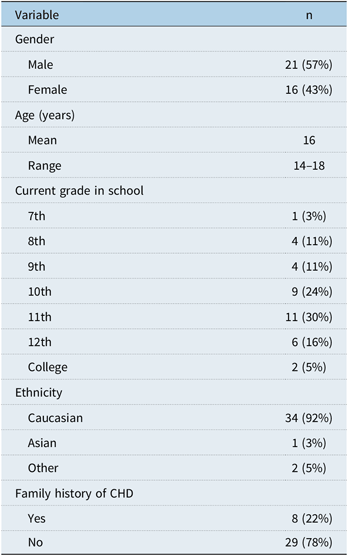
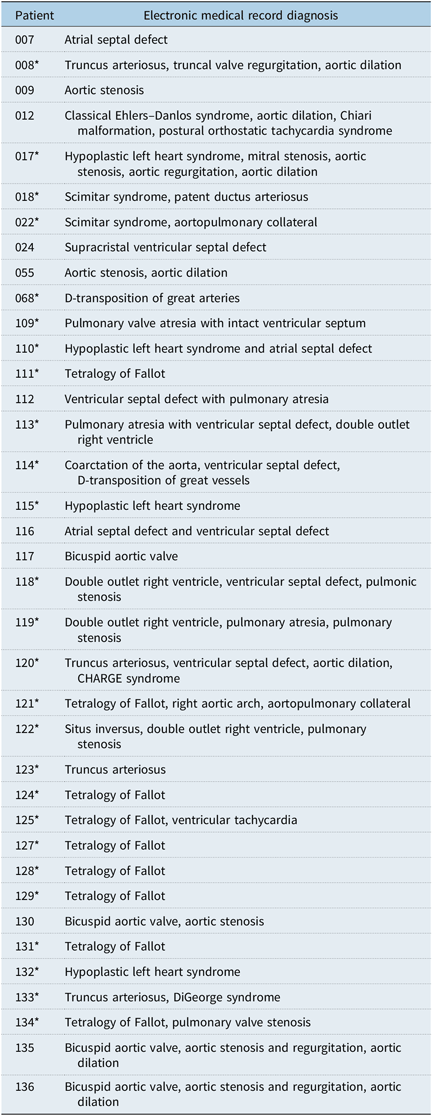
A total of 74 survey responses (37 parent–child pairs) were collected over a 15-month period. The entirety of the parent cohort was Caucasian (n = 37), and the majority of the children enrolled were also Caucasian (n = 34, 92%) with one identifying as Asian (3%) and two identifying as “Other” (5%) (Table 1). The mean age of adolescent patients was 16 years, with a range of 14–18 years. A slight majority of the adolescent patients were male (n = 21, 57%). The parental cohort primarily consisted of mothers (n = 34, 94%). Adolescents were characterised as having complex or non-complex CHD. Twenty-six adolescents (70%) met criteria for having complex CHD, whereas 11 (30%) had non-complex CHD (Table 2). Three patients (8%) had classic Mendelian conditions: DiGeorge syndrome, classical Ehlers–Danlos syndrome, and CHARGE.
Adolescent patient demographics

Cardiac and syndromic diagnoses among adolescent patients

* Complex.
Understanding of heart defect type
Most adolescent patients were able to correctly identify at least one of their cardiac diagnoses (n = 35, 95%). Among these, 18 patients (49%) identified all of their cardiac diagnoses correctly. Only 5% of adolescent patients were completely incorrect in their identification. These rates were generally consistent with parental responses, which were 54% completely correct, 43% partially correct, and 3% incorrect. Parents and adolescents provided identical cardiac diagnoses 70% of the time, noting that 56% of adolescents (n = 20) reported needing assistance in answering this question which likely was provided by the parent. Thus, parents and adolescents generally demonstrated a good understanding of cardiac diagnoses. The majority of parents, 92% (n = 34) felt that they had a good understanding of their child’s heart condition, while only 54% (n = 20) of adolescents reported a good understanding. Adolescent patients did not report significantly different levels of understanding of their condition based upon whether or not they had previously discussed the causes of their condition (p = 0.431). However, parents who reported having a conversation with their children about the potential causes of their CHD (n = 24, 65%) also reported significantly higher levels of understanding of their child’s condition (p = 0.004).
Understanding of genetics and heritability
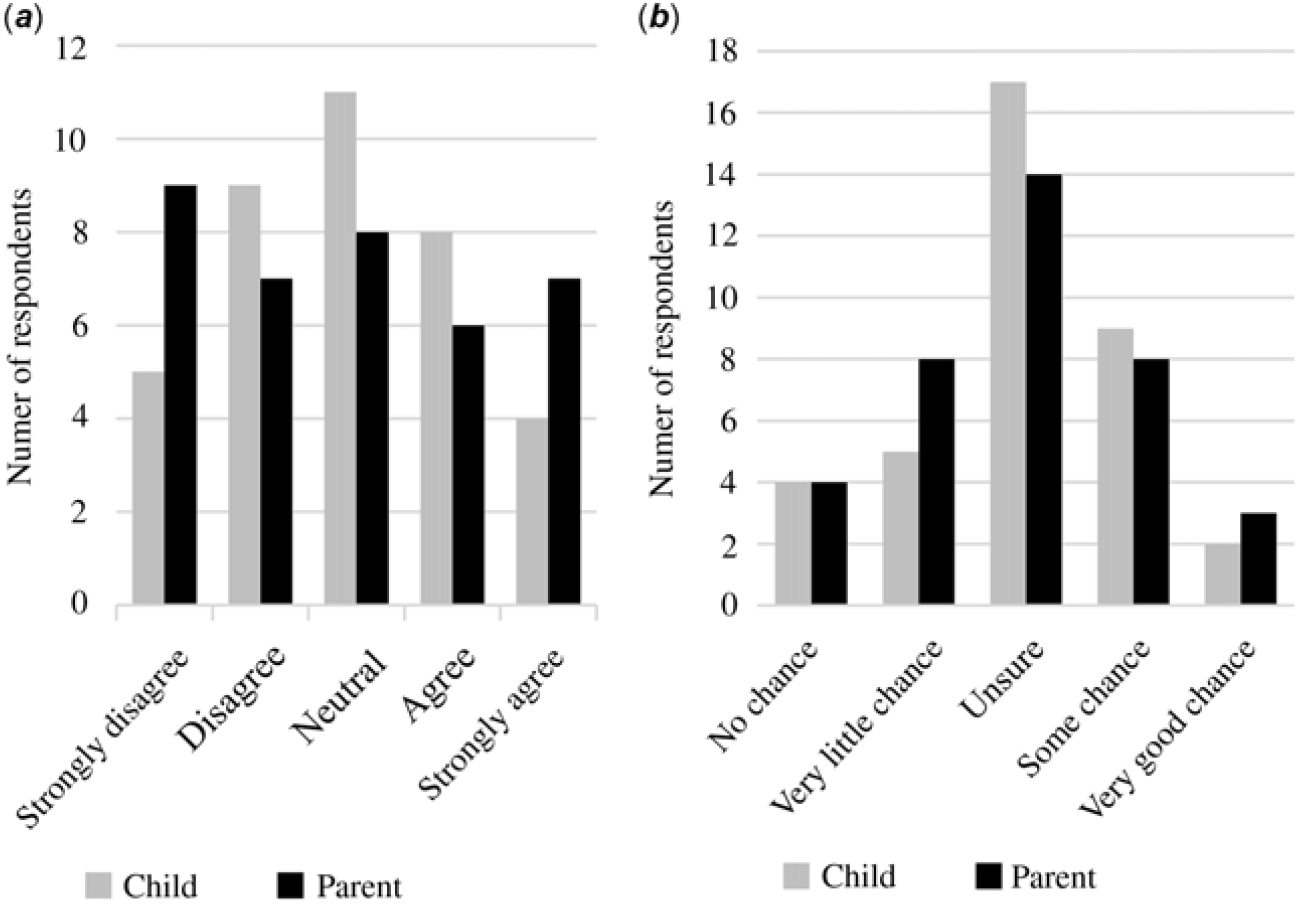
To assess patient perceptions of CHD heritability and genetics, adolescents were asked to report their level of agreement that their condition was genetic and their belief in the likelihood that they would pass on their heart condition to potential future offspring. Parents were asked the same questions as they related to their child’s CHD (Fig 1). There were 12 adolescents (32%) and 13 parents (35%) who responded that they either agreed or strongly agreed that the heart condition was genetic. While there were more parents (n = 7, 19%) than adolescents (n = 4, 13%) who strongly agreed that heart condition was genetic, there were also more parents (n = 9, 24%) than adolescents (n = 5, 14%) who strongly disagreed that the heart condition was genetic. Collectively, there was no significant difference in the belief for a genetic cause of CHD between the adolescent and parent groups (p = 0.8). There was no significant difference in overall responses between adolescents and parents on the likelihood that they/their child would pass their CHD on to future offspring (p = 0.8). The majority of adolescents (n = 17, 46%) and adults (n = 14, 38%) reported that they were unsure if the condition would be passed on. Neither age nor gender was associated with adolescents’ beliefs in genetic cause or likelihood of passing along the condition. Taken together, less than half of adolescents and parents reported believing that the CHD has a genetic basis or is heritable.
Patient responses on genetic cause and heritability of CHD. (a) Likelihood of genetic etiology of CHD. (b) Likelihood of child passing on CHD.

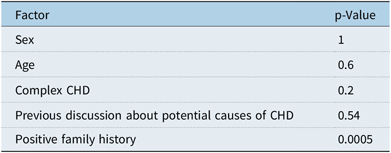
We utilised univariate testing to identify factors that are associated with the adolescents’ belief for the genetic basis of CHD (Table 3). Approximately 22% of families (n = 8) reported having a family member with a similar condition. Positive family history was significantly associated with adolescents’ beliefs that their heart condition was genetic (p = 0.0005), while age, sex, CHD complexity, diagnosed genetic syndrome, or reporting a prior conversation about potential causes of CHD were not significant. Indeed, 7 of 8 adolescents (88%) with a family history agreed or strongly agreed that their heart condition was genetic compared with 7 of 29 (24%) without family history. This association was also significant in an ordinal regression model (p = 0.0002). Among parents, the association between positive family history and belief in genetic cause approached significance (p = 0.057). In contrast to our results regarding belief in genetic cause, positive family history was not significantly associated with adolescent (p = 0.6) or parental (p = 0.5) beliefs in the likelihood that the adolescent would pass the condition along to possible future offspring.
Factors associated with adolescents’ belief that CHD has a genetic cause

There was a significant difference in how often adolescents and parents thought about their/their child’s CHD. Unsurprisingly, parents think about their children’s heart conditions significantly more often than adolescents think about their own heart conditions (p = 0.001). The majority of parents (n = 20, 54%) reported that they think about their child’s heart condition “sometimes”, with a large percentage of parents reporting that they think about their child’s heart condition “most of the time” or “always” (n = 15, 41%). Conversely, the majority of adolescents (n = 16, 43%) reported that they “rarely” think about their own heart conditions, with a large percentage of adolescents reporting that they think about their conditions “sometimes” (n = 14, 38%). For adolescents, there was a significant relationship between how often they thought about their CHD and their belief that their condition could be passed on. Adolescents who think about their condition more often are increasingly more likely to believe their offspring could inherit their condition (p = 0.01). No other factors seemed to influence these scores significantly, including complexity of CHD, self-reported level of understanding, gender, or age.
Desire for additional education
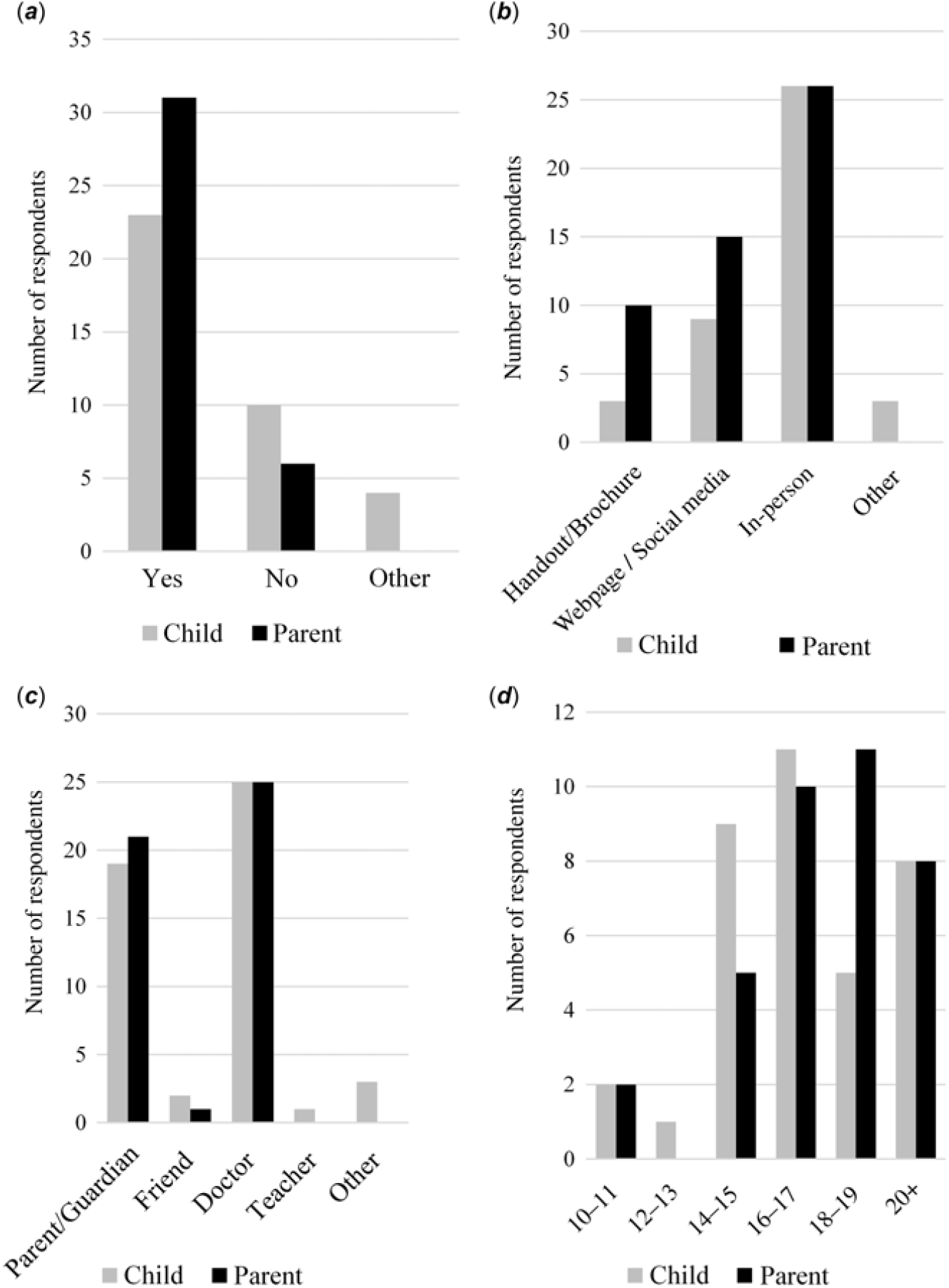
The majority of patients (n = 54, 73%) were interested in learning more about the genetics of CHD, and in over half of the parent–child pairs (n = 21, 57%) both parties were interested in learning more (Fig 2a). Adolescents who think more often about their CHD were more likely to be interested in learning more about the genetics of their CHD (p = 0.014), and this relationship remained significant when considering parents and adolescents together (p = 0.008). Patients were presented with different choices for the preferred mode of receiving additional genetics education. Strikingly, in-person discussions were highly preferred among both adolescents (n = 26, 70%) and parents (n = 26, 70%) (Fig 2b). Handouts/brochures were the least preferred method, selected by only three adolescent patients (8%) and nine parents (24%). We also asked patients who would be the best person to provide information about genetics, choosing among: (1) parent/guardian; (2) friend; (3) doctor; (4) teacher; or (5) other (Fig 2c). The most frequent response was doctor among both adolescents (n = 25, 68%) and parents (n = 25, 68%). The second most frequent response from adolescents was parent/guardian (n = 19, 51%). We also asked patients what would be the best age, starting from age 10, to receive genetics information about their cardiac disease (Fig 2d). Less than 10% (n = 5) of patients selected an age less than 14 years. The majority (n = 53, 74%) of patients believed that the best age to receive this information would be at least 16 years of age. Responses were generally similar between adolescents and parents. Finally, we asked each patient about his/her belief that the adolescent would understand the genetic information about his or her heart condition. Most adolescents responded that they would at least be able to retain parts of the discussion (n = 29, 78%), but only 4 (11%) predicted they would be able to fully understand the information. Adolescents who previously took a course in school that included information about genetics were significantly more confident in their potential ability to understand and participate in this discussion (p = 0.03). Interestingly, 21 parents (57%) believed that the adolescent would fully understand the discussion, displaying significantly greater confidence in their child’s ability to comprehend a conversation about the genetic causes of their child’s heart conditions than the adolescents themselves (p = 0.008).
Patient responses about receipt of genetics information. (a) Desire for additional information on genetics. (b) Preferred mode of receiving genetics information. (c) Preferred person to provide genetics information. (d) Preferred age to receive genetics information.

Discussion
Previous research has not investigated adolescents’ understanding of the genetics of their cardiac disease. We aimed to address this gap in the research to determine the best method of implementing education programs regarding relevant recurrence risk information. In this study, we identify that the majority of parents and adolescents desire additional genetic education. Our findings are consistent with studies in the adult CHD population.Reference van Engelen, Baars, Felix, Postma, Mulder and Smets11 Patients who had taken a course in genetics in school were more likely to think they would understand conversations about the genetics of their condition. Not surprisingly, a family history of CHD influenced both adolescent and parental perspectives on the likelihood of a genetic contribution to their heart disease. Interestingly, having a family history of CHD did not significantly influence a patient’s thoughts on their own recurrence risk. Previous research has shown that a patient’s concept of heritability is dynamic and more influenced by what they perceive to be common sense than an understanding of complex empirical scientific mechanisms.Reference Birta, Emery, Prevost, Sutton and Walter22 To that end, the extent to which an individual feels they are similar to a family member may have a greater impact on their feelings of heritability than an accurate scientific knowledge of inheritance (i.e. based on physical, social, or behavioural similarities). Future research should consider trying to account for both domains.
Previous studies have shown that most patients are unsatisfied with their lack of knowledge about their heart defect.Reference van Engelen, Baars, van Rongen, van der Velde, Mulder and Smets6 Our data also showed that the majority of adolescents and adults correctly identified (51%), or partially correctly identified (45%), their CHD and felt that they had a good understanding of it (75%). This is particularly interesting given the prevalence (70%) of complex CHD in this cohort. One suggested explanation for this difference is that our study required identification of the correct diagnosis from a comprehensive list, whereas previous studies have relied on verbal recall of diagnostic information.Reference Moons, de Voider and Budts20 Understanding the correct diagnosis of one’s heart defect is important for understanding the genetics and underlying causes, but it is distinct. We note that interest in receiving additional genetic information did not correlate with perceived understanding of CHD.
A positive family history of CHD was significantly associated with a patient’s perception of genetic risk. This finding was consistent with previous research which demonstrates that the majority of adults with CHDs knew that recurrence risk was higher when more than one relative was affected with a heart defect.Reference van Engelen, Baars, van Rongen, van der Velde, Mulder and Smets6 Lacking a known family history patient responses were variable, but many felt unsure about the heritability or causes of their child’s heart defect. Adolescent patients and their parents most frequently reported that they were unsure of the likelihood that the heart condition could be passed on to future offspring. This elucidates the need for educational interventions for this population. Adolescents who thought often about their CHD were significantly more likely to believe that their condition could be passed on. However, no factors, including the severity or complexity of an individual’s heart defect, seemed to affect the perception of the likelihood of underlying genetic factors. Curiously, having a known genetic syndromic diagnosis did not impact patient responses including measures of belief that their/their child’s CHD is genetic. This finding suggests an acute need for educational intervention. Future studies should further explore patient and parental understanding of the genetic syndrome in addition to their understanding of their CHD.
Practice implications
Approximately 62% of adolescents in our study cohort were interested in further discussing the genetics of their heart condition, and 84% of our parent population desired this additional education. This high rate of interest in the parent population was consistent with the findings of previous research conducted exclusively with adult populations.Reference van Engelen, Baars, Felix, Postma, Mulder and Smets11 This presents a great opportunity for health care providers to intervene and provide education catered to the adolescent population. The majority of adolescents in this study had a course in genetics, and those who had felt more able to have discussions with health care professionals regarding potential genetic causes of their heart defect. This aligns with previous research which found that higher levels of education correlate with the ability of individuals to understand their heart defectsReference Beeri, Haramati, Rein and Nir23 and both genetics and heritability.Reference Harding, Egan, Kannu and MacKenzie24 Of note, chronological age alone was not a factor that influenced desire for more genetic education among our cohort.
Most of the adolescent population preferred to receive genetic information via discussions with their doctor or parent. This aligns with recent focus group discussions, which proposed that health care providers might be uniquely apt to facilitate a conversation about genetics between parents and children.Reference McGill, Wakefield and Vetsch15 This proposition mirrors the recommendations of previous studies.Reference Londono-Obregon, Goldmuntz, Davey, Zhang, Slap and Kim12, Reference Harding, Egan, Kannu and MacKenzie24 Our results demonstrate that a majority of parents have already attempted to discuss potential causes of their child’s heart defect with him or her, and that those parents who had reported significantly higher levels of understanding of their child’s CHD. However, most parents indicated they lacked confidence in their knowledge of genetics and that they would prefer that a physician provides any education on genetics, echoing previous research in adult populations that showed that parents/caregivers tended to report having poor knowledge of genetics.Reference Harding, Egan, Kannu and MacKenzie24 Knauth, Verstappen, Reiss, and Webb reported that many patients have large gaps in cardiac care in their transition to adult cardiology clinics and they may never receive genetic information regarding their heart defects.Reference Knauth Meadows, Bosco, Tong, Fernandes and Saidi25 This again demonstrates the importance of parent education, as parents are longitudinally involved in the care of their children and can help facilitate transitions in care.
The majority of our study cohort, both adolescent and adult, believed that conversations about recurrence risk should occur prior to the age of 20, and beginning around age 14–16. It is encouraging that the patients in this study indicated an interest in receiving information at earlier ages and prior to pregnancy, consistent with current adult CHD guidelines which recommend that conversations about genetics should occur at the adolescent’s first meeting with the adult cardiologist and be repeatedly discussed throughout their adult care.Reference van Engelen, Baars, Felix, Postma, Mulder and Smets11 For example, CHD patients who report having received counselling on heredity and contraceptive options are more likely to possess this knowledge at follow-up and more likely to be able to correctly identify their CHD.Reference Londono-Obregon, Goldmuntz, Davey, Zhang, Slap and Kim12 However, previous research has shown that CHD patients often do not recall ever receiving information about inheritance, which may represent a failure to provide education or a failure of recall.Reference van Engelen, Baars, van Rongen, van der Velde, Mulder and Smets6, Reference Londono-Obregon, Goldmuntz, Davey, Zhang, Slap and Kim12 For this reason, we recommend that these conversations about heredity and genetics occur repeatedly at return appointments.
Research recommendations
Though our research highlights a need for greater patient education, specific methods for implementing these types of programs need to be further investigated. Further investigation of the effectiveness of various modalities of educational interventions will improve the understanding of appropriate timing for these discussions as they apply to the CHD population. Our research has helped to elucidate the unique educational needs of adolescent CHD patients and their parents. Further investigation is needed to ascertain the nuanced ways in which the educational needs and preferences of these populations change over time.
Study limitations
This was a single institution study with limited sample size, and therefore the generalisability of our findings to larger populations is uncertain. In addition, most of the study patients were Caucasian (96%); thus, further research in more diverse populations is warranted. There were also limited data on how parental perspectives may differ within families, as most of the parental respondents were mothers. Another limitation of this study is that the survey was given at the time of check-in for the appointment and collected at the time of checkout. While most patients likely finished answering the survey questions prior to their appointment, while waiting to see their cardiologist, it is possible that some answers were completed following the visit with the doctor, which could have impacted answers (e.g. increasing accuracy of identifying heart defect). Sampling patients in outpatient cardiology clinics creates a potential ascertainment bias towards adolescents with complex CHD as those with milder phenotypes (such as septal defects repaired in childhood) may no longer require ongoing care. Accordingly, our study cohort is most representative of adolescent CHD patients requiring ongoing surveillance and medical management.
Conclusions
Our research has shown that there is an expressed interest in receiving more information regarding the potential genetic causes of CHDs in the adolescent CHD population. The majority of patients believed that such genetics education should be (1) delivered in-person, (2) involve both parents and physicians, (3) begin when adolescents are between 16 and 20 years old, and (4) be built from basic accessible information on genetics. Given these findings, we believe that parents must also be adequately educated since adolescents wish for them to be involved in their education. Though adolescents were less likely than parents to believe they would understand a conversation about genetic aetiology of their condition, those who had previously learned about genetics were significantly more confident in their ability to understand such a discussion. Accordingly, encouraging patients to learn about genetics may make any educational intervention more impactful. Family history can affect risk perception of both adolescents and their parents; however, our study found that individuals without a family history were less consistent in their perception of genetic risks, with the majority being unsure about heritability. This further elucidates the need for genetics education among this population. Additional research on implementation and effectiveness of educational methods are needed to improve the retention of information and understanding of CHD recurrence risk in this population.
Supplementary material
To view supplementary material for this article, please visit https://doi.org/10.1017/S1047951119002646.
Acknowledgements
We would like to thank Lynne Foreman, RN, David Adams, BSEE, David Wagner, BSEE, and Susan Straka, RN for their assistance in obtaining records for these patients.
Financial support
This publication was made possible by the Indiana University Health – Indiana University School of Medicine Strategic Research Initiative (K.G.S. and S.M.W.) and Physician Scientist Initiative (S.M.W.).
Conflict of interest
None.
Ethical standards
The authors assert that all procedures contributing to this work comply with the ethical standards of the relevant national guidelines on human experimentation and with the Helsinki Declaration of 1975, as revised in 2008, and have been approved by the institutional committees (Institutional Review Board of the Indiana University School of Medicine, Indiana, United States).